


People with mental disorders have dramatically shorter life expectancies compared with the general population, ranging from 3 to 30 years of life lost. Reference Hiroeh, Kapur, Webb, Dunn, Mortensen and Appleby1,Reference Colton and Manderscheid2 The magnitude of the mortality risk is 1.5–1.8-fold for depression, and 2–6-fold for alcohol and other substance use disorders. Reference Eaton, Martins, Nestadt, Bienvenu, Clarke and Alexandre3–Reference Harris and Barraclough6 Most deaths are natural, and the most common causes of death are cardiovascular diseases and cancer. Reference Colton and Manderscheid2 However, the underlying mechanisms of excess mortality are still unclear. The impact of risky health behaviour, such as obesity, smoking and alcohol use, is widely acknowledged, Reference Chaiton, Cohen, O'Loughlin and Rehm7–Reference Halme, Seppa, Alho, Poikolainen, Pirkola and Aalto9 but does not fully explain the excess mortality. Reference Mykletun, Bjerkeset, Øverland, Prince, Dewey and Stewart5 Further, studies on mortality in mental illness have several biases, typically excluding individuals with undiagnosed mental disorders or using either self-reported illness or self-administered questionnaires, which cannot be reliably used for diagnosis. Studies that use valid and reliable instruments with population samples are scarce. Our study assesses the risk of death associated with depressive, anxiety and alcohol use disorders and psychological distress and depressive symptoms, and reports the principal causes of death in a large population-based data-set.
Method
The study employed a data-set from the Health 2000 Study, a nationally representative sample of the Finnish population aged 30 years and over (www.terveys2000.fi/). In this study, 8028 people were sampled with two-stage stratified cluster sampling from the 15 largest towns and 65 healthcare districts in Finland. People over 80 years old were oversampled (2:1). Study participants underwent a home interview and a comprehensive health examination between September 2000 and June 2001. In total, 7419 individuals (93% of the people sampled and alive at the time of the study) participated in at least one part of the study (questionnaire, interview or health examination). The study had the approval of the ethics committee of the Hospital District of Helsinki and Uusimaa. After a complete description of the study to the participants, written informed consent was obtained. Details on the methodology have been published elsewhere. Reference Aromaa and Koskinen10,Reference Heistaro11
Psychiatric disorders
Psychiatric disorders were diagnosed using the Munich version of the Composite International Diagnostic Interview (CIDI). Reference Wittchen, Lachner, Wunderlich and Pfister12 In this study, analyses were limited to participants younger than 70 years (n = 6372), since in the oldest age group a large proportion were not able to participate in the CIDI. Among the participants under 70 years old, 5104 (80.1%) interviews were reliably conducted. The CIDI was used to determine 12-month prevalence of major depressive disorder, dysthymia, generalised anxiety disorder, panic disorder with or without agoraphobia, agoraphobia, social phobia, alcohol misuse and alcohol dependence using DSM-IV diagnostic criteria. Reference Pirkola, Isometsa, Suvisaari, Aro, Joukamaa and Poikolainen13 For the group-level analyses, these disorders were categorised into depressive, anxiety and alcohol use disorders.
Psychotic conditions were screened and further examined with the research version of the Structured Clinical Interview for DSM-IV (SCID-I) Reference First, Anthony, Tepper and Dryman14 and case notes to establish a final diagnosis. The process has been described in detail elsewhere. Reference Perälä, Suvisaari, Saarni, Kuoppasalmi, Isometsä and Pirkola15 Depressive symptoms were covered with the Beck Depression Inventory (BDI) Reference Beck, Ward, Mendelson, Mock and Erbaugh16 and general psychological distress with the 12-item General Health Questionnaire (GHQ-12). Reference Pevalin17
Mortality data
Mortality data containing dates of death until the end of follow-up (31 December 2008) and causes of death coded according to the ICD–10 18 were obtained from Statistics Finland. The causes of death statistics compiles data from death certificates. It contains data on mortality by cause of death as well as demographic variables. The death certificates are completed either by physicians treating the patient during their final illness, or by medico-legal officers in cases where the patient was not under a physician's care, or in those of unexpected or unnatural death. 19 The proportion of forensic autopsies in Finland is high, at 24% of all deaths, and mortality statistics, particularly concerning suicides, are considered reliable. 20,Reference Lahti and Vuori21
The causes of death were categorised into natural deaths (ICD-10 codes A00–R99), suicides (X60–X84), homicides (X85–Y09) and other unnatural deaths such as accidents, injuries and poisonings (S00–T98, V01–X49 and Y40–Y98). The natural causes of death were further categorised into tumours (C00–D48), cardiovascular diseases (I00–I99), pulmonary diseases (J00–J99) and other (A00–B49, D50–H95, K00–N99, O00–R99).
Sociodemographic factors, health behaviour and somatic morbidity
The factors considered important confounders or mediators were marital status, education, family income, smoking, body mass index (BMI) and somatic morbidity. The respondents were classified as smokers if they had smoked at least 100 times in their lifetime, smoked regularly for at least 1 year, and most recently during the previous month. Non-smokers were separated from ex-smokers. Information on BMI was based on height and weight measurements at the health examination.
Sociodemographic information was obtained in a structured interview. Educational level was based on the level of education completed, and divided into three categories: basic, intermediate and high. Marital status was categorised into married or cohabiting and other (divorced, single or widowed). Family income, based on taxable income, was obtained from registers, adjusted for family size 22 and divided into quintiles. This was carried out for the whole study population, prior to restricting the study to the population aged 30–70 years.
Somatic health status was based on self-reported diseases ever diagnosed by a physician. The participants were asked about diagnoses received concerning 43 conditions separately, and where appropriate, further details on time of diagnosis, use of health services and treatments. For this study, a set of 24 conditions were chosen based on their chronic nature, reliability of self-report and public health importance. Reference Saarni, Harkanen, Sintonen, Suvisaari, Koskinen and Aromaa23 Diseases were categorised into six groups: pulmonary (chronic obstructive pulmonary disease, chronic bronchitis and asthma); cardiovascular (heart failure, myocardial infarction, coronary heart disease, hypertension and stroke); neurological (migraine, Parkinson's disease); musculo-skeletal (rheumatoid arthritis, osteoarthritis, back or neck disease requiring a visit to a physician in the previous 12 months); vision and hearing (unoperated cataract, glaucoma, macular degeneration, hearing loss, tinnitus); and other diseases (disturbing allergy requiring a visit to a physician in the past 12 months, psoriasis, inflammatory bowel disease and urinary incontinence). Cancer and diabetes were included as such.
Statistical analysis
Sociodemographic and other baseline characteristics in each diagnostic group were compared with those in participants without the diagnosis by bivariate analyses using the chi-squared test and t-test. A P<0.05 was chosen to denote statistical significance. Cox's proportional hazards regression model was used to examine the risk of all-cause mortality. The two-stage cluster sampling was accounted for in all the analyses, and weights were used to adjust for missing data as well as the oversampling of individuals aged 80 years and over.
To examine the effect of different variables on mortality, four Cox regression models were built. In model one, only psychiatric comorbidity (depressive, anxiety and alcohol use disorders) and lifetime psychotic disorder were adjusted for. In model two, covariates related to sociodemographic status (marital status, education and income) in addition to the covariates in the first model were adjusted for, and in model three, covariates related to health and health behaviour (smoking status, BMI, somatic morbidity) were adjusted for. Finally, in model four all relevant covariates above were adjusted for. Each group of disorders was also studied separately without adjusting for psychiatric comorbidity. We did not assess different types of comorbidities as separate classes because of the small number of observations.
The proportional hazards assumption was tested on the basis of Schoenfeld residuals. Reference Grambsch and Therneau24 The proportional hazards assumption did not hold (P = 0.044) for cancer diagnosis. The hazard rate in the non-cancer diagnosed population generally increases over time. In the subpopulation with a cancer diagnosis, however, patients with a malignant tumour have a high risk of death in the early stages of follow-up. Patients with cancer who survive the first few years after baseline often have a risk of death that is close to the risk of the cancer-free population. The shape of the hazard rate therefore depends on the cancer diagnosis, and the proportional hazards assumption does not hold. Therefore the Cox regression analyses were stratified not only by age (in years) and gender but also in models three and four by cancer diagnosis. The statistical software used was Stata version 11.1 for Windows.
Results
There were differences in the baseline characteristics between the mental disorder groups and the total sample with regard to gender, age, sociodemographic characteristics and somatic health status (online Table DS1). Compared with other participants, those with depressive and anxiety disorders were more likely to be female, younger, smokers, had lower income, were unmarried and more often had neurological disorders and, in the case of the anxiety disorders group, also had pulmonary and cardiovascular disorders. Those with alcohol use disorders were more likely to be male, younger, both at the higher and lower ends of the income scale, unmarried, smokers and more often had pulmonary diseases.
Natural and unnatural deaths
There were altogether 323 deaths during the follow-up period among the study population. Of these 273 (82.9%) were natural, 32 (11.7%) accidents, 16 (5.1%) suicides, 1 (0.4%) homicide and 1 unknown. Statistically significant differences in mortality were found in all categories of disorders, and in those who scored higher on either the BDI or GHQ-12 (Table 1).
The anxiety disorders group was associated with an increased risk of unnatural death, with 50% of deaths being unnatural. Panic disorder (four of five deaths) and social phobia (four of four deaths) in particular had a high rate of unnatural deaths. The eight unnatural deaths in this group were the result of suicide (four deaths), poisoning (one death), falling (one), homicide (one) and other accident of undetermined intent (one). The alcohol dependence group was also associated with unnatural causes of death (47.6% of deaths). The unnatural deaths were as a result of suicide (three deaths), falling (three), drowning (one), poisoning (one) and other accident of undetermined intent (one).
Out of the 16 people who completed suicide, 3 had not participated in the CIDI; one of them was later diagnosed as having had both alcohol-induced psychotic disorder and schizophreniform disorder in the Psychoses in Finland study. Reference Perälä, Suvisaari, Saarni, Kuoppasalmi, Isometsä and Pirkola15 Out of the 13 participants for whom complete information on lifetime diagnosis of psychotic disorders and 12-month diagnoses of depressive, anxiety and alcohol use disorders was available, 4 (30.8%) were diagnosed with major depressive disorder, 4 (30.8%) with social phobia, 3 (23.1%) with alcohol dependence, 2 (15.4%) with panic disorder, 1 (7.7%) with dysthymia, 1 (7.7%) with agoraphobia, 1 (7.7%) with schizophrenia, 1 (7.7%) with alcohol-induced psychosis and 1 (7.7%) with other non-affective psychosis. Five (38.5%) did not receive any psychiatric diagnosis, but many had more than one psychiatric diagnosis.
Excess mortality
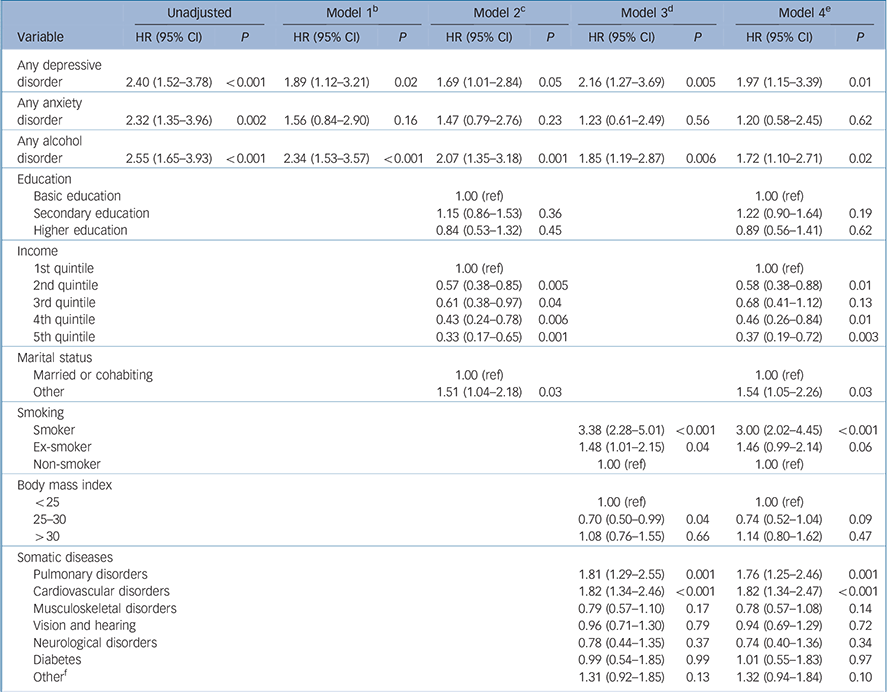
Individuals in all three groups of mental disorders had a statistically significant risk of increased mortality (hazard ratios (HRs) = 2.32–2.55, Table 2). When controlling for psychiatric comorbidity, these associations decreased (HR = 1.56–2.34) and only alcohol use disorders (HR = 2.34, 95% CI 1.53–3.57) and depressive disorders (HR = 1.89, 95% CI 1.12–3.21) remained significant. Controlling for sociodemographic factors, health status and smoking, both depressive (HR = 1.97, 95% CI 1.15–3.39) and alcohol use disorders (HR = 1.72, 95% CI 1.10–2.71) remained statistically significantly associated with higher mortality.
Each disorder group was also investigated separately adjusting for sociodemographic factors, health status and smoking, but not for psychiatric comorbidity. This had little influence on the hazard ratios: depressive disorders (HR = 2.09, 95% CI 1.32–3.32, P = 0.002) and alcohol use disorders (HR = 1.77, 95% CI 1.12–2.80, P = 0.01) predicted mortality statistically significantly, but anxiety disorders (HR = 1.64, 95% CI 0.90–3.00, P = 0.1) did not.
In a separate analysis, mild/moderate and severe depressive symptoms measured with the BDI were associated with increased mortality even after controlling for confounders (HR = 1.53, 95% CI 1.11–2.11 for 10–18 points and HR = 1.77, 95% CI 1.09–2.86 for 19 points or more) (Table 3; see online Table DS2 for a more detailed analysis by age group). These models did not include psychiatric disorders (online Table DS3).
Figure 1 depicts the survival curves for depressive, anxiety and alcohol use disorders, controlling for age, gender, sociodemographic factors and somatic health status. The graph shows that an average study participant – described by the estimated population distributions of categorical confounders or mediators presented as prevalences in online Table DS1 and the estimated mean age of 48 years – without a psychiatric disorder had a 3% risk of dying during follow-up, whereas for an average participant with depressive or alcohol use disorders the risk was 4.5%.
The majority of deaths occurred in the age group 50–70 years, but those with mental disorders had a higher risk of death at a younger age (30–50 years) (Table DS3).
Discussion
This study investigated mortality in a large population sample with the aim of assessing excess mortality and reporting the principal causes of death associated with diagnosis of mental disorder. The 12-month version of the CIDI was used to diagnose mental disorders. The age- and gender-adjusted risk of death was 2.3–2.6-fold among those with depressive, anxiety or alcohol use disorders. Controlling for psychiatric comorbidity reduced these associations, and anxiety disorders were no longer significantly associated with increased risk of death.
Causes of death by diagnosis and psychiatric disorder categoryFootnote a

| All deaths | Cause of death | ||||||||||
|---|---|---|---|---|---|---|---|---|---|---|---|
| Psychiatric disorder | n | Deceased n (%) |
p Footnote b | Unnatural deaths n (%) |
p Footnote b | Cardiovascular n (%) |
Tumour n (%) |
Respiratory n (%) |
Other natural death, n (%) |
Suicide n (%) |
Other unnatural death, n (%) |
| Total | 6372 | 323 (4.9) | 49 (17.1) | 108 (34.0) | 101 (29.6) | 14 (3.6) | 50 (15.7) | 16 (5.1) | 33 (12.0) | ||
| Any depressive disorder | 359 | 22 (6.3) | 0.02 | 6 (27.5) | 0.29 | 5 (22.4) | 7 (31.0) | 2 (9.1) | 2 (10.0) | 4 (17.9) | 2 (9.6) |
| Major depressive disorder | 282 | 17 (6.2) | 6 (35.3) | 1 (5.5) | 6 (34.7) | 2 (11.7) | 2 (12.9) | 4 (23.0) | 2 (12.3) | ||
| Dysthymia | 125 | 11 (9.1) | 3 (28.1) | 4 (35.6) | 2 (17.8) | 1 (9.4) | 1 (9.1) | 1 (9.4) | 2 (18.7) | ||
| Any anxiety disorder | 224 | 16 (7.3) | 0.02 | 8 (50.0) | <0.001 | 5 (31.2) | 1 (5.4) | 1 (6.5) | 1 (6.9) | 4 (23.6) | 4 (26.4) |
| Social phobia | 58 | 4 (6.7) | 4 (100) | 0 | 0 | 0 | 0 | 1 (21.0) | 1 (20.7) | ||
| Agoraphobia | 55 | 5 (9.2) | 2 (41.7) | 2 (40.9) | 1 (17.5) | 0 | 0 | 1 (21.0) | 1 (20.7) | ||
| GAD | 66 | 5 (8.1) | 2 (40.6) | 1 (19.2) | 1 (19.5) | 1 (19.5) | 1 (20.7) | 0 | 2 (40.6) | ||
| Panic disorder | 110 | 5 (4.6) | 4 (80.2) | 1 (19.8) | 0 | 0 | 0 | 2 (38.4) | 2 (41.9) | ||
| Any alcohol use disorder | 238 | 21 (8.8) | <0.001 | 9 (43.3) | 0.003 | 6 (28.1) | 4 (18.6) | 0 | 2 (10.0) | 3 (14.0) | 6 (28.6) |
| Alcohol misuse | 17 | 2 (10.8) | 0 | 1 (49.3) | 1 (50.7) | 0 | 0 | 0 | 0 | ||
| Alcohol dependency | 219 | 19 (8.7) | 9 (47.6) | 5 (26.0) | 3 (15.4) | 0 | 2(11.0) | 3 (15.4) | 6 (32.2) | ||
| BDI | <0.001 | 0.31 | |||||||||
| 0-9 points | 4004 | 129 (3.3) | 19 (15.1) | 47 (36.7) | 46 (35.8) | 3 (2.2) | 13 (10.3) | 7 (5.4) | 12 (9.7) | ||
| 10-18 points | 951 | 63 (6.8) | 12 (19.5) | 19 (29.5) | 19 (30.1) | 1 d .5) | 12 (19.5) | 3 (4.7) | 9 (14.9) | ||
| 19-63 points | 352 | 29 (8.4) | 8 (28.0) | 6 (20.1) | 8 (26.4) | 3 (10.6) | 4 (14.9) | 3 (10.3) | 5 (17.7) | ||
| GHQ-12 | 0.008 | 0.12 | |||||||||
| 0-3 points | 4456 | 176 (4.0) | 26 (15.1) | 62 (35.5) | 60 (34.1) | 5 (2.8) | 22 | 9 (5.1) | 17 (10.0) | ||
| 4-12 points | 945 | 58 (6.2) | 14 (24.6) | 15 (25.1) | 14 (23.3) | 4 (7.1) | 11 (19.9) | 5 (8.7) | 9 (15.8) | ||
GAD, generalised anxiety disorder; BDI, Beck Depression Inventory; GHQ-12,12-ltem General Health Questionnaire.
a. The percentages (%) represent the distribution of the causes of the death in the population, and they are weighted estimates based on survey analysis. They do not match the ratios based on the numbers of death (n) in the observed data-set. The weighting is described in the method section.
b. Because the number of deaths of most disorders and causes of death are small (below 5), we report only the group-level P-values of deceased and unnatural deaths.
Controlling for sociodemographic factors, somatic health status and smoking reduced the risk associated with alcohol use disorders, nevertheless the risk remained significant (HR = 1.7). In the case of depressive disorders, this adjustment had very little influence on the magnitude of the risk, and the association with risk of death remained significant (HR = 2.0). Current depressive symptoms measured with the BDI were also predictive of mortality, despite the adjustment. The risk of unnatural death was increased among people diagnosed with anxiety disorders or alcohol dependence.
There were notable differences in the baseline characteristics between the groups with psychiatric disorders and the total of the sample. Those with mental disorders had lower income and were more often unmarried, both of which factors were also independently associated with mortality. Smoking was more common among people with anxiety disorders (38.1%) and alcohol use disorders (48.0%) than in the total sample. Surprisingly, there were no significant differences in BMI between the groups. Many somatic conditions were more prevalent in participants with mental disorders, in particular pulmonary and neurological diseases and the group ‘other diseases’, including psoriasis, inflammatory bowel disease, urinary incontinence and disturbing allergy.
The largest reductions in the magnitude of risk of death followed after adjustment for psychiatric comorbidity in depressive and anxiety disorders. In depressive disorders, adjusting for sociodemographic factors reduced the hazard ratio, but adjustment for health status and smoking did not. This is also reflected in the differences at baseline between people with depressive disorders and the total sample; these differences were larger for sociodemographic variables than for somatic health status or smoking.
In alcohol use disorders, adjustment for somatic health status and smoking reduced the hazard ratio the most (from 2.3 to 1.9). This is partly explained by differences in the prevalence of smoking, which was 57% in people with alcohol use disorders v. 31% in the total sample.
The risk of death associated with depressive and alcohol use disorders was comparable with chronic somatic illnesses in this study: hazard ratios for pulmonary and cardiovascular diseases were both 1.8.
Comparison with previous studies
Most studies on mortality have shown a significant risk of death associated with nearly all categories of mental illness, although the evidence is strongest for schizophrenia and depression. Reference Eaton, Martins, Nestadt, Bienvenu, Clarke and Alexandre3,Reference Cuijpers and Smit4,Reference Wulsin, Vaillant and Wells25,Reference Auquier, Lancon, Rouillon, Lader and Holmes26 For instance, a large register-based study in Denmark showed high standardised mortality ratios for all 11 categories of mental disorders that were investigated. Reference Hiroeh, Kapur, Webb, Dunn, Mortensen and Appleby1
In a previous Finnish study employing a similar methodology, a representative population sample of Finns aged 30 years and over was assessed in 1977–1980 and followed up for 17 years. In this study, mental disorders were associated with an increased risk of all-cause mortality (relative risk (RR) = 1.4–1.6) and of most separate causes of death studied. Mood disorders were associated with an increased risk of all-cause death (RR = 1.6) and cardiovascular death in men but not with injuries or suicides. In women, on the other hand, mood disorders were only associated with increased risk of unnatural deaths. Reference Joukamaa, Heliövaara, Knekt, Aromaa, Raitasalo and Lehtinen27
Depression
In line with our findings, a meta-analysis of community-based mortality studies concluded that the mortality in people with major depression was 1.8-fold compared with the general population. Reference Cuijpers and Smit4 Similarly, a review of 14 studies reports a 1.7-fold risk of death in individuals with major depressive disorder. Reference Eaton, Martins, Nestadt, Bienvenu, Clarke and Alexandre3 Further, in a Norwegian population-based study, depression was associated with increased mortality after controlling for several socioeconomic and health status factors (HR = 1.4). Reference Mykletun, Bjerkeset, Øverland, Prince, Dewey and Stewart5
Survival curves in depressive, anxiety and alcohol use disorders adjusted for age, gender, sociodemographic factors and somatic health status.
The graph shows that an average study participant with an estimated mean age of 48 years without a psychiatric disorder had a 3% chance of dying, whereas for an average participant with depressive or alcohol use disorders the risk was 4.5%.

However, Everson-Rose et al Reference Everson-Rose, House and Mero28 found no increased mortality in individuals with depression after controlling for physical health status in a population study in the USA. They concluded that depression has no independent effect on mortality, also pointing out that most negative or inconsistent findings have come from community studies. A review by Wulsin et al Reference Wulsin, Vaillant and Wells25 found that in 51% of the retrieved articles the findings indicated a relationship between mortality and depression, whereas in 23% the findings were negative and in 26% mixed.
Much research has been dedicated to the relationship between depression and coronary artery disease. Reference Lett, Blumenthal, Babyak, Sherwood, Strauman and Robins29,Reference Lichtman, Bigger, Blumenthal, Frasure-Smith, Kaufmann and Lespérance30 In this study, there was no indication of increased cardiovascular mortality among those with depressive disorders. Instead, the proportion of unnatural deaths was high, but the difference was not statistically significant.
Anxiety
Studies concerning risk of death in anxiety disorders are few compared with those on depression, and the results are mixed. A review of four studies found a 1.9-fold risk of death in people with panic disorder, but for other anxiety disorders the data were insufficient to draw conclusions. Reference Eaton, Martins, Nestadt, Bienvenu, Clarke and Alexandre3 A population-based study did not find an increase in the risk of mortality associated with anxiety disorders after controlling for confounders. Reference Mykletun, Bjerkeset, Øverland, Prince, Dewey and Stewart5
On the other hand, a Dutch study examined the relationship between self-reported anxiety and mortality, and found a 1.7-fold increase in risk of all-cause mortality for those with anxiety disorders. Reference Denollet, Maas, Knottnerus, Keyzer and Pop31 Similar results have been found for elderly people, using self-rated anxiety scales Reference Ostir and Goodwin32 and DSM-based diagnostic procedures. Reference van Hout, Beekman, De Beurs, Comijs, Van Marwijk and De Haan33 These studies did not investigate risk of unnatural death. Allgulander et al Reference Allgulander34 found an increased risk of unnatural death and decreased risk of natural death in individuals with anxiety neurosis. Similarly, we found no increase in all-cause mortality but a significantly elevated risk of unnatural death.
The reasons why our study did not find an association between death and anxiety disorders could include controlling for comorbid depression and other confounders, and limiting the age group to people under 70 years old, as many previous findings studied older age groups.
Risk of death by psychiatric disorder category in the four regression modelsFootnote a
| Unadjusted | Model 1Footnote b | Model 2Footnote c | Model 3Footnote d | Model 4Footnote e | ||||||
|---|---|---|---|---|---|---|---|---|---|---|
| Variable | HR(95% CI) | P | HR (95% CI) | P | HR (95% CI) | P | HR (95% CI) | P | HR (95% CI) | P |
| Any depressive | ||||||||||
| disorder | 2.40 (1.52–3.78) | <0.001 | 1.89 (1.12–3.21) | 0.02 | 1.69 (1.01–2.84) | 0.05 | 2.16 (1.27–3.69) | 0.005 | 1.97 (1.15–3.39) | 0.01 |
| Any anxiety | ||||||||||
| disorder | 2.32 (1.35–3.96) | 0.002 | 1.56 (0.84–2.90) | 0.16 | 1.47 (0.79–2.76) | 0.23 | 1.23 (0.61–2.49) | 0.56 | 1.20 (0.58–2.45) | 0.62 |
| Any alcohol | ||||||||||
| disorder | 2.55 (1.65–3.93) | <0.001 | 2.34 (1.53–3.57) | <0.001 | 2.07 (1.35–3.18) | 0.001 | 1.85 (1.19–2.87) | 0.006 | 1.72 (1.10–2.71) | 0.02 |
| Education | ||||||||||
| Basic education | 1.00 (ref) | 1.00 (ref) | ||||||||
| Secondary education | 1.15 (0.86–1.53) | 0.36 | 1.22 (0.90–1.64) | 0.19 | ||||||
| Higher education | 0.84 (0.53–1.32) | 0.45 | 0.89 (0.56–1.41) | 0.62 | ||||||
| Income | ||||||||||
| 1st quintile | 1.00 (ref) | 1.00 (ref) | ||||||||
| 2nd quintile | 0.57 (0.38–0.85) | 0.005 | 0.58 (0.38–0.88) | 0.01 | ||||||
| 3rd quintile | 0.61 (0.38–0.97) | 0.04 | 0.68 (0.41–1.12) | 0.13 | ||||||
| 4th quintile | 0.43 (0.24–0.78) | 0.006 | 0.46 (0.26–0.84) | 0.01 | ||||||
| 5th quintile | 0.33 (0.17–0.65) | 0.001 | 0.37 (0.19–0.72) | 0.003 | ||||||
| Marital status | ||||||||||
| Married or cohabiting | 1.00 (ref) | 1.00 (ref) | ||||||||
| Other | 1.51 (1.04–2.18) | 0.03 | 1.54 (1.05–2.26) | 0.03 | ||||||
| Smoking | ||||||||||
| Smoker | 3.38 (2.28–5.01) | <0.001 | 3.00 (2.02–4.45) | <0.001 | ||||||
| Ex-smoker | 1.48 (1.01–2.15) | 0.04 | 1.46 (0.99–2.14) | 0.06 | ||||||
| Non-smoker | 1.00 (ref) | 1.00 (ref) | ||||||||
| Body mass index | ||||||||||
| <25 | 1.00 (ref) | 1.00 (ref) | ||||||||
| 25–30 | 0.70 (0.50–0.99) | 0.04 | 0.74 (0.52–1.04) | 0.09 | ||||||
| >30 | 1.08 (0.76–1.55) | 0.66 | 1.14 (0.80–1.62) | 0.47 | ||||||
| Somatic diseases | ||||||||||
| Pulmonary disorders | 1.81 (1.29–2.55) | 0.001 | 1.76 (1.25–2.46) | 0.001 | ||||||
| Cardiovascular disorders | 1.82 (1.34–2.46) | <0.001 | 1.82 (1.34–2.47) | <0.001 | ||||||
| Musculoskeletal disorders | 0.79 (0.57–1.10) | 0.17 | 0.78 (0.57–1.08) | 0.14 | ||||||
| Vision and hearing | 0.96 (0.71–1.30) | 0.79 | 0.94 (0.69–1.29) | 0.72 | ||||||
| Neurological disorders | 0.78 (0.44–1.35) | 0.37 | 0.74 (0.40–1.36) | 0.34 | ||||||
| Diabetes | 0.99 (0.54–1.85) | 0.99 | 1.01 (0.55–1.83) | 0.97 | ||||||
| OtherFootnote f | 1.31 (0.92–1.85) | 0.13 | 1.32 (0.94–1.84) | 0.10 | ||||||
a. All models are controlled for age and gender, models 1–4 also for lifetime psychosis and models 3–4 also for history of cancer.
b. Adjusted for psychiatric morbidity.
c. Adjusted for sociodemographic factors.
d. Adjusted for health status and smoking.
e. Adjusted for socioeconomic factors, health status and smoking.
f. Psoriasis, inflammatory bowel disease, urinary incontinence, disturbing allergy.
Alcohol use disorders
High mortality in alcohol use disorders has been documented before: a meta-analysis of 32 studies showed a standardised mortality ratio of 1.97 for all-cause mortality and 4.42 for unnatural mortality. Reference Harris and Barraclough6 A review of seven studies found a 1.8-fold risk of death in individuals with alcohol use disorders. Reference Eaton, Martins, Nestadt, Bienvenu, Clarke and Alexandre3 In a study of individuals with alcohol dependence who were initially admitted for this problem, 47% of the study population died during the 16-year follow-up period. Reference Saarnio35 Another study utilising the Health 2000 data-set found a 1.6-fold risk of death in individuals with alcohol dependence and 20-fold in those with alcohol-induced psychosis compared with the general population without controlling for psychiatric comorbidity, socioeconomic variables or health status. Reference Perälä, Kuoppasalmi, Pirkola, Härkänen, Saarni and Tuulio-Henriksson36
Little is known about the effect of psychological distress or depressive symptoms on mortality. Psychological distress measured by the GHQ-12 has been found to predict cancer mortality in people with a history of cancer, and lower life satisfaction and depressive symptoms have been associated with higher mortality. Reference Collins, Glei and Goldman37,Reference Hamer, Chida and Molloy38 Our findings pose an interesting question about the relationship between diagnosis and self-reported symptoms of depression, as both seemed to predict mortality equally well. Current depressive symptoms are common in all mental disorders, Reference Saarni, Viertiö, Perälä, Koskinen, Lönnqvist and Suvisaari39 so a measure such as the BDI assesses the effect of all current mental disorders, whereas a diagnosis of major depressive disorder only assesses the presence of this disorder.
Strengths and limitations
The main strength of this study is that it is one of the few studies on mortality in mental disorders combining a large population sample with reliable psychiatric diagnostics and extensive somatic and sociodemographic measurements at baseline. The Health 2000 Study had exceptionally high participation rates, reducing the risk of selection bias of people with mental health illnesses. Weights were used in the statistical analyses to reduce the effect of differences between the participants and non-participants (described in Pirkola et al Reference Pirkola, Isometsa, Suvisaari, Aro, Joukamaa and Poikolainen13 ). In addition, the study provides data on mortality in individuals with anxiety disorders and about the risk of death associated with psychiatric symptoms, for which little information exists.
Risk of death by Beck Depression Inventory and General Health Questionnaire score in four regression modelsFootnote a

| Model 1: unadjusted | Model 2: adjusted for socio- demographic factors |
Model 3: adjusted for health status and smoking |
Model 4: adjusted for socio- economic factors, health status and smoking |
|||||
|---|---|---|---|---|---|---|---|---|
| Variable | Hazard ratio (95% CI) |
P | Hazard ratio (95% CI) |
P | Hazard ratio (95% CI) |
P | Hazard ratio (95% CI) |
P |
| Beck Depression Inventory | ||||||||
| 0–9 points | 1.00 (ref) | 1.00 (ref) | 1.00 (ref) | 1.00 (ref) | ||||
| 10–18 points | 1.92 (1.39–2.65) | <0.001 | 1.76 (1.27–2.43) | 0.001 | 1.68 (1.21–2.31) | 0.002 | 1.53 (1.11–2.11) | 0.009 |
| 19–63 points | 2.60 (1.65–4.10) | <0.001 | 1.95 (1.23–3.09) | 0.004 | 2.20 (1.36–3.58) | 0.001 | 1.77 (1.09–2.86) | 0.02 |
| 12-Item General Health Questionnaire | ||||||||
| 0–3 points | 1.00 (ref) | 1.00 (ref) | 1.00 (ref) | 1.00 (ref) | ||||
| 4–12 points | 1.78 (1.26–2.52) | 0.001 | 1.59 (1.12–2.25) | 0.009 | 1.50 (1.03–2.18) | 0.03 | 1.35 (0.93–1.95) | 0.12 |
ref, reference.
a. All models are controlled for age and gender, models 2–4 also for lifetime psychosis and models 3 and 4 also for history of cancer.
The study has some limitations and the results must be interpreted in light of these. First, the number of participants in each diagnostic group was not large enough to examine them separately. Second, the analyses did not include information on alcohol consumption or physical activity. However, it was considered that the chosen variables adequately describe individuals’ somatic health status and health behaviour. Third, the mental disorders of the participants were only diagnosed at baseline, and we did not have information on their mental health during the follow-up period.
Implications for future research and clinical practice
Our results do not fully explain the mechanisms through which mental disorders increase the risk of death. Out of the mechanisms proposed, Reference Cuijpers and Schoevers40 increase in suicide rates and hazardous health behaviour are supported by our evidence. However, sociodemographic factors, somatic health status and smoking did not explain all of the increased mortality. Thus, the role of other possible mechanisms, such as biological dysregulations and poor adherence to medical treatment remains to be studied further. Reference Kiecolt-Glaser and Glaser41 Furthermore, we do not know whether the somatic conditions were more severe in people with mental illness or whether they were receiving adequate treatment for these conditions.
Regardless of other unknown mechanisms leading to excess mortality, the higher prevalence of diagnosed somatic conditions and risky health-related behaviour in people with mental disorders is apparent and alarming. Psychosocial adversities, such as low income and being unmarried, are also significant health hazards that must be taken into consideration in the treatment of people with mental disorders.
This implies that research and policy efforts should be directed towards the prevention, diagnosis and treatment of somatic conditions in people with mental disorders. Furthermore, the increased mortality highlights the importance of improving rates of detection and treatment of mental disorders.
In conclusion, this study showed that individuals with depressive and alcohol use disorders have an increased risk of death, comparable with many chronic somatic conditions, that is only partly attributable to differences in sociodemographic and somatic health status and hazardous health behaviour. Excess mortality of people with mental disorders must be taken into account in planning psychiatric services and the training of health professionals, whereas somatic assessment as well as health promotion that is targeted at psychiatric patients should be part of all mental health services. Further research should investigate other mechanisms of excess mortality.
Funding
This work was supported by grants from Matti and Maija Vaskio Foundation and the Foundation for Psychiatric Research in Finland (N.M.) and (S.I.S.).




eLetters
No eLetters have been published for this article.