


Introduction
During the 1668 inquisitorial trial heard in Veracruz, Mexico, María de la Concepción stood accused of “tying” a mulata woman, Pancha Montes, with a white man of Portuguese descent, Mateo Andrés Sánchez, using diabolical formulas. Amarre (magical ligature), a love-domination spell condemned by Renaissance and Baroque demonological texts, often appears in inquisitorial trials in New Spain as a form of impotence magic that used knots or potions to control a desired body.Footnote 1 According to Concepción’s testimony, she had persuaded Pancha to use a remedy to make Mateo fall in love with her and requested money to buy candles and other ceremonial supplies. Concepción reveals through the standard inquisitorial protocols that:
Her parents were Gitanos,Footnote 2 her father from Old Castile and her mother from Lisbon, and she did not know who her paternal or maternal grandparents were, nor did she know if any of her ascendants had been imprisoned or punished by the Holy Office; and that she was a Christian, baptized and confirmed and heard mass, and went to confession and communion when commanded by the holy mother church and had the bull of the holy crusade. She signed and sanctified herself and said the four prayers of general confession and the commandments of the law of God. She gave good reasons for the Christian doctrine regarding what was mandatory and her dealings and communication. After she left the Catholic kingdoms, she had always been with Christian and Catholic people.Footnote 3
From her testimony, we learn that Concepción abided by Catholic religious principles and was a subject of the Spanish Catholic Monarchy, although she had lived in Portugal prior to her move to the Americas. She was a widow of about fifty years old who made a living using prayers and rituals to cure diseases such as mal de ojo (evil eye), mal del sol (sun disease) and erysipelas (a bacterial infection). The Inquisition accused her of superstition, vain observances and sorcery. Her three-year trial and ten-year penitence left a paper trail that provides the most in-depth evidence of Romani life in colonial New Spain.
Spanish institutions, such as the Inquisition, transplanted to colonial settings, functioned differently from those on the Peninsula.Footnote 4 Romani women in Spain – called Gitanas – appear on some occasions as explicitly monitored and targeted by inquisitorial processes.Footnote 5 These Gitanas, as much as inquisitorial officials, created, maintained and navigated shifting religious, social and political borders. Both physical and metaphorical, these borders conjoined even while separating the diverse Spanish colonial population. A comparison of inquisitorial cases from the Americas with Iberian evidence shows, moreover, a more lenient oversight in the colonies that allowed some space for Gitana love magic and healing practices. Although legal records marked at least some individuals as Gitanas and offer insights into contemporary views about them, Gitanas do not appear as often as others in such records. This is because they did not pose as much of a threat to the Catholic social order and imperial stability as did formal heretics, such as conversos and Protestants, despite their other border-crossing transgressions.
By adding Romani women to the narrative of the early modern Spanish Atlantic, this chapter nuances our understanding of the Spanish empire, while detailing the lives of Gitana subjects living within it. Concepción’s court proceedings from New Spain are exceptionally insightful in this respect, as it is the only known case of a Romani woman tried by the Inquisition there in which the accused went to trial, was prosecuted and rendered testimony. Although there were three Inquisitorial jurisdictions in the New World, in Cartagena, Lima and Mexico City, many archival collections have since been destroyed. Of the Cartagena archival materials that remain, there are no known cases against Gitanos.Footnote 6 According to Carlos Pardo-Figueroa, author of one of the few works written about Romanies in the Andean region, there is also no evidence of any Gitanos being processed by the Inquisition in Lima’s Tribunal.Footnote 7 The Mexico City jurisdiction, on the other hand, does house a few records related to Gitanas, which are considered in this chapter.
Administrative policy generated in the Iberian Peninsula held validity over the colonial territories from the earliest years of the Spanish Atlantic to the end of the Philippine period in 1668, the very year of Concepción’s trial.Footnote 8 This includes the decades when the House of Habsburg also ruled over Portugal and its colonies between 1581 and 1668, known as the Iberian Union. Thus, this chapter also considers administrative processes that impacted Concepción’s life. At the same time, this study centers cases of Gitanas processed in New Spain’s tribunals from what is today Mexico and compares these with Spanish cases during the same era. It references Portuguese cases in passing, since the union of the crowns allowed people like Concepción, a Romani woman who left Lisbon to begin her transatlantic journey, to move between these two domains and emergent maritime empires.
In the Spanish Atlantic context, women identified as fortune-tellers sometimes appear in inquisitorial proceedings, although their actions were usually treated as trickery rather than heresy, and punishments were typically minor. In general, the processes against Gitanas began after either an anonymous or a public denunciation and concerned accusations of sorcery, superstition and heretical propositions. Although evidence exists of several denunciations against Gitanas in New Spain, only María de la Concepción’s case ever made it to trial or interrogation.
This chapter extends the historiographical inquiry about Romani people on both sides of the Hispanic Atlantic.Footnote 9 In addition to edicts, pragmatic sanctions, ordinances and other legal documentation, it analyzes inquisitorial cases and trials against Gitanas and uses Concepción’s process as a guiding thread. Except for the trials of Concepción in New Spain and María de Montoya in Spain, in which the accused testified and self-identified as Gitanas, the other cases involved women who were labeled as such by others. The observations from the pretrial qualifications of ten cases in total – six women tried by the Cuenca tribunal in Spain between 1604 and 1636, and four cases in New Spain from between 1607 and 1690 – bring into relief the structures that regulated and limited Romani lives.
The case studies also reveal the measures individuals took to evade the political and ideological boundaries that circumscribed their lives. Concepción’s case shows her skillfully dodging, with varying degrees of success, physical and metaphorical borders to lead a meaningful life, maintain her culture, make a living and simply survive. Such agency becomes most clear in inquisitorial records that depict Gitanas as Catholic subjects whose white magic aimed to comfort Peninsular women facing new family dynamics following their husbands’ departures. In this, both religious and social borders were breached. These records also reveal that Gitanas helped non-white women like Pancha Montes access Peninsular men. In so doing, they were intimately involved in transgressing the borders of race and class that held the Spanish social order together.
Atlantic Voyages
Concepción’s journey, as told to the inquisitors, exemplifies the complexity of colonial Atlantic voyages. It also provides insights into the institutional structures – or lack thereof – that allowed her and her family to reside on four different continents:
[Concepción] continued with the story of her life saying that accompanied by her husband she went from Lisbon [Portugal] to Maranhão and Pernambuco [in present-day Brazil], and they arrived from Cabo Verde [Cape Verde] to Santa Marta [Colombia], and from there to Cartagena [Colombia], passing through Habana [Cuba], and from there to Veracruz [Mexico].Footnote 10
Concepción’s extensive travels before her trial represent a mobility not common for most Spanish women at the time. Her original sojourn may or may not have been against her will, but the records suggest that much of her later perambulations, over many years to several locations throughout the Spanish Atlantic, were of her own design. Her and her family’s repeated crossings of territorial borders reflect both their determination to remain together and their persistence in seeking a place to make a living.
Whether or not Concepción and her family had been originally banished, other Romani people had certainly experienced this fate.Footnote 11 As such, they were forced to contribute to the conquest and colonization of American territories, whether they wanted to or not. The galleys and penal banishment supported the expansionist and military efforts that cemented the economic and religious interests of the newly formed Ibero-Atlantic kingdoms. For these purposes, the kingdom of Castille had required some of those sentenced to death to serve in the galleys during the Columbine voyages, according to the cédula from November 2, 1502. Commutation of sentences had been granted on a case-by-case basis in crimes other than treason, premeditated murder, sodomy, counterfeiting currency or heresy.Footnote 12 Records in the entry books from Columbus’ third voyage, under the heading homicianos (a term denoting those pardoned or granted penal commutation for homicide, most often unintentional), indicate that four “egiptanos” (i.e., Gitanos), two women and two men (possibly couples), were coerced to work onboard.Footnote 13
Though evidence remains silent on her impetus to travel, Concepción and her husband may have originally been banished from the Peninsula. Though not a common practice in Spain, even during the Philippine period (1581–1668) Portuguese jurisdictions continued to enact laws targeting Romani people (referred to as Ciganos) for deportation. Although there is evidence of women serving commuted sentences by working onboard ships, women were not used as galley rowers. It is also unlikely that Concepción’s husband, Vasco Borrallo, was recruited for this purpose, as trial records described him as “sick and crippled.”Footnote 14 They were more likely deported as a family under broader colonial settlement or penal policies common to the late seventeenth-century Portuguese empire, although a voluntary departure cannot be ruled out. The following section considers the historical circumstances and administrative structures that would have shaped other transit possibilities for Concepción and her family.
Cartography of the Spanish Atlantic Bureaucracy
In 1493, the Alexandrine Bulls asserted that the Catholic monarchs held exclusive control over newly acquired territories for conquest, evangelization and colonization. But governing and capitalizing on the conquest presented new challenges to the Spanish monarchy, especially due to the drastic demographic effects it had on Indigenous populations and the transformations brought to their lives with the new rule. The Crown produced a bureaucratic response in the form of “government by paper” to manage disparate territories at a distance.Footnote 15 This involved the creation of an administrative structure staffed by letrados (lawyers and bureaucrats) for the growing number of councils established by the monarchy; the Casa de Contratación (Board of Trade) and the Council of the Indies became the two highest bodies in metropolitan Spain devoted to the regulation of transoceanic transit and the administration of the American territories. These two bodies, located in Seville, “the center of the so-called Spanish-Atlantic system,”Footnote 16 linked the seat of the Spanish Monarchy in Madrid with overseas territories through a network of viceroyalties and audiencias (civil tribunals). Their function was the administration of power and justice, which they carefully enacted so as not to encroach on other Spanish imperial jurisdictions, while remaining close enough to them to maintain operations. After Mateo denounced Concepción and the mulata Pancha for “tying him using diabolical and superstitious means,”Footnote 17 the ordinary mayor of Veracruz encountered a jurisdictional impasse. Although the accusation was made before civil authorities, it involved a matter under inquisitorial jurisdiction, revealing how these two spheres of justice (the religious and civil) interacted and recognized their respective limits within the broader administrative structure.
The colonization of overseas territories involved major investments of people and resources. While Romani people were certainly a part of these processes, no solid numbers can be drawn about their participation. At the start, people were relocated to build new settlements and missionaries were sent to convert the Indigenous populations. In the following centuries, the arrival of fleets at American ports became routine. As Concepción told the inquisitors, people would often see the fleets arriving and, in celebration, go out into the streets and rooftops, rejoicing and saying, “The fleet has arrived in Puerto Rico!”Footnote 18 No conclusive numbers are available, but the most widely accepted estimates suggest that around 240,000 men and women emigrated from Spain to the Americas during the sixteenth century, with approximately 450,000 emigrating in the seventeenth century.Footnote 19 Members of the Romani minority would have been some of these immigrants, whether or not they officially had been allowed to relocate.
Mobility and transit in the sixteenth century were regulated through policies such as the safe conduct letters that had been used since late medieval times. These enabled the dispersion of Romani groups throughout the Iberian Peninsula between 1425 and 1497, when the last known safe conduct letter was issued to a Gitano leader in the Kingdom of Castile.Footnote 20 Two years later, the Pragmática de 1499 (Pragmatic Sanction of 1499) mandated that Gitanos abandon their nomadic lifestyle and establish residency within sixty days. Failure to comply with this policy would result in their expulsion from the Spanish Iberian territories. After its issue, local and municipal records documented some Gitanos as sedentary, and mobile Gitanos and vagrants became the primary focus of the legislation.Footnote 21
The Crown then required Gitanos to register a physical residence in a town as a vecino (neighbor). This status of vecindad (residency) involved the payment of taxes for both ordinary and extraordinary services. According to royal policies, Gitanos were obliged to pay the same tribute and perform the same services as other subjects. This obligation impacted them when they engaged in economic activities or declared residency in a specific location. The Crown also extracted ordinary revenues from commercial exchanges in large and small marketplaces. The state’s objective was to promote their sedentarization to enhance taxation and improve migration control within Spain and its colonies. In Concepción’s case, a declarant testified that she “lived in the said city of Lisbon, on Cavo Street, in the slum quarter called Vila Galega, in a rented house.”Footnote 22 After years of traveling, when during the trial she was asked about her residence in New Spain, Concepción named the crossroads town of Rinconada, about sixty kilometers north of Veracruz. Clearly, some Gitanas were sedentary and probably also considered vecinas (neighbors) in both the Iberian Peninsula and the Americas.
The state also gained control over who could travel to the New World by imposing certain prerequisites. Transit to overseas territories was restricted to a wide range of people by extremely specific legislation. This involved the provision of a license given to those who met the requirements established in the Leyes de Indias (Laws of the Indies). Since the Casa de Contratación’s foundation in 1503, the Crown’s underlying apostolic initiative in the Americas forbade the passage, without an express license, of those “newly converted to our Holy Catholic Faith of Moor or Jew” and their descendants.Footnote 23 New Christians and members of other disadvantaged groups, who were always more liable to emigrate in order to escape the watchful eye of the state, faced significant challenges in obtaining licenses to travel to the other side of the Atlantic. Despite this, entry rules into American territories were regularly bypassed.
Besides these challenges, certain groups encountered additional barriers that specifically targeted their movements. Even though Romanies had been regarded as Christians since their arrival in Spain in the mid-fifteenth century, Spanish authorities prohibited them from traveling to the Americas.Footnote 24 Although Gitanos did not pose a significant threat to the Philippine religious order, as their claim to Catholicism went largely unchallenged, the vast expanses of the Americas were perceived as an opportunity for Gitanos to evade the settlement requirement in force on the Iberian Peninsula. A decree signed by Philip II in February 1570, about passengers and the licenses needed to travel to America, banned the passage to the Indies of Gitanos, their offspring and their servants. Despite this, the earliest reports from the Americas of Gitanos date from 1568, when they were suspected of crossing illegally from Portugal to the Viceroyalty of Peru. This group of Gitanos was subsequently required to return to the Iberian Peninsula along with the Portuguese who had entered without a license.Footnote 25 The Gitanos’ ambiguous living arrangements and dealings among local populations were seen as obstacles to the development of a tributary system that taxed Indigenous Americans to sustain the Empire. Since, from an administrative perspective, wandering Gitanos could not demonstrate a stable occupation or residence, the Crown preferred to keep them under close control within Spain unless they had special abilities that made them useful in the colonies.
Transoceanic transit was largely contingent upon an applicant’s occupation and suitability for fulfilling imperial aims. For instance, Jorge Leal, a Gitano blacksmith from Seville, was granted a license to emigrate with his family to Cuba in 1603. It is plausible that Concepción and her blacksmith husband embarked on a journey from Lisbon to (eventually) Veracruz for similar reasons. During the inquisitorial sessions, Concepción described Vasco as having been disabled, yet he had also worked as a blacksmith, which may have qualified him for travel to Spanish colonies from Portuguese ones under a transit license. His skills would have been required for the development of any Spanish American community. Blacksmiths were also needed on ships, in the mines and in the military. More generally, emigrants typically came from the more capable and dynamic segments of the Castilian and Andalusian populations,Footnote 26 provided they could demonstrate that they hailed from a social background free from any indications of “dishonor.” Although Romani people were Catholics and some were classified as neighbors, this did not automatically extend to them all the rights of a Spanish “native,” since nativeness depended on social integration.Footnote 27 According to Tamar Herzog, Romani residents were still considered foreigners even if they had been born and raised in Spanish territories. However, in some cases, Gitanos could try to prove their nativeness by requesting reclassification based on their occupation and perceived usefulness to society.Footnote 28
Unlike her husband, Concepción’s talents would have been less welcomed by officials. Informal ritual practices, often the work of women, could threaten the official ritual work of Catholic priests. It is also quite possible that Romani women who engaged in love magic were more closely watched by the authorities because of concerns about conversos and heresy. The often-ambiguous status of Romani people, especially their perception as not quite full community members, could make them more likely to be suspected as committing errors of belief. This is especially true in the context of the Inquisition most often being activated by local informants as well as the limpieza de sangre (purity of blood) requirements. The latter forced individuals to prove their social status by showing they did not come from a recently converted religious minority. This was the first step in a complex process that eventually applied to anyone suspected of harboring the stain of heresy. The responsibility for these investigations had been assigned to the Holy Inquisition, which focused primarily on conducting inquiries to profile illegitimate members of society. They operated in such a way until the mid-sixteenth century, although the hindrances of impure blood continued. Even though Gitanos were not categorized as a newly converted religious minority, they nonetheless faced mistrust. This was due to the suspicious atmosphere related to identity and heritage in general created by the limpieza de sangre statutes, even though Gitanos were not directly implicated in the same religious suspicions as conversos.
The authority of the Spanish Inquisition had direct control over securing religious homogenization. It was a structured, reliable and centralized organization that functioned as a civil entity and that reported directly to the Crown rather than to Rome. It was led by a General Inquisitor, appointed through an agreement between the Pope and the monarchs. The General Inquisitor served as the head of the Council of the Supreme and General Inquisition (abbreviated as the Suprema), and held the power, together with eight additional councilors, to decide, revoke or invalidate any procedural resolution addressed in any of the twenty-one provincial courts under its jurisdiction. In 1569, following consultations with the Council of the Indies, the Holy Office was established in the first overseas territories and set up tribunals in the towns of Lima in 1571 and Mexico City in 1573.Footnote 29 Until 1696, a single inquisitorial jurisdiction stretched over these provinces, enabling inquisitorial courts to prosecute 1174 people in Lima and another 950 individuals in Mexico City.Footnote 30 Only five New Spain inquisitorial cases are known to have involved Gitanos, four of which concern the women whose stories will be examined in the following section. However, only one of these women, María de la Concepción, was ever actually prosecuted for her offense. Her prosecution led to her trial and then testimony from which her life story can be extracted and analyzed.
The Spanish empire delegated the Inquisition to oversee religious practices in the Americas – a process marked by complex bureaucratic procedures and significant delays in legal proceedings. Each American tribunal was required to keep the General Inquisitor in Spain informed about ongoing cases; however, tribunal members could not issue a sentence without the oversight of the Suprema in Spain. Communication with the Suprema took approximately one month within the Iberian Peninsula and over a year between Spain and its overseas territories. The delays in generating legal responses were attributed to the bureaucratic challenges of maintaining a transatlantic tribunal, rather than a deliberate intention to cause suffering to the accused.Footnote 31 Concepción underwent a three-year trial in the inquisitorial courts of Veracruz, Puebla and Mexico City. After spending eight months in the Veracruz prison, she confessed in November 1668 to learning formulas for enchanting from other women in Cartagena and Lisbon. This led to a second trial against her in Portugal, although she did not make the journey. Concepción’s presence in inquisitorial records demonstrates the complex and slow inquisitorial process the accused underwent.
Gitanas in the Inquisition in Spain and New Spain
The number of Gitanos and Gitanas prosecuted in peninsular tribunals was significantly higher than in Spanish Americas; for the period between 1549 and 1794 there are thirty trials in the archives of the former, but only one in the latter.Footnote 32 Although a substantial portion of these cases were suspended or interrupted, they left a paper trail with relevant information. Inquisitorial proceedings began with a denunciation that set in motion a calificación (specification), during which the inquisitors gathered information from witnesses regarding the accused, their role, the circumstances and their responsibilities. These calificaciones generated case entries that made up a good portion of the documents produced by the Holy Office, but they were not trials, properly speaking. After the calificaciones, the Holy Office initiated procesos (processes) in the cases that they deemed relevant. For a denunciation to become a trial, accusations had to be examined to determine whether certain actions or words qualified as crimes according to Canon Law. Once they recorded the witnesses’ depositions and the prosecutor wrote the appraisal report, the accused had to corroborate the related facts. These might be followed by interrogations, by far the most unsettling phase in a trial, and might involve the use of “persuasive” tools to obtain the defendant’s confession, the only evidence the inquisitors could use to substantiate the information provided by the witnesses. Since torment was the most extreme and feared procedure to extract a confession, it required the tribunal’s unanimous vote.Footnote 33
Concepción is the only known Gitana either in Spain or the Americas who was subjected to the ropes’ technique, one of three torture methods and the most innocuous employed by the Inquisition. She may have been forced to endure this type of interrogation because she had transgressed the social order in an especially dangerous way by aiding a mulata in gaining power over a high-status white man, who had then denounced her. In this method of torture, the prisoner was tied to a wooden frame with ropes connected to cranks. As the cranks were turned, the ropes pulled tighter and began to cut into the victim’s skin.Footnote 34 During this interrogation Concepción admitted to the charges brought against her. After the interrogation, in a public penance ceremony, Concepción was then “taken out to the streets of the city, riding a donkey, and naked from the waist up; and … was given two hundred lashes; after being severely reprehended by the court.”Footnote 35 This form of punishment was common in New Spain and other colonies, serving as a middle ground between light penance (prayers or pilgrimages) and execution (reserved for unrepentant heretics). Only on rare occasions did the Inquisition enforce its procedures on Gitanas, as it did in Concepción’s case.
Cases against Gitanas in Spain and New Spain were seldom pursued and rarely punished because their crimes were deemed superstition or sorcery and not witchcraft. Between 1604 and 1636 in the Tribunal of Cuenca (Spain), six women labeled as Gitanas appeared in cases that were either inconclusive or suspended. They included offenses ranging from blasphemy to sorcery. Sorcery was a religious transgression; though often seen as mild superstition, it was closely related to witchcraft, a much more severe offense. Unlike witchcraft, which called for the devil’s direct assistance through incantations, sorcery made use of commonplace or natural objects to establish a satanic pact.Footnote 36 In New Spain, three cases involving Gitanas, in 1607, 1610 and 1620, never reached trial, as inquisitors classified them as superstition rather than witchcraft. These three women had made their living, or had complemented their household income, with the money they earned from fortune-telling and love magic.
As Concepción’s case demonstrates, Gitanas engaged in common magical practices with women of other ethnic backgrounds.Footnote 37 She earned a living through healing techniques she learned from other women in Cartagena de Indias and Lisbon. In New Spain, Gitanas acted in collusion with non-Gitanas, while in the Peninsula, they more often acted alone. In the Americas, Gitanas and women of African descent (frequently associated with each other in colonial discourse) shared a common condition as “emigrants,” which fostered a sense of community through shared experience. In Spain, Gitanos were still regarded as “semi-foreigners,” and those who remained mobile were often seen as existing outside the bounds of society. This marginalization may have encouraged a preference for autonomy over integration. In contrast, in the Americas, vast territories limited administrative oversight and extreme demographic diversity often led to the circumvention of social conventions. Descriptions from all cases suggest that seeking the services of a Gitana was a common and convenient option for many. However, at times, their clients found the prescribed rituals ineffective. Indeed, most denunciations were initiated by disenchanted clients. Paradoxically, this fact served as enough proof to the inquisitors that Gitanas were not engaged in threatening sorcery, a fact that carried weight during the proceedings.
Two cases exemplify how personal grievances could fuel denunciations against Romani individuals in New Spain, one involving “la Maldonada” and another Francisca. In 1607, a Gitana in Veracruz known as “la Maldonada” was denounced for telling fortunes using spells with unfamiliar words. Eugenia – one of the witnesses testifying against her – confessed she had been tricked by Maldonada while seeking a remedy to stop her husband’s mistreatment. The pretrial proceedings prompted further investigations following the witnesses’ depositions. In this case, Eugenia’s testimony led to the investigation of Francisca de Vera, a woman not identified as Gitana, who provided remedies to several women distressed by the absence of their husbands. In a different investigation, another woman known as Francisca, this time identified as Gitana, was later denounced in 1610 in the neighboring state of Puebla for stealing the money she had requested for a ritual. As the inquiries continued, a second declarant in the same case mentioned that this Francisca also came to her house begging for money. A third woman from the Canary Islands mentioned she had met Francisca under similar circumstances when trying to find out her husband’s whereabouts. It is possible that Francisca de Vera – Maldonada’s companion in 1607 – was the same Francisca identified as Gitana mentioned in the 1610 calificación. If this is the case, it suggests that the tribunals’ identification procedures were not always consistent, that individuals were not always recognized or treated as Gitanas, or that they were able to hide their descent. If the latter, this also exemplifies the ability of Gitanas to circumvent constructs of control through regulating their self-presentation.
Francisca’s and Maldonada’s clients were men and women desperately seeking news of missing family members. María de Nis, for instance, from the Canary Islands, had observed Francisca praying the rosary for at least two months before Francisca unexpectedly told her “without even seeing her hand, that her husband would return.” De Nis dismissed it as foolishness, since her husband was in China. When inquisitors later asked whether Francisca had ever said or done anything against “our Catholic faith,” de Nis replied that she had not. Similarly, in a case from 1620, an unnamed Gitana deceived Juana de Ortega by claiming to communicate with spirits to locate her husband. She performed rituals using prayers, spells and fava beans to interpret patterns as divine answers. She invoked “Saint Peter, Saint Paul, the apostle Saint James, and the three nails that the blessed Saint Helen alloyed in the sea,” and prayed to “San Sibrian” (Saint Cyprian), a figure associated in popular culture with love magic and reversing sorcery. These cases reveal how Gitana practices filled emotional and informational voids for people in times of uncertainty and loss, especially due to separations prompted by transatlantic and transpacific imperial dislocations. Despite their questionable methods, figures like Francisca and the unnamed Gitana operated within a cultural landscape where the boundaries between faith, superstition and deception were often blurred.
Except for Concepción, who treated erysipelas and sun disease, the Gitanas in New Spain’s inquisitorial records did not seem to heal physical illnesses as curanderas (traditional healers). Instead, their services resembled modern therapy by focusing on love magic. On the other hand, based on the mainland Spanish inquisitorial records, Gitanas there practiced both love and health remedies. For the latter, they engaged in conversations with potential clients and then made predictions or diagnoses. For instance, María Ximénez, a widowed Gitana of San Clemente’s village (Cuenca, Spain), was curing a knife sharpener when she told a woman present at the healing, María de la Paz, she looked ill. Since de la Paz and her sister Ana had been suffering from “bad health,” they asked Ximénez to cure them of “the bad humors they were suffering from.”Footnote 38 The sisters paid for an ointment made “with oil and cloves and cinnamon” that they applied to their stomachs and ribs for three days. Another woman present at the knife sharpener’s healing asked Ximénez whether she knew a remedy “so that her husband would not run off with another woman.”Footnote 39 The Gitana encouraged the sister, Ana, to participate in the spell although “her husband loved her well.” Ximénez asked the two women for money in the form of twenty-seven quarters, and told them to rise “when a certain star came out before dawn,” and utter some phrases in “our Castilian language” they could not quite remember, something like “when the bust was clothed in a white garment” naming “God, and his mother, and the Holy Trinity.”Footnote 40 They had to place a bundle made with a ruff, a bonnet and a linen strip “in between each of them and her husband,” and “this was enough for their husbands to love and cherish them very well.”Footnote 41 Not convinced of the reliability of the spell, they denounced Ximénez for superstition and deception a few days later.
Two other women in the same Spanish village resorted to Magdalena Maldonado, a Gitana known as “Maldona,” for a love remedy. Catalina Lucas, a shepherd’s wife, told her friend, Catalina López, to consult Maldona to help López have a “connubial life,” after she noticed her husband’s distance and suspected he was cohabiting with another woman. López was reassured by the fact that Maldona was carrying nine ducats that another client had just given her, rejoicing at hearing that “others would have called her for the same thing, and they were all having a pleasant time.” Maldona made López a basket of barley while saying: “As I cut this strand, let the evil thoughts that your husband carries with that bad woman be cut off [from] your husband and let god return him like this … .”Footnote 42 Maldona’s effective magic appears to have made her a sought-after specialist.
Other Gitanas did not inspire the same level of trust, often due to their methods or reputation within the community. In 1671, in the Tribunal of Toledo (Spain), four women testified against María de Montoya, a fifty-year-old Gitana native of Valencia. She was selling cojalesFootnote 43 in the streets and saw the women having a conversation. Montoya claimed in her interrogation that the witnesses recognized her as a Gitana and thus asked her to predict their future. As Montoya elaborated: “She gave me something to spend my life, as she gave [me] two quarters, I took her hand and told her four ‘pataratas’ [phony things], according to the custom of Gitanas, like saying you have a long life, you are not envious, you have a person who loves you well.”Footnote 44 The witnesses stated that Montoya had enticed them to participate in a charm with the phrases “to have joy,” “the joy that awaits you” or “to have peace with your husband.” Montoya asked for silver objects, which she wrapped up and later stuck in a pot filled with water that she tightly covered with a white cloth and tied with a red ribbon. The bundle was kept away in a small chest for a day while she lit three candles to call the familiares (relatives), whom she described as “the eldest relative, the youngest relative, and the diablo cojuelo (the naughty devil).”Footnote 45 When the prosecutor accused Montoya of sorcery, superstition, making a pact with the devil and heresy, she denied the charges and declared that she had only engaged with the four women “to get some money for her living.”Footnote 46 It is unclear whether other Gitanas believed in the efficacy of their rituals, or knew enough to deny this to inquisitors. Even if some did, though, they might also have strategically taken advantage of the credulous or desperate who needed reassurance and support. This pursuit of economic opportunity also motivated Concepción, who told the inquisitors that she had spent ten years in Veracruz working in “whatever she could and whatever was available to her.”
Unlike the above women whose cases were swiftly dismissed, Concepción endured a long process filled with inquisitorial doubt and fear that heresy and superstition could be spreading. This led to a vote for her torment in September 1669. As she was tortured, she declared the formulas she used while tying three knots on a string to “tether” Mateo Andrés to the mulata Pancha:
In the first one, the devil come and tie Mateo Andrés and enchant him and hold him so that he does not have another woman but Pancha to do him good. In the second knot, she said … devil do with Mateo Andrés to free Pancha Montes and that the devil worked and freed her who was a slave, and in the third knot she said: Mateo, tied and enchanted, the devil has you, because, do not forget Pancha that you always do her good and give her whatever you have.Footnote 47
As Laura Lewis has argued, witchcraft “helped people to overcome their marginality, to gain mobility without engaging the authorities’ wrath.”Footnote 48 For Concepción, it was a means of survival, as she admitted to acting “out of interest and compelled by necessity.”Footnote 49 But for Pancha, it was a way to subvert the existing power structure and access the privileges that accompanied a relationship with a free white Portuguese man. Witchcraft provided Concepción and her clients with the possibility of navigating, and at times overcoming, social exclusion, as well as material and structural constraints. Through this symbolic practice, she contested and transcended the boundaries imposed on individuals of her gender, ethnic origin, age, status and race. While witchcraft offered marginalized people a form of control, it simultaneously threatened elite authority, prompting them to reassert their dominance through judicial institutions.Footnote 50 Therefore, the Suprema had to punish Concepción to restore the social order she had transgressed by “emancipating” an enslaved woman and compelling a peninsular man to submit to her will.
In the end, the association of Concepción’s case with witchcraft led to a harsher punishment than she might have otherwise received. Yet, had she not been tortured – an extreme confessional technique likely applied to her in response to her attempt to facilitate an extreme social transgression – she would never have confessed to absurd diabolical activities. For instance, she admitted to flying over fields in search of children whose blood she planned to suck and she acknowledged that the devil himself “with a black face, like a small man, with thinning hair, big burning eyes, a big nose, a very thick mouth, legs very badly shaped, all ugly” had been working in Mateo’s potion.Footnote 51 As a result, she was sentenced to whipping, required to serve the ill in the Hospital Amor de Dios for ten years (1670–1680), and required to pay the expenses of her 765-day imprisonment. In 1680, at the end of her sentence, Concepción met with the inquisitor and asked to be allowed to leave the hospital. Records documenting this show she had never stopped performing magic and healing rituals for other women while serving out this sentence.
In most instances, the Gitanas mentioned in the calificaciones on both sides of the Atlantic were exonerated from crimes against the faith. Their deeds had no “quality of offense” in the eyes of the inquisitors and their words were dismissed as lacking any implicit or explicit pact that rendered them sorcerers. The testimonies from non-Gitanas helped alleviate suspicions of heresy by portraying them as devout Christians with competent religious knowledge. Their practices aligned with a type of “white magic” manifest through the intervention of benevolent forces, as emphasized by Maldona when she referred to “God’s favor” or the unnamed Gitana’s invocations of Saints Peter and Paul.
Gitana practices were shaped by tradition, belief and financial necessity, as they navigated both religious and cultural norms. Women repeated certain practices and taught them to other women in their circles, occasionally adjusting them and improvising based on their clients’ needs. The formulas they used incorporated religious practices common in that era, including names, prayers and images, to persuade clients and authorities of their legality. This does not call into question their Christian faith but exposes their ability to adapt. Although these practices were not considered religiously orthodox, they blended religion and culture to legitimize their actions. On many occasions they confessed, with a tone of self-affirmation, that they performed hoaxes, excusing their doings as Concepción did, “carried away by interest as poor.” This interplay of pragmatism and financial motivation reveals the multifaceted nature of Gitanas’ practices, where the line between faith and necessity was often blurred.
Conclusions
The Spanish Inquisition sought to unify Spain under a singular Catholic identity, which required the assimilation of those perceived as outsiders or threats to that identity. The establishment of administrative mechanisms to enforce compliance and facilitate the consolidation of power created ideological borders that delineated acceptable belief systems from those deemed dangerous.
Bordering also occurred along the social divisions and hierarchies that emerged during inquisitorial proceedings. Gitanas were not prosecuted for Judaism, Protestantism or heresy, since their knowledge of Catholic doctrine appeared appropriate for their social level. Instead, they were prosecuted for witchcraft and making pacts with the devil, often blending popular wisdom with Catholic prayers and rituals. Within the distinctions between Old and New Christians, Romanies were considered Old Christians who maintained religious purity and orthodoxy but seemingly existed outside the social system in other ways. Their social exclusion at times made them more like certain converso groups who refused to integrate and were thus deemed “semiforeigners.”Footnote 52 In addition, the concept of limpieza de sangre, conceived originally in the Iberian frame of Old and New Christians, became intertwined with notions of race and ancestry with the integration of the Americas. This complicated social dynamic positioned Gitanas, at times, closer to populations of mixed ancestry rather than to members of other minority groups, especially those of Indigenous or African origin. In New Spain specifically, Peninsulares and Criollos (Spanish born in New Spain) reached out to Gitanas and fraternized around the businesses of love magic. Although many clients were not always sure whether these women were Gitanas, they had a certain familiarity with them. Declarants described Gitanas as a familiar face in an unknown space; they were used to their presence even when the setting had changed to a new continent. Familiar with the realities of transatlantic mobility, Gitanas catered to the emotional needs of women and men separated from their spouses by colonization and settlement.
As the inquisitorial cases show, while Gitanas in Spain typically offered their services to women of their class, and even their neighbors, in New Spain, they most often engaged with Criollos and Peninsulares. This became evident in moments like Mateo’s confrontation with Concepción during her arrest. “Why have you done this to me, paisana (compatriot)?” he asked, to emphasize their shared Iberian heritage. This affinity between Gitanas and Peninsulares, rooted in shared language, religious practice and Iberian origin, enabled American Gitanas to cultivate trust and familiarity across geographic and social boundaries. Their ability to evoke a sense of Hispanidad – as seen in Mateo’s plea to Concepción – allowed them to move fluidly within colonial society, forging intimate connections that defied rigid social hierarchies. In the unfamiliar terrain of New Spain, Gitanas became familiar figures to Peninsulares; simultaneously outsiders and insiders, they established new forms of social integration and affective labor in the colonial world.
In the Americas, where the social landscape was more diverse and complex, the position of Gitanas was elevated in comparison to other marginalized groups, particularly because they were considered Old Christians, from Europe (even if semiforeign), and neither enslaved nor subjected to indentured servitude. Concepción was to some extent able to evade colonial surveillance, move within the Iberian imperial sphere and establish business relations with those of diverse social and racial positions. These relations connected her not only to Peninsulares and Criollos but also to individuals of mixed ancestry who likewise inhabited liminal spaces and transgressed social boundaries in many ways. Gitana love magic, while always a strategy for survival, assumed new power in the Americas, where ritual practices became a means of navigating – and at times subverting – systems of colonial authority. In doing so, Gitanas strategically instrumentalized their ambiguous social position to negotiate and resist imperial power structures intent on controlling their possibilities.
“In this fort there were Egyptians and Moriscoes that were banished as myself.”Footnote 1 Made around 1600, this is the earliest known observation of a Romani presence in the Central African region.Footnote 2 The fort in question is the Portuguese fortress of Massangano (Forte de Nossa Senhora da Vitória de Massangano), a key post at a major river crossing important for Portuguese control and trade security, located in the north of what is today the Republic of Angola. The observation was made by the English seaman Andrew Battel. Not much is known about Battel. He seems to have left England on a privateer around 1597, was captured by the Portuguese in Brazil, and sent to Angola. Once there, he was first made to serve as a sailor and soldier, rose to the rank of sergeant, and later became a trading agent for the Portuguese governors. He stayed in Angola until the spring of 1607, when he fled northward to the Kingdom of Loango, and returned to England around 1612. His report, “The Strange Adventures of Andrew Battel of Leigh, in Angola and the Adjoining Region,” as it was first written up in Samuel Purchas’ Purchas His Pilgrimage (1613) and later variously edited and amended, has become “a priceless source for the otherwise poorly documented history of Angola between ca. 1590–1606.”Footnote 3
Six years into his banishment to Massangano, Battel attempted to escape with other soldiers also impressed into service in this fort, including several Romani men:
To one of these Egyptians I brake my mind, and told him that it were better for us to venture our lives for our liberty than to live in that miserable place. This Egyptian was as willing as myself, and told me he would procure ten of his consorts to go with us. So we got three Egyptians and seven Portugals. That night we got the best canoe that we could find, and went down the river Cuanza … .Footnote 4
He then goes on to describe how the group tried to reach the Kingdom of Loango, but was recaptured:
The seventh day, in the morning, we saw the captain of the city come after us with horsemen and great store of negroes. Hereupon our company being dismayed, seven of our faint-hearted Portugals hid themselves in the thickets. I, and the four Egyptians, thought to have escaped, but they followed us so fast that we were fain to go into a little wood. As soon as the captain had overtaken us he discharged a volley of shot into the wood, which made us lose one another.
Thus being all alone, I bethought myself that if the negroes did take me in the woods they would kill me … Whereupon I yielded up my musket and myself.
Then the captain commanded all the soldiers and negroes to search the woods, and to bring them out alive or dead, which was presently done. Then they carried us to the city of San Paulo [Luanda], where I and the three Egyptians lay in prison three months with collars of iron, and great bolts upon our legs, and hardly escaped.Footnote 5
After this episode, Romani people do not appear again in “The Strange Adventures of Andrew Battel.” This brief mention of the attempt to flee their forced exile in the interior of Angola, however, suggests how the social position of Romanies within the early modern Portuguese world was connected to colonial processes of expropriation and exploitation. As a combination of penal servitude and exile, the Portuguese system of transport served as a mechanism of conquest, colonization and settlement.Footnote 6 Ciganos – as Romani people have become known in the Lusophone world – were folded into this system through legislation and policies that were specifically aimed at them and that continued to single them out. Focusing on one colony, Angola, this chapter shows that Ciganos emerged as a specific surplus population that was deportable and extinguishable, how their transportation and coerced labor supported an empire and how Romani individuals and families navigated this colonial South Atlantic world.
The Fort of Massangano was one of several military outposts built across Angola to solidify Portuguese occupation and protect commercial flows, including the trade of the enslaved to the Americans. Like other colonial outposts in Africa, Asia and South America, it required soldiers and colonists. While some colonies, such as the Azores in the sixteenth century or BrazilFootnote 7 after the seventeenth century, were eventually able to attract free colonizers, most Portuguese outposts depended on a constant supply of penal exiles, so-called degredados. Battel and other soldiers in “The Strange Adventures” – Romani, Portuguese and Moorish – were all sent to Angola by the courts or Inquisition for varying lengths of time through criminal exile, or degredo.
The Portuguese army, especially overseas where the hold of central authorities was strategic yet tenuous, was manned by such soldiers. Angola, São Tomé and Maranhão, in particular, were centers of degredos. These were the least desirable destinations, generally reserved for those accused of unpardonable crimes, such as heresy or counterfeiting.Footnote 8 The mortality rate was high, even before the soldiers reached the forts, and so was the turnover of the corps. The rate of desertion was also high – Battel attempted to escape three times. Degredados, feeling that they would never return to Portugal (or wherever they desired to live), tried to change their fate; they pushed to be relocated, left the assigned locales or deserted. Others evaded military service through marriage, tried to make a living as traders in the interior, joined the natives, looked for ways to return clandestinely to Portugal or attempted escape to more desirable colonies, like Brazil. When they failed, they were punished with a prolonged sentence, sent to other colonies such as São Tomé, or both.
Romani people were thus co-constitutive of early modern Portuguese Angola, yet their position was singular. Throughout the eighteenth century, for instance, as I will show below, Romani individuals were transported to Angola without committing any apparent crime – only for being Ciganos – and banished for perpetuity. No other group was criminalized in Portugal in this way. While Ciganos’ fate intertwined with that of others, as in Battel’s account of escape, the same processes that brought these people together also set Romani individuals apart, limited their sphere of action and determined the characteristics ascribed to them. They were in a different position than the native Africans, particularly the enslaved – the core distinction structuring Angolan society in the eighteenth century was that between the enslaved and the enslavers.
Once in the colony, degredados were free to move within an assigned locality, allowed to work and paid for their labor. If they were in the army, a common sentence for many, they would be referred to and treated as soldiers and from historical documents it becomes impossible to determine which soldiers were volunteers and which were degredadosFootnote 9 – in other words, those considered undesirable, antisocial and even dangerous to the social order at home would be treated as useful to the imperial project abroad.Footnote 10 Like others who had been shut out from opportunities in Portugal, such as the New Christians, historical documents suggest that some Romani individuals succeeded in making a living through trade – sometimes even transatlantically – of the enslaved, ivory and other products on the margins of this Atlantic system.Footnote 11
In the context of overseas expansion and state-building, and depending on specific needs, Ciganos became a category of people who could be pressed into galleys or the army or be sent to populate colonies and man garrisons. They were not like other forced colonizers, however. Rather, documents show that they continued to be singled out in ways that dynamically improvised the characteristics and terms of Romani difference, distinguishing them not only from other Portuguese subjects in the metropole, but also from other people in the colonies, including other degredados, when required. In the early modern era, then, Romani difference became elaborated against this colonial setting. Ultimately, this chapter suggests, early modern ideas about “Gypsies” are contingent upon contemporary circumstances and not solely of European provenance.
From Galleys to Perpetual Banishment
Dating from January 29, 1752, a carta de guia – a letter of guidance or instruction – accompanied the transport of Luis José, a 32-year-old Cigano man from Lisbon, on a ship from Bahia, Brazil.Footnote 12 It was handed over to the magistrate in Luanda by the ship captain and was, with all probability, written up by a jailer of exiles in Limoeiro, Lisbon, where Luis had arrived as part of the leva, a chain gang of convicts, from Beja in the interior of southern Portugal.Footnote 13 Luis was deported along with his wife, whose name is not stated, and five children: João (10), Maria (9), Manuel (8), Mariana (5), and Joana, probably still an infant, as her age is not given.
It is unclear how long the family had waited in Bahia for a ship to take them to Luis’ destination of degredo, but it seems that Luis had a brother who also had ended up in Angola.Footnote 14 Four years before him, another Cigano man, Vitorino José, with the same surname and same father (João Rebelo), had arrived accompanied by a wife and daughter. Twenty-year-old Vitorino, whose hometown was Alcácer do Sal, was brought by a ship from Bahia on July 13, 1748, as part of the leva from Aldeia Galega de Riba-Rio.
Leva, a coffle or a convict convoy, was a common early modern system in many European countries through which convicts were collected and transported. In Portugal, judicial district magistrates would be responsible for organizing the transportation of a group of at least six soon-to-be-exiled convicts to the next district, where more would be added until they reached Lisbon.Footnote 15 There, they would wait to be taken to the galleys or to board ships heading to colonies. The whole process might have lasted several months, and the sea journey itself sometimes passed through several ports. While Vitorino arrived in July 1748 as the only Cigano out of five convicts aboard the ship, other Cigano men in the same draft of convicts from Aldeia Galega de Riba-Rio had arrived a few months earlier, also via Bahia, on May 4 and 7, 1748, respectively. The first ship brought three penal exiles – all Cigano men – while the second brought three convicts, of which two were Ciganos. Like Vitorino, the Romani men were young, aged between eighteen and twenty-six, and unlike him, all were single; they were clearly expected to serve as soldiers. The fact that they were from the same leva might suggest that the authorities had organized a sweep through a Romani community in the region, collecting suitable men to serve as soldiers in Angola and maybe other colonial outposts.
In theory, cartas de guia were standardized documents. Each contained information about the convict, such as their name, parents’ names and hometown, and sometimes provided other distinguishing features, such as profession, physical description or race. It also described their crime and specified the length of exile. In practice, sometimes cartas were incomplete or even missing. Nevertheless, 1,328 cartas de guia for the period between 1714 and 1757 have been preserved by the Luanda municipal council,Footnote 16 and the comparison within this register is instructive.
First, Luis José’s race is explicitly stated as “Cigano”; in total, sixty-seven individuals (5 percent) are marked as Cigano men or women within the Luanda register. Second, unlike the cartas of the non-Romani degredados aboard on the same ship, Luis’ does not specify any crime for which he was being exiled. Third, like his brother Vitorino a few years earlier, Luis was accompanied by his family. Although authorities near the end of the century would encourage the transport of Romani couples and families to colonies to serve as settlers,Footnote 17 this practice was uncommon at the time of Luis’ voyage. These three facts relate to the fourth difference between his and other cartas from the period: Luis’ length of banishment is not specified, as by the mid-eighteenth century it had become expected that exiled Ciganos would never return to Portugal. This becomes clear from the cartas de guia of Vitorino and other young men from the same leva: their race is specified as “Cigano,” which is also their only crime, they are sentenced to “perpetual banishment” (extermínio perpétuo) and, were they to return to Portugal, they would be sent to the galleys.
While Romani people constituted only a very small portion of convicts, the historical documents index their differential treatment and position within the transport system. First, from the Luanda register of 1,328 degredados, only thirty-five arrived accompanied by another family member.Footnote 18 Of these, ten were Romani, including, surprisingly, three women, as women were rarely transported to Angola. For instance, Joaquina de Morais, sentenced on April 19, 1753, for being a Cigana, arrived in Angola with her husband and two children.Footnote 19 Second, for half of Romani degredados, the only “crime” indicated on their cartas de guia is that of being a Cigano. Third, in most Cigano cases (almost 80 percent), the length of punishment was a lifetime. Although a sentence of “perpetual degredo” (degredo perpétuo) appears in 15 percent of all cases found in the Luanda register and in 19 percent of Romani cases, sentences of “banishment” (extermínio) or “perpetual banishment” (extermínio perpétuo), which foreground expulsion and elimination from Portugal, are specific only to Ciganos and appear in 38 percent of cases. Moreover, almost a quarter of Romani cartas de guia do not specify the length of exile, which might suggest that non-return was assumed by all involved. Taken together, these differences are striking. They make it clear that, in addition to obtaining labor for the Angolan colony degredo was used to rid the metropole of Romani inhabitants.
While it is not clear how representative the Luanda register is of the penal transport system as a whole, criminal exile undoubtedly influenced how Romani individuals in Portugal and its colonies were viewed and treated, as well as what possibilities and characteristics were ascribed to them. In other words, the Romani people were set apart by a specific mode through which, at various levels, Portuguese antigypsy policies fed into the convict labor system and the needs of the colonial empire. And while the targeting of Romani people through specific legislation preceded the Portuguese colonial settlement (excluding the first North African outposts), it was reshaped by expansion into places such as Angola.
There is no space to discuss this dynamic in detail, but it should be noted that the Portuguese system of degredo and Portuguese antigypsy legislation developed together as part of the same dynamic process. Portuguese monarchs repeatedly – in, for instance, 1526, 1538, 1557, 1579, 1592, 1603, 1606, 1647, 1650, 1686, 1718, and 1745 – issued laws and edicts against Ciganos or those leading Cigano-like lives.Footnote 20 Punishments varied (expulsion, corporal punishment and even the death penalty), but galleys, forced labour and deportation to colonies (or between them, if the law concerned a colony) appeared consistently. As the historian Timothy Coates observes, “as early as 1573 (and probably well before that), Gypsy men had been singled out as a likely labor source,”Footnote 21 but Romani people alone could not solve the ongoing manpower shortages in galleys and, increasingly, in new colonies.Footnote 22 The entanglement of antigypsy policies with the convict labor system, coupled with the needs of the colonial empire, became a mechanism for their categorization, marginalization and control of Romani people within the early modern Lusophone world. The proliferation of antigypsy statutes from the end of the sixteenth century until the first half of the eighteenth century created a configuration aimed at eliminating the Romani presence through criminalizing Romani modes of dwelling in the world, such as community life, kinship, language and economic activities. Characteristics attributed to Ciganos became the basis for their deportability, and by the mid-1700s, Portuguese magistrates could gather Romani individuals into chain gangs and transport them to colonies, without specifying the length of their punishment, simply for being Ciganos. The frequent requests (or demands) to send entire Romani families to Angola, such as those discussed in the next section, show that Romani people were constituted as a special category of potential forced settlers because of their criminalization as Ciganos.
This configuration was constantly changing, with its aspects more or less influenced and made possible by particular historical conditions. For instance, the punishment of the Romani men and women who arrived in Angola in 1741 was “extermínio conforme as ordens do Rei” – “the removal on the king’s orders.”Footnote 23 They were all accused of the same crime (cattle stealing) and were a part of the leva of Campo Maior. There is no record of recent royal orders, so the justification for their permanent deportation (itself disproportionate given their alleged crime) must have lain in the antigypsy policies already in place, which were mobilized to meet some specific needs in Portugal or overseas; indeed, four years later, in 1745, the king passed a decree which explicitly ordered the implementation of the existing laws related to the expulsion of Ciganos.Footnote 24 Similarly, when half a century later the superintendent general of the police argued for the need to transport Romani couples and families to the colonies, he not only pointed to the complaints from Portuguese authorities regarding Romani individuals and to the colonies’ need for more European settlers, but stressed that there was already related legislation in place. In a letter to the secretary of state for the internal affairs of the kingdom, he systematically listed nine laws and decrees from the period between 1606 and 1745 that he found necessary to implement.Footnote 25 In sum, within the context of colonial expansion, the assemblage of laws, institutions and infrastructures led to the naturalization of hierarchies within Europe and enabled the appropriation of Romani labor necessary for galleys, military occupation, colonial settlement and wealth expropriation, including the enslavement of Africans. The meaning of Romani difference was not static, however, but became transformed with colonization.
Moving between South Atlantic Locales
During the seventeenth and eighteenth centuries, forced colonization was the only way to secure the functioning of colonies such as Angola. The lack of effective control, manpower shortages, the unruliness of colonists and the uncontrollable trade of the enslaved were all matters of frequent correspondence between colonial authorities and the metropole. For instance, in a letter to the king from June 22, 1754, the new governor António Álvares da Cunha (1753–58) argued that the shortages made it impossible to defend the kingdom of Angola. Among other things, he asked for craftsmen from the Azores and for Ciganos, who he believed “are the most suitable soldiers for this climate because they are the most resistant to it.”Footnote 26 Cunha’s other letters throughout 1754 and 1755 testify to his attempts to bring the colony under control and to expand it. On December 2, 1754, he provided an overview of the workforce available to him, complaining that the whites in Angola, predominantly those deported from Portugal, were all thieves and rebellious even under the threat of punishment, while mulattoes and Blacks were too soft and weak to be given any responsibility. He listed the specific categories of men he needed: Portuguese army officers, men from the Azores and, for the cavalry, he thought most useful that “many Ciganos and their wives are brought here, because they are also the most resilient in this climate, and they have not proven to be evil in their deeds.”Footnote 27 Three months later, at the end of a letter to the secretary of state in which da Cunha outlined his vision for various army regiments, he requested men from the Azores for the infantry and Ciganos for the cavalry, “who could come with their wives.”Footnote 28
The Overseas Council was not unresponsive to these needs, although they brought different assumptions to the plan. Foregrounding the annihilation of Romanies throughout Portuguese realms rather than colonial settlement, in October 1754, the Crown’s treasurer noted:
Since the Governor says that the Ciganos serve well in Angola, it seems to me that it would be useful for him and for that Kingdom to send one hundred of the men he asks for, ordering the Duke Regedor and the Porto Court of Appeals to arrest and prosecute them, that they are young men between 18 and 20 years old and unmarried, because by separating them in this way, and by being able to send the young women to another colony, this caste without public utility can be wiped out, and these one hundred men can be distributed among the ships going to [Angola], so that they are transported without great costs.Footnote 29
Though such numbers were never achieved, a year later on September 11, 1755, the secretary of state in Lisbon wrote a letter to the governor and Crown’s officials in Bahia that they were sending “eleven Cigano couples” who should be taken care of at the treasury’s expense and then sent on the first available ships to Angola where the men were to serve as soldiers.Footnote 30 This is probably the best-documented case of Romani transport and the only one for which there are documents from various Atlantic locales. The register written up in Salvador on November 19, 1755, lists ten Cigano couples (three with children) and one single Cigano man. The men were aged between twenty-five and fifty-two and several were born in Spain.Footnote 31 In May 1756, the governor of Bahia confirmed that he had transported all but one of the Ciganos, who would follow on the next occasion;Footnote 32 four of these men are listed as arriving in Luanda in February 1756.Footnote 33
Curiously, while the governor of Bahia continued speaking of “eleven Cigano couples,” the scribe of the General Criminal Inspectorate in his note to the same letter wrote that only three of the Ciganos who arrived in Angola did so with their wives.Footnote 34 We do not know what happened to the other women; maybe they decided to stay in Brazil and wait for their husbands’ return (through escape or discharge), or they were sent later on other ships. As the policies and their implementation were inconsistent, forced family separation is also a possibility. Whatever the case, along with the fact that these degredados were part of one leva from Évora and that degredo often led to separation of couples and families, this fact points to the deportation system’s destructive impact on Romani communities in Portugal and the need to reconstitute communities and family lives overseas.
It is impossible to say how the policy of supplying Cigano soldiers for cavalry in Angola would have developed. On November 1, 1755, while Nossa Senhora da Natividade with the “eleven Cigano couples” was on the high seas approaching Salvador, the Great Lisbon Earthquake destroyed nearly the whole city and killed thousands. The earthquake and subsequent fires also destroyed the prison of Limoeiro, which held the cartas da guia jailers had written up over two centuries. Additionally, the tragedy led to a change in priorities, and degredados, including Ciganos, were now employed in public works in Portugal rather than sent overseas.Footnote 35 The next governor of Angola, António de Vasconcelos (1758–64), was also less keen on Ciganos as a solution to critical manpower shortages and ineffective governance within the colony. Quite the contrary. In communications to the state secretary in 1759, he complains variously of “the degredados of Limoeiro, Ciganos, and New Christians” or of “the convicts of the Holy Office, the thieves of Limoeiro, and Ciganos” who roam freely through the interior of Angola, become rich and corrupt others; he urges that instead of banishment to Angola, they be put to the galleys or placed in houses of correction.Footnote 36 In the jurisdictions of Benguela and Caconda, he noted, Ciganos even left to live with the natives (gentio bravo) to the great detriment of commerce.
The system of degredo forged an expendable labor force for the central government that could be deployed depending on current needs and priorities. Consequently, while waiting in Limoeiro for ships to take them to their assigned locales, prisoners frequently saw their sentences commuted elsewhere. The length and locale of service could be revised, and even pardons were not uncommon. Flexibility was “the rule rather than the exception” of the Portuguese system of penal exile.Footnote 37 For instance, a ship from Lisbon that arrived in Luanda in May 1751 brought six degredados – all Cigano men.Footnote 38 Like many before and after them, the men were meant to serve as soldiers: they were aged between seventeen and forty, and all but the oldest were single. Their only crime was that of being Ciganos; they were banished “on the king’s orders,” and the duration of their punishment was unspecified. Originally, however, they had been sentenced to be transported to Cape Verde or São Tomé.
Throughout the eighteenth century, degredados, including Ciganos, arrived in Angola not only from Portugal, but also from other colonies, particularly Brazil. This intensified at the beginning of the century when Brazil was attractive enough to European settlers that it did not require forced colonists; meanwhile, the Crown was stepping up its measures to eliminate Romani people from the metropole by transporting whole families and communities.Footnote 39 Brazilian authorities resorted to deporting Ciganos to Angola, revealing a close and interdependent – but unequal – relationship between the two locales within the Lusophone South Atlantic space. In response to the royal order from October 1719 to send horses to Angola, for instance, the governor of Rio de Janeiro explained in July 1720 that he had not yet sent any; instead, he had prioritized shipping a significant number of Ciganos who had been imprisoned in the city for causing trouble.Footnote 40 In 1723, the governor of Minas Gerais ordered the arrest of “every Cigano man and woman together with anyone in their company” because they were “highly prejudicial to the community as they do not live except by stealing,” demanding they be deported to Angola.Footnote 41 In 1725, when the city magistrates of Olinda complained about the disturbances and thefts committed by the Ciganos, the king ordered the governor of Pernambuco to “send them to the Captaincy of Ceará, where they will be able to do some service in the conquest of the Indigenous people [gentio brabo].” Those Ciganos who refused to lead “orderly lives” (vida civil) and earn money through regular trade were to be expelled and deported to Angola immediately.Footnote 42
The Luanda municipal council protested against it becoming a dumping ground for degredados from elsewhere. In 1720, it complained of such Romani retransports, pointing out that “all Ciganos who have been sent to Rio de Janeiro, Bahia, and Pernambuco invariably end up in the kingdom of Angola.”Footnote 43 While Angola was a place for convicts from other localities, São Tomé, probably the least desirable location that throughout its duration as a Portuguese colony was primarily and by design inhabited by degredados and the enslaved, was a place for convicts from Angola. In 1735, a Cigano, João da Costa Rocha, was deported from Angola to São Tomé due to theft, violence and being disruptive to the trade in enslaved Africans.Footnote 44
The core places of degredo shifted over time. During the seventeenth century, the main destination for penal convicts was Brazil, but by the mid-eighteenth century it had become Angola. The relative standing of each colony at a particular moment – its character, economic position, links and relationships with Portugal and other colonies – played a role. In the process, soldiers, colonial officials, sailors, merchants, commoners and exiles, including Romani people, circulated between Angola, Brazil, Portugal and other locales, forming commercial networks and connecting various Atlantic shores.
Convict Traders
Across the early modern Lusophone world, Romani people were particularly vulnerable to being targeted by the authorities. Their lives were overshadowed by laws forbidding “living like a Cigano,” and by eviction, restrictions of mobility, forced labor or dislocation. Even assimilated Romani individuals were prosecutable as “Ciganos.”Footnote 45 Depending on local circumstances, momentary demands, and intra-locale calculus, one’s belonging was always at stake; a threat of being taken to the galleys, conscripted into the army, separated from one’s family, exiled to a colony or transported to another and a general inability to move to or live how one desired loomed on the horizon.
These were the concerns of Luis Fernandes de Abreu, his brother Manoel Rodrigues, “also a Cigano,” and their families, who in 1736 were living in Rio de Janeiro.Footnote 46 The documents do not say why they had come there, but they wanted to return to Angola, where they had previously lived. Luis Abreu feared, however, that upon his return he would be forced into the army, which he sought to remedy by seeking royal assurances.
According to the transcription of the marriage record, which a parish priest from Our Lady of Remedies in Luanda sent to Lisbon in April 1734 to support Luis’ petition, Luis was the son of Sebastião Fernandez and Engracia de Abreu, both Ciganos, and natural citizens of Estremoz, Portugal. He had come “to the Kingdom of Angola without crime or banishment” and had served as a soldier from February 21, 1720, until December 1, 1733. In Luanda, on December 13, 1722, he married Rosa Maria, daughter of the Ciganos Lourenço Martins and Catharinas Marias, and natural citizen of Masranilha, in the Bishopric of Seville, Spain. According to the supportive statement by the governor, “this Cigano (supposed to be such) always lived here behaving properly, both in the time of my government and in that of my predecessors, is married, has children and is poor.”Footnote 47
Luis Abreu’s case shows how tenuous was the border between freedom and unfreedom for Romani people and in ways specific to them. Across the Lusophone world, authorities variously and contradictorily insisted on assimilation, of giving up living together or speaking the language, on the one hand, and on distinguishing Ciganos from other Portuguese, on the other.Footnote 48 For instance, in 1720, when the number of Ciganos brought to Angola both from Portugal and Brazil was increasing rapidly, the municipal council of Luanda forbade “Ciganos to walk in this kingdom wearing [black] cloaks [mantos], but only their garments [manilhas] in the way they moved around in Portugal and Brazil so that they would be recognizable as such.”Footnote 49 A decade later, in the early 1730s, letters between the Overseas Council, the governor of Angola, and the chief Crown inspector of Angola discussed the fact that Ciganos sent to Angola after serving as soldiers were asking for discharge while concealing the fact that they were Ciganos. This not only caused manpower shortages and increased Romani involvement in trade activities in Angola, but there was fear that they would seek to return to Portugal, which was expressly prohibited by the Overseas Council.Footnote 50
In the early modern Portuguese world, then, being labeled as a Cigano had consequences for one’s life. A telling example, from 1767, comes from the other side of the Atlantic, in Bahia. In a petition to the king, Catharina Loba and her daughters, “native citizens [naturais] of the City of Bahia de Todos dos Santos [Salvador],” asked for a permit to trade to earn their living. They argued that while it is true that they “used to sell on the public streets of the said City under the title of Cigano women,” they were in fact “daughters of that City.” Catharina and her daughters insisted that they only had distant relatives who called themselves Ciganos and were marked in documents as such because they had arrived from Alentejo, but who were not, in fact, Ciganos by origin (Ciganos da nação).Footnote 51 No matter the true story of Catharina’s family, since her ancestors were marked as Ciganos and she herself was known as a Cigana, Bahian authorities imposed restrictions that limited the sphere of her actions.Footnote 52
Catharina Loba, Luis Abreu and others navigated an antigypsy environment where the specificities of discriminatory measures differed by locales, and they strove to carve out meaningful lives that they found worth living. Some passed for non-Ciganos, deserted the army, escaped the sites of their penal servitude, attempted to build alternative lives, or traveled to another colony. For instance, in the 1660s, degredados, including reformed prostitutes and Ciganos, surreptitiously boarded ships in Luanda and escaped to Brazil.Footnote 53 Others petitioned the authorities, asserting, like Catharina Loba, their belonging to a locality or, like Luis Abreu, their service to the Crown. The archival documents testify to people’s agency and efforts to expand their space for maneuverability. They also speak of Ciganos’ foresight, social contacts and networks of sociability. A vicar transcribed marriage documents only four months after Luis had been discharged from his duties, which suggests that Luis had already started arranging the documents in Angola. Two captains had been the witnesses at his wedding with Rosa Maria, while the governor testified to his good behavior in a letter to the Overseas Council and even questioned if Luis should be considered a Cigano when he qualified the label with the phrase “supposed to be such.”
At the same time, the Portuguese colonial world and the character of the Angolan colony created opportunities for gain and social ascent. Merchants arrived in eighteenth-century Luanda hoping to earn fortunes or recoup the wealth they had lost in America or Portugal.Footnote 54 Most traders died within months, however, with Luanda in particular, Angola’s main fort and port, coming to be known as the “white man’s grave.”Footnote 55 Some traders managed to retire to Brazil, but many of those who succeeded had originally come to Angola as degredados. Indeed, the convict exiles had little choice but to get involved in trade, since degredo was “a merciful but cruel punishment, to be feared” that isolated individuals and cut them off from their social and economic networks.Footnote 56 Moreover, soldiers’ salaries were inadequate and late, if they came at all. Soldiers were expected to generate additional funds – through trade, for instance – and forge for themselves a more independent base – through marriage, for instance.Footnote 57 These are also things that Luis Abreu and his brother seem to have done.
It is conceivable that Luis had come to Angola of his own free will, as his petition claims. Angola provided new possibilities for men who were desperate or regularly harassed and marginalized in Portugal, including Ciganos. In the early eighteenth century, “debtors, criminals, gypsies [sic], and political exiles” expanded the Luso-African trading frontier by exchanging transatlantic commodities for local goods, including primarily the enslaved.Footnote 58
Ciganos appear in several documents related to the internal Angolan trade. In February 1731, the chief Crown inspector noted that there were at least two Romani communities along the route from the interior of Angola to Luanda, which forced pombeirosFootnote 59 to enter negotiations on their terms. As a consequence of this control of trade in slaves, ivory and honey, Brazilian merchants ventured into the interior on their own in search of slaves, which too was disruptive.Footnote 60 Two years later, the inspector complained again of the disorderly trade caused by the overall greed and avarice of traders, including the Brazilians.Footnote 61 He singled out Ciganos, whom he accused of stealing, killing and price dumping. They could afford to do so, he said, because they obtained their trading goods by forcing pombeiros to sell the enslaved and beeswax at low prices. This situation had allegedly led to general impoverishment in Luanda, especially among soldiers. However, despite frequent complaints, not much could be done because these Ciganos were apparently protected by other influential and powerful people involved in the trade. Similarly, in a letter dated October 15, 1735, the Angolan governor noted that it had been difficult to imprison the Cigano João da Costa Rocha (a trader in the interior mentioned above) “not only because of his remote location, but also because he had people in this city [Luanda] who protected him.”Footnote 62 Thanks to “the capture of that beast and others like him who infest the hinterland, the roads were cleared and the pombeiros can freely reach [the city] with their cabeças [the enslaved; literally ‘heads’].”
Romani people co-created a trading network that connected the Angolan interior with Portuguese-controlled ports or illicit markets on overseas coasts, particularly in Brazil. Various actors were involved in this commercial and logistical network, often with conflicting interests and goals. The documents speak of local authorities of various kinds, market masters, captain majors, soldiers, pombeiros, “naturais da terra” (Luso-Africans), “brancos forasteiros” (foreign whites) and Ciganos, among others. Before going to the interior, traders generally took tradeable American and European goods on credit from Portuguese and Brazilian merchants in the ports. A Cigano man named Manoel Faria Marinho had such an aviante (creditor) in Luanda from whom he obtained “sortimentos” (products) and “carregação” (loads) to trade in the interior, primarily gerebita (sugarcane rum), gunpowder and money. He liquidated this debt by bringing his creditors slaves, ivory, beeswax and other “fazendas” (trade goods). In 1798, he was made to “leave this kingdom [Angola] and not to enter its interior [sertões] anymore” after getting into conflict with the authorities. The report prepared on this occasion by the General Inspectorate of the Kingdom of Angola provides insights into the functioning of the local economy, as well as into ways many Ciganos and others carved out their existence in the Angola of the eighteenth century.Footnote 63
According to this report, Manoel Faria Marinho had been authorized by the Board of Trade to conduct business at a market in Cassange, hundreds of kilometers inland. From there, he would lead caravans to the coast carrying the enslaved and other goods. It was a perilous and arduous journey – often deadly, especially for the captives. He would stop off at Golungo and Ambaca, located between Cassange and Luanda; his own assets (including slaves), which he had accumulated over the years in Angola, were guarded within the jurisdiction of the fort of Ambaca. Other locations, such as Benguela and Haco, are also mentioned as places that Manoel had traveled through at one point or another. The report also gives a sense of his network of contacts, which included market traders, local authorities and other Ciganos who operated in the Angolan hinterland.
Manoel was “a native of Pernambuco [Brazil], from where he voluntarily came to trade in this Kingdom [of Angola].” His story, like that of Luis Abreu, shows that even for some Romani individuals, movement between Atlantic locales was not only caused by redeportation, escape or commutation of sentences. Credit links extended from Brazil or Portugal to the interior of Angola, and the activities of merchants were not necessarily constrained to their places of residence. Consider the following commentary, suggestive of such transatlantic circulation, that French painter Jean-Baptiste Debret provided for his painting “Boutique de la rue du Val-Longo” (Figure 2.1), which depicts a sale in a Rio de Janeiro shop belonging to a Cigano secondhand seller of enslaved Africans: “[H]e [the Cigano merchant] also suffers, judging by the discolored complexion and a swollen belly, from a [intestinal] congestion that he brought from the African coast, which is so disease-filled that the troops can hardly be stationed there for more than three years without needing to be replaced by fresher ones.”Footnote 64
The accompanying commentary included on pages 78–79 explains: “I have recreated a sales scene. From the layout of the shop and the simplicity of the furniture, we can see that this Cigano, a second-hand seller of negroes (brocanteur de nègres), is of mediocre fortune.”
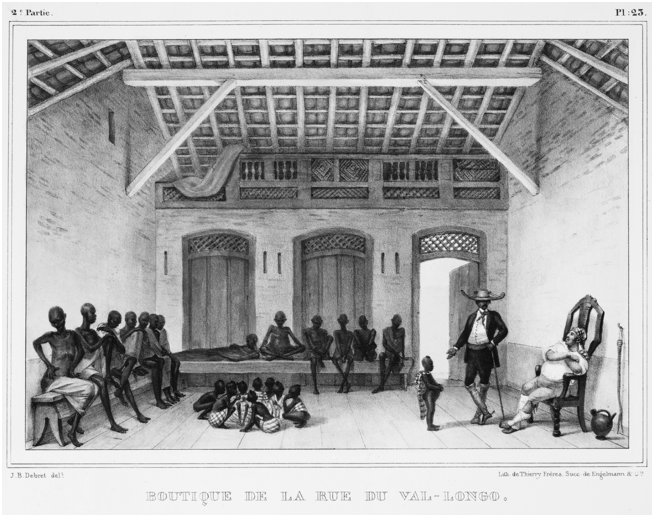
Given all this, it is conceivable that having survived almost fourteen years in Angola, Luis Abreu hoped to resettle in Brazil. Maybe his family had left Angola while waiting for the royal right of safe return, because of economic considerations, or both. Or maybe he wanted to retire to Brazil due to his failing health – documents suggest that Luis had been ill for some time. Indeed, it is surprising that he lasted in Angola so long. Be that as it may, it seems as though he had been impeded in his plans: his petition notes that he had amassed some wealth in Angola that should have been sent to him in Rio de Janeiro, but had not been; because he was now feeling better, his family would like to return, at their own expense, to Africa.
For Luis Abreu and others, the world of unequally positioned locales created through Portuguese (and European) maritime expansion was also the space of action and maneuverability. While the transatlantic zone, with its affordances and limits, opened some possibilities, it was also striated by restrictions on Cigano mobility and activities. Luis’ parents, at least, were born in Portugal, his wife’s parents in Spain, and his own trajectory had led him from Angola to Brazil, and back to Angola; there might even have been other stops along the way for this family. In November 1737, in recognition of his services and because he had no criminal record, he was granted a royal permit to return from Rio de Janeiro to Angola along “with his family,” “so they can earn their living.” They were allowed to move to or settle in Brazil and Angola without the impediments of courts or authorities, although Portugal seems to have been out of the question.
Conclusions
Romani people played an important role in establishing and maintaining the Portuguese overseas presence, especially in Africa and Brazil – generally involuntarily, but sometimes also voluntarily. Even though they never constituted the majority of convicts sent to galleys, the army or colonies, penal transportation became central to their legal, political and social identity as Romani Portuguese. It set them apart from the rest of the population, attributing characteristics specific to them, and limiting their sphere of action. The threat of degredo was on the horizon for all Romani people and penal banishment and its management should be seen as the defining feature structuring the Romani social position in the early modern Lusophone world. It was not just an epiphenomenon of interethnic relationships, but shaped all aspects of Romani family and community life.
In places like Brazil and Angola in the seventeenth and eighteenth centuries, it gave rise to Romani communities, as many – if not most – of the Ciganos who arrived were convicts banished from Portugal or other locales of the empire. Degredo influenced the lives of these men and women – where they could live, what they could do, how long they were expected to stay and where they could go next. It also played a key role in the lives of those Ciganos who arrived in the colonies on their own accord. In historical sources, this becomes visible in their interactions with authorities, when such individuals never fail to stress that they arrived by their own will or that they were natives to a locality – avoiding any ambiguity in their status was of utmost significance.
Penal transport also played a role in shaping Romani lives and communities in Portugal. In early modern Portugal, since the sixteenth century, the galleys just as degredo – as legal restrictions on movement and residence and, above all, as forms of penal exile – were a common feature of all antigypsy legislation. The legislation singled out Romani people as a potential labor force at the oars or for the colonies, and simultaneously problematized and criminalized Cigano kinship, culture and life. The Cigano way of life was deemed scandalous, something that should disappear from the kingdom and the colonies; deportation was frequently accompanied by a prohibition of Cigano cohabitation, modes of dressing, language and so on. Penal exile constantly threatened Romani social reproduction in Portugal through imprisonment, separation of families or community sweeps through which ships to colonies were to be filled with new forced colonizers.
The history of Romani presence in Angola, North Africa, São Tomé, Cape Verde or Brazil, as well in Portugal, cannot be thought of without taking into consideration the relationships between various South Atlantic – and other – locales. The names of the vast majority of degredados, including Ciganos, are unknown, as they would not normally make it into official correspondence between authorities. Whenever such names appear, they are only preserved in petitions, royal pardons or documents related to their transport. Their story also urges historians not to treat Romani experiences and histories in isolation. In Battel’s account, the Romani, Moorish, Portuguese and other soldiers tried to escape together. This fact is not to be taken lightly; rather, it is an invitation to further explore how navigating the Atlantic world, carving out a meaningful existence or resisting was only possible for Ciganos by relating to others. This is true, even if, through resisting assimilation and community rupture, they also confirmed their cultural autonomy and way of being in the world as Ciganos.
Introduction
Romani people significantly and fundamentally shaped, and were shaped by, transatlantic ethno-racial projects between the fifteenth and nineteenth centuries. They were considered, and considered themselves, in relation to the evolving web of beliefs that bound people from four continents together and that prompted new concepts and categories transformative to the lives of all Atlantic inhabitants. Their physical and ideological presence as familiar outsiders made them a referent and a template for non-Romani Europeans anxious to comprehend and control less-familiar outsiders being racially generated and sorted through colonial encounters and administration. At the same time, Romani people also made choices informed by a racial matrix within which they maneuvered. Ideological exchanges and personal interactions formed conceptions of transatlantic difference with Romani people playing a crucial part in these processes.
This chapter exposes the ideological work that made impressions held about Romani people possible for non-Romani Europeans, while simultaneously considering how Romani people participated in the construction of imperial racial regimes. It is an addition to an emerging literature in Critical Romani Studies that theorizes how antigypsyism has become one stabilizing dimension of whiteness as well as a crucial component of global racializing practices in general.Footnote 1 By stretching the frame to include European colonies and colonized subjects, it complicates recent scholarship that describes how Europeans, through analogous comparisons, invented “Gypsies” while inventing European modernity.Footnote 2 Turning Romani people into foreign locals in Europe would not have happened as it did, however, without the nearly simultaneous encounters between Europeans and Indigenous Americans, and the accompanying invention of “Indians” in European thought. The chapter explains this by drawing on Noémie Ndiaye’s ideas of “racial scripts” as trans-imperial “metaphorical strains” that “were not simply ornamental” but rather “resources” that generated racial categories and organized racial power relations. By producing ideas about one group alongside other groups and oneself, or scripting race relationally, a multidimensional matrix of conceptions and power relations encompassed all. And as matrices are, in another sense, the substances within which reproduction occurs, Romani-inflected racial scripts multiplied, spread and solidified. This explains the constancy of the form across time, space and circumstance.Footnote 3
To show this, I augment Patricia Galletti’s ideas about how “under the imperial gaze, the indios and the Gitanos were part of the same repertoire of otherness,” but I move beyond seeing Romani signifiers as a unit of otherness in and of themselves.Footnote 4 I also move beyond Tamar Herzog’s juxtaposition of the exclusions from full community membership that African, Romani and Indigenous actors faced as local yet foreign within European polities. By relating these ideas, categories, policies and experiences within a transatlantic frame the linkages between powerful new types of belonging and estrangement surface.Footnote 5 This chapter also differs from prior scholarship that explores images of Romani people,Footnote 6 Native Americans,Footnote 7 or African and African-descended peopleFootnote 8 in the minds of non-Romani, imperialist, whites thinking about themselves through thinking about another. Such scholarship usually treats in isolation a people being depowered through the descriptive and often degrading words of those with imperial or national aims and conceals the more complex situation at work. Instead, by drawing on notions of relational racialization as expressed and constructed through racial scripts, I expose and track an ideological layer that lightly, but tightly, engulfed all Atlantic subjects.
Race did not just emerge out of new transatlantic encounters, nor was it a logical consequence of even earlier European experiences with those outside Europe. Rather, Romani people’s fifteenth-century arrival to Western EuropeFootnote 9 colored the way non-Romani Europeans made sense of other new people they encountered and who also looked and acted in unexpected ways. That Romani people had arrived in many European places just as new transatlantic sojourns started unfolding meant that the ontological practices developed in response to Romani people were just settling into the minds of Europeans as European westward explorations began. As a result, European views of Romani people, Native Americans, Africans and themselves as Europeans (and eventually as white) co-developed; precisely because of the near synchronous exposures, the scripts attached to each category of people remained dynamic and reiteratively overlay scripts about the others. Thus, it is unsurprising that the demarcations that had been most often applied to recently arrived Romani people to Europe – those related to physiognomy, mobility, insularity and respectability – remained conceptually prevalent during European transatlantic considerations of others and self. These were the symbolic pieces eventually put to racializing work.
Romani arrivals to Western Europe had primed Europeans, especially once abroad, to notice just such criteria when encountering new strangers. This heightened awareness for particular registers of difference led to the co-construction of race via considerations of European, Native American, African and Romani people. Though this occurred unevenly across time, place and purpose, it intensified once the Atlantic horizon became more central to European lives. The internal Other, however, was not merely replaced with the external Other, rather they were commingled, along with the conjoiner, to relationally create race. Components of this “mingledness” could then be called upon as needed during a particular historical moment in service of a specific purpose.
Though the transatlantic relational racialization of Romani and other people always remained historically embedded, the script’s content incorporated a timelessnessFootnote 10 that strengthened the permanency of race. This allowed racialized content to transcend generations. Romani tropes reified as their usefulness grew, which occurred as Europeans recognized the significance and scale of new transatlantic possibilities. Enlightenment notions of progress fed the anxiety of colonizers looking for evidence of their own superiority over the supposed primitiveness of others they felt bound to control and dominate. Thus, the very historical process of early modern transatlantic relational racialization created the timeless “Gypsy” that is still very much alive today. This trope stabilized through its continued contrast with other racialized stock characters, including the civilized European. This chapter briefly describes and analyzes just some of these historical moments.
Non-Romani Europeans used Romani people as a referent when attempting to understand even less-familiar people they encountered during colonization. This practice remained eerily consistent across time, place and people. We might even speak of a metaphorical translucent “Gypsy veil” that covered and tangled together early modern transatlantic actors and from within which racial thinking emerged. Illustrative examples from behind this veil stretch from the sixteenth through nineteenth centuries, and are drawn from Portuguese, Spanish, French and English American spaces, though authors hailed from and moved through an even broader geography. Several people and policies even had Central European connections. That the authors of most sources were either transatlantic travelers or engaged in transatlantic conversations reveals a mobile ideology active across time and space.
Iberian Atlantic
The earliest known example of a European engaging with the Americas through the “Gypsy veil” comes from two 1501 letters written by the Venetian ambassador to Portugal, Pietro Pasqualigo. In October of that year, over fifty men, women and children, Natives of today’s Greenland or Newfoundland and some of the first Indigenous Americans to arrive in Europe, landed in Lisbon. These kidnapped families were then put on display. The week after their arrival Pasqualigo attempted a description: “They are of like colour, figure, stature, and aspect, and bear the greatest resemblance to the cingani.” This first documented instance of a European linking Romani people with Indigenous Americans soon spread via a Latin translation made the following year and a French one in 1522. Over the centuries, Pasqualigo’s letters were translated and reprinted many times ensuring broad exposure to his words. To him, physical appearance prompted the “resemblance,” and though other aspects would soon emerge, physiognomy remained a coherent thread. Likewise, this instance arose from a violent context: coercion and power accompanied transatlantic relational racialization from the start.Footnote 11
About fifty years later, José Anchieta, the Canarian Jesuit missionary to the Portuguese colony of Brazil, attempted to familiarize his readers with the Native people there through relational considerations. After describing Indigenous Brazilians as lacking cities, laws or councils, he recognized them as a nation divided into many smaller nations, most of whom wandered. From these points, he continued:
You may recognize some similarities in the vagabond race of men who brag that they are descended from the dregs of the Egyptians … whom we call Zingaros in Europe: [and] who also seem to be related by their bronze color to Brazilians, although the Zingari are prone to theft, which the Brazilians abhor. The Zingari avoid wars, which consume the Brazilians. They wear our clothes and carry out some small trades by which they earn money. The Brazilians are naked, inert, and hostile to labor, with no other industry than hunting and fishing.
Here, while skin color remains, he further explains each group vis-à-vis the other and himself via contrasting behavioral traits. Assumptions of his own civility and the savagery of the others can be implied by his recounting levels of honesty, violence, mobility, motivation and civic attachment.Footnote 12 Today a Catholic saint, Anchieta is considered a founder of both São Paulo and Rio de Janeiro. His linguistic, ethnographic and literary writings circulated broadly in both manuscript and print form through Jesuit networks. It was common for later Jesuits to pull from former ones in ethnographic typologies, especially of the Americas. This has prompted one historian to note their important role in creating “a distinct ontological category of ‘Indian.’” But this ontological “Indian” came to exist, at least partially, through an ontological “Gypsy.”Footnote 13
This linkage appears again in a 1554 chronicle left by the German explorer, Ulrico Schmidl, who had traveled with the expedition that founded Buenos Aires two decades prior. Schmidl recalled his first encounters with the Indigenous Querandi people through the lens of his assumptions about Romani people in the German lands. Written to satisfy a public curious about the Americas, Schmidl undoubtedly strove to make legible a place few Europeans could imagine, much less experience. Though brief, his comparison suggests that both Romani and Querandi peoples’ mobility and perception as outsiders, even within their respective homelands, functioned similarly enough to illuminate his German-speaking audience about both others and self. As he explained it, the Querandi “have no place of their own in the country; they roam the earth just like the Zigeuner here in German countries.”Footnote 14 Schmidl tethered the two groups together in a familiarizing practice, while also tethering them both to himself in contrast – white Europeans did not “roam.” Both this practice and its ideological contents would endure.
The “Gypsy veil” Schmidl alerts us to, unfurled further to encompass other people and situations. The farming practices of settler colonists near São Paulo troubled royal authorities enough in the 1640s that they rhetorically explained these agricultural methods relationally under the influence of a Romani-infused perception. Utilizing slash and burn husbandry techniques, which had been learned from local Indigenous farmers, meant that colonial agriculturalists would “se azingarem,” or move about like Ciganos. This concerned bureaucrats desirous of settled populations and echoed complaints about Portuguese Romani people, whose mobility at this time, somewhat ironically, often resulted in their banishment to Indigenous American homelands. To be appropriately Portuguese in Brazil meant rejecting behaviors ascribed in common to Indigenous and Romani people, illustrating how the generation of racialized ideas about one group occurred alongside others and self.Footnote 15
In Spain, this veil expressed itself in more practical ways. Considerations of how to manage Romani people there often did so alongside Indigenous American subjects. The earliest writings on the matter aimed to keep the two groups apart, whereas later ones suggested combining the two together. No matter which outcome was pursued, considering each together intensified the linkages they were imagined sharing. From 1581, Gitanos were barred from immigrating to Spanish America on the grounds that they were harmful to attempts to convert the Native people whose “natural simplicity” made them gullible victims to Gitano “tricks.”Footnote 16 When reconsidering the potential to deport Gitanos to the Americas in the mid-eighteenth century, similar concerns were raised. A 1749 report submitted to Ferdinand VI included among the disadvantages of doing so, “that if they live badly in Spain, in the Indies they will live worse and will pervert the poor Indians.”Footnote 17
Other Spanish thinkers suggested an alternative possibility that presumably seemed logical considering the closeness of Romani people and Indigenous Americans in their minds. In conversations about what to do with those interred as part of the “Great Round-Up,” a coordinated attempt begun in 1749 to arrest and then eliminate every Gitano in Spain, the statesman and reformer Pedro Rodríguez de Campomanes suggested repealing the 1581 decree to allow for the removal of Gitano children and single women to American colonies. The latter were to marry Indigenous men and thus facilitate the disappearance of Spanish Gitanos; presumably these “Indians” might vanish as such as well. Other proposals encouraged transporting young Romani boys and girls to sparsely inhabited islands and colonies and marrying them to locals. This proposal imaginatively assumed that all parties would recognize the benefit of this plan, since Gitanos would never “be able to pass for Spanish” and since none would want “to retain the odious name of Gitanos.” Though never enacted, later plans reiterated separating Romani women and men geographically and sexually. Women should be sent to the American continent to marry “Indians, Mestizos, or creoles,” and men to colonial islands to marry “island women.” The goal was the wholesale destruction of Romani people via population control measures – policing their reproductive choices in the context of imperial Atlantic possibilities – that required an Indigenous population into which they might disappear.Footnote 18 Though there was never any explicit mention of what this would mean for the Indigenous host communities, one can presume that the spread of “Spanishness,” even through a corrupted Romani version of it, might also be seen as good for the empire. The web of beliefs that bound non-Romani and Romani Spaniards and Indigenous Americans together simultaneously expressed and generated racialized content, policy and experiences. Though Atlantic in origin, such dynamics spread. The lessons from such racial governance in Spanish America were carried to Central Europe through the mechanisms of Habsburg rule.Footnote 19
That Gitanos and Indigenous Americans engaged with each other in both the Americas and Europe suggests their role in the creation of this ideological proximity that then impacted some of their choices. In just one example, from 1755, Manuel Ximénez appealed a prison sentence of forced labor that had been issued for breaking one of the numerous anti-Gitano decrees then active in Spain. He appealed on the grounds that his parents were not Gitanos, but Natives of Cuba. Ximénez believed that the confusion about his ancestry stemmed from his wife, María Francisca, being “de nación Gitana,” which had led others to assume his Gitano rather than “Indio” ancestry.Footnote 20 One’s reputation was often relied upon by Iberian and colonial administrators, who with anti-Gitano restrictions in place were then confronted with identifying and sorting Romani people from everyone else. One Buenos Aires judge thus concluded “that it was impossible to determine with certainty who was a Gitano and who was not,” although in Spain many people believed in clear signs that gave individuals the appearance of Gitanos.Footnote 21
That Native Americans and Romani people socialized together led to confusion about the ancestry of individuals and where they should be placed within imperial Atlantic typographies. As a result, non-Romani people were often caught up by decrees intended to control Spanish Gitanos, evidencing the convolution of perceived racial content and categories. The blacksmith Bartolomé Fernández, for example, had been ordered to leave Iznájar in 1746 and move to Córdoba, a city authorized for Gitano residences. A decree of that year demanded that Romani people relocate to one of forty-one approved towns across mainland Spain. Fernández appealed this decision on the grounds that he was “de nación Indiana.” His blacksmithing trade, one traditional for Gitanos to practice and recently made illegal for them, could have made him suspect, especially if he looked a certain way or socialized among certain people. Whatever the cause, his claimed identity was verified by the authorities, and he was allowed to remain in his hometown. Yet his experience illustrates that the process of constructing race disrupted lives just as readily as any reified notion of race.Footnote 22
Further evidence from the Spanish Atlantic illustrates the texture of this process. When the Polish Jesuit Florian Paucke noted of his time with the Moqoit people in today’s Paraguay during the mid-eighteenth century that “the color of the body and face of these Indians is the same as that seen in the Zigeuner” he wove and spread the “Gypsy veil.” Paucke descriptively continued, “one of these boys was of white appearance and color, not like the others with a Zigeuner complexion … [Others] have a white-yellow face and somewhat reddish cheeks, others are light-brown or dark-fleshed, others dark-brown, others like the Zigeuner in Hungary.”Footnote 23 Here again the network of Jesuit priests played a role in the circulation of these physiognomic ideas.
Two other Jesuits, writing from Spanish South America, one from Río de la Plata and another from northern Mexico, related the mobility of certain tribal groups to Gitanos in Spain, thus securing the assumption that Spaniards should not be mobile. “The Jobas are a nación muy Gitana, an untamed and wandering people. Although there are a number of pueblos where they can come and live, most of them migrate like Gitanos from canyon to canyon,” noted Joseph Roldán in 1762.Footnote 24 Similarly, Manuel Moreno Alonso described a Puerto Rican stopover during his 1747 journey between Cadiz and Veracruz by noting how the Indigenous people, called “Jíbaros,” struck him with their “mulatto-like” skin and the women’s “Gitano-like” appearance.Footnote 25 Physiognomy and mobility, in these examples, helped these Spanish men make sense of Indigenous Americans through conceptions they held about others and themselves. Comprehending through racial scripts generated and entrenched a racial matrix throughout the Iberian Atlantic world and beyond.
French Atlantic
The racial matrix woven within the Iberian Atlantic tangled with analogous assumptions and experiences from the French Atlantic world. French Romani people, called Bohémiens during the early modern era, served as a racial reference for non-Bohémien French colonizers within an ideological sphere that Romani people’s actions helped entwine. In 1727, the Jesuit Paul Poisson denigratingly compared the French voyageurs who worked as traders among the tribes, to both Indigenous and Romani people. He notes: “To see these men, clad with but one garment, more sunburnt and more swarthy than the Savages – stretched upon the sand or squatting like monkeys, devouring what they hold in their hand – one does not know whether they are in a company of Bohémiens, or of people holding a witches revel.”Footnote 26 His comment reveals the fear of French men declining into “savagery” as well as the relational perspective at work. Poisson’s reference to dark skin color, lazy and animalistic postures, and clothing all imply an attempt to position Bohémiens, Native people and white voyageurs into his racializing worldview vis-à-vis each other. He reveals a perceived closeness between Bohémiens and non-white people, as well as his assumptions about what it meant to be French and white. Much later, another French traveler exemplified this proximity when he, with some uncertainty, described the musicians at an 1802 New Orleans carnival ball as being “Bohemes or people of color strumming heavily on their violins.”Footnote 27
This closeness bears out within many eighteenth-century Louisiana sources. Some French colonial Bohémiens, many from families deported in 1720, did in fact choose to make connections with Black and Indigenous people. The Bohémienne woman Cécile Christophe Varangue, born soon after her mother’s transportation, and her daughters François and Babé socialized and formed intimate, familial and professional relationships with Indigenous men. At least one Anglo-Romani woman conducted herself similarly with an African man in Virginia at the end of the prior century.Footnote 28 These connections caught the attention of authorities working to regulate race in both colonies. In 1772, a Louisiana commandant recommended the removal of a young Indigenous girl from Varangue’s care; he also supported her and her daughter Babé’s imprisonment for not marrying in ways suitable to the local religious authorities. A male relative of these women, one M. Bonnite, was recommended for deportation to France for putting “the Indians at risk of becoming unruly.” Administrative complaints against these Bohémiens involved their relationships with tribal people, evidencing both the social choices they made as well as the concerns these choices provoked.Footnote 29 Colonial agents desirous of enhancing their own racialized power might try to manipulate the racial matrix by separating those who contemporary racial logics had placed close together. Though the results were mixed, such official action undoubtedly solidified and entrenched the hierarchy of racial scripts.
Other evidence proves these women’s choices were not unique. Two Louisiana Romani women married free men of color – one under French rule in 1725 and the other under Spanish rule in 1779. This 1725 marriage between Marie Jacqueline Gaspart “Bohemian” and Jean Baptiste Raphael “nègre libre” was the first officially sanctioned interracial marriage in the colony. The special permission needed to approve this marriage was likely only granted because Gaspart was Bohémien. There are no known examples of any non-Bohémien French white women (either officially or by custom) marrying an Indigenous or African-descended man throughout the early French Atlantic. Regulating sex, especially women’s intimate matters, was crucial to structuring race throughout European empires. Both granting and limiting intimate options were ways of racializing power. That Bohémiens might be granted and make intimate choices other French women did not reveals the entanglements between the ideology and experience of racialization influencing their lives.Footnote 30 Romani men also married Indigenous women and free women of color in the Louisiana colony. One 1802 account described some of these men, who worked as shipbuilders for the coastal trade, as “lazy” and “with little ambition,” but “happy, and liv[ing] perfectly tranquil” lives. The difficulty of this work, so crucial to the colonial enterprise, suggests that the assessment of their character drew from their proximity to Native people or antigypsy stereotypes, rather than from the reality of their labors.Footnote 31
Complaints about how people fraternized might also consider Bohémiens in ambiguous racial positions, evidence of the uncertain overlap between racial content and categories that a generative matrix might provoke. When in the winter of 1744 the Governor of Louisiana Pierre Vaudreuil forced the resignation of a white French ensign “for having led a villainous life with Negroes and Bohémiens” he revealed his own conceptions about what it meant to be French and white.Footnote 32 This example also reveals the social choices made by certain white, Bohémian and Black colonists: they kept each other’s company even when doing so made them suspect. Grouping separate categories together within a white supremacist hierarchy thickened and ensured the continued conceptual and experiential relevance of the “Gypsy veil.”
Despite these examples showing Bohémiens associating with Native and Black Louisianans, such choices seem to have been the exception. Most Louisiana Bohémiens who can be identified seem to have chosen to consort with other Bohémiens or non-Bohémien white French colonists. The increasing limitations placed on Indigenous people and free people of color motivated Bohémiens to distance themselves from an undesirable status into which they might conceivably be folded, and to position themselves as white, if they could. One final example from the French Atlantic illustrates this impetus.
The 1743 words dictated by Jean Baptiste “La Chaume” Chevalier, the only known Bohémien colonist to have his thoughts regarding race recorded, reveal his nuanced comprehension of the colonial racialized social order and his insecure feelings about his place within it. In 1741, the recently arrived soldier was convicted of deserting and punished with bound labour. After a fight within his abusive household, an enslaved African man was called to tie up La Chaume in preparation for corporal punishment. Realizing his fate, La Chaume stabbed himself because, in his words, “he did not deserve to be mistreated by some blacks.” The inverted racial power of this punishment sent a message La Chaume acutely felt. “To be ordered by a negro” rather than his white superior, as he put it, was an outrageous affront to his sense of how he should be treated. Through his actions and words La Chaume expressed his internalization of the colonial racial order and the assumptions he held about his own place within it. He expected access to privileges of whiteness, which to him meant avoiding punishment by Blacks. In staking this claim La Chaume stabilized race and bound discreet notions of difference more tightly together.Footnote 33
Anglo Atlantic
English colonizers also used Romani people – called Egyptians or Gipsies/Gypsies – as references from the beginning of their imperial project. Two Puritan founders of the Plymouth colony, Edward Winslow and William Bradford, published in 1622 in London an account of the colony’s founding to attract future investment and emigration. Within this, the authors made sense of those they termed “the savages” by describing them as “of the same complexion like our English Gipsies.”Footnote 34 Years later, William Penn, the founder of the Pennsylvania colony, similarly noted in a 1686 promotional tract distributed throughout England, “The Natives are generally tall, straight, well-built; Of Complexion, Black, but by design, as the Gypsies in England. They grease themselves with Bear’s fat clarified, and using no defense against Sun or Weather, their skins must needs be swarthy.”Footnote 35 In this interesting commentary Penn suggests that both groups carry the potential for redemption from their supposed savagery – that is, their complexion was self-imposed and thus might be modified. European civilizing forces – well-dressed and white – could be put to good work on both people. Already a century prior, Tudor laws had criminalized “counterfeit” Egyptians in England, who were accused of darkening their skin as part of their deception. That people falsely presented themselves as members of the early modern Anglo-Romani community was a well-accepted presupposition, and one reinforced through literature and drama.Footnote 36 When Penn noted seeing Native “women comely, as some Gipsies in England,”Footnote 37 it was within the context of a complex of well-established antigypsy laws, attitudes and assumptions. That Penn hoped the Lenape might voluntarily convert to English-style living to allow his colony to develop in alignment with his Quaker pacifism might also have motivated his interpretation of the mutability of external markers of difference and the potential to spread European civilization.Footnote 38
These widely distributed publications ensured broad exposure to such interconnected ways of thinking. Practices of racialization clearly transcended North America, reaching throughout the Anglo-Atlantic world and even beyond.Footnote 39 And, like the confusion caused in Spain when Indigenous Americans appeared out of context, English observers might similarly be affected. This is expressed in The Jamaica Lady, an anonymous novel published in 1720 in London. In this, Holmesia, the protagonist, “herself a Creole, and consequently of a pale yellow Complexion … [spoke] … a sort of jargon, being a dialect peculiar to the Natives of that Island, it being partly English and partly Negroish.” In one scene, she questioned a Londoner who “looking on her, thought by her appearance, and her cant, that she was a Gypsy.”Footnote 40 Using skin color and dialect to make and mark group boundaries, while connecting them together, recomposed the matrix that linked and replicated English, Black and Romani people.
Two eighteenth-century German pietist immigrants to British North America again tied the transatlantic racial matrix to Central European antigypsy thought. The first, Johann Bolzius, who led the first group of Salzburger immigrants to Georgia, saw his 1751 description of the region published as a promotional travelogue in Germany. Within this he described how the Natives “who roam through our areas at times are no better than the Zigeuner in several parts of Germany, [they] are much devoted to drinking and other vices, steal horses from the pasture, and sometimes shoot oxen and crows for the sale of a piece of meat or the bells hanging around their neck.”Footnote 41 Henry Melchior Mühlenberg, a missionary to Pennsylvania, conjoined African Americans and Romani people in a 1774 report from Bolzius’ community. Even Blacks who had become Christian, he warned “retain their savage spite and cunning trickiness like the Gypsies in Europe.”Footnote 42 The content of these behaviorally defined scripts fostered both proximity and distance along a hierarchy of race. By degrading Romani people alongside Indigenous and African Americans commentators constructed and laid claim to their elevated sense of European whiteness.
Actual Romani people who crossed the British Atlantic navigated this cloak of assumptions the best they could. Three members of an Anglo-Romani family, Joseph, William and John Smith had been “transported for their natural lives” to Maryland in 1767 after being found guilty of stealing and killing three lambs. Just weeks after their arrival, they ran away together from the ironworks where they had been sold as seven-year bound laborers. The newspaper advertisement placed to identify and retrieve them began with a racial juxtaposition: “Ran away on Sunday evening … Joseph Smith, an old man, a Gypsie, very much resembling a swarthy mulatto in colour.” William, Joseph’s brother was “nearly of the same color” and John, William’s son, “nearly of the same complexion as his father and uncle.” Though using color words to signify has its own Anglophone history, connecting Romani people with those of a particular genealogical descent positioned them rhetorically, conceptually and practically alongside other not quite white people in the colonies. In so doing this author scripted race relationally.Footnote 43
A generation after the Smiths’ ordeal, white legislators in the neighboring state of Virginia considered Romani people alongside “negroes and mulattoes.” The 1792 repeal of a 1736 statute that had banished Romani people from Virginia, carefully distinguished between Romani and Black people, noting that though “Egyptians or Gypsies” were no longer forbidden in the state, “the migration of free negroes and mulattoes” remained illegal.Footnote 44 Emphasizing Romani peoples’ distinctiveness under the law from free persons of color by the white Virginian legislators shows the shared consideration of the three groups even through the separation of their privileges.
Racializing Romani people relationally occurred in less instrumental ways as British cultural forms moved around the Atlantic. The nature of the matrix accounts for both well-established hegemonic configurations as well as weaker or even dormant possibilities. As such, expressions of the scripts facilitated slippages between forms. This can be illustrated in a reimagining of Guy Mannering within a North American context. Walter Scott’s works were hugely popular among a US audience eager to participate in the Anglo “world republic of letters”Footnote 45 and to connect “beyond the boundaries of nations.”Footnote 46 The central character, Meg Merrilies, a powerful Romani woman, allowed Scott to comment on a plethora of themes. She was a member of a “tribe” who as “the pariahs of Scotland, living like wild Indians among European settlers,” saw their “own customs, habits, and opinions” separate them from “members of the civilised [sic] part of the community.”Footnote 47 In the wake of Scott’s popularity, the English writer Barbara Hofland published The Stolen Boy, an Indian Tale in New York in 1830. This children’s book presents an American version of Guy Mannering by recontextualizing the Romani characters as Native Americans. In the first lines of Hofland’s story, a “Spanish” boy living on the Texas frontier asks his father about the “strangest people that ever were seen who are sitting opposite to the garden. They are not Gipsies, such as we used to see in Spain, but yet they seem to be wanderers like them, and to live out of doors.” The book presents a mash-up of stereotypes that includes references to cannibalism, kidnapping and thievery. Securing and confirming the power of whiteness – and even Europeanness – on the US borderlands worked by grouping and debasing Native and Romani people as part of one whole.Footnote 48
Though this literary linkage suggests the ideological existence of the transatlantic “Gypsy veil,” such concepts never stood alone outside practical application. The lived experiences of both Romani and non-Romani people cycled together with such concepts. As a result, those who engaged with this racial matrix came to expect certain things of Romani Americans. In an article from the Philadelphia National Gazette from 1834 (and reprinted elsewhere) the unnamed author explains his knowledge about Romani Americans based on the literary “Gypsy.” He had “seen numbers of a Gang of Gypsies occupying a spot of waste land” near Kinderhook, New York, who “have the features, complexion, and habits characteristic of the Gypsies of writers.”Footnote 49 When another author compared a group of white men bathing with “half tamed Indians” he linked this to “a vivid idea of the Gypsies as represented in the toy books of children.”Footnote 50 The linkages and leakages between fact and fiction condensed the tightly woven transatlantic racial matrix bolstered by the connections Romani people generated in non-Romani people’s minds.
The “Gypsy veil” spun by the transatlantic racial matrix spread across the early US just as subtly as elsewhere. In 1810, New York City mayor De Witt Clinton described in the center of that state “an encampment of Indians manufacturing brooms and baskets … . These Indians are now the Gipsies of our country.”Footnote 51 Newspaper accounts used Romani and Indigenous people to explain the other to readers. Regular recourse to descriptions of housing, mobile livelihood, small-scale trade, clothing and physical features painted two people with one brush.Footnote 52 One author even supposed that due to having so much in common, both being “untamable – one the wild man of civilized countries, and the other of the forest” – they would begin to mingle in the Americas, with Romani people literally replacing Indigenous Americans and settling into their abandoned wigwams.Footnote 53
Some Native Americans themselves thought about and with Romani people, but in a very different context. In 1828 the Cherokee Phoenix, a bilingual English and Tsalagi newspaper, reprinted a short summary of a work of unknown provenance its editors titled “Gypsies in England.” The selection the editors chose tellingly begins by describing an increase in the Anglo-Romani population, a fact that may have been of interest to tribal people aware of predictions of their own decline. The racial perspective expressed must also have resonated. Though described as earning a living “by means of fraud, theft, robbery, or some species of crime” they do so only because “they have actually no alternative … . For such is the prejudice against them, they cannot procure any respectable occupation.” The sympathetic stance continued, “they are betrayed by their very faces: the countenance of a Gipsy is recognized in England almost as readily as that of a negro. Perhaps the English Gipsies are the only people in the world who are born under cruel doom of perdition – Enviable indeed is the condition of the naked savage, compared with that of our Gipsies.”Footnote 54 One wonders if the Cherokee editors and readers might not have felt in the Anglo-Romani circumstance a sense of shared trials and troubles in the face of white attitudes and actions, no matter the racialized assumptions embedded in the narrative.
In considering the position of Romani people, the Cherokee editors added an additional layer to the thickening racial matrix. Playing with the specter of the vanishing Indian connected Native American and Romani experiences in ways that others would also note. This is particularly evident in the popular nineteenth-century travel narrative, a genre that straddled literary and ethnographical writing, and “produced ‘the rest of the world’ for European readerships.”Footnote 55 It also racialized Native, Black and Romani people as part of the “Gypsy veil’s” non-white weft to contrast with the white sensibilities of the writers. By the time these English travelers made their way to North America, they had already encountered Native people through the armchair literature of others. Whether they had personal encounters with actual Romani people, they had certainly encountered them in British literature. These literary encounters primed the touristic expectations of seeing “Gypsy-like” Indians. The “battery of assumptions and predispositions” travel writers brought to this genre replicated expectations in authors and audiences alike.Footnote 56 Of the dozens of examples, a few will suffice.
Augustus John Foster, secretary to the British minister in the United States, commented of one 1806 Chickasaw delegation that they “had very much the appearance of Gypsies, exactly their colour and their lank black hair – a boy in particular had very black eyes.”Footnote 57 One year later, the English writer and painter, John Lambert, while traveling through Canada and the United States promised to “exhibit to the European world” “with fidelity and truth” North America’s “distinguishing features … in their natural colours.” To do so, he made Indigenous Americans legible through drawing “a great resemblance to the outcast race of wandering Gipsies.”Footnote 58 Another English visitor, writing for the Niles Weekly Register, compared the lives of English Romani people to “that of the savages, whom I have seen on the borders of the River St. John in New Brunswick, except that the later gain their food by hunting and fishing and the former by theft.”Footnote 59
This practice continued for decades. Richard Longeville Vowell described the South American Chinganéros in 1831, as “a peculiar race of wandering Criole Minstrels, whose habits, and even whose appellation, strikingly resemble the Zingances, or Eastern Gypsies.” They were good dancers and musicians, he described, as well as fortune tellers and sorcerers.Footnote 60 Similarly, in an account from the shores of Lake Michigan, the Englishman Godfrey Vigne described how his “half Indian and half Canadian” guide took him to “the very darkest part of the forest” to see “an Indian doctress and fortune-teller.” He began curious yet became disappointed that “her manner, her language, and the substance of what she said, differed in no respect from that of a common English Gipsy woman. She shuffled a dirty pack of cards, and told me of the fair lady and the dark lady, the false friend and the true friend, the treasure to be found and the journey to be taken with the same chapter of accidents and unavoidable.”Footnote 61 Assuming this encounter did in fact occur, and was not merely a literary embellishment drawn from behind the “Gypsy veil,” one wonders about the genealogy of the fortunes this woman foretold. By midcentury such pieces had proliferated enough to provoke critique: “The traveller who, with poetic fancies respecting the American Indians, first sees one wrapped up in his blanket in a log-hut tavern, can scarcely be more disappointed and mortified than the writer when he first saw a Gypsy encampment.”Footnote 62
Conclusions
Though ideas about difference changed over the course of the early modern era in both subtle and dramatic ways, when non-Romani Europeans thought about people new to them a Romani patina tinged their perception. This “Gypsy veil” helped Jesuit missionaries comprehend, create and control, through analogous comparisons, the Indigenous people they anticipated converting and settling in mission villages. It helped French and Spanish bureaucrats order and regulate their domains. British travelers to the United States saw through the veil to make sense of a new nation at once familiar and strange. At the same time, such practices cohered a sense of Europeaness in response to their Romani neighbors, who had been made familiar outsiders living in their midst. The consistencies shared among the ideas generated during these distinctive histories expose the “Gypsy veil’s” imprint on Atlantic thinking and understanding. Across four centuries and as many continents and empires, non-Romani Europeans contrasted and linked Romani, Indigenous and African-descended people with and to themselves to create their own sense of whiteness, a crucial feature of this veil.
This veil thickened or was perhaps rewoven even more tightly whenever non-Romani Europeans made connections involving Romani people. Such consistent reproduction gave a certain sense of timelessness to the tropes. Each reference to “Gypsies” made in contrast to others and self, reproduced anew, again and again, their unchanging character, which then could be juxtaposed with the progressiveness of European modernity. It also renewed the expectation of, and sometimes even the direct call for, their disappearance, even while their assimilability might be doubted. Alongside this, indeed, as another aspect of it, the “vanishing Indian” and the “civilized European” emerged, grew and stabilized. The restabilized content of these racialized tropes spread throughout the Atlantic world and beyond. That today we emphasize the anti-Blackness, white supremacy and eliminatory logic inherent in imperial Atlantic projects does not mean these concepts and practices ever stood alone. The diverse and changing meanings attached to Europeanness, whiteness, Blackness and Indianness can only be fully understood by uncovering the traces and untangling the connection made by and about Romani people. The transatlantic “Gypsy veil” still covers contemporary thinking; the fabric’s thickness and the weave’s tightness hamper the rending of these binds.
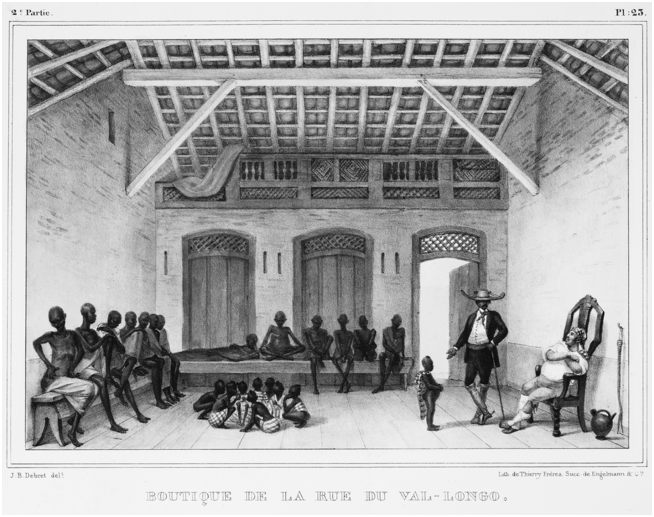

 Open access