

• Circular food resources (CFRs) offer a sustainable livestock feed option in South Asia.
• Informal CFRs use as feed is common but lacks standard regulation and validation.
• Use of CFRs reduces feed costs and supports circular agricultural practices.
• Conceptual SWOT analysis reveals equal number of pros and cons of CFRs feeding.
• Research gaps remain in CFRs’ hygiene, safety, nutrition, and policy across the region.
• Future research should evaluate the effects of CFRs inclusion on dairy animal performance.
The growing availability of underutilized yet potentially valuable food materials such as kitchen food leftovers, surplus or discarded food items from markets, seasonal crop overproduction, food discards from restaurants, and human non-edible parts of crops presents both a pressing challenge and a transformative opportunity for global food production systems (Olaf and Makkar, Reference Olaf and Makkar2016; Benyam et al., Reference Benyam, Soma and Fraser2021). Rather than being treated as waste, these materials could be redirected into productive pathways to enhance food system resilience, conserve natural resources and support environmental sustainability (Olaf and Makkar, Reference Olaf and Makkar2016; Alexander et al., Reference Alexander, Brown, Arneth, Finnigan, Moran and Rounsevell2017). Collectively, such repurposed streams are referred to as circular food resources (CFRs; Olaf and Makkar, Reference Olaf and Makkar2016; Alexander et al., Reference Alexander, Brown, Arneth, Finnigan, Moran and Rounsevell2017; Benyam et al., Reference Benyam, Soma and Fraser2021). Globally, an estimated 1.05 billion tons of food is lost or left unused each year, with households contributing around 60%, amounting to more than US$ 1 trillion in economic loss (UNEP, 2024). The inefficient use and disposal of these resources not only exhausts energy, water, and land during production (Manfredi et al., Reference Manfredi, Cristobal, Matos, Giavini, Vasta, Sala, Saouter and Tuomisto2015), but also generates 8–10% of total global greenhouse gas emissions (Seberini, Reference Seberini2020). In response to the systemic nature of this issue, the United Nations, through Sustainable Development Goal 12.3.1, have set a target to halve such losses by 2030 (UN, 2015), emphasizing the urgent need for circular strategies such as optimized food supply chains, technological innovation, multi-stakeholder collaboration, and supportive policies to fully harness the potential of CFRs in advancing sustainable and inclusive food systems.
In South Asian countries (SACs) with an overall population exceeding 2 billion, approximately 132 million tons of CFRs are generated annually, averaging 83 kg per person per year (UNEP, 2024). These CFRs come primarily from human-inedible kitchen discards, portions of inedible vegetables and fruits from wet markets and supermarkets, unsold vegetables, industrial fruit peels and restaurant food residues (Alam et al., Reference Alam, Velayudhan, Dey, Adilieme, Malik, Bhatta, König and Schlecht2023; Alam and Islam, Reference Alam and Islam2024; UNEP, 2024). This considerable volume is driven by cultural consumption patterns, seasonal overproduction without sufficient biomass preservation strategies, market inefficiencies, limited public awareness and mechanisms to process wastes, rapid urbanization and the absence of robust regulatory frameworks. In SACs, management of CFRs are hampered by inadequate infrastructure, limited formal collection services, reliance on informal waste workers, poor source segregation and a scarcity of effective recycling and valorization facilities (Chauhan et al., Reference Chauhan, Dhir, Akram and Salo2021; Sarker et al., Reference Sarker, Ghosh, Islam, Bilal, Nandi, Raihan, Hossain, Rana, Barman and Kim2022; Alam and Islam, Reference Alam and Islam2024). Moreover, institutional responsibility and systematic approaches for managing CFRs remain largely undefined (Olaf and Makkar, Reference Olaf and Makkar2016; UNEP, 2024). As a result, a large portion of CFRs continues to be disposed of in landfills or open dumpsites where they contribute to greenhouse gas emissions and environmental pollution (Chauhan et al., Reference Chauhan, Dhir, Akram and Salo2021; Habib et al., Reference Habib, Hasan Khandakar, Islam, Sarkar, Alam, Rahman, Sharmin, Hannan and Islam2022). While some CFRs are sporadically reclaimed through composting, biogas production, and use as feed – particularly for dairy animals, these circular economy practices remain limited in scale and adoption (Oosting et al., Reference Oosting, van der Lee, Verdegem, de Vries, Vernooij, Bonilla-Cedrez and Kabir2022; Sarker et al., Reference Sarker, Ghosh, Islam, Bilal, Nandi, Raihan, Hossain, Rana, Barman and Kim2022).
Recently, CFRs have been emerging as an alternative feed source for animals in SACs, as deficits in green fodder, dry fodder and concentrate feed are estimated at approximately 36%, 25% and 47%, respectively, primarily driven by land scarcity resulting from rapid urban expansion, and reliance on seasonal crop production in the region (Samanta et al., Reference Samanta, Bokthtiar and Ali2019). Simultaneously, rising input costs for feed production have led to increased feed prices, placing considerable pressure on resource-constrained farmers in urban and peri-urban areas (Samanta et al., Reference Samanta, Bokthtiar and Ali2019; Alam et al., Reference Alam, Schlecht and Reichenbach2022). These pressures are particularly acute for farmers keeping large-bodied, high-producing dairy animals, which require greater quantities of nutritionally adequate feed that is often difficult to source consistently in densely populated urban and peri-urban environments. As a result, many urban and peri-urban dairy farmers in and around densely populated mega cities are informally collecting or accessing readily available CFRs with little or no cost, but often also without adequate consideration of nutritional requirements, contamination risks, or food safety implications (Oosting et al., Reference Oosting, van der Lee, Verdegem, de Vries, Vernooij, Bonilla-Cedrez and Kabir2022; Alam et al., Reference Alam, Velayudhan, Dey, Adilieme, Malik, Bhatta, König and Schlecht2023). Upcycling of CFRs, be it formal or informal, is mitigating environmental pollution by recovering otherwise lost energy, macro – and micronutrients, converting them into feed, and ultimately transforming them into animal protein for human consumption – thereby aligning with the core principles of circular agriculture (Sarker et al., Reference Sarker, Ghosh, Islam, Bilal, Nandi, Raihan, Hossain, Rana, Barman and Kim2022). However, the broader impacts of feeding CFRs – economic viability, contribution to nutrient cycling and changes in emissions, animal health, production performance, food safety and policy integration – are not well understood in a comprehensive and integrated manner across SACs.
In recent years, various studies have addressed aspects of food loss and waste management, waste recycling, and broader sustainability concerns. Existing reviews have focused on specific dimensions, such as food waste generation (Sarker et al., Reference Sarker, Ghosh, Islam, Bilal, Nandi, Raihan, Hossain, Rana, Barman and Kim2022), approaches to food waste disposal (Zaini et al., Reference Zaini, Yatim, Dasiman, Abdullah and Zainuddin2023) or urban waste management patterns (Alam and Islam, Reference Alam and Islam2024). However, a comprehensive synthesis that integrates these elements and links CFRs to their feed potential, particularly for dairy animals, while at the same time addressing dietary inclusion levels, feed safety and hygienic considerations, aspects of nutrient recycling, and the legal or policy framework is still lacking. A systems-level review is therefore needed to evaluate how CFRs can be effectively and safely utilized as animal feed within a circularity framework, thereby clarifying the specific implications for dairy production systems. This review bridges the gap by synthesizing literature from various fields and applying insights from livestock feeding more broadly to derive specific recommendations for dairy animals. It thereby aims to answer the following research questions: (a) What are the current patterns of CFRs generation, treatment and utilization relevant to livestock feeding across SACs? (b) What are the key opportunities and barriers for recycling CFRs as livestock feed, and how do these pertain to dairy systems in particular? (c) To what extent do existing waste management policies and regulatory frameworks align with using CFRs as feed within circular agricultural systems, including dairy value chains?
The following chapter introduces definitions of the most important conceptual terms.
Circular food resources: This term refers to food materials and by-products that are redirected, recovered, repurposed or upcycled from various points in the food system – such as households, restaurants, markets or food processing units – to be reused in productive ways, such as for animal feed, composting, bioenergy or new food products, instead of being discarded (Olaf and Makkar, Reference Olaf and Makkar2016; Alexander et al., Reference Alexander, Brown, Arneth, Finnigan, Moran and Rounsevell2017; Benyam et al., Reference Benyam, Soma and Fraser2021). Waste governance: A framework of policies, regulations, institutions and processes that oversees how waste is managed. It ensures coordination, transparency and accountability among stakeholders like governments, businesses and citizens (Karademir and Acımert, Reference Karademir and Acımert2024). Waste management: The process of collecting, transporting, treating and disposing of waste in an organized way to minimize harm to human health and the environment; waste management can also be profitable in many contexts (Panchal et al., Reference Panchal, Singh and Diwan2021). Urban and peri-urban dairy farmers: These terms refer to farmers engaged in dairy production within cities (urban) or their outskirts (peri-urban), often operating on small plots of land and relying on alternative or locally available feed sources to supply fresh animal products (often milk, eggs, and poultry meat) to urban markets (Alam et al., Reference Alam, Schlecht and Reichenbach2022; Yousefian et al., Reference Yousefian, Alam, Ramappa, Schlecht and Dittrich2024). Circularity: In the context of food and farming, circularity refers to a regenerative system that minimizes the emergence of CFRs, and maximizes resource efficiency by reusing, recycling, and reintegrating materials into productive cycles to create secondary useful products such as animal feed, thereby closing nutrient and value loops within agricultural systems (UNEP, 2024).
Materials and methods
Ethics statement
The present study did not require the approval of an Animal Care and Use Committee, as the data used came from already published resources.
Systematic review approach
This study employed a systematic literature review (SLR) approach, which involved identifying, critically evaluating and synthesizing relevant research based on well-defined inclusion criteria – encompassing both peer-reviewed and credible grey literature – related to a specific research question or topic, with the goal of generating new integrative insights (Supplementary text: Systematic review process) (Hatab et al., Reference Hatab, Cavinato and Lagerkvist2019). The following sub-sections provide a detailed description of the SLR process.
Study areas
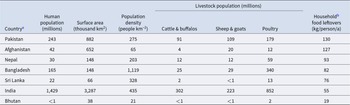
The SACs are similar in governance, socio-economic conditions, food culture, agro-climatic conditions and farming systems, which, in a broader context, provide a valuable foundation for regionally focused studies. For instance, rural communities often feed small amounts of household fresh food leftovers directly to their dairy animals (Alam and Islam, Reference Alam and Islam2024; Alam et al., Reference Alam, Velayudhan, Roessler, Yin, Parthipan, Mech, Soren, Malik, Rao, Bhatta, König and Schlecht2025). However, with severe feed shortages and high feed costs, some urban and peri-urban dairy farmers are now informally using CFRs as feed, whereas a large portion of CFRs generated by city dwellers ends up at waste dumping sites (Labony et al., Reference Labony, Shabnam, Sharmin and Robinson2022; Alam and Islam, Reference Alam and Islam2024). For this study, we have selected SACs that are experiencing high levels of CFRs generation and significant challenges to manage them (Table 1).
Study countries within South Asia with their respective human population, surface area, population density, livestock population and household food leftovers generation (FAO, 2023; UNEP, 2024)

a Maldives: Excluded due to low cattle numbers and limited land extension, which restrict conventional livestock farming and make food waste to feed practices less applicable.
b The exact quantities of surplus or discarded food items from markets, seasonal crop overproduction, restaurant food discards and non-edible parts of crops remain largely undocumented or inconsistently estimated across regions.
Identification of search criteria and literature
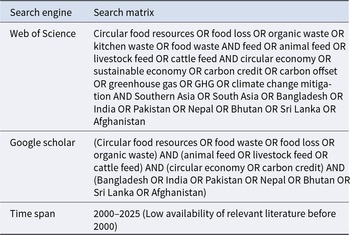
We first conducted a preliminary exploratory search in Google to establish an initial list of relevant keywords, such as ‘circular food resources’, ‘food waste’, ‘circular economy’, ‘animal feed’, and ‘South Asia’, which were then refined and combined into the final search matrix. The results from this initial search informed the development of the matrix of search terms, which were subsequently adjusted for greater precision (Table 2). The main literature search was conducted in Google Scholar and Web of Science. A Boolean search strategy was employed to enhance the retrieval of relevant literature. Additionally, to expand the literature base, papers were collected from ResearchGate and accessible digital databases of various university libraries. A step by step literature search process, including the number of articles excluded at each stage, is outlined in the PRISMA flow chart (Figure S1) according to Page et al. (Reference Page, McKenzie, Bossuyt, Boutron, Hoffmann, Mulrow, Shamseer, Tetzlaff, Akl, Brennan, Chou, Glanville, Grimshaw, Hróbjartsson, Lalu, Li, Loder, Mayo-Wilson, McDonald and Moher2021).
Search codes used in the search of bibliographic databases

Inclusion criteria
A study was included in our dataset if it: (i) was conducted in one of the SACs listed in Table 1; (ii) was published in English; (iii) examined CFRs utilization as feed within agriculture and livestock systems, or provided relevant evidence on policy, regulatory, governance, or management conditions that influence the feasibility, safety, and scalability of using CFRs as animal feed, with a thematic focus on types, processing methods, carbon credits, life cycle assessments, circular economy models, case studies of CFRs revalorization, legislation, incentives and barriers to mainstreaming CFRs as feed; (iv) was a peer-reviewed journal article, doctoral thesis or policy paper. We excluded opinion papers or studies lacking scientific data or detailed methodology description. According to the inclusion criteria, a total of 24 studies from SACs – excluding Bhutan due to the non-availability of articles – were included in the review dataset (Supplementary Table S1). The proportion of the 24 reviewed publications focusing on the topics of nutrition, environment, toxicological aspects, socio-cultural dynamics, policy and regulations was calculated across three time periods (2016–2018, 2019–2021, 2022–2024) and visualized to illustrate trends in thematic focus and identify shifts and gaps within the reviewed literature (Supplementary text: Literature distribution).
Quality considerations
This systematic review did not apply formal quality scoring or risk-of-bias assessment. Instead, study quality was ensured through strict adherence to inclusion criteria, whereby only peer-reviewed journal articles, examiner-reviewed doctoral theses and policy papers from recognized institutions were included. These publication types were considered to meet a minimum academic or institutional quality standard. Information on peer-review status or journal impact factors, where available, were recorded for descriptive purposes only but were not used to classify or rank studies by quality.
Article coding and data extraction
A structured coding form was developed using MAXQDA (24.7.0, Berlin, Germany) software, based on the methods described by Kuckartz and Radiker (Reference Kuckartz and Radiker2019), to extract relevant information and critically assess the selected articles in line with the objectives of this SLR. To support the coding process, a word cloud analysis was performed to visualize frequently occurring terms within the literature, facilitating the identification of core themes related to the category of waste management system, with a particular focus on CFRs as feed. Although the coding framework covered livestock systems broadly, special attention was given to information relevant to dairy animals whenever reported. Based on the contextual relevance of these terms, preliminary codes were created and subsequently refined through an iterative process. These codes were then organized into overarching thematic categories to ensure alignment with the research objectives. Three primary categories were identified: (1) existing waste generation, patterns and treatment approaches; (2) potential factors and key barriers for mainstreaming CFRs as feed and (3) alignment of existing policy and regulatory framework with circularity concepts. Based on the qualitative thematic analysis and the codes identified under the management system category, a comparative heatmap was developed to illustrate waste management systems across countries as documented in the reviewed papers. To identify research gaps, we conducted an inductive thematic analysis of all included studies. During data extraction, we systematically recorded explicit statements about limitations, unanswered questions, and recommended future research directions as reported by the original authors. In addition, we compared reported practices and outcomes across studies to identify recurring areas lacking consistent evidence or standardized approaches. These observations were grouped into conceptual, governance and management level.
Results
Analytical summary of coded keywords
The systematic review revealed a wide spectrum of aspects associated with CFRs generation, management, and reuse practices across SACs. A total of 312 coded references from the 24 analysed studies were organized into key contextual categories. Among these, 12.8% were related to the source of CFRs, followed by 11.2% for types, 4.8% for storage systems, 1.9% for collection frequency, 24.7% for management systems, 9% for recycling mostly through dairy cattle and buffaloes, 9.6% for nutritional attributes, 3.5% for processing technologies, 4.2% for cost-related factors, 4.2% for circularity concepts, 5.1% for socio-cultural perceptions and 9.0% for policy and regulatory aspects.
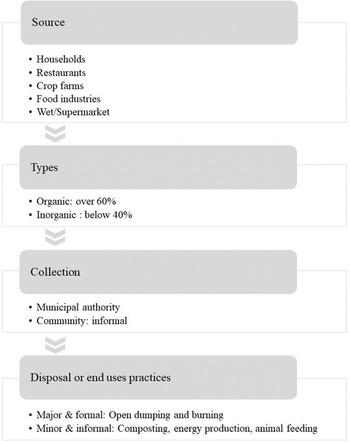
Within the CFRs source category, households emerged as the primary contributors, followed by the hospitality sector (e.g., restaurants, hotels and catering services), and wet markets (open-air markets and small roadside vendors selling fresh produce, excluding supermarkets), emphasizing their dominant role in CFRs generation (Fig. 1 and Table S2). In terms of CFRs types, most included organic materials, including human-inedible cooked and uncooked food, seasonal vegetables and fruits, and associated peels. However, the literature indicates that CFRs management practices are primarily reliant on uncontrolled dumping and open burning, with limited integration of circular strategies such as composting, biogas generation, and animal feeding, although comprehensive population-level surveys are needed to confirm these trends. In recycling pathways, formal and process-based CFRs utilization as feed is mainly associated with non-ruminant species, particularly pigs and poultry, whereas ruminants, such as dairy cattle and buffaloes, are more commonly linked to informal use of unprocessed CFRs. The review also identified growing attention to the nutritional, toxicological, and environmental dimensions of CFRs reuse, although research on socio-cultural dynamics, policy frameworks, regulatory mechanisms and waste governance remains comparatively underrepresented (Figure S2).
Word cloud showing frequently occurring keywords associated with circular food resources from 24 studies included in this review paper.

Existing patterns of circular food resource generation and treatment approaches
Generation and collection practices of circular food resources
CFRs are predominantly generated by the households, the hospitality sector, and industries, with municipal authorities serving as the principal agents responsible for their management. However, informal and community-driven efforts also play a supplementary role in CFRs handling, particularly in urban and peri-urban settings. Generation and collection patterns of CFRs vary markedly across the region, reflecting disparities in municipal efficiency, household-level contributions, and informal reuse practices – with the literature suggesting that this is partially shaped by infrastructural gaps and socio-economic conditions (Fig. 2). In Kabul city, Afghanistan, only 10% of households can access daily CFRs collection services, with the remainder accessing them on weekly or monthly basis. CFRs are often transported via donkey carts and openly dumped (Ghaforzai et al., Reference Ghaforzai, Ullah and Asir2021). In Rajshahi, Bangladesh, households contribute 77% of municipal solid waste (MSW), primarily managed by women (46%) and domestic helpers (33%) (Labony et al., Reference Labony, Shabnam, Sharmin and Robinson2022). Although waste bins are provided to some restaurants in the Chittagong city area of Bangladesh, the absence of separate waste collection discourages source-level segregation of CFRs, since all waste ultimately ends up mixed together. However, two-thirds of the restaurant managers surveyed by Baul et al. (Reference Baul, Sarker and Nath2021) expressed their willingness to adopt formal disposal methods if institutional support were available. Despite theoretical evaluations of CFRs-to-energy from municipal waste, agricultural residual biomass, and slaughterhouse by-products from Chittagong and Dhaka cities, actual implementation of recycling approaches remains limited (Islam and Jashimuddin, Reference Islam and Jashimuddin2017; Hasan and Ammenberg, Reference Hasan and Ammenberg2019). In India, about 50 million tons of horticultural produce is wasted annually (30–40% of total production), and only a fraction of this is recycled effectively.
Potential pathways of circular food resource generation, food resource types, and management practices in South Asian countries.

A field study in Rajasthan, India, demonstrated that fruit and vegetable wastes collected from local markets were reused through vendor-supplied collection bins, showing potential for daily separation and feeding to sheep without negative effects on intake or digestibility (Sahoo et al., Reference Sahoo, Sarkar, Lal, Kumawat, Sharma and De2021). In Kathmandu, Nepal, alongside municipal collection, farmers informally collect CFRs from hotels and restaurants free of charge for pigs and ducks (Chand, Reference Chand2018). In the cities of Lahore and Peshawar in Pakistan, only 13% of CFRs are recovered through restaurant-level sorting, while 87% is still dumped in open spaces (Aamir et al., Reference Aamir, Ahmad, Javaid and Hasan2018; Ali et al., Reference Ali, Saqib, Ziad and Ali2023). In Colombo and the eastern and western regions of Sri Lanka, household food leftovers are largely managed by women, and in suburban areas, 39% of pig farmers collect CFRs from hospitality sources, with another 38% collecting from designated sites – that is, households or markets informally assigned to specific farmers for collection. These farmers collect an average of 1,000 kg daily; however, such practices remain informal and unregulated, with dairy cows consuming approximately 15% of the collected material (Reitemeier et al., Reference Reitemeier, Aheeyar and Drechsel2021; Jayathilake et al., Reference Jayathilake, Aheeyar and Drechsel2022; Thariq et al., Reference Thariq, Mufassara and Najim2024).
Composition of circular food resources
The composition of CFRs in SACs reflects the diverse sources and food consumption patterns across urban and peri-urban areas. In Kabul city, MSW generation is around 600 g per person per day, with 92% consisting of fresh food resources – mainly peels of vegetables, honey melon and watermelon – attributable to seasonal abundance, low cost, and lack of kitchen appliances (Ghaforzai et al., Reference Ghaforzai, Ullah and Asir2021). In Chittagong, MSW comprises food leftovers, paper, textiles, rubber, plastic, glass, metals and wood, with CFRs making up nearly 70% (Islam and Jashimuddin, Reference Islam and Jashimuddin2017). Seasonal overproduction of vegetable crops in Chittagong (Hossain et al., Reference Hossain, Ahmed, Sultana and Karim2016) is coupled with daily kitchen food scrap generation of approximately 977 g per urban household in Rajshahi, Thakurgaon, Mymensingh and Barguna districts of Bangladesh (Miah et al., Reference Miah, Haque, Bell, Rahman, Akhter and Hossain2022). Around 50% of restaurant food leftovers come from unconsumed food, while the rest consists of vegetable and fruit peels in Chittagong (Baul et al., Reference Baul, Sarker and Nath2021). Of the unconsumed food portion at household and restaurant level, 52% is vegetable-based and 42% cereal-based in Rajshahi (Labony et al., Reference Labony, Shabnam, Sharmin and Robinson2022). In Hazaribagh, Bangladesh – known for its tannery industry, which arises from the presence of local slaughterhouses and the associated leather industry – approximately 337 kg of slaughterhouse blood is wasted daily. While this blood holds potential for energy recovery through waste-to-energy concepts, it also represents a valuable source of high-quality protein and microminerals that could contribute to addressing nutritional gaps (Hasan and Ammenberg, Reference Hasan and Ammenberg2019). In the southern Indian megacity of Bengaluru, discarded vegetables from supermarkets – often unsold or unsuitable for human consumption – primarily include eggplant, carrots, cabbage, cauliflower, tomatoes, potatoes, okra and spinach (Alam et al., Reference Alam, Velayudhan, Dey, Adilieme, Malik, Bhatta, König and Schlecht2023). Among fruits, papaya, pineapple and orange are most commonly discarded in Malpura town, Rajasthan (Sahoo et al., Reference Sahoo, Sarkar, Lal, Kumawat, Sharma and De2021). In Kathmandu, CFRs generated from hotels, restaurants, and hostels mainly consist of cooked rice, vegetables and pulses. This reflects the dominant rice-based diet and common meal structures in Nepali households and hospitality settings, where excess preparation and plate waste contribute significantly to CFRs generation (Chand, Reference Chand2018). In city hostels of Bagamati province in Nepal, food leftovers are often mixed with meat bones and plastics, requiring manual sorting before being reused as animal feed (Dhungana et al., Reference Dhungana, Lohani and Marsolek2022) and thus likely hampering efficient large-scale application without excessive workload. Some farmers also collect brewing residues for animal feeding, which is a potential source of protein and minerals for animals if properly conserved (Chand, Reference Chand2018). In Peshawar, approximately 500 g of MSW per person is generated daily, with food leftovers accounting for nearly half (Ali et al., Reference Ali, Saqib, Ziad and Ali2023). In Lahore, each restaurant produces about 36 kg of CFRs per day – exceeding 100 g per customer – primarily due to unconsumed meals and unserved excess food prepared in advance. In high-end hotels of Lahore and Peshawar, additional unconsumed food arises from policies prohibiting the reuse of certain food items, as well as the discarding of food based on non-standard size, shape, colour, or texture (Aamir et al., Reference Aamir, Ahmad, Javaid and Hasan2018; Afzal et al., Reference Afzal, Basit, Daniel, Ilyas, Imran, Awan, Papargyropoulou, Stringer, Hashem, Alamri, Bashir, Li and Roy2022).
In Ampara district in Sri Lanka, household waste generation averages 200–300 g per person per day, with the food part comprising over 56% of the total. Notably, households with more family members tend to produce a lower proportion of food leftovers per head (Thariq et al., Reference Thariq, Mufassara and Najim2024). In a high-end restaurant in Sri Lanka, 21% food is discarded from kitchen, buffet surplus, and plates. Of these discards, 67% is still potentially edible. Only 12% of the discarded food comprises meat and fish, while the rest consists of cooked rice, bread, buns, noodles, pasta, cakes, fruits, and vegetables (Jayathilake et al., Reference Jayathilake, Aheeyar, Wickramasinghe, Bucatariu and Drechsel2023). A Sri Lankan vegetable vendor at Manning market, Colombo, pointed that ‘We have to throw away leafy parts of the vegetable such as radish and beetroots quite often. Also, vegetables sometimes get exposed to rain while they are transported, that limit the keeping quality of products to two days. Sometimes we have to throw away the entire sack because of the spoilages due to rain’ (Jayathilake et al., Reference Jayathilake, Aheeyar, Wickramasinghe, Bucatariu and Drechsel2023). The literature suggests that this kind of scenario is very common in SACs and beyond.
Management, treatment and recycling approaches of circular food resources across countries
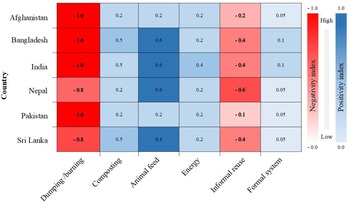
CFRs are primarily disposed of through open dumping, while formal treatment and recycling systems remain limited due to underdeveloped waste management practices, low access to relevant technologies, and little regulatory and policy support. Nonetheless, a mix of formal and informal efforts toward waste recycling and reuse is evident across the countries (Fig. 3). In Kabul, only 6% of households compost CFRs, in particular kitchen food waste for gardening, while the rest is dumped or burned. However, small-scale innovations such as drying process of food waste for livestock feed show localized recycling potential (Ghaforzai et al., Reference Ghaforzai, Ullah and Asir2021; Noori et al., Reference Noori, Royen, Medveďová and Haydary2022). In Dhaka, Chittagong, Rajshahi, Mymensingh, Thakurgaon, and Barguna, Bangladesh, over 90% of urban respondents expressed positive attitudes towards CFRs recycling, yet most recovery remains informal. Approximately 16% of households compost CFRs from kitchens, and 36% reuse CFRs as feed for dairy animals. Additionally, restaurants occasionally donate leftovers or separate recyclables for resale. While theoretical assessments highlight the energy generation potential of slaughterhouse waste, practical adoption is limited (Hasan and Ammenberg, Reference Hasan and Ammenberg2019; Baul et al., Reference Baul, Sarker and Nath2021; Miah et al., Reference Miah, Haque, Bell, Rahman, Akhter and Hossain2022). In the Rourkela area of Odisha state, India, CFRs have been explored for biodiesel production, since high soluble salt content limits their use in composting (Barik and Paul, Reference Barik and Paul2017). Use of processed meat and bone meal remains low in this area, but urban and peri-urban dairy farmers frequently repurpose CFRs as feed (NAAS, 2022; Alam et al., Reference Alam, Velayudhan, Dey, Adilieme, Malik, Bhatta, König and Schlecht2023).
Treatment practices of circular food resources across South Asian countries. The heatmap depicts the relative prevalence of key practices, including dumping/burning, composting, use as animal feed, biogas/energy recovery, informal reuse and formal system integration. Colour intensity reflects qualitative synthesis from the 24 studies in this research, where lighter to darker shades of red indicate increasing levels of negativity, while lighter to darker shades of blue represent increasing levels of positivity of practices.

In Kathmandu, informal reuse of hotel and restaurant-based CFRs as feed is a common rural and peri-urban practice, with farmers collecting CFRs under verbal agreements. Collected CFRs are cooked for pigs and fed in raw form to ducks, yet these practices are not integrated formally into waste management regulatory system (Chand, Reference Chand2018). In Pakistan, despite investments in recycling infrastructure for materials like plastic and metal, CFRs remain largely excluded from formal recovery systems (Ali et al., Reference Ali, Saqib, Ziad and Ali2023). In Colombo and Ampara, household disposal practices are mixed: 36% of CFRs waste is dumped at the roadside, 16% collected by the municipality, 11% composted at home, and 33% used as feed. While systems are fragmented, 20% of respondents view CFRs recycling as a commercial opportunity (Reitemeier et al., Reference Reitemeier, Aheeyar and Drechsel2021; Thariq et al., Reference Thariq, Mufassara and Najim2024).
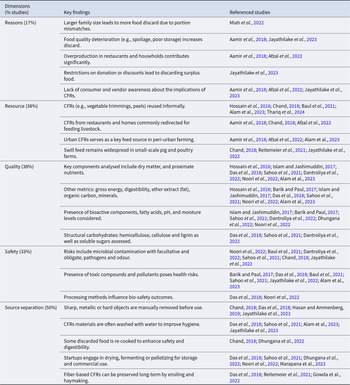
Factors influencing the generation and management of circular food resources
The informal use of CFRs as feed is sporadically evident within existing management systems. This section outlines the key thematic drivers of CFRs generation, its quality attributes and safety considerations (Table 3). Larger families, poor storage conditions, and over-purchasing contribute to greater CFRs generation. In the hospitality sector, additional drivers include overproduction, portion size mismatches and restrictions on donation or reuse of leftovers (Aamir et al., Reference Aamir, Ahmad, Javaid and Hasan2018; Labony et al., Reference Labony, Shabnam, Sharmin and Robinson2022; Jayathilake et al., Reference Jayathilake, Aheeyar, Wickramasinghe, Bucatariu and Drechsel2023). Vendors often discard food based on appearance, adherence to quality standards, or policy restrictions in high-end establishments (Afzal et al., Reference Afzal, Basit, Daniel, Ilyas, Imran, Awan, Papargyropoulou, Stringer, Hashem, Alamri, Bashir, Li and Roy2022). As CFRs are generated from multiple sources, dairy farmers in urban and peri-urban areas have increasingly accessed it – either directly or through informal arrangements – for animal feeding (Alam et al., Reference Alam, Velayudhan, Dey, Adilieme, Malik, Bhatta, König and Schlecht2023).
Factors relevant to the creation, quality and safety of circular food resources (CFRs) as extracted from 24 studies in South Asian countries

In Nepal and Sri Lanka, farmers depend on hotel and market based CFRs as feed for pigs and poultry, often using CFRs in raw or cooked form (Chand, Reference Chand2018; Jayathilake et al., Reference Jayathilake, Aheeyar and Drechsel2022). Similar practices are observed in India and Bangladesh, where organic CFRs such as vegetable peels, cooked rice and kitchen scraps are reused as ruminants feed (Baul et al., Reference Baul, Sarker and Nath2021; Alam et al., Reference Alam, Velayudhan, Dey, Adilieme, Malik, Bhatta, König and Schlecht2023).
Although CFRs are informally used as feed, there is only sporadic evidence regarding CFRs’ nutritional, hygienic and safety qualities. In Kabul, CFRs contain approximately 78.1% carbohydrates, 5.1% protein and 4.5% fat (Noori et al., Reference Noori, Royen, Medveďová and Haydary2022). In Dhaka and Chittagong, assessments revealed a dry matter (DM) content ranging between 10.1% and 13.6%, neutral detergent fibre values of 37–41% and a gross energy content of 15.3 MJ/kg DM (Das et al., Reference Das, Huque, Amanullah, Dharmapuri and Makkar2018). Vegetable leaf discards had crude protein content between 11% and 28%, and an average organic carbon content of 48% (Hossain et al., Reference Hossain, Ahmed, Sultana and Karim2016; Islam and Jashimuddin, Reference Islam and Jashimuddin2017).
In Rourkela, kitchen-based CFRs contained essential minerals such as calcium (30 mg/kg), magnesium (2.4 mg/kg), copper (1.45 mg/kg) and zinc (3.6 mg/kg) (Barik and Paul, Reference Barik and Paul2017). It was also reported for Ahmedabad that the partially digested nature of organic residues, particularly vegetable matter, enhanced microbial fermentation in the rumen (Dantroliya et al., Reference Dantroliya, Joshi, Mohapatra, Shah, Bhargava, Bhanushali, Pandit, Joshi and Joshi2022). Apart from the high moisture content (60–89%) of CFRs in Malpura, they contained cellulose (9.8–16.4%), hemicellulose (8.9–10.1%) and lignin (5.3–5.9%) (Sahoo et al., Reference Sahoo, Sarkar, Lal, Kumawat, Sharma and De2021). In Bagmati province of Nepal, the reported carbon-to-nitrogen ratio in CFRs was 22.4 (Dhungana et al., Reference Dhungana, Lohani and Marsolek2022).
Despite its nutritional value, CFRs also present several safety concerns. In Kabul, CFRs showed microbial loads above safety limits (Noori et al., Reference Noori, Royen, Medveďová and Haydary2022). In different districts of Sri Lanka, unprocessed CFRs – especially when mixed with meat residues – have been linked to potential transmission of Foot-and-Mouth Disease and African Swine Fever, commonly observed due to seasonal livestock movement (Jayathilake et al., Reference Jayathilake, Aheeyar and Drechsel2022). In Chittagong city, one-third of respondents reported that prolonged storage of organic CFRs may cause disease outbreaks (Baul et al., Reference Baul, Sarker and Nath2021). In contrast, pig farmers in Kathmandu claimed no health problems in animals fed with CFRs, particularly when these were cooked before feeding (Chand, Reference Chand2018). Regarding heavy metals in CFRs of Dhaka, chromium and lead contents ranged from 13 to 31 ng Cr/kg DM and 1.5–5.7 ng Pb/kg DM, respectively, which are substantially below the WHO and EU safety thresholds (Das et al., Reference Das, Huque, Amanullah, Dharmapuri and Makkar2018). A study from Bengaluru found non-detectable concentrations of arsenic and cadmium, while Pb was found at 1.35 mg/kg DM – below the EU threshold concentration of 2.00 mg/kg DM, and Cr was detected at 3.47 mg/kg DM, exceeding the WHO limit (1.30 mg/kg DM) (Alam et al., Reference Alam, Velayudhan, Dey, Adilieme, Malik, Bhatta, König and Schlecht2023). Although heavy metals were measured at the CFRs level, no studies have assessed whether they have any effects on animal-source food when CFRs are used as feed for livestock.
Existing challenges for scaling up circular food resources as feed
Despite growing interest in the use of CFRs as animal feed, multiple structural, safety and policy-related barriers continue to hinder its mainstream adoption across SACs. In Chittagong and Rajshahi, reported challenges include limited access to designated collection containers, lack of CFRs segregation at the source, and collection systems where municipal workers often mix different types of discarded materials. Additionally, restaurant managers report space constraints and limited manpower as obstacles to separating and storing organic discard properly (Baul et al., Reference Baul, Sarker and Nath2021). Public awareness remains low, even among educated citizens, and understanding of environmental and health risks associated with discard materials, such as methane emissions and potential disease spread, is limited (Labony et al., Reference Labony, Shabnam, Sharmin and Robinson2022). Although more than 90% of respondents supported recycling, fewer than 10% reported receiving formal training or operational guidance (Baul et al., Reference Baul, Sarker and Nath2021). In Kathmandu, logistical challenges in urban areas, coupled with the absence of transport infrastructure, hinder CFRs collection. Smallholder pig farmers relying on tourist-sector leftovers face fluctuations in both the quantity and quality of feed due to seasonal tourism patterns. Concerns over spoilage, unpleasant odour and contamination – particularly in the absence of standardized treatment processes – undermine user confidence (Chand, Reference Chand2018). In Peshawar, structural barriers include the lack of a clear legal definition for discard materials, absence of certified feed inclusion levels, and no institutional framework for quality monitoring. Only 4% of CFRs are reused informally for feed, and reuse systems have not been formally certified (Ali et al., Reference Ali, Saqib, Ziad and Ali2023). In Lahore, cultural stigmas associating CFRs with low-quality feed discourage uptake of respective feeding practices, despite a certain willingness of hospitality sector actors to collaborate (Aamir et al., Reference Aamir, Ahmad, Javaid and Hasan2018). In Colombo, aside from disease-related concerns, the mixed composition of CFRs – including plastics and packaging – elevates the risk of chemical contamination and microbial proliferation. The lack of toxicological and microbiological monitoring systems exacerbates these safety issues (Reitemeier et al., Reference Reitemeier, Aheeyar and Drechsel2021). Although barriers differ across countries, similar patterns are broadly observed in SACs and beyond.
Existing policy and regulatory scenarios for the management of circular food resources
Although CFRs management holds significant potential, formal action remains limited across SACs (Fig. 3). In Chittagong and Rajshahi, restaurant owners expressed strong willingness to reduce CFRs and support resource recovery if supported by municipal facilitation, incentives and mandatory segregation – yet low collection efficiency and weak management persist (Baul et al., Reference Baul, Sarker and Nath2021; Labony et al., Reference Labony, Shabnam, Sharmin and Robinson2022). India shows a more structured approach, with national strategies defining public institutions’ roles in technology transfer, decentralized processing, and nutritional standardization of CFR-based feed. Policies also emphasize blending CFRs with supplements, improving logistics, and supporting micro-enterprises within the circular economy roadmap (NAAS, 2022). In contrast, Kathmandu lacks formal regulations for CFRs treatment, storage and safe handling, leaving informal practices unregulated (Chand, Reference Chand2018). Lahore similarly has no legislation or designated authority overseeing CFRs management, despite increasing interest in sustainable practices within the hospitality sector (Aamir et al., Reference Aamir, Ahmad, Javaid and Hasan2018). In Colombo, as in Dhaka, Rajshahi and Lahore, policymakers acknowledge the need to align with international standards, referencing Japan and the EU, where public health concerns prompted strict regulation (Reitemeier et al., Reference Reitemeier, Aheeyar and Drechsel2021; Jayathilake et al., Reference Jayathilake, Aheeyar and Drechsel2022). Overall, while an intent to adopt CFRs practices is evident through informal efforts, the absence of clear governance frameworks continues to hinder effective implementation and scaling across SACs.
Linking existing discarded food resource management practices to the circularity concept
Current resource management practices across SACs are gradually aligning with the circularity concept, particularly through the informal reuse of CFRs as feed and for energy production. These initiatives illustrate how value can be extracted from CFRs streams and contribute to economic savings and environmental sustainability. In Afghanistan, although 88% of households in Kabul city do not pay for CFRs management, localized innovations like solar drying are emerging by a life cycle analysis (Ghaforzai et al., Reference Ghaforzai, Ullah and Asir2021; Noori et al., Reference Noori, Royen, Medveďová and Haydary2022). In Bangladesh, CFRs reuse reduces feed costs and improves nutrient supply for large ruminants, enabling farmers to save up to US$17.84 per month on fertilizer by cultivating less grass (Das et al., Reference Das, Huque, Amanullah, Dharmapuri and Makkar2018; Miah et al., Reference Miah, Haque, Bell, Rahman, Akhter and Hossain2022). CFRs-to-energy technologies are also gaining ground in urban areas facing land scarcity, as they are supporting circular urban planning (Islam and Jashimuddin, Reference Islam and Jashimuddin2017). India faces a substantial economic burden from food and agricultural discard, estimated at US$10.84 billion annually. This has driven the promotion of micro-, small- and medium-enterprise models and decentralized biogas systems to transform CFRs into value-added products (NAAS, 2022). In Nepal and Sri Lanka, CFRs reuse is already integrated into informal feeding systems. Farmers report cost savings and improved livelihood outcomes by accessing CFRs at low or no cost (Chand, Reference Chand2018; Jayathilake et al., Reference Jayathilake, Aheeyar and Drechsel2022). Moreover, reduced discard disposal into landfills has contributed to measurable reductions in greenhouse gas emissions at household and community levels (Thariq et al., Reference Thariq, Mufassara and Najim2024). Importantly, nearly 20% of Sri Lankan stakeholders consider CFRs reuse as a viable business opportunity, signalling future economic integration of circular practices (Reitemeier et al., Reference Reitemeier, Aheeyar and Drechsel2021).
Discussion
The following discussion synthesizes and interprets the findings derived from the reviewed literature, rather than introducing new empirical evidence. Across SACs, the use of CFRs as feed appears to remain fragmented and largely informal. With the exception of limited industrial processing for poultry feed, the economic viability of which is not yet clearly established, the use of CFRs as (dairy) animal feed occurs almost entirely through informal channels. Such informal utilization may have both positive and negative implications for animal and human health as well as environmental sustainability. However, our review suggests that existing research does not yet provide sufficient evidence to draw definitive conclusions. Moreover, there is currently no clear regulatory recognition or policy framework defining CFRs as an approved alternative feed resource for livestock systems in the region.
Evidence from the reviewed studies indicates that CFRs are used both in processed forms at small scales and, more commonly, in unprocessed forms, particularly within informal dairy feeding practices. While several start-up initiatives appear to be emerging to valorize CFRs as feed (Balaji, Reference Balaji2019), their study from a scientific standpoint remains limited. Importantly, unprocessed plant-derived CFRs have little potential for non-ruminant species due to the enzymatic digestive system, whereas ruminants, especially cattle and buffaloes, may utilize such resources more effectively due to their rumen-based digestive system (Van Soest, Reference Van Soest1994; McDonald et al., Reference McDonald, Edwards and Greenhalgh2002). This biological advantage suggests considerable potential for integrating CFRs into dairy feeding systems. Despite incomplete information on their source-specific availability, the high volumes of CFRs present opportunities to valorise more of these resources through dairy animals, thereby improving nutrient recycling, lowering feed costs, and supporting circular dairy systems (Nath et al., Reference Nath, Ojha, Debnath, Sharma, Nayak, Sridhar and Inbaraj2023).
CFRs originating from diverse sources may require additional processing prior to their inclusion in dairy diets. Given that cooked CFRs are frequently mixed with bones and plastics and may thus pose safety risks (Dhungana et al., Reference Dhungana, Lohani and Marsolek2022), CFRs derived from seasonal crop overproduction, cosmetically rejected but otherwise sound produce, or unsold materials from wet markets can be pre-sorted to remove unsuitable fractions. Typical examples include vegetables such as eggplant, carrots, cabbage, cauliflower, tomatoes, okra and spinach, as well as fruits such as papaya, pineapple and orange (Sahoo et al., Reference Sahoo, Sarkar, Lal, Kumawat, Sharma and De2021; Alam et al., Reference Alam, Velayudhan, Dey, Adilieme, Malik, Bhatta, König and Schlecht2023). Sorting may be conducted manually, or supported by AI-assisted technologies such as hyperspectral imaging, although these approaches are likely more suitable for high-capital and industrial processing systems, which could potentially enable more consistent assessment of both visual quality and nutritional attributes (Dao et al., Reference Dao, Le, Tran, Pham, Vu and Chu2025). Following sorting, these materials may be incorporated directly into diets or conserved through ensiling, if feasible, to improve storage stability and feeding flexibility. Evidence on ensiling CFRs as a single feed resource is still limited. However, in many contexts, mixed ensiling strategies are already applied, where industrial by-products are combined with conventional forages or concentrates to produce nutritionally balanced silages (Hartinger et al., Reference Hartinger, Gruber, Fliegerová, Terler and Zebeli2024). Extending this principle to CFRs represents a promising avenue for research: controlled studies in dairy animals are needed to determine appropriate mixing ratios, potential fermentation characteristics, diet inclusion levels, palatability and implications for animal performance and product safety. Such work would provide the needed evidence to move from opportunistic reuse toward more systematic and safe integration of CFRs into dairy feeding systems.
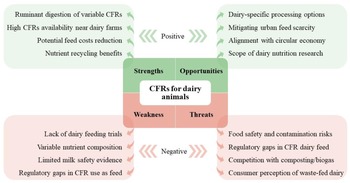
However, to date, empirical studies evaluating the feasibility, safety and nutritional outcomes of these and similar processing pathways for dairy feeding are still lacking. This makes it difficult to classify CFRs as a reliable alternative feed resource. Moreover, the diverse sources and seasonally varying origins of CFRs result in highly heterogeneous feed materials. This reduces nutritional uniformity and makes it more difficult to formulate balanced rations for dairy animals (Alam et al., Reference Alam, Velayudhan, Dey, Adilieme, Malik, Bhatta, König and Schlecht2023; Alam and Islam, Reference Alam and Islam2024). This challenge is further compounded by the absence of clear feed regulations and policy guidance governing the use of CFRs in livestock systems across SACs. In addition, limited empirical evidence on microbial contamination, toxicological transfer, and potential residues in milk (Dou et al., Reference Dou, Toth and Westendorf2018; Sarker et al., Reference Sarker, Ghosh, Islam, Bilal, Nandi, Raihan, Hossain, Rana, Barman and Kim2022) pose barriers to the wider adoption of CFRs in dairy feeding. Even when dairy animals are capable of utilizing such resources due to their biological predisposition, consumer perceptions of milk produced from CFR-fed animals remain uncertain and require careful examination at the level of the value chain (Yousefian et al., Reference Yousefian, Alam, Ramappa, Schlecht and Dittrich2024). Collectively, these considerations underscore the importance of critically evaluating both the opportunities and risks associated with CFRs use in dairy systems, as summarized in the SWOT analysis presented in Figure 4.
Conceptual SWOT framework illustrating strengths and opportunities (positive drivers) and weaknesses and threats (negative constraints) that affect the use of circular food resources (CFRs) as feed for dairy animals in South Asia.

Several limitations identified in this review should be considered when interpreting the results. First, the literature on CFRs as animal feed in SACs is limited and unevenly distributed across animal species, with most studies focusing on poultry and pigs and relatively few on dairy animals. It is noteworthy that in SACs, ruminants are commonly raised as dual-purpose animals for both milk and meat; thus, most large-ruminant production systems can be considered dual-purpose dairy systems. As a result, evidence on dairy-specific outcomes, such as milk yield, milk composition, milk quality and safety (e.g., somatic cell counts and microbial contamination), and feed efficiency in lactating animals, remains scarce. Second, many reported practices are informal and context-specific, and the heterogeneity of CFR sources, seasonal availability, and processing methods restricts meaningful comparison across studies. Third, the review relied primarily on English-language peer-reviewed articles, doctoral theses, and policy documents, which may have led to the exclusion of relevant evidence available in local languages or non-indexed sources. Consequently, some context-specific insights may not have been captured in the synthesis. Future research could attempt to synthesize a wider literature base by systematically including local-language and grey literature sources, and by applying explicit quality assessment criteria to evaluate whether the inclusion of such evidence alters the overall findings or conclusions.
Finally, the lack of standardized methods for CFRs processing and feeding trials limited our ability to quantitatively assess nutritional outcomes, safety risks, and economic viability. These constraints emphasise the importance of processing CFRs, conducting controlled feeding trials and carrying out harmonized safety assessments. Clearer regulatory guidance is also needed to support the informed use of CFRs in dairy feeding systems.
Conclusion and recommendations for future research
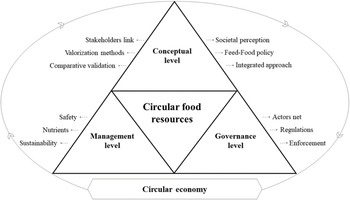
This review underscores the underutilized potential of CFRs as sustainable animal feed within circular economy frameworks in SACs. While reuse practices exist at local and subnational levels, they remain informal, fragmented, and insufficiently studied. Taken together, the literature implies that dairy animal-based production systems may offer a practical entry point for integrating CFRs into feeding strategies, owing to their capacity to utilize variable-quality biomass. Building on these insights, three interconnected research gaps – conceptual, governance and management – emerge from the review, offering a starting point for future research directions (Fig. 5).
Identified research gaps at the conceptual, governance and management levels regarding the use of circular food resources as animal feed within a circularity concept. This synthesis highlights priority areas for future research to support sustainable feed valorization strategies.

At the conceptual level, integrated theoretical models linking CFRs valorization, livestock feeding, and sustainability are lacking. Stakeholder perspectives – especially those of policymakers, urban residents and farmers – are underexplored, limiting the design of inclusive and culturally sensitive circular feeding strategies. Furthermore, behavioural research is needed to promote adoption and assess social acceptance across societal groups.
At the governance level, weak regulatory frameworks, low enforcement, and poor institutional coordination hinder the integration of CFRs into formal systems. Despite widespread informal reuse, CFRs are largely absent from policy discourse. Research should investigate how institutional structures can support hygienically safe and economically viable CFRs reuse, in line with circular economy principles.
At the management and implementation level, empirical evidence remains limited regarding their nutritional value, hygiene, preservation methods, such as drying, ensiling and safe handling alongside conventional feedstuffs. Regional variations in CFRs composition and contamination risks complicate their use, posing challenges for both animal health and product quality. Future research should validate CFRs-based feed systems using sub-regional methods, and assess comparative performance in safety, nutrition and sustainability.
To move from fragmented practices to systemic change, future research should adopt a multidisciplinary and multi-stakeholder approach, combining insights from the circular food systems literature, and animal science, waste management, behavioural sciences and policy studies. Addressing these gaps may support efforts by researchers, policymakers, extension agents and farmers to strengthen resilient, inclusive and sustainable circular food systems in SACs and beyond.
Supplementary material
The supplementary material for this article can be found at https://doi.org/10.1017/S0022029926102246.
Acknowledgements
The authors gratefully acknowledge the Department of Dairy and Poultry Science, Hajee Mohammad Danesh Science and Technology University, Dinajpur, Bangladesh, for his Postdoc study leave. A portion of the writing of this manuscript was supported by the CGIAR Scaling for Impact Program (https://www.cgiar.org/cgiar-research-porfolio-2025-2030/scaling-for-impact/) through the CGIAR Trust Fund: https://www.cgiar.org/funders/.
Funding statement
This research did not receive any specific grant from funding agencies in the public, commercial, or not-for-profit sectors.
Competing interests
The authors declare no conflict of interest.
CRediT authorship contribution statement
Shahin Alam: Conceptualization; Methodology; Data curation; Investigation; Formal analysis; Software; Visualization; Validation; Writing – original draft, final manuscript, Thomas Hartinger: Conceptualization; Methodology; Validation; Writing – review & editing, Md. Elias Uddin: Conceptualization; Methodology; Validation; Writing – review & editing, Jenia Mukherjee: Conceptualization; Methodology; Validation; Writing – review & editing, Timothy J. Krupnik: Conceptualization; Methodology; Validation; Writing – review & editing, Eva Schlecht: Conceptualization; Methodology; Validation; Writing – review & editing, Christoph Dittrich: Conceptualization; Methodology; Supervision; Resources; Validation; Writing – review & editing.
Data availability
The datasets generated and/or analysed in the current study are available from the corresponding author for scientific purposes upon written request.
Declaration of generative AI and AI-assisted technologies in the writing process
AI tools were used only for minor English language editing. All research design, analysis, interpretation and writing were carried out by the authors.



 Open access

