





Introduction
The phlebotomine sand flies (Diptera: Psychodidae, Phlebotominae) are vectors of several infectious pathogens causing leishmaniases, bartonellosis and arbovirus infections due to phleboviruses. Several of these diseases have wide geographical distributions around the world, and give rise to occasional epidemic outbreaks. In numerous countries, increasing risk factors are making sand fly-borne diseases a major public and veterinary health problem (Dedet, Reference Dedet2008). Among the 800 known species of sand fly, about 70, belonging to the genus Phlebotomus in the Old World and Lutzomyia in the New World, are proven or suspected vectors of pathogens. Although sand flies are principally found in the warmer parts of the world including southern Europe, Asia, Africa, Australia and South America, their distribution extends northwards to just above latitude 50oN in southwest Canada, northern France and Mongolia. Their southernmost distribution is at about latitude 40oS, but they are absent from New Zealand and the Pacific islands. Their altitudinal distribution is from below sea level (by the Dead Sea) to 3500 m above sea level in Afghanistan (Phlebotomus rupester) (Artemiev, Reference Artemiev1980; Lane, Reference Lane, Lane and Crosskey1993; Killick-Kendrick, Reference Killick-Kendrick1999). Sand flies are generally associated with desert and semi-arid ecosystems in the Old World and forests in the New World. They breed in a wide variety of habitats in domestic, peridomestic and sylvatic environments, including abandoned buildings, cracks in floors and walls, animal burrows, domestic animal shelters, garbage, under stones, soil, caves, termite mounds, tree roots and leaf litter, among others (Feliciangeli, Reference Feliciangeli2004).
According to literature, among the species resident in Europe, ten are medically important, namely Phlebotomus (Larroussius) ariasi, Phlebotomus (Larroussius) perniciosus, Phlebotomus (Larroussius) perfiliewi, Phlebotomus (Larroussius) major s.l., Phlebotomus (Larroussius) tobbi, Phlebotomus (Phlebotomus) papatasi, Phlebotomus (Paraphlebotomus) sergenti, Phlebotomus (Paraphlebotomus) similis and Phlebotomus (Paraphlebotomus) alexandri. Most of them are proven vectors of leishmaniasis and several phleboviruses. Although the vectorial role of Phlebotomus (Transphlebotomus) mascittii has not been confirmed, correlation between its distribution and the autochthonous cases of leishmaniasis in some parts of Europe has led to research on its biology and distribution. Additional information on the distribution of these species in Europe is updated on the ECDC website VBORNET project: http://ecdc.europa.eu/en/activities/diseaseprogrammes/emerging_and_vector_borne_diseases/Pages/VBORNET_maps_sandflies.aspx, and the VBORNET Project web site: http://www.vbornet.eu
Studies of sand fly–pathogen relationships and vector behaviour, taxonomy or ecology require sampling methods that maintain the insects alive or in an adequate state of preservation for transportation to the laboratory and processing. This review prepared by ECDC-VBORNET PROJECT provides a critical guide to sampling methods used for sand flies. The review covers the collection and interpretation of field data, describes suitable techniques for the preservation of specimens obtained by each method of collection, provides advice on how to conduct surveys, indicates molecular techniques used in identification of species and discusses pathogens associated with sand flies and their detection methods. Advantages and disadvantages of each type of method are also considered with regard to practicality, safety and cost.
It is important to be aware that each method has its own limitation in relation to environmental factors and the vector's natural or induced behaviour. As adequate sampling and processing of material are essential for obtaining significant information, the epidemiologist, entomologist and/or researcher should agree together the extent of the entomological investigations to be undertaken in each situation in order to achieve the study objectives (Table 1), with adjustments made to meet local requirements.
Guide to sand fly sampling strategy.

Sampling methods of adult sand flies
Vector surveillance aims to detect the presence of a vector in a given population or to determine vector abundance for estimating the risk of disease transmission, and hence the sampling methods required will depend upon the questions to be addressed. Sampling methods exist for both the adult and the immature stages of sand flies (Table 2). The most used trapping methods are light traps for host-seeking females and sticky traps or aspirator collection for the resting population, although depending upon the specific research objective, a range of other traps and techniques are available and may be used in the field.
Overview of the sand fly trapping methods indicating advantages and limitations.

Light traps
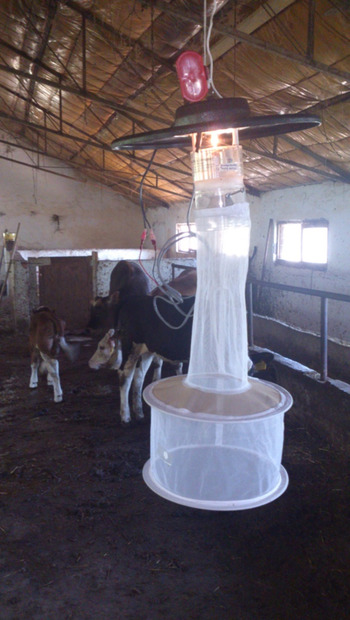
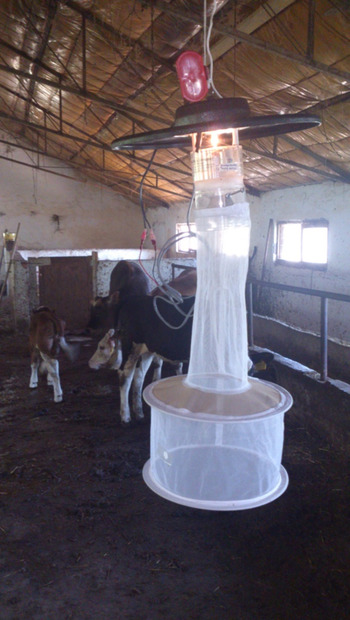
Light traps are used extensively in field studies on sand flies. The most widely used trap is a battery-operated light-suction trap, with the main advantage being that it can be left overnight to collect sand flies (fig. 1, Table 2). The New Jersey Mosquito Light Trap, first developed in 1932, has been the most widely used light trap for sand fly work. The trap operates by sucking sand flies into a funnel with a mesh screen adapted to the size of the sand flies, terminating in a killing bottle. For special investigations in which live caught sand flies are required, the killing bottle is replaced by a holding cage, which can be changed several times during the same night, as required. Although the range over which this trap attracts sand flies is not large, it is highly efficient if located among resting or breeding places and if the right light source is used (Table 3). Light traps attract host-seeking sand flies, but also yield gravid females and males. A potential disadvantage of light traps is that they preferentially sample females of some groups (such as Lutzomyia subgenus Psychodopygus) that are highly phototropic and do not attract some other groups or species such as Sergentomyia minuta in southern France. Although they are useful in catching large numbers of certain species and measuring relative changes in abundance of these species over time and space, light traps have somehow limited value in ecological studies of sand flies. Some species may be relatively more active at greater heights above the ground, even at tree canopy height, and therefore tend to be under-represented in samples taken at ground level. Care must be taken in interpreting results of vertical distribution studies based on light trapping, as sand flies may fly upwards in response to the unusual light source, because these movements constitute part of their normal behaviour.
Light trapping for sand flies in Turkey (Photo credit: Filiz Gunay & Gizem Oguz).
Sticky traps used in Switzerland (Photo credit: Francis Schaffner).

Overview of technical and operational requirements of two sand fly collection methods.

Sticky traps
Sticky traps constitute a method of sampling sand flies by interception rather than attraction. Standardized pieces of white un-waxed paper or cards are soaked in castor oil and placed in sand fly resting places overnight (at least two or three consecutive days) (fig. 2, Table 3). To obtain quantitative results, either one or both sides of the paper must be completely exposed. The number of papers used at each sampling event is normally constant. These traps are generally inexpensive and easy to manufacture in large numbers. They can be prepared in bulk before field studies and stored until required (Table 3). Because of the viscosity of castor oil they are ineffective in habitats with high relative humidity and only dead specimens are collected.
Flight traps
Malaise traps are designed to catch flying insects, and consist of a tent-like nylon structure hung across trees or bushes in likely insect flight paths. Insects entering the trap are directed by the sloped roof into two transparent plastic or glass cylinders at either end of the structure, which contain a killing agent such as ethyl acetate, carbon tetrachloride or potassium cyanate in a plaster of Paris vial. Modifications can be made to the entrance of the cylinders, e.g., reducing the opening size or fitting a wire mesh, to prevent the entry of larger flying insects, which may damage or eat fragile sand flies. Malaise traps can be assembled from everyday materials (Gressitt & Gressitt, Reference Gressitt and Gressitt1962; Townes, Reference Townes1962). Sand flies are likely to be trapped in small numbers, but an advantage is that both male and females will be caught, required for the identification of some species (Alexander, Reference Alexander2000). In addition, this method allows the detection of all sand fly species present within a habitat, while reducing sampling bias.
Aspirator collections
Sand flies can be collected by an aspirator from animals, and when resting on walls in buildings or animal shelters, with the main advantage of collecting live specimens. Sand flies are fragile and therefore the body of the aspirator should be wider than the opening. Plastic aspirators are light and strong but can damage sand flies because of static electricity. Therefore, a glass aspirator is recommended for most studies both in the field and in the laboratory. However, they are not commercially available. The Castro aspirator, a modification of the mouth aspirator, is made from a length of rubber tubing attached to the glass/plastic tube, with fine mesh gauze sealing the connection between the two components (Alexander, Reference Alexander2000). This allows sand flies to be sucked up rapidly and then quickly blown into holding containers, the principal advantage being that insects collected from different microhabitats during a single session can be separated to provide more data, rather than being stored together in a single aspirator. Additionally, the Castro aspirator can be cleared regularly so that hairs shed by sand flies inside the tube are not inhaled by the operator. Holding containers can be made from 100 ml urine cups: plaster of Paris is applied to the base, a circle is cut from the lid and covered with gauze, and another hole is cut into the container's side then covered with two pieces of rubber, one slit vertically and the other horizontally, to produce a seal with a cross-like opening through which the aspirator tube can be inserted to blow collected sand flies inside. When working with a large number of sand flies, a reservoir type is favoured, with the body wider than the entrance. It consists of a tube sealed at one end by rubber, except for a narrow tube through which the sand flies enter. This makes it difficult for the insects to escape and helps to capture more specimens without the necessity to transfer them into a cage or other type of container. Emptying the reservoir aspirator may involve dismantling it within a cage. Hand-held power-operated aspirators are also available and these should be used in the field for sand fly collections from crevices, stables, or even from traps. Sand flies are easily captured in the periphery of direct light.
Animal baited traps
If the objective of the study is to detect the presence and the relative density of sand flies biting animals in a given area and/or to collect material (both females and males) for observation, animal-baited traps are the most appropriate tools. They are also useful for host preference studies. The bed net trap consists of a large mosquito net with smaller mesh size (200 meshes per square inch) for sand flies suspended from four poles, with a second smaller net inside under which the bait animal is placed. The amount of free space should be determined by experience with local sand fly species. The trap net should be made as tight and as rigid as possible, the edge of the net being tied with string and pegged into the ground. This prevents the net from flapping in the wind, which deters and disturbs the sand flies. Animal-baited traps have also been used for indoor collections.
Many kinds of animal-baited traps have been used in the field such as the Disney trap, the cone trap and animal-baited box trap, each with advantages or disadvantages depending on the aim of the study. A range of animals have been used as bait including cattle, donkeys, small mammals, chickens, ducks and dogs. To prepare the Disney trap, a cage containing an animal is placed in the centre of a metal tray, which is then coated in castor oil, and the apparatus is covered by a plastic/canvas roof to protect it from the rain (Disney, Reference Disney1996). Female sand flies approaching the bait animal are trapped in the sticky oil, due to the fact that sand flies tend to land near to their host and approach in a few short hops rather than landing directly on the host. Blood-fed females that avoided the oil on their way to the animal may also be trapped after feeding. As with sticky traps, only dead specimens are collected. The cone trap consists of a large tent of semi-transparent material arranged over the bait, usually a large animal such as a horse or donkey (Montoya-Lerma & Lane, Reference Montoya-Lerma and Lane1996). The material used allows the sand flies to sense the animal by sight, but also via other stimuli: CO2, body heat and odour (Alexander, Reference Alexander2000). Blood-seeking sand flies enter the trap through funnels ending in small apertures, making escape difficult, and can be collected from inside the trap by aspiration at the end of the trapping period. The animal-baited box trap (Espinola et al., Reference Espinola, Gonzalez and Tonn1983) comprises a wooden box divided into two chambers which are connected by hinges and separated by a mesh screen. The large bottom chamber holds the bait animal while the upper chamber collects sand flies which are attracted to the animal and enter through two funnels in the box's lid.
Human landing catches
Catching host-seeking flies landing on people they intend to bite, the so-called ‘human landing collections’, are the most productive method of collecting anthropophilic Diptera. Because of the danger of contracting leishmaniasis and other infections, the flies should not be allowed to actually bite. For ethical reasons, ‘human biting collections’ are officially discouraged or prohibited by many funding agencies. It is recommended that human landing catches be performed for pre-determined periods of time so that data are comparable (e.g., no. flies per man-hour), and so that risk to collectors is reduced.
Maroli et al. (Reference Maroli, Feliciangeli and Arias1997) describe a bed net trap (mentioned above) in which a human volunteer lying on a bed and protected by fine-mesh mosquito net is enclosed within a second net, elevated a few centimetres above the ground to permit access of sand flies attracted to the human bait. The insects that enter have a tendency to move towards the upper limits of this second net, from where they can be aspirated at the end of the observation period.
Sampling methods of immature sand flies
Sand flies oviposit in terrestrial microhabitats where their developmental stages are seldom found. For this reason control measures directed against immature stages are not considered as an option in leishmaniasis control programmes. There are two main approaches to look for breeding sites. One involves placing emergence traps in places where adult insects have been found resting (Table 2). These are inspected at regular intervals and newly emerged adults are collected. Depending on the type of microhabitats, different kinds of emergence traps can be used (Moncaz et al., Reference Moncaz, Faiman, Kirstein and Warburg2012). Empty pupal cases at the soil-air interface and resting adult male flies with their genitalia in the teneral position (at 180o to that of the mature specimens) are indications of a breeding site. The second approach to finding immature phlebotomines involves a variation of the sugar flotation technique (McCombie-Young et al., Reference McCombie-Young, Richmond and Brendish1926; Hanson, Reference Hanson1961; Thatcher, Reference Thatcher1968; Rutledge & Mosser, Reference Rutledge and Mooser1972). Soil and leaf litter samples from potential breeding sites are mixed with water and the supernatant (containing material such as dead leaves and exuviae of insects) is poured off. The remaining material is mixed with a saturated sugar solution and sand fly larvae float to the surface, from which they are collected and placed in plaster-lined pots containing some suitable larval diet. This method has the advantage of preserving the larvae alive so that they can be reared to adults, this being of critical importance in areas where more than one sand fly species occurs, because specific identification of immature stages is generally impossible.
Sampling strategy
Several factors affect the success of sampling methods. In the European region of the Old World sand fly activity is limited to the summer months. By contrast, New World leishmaniases have a distribution that is almost exclusively tropical. Precipitation rather than temperature is the principal climatic factor that determines the sand fly seasons (Alexander, Reference Alexander2000). Decreases in the populations of anthropophilic species are preceded by corresponding peaks in rainfall, which also reduces the amount of suitable diurnal resting sites for the adult insects, as well as limiting adult flight activity. Hence, the timing of the survey programme is dependent on climatic, ecological and the geographical situation of the study site. For example, the active sampling period of sand fly species in southern Europe is between April and late October. Moreover, different sand fly species have different seasonal activity periods and different peaks of activity. It is possible however, using various sampling methods, to collect a number of species together during field visits; however the number of specimens per species will be variable. Ideally, a variety of different sampling methods should be employed during each survey, as particular methods may favour a single sand fly species, which may not be the most abundant or important from a public health perspective.
There are a number of health and safety risks that should be noted when sampling in sand fly habitats. Firstly, phlebotomines often share microhabitats with dangerous animals, such as scorpions and snakes. Secondly, there is a potential risk of acquiring respiratory infections such as histoplasmosis from aspirating in humid environments where sand flies rest (Alexander, Reference Alexander2000). Also, the inhalation of sand fly hairs during aspiration may cause respiratory irritation.
Trapping density and frequency
The trapping density and frequency are dependent on several factors such as the study objectives, capacity of the team and finances. First the researchers have to make a decision on the number of samples per habitat unit. Aspects to consider include: (a) whether different regions of the unit need to be sampled separately, for instance according to altitude, vegetation, or microhabitats and (b) the number of samples within each unit/subunit for maximum efficiency. The distribution of the population throughout the habitat can be biased towards certain subdivisions. It is sometimes important that if the distribution of the population throughout the habitat is biased towards certain subdivisions but the samples are taken randomly, ‘systematic errors’ will arise. This can be overcome either by sampling so that the differential number of samples from each subdivision reproduces the gradient in the habitat or by regarding each part separately and subsequently correcting. To select the sampling unit and its size and shape it is important to decide the trapping density and frequency. The criteria for the sample unit must: (a) have an equal chance of selection by sampling, (b) have stability (or, if not, the changes should be easily and continuously measured) by regarding, (c) lend itself to conversion to unit areas, (d) be easily delineated in the field, (e) be of such a size as to provide a reasonable balance between the variance and the cost, (f) not be too small in relation to the species’ population size, as this would increase edge-effect errors. The objectives of the study will also determine the sampling pattern. If the aim is to obtain estimates of the mean density then variance should be minimized. It is preferable that both the trapping density and trapping frequency are high. Trapping twice a month with a sufficient amount of traps (for sticky traps it is unlimited because of their very low cost and ease of preparation; for CDC light traps, the unit is 10–15 traps per 500 m) is required to keep variance errors at a minimum level.
Generally, light traps are operated on a regular basis of 1–7 nights/week; with four nights giving as valid an index as 7 nights/week. Therefore, trap collections should be made on four consecutive nights, such as Monday through Thursday of each week. For more information refer to Southwood & Henderson (Reference Southwood and Henderson2000).
Different sand fly species breed and rest in different habitats (figs 3–7), prefer urban and/or rural areas, sheltered and/or open areas. For instance, S. minuta prefers spaces between small rocks, while P. mascittii prefers caves as resting sites. In general, adult sand flies shelter during the day in dark locations in various resting sites, humid places such as tree-holes, or arid places such as under rocks, or animal burrows, barns, inside houses or under leaves. Resting site collections may be the best method for obtaining male sand flies, which are required for the identification of some species. Generally there are no differences between trapping techniques but some modification according to resting place may be needed.
P. similis habitat in Crete (Photo credit: Maria Antoniou).

P. neglectus habitat in (a) Albania (Photo credit: Enkelejda Velo) and (b) Crete (Photo credit: Maria Antoniou).

P. tobbi habitat in Albania (Photo credit: Enkelejda Velo).

P. perniciosus habitat (a) in Ticino, Switzerland, (b) CO2-baited light trap (Photo credit: Francis Schaffner).

P. mascittii habitat in (a) Alsace, France and (b) Ticino, Switzerland; combination of light and sticky traps (Photo credit: Francis Schaffner).

Local people may be able to provide useful information to researchers, which may be important in identifying areas of sand fly abundance, seasonal activity, etc. and could help direct sampling efforts. If sand flies are perceived locally as a public health problem, people living in the area are likely to engage with any control measures that are implemented in the future, and may even assist with sampling activities.
Factors influencing the collections
Sand flies are small, fragile, nocturnally active insects with weak direct flight capability. Several factors may affect the success of sampling methods. Sand fly flight activity is limited by rain, wind or low temperatures and attraction to bait animals depends on the direction in which the odour plume is wafted. Moonlight reduces the distance at which CDC light trap illumination equals background levels and thus the effective sampling area and the number of sand flies are likely to be caught. There is considerable difference in light intensity between moonless nights and those with a full moon; Kuiper (Reference Kuiper1938) calculated a 140-fold difference in radiation between the two extremes. Bowden & Morris (Reference Bowden and Morris1975) expressed the relationship as ‘catch constant × (W/I)’ where W is the trap illumination and I is background light intensity. Although strong moonlight may interfere with light trap collections, it is sometimes associated with increased activity in mosquito populations, and may be similar for sand flies. Nevertheless, the relationship between moonlight or the lunar cycle and the abundance and activity of sand flies has been controversial (Santos-De Marco et al., Reference Santos-De Marco, De Mello Gaia and Peçanha Brazil2002).
Several types of trap such as sticky traps and flight interception traps catch insects that are carried into or onto them by the wind; consequently their practical use varies with wind speed. Other variables noted by Martin et al. (Reference Martin, McCreadie and Colbo1994) as influencing sticky trap sampling efficiency for three species of black fly, were wind speed, light, temperature, saturation deficit and time of day. A similar list would be found for sand flies. In general, adult sand flies do not fly in wind of more than 2–3 m s−1.
For the reasons discussed above, researchers measure the variation of climatic conditions such as temperature, relative humidity and wind speed throughout the field study or representative area(s) of the study area with sensitive devices such as data-loggers or portable climate stations. The measurement of climatic factors is meaningful when you measure for the entire area. The data obtained from these measurements allow comparisons between population fluctuations and climatic factors that may affect sand fly abundance.
Sand flies are highly susceptible to contact insecticides and spraying programmes directed against mosquitoes or agricultural pests, which are likely to reduce phlebotomine activity in the same habitats.
Handling and processing sampled sand flies
The preservation technique used for transportation of sand flies depends on the purpose for which the specimens were obtained. Those to be used in taxonomic studies can be preserved dry in layers of tissue paper prior to being cleared in lactophenol for identification and subsequent slide mounting in Canada balsam, Berlese, or Eupharal fluids (Moore & Gage, Reference Moore, Gage, Beatty and Marquardt1996; Alexander, Reference Alexander2000; Marquardt et al., Reference Marquardt, Black, Freier, Hagedorn, Hemingway, Higgs, James, Kondratieff and Moore2005; Volf & Volfova, Reference Volf and Volfova2011). Storage in 70% alcohol can improve the chances of specimens remaining intact but complicates the clearing process by hardening the muscles of the insects and obscuring internal structures such as the female spermathecae used in identification. Uncleared specimens should not be kept in alcohol for more than 6 months. The best way to transport adult specimens to the laboratory for identification or establishment of a colony is to keep them alive with larval pots which have a layer of plaster of Paris on the sides and bottom and closed with a snap cap top and fine gauze, placed into a plastic ice-container at 4°C.
The presence of sympatric, morphologically identical species in a particular habitat can be detected using a variety of sampling methods and regimes to reveal differences in activity and other behavioural aspects. These observations can subsequently be confirmed by techniques such as isoenzyme electrophoresis or DNA studies.
Because enzymes used in studies of population genetics must retain their activity after electrophoresis, sand flies must be kept alive (fig. 8) until processed in the laboratory or stored at temperatures below −40°C, for example, at −80°C or in liquid nitrogen. Specimens to be examined for natural Leishmania infections should be immobilized and immersed in a detergent solution to dissolve the oil on the water-repellent hairs that cover their bodies and ensure that the insects do not remain floating on the surface of the solution in which they are to be preserved. This should contain a cryoprotectant such as 10% dimethyl sulphoxide in phosphate-buffered saline. The vials containing the insects are submitted to a 30 min cooling period in a styrofoam container placed in the neck of a liquid nitrogen tank or dry shipper prior to total immersion. Yaghoobi-Ershadi & Javadin (Reference Yaghoobi-Ershadi and Javadian1996), working in Iran, were able to recover natural infections of sand flies captured on sticky traps in rodent burrows and retrieved the next morning. According to Moore & Gage (Reference Moore, Gage, Beatty and Marquardt1996) however, sticky traps are unlikely to produce specimens suitable for virus isolation because the oil used on the surface of traps interferes with cell culture.
Specimen preservation and laboratory rearing of P. papatasi (Photo credit: Filiz Gunay & Gizem Oguz).

Studies involving DNA-based protocols can use dried, fresh, frozen or alcohol-preserved specimens whereas those for pheromone analysis should be placed fresh in a Pasteur pipette or glass tube containing hexane and heat-sealed. Insects intended for establishment of colonies, behavioural studies or immediate dissection on return to the laboratory should be transported alive in larval pots placed inside styrofoam boxes supplied with a damp sponge or cloth and a sugar source such as an apple slice or cotton wool pad saturated in sucrose solution.
For virology studies, collected sand fly adults must be transported to the laboratory on dry ice, or alive into larval pots mentioned above. If adults are transported alive to the laboratory, they should be placed and killed in a freezer (−80°C) immediately. This process will preserve the virus RNA.
Although several age-grading methods have been developed for bloodsucking insects, probably the only fairly reliable technique for sand flies involves the examination of the ovarioles for follicular dilations to determine the number of gonotrophic cycles females have undergone (Detinova, Reference Detinova1962). This requires that the insects be kept alive or preserved in liquid nitrogen with a cryoprotectant until they can be transported to the laboratory and dissected. Anez & Tang (Reference Anez and Tang1997), however, claimed that sand fly ovaries were unsuitable for the application of these techniques because they show no obvious and reliable changes in tracheolar coiling or follicular dilatations that can be correlated with parity.
For the detailed microscopic examination of external or internal structures, sand flies may be preserved on slides in mounting media, of which the following are recommended: chloralhydrate medium gelatin, lactophenol, Canada balsam, Berlese, euparal, CMCP-10, Hoyer. The latter three media in this list have been frequently used in recent studies with great success. However, these preparations generally do not survive long-term museum storage. In preparing the slides, careful clearing, dissection and arrangement of each specimen is essential to enable identification to species. Folded wings, rotated heads, collapsed spermathecae, or lost antennae can prevent a secure final identification (WHO, 1975, 1979, 1980; Alexander, Reference Alexander2000; Marquardt et al., Reference Marquardt, Black, Freier, Hagedorn, Hemingway, Higgs, James, Kondratieff and Moore2005).
Identification
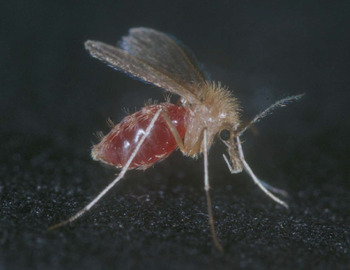
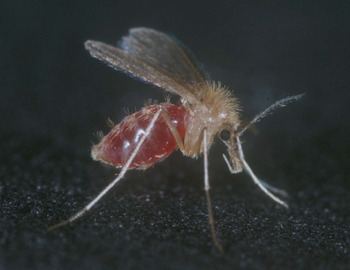
The family Psychodidae is very old and maintains some of the most ancient dipteran characters. Members of the family are distinguished by a dense covering of narrow scales on head, thorax, legs and wing veins. Of the five psychodid subfamilies, only the Phlebotominae have piercing mouthparts capable of taking blood. Furthermore, the phlebotomines tend to have an elongate and more fragile structure, in contrast to a squatter and more robust appearance of the other psychodid flies. Phlebotomine sand flies are small with a body length seldom exceeding 3 mm. Their colour ranges from almost white to almost black. Three features of phlebotomines are diagnostic to distinguish them from other Psychodidae: (1) when at rest, they characteristically hold their wings at an angle above the abdomen (fig. 9); (2) they are hairy; and (3) when alighting to engorge, they typically hop around on the host before settling down to bite.
Phlebotomus papatasi female: Photo credit: David Modry, Brno, Czech Republic.
The most important keys used for the morphological identification of sand flies are Theodor (Reference Theodor and Lindner1958), Artemiev (Reference Artemiev1980), Lewis (Reference Lewis1982), Lane (Reference Lane, Lane and Crosskey1993), Abonnenc (Reference Abonnenc1972) and the digital key entitled ‘Sand Flies of the Afrotropical Region’ prepared by Niang et al. (Reference Niang, Hervy, Depaquit, Bousses, Davidson, Geoffroy, Leger, Trouillet, Killick-Kendrick, Killick-Kendrick, Rioux and Brunches2004). There are also many incomplete (in many cases obsolete) written keys in the literature, and some of them are on local sand fly fauna for studied countries and/or studied area(s). In fact, for most of the sand fly species, morphological identification is very difficult and needs experience, particularly for female specimens. The taxonomy is not always resolved and there are important gaps in our knowledge. In many cases, morphological identification using written keys is not sufficient, and molecular confirmation is additionally required. The best approach is to conduct a morphological identification and then to use molecular methods for confirmation. Even if most sand fly species can be distinguished morphologically it requires expertise to discern these differences. For instance, it is difficult to distinguish P. perniciosus from Phlebotomus longicuspis (Pesson et al., Reference Pesson, Ready, Benabdennbi, Martín-Sánchez, Esseghir, Cadi-Soussi, Morillas-Marquez and Ready2004) or Phlebotomus neglectus from Phlebotomus syriacus (Badakhshan et al., Reference Badakhshan, Sadraei and Moin-Vaziri2011; Erisoz Kasap et al., Reference Erisoz Kasap, Votypka and Alten2013). For damaged specimens and immature stages, molecular methods will be required for accurate identification.
One method is a DNA barcoding approach, involving PCR amplification and sequencing of a genetic region (e.g., ribosomal ITS2, nuclear EF-1α, mitochondrial cytochrome b, mitochondrial cytochrome oxidase subunit 1) which can be compared with sequences in an online database to identify the sand fly species (Latrofa et al., Reference Latrofa, Dantes-Torres, Weigl, Tarallo, Parisi, Traversa and Otranto2011; Erisoz Kasap et al., Reference Erisoz Kasap, Votypka and Alten2013; Gutiérrez et al., Reference Gutiérrez, Vivero, Vélez, Porter and Uribe2014). However, this is time consuming and requires access to specialist equipment. More rapid molecular methods for the identification and differentiation of sand fly species include (polymerase chain reaction) PCR of the ribosomal ITS2 region (Khalid et al., Reference Khalid, Elnaiem, Aboud, Al Rabba and Tripet2010; Latrofa et al., Reference Latrofa, Annoscia, Dantas-Torres, Traversa and Otranto2012) and PCR-RFLP (restriction fragment length polymorphism) of the mitochondrial DNA fragment cytb – nd1 (Latrofa et al., Reference Latrofa, Annoscia, Dantas-Torres, Traversa and Otranto2012) or 18S ribosomal RNA gene (Tiwary et al., Reference Tiwary, Kumar, Rai and Sundar2012). Both methods allow the separation of species based on differences in fragment sizes, and allow the identification of a large number of samples in a short time with limited resources. However, published protocols for these methods are usually region-specific and only cover a few common species. Recently, a MALDI-TOF (matrix-assisted laser desorption/ionization-time of flight) mass spectrometry-based method for the rapid identification of phlebotomine species has been developed (Dvorak et al., Reference Dvorak, Halada, Hlavackova, Dokianakis, Antoniou and Volf2014), although currently this only covers five species and would require access to specialized equipment.
Pathogen detection
The phlebotomine sand flies are vectors of several zoonotic, or even anthroponotic, diseases such as leishmaniasis, bartonellosis and sandfly fever (Table 4). It must be recognized that the importance of the leishmaniases has eclipsed the possible role of sand flies in the transmission of other pathogens. The recent emergence of some of these diseases has led to a change in the view of sand flies as important disease vectors.
Summary of diseases transmitted by sand flies.

There are various methods that can be used to detect pathogens in sand flies. These methods include dissections (for Leishmania spp.), multiple locus electrophoresis (for Leishmania spp., Bartonella spp.), molecular detection including PCR, reverse transcriptase PCR, real-time PCR (for Leishmania spp., phlebovirus and bacteria) and in vitro cultivation and cell culture inoculation (Leishmania spp., phlebovirus and bacteria). Cultivation is cumbersome since the prevalence is very low for Leishmania spp. and phleboviruses. Prevalence can also show significant variation between different sand fly species and across an area. For example, in Italy Leishmania spp. prevalence in sand flies has been found to be 2.9% in Sicily (Goméz-Saladín et al., Reference Gómez-Saladín, Doud and Maroli2005) and 47.2% in Rome province (Rossi et al., Reference Rossi, Bongiorno, Ciolli, Di Muccio, Scalone, Gramiccia, Gradoni and Maroli2008), whereas prevalence rates range from 0 to 78% in different regions of Spain (Martín-Sánchez et al., Reference Martín-Sánchez, Gállego, Barón, Castillejo and Morillas-Marquez2006; Alcover et al., Reference Alcover, Gramiccia, Di Muccio, Ballart, Castillejo, Picado, Portús and Gállego2012; Jiménez et al., Reference Jiménez, González, Iriso, Marco, Alegret, Fúster and Molina2013), and from 0 to 4% in Portugal (Branco et al., Reference Branco, Alves-Pires, Maia, Cortes, Cristovão, Gonçalves, Campino and Afonso2013; Maia et al., Reference Maia, Dionísio, Afonso, Neto, Cristóvão and Campino2013). It is worth noting that Leishmania was detected more often in unfed versus blood-fed females (Jiménez et al., Reference Jiménez, González, Iriso, Marco, Alegret, Fúster and Molina2013). Phlebovirus infection rates have been recorded at 0.5% in Italy (Verani et al., Reference Verani, Ciufolini, Caciolli, Renzi, Nicoletti, Sabatinelli, Bartolozzi, Volpi, Amaducci, Coluzzi, Paci and Balducci1988) and a study in France found that 9.1% of 66 pools of 30 sand flies were PCR-positive (Charrel et al., Reference Charrel, Moureau, Temmam, Izri, Marty, Parola, da Rosa, Tesh and de Lamballerie2009).
Viral RNA detection via PCR and inoculation of cell cultures are the two most widely-used techniques for virus detection in sand flies. Once safe transportation is ensured, many methods including standard PCR or real-time PCR targeting a single pathogen (or many serotypes) can be employed according to the specific aims. See Marquardt et al. (Reference Marquardt, Black, Freier, Hagedorn, Hemingway, Higgs, James, Kondratieff and Moore2005) for detailed information.
If the pathogen has to be isolated, the viability of the organism in question has to be strictly preserved. To ensure this, samples must be kept cool as much as possible and must be transported in dry ice or liquid nitrogen. For nucleic acid detection, commercially available preservation solutions that inactivate nucleases can be employed. The best way to ensure viability is to keep the specimens alive until frozen in −80°C, if possible.
Pooling is frequently performed to increase the probability of detection in an endemic setting, to process a high number of specimens and to decrease screening costs. However, pooling may also decrease detection sensitivity if very few infected vectors are present in individual pools. Therefore, the decision of whether to use a pooling strategy should be based on the estimated prevalence of the pathogen in sand flies in the study region.
Blood-fed, gravid, or non-fed female sand flies are analysed for the detection of Leishmania spp. Nevertheless, the gravid and non-fed stages are more informative since they reflect the parasite's ability to survive in the sand fly after blood digestion, and thus the vectorial capacity of the sand fly species can be studied at the same time. For viruses with transovarial and transstadial transmission, both sexes are known to include viruses that can be efficiently detected. One approach is to identify virus sequences in blood-fed female sand flies and retain the males for morphologic identification and barcoding.
Conclusion
Unlike surveillance for mosquitoes or ticks, sampling for phlebotomine sand flies is much less practised in Europe. There may be many reasons for this, but undoubtedly the restricted range of sand flies to southern Europe has so far negated the need for surveillance in parts of central and northern Europe. However, with current climatic changes, and the evidence presented elsewhere on changes in sand fly distribution in Europe (Medlock et al., Reference Medlock, Hansford, Van Bortel, Zeller and Alten2014), countries in previously non-endemic areas are becoming concerned about the prospect of a change in distribution both in latitude and altitude. Much of the expertise in sand fly sampling and surveillance in Europe exists with entomologists neighbouring the Mediterranean. This paper aims to share that expertise so that sand fly surveillance activities can be expanded to new locations in Europe, to further improve our understanding of the distribution of our native fauna, but also to better inform public and veterinary health risks assessments on sand fly-borne disease.






 Open access

