

In August 1862, the leading article of one British periodical was headed ‘Animal “Magnetism”’.Footnote 1 The quotation marks around the word magnetism indicated the anonymous author’s understanding of at least one of the many controversies that had surrounded this subject for over half a century. This was the question of whether, as animal magnetism’s proponents claimed, a weightless, invisible bodily fluid, force or emanation by which the will of an individual was alleged to directly influence the mind and body of another person was analogous to the magnetism associated with minerals. By the early 1860s, many of those who had accepted the effects of animal magnetism but rejected the idea that they derived from a kind of magnetic fluid described the effect as mesmerism, in honour of the Swabian physician Franz Anton Mesmer, who, in the 1770s, had announced the discovery of this ‘magnetic’ form of influence and turned it into the basis of a medical therapy that proved both controversial and popular in Continental Europe, Britain and North America.
‘Animal “Magnetism”’ was much more positive about animal magnetism than its cautious title suggested. Anticipating disdain from some readers, it asserted that the “quasi science” rested on indisputable facts and urged the need to establish connections between facts of an “extraordinary character and occult nature” and those “accepted by science”.Footnote 2 There were moral and intellectual motivations for this. Establishing facts about animal magnetism was no less important to the “cause of truth” than the recognition of other facts that “scientific orthodoxy” had a lamentable tendency to dismiss simply because such facts appeared to conflict with “accepted doctrine”.Footnote 3 Moreover, recent developments in the physical sciences suggested the strong possibility that an obscure force, fluid or agency somehow connected with life could be related to the known physical forces. The eminent German chemist Justus von Liebig had demonstrated the similarity between the vital and chemical forces; the doyen of British natural philosophy, Michael Faraday, had shown that all bodies, including those of living beings, were to one degree or another extent influenced by magnetism; and another German chemist, Karl von Reichenbach, had produced evidence indicating that magnetism influenced the nervous system in ways comparable to the mysterious agency of mesmerism. The idea that the body produced and was susceptible to an obscure force somehow associated with magnetism was not as implausible as many suggested and was certainly ripe for investigation.
One of the most striking features of ‘Animal “Magnetism”’ was where it was published. Articles on animal magnetism and mesmerism were not uncommon in British periodicals in the mid-Victorian era, not least in those medical and spiritualist titles that were respectively hostile and sympathetic to the topics.Footnote 4 The rhetoric of ‘Animal “Magnetism”’ – its attack on the narrowminded nature of scientific orthodoxy and appeal to recent discoveries in the physical sciences – was not untypical in spiritualist serials. Yet ‘Animal “Magnetism”’ appeared in The Electrician, a weekly technical paper that we might not expect to be interested in, let alone sympathetic to, the topics.
Founded in 1861, The Electrician aimed to represent the burgeoning number of individuals with interests in the scientific understanding and application of electricity, especially those connected with the expanding overland and undersea networks of electric telegraphs.Footnote 5 Although the periodical’s content was mainly preoccupied with the electric telegraph, the use of electricity in medical therapies and physiological research, and other ‘material’ applications of electricity, the inclusion of material on animal magnetism was not inconsistent with its declared mission to show that electricity would “solve many of the important problems connected with the well-being of mankind”.Footnote 6 Indeed, as a prominent platform for knowledge of the way electricity would improve human beings’ capacity to communicate and to understand and heal their bodies, it is not surprising that it tolerated the possibility of some other subtle force of fluid, perhaps related to electricity and magnetism, that was at the basis of other, perhaps ‘occult’, forms of communication and therapy typically maligned by scientific orthodoxy.
‘Animal “Magnetism”’ was not the only article in The Electrician to be interested in ‘occult’ phenomena and the possible benefits of investigating them, and neither was The Electrician the only British scientific and technical serial of the mid-Victorian period to be so.Footnote 7 This material yields instructive insights into aspects of the nineteenth-century cultures of the sciences which this chapter will study in detail. It affords a glimpse of the presence of animal magnetism and related psychical or ‘occult’ phenomena in scientific and technical cultures from which we might expect them to have disappeared. It also suggests that the damning verdict on such phenomena given at the time by leading medical and scientific practitioners – that the effects were due to well-known mechanisms of the mind and body rather than new, hidden forces or fluids connected with the body and mind – were as unconvincing in some scientific quarters as in sections of the general population enthralled by the performances of itinerant mesmeric lecturers and spiritualist ‘mediums’. As the author of ‘Animal “Magnetism”’ demonstrated, the efforts of many medical and scientific practitioners to demarcate the study of such bodily emanations as a pseudo- or “quasi-science” were not decisive.
The ‘occult’ material in The Electrician and other scientific and technical serials of the 1850s and ’60s also helps us to reassess the better-known forays of mid-Victorian scientific practitioners into similar subjects. In this period, a young professor of natural philosophy, John Tyndall, was testing Reichenbach’s claim that some people saw lights around magnets and investigating the alleged capacity of spiritualist mediums to commune with professed denizens of the spirit world; an electrician working for one of the British electric telegraph firms, Cromwell Varley, was exploring his own powers of mesmeric healing and investigating the popular fascination with tables that seemed to turn under the influence of unknown forces or spirits of the dead; and a student of chemistry, William Crookes, was taking a keen interest in Faraday’s attempt to explain the mystery of ‘table-turning’ in terms of a force unconsciously exerted by people participating in the popular pastime.Footnote 8
In the context of ‘Animal “Magnetism”’, the ‘occult’ interests of Tyndall, Varley and Crookes no longer seem so exceptional. They seem to represent a more widely shared belief that there might exist obscure forces, fluids, powers and influences associated with the human body that could form the basis of potentially fruitful extensions of the physical sciences. This chapter explores the origins and development of this belief, which reached its culmination in the work of the late-nineteenth-century physical scientists, or, as we call them, ‘physical–psychical scientists’, who are the focus of this book. It studies the way that this belief was articulated, contested and defended from the late eighteenth until the mid-nineteenth centuries, and, in the contexts of animal magnetism, Reichenbach’s magnetic researches, table-turning and Modern Spiritualism. These developments took place in a period when the boundaries of physics were still in flux. The subject areas that were beginning to constitute the scientific discipline were being extended in myriad directions: the study of electricity was transforming approaches to problems in engineering and medical therapy; studies of force and heat were being extended to, and enriched by, questions in physiology and medicine; and understandings of atoms, energy and ether were adding new, and often competing, perspectives on the relationships between science and religion. These were precisely the contexts within which it became possible for some to argue that the physical sciences could and should be extended to the puzzling phenomena often lumped together as ‘occult’.
Animal Magnetism as Physics
“I dare to flatter myself that the discoveries which I have made, and which are the subject of this book, will push back the limits of our knowledge in physics, as much as the invention of microscopes and telescopes has done for the age preceding our own.”Footnote 9 This 1799 declaration by Mesmer problematises the assumption that his historical significance lies solely in the fields of psychiatry and psychology. As Alan Gauld has emphasised, Mesmer sought not only to apply animal magnetism to the treatment of bodily rather than mental illnesses, but saw himself as the discoverer of a genuinely novel physical agency – an invisible, weightless and fluidic form of matter – that would transform the study of physiology and physics.Footnote 10
Mesmer argued that, owing to its extraordinarily rarefied nature, the fluid penetrated, and acted as a medium of mutual influence between, all bodies in the universe, whether animate or inanimate. Moreover, he proposed that the fluid sustained tidal effects which, in the human body, produced imbalances that caused bodily illnesses. By manipulating the subtle fluid, Mesmer believed he could restore this imbalance, a procedure that induced a ‘crisis’ in patients – spasms and other violent physical movements – which accelerated the natural healing process. Initially, Mesmer achieved curative effects by applying mineral magnets to the body (which drew on established traditions of magnetic cures), but he later accepted that his own body was equally effective as a source of the fluid, or, as he was soon calling it, ‘animal magnetism’. By employing a series of elaborate bodily gestures, notably touching and passing hands over patients, he believed he could cause the magnetic fluid in his own body to restore imbalances in those of ailing individuals (Figure 1.1).
The rays of animal magnetism believed to mediate the influence of a mesmeric operator over the bodies and minds of their subjects. From Jules Baron Du Potet de Sennevoy, Manuel de l’étudiant magnétiseur (Paris: G. Ballière, 2é, 1851), p. 22, figure 1.

Mesmer and the disciples he eventually attracted in Europe, Britain and North America had good grounds for believing that animal magnetism was an extension of existing scientific and medical thinking, as well as a development of ideas of a living, cosmic fluid promulgated in occult philosophies and sciences.Footnote 11 By the late eighteenth century, physical sciences divided the material cosmos into ponderable matter and a host of forces and imponderable (weightless) and invisible fluids such as gravity, mineral magnetism, frictional electricity and heat.Footnote 12 The apparent discovery of another invisible force or imponderable fluid fitted well within programmes of enquiry in these sciences. The ideas of a universal force or fluid linking the microcosm of animate and inanimate bodies on earth to the macrocosm of celestial objects and of the therapeutic benefits arising from the manipulation of such a fluid made sense within contemporary scientific and medical discourses. For popular scientific audiences in late-eighteenth-century European cities, many of these ideas were dramatised in scientific shows of electricity and other imponderables that were easier to sense than to comprehend. As Jessica Riskin has shown, when, in 1778, Mesmer arrived in Paris to market his mysterious new magnetic therapy, he encountered a clientele who were “ready” for him.Footnote 13
To give intelligibility to the bodily gestures at the heart of his ‘magnetic’ therapy, Mesmer proposed that animal magnetism was essentially a universal fluid akin to the medium of gravity, and which transmitted motion and produced tidal ebbs and flows. Mesmer’s goal to elucidate the “unknown mechanical laws” of this fluid reflected his debt to popular Newtonianism and embodied his attempt to extend the boundaries of physics: animal magnetism involved studying a mysterious agent that seemed to share physical properties with gravity, light, heat, sound, magnetism and frictional electricity (for example, it could be reflected by mirrors and accumulated in material objects), but it also promised to illuminate the ultimate nature of these better-known physical agents.Footnote 14 As the means by which the will of a ‘magnetiser’ appeared to affect the sensations of a patient at a distance, the animal magnetic fluid was also indebted to late-eighteenth-century physiological theories that explained sensation as the motion of an imponderable ether or fluid in the nerves. However, animal magnetism extended physiological thinking by proposing the existence of an imponderable fluid that mediated sensations seemingly inaccessible to the five ordinary senses. Individuals subject to the passes of a ‘magnetiser’ claimed to be able to directly experience the magnetiser’s thoughts, as well as perceive hidden or distant objects (later christened ‘clairvoyance’), and past and future events.
The popularity and apparent success that Mesmer’s magnetic therapy enjoyed in Paris exasperated many leading French medical practitioners and led to a key development in the history of the relationship between established and occult sciences. In 1784, Louis XVI’s government set up two commissions – one from the Académie Royale des Sciences and the Paris Faculté de Medécine, the other from the Société Royale de Medécine – to investigate animal magnetism. Boasting such luminaries as the American natural philosopher and diplomat Benjamin Franklin, the chemist and tax collector Antoine Lavoisier and the astronomer Jean-Sylvain Bailly, the commissions delivered an intellectually weighty and damning verdict on Mesmer’s physics: while they accepted the genuineness of magnetic effects, they rejected the idea that an imponderable fluid was the cause, since all the effects could be explained in terms of the imagination. The imagination was a compelling explanation because the human subjects tested by the commissioners only experienced the effects of the fluid when they believed they were subjected to it.
It was hardly surprising that most of the commissioners entertained this verdict from the outset. The animal magnetic fluid was much more problematic than other imponderable agents to which it was often compared: like frictional electricity, mineral magnetism and gravity, it could only be detected by its effects, but unlike these imponderables its effects could only be exhibited on human subjects rather than inanimate objects and so there was a high probability of “moral causes” operating.Footnote 15 Given that, by the 1780s, the imagination was known to be a cause of bodily effects, the commissioners regarded their scepticism towards the animal magnetic fluid as justifiable. By declaring that sensations could be the result of the imagination stimulated by verbal and other suggestions, the commissioners effectively undermined a key epistemological claim of the sciences: that sensations were a reliable basis of empirical knowledge of the world.Footnote 16
The verdict of the animal magnetism commissions was certainly consistent with the opinion of the German-speaking physicians and natural philosophers whose hostility to Mesmer’s claims and therapeutic practice had earlier prompted his decision to move to Paris. The ‘official’ verdict, however, was neither unanimous nor authoritative. One member of the Société Royale de Medécine commission denied that all animal magnetic effects tested by his colleagues could be put down to the imagination.Footnote 17 Plenty of Mesmer’s followers, who by the 1780s could be found throughout France, attacked the commissions for sloppy experimental methods and for upholding the imagination as the main cause when this failed to explain all the evidence for animal magnetism’s efficacy (notably on animals) and how, in the absence of some kind of imponderable fluid, the imagination was supposed to produce effects on the body.Footnote 18 Most animal magnetisers maintained that the senses and feelings of magnetised subjects could be trusted and that they remained reliable instruments of the power of the magnetic influence. The official verdict on animal magnetism certainly played a part in Mesmer’s decision to leave Paris and eventually withdraw from the centre stage of animal magnetism, but this had little effect on the spread of his ideas and practices elsewhere in France and in Europe.
From the 1780s until the early 1800s, animal magnetism enjoyed less success as a possible contribution to physics than it did as a medical therapy and as a contribution to other branches of knowledge. Mesmer’s vision of animal magnetism as physics was most strongly shared by several French and German physicians who sought to relate the animal magnetic fluid to electricity and other known imponderables or to a supposed atmosphere produced by the nervous fluid.Footnote 19 However, this approach competed with the more psycho-physical one of those who followed the Marquis de Puységur, a disciple of Mesmer who in 1784 announced that animal magnetism could induce a state of artificial somnambulism or ‘magnetic’ sleep. In this state, an individual exhibited what would become the defining characteristics of animal magnetism: they displayed a consciousness distinct from that associated with their waking self, an insensibility to pain, a capacity to see through opaque objects and to great distances, and an ability to enter into a state of ‘rapport’ with the magnetiser, whose thoughts they seemed to be able to read and whose silent commands they obeyed. Neither the imagination nor the fluid theories coped well with explaining these aspects of animal magnetism, and for this reason Puységur and his disciples largely sidestepped the question of the nature of the magnetic fluid. While they maintained that some physical influence passed from magnetiser to subject, their primary concern was with the nature of the will that mobilised this influence and, accordingly, with animal magnetism as a branch of psychology.Footnote 20
Even less materialistic in their interpretations than Puységur and his followers were those French and German writers preoccupied with animal magnetism’s spiritual and mystical significances. Some individuals in a state of magnetic sleep appeared to commune with angels and spirits and possess the powers of visionaries and prophets. The capacity of magnetised somnambules to commune with the soul of nature strengthened animal magnetism’s appeal to proponents of Naturphilosophie.Footnote 21 This key aspect of German Romanticism emphasised the fundamental identity of nature and spirit and that a true understanding of it required special abilities to interpret external nature and the spiritual depths that it symbolised. Individuals in a state of magnetic sleep became important enquirers into these depths but also seemed to exhibit some of the polarities that Naturphilosophen traced in living things – in this case, between the higher animal states associated with consciousness and the lower vegetative states associated with unconsciousness.
These developments in animal magnetism embodied many of the ideas and practices that would characterise Reichenbach’s ‘od’, spiritualist mediumship, telepathy and the other psychical phenomena in which British physical scientists would show such a strong interest. Indeed, I want to suggest that the attitudes and approaches of these latter individuals to psychical phenomena built partly on the examples set by early-nineteenth-century British practitioners of and writers on animal magnetism because, more than many other proponents of the subject, they kept alive Mesmer’s hopes that his medical therapy was also a source of progress in physics.
Animal magnetism made little impact in Britain until the 1830s, when many physicians, clergymen, littérateur and others began to practise, publish and lecture on a subject that had impressed some of them via the London lectures of the leading French magnetiser Baron Dupotet.Footnote 22 By the time Dupotet arrived in Britain, animal magnetism in France had become, after a state of relative latency during the Revolution, one of the most controversial subjects in medical circles. In continuation of the controversy following the 1784 commissions, one of the most contentious issues remained the existence of the animal magnetic fluid. Many agreed with the French physician Alexandre Bertrand, whose Traité du somnambulisme (1823), a work later regarded as a foundational text in hypnotism, argued that magnetised somnambules who claimed to perceive magnetic fluids only saw what they believed or were made to believe in such fluids; others, including Dupotet, upheld the fluid theory as the only interpretation that could cope with evidence that magnetisation worked on animals and infants (who, it was supposed, could not possibly be made to believe in fluids) and when the magnetised subject was asleep or unaware of the magnetic operator’s presence.Footnote 23
Given Dupotet’s significance in stimulating British mesmerism, it is not surprising that so many of its proponents should also favour the idea that the modus operandi of mesmerism was a physical influence crossing the space between the operator and subject. Nineteenth-century mesmeric texts in Britain, France, Germany, North America and elsewhere shared a strong preoccupation with mesmerism as a new form of medical therapy and as a contribution to the emergent science of the mind, but the British texts were not as uninterested in the ‘philosophical’ aspects as some historians have claimed.Footnote 24 In Isis Revelata (1836), one of the earliest English-language surveys of animal magnetism, the lawyer John Campbell Colquhoun supported his theory that the mesmeric influence was the nervous fluid flowing out of the body with a detailed exposition of a “new theory of physics” tracing the mesmeric influence and all other imponderable agents to vibrations in the space-filling medium that many natural philosophers now accepted as the carrier of light waves across empty space: the luminiferous ether.Footnote 25 The Anglican clergyman Chauncy Hare Townshend developed a similar theory in his Facts in Mesmerism (1840).Footnote 26
Colquhoun and Townshend exemplify a tendency among some British mesmeric writers of the 1830s and ’40s to link the mesmeric and nervous fluids and to suppose that both were identical to, or at least closely related to, electricity. Yet by the 1850s, some mesmeric writers had accepted that electrical analogies for the nervous and mesmeric fluids were problematic. In 1851, for example, the physician Joseph Haddock warned that the “best physiologists” had rejected the identity of electrical and nervous fluids, so that the mesmeric power of the nervous fluid outside the body could not be called electrical.Footnote 27
Townshend shared with several leading British mesmerists a belief that establishing the relationship between the mesmeric fluid and known imponderables would be a major step towards linking animal magnetism to the physical sciences and thus raising the intellectual credibility of the controversial practice.Footnote 28 For some British medical and scientific practitioners this was a stimulus for experimental as well as theoretical activity. An instance of the experimental approach took place in 1838 at University College Hospital, London, and involved the hospital’s leading physician and medical professor John Elliotson and the Irish natural philosopher Dionysius Lardner.Footnote 29 One of the most vociferous of all English mesmerists, Elliotson had stimulated considerable publicity and professional hostility for using female patients in displays of mesmeric phenomena and treatment in the wards.Footnote 30 Elliotson regarded his work as partly the prosecution of the “physics of mesmerism” insofar as it investigated the capacity of different metals and water to carry the mesmeric influence and thereby cause muscular rigidity and other bodily reactions in patients making contact with the substances.Footnote 31 Publicised in an anonymous article by Lardner and the English novelist Edward Bulwer-Lytton, the experiments took this physics much further and appeared to show that the mesmeric influence experienced by patients could be, like light, reflected from mirrors and metallic surfaces. The influence also seemed to penetrate opaque screens placed between the operator and patient, diminish in strength when the distance between participants was increased, and be unaffected by electric shocks given to the patients from a galvanic apparatus and Leyden jar provided by the natural philosopher and electric telegraph pioneer Charles Wheatstone.
The 1838 experiments illustrate the modest but telling overlap between early Victorian mesmerism and the cultures of electrical display and measurement.Footnote 32 Most mesmerist practitioners and writers accepted that human beings were the primary instruments of research, principally because they were sensitive to subtle influences that could not otherwise be detected. For some, however, the addition of inanimate instruments promised to illuminate the suspected connections between animal magnetism and known imponderables as well as symbolise the capacity of mesmeric phenomena to become what Lardner and Lytton called “subjects of vast importance, whether regarded as appertaining to general physics or the special science of medicine”.Footnote 33
Lardner, Bulwer-Lytton and Elliotson were not alone in recognising that their physical approach to mesmerism depended on connections with academic professors, popular lecturers and instrument makers. Thus, in the mid-1840s, the physician John Ashburner turned to the Royal Polytechnic Institution, one of London’s premier venues of popular science, for a “splendid apparatus” used to determine whether magnetism induced the same physiological responses as mesmerism.Footnote 34 A few years later, the gas engineer John O. N. Rutter commissioned fellow Brighton resident, the surgeon–electrician E. O. Wildman Whitehouse, to make a “galvanoscope” that yielded quantitative support for Emil Du Bois Reymond’s recent evidence that human muscular contraction generated electrical currents.Footnote 35 Although Rutter’s principal concern was animal electricity, he recognised its value in a plausibility argument for animal magnetism: the discovery of electromagnetism suggested that as a carrier of electric currents, the human body should also be sensitive to and the source of magnetic “currents”, even if these currents were too feeble to be detected by instrumental means.Footnote 36
British mesmerists’ hopes that their physical approaches to animal magnetism would help raise the medical and scientific profile of the subject were significantly weakened by the indifference or outright hostility towards the subject shown by the British medical and scientific establishments. Few of the natural philosophers who witnessed mesmeric demonstrations (notably Faraday, Wheatstone and William Whewell) sustained any interest in the subject.Footnote 37 Worse, Elliotson, Ashburner and others found themselves regularly attacked by medical professionals and commentators for basing their claims for the reality and curative effects of the mesmeric fluid on the judgement of deceptive or potentially unreliable human subjects and on investigative methods that allowed for mesmeric effects arising from what subjects merely imagined or expected.
A further blow to claims for the reality of the mesmeric fluid was dealt by the popularity of the work of the Scottish surgeon James Braid. In the 1840s, he argued that the mesmeric sleep (which he sought to replace with a new term, ‘hypnosis’) was a physiological response produced when an individual fixed their gaze on a small bright object and which was entirely independent of any exterior magnetic fluid. Predictably, mesmerists challenged the capacity of Braid’s theory to explain all cases of mesmerism, but they also appealed to evidence of another imponderable agency attacked by Braid and which seemed to surpass the mesmeric fluid in helping to ally animal magnetism to the physical sciences.Footnote 38
The Oddity of Od
Despite the hostility shown towards it in many quarters of the British medical and scientific establishment, mesmerism enjoyed a significant presence in early Victorian culture, from stage shows, sermons and popular tracts to dedicated hospitals, journals and treatises. It reflected and contributed to the turbulence in British political, religious and scientific as well as medical establishments, and its religious, political, scientific and medical significance changed according to the quarter in which it was experienced.Footnote 39 In the Zoist, a periodical launched by Elliotson in 1843, mesmerism was pushed forward as a medical therapy practised by professional elites and as a materialistic science of the mind centred on cerebral physiology, and this contrasted with the more democratic and spiritual meanings of mesmerism upheld elsewhere.Footnote 40
Elliotson well captured his journal’s intellectual ambitions in an issue of 1846 when he praised a certain “philosopher” for writing a book that placed mesmerism “among the physical sciences” by showing that the mysterious animal magnetic influence obeyed laws similar to those describing other imponderables.Footnote 41 The author of the book, whose status as a “philosopher” rather than a mesmerist conferred additional weight on Elliotson’s claim, was Baron Karl von Reichenbach, a wealthy German industrial chemist already renowned for the discovery and manufacture of creosote and other coal-tar products.Footnote 42 For many Victorian readers, including some of the protagonists of this book, few mid-nineteenth-century natural philosophers deserved more praise than Reichenbach for struggling to bring an obscure force within the realm of physics.
The work reviewed by Elliotson was an English-language abridgement of a series of papers that had been published the year before in the Annalen der Chemie und Pharmacie, the prestigious scientific serial edited by the eminent German chemists Justus von Liebig and Friedrich Wöhler.Footnote 43 Later revised for publication as Physicalisch-physiologische Untersuchungen über die Dynamide des Magnetismus (1849–50), the papers embodied a long series of investigations into the existence and nature of a new force or power that only seemed to manifest itself to human subjects of a ‘sensitive’ nature and which Reichenbach, working mainly from his castle near Vienna, studied in a range of individuals, from those whose were physically healthy but melancholic to those suffering from such nervous disorders as somnambulism, catalepsy and hysteria.Footnote 44 Unable to sense the force himself, Reichenbach’s main witnesses were a handful of women who reported having peculiar sensory responses to the physical world: they experienced a “gentle” but “unpleasant” physical sensation when magnets were passed over their bodies; they saw faint coloured luminous emanations around magnets, crystals and human bodies; they felt their hands drawn to magnets; they felt a strange coolness when exposed to the light of the sun and stars and a puzzling warmth when exposed to lunar rays; and they claimed peculiar sensations from other agents including electricity, heat, mechanical friction, artificial light and chemical activityFootnote 45 (Figure 1.2).
The luminous manifestations of ‘od’. From Karl von Reichenbach, Researches on Magnetism, Electricity, Heat, Light, Crystallisation, and Chemical Attraction, in Their Relation to the Vital Force, translated and edited by William Gregory (London: Taylor, Walton and Moberly, 1850), plate III.

Reichenbach was convinced that the force, which he christened “od” but which was often called ‘odyle’ or the ‘odic’ force by his English translators, was either an entirely new one, the “modification” of an existing physical force, or a “complex” combination of existing forces.Footnote 46 Independently of these questions, it seemed to be ubiquitous in the physical world and had a complex relationship with known physical forces. On the one hand, it was closely associated with and shared many of the properties of existing physical forces: it always accompanied natural and artificial magnetic sources (including the earth’s magnetism); it exhibited polar characteristics akin to magnetism and electricity; and it was propagated by radiation and conduction (like heat). On the other hand, it was not identical with any existing physical force: for example, it was not identical to magnetism or electricity because its presence was not limited to magnetic and electrical sources; and while it accompanied heat, it had no effect on thermometers and often induced opposite thermal sensations to heat.
The apparent tendency of od to follow “fixed physical laws” that matched and transcended those of existing imponderables was enormously exciting to Reichenbach because it represented a possible extension of the “domain of physics” and the opening of a “new leaf in the history of the Dynamides or Imponderables”.Footnote 47 Since od was closely linked to vitality, it also had far greater potential than other imponderables to bring physiology closer to physics and to show the “unity of these imponderables in a higher form”.Footnote 48
Reichenbach’s conceptions of od had obvious roots in Romantic ideas of nature that flourished in late-eighteenth- and early-nineteenth-century scientific, literary and artistic circles, particularly in the German lands of Reichenbach’s youth and early career.Footnote 49 His belief in the close connection between physical and vital forces, the unity of imponderables in some “higher form” and the cosmic significance of polarity owed a great deal to one aspect of Romanticism: Naturphilosophie. It is also possible that Reichenbach’s acceptance of the capacity of his sensitives to perceive occult features of the physical world owed something to the belief of Naturphilosophen in the power of genius and imagination to discern nature’s hidden reality. Reichenbach was acutely aware of the danger of resting the case for od on human subjects, whose judgements might be impaired by poor physical and mental health. The goal of making od part of physics needed the discovery of a “universal inorganic reagent” for the force, a “means of recognising and measuring it” which could liberate students of the subject “from the frequently more than painful dependence on diseased persons, hospitals, and uncultivated people of every kind”.Footnote 50
Reichenbach’s intellectual goals for od underpinned his ambivalence towards Mesmer and his followers. Not surprisingly, his critics and allies saw him as a latter-day Mesmer, propounding an updated theory of a universal but obscure force that was strongly associated with mineral magnetism and to which only certain individuals were sensitive. Reichenbach was certainly familiar with the literature on mesmerism, and his claims for od, especially its luminous manifestations, built partly on animal magnetism. But he was adamant that his work adopted the critical approach to the work of Mesmer and his followers that he believed would placate such formidable critics of mesmerism as the German physiologists Emile du Bois-Reymond and Johannes Müller.Footnote 51 While his researches confirmed the existence of a force that was concentrated in but not limited to magnetic sources, he deemed animal magnetism an “unfit” term because the phenomena associated with it did not exactly coincide with those “properly called Magnetism”.Footnote 52
Few aspects of Mesmer’s work drew more criticism from Reichenbach than the closest thing Mesmer got to a therapeutic instrument: the baquet. This was a circular wooden tub containing bottles of ‘magnetised’ water, whose subtle influence was communicated via iron rods to patients forming a ‘magnetic’ chain around the perimeter of the vessel. Reichenbach was not alone in being highly circumspect about this attempt to create a collective form of magnetic therapy, not least because Mesmer sought to enhance the effect with rituals, music and darkness. As far as he was concerned, the only truth buried in this “mysterious superstructure” was the slow and continuous chemical action of the baquet, which, as he concluded from his own investigations, was itself a source of od which had distinct physiological effects.Footnote 53
Reichenbach’s discussion of the baquet in his Physicalisch-physiologische Untersuchungen led to telling examples of the way he sought to render od plausible in the context of recent physical discovery. Having found evidence that od was perceived in even feeble chemical reactions, Reichenbach considered it highly likely that chemical activity within the body was the source of its remarkable capacities for od. Not surprisingly for a work first published in the Annalen der Chemie, Reichenbach emphasised that a “guarantee of the essential truth” of his own “observations and deductions” was the fact that they seemed to converge with Liebig’s far better-known research on the relationship between chemical activity and the vital functions, and in particular the roles of respiration and digestion in the production of heat and muscular power – the same vital functions that Reichenbach believed also yielded od.Footnote 54
Another convergence was sought between od and Faraday’s recent work on diamagnetism, which referred to the susceptibility of all bodies, whether magnetic or not, to an external magnetic field. Annoyed that the British natural philosopher had apparently ignored his researches on od, Reichenbach insisted that they were actually “drawing the same vehicle, but by different ropes”.Footnote 55 Published in 1845, Faraday’s research would certainly have intrigued Reichenbach because it derived from Faraday’s discovery of an effect – the magnetic rotation of the plane of polarised light – lending credence to the magneto-optic connection that Reichenbach’s sensitives perceived in the form of odic luminosity around magnets.Footnote 56 But Reichenbach’s principal interest in diamagnetism was that, like od, it seemed to be a power shared by animate and inanimate matter, although it was not clear whether diamagnetism was a manifestation of od or whether both derived from a still-higher power. Either way, he anticipated that Faraday’s “fertile genius” would unravel the mystery of universal powers.Footnote 57
For all their intended rhetorical power, Reichenbach’s connections between od research and recent physical discoveries sidestepped the critical problem of employing human beings as the principal instruments or ‘reagents’. Although he appealed to the fact that patients’ testimony was a necessary feature of medical discovery, he evidently felt that what his experimental subjects reported about od needed bolstering in other ways. His least successful response to this problem was to try to photograph, at some time in the late 1840s, the perceived magnetic luminosity. With the help of a Viennese photographer, he established that a daguerreotype inside a light-tight box had become fogged by a long exposure to a strong magnet. If “other causes” of the fogging could be ruled out, Reichenbach concluded, then the plate must have been exposed to a “real light” flowing from the magnet.Footnote 58 Although he was satisfied that the plates had not been exposed to other sources of light, Reichenbach did not deem the result decisive and only returned to the problem in the early 1860s.Footnote 59 Nevertheless, his original photographic test would certainly pique the interest of other scientific investigators, including many British physical–psychical scientists revisiting the subject from the 1870s onwards.
Reichenbach achieved more success with a far simpler series of tests, which were designed to eliminate the possibility that his experimental subjects were deceiving him or themselves, notably by using clues in their environment rather than a genuine odic sensitivity. One test was prompted by the fact that an individual he studied particularly closely, Leopoldine Reichel, claimed to perceive the image of a magnetic ‘flame’ focussed onto the wall of a darkened room by a glass lens. Since the image was invisible to Reichenbach and his assistants, he decided to conduct a more stringent test of her powers, which involved her pointing to the place where the image fell as the lens was silently and repeatedly moved. Reichel’s ability to correctly identify the different places where Reichenbach believed the image must have fallen confirmed her abilities “beyond a doubt”.Footnote 60
Reichenbach’s most conspicuous strategy regarding his sensitives, however, responded to criticism that he had relied far too heavily on Reichel and four other young women who, despite passing crucial experimental tests, were fundamentally unreliable as observers because of the nervous disease that made them strongly sensitive to od. For this reason, Physicalisch-physiologische Untersuchungen presented evidence of odic sensitivity in a much larger sample of people (59), a large proportion of whom were not only physically healthy but drawn from the middling and highest social ranks of Viennese society, including baronesses, university professors and daughters of tradespeople. Not surprisingly, these individuals featured heavily in Reichenbach’s more detailed studies of odic luminosity, which included examinations of the deflection of odic flames by crystals and human hands, the changing colour of the odic luminosity of a bar magnet turned in the earth’s magnetic field, and the striking parallel between the odic colours of a magnetised iron sphere and the aurora. Having accepted the potential of od to unify a wide range of phenomena in nature, Reichenbach concluded from this last observation that the earth’s polar lights were a “vast manifestation” of odic light whose sheer power ensured that they were not just visible to sensitives.Footnote 61
The immediate medical and scientific reactions to Reichenbach’s work in the German-speaking lands were generally unfavourable. In 1846, a committee of Austrian physicians failed in their attempt to replicate Reichenbach’s results and questioned the judgement and honesty of their experimental subjects; similar criticisms against Reichenbach were made by Liebig, who had been enthusiastic enough to publish the first of his papers on od, but who by 1852 was no longer convinced by the credibility of the “science of od” because it depended on observers who possessed unreliable sensory and nervous apparatuses.Footnote 62 This fundamental problem had long been aired in the British medical press, which was generally no more sympathetic to Reichenbach than it had been towards Mesmer and his followers. Reviewing the English-language Abstract of Reichenbach’s treatise, the Lancet lambasted the “hysterical young women” employed by the chemist as the “most suitable subjects for the development of shams” and erroneous judgements of sensory experiences and, recalling the ferocious battle it had waged against mesmerism since the late 1830s, placed Reichenbach beside Elliotson as a perpetrator of “disguised quackery”.Footnote 63
The English translations of Physicalisch-physiologische Untersuchungen prompted even more trenchant criticisms from the British medical press. For many medical commentators, the case for od was undermined by the fact that Reichenbach and his chief English-language translator and champion, the Scottish academic chemist William Gregory, were physical scientists who seemed to lack the knowledge of physiology and psychology that, as the British and Foreign Medico-Chirurgical Review charged, was essential to a “right investigation of the phenomena”.Footnote 64 For this latter reviewer, the “fatal” gap in Reichenbach’s “high character as an inductive and experimental philosopher” was his failure to understand the nature and reliability of his “instruments of research” and to recognise his unconscious role in determining what such human apparatus sensed.Footnote 65 A good deal of this criticism appealed to Braid’s work on hypnotism, which yielded powerful evidence of the way that individuals could be made to experience the tactile and visual sensations claimed by Reichenbach’s sensitives simply as the result of verbal suggestions and in the absence of magnets and crystals.Footnote 66 For Braid and other critics, Reichenbach’s descriptions of his experiments simply failed to rule out the possibility that he had inadvertently led his highly suggestible subjects towards their observations.
Gregory was one of several mid-Victorian scientific and medical practitioners who, in opposition to this hostility, upheld Reichenbach’s work and used it in their writings on the credibility and therapeutic benefits of animal magnetism.Footnote 67 Their independent studies of odic sensitivity, coupled with Reichenbach’s scientific reputation and the sheer quantity of his empirical evidence for odic sensitivity, lent powerful support to Mesmer’s original discovery. However, British mesmerists diverged from Reichenbach himself in the extent to which they believed od was relevant to mesmeric phenomena: Gregory well exceeded the limits of Reichenbach’s speculations in proposing od as the possible mechanism of two psychological powers associated with the mesmeric trance – thought-reading and clairvoyance – while the physician John Ashburner believed that Reichenbach had unfairly neglected using mesmerised sensitives who, as Ashburner’s own experiments revealed, possessed significant odic sensitivity.Footnote 68 Gregory’s use of Reichenbach was hardly surprising given mesmerists’ preoccupation with the subtle physical means by which psychological powers extended beyond the material brain, and it was precisely this function that would attract so many spiritualists and psychical researchers to the question of od later in the nineteenth century.
Reichenbach’s researches were ignored rather than explicitly criticised in the most prestigious British scientific publications, but in some scientific quarters they were certainly considered worthy of critical or sympathetic comment. The young John Tyndall was not the only scientific practitioner who privately shared Liebig’s doubts about Reichenbach’s claims.Footnote 69 That prominent forum of intellectual and scientific comment, the Athenaeum, was more equivocal insofar as it questioned the scientific judgement of Reichenbach’s witnesses but expressed great confidence in his abilities and in the possibility that with further investigations employing more reliable observers, an important contribution could be made to the understanding of the correlation of the physical and vital forces.Footnote 70 Scientific reputation weighed even more heavily with the Mechanics’ Magazine, which in 1851 pointed to the scientific stature of Reichenbach, as well as of sympathisers Gregory and the Swedish chemist Jöns Jacob Berzelius, as reasons for defying the British medical profession’s notorious contempt for animal magnetism. Part of the defiance was repudiating the argument that Reichenbach, like Mesmer and Elliotson, had at best inadvertently contributed to the study of physiology and psychology by showing how scientific experts and their human subjects perpetuated false beliefs: on the contrary, the Mechanics’ Magazine had no doubt that Reichenbach had helped make animal magnetism a “new branch of physical enquiry”.Footnote 71
By the early 1860s, some British scientific commentators had fresh reasons for sharing the Mechanics’ Magazine’s optimism. In 1861, Reichenbach seemed to be moving closer to his ambition of bringing od within the remit of physics by getting a new instalment of his research published in the distinguished German scientific journal, the Annalen der Physik.Footnote 72 The paper focussed on the different sources of phosphorescence, including crystallisation, fusion, fermentation and, most tellingly, the human body. His experimental evidence for human phosphorescence was clearly drawn from ongoing od researches, but references to od were strategically omitted and the work was linked to existing debates in the Annalen and in physics more generally on the relationship between molecular movement and imponderable forces.Footnote 73
Reichenbach’s success with German physicists, however, was short lived, and from this point until his death in 1869 he encountered stiff opposition from leading savants who, having accepted his invitations to witness new attempts at odic photography and related experiments, maintained their doubts about the reality of the new force.Footnote 74 As we have seen, Reichenbach enjoyed a more sympathetic hearing in some sections of the British scientific and technical press, where, in agreement with the Electrician author with which we began this chapter, writers directly or indirectly encouraged further investigations into od. In 1862, for instance, an anonymous writer in the Popular Science Review (probably William Crookes) pointed out that although readers were entitled to be circumspect about those statements of Reichenbach that had been greeted with “incredulity”, he remained “one of the first chemists and physicists of the day, and his researches in this ‘occult’ science” were “characterised by equal philosophical acumen with his chemical experiments”.Footnote 75 What made a less incredulous approach to od particularly pressing by this time was that it promised to explain aspects of another ‘occult’ science, but one that had become the talk of Victorian society.
Outdoing the Electric Telegraph
If there was one area of agreement between Reichenbach’s supporters and critics it was that od was related to occult phenomena other than just mesmerism. It was often lumped together with the divining rod (typically a forked twig held in the hands that appeared to move near hidden sources of water independently of the will), the puzzling movements of a pendulum bob suspended from a stationary finger, and the crazes for table-turning and spirit-rapping that swept across the United States, Continental Europe and Britain from the early 1850s.
In table-turning, groups of people gathered around tables and, after placing their fingers lightly on table-tops, observed the furniture rotating seemingly independently of their volition. Electricity, magnetism, a new physical force, disembodied spirits and the Devil were offered as possible causes. Spirit-rapping was the ability of professed spirits of the dead to commune with the living via messages encoded as rapping noises on furniture and other objects. The manifestation of raps tended to require the presence of individuals, later called ‘mediums’, whose bodily and mental constitutions made them especially susceptible to otherworldly influences. Od offered a possible explanation of these effects insofar as it was the imponderable channel through which the unconscious human will could cause mechanical effects beyond the body, or the invisible carrier of communication between the living and the dead.Footnote 76
Table-turning and spirit-rapping were early phases of that iconic aspect of nineteenth-century occultism: spiritualism. Emerging in the United States in the late 1840s, spiritualism spread to Continental Europe, Britain, Russia, Australia and elsewhere and reached the peak of its popularity in the final quarter of the century, when the number of followers had swelled to several millions.Footnote 77 It was primarily a culture focussed on the production, interpretation and promulgation of evidence that the human spirit or soul survived the dissolution of the material body, communed with and manifested itself to the living, and experienced moral and spiritual progress in the next state of existence. Although communion with spirits of the dead had been practised for millennia, spiritualism approached the question via distinctive practices and increasingly startling physical and psychological phenomena.
One of spiritualism’s most distinctive practices, spirit-rapping was developed in the founding events of ‘Modern Spiritualism’, a term used by many spiritualists to distinguish what they did from older forms of spiritual communion. The events took place in 1848 at Hydesville, New York, where three teenage sisters, Katherine, Leah and Margaretta Fox, appeared to be able to communicate with mysterious rapping noises in their family home. The source of the rapping seemed to be intelligent because it imitated the girls’ finger-snapping and clapping noises and revealed information about itself by sounding one rap for ‘no’ and two for ‘yes’ in response to vocalised questions. Relatives and friends of the Fox sisters had several reasons to accept the genuineness of the girls’ spiritual powers and of the communicating intelligence. The rapping noises could not be easily ascribed to any known natural cause (including trickery) and the intelligence revealed information unknown to anybody present and which proved to be correct (it claimed to be the spirit of a man murdered in the house years earlier, and whose remains were soon discovered in the cellar of the property).
The much-publicised displays of spirit-rapping that the Fox sisters subsequently staged in New York initiated the spread of Modern Spiritualism in the United States and promulgated two further key elements of spiritualist practice. These were the presence of ‘mediums’ and the staging of spirit ‘circles’ or seances, by which small groups of individuals gathered, typically in the presence of a known medium and in a dimly lit room, to contact the professed denizens of the other world. As spiritualism spread, it came to be associated with a plethora of other, equally striking physical and psychological phenomena. Mediums seemed to be able to move objects and play musical instruments without touching them; to levitate themselves and handle hot coals; to write, draw and speak under the guidance of spirits; to cause spirits to directly write and draw, and to communicate via wooden ‘planchettes’ and ouija boards; and to produce phosphorescent lights, cool breezes and images of spirits on photographic plates. Most spectacular and controversial of all, mediums seemed to partially or fully ‘materialise’ the bodies of spirits, and fully formed varieties were even able to walk and talk like living people (Figure 1.3).
A typical late-Victorian seance. After seating themselves at a table, people joined hands and observed such spectacular effects as untouched objects floating about and disembodied hands writing messages. From [Anon.], ‘“Spirits” and their manifestations. An evening séance’, Frank Leslie’s Illustrated Newspaper, 2 April 1887, p. 105.

The increasingly startling nature of spiritualistic phenomena ensured that it catered to burgeoning tastes for magical and ‘supernatural’ entertainment but also to medical and scientific interests in obscure powers of the human mind and body.Footnote 78 But spiritualism proved popular for a host of other and more commonly shared reasons. As a culture focussed on otherworldly interventions, it served popular fascinations with ghosts, haunted houses and other preternatural phenomena that the critical theological, philosophical and scientific arguments of the Reformation and Enlightenment had not vanquished.Footnote 79 It consoled myriad bereaved individuals with opportunities to contact deceased loved ones, and it gave others answers to questions about the existence and nature of the post-mortem state that were more satisfactory than those offered by established religions, philosophies and sciences.
The teachings and practices that came to define spiritualism built partly on the existing cultures of American Universalist religion (which preached the salvation of all, irrespective of earthly sins), Swedenborgianism (which emphasised the close proximity of the earthly and spiritual realms), and mesmerism, from which spiritualism drew some of its personnel, techniques and language. Spiritualist mediumship conferred upon an individual many of the powers – notably thought-reading, clairvoyance and spiritual vision – that magnetised somnambules had long been exhibiting, and the means by which professed spirits influenced mediums were often believed to be the mesmeric fluid.Footnote 80
Yet spiritualism catered to spiritual and religious needs in ways that mesmerism rarely did. It offered more powerful evidence that consciousness could exist without the material body and was accordingly embraced as an argument against materialist philosophies seeking to reduce humans and the cosmos to mere matter and motion. It presented evidence of that cornerstone of Christian faith – the existence of an afterlife – but connected it with beliefs and practices that many favoured over those associated with orthodox Christianity.Footnote 81 For example, spiritualism abolished hell as a distinct place of punishment and thereby responded to a moral revulsion many felt towards the idea of eternal damnation. It taught that the afterlife was an altogether happier place where the spirits of all individuals, irrespective of their earthly sins, experienced moral and spiritual progress through effort. It also emphasised individual approaches to, and sensuous forms of, spirituality, as opposed to those heavily mediated by orthodox Christian clergy or embodied in abstract theological concepts.
The source of spiritualism’s appeal that is most relevant to the purposes of this study was its claim to be a new scientific approach to religion and spirituality, and the moral and ethical questions that followed from them. In 1856, Britain’s first spiritualist newspaper quoted one medical follower’s declaration that spiritualism was a “religion of works – not a passive, dead faith. Spiritualism is a science – a positive, practical, teachable science”.Footnote 82 Spiritualists usually believed that they exuded the scientific spirit of the age and were merely applying the empirical, inductive and rational methods of enquiry that had proved so successful in understanding the material cosmos to questions of mind and spirit. As the leading English–American spiritualist Emma Hardinge put it in 1866, these questions had been answered satisfactorily neither by established religion, which required belief in God and spirit yet closed “against our spiritual eyes the realm of investigation”, nor by the established sciences, which had “contentedly endured banishment to the realm of matter, dealt only with effects, and offered us systems which trace creation no farther than the visible universe conducts us”.Footnote 83 By the systematic study of the psycho-physical phenomena of spirit circles, spiritualists believed they could elucidate laws of the mind and put together a “science of the soul” or a form of psychology to rival the physiological-based form being vigorously promoted in Britain with limited success.Footnote 84
Hardinge’s ambition well reflected more widely shared spiritualist convictions that they, like other scientific enquirers, were merely trying to extend the realm of natural law – in their case, to phenomena whose ‘supernatural’, spiritual and psychological attributes had excluded them from the domain of the sciences.Footnote 85 But Hardinge’s ambition also highlighted the anti-materialist stance that many spiritualists adopted towards natural law: spiritualistic phenomena followed laws that far transcended those of matter, force and purely physical qualities and which necessarily embraced mind and spirit.Footnote 86
The seriousness with which spiritualists took the scientific status of their enterprise is evident in their borrowing and adaptation of the languages, concepts and theories of the established sciences. They often explained the interactions between spirit and matter in terms of electricity and the ether, both of which had long associations with religion and spirituality.Footnote 87 Seances were often described as groups of individuals whose combined ‘vital’ magnetism or electricity composed the ‘battery’ required by a spirit to manifest itself.Footnote 88 Spiritualists took a special interest in scientific achievements in the study and manipulation of imponderables because this work demonstrated the interconnectivity and power of agents far subtler than gross matter. Physiological studies of the connection between the nervous force and galvanic electricity lent plausibility to the idea that the body produced and was influenced by subtler forces that could be related to these more material forces.Footnote 89
The immense strides made in extending the electric telegraph across continents and under oceans gave many spiritualists reason to think that communication by subtler forces would be no less successful. For one American spiritualist in the late 1840s, the Fox sisters were already doing this by showing that “God’s telegraph has outdone Morse’s altogether”.Footnote 90 In 1860, and in the wake of the first attempts to lay submarine cables across the Atlantic, another American spiritualist could boast that spiritualists’ “modern study of the imponderables”, already “productive” of astonishing results, would afford “glimpses of progress in another direction” that promised to outshine the “lightning-wire” joining the United States and Britain.Footnote 91
By the early 1860s, however, many had reason to question the achievements of these telegraphs. The earliest attempts (in 1857–8) to span the Atlantic with submarine telegraph cables had proven costly failures, but the continued growth of overland and short undersea networks testified to the fact that public confidence in the technology per se had not been shattered.Footnote 92 Public confidence in the spiritual telegraph was far shakier. Challenging the estimated millions of spiritualist converts on both sides of the Atlantic were myriad individuals who were openly critical of or indifferent to spiritualism. The London Review echoed so many critics when, in 1862, it charged that “the mania for séances with spirits has passed like a disease from America to England”, whose inhabitants had “no idea how infected American society is with spirit-rappers, spirit-mediums, spirit-orators, spirit-newspapers, and spirit-humbugs generally”.Footnote 93
The ‘mania’, which many critics feared had reached epidemic proportions, had serious religious, moral and philosophical implications. In sections of the British press, spiritualism was attacked as the sorry revival of old superstitions about supernatural visitations and witchcraft, and ridiculed as the displacement of traditional spiritual experiences with such vulgar, absurd and ‘material’ alternatives as spirits that rocked tables, gave erroneous information about the living and offered vague platitudes about the future life.Footnote 94 The revival of beliefs in the agency of spirits of the dead exasperated those who thought they were living in an age in which science and “matter-of fact” had eradicated the “love of the marvellous”.Footnote 95 For these critics, the enlightened and matter-of-fact Victorians seemed to have forgotten the well-known argument against miracles proposed by the eighteenth-century Scottish philosopher David Hume: this proposed that it was more likely that testimony in favour of phenomena violating long-established natural laws was mistaken than that such laws needed to be abandoned. Christian-minded critics were more vexed by threats to Christian morality and authority: spiritualists had abjured scriptural warnings about exchanges with potentially deceptive spirits, abandoned hell as the ultimate source of moral sanction in the earthly life and chosen vulgar mediums rather than respectable clergymen as their spiritual guides.Footnote 96
For many critics, the honesty of spiritualism’s principal instruments weighed more heavily than these philosophical and theological concerns. Mediums had been associated with fraud almost from Modern Spiritualism’s birth. In 1851, the Fox sisters were accused of faking ‘spirit’ rapping noises by surreptitiously cracking the joints in their knees and toes. Two years later, the American medium who brought spiritualism to Britain, Maria Hayden, was ‘exposed’ by the writer George Henry Lewes, who charged that her knowledge of dead persons known only to a particular seance-goer had nothing to do with her rapport with spirits and everything to do with her ability to exploit unconscious but telling hesitations of the participant as they used the alphabet method to decode spirit raps.Footnote 97
Mediums who produced more physical effects were especially suspect because their feats more closely resembled what stage magicians claimed to be able to replicate without the agency of spirits. This was exactly the problem faced by Ira and William Davenport, two American mediums who, during their sensational tour of Britain in the mid-1860s, sparked a heated debate over public seances in which they appeared to play levitating musical instruments and cause spirits to speak whilst they were tied to chairs within a wooden cabinet. Many were baffled by these performances, but two newcomers to the world of conjuring, John Nevil Maskelyne and George Cooke, fuelled growing hostility towards the Davenports by claiming to reproduce the ‘cabinet’ manifestations using sleight-of-hand.Footnote 98
Many of these ‘exposures’, however, were not decisive. Rumours about the Fox sisters did not deter Cromwell Varley, who, in the 1860s, clearly found it difficult to attribute to joint-cracking a deafening “chorus of raps” that he heard during a seance given by Katherine Fox.Footnote 99 Likewise, Lewes’s damning verdict was not shared by the eminent British mathematician Augustus De Morgan, who, in seances given by Maria Hayden in 1853, was convinced that she could see “neither my hand nor my eye, nor at what rate I was going through the letters” of the alphabet, and either she or the “spirits” had been able to correctly answer questions that he had asked purely mentally.Footnote 100 The Davenports may have left Britain under a dark cloud, but some spiritualists responded to accusations of their trickery with an argument that they would make in response to the ‘exposure’ of other mediums: they had made more searching studies of the mediums over a longer period and these had failed to reveal fraudulent activity.Footnote 101
What exasperated so many contemporary nineteenth-century people about mediumistic fraud was that the rules by which seances were conducted made it harder to detect. Typically, these rules or conditions were designed to optimise the vital magnetic powers in the ‘circle’ that spirits required to manifest themselves, although spiritualists warned novice enquirers that following the rules would not necessarily guarantee manifestations that were notoriously capricious. The rules related to physical and psychological conditions: the best circles, for example, were those held in warm, dimly lit rooms and which involved a small group of friends, family members or other individuals who could strike up an atmosphere of harmony, sympathy and mutual trust.Footnote 102 Individuals who were dogmatic, mischievous or strongly sceptical were usually excluded because they poisoned this psychological atmosphere. Professional scientists were often seen by spiritualists as particularly unpromising seance participants because their education had made them overly sceptical and altogether unable to adapt to the protocols of spiritualist scientific practice. As we shall see in the following section, however, spiritualists had many more reasons to think that ‘scientific men’ were more threatening than useful to their new science of imponderables.
‘Scientific Men’ and Spiritualism
One of the reasons why so many scientific practitioners had misgivings about spiritualism was because seance rules seemed to conflict with their ideas about fair conditions of scientific enquiry and testing.Footnote 103 This was certainly one of the reasons why, in 1861, Faraday declined an invitation to a seance with Daniel Dunglas Home, the famous Scottish–American medium who in the 1850s had stunned Americans, Britons and Europeans with such feats as spirit-rapping, playing untouched musical instruments, self-levitation and handling hot coals.Footnote 104 For Faraday, “occult manifestations” had to be studied with the “strictest critical reasoning and the most exact and open experiment” that had yielded so many discoveries in natural philosophy. Among the conditions that he insisted on being met was that Home himself “investigate as a philosopher” and have “no concealments – no darkness – to be open in communication – and to aid inquiry all that he can”.Footnote 105
Faraday was not convinced that mediums and spiritualists would ever meet his conditions and this is why he declined a later invitation to a seance and asked John Tyndall, a fellow professor at London’s Royal Institution, to go in his place. Tyndall’s notorious account of this seance revealed that he was as dismayed as Faraday by spiritualists’ apparent want of critical reasoning. He had no qualms about breaking the rules of seance conduct to highlight the self-deception at play: at one point he accidentally caused vibrations in the floor and chair and was bemused to report that one credulous participant ascribed the unexpected tremor communicated to his chair entirely to “spirits’ work”.Footnote 106
Spiritualists did not think that a dogmatic attitude towards seance conditions or a mischievous approach to puzzling physical effects was becoming to the likes of Faraday and Tyndall, who should have displayed a spirit of serious, open-minded enquiry. In 1868, for example, the leading spiritualist publisher James Burns criticised Tyndall for abandoning “his usual scientific method” in allowing himself, an “ignorant outsider” to spiritualism, to demand “superlative effects” to appear under conditions that more experienced investigators knew were detrimental to the manifestation of such effects.Footnote 107 For spiritualists, the main problem with Tyndall was that, like other scientists, he dogmatically treated spiritualism as a problem in physics, and was accordingly blind to the fact that, unlike purely physical enquiries, the success or failure of effects depended on the psychological state of participants.Footnote 108
For all their differences, scientific and medical critics of spiritualism and spiritualists agreed on the importance of the mental state of spiritualist enquirers. But to explain why so many were falling prey to mediumistic trickery, scientific and medical critics turned increasingly to the psycho-physiological causes that had been invoked for mesmerism, Reichenbach’s od and related phenomena. Few individuals represented this Victorian bulwark against Victorian spiritualism more volubly than William Benjamin Carpenter.Footnote 109 Trained as a doctor, Carpenter established a reputation as a leading authority on medicine and physiology primarily through textbooks, journalism, original research papers and academic positions in London. In the 1840s, he, the British physician Thomas Laycock and others spearheaded a physiological approach to psychology which sought to extend the material laws established to describe bodily behaviour to the mind. This approach built on earlier work finding that bodily responses to nervous stimuli could occur independently of the brain via an ‘excito-motory’ mechanism centred on the spinal cord. Carpenter argued that a higher level of the nervous system – the cerebrum – could also produce ‘automatic’ reflexes. If the directing power of the will – the highest level of nervous system – was temporarily absent then the cerebrum could reflect external impressions, sensations, ideas and emotions as ‘ideo-motor’ responses. As he remarked in 1852, an individual in this state had become a “thinking automaton, the whole course of whose ideas is determinable by suggestions operating from without”, even if those suggestions involved false or irrational ideas normally dismissed by the power of the will.Footnote 110 An individual could reach this state in various ways: they could allow their thoughts to become dominated by particular ideas; they could give themselves up to a state of reverie; or, following Braid’s work on hypnosis, they could fix their attention on a small bright object.
The integration of mental reflexes into nerve mechanisms reflected Carpenter’s ambition to turn psychology into a branch of physiology and thus to raise its scientific status. Cases of mesmerism, od, table-turning and spirit-rapping to which he devoted considerable attention furnished him with new insights into abnormal powers of the mind and further material for achieving this goal for the study of psychology. One of the earliest of many expositions of this argument appeared in his scathing anonymous review of works on mesmerism, od, table-turning and related subjects in an 1853 issue of the distinguished forum of intellectual debate, the Quarterly Review.Footnote 111 Carpenter argued that physiological and psychological phenomena ascribed directly to agencies beyond the body (for example, mesmeric fluids, od and disembodied spirits) were more likely to have been caused by ideas within the body – in the mind of the subject. Claims that mesmeric operators directly controlled the will of their subjects via a physical influence was vitiated by the lack of evidence for such a will being exercised independently of ideas about the supposed influence being inadvertently communicated to the subject. Mesmerised subjects were more likely to be automata of mesmeric operators because the mesmeric gaze and passes induced the very state of volitional abandonment that enabled their thoughts and actions to become directed by ideas suggested by operators. Reichenbach’s subjects were no less vulnerable to delusive ideas: they were individuals whose “considerable powers of voluntary abstraction” made it possible for ideas about od inadvertently suggested by Reichenbach to produce physiological sensations ascribed to the alleged new imponderable.Footnote 112
Table-turning and spirit-rapping were also best understood as only the latest examples of the deplorable consequences of ideo-motor action. Table-turners themselves, rather than spirits or demons, were the probable cause of the effect. The “dominant power” exerted on their minds and bodies by the very idea of tables turning caused them to push the tables via involuntary muscular action.Footnote 113 Witnesses to spirit manifestations – notably those ascribing table raps and movements to discarnate intelligences – were simply not reliable owing to the mental state into which they were probably thrown by the “solemn expectancy” and darkness of seances.Footnote 114 In this state, they were likely to unconsciously produce the movements of tables corresponding to the dominant ideas they had about spirits or to unconsciously produce the revealing bodily gestures exploited by fraudulent mediums fishing for clues.
For Carpenter, mental education was the main remedy for the spiritualistic and other “epidemic disorders” of the mind because it could train the will to bring the power of reasoning to bear on the automatic tendencies of lower regions of the mind and nervous system.Footnote 115 But it was not just popular judgement that was a problem: some of the scientific practitioners to whom the public turned on occult matters, notably Gregory and Reichenbach, had no authority because they lacked the “philosophical discrimination” required in subjects that were “essentially physiological and psychological”.Footnote 116 In the 1870s, Carpenter would have new reasons to reiterate this attack on physical scientists appearing to exceed their authority.
Not all physical scientists seemed to lack such discriminatory powers. Indeed, to support his theory of table-turning, Carpenter appealed to Faraday’s recent and much-debated intervention on the subject. In the summer of 1853, and beleaguered by repeated requests for his verdict, Faraday communicated the results of his investigations to leading London newspapers. For at least one of the protagonists of this book, Faraday’s decision to weigh into this early spiritualistic controversy set a powerful example of the right of natural philosophers or others with expertise in physical science to take the lead on strange physical phenomena capturing the public’s attention.Footnote 117 What especially concerned Faraday was that the public mind was being exposed to explanations that struck him as either scientifically dubious or morally repugnant. He was sceptical of proposals that table-turning was due to electricity, magnetism, an unknown “physical power”, the earth’s rotation or some “diabolical or supernatural agency”.Footnote 118 Faraday’s decision to go public was prompted by a conviction that table-turners had failed to exercise proper scientific judgement and offended his deeply held Christian belief in the dangers of dabbling with potentially “unclean spirits”.Footnote 119
In his public intervention, however, Faraday played down his moral repugnance and represented table-turning as a regrettable public problem to which the methods of “physical investigation” could be decisively applied.Footnote 120 Employing such methods in several table-turning sessions, he reported failing to detect electrical, magnetic and ‘attractive’ forces. Moreover, he constructed simple mechanical devices showing that table-turners’ hands moved before the tables (suggesting that they dragged the table, not vice versa) and that they involuntarily exerted a horizontal force, even when they were convinced that they only pressed downwards. The most elaborate of the devices, which Faraday strategically displayed in a leading London instrument-maker’s shop window, comprised two horizontal wooden platforms that rolled on each other via glass cylinders, the relative motion of the platforms being magnified by the motion of long straw indicators attached to the platforms. When table-turners rested their hands on the platform but were prevented from seeing the indicators, the indicators moved in the direction in which they expected the table to move, but when they could see the indicators, the indicators failed to move, showing table-turners’ ability to correct the muscular forces that they had been unconsciously exerting in the other scenario. Without this visual evidence of their own agency, table-turners became slaves to the illusory idea that external agencies were responsible.
Faraday linked his interpretation to Carpenter’s psycho-physiological theory and, despite embodying a “physical” approach to table-turning, shared the physiologist’s conclusion that the subject had more to do with psychology and morality than with natural philosophy.Footnote 121 The situation testified to the public’s woeful lack of educated judgement and lack of deference to experts on the mind.Footnote 122 Yet both Faraday and Carpenter would be frustrated in their ambition to deliver decisive blows against a subject that challenged their sense of moral and intellectual propriety. Many medical and scientific practitioners, as well as critics of spiritualism, welcomed their interventions and helped give them a prominent place in mid- to late-nineteenth-century debates on epidemic delusions and unconscious powers of the mind.Footnote 123 But there were many others who, from the mid-1850s onwards, challenged the ideo-motor explanation upheld by Faraday and Carpenter. A common criticism was that it failed to explain how tables had moved with only light pressure being applied or with no bodily contact at all.Footnote 124 Spiritualists were not alone in expressing such doubts. A contributor to the Mechanics’ Magazine, for example, regretted that Faraday had not determined whether the force attributed to table-turners was sufficient to turn the tables and had inadvertently hindered the study of a “principle” that was potentially “precious” to science.Footnote 125 Faraday’s verdict would certainly persuade William Thomson, but not the British telegraph engineer Latimer Clark, who in 1857 told Faraday about his experiences of seances in which mere finger contact had caused heavy tables to tilt, and which he denied could be put down to self-delusion and trickery.Footnote 126
The case for a better ‘physical’ investigation of this “precious” subject gained a far weightier advocate in the American academic chemist Robert Hare. In Experimental Investigations into Spirit Manifestations (1855), a work hailed by many spiritualists as the most scientific approach to their subject to date, Hare explained that in 1853 he had accepted Faraday’s explanation of table-turning and repudiated the electrical theory because the human body could not produce electric currents and, even if it could, tables could not store enough electricity to cause the rotation.Footnote 127 However, Hare’s confidence in the theory of unconscious muscular action was undermined after attending numerous seances where he was convinced that he had seen objects moving without being touched. The motion seems to have been initiated by disembodied spirits working through a medium and which had also persuaded him of their genuineness based on their ability to convey information to him that nobody present at the seances could have known.
To conclusively rule out trickery in these physical and psychological feats, Hare followed Faraday’s example of introducing mechanical devices into a site of spiritualistic enquiry. One device was designed to measure the force flowing from a medium’s hands on a wooden board, direct contact being eliminated by positioning the hands in a vessel of water resting on the board. The significant result that Hare managed to replicate several times – the medium managed to produce a force of 18 pounds without appearing to experience any mechanical reaction – suggested the direct mechanical effect of spirits. While Hare’s argument persuaded few scientific readers of the 1850s, it certainly made an impact on later scientific enquirers such as Crookes, Varley and the naturalist Alfred Russel Wallace.Footnote 128
When interpreting the results of his experimental investigations, Hare shared the reservations of many spiritualists towards odic and similar theories of spirit manifestations. Od, like the mesmeric fluid and better-established imponderables, could not explain the intelligence of the force behind most of these manifestations, including that causing another of Hare's mechanical devices to spell out ‘spirit’ messages via a pointer moving around letters on a dial.Footnote 129 Even physical tests such as Hare’s confirmed that spirit manifestations seemed to be intractably psychological in nature. As we have seen with Carpenter, the problem faced by many enquirers into spiritualism was whether the intelligence behind spirit manifestations was associated with a material brain or was entirely disembodied. For some commentators on spiritualism, including many British mesmerists, spirit manifestations were entirely under the control of an embodied mind, even if that mind exerted an influence beyond the material brain via the mesmeric fluid.Footnote 130
This was also the conclusion reached by the eminent French statesman Count Agénor de Gasparin, who, in an 1854 work later praised by Crookes, reported myriad cases of heavy objects levitating without physical contact and responding to the human will that could not be put down to fraud or ideo-motor action.Footnote 131 Yet despite impressing readers with the stringency of its tests and its measurements of the mechanical strength of levitating force, Gasparin’s approach would not have satisfied thousands of seance-goers who were convinced that disembodied minds had to be behind the physical effects because such agents also relayed information that they were satisfied could not have been obtained by any embodied mind.
By the 1860s, sections of the British press were in no doubt that spiritualism remained an acute moral and scientific problem given the estimated millions of converts across the globe.Footnote 132 The interventions by Carpenter, Faraday and other scientific practitioners had simply failed to vanquish what many deemed a mixture of delusion and imposture. In 1861, the North British Review contended that spiritualism merited a “more philosophical and scientific examination than it has yet received”, while over a decade later the London Times criticised “our scientific men” for “signally failing to do their duty by the public, which looks to them for its facts”, including facts that would “decide a prejudiced controversy”.Footnote 133 These pleas were partly prompted by the increased cultural profile that spiritualism had gained in Britain during the 1860s. In addition to the much-publicised activities of Home, the Davenport brothers and other visiting American mediums, spiritualism now boasted an expanding number of home-grown mediums, a handful of dedicated periodicals and organisations, a plethora of private spirit circles and a growing list of distinguished converts, including the Tory peer and archaeologist Lord Adare, the publisher and author Robert Chambers and the physician James Manby Gully.
Spiritualism continued to divide the scientific practitioners whose approach to the subject disappointed so many journalists. Two of Britain’s most senior natural philosophers – Faraday and David Brewster – had no time for the subject because their negative experiences (of table-turning and Home seances respectively) persuaded them that further enquiries would only confirm the delusive, banal and morally pernicious nature of spirit manifestations.Footnote 134 Many younger scientific savants agreed: Thomas Henry Huxley notoriously refused to join a systematic enquiry into spiritualism launched by the London Dialectical Society because he had no time or inclination to investigate the banal “chatter” of spirits or the “twaddle” of mediums.Footnote 135 But a growing number of scientific savants challenged such dismissive attitudes. These included Carpenter and his closest scientific and medical allies, who, during their battles against popular delusions, accepted that spiritualism was a legitimate branch of psycho-physiological enquiry that could yield new insights into mental mechanisms.Footnote 136
But there were other savants – notably De Morgan, Varley and Wallace – who believed that spiritualistic investigation had a still-wider scientific importance. Few savants tried harder to persuade fellow scientific savants of this possibility than Wallace. After attending seances between 1865 and 1867, the cofounder with Darwin of the theory of biological evolution by natural selection was convinced that disembodied spirits had communicated information about a dead brother that could not have been known by any living soul, and had caused heavy objects to levitate and flowers and fruit to materialise out of thin air.Footnote 137 Like many Victorians, Wallace was drawn to spiritualism because of personal experiences of the mesmeric trance, because its spiritual theories better fitted the psychological and physical facts of the seance than any other theory (including fraud), and because the future state revealed by spirits was altogether more appealing than that taught by orthodox Christianity.Footnote 138
Unlike many of the spiritualists who championed his work, however, Wallace had much more confidence in scientists’ capacity to investigate seance phenomena as long as they were humble and patient enough to learn the conditions under which phenomena could be witnessed.Footnote 139 But he also echoed the views of Mesmer and Reichenbach in recognising that the study of strange new imponderable agencies was relevant to and potentially important to the physical sciences. His argument stemmed partly from Faraday’s declaration of 1854 that while table-turning was a delusion, conclusive proof of a new force enabling the fingers to attract or repel untouched objects would gain the discoverer “the attention of the whole scientific and commercial world”.Footnote 140 The same remark would make an impression on at least one of our protagonists.Footnote 141 But Wallace also expected physicists to take spiritualism seriously because he, and other reputable scientific inquirers, could now “show” a force that had been “declared impossible”.Footnote 142 For Wallace, the “rapid strides” made in “physical science” over the previous few decades was a good reason why physicists could not legitimately adhere dogmatically to ideas about the possible or impossible.Footnote 143
Extending the Boundaries of Physics
In The Scientific Aspect of the Supernatural, his first substantial publication on spiritualism, Wallace argued that the spiritualist idea of the human personality transiting, more or less unchanged, to a disembodied state was rendered “more probable” by one “great law” of science.Footnote 144 This was the universal law of ‘continuity’, which the Welsh barrister and natural philosopher William Robert Grove had chosen as the theme of his presidential address to the British Association for the Advancement of Science, which held its 1866 annual meeting only a few months before Wallace’s book appeared.Footnote 145 Grove had defined the law as a belief that the “progress of science” would reveal the “intermediate links” uniting “apparently segregated” natural phenomena with “other more familiar phenomena”.Footnote 146
Although Grove declined to discuss spiritualism, Wallace was evidently impressed by the fact that his conception of continuity allowed the seemingly “segregated” manifestations of disembodied spirits to be reconciled with the more familiar phenomena of psychology.Footnote 147 Continuity was the perfect principle for underpinning an argument, shared by Wallace and most spiritualists, that seemingly supernatural phenomena such as disembodied spirits would turn out to be part of an enlarged conception of the natural order. Wallace would not be the only Victorian man of science who found within the sciences, and especially the physical sciences, laws, principles and discoveries that lent weight to this.
Few achievements in the sciences gave Grove greater confidence in the law of continuity than those illuminating the close relationship between different physical forces or “affections of matter”.Footnote 148 Since the 1840s, he had been a leading architect of the widely used idea that gravitation, inertia, heat, light, electricity, magnetism and chemical affinity could be closely correlated. Scientific investigations into these forces since the early 1800s had yielded evidence that they were not only dependent on each other, but mutually convertible, and ultimately reducible to forms of matter in motion.Footnote 149 As Iwan Morus has argued, Grove’s conception of correlation was one of many strategies used by mid-nineteenth-century natural philosophers to give coherence to a range of divergent scientific enterprises and to redefine such enterprises as aspects of what would become the discipline of physics.Footnote 150
The period between the 1830s and the 1860s witnessed many other steps towards the creation of the discipline. By the start of this period, many of the methodological features of physics had been established, especially those relating to experiment, measurement and calculation.Footnote 151 Subsequent decades saw the growth of professorships and academic research and teaching laboratories, as well as the emergence of such unifying concepts as energy, whose laws of conservation and dissipation were promoted by its architects as surpassing the long-cherished Newtonian ideas about force.Footnote 152 The middle decades of the century also saw the increasing presence of physical subjects in popular lectures, scientific and industrial exhibitions and commercial culture, and a marked rise in the place of physical sciences in print culture, from classroom textbooks to the blossoming periodical press (Figure 1.4).Footnote 153 This was also the period in which some of this book’s protagonists built their careers, and the diversity of their career paths illustrates the fluidity of the boundaries of physics. It was possible for individuals with backgrounds in such areas as analytical chemistry and scientific journalism (Crookes), medicine (William H. Stone), meteorology (Balfour Stewart) and telegraph engineering (Varley) to make significant contributions to the nascent discipline. It was precisely this fluidity that underpinned their conviction that psychical phenomena were a potential area into which physics could be further extended.
Few individuals embodied the growing cultural significances of physics more than John Tyndall, here depicted giving a lecture on electricity at the Royal Institution, London’s premier venue for public science. From Illustrated London News, 14 May 1870.

As one of the leading scientific popularisers of the 1840s, Grove well understood that the success of the intellectual transformation of natural philosophy hinged on persuading audiences of its ultimate cultural, social and economic utility. Natural philosophers needed to demonstrate that their ability to understand and control physical forces had more than just intellectual significance. The importance of serving the “thinking portion of mankind” and “practical minds” was precisely the reason why, in his 1866 address, Grove deemed the “greatest triumph of force-conversion” to be the recent laying of two telegraph cables under the Atlantic Ocean.Footnote 154 A large-scale application of the conversion of chemical into electrical force, the first successful transatlantic cables gave new continuity to Britain and the United States of America, whose relationship had been strained during the American Civil War.Footnote 155
One of Grove’s auditors would have been especially gratified to hear the Atlantic cable reference. This was Cromwell Varley, who, enjoying a popular image as one of the scientific ‘heroes’ of this engineering feat, was at the British Association to present new researches on the electrical properties of the Atlantic cable.Footnote 156 Varley’s career exemplified the wider significances of natural philosophy that Grove and others had long been emphasising. The son of an artist and optical instrument maker, Varley had attended Grove’s popular scientific lectures in the 1840s before building a career as an electrician for Britain’s largest commercial operator of inland telegraphs, the Electric Telegraph Company, and later as a consultant for transatlantic cable businesses.Footnote 157 His ascent depended on his ability to make expertise in understanding and manipulating physical forces the key to telegraphy’s technical and commercial success. Indeed, he was one of many British electrical engineers, natural philosophers and physicists who were involved in the development of new and more accurate tools of telegraph signalling and fault detection and more robust standards of electrical measurement, all of which made telegraphy technically more reliable and commercially more attractive.Footnote 158
From the late 1850s onwards, Varley was actively involved in campaigns to raise public confidence in and the huge financial backing needed for long-distance submarine telegraphy, an enterprise plagued by sloppy, secretive and even fraudulent engineering practices. The failures of the first transatlantic cables and the Red Sea cable of 1859–61 compounded perceptions that, as one commentator charged in 1862, telegraphy was an “art occult even to many of the votaries of electrical science”.Footnote 159 Varley would have agreed with this assessment but had no doubt that the extension of electrical science to the oceanic engineering experiments would vanquish professional scientific and public misgivings about the integrity of telegraphy and its practitioners (Figure 1.5).
The transatlantic cable breaks while being laid from the steamship Great Eastern in August 1865. This accident dramatised the troublesome nature of oceanic telegraphy in this period. From Illustrated London News, 26 August 1865.
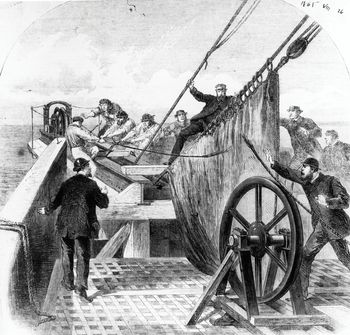
By 1866, Varley had accepted that his skills in correlating physical forces could be profitably extended to other, and much more troublesome, ‘occult’ telegraphs. In 1868, many would have been intrigued to learn that one of their cable heroes had publicly declared his belief in the phenomena and teachings of spiritualism. Nearly a decade of investigating the subject had persuaded him of the reality of “physical manifestations” not accounted for in “known laws of nature” and which opened up an “extensive field of mental and physical knowledge”.Footnote 160 As he explained to Wallace a year later, however, the task of relating this and the other world would require some of the skills that had proved so successful in connecting the Old and New Worlds. Giving spiritualism an “intelligible shape” to the world required a “clever man” to “establish a clue to the relations existing between the physical forces known to us and those forces, by which the spirits are sometimes able to call into play the power by which they produce physical phenomena”.Footnote 161 He had already made some headway in this quest. Two years earlier, in seances with the famous American medium Katherine Fox, he had used electrical apparatus commonly used in telegraphy to establish that professed spirits, like Reichenbach’s subjects, appeared to perceive powers accompanying electricity and magnetism that were invisible to most people.Footnote 162
Varley’s approach to mysterious ‘spirit’ forces requiring the presence of a medium represented a bold extension of work done by physiologists and physicians over previous decades to relate physical and vital forces. It owed something to the development of the field of electrophysiology, which explored the relationships between different types of electricity, vitality and the nervous force.Footnote 163 A greater debt was to the more general shifts of physiology towards chemistry and natural philosophy. In separate studies during the 1840s, the German physician Julius Robert Mayer and his compatriot, the physician-turned-physiologist and natural philosopher Hermann von Helmholtz, analysed the close connections between the human body’s vital processes (notably the oxygenation of food) and its capacity to produce heat and mechanical work.Footnote 164 Although suffering a poor initial reception, their researches were later hailed as foundation stones for two of the major generalisations in nineteenth-century physics – that the total amounts of force and energy in the cosmos were constant, although they could change form.
Another medically trained scientific practitioner whose work was seen to have helped establish these generalisations was Carpenter.Footnote 165 In 1850, and before his most public interventions on mesmerism and spiritualism, he extended Grove’s concept of correlation to the vital forces that produced physiological phenomena from the transformation of physical forces. His research examined some of the psycho-physical interactions that we have already discussed in this chapter, including studies of the close link between electricity and the nervous force and, more significantly, the apparently convergent investigations by Reichenbach and Faraday suggesting links between magnetism and the nervous force.Footnote 166
Carpenter’s enthusiasm for Reichenbach’s proposed odic link between the physical and vital forces was short-lived, and by 1853 he was accusing Reichenbach of relying on witnesses who were victims of the closely correlated forces of human physiology and psychology. However, others, including the author of The Electrician’s ‘Animal “Magnetism”’, maintained that studies of od could fuel the progress of the physical sciences. The physician and medical electrician William H. Stone agreed. In a period when the British medical establishment typically associated medical electricity with quackery, he fought hard to raise the intellectual profile of research on the relationship between electricity and the human body.Footnote 167 As someone who had long recognised the value of turning medical and physiological problems into fruitful enquiries in physical science, Stone’s interest in studying alleged connections of od to physical and vital forces is hardly surprising.
Like others establishing close links between the physical and vital realms, Carpenter tried to distance himself from charges of philosophical materialism to which the more ‘physical’ approaches to physiology and psychology had been subjected. For him, the mechanisms of the human body and mind, as well as those pervading the cosmos, were under the control of an immaterial will, whether human or divine.Footnote 168 This need to challenge materialist interpretations of extensions of physical principles into the vital realm was also felt by a young William Crookes in 1862. By this time, Crookes had established himself as a prominent analytical chemist and scientific journalist.Footnote 169 Between 1849 and 1854 he had studied at London’s Royal College of Chemistry, and by the early 1860s he had significantly boosted his scientific reputation by editing scientific periodicals and discovering a new chemical element: thallium. This latter achievement depended critically on Crookes’s mastery of the relatively new technique of spectro-chemical analysis (later christened ‘spectroscopy’). A significant extension of optics into the field of analytical chemistry, this yielded evidence of the chemical composition of material bodies (both terrestrial and celestial) by analysing the light that they emitted into a spectrum of lines. For Crookes and others, mastering this technique was not easy because of such practical difficulties as observing faint and transient chemical ‘spectra’ and conclusively distinguishing known and unknown elements from such spectral fingerprintsFootnote 170 (Figure 1.6).
A standard late-nineteenth-century compound spectroscope. Here, light from chemical substances burned in a gas flame (far right) is passed through a slit and collimator which focusses the image of the flame on a prism (centre). The prism disperses the image into a spectrum, which is observed in the telescope (left). The candle flame on the centre-right illuminates a photographic scale in a telescope lens enabling measurements of spectra. From J. Norman Lockyer, The Spectroscope and Its Applications.

Through his teacher, the German chemist August Wilhelm Hofmann, Crookes acquired an understanding of the chemical and physical bases of animal physiology, a major research area of Liebig, who had taught Hofmann and inspired Helmholtz. A good deal of this understanding is evident in an essay that Crookes contributed to an 1862 number of the Popular Science Review, one of a plethora of semi-popular science periodicals established in the mid-Victorian period.Footnote 171 The essay explored an analogy between the life of a human being and of a candle flame and was partly designed to emphasise the social utility of science. Scientific analysis of human respiration revealed that human life, like that of the flame, was critically dependent on fresh air, and that this made the urban and industrial evils of poor ventilation more deplorable. The analogy supported more than just an argument for public health reform. It was designed to show that the conservation of force had potential spiritual implications, and that the physical sciences were relevant to religious questions. Crookes tentatively suggested that the analogy extended to the “dim shadowy realms” beyond the extinctions of life and the flame: if “philosophy” proved that the physical forces or energies of the flame were conserved, and merely changed form after the flame died, “shall not faith accept the same proof that our own spiritual life is continued after the vital spark is extinguished?”Footnote 172
Crookes’s physical “proof” of the future life was, of course, enormously presumptuous, but it was indicative of his confidence in the capacity of physical science to illuminate spiritual questions, and of “progressive” science to move beyond “stationary” theology.Footnote 173 It was a confidence that he and many other physical–psychical scientists would carry into the investigation of spiritualistic phenomena. It was also a confidence which physical–psychical scientists would share with many distinguished natural philosophers and physicists who, from the 1860s onwards, defended natural philosophy against scientific naturalism.
One of the most controversial features of scientific naturalism was that it appeared to promulgate philosophical materialism and determinism. By reducing the cosmos to matter and motion, scientific naturalism denied a place for the divine and human will in scientific interpretations of the cosmos. Most scientific naturalists were devout Christians, but, as one of its proponents argued in 1867, they separated questions of “real religion” and those of science, partly by assigning the former task to the “affections and emotions” and the latter to the “dry light of the intellect alone”.Footnote 174 Not surprisingly, the targets of their numerous intellectual and cultural critiques included those who confused these approaches, from Christian theologians who appealed to the affections rather than scientific reasoning in weighing evidence of miraculous physical effects, to spiritualists whose emotional attachment to the idea of a spirit world undermined their capacity to judge seance manifestations.
Many Victorian physicists were at least as devout as their scientific naturalist peers but denied that religious and scientific questions could or ought to be separated, and often turned to the physical sciences to support their opposition to the apparent materialism and determinism of scientific naturalism.Footnote 175 For them, a proper understanding of energy, ether and matter reinforced the idea of nature created and guided by a divine mind and helped reconcile an intuitive sense of free will and the idea of a law-bound cosmos. In the 1860s, two of the most prominent architects of the science of energy, the Scottish physicists William Thomson and Peter Guthrie Tait, argued that the universal dissipation of energy testified to the divine purpose or directionality of the cosmos, as opposed to the entirely reversible and mechanistic cosmos implied by scientific naturalism. In the same decade, Balfour Stewart and Norman Lockyer offered a different argument for immaterial will within energy physics: their painstaking studies of sunspots suggested a “delicacy of construction” for our nearest star that enabled it to transform inscrutable impulses (Divine Will) into spectacularly visible outcomes on the solar surface, just as physiology indicated the capacity of the ‘delicate’ human body to transform the inscrutable will into tangible results.Footnote 176
The perceived rising threat of materialism from scientific naturalism would, in the 1870s, prompt further interventions from proponents of theistic physics. James Clerk Maxwell argued that the incredible similarity of molecules of a given element, whether on earth or in the heavens, suggested that they were divinely “manufactured”, while the apparently perfect continuity of the interstellar ether supported the idea of a cosmos filled with “symbols of the manifold order of His kingdom”.Footnote 177 And in 1875, in their anonymous and hugely controversial The Unseen Universe; Or Physical Speculations on a Future State, Stewart and Tait argued that the proper interpretation of the physics of matter, energy and ether was not incompatible with Christian teachings on the soul, the afterlife and the Resurrection.Footnote 178
Some of this book’s protagonists occupied positions combining those of the scientific naturalists and their physicist adversaries. Their zealous investigation of psychical phenomena echoed scientific naturalists’ bold, empiricist attitude towards the supernatural and miraculous. In 1872, during an intense public debate over the efficacy of prayer, Tyndall charged that when theologians represented prayer as a form of “physical energy” then the “scientific student” claimed the right to study it with scientific methods used to understand the physical universe.Footnote 179 Comparable declarations about the energetic physical phenomena claimed by spiritualists were made by Varley, Crookes and two of Tyndall’s students: Barrett and Lodge.
Yet some of our protagonists deviated significantly from Tyndall’s example in agreeing with Thomson, Tait and others that physical enquiry could reinforce rather than undermine Christian belief, even if these latter scientists did not think spiritualism was worth investigating. William Fletcher Barrett well captures this complexity. The son of a Congregationalist minister, he gained an informal science education in London before entering, in 1863, the Royal Institution, where he spent three years as an assistant in Tyndall’s physical laboratory.Footnote 180 The skills he acquired in studying and publicly exhibiting the properties of hidden phenomena – molecules, invisible radiation and inaudible sound waves – owed much to Tyndall, but the theistic interpretations of Tyndall’s physics that Barrett developed in popular scientific writings owed more to his mentor’s physicist adversaries. In 1866, for example, he interpreted the “exquisite” crystalline structures of ice, phenomena that Tyndall believed testified solely to the material powers of molecules, as something also glorifying “One who employs His works as witnesses of His existence”.Footnote 181
Within four years Barrett was using Tyndall’s physics for psychical as well as religious purposes. In an 1870 article for Crookes’s Quarterly Journal of Science, he explained that studies of light and sound revealed realms of vibration beyond human sensitivity and suggested that some “forces unrecognised by our senses are perceptible elsewhere”.Footnote 182 By “elsewhere”, Barrett probably included those individuals he now believed were genuinely sensitive to a mesmeric ‘force’ and those he would soon accept could perceive the manifestations of od. Barrett only kept implicit what other scientific writers of the period were prepared to make explicit. The science journalist and photographic inventor William H. Harrison regularly praised Tyndall for his popular lectures on imponderable forces, but was convinced that Tyndall’s example of researching and popularising physics at the Royal Institution would help promote a cause for which he had become a vigorous campaigner by the early 1870s: spiritualism. Since spiritualism’s phenomenal or “lower” aspects were related to “physical science” then it needed “experimental lectures” showing the public “marvellous physical powers of things both imponderable and invisible” and “patient research” linking law-like, “ordinary physical phenomena” and those spiritualistic manifestations deemed “miraculous” by the “uneducated”.Footnote 183
The spiritualist implications of Tyndall’s physics were no less clear to Wallace. In his Scientific Aspect of the Supernatural, a work much admired by Harrison, Wallace appealed to the theory, closely associated with Tyndall, that different “modes of motion” in the invisible, space-filling and “almost infinitely attenuated form of matter” that was the ether produced the powerful forces acting on material nature. On this basis, it was not implausible that invisible “beings” composed of the “most diffused and subtle forms of matter” could use hitherto unknown forms of motion in the capacious ether to cause the notorious movement of “ponderable bodies” in seances.Footnote 184
Our protagonists may not have cited Wallace’s argument, but from the 1870s until the 1930s one of their most important strategies of linking ‘physics and psychics’ effectively developed his basic spiritualist move of appealing to the ether to render psychical effects more intelligible. The naturalist’s argument only hinted at a problem whose importance would grow over the decades. Few physical scientists before the early 1900s questioned the need for an ether, but most were baffled by its constitution and structure. The problem would prompt the invention of the radical new theories of relativity but also inspire some of the most daring psychical theorising within physics.
***
By the late 1860s, many of the ingredients of late Victorian ‘physics and psychics’ were in place. The investigations of Mesmer, Elliotson, Reichenbach, Gregory, Faraday, Hare and others remained hugely controversial, but they had established important precedents to the idea of treating the problem of an imponderable, invisible influence, force or power flowing from the body as one for the physical sciences. In many quarters, such purely ‘physical’ approaches were judged either unnecessary or misguided. For most mesmerists, the reality of the mesmeric influence was convincingly evidenced by its therapeutic efficacy and its psychological effects; for most spiritualists, the reality of the physical effects in seances and, moreover, of the invisible intelligences were matters of simple experience rather than scientific intervention; and for many medical and scientific practitioners, questions of these and other powers so closely associated with the body were questions for doctors, physiologists and physiological-psychologists alone.
A small but significant minority of scientific practitioners, however, disagreed and turned to the blossoming periodical press to reinvigorate older arguments that phenomena of an extraordinary and seemingly occult nature were ripe subjects for the physical sciences. The same platforms – the flurry of new commercial scientific and technical serials and general audience periodicals rather than the proceedings of established scientific societies – were the same spaces where physical–psychical scientists would present some of their strongest cases for new, physical approaches to phenomena whose grip on the public mind showed no sign of abating. These serials were entirely appropriate fora for this because these were the places where Victorian scientists and their allies frequently championed the supreme role of the sciences in the solution of social, moral, economic and intellectual issues of the day.Footnote 185
Contributors to these serials upheld the more widely shared belief in the progress of the sciences and, particularly, nineteenth-century achievements in understanding, connecting and manipulating electricity, magnetism, light, the vital force and other imponderable agencies. The first generation of physical–psychical scientists well understood that these achievements often involved an enormous amount of scientific and other types of work, often in the face of professional and popular adversity. In the 1850s and ’60s, the extensions of the boundaries of the physical sciences – whether electrical science to the domains of long-distance submarine telegraphy and the human body, optics to chemistry via spectro-chemical analysis, or the physics of matter, energy and ether to spiritual and religious questions – were fraught with practical, intellectual and moral difficulties whose solutions depended critically on the mastery of experimental, rhetorical and other scientific skills. Long and sometimes bitter experiences of these enterprises furnished the likes of Barrett, Crookes and Varley with formidable abilities in detecting, measuring, manipulating and interpreting often puzzling, capricious and invisible physical phenomena, as well as enormous confidence in being able to successfully apply these abilities to other, sometimes vastly more controversial phenomena. When physical scientists with such abilities and confidence turned to mesmerism, spiritualism, thought-reading and related questions, some of the scientific ambitions of Mesmer, Reichenbach and Hare looked particularly appealing. In Chapter 2, we examine the identity of these individuals in depth and look at what sparked, sustained and undermined their psychical interests.


