


Engagement and Public Relations
Public Relations (PR) began an important path in digital communication with their audiences about 25 years ago. After an initial period in which they imported the offline strategies into the web, the organizations developed particular actions adapted to the logic of the Internet and to their circumstances (García-Orosa Reference García-Orosa2019). During the last years, they have consolidated their digital communication model by incorporating technological innovations until reaching the current hybrid communication model (Chadwick Reference Chadwick2013; Hamilton Reference Hamilton, Witschge, Anderson, Domingo and Hermida2016; Taiminen et al. Reference Taiminen, Luoma-aho and Tolvanen2015; Penney Reference Penney2017). In this stage, in addition to combining traditional methods of communication with innovations, PR directors seek empathy with the receiver either for economic reasons or to win the receiver’s approval. When it comes to economic reasons, directors aim for a greater and larger presence of people in their digital spaces, thereby increasing ad revenue and obtaining big data. When attempting to earn the receiver’s approval, directors seek to generate short- and long-term engagement. Engagement has become one of communication directors’ greatest goals, to the point that some authors indicate that we are in the era of engagement (Morehouse and Saffer Reference Morehouse and Saffer2019).
Despite being discussed in 1990s studies, engagement as a concept still lacks a theoretically formed model with structure and a clear and coherent explanation (Shen and Jiang Reference Shen and Jiang2019; Dhanesh Reference Dhanesh2017). The definitions come from disparate areas and range from assimilation of engagement with interactivity to concepts more linked to psychological commitment and philosophy with the construction of behaviour with distinct levels of hierarchical activity ranging from the consumption of passive messages to active, online bidirectional conversation, participation and recommendation (Taylor and Kent Reference Taylor and Kent2014; Men and Tsai Reference Men and Tsai2013). Dhanesh (Reference Dhanesh2017) summarises them in two major conceptualizations of engagement: (1) as communicative interaction, manifested as clicks, likes, views, shares, comments, tweets, recommendations, and other user-generated content; and (2) the dichotomous notions of engagement as control based on transactional modes of communication (public information, two-way asymmetry, dissemination of organizational messages) and engagement as online collaboration based on participatory modes of communication (dialogue, co-creation of content, etc.).
In practice, NGOs also sought audience participation and engagement in many ways. In the first phase of digital communication and PR, the research community emphasizes the importance of the dialogic function, basically by applying the theoretical framework proposed by Kent and Taylor (Reference Kent and Taylor1998) (Aula Reference Aula2011; Sommerfeldt et al. Reference Sommerfeldt, Kent and Taylor2012; Sisson Reference Sisson2017; Du-Plessis Reference Du-Plessis2018; Souder Reference Souder2016). But, at the same time, the literature noted the lack of interactivity with websites and blogs during this first stage (Lee Reference Lee2012; Capriotti and Pardo-Kuklinski Reference Capriotti and Pardo-Kuklinski2012).
Since the onset of the twenty-first century, social media have allowed for greater relationship-building and are particularly attractive for NGOs with scarce resources (Svensson et al. Reference Svensson, Mahoney and Hambrick2014; Smith Reference Smith2018), though some authors already question the benefits related to the strategies and circumstances in which these social networks are used (Lam and Nie Reference Lam and Nie2020; Guo and Saxton Reference Guo and Saxton2018). While it was initially believed that mere presence on social media would create dialogue and participation, it was soon understood that this was in fact a strategic decision (Smith Reference Smith2018) heavily influenced—like the choice between online and offline—by the social environment, dependence on resources (Lam and Nie Reference Lam and Nie2020) and the prioritized modalities of engagement and relationship with the public (Campbell and Lambright Reference Campbell and Lambright2020).
The theoretical framework created by Lovejoy and Saxton (Reference Lovejoy and Saxton2012) is commonly used for this type of analysis. The authors proposed one of the first categorizations of tweets published by nonprofit organizations, identifying three general functions for tweets: information, community and action. In practice, they diversify the functions such as recruiting volunteers, campaigning for donations, advocating for change (Ciszek Reference Ciszek2013) or establishing a specific relationship with the media (Lee and Desai Reference Lee and Desai2014). Other authors stress communication’s potential for fund raising (Saxton and Wang Reference Saxton and Wang2014) without direct evidence of the connection between the frequency of social media use and the propensity to donate online (Reddick and Ponomariov Reference Reddick and Ponomariov2012).
In general, while researchers have emphasised the potential of social media in terms of bidirectionality, interactivity, dialogue and engagement in the disparate areas of study (Utz et al. Reference Utz, Schultz and Glocka2013; Vesnic-Alujevic Reference Vesnic-Alujevic2012; Abitbol and Lee Reference Abitbol and Lee2017; Ji et al. Reference Ji, Chen, Tao and Li2018; Gálvez-Rodríguez et al. Reference Gálvez-Rodríguez, Caba-Pérez and López-Godoy2014; Painter Reference Painter2015), it is rarely used (Carim and Warwick Reference Carim and Warwick2013; Svensson et al. Reference Svensson, Mahoney and Hambrick2014; Maiorescu Reference Maiorescu2017) and sometimes only as a complement to particular dialogues on the web.
Today, a new way to enhance audience interaction, participation and engagement has arisen with novel narratives such as 360° video storytelling, based on virtual reality technologies and 360° video (Domínguez Reference Domínguez2015; Suh et al. Reference Suh, Wang, Gu, Wagner, Schmorrow and Fidopiastis2018; Bindman et al. Reference Bindman, Castaneda, Scanlon and Cechony2018; Yoo and Drumwright Reference Yoo and Drumwright2018). Despite being one of the least-studied fields during the past decade (Fraustino et al. Reference Fraustino, Lee, Lee and Ahn2018; Yoo and Drumwright Reference Yoo and Drumwright2018), some preliminary findings show similarities between the user experience with a VR headset and a real-life experience (Wagler and Hanus Reference Wagler and Hanus2018).
This similarity could allow PR to connect interactivity and long-term engagement not only to the interaction between the organization and the receiver, but also to the behaviour linked to the organization’s end goal, in a more or less hierarchical way depending on the communication strategy established by each director. In this regard, Dhanesh (Reference Dhanesh2017) stresses three main areas of work: digital engagement (including nonprofit civic engagement and engagement during crisis); employee engagement; and stakeholder engagement.
This article, in studying 360° reality in international nonprofit organizations, seeks to add to the literature in that first, seldom-studied area, which also contains important elements for advancing in engagement, one of the aspects that may reshape PR in the coming years (Jelen-Sanchez Reference Jelen-Sanchez2017). In the following section, scientific advances and previous experiences are discussed.
Immersive Storytelling as a Useful Communication Tool for Humanitarian Aid Organizations
Within the field of PR, humanitarian aid nonprofit organizations have always been interested in engagement (Lovejoy et al. Reference Lovejoy, Waters and Saxton2012; Cho et al. Reference Cho, Schweickart and Haase2014) and they have seen in 360° video storytelling a timely and alternative way to connect with audiences and bring the social contexts where they work closer to the users (Nash Reference Nash2018; Soler-Adillon and Sora Reference Soler-Adillon and Sora2018; Fraustino et al. Reference Fraustino, Lee, Lee and Ahn2018). According to Irom (Reference Irom2018, 4269), “in recent years, virtual reality (VR) has gained traction in humanitarian communication through its utopian promises of copresence, experiential immediacy, and transcendence”. Humanitarian organizations started experimenting with 360° video and virtual reality technologies at the end of 2015, while media outlets from all over the world (Al Jazeera, The New York Times, British Broadcasting Corporation, Vice News, etc.) were trying to produce their first immersive content using spherical video (Doyle et al. Reference Doyle, Gelman and Gill2016), an effort many others have replicated.
A recurrent topic, especially among the European media and nonprofit organizations, is migration. Issues such as the Mediterranean migratory wave, armed conflicts like the Syrian Civil War or the implications of climate change are common topics in nonprofit organizations’ immersive productions (Nash Reference Nash2018; Irom Reference Irom2018; Pérez-Seijo and García-Orosa Reference Pérez-Seijo, García-Orosa, Vázquez-Herrero, Direito-Rebollal, Silva-Rodríguez and López-García2020). In the field of humanitarian communication, an example is Clouds over Sidra (2015), a documentary film about the Syrian refugee crisis produced by Chris Milk and Gabo Arora with the UN in partnership with Samsung.
The use of 360° video and virtual reality technologies to create news or non-fiction content is known as Immersive Journalism (De la Peña et al. Reference De la Peña, Weil, Llobera, Giannopoulos, Pomés, Spanlang, Friedman, Sánchez-Vives and Slater2010; Hardee Reference Hardee2016), described as “the production of news in a form in which people can gain first-person experiences of the events or situation described in news stories” (De la Peña et al. Reference De la Peña, Weil, Llobera, Giannopoulos, Pomés, Spanlang, Friedman, Sánchez-Vives and Slater2010: 291). A novel trend has arisen under distinct influences: video games’ logics and narratives (Domínguez Reference Domínguez2013), game thinking strategies (Longhi Reference Longhi2017; Domínguez Reference Domínguez2015), theatre, interactive documentary, and even film (Elmezeny et al. Reference Elmezeny, Edenhofer and Wimmer2018; Soler-Adillon and Sora Reference Soler-Adillon and Sora2018). As it is based on a remediation of practices (Soler-Adillon and Sora Reference Soler-Adillon and Sora2018), Immersive Journalism represents a good example of the current hybrid scenario that digital journalism is facing (Hamilton Reference Hamilton, Witschge, Anderson, Domingo and Hermida2016).
However, Immersive Journalism has been known by disparate, even in accurate names such as VR Journalism (Owen et al. Reference Owen, Pitt, Aronson-Rath and Milward2015; Sirkkunen et al. Reference Sirkkunen, Väätäjä, Uskali and Rezaei2016), 360° storytelling (Elmezeny et al. Reference Elmezeny, Edenhofer and Wimmer2018), or 360° video journalism (Van Damme et al. Reference Van Damme, All, De Marez and Van Leuven2019), which reflects the common confusion on what authors and journalists understand by virtual reality and 360° video.
Since the media are also improperly labelling spherical videos as VR experiences (Smith Reference Smith2015), it is necessary to differentiate between VR journalism and 360° video journalism, though both are major types of Immersive Journalism. The first consists of the production of content through 3D computer-generated imagery (CGI), often based on factual evidence, and it has been driven by Nonny De la Peña and its VR company Emblematic Group with works such Hunger in L.A. (2012) or Kiya (2015). Nonetheless, 360° video journalism or storytelling is more widespread (Hardee and McMahan Reference Hardee and McMahan2017), tends to consist of real image videos with less interactivity and agency (Domínguez Reference Domínguez2017) but is faster and less expensive to produce than truly VR experiences (Pérez-Seijo and López-García Reference Pérez-Seijo, López-García and López Paredes2018).
The popularization of what are also known as spherical videos for news production was primarily due to Facebook and YouTube. In 2015, both democratised access to such content by allowing the free upload of 360° videos on their social platforms, which helped news outlets, nonprofit organizations and other producers to almost eliminate or reduce distribution costs (Watson Reference Watson2017; Mabrook and Singer Reference Mabrook and Singer2019). Furthermore, it facilitated users’ access to and viewing of 360° videos, reaching a larger audience as viewers do not always need a virtual reality headset to watch the content on Facebook and YouTube, since both platforms allow mobile (by tilting a smartphone or tablet) and web browser consumption (Watson Reference Watson2017; Pillai et al. Reference Pillai, Ismail and Charles2017; Herranz et al. Reference Herranz, Caerols and Sidorenko2019).
The hallmark of this novel digital trend is that, for the first time, users can cross the screen while watching 360° videos or VR experiences wearing a virtual reality headset (Domínguez Reference Domínguez2013), leading to a first-person experience of what is shown and told in the news story (De la Peña et al. Reference De la Peña, Weil, Llobera, Giannopoulos, Pomés, Spanlang, Friedman, Sánchez-Vives and Slater2010; Benítez and Herrera Reference Benítez, Herrera, de Lara and Arias2017). Additionally, when the users perceive the other reality (the virtual world) to be more engaging than their own physical reality, they are experiencing what is called presence (Slater and Wilbur Reference Slater and Wilbur1997, 4). Presence here means the perceptual illusion of no-mediation (Lombard and Ditton Reference Lombard and Ditton1997) experienced by a user in a mediated environment which, as a result, leads to the feeling of “being there”, in the other or other’s reality (Slater and Wilbur Reference Slater and Wilbur1997; Ijsselsteijn and Riva Reference Ijsselsteijn, Riva, Riva, Davide and Ijsselsteijn2003; Slater and Sanchez-Vives Reference Slater and Sanchez-Vives2016), in the virtual environment, despite the user’s physical presence in another reality, that is, his or her everyday reality (Witmer and Singer Reference Witmer and Singer1998, 225).
Per Suh et al. (Reference Suh, Wang, Gu, Wagner, Schmorrow and Fidopiastis2018), the use of VR headsets leads to higher levels of sense of presence, which in turn increases audience engagement. Nevertheless, Shin and Biocca (Reference Shin and Biocca2017: 2802) suggest that “immersive or drooling interfaces do not, as the journalism industry claims, necessarily enhance the sense of engagement or satisfaction”, or even empathy (Bindman et al. Reference Bindman, Castaneda, Scanlon and Cechony2018). In this regard, the results of the study conducted by Bindman et al. (Reference Bindman, Castaneda, Scanlon and Cechony2018: 8) show that “strong use of narrative techniques may be most important to make viewers understand their role and feel a part of the story”.
Virtual reality headsets allow users to cross the screen and to be immersed in the scene, becoming a passive visitor or a simulated witness. The image surrounds the users so they “can turn in any direction while a fixed, linear story unfolds around them” (Elmezeny et al. Reference Elmezeny, Edenhofer and Wimmer2018, 2). Immersive journalism presents new challenges, because “when journalists decide to invite audiences to witness a news event ‘as if they were there’” they are, in fact, acquiring “new responsibilities towards audiences” (Sánchez Laws and Utne Reference Sánchez Laws and Utne2019: 1). The first-person experience coupled with the “as if I was there” feeling experienced by users prompts reflection on the conventional concept of the viewer and leads to the consideration of users as immersive witnesses on the scene: “immersive media reality potentially enables witnessing because of its capacity to give us a sense of embodied presence in the context of a violation, crisis or human rights context” (Gregory Reference Gregory2016). The possibility of “being there” (De la Peña et al. Reference De la Peña, Weil, Llobera, Giannopoulos, Pomés, Spanlang, Friedman, Sánchez-Vives and Slater2010), surrounded by the image, represents the paradigmatic case of witnessing (Peters Reference Peters, Frosh and Pinchevski2011, 38). However, this transportation to the other’s reality is simulated and mediated by technology, a virtual reality headset.
Nonetheless, this kind of immersive witnessing “links the experience of VR with a moral attitude of responsibility for distant others” (Nash Reference Nash2018, 1). Such immersive storytelling can bring closer a particular social reality through a simulated journey to the narrative world, a first-person experience that enables users to walk in someone else’s shoes. Consequently, some suppose this helps to create more empathetic bonds between the user and the distant other (Soler-Adillon and Sora Reference Soler-Adillon and Sora2018; Hardee Reference Hardee2016).
Some claim that the use of virtual reality and 360° video to create stories enhances empathy, so a stronger link with the distant other or reality could be generated (Milk Reference Milk2015; Kool Reference Kool2016; Sánchez Laws Reference Sánchez Laws2017 Archer and Finger Reference Archer and Finger2018). But Van Damme et al. (Reference Van Damme, All, De Marez and Van Leuven2019, 1) conducted an experimental study on distant suffering and found that while place illusion and enjoyment were higher in 360° videos, no significant evidence of greater involvement with the distant other were found. On the other hand, Suh et al. (Reference Suh, Wang, Gu, Wagner, Schmorrow and Fidopiastis2018, 437) found “that audience engagement is mainly determined by the audience’s degree of presence while viewing a 360° video”. Still, picture quality could interfere (Shin and Biocca Reference Shin and Biocca2017, 2817).
On the other hand, an experimental study about disaster communication and spatial presence found that “360° video featuring the aftermath of a natural disaster yields enhanced attitudes towards the helpful impact of the content”(Fraustino et al. Reference Fraustino, Lee, Lee and Ahn2018, 331). In this regard, another study shows that “VR formats prompted a higher empathetic response than static photo/text treatments and a higher likelihood of participants to take ‘political or social action’ after viewing” (Archer and Finger Reference Archer and Finger2018). Moreover, Yoo and Drumwright (Reference Yoo and Drumwright2018) carried out an experiment with users using a 360° video about a Syrian refugee camp as a stimulus and discovered that viewers wearing a VR headset experienced greater levels of donation intention, vividness, interactivity and social presence than the tablet users.
The main aim of this paper is to examine how and why nonprofit organizations are integrating 360° video storytelling into their communication strategies. Thus, the following research questions are posed:
RQ1: To what extent do European humanitarian organizations use 360° videos as a tool to tell stories and bring the realities where they work or advocate closer to the users and to drive engagement?
RQ2: What are the main topics and purposes behind each production (explore a place, witness an event, listen to a victim, etc.)?
RQ3: How and through which elements (audio recordings, graphics, headers and other audio or visual aids) is the multimedia narrative reinforced in the 360° videos published by NGOs?
RQ4: Through which platforms do the humanitarian organizations disseminate this kind of content?
RQ5: To what extent do the 360° videos include options for engagement?
Methodology
The effect of new technologies, formats and narratives in the field of PR communication strategies has not been studied a great deal. Although widely studied in journalism, organizational communication seems to have been relegated to the backburner. In this sense, the aim of this proposal is to analyse if, how and why Europe’s main humanitarian aid nonprofit organizations take advantage of 360/VR storytelling, an issue addressed by only a few studies to date (Irom Reference Irom2018; Yoo and Drumwright Reference Yoo and Drumwright2018; Fraustino et al. Reference Fraustino, Lee, Lee and Ahn2018; Pérez-Seijo and García-Orosa Reference Pérez-Seijo, García-Orosa, Vázquez-Herrero, Direito-Rebollal, Silva-Rodríguez and López-García2020).
Many news outlets have seen the potential of this narrative form and have tried to implement it to engage users and significantly enhance bonds between viewers and stories. Based on this idea, humanitarian aid organizations and other nonprofit organizations have tested the new, distinct possibilities enabled by 360° video and VR technologies.
Sample
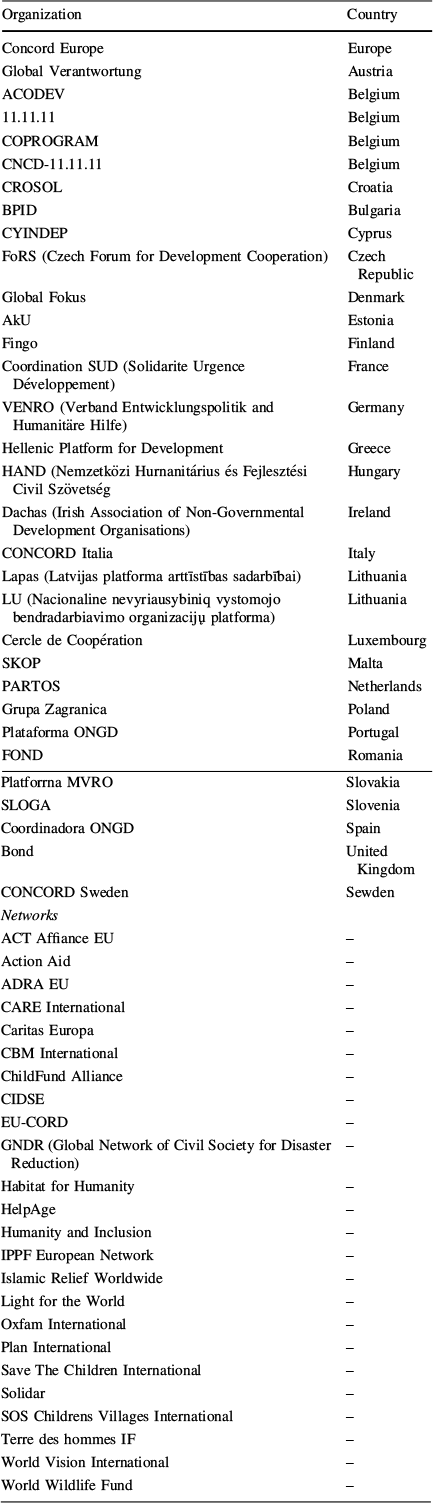
Members of the European NGO Confederation for Relief and Development (CONCORD) were selected. The 2019 CONCORD list included 56 of Europe’s major humanitarian organizations, from human rights agencies (e.g. Save The Children International) to others focused on development (e.g. Action Aid) or even environmental stewardship (e.g. the World Wildlife Fund). The full list is available in “Appendix 1”. Their websites and official profiles on Facebook and YouTube were searched for 360° video content. The search was operationalised by introducing concrete key words in the search engines (360° video, 360 video, 360°, VR, Virtual Reality).
As a result, the authors identified that only three of the 56 organizations had 360° productions available on any of their main platforms: Save The Children, World Vision International (WVI) and World Wildlife Fund (WWF). Because of that limitation and thus to enrich the analysis, three recognised nonprofit organizations not on CONCORD’s list were added to the sample because they had produced 360° video and also have a presence in Europe: The International Federation of Red Cross and Red Crescent Societies (IFRC), Médecins Sans Frontières (MSF) and the United Nations High Commissioner for Refugees (UNHCR).
Therefore, this paper presents a case study based on six well-known humanitarian organizations to analyse how they leverage this new form of storytelling to disseminate their messages to a greater audience and effect societal change aimed at helping the other and the distant realities.
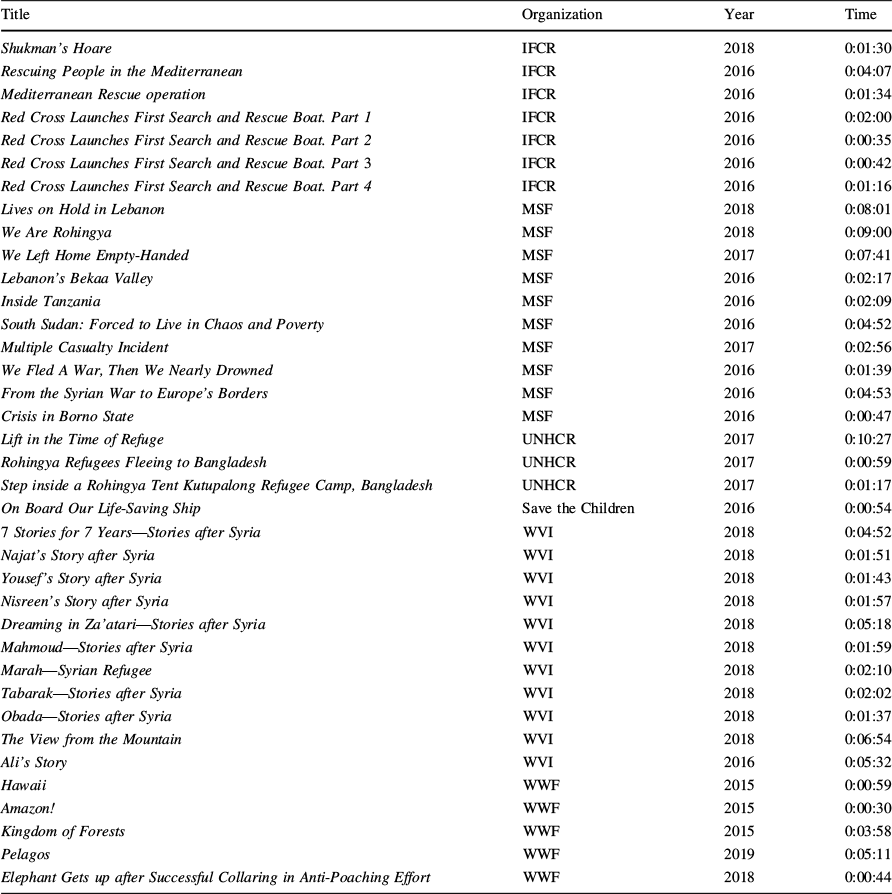
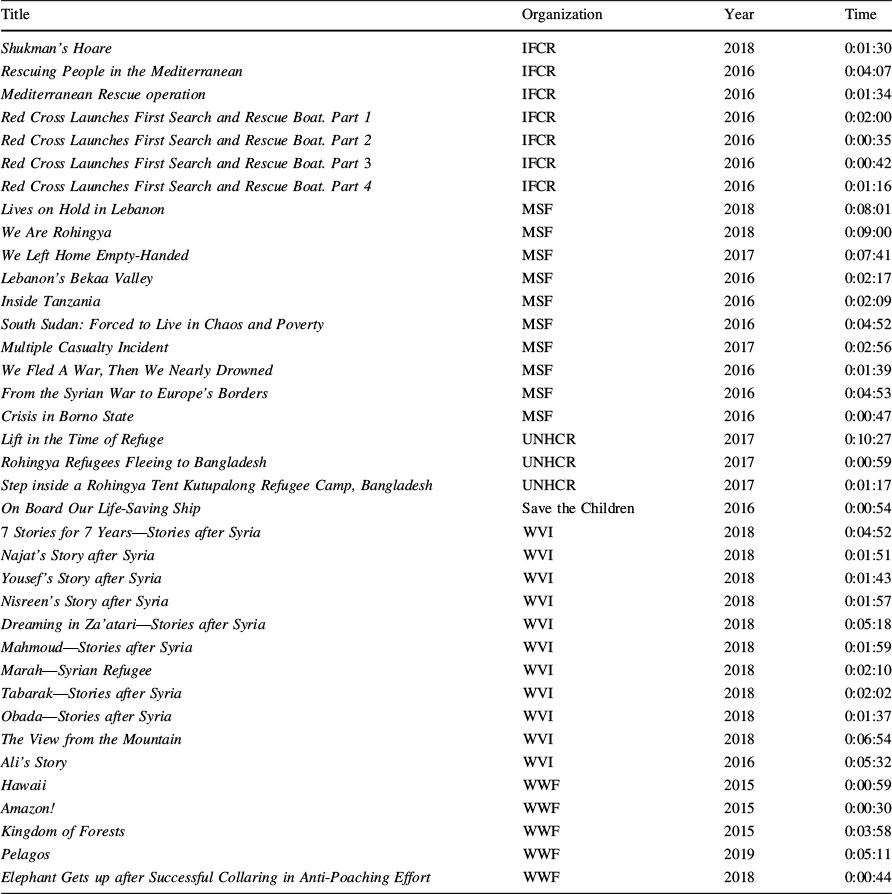
As a result of the search, a database of immersive experiences produced by these six humanitarian agencies was created. Authors compiled videos from March to April 2019 (4 weeks) and found a total of 37 360° videos published from December 2015 to April 2019. These are listed in Table 1.
The sample of 360° videos.
Title |
Organization |
Year |
Time |
|---|---|---|---|
Shukman’s Hoare |
IFCR |
2018 |
0:01:30 |
Rescuing People in the Mediterranean |
IFCR |
2016 |
0:04:07 |
Mediterranean Rescue operation |
IFCR |
2016 |
0:01:34 |
Red Cross Launches First Search and Rescue Boat. Part 1 |
IFCR |
2016 |
0:02:00 |
Red Cross Launches First Search and Rescue Boat. Part 2 |
IFCR |
2016 |
0:00:35 |
Red Cross Launches First Search and Rescue Boat. Part 3 |
IFCR |
2016 |
0:00:42 |
Red Cross Launches First Search and Rescue Boat. Part 4 |
IFCR |
2016 |
0:01:16 |
Lives on Hold in Lebanon |
MSF |
2018 |
0:08:01 |
We Are Rohingya |
MSF |
2018 |
0:09:00 |
We Left Home Empty-Handed |
MSF |
2017 |
0:07:41 |
Lebanon’s Bekaa Valley |
MSF |
2016 |
0:02:17 |
Inside Tanzania |
MSF |
2016 |
0:02:09 |
South Sudan: Forced to Live in Chaos and Poverty |
MSF |
2016 |
0:04:52 |
Multiple Casualty Incident |
MSF |
2017 |
0:02:56 |
We Fled A War, Then We Nearly Drowned |
MSF |
2016 |
0:01:39 |
From the Syrian War to Europe’s Borders |
MSF |
2016 |
0:04:53 |
Crisis in Borno State |
MSF |
2016 |
0:00:47 |
Lift in the Time of Refuge |
UNHCR |
2017 |
0:10:27 |
Rohingya Refugees Fleeing to Bangladesh |
UNHCR |
2017 |
0:00:59 |
Step inside a Rohingya Tent Kutupalong Refugee Camp, Bangladesh |
UNHCR |
2017 |
0:01:17 |
On Board Our Life-Saving Ship |
Save the Children |
2016 |
0:00:54 |
7 Stories for 7 Years—Stories after Syria |
WVI |
2018 |
0:04:52 |
Najat’s Story after Syria |
WVI |
2018 |
0:01:51 |
Yousef’s Story after Syria |
WVI |
2018 |
0:01:43 |
Nisreen’s Story after Syria |
WVI |
2018 |
0:01:57 |
Dreaming in Za’atari—Stories after Syria |
WVI |
2018 |
0:05:18 |
Mahmoud—Stories after Syria |
WVI |
2018 |
0:01:59 |
Marah—Syrian Refugee |
WVI |
2018 |
0:02:10 |
Tabarak—Stories after Syria |
WVI |
2018 |
0:02:02 |
Obada—Stories after Syria |
WVI |
2018 |
0:01:37 |
The View from the Mountain |
WVI |
2018 |
0:06:54 |
Ali’s Story |
WVI |
2016 |
0:05:32 |
Hawaii |
WWF |
2015 |
0:00:59 |
Amazon! |
WWF |
2015 |
0:00:30 |
Kingdom of Forests |
WWF |
2015 |
0:03:58 |
Pelagos |
WWF |
2019 |
0:05:11 |
Elephant Gets up after Successful Collaring in Anti-Poaching Effort |
WWF |
2018 |
0:00:44 |
Method and Procedure
To address the above-mentioned research questions, two methods have been used: First, a content analysis of the 360° videos created and published by the nonprofit organizations; second, so as to make the results more robust, interviews were conducted with directors of communication or persons responsible for the digital strategies of the analysed organizations.
A mixed methodology was implemented to achieve this paper’s goal of examining how and to what end some nonprofit organizations are using 360° video to create content. The application of each technique is described below.
Content Analysis and Code Development
Having built the database, the authors proceeded to a content analysis in order to determine the main features of these specific productions, to obtain an overview of how humanitarian organizations leverage the technology’s potential for storytelling and spurring engagement with the viewing public and therefore to answer the above-mentioned RQs.
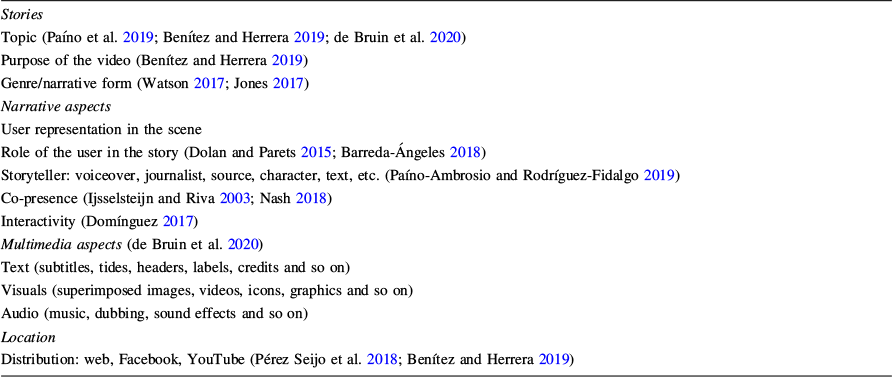
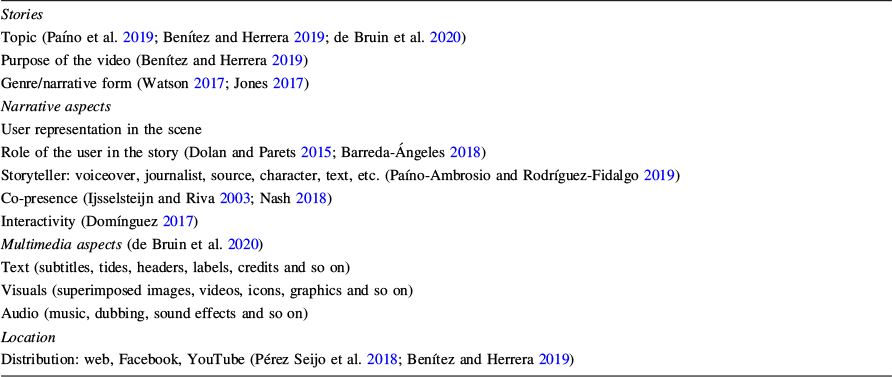
Table 2 (below) is the analysis matrix designed by taking into account the main characteristics of 360° video news stories and previous studies on immersive journalism. Given the lack of studies on the use of 360° videos in PR, the authors adapted journalistic-related analysis proposals to be able to study the aforementioned humanitarian aid productions, which, though not purely journalistic, are based on real stories and are published so as to share specific information about a particular reality.
Analysis matrix designed for the study.
Stories |
Topic (Paíno et al. Reference Paíno, Rodríguez, Ruiz, Canavilhas, Rodrigues and Giacomelli2019; Benítez and Herrera Reference Benítez and Herrera2019; de Bruin et al. Reference de Bruin, de Haan, Kruikemeier, Lecheler and Goutier2020) |
Purpose of the video (Benítez and Herrera Reference Benítez and Herrera2019) |
Genre/narrative form (Watson Reference Watson2017; Jones Reference Jones2017) |
Narrative aspects |
User representation in the scene |
Role of the user in the story (Dolan and Parets Reference Dolan and Parets2015; Barreda-Ángeles Reference Barreda-Ángeles2018) |
Storyteller: voiceover, journalist, source, character, text, etc. (Paíno-Ambrosio and Rodríguez-Fidalgo Reference Paíno-Ambrosio and Rodríguez-Fidalgo2019) |
Co-presence (Ijsselsteijn and Riva Reference Ijsselsteijn, Riva, Riva, Davide and Ijsselsteijn2003; Nash Reference Nash2018) |
Interactivity (Domínguez Reference Domínguez2017) |
Multimedia aspects (de Bruin et al. Reference de Bruin, de Haan, Kruikemeier, Lecheler and Goutier2020) |
Text (subtitles, tides, headers, labels, credits and so on) |
Visuals (superimposed images, videos, icons, graphics and so on) |
Audio (music, dubbing, sound effects and so on) |
Location |
Distribution: web, Facebook, YouTube (Pérez Seijo et al. Reference Pérez Seijo, Melle Goyanes and Paniagua Rojano2018; Benítez and Herrera Reference Benítez and Herrera2019) |
Thus, this analysis is focused on variables regarding the informative treatment of the videos: topic/issue, purpose of the piece, genre, user representation, role of viewer and storyteller, co-presence strategies, degree of interactivity, and use of multimedia modalities (text, visuals and audio resources). An extra variable related to location was introduced to identify how and where these nonprofit organizations disseminate their 360° videos. All these elements have been adapted from previous research, as noted in Table 2.
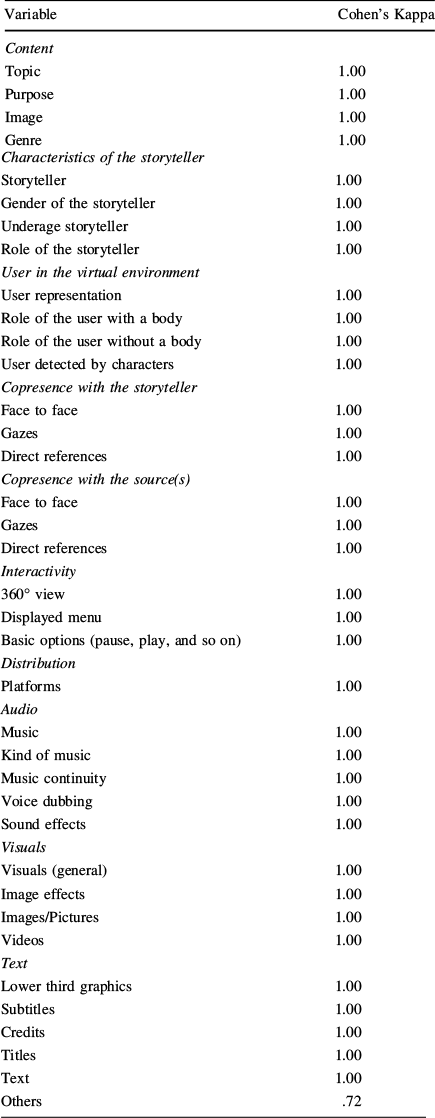
Although both authors helped design the analysis matrix, the content analysis of the 37 videos as well as the data processing with SPSS Statistics 25 was carried out by only one of the authors, as [anonymised] has prior experience in similar studies [anonymised]. Intra-coder reliability was tested by recoding a random subsample, corresponding to 20% of the data set. One of the authors coded the same data (subsample) twice at different times in order to check consistency (Wimmer and Dominick Reference Wimmer and Dominick2013). For that purpose, the Cohen’s Kappa coefficient was calculated (see “Appendix 2”). Finally, the results show a perfect degree of consistency in almost all of the variables (k = 1), only one has a lower value (Visuals: others, k = 0.720), which nonetheless is still an adequate degree of consistency (Igartua Reference Igartua2006).
Interviews
Moreover, this article also draws on interviews with the heads of communication or digital strategies directors of the nonprofit organizations that have published at least one 360° video on their main social media accounts (Facebook and YouTube) and/or general websites. Purposive sampling was used to select the interviewees based on their roles and functions within the organizations (Etikan et al. Reference Etikan, Musa and Alkassim2016). Even though several communications officers from various European national offices were contacted, only five responses from five nonprofit organizations were obtained, one of which stated that they would not be able to participate in this type of interview.
The interviewees were asked about the objectives pursued by their organizations in producing 360° videos, the effects of such videos on fundraising and donor support, the emotional impact on viewers, possible undesired or negative effects stemming from viewing the content, changes in the user’s engagement and relationship with the public, the production cost of 360° videos, funding and partnerships with tech companies or VR producers, and their views on the different resources used (modalities, topics, storytelling and so on). The interviews were designed from the content analysis results. The questions for the structured interviews were designed from the results obtained in the content analysis.
Quantitative Analysis and Results
Volume: How Many Videos have Humanitarian Organizations Published?
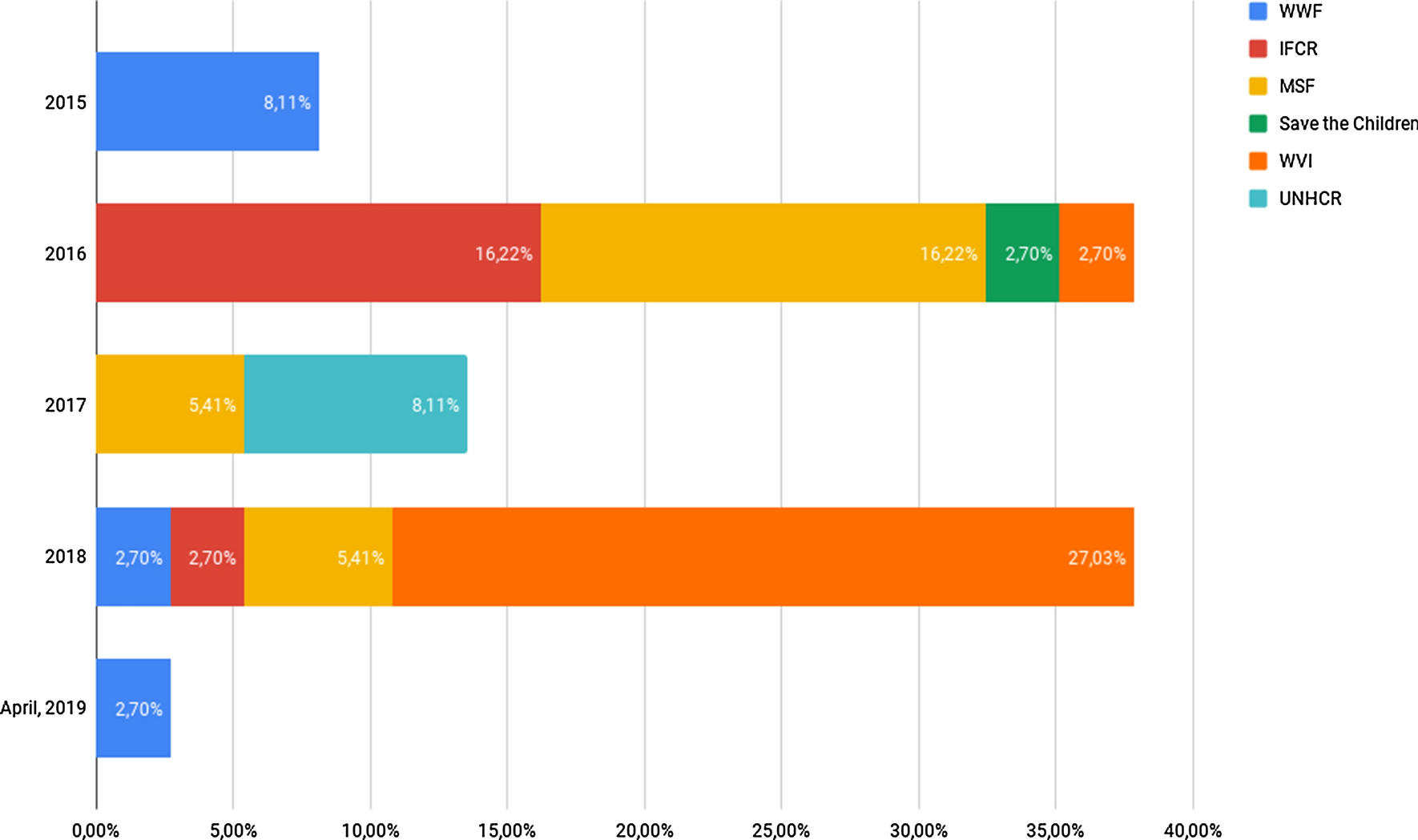
The first two videos found are dated 2 December 2015 and were published by WWF on Facebook and YouTube (Amazon! and Kingdom of Forests, respectively). As of April 2019, the endpoint of the data collection, the humanitarian organizations of the sample had produced and published several productions. Although the 2019 data are not complete, it is clear that from 2015 to 2016 there was a significant increase in 360° content production. This rise demonstrates the interest of humanitarian organizations in experimenting with this nascent form of immersive storytelling (Fig. 1).
360° videos published by humanitarian organizations per year (from 2015 to April 2019).
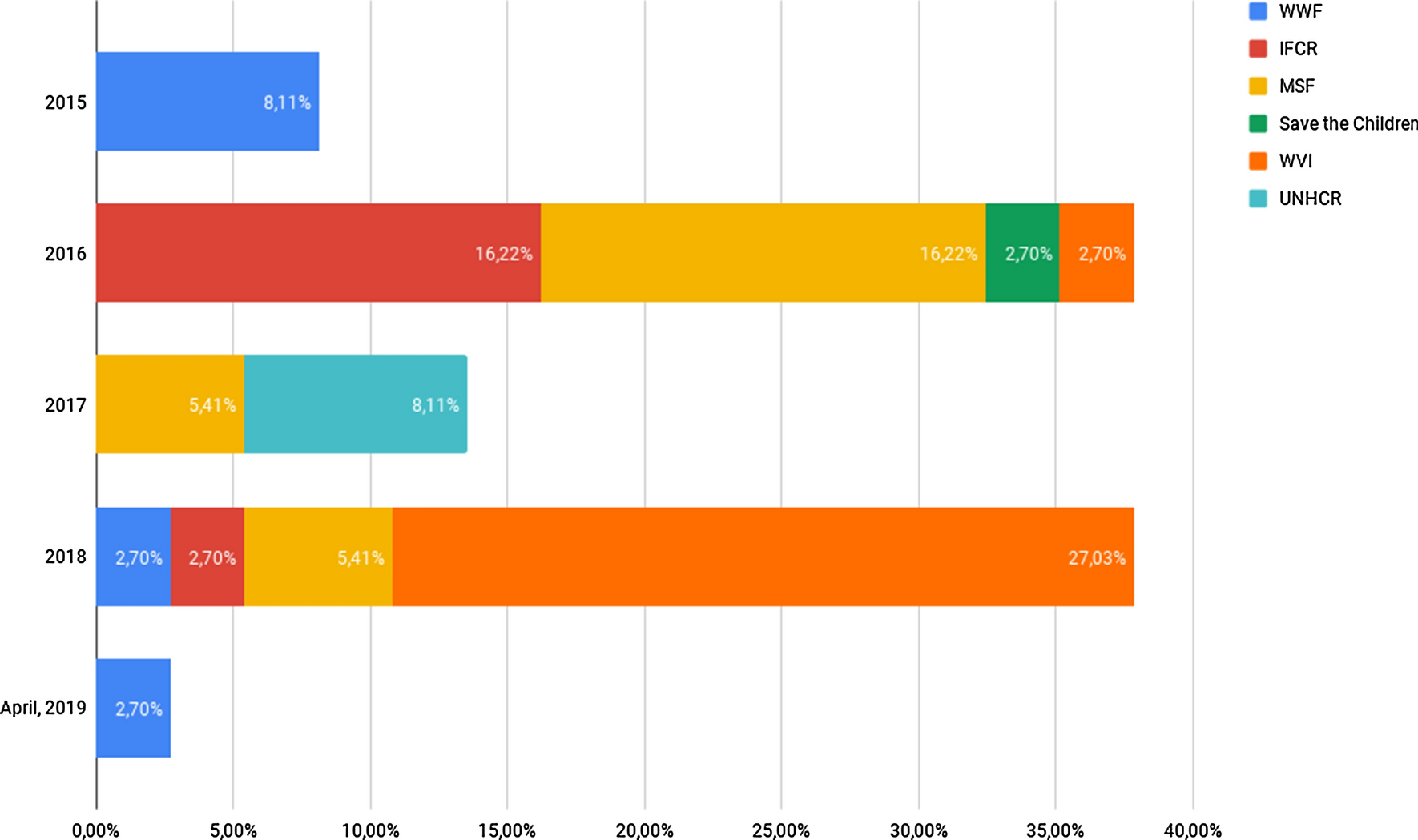
The results show that humanitarian organizations published the greatest number of 360° videos in 2016 and 2018 (respectively, 37.8% and 37.8%). However, it should be noted that nine of the productions published in 2018 are part of Stories After Syria, a project led by WVI in partnership with Contrast VR, Al Jazeera’s virtual reality studio. These 360° short documentaries were written, directed and filmed by seven displaced children in Jordan’s Za’atari refugee camp.
Stories: Migration as the Main Interest
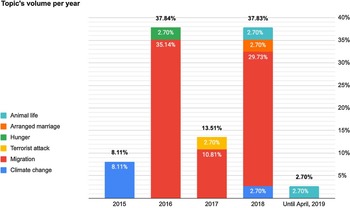
Humanitarian organizations aim to show audiences the realities where they work to encourage people to support their social causes. In this regard, in most of the 360° video productions analysed in this study, migration was the major topic (75.7%), migrants being understood as displaced people or refugees, as seen in productions such as Mediterranean Rescue Operation, Ali’s Story or We Are Rohingya. In the sample, climate change is present only in 10.8% and wildlife in 5.4%. Terrorist attacks (Multiple Casualty Incident), hunger (Crisis in Borno State) and arranged marriage (The View from The Mountain) are hardly addressed at all (2.7% in each case).
Relation Between Volume and Topics
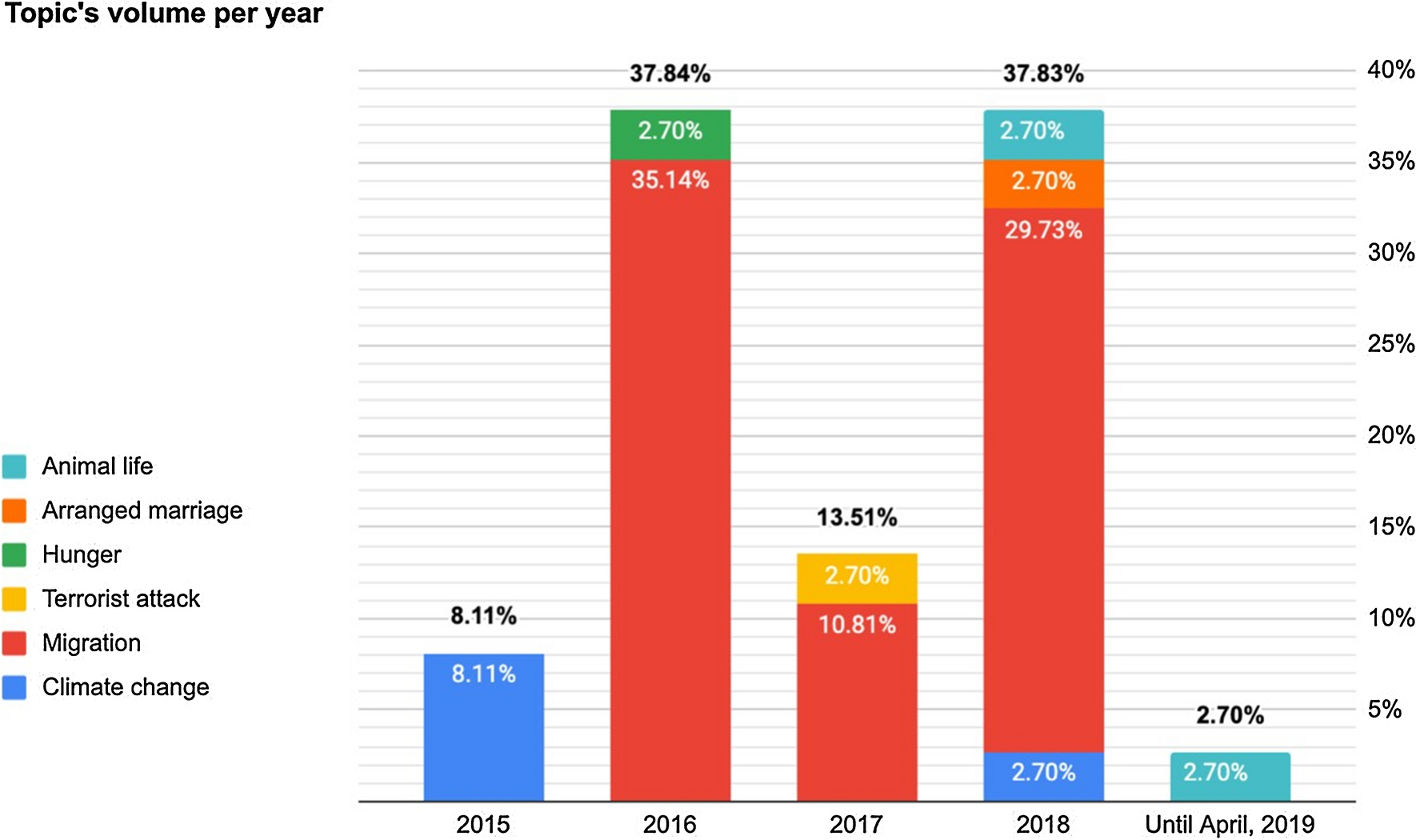
We have crossed the variable year with the variable topic to figure out if there was any relation between the moment of publication and the issue (Fig. 2). Migration was the main topic of interest especially in 2016 and 2018, but also in 2017. The volume of 360° videos that address migration in 2016 (35.1% of the sample) can be understood by referring to the social context. The European migrant crisis started in 2015, and the foray into immersive content began in earnest at the end of that year and beginning of 2016 (Doyle et al. Reference Doyle, Gelman and Gill2016; Pérez-Seijo and López-García Reference Pérez-Seijo, López-García and López Paredes2018).
Except for 2015, when it was the only issue covered in spherical videos, climate change was rarely addressed. The videos that do address it were produced by the WWF. Three years later, the International Federation of Red Cross and Red Crescent Societies would go on to publish Shukman’s House, a spherical video about the rise of heat in Hong Kong, possibly linked to climate change. The interest in animal life starts in 2018 and continues in 2019 with WWF.
Overview of the evolution of topics by year, from 2015 to 1 April 2019.
The Purpose Behind the 360° Videos
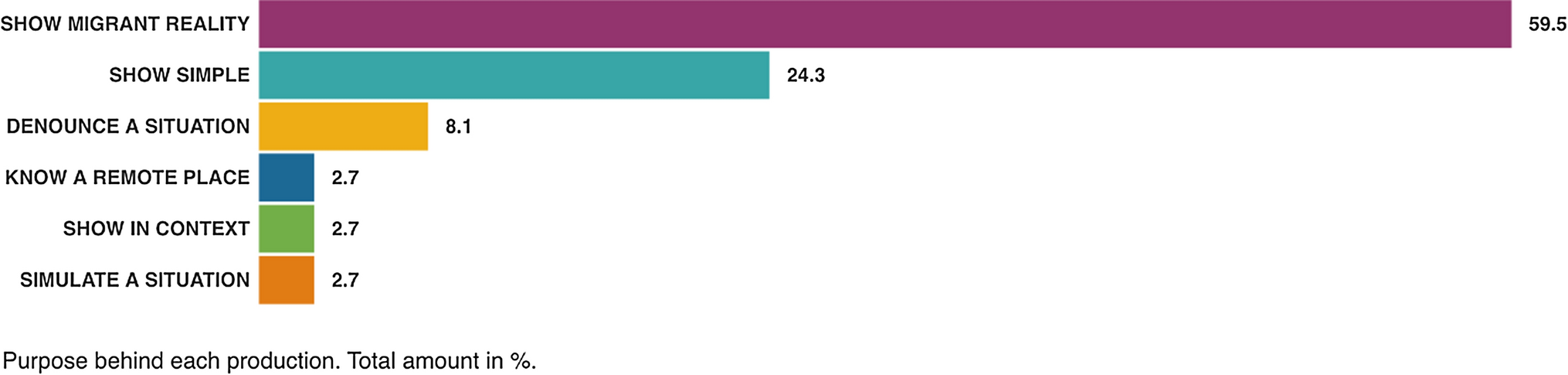
We also examined the purpose of each immersive production in an attempt to better understand the perspective adopted to convey each story. Finally, we found that the main aim of more than half of the productions is to show a migrant reality (59.5%) to create social awareness. As we have observed, such productions are mostly documentary-style and thus present a more developed storytelling compared to the remaining categories. Through this kind of content, NGOs aim to bring distant migrant realities closer to the user to raise awareness and to boost donation intention. Some examples are We Are Rohingya by MSF and Life in the time of Refuge by UNHCR, among others.
The next most common major purpose of the storytelling (or the videos when storytelling is absent) is to observe an environment or scenario (24.3%) enabling users to explore freely in an evolving scene (what we have called “show simple” in Fig. 3), e.g. Mediterranean Rescue Operation by IFCR or in Elephant Gets Up After Successful Collaring in Anti-Poaching Effort published by WWF.
Purpose of each 360° video story.
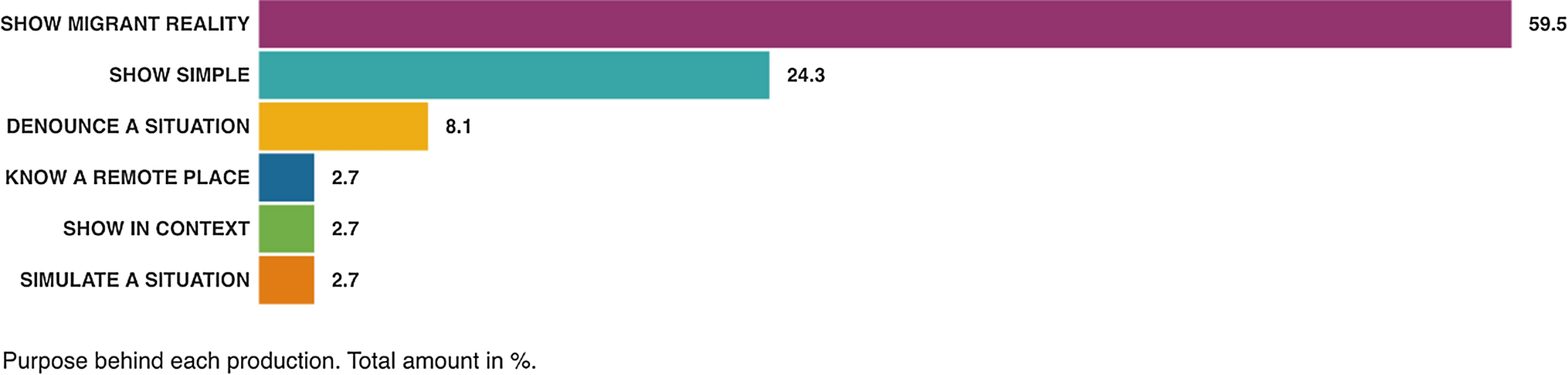
The remaining immersive productions sought deliberately to: denounce facts or events (8.1%), e.g. the forced marriage of underage girls through the 360° video film The View from the Mountain by WVI; to show in context (2.7%) how, for example, researchers collect biopsies of skin from whales in the WWF-produced documentary Pelagos; to simulate a situation (2.7%), as in Multiple Casualty Incident, in order to train MSF’s staff for example; and to allow users to visit remote locations (2.7%), as in WWF’s Kingdom of Forests, so as to understand the role of the Amazon in the Earth’s climate stability.
Who and How: Form, Genre and Storyteller
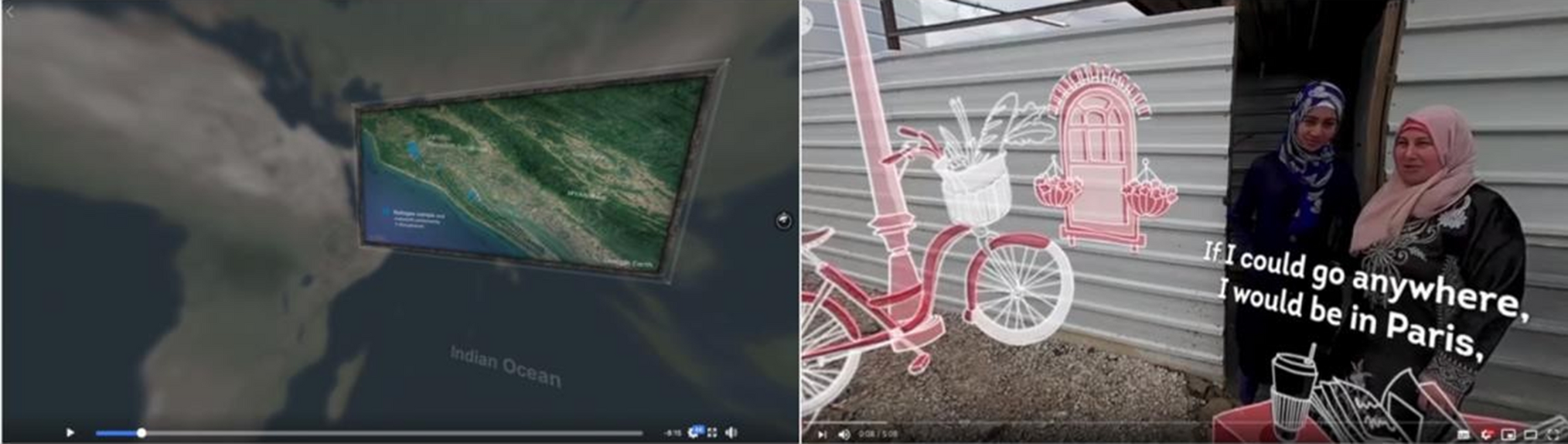
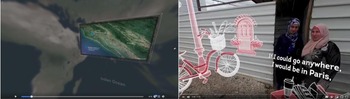
The vast majority of the videos (94.6%) consist entirely of real images. That is, while some productions include graphics or superimposed images, they include neither hybrid (combination of virtual reality and real-image footage) nor totally synthetic scenes. The remaining 5.4% are hybrid productions: on the one hand, We Are Rohingya (Médecins Sans Frontières 2018) includes a synthetic scene with a map that illustrates the displacement of the Rohingya people fleeing from Myanmar’s military repression; on the other hand, some scenes of Dreaming In Za’atari (from the project Stories after Syria by WVI and Contrast VR 2018) incorporate animated objects to illustrate the hopes, dreams and aspirations of each of the seven refugee children who appear in the documentary. Figure 4 shows both examples.
Videos with synthetic elements.
In terms of genre, 56.7% fall within a traditional one: 48.6% are documentary-style, e.g. Ali’s story by WVI, and only 8.1% are 360° video reports, e.g. Step inside a Rohingya Tent Kutupalong Refugee Camp by UNHCR. The remaining productions do not fit in any conventional genres, so we have created some categories to better understand their format based on existing proposals such as those by Jones (Reference Jones2017) and Watson (Reference Watson2017). The most common are simple videos, i.e. with a basic narrative design, conceived to be distributed on social platforms like Facebook and YouTube (29.7% of the total sample, e.g. Mediterranean Rescue Operation by IFCR, which Jones called “social 360” and Watson refers to as “short-form 360” videos. Such videos lack a human narrator (sometimes text serves as a guide within the story), and thus emphasise seeing a specific reality through one’s own eyes; consequently, information and real testimonies take a back seat to exploration.
The narrative form of the other videos does not fit in the features of the aforementioned genres since 5.4% have been self-labelled as virtual reality films, such as Life in the Time of Refuge by the UNCHR and The View from the Mountain by WVI. The remaining 8.1%, which we have referred to as “others”, are composed of WWF’s short video preview of a longer immersive piece about the Amazon, a Save the Children’s donation campaign titled On Board Our Life-Saving Ship and a Doctors Without Borders’ real-image simulation called Multiple Casualty Incident, part of a training course for MSF medics and logisticians that simulates a multiple casualty incident.
On the other hand, over half of the productions have a human storyteller (51.4%), six of which are told by a minor simultaneously adopting the role of storyteller and source. We point out the human feature because 5.4% of the videos use text to narrate and guide users through the story, as a real storyteller would do. The narrator is a male voice in 57.9% of videos with a human storyteller, a female in 36.8%, and in 5.3% both male and female voices narrate the story.
Within the function of storyteller, we have distinguished diverse and concrete roles. In this sense, almost 70% of the videos with a human storyteller are narrated by a major source, whereas the role is assumed by a journalist or a staff member as narrator in just 26%. Only Doctors without borders’ real-image simulation Multiple Casualty Incident are narrated by a fictional character. Thus, we have noticed producers tend to focus on the characters of the stories they want to share, giving them a voice and erasing the figure of the professional as an intermediary to bring the user closer to the other’s reality through the other’s voice.
Interactivity and Engagement Attempts
In terms of user roles, the results show that the viewer enters the scene or story’s world without a body in 97.3% of the 360° productions analysed. That is, they are present without a physical or virtual (avatar) body in the scene. Such is the case in South Sudan: Forced to Live in Chaos and Poverty and Shukman’s House. Therefore, only in Multiple Casualty Incident, a real-image simulation that allows the viewer to walk in another’s shoes, do viewers assume a specific identity, that of a male victim of war.
Per the literature, immersive journalism generally and 360° video storytelling specifically aim for users to feel “as if they were there”, in the story’s world, thereby gaining a first-person experience of the events. As such, we wanted to determine the number of productions in which users themselves are detected by the characters in the scene, in a simulated fashion, of course. It turns out they can be detected (whether or not they have a visual body in the scene) by the in-scene characters in 35% of the immersive stories (e.g. We Fled a War, Then We Nearly Drowned by MSF), whereas they are completely undetectable (invisible) in about 48% (e.g. On Board Our Life-Saving Ship by Save the Children), and 16% of films lack a unified criterion for measurement (e.g. Nisreen’s Story After Syria by WVI).
The results are positive if we understand immersive storytelling’s main goal as encouraging the user to feel like he/she is part of the story, in an attempt to create or reinforce the emotional bond between the viewing public and the others or their realities. To that end, simulating users’ visibility is a possible tactic, though not without ethical risk as simulating the user’s visibility requires staging, especially when the main characters are real sources and not actors playing a role as in Multiple Casualty Incident.
The results allow us to identify three main user roles. First, there is the “user- protagonist,” when the user takes on a major role in the story and therefore adopts a specific identity within the story and stops being him or herself during the experience in order to discover and see the other’s world through the other’s eyes, such as in the aforementioned real-image simulation Multiple Casualty Incident published by MSF.
Furthermore, we can distinguish two separate roles when users enter the scene as themselves, that is, without losing their identity within the story and watching the world from their own point of view. First, it is possible to identify a passive observer when the user discovers the world through his or her eyes but is not visible to the sources or storytellers, e.g. as in Kingdom of Forests by WWF. Secondly, a user becomes a “witness” when she or he observes the reality in first person and all or some of the virtual characters detect the user’s presence in the scene, through a face to face encounter to boost copresence (with storytellers, 32.4% of videos; with sources, 21.6%), gazes (storyteller, 21.6%; sources, 13.5%) or even direct references to the user (storyteller, 21.6%). Some examples of this last category are Life in the Time of Refuge by UNHCR and We Are Rohingya by MSF, among others.
Surprisingly, the analysis shows that interactivity is non-existent. None of the productions allows for interactive navigation or the selections of basic options such as play, stop or click to discover further information. This feature is more common in app-based content, which frequently incorporates designs strongly influenced by video game logic.
In sum, for the possibility for agency is limited to the main feature of spherical videos, namely the 360° view. Whereas some authors refer to the option to change view points as an interactive feature, we prefer the term agency as a quality inherent to 360° videos.
Circulation of 360° Video Productions
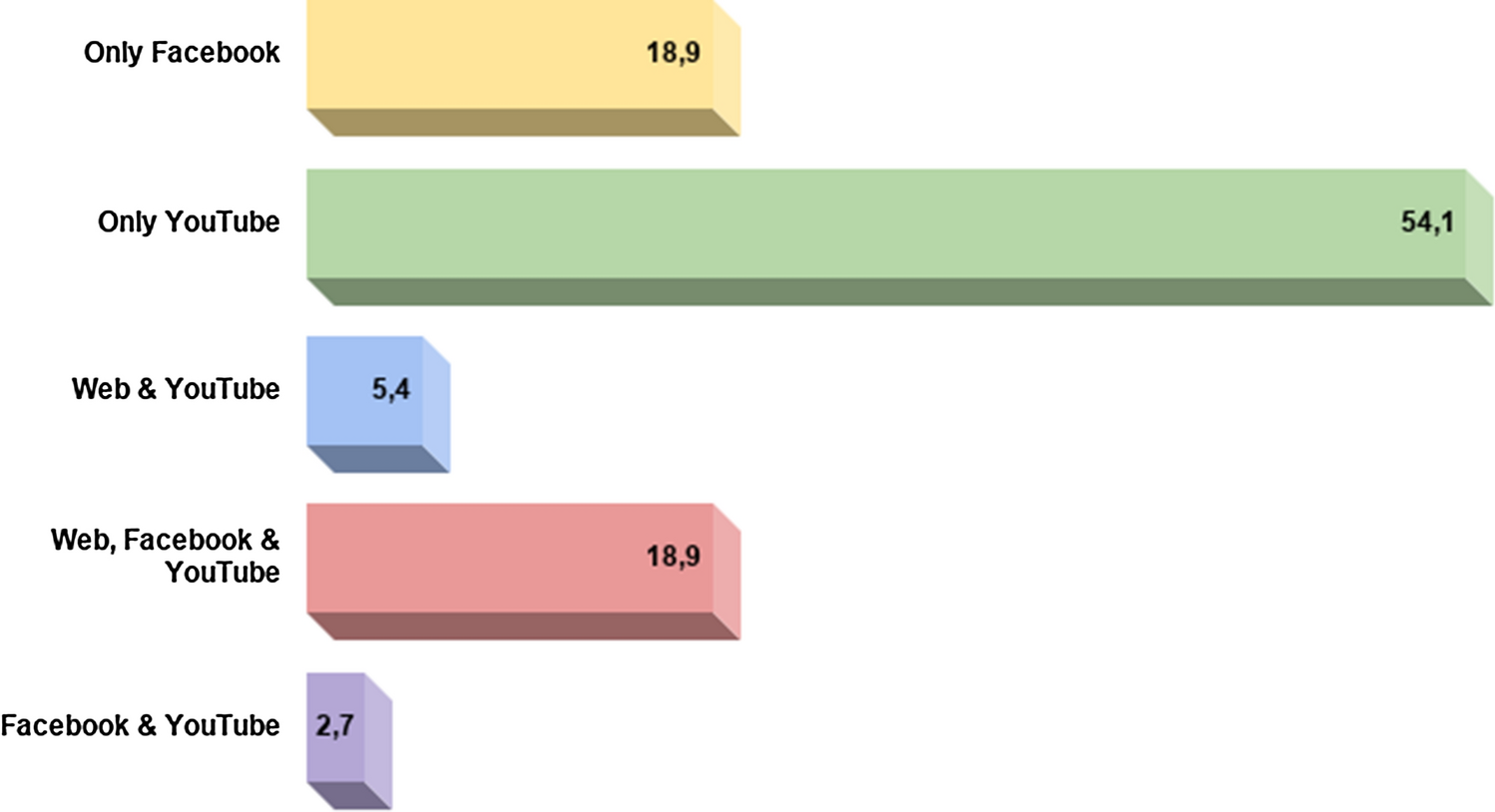
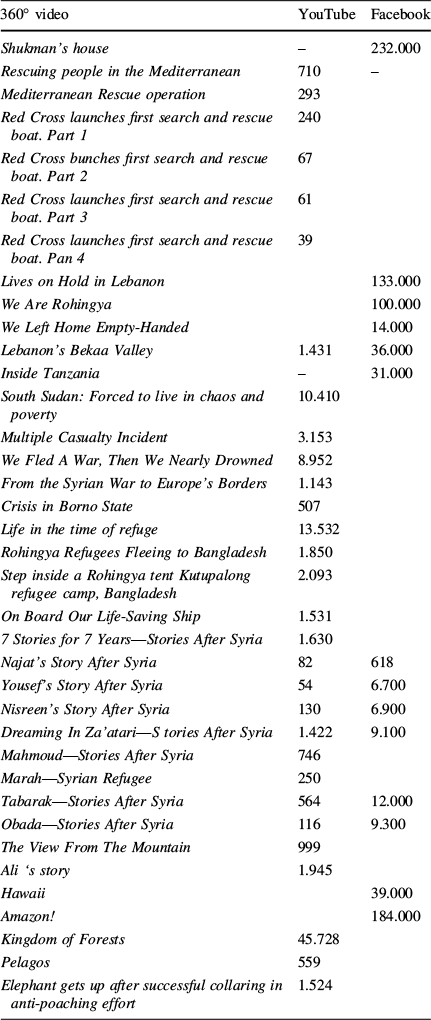
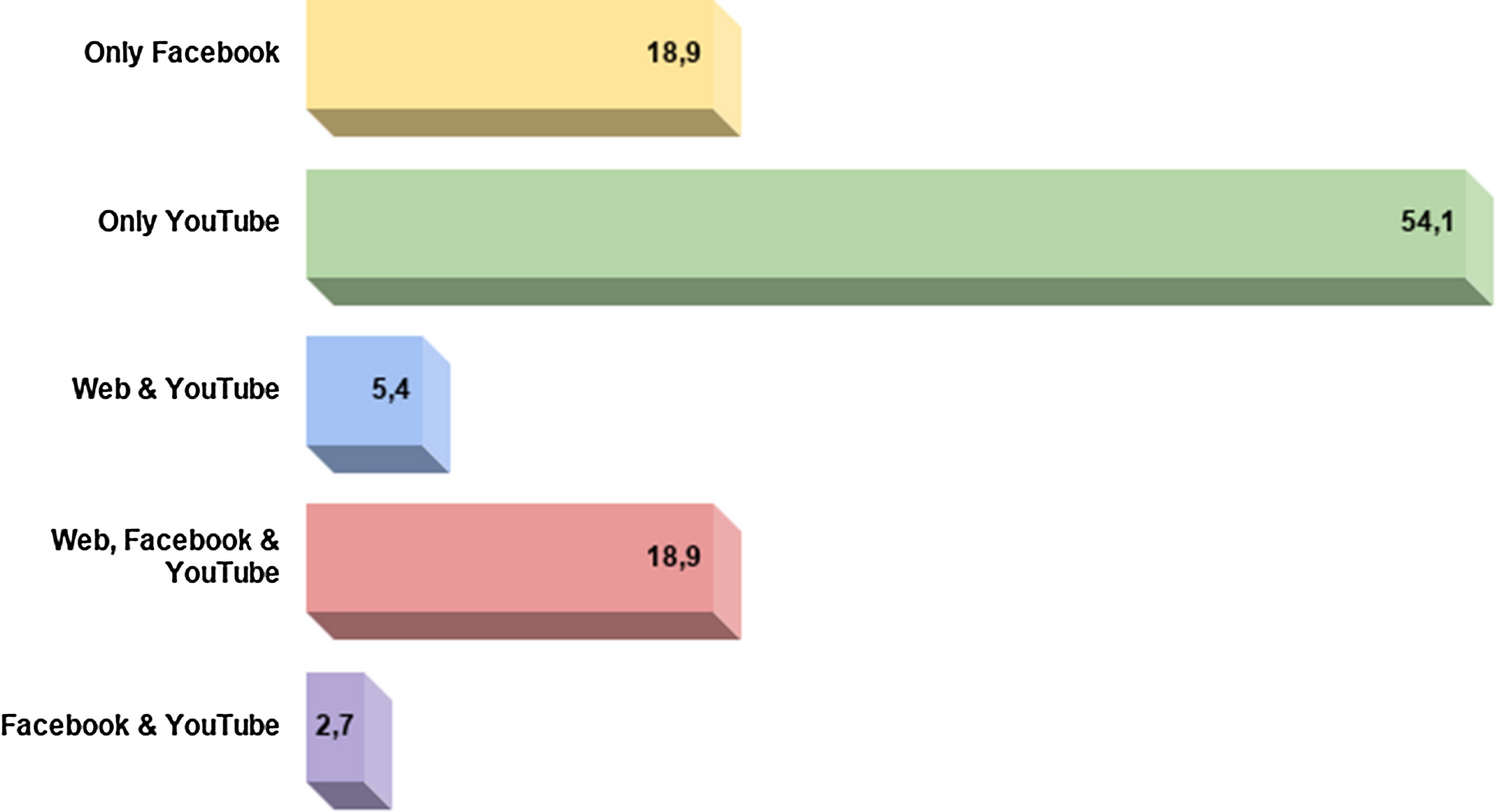
Regarding dissemination, most humanitarian organizations in the sample choose YouTube as their primary means of publishing 360° video productions (54.1% YouTube only), whereas Facebook lags behind (18.9% Facebook only), as shown in Fig. 5. The organizations tend not to publish their immersive content on their websites, with the exception of some posts published by WVI. In sum, humanitarian organizations prioritise social networks over the web to reach and connect with audiences, perhaps with a view to going viral. Nevertheless, it should be noted that the data on views reveal that 360° videos reach more people on Facebook than on YouTube, even though Facebook only allows mobile or web browser viewing as its media player doesn’t work for virtual reality headsets (see “Appendix 3”).
Distribution platforms.
Reinforcing Multimedia: Audio, Visuals and Text
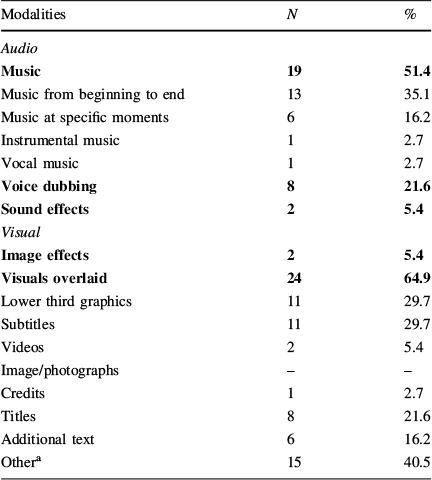
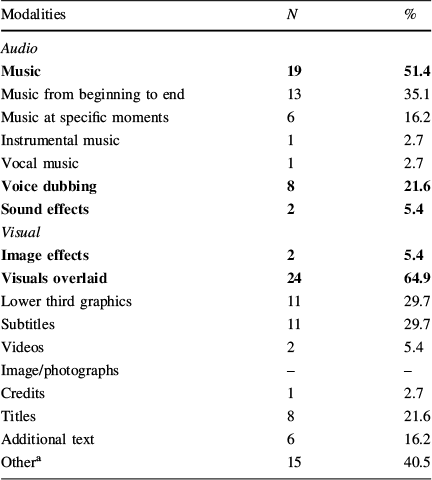
Slightly more than half of the videos published by these humanitarian organizations use music to complement the stories (Table 3). More than a third (35.1%) of the sample maintain the music from beginning to end, while 16.2% use it only in certain moments. Instrumental music is the preferred option in 45.9% of the sample, whereas songs (with lyrics or at least voice) and vocal music are barely used (2.7% in both cases). The song included in We Left Home Empty-Handed, by MSF, is performed by displaced Children from South Sudan who sing that this world “is not a home, it’s a place for evils”. On the other hand, in Lebanon’s Bekaa Valley, by MSF too, users can hear what seems to be a religious chant.
Modalities
Modalities |
N |
% |
|---|---|---|
Audio |
||
Music |
19 |
51.4 |
Music from beginning to end |
13 |
35.1 |
Music at specific moments |
6 |
16.2 |
Instrumental music |
1 |
2.7 |
Vocal music |
1 |
2.7 |
Voice dubbing |
8 |
21.6 |
Sound effects |
2 |
5.4 |
Visual |
||
Image effects |
2 |
5. 4 |
Visuals overlaid |
24 |
64.9 |
Lower third graphics |
11 |
29.7 |
Subtitles |
11 |
29.7 |
Videos |
2 |
5.4 |
Image/photographs |
– |
– |
Credits |
1 |
2.7 |
Titles |
8 |
21.6 |
Additional text |
6 |
16.2 |
Othera |
15 |
40.5 |
Bold indicates that these items are the main subcategories
aDisparate elements, such as logos and figures to hide faces, instructions and so on
Music is a powerful tool to convey emotions, but also to introduce editorial bias. As the goal of nonprofit organization’ communication is to raise funds, it is understood that they include music on some of their videos in order to enhance empathy and trigger emotions towards the social message to elicit donations.
The application of sound effects is confined to particular cases. In Multiple Casualty Incident, they are used to simulate a heartbeat and a beep. Given the video is a real-image simulation, no ethical issues arise in the use of these effects. On the other hand, Life in the Time of Refuge, a VR film as labelled by its producers, includes a specific sound to notify users when an infographic appears on the scene. Therefore, in this case, the aim of introducing sound effects is to direct the user’s attention in an omnidirectional environment, where the possibilities of missing important information are high if the viewer does not properly explore the scene. Last but not least, it should be noted that 21.6% of the cases involve voice dubbing, mostly from Arabic (the characters’ native language) to English.
Regarding visuals, the results obtained are more complex since almost 65% of the videos include superimposed visuals and text elements. Lower third graphics and subtitles are the most frequent overlays used (29.7% in each case), followed by the titles of the productions (21.6%) and other basic text elements (16.2%) that provide further information or identify objects, places or even people. Compared to traditional videos, the observed use of these modalities is not innovative.
Discussion
Humanitarian aid organizations have seen in 360° video storytelling a novel, alternative tool to spread their social messages and bring the realities where they work or advocate closer to the public, namely their members, subscribers or followers. Incorporating this technology allows such entities to tell stories in a closer and more immersive way compared to standard videos. Traditional framing disappears in such productions, so the possibility to explore the whole scene while users are able to choose the viewing angle opens further and alternative avenues for storytelling.
According to the digital communication officers of the nonprofit organizations interviewed, this immersive, first-person experience boosts and enhances awareness, empathy and user engagement. Their main objective with the dissemination of 360° videos is to bring distant realities closer to the users, places they could not easily visit otherwise:
Our main objective is to raise awareness and generate empathy with suffering populations. Thus, in this regard, 360° videos are an effective method to communicate the work of humanitarian organizations like ours and to promote the knowledge of situations of violence that millions of people face around the world (MSF).
Interviewees agree that the audience response to 360° video tends to be positive, except for specific occasions in which people report a rejection to virtual reality headsets:
[360° videos] generate greater interest that the static conventional ones, mainly due to the possibility of immersion within a specific context or reality. Probably because of the novelty of the format at first. However, this very much depends on the piece and its execution […]. But the immersion in a story undoubtedly generates more impact: the possibility of putting oneself in the shoes of the people/situations that appear on the 360° video, brings one closer to thoughts like “it could be me” or “it could happen to me”, and that kind of identification, stirs the viewers’ conscience (WVI).
Nevertheless, the use of 360° video by nonprofit organization is still in the minority, as the final sample shows. Among the main reasons is the production costs (Doyle et al. Reference Doyle, Gelman and Gill2016). Respondents also highlight the fact that its use must be consistent with and useful to the NGO’s overall communication strategy and tailored to the target audience:
[Regarding a Spanish immersive campaign] In some regions of Spain, an increase in memberships has been noted thanks to this technology […]. While 360° videos were not so innovative in the big cities, it was different in the case of the small ones, where people highlighted the use of this technology by an NGO, but also the quality of the storytelling (Spanish Committee for UNHCR).
The results of the content analysis show that the majority of the analysed content is simple in terms of postproduction editing, which means that the visual design is not too developed at this stage, and multimedia have not been fully utilised to take advantage of all the possibilities a 360 scene lends to the process of relaying information. Indeed, information is barely visualised at all (i.e. using graphics to add data). In this sense, multimedia elements are mostly limited to lower third graphics to identify speakers or places and to subtitles. In sum, the produced content is still simple as far as audio-visual design is concerned, and although one can glean a desire to innovate with the format, there are obvious production and budgetary limitations (RQ3).
Nevertheless, there is an exception: the project 7 Stories for 7 Years, a series of 360° videos recorded by teenage refugees and produced by WVI in collaboration with Contrast VR, Al Jazeera’s virtual reality studio. These videos include several computer-generated animations that add an emotional tone in recreating some of the children’s dreams and aspirations, but recognizing that, as displaced minors who call a refugee camp home, they do not lead normal lives. In short, this series of videos has made great use of multimedia’s potential in spherical environments, but unlike other organizations, WVI has had the support of a studio specializing in virtual reality, which played a key role in the visual design and postproduction editing. According to the WVI’s Spanish Marketing and Communication Director: “we collaborated with a production company that assumed shooting and post-production costs as part of its CSR [corporate social responsibility]”.
But WVI is not the only organization that has collaborated with other entities or received any funding. In this regard, UNHCR has cooperated with Nokia and The Humanitarian Cooperative in the production of Life in the Time of Refuge; Kingdom of Forests was financed by the 2050 Millennium Ecosystem Fund as a partnership between WWF, the UN-Redd Programme and the Ministry of the Environment of Peru. On the other hand, neither WVI nor MSF resorted to VR/immersive studios for production or postproduction (Tomorrow Never Knows and Visualise, respectively), an additional cost that only more established nonprofit organizations with bigger budgets can afford.
On the other hand, music has a certain significance too, but using it is risky because it can bias messages and stories. Songs and instrumental compositions are a powerful tool for adding editorial overtones and boosting the emotive meaning of the information. Even if the story is emotive by itself, music can amplify it and thus producers would be sending crafted messages instead of being as objective as possible. But since the aim of nonprofit organizations is to reach larger and new audiences so as to raise as much funding as possible, the combination of music with a surrounding scene in 360°, especially if viewed wearing a virtual reality headset, serves as a tool to easily create a deeper awareness and boost donation intention.
Regarding topics (RQ2), migration is the most addressed, especially in 2016, which is logical if we consider that between 2015 and 2016 Europe experienced an unprecedented influx of migrants and refugees. As such, humanitarian aid organizations tried to portray this situation through their immersive productions in the beginning of the non-fiction, 360° video experimentation race seen the world over. Infact, migration was also a recurrent topic in the immersive productions of news media outlets. In general, all respondents agreed that, in their 360° videos, their organizations tend to address topics that are not only particularly interesting for the organization, but also for the target audience.
Moreover, the results show that nonprofit organizations have mostly produced journalistic-oriented videos (documentaries and reports) and 360° social videos, which are also the most common types of immersive content created by the media (Watson Reference Watson2017). The latter are designed to go viral and reach larger audiences, beyond technological limitations, so Facebook and YouTube are the best platforms for publishing.
Regarding distribution (RQ4), economic cost is low because organizations tend to publish their productions on YouTube, which enables 360° video reproduction on virtual reality headsets and mobile or desktop devices. Consequently, the organizations in this study do not pay for web players or virtual reality smartphone apps. Indeed, their strategy has some advantages considering that YouTube has more than a billion users worldwide and enables humanitarianaidorganizationstoreachalargeraudiencebeyondtheirmembers, subscribers and current followers. In essence, this platform, as well as Facebook, allows for greater levels of visibility compared to web publication, which allows nonprofit organizations to reach larger audiences in an attempt to achieve more donations without necessarily investing in dissemination.
As some authors and professionals posit that immersive journalism could enhance empathy and trigger positive effects towards the events and stories, as mentioned in previous sections, humanitarian aid organizations, too, seek to increase emotivity in their storytelling by leveraging the capabilities of 360° video and evolving users’ experiences. As such, there is a tendency to allow users to become the characters of the stories and to give them an opportunity to tell their stories first-hand. In many cases the figure of the journalist or cameraman/camerawoman is erased to create a more direct connection between “the other” and the user, which has more impact if users are using a virtual reality headset since they are isolated from their physical realities and immersed in “the other’s reality”.
Therefore, the lack of an intermediary between user and source results in a face-to-face encounter that brings closeness and focuses the user’s attention on the character’s testimony. This represents an attempt to simulate the user’s presence in the scene, which turns the experience of witnessing the “other’s reality” and hearing the “other’s” testimony into a storyliving experience (Maschio Reference Maschio2017), especially if viewers wear a virtual reality headset. The first-person experience of the user linked to the face-to-face encounter can engage users, reinforce emotions and enhance bonds between the user and the other’s suffering or even specific environments.
However, this simulated face-to-face interaction presents ethical dilemmas. Given the presence of the user is simulated, the sources are often staged (when they act as if the camera was a person because they were told to do so), and in some cases the image is edited to remove the tripod from the scene so as not to interfere with the place illusion effect. Thus, although this kind of immersive production could lead to a more vivid experience, especially if users watch the video with a virtual reality headset, the reality is that the experience is the result of a more or less thorough orchestration and structure conceived by a journalist or producer, as Nash (Reference Nash2018) had already warned regarding the United Nations’ 360° video documentaries.
Immersive journalism is the fruit of a remediation of practices (cinema, interactive documentaries and conventional journalism, among others); the orchestrated witnessing reminds us of a theatrical setting and hence the limits between fiction and non-fiction become blurred. For nonprofit organizations whose goal is to reach larger audiences and raise as much funding as possible, 360° video has arisen as a new, alternative, digital marketing strategy (Yoo and Drumwright Reference Yoo and Drumwright2018) that allows NGOs to represent a distant reality in a closer way by showing users “the whole picture” (as viewers can look around in 360°) rather than the traditional video framing. Furthermore, it helps to “improve public engagement” (Spanish Red Cross).
In summary, there is evidence to suggest that some humanitarian aid organizations have experimented with 360° videos not only to innovate in the dissemination of their messages, but also to engage audiences by reinforcing emotive storytelling with strategies like co-presence (face-to-face encounters and immersive witnessing) and first-hand testimonials. In fact, the respondents’ assessments of the audience response in terms of long-term engagement with the nonprofit organization, donation intention and even membership recruitment are generally quite positive (RQ5).
Conclusions
In the last few years, 360° video storytelling has been gradually implemented by the communications directors of nonprofit organization and its benefits stressed by their communication departments. However, this tool is still used by only a minority of organizations (RQ1), mainly due to its production costs and the factors that affect audience reception. The use of 360° video to spread a message enhances the long-term impact on awareness, empathy and engagement. Proximity, especially with distant realities which users could not otherwise visit without seriously jeopardizing their lives, is one of the main goals. The public response to 360° video storytelling is generally positive, except for specific rejections or fears of wearing a VR headset to watch the content, though mobile viewing does exist as an alternative.
Public engagement has been one of the most sought-after objectives since the beginning of digital communication and it has been measured with every emerging innovation, such as blogs, Instagram and other social media alternatives (Yang et al. Reference Yang, Kang and Johnson2010; Devin and Lane Reference Devin and Lane2014; Guidry et al. Reference Guidry, Jin, Orr, Messner and Meganck2017). Although interactivity is usually connected to engagement, critical voices pointing to a disconnection have emerged (Watkins Reference Watkins2017; Hopp and Derville-Gallicano Reference Hopp and Derville-Gallicano2016).
The investment in 360° video storytelling by the nonprofit organizations in this paper is particularly relevant in the context of moving towards a different type of user engagement. Even though interactivity is non-existent or limited to 360° viewing, the intention to involve the potential receivers in the depicted reality is important insofar as the aim is to “walk in the other’s shoes” and witnessing a distant reality. Therefore, the experience of the so-called presence or place illusion, while wearing a VR headset, helps nonprofit organizations to create a new conceptualization of engagement, moving away from preconfigured messages and towards a virtual experience perceived as if it were real (Wagler and Hanus Reference Wagler and Hanus2018). So, according to Suh et al. (Reference Suh, Wang, Gu, Wagner, Schmorrow and Fidopiastis2018), this audience engagement can be described “as the extent to which an audience achieves deep cognitive, affective, and behavioural involvement with 360° videos”.
Virtual reality technologies provide the opportunity to close the gap between interactivity, rarely sought and achieved in previous mediums (Maiorescu Reference Maiorescu2017), and long-term engagement in order to foster interaction between the receiver and the organization, which to date has been almost non-existent. With this objective, shared by other entities and sectors, nonprofit organizations may be moving towards an engagement based on transactional modes of communication (instead of two-way asymmetry) and away from engagement understood as online collaboration based on participatory modes of communication, such as dialogue and co-creation of content, among others (Dhanesh Reference Dhanesh2017).
On the other hand, according to the nonprofit organizations consulted, 360° videos are also an effective tool for fundraising and recruiting members. However, the organizations’ communications officers stressed it is not always wise to use it and, as in the past with other tools, the decision to do so should be based on a carefully planned strategy (Smith Reference Smith2018) that takes into account the organization’s resources and available budget, as well as the connection with the public that the organization prioritises (Campbell and Lambright Reference Campbell and Lambright2020).
Limitations of the Study
The research focuses on a specific sector, nonprofit organizations, whose identities and purposes differ from those of Public Relations in other sectors. Future research could carry out comparative studies between sectors that would allow researchers to confirm, if necessary, the potential of engagement linked to the place illusion facilitated by 360° video. It would also be interesting to continue analysis of reception and the ethical challenges inherent to the links immersive reality creates between reality and fiction.
Acknowledgements
This article has been developed within the research project “Digital Native Media in Spain: Storytelling Formats and Mobile Strategy” (RTI2018–093346-B-C33) funded by the Ministry of Science, Innovation, and Universities and co-funded by the European Regional Development Fund (ERDF). Furthermore, the author Sara Pérez-Seijo is beneficiary of the Training University Lecturers’ (FPU) Program funded by the Spanish Ministry of Science, Innovation and Universities (Spanish Government).
Compliance with Ethical Standards
Conflict of interest
We declare that we have no conflict of interest.
Human and Animal Rights
This investigation did not require review by an IRB because it does not involve human subjects.
Appendix 1
Organization |
Country |
|---|---|
Concord Europe |
Europe |
Global Verantwortung |
Austria |
ACODEV |
Belgium |
11.11.11 |
Belgium |
COPROGRAM |
Belgium |
CNCD-11.11.11 |
Belgium |
CROSOL |
Croatia |
BPID |
Bulgaria |
CYINDEP |
Cyprus |
FoRS (Czech Forum for Development Cooperation) |
Czech Republic |
Global Fokus |
Denmark |
AkU |
Estonia |
Fingo |
Finland |
Coordination SUD (Solidarite Urgence Développement) |
France |
VENRO (Verband Entwicklungspolitik and Humanitäre Hilfe) |
Germany |
Hellenic Platform for Development |
Greece |
HAND (Nemzetközi Hurnanitárius és Fejlesztési Civil Szövetség |
Hungary |
Dachas (Irish Association of Non-Governmental Development Organisations) |
Ireland |
CONCORD Italia |
Italy |
Lapas (Latvijas platforma arttīstības sadarbībai) |
Lithuania |
LU (Nacionaline nevyriausybiniq vystomojo bendradarbiavimo organizacijų platforma) |
Lithuania |
Cercle de Coopération |
Luxembourg |
SKOP |
Malta |
PARTOS |
Netherlands |
Grupa Zagranica |
Poland |
Plataforma ONGD |
Portugal |
FOND |
Romania |
Platforrna MVRO |
Slovakia |
SLOGA |
Slovenia |
Coordinadora ONGD |
Spain |
Bond |
United Kingdom |
CONCORD Sweden |
Sewden |
Networks |
|
ACT Affiance EU |
– |
Action Aid |
– |
ADRA EU |
– |
CARE International |
– |
Caritas Europa |
– |
CBM International |
– |
ChildFund Alliance |
– |
CIDSE |
– |
EU-CORD |
– |
GNDR (Global Network of Civil Society for Disaster Reduction) |
– |
Habitat for Humanity |
– |
HelpAge |
– |
Humanity and Inclusion |
– |
IPPF European Network |
– |
Islamic Relief Worldwide |
– |
Light for the World |
– |
Oxfam International |
– |
Plan International |
– |
Save The Children International |
– |
Solidar |
– |
SOS Childrens Villages International |
– |
Terre des hommes IF |
– |
World Vision International |
– |
World Wildlife Fund |
– |
Members of CONCORD until April 2019. Source: own elaboration from data obtained in the CONCORD official website. The full list of members is available on https://concordeurope.org/who-we-are/our-members/ [Visited: 1 April 2019]
Appendix 2
Variable |
Cohen’s Kappa |
|---|---|
Content |
|
Topic |
1.00 |
Purpose |
1.00 |
Image |
1.00 |
Genre |
1.00 |
Characteristics of the storyteller |
|
Storyteller |
1.00 |
Gender of the storyteller |
1.00 |
Underage storyteller |
1.00 |
Role of the storyteller |
1.00 |
User in the virtual environment |
|
User representation |
1.00 |
Role of the user with a body |
1.00 |
Role of the user without a body |
1.00 |
User detected by characters |
1.00 |
Copresence with the storyteller |
|
Face to face |
1.00 |
Gazes |
1.00 |
Direct references |
1.00 |
Copresence with the source(s) |
|
Face to face |
1.00 |
Gazes |
1.00 |
Direct references |
1.00 |
Interactivity |
|
360° view |
1.00 |
Displayed menu |
1.00 |
Basic options (pause, play, and so on) |
1.00 |
Distribution |
|
Platforms |
1.00 |
Audio |
|
Music |
1.00 |
Kind of music |
1.00 |
Music continuity |
1.00 |
Voice dubbing |
1.00 |
Sound effects |
1.00 |
Visuals |
|
Visuals (general) |
1.00 |
Image effects |
1.00 |
Images/Pictures |
1.00 |
Videos |
1.00 |
Text |
|
Lower third graphics |
1.00 |
Subtitles |
1.00 |
Credits |
1.00 |
Titles |
1.00 |
Text |
1.00 |
Others |
.72 |
Results of intra-coder reliability using Cohen’s Kappa
Appendix 3
360° video |
YouTube |
|
|---|---|---|
Shukman’s house |
– |
232.000 |
Rescuing people in the Mediterranean |
710 |
– |
Mediterranean Rescue operation |
293 |
|
Red Cross launches first search and rescue boat. Part 1 |
240 |
|
Red Cross bunches first search and rescue boat. Part 2 |
67 |
|
Red Cross launches first search and rescue boat. Part 3 |
61 |
|
Red Cross launches first search and rescue boat. Pan 4 |
39 |
|
Lives on Hold in Lebanon |
133.000 |
|
We Are Rohingya |
100.000 |
|
We Left Home Empty-Handed |
14.000 |
|
Lebanon’s Bekaa Valley |
1.431 |
36.000 |
Inside Tanzania |
– |
31.000 |
South Sudan: Forced to live in chaos and poverty |
10.410 |
|
Multiple Casualty Incident |
3.153 |
|
We Fled A War, Then We Nearly Drowned |
8.952 |
|
From the Syrian War to Europe’s Borders |
1.143 |
|
Crisis in Borno State |
507 |
|
Life in the time of refuge |
13.532 |
|
Rohingya Refugees Fleeing to Bangladesh |
1.850 |
|
Step inside a Rohingya tent Kutupalong refugee camp, Bangladesh |
2.093 |
|
On Board Our Life-Saving Ship |
1.531 |
|
7 Stories for 7 Years—Stories After Syria |
1.630 |
|
Najat’s Story After Syria |
82 |
618 |
Yousef’s Story After Syria |
54 |
6.700 |
Nisreen’s Story After Syria |
130 |
6.900 |
Dreaming In Za’atari—S tories After Syria |
1.422 |
9.100 |
Mahmoud—Stories After Syria |
746 |
|
Marah—Syrian Refugee |
250 |
|
Tabarak—Stories After Syria |
564 |
12.000 |
Obada—Stories After Syria |
116 |
9.300 |
The View From The Mountain |
999 |
|
Ali ‘s story |
1.945 |
|
Hawaii |
39.000 |
|
Amazon! |
184.000 |
|
Kingdom of Forests |
45.728 |
|
Pelagos |
559 |
|
Elephant gets up after successful collaring in anti-poaching effort |
1.524 |
Facebook and YouTube views until 4th June 2020

 Open access

