


1. Introduction
1·1. Statement of results
This works has two main, synergistic objectives: the first is to introduce a family of tropical enumerative geometric invariants inspired by, and agreeing with a corresponding family of algebraic enumerative invariants. The second is to perform an explicit combinatorial computation of these invariants.
For any non-negative integer g, let $d = g+1$
and
$d = g+1$
and $n = g+3$
. These conditions are chosen so that the dimension of the moduli space of tropical admissible covers
$n = g+3$
. These conditions are chosen so that the dimension of the moduli space of tropical admissible covers $\mathcal H_{g,d,n}^{{\mathtt{trop}}}$
(see Definition 3·1 for details) equals the sum of the dimensions of
$\mathcal H_{g,d,n}^{{\mathtt{trop}}}$
(see Definition 3·1 for details) equals the sum of the dimensions of $\mathcal M_{g,n}^{\mathtt{trop}}$
and
$\mathcal M_{g,n}^{\mathtt{trop}}$
and $\mathcal M_{0,n}^{\mathtt{trop}}$
. The product of forgetful morphisms
$\mathcal M_{0,n}^{\mathtt{trop}}$
. The product of forgetful morphisms $\mathsf{F}_{\mathsf{s}}\times \mathsf{F}_{\mathsf{t}}$
, forgetting the cover map but remembering the source and target as n-pointed curves is then a finite map, and the tropical Tevelev degree
$\mathsf{F}_{\mathsf{s}}\times \mathsf{F}_{\mathsf{t}}$
, forgetting the cover map but remembering the source and target as n-pointed curves is then a finite map, and the tropical Tevelev degree ${\mathsf{Tev}}_g^{\mathtt{trop}}$
is defined to be its degree. There is an algebraic version of Tevelev degrees which is defined analogously and denoted
${\mathsf{Tev}}_g^{\mathtt{trop}}$
is defined to be its degree. There is an algebraic version of Tevelev degrees which is defined analogously and denoted ${\mathsf{Tev}}_g$
. Our first main result is a correspondence theorem.
${\mathsf{Tev}}_g$
. Our first main result is a correspondence theorem.
Theorem 1·1. For any g, we have
 \begin{equation} {\mathsf{Tev}}_{g}^{\mathtt{trop}} = {\mathsf{Tev}}_{g}.\end{equation}
Computing tropical Tevelev degrees is a combinatorial inverse problem: given a pair $(\overline{\Gamma},\overline{T})$
of general n-marked tropical curves of genera g and 0, one must find all possible tropical covers
$(\overline{\Gamma},\overline{T})$
of general n-marked tropical curves of genera g and 0, one must find all possible tropical covers $\phi\;:\;\Gamma\to T$
whose source stabilises to
$\phi\;:\;\Gamma\to T$
whose source stabilises to $\overline{\Gamma}$
and target stabilises to T when all ends are forgotten except the n marks. While this can be a very complicated task, we choose a pair
$\overline{\Gamma}$
and target stabilises to T when all ends are forgotten except the n marks. While this can be a very complicated task, we choose a pair $(\overline{\Gamma},\overline{T})$
Footnote
1
that allows for a richly combinatorial reconstruction of these inverse images, as well as for the computation of their multiplicities. We obtain our second main result.
$(\overline{\Gamma},\overline{T})$
Footnote
1
that allows for a richly combinatorial reconstruction of these inverse images, as well as for the computation of their multiplicities. We obtain our second main result.
Theorem 1·2. For any positive integer g,
 \[ {\mathsf{Tev}}^{\mathtt{trop}}_g = 2^g. \]
The following immediate corollary shows that this is an instance in which tropical geometry can provide an independent proof for an algebraic statement.

1·2. Context and connections
Motivated by physics, [
Tev20
] introduced the scattering amplitude map $\Lambda\;:\; \mathrm{Pic}^{g+1}(C)\to \mathcal M_{0,n}$
, where C is a general curve of genus g with
$\Lambda\;:\; \mathrm{Pic}^{g+1}(C)\to \mathcal M_{0,n}$
, where C is a general curve of genus g with $n=g+3$
marked points. The map
$n=g+3$
marked points. The map $\Lambda$
is shown to be finite, and its degree
$\Lambda$
is shown to be finite, and its degree $2^g$
is an invariant depending only on g. In [
Reference Cela, Pandharipande and SchmittCPS22
], where the name Tevelev degrees is coined, the authors interpret the family of scattering amplitude maps parameterised by genus g curves as the product
$2^g$
is an invariant depending only on g. In [
Reference Cela, Pandharipande and SchmittCPS22
], where the name Tevelev degrees is coined, the authors interpret the family of scattering amplitude maps parameterised by genus g curves as the product $\mathsf{f}_{\mathsf{s}}\times \mathsf{f}_{\mathsf{t}}$
of source and target forgetful morphisms from a Hurwitz space, see Section 2·1 for details. One may then naturally compactify the Hurwitz space via admissible covers and the moduli spaces of curves to spaces of stable curves, and approach the study of the degree of
$\mathsf{f}_{\mathsf{s}}\times \mathsf{f}_{\mathsf{t}}$
of source and target forgetful morphisms from a Hurwitz space, see Section 2·1 for details. One may then naturally compactify the Hurwitz space via admissible covers and the moduli spaces of curves to spaces of stable curves, and approach the study of the degree of $\mathsf{f}_{\mathsf{s}}\times \mathsf{f}_{\mathsf{t}}$
via intersection theory. A third perspective, from [
Reference Farkas and LianFL23
], views
$\mathsf{f}_{\mathsf{s}}\times \mathsf{f}_{\mathsf{t}}$
via intersection theory. A third perspective, from [
Reference Farkas and LianFL23
], views $\Lambda$
as the evaluation morphism from the space of
$\Lambda$
as the evaluation morphism from the space of $g^1_d$
’s on the curve C to the GIT quotient
$g^1_d$
’s on the curve C to the GIT quotient $({\unicode{x2119}}^1)^{n}//\ {\unicode{x2119}} GL(2)$
, and approach its study via techniques of Schubert calculus. Thinking of
$({\unicode{x2119}}^1)^{n}//\ {\unicode{x2119}} GL(2)$
, and approach its study via techniques of Schubert calculus. Thinking of $g^1_d$
’s as rational functions from C, one can again collate all scattering amplitude morphisms to a global map from a space of maps
$g^1_d$
’s as rational functions from C, one can again collate all scattering amplitude morphisms to a global map from a space of maps $\mathcal{M}_{g,n}({\unicode{x2119}}^1,d)\to \mathcal M_{g,n}\times (({\unicode{x2119}}^1)^{n}//\ {\unicode{x2119}} GL(2))$
; one can then compactify via stable maps and use Gromov-Witten theoretic techniques to approach the related problem of virtual Tevelev degrees introduced in [
Reference Buch and PandharipandeBP21
].
$\mathcal{M}_{g,n}({\unicode{x2119}}^1,d)\to \mathcal M_{g,n}\times (({\unicode{x2119}}^1)^{n}//\ {\unicode{x2119}} GL(2))$
; one can then compactify via stable maps and use Gromov-Witten theoretic techniques to approach the related problem of virtual Tevelev degrees introduced in [
Reference Buch and PandharipandeBP21
].
In fact, Tevelev degrees have been around for much longer, even though not with that name. They are a special case of the physical Vafa-Intriligator formula [ Reference IntriligatorInt91 ], predicting the number of maps from a curve C to a Grassmannian satisfying incidence conditions with Schubert cycles. This enumerative problem was imported into mathematics and translated to a question of virtual intersection theory on the Quot scheme; various approaches and proofs of the formula have appeared in [ Reference BertramBer94, Reference Bertram, Daskalopoulos and WentworthBDW96, Reference Siebert and TianST97, Reference Marian and OpreaMO07 ]. The main novelty of the approaches in [ Tev20, Reference Cela, Pandharipande and SchmittCPS22 ] is that Tevelev degrees are presented as honest, not virtual, intersection numbers.
These different perspectives give rise to three kinds of natural generalisations. First, for any integer l, if we set $d = g+1+l$
and
$d = g+1+l$
and $n = g+3+2l$
, the maps
$n = g+3+2l$
, the maps $\mathsf{f}_{\mathsf{s}}\times\mathsf{f}_{\mathsf{t}}$
remain finite, and their degrees are studied in [
Reference Cela, Pandharipande and SchmittCPS22
]. Next, one can require non-generic ramification orders in the space of admissible covers, this case has been studied in [
Reference Cela and LianCL23b
]. Finally, via the Gromov–Witten theoretic approach, virtual and geometric Tevelev degrees to higher dimensional targets have been studied in [
Reference Cela and LianCL23a, Reference LianLia23, Reference Cela and Iribar LopezCIL24
]. We expect many of these generalisations to lend themselves nicely to a tropical approach, and in fact [
Reference Cela and Iribar LopezCIL24
] already employed tropical techniques in the study of some two dimensional targets. The second author is currently pursuing a systematic study of the one dimensional target case. We find it valuable to write up the case of the original Tevelev degrees on its own, to showcase in the most transparent way the concreteness, as well as the interesting combinatorics coming from the tropical approach.
$\mathsf{f}_{\mathsf{s}}\times\mathsf{f}_{\mathsf{t}}$
remain finite, and their degrees are studied in [
Reference Cela, Pandharipande and SchmittCPS22
]. Next, one can require non-generic ramification orders in the space of admissible covers, this case has been studied in [
Reference Cela and LianCL23b
]. Finally, via the Gromov–Witten theoretic approach, virtual and geometric Tevelev degrees to higher dimensional targets have been studied in [
Reference Cela and LianCL23a, Reference LianLia23, Reference Cela and Iribar LopezCIL24
]. We expect many of these generalisations to lend themselves nicely to a tropical approach, and in fact [
Reference Cela and Iribar LopezCIL24
] already employed tropical techniques in the study of some two dimensional targets. The second author is currently pursuing a systematic study of the one dimensional target case. We find it valuable to write up the case of the original Tevelev degrees on its own, to showcase in the most transparent way the concreteness, as well as the interesting combinatorics coming from the tropical approach.
1·3. Philosophy and strategy of the tropical approach
One of the common mantras of tropical techniques in enumerative geometry is that tropical geometry is a powerful tool to organise the combinatorics of the degeneration formula for curves. In light of our better understanding of the relationship beteween algebraic and tropical geometry brought about by their fitting together into the picture of logarithmic geometry, we can now say that the tropical perspective goes well beyond a mere organisation of algebraic geometric information. To illustrate this point, let us observe the morphism $\mathsf{f}_{\mathsf{s}}\times\mathsf{f}_{\mathsf{t}}\;:\; \mathcal{ \overline{H}}_{g,d,n} \to \overline{\mathcal{M}}_{g,n} \times \overline{\mathcal{M}}_{0,n}$
whose degree gives the Tevelev degree
$\mathsf{f}_{\mathsf{s}}\times\mathsf{f}_{\mathsf{t}}\;:\; \mathcal{ \overline{H}}_{g,d,n} \to \overline{\mathcal{M}}_{g,n} \times \overline{\mathcal{M}}_{0,n}$
whose degree gives the Tevelev degree ${\mathsf{Tev}}_g$
. While the inverse image of a generic point in the interior of
${\mathsf{Tev}}_g$
. While the inverse image of a generic point in the interior of $\overline{\mathcal{M}}_{g,n} \times \overline{\mathcal{M}}_{0,n}$
consists of the correct number of points, we have no algebraic geometric technique to even name general smooth curves, let alone reconstruct covers with specified source and target. The degeneration formula approach is based on the fact that both source and target of
$\overline{\mathcal{M}}_{g,n} \times \overline{\mathcal{M}}_{0,n}$
consists of the correct number of points, we have no algebraic geometric technique to even name general smooth curves, let alone reconstruct covers with specified source and target. The degeneration formula approach is based on the fact that both source and target of $\mathsf{f}_{\mathsf{s}}\times \mathsf{f}_{\mathsf{t}}$
are stratified spaces, which hands us privileged choices for points: the zero dimensional strata, parameterising the most degenerate curves. In an ideal world, the inverse image of a zero dimensional stratum would consist of a collection of zero dimensional strata, perhaps lots of them, perhaps to be counted with some multiplicities - and tropical geometry would serve as a book-keeping device for this combinatorics. In reality, in spaces of admissible covers nodes of source curves and their images do not smooth independently, which as a consequence causes the inverse images of zero dimensional strata to be positive dimensional. In addition to solving a combinatorial problem, one has to then also correct for excess intersection. This is the approach of [
Reference Cela, Pandharipande and SchmittCPS22
]: however, to avoid to deal with the amount of excess intersection coming from zero dimensional strata, they limit themselves to pulling back low codimension strata and then obtain recursions among auxiliary types of Tevelev degrees; thus they need to enlarge their scope in order eventually solve the recursions for the original invariants.
$\mathsf{f}_{\mathsf{s}}\times \mathsf{f}_{\mathsf{t}}$
are stratified spaces, which hands us privileged choices for points: the zero dimensional strata, parameterising the most degenerate curves. In an ideal world, the inverse image of a zero dimensional stratum would consist of a collection of zero dimensional strata, perhaps lots of them, perhaps to be counted with some multiplicities - and tropical geometry would serve as a book-keeping device for this combinatorics. In reality, in spaces of admissible covers nodes of source curves and their images do not smooth independently, which as a consequence causes the inverse images of zero dimensional strata to be positive dimensional. In addition to solving a combinatorial problem, one has to then also correct for excess intersection. This is the approach of [
Reference Cela, Pandharipande and SchmittCPS22
]: however, to avoid to deal with the amount of excess intersection coming from zero dimensional strata, they limit themselves to pulling back low codimension strata and then obtain recursions among auxiliary types of Tevelev degrees; thus they need to enlarge their scope in order eventually solve the recursions for the original invariants.
Tropical geometry witnesses this failure of transversality as follows: the tropicalised map $\mathsf{F}_{\mathsf{s}}\times \mathsf{F}_{\mathsf{t}}$
is not a strict map of cone complexes, as smaller dimensional cones are mapped to the relative interior of larger dimensional cones. This also suggests a remedy for the situation: appropriate refinements of the cone complex structures of target and source can make
$\mathsf{F}_{\mathsf{s}}\times \mathsf{F}_{\mathsf{t}}$
is not a strict map of cone complexes, as smaller dimensional cones are mapped to the relative interior of larger dimensional cones. This also suggests a remedy for the situation: appropriate refinements of the cone complex structures of target and source can make $\mathsf{F}_{\mathsf{s}}\times \mathsf{F}_{\mathsf{t}}$
a map respecting cones (meaning that cones map homeomorphically to cones); this correspond to appropriate birational modifications of the algebraic spaces in such a way that the morphism
$\mathsf{F}_{\mathsf{s}}\times \mathsf{F}_{\mathsf{t}}$
a map respecting cones (meaning that cones map homeomorphically to cones); this correspond to appropriate birational modifications of the algebraic spaces in such a way that the morphism $\mathsf{f}_{\mathsf{s}}\times \mathsf{f}_{\mathsf{t}}$
extends to a map with zero dimensional fibers. There are new zero dimensional strata, parameterising curves and covers with logarithmic structures, and the count of their inverse image is now completely combinatorial (with no excess intersection); this is in essence the idea driving the correspondence theorem. A more extensive introduction to this circle of ideas may be found in D. Ranganathan’s lecture notes collected in [
Reference Cavalieri, Markwig and RanganathanCMR23
].
$\mathsf{f}_{\mathsf{s}}\times \mathsf{f}_{\mathsf{t}}$
extends to a map with zero dimensional fibers. There are new zero dimensional strata, parameterising curves and covers with logarithmic structures, and the count of their inverse image is now completely combinatorial (with no excess intersection); this is in essence the idea driving the correspondence theorem. A more extensive introduction to this circle of ideas may be found in D. Ranganathan’s lecture notes collected in [
Reference Cavalieri, Markwig and RanganathanCMR23
].
A further advantage of the tropical approach is that the identification of the inverse images and their multiplicities may be done entirely in the realm of combinatorics: the tropical information of the logarithmic curves and covers is sufficient for this computation. At this point, the challenge is to choose a maximal dimensional cone of the refinement of the cone complex $\mathcal M_{g,n}^{\mathtt{trop}}\times \mathcal M_{0,n}^{\mathtt{trop}}$
corresponding to tropical curves for which it is possible to solve the combinatorial inverse problem mentioned in Section 1·1.
$\mathcal M_{g,n}^{\mathtt{trop}}\times \mathcal M_{0,n}^{\mathtt{trop}}$
corresponding to tropical curves for which it is possible to solve the combinatorial inverse problem mentioned in Section 1·1.
The reason that this is more complicated than one initially expects is that for tropical admissible covers, lengths of edges of source and cover curves are not independent. But since for a top dimensional cone in $\mathcal M_{g,n}^{\mathtt{trop}}\times \mathcal M_{0,n}^{\mathtt{trop}}$
all lengths should be deformable independently, we must be looking for somewhat exotic tropical admissible covers where no edge of the stabilisation of the source curve maps to one or a collection of edges of the stabilisation of the target curve.
$\mathcal M_{g,n}^{\mathtt{trop}}\times \mathcal M_{0,n}^{\mathtt{trop}}$
all lengths should be deformable independently, we must be looking for somewhat exotic tropical admissible covers where no edge of the stabilisation of the source curve maps to one or a collection of edges of the stabilisation of the target curve.
The strategy we settled on eventually consists in separating genus part of the cover from the marked ends, as illustrated in Figure 2: $\overline{\Gamma}$
contains an unmarked chain of loops with independent edges, to which is attached a tree with all the marked points. The lengths of the stabilised target
$\overline{\Gamma}$
contains an unmarked chain of loops with independent edges, to which is attached a tree with all the marked points. The lengths of the stabilised target $\overline{T}$
are chosen uncomparably longer than the edges of
$\overline{T}$
are chosen uncomparably longer than the edges of $\overline{\Gamma}$
. These choices cause two structural advantages in searching for covers
$\overline{\Gamma}$
. These choices cause two structural advantages in searching for covers $\phi\;:\;\Gamma \to T$
stabilising to
$\phi\;:\;\Gamma \to T$
stabilising to $(\overline{\Gamma}, \overline{T})$
:
$(\overline{\Gamma}, \overline{T})$
:
-
(1) the chain of loop structure, together with a Riemann-Hurwitz count shows that the loops of the cover must be formed with a very small number of transpositions, and two points of very high ramification order: this restricts considerably the number of options of how loops are formed and allows for the classification in Section 4·2·1.
-
(2) the marked ends being all part of one tree forces their inverse images to lie on different copies of a small number of fragments of the same tree, and this structure allows for the classification in Section 4·2·2.
In conclusion, the careful choice of the point $p = (\overline{\Gamma}, \overline{T})$
in a maximal cone of the refinement of
$p = (\overline{\Gamma}, \overline{T})$
in a maximal cone of the refinement of $\mathcal M_{g,n}^{\mathtt{trop}}\times \mathcal M_{0,n}^{\mathtt{trop}}$
allows for a concrete combinatorial reconstruction of the inverse images. After having proven the correspondence theorem, this computation of Tevelev degrees is certainly more direct and less sophisticated than the previous proofs in the literature. We hope that this type of approach might extend our reach to similar enumerative geometric problems involving counts of curves related to intersection problems on moduli spaces with high amounts of excess intersection.
$\mathcal M_{g,n}^{\mathtt{trop}}\times \mathcal M_{0,n}^{\mathtt{trop}}$
allows for a concrete combinatorial reconstruction of the inverse images. After having proven the correspondence theorem, this computation of Tevelev degrees is certainly more direct and less sophisticated than the previous proofs in the literature. We hope that this type of approach might extend our reach to similar enumerative geometric problems involving counts of curves related to intersection problems on moduli spaces with high amounts of excess intersection.
2. Background
2·1. Algebraic Tevelev degrees
We assume familiarity with the moduli spaces of curves and their Deligne–Mumford compactifications, see [ Reference Kock and VainsencherKV07, Reference Harris and MorrisonHM98 ] for introductory presentations.
By $ \mathcal{ \overline{H}}_{g,d,n}$
we denote the admissible cover compactification [
Reference Harris and MumfordHM82
] of the Hurwitz space whose points parameterise isomorphism classes of covers
$ \mathcal{ \overline{H}}_{g,d,n}$
we denote the admissible cover compactification [
Reference Harris and MumfordHM82
] of the Hurwitz space whose points parameterise isomorphism classes of covers $\varphi\;:\;C\to {\unicode{x2119}}^1$
such that:
$\varphi\;:\;C\to {\unicode{x2119}}^1$
such that:
-
(i) C is a connected smooth curve of genus g;
-
(ii) $\varphi$
is a map of degree d;
$\varphi$
is a map of degree d; -
(iii) all ramification points of
$\varphi$
are simple and marked; -
(iv) n unramified points of C are marked.


The space of admissible covers admits natural source and branch morphisms:
 \begin{align} \mathrm{src}\;:\; \mathcal{ \overline{H}}_{g,d,n} \to \overline{\mathcal{M}}_{g,2g+2d-2+n} \nonumber\\[5pt] \mathrm{br}\;:\; \mathcal{ \overline{H}}_{g,d,n} \to \overline{\mathcal{M}}_{0,2g+2d-2+n}.\end{align}
Define $\mathsf{f}_{\mathsf{s}}\;:\!=\; \pi_R\circ \mathrm{src}$
by postcomposing the source morphism with the forgetful morphism forgetting the
$\mathsf{f}_{\mathsf{s}}\;:\!=\; \pi_R\circ \mathrm{src}$
by postcomposing the source morphism with the forgetful morphism forgetting the $2g+2d-2$
marks corresponding to ramification points; similarly,
$2g+2d-2$
marks corresponding to ramification points; similarly, $\mathsf{f}_{\mathsf{t}}\;:\!=\; \pi_B\circ \mathrm{br}$
is obtained composing the branch morphism with the morphism forgetting the marks corresponding to branch points. Consider the map
$\mathsf{f}_{\mathsf{t}}\;:\!=\; \pi_B\circ \mathrm{br}$
is obtained composing the branch morphism with the morphism forgetting the marks corresponding to branch points. Consider the map
 \begin{equation} \mathsf{f}_{\mathsf{s}}\times\mathsf{f}_{\mathsf{t}}\;:\; \mathcal{ \overline{H}}_{g,d,n} \to \overline{\mathcal{M}}_{g,n} \times \overline{\mathcal{M}}_{0,n}.\end{equation}
When $d = g+1$
and
$d = g+1$
and $n = g+3$
,
$n = g+3$
, $\mathsf{f}_{\mathsf{s}}\times\mathsf{f}_{\mathsf{t}}$
is a finite morphism of 5g-dimensional spaces. We observe that in this case the cardinality of the ramification (or equivalently branch) locus of any cover
$\mathsf{f}_{\mathsf{s}}\times\mathsf{f}_{\mathsf{t}}$
is a finite morphism of 5g-dimensional spaces. We observe that in this case the cardinality of the ramification (or equivalently branch) locus of any cover $\varphi\;:\;C\to {\unicode{x2119}}^1$
is 4g. In [
Reference Cela, Pandharipande and SchmittCPS22
, section 1·2] the Tevelev degree is defined as:
$\varphi\;:\;C\to {\unicode{x2119}}^1$
is 4g. In [
Reference Cela, Pandharipande and SchmittCPS22
, section 1·2] the Tevelev degree is defined as:
 \begin{equation} {\mathsf{Tev}}_g\;:\!=\; \frac{\deg (\mathsf{f}_{\mathsf{s}}\times\mathsf{f}_{\mathsf{t}})}{(4g)!}.\end{equation}
In [
Tev20
], an equivalent definition is given for Tevelev degrees (called in that paper degrees of the scattering amplitude map), and in Theorem 1.13 it is proved that ${\mathsf{Tev}}_g = 2^g$
.
${\mathsf{Tev}}_g = 2^g$
.
2·2. Tropical admissible covers
We assume familiarity with moduli spaces of tropical curves ([
Reference MikhalkinMik07, Reference MarkwigMar20
]) and the tropicalisation statement from [
Reference Abramovich, Caporaso and PayneACP15
], that identifies the cone complex $\mathcal M_{g,n}^{\mathtt{trop}}$
with the Berkovich skeleton of the analytification of
$\mathcal M_{g,n}^{\mathtt{trop}}$
with the Berkovich skeleton of the analytification of $\mathcal M_{g,n}$
as a dense open set inside its Deligne–Mumford compactification
$\mathcal M_{g,n}$
as a dense open set inside its Deligne–Mumford compactification $\overline{\mathcal{M}}_{g,n}$
. Unless otherwise specified, we assume all ends of a tropical curve to be labelled.
$\overline{\mathcal{M}}_{g,n}$
. Unless otherwise specified, we assume all ends of a tropical curve to be labelled.
Tropical admissible covers were introduced in [ Reference CaporasoCap14 ]; their moduli spaces and a tropicalisation statement were studied in [ Reference Cavalieri, Markwig and RanganathanCMR16 ]. We recall some of the statements that are useful in the remainder of the paper.
Definition 2·1. A tropical admissible cover of a rational tropical curve with labelled ends is a morphism of tropical curves $\phi\;:\; \Gamma \to T$
satisfying the following requirements:
$\phi\;:\; \Gamma \to T$
satisfying the following requirements:
-
(1) T is a stable tree with labelled ends;
-
(2) parameterising the relevant edges by arclength (with
$\phi(0_e) = 0_{\phi(e)}$
), the restriction of
$\phi$
to an edge e is a linear function (2·4)where
\begin{equation} \phi|_e\;:\;[0, l_e]\to [0, l_{\phi(e)}],\end{equation}
$l_x$
denotes the length of the edge x. The slope
$m_e = l_{\phi(e)}/l_e$
is required to be a positive integer, and it is also called the expansion factor or the degree of the edge e;
-
(3) the map
$\phi$
is harmonic, i.e. for any vertex
$v\in \Gamma$
and pairs of edges
$e_1, e_2\in T$
incident to
$\phi(v)$
, we have: (2·5)The quantity in (6) is a well-defined invariant of the vertex v, called the local degree of
\begin{equation} \sum_{\tiny{\begin{array}{c}e\ni v\\ \phi(e) = e_1\end{array}}} m_e = \sum_{\tiny{\begin{array}{c}e\ni v\\ \phi(e) = e_2\end{array}}} m_e.\end{equation}
$\phi$
at v. By harmonicity we have a well-defined notion of degree of
$\phi$
, which may be defined equivalently as either the sum of the local degrees of all vertices in the inverse image of a given vertex of T, or the sum of the expansion factors of all edges in the inverse image of a given edge of T;
-
(4) the local Riemann–Hurwitz condition is satisfied at every vertex v of
$\Gamma$
, i.e. (2·6)here val stands for valence,
\begin{equation} val_v +2g_v-2= d_v(val_{\phi(v)}-2 );\end{equation}
$g_v$
is the genus of the vertex v and
$d_v$
is the local degree of
$\phi$
at v.


The combinatorial type $\Theta$
of a tropical admissible cover
$\Theta$
of a tropical admissible cover $\phi\;:\;\Gamma \to T $
is the data obtained forgetting all metric information for
$\phi\;:\;\Gamma \to T $
is the data obtained forgetting all metric information for $\Gamma$
and T, but remembering expansion factors of edges of
$\Gamma$
and T, but remembering expansion factors of edges of $\Gamma$
.
$\Gamma$
.
The set of admissible covers of a given combinatorial type $\Theta$
is naturally parameterised by the cone
$\Theta$
is naturally parameterised by the cone $\sigma_\Theta = {\unicode{x211D}}_{\ge 0}^{|CE(T)|}$
, where CE(T) denotes the set of compact edges of T. For e any compact edge of T, let
$\sigma_\Theta = {\unicode{x211D}}_{\ge 0}^{|CE(T)|}$
, where CE(T) denotes the set of compact edges of T. For e any compact edge of T, let $M_e\;:\!=\;lcm(\{m_{e'}| e'\in \Gamma, \phi(e')=e\})$
. We define an integral structure in
$M_e\;:\!=\;lcm(\{m_{e'}| e'\in \Gamma, \phi(e')=e\})$
. We define an integral structure in $\sigma_\Theta$
by requiring the lengths of all compact edges of
$\sigma_\Theta$
by requiring the lengths of all compact edges of $\Gamma$
and T to be integers. We obtain:
$\Gamma$
and T to be integers. We obtain:
 \begin{equation} \Lambda_\Theta\;:\!=\; {\unicode{x211D}}_{\ge 0}^{|CE(T)|} \cap \bigoplus_{e\in CE(T)}M_e\cdot {\unicode{x2124}}.\end{equation}
We now define the discrete data that identifies a moduli space of tropical admissible covers. We call Hurwitz data the tuple $\mathfrak{h} = (g,d,N, \eta_1, \ldots, \eta_N)$
, where g, d, N are non-negative integers and the
$\mathfrak{h} = (g,d,N, \eta_1, \ldots, \eta_N)$
, where g, d, N are non-negative integers and the $\eta_i$
’s are partitions of the integer d. A combinatorial type
$\eta_i$
’s are partitions of the integer d. A combinatorial type $\Theta$
of tropical admissible covers satisfies the Hurwitz data
$\Theta$
of tropical admissible covers satisfies the Hurwitz data $\mathfrak{h}$
if the genus of
$\mathfrak{h}$
if the genus of $\Gamma$
is equal to g, T has N labelled ends, the degree of
$\Gamma$
is equal to g, T has N labelled ends, the degree of $\phi$
is d and the collection of expansion factors for the ends of
$\phi$
is d and the collection of expansion factors for the ends of $\Gamma$
above the ith marked end of T agrees with the partition
$\Gamma$
above the ith marked end of T agrees with the partition $\eta_i$
. We refer to
$\eta_i$
. We refer to $\eta_i$
as the branching data for the ith end of T.
$\eta_i$
as the branching data for the ith end of T.
There are finitely many combinatorial types $\Theta$
satisfying a given Hurwitz data
$\Theta$
satisfying a given Hurwitz data $\mathfrak{h}$
, we denote this finite set by
$\mathfrak{h}$
, we denote this finite set by $\Theta_{\mathfrak{h}}$
. The moduli space of tropical admissible covers of type
$\Theta_{\mathfrak{h}}$
. The moduli space of tropical admissible covers of type $\mathfrak{h}$
is the (generalised) cone complex obtained as the colimit
$\mathfrak{h}$
is the (generalised) cone complex obtained as the colimit
 \begin{equation} \mathcal H_{\mathfrak{h}}^{\mathtt{trop}} = \lim_{\to} \{\sigma_\Theta\}_{\Theta \in \Theta_{\mathfrak{h}}},\end{equation}
where the face morphisms are given by automorphisms of tropical covers and edge contractions as described in [ Reference Cavalieri, Markwig and RanganathanCMR16 , section 3·2·5].
It is convenient to give the moduli space $\mathcal H_{\mathfrak{h}}^{\mathtt{trop}}$
the structure of a weighted cone complex, by giving maximal dimensional cones
$\mathcal H_{\mathfrak{h}}^{\mathtt{trop}}$
the structure of a weighted cone complex, by giving maximal dimensional cones $\sigma_\Theta$
the weight
$\sigma_\Theta$
the weight
 \begin{equation} w(\Theta)\;:\!=\; \frac{1}{|\mathrm{Aut}(\Theta)|}\cdot \prod_{v\in V(\Gamma)} H_v \cdot\prod_{e\in CE(T)}\frac{\prod_{\phi(e') = e}m_{e'}}{M_e},\end{equation}
where $H_v$
denotes the local Hurwitz number associated to the vertex v ([
Reference Cavalieri, Markwig and RanganathanCMR16
, section 3·2·4]).
$H_v$
denotes the local Hurwitz number associated to the vertex v ([
Reference Cavalieri, Markwig and RanganathanCMR16
, section 3·2·4]).
2·3. Degrees of tropical morphisms
In this section we recall some standard facts about the notions of degree of maps of tropical objects. For a more comprehensive introduction to tropical intersection theory see, for example, ([ Reference Maclagan and SturmfelsMS15 , section 6·7]).
Let $\Sigma_1, \Sigma_2$
be two generalised, weighted cone complexes obtained as colimits of collections of smooth cones with integral structures (i.e. they are simplicial and the primitive vectors along the rays generate the integral structure). We assume for simplicity of exposition that there are no self-maps (automorphisms of the cone preserving the integral structure) in the systems: else, one includes a factor of
$\Sigma_1, \Sigma_2$
be two generalised, weighted cone complexes obtained as colimits of collections of smooth cones with integral structures (i.e. they are simplicial and the primitive vectors along the rays generate the integral structure). We assume for simplicity of exposition that there are no self-maps (automorphisms of the cone preserving the integral structure) in the systems: else, one includes a factor of $1/|\mathrm{Aut}(\sigma)|$
in the weight
$1/|\mathrm{Aut}(\sigma)|$
in the weight $w(\sigma)$
of each top dimensional cone
$w(\sigma)$
of each top dimensional cone $\sigma$
and what follows goes through otherwise unchanged.
$\sigma$
and what follows goes through otherwise unchanged.
Assume $\Sigma_1, \Sigma_2$
are pure dimensional of equal dimension m, and let
$\Sigma_1, \Sigma_2$
are pure dimensional of equal dimension m, and let $F\;:\;\Sigma_1\to \Sigma _2$
be a strict morphism of generalised cone complexes; in particular, for any maximal cone
$F\;:\;\Sigma_1\to \Sigma _2$
be a strict morphism of generalised cone complexes; in particular, for any maximal cone $\sigma\in \Sigma_1$
, its image is a cone
$\sigma\in \Sigma_1$
, its image is a cone $\sigma'\in \Sigma_2$
; the restriction
$\sigma'\in \Sigma_2$
; the restriction $F|_{\sigma}\;:\; \sigma \to \sigma'$
is a linear function that preserves the integral structures in the sense that
$F|_{\sigma}\;:\; \sigma \to \sigma'$
is a linear function that preserves the integral structures in the sense that $F(\Lambda_\sigma)\subseteq \Lambda_{\sigma'}$
.
$F(\Lambda_\sigma)\subseteq \Lambda_{\sigma'}$
.
With all this notation in place, we make the following definitions.
Definition 2·2. For a morphism $F\;:\;\Sigma_1\to \Sigma_2$
as introduced in the previous paragraphs, we have the following notions of degree:
$F\;:\;\Sigma_1\to \Sigma_2$
as introduced in the previous paragraphs, we have the following notions of degree:
local degree at a point in the source: let $x\in \Sigma_1$
be a point in the relative interior of a maximal cone
$x\in \Sigma_1$
be a point in the relative interior of a maximal cone $\sigma\in \Sigma_1$
. We define the local degree at x to be
$\sigma\in \Sigma_1$
. We define the local degree at x to be
 \begin{equation} \deg_xF\;:\!=\; \left\{ \begin{array}{cl} 0 & \mbox{if $\dim F(\sigma) \lt\dim \sigma$}, \\ \frac{w(\sigma)}{w(F(\sigma))}[\Lambda_{F(\sigma)}\;:\; F(\Lambda_\sigma)] & \mbox{if $\dim F(\sigma) =\dim \sigma$}. \end{array} \right. \end{equation}
local degree above a point in the target: let $y\in \Sigma_2$
be a point in the relative interior of a maximal cone
$y\in \Sigma_2$
be a point in the relative interior of a maximal cone $\sigma'\in \Sigma_2$
. We define the local degree above y to be
$\sigma'\in \Sigma_2$
. We define the local degree above y to be
 \begin{equation} \deg_yF\;:\!=\; \sum_{x\in F^{-1}(y)} \deg_x F. \end{equation}
global degree: if the local degree above a point in the target is independent of the choice of the point, it gives a well-defined notion of global degree, i.e.
 \begin{equation} \deg F\;:\!=\; \deg_y F, \ \ \ \ \mbox{if for any $y', \deg_{y'} F= \deg_y F$}. \end{equation}
The notion of global degree of a map of generalised cone complexes is not always well defined, however there are criteria that may be used to show well-definedness. The most classical one is the case in which $\Sigma_1$
and
$\Sigma_1$
and $\Sigma_2$
are irreducible, balanced fans, i.e. they are embedded in vector spaces from which they inherit their integral structures; unfortunately this is not the case in our current situation. We utilize a more recent perspective which is to show that F arises as the tropicalisation of an algebraic map with a well-defined degree.
$\Sigma_2$
are irreducible, balanced fans, i.e. they are embedded in vector spaces from which they inherit their integral structures; unfortunately this is not the case in our current situation. We utilize a more recent perspective which is to show that F arises as the tropicalisation of an algebraic map with a well-defined degree.
We conclude this section with an elementary statement about how to compute the lattice index in (2·10). Let $M_\sigma$
be the
$M_\sigma$
be the $m\times m$
matrix representing the linear function
$m\times m$
matrix representing the linear function $F|_{\sigma}$
in the bases given by the primitive integral generators of the rays of
$F|_{\sigma}$
in the bases given by the primitive integral generators of the rays of $\sigma$
and
$\sigma$
and $F(\sigma)$
; then
$F(\sigma)$
; then
 \begin{equation} [\Lambda_{F(\sigma)}\;:\; F(\Lambda_\sigma)] = \left|\det (M_\sigma) \right|.\end{equation}
3. Tropical Tevelev degrees and correspondence
We make a definition of tropical Tevelev degrees following the algebraic one from [
Reference Cela, Pandharipande and SchmittCPS22
]. We consider the tropical version $\mathsf{F}_{\mathsf{s}}\times \mathsf{F}_{\mathsf{t}}$
of the morphism from (2·3): it is a map of weighted cone complexes with integral structures, for which we have defined a notion of local degree above any general point of the target in Definition 2·2. The global degree is well-defined by the correspondence theorem (Theorem 1·1), that shows that
$\mathsf{F}_{\mathsf{s}}\times \mathsf{F}_{\mathsf{t}}$
of the morphism from (2·3): it is a map of weighted cone complexes with integral structures, for which we have defined a notion of local degree above any general point of the target in Definition 2·2. The global degree is well-defined by the correspondence theorem (Theorem 1·1), that shows that $\mathsf{F}_{\mathsf{s}}\times \mathsf{F}_{\mathsf{t}}$
is the tropicalisation of the map
$\mathsf{F}_{\mathsf{s}}\times \mathsf{F}_{\mathsf{t}}$
is the tropicalisation of the map $\mathsf{f}_{\mathsf{s}}\times\mathsf{f}_{\mathsf{t}}$
, which has a well-defined degree.
$\mathsf{f}_{\mathsf{s}}\times\mathsf{f}_{\mathsf{t}}$
, which has a well-defined degree.
For any non-negative integer g, consider the Hurwitz data
 \begin{equation}\mathfrak{h}(g) = (g, d = g+1, N = 5g+3, \eta_1, \ldots, \eta_{5g+3}),\end{equation}
where
 \begin{equation} \eta_i = \left\{ \begin{array}{cl} (1, \ldots, 1) & i\leq g+3\\ (2, 1, \ldots, 1) & g+4 \leq i \leq 5g+3. \end{array} \right.\end{equation}
Definition 3·1. For any non-negative integer g let $n = g+3$
and define by
$n = g+3$
and define by $\mathcal H_{g,d,n}^{\mathtt{trop}}$
to be the variant of the moduli space of tropical admissible covers
$\mathcal H_{g,d,n}^{\mathtt{trop}}$
to be the variant of the moduli space of tropical admissible covers $\mathcal H_{\mathfrak{h}(g)}^{\mathtt{trop}}$
where:
$\mathcal H_{\mathfrak{h}(g)}^{\mathtt{trop}}$
where:
-
(1)
$\mathfrak{h}$
is the Hurwitz data from (3·1); -
(2) for
$i\leq g+3$
, only one end of
$\Gamma$
in the inverse image of the i-th end of T is marked; -
(3) for
$i\gt g+3$
, the ends of T and their inverse images in
$\Gamma$
are not marked.


Caution 3·2. We are violating here the convention we stated earlier about all ends of tropical curves being labelled; the spaces thus obtained are finite (cone stack) quotients of the tropical admissible cover spaces defined in Section 2·2; in practice this will cost us having to pay attention to some additional automorphisms, but this choice both simplifies the combinatorics we will encounter and makes the definition of tropical Tevelev degrees more natural. We caution readers that a lot of the combinatorial complexity in this inverse problem arises precisely from the substantial amount of graph stabilisations that arise after forgetting the appropriate ends, and we therefore encourage the reader to pay close attention to which ends need to be forgotten and which remain.
We make the following convention about local Hurwitz numbers.
Convention 3·3. Consider an admissible cover $\phi\;:\;\Gamma\to T$
, and suppose a vertex
$\phi\;:\;\Gamma\to T$
, and suppose a vertex $v\in \Gamma$
is adjacent to a certain number n of unmarked ends mapping to the same end of T. Then the automorphism factor
$v\in \Gamma$
is adjacent to a certain number n of unmarked ends mapping to the same end of T. Then the automorphism factor $1/n!$
consisting of permuting these ends is incorporated in the local Hurwitz number, rather than in the automorphism factors. See Figure 1 for an illustration.
$1/n!$
consisting of permuting these ends is incorporated in the local Hurwitz number, rather than in the automorphism factors. See Figure 1 for an illustration.
There are natural source and branch morphisms:
 \begin{align} \mathrm{src}^{\mathtt{trop}}\;:\; \mathcal H_{g,d,n}^{\mathtt{trop}} \to \mathcal M_{g,5g+3}^{\mathtt{trop}} \nonumber\\ \mathrm{br}^{\mathtt{trop}}\;:\; \mathcal H_{g,d,n}^{\mathtt{trop}} \to \mathcal M_{0,5g+3}^{\mathtt{trop}}.\end{align}
Analogously to the construction in Section 2·1, we postcompose these morphisms with the forgetful morphisms that forget the last 4g ends of T and the corresponding marked ends of $\Gamma$
in their inverse image, and obtain forgetful morphisms:
$\Gamma$
in their inverse image, and obtain forgetful morphisms:
 \begin{align} \mathsf{F}_{\mathsf{s}} = \pi_{\{i\geq g+4\}}\circ \mathrm{src}^{\mathtt{trop}} \nonumber\\ \mathsf{F}_{\mathsf{t}} = \pi_{\{i\geq g+4\}}\circ \mathrm{br}^{\mathtt{trop}}.\end{align}
Definition 3·4. For any non-negative integer g, let $d = g+1$
and
$d = g+1$
and $n = g+3$
. Consider the morphism of tropical moduli spaces:
$n = g+3$
. Consider the morphism of tropical moduli spaces:
 \begin{equation} \mathsf{F}_{\mathsf{s}}\times \mathsf{F}_{\mathsf{t}}\;:\; \mathcal H_{g,d,n}^{\mathtt{trop}} \to \mathcal M_{g,n}^{\mathtt{trop}} \times \mathcal M_{0,n}^{\mathtt{trop}}.\end{equation}
After refining the cone complex structures of source and target, we may assume that $\mathsf{F}_{\mathsf{s}}\times \mathsf{F}_{\mathsf{t}}$
is a morphism of generalised cone complexes mapping cones homeomorphically onto cones (but not necessarily mapping the lattice isomorphically to the lattice of the image cone). We define the tropical Tevelev degree to be:
$\mathsf{F}_{\mathsf{s}}\times \mathsf{F}_{\mathsf{t}}$
is a morphism of generalised cone complexes mapping cones homeomorphically onto cones (but not necessarily mapping the lattice isomorphically to the lattice of the image cone). We define the tropical Tevelev degree to be:
 \begin{equation} {\mathsf{Tev}}^{\mathtt{trop}}_g\;:\!=\;{\mathrm{deg} (\mathsf{F}_{\mathsf{s}}\times \mathsf{F}_{\mathsf{t}})}.\end{equation}
Remark 3·5. Definition 3·4 makes sense due to the correspondence theorem (Theorem 1·1), which shows that the tropical degree equals the well-defined algebraic degree of the map $\mathsf{f}_{\mathsf{s}}\times \mathsf{f}_{\mathsf{t}}$
. It is in fact possible to prove that the degree of the map
$\mathsf{f}_{\mathsf{s}}\times \mathsf{f}_{\mathsf{t}}$
. It is in fact possible to prove that the degree of the map $\mathsf{F}_{\mathsf{s}} \times \mathsf{F}_{\mathsf{t}}$
is well-defined directly, combining the perspective and results of [
Reference Cavalieri, Gross and MarkwigCGM22, Reference Cavalieri and GrossCG24
] with the combinatorial analysis of the map
$\mathsf{F}_{\mathsf{s}} \times \mathsf{F}_{\mathsf{t}}$
is well-defined directly, combining the perspective and results of [
Reference Cavalieri, Gross and MarkwigCGM22, Reference Cavalieri and GrossCG24
] with the combinatorial analysis of the map ${\mathtt{trop}}_\Sigma$
in (3·8). While this approach would be philosophically more satisfying, it is not strictly necessary for our current purpose and it would take us on a significant technical sidetrack, so we omit it.
${\mathtt{trop}}_\Sigma$
in (3·8). While this approach would be philosophically more satisfying, it is not strictly necessary for our current purpose and it would take us on a significant technical sidetrack, so we omit it.
Remark 3·6. With respect to the algebraic definition, we are missing a denominator of $(4g)!$
, since we already chose to unmark the legs corresponding to simple branch points in the tropical Hurwitz space.
$(4g)!$
, since we already chose to unmark the legs corresponding to simple branch points in the tropical Hurwitz space.
For later convenience, we describe explicitely how to compute the local degree of the map $\mathsf{F}_{\mathsf{s}}\times \mathsf{F}_{\mathsf{t}}$
at a point
$\mathsf{F}_{\mathsf{s}}\times \mathsf{F}_{\mathsf{t}}$
at a point $x = [\phi\;:\;\Gamma\to T]\in \mathcal H_{g,d,n}^{\mathtt{trop}}$
. We refer to (2·10) for the definition of local degree of a map of cone complexes, and to (2·9) for the weights of cones of spaces of tropical admissible covers. For moduli spaces of tropical curves
$x = [\phi\;:\;\Gamma\to T]\in \mathcal H_{g,d,n}^{\mathtt{trop}}$
. We refer to (2·10) for the definition of local degree of a map of cone complexes, and to (2·9) for the weights of cones of spaces of tropical admissible covers. For moduli spaces of tropical curves $\mathcal M_{g,n}^{\mathtt{trop}}$
, maximal cones are weighted by the reciprocal of the size of the automorphism group of the tropical curves parameterised. We make the following simplifying assumption, which will be true for the covers considered to compute tropical Tevelev degrees:
$\mathcal M_{g,n}^{\mathtt{trop}}$
, maximal cones are weighted by the reciprocal of the size of the automorphism group of the tropical curves parameterised. We make the following simplifying assumption, which will be true for the covers considered to compute tropical Tevelev degrees:
A local fragment of a tropical cover $\phi\;:\;\Gamma \to T$
near a vertex v of local degree 4. The 4’s denote the expansion factors of the egdes, which are assumed to be compact edges of
$\phi\;:\;\Gamma \to T$
near a vertex v of local degree 4. The 4’s denote the expansion factors of the egdes, which are assumed to be compact edges of $\Gamma$
. Diagonally, we have ends of
$\Gamma$
. Diagonally, we have ends of $\Gamma$
, only one of which is marked (depicted in grey). The local Hurwitz number for v is equal to 1: the triple Hurwitz number
$\Gamma$
, only one of which is marked (depicted in grey). The local Hurwitz number for v is equal to 1: the triple Hurwitz number $H_0((4),(4),(1,1,1,1))$
with all ends marked is equal to 6, but we divide by a factor of 6 corresponding to permuting the black ends. Such factor is incorporated in the local Hurwitz number and is no longer counted as part of the automorphisms of the cover.
$H_0((4),(4),(1,1,1,1))$
with all ends marked is equal to 6, but we divide by a factor of 6 corresponding to permuting the black ends. Such factor is incorporated in the local Hurwitz number and is no longer counted as part of the automorphisms of the cover.
 $(\!\star\!)$
for each edge
$(\!\star\!)$
for each edge $e\in T$
, there is at most one edge in
$e\in T$
, there is at most one edge in $\phi^{-1}(e)$
with expansion factor
$\phi^{-1}(e)$
with expansion factor $\gt1$
.
$\gt1$
.
Assumption $(\!\star\!)$
yields the following two consequences:
$(\!\star\!)$
yields the following two consequences:
-
(1) the last product in (2·9) is equal to 1;
-
(2) for any compact edge e of T, choosing the length of the edge in
$\phi^{-1}(e)$
with highest expansion factor (and choosing any one edge if they all have expansion factor 1) as a coordinate for
$\sigma_\Theta$
gives us a coordinate system whose integral lattice agrees with the integral structure of
$\sigma_\Theta$
.


It follows that the local degree of $\mathsf{F}_{\mathsf{s}}\times \mathsf{F}_{\mathsf{t}}$
at x is given by:
$\mathsf{F}_{\mathsf{s}}\times \mathsf{F}_{\mathsf{t}}$
at x is given by:
 \begin{equation} \deg_x (\mathsf{F}_{\mathsf{s}}\times \mathsf{F}_{\mathsf{t}}) = \frac{|\mathrm{Aut}(\overline{\Gamma})|}{|\mathrm{Aut}(\phi)|}\cdot \prod_{v\in V(\Gamma)} H_v \cdot \left| \det(M_{\sigma_\Theta}) \right|, \end{equation}
where $M_{\sigma_\Theta}$
is the matrix whose rows express the lengths of the compact edges of
$M_{\sigma_\Theta}$
is the matrix whose rows express the lengths of the compact edges of $\mathsf{F}_{\mathsf{s}}(\Gamma)$
and
$\mathsf{F}_{\mathsf{s}}(\Gamma)$
and $\mathsf{F}_{\mathsf{t}}(T)$
as linear functions of the lengths of the edges of
$\mathsf{F}_{\mathsf{t}}(T)$
as linear functions of the lengths of the edges of $\Gamma$
chosen as discussed in (2) in the previous paragraph.
$\Gamma$
chosen as discussed in (2) in the previous paragraph.
We are now ready to prove that the tropical enumerative invariants just defined agree with their algebraic counterparts.
Proof of Theorem 1·1. The proof of this theorem is an adaptation of the proof of [ Reference Cavalieri, Markwig and RanganathanCMR16 , theorem 2]; we describe here the necessary modifications and defer to that paper for some of the details that transfer essentially unchanged.
Let $\mathcal H_{g,d,n}^{an}$
denote the analytification of the Hurwitz space and by
$\mathcal H_{g,d,n}^{an}$
denote the analytification of the Hurwitz space and by $\Sigma\mathcal H_{g,d,n}^{an}\subset \mathcal H_{g,d,n}^{an}$
the Berkovich skeleton obtained by compactifying the Hurwitz space by admissible covers. We have a commutative diagram
$\Sigma\mathcal H_{g,d,n}^{an}\subset \mathcal H_{g,d,n}^{an}$
the Berkovich skeleton obtained by compactifying the Hurwitz space by admissible covers. We have a commutative diagram

where p is the retraction to the skleleton and the map ${\mathtt{trop}}_\Sigma$
is a strict morphism of cone complexes which restricts to an isomorphism onto its image for every individual cone, while being globally neither injective nor surjective. Given a maximal dimensional cone
${\mathtt{trop}}_\Sigma$
is a strict morphism of cone complexes which restricts to an isomorphism onto its image for every individual cone, while being globally neither injective nor surjective. Given a maximal dimensional cone $\sigma_\Theta\subset \mathcal H_{g,d,n}^{\mathtt{trop}}$
corresponding to a combinatrial type
$\sigma_\Theta\subset \mathcal H_{g,d,n}^{\mathtt{trop}}$
corresponding to a combinatrial type $\Theta$
of tropical admissible covers, in [
Reference Cavalieri, Markwig and RanganathanCMR16
, section 4·2·2, theorem 2] it is shown that there are exactly
$\Theta$
of tropical admissible covers, in [
Reference Cavalieri, Markwig and RanganathanCMR16
, section 4·2·2, theorem 2] it is shown that there are exactly $w(\Theta)$
cones in
$w(\Theta)$
cones in $\Sigma\mathcal H_{g,d,n}^{an}$
mapping isomorphically onto
$\Sigma\mathcal H_{g,d,n}^{an}$
mapping isomorphically onto $\sigma_\Theta$
. Thus making
$\sigma_\Theta$
. Thus making $\mathcal H_{g,d,n}^{\mathtt{trop}}$
into a weighted cone complex by giving weight
$\mathcal H_{g,d,n}^{\mathtt{trop}}$
into a weighted cone complex by giving weight $w(\Theta)$
to each maximal cone
$w(\Theta)$
to each maximal cone $\sigma_\Theta$
makes
$\sigma_\Theta$
makes ${\mathtt{trop}}_\Sigma$
into a map of weighted cone complexes of degree 1. Now consider the diagram:
${\mathtt{trop}}_\Sigma$
into a map of weighted cone complexes of degree 1. Now consider the diagram:

By the algebraic definition of Tevelev degrees, the map $(f_t\times f_s)^{an}$
is a map of analytic spaces of degree
$(f_t\times f_s)^{an}$
is a map of analytic spaces of degree $(4g)! {\mathsf{Tev}}_g$
. The horizontal map in the middle has a somewhat dual nature: it is naturally the restriction the skeleton of the previous map, giving rise to an analytic map of the same degree; but it is also a map of cone complexes whose combinatorial degree may be computed combinatorially as in Definition 2·2. After possibly refining the cone complex structures of source and target we can assume that cones are mapped to cones. Let
$(4g)! {\mathsf{Tev}}_g$
. The horizontal map in the middle has a somewhat dual nature: it is naturally the restriction the skeleton of the previous map, giving rise to an analytic map of the same degree; but it is also a map of cone complexes whose combinatorial degree may be computed combinatorially as in Definition 2·2. After possibly refining the cone complex structures of source and target we can assume that cones are mapped to cones. Let $y = (S,T)$
be a general point in
$y = (S,T)$
be a general point in $\Sigma\mathcal M_{g,n}^{an} \times \Sigma\mathcal M_{0,n}^{an}$
, belonging to a maximal cone
$\Sigma\mathcal M_{g,n}^{an} \times \Sigma\mathcal M_{0,n}^{an}$
, belonging to a maximal cone $\tau_{\overline\Theta}$
, and
$\tau_{\overline\Theta}$
, and $x = \Gamma \to B$
a point in its inverse image in
$x = \Gamma \to B$
a point in its inverse image in $\Sigma\mathcal H_{g,d,n}^{an}$
; by the assumption that the map respects cones, x is in the interior of some maximal cone
$\Sigma\mathcal H_{g,d,n}^{an}$
; by the assumption that the map respects cones, x is in the interior of some maximal cone $\sigma_\Theta$
. Combining [
Reference RabinoffRab12
, section 6] with the fact that both points have isotropy given by the automorphism groups of the tropical objects ((S, T) and
$\sigma_\Theta$
. Combining [
Reference RabinoffRab12
, section 6] with the fact that both points have isotropy given by the automorphism groups of the tropical objects ((S, T) and $\Gamma\to B$
), we obtain that the local analytic degree of
$\Gamma\to B$
), we obtain that the local analytic degree of $f_t\times f_s\vert_{\Sigma\mathcal H_{}}$
at x is given by
$f_t\times f_s\vert_{\Sigma\mathcal H_{}}$
at x is given by
 \[\frac{|\mathrm{Aut}(\overline\Theta)|}{|\mathrm{Aut}(\Theta)|} [\Lambda_{\overline \Theta}\;:\; Im(\Lambda_\Theta)],\]
i.e. it agrees with the combinatorial local degree. Finally, since we have given weights to the cones of $\mathcal H_{g,d,n}^{\mathtt{trop}}$
to make
$\mathcal H_{g,d,n}^{\mathtt{trop}}$
to make ${\mathtt{trop}}_\Sigma$
a map of degree one, we conclude that the combinatorial degree of
${\mathtt{trop}}_\Sigma$
a map of degree one, we conclude that the combinatorial degree of $\mathsf{F}_{\mathsf{t}}\times\mathsf{F}_{\mathsf{s}}$
equals the analytic degree of
$\mathsf{F}_{\mathsf{t}}\times\mathsf{F}_{\mathsf{s}}$
equals the analytic degree of $(f_t\times f_s)^{an}$
, which immediately implies
$(f_t\times f_s)^{an}$
, which immediately implies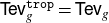 ${\mathsf{Tev}}^{\mathtt{trop}}_g = {\mathsf{Tev}}_g$
.
${\mathsf{Tev}}^{\mathtt{trop}}_g = {\mathsf{Tev}}_g$
.
4. Computation of Tropical Tevelev degrees: proof of Theorem 1·2
In this section we exhibit a combinatorial computation for tropical Tevelev degrees. We choose a point $p = (\overline{\Gamma}, \overline{T})$
in the interior of a maximal cone of the refinement of
$p = (\overline{\Gamma}, \overline{T})$
in the interior of a maximal cone of the refinement of $\mathcal M_{g,n}^{\mathtt{trop}}\times \mathcal M_{0,n}^{\mathtt{trop}}$
induced by the map
$\mathcal M_{g,n}^{\mathtt{trop}}\times \mathcal M_{0,n}^{\mathtt{trop}}$
induced by the map $\mathsf{F}_{\mathsf{s}}\times \mathsf{F}_{\mathsf{t}}$
. The pair of tropical curves parameterised by p are depicted in Figure 2. We show that
$\mathsf{F}_{\mathsf{s}}\times \mathsf{F}_{\mathsf{t}}$
. The pair of tropical curves parameterised by p are depicted in Figure 2. We show that $(\mathsf{F}_{\mathsf{s}}\times\mathsf{F}_{\mathsf{t}})^{-1}(p)$
consists of
$(\mathsf{F}_{\mathsf{s}}\times\mathsf{F}_{\mathsf{t}})^{-1}(p)$
consists of $2^g$
points each of multiplicity one. We start in Section 4·1 by computing the tropical Tevelev degrees for three examples in low genera. In Section 4·2 we show the construction of
$2^g$
points each of multiplicity one. We start in Section 4·1 by computing the tropical Tevelev degrees for three examples in low genera. In Section 4·2 we show the construction of $2^g$
points of multiplicity one for any g. Finally, we end in Section 4·3 by ruling out any other points as preimages of the chosen point p.
$2^g$
points of multiplicity one for any g. Finally, we end in Section 4·3 by ruling out any other points as preimages of the chosen point p.
The graphs $\overline{\Gamma}, \overline{T}$
defining the chosen point p of
$\overline{\Gamma}, \overline{T}$
defining the chosen point p of $\mathcal M_{g,n}^{\mathtt{trop}}\times \mathcal M_{0,n}^{\mathtt{trop}}$
. The graph
$\mathcal M_{g,n}^{\mathtt{trop}}\times \mathcal M_{0,n}^{\mathtt{trop}}$
. The graph $\overline{\Gamma}$
, from left to right, consists of a chain of loops, followed by a caterpillar trivalent tree with the marked points in descending order. The
$\overline{\Gamma}$
, from left to right, consists of a chain of loops, followed by a caterpillar trivalent tree with the marked points in descending order. The $x_i$
’s and
$x_i$
’s and $L_j$
’s label edge lengths, and the legs in grey correspond to the marked points. We require
$L_j$
’s label edge lengths, and the legs in grey correspond to the marked points. We require $x_i\lt\lt x_j\lt\lt \cdots \lt\lt L_k\lt\lt L_l$
for
$x_i\lt\lt x_j\lt\lt \cdots \lt\lt L_k\lt\lt L_l$
for $i\lt j$
and
$i\lt j$
and $k\lt l$
, to ensure that p is in the interior of a maximal cone of the refinement of
$k\lt l$
, to ensure that p is in the interior of a maximal cone of the refinement of $\mathcal M_{g,n}^{\mathtt{trop}}\times \mathcal M_{0,n}^{\mathtt{trop}}$
induced by
$\mathcal M_{g,n}^{\mathtt{trop}}\times \mathcal M_{0,n}^{\mathtt{trop}}$
induced by $\mathsf{F}_{\mathsf{s}}\times \mathsf{F}_{\mathsf{t}}$
.
$\mathsf{F}_{\mathsf{s}}\times \mathsf{F}_{\mathsf{t}}$
.

4·1. Examples in low genera
4·1·1. Base case:
$g=1$
.

Recalling the set-up from Section 3, in order to compute ${\mathsf{Tev}}_1^{\mathtt{trop}}$
we must compute the degree of the map
${\mathsf{Tev}}_1^{\mathtt{trop}}$
we must compute the degree of the map
 \begin{equation} \mathsf{F}_{\mathsf{s}}\times \mathsf{F}_{\mathsf{t}}\;:\; \mathcal H_{1,2,4}^{\mathtt{trop}} \to \mathcal M_{1,4}^{\mathtt{trop}} \times \mathcal M_{0,4}^{\mathtt{trop}}.\end{equation}
Consider the point $p = (\overline{\Gamma}, \overline{T})\in \mathcal M_{1,4}^{\mathtt{trop}} \times \mathcal M_{0,4}^{\mathtt{trop}}$
depicted in Figure 3. The set
$p = (\overline{\Gamma}, \overline{T})\in \mathcal M_{1,4}^{\mathtt{trop}} \times \mathcal M_{0,4}^{\mathtt{trop}}$
depicted in Figure 3. The set $(\mathsf{F}_{\mathsf{s}}\times \mathsf{F}_{\mathsf{t}})^{-1}(p)$
consists of covers
$(\mathsf{F}_{\mathsf{s}}\times \mathsf{F}_{\mathsf{t}})^{-1}(p)$
consists of covers $\phi\;:\; \Gamma\to T$
such that T stabilises to
$\phi\;:\; \Gamma\to T$
such that T stabilises to $\overline{T}$
when forgetting the four marked ends with branching data (2), and
$\overline{T}$
when forgetting the four marked ends with branching data (2), and $\Gamma$
stabilises to
$\Gamma$
stabilises to $\overline\Gamma$
when forgetting the four marked ends with expansion factor 2 as well as all the unmarked ends.
$\overline\Gamma$
when forgetting the four marked ends with expansion factor 2 as well as all the unmarked ends.
The point p in $\mathcal M_{1,4}^{\mathtt{trop}} \times \mathcal M_{0,4}^{\mathtt{trop}}$
. We have
$\mathcal M_{1,4}^{\mathtt{trop}} \times \mathcal M_{0,4}^{\mathtt{trop}}$
. We have $x_1\lt\lt x_2\lt\lt x_3\lt\lt x_4\lt\lt L_1$
.
$x_1\lt\lt x_2\lt\lt x_3\lt\lt x_4\lt\lt L_1$
.

Since p lies in the interior of a maximal cone of (an appropriate refinement of) $\mathcal M_{1,4}^{\mathtt{trop}} \times \mathcal M_{0,4}^{\mathtt{trop}}$
, we know that T is a trivalent tree. Forgetting the four marked ends labelled
$\mathcal M_{1,4}^{\mathtt{trop}} \times \mathcal M_{0,4}^{\mathtt{trop}}$
, we know that T is a trivalent tree. Forgetting the four marked ends labelled $1, \ldots, 4$
and their inverse images, we obtain a cover
$1, \ldots, 4$
and their inverse images, we obtain a cover $\tilde{\phi}\;:\; \tilde{\Gamma}\to \tilde{T}$
, where
$\tilde{\phi}\;:\; \tilde{\Gamma}\to \tilde{T}$
, where $\tilde{T}$
is a trivalent tree with four ends assigned branching data (2). There is exactly one Hurwitz cover of
$\tilde{T}$
is a trivalent tree with four ends assigned branching data (2). There is exactly one Hurwitz cover of $\tilde{T}$
, consisting of two ends with expansion factor one covering the compact edge of
$\tilde{T}$
, consisting of two ends with expansion factor one covering the compact edge of $\tilde{T}$
(and forming a loop between two vertices), and two infinite edges with degree 2 coming from each vertex and covering the ends.
$\tilde{T}$
(and forming a loop between two vertices), and two infinite edges with degree 2 coming from each vertex and covering the ends.
We now seek to recover the possible tropical curves $\Gamma$
by adding four marked points. Since in
$\Gamma$
by adding four marked points. Since in $\overline\Gamma$
the four marked points belong to a tree that attaches to the loop at a trivalent vertex, we conclude that all 4 marked points must belong to the same connected component of
$\overline\Gamma$
the four marked points belong to a tree that attaches to the loop at a trivalent vertex, we conclude that all 4 marked points must belong to the same connected component of $\Gamma$
minus the loop, i.e. they must all attach to the same infinite edge of degree two. There are 6 different ways to organise 4 marked points on the same edge. Due to
$\Gamma$
minus the loop, i.e. they must all attach to the same infinite edge of degree two. There are 6 different ways to organise 4 marked points on the same edge. Due to $L_1\gt\gt x_i$
for all i, the cover curve
$L_1\gt\gt x_i$
for all i, the cover curve $\Gamma$
should contain a long edge mapping to the compact edge of
$\Gamma$
should contain a long edge mapping to the compact edge of $\overline{T}$
that is lost when stabilising to
$\overline{T}$
that is lost when stabilising to $\tilde{\Gamma}$
. This condition rules out the case of all marked points attached directly to the edge. The edge being degree 2 rules out being able to have 2 long edges, which rules out 3 more configurations of the 4 marked points. The local description of the two remaining possibilities is depicted in Figure 4.
$\tilde{\Gamma}$
. This condition rules out the case of all marked points attached directly to the edge. The edge being degree 2 rules out being able to have 2 long edges, which rules out 3 more configurations of the 4 marked points. The local description of the two remaining possibilities is depicted in Figure 4.
A local picture of two configurations of marked points on a degree two tropical cover that allow for a long edge to be forgotten in the stabilisation of the cover curve.

Given an edge e of the cover of degree 2, we can attach a trivalent tree to an interior point of $\phi(e)$
(on the base), and then mark ends upstairs as on the left-hand side of Figure 4. When stabilised, the cover curve no longer has the length w, so w is free to be as long as needed for the compact edge of the base curve to reach length
$\phi(e)$
(on the base), and then mark ends upstairs as on the left-hand side of Figure 4. When stabilised, the cover curve no longer has the length w, so w is free to be as long as needed for the compact edge of the base curve to reach length $L_1$
.
$L_1$
.
The only other option is to attach a tripod with two marked points in an interior point of $\phi(e)$
, and then put one marked point on each of the two trees covering the tree in the base, as on the right-hand side of Figure 4. Now the unique length y is lost in the stabilisation of
$\phi(e)$
, and then put one marked point on each of the two trees covering the tree in the base, as on the right-hand side of Figure 4. Now the unique length y is lost in the stabilisation of $\Gamma$
.
$\Gamma$
.
From the above local pictures we can get global inverse images of p by placing the marked points on $\tilde{\Gamma}$
to recover
$\tilde{\Gamma}$
to recover $\Gamma$
in two possible ways. We can attach the tree from the left-hand side of Figure 4 at distance
$\Gamma$
in two possible ways. We can attach the tree from the left-hand side of Figure 4 at distance $x_2$
from the loop; we can then choose the length
$x_2$
from the loop; we can then choose the length $y = x_3, z = x_4,$ $w = L_1-x_4$
.
$w = L_1-x_4$
.
Alternatively, we place mark 4 at distance $x_2$
from the loop, followed by mark 3 after a distance of
$x_2$
from the loop, followed by mark 3 after a distance of $x_3$
, and finally the marks 2 and 1 on a tripod (as in Figure 4) that attaches after distance
$x_3$
, and finally the marks 2 and 1 on a tripod (as in Figure 4) that attaches after distance $x_4$
. We choose
$x_4$
. We choose $y = L-2x_4$
. Both types of inverse images of p are shown in Figure 5.
$y = L-2x_4$
. Both types of inverse images of p are shown in Figure 5.
The two covers in $(\mathsf{F}_{\mathsf{s}}\times\mathsf{F}_{\mathsf{t}})^{-1}(p)$
. The thickened parts show the subgraphs to which the graphs stabilise via the maps
$(\mathsf{F}_{\mathsf{s}}\times\mathsf{F}_{\mathsf{t}})^{-1}(p)$
. The thickened parts show the subgraphs to which the graphs stabilise via the maps $\mathsf{F}_{\mathsf{s}}, \mathsf{F}_{\mathsf{t}}$
.
$\mathsf{F}_{\mathsf{s}}, \mathsf{F}_{\mathsf{t}}$
.

We now compute the local degree of $(\mathsf{F}_{\mathsf{s}}\times\mathsf{F}_{\mathsf{t}})$
at these inverse images, which gives us the multiplicities with which we need to count the covers.
$(\mathsf{F}_{\mathsf{s}}\times\mathsf{F}_{\mathsf{t}})$
at these inverse images, which gives us the multiplicities with which we need to count the covers.
We follow (3·7), and notice that assumption $(\!\star\!)$
is verified; hence, for
$(\!\star\!)$
is verified; hence, for $i = 1,2$
the multiplicity of the inverse image
$i = 1,2$
the multiplicity of the inverse image $\phi_i\;:\;\Gamma_i\to T_i$
is the product of three factors: an automorphism factor, a product of local Hurwitz numbers and a dilation factor corresponding to the determinant of the matrix representing the map
$\phi_i\;:\;\Gamma_i\to T_i$
is the product of three factors: an automorphism factor, a product of local Hurwitz numbers and a dilation factor corresponding to the determinant of the matrix representing the map $\mathsf{F}_{\mathsf{s}}\times\mathsf{F}_{\mathsf{t}}$
.
$\mathsf{F}_{\mathsf{s}}\times\mathsf{F}_{\mathsf{t}}$
.
The automorphism factor is the same for $i = 1,2$
. For each cover, we have
$i = 1,2$
. For each cover, we have $\mathrm{Aut}(\phi_i) = \mu_2\times \mu_2$
: one factor corresponds to switching simultaneously the two unlabelled left ends of branching type 2 and their inverse images; the second factor consists of switching the two degree 1 edges of
$\mathrm{Aut}(\phi_i) = \mu_2\times \mu_2$
: one factor corresponds to switching simultaneously the two unlabelled left ends of branching type 2 and their inverse images; the second factor consists of switching the two degree 1 edges of $\Gamma_i$
forming the loop. However, this is also a nontrivial automorphism of
$\Gamma_i$
forming the loop. However, this is also a nontrivial automorphism of $\overline{\Gamma_i}$
. Altogether, we have
$\overline{\Gamma_i}$
. Altogether, we have
 \begin{equation} \frac{|\mathrm{Aut}(\overline{\Gamma_i})|}{|\mathrm{Aut}(\phi_i)|} = \frac{1}{2}.\end{equation}
The local Hurwitz numbers factors are also computed identically for $i = 1,2$
: every vertex in the cover is either trivalent with degree one edges in all directions or two edges of degree 2 in different directions and 2 edges of degree 1 in the same direction. Both of these types of vertices have local Hurwitz number equal to 1Footnote
2
, therefore the product of all local Hurwitz numbers is 1.
$i = 1,2$
: every vertex in the cover is either trivalent with degree one edges in all directions or two edges of degree 2 in different directions and 2 edges of degree 1 in the same direction. Both of these types of vertices have local Hurwitz number equal to 1Footnote
2
, therefore the product of all local Hurwitz numbers is 1.
To calculate the dilation factors, we set up the following matrices representing the $x_i$
’s and
$x_i$
’s and $L_j$
’s in terms of the
$L_j$
’s in terms of the $y_k$
’s:
$y_k$
’s:
 \[\begin{array}{cc} M_1=\begin{array}{lc}\begin{matrix} & \;\;\;\;\;\;\;\; y_1 & \;\;\;\; y_2 & \;\;\;\; y_3 & \;\;\;\; y_4 & \;\;\;\; y_5\\ \end{matrix}\\\begin{matrix} x_1 \\ x_2 \\ x_3 \\ x_4 \\ L_1\\ \end{matrix}\left[ \begin{matrix} 2\;\;\;\;\;\;\; & 0\;\;\;\;\;\;\; & 0\;\;\;\;\;\;\; & 0\;\;\;\;\;\;\; & 0\\ 0\;\;\;\;\;\;\; & 1\;\;\;\;\;\;\; & 0\;\;\;\;\;\;\; & 0\;\;\;\;\;\;\; & 0\\ 0\;\;\;\;\;\;\; & 0\;\;\;\;\;\;\; & 1\;\;\;\;\;\;\; & 0\;\;\;\;\;\;\; & 0\\ 0\;\;\;\;\;\;\; & 0\;\;\;\;\;\;\; & 0\;\;\;\;\;\;\; & 0\;\;\;\;\;\;\; & 1\\ 0\;\;\;\;\;\;\; & 0\;\;\;\;\;\;\; & 0\;\;\;\;\;\;\; & 1\;\;\;\;\;\;\; & 1\\ \end{matrix}\right]\end{array} &\;\;\; M_2=\begin{array}{lc}\begin{matrix} & \;\;\;\;\;\;\;\; y'_1 & \;\;\;\; y'_2 & \;\;\;\; y'_3 & \;\;\;\; y'_4 & \;\;\;\; y'_5\\ \end{matrix}\\\begin{matrix} x_1 \\ x_2 \\ x_3 \\ x_4 \\ L_1 \\ \end{matrix}\left[ \begin{matrix}2\;\;\;\;\;\;\; & 0\;\;\;\;\;\;\; & 0\;\;\;\;\;\;\; & 0\;\;\;\;\;\;\; & 0\\ 0\;\;\;\;\;\;\; & 1\;\;\;\;\;\;\; & 0\;\;\;\;\;\;\; & 0\;\;\;\;\;\;\; & 0\\0\;\;\;\;\;\;\; & 0\;\;\;\;\;\;\; & 1\;\;\;\;\;\;\; & 0\;\;\;\;\;\;\; & 0\\0\;\;\;\;\;\;\; & 0\;\;\;\;\;\;\; & 0\;\;\;\;\;\;\; & 1\;\;\;\;\;\;\; & 0\\ 0\;\;\;\;\;\;\; & 0\;\;\;\;\;\;\; & 0\;\;\;\;\;\;\; & 1\;\;\;\;\;\;\; & 1\\ \end{matrix}\right].\end{array}\end{array} \]
We see that $|\det M_i |=2$
for
$|\det M_i |=2$
for $i = 1,2$
. All together the multiplicity of each cover in
$i = 1,2$
. All together the multiplicity of each cover in $(\mathsf{F}_{\mathsf{s}}\times\mathsf{F}_{\mathsf{t}})^{-1}(p)$
is
$(\mathsf{F}_{\mathsf{s}}\times\mathsf{F}_{\mathsf{t}})^{-1}(p)$
is $1\cdot \frac{1}{2}\cdot 2=1$
. Since we have two inverse images each with multiplicity one, we obtain
$1\cdot \frac{1}{2}\cdot 2=1$
. Since we have two inverse images each with multiplicity one, we obtain ${\mathsf{Tev}}^{\mathtt{trop}}_1 = 2$
.
${\mathsf{Tev}}^{\mathtt{trop}}_1 = 2$
.
4·1·2. Low genus examples:
$g=2$
.

To compute ${\mathsf{Tev}}_2^{\mathtt{trop}}$
, we look for the degree of the map
${\mathsf{Tev}}_2^{\mathtt{trop}}$
, we look for the degree of the map
 \begin{equation} \mathsf{F}_{\mathsf{s}}\times \mathsf{F}_{\mathsf{t}}\;:\; \mathcal H_{2,3,5}^{\mathtt{trop}} \to \mathcal M_{2,5}^{\mathtt{trop}} \times \mathcal M_{0,5}^{\mathtt{trop}}.\end{equation}
We consider the point $p=(\overline{\Gamma},\overline{T})\in \mathcal M_{2,5}^{\mathtt{trop}} \times \mathcal M_{0,5}^{\mathtt{trop}}$
as illustrated in Figure 2. With notation as in the previous section, we know that
$p=(\overline{\Gamma},\overline{T})\in \mathcal M_{2,5}^{\mathtt{trop}} \times \mathcal M_{0,5}^{\mathtt{trop}}$
as illustrated in Figure 2. With notation as in the previous section, we know that $\tilde{T}$
is a trivalent tree, but unlike the genus 1 case, there are multiple options for how this tree can be shaped. For two of these
$\tilde{T}$
is a trivalent tree, but unlike the genus 1 case, there are multiple options for how this tree can be shaped. For two of these $\tilde{T}$
-trees it is possible to place fragments of the marked tree
$\tilde{T}$
-trees it is possible to place fragments of the marked tree $\overline{T}$
to obtain the base T of the cover.
$\overline{T}$
to obtain the base T of the cover.
When adding the 5 marked points, we use the same techniques as in the previous section to get two long edges of $\Gamma$
that map to compact edges of
$\Gamma$
that map to compact edges of $\overline{T}$
and are lost when stabilising to
$\overline{T}$
and are lost when stabilising to $\overline{\Gamma}$
. All of the preimages are shown in Figure 6.
$\overline{\Gamma}$
. All of the preimages are shown in Figure 6.
The four covers in $(\mathsf{F}_{\mathsf{s}}\times\mathsf{F}_{\mathsf{t}})^{-1}(p)$
when
$(\mathsf{F}_{\mathsf{s}}\times\mathsf{F}_{\mathsf{t}})^{-1}(p)$
when $g=2$
. The thickened parts show the subgraphs to which the graphs stabilise via the maps
$g=2$
. The thickened parts show the subgraphs to which the graphs stabilise via the maps $\mathsf{F}_{\mathsf{s}}, \mathsf{F}_{\mathsf{t}}$
.
$\mathsf{F}_{\mathsf{s}}, \mathsf{F}_{\mathsf{t}}$
.

We can now find the multiplicities of these covers by computing the local degree of $(\mathsf{F}_{\mathsf{s}}\times\mathsf{F}_{\mathsf{t}})$
at all 4 inverse images. The automorphism factor is the same for all 4. For each cover, there are two pairs of ends of branching type 2 that can be switched, corresponding to the first two forks starting from the left side of the base cover; these give 4 automorphisms of
$(\mathsf{F}_{\mathsf{s}}\times\mathsf{F}_{\mathsf{t}})$
at all 4 inverse images. The automorphism factor is the same for all 4. For each cover, there are two pairs of ends of branching type 2 that can be switched, corresponding to the first two forks starting from the left side of the base cover; these give 4 automorphisms of $\phi$
that are not also automorphisms of
$\phi$
that are not also automorphisms of $\overline{\Gamma}$
. The product of local Hurwitz numbers for all covers is equal to 1, recall Convention 3·3.
$\overline{\Gamma}$
. The product of local Hurwitz numbers for all covers is equal to 1, recall Convention 3·3.
The matrices that compute the multiplicities for these inverse images are written in Figure 7. All four matrices are block diagonal and have absolute value of the determinant equal to 4, therefore all four covers have multiplicity ${4}/{4} = 1$
, and we get
${4}/{4} = 1$
, and we get ${\mathsf{Tev}}_2^{\mathtt{trop}}=4$
.
${\mathsf{Tev}}_2^{\mathtt{trop}}=4$
.
The matrices computing the local degree of $(\mathsf{F}_{\mathsf{s}}\times\mathsf{F}_{\mathsf{t}})$
at the four inverse images of p. We observe that the matrices are block diagonal, with one block having determinant a power of 2 and the other determinant one.
$(\mathsf{F}_{\mathsf{s}}\times\mathsf{F}_{\mathsf{t}})$
at the four inverse images of p. We observe that the matrices are block diagonal, with one block having determinant a power of 2 and the other determinant one.

4·1·3. Low genus examples:
$g=3$
.

For our final example, consider the point $p=(\overline{\Gamma},\overline{T})\in \mathcal M_{3,6}^{\mathtt{trop}}\times\mathcal M_{0,6}^{\mathtt{trop}}$
shown in Figure 2. There are eight preimages as shown in Figure 8, each has multiplicity 1, so
$p=(\overline{\Gamma},\overline{T})\in \mathcal M_{3,6}^{\mathtt{trop}}\times\mathcal M_{0,6}^{\mathtt{trop}}$
shown in Figure 2. There are eight preimages as shown in Figure 8, each has multiplicity 1, so ${\mathsf{Tev}}_3^{\mathtt{trop}}=8.$
Genus 3 covers contributing to ${\mathsf{Tev}}_3^{\mathtt{trop}}$

4·2. Construction of
$2^g$
solutions

In this section we make explicit and generalise the constructions from the examples in Section 4·1, and construct $2^g$
preimages of p for any genus g. We organise the task into four parts: in Section 4·2·1 we build a cover containing all the genus and no marked points (we call it the genus part of the cover and denote it by
$2^g$
preimages of p for any genus g. We organise the task into four parts: in Section 4·2·1 we build a cover containing all the genus and no marked points (we call it the genus part of the cover and denote it by ${\widehat{\Gamma}}\to {\widehat{T}}$
); in Section 4·2·2 we construct a tree containing the n marked ends that attaches to the genus part of
${\widehat{\Gamma}}\to {\widehat{T}}$
); in Section 4·2·2 we construct a tree containing the n marked ends that attaches to the genus part of $\Gamma$
, which we call the marked tree part of the cover. In Section 4·2·3 we show that the multiplicity of every cover constructed is equal to 1. We conclude in Section 4·2·4 by organising the combinatorics of the problem and show we have constructed
$\Gamma$
, which we call the marked tree part of the cover. In Section 4·2·3 we show that the multiplicity of every cover constructed is equal to 1. We conclude in Section 4·2·4 by organising the combinatorics of the problem and show we have constructed $2^g$
covers contributing to
$2^g$
covers contributing to ${\mathsf{Tev}}_g$
.
${\mathsf{Tev}}_g$
.
4·2·1. The genus part
For any integer $d\geq 1$
, we consider the two tropical covers of degree
$d\geq 1$
, we consider the two tropical covers of degree $d+1$
depicted in Figure 9, which we call U and D, and together we call genus fragments. The base of each cover is a trivalent tree with five ends. We think of this tree as an oriented line to which we attach one simple end and a tripod, in the two possible orders. The cover curves are connected genus one tropical curves; for every horizontal end/edge of the base curve there is a unique end/edge in the cover mapping to it with degree greater than one; we call it the active end/edge and we call the collection of all active ends/edges the active path. In the case of fragment D when
$d+1$
depicted in Figure 9, which we call U and D, and together we call genus fragments. The base of each cover is a trivalent tree with five ends. We think of this tree as an oriented line to which we attach one simple end and a tripod, in the two possible orders. The cover curves are connected genus one tropical curves; for every horizontal end/edge of the base curve there is a unique end/edge in the cover mapping to it with degree greater than one; we call it the active end/edge and we call the collection of all active ends/edges the active path. In the case of fragment D when $d=1$
, we choose an arbitrary connected lift of the horizontal path of the base curve and declare it to be the active path.
$d=1$
, we choose an arbitrary connected lift of the horizontal path of the base curve and declare it to be the active path.
Two possible ways to add genus. We omit from the picture ends of degree 1 to avoid clutter. The active path is thickened. We remark that the two fragments are just the reflection of one another about a vertical axis, but the two distinct directions play an important role in our story.

Notice that in the two cases the degree of the active path either goes up or down by one after making the genus.
For any genus $g\geq 2$
, we construct (topological types of) tropical covers of genus g, degree
$g\geq 2$
, we construct (topological types of) tropical covers of genus g, degree $d\leq g+1$
as follows:
$d\leq g+1$
as follows:
-
(1) start with the unique degree 2, genus one cover of a trivalent, four ended tree as in Section 4·1·1; choose any one of the four ends to be the active edge;
-
(2) attach a sequence of
$g-1$
genus fragments by gluing the rightmost horizontal end of the base graph to the leftmost end of the next graph, and gluing the corresponding active edges above. Observe that the fragment U can always be used, whereas the fragment D can be used whenever the degree of the attaching active end is greater than one; -
(3) complete the resulting graphs with appropriate portions of degree 1 to make it into an honest global cover of tropical curves. This can be always done in a unique way.

If the fragment D has been used i times we obtain a connected cover of degree $g+1-i$
with active end of degree
$g+1-i$
with active end of degree $g+1-2i$
. We complete it to a degree
$g+1-2i$
. We complete it to a degree $g+1$
cover by adding i disjoint copies of the base curve each mapping with degree one.
$g+1$
cover by adding i disjoint copies of the base curve each mapping with degree one.
We conclude this section with the elementary observation that for all covers thus constructed the degree of the active end has the same parity as $g+1$
. This will be important when organising the count of the graphs as illustrated in Figure 17.
$g+1$
. This will be important when organising the count of the graphs as illustrated in Figure 17.
We have constructed tropical covers containing all the genus and none of the marked points needed: we call these covers the genus part of our solutions and denote them by ${\widehat{\Gamma}} \to {\widehat{T}}$
.
${\widehat{\Gamma}} \to {\widehat{T}}$
.
4·2·2. The marked tree part
Given a cover $\Gamma\to T$
, we denote by
$\Gamma\to T$
, we denote by $\tilde{\Gamma}\to \tilde{T}$
the cover obtained by forgetting the n marked points. For any genus part of a cover
$\tilde{\Gamma}\to \tilde{T}$
the cover obtained by forgetting the n marked points. For any genus part of a cover ${\widehat{\Gamma}}\to {\widehat{T}}$
constructed in the previous section, the degree of the active end can be any positive number congruent to d modulo 2. Given a genus part with active edge of degree
${\widehat{\Gamma}}\to {\widehat{T}}$
constructed in the previous section, the degree of the active end can be any positive number congruent to d modulo 2. Given a genus part with active edge of degree $d-2i$
, we show first how to complete it to unmarked covers
$d-2i$
, we show first how to complete it to unmarked covers $\tilde{\Gamma}\to \tilde{T}$
; next we add further trees containing the (images of the) marked points to
$\tilde{\Gamma}\to \tilde{T}$
; next we add further trees containing the (images of the) marked points to $\tilde{T}$
to obtain T; finally we describe the inverse images of these trees and describe how to place the marked points on them.
$\tilde{T}$
to obtain T; finally we describe the inverse images of these trees and describe how to place the marked points on them.
Cuts and joins: constructing
$\tilde{\Gamma}\to \tilde{T}$

For any genus part of a cover, we complete ${\widehat{T}}$
to
${\widehat{T}}$
to $\tilde{T}$
by extending horizontally the end that the active edge maps to and attaching to it
$\tilde{T}$
by extending horizontally the end that the active edge maps to and attaching to it $g-1$
vertical ends. Together with the final horizontal end, we have added g simple branched ends to
$g-1$
vertical ends. Together with the final horizontal end, we have added g simple branched ends to ${\widehat{T}}$
and therefore obtained a good candidate for
${\widehat{T}}$
and therefore obtained a good candidate for $\tilde{T}$
. A consequence of the simple branching conditions is that for any cover of
$\tilde{T}$
. A consequence of the simple branching conditions is that for any cover of $\tilde\Gamma\to \tilde{T}$
, the inverse image of the horizontal edge of
$\tilde\Gamma\to \tilde{T}$
, the inverse image of the horizontal edge of $\tilde{T}$
must be a trivalent tree, hence it should be obtained from the active edge by a series of cuts and joins (illustrated in Figure 10).
$\tilde{T}$
must be a trivalent tree, hence it should be obtained from the active edge by a series of cuts and joins (illustrated in Figure 10).
The active edge, drawn thickened, is oriented from left to right, i.e. away from the genus part. An edge joining the active edge is shown on the left, and an edge cutting from the active edge is shown on the right.

Consider a genus part ${\widehat{\Gamma}}\to {\widehat{T}}$
where the active edge has degree d: then we obtain a unique cover
${\widehat{\Gamma}}\to {\widehat{T}}$
where the active edge has degree d: then we obtain a unique cover $\tilde{\Gamma}\to \tilde{T}$
by a sequence of cuts where one of the ends has expansion factor equal to 1, and the other (of degree greater than one) is the new active edge. We call the sequence of active edges the active path. Observe that since we have
$\tilde{\Gamma}\to \tilde{T}$
by a sequence of cuts where one of the ends has expansion factor equal to 1, and the other (of degree greater than one) is the new active edge. We call the sequence of active edges the active path. Observe that since we have $g-1$
cuts, the final active end has degree
$g-1$
cuts, the final active end has degree $d-(g-1) = 2$
, and is therefore a simply ramified end, as required. We observe that since all the non-active ends have degree 1, there is a unique way to extend them to a cover of the portion of the tree
$d-(g-1) = 2$
, and is therefore a simply ramified end, as required. We observe that since all the non-active ends have degree 1, there is a unique way to extend them to a cover of the portion of the tree $\tilde{T}$
that they must cover.
$\tilde{T}$
that they must cover.
For $1\leq i\leq \lfloor {d-1}/{2} \rfloor$
, we complete the genus part
$1\leq i\leq \lfloor {d-1}/{2} \rfloor$
, we complete the genus part ${\widehat{\Gamma}}_i\to {\widehat{T}}_i$
in
${\widehat{\Gamma}}_i\to {\widehat{T}}_i$
in $d-2i$
different ways: informally, the idea is that we keep all the joins together. Formally, for
$d-2i$
different ways: informally, the idea is that we keep all the joins together. Formally, for $0\leq k\leq d-2i-1$
, we denote by
$0\leq k\leq d-2i-1$
, we denote by $\tilde{\Gamma}_{i,k}\to \tilde{T}_{i,k}$
the cover where the active path consists of k cuts, followed by i joins, followed by the remaining cuts, as illustrated in Figure 11. We remark again that for each of the degree one edges emanating from the active path, there is a unique way to complete them to a degree one cover of the portion of
$\tilde{\Gamma}_{i,k}\to \tilde{T}_{i,k}$
the cover where the active path consists of k cuts, followed by i joins, followed by the remaining cuts, as illustrated in Figure 11. We remark again that for each of the degree one edges emanating from the active path, there is a unique way to complete them to a degree one cover of the portion of $\tilde{T}$
they must cover.
$\tilde{T}$
they must cover.
The sequence of cuts and joins admitted for a given i.

The marking fragments
In the next section, we will construct T from $\tilde{T}$
by attaching to the horizontal edge of
$\tilde{T}$
by attaching to the horizontal edge of $\tilde{T}$
one of the
$\tilde{T}$
one of the $(n-2)$
marked fragments depicted in Figure 12. Note that since we are in the base cover, the marks are really representing the images of the marks. Finally observe that
$(n-2)$
marked fragments depicted in Figure 12. Note that since we are in the base cover, the marks are really representing the images of the marks. Finally observe that $F_1$
contains the tree
$F_1$
contains the tree $\overline{T}$
; for
$\overline{T}$
; for $2\leq j\leq n-3$
, the tree
$2\leq j\leq n-3$
, the tree $\overline{T}$
is formed by the fragment together with the portion of the horizontal edge of
$\overline{T}$
is formed by the fragment together with the portion of the horizontal edge of $\tilde{T}$
between the two outer connected components of the fragment. For
$\tilde{T}$
between the two outer connected components of the fragment. For $j = n-2$
, when stabilising, the nth marked end will be adjacent to the
$j = n-2$
, when stabilising, the nth marked end will be adjacent to the $(n-1)$
-th at a vertex v, and
$(n-1)$
-th at a vertex v, and $\overline{T}$
will consist of these two ends, the portion of the horizontal edge from v to the remaining part of the fragment, and the remaining part of the fragment. For now, we don’t discuss how the connected components of the fragments are positioned with respect to the simple branched ends stemming from the horizontal edge of
$\overline{T}$
will consist of these two ends, the portion of the horizontal edge from v to the remaining part of the fragment, and the remaining part of the fragment. For now, we don’t discuss how the connected components of the fragments are positioned with respect to the simple branched ends stemming from the horizontal edge of $\overline{T}$
. We will discuss the various possible cases when we describe the inverse images of the fragments to construct the cover
$\overline{T}$
. We will discuss the various possible cases when we describe the inverse images of the fragments to construct the cover $\Gamma$
.
$\Gamma$
.
Marked fragments that attach to the horizontal edge of $\tilde{T}$
to obtain the base graph T. We denote by
$\tilde{T}$
to obtain the base graph T. We denote by $F_j^-$
the connected component that contains the marks with the lowest indices, and
$F_j^-$
the connected component that contains the marks with the lowest indices, and $F_j^+$
the one containing the highest labels.
$F_j^+$
the one containing the highest labels.

Constructing the covers
In this section we construct covers $\Gamma \to T$
in
$\Gamma \to T$
in $(\mathsf{F}_{\mathsf{s}}\times \mathsf{F}_{\mathsf{t}})^{-1}(p)$
. Given a genus part of the cover ending with an active edge of degree
$(\mathsf{F}_{\mathsf{s}}\times \mathsf{F}_{\mathsf{t}})^{-1}(p)$
. Given a genus part of the cover ending with an active edge of degree $d-2i$
and a fragment
$d-2i$
and a fragment $F_j$
with
$F_j$
with
 \begin{equation} i+1 \leq j \leq n-2-i = d-i,\end{equation}
we show how to attach $F_j$
to
$F_j$
to $\tilde{T}$
to obtain T, and how to mark the inverse images of the fragment to obtain the cover
$\tilde{T}$
to obtain T, and how to mark the inverse images of the fragment to obtain the cover $\Gamma$
. We discuss several cases.
$\Gamma$
. We discuss several cases.
Case 1. $i\gt0$
. Given a genus part with active edge of degree
$i\gt0$
. Given a genus part with active edge of degree $d-2i$
and j in the range specified in (4·4), we complete the genus part to a cover of type
$d-2i$
and j in the range specified in (4·4), we complete the genus part to a cover of type $\tilde{\Gamma}_{i,k}\to \tilde{T}_{i,k}$
as described in Section 4·2·2, for
$\tilde{\Gamma}_{i,k}\to \tilde{T}_{i,k}$
as described in Section 4·2·2, for $k = d-i-j$
. We first describe the topological type of the cover, and then concern ourselves with the metric information. Refer to Figure 13 to follow the various constructions involved.
$k = d-i-j$
. We first describe the topological type of the cover, and then concern ourselves with the metric information. Refer to Figure 13 to follow the various constructions involved.
The top part of the picture represents the tree part of the cover $\phi_{i,j}$
for
$\phi_{i,j}$
for $i\not=0$
. The inverse images of the points
$i\not=0$
. The inverse images of the points $q^\pm,q^0$
on the active path are still denoted by the same names to not clutter the picture. The metric information for the fragment
$q^\pm,q^0$
on the active path are still denoted by the same names to not clutter the picture. The metric information for the fragment $F_j$
is depicted in the bottom part of the picture as it would not fit above: since all connected components of the inverse image of
$F_j$
is depicted in the bottom part of the picture as it would not fit above: since all connected components of the inverse image of $F_j$
have local degree one, the lengths are the same in the top graph.
$F_j$
have local degree one, the lengths are the same in the top graph.

Pick three points on the (image of the) active pathFootnote 3 : $q^+$
: on the
$q^+$
: on the $(k+1)$
th edge of the active path, separating the first set of cuts from the joins;
$(k+1)$
th edge of the active path, separating the first set of cuts from the joins; $q^0$
: on the
$q^0$
: on the $(i+k+1)$
th edge of the active path, separating the joins from the remaining cuts;
$(i+k+1)$
th edge of the active path, separating the joins from the remaining cuts; $q^-$
: on the last edge of the active path.
$q^-$
: on the last edge of the active path.
To obtain ${T_{i,k}}$
, we attach
${T_{i,k}}$
, we attach $F_j^+$
to the point
$F_j^+$
to the point $q^+$
, the (image of the) marked point
$q^+$
, the (image of the) marked point $j+1$
to
$j+1$
to $q^0$
and
$q^0$
and $F_j^-$
to the point
$F_j^-$
to the point $q^-$
.
$q^-$
.
For $\Gamma_{i,k}$
, we mark the points in the inverse images of
$\Gamma_{i,k}$
, we mark the points in the inverse images of $F_j$
as follows:
$F_j$
as follows:
-
(1) order the (connected components of the) inverse images of
$F_j$
according to the order of their closest point to the active path; -
(2) place the mark n on the first inverse image of
$F_j^+$
; -
(3) place all marks
$\gt2$
in descending order one on each consecutive inverse image of (the appropriate connected component of)
$F_j$
; -
(4) place the marks 1,2 on the last inverse image of
$F_j^-$
, making sure that the two marks are on distinct branches of such inverse image: note that since the point
$q^-$
lies on an edge of degree 2, the inverse image of
$F_j^-$
consists of two copies of
$F_j^-$
.


We now proceed to describe the metric information. The active path contains $(g+2)$
edges: give the first one length
$(g+2)$
edges: give the first one length $x_{3g-1}$
, and each successive length of
$x_{3g-1}$
, and each successive length of $\overline{\Gamma}$
until
$\overline{\Gamma}$
until $x_{4g}$
.
$x_{4g}$
.
For all edges of the fragment $F_j$
, except the two bottom edges of
$F_j$
, except the two bottom edges of $F_j^\pm$
, give them the length
$F_j^\pm$
, give them the length $L_i$
of the corresponding edge in
$L_i$
of the corresponding edge in $\overline{T}$
. The bottom edge of
$\overline{T}$
. The bottom edge of $F_j^-$
is given length
$F_j^-$
is given length $L_{j-1}-jx_{4g-(j-2)}$
, and the bottom edge of
$L_{j-1}-jx_{4g-(j-2)}$
, and the bottom edge of $F_j^+$
is given length
$F_j^+$
is given length $L_{j}-jx_{4g-(j-1)}$
. We have thus constructed a cover in the inverse image of p which we call
$L_{j}-jx_{4g-(j-1)}$
. We have thus constructed a cover in the inverse image of p which we call $\phi_{i,j}$
.
$\phi_{i,j}$
.
Case 2. $i=0, j\gt1$
. This case is illustrated in Figure 14. When
$i=0, j\gt1$
. This case is illustrated in Figure 14. When $i=0$
, i.e. the genus part of the cover ends with an active edge of degree d, the only option for the cover
$i=0$
, i.e. the genus part of the cover ends with an active edge of degree d, the only option for the cover $\tilde{\Gamma}_{1,j}\to \tilde{T}_{1,j}$
is to be formed by a sequence of
$\tilde{\Gamma}_{1,j}\to \tilde{T}_{1,j}$
is to be formed by a sequence of $g-1$
cuts from the active edge.
$g-1$
cuts from the active edge.
The top part of the picture represents the tree part of the cover $\phi_{i,j}$
for
$\phi_{i,j}$
for $i=0, j\not=1$
. The metric information for the fragment
$i=0, j\not=1$
. The metric information for the fragment $F_j$
is depicted in the bottom part of the picture.
$F_j$
is depicted in the bottom part of the picture.

To obtain the (topological type of the) base graph $T_{1,j}$
, mark two points
$T_{1,j}$
, mark two points $q^+,q^0$
, in this order, on the edge after
$q^+,q^0$
, in this order, on the edge after $(n-2-j)$
cuts; place a mark
$(n-2-j)$
cuts; place a mark $q^-$
on the last edge of the active path. Attach the fragments
$q^-$
on the last edge of the active path. Attach the fragments $F_j^\pm$
to the points
$F_j^\pm$
to the points $q^\pm$
and the mark
$q^\pm$
and the mark $j+1$
to the point
$j+1$
to the point $q^0$
. On the cover graph, the marks are placed on the inverse images of the fragments in descending order as you proceed along the active path. As in the previous case, the marks 1 and 2 should be on distinct branches of the inverse image of
$q^0$
. On the cover graph, the marks are placed on the inverse images of the fragments in descending order as you proceed along the active path. As in the previous case, the marks 1 and 2 should be on distinct branches of the inverse image of $F_j^-$
. The metric information is also analogous to the previous case, and it is illustrated in Figure 14.
$F_j^-$
. The metric information is also analogous to the previous case, and it is illustrated in Figure 14.
Case 3. $i=0, j=1$
. This case is illustrated in Figure 15. Again, the base cover is obtained by performing a sequence of cuts on the active edge. We mark one point on the last edge of the active path, and attach the fragment
$i=0, j=1$
. This case is illustrated in Figure 15. Again, the base cover is obtained by performing a sequence of cuts on the active edge. We mark one point on the last edge of the active path, and attach the fragment $F_1$
to it. On the cover curve, the marks are placed one on each connected component of the inverse image of
$F_1$
to it. On the cover curve, the marks are placed one on each connected component of the inverse image of $F_1$
in descending order, so that the mark n will stabilise to the vertex of the first cut, and so on. The last connected component of the inverse image of
$F_1$
in descending order, so that the mark n will stabilise to the vertex of the first cut, and so on. The last connected component of the inverse image of $F_1$
attaches to a degree 2 edge, and therefore consists of two copies of the fragment
$F_1$
attaches to a degree 2 edge, and therefore consists of two copies of the fragment $F_1$
. We mark the point 4 on one copy, and the points 3,2,1 on the other.
$F_1$
. We mark the point 4 on one copy, and the points 3,2,1 on the other.
The left part of the picture represents the tree part of the cover $\phi_{i,j}$
for
$\phi_{i,j}$
for $i=0, j=1$
. The metric information for the fragment
$i=0, j=1$
. The metric information for the fragment $F_1$
is depicted on the right part of the picture.
$F_1$
is depicted on the right part of the picture.

As for the metric information, consider the path from $\widehat \Gamma$
to the vertex supporting the marks 1,2, and give the edges of this path lengths
$\widehat \Gamma$
to the vertex supporting the marks 1,2, and give the edges of this path lengths $x_{3g-1}, \ldots, x_{4g}$
. The remaining edges of the fragment are given lengths
$x_{3g-1}, \ldots, x_{4g}$
. The remaining edges of the fragment are given lengths $L_1-x_{4g}, L_2, \ldots, L_{n-3}$
as depicted in Figure 15.
$L_1-x_{4g}, L_2, \ldots, L_{n-3}$
as depicted in Figure 15.
4·2·3. Multiplicities
In this section we compute the local degree of the map $\mathsf{F}_{\mathsf{s}}\times\mathsf{F}_{\mathsf{t}}$
at each of the inverse images of the point p, giving the multiplicities we need to count the covers constructed with. Following (2·5), the local degree is the product of three factors: an automorphism factor, a local Hurwitz numbers factor, and a dilation factor.
$\mathsf{F}_{\mathsf{s}}\times\mathsf{F}_{\mathsf{t}}$
at each of the inverse images of the point p, giving the multiplicities we need to count the covers constructed with. Following (2·5), the local degree is the product of three factors: an automorphism factor, a local Hurwitz numbers factor, and a dilation factor.
There are two types of local Hurwitz numbers appearing in the graphs constructed: either numbers of the form $H_0(\alpha, (2,1^{d-2}), \beta)$
, or of the form
$H_0(\alpha, (2,1^{d-2}), \beta)$
, or of the form $H_0((d),(d), 1)$
, where this notation means that the third point on the base is not a branch point, but only one of its inverse images is marked (see Convention 3·3). Both these types of Hurwitz numbers are equal to one, and therefore the Hurwitz number factor is also equal to one.
$H_0((d),(d), 1)$
, where this notation means that the third point on the base is not a branch point, but only one of its inverse images is marked (see Convention 3·3). Both these types of Hurwitz numbers are equal to one, and therefore the Hurwitz number factor is also equal to one.
The dilation factor equals the determinant of the matrix $M_g$
giving the local expression for the map
$M_g$
giving the local expression for the map $\mathsf{F}_{\mathsf{s}}\times \mathsf{F}_{\mathsf{t}}$
; call
$\mathsf{F}_{\mathsf{s}}\times \mathsf{F}_{\mathsf{t}}$
; call $x_i, L_j$
the lengths of the edges of the graphs
$x_i, L_j$
the lengths of the edges of the graphs $\overline{\Gamma}, \overline{T}$
, and
$\overline{\Gamma}, \overline{T}$
, and $y_k$
the lengths of 5g edges of
$y_k$
the lengths of 5g edges of $\Gamma$
chosen as in observation (2) after condition
$\Gamma$
chosen as in observation (2) after condition $(\!\star\!)$
; then the rows of the matrix express the
$(\!\star\!)$
; then the rows of the matrix express the $y_k$
’s as linear functions of
$y_k$
’s as linear functions of $x_i, L_j$
. Since all covers can be split into a genus part and a marked tree part, the matrix used to calculate the dilation factor is block diagonal. The block corresponding to the genus part has size
$x_i, L_j$
. Since all covers can be split into a genus part and a marked tree part, the matrix used to calculate the dilation factor is block diagonal. The block corresponding to the genus part has size $3g-2$
, the other block has size
$3g-2$
, the other block has size $2g+2$
.
$2g+2$
.
Claim 4·1. The determinant of the marked tree block equals one.
Proof. The following two facts are used to calculate the determinant of this block. First, all marked points stabilise to the active path, so for $i\geq 3g-1$
the rows corresponding to
$i\geq 3g-1$
the rows corresponding to $x_i$
’s contain exactly one non-zero entry, which is in in fact equal to 1. We can therefore eliminate the rows and columns containing these entries. Next, when writing the lengths
$x_i$
’s contain exactly one non-zero entry, which is in in fact equal to 1. We can therefore eliminate the rows and columns containing these entries. Next, when writing the lengths $L_i$
’s in terms of the lengths
$L_i$
’s in terms of the lengths $y_j$
’s, we observe that there is exactly one length of the cover that contributes to
$y_j$
’s, we observe that there is exactly one length of the cover that contributes to $L_i$
and does not lie on the active path. Recall that each cover has one free length for every
$L_i$
and does not lie on the active path. Recall that each cover has one free length for every $L_i$
, and the corresponding entry is 1. These two facts together give that the absolute value of the determinant is one.
$L_i$
, and the corresponding entry is 1. These two facts together give that the absolute value of the determinant is one.
Claim 4·2. The determinant of the block corresponding to the genus part of the cover is equal to $2^g$
.
$2^g$
.
Proof. The block that corresponds to the genus part of the cover is itself made of smaller blocks. We assign the following matrices, $M_U$
and
$M_U$
and $M_D$
, respectively, to the genus fragments U and D.
$M_D$
, respectively, to the genus fragments U and D.
 \[ M_U=\left[ \begin{array}{c@{\quad}c}1 & 0 \\d & 2\end{array} \right]M_D=\left[ \begin{array}{c@{\quad}c}1 & 0 \\d-1 & 2\end{array} \right]\]
The genus block of the matrix is constructed as a sequence of $1\times 1$
and
$1\times 1$
and $2\times 2$
diagonal blocks as follows. There is an initial diagonal entry of 2 corresponding to the first loop. Then we have a block diagonal entry of
$2\times 2$
diagonal blocks as follows. There is an initial diagonal entry of 2 corresponding to the first loop. Then we have a block diagonal entry of $M_U$
or
$M_U$
or $M_D$
depending on which type of genus fragment has been used to form the second genus. Between every loop there is an edge that is part of the active path and thus there is a 1 on the diagonal between any two consecutive
$M_D$
depending on which type of genus fragment has been used to form the second genus. Between every loop there is an edge that is part of the active path and thus there is a 1 on the diagonal between any two consecutive $M_U$
/
$M_U$
/ $M_D$
blocks. In conclusion, we have
$M_D$
blocks. In conclusion, we have $g-1$
$g-1$ $(2\times 2)$
-blocks of determinant 2, one diagonal entry of 2 and
$(2\times 2)$
-blocks of determinant 2, one diagonal entry of 2 and $g-1$
more diagonal entries of 1, and the claim follows.
$g-1$
more diagonal entries of 1, and the claim follows.
Finally, we show that the determinant of the matrix $M_g$
equals the automorphism factor. Non-trivial automorphisms of the cover that do not pull-back from automorphisms of the stabilised curve
$M_g$
equals the automorphism factor. Non-trivial automorphisms of the cover that do not pull-back from automorphisms of the stabilised curve $\overline{\Gamma}$
correspond to simultaneously switching pairs of ends (corresponding to unmarked simple branch points) attached to the same vertex and their preimages, as illustrated in Figure 16. There is one such pair attached to the first loop, and one for each genus fragment, corresponding to the two ends of the attached tripod. All together,
$\overline{\Gamma}$
correspond to simultaneously switching pairs of ends (corresponding to unmarked simple branch points) attached to the same vertex and their preimages, as illustrated in Figure 16. There is one such pair attached to the first loop, and one for each genus fragment, corresponding to the two ends of the attached tripod. All together, $|\mathrm{Aut}(\phi)|/|\mathrm{Aut}(\overline{\Gamma})|= 2^g$
.
$|\mathrm{Aut}(\phi)|/|\mathrm{Aut}(\overline{\Gamma})|= 2^g$
.
Switching pairs of adjacent light grey edges on the target (and simultaneously their inverse images) gives non-trivial automorphisms of the map that are not pulled back from the stabilised curve $\overline{\Gamma}$
. Switching the black edges instead is an automorphism of the map pulled back from
$\overline{\Gamma}$
. Switching the black edges instead is an automorphism of the map pulled back from $\overline{\Gamma}$
, and is therefore not included in the automorphism factor.
$\overline{\Gamma}$
, and is therefore not included in the automorphism factor.

A graph showing for each g which degrees are possible for the active edge by adding U or D, grey or thick black arrow, respectively. The grey, black, and dark grey boxes demonstrate the proof of Lemma 4·3.

Putting everything together, for any point x corresponding to a genus g Hurwitz cover $\phi$
that we have constructed,
$\phi$
that we have constructed,
 \[\deg_x(\mathsf{F}_{\mathsf{s}}\times\mathsf{F}_{\mathsf{t}}) =\frac{|\mathrm{Aut}(\overline{\Gamma})|}{|\mathrm{Aut}(\phi)|}\cdot|\det(M_g)|\cdot\prod_{v\in V(\Gamma)} H_v = \frac{1}{2^g}\cdot 2^g \cdot 1 = 1.\]
4·2·4. Counting solutions
We now organise the covers constructed in a way that allows us to count them. We put the covers $\Gamma \rightarrow T$
inside (but not filling) a rectangular array, where the rows correspond to solutions with the same genus part, and the columns to covers with the same marked fragment type. We order the rows so that the degree of the active edge is non-increasing, and we order the marked fragments by the index j as in Figure 12. It is immediate that this table has
$\Gamma \rightarrow T$
inside (but not filling) a rectangular array, where the rows correspond to solutions with the same genus part, and the columns to covers with the same marked fragment type. We order the rows so that the degree of the active edge is non-increasing, and we order the marked fragments by the index j as in Figure 12. It is immediate that this table has $n-2$
columns, while it takes a bit of care to count the number of rows.
$n-2$
columns, while it takes a bit of care to count the number of rows.
Each genus part of a cover corresponds to a word of length $g-1$
in the letters U and D, subject to the condition that at every step the degree of the active end remains positive. There is a natural bijection, illustrated in Figure 17, between genus parts of the cover and plane paths made by concatenating
$g-1$
in the letters U and D, subject to the condition that at every step the degree of the active end remains positive. There is a natural bijection, illustrated in Figure 17, between genus parts of the cover and plane paths made by concatenating $g-1$
vectors of type
$g-1$
vectors of type $U = (1,1)$
or
$U = (1,1)$
or $D = (1,-1)$
, starting at the point (1,2) and never going below the
$D = (1,-1)$
, starting at the point (1,2) and never going below the $y=1$
line. In particular, the y-coordinate of the endpoint of a path corresponds precisely to the degree of the resulting active end.
$y=1$
line. In particular, the y-coordinate of the endpoint of a path corresponds precisely to the degree of the resulting active end.
While it is not immediate (at least to us) how to count the number of paths with a given endpoint, it is rather simple to count paths with endpoint of the form (g, y) with $(g,y_0)$
fixed and
$(g,y_0)$
fixed and $y\geq y_0$
; letting
$y\geq y_0$
; letting $y_0 = d-2i$
this counts the number of genus parts of covers with active end greater or equal than
$y_0 = d-2i$
this counts the number of genus parts of covers with active end greater or equal than $d-2i$
.
$d-2i$
.
Lemma 4·3. For $d = g+1 \geq 2$
,
$d = g+1 \geq 2$
, $0\leq i\leq \lfloor({d-1})/{2}\rfloor$
, denote by
$0\leq i\leq \lfloor({d-1})/{2}\rfloor$
, denote by $A_{d, \geq d-2i}$
denote the number of paths described above with endpoint of coordinate (d, y),
$A_{d, \geq d-2i}$
denote the number of paths described above with endpoint of coordinate (d, y), $y\geq d-2i$
.
$y\geq d-2i$
.
 \begin{equation} A_{d,\geq d-2i} = \left({{d-1}\atop{i}}\right).\end{equation}
Proof. The statement is true by inspection for $d=2$
. Next, partition paths in
$d=2$
. Next, partition paths in $A_{d,\geq d-2i}$
by the type of the last step. Those with last step U are naturally in bijection with
$A_{d,\geq d-2i}$
by the type of the last step. Those with last step U are naturally in bijection with $A_{d-1,\geq d-2i-1}$
, and those with last step D are naturally in bijection with
$A_{d-1,\geq d-2i-1}$
, and those with last step D are naturally in bijection with $A_{d-1,\geq d-2i+1} =A_{d-1,\geq d -1-2(i-1)} $
; inducting on d we obtain
$A_{d-1,\geq d-2i+1} =A_{d-1,\geq d -1-2(i-1)} $
; inducting on d we obtain
 \begin{equation} A_{d,\geq d-2i} = \left({{d-2}\atop{i}}\right)+\left({{d-2}\atop{i-1}}\right) = \left({{d-1}\atop{i}}\right). \end{equation}
In Section 4·2·2 we showed that for every genus part of a cover with active edge $d-2i$
we could complete it to a cover with marked fragment type
$d-2i$
we could complete it to a cover with marked fragment type $F_j$
with
$F_j$
with $i\leq j\leq n-2-i$
. Counting the solutions by columns, we see that the columns corresponding to
$i\leq j\leq n-2-i$
. Counting the solutions by columns, we see that the columns corresponding to $F_j$
has exactly
$F_j$
has exactly $A_{d, \geq d-j-1}$
covers. Recalling
$A_{d, \geq d-j-1}$
covers. Recalling $d = g+1 = n-2$
, we obtain:
$d = g+1 = n-2$
, we obtain:
 \begin{equation} |(\mathsf{F}_{\mathsf{s}}\times \mathsf{F}_{\mathsf{t}})^{-1}(p)| = \sum_{j = 1}^{d} A_{d, \geq d-j-1} = \sum_{m = 0}^{d-1}\left({{d-1}\atop{m}}\right) = 2^{d-1} = 2^g.\end{equation}
Since we showed in Section 4·2·3 that each cover counts with multiplicity equal to one, we have thus far shown that ${\mathsf{Tev}}_g\geq 2^g$
. In the next section we complete the proof of Theorem 1·2 by excluding the possibility of any further contributing cover.
${\mathsf{Tev}}_g\geq 2^g$
. In the next section we complete the proof of Theorem 1·2 by excluding the possibility of any further contributing cover.
4·3. Excluding further solutions
In this section, we exclude any further cover $\Gamma \to T$
from mapping to the chosen point
$\Gamma \to T$
from mapping to the chosen point $p= (\overline{\Gamma},\overline{T})\in \mathcal M_{g,n}^{\mathtt{trop}}\times \mathcal M_{0,n}^{\mathtt{trop}}$
. We do this by showing no other marked fragments work, there is no other way to form a genus part of the cover with independent cycle lengths, and all joins on
$p= (\overline{\Gamma},\overline{T})\in \mathcal M_{g,n}^{\mathtt{trop}}\times \mathcal M_{0,n}^{\mathtt{trop}}$
. We do this by showing no other marked fragments work, there is no other way to form a genus part of the cover with independent cycle lengths, and all joins on $\Gamma$
must occur in a row.
$\Gamma$
must occur in a row.
Fragments attaching to the active edge
We begin by introducing some notation. Consider a cover $\phi\;:\; \Gamma\to T\in (\mathsf{F}_{\mathsf{s}}\times\mathsf{F}_{\mathsf{t}})^{-1}(p)$
.
$\phi\;:\; \Gamma\to T\in (\mathsf{F}_{\mathsf{s}}\times\mathsf{F}_{\mathsf{t}})^{-1}(p)$
.
We call the path connecting the last cycle of $\Gamma$
with the vertex in
$\Gamma$
with the vertex in $\Gamma$
to which the ends marked 1 and 2 stabilise in
$\Gamma$
to which the ends marked 1 and 2 stabilise in $\overline{\Gamma}$
the active path of
$\overline{\Gamma}$
the active path of $\Gamma$
, and denote it by
$\Gamma$
, and denote it by $AP(\Gamma)$
. While the stabilisation function
$AP(\Gamma)$
. While the stabilisation function $T\to \overline{T}$
does not typically admit a global continuous section, such section exists when restricting our attention just to the compact edges of
$T\to \overline{T}$
does not typically admit a global continuous section, such section exists when restricting our attention just to the compact edges of $\overline{T}$
. We call this section
$\overline{T}$
. We call this section $\sigma_{\overline{T}}\;:\;E(\overline{T})\to T$
.
$\sigma_{\overline{T}}\;:\;E(\overline{T})\to T$
.
Lemma 4·4. The intersection
 \begin{equation} Im(\sigma_{\overline{T}})\cap \phi(AP(\Gamma)) \end{equation}
does not contain the entire image of any edge of $\overline{T}$
.
$\overline{T}$
.
Proof. One of the aspects of the chosen point p is that the lengths $L_i$
in
$L_i$
in $\overline{T}$
are all much longer than the lengths in
$\overline{T}$
are all much longer than the lengths in $\overline{\Gamma}$
. The length of the active path in
$\overline{\Gamma}$
. The length of the active path in $\Gamma$
equals the sum of the lengths
$\Gamma$
equals the sum of the lengths $x_{3g-1}+\cdots +x_{4g}$
, and therefore the length of its image is bounded by
$x_{3g-1}+\cdots +x_{4g}$
, and therefore the length of its image is bounded by $d\cdot(x_{3g-1}+\cdots +x_{4g})$
, which is by construction less than any of the
$d\cdot(x_{3g-1}+\cdots +x_{4g})$
, which is by construction less than any of the $L_i$
, thus proving the Lemma.
$L_i$
, thus proving the Lemma.
Since the marked ends stabilise to the active path, it must be that the intersection (4·8) is non-empty, and because the base tree is trivalent it must be an interval with nonempty interior. Further, (4·8) must consist either of an interval of an external edge of $\sigma_{\overline{T}}(\overline{T})$
, or an interval containing a marked end; if (4·8) were only a part of a single interior edge
$\sigma_{\overline{T}}(\overline{T})$
, or an interval containing a marked end; if (4·8) were only a part of a single interior edge $e_i$
of
$e_i$
of $\sigma_{\overline{T}}(\overline{T})$
, by varying the lengths of the two edges in
$\sigma_{\overline{T}}(\overline{T})$
, by varying the lengths of the two edges in $\Gamma$
adjacent to the intersection one would obtain infinitely many distinct graphs giving length
$\Gamma$
adjacent to the intersection one would obtain infinitely many distinct graphs giving length $L_i$
to the stabilisation of the edge
$L_i$
to the stabilisation of the edge $e_i$
, which is not possible because the point p has been chosen to be in the interior of a maximal cone of (the refinement of) the product
$e_i$
, which is not possible because the point p has been chosen to be in the interior of a maximal cone of (the refinement of) the product $\mathcal M_{g,n}^{\mathtt{trop}}\times \mathcal M_{0,n}^{\mathtt{trop}}$
. It follows from this discussion that, after reintroducing the marked ends, the complement
$\mathcal M_{g,n}^{\mathtt{trop}}\times \mathcal M_{0,n}^{\mathtt{trop}}$
. It follows from this discussion that, after reintroducing the marked ends, the complement $Im(\sigma_{\overline{T}})\smallsetminus \phi(AP(\Gamma))$
must be one of the
$Im(\sigma_{\overline{T}})\smallsetminus \phi(AP(\Gamma))$
must be one of the $n-2$
fragments described in Section 4·2·2.
$n-2$
fragments described in Section 4·2·2.
Splitting of transpositions
We recall that the graph $\widetilde{T}$
, obtained by forgetting the images of the marked points, has 4g ends, all corresponding to simple branched ends for the tropical cover. Borrowing language from the monodromy representation of a Hurwitz cover, we call transpositions the collection of ends above a branched end which attach to a vertex v with local degrees
$\widetilde{T}$
, obtained by forgetting the images of the marked points, has 4g ends, all corresponding to simple branched ends for the tropical cover. Borrowing language from the monodromy representation of a Hurwitz cover, we call transpositions the collection of ends above a branched end which attach to a vertex v with local degrees $2, 1^{d_v-2}$
. As we remarked in Section 4·2·2, removing the simple transpositions and unramified parts of the cover leaves us with a trivalent graph from which the entire cover can be uniquely recovered. In what follows we refer to this trivalent graph, and relevant parts of it, by the names
$2, 1^{d_v-2}$
. As we remarked in Section 4·2·2, removing the simple transpositions and unramified parts of the cover leaves us with a trivalent graph from which the entire cover can be uniquely recovered. In what follows we refer to this trivalent graph, and relevant parts of it, by the names $\Gamma, \widetilde{\Gamma}, {\widehat{\Gamma}}$
. We first analyse how the 4g transpositions are split between
$\Gamma, \widetilde{\Gamma}, {\widehat{\Gamma}}$
. We first analyse how the 4g transpositions are split between ${\widehat{\Gamma}} \to {\widehat{T}}$
and the rest of
${\widehat{\Gamma}} \to {\widehat{T}}$
and the rest of $\Gamma \to T$
.
$\Gamma \to T$
.
Claim 4·5. The genus part of the graph ${\widehat{\Gamma}} \to {\widehat{T}}$
contains at least 3g transpositions.
${\widehat{\Gamma}} \to {\widehat{T}}$
contains at least 3g transpositions.
Proof. By the Riemann-Hurwitz formula, the smallest number of transpositions to make a graph of genus one is achieved when the degree is equal to 2; then 4 transpositions are required. We may use one to attach the subsequent loops, so we need at least 3 transpositions to form the first loop. After that, we may assume that we have two edges of arbitrary ramification which attach one to the previous, the other to the following loop. Again by the Riemann-Hurwitz formula, if both ends have full ramification, then one can make a cycle with two transpositions. But then the two lengths of such cycle are not independent, see Figure 18. Therefore, each loop needs to cover 2 edges of ${\widehat{T}}$
, and must use at least 3 transpositions. All together
${\widehat{T}}$
, and must use at least 3 transpositions. All together ${\widehat{\Gamma}} \to {\widehat{T}}$
requires at least 3g transpositions.
${\widehat{\Gamma}} \to {\widehat{T}}$
requires at least 3g transpositions.
Claim 4·6. The marked tree part of the graph needs at least g transpositions (see Figures 13, 14, 15).
Proof. On the marked tree part of $\Gamma \to T$
, there are requirements on the lengths associated with the marked fragments. There are g lengths
$\Gamma \to T$
, there are requirements on the lengths associated with the marked fragments. There are g lengths $L_i$
’s, each of which is much longer than any of the lengths on the active path; thus all marked points from 3 to
$L_i$
’s, each of which is much longer than any of the lengths on the active path; thus all marked points from 3 to $n-2$
(
$n-2$
( $g-1$
of them) must be stabilising to the active path from further down an edge that it is the only mark on. Every time one such edge is formed, at least one transposition must occur. Finally, the branch that the marks 1,2 lie one must attach to an edge of degree at least 2, else we would have a relation between the lengths
$g-1$
of them) must be stabilising to the active path from further down an edge that it is the only mark on. Every time one such edge is formed, at least one transposition must occur. Finally, the branch that the marks 1,2 lie one must attach to an edge of degree at least 2, else we would have a relation between the lengths $L_1$
and
$L_1$
and $x_{4g}$
. All together, at least g transpositions are needed for the marked tree part of
$x_{4g}$
. All together, at least g transpositions are needed for the marked tree part of $\Gamma \to T$
.
$\Gamma \to T$
.
Since the total number of transpositions is 4g, the number of transpositions on ${\widehat{\Gamma}} \to {\widehat{T}}$
is exactly 3g and the number on the rest of
${\widehat{\Gamma}} \to {\widehat{T}}$
is exactly 3g and the number on the rest of $\Gamma \to T$
is g.
$\Gamma \to T$
is g.
A picture of a genus formed using 2 transpositions. The thickened edges show where the previous and next loops would be attached. When $d=2$
the picture shows the degree 2 loop, in this case only the thickened edge on the right is connected to other loops. The two lengths x, y of the edges of the loop cover the same bounded edge in
$d=2$
the picture shows the degree 2 loop, in this case only the thickened edge on the right is connected to other loops. The two lengths x, y of the edges of the loop cover the same bounded edge in ${\widehat{T}}$
, therefore they are not independent: they satisfy the relation
${\widehat{T}}$
, therefore they are not independent: they satisfy the relation $i x = (d-i) y$
.
$i x = (d-i) y$
.

Dead ends
We call dead ends any part of the graph $\Gamma$
that gets stabilised away in
$\Gamma$
that gets stabilised away in $\overline{\Gamma}$
. Because of the fact that we must be using every transposition to obtain some edge length for either
$\overline{\Gamma}$
. Because of the fact that we must be using every transposition to obtain some edge length for either $\overline{\Gamma}$
or
$\overline{\Gamma}$
or $\overline{T}$
dead ends can arise in only two ways: they can be individual ends of degree two, or possibly more complicated subgraphs entirely of degree one.
$\overline{T}$
dead ends can arise in only two ways: they can be individual ends of degree two, or possibly more complicated subgraphs entirely of degree one.
Genus part
Knowing that any new loop is added with exactly three transpositions, we look at all possible ways to add a new genus to $\Gamma$
by studying covers of a tree with five ends, two of which may have arbitrary branching data. Due to the graph
$\Gamma$
by studying covers of a tree with five ends, two of which may have arbitrary branching data. Due to the graph $\overline{\Gamma}$
needing one much longer edge on each loop, we need to be covering two distinct edges of the base, so no loops formed by pairs of edges between two vertices work. Distinguishing between an incoming and an outgoing end, which connect to the previous loop and the following one, there are four possible covers forming a loop covering two edges, as shown in Figure 19. In
$\overline{\Gamma}$
needing one much longer edge on each loop, we need to be covering two distinct edges of the base, so no loops formed by pairs of edges between two vertices work. Distinguishing between an incoming and an outgoing end, which connect to the previous loop and the following one, there are four possible covers forming a loop covering two edges, as shown in Figure 19. In $\overline{\Gamma}$
, we require the 2 lengths of the edges forming each loop to be independent of each other, as one is required to be much longer than the other. Looking at the first picture from the left in Figure 19, the loop after stabilisation has one edge formed by the horizontal end of degree d, the other by the two diagonal ends of degree one together with the curvy edge of degree one. Let us say that the first edge has length
$\overline{\Gamma}$
, we require the 2 lengths of the edges forming each loop to be independent of each other, as one is required to be much longer than the other. Looking at the first picture from the left in Figure 19, the loop after stabilisation has one edge formed by the horizontal end of degree d, the other by the two diagonal ends of degree one together with the curvy edge of degree one. Let us say that the first edge has length $x_t$
, the second one
$x_t$
, the second one $x_b$
. With respect to the lengths x, y on the base curve, we have:
$x_b$
. With respect to the lengths x, y on the base curve, we have:
 \[x_t = \frac{y}{d}, \ \ \ \ \ x_b = 2x+y.\]
One can see that by choosing y much smaller than x one can make the ratio of the two lengths arbitrarily large. The situation is identical for the second picture.
The four possible ways to form a genus with 3 transpositions. To avoid cluttering the picture we omit many edges and ends of degree one that would be necessary to draw the complete covers. Also note that the horizontal dead ends are unlabelled because they have degree one.

On the other hand, for the third picture let us call $x_t$
the length of the top edge of degree
$x_t$
the length of the top edge of degree $d-i$
and
$d-i$
and $x_b$
the length of the edge in the stabilised curved formed by the two edges of degree i and
$x_b$
the length of the edge in the stabilised curved formed by the two edges of degree i and $i+1$
. We have
$i+1$
. We have
 \begin{equation}x_t = \frac{x+y}{d-i}, \ \ \ \ \ x_b = \frac{x}{i}+ \frac{y}{i+1}.\end{equation}
One can see that (4·9) implies that
 \[\frac{d-i}{d}x_t\leq x_b\leq (d-i) x_t,\]
showing that the ratio $x_b/x_t$
is bounded both above and below by constants. It is therefore not possible to find an inverse image of the chosen point p that has any loop of this shape. The situation is similar for the fourth picture. In conclusion, every loop must be formed by a fragment of type D, U as described in Section 4·2·1.
$x_b/x_t$
is bounded both above and below by constants. It is therefore not possible to find an inverse image of the chosen point p that has any loop of this shape. The situation is similar for the fourth picture. In conclusion, every loop must be formed by a fragment of type D, U as described in Section 4·2·1.
Tree part
We now focus our attention on the part of the graph $\Gamma$
that supports the marked points. We have seen so far that after the last loop there is an active path obtained via a sequence of cuts and joins of the active path with edges of degree one. The marks must stabilise, in reverse order, to each of the trivalent vertices on the active path to obtain
$\Gamma$
that supports the marked points. We have seen so far that after the last loop there is an active path obtained via a sequence of cuts and joins of the active path with edges of degree one. The marks must stabilise, in reverse order, to each of the trivalent vertices on the active path to obtain $\overline{\Gamma}$
. The marked points must lie on inverse images of degree one of some of the fragments
$\overline{\Gamma}$
. The marked points must lie on inverse images of degree one of some of the fragments $F_j$
described in Section 4·2·2.
$F_j$
described in Section 4·2·2.
Every time a cut occurs, the degree of the active path decreases by 1, and every time a join occurs, the degree of the active path increases by 1. Since joins come from the left and cuts go to the right, in order for both to be covering the same tree of marked points the cut must be to the left of the join. This fact must be true for all cuts and joins covering the first (meaning leftmost) tree in the fragment $F_j$
, therefore all cuts must come before all joins that are covering the first tree. After all of the joins, the graph has as many cuts as needed to decrease the degree of the active path to one. Since the fragments
$F_j$
, therefore all cuts must come before all joins that are covering the first tree. After all of the joins, the graph has as many cuts as needed to decrease the degree of the active path to one. Since the fragments $F_j$
have at most two interesting connected components (interesting here means they are not just a single marked end), the second interesting connected component must be stabilising to only cuts - since any join, occurring to the right of the cuts, would leave an active path of degree greater than one.
$F_j$
have at most two interesting connected components (interesting here means they are not just a single marked end), the second interesting connected component must be stabilising to only cuts - since any join, occurring to the right of the cuts, would leave an active path of degree greater than one.
We conclude that all covers have a marked tree part that looks like some number of cuts followed by all joins and ending with the rest of the cuts. But then all possible solutions to our problem must be of the form of those we have exhibited, and there can be no more solutions. Thus we have concluded the proof of Theorem 1·2, and established via a direct tropical computation that ${\mathsf{Tev}}_g = 2^g$
.
${\mathsf{Tev}}_g = 2^g$
.
Acknowledgements
We are grateful to Alessio Cela, Maria Gillespie, Carl Lian, Hannah Markwig, Rahul Pandharipande, Dhruv Ranganathan, and Kris Shaw for interesting discussions related to the project. We also acknowledge support from NSF grant DMS-2100962.


 Open access

