

Introduction
The integration of thin section micromorphology with geochemistry and other complementary techniques is now well established as a means of understanding site formation processes, and has been applied successfully at several sites to understand complex deposits (e.g. Çatalhöyük; see Shillito et al. 2011). A new project at the Ness of Brodgar, Orkney, is developing a programme of micro-archaeological research to understand subsistence strategies and resource use in this island landscape. By targeting ashy deposits in middens, a comprehensive picture of fuel use from wood and non-wood sources can be constructed. Such analysis offers a complementary perspective on a finer scale to pollen analysis, which provides a broad, landscape-scale picture of environmental change. Targeting different areas of the site will enable us to assess the variability of activities, providing a more nuanced understanding of subsistence activities, but also a better understanding of the formation processes of intentionally constructed middens. Comparison with complementary analyses of hearths and occupation surfaces within buildings will enable the reconstruction of the pathways of movement of material from use to deposition.
The Ness of Brodgar
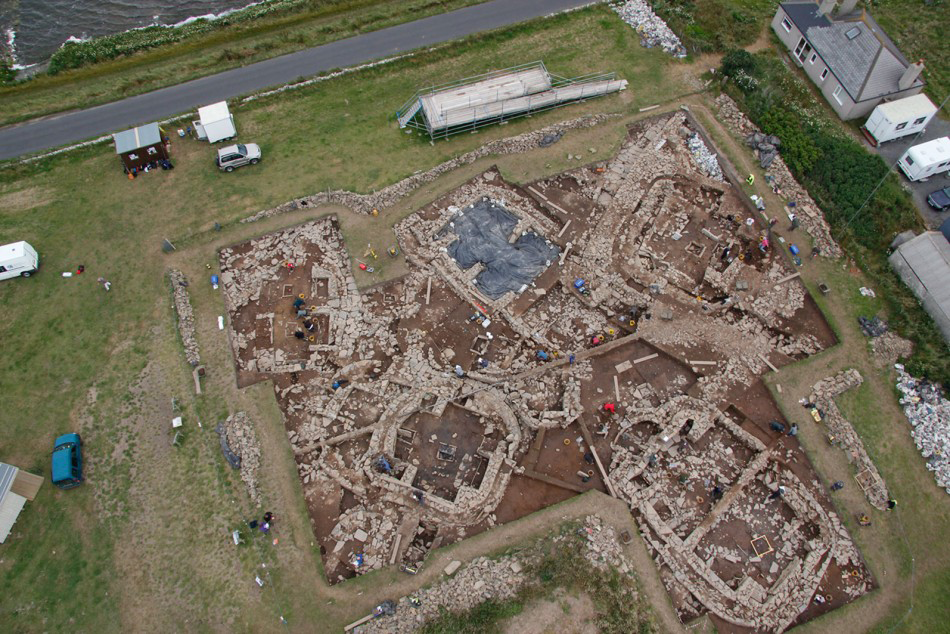
Aerial view of excavations (by Hugo Anderson-Whymark on http://www.nessofbrodgar.co.uk/ accessed 02 December 2012).

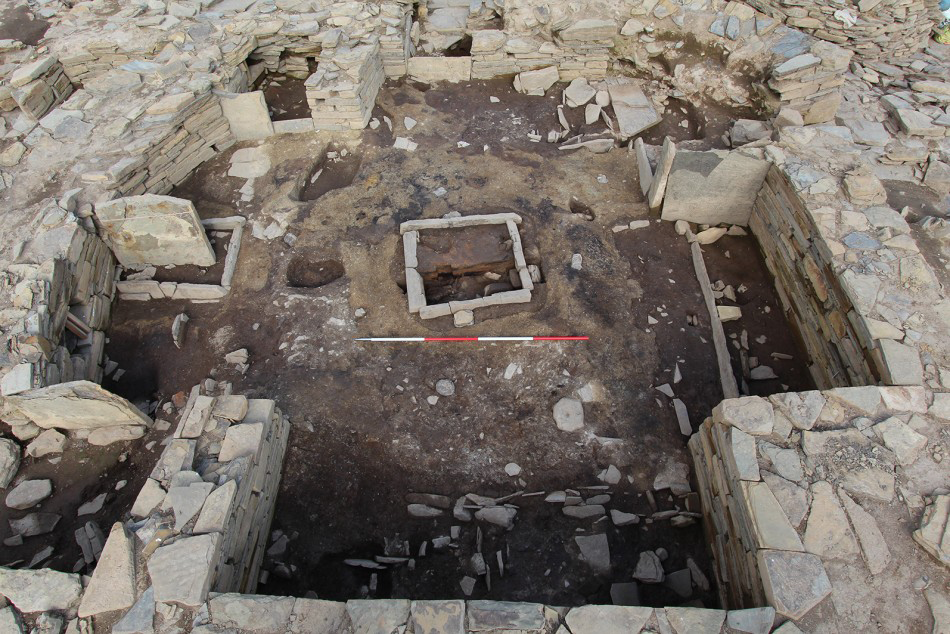
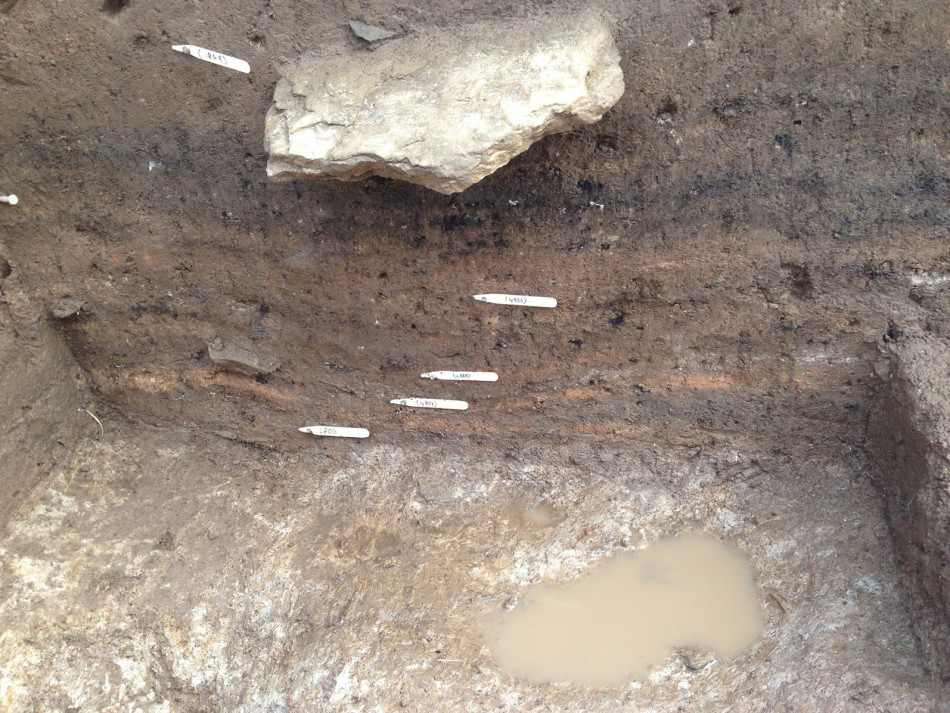
Excavations at the Ness of Brodgar (Figure 1), in the midst of the ‘Heart of Neolithic Orkney’ World Heritage Site, have revealed a large complex of Neolithic buildings, artefacts and ecofacts within a walled enclosure (Card et al. 2007; Reference CardCard 2012). Outside the enclosure is a monumental, contemporary midden mound (trench T). The exceptional preservation of the architecture and cultural deposits at the Ness of Brodgar provides a unique opportunity to investigate the nature of the activities of the Neolithic people who lived there. One of the major aims of this research is to investigate the types of plants and other resources that were being exploited for food and fuel, by looking at layered ash deposits from middens, and by examining hearths from adjacent buildings (Figures 2 & 3). Using a combination of micromorphology and phytolith analysis, we can detect traces of fuel use that are often missing from the charred macrobotanical record (Reference MatthewsMatthews 2010). This information will contribute significantly to our understanding of Neolithic subsistence and resource use, including the range of materials used, the potential variation in fuel use during different times of the year, how fuel use related to the local environment and whether fuel use in northern Britain differed from that in southern Britain. Furthermore, microstratigraphic approaches can be used to understand the formation processes of complex deposits, and to answer questions relating to the nature of the build-up of midden material and the range and scale of the activities that occurred on the site.
Floor of structure 1 showing hearth (by Dan Lee).

Midden deposits in trench T showing stratified ashy and organic layers.

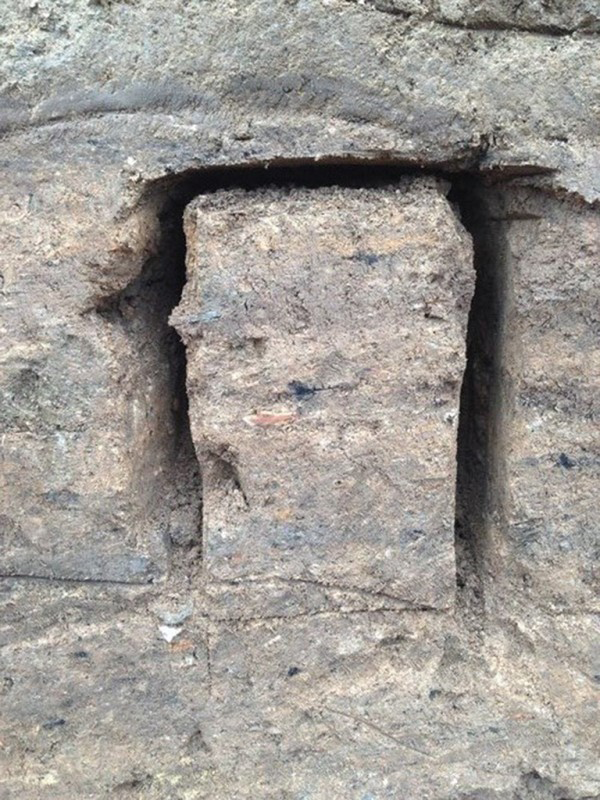
Removal of micromorphology block.

During the 2013 and 2014 field seasons, a series of 20 large block samples was collected from middens in the main excavation area and through the profile of the monumental midden mound in trench T (Figure 4). These will enable a detailed study of deposits within individual middens, as well as comparative analysis between the two different areas of the site.
Integrating archaeological science
Our analysis integrates thin section micromorphology with phytolith analysis to investigate the non-wood component of fuel, and a range of geochemical techniques providing complementary information on deposit composition (including portable X-ray diffraction (pXRF), magnetic susceptibility, gas chromatography mass spectrometry (GCMS)) that can be used in conjunction to identify different types of fuel. These data provide an important input at a site where charcoal is not abundant, and also in identifying fuel types that are not evidenced through plant macrobotanical remains, such as peat. By using geochemical methods, we can identify signals that are ‘invisible’ under the microscope, but that leave distinct chemical signatures. For example, pXRF can be used to identify areas enriched in particular elements (Reference Jones, Challands, French, Card, Downes and RichardsJones et al. 2010), which can then be targeted with GCMS to identify biomarkers associated with fuel burning.
Preliminary observations
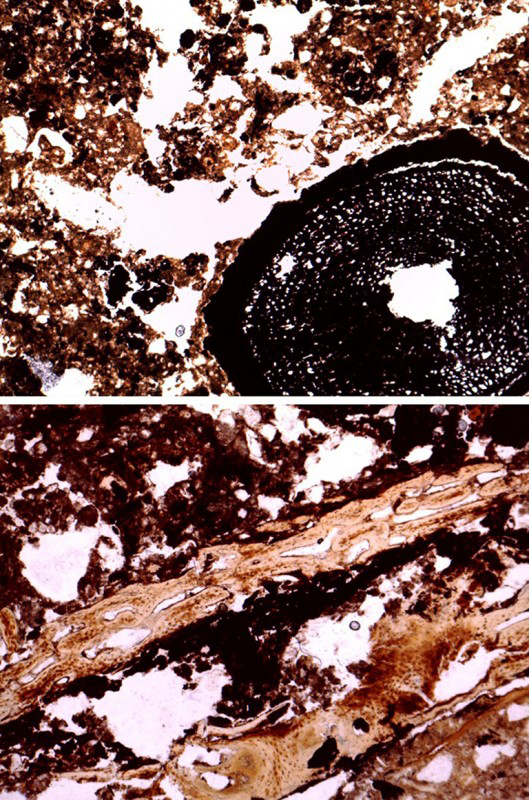
Micrographs showing wood fragments (above), burnt bone fragments and peat residues (below).

Preliminary analyses of thin section slides have shown excellent preservation of a range of material. Small fragments of wood are observed, along with amorphous ‘char’, peat residues and microcharcoal with a wood and grass morphology (Figure 5). Some midden areas contain significant quantities of highly burnt bone. Further work will be conducted to determine the spatial differences in deposits, how they change over time and how these fit in with the wider archaeological record at the Ness of Brodgar and within Orkney.
Acknowledgements
This work has been supported by grants from the Society of Antiquaries of Scotland, the Orkney Archaeological Society and the Edinburgh Moray Endowment Fund in 2013, 2014 and 2015. Thanks also go to Julie Boreham at Earthslides for producing the thin section slides, and to the Ness excavation team for their help.