

Introduction
Past events … have no objective existence, but survive only in written records and in human memories. The past is whatever the records and the memories agree upon.
—George Orwell, 1984
Since General Augusto Pinochet’s landmark detention in London in 1998, there has been an unprecedented shift away from impunity and toward accountability for serious human rights violations. Scholars have labeled this trend “the justice cascade” (Reference SikkinkSikkink 2011) and “the age of human rights accountability” (Reference Lessa and PayneLessa and Payne 2012). Although witnessed on a global scale, this tendency is more pronounced in Latin America, where an exceptional number of criminal trials probing past atrocities have unfolded in the past two decades (Reference Payne, Lessa and PereiraPayne, Lessa, and Pereira 2015). Several Latin American countries have prosecuted former dictators, middle and lower-ranking officers, and even civilian accomplices (Reference Capdepón and LayúsCapdepón and Figari Layús 2020). In Argentina, as of December 2020, 1,013 individuals have been condemned for crimes against humanity with sentences dictated in 250 criminal trials.Footnote 1 In Chile, between 1995 and mid-2020, 476 final judgments have been handed in criminal (400) and civil (76) cases relating to human rights violations committed during Pinochet’s dictatorship (Reference Collins and ZúñigaCollins et al. 2020, 540). In parallel to rising levels of accountability, the role of archives within societies that are transitioning from dictatorship and/or conflict to peace and democracy has attracted mounting interest (Reference CaswellCaswell 2014; Reference Baumgartner, Hamber, Jones, Kelly and OliveiraBaumgartner et al. 2016; Reference Giraldo LoperaGiraldo Lopera 2017). This article focuses on the role of archives in the context of judicial accountability, and addresses three questions: What is the relevance of archival documents in criminal trials for past atrocities? How are records used in court? What role do trial actors play in this respect?
To address these issues, I analyze two trials in Argentina and Italy that scrutinized the human rights violations perpetrated by Operation Condor. In the mid-1970s, Argentina, Bolivia, Brazil, Chile, Paraguay, and Uruguay devised Operation Condor as a continent-wide secret operation to eliminate hundreds of individuals across South America (Reference DingesDinges 2004; Reference McSherryMcSherry 2005). At the domestic level, state terror convulsed the region at the time, meting out violence to thousands of victims. In addition, Operation Condor was set up to specifically target political opponents in exile: at least 763 people were victims of cross-border crimes encompassing illegal detention, torture, murder, and disappearance.Footnote 2 In investigating Operation Condor, the two trials drew on a large corpus of documents coming from archives in South America and beyond. Normally, the testimonies of survivors and victims’ relatives constitute the main source of evidence in human rights trials. Written records documenting human rights violations are scarce: they have often been destroyed, their existence denied, or access refused. Even when archival documents exist and are incorporated as evidence in court, the information they contain is not immediately useful. Records do not always identify specific perpetrators or victims, nor do they directly establish criminal responsibility for particular crimes. Rather, with some exceptions, documents generally tend to provide contextual evidence to better understand the backdrop to human rights violations. In some cases, records may even contain potentially misleading data, such as when “nicknames” of military officers are used instead of their real names, or when they reproduce information extracted from prisoners through the use of torture. In the Argentine and Italian prosecutions, a wide set of records—ranging from lists of names of victims and/or state agents, declarations by survivors or victims’ relatives, detention records, interrogation questions, official diplomatic correspondence, to victims’ files and habeas corpus writs—were examined as part of the proceedings.
This article contends that archival documents, per se, only contain remnants of truth. These slivers have to be interpreted, contextualized, and sometimes even questioned, to “fulfil a human rights function” (Reference CaswellCaswell 2014, 208). Different actors involved in criminal investigations of past atrocities have to engage with and reimagine archival documents in a new setting, which is not the one they were created for, so that these records can be valuable to trial proceedings. Drawing on examples from the two prosecutions, I show how public and private prosecutors, archivists, experts, witnesses, lawyers, and judges did not automatically or simplistically utilize archival records in the courtroom. Rather, they engaged in a proactive process whereby they pieced together the fragments of evidence that these contain to render them beneficial to the trial, that is, to probe the crimes under scrutiny and establish individual responsibility. Specifically, I deconstruct the role played by different trial actors who interpreted and connected the evidence that these records possess, translating the raw information and making it relevant to court proceedings. Overall, archival records, by complementing victims’ testimonies and other forms of evidence, served two important functions in these Operation Condor trials: they helped demonstrate the victims’ political activism and their persecution during exile, and they exposed the modus operandi of the transnational terror network.
The article fills two gaps in the scholarship. First, transitional justice has generally “under-explored” the role of archives in transitional societies (Reference Baumgartner, Hamber, Jones, Kelly and OliveiraBaumgartner et al. 2016, 5).Footnote 3 While most transitional justice mechanisms, including prosecutions, truth commissions, and reparations, rely on the existence and availability of archives to conduct their work, few scholars have actually studied how records have been used during specific accountability processes (Reference CaswellCaswell 2010; Reference WeldWeld 2014). Second, despite rising numbers of prosecutions in Latin America, scholars and practitioners have rarely monitored these proceedings on the ground, with some notable exceptions (Reference DavisDavis 2013; Reference KaiserKaiser 2015; Reference LessaLessa 2019 and Reference Lessa2015; Reference BurtBurt 2019 and Reference Burt2016). This article’s original contribution is twofold. By adopting an ethnographic and participant-observation approach, it examines the unfolding of two historic prosecutions; further, it critically reviews how archives were used during these trials. In both cases, the wealth of archival records allowed the judges to demonstrate the materiality of the crimes committed and condemn the defendants responsible, simultaneously proving the existence of Operation Condor as a lethal transnational system of repression. By gathering this solid corpus of evidence, combining oral testimonies and written records, these trials directly furthered the production of knowledge about contested periods of political violence in South America.
Regarding the methodology employed, I conducted extended trial ethnography between 2014 and 2019. In particular, I monitored the Argentine trial since its inception in early 2013, and I personally observed seventy-four hearings. I could not monitor the Italian trial as closely, given proceedings were unfolding simultaneously. Nonetheless, I subsequently scrutinized twenty-six transcripts and eight audio recordings of the Italian trial’s hearings.Footnote 4 I also participated as an observer in eight appeals-phase hearings in Rome between 2018 and 2019. Furthermore, I conducted thirty-five interviews with key actors in both proceedings, including prosecutors, judges, victims, lawyers, and experts in Argentina, Chile, Italy, and Uruguay.
Archives and Human Rights Trials
Archives have played a crucial role in helping reconstruct contested pasts in transitional societies still striving to achieve peaceful coexistence after violence.Footnote 5 In fact, over the years, numerous transitional justice mechanisms have drawn on documentary evidence in their probing of unspeakable human rights violations; this has occurred in criminal cases against perpetrators, truth-seeking efforts to create accurate historical records, institutional reforms, vetting processes of former state officials, and reparation policies (Reference Bickford, Karam, Mneimneh and PierceBickford et al. 2009).
Poststructural and postmodern scholars of archives offer valuable insights to understand the role of records in human rights trials. Increasingly, archives are no longer seen as simple repositories “with fixed boundaries of contents and contexts” (Reference KetelaarKetelaar 2001, 138), or pristine storehouses of “historical documentation that has piled up” (Reference Schwartz and CookSchwartz and Cook 2002, 12). Instead, archives are perceived as sites of power, located at critical intersections between the past, the present, and the future. Rarely do archives provide single, neutral, or linear narratives: instead, they embody and reproduce power relations, being able to include or exclude certain events in their accounts. Indeed, archival records “can privilege or marginalise certain narratives” (Reference Schwartz and CookSchwartz and Cook 2002, 13).
Archives and atrocities are often closely intertwined. Indeed, archival records regularly record information relating to the perpetration of human rights violations under totalitarian or democratic regimes. Subsequently, those very records can be transformed into “instruments of empowerment and liberation” (Reference KetelaarKetelaar 2002, 229), since they can be employed in the process of shedding light onto violent pasts. In this sense, archival documents can be instruments of power but also resistance; accordingly, they “have a two-fold power: being evidence of oppression and containing evidence required to gain freedom, evidence of wrong-doing and evidence for undoing the wrong” (Reference KetelaarKetelaar 2002, 231).
Many countries have resorted to archival evidence as part of transitional justice efforts, particularly in criminal accountability. Often, records are perceived as possessing a “singular ability” to establish the truth and, as in Cambodia, are even considered to enjoy “epistemological authority over the oral testimony of survivors” (Reference CaswellCaswell 2010, 32, 33). There often exists an erroneous assumption that archives document a process or an event as if, somehow, they reflected reality like a mirror (Reference HarrisHarris 2002). Instead, a record can only provide “a sliver of a window into the event” and “like all repositories of memory, is an extraordinary creation of remembering, forgetting, and imagining,” with open-ended layers (Reference HarrisHarris 2002, 64, 85). Archival documents can potentially help construct and reconstruct the truth about contested pasts. Yet, as the scholars Daniela Accatino and Cath Collins have noted (Reference Accatino and Collins2016, 83), “transitional truths” are plural and complex. Thus, archives only allow us to get a step closer to reaching the often-elusive goal of the truth.
Securing access to archives is a fundamental step in transitional justice processes, yet the simple accumulation of documents does not automatically equal more truth or justice (Reference WeldWeld 2014). This is especially evident in the courtroom: the sheer quantity of archival documents alone is insufficient; instead, trial actors need to proactively act upon, interpret, and adapt these records in judicial settings. Whether they are state archives or NGO documents, few records can be used in an unmediated way in court. Instead, all trial actors must make a vigorous effort “to look past the words” on the page and take into consideration when each document was produced, by whom, and for what purpose(s) (Reference WeldWeld 2014, 13). Archives can be read in different ways over time and in diverse contexts: it is this plasticity that renders them relevant in court. Certainly, archival records do not offer simple answers to those seeking to clarify past atrocities: what documents provide are fragments of evidence and truth, which aid the complex process of establishing individual criminal responsibility. These documents were, most frequently, not created for a juridical setting and thus need to be interrogated, interpreted, and interacted with. Quoting Derrida, Dutch archivist and professor Eric Ketelaar (Reference Ketelaar2001, 138) wrote that “every interpretation of the archive in an enrichment, an extension of the archive,” which is “never closed” but “opens out to the future.” Each time one engages with a record, the latter tells a story. Inside the courtroom, the proactive reading and integration of archival documents help construct narratives based on solid evidence that attribute criminal responsibility for the commission of specific crimes. Interestingly, while archives are open and malleable, criminal trials seek instead closure through a final sentence (Reference KetelaarKetelaar 2008).
With few exceptions, namely those archival records that originated in resisting and denouncing state terror at the time crimes were committed, most documents that are probed in human rights trials are produced by states’ bureaucratic structures. These must be mediated and translated in order to acquire meaning and provide beneficial information to criminal proceedings. Even records coming from legalistic archives, which often investigated abuses during or after violence, still have to be interpreted. Such documents register the perpetration of atrocities and confirm the materiality of the crimes but seldom contain information about specific perpetrators. Even then, trial actors have to engage proactively, patch together the remnants of truth contained in archival records with the testimonies of victims, forensic studies, and other types of proof, to assemble a complex mosaic to reconstruct past events and establish individual criminal responsibility for specific crimes.
Argentina pioneered in recent years the use of archival records in a judicial context. In early 2010, President Cristina Fernández decreed the declassification of all military and defense archives regarding the 1976–1983 dictatorship.Footnote 6 Subsequently, Defense Minister Nilda Garré established working groups within the army, navy, and air force to review and probe all the documentation of historical and judicial value (Reference Lavintman, López and PankoninLavintman, López, and Pankonin 2017). Working specifically with and for the judiciary, these groups surveyed all the available records, organizing the information in reports that “translated what was found in the documents” so that the public prosecution could employ the information in reconstructing the facts under scrutiny in criminal investigations (Reference Lavintman, López and PankoninLavintman, López, and Pankonin 2017, 2). These historians and archivists deciphered all the relevant technical information gathered, which encompassed relevant directives, orders, and regulations, to better understand the functioning of each military branch in the context of criminal prosecutions. Accordingly, these teams acted as “mediators” between the archival documents and the judicial setting (Reference Lavintman, López and PankoninLavintman, López, and Pankonin 2017, 1).
Strategic Litigation in South America
The Argentine and Italian Operation Condor prosecutions fit within enduring transitional justice processes in South America that date back to the early 1980s.Footnote 7 These trials are just the latest manifestations of multiple efforts to prosecute perpetrators of past atrocities committed by the 1970s military dictatorships and embody the persistent struggle for justice by victims and human rights activists in this region. Despite having unfolded thousands of kilometers apart, these two criminal proceedings share their origins in the context of impunity in the Southern Cone in the late 1990s. After the return of democracy in late 1983 in Argentina, the 1984 National Commission on the Disappearance of Persons (Comisión Nacional sobre la Desaparición de Personas, CONADEP) and the 1985 Trial of the Military Juntas (Juicio a las Juntas Militares) initially paved the way for truth and justice policies. Simultaneously, yet inversely, Uruguay embarked on a path of impunity and silence (Reference LessaLessa 2013). By the early 1990s, the sanctioning of parliamentary amnesties and presidential pardons foreclosed the possibility of accountability on both shores of the River Plate. At that juncture, human rights lawyers, activists, survivors, and victims’ relatives persisted in their fight for justice by developing creative tactics, and finding ways to bypass amnesties within local jurisdictions and/or filing lawsuits abroad (Reference Lessa and PayneLessa and Payne 2012). The two Condor prosecutions are, therefore, a product of their times and illustrate emblematic strategic litigation efforts.
The Argentine trial typifies a first tactic—circumventing impunity at home—by filing lawsuits that encompassed specific crimes that fell outside the amnesties’ remit. On November 8, 1999, lawyers Alberto Pedroncini and David Baigún, together with six women who were relatives of victims from Argentina, Chile, Paraguay, and Uruguay, presented to the courts in Buenos Aires the original querella (denunciation) against seventeen high-ranking Argentine, Chilean, Paraguayan, and Uruguayan officials regarding seven Operation Condor disappearances. Pedroncini began working on the lawsuit in the mid-1990s and intentionally employed the charge of asociación ilícita (illicit association)—a particularly grave crime under the Argentine Criminal Code—to bypass the amnesties’ application and explicitly selected victims from several Operation Condor countries.Footnote 8 These lawyers had, moreover, filed in 1996 another emblematic lawsuit asking courts to investigate the systematic plan of baby kidnapping, given that such crimes had been explicitly excluded from the amnesties and had not been probed in the Juntas’ Trial. For years, the systematic plan and Operation Condor were the only two proceedings that moved forward in Argentina. In March 2013, when the Operation Condor trial phase finally began, the case had grown exponentially to include 174 victims and 27 defendants. The charges of inhuman treatment, illegal detentions, and asociación ilícita related to 65 victims in the Automotores Orletti dossier, 107 in Operation Condor dossier, and 2 appearing in both. The 109 Condor victims comprised 48 Uruguayans, 22 Chileans, 16 Argentines, 13 Paraguayans, 9 Bolivians, and 1 Peruvian.Footnote 9 For three years, the judges of Buenos Aires’ Federal Criminal Court 1 listened to over 200 witness testimonies and probed thousands of archival documents (Reference LessaLessa 2019). On May 27, 2016, they condemned 15 of the 17 defendants to prison terms, ranging from 25 to 8 years, and acquitted 2. Courts in Argentina, Chile, and Uruguay had previously probed some Operation Condor episodes, including the 1976 murder of 28 Uruguayan political activists in Buenos Aires. Nevertheless, by scrutinizing the circumstances surrounding each of the 109 emblematic disappearances, the Operation Condor trial examined the modus operandi of the entire transnational network. Beyond individual cases, Operation Condor itself was on trial.Footnote 10 In a historic verdict, the Buenos Aires court for the first time recognized that Operation Condor had amounted to “a transnational asociación ilícita,” which was dedicated to illegal intelligence exchanges and the targeted persecution of political activists across South America. The verdict was confirmed on appeal in May 2018, while the final review by the Supreme Court is still pending.
The Italian trial illustrates a second tactic—foreign trials—by filing cases in the domestic courts of other countries, largely in Europe. Throughout the 1990s, relatives of Argentine, Chilean, and Uruguayan victims widely employed this type of strategic litigation, since amnesty laws and pardons prevented judicial investigations from taking place within their own countries. Such foreign trials were initiated by resorting to the principles of universal jurisdiction or, more frequently, passive personality, that is, using the victims’ double nationality, since they were also European descendants. The Italian trial originated from the situation of seemingly unbreakable impunity in Uruguay, which forced victims’ relatives to find alternative paths to obtain truth and justice elsewhere.Footnote 11 The parliamentary sanctioning of an amnesty law in late December 1986 had in fact resulted in the shelving of all judicial investigations into past atrocities early on (Reference LessaLessa 2013). This law remained in force until October 2011. Thus, the possibility of achieving justice was significantly curtailed in Uruguay for almost twenty-five years. In the late 1990s, building on the successful precedent of Pinochet’s detention and encouragement from their Argentine counterparts, a group of Uruguayan and Argentine women presented, on June 9, 1999, the first Operation Condor lawsuit in Rome, regarding the murder and political crimes perpetrated against five Italo-Uruguayan and one Italo-Argentine victims.Footnote 12 The courts in Rome can assert jurisdiction to investigate crimes committed against Italians abroad if the Minister of Justice grants them authorization.Footnote 13 After years of pretrial investigations, the Rome public prosecution requested in July 2006 the arrest of 146 high-ranking military and civilian officials from Argentina, Bolivia, Brazil, Chile, Paraguay, Peru, and Uruguay.Footnote 14 Eventually, the oral and public phase of the trial began in February 2015, and probed the murder of forty-three victims charged against thirty-three defendants from Bolivia, Chile, Peru, and Uruguay.Footnote 15 The case encompassed three dossiers. The first investigated the murder of four Italo-Chilean citizens. The second was the Operation Condor lawsuit per se, encompassing five Italo-Argentines who disappeared in Bolivia, Paraguay, and Brazil, and thirteen Italo-Uruguayans who met the same fate in Argentina. The third included eighteen Uruguayans and two Argentine-Uruguayans who disappeared in Argentina, charged solely against one defendant, retired Navy Captain Jorge Nestor Troccoli. All the accused were tried in absentia except Troccoli, who has lived in Italy since 2007 after absconding from Uruguay to evade prosecution. Italy had rejected Uruguay’s extradition request in 2008 and, complying with the international law obligation to extradite or prosecute, it had to subsequently prosecute Troccoli for the charges he faced in Uruguay. The first-instance phase of the Italian trial concluded in January 2017, when Rome’s Third Assize Court delivered eight life sentences and nineteen acquittals. The Rome court was the first in Europe to formally acknowledge the existence of Operation Condor, and condemn all the high-ranking defendants. Subsequently, Rome’s First Assize Appeals Court overturned in July 2019 eighteen of the nineteen acquittals, and sentenced all twenty-four defendants to life imprisonment (Reference TondoTondo 2019). The final appeal hearing before Italy’s Court of Cassation is scheduled for June 24, 2021.
Archives in the Courtroom
Archives have played a fundamental role in the process of reckoning with the past in South America since democratization in the 1980s (Reference Acuña, Flier, Vera, Groppo, Hevia, López, Nicholls, Oberti, Bacci, Skura and TraversoAcuña et al. 2016). The fortuitous discovery of the so-called Archives of Terror in December 1992 in the outskirts of Asunción, Paraguay, represented a watershed moment in this regard.
With regard to human rights, Argentine sociologist Graciela Karababikian (Reference Karababikian2008) distinguishes between three sets of archives produced by (a) state security organs directly involved in state repression; (b) civil society organizations and/or individuals for the purpose of denunciation, opposition or resistance; and (c) investigative commissions, judicial proceedings, and reparation processes. Two additional sets of relevant archives, I believe, should be added to Karababikian’s differentiation, namely archival records created by (d) other state institutions that, while not directly participating in repression, may still possess relevant information, such as those of the Ministries of Foreign Affairs and border control agencies; and (e) human-rights-related international governmental and nongovernmental organizations, that is, Amnesty International and UN bodies.
These five sets of archives can, in turn, be classified as legalistic, bureaucratic, and repressive, depending on the nature of the documentation they possess. Legalistic archives contain records that originated in judicial settings and, because of this juridical framing, they can easily be utilized in court. These type of records comprise, for example, previous criminal and civil verdicts relating to human rights violations. Nonetheless, other legalistic archival records, such as those generated by national and international NGOs, intergovernmental bodies, and truth commissions, require additional mediation during a trial: indeed, they rarely shed light on specific perpetrators but nonetheless provide contextual information that is beneficial to the proceedings overall, particularly on the materiality of the crimes probed and the victims. Bureaucratic archives comprehend records created by state institutions, such as the Ministries of Interior, Foreign Affairs, and Directorates of Immigration, both domestic and foreign (i.e. documents by the US government). These documents systematically record the activity of different state branches. At first glance, these may not seem relevant to a legal setting, but they often may contain pertinent elements, which trial actors must bring to the fore, such as for instance the cancellation of travel documents of prominent exiles and the monitoring of their political activities abroad. Finally, repressive archives are similar in nature to the previous, since they comprise record that keep track of institutional activities but, importantly, those that specifically referred to implementing political repression. These documents span from intelligence files and personal military records (legajos militares), to police detention records, and reports regarding victims and their activities. Although these state organs played an active role in political persecution, this does not necessarily imply that the information they contain openly helps directly establish criminal responsibility. The documentation normally attests repressive state practices during a specific period and must be carefully examined in court to see whether it possesses beneficial details regarding victims and perpetrators under scrutiny.
Moving on to our cases studies, the Argentine and Italian judges largely relied on the same sets of archives, with minor differences. The Italian ruling does not explicitly list the archival sources employed, which I reconstructed owing to the help of Giulia Barrera, the history consultant for the Rome Prosecutor Office.Footnote 16 Conversely, the Argentine verdict openly listed nine sources:Footnote 17
1. The Archive of the Intelligence Directorate of the Buenos Aires Provincial Police (Dirección de Inteligencia de la Policía de la Provincia de Buenos Aires, DIPPBA), with intelligence and political persecution records
2. The Paraguayan Archives of Terror, containing diverse documents including lists of detainees, agreements with other forces, and prisoners’ identity documents
3. The archives of the Argentine Armed Forces, comprising personnel files, secret and public bulletins, and organizational charts, supplemented by the reports prepared by the Ministry of Defense’s working groups
4. The archives of the Argentine State Information Secretariat (Secretaría de Inteligencia del Estado, SIDE), encompassing records on the monitoring of foreign citizens and organizations, personnel files, and organigrams
5. The archive of Chilean intelligence agent Enrique Arancibia Clavel, including numerous memoranda describing his activities in Argentina between 1974 and 1978
6. The final reports of South America’s truth commissions, and similar truth-seeking investigations
7. The archives of the UN High Commissioner for Refugees (UNHCR), mainly denunciations about specific victims, and asylum requests
8. The archives of human rights NGO, including the Chilean Vicariate of Solidarity (Vicaría de la Solidaridad) and the Argentine Permanent Assembly for Human Rights (Asamblea Permanente por los Derechos Humanos, APDH), which documented human rights violations
9. Judicial and administrative files, comprising verdicts dictated in Argentina and abroad, civil judgements on reparations and declarations of enforced disappearances, and records from the Ministry of Interior, the Human Rights Secretariat, and the National Directorate of Immigration
Further, US government documents—declassified regarding Chile in 1999 and Argentina in 2002—were extensively incorporated in both sentences. The above-mentioned archives originated during three different periods. Some, such as bureaucratic and repressive archives, predated human rights repression since such bodies routinely keep track of state activities over time. Some of the legalistic archives, mainly human rights NGOs, emerged as a direct consequence of state terror, to deliberately resist and denounce unfolding human rights violations. Others materialized instead after violence ended, since investigative commissions and criminal courts are generally established only after democratization. Regarding ownership, legalistic archives are frequently preserved by the same NGOs and/or national or international institutions that originally created them or, in some cases, successor bodies. For instance, the Vicariate closed down its offices in Chile in 1992. Today, the Documentation and Archive Foundation of the Vicariate of Solidarity (Fundación de Documentación y Archivo Vicaría de la Solidaridad) is the custodian of over 85,000 documents and responds to requests for information submitted by Chilean and foreign courts (Reference Bernasconi, Lira and RuizBernasconi, Lira, and Ruiz 2019). Regarding bureaucratic and repressive archives, the panorama is multifaceted. Some remain in the hands of state and security forces, others have been donated to NGOs for preservation, while still others were recently opened so historians and analysts could gain access. Before transition, the outgoing dictatorships in Chile, Argentina, and Bolivia specifically ordered the destruction of all the documentation directly associated with political repression.Footnote 18 However, as the discovery of the Archives of Terror showed, not everything was lost. The Paraguayan archive is physically located and preserved in the Documentation Centre and Archive for the Defense of Human Rights (Centro de Documentación y Archivo para la Defensa de los Derechos Humanos) inside the Supreme Court of Justice in Asunción. It is open to the public, and victims can request information and copies of the records for use in criminal proceedings and/or reparations. One remarkable case relates to the DIPPBA archive that, since 2001, has been entrusted to the Provincial Memory Commission (Comisión Provincial por la Memoria, CPM), a human rights NGO in La Plata, Argentina. The archive remains in its natural location in the DIPPBA, whose building was donated to the CPM; the latter regularly receives requests for information from Argentine and foreign courts. In Uruguay, many archives remain predominantly within the orbit of the state. The Ministry of Foreign Affairs’ archive was the first to be systematized in 2005 and later rendered accessible for human rights purposes.Footnote 19 A dedicated working group of archivists was created to “compile, organise, and disseminate” the information.Footnote 20 Furthermore, in 2005, the Office of the Uruguayan President signed an agreement with the University of the Republic to establish two working groups within the Faculty of Humanities and Education. The Team of Historians was specifically granted unique access to numerous state archives, including those of the military justice system. The information gathered was released in two publications, in 2007 on victims of disappearances and in 2008 on state terror more broadly. Furthermore, it has transmitted relevant records to Uruguayan and Argentine courts.
Remnants of Truth
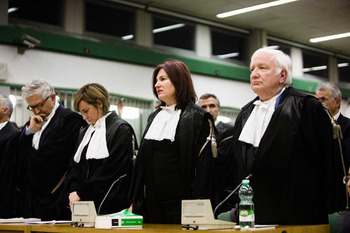
The Argentine and Italian trials exceptionally drew on abundant and rich archival records in their work, coming from well-known archives (the Vicaria, CONADEP, APDH) but also newly opened ones in Uruguay and Argentina. This was truly unprecedented. The former Italian prosecutor, Giancarlo Capaldo (Figure 1), affirmed he approached the trial in a radically different way than normal, and closely collaborated with historians and archivists to generate “a piece of historical research with a judicial cut.”Footnote 21 Correspondingly, the first-instance prosecutor, Tiziana Cugini (Figure 1) also noted the difficulty of interpreting documents and the necessity of working together with archivists and historians, observing how “the first helped with the process of record selection, while the second provided the historical context for each country.” Cugini additionally pointed to the importance of human rights NGOs’ archives, whose files on the desaparecidos were invaluable in reconstructing “the victims’ life stories and the crimes suffered.”Footnote 22
Tiziana Cugini (second from right) and Giancarlo Capaldo (right). Photo: Lilia Di Monte. Reproduced with permission.

In Argentina, too, “an overwhelming quantity of documents”Footnote 23 defined trial proceedings, raising specific challenges as to how to employ that type of proof in court. Accordingly, the prosecutor’s office hired a historian from the University of Buenos Aires, Melisa Slatman, to “work with the documents with the required historical outlook, bearing in mind the history of neighbouring countries and their respective archives.”Footnote 24 This interdisciplinary methodology and “the presence of a historian” generated benefits for the trial as a whole, according to human rights lawyer Luz Palmás Zaldua: otherwise, it “would have been extremely difficult for lawyers to tackle archives on their own.”Footnote 25
In a similar way, the Italian prosecution “borrowed” Giulia Barrera, an archivist working for the Italian Directorate General of Archives, to assist with investigations (Reference BarreraBarrera 2009, 204). Barrera conducted most of her work in the pretrial phase to demonstrate how Operation Condor had been instrumental in killing Italian citizens (Reference BarreraBarrera 2009). Eventually, the prosecution proved such a conclusion and indicted the heads of state and intelligence agencies of the Condor countries, thereby concluding a crucial preparatory phase of the trial. These historians and archivists acted as mediators and translators of the archival records for the proceedings, but they were not the only ones. Other trial actors, too, engaged with and reinterpreted archival documents at different junctures in court. The following sections deconstruct how archival records were used throughout these two trials.
What’s in a name?
Operation Condor has elicited much interest over the decades. Meticulously investigated by courts and truth commissions, it is also featured in newspaper articles,Footnote 26 novels,Footnote 27 documentaries,Footnote 28 art exhibitions and plays.Footnote 29 A limited number of archival documents, however, specifically use the name that captivated so many. In fact, as Barrera explained to Rome’s Third Assize Court,Footnote 30 only a few records explicitly use “Operation Condor” and those that do so are largely declassified US government documents. Documents from South America rarely employ the term and, when they do, they generally use alternative formulas such as “Condorop” or “Plan Condor.” In this regard, Barrera showed the Italian judges an official military intelligence document from Uruguay’s Defense Information Service dated August 16, 1976.Footnote 31 The interesting element, as Barrera explained to the court, was not so much the content of this short document but rather the signature on it: “Head of Condorop, Major José N. Gavazzo.” Barrera actively interpreted the document, encouraging trial actors to look closely at the record and for the judges to particularly note how the signature on it in fact represented an explicit acknowledgment that, in 1976, “Gavazzo was the person in charge of Condor operations in Uruguay.”Footnote 32 Barrera placed the document in a broader historical context and reminded the court how numerous Uruguayan survivors had repeatedly identified Gavazzo as the official in charge of kidnappings and interrogations in Argentina. This document thus reinforced the testimonies of survivors who had recognized Gavazzo as part of the group of agents operating in Buenos Aires in 1976, and placed the major within military organizational structures of the time, pointing to his command role in Uruguayan Condor operations.
Carlos Osorio, analyst and director of the Southern Cone Documentation Project at the NGO National Security Archive (NSA) in Washington, DC, gave extensive presentations in Buenos Aires and Rome about US government and Paraguayan documents. Osorio spoke for almost eleven hours in court in Buenos Aires in March 2015, scrutinizing in detail 113 documents out of 512 he deposited with the tribunal. He discussed at length one of the classic documents regarding the 1975 founding meeting of Operation Condor, namely the minutes of the conclusions of the First Inter-American Meeting on National Intelligence, originally found in Chile by his NSA colleague and senior analyst Peter Kornbluh. Among the record’s many features, Osorio pointed out to the court how it was one of few documents from South America containing the term “Condor,” the name originally proposed by the head of the Uruguayan delegation at the meeting and later unanimously adopted. For hours, Osorio actively decoded the documentary evidence for the court in two ways, literally and technically. First, he translated into Spanish several excerpts of each record discussed, since they were originally written in English, for the judges to comprehend their content. Next, he unpacked several technical codes typical of US government documents, so the court could grasp crucial elements, such as the document’s name, where to locate the sender and the receivers, the time and exact date, and important acronyms like INR (i.e. the State Department’s Bureau of Intelligence and Research, which is dedicated to harnessing intelligence for US diplomacy).
When confronted with such powerful documentary evidence, the defense mainly resorted to procedural arguments surrounding the admissibility of evidence in order to discredit the records overall, rather than addressing their content. The defense challenged Osorio’s entire testimony, since he was translating the documents without being a public translator who, according to Argentine law, is the only person who can do so for the court. After deliberations, the tribunal’s president rejected the motion and allowed Osorio’s testimony to continue, telling the defense they could subsequently request official translations of all the documents and, should any discrepancies arise, Osorio would be called back to the stand.Footnote 33
Communicating across borders
Operation Condor was instrumental in allowing South American dictatorships to keep a close eye on their opponents across the region, monitoring their every move. This practice of rapid information exchange dates back to early 1970s and, after 1975, became more sophisticated, even counting on a dedicated “Condortel” communications system.
Roger Rodríguez, a Uruguayan investigative journalist who helped resolve cases of disappeared babies and other emblematic atrocities, was an expert witness in Rome regarding the case of Italo-Uruguayan Andrés Bellizzi, who disappeared in 1977 in Buenos Aires. Rodríguez utilized several documents from the Uruguayan Ministry of Defense to explain how Andrés “had been sentenced to disappear on June 2, 1974,” three years prior to his actual disappearance.Footnote 34 Rodríguez explained to the Italian judges how “Operation Grey” unfolded that day in June 1974, when the Argentine Federal Police detained and booked one hundred Uruguayans and one Argentine after they organized an event in Buenos Aires against the Uruguayan dictatorship. The journalist exhibited a memo of the Uruguayan National Directorate of Intelligence Information describing the mass detention. Rodríguez unpacked the document for the judges to better grasp its significance and connect it to the trial. In fact, the journalist pointed out how the memo, compiled after the June 1974 arrest, contained a list of all the prisoners, including Andrés, and comprised confidential information about each, such as their home address, immigration status, and date of entry into Argentina. Furthermore, the memo categorized the detainees: eleven were wanted by Uruguayan authorities, while twenty-six had a criminal record. Rodríguez stressed to the justices how, out of this list, eight were later targeted by Operation Condor: one survived, five were disappeared, including Andrés, and two were the brothers of Condor victims. He strongly emphasized how the list of individuals detained in 1974 later turned into a “list of potential suspects for the future Operation Condor.”Footnote 35 Although the document did not shed light directly onto the victim’s disappearance in 1977, it still provided crucial contextual information for the judges, demonstrating how, already three years earlier, the Uruguayan security forces possessed vital information about his whereabouts in Argentina and knew Andrés was a political opponent to the Uruguayan regime. A copy of that document was also found in the DIPPBA in Argentina;Footnote 36 this finding significantly demonstrated how this memo was disseminated at the time both in Argentina and Uruguay and clearly showed how information about potential opponents in exile smoothly flowed already in mid-1974.
Subsequently, Condortel, the network’s encrypted and secure communications system, permitted Condor member countries to fluidly exchange intelligence information on potential suspects, track their movements across the region, and transmit orders to operations teams. Rodríguez showed the Italian magistrates four Condortel cables found in the Uruguayan Ministry of Defense. He explained how countries could request information about potential suspects to be located, but also regarding people already in detention. For instance, he exhibited a cable from April 1976, in which Condor 1 (Argentina) asked Condor 5 (Uruguay) for information about the ideological background of a Uruguayan citizen (name crossed out in the record) who had entered Argentina on January 20, 1976. The cable also mentioned that the person was under detention. The journalist interpreted the raw information contained in the cables for the court to appreciate how the system of transnational repression worked in practice. Rodríguez elucidated that it operated similarly to Interpol, whereby countries exchanged intelligence about different suspects and, when a target was completely identified, the operation would take place so the person in question could be detained and interrogated. Rodríguez moreover highlighted that the information was exchanged through encoded cables, which were sent and received by Condor 1, 2, 3, 4, 5, and so forth. “For long,” Rodríguez asserted, “we did not know who was who, but after discovering numerous documents, we realised it worked in a simple alphabetical order, whereby Argentina was Condor 1 and Uruguay Condor 5.”Footnote 37 US government documents declassified in 2019 subsequently confirmed the exactness of Rodríguez’s theory.Footnote 38
Joint operations
Beyond intelligence exchanges, the second core feature of Condor’s modus operandi that both criminal courts spent substantial time probing related to joint operations—those conducted by task forces composed of agents from at least two countries. In Rome, the witness Lewis Rostan, a victim of the Uruguayan dictatorship and a researcher for the association of former political prisoners, discussed in detail the personal military file of Navy Captain Jorge Nestor Troccoli, member of the Uruguayan Navy Fusiliers’ Corps (Cuerpo de Fusileros Navales, FUSNA), to corroborate the existence of close collaboration between the Argentine and Uruguayan armed forces. Rostan remarked that Troccoli spent most of 1978 and 1979 in Argentina, supposedly attending training courses at Puerto Belgrano Naval Base. As Rostan pointed out to the tribunal, however, Troccoli’s file demonstrated instead that he was operating in the task force (grupo de tarea) inside the infamous Navy School of Mechanics (Escuela de Mecánica de la Armada, ESMA), where one of Argentina’s biggest clandestine centers functioned. Rostan read out excerpts from Troccoli’s file, especially three extracts in which high-ranking Argentine Navy officials, including Captain Luis D’Imperio of the Navy Intelligence Service and the grupo de tarea’s head, and José Antonio Suppicich, ESMA’s director between May 1979 and January 1980, commended Troccoli’s role in operations and performance. They praised Troccoli’s “very good knowledge of the ideological doctrine of the enemy” and his very good performance in “tasks relating to Intelligence and Operations.” Further, they evaluated him as “a brilliant officer” on a personal and professional level, particularly underlining his enthusiasm, collaborative style, and success in the duties assigned. Consequently, Troccoli’s image within the grupo de tarea was “optimal,” and he was qualified as “exceptional.”Footnote 39 Rostan drew the judges’ attention to the fact that it is highly unusual for the members of the armed forces of one country to be appraised by those of another. The witness translated the raw information contained in the bureaucratic file to underline how Troccoli’s assessment by Argentine officers proved that, through Operation Condor, the armed forces of different countries worked so closely that a Uruguayan officer could be stationed within the Argentine Navy and operate within their neighbor’s territory.
The sentence in the 2016 Argentine Operation Condor additionally brought to the fore how South America’s security forces jointly conducted operations. The case of Agustín Goiburú exemplifies one such operation and illuminates how the judges pieced together and interpreted diverse elements of the archival evidence at their disposal. Indeed, the tribunal meticulously reconstructed the specific dynamics surrounding the disappearance of the Paraguayan doctor, who had lived in exile in Argentina for almost twenty years. In describing Goiburú’s fate, the court first recalled the testimonies of numerous witnesses, such as the doctor’s sons, Rolando and Rogelio, as well as experts, including Alfredo Boccia, a doctor turned historian.Footnote 40 They all accentuated the persecution Goiburú suffered at the hands of dictator Alfredo Stroessner even after the doctor abandoned Paraguay in the late 1950s. In Argentina, Goiburú never participated in local politics but was a leader of the Popular Colorado Movement (MOPOCO), a dissident group denouncing Stroessner from exile. Undoubtedly, Goiburú was Stroessner’s number one enemy.Footnote 41 The sentence then described in detail the operation, codenamed “Safari,”Footnote 42 through which Paraguayan and Argentine agents illegally detained Goiburú in the city of Paraná on February 9, 1977, and subsequently transferred him to Asunción. A survivor confirmed that, during his detention in the Police Investigations Brigade in the Paraguayan capital, he saw Goiburú, who recounted his clandestine rendition from Argentina.Footnote 43 The Argentine ruling blended witness testimonies with other types of evidence, including legalistic archives, encompassing judicial verdicts dictated in Paraguay and by the Inter-American Court of Human Rights,Footnote 44 Goiburú’s CONADEP file, the final report of Paraguay’s Truth and Justice Commission,Footnote 45 and academic publications.Footnote 46 Numerous bureaucratic and repressive records were also incorporated including several coming from the Paraguayan Archives of Terror. For instance, Report 62 of the Joint Chiefs of Staff of the Armed Forces on Paraguayan Subversive already identified in 1975 how Goiburú was in charge of the MOPOCO and lived in Argentina.Footnote 47 The report requested the urgent “location and arrest of Dr Agustín Goibúru, an important man, elusive and dangerous.”Footnote 48 The judges claimed this document attested how Paraguayan authorities had been interested in ascertaining the doctor’s exact whereabouts and detaining him since 1975, two years prior to his actual kidnapping.Footnote 49 Furthermore, the magistrates also probed another Paraguayan record,Footnote 50 which meticulously recounted the close surveillance intelligence agents undertook against Goibúru over four days. The judges affirmed how this record “revealed with no doubt whatsoever the exchange of information existed between the military governments.”Footnote 51 As a result, the court considered Goibúru’s detention and his ensuing forceful repatriation to Paraguay to have been “fully proven.”Footnote 52 The judges engaged in an active process of reconstructing individual victim cases by assembling the different elements of proof scrutinized during the trial, from witness testimonies to archival evidence. In a dynamic way, the judges produced a solid narrative allowing apportionment of individual criminal responsibility for the crimes under consideration and, when appropriate, the sentencing of relevant defendants.
Clandestine renditions
The cross-border transfer of detainees constituted a third characteristic of Operation Condor. NSA analyst Osorio presented to both the Argentine and Italian judges a crucial document from the Archives of Terror. It related to five victims, three Argentines (Marta Landi, Alejandro Logoluso, and José Nell) and two Uruguayans (Gustavo Inzaurralde and Nelson Santana), who were detained in Asunción in late March 1977, as they endeavored to obtain forged Paraguayan passports to escape to Europe. The five prisoners were eventually transferred to Argentina, after suffering weeks of detention and brutal interrogations in Paraguay at the hands of multinational teams composed of Paraguayan, Argentine, and Uruguayan officers—the latter two having purposely traveled to Asunción to question them in early April. The victims’ illegal transfer is documented in the report that Police Superintendent Alberto Cantero submitted to Pastor Coronel, head of the Police Investigations Department in Asunción, on May 16, 1977. It described how, at 4:34 p.m. that day, Paraguayan military officers handed over the five prisoners to two Argentine SIDE officials and they subsequently traveled to Buenos Aires on Argentine Navy plane number 5-7-30-0653 piloted by Navy Captain José Abdala.
During the trial, Argentine prosecutor Pablo Ouviña engaged with the raw information contained in the bureaucratic police record to draw the judges’ attention to the fact that José Abdala was in reality the cover name for Navy Captain Luis D’Imperio. Moreover, the prosecutor interwove the details provided in the police report with the testimony of Ricardo Hugo Peidró, a survivor of the Club Atlético clandestine center in Buenos Aires. Peidró narrated in his deposition to the court how, during his detention, he had talked to Gustavo Inzaurralde, one of the five detainees, on May 26, 1977. Inzaurralde had recounted to him the dynamics surrounding his detention in Paraguay, when he was about to travel to Sweden to join his pregnant wife. Peidró recalled how Inzaurralde had mentioned that he had been flown from Paraguay to Argentina “so that Uruguayans could interrogate him there.”Footnote 53 The prosecutor combined the documentary evidence with the witness testimony to strengthen the case to demonstrate the effective clandestine transfer of the five prisoners from Paraguay to Argentina.Footnote 54
On appeal
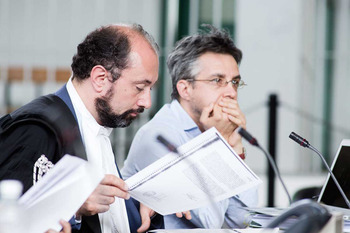
Archival documents were especially crucial in Italy in order to overturn several acquittals dictated at first instance in 2017. According to the Italian Code of Criminal Procedure, investigations can be reopened on appeal if new evidence emerged after the first-instance verdict. Lawyer Andrea Speranzoni (Figure 2), representing Uruguay and several victims’ families, submitted such a request in October 2018. In a written memoir to Rome’s Appeals Court, Speranzoni requested that the judges incorporate thirteen new archival records that had become publicly available since April 2017, three months after the first sentence. The newly discovered materials came from three sets of archives: documents from the so-called Computadora (computer) archives of the Uruguayan FUSNA (repressive archives); recently declassified US government records (bureaucratic archives); and documents from the Argentine NGO Center for Legal and Social Studies (Centro de Estudios Legales y Sociales, CELS) (legalistic archives). Hired by Uruguay in 2018, Speranzoni had engaged in a proactive search effort, traveling in September 2018 to Montevideo to personally conduct searches inside state archives.
Andrea Speranzoni (left). Photo: Lilia Di Monte. Reproduced with permission.

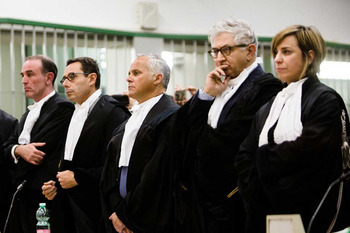
Indeed, Speranzoni was the only lawyer to present novel documentary evidence on appeal. He had to persuade the judges to accept the incorporation of the additional documents, underscoring the significance of the newly opened Uruguayan archives, which contained information directly relevant to the murders under scrutiny.Footnote 55 Almost all of the victims’ lawyers supported Speranzoni’s request.Footnote 56 Conversely, defense attorneys attempted to convince the tribunal to disregard it, raising technical objections relating to compliance with appeal deadlines and a polemic surrounding the victims’ Italian citizenship, rather than directly engaging with the documents’ contents. Francesco Guzzo (Figure 3), Troccoli’s defense lawyer, especially strived to rebut Speranzoni’s request, highlighting how the supposedly new documents were not really so, since “they had always been in their ‘natural home,’ namely Uruguayan military archives.”Footnote 57 Guzzo accused Uruguay of purposely delaying the handover of the documents, affirming that “they now expect us to believe that Uruguay did not previously have access to those archives.”Footnote 58
Francesco Guzzo (middle) and four other defense lawyers. Photo: Lilia Di Monte. Reproduced with permission.

In late December 2018, the Appeals Court agreed to partially reopen investigations, allowing the incorporation of twelve of thirteen new documents but denying the additional witnesses. On May 13, 2019, Speranzoni carefully illustrated to the magistrates the novel archival records, which could possibly help overturn some of the acquittals. Speranzoni spoke at length about Uruguayan defendant Troccoli, scrutinizing documents from the Ministry of Foreign Affairs that proved he was stationed in Argentina between late 1977 and 1979, the time frame in which the murders he was charged with were perpetrated. One of the newly discovered documents was a May 1979 cable from the Uruguayan Navy chief of staff to the Navy attaché in Buenos Aires, requesting Troccoli’s evaluations between December 1, 1977, and November 30, 1978. The second is a July 1979 request by Francisco Molinterni, the Uruguayan Navy attaché, to Argentine authorities, to renew Troccoli’s expired visa. The record explicitly mentioned an accompanying certificate issued by the ESMA, where Troccoli was posted. According to Speranzoni, these additional documents complemented what had been previously found in Troccoli’s military file at first instance and, together, permitted to establish the following elements about the defendant. First, Troccoli had operated as the navy liaison officer between the Uruguayan and Argentine forces in Buenos Aires since late 1977 and throughout 1978. This period coincided exactly with the dates of the illegal arrests and murders perpetrated against twenty-six Uruguayan exiles in Argentina Troccoli was charged with. Second, Troccoli, due to his expertise in counterintelligence operations, had spent the year 1979 directly operating as part of the ESMA task force. This explained why high-ranking Argentine officers had assessed Troccoli in his personal file in 1979, instead of Uruguayan Navy officers.
In late December 2019, when the Appeals Court released its legal reasoning, it became immediately clear how the magistrates had extensively resorted to the new archival records in complementing the existing evidence, in order to reverse the acquittals. The novel documents, alongside a painstaking rereading of all the first-instance proof and witness statements, permitted the higher court to overhaul the acquittals, and deliver a carefully balanced and well-structured reasoning to support the additional life sentences handed down.Footnote 59
Conclusion
For years, criminal trials for dictatorship-era crimes in South America revolved around the concept of the “necessary witness,” that is, the predominant use of the testimonies of survivors and relatives of the desaparecidos as the main source of evidence.Footnote 60 The Operation Condor trials were instrumental in demonstrating the essential role that archival documents can play in human rights trials in complementing and strengthening the reliance on oral testimonies.Footnote 61 Several Italian lawyers concurred in attributing fundamental prominence to the archival records probed, underscoring how historians, analysts, and the prosecution did not “conduct a dry exercise, but engaged with and gave life to these records,” allowing the reconstruction of South America’s recent history.Footnote 62 Likewise, the lawyer Speranzoni labeled some of the records as “pivotal” for the trial, pointing in particular to documents that identified high-ranking military and civilian officers of South America’s dictatorships as the masterminds behind Operation Condor, “without which we would have lacked proof of their ideational role in setting up the criminal transnational network.”Footnote 63
The use of archival documents dates back at least to the Nuremberg and Tokyo trials, so their employment in these proceedings is hardly new. Yet the experience of these Condor prosecutions is unique in two respects: first, the sheer quantity and the richness of the archival documents and second, the transnational nature of the atrocities under investigation. Both Condor prosecutions started in the early 2000s when, after decades of impunity, governments had begun taking timid steps toward shedding light on past atrocities, including the opening of archives to support judicial investigations. This, in combination with human rights activists’ and lawyers’ proactive efforts, resulted in the availability of an unprecedented body of archival evidence. Further, the distinctive nature of transnational crimes, which encompassed more than one country, resulted in documentation about these atrocities being scattered across numerous archival sources of the countries where they had been perpetrated.Footnote 64 Accordingly, in assembling the required proof, lawyers, prosecutors, judges, and witnesses from South America generated a counter-effort in transnational judicial accountability—a sort of reverse of Operation Condor—collating evidence from all the countries that had originally constituted the terror network in order to achieve justice.
The experience of these two prosecutions has broader implications for the role of archives in transitional justice in two regards. First, documentary evidence can play a vital role in sustaining and supporting victims’ testimonies, which the defense can often easily attack and question because of the passing of time or on the grounds of the fragility of memory. The examples shown in this article underline how the defense struggled to directly challenge archival records and did so largely on technical and procedural grounds, which both courts easily dismissed. Second, archival records require critical engagement and work. Their mere existence and availability does not inevitably lead to higher levels of truth and justice. Instead, these documents contain fragments of evidence and truth that trial actors had to dynamically interpret and engage with in court in order to contribute to the construction of a juridical truth about past horrors. This role of mediators between the raw information on a record and the judicial setting is essential. Based on the successful experience of including a historian to work with the Operation Condor prosecution team, the Argentine Prosecutor’s Office for Crimes against Humanity has currently adopted a more proactive approach regarding the incorporation of archival documents in all dictatorship-era investigations. This interdisciplinary approach adopted by both courts constitutes an important policy lesson to be considered in future trials and truth commissions.
The quotation from George Orwell that opened this article reminds us how the past is generated and reconstructed based on written records and human memories. This is what happened in practice during the two Condor trials, in a complex exercise whereby the memories of witnesses were interwoven with archival records and other types of forensic evidence to try to reconstruct past atrocities and finally attribute criminal responsibility for atrocious crimes after decades of impunity.
Acknowledgements
This project was funded by the European Union’s Horizon 2020 research and innovation program under the Marie Skłodowska-Curie grant agreement No. 702004; the University of Oxford’s John Fell Fund Grant number 0006189; the British Academy/Leverhulme Small Research Grant number SG142423; the University of Oxford’s ESRC Impact Acceleration Account Grant number IAA-MT14-008; and the AHRC-LABEX Grant number AH/N504580/1; and was also supported by the Open Society Foundation’s Human Rights Initiative. The author would like to particularly acknowledge the generous help and assistance provided by Mariela Cornes and Alvaro Corbacho of the Uruguayan Ministry of Foreign Affairs, Carlos Osorio of the National Security Archive NGO, and Giulia Barrera of the Italian Directorate General of Archives. The author would also like to thank the anonymous LARR reviewers for their extremely constructive suggestions.
Research ethics approval for this project (Ref. No. SIAS_LAC_C1A_15_054) was granted by the University of Oxford’s Social Sciences and Humanities Inter-Divisional Research Ethics Committee on July 30, 2015.

 Open access

