Impact statement
With the increasing accumulation of plastic wastes, negative climate change issues associated with plastic contaminants have drawn global attention toward sustainable solutions. Mitigating both plastic pollution and greenhouse gas (GHG) emissions requires significant investment in research and cooperation among the public, government agencies and industry due to its multiplicity. Alternatives to conventional plastics and life cycle assessment are suggested to further minimize the environmental impact, particularly mitigating GHG emissions from all the life cycle stages of plastics. Sustainable alternatives to plastics could address the climate change issue but require further development because of their downsides. Other facets of bioplastics (e.g., chemical additives and recycling plastic waste) are suggested for inclusion in advancing the life cycle assessment of plastics. The synergistic issues of climate change and plastic pollution merit further exploration in future research.
Introduction
The presence of plastics is found in daily life, including but not limited to water, soil, air, animals, food and the human body through various transport pathways, from both point and nonpoint sources. As plastic manufacturing increases, it becomes one of the most persistent pollutants requiring remediation in the environment. Undoubtedly, plastic manufacturing is projected to significantly grow in the future, causing immense greenhouse gas (GHG) emissions. In fact, 99% of materials that are used to make plastic such as ethylene and propylene is driven by fossil fuels, a main contributor to carbon dioxide (CO2) emissions (Shield, Reference Shield2019). The correlation between climate change and plastic pollution indicates that preventing or mitigating plastic pollution can minimize climate change.
Plastic debris in the ocean has the potential to interfere with carbon storage through negative effects on the ecosystem. For instance, a study on the effect of microplastics on phytoplankton indicated the inhibition of carbon fixation through photosynthesis (Seas at Risk, 2021). This inhibition effect was also revealed in zooplankton polluted with microplastics, as shown in a decreasing level of metabolic and survival rates (Seas at Risk, 2021). The release and absorption of plastic additives on aquatic animals and species represents a significant issue due to their negative impacts, such as energy depletion and fertility issues (Seas at Risk, 2021).
As concentrations of micro- and nanoplastics increase, their negative impacts are likely to evolve significantly, affecting the entire ecosystems and ultimately reducing the ocean’s carbon sink capability, which is crucial for mitigating climate change. In environmental impact assessments, all the life cycle stages of plastic manufacturing reveal concerns regarding GHG emissions, which accelerate the effects of climate change. Among various sources contributing to GHG emissions, plastic waste is accountable for approximately 4% of global GHG emissions, with the emissions percentage to be increased by 15% by 2050, given the growing world production (e.g., 380 million tons/year) of plastic (Averda, 2022). These statistics place plastic as a major cause of climate change.
The specific objectives of this perspective are threefold – (1) to examine the pros and cons of sustainable alternatives to conventional plastics, (2) to analyze the correlation between climate change and microplastic pollution and (3) to provide a future outlook in the perspective of ideas for minimizing plastic pollution and reducing GHG emissions.
Methodology
The relevant articles regarding the connection between climatic hazards and plastic pollution were searched and selected through a Google-based search in diverse internet resources (e.g., news media, press releases, peer-reviewed articles and reports available online from various organizations) on the topics of (1) the contribution of plastic particles to climate change; (2) the effects of climate change on plastic pollution; (3) the extent of GHG emissions at the life cycle stages of plastics and (4) sustainable alternatives to plastics.
Sustainable alternatives to plastics in addressing the climate change issue
Plastic contaminants are found in environmental media and daily consumer products, including foods. Considering the dramatic increase in plastic production, alternatives to plastics should be available in the future. Among plastic wastes, only a small portion (approximately 9%) is recycled, whereas most plastic waste is disposed of in treatment facilities (e.g., landfills) or transported to oceans through contaminant movement via rainwater and wind (Trimarchi et al., Reference Trimarchi, Kiger and Giuggio2021). The possible synergistic effects of climate change and plastic pollution may disrupt biogeochemical cycles, with the resultant difficulty of serving the ocean as a carbon sink (Ford et al., Reference Ford, Jones, Davies, Godley, Jambeck, Napper, Suckling, Williams, Woodall and Koldewey2022). Nonetheless, studies on the impact of the interactions between climate change and plastic pollution on ecosystems are lacking.
To mitigate climate change and plastic pollution, alternatives to fossil-based plastics can be explored. Bio-based plastics (extracted from renewable resources partially or entirely) and biodegradable plastics have been suggested as alternatives to conventional plastics. However, these materials still have negative effects (Altman, Reference Altman2021; Gündogdu et al., Reference Gündogdu, Walker, Almroth, Coffin and Gwinnett2022), including issues with plastic pollution and public health, toxicity effects on marine environments and resistance to biodegradation. A comprehensive assessment of their pros and cons in comparison to conventional plastics (Scientists’ Coalition for an Effective Plastics Treaty, 2023) is suggested, along with considering other waste management hierarchy options such as reuse, recovery and recycling (Altman, Reference Altman2021). In this section, environmentally friendly alternatives are discussed in terms of their pros and cons, particularly how such alternatives could contribute to the mitigation of climate change through GHG emissions reduction.
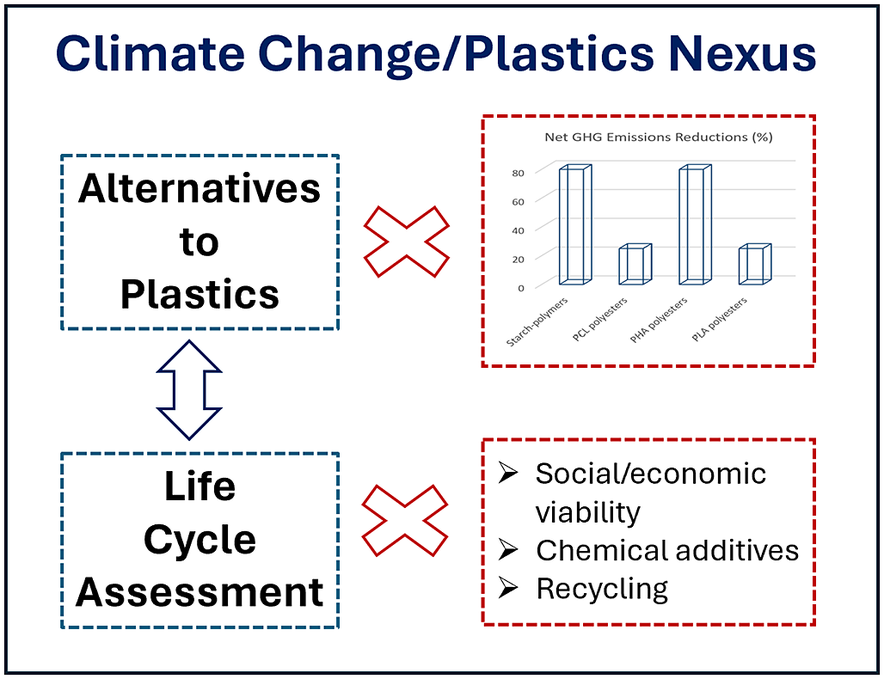
Examples of several sustainable alternatives are compared (with their pros and cons) in terms of GHG emissions (Table 1 and Figure 1). Biodegradable plastics have benefits, including (1) increasing soil organic carbon, water and nutrient retention from compost of biodegradable plastics; (2) increasing food degradation rate in landfills, thereby increasing methane harvesting and (3) a low energy requirement for the production of biodegradable plastics (Nolan-ITU et al., 2002). Nonetheless, there are adverse risks, which include (1) high biochemical oxygen demand (BOD) concentrations, particularly from degradation of starch-based biodegradable plastic; (2) transport of degradation byproducts of plastic, leachate from landfills and composting and (3) damage on soil and crop due to compost containing high organic or metal contaminants arising from plastic additives and plastic residuals (Nolan-ITU et al., 2002).
Table 1.
Sustainable alternatives – pros, cons GHG emissions
Figure 1.
Net greenhouse gas (GHG) emissions reductions (%) among all alternatives, including a comparison of reclaimed and virgin starch-based polymers (elaborated from Nolan-ITU, 2002; Yu and Chen, Reference Yu and Chen2008; Broeren et al., Reference Broeren, Kuling, Worrell and Shen2017; Cho, Reference Cho2017; Sabbah and Porta, Reference Sabbah and Porta2017; Trimarchi et al., Reference Trimarchi, Kiger and Giuggio2021).
One of the biodegradable polyesters, commercial poly(ε-caprolactone), is an example of mitigating global warming potential (GWP) through capturing carbon and its utilization as a viable polymer of alternatives to chemical plastic polymers (Policicchio et al., Reference Policicchio, Meduri, Simari, Lazzaroli, Stelitano, Agostino and Nicotera2017). To increase biodegradability, starch is often used by mixing it with other polymers (e.g., biodegradable polymers including polylactic acid (PLA), polycaprolactone (PCL) and polyvinyl alcohol [PVA]). Since starch is a cheap, natural, renewable and biodegradable polymer, it can be a good alternative to plastics and has shown to reduce energy use and GHG emissions, despite other disadvantages, including poor mechanical properties (Broeren et al., Reference Broeren, Kuling, Worrell and Shen2017; Trimarchi et al., Reference Trimarchi, Kiger and Giuggio2021).
As shown in Table 1 and Figure 1, PLA – one of the linear aliphatic polyesters, which forms from starch fermentation and has similar performance to polyethylene (PE) (e.g., speedy biodegradation) – has lower net GHG emissions reduction compared to polyhydroxyalkanoate (PHA) polyesters and starch-based polymers. However, the absorption of CO2 from plants that manufacture PLA leads to no net increase in CO2 from the original materials, further mitigating GHG emissions.
According to a survey conducted in 2017 (Cho, Reference Cho2017), a reduction of GHG emissions by 25% was found by replacing conventional plastic to corn-based PLA, and even traditional plastics made with renewable sources can further reduce GHG emissions by up to 75%, suggesting bioplastics produced with renewable energy could be one of the sustainable approaches in mitigating GHG emissions. The degradability of PLA is found to be increased by blending with starch, reducing treatment costs; the complete biodegradation of PLA occurs by composting at the operation condition of 60 °C (Nolan-ITU, 2002).
PHA polyesters, aliphatic polyesters, which is another biodegradable and produced naturally via microbial process with a similar image with polypropylene (PP), works best with composting on the biodegradation of PHAs (Nolan-ITU, 2002; Broeren et al., Reference Broeren, Kuling, Worrell and Shen2017; Cho, Reference Cho2017), achieving 80% decrease in GWP. One of the studies (Shin et al., Reference Shin, Kim and Kim1997) demonstrated the degradability of bacterial polyhydroxybutyrate (PHB)/polyhydroxyvalerate (92/8 w/w) (e.g., almost complete degradation within 20 days of cultivation, whereas no degradation of synthetic aliphatic polyesters even in 100 days by anaerobic digested sludge). PHA bioplastics are found to have an 80% drop in GHG emissions (in general, 1–6 kg of CO2-eq./kg of PHAs produced) and 1/2 reduction in the fossil energy requirement per kg of bioplastics compared to those of petrochemical equals (Yu and Chen, Reference Yu and Chen2008; Baioli et al., Reference Baioli, Vogli and Righi2019). Nonetheless, it is not flexible compared to chemical plastics.
PCL polyesters, which are one of the biodegradable synthetic aliphatic polyesters, are not versatile compared to PE terephthalate, as they are expensive; however, composting for 6 weeks leads to complete degradation (e.g., without additives, complete degradation in compost by activated sludge after 6 weeks) (Nolan-ITU, 2002). For cost-effectiveness, PCL is blended with cornstarch, increasing the CO2 absorption significantly at room temperature (25 °C). PCL and PLA polyesters revealed a 25% net GHG emissions reduction (Figure 1). Different plastic compositions, additives and types of bio-based plastics may have different rates of net GHG emissions.
For instance, plastic composition appears to influence GHG emissions (e.g., 85% reduction or 80% increase of GHG emissions, compared to petrochemical plastics, based on the same weight; up to 40% GHG emissions from starch plastics by additives) (Broeren et al., Reference Broeren, Kuling, Worrell and Shen2017). The degradability of additives may depend on the type. For example, the transformation into low-molecular weight of fragments occurs with prodegradant concentrates, one of the plastic additives through enhanced oxidation of plastics (Trimarchi et al., Reference Trimarchi, Kiger and Giuggio2021).
Figure 1 compares the net GHG emissions of reclaimed starch-based and virgin starch-based polymers. As shown in Figure 1, starch plastics – which are of bio-based origin with possible biodegradability – have different net GHG emissions, with a distinct level of impact within the same category of environmental impact, which depends on their type. Among the different combinations of starch-based polymers, reclaimed starch-based polymers outperform virgin starch-based polymers concerning net GHG emissions. Replacing virgin starch (starch/polybutylene succinate [PBS]) with reclaimed starch (starch/PBS) reveals a small reduction (less than 10%) of GHG emissions.
Overall, bio-grounded polymers indicate decreasing GHG emissions (Weiss et al., Reference Weiss, Haufe, Carus, Brandão, Bringezu, Hermann and Patel2012). However, the costly manufacturing and often low performance of biodegradable plastics would be required further development for minimizing environmental effects (Moshood et al., Reference Moshood, Nawanir, Mahmud, Mohamad, Ahmad and AbdulGhani2022). Another aspect to consider in bioplastics as alternatives is chemical additives. As with conventional plastics, bioplastics contain toxic chemical additives and few studies have evaluated the effects of emerging contaminants of concern on the environmental media, including marine environments, ecosystems, humans and wildlife. Some examples of chemical additives include bisphenol A from polylactide (PLA) and phthalates from starch- and cellulose-based bioplastics (Xia et al., Reference Xia, Lam, Zhong, Fabbri and Sonne2022), released into marine environments through runoff, especially under extreme weather events.
Moreover, the breakdown of plastics, including bioplastics, can release coatings. Per- and polyfluoroalkyl substances (PFAS) are widely used as a coating material of plastics, and especially polymeric PFAS transformed into microplastics is of considerable concern (Cook and Steinle-Darling, Reference Cook and Steinle-Darling2021; Scott et al., Reference Scott, Gunderson, Green, Rediske and Steinman2021). Another issue with the release of PFAS lies in the synergistic toxicity with its adsorption on microplastics. In designing sustainable alternatives to plastics, the combined toxicity effects of chemicals and bioplastics need assessment.
Overall, there are multiple advantages to using bioplastics as a sustainable alternative to conventional plastics in manufacturing, utilization and disposal. The pros of bioplastics include effective mechanical properties, a low carbon footprint (fewer GHG emissions), manufacturing with fewer nonrenewable resources, mitigation of plastic waste accumulation through composting or natural degradation in soil environments, adaptability to existing recycling streams, a decreased persistence of plastic waste and reduced harm to marine ecosystems, as shown in the particular type of bioplastic, which can mitigate plastic particles released to the marine environment (e.g., PBS) (Brockhaus et al., Reference Brockhaus, Petersen and Kersten2016; Casarejos et al., Reference Casarejos, Bastos, Rufin and Frota2018; Dilkes-Hoffman et al., Reference Dilkes-Hoffman, Ashworth, Laycock, Pratt and Lant2019; Coppola et al., Reference Coppola, Gaudio, Lopresto, Calabro, Curcio and Chakraborty2021; Kumar et al., Reference Kumar, Lalnundiki, Shelare, Abhishek, Sharma, Sharma, Kumar and Abbas2023). Despite the aforementioned pros of bioplastics, limitations need to be overcome. For instance, as with most cases in the remediation of contaminants, the toxic byproducts of bioplastics are problematic. In addition, chemical additives associated with bioplastics, the high production costs of bioplastics, partial biodegradation, contention with manufacturing food, difficulty in detecting bioplastic particles and a lack of standardization in the analysis of bioplastics are drawbacks (Rosenboom et al., Reference Rosenboom, Langer and Traverso2022; Kumar et al., Reference Kumar, Lalnundiki, Shelare, Abhishek, Sharma, Sharma, Kumar and Abbas2023).
Correlation between climate change and plastic pollution
Climate change has resulted in substantial accumulation of plastic particles in the environmental media, causing significant plastic pollution. For instance, researchers examined the density of plastic pieces in riverbeds and discovered 17 billion particles floating in seawater after a flooding event (Dengler, Reference Dengler2018). Climate change is recognized as a critical factor causing significant drought, hurricanes, floods and wildfires, especially in the Western United States. Several recent studies (Wang et al., Reference Wang, Lu, Wang, Jiang, Liu and Ru2019; Roebroek et al., Reference Roebroek, Harrigan, van Emmerik, Baugh, Eilander, Prudhomme and Pappenberger2021) have investigated the link between plastic pollution and flooding (particularly how the floods caused by plastic pollution affect ecosystems), and also examined the impact of flooding on plastic properties. Since floods increase the mobility of plastic particles present in the environment, increasing and frequent floods can lead to a dramatic increase of plastic pollution. In this section, the correlation between climate change and plastic pollution is analyzed.
Plastics’ contribution to climate change
Research findings have revealed more contaminated plastics of several orders of magnitude greater in Artic Sea ice from remote regions than surface waters, with oceans being the main anthropogenic pollutant reservoir (Obbard et al., Reference Obbard, Sadri, Wong, Khitun, Baker and Thompson2014; Peeken et al., Reference Peeken, Primpke, Beyer, Gütermann, Katlein, Krumpen, Bergmann, Hehemann and Gerdts2018). Plastics contribute approximately 4% of total GHG emissions globally, which is twice as large as the carbon emissions from the aviation industry (Averda, 2022). The plastic contribution to climate change comes from either (1) plastic manufacture, distribution and consumption; (2) plastic removal, mishandled waste and degradation or (3) bio-based plastics (Ford et al., Reference Ford, Jones, Davies, Godley, Jambeck, Napper, Suckling, Williams, Woodall and Koldewey2022). According to the study by Zheng and Suh (Reference Zheng and Suh2019), the estimated amounts of GHGs include extraction/refining (1,085 MtCO2e*); manufacture (535 MtCO2e*); use (mismanagement) and end-of-life (EoL) (161 MtCO2e*), including incineration, recycling, landfill and emissions to the environment (Zheng and Suh, Reference Zheng and Suh2019).
The chemical structure appears to affect the amount of GHG emissions. For instance, low-density PE (LDPE), which has a relatively fragile structure and noticeable hydrocarbon branches, has shown to produce more GHG emissions than high-density PE (HDPE), which has a dense structure (Ford et al., Reference Ford, Jones, Davies, Godley, Jambeck, Napper, Suckling, Williams, Woodall and Koldewey2022). Research data indicate that given the plankton’s uptakes of plastics, the absorption of carbon by ecosystems in the marine environment could be inhibited, leading to severe disruption in mitigating climate change (Shield, Reference Shield2019). Polymers found from the sea ice displayed their variety from domestic to industrial applications, along with their polymer types of polyester, acrylic, PP, PE and polyamide (Obbard et al., Reference Obbard, Sadri, Wong, Khitun, Baker and Thompson2014). While there is increasing concern regarding the accumulation of micro- and nanoplastics in marine organisms through ingestion, few studies have examined the environmental consequence, which needs further investigation in the perspective of releasing hydrophobic contaminants from tissues with retained plastic particles.
Bioplastics have recently been considered alternatives to conventional plastics in mitigating climate change. Among eco-friendly bioplastics, vegetable oil feedstock-based polyurethane polymers are suggested as a solution to plastic waste issues (Mangal et al., Reference Mangal, Rao and Banerjee2023). Although bioplastics offer benefits over petroleum-based plastics (e.g., a lower carbon footprint, reduced fossil fuel use and biodegradability), significant concerns of environmental impact have been linked to GHG emissions, negative change in land use and significant use of water and land (Brizga et al., Reference Brizga, Hubacek and Feng2020; Atiwesh et al., Reference Atiwesh, Mikhael, Parrish, Banoub and Le2021), necessitating an assessment and evaluation of bioplastic production. Despite the drawbacks of bioplastics, the advantages of utilizing bioplastics appear to surpass those of conventional plastics, as environmentally sound bioplastics are being developed. As such, an environmental impact assessment should be thoroughly and holistically studied at each life cycle stage of bioplastics.
Despite the drawbacks of bioplastics, the advantages of utilizing bioplastics appear to surpass those of conventional plastics, as environmentally sound bioplastics are being developed. As such, an environmental impact assessment should be thoroughly and holistically studied at each life cycle stage of bioplastics.
Influence of climate change on plastic pollution
Climate change influences the distribution and levels of plastic contaminants. For instance, decreasing sea ice volume by increasing temperatures due to climate change may release more micro- and nanoplastics in the ocean (Ford et al., Reference Ford, Jones, Davies, Godley, Jambeck, Napper, Suckling, Williams, Woodall and Koldewey2022). As presented in several studies (Dengler, Reference Dengler2018; Roebroek et al., Reference Roebroek, Harrigan, van Emmerik, Baugh, Eilander, Prudhomme and Pappenberger2021; Bauer et al., Reference Bauer, Nielsen, Palm, Ericsson, Frǻne and Cullen2022; Ford et al., Reference Ford, Jones, Davies, Godley, Jambeck, Napper, Suckling, Williams, Woodall and Koldewey2022), mitigating climate change is likely to lead to decreasing plastic pollution (and vice versa). Such findings are also identified in worsening riverine plastic pollution due to flooding of rivers and the resultant mobilization increase (Ford et al., Reference Ford, Jones, Davies, Godley, Jambeck, Napper, Suckling, Williams, Woodall and Koldewey2022). Another study demonstrated a 0.5% increase of floating plastic debris into the ocean by a single flooding event (Dengler, Reference Dengler2018). Interestingly, research data indicate that having flood defenses is one of the ways to mitigate the mobilization of plastic particles (Roebroek et al., Reference Roebroek, Harrigan, van Emmerik, Baugh, Eilander, Prudhomme and Pappenberger2021). In this study, the amount of plastic mobilization was decreased with flood defenses (when compared without flood defenses).
Similar with the influence of climate change on the level of plastic pollution, plastic particles accumulated on beach surfaces are found to increase sand temperature, indicating plastics are heat-hazardous materials with harmful effects on the marine environment (Lavers et al., Reference Lavers, Rivers-Auty and Bond2021). Extreme weather conditions are increasing globally due to climate change, yet more research is needed to explore other emerging contaminants that contribute to climate change. Combined, drought and microplastic fibers influence ecosystems negatively in that under drought conditions, the negative effects on soil enzymes, respiration and ecosystem functionality tend to increase with the presence of microplastics, whereas decomposition of plastic litter is enhanced under well-watered conditions (Lozano et al., Reference Lozano, Aguilar-Trigueros, Onandia, Maaβ, Zhao and Rillig2020).
While the most effective mitigation is to prevent microplastic pollution by reducing the terrestrial input, flooding is unavoidable, which makes it difficult to minimize plastic pollution. Remarkably, one recent study investigated whether typhoons increase the concentrations of microplastics in the seawater and sediments (Wang et al., Reference Wang, Lu, Wang, Jiang, Liu and Ru2019). In their study, the abundance of microplastics in both seawater and sediments increased, with an approximately 40% average concentration rise; even different shapes in sediments had increasing proportions of 9.6, 4.0 and 4.3% with fragments, spherules and granules, respectively.
As indicated in the study, typhoons influenced the physicochemical properties of microplastics (color change, different size distributions different types of plastic polymer). For instance, fibers were identified to be the dominant shape, with less than 0.5 mm as the most abundant particle sizes, suggesting climate change could alter not only the distribution of plastic particles, but also their properties. Similar observations are also found in another study where increasing abundance and diverse chemical compositions of macro- and microplastics is found after a cyclone as the most frequently detected debris in marine and sediment environments (Lo et al., Reference Lo, Lee, Po, Wong, Xu, Wong, Wong, Tam and Cheung2020).
Climatic hazards have revealed substantial changes in the distribution, concentration and properties (e.g., composition, shape and size) of microplastics in marine environments. For instance, seasonal variations under extreme weather events have shown discrepancies in marine microplastic pollution (five times higher in wet conditions than in dry seasons), with more impact on the level of marine microplastics exerted by typhoons than rainstorms, suggesting considerable plastic fragmentation detected in marine sediment (Nakajima et al., Reference Nakajima, Miyama, Kitahashi, Isobe, Nagano, Ikuta, Oguri, Tsuchiya, Yoshida, Aoki, Maeda, Kawamura, Suzukawa, Yamauchi, Ritchie, Fujikura and Yabuki2022; Cheung and Not, Reference Cheung and Not2023). Additionally, because of the 70% movement of microplastics that accumulate in riverbeds after flooding events, river catchments have a relatively low level of microplastic contaminants, with a resultant massive microplastics accumulation in the ocean (Hurley et al., Reference Hurley, Woodward and Rothwell2018; Nakajima et al., Reference Nakajima, Miyama, Kitahashi, Isobe, Nagano, Ikuta, Oguri, Tsuchiya, Yoshida, Aoki, Maeda, Kawamura, Suzukawa, Yamauchi, Ritchie, Fujikura and Yabuki2022). Because climate change brings more extreme weather events, the impacts of extreme weather conditions on plastic pollution deserve further investigation.
Given climate change issues with frequent and more intense flooding, immense plastic debris is expected to pollute the environmental media, particularly marine and sediments. Other factors, such as extreme wind speeds and storm surges, which are accompanied by hurricanes, contribute to the disturbance to vulnerable environmental areas, requiring more studies concerning the impact on terrestrial and coastal environments and resultant remediation measures. Further, marine plastic pollution correlated with climate change may cause synergistic impacts on ecosystem disturbance.
GHG emissions at the life cycle stages of plastics
The plastic life cycle produces significant CO2 emissions, yet few studies have examined this issue enough to mitigate according to the plastic types and preventive measures (e.g., changes in systems, different ways of producing plastics, recycling options, adopting circular economy approaches, bioplastics, biodegradable plastics, regulatory incentives). Undeniably, mitigation measures of GHG emissions from plastic manufacturing should be performed to achieve net-zero emission targets by 2050 (Bauer et al., Reference Bauer, Nielsen, Palm, Ericsson, Frǻne and Cullen2022). In this section, through the analysis of life cycle assessment (LCA), the environmental impact from all life cycle stages of plastics is identified and ways of minimizing GHG emissions are discussed.
LCA, one of the tools to assess potential environmental impact, is strongly suggested to be fully performed to assess the potential environmental impacts and implement strategies to minimize negative environmental impacts. LCA analysis on plastics reveals GHG emissions from each stage of the life cycle of plastics, and the primary pathways of GHG emissions from plastics are threefold – (1) during plastic manufacture, transport and use; (2) disposal and improper management of plastic wastes and (3) bio-based plastics (Ford et al., Reference Ford, Jones, Davies, Godley, Jambeck, Napper, Suckling, Williams, Woodall and Koldewey2022). For instance, during the manufacturing and transporting stages of plastic resins, petroleum-based plastics release about 60% of GHGs, and around 30% of GHGs are emitted from the conversion of plastic resins into products, with significant energy consumption (Averda, 2022; Tenhunen-Lunkka et al., Reference Tenhunen-Lunkka, Rommens, Vanderreydt and Mortensen2022). Considering the life cycle of plastics, there are five main areas that should be closely examined in the mitigation of GHG emissions, such as manufacturing, market demand, waste management, industry organization and policy and governance (Bauer et al., Reference Bauer, Nielsen, Palm, Ericsson, Frǻne and Cullen2022).
A study on LCA of plastics indicates a significant decrease of GHG emissions in the manufacturing and EoL treatment of biodegradable plastics (e.g., starch-based plastics) compared to representative plastics (e.g., petroleum-based plastics) (Nolan-ITU, 2002). The type of feedstock and EoL management has revealed considerable differences in GHG emissions (e.g., 8 Gt CO2e from a 4% production rate and EoL of 100% incineration versus 1 Gt CO2e from a 2% production rate, with 100% renewable energy, bio-based feedstock and an EoL waste management consisting of 44% recycling, 30% incineration, 18% industrial composting and 3% anaerobic digestion [AD]) (Zheng and Suh, Reference Zheng and Suh2019).
Without preventative measures, proper recycling and disposals in landfills, plastic waste is piled up in the natural environment. As part of sustainable approaches, replacing fossil resources with biomass in plastic manufacturing could not only reduce non-renewable energy consumption, but could also mitigate CO2 emissions (Gironi and Piemonte, Reference Gironi and Piemonte2011). In addition, the disposal options of plastic wastes should be carefully tailored. For instance, the incineration of plastic wastes and production of plastics (mainly an extraction byproduct of fossil fuel) have contributed to the largest GHG emissions (e.g., a release of more than 950 million tons of GHGs to the atmosphere) (Shield, Reference Shield2019). As such, sustainable approaches are sought, with one of them being AD, which could achieve lower environmental impact with renewable energy generation, particularly for bioplastics, despite the potential inhibition effects of micro- and nanoplastics on AD via decreasing methane formation and microbial abundance (Zhang et al., Reference Zhang, Zhao, Li, Miao, Huang, Dai and Ruan2020). Such a negative impact by micro- and nanoplastics on AD performance in all major steps (e.g., hydrolysis, acidification, methanogenesis) guarantees further investigation due to the lack of studies in the field.
The production of bioplastics or biodegradable plastics is estimated to be approximately only 1% of all plastics globally (Tenhunen-Lunkka et al., Reference Tenhunen-Lunkka, Rommens, Vanderreydt and Mortensen2022). Alternatives that are easily biodegradable or compostable are suggested to be applied since plastic manufacturing itself contributes substantially to climate change, requiring immense energy and generating toxic byproducts in some plastic products, as well as emitting CO2 and methane (CH4) gases (accounted to be around 61% GHG emissions) during the refining process and the transportation of plastic resins (Averda, 2022). Thus, plastic alternatives such as biodegradable and compostable materials become attractive to consumers for their versatile and ecofriendly applications.
Environmental and climate change impacts are found in all stages of LCA and could mitigate GHG emissions by switching from a linear to a circular economy of plastics, though there is a lack of carbon cycle on plastics (Tenhunen-Lunkka et al., Reference Tenhunen-Lunkka, Rommens, Vanderreydt and Mortensen2022). Mitigation pathways for plastics have been identified as (1) reuse, reduce and substitute; (2) bio-based and alternative feedstock and (3) recycle and circulate (Bauer et al., Reference Bauer, Nielsen, Palm, Ericsson, Frǻne and Cullen2022). Good EoL management would avoid significant GHG emissions. EoL options include recycling, incineration, landfilling and composting, and need evaluation in quantifying and identifying GHG emissions from each treatment and management approach.
Figure 2 illustrates the GHG emissions at each life cycle stage of plastics. As shown in Figure 2A, considerable GHG emissions occur in the polymer production phase, and the extent of GHG emissions depends on the type of plastic, with polystyrene (PS) releasing more than double the others (PP, HDPE and LDPE). Overall, the GHG emissions from total production indicate the highest emission rate from PS, followed by LDPE, PP and HDPE. At the crude oil production and refinery life cycle stages of plastic, relatively low GHG emissions occur, irrespective of the type of plastic. In the EoL options (Figure 2B), incinerating plastics releases the most substantial GHG emissions (25 times higher than landfilling), followed by gasification, recycling and landfilling. Landfilling releases almost 0% GHG emissions, but leachate containing plastic debris could be problematic because of groundwater pollution (Rubio-Domingo and Halevi, Reference Rubio-Domingo and Halevi2022). Although there are benefits, including waste-to-energy conversion from incineration and waste-to-fuel technology from gasification, costly processes with relatively high GHG emissions make them less favorable EoL options (Rubio-Domingo and Halevi, Reference Rubio-Domingo and Halevi2022). Feedstock replacement with renewable sources, fossil-free production and maximizing mechanical recycling (by preventing energy use and avoiding the use of raw materials) could lower GHG emissions.
Future perspectives
Mitigating both plastic pollution and GHG emissions requires significant investment in research and cooperation among the public, government agencies and industry due to its multiplicity. As such, future directions are proposed in addressing the issues discussed in the previous sections and in developing new alternatives to chemical plastics.
First, investigating increasing GHG emissions (including CH4 and nitrous oxide (N2O)) through the application of plastic films may become crucial, in particular looking at virgin and aged plastics under UV irradiation and quantifying GHG emissions over time, along with the characterization of the plastic surfaces. Second, identifying reactions occurring on the surface of microplastics is necessary, in particular regarding how the surface of microplastics reacts with other contaminants and what factors influence the physicochemical properties of microplastics upon the surface reactions with contaminants. Further, how adsorbed organic compounds on plastics affect the surface properties of microplastics needs to be investigated.
Third, it is suggested that studies be conducted concerning how and to what extent plastic degradation by microbes influences GHG emissions through the mineralization of organic carbon into CO2, CH4 and dissolved inorganic carbon. It is recommended to review how microplastics affect the surface mineralization of sediments with respect to the release of CO2, CH4 and N2O.
Fourth, the correlation between plastic persistence and climate change should be investigated in detail, particularly the augmented effects of climate change on plastic persistence in lakes, due to the increased density of water, with increased water evaporation, caused by increasing global temperatures. Fifth, climate change may influence plastic distribution through increasing terrigenous and windborne plastics, plastic resuspension from sediment and plastic persistence in lakes. Thus, the effects of climate change on plastic dispersal, as well as their causes, such as increased runoff, precipitation storms, increased floods, strong wind events, increased water density through increased evaporation and the melting of alpine glaciers, are recommended for further study. Sixth, it is interesting to see studies on microbial life found on plastic debris, which is known as plastisphere; in particular, the prevention of antibiotic resistance and plastic pollution.
Seventh, adverse impacts on the environment could also be dependent on physicochemical properties (increasing negative impact by smaller particle sizes). Few studies have examined how the properties of plastic particles affect the environment, in relation to GWP. For instance, cumulative plastic waste due to increasing plastic production faces challenges, especially in developing countries due to poor management and disposal (e.g., improper landfilling, open burning) (Kumar et al., Reference Kumar, Verma, Shome, Sinha, Sinha, Jha, Kumar, Kumar, Shubham Das, Sharma and Prasad2021).
Such challenges encourage one to approach sustainable methods through assessing the life cycle of products, applying circular economy or net-zero waste for sustainable plastic waste management. Finally, the behavior of plastics in an environmental matrix, with the resultant impact on climate change, warrants further examination. Released micro-/nanoplastics, including bioplastics, undergo various degradation pathways depending on the environmental matrix and the persistence of the plastics. Plastic particles in the environment interact with other contaminants and microbes, increasing their toxicity. Once fragmented, these particles accumulate in aquatic environments and are consumed by numerous organisms. A recent survey on the biodegradability of bio-based bioplastics in freshwater and saltwater indicates that PHB is the most biodegradable under various conditions (temperature, size and different environmental matrices), followed by starch-based bioplastics and fossil-based bioplastics (PVA and poly(glycerol maleate)) (Lavagnolo et al., Reference Lavagnolo, Poli, Zampini and Grossule2023). Bioplastics have revealed substantial impacts on soil compared to conventional plastics (Chah et al., Reference Chah, Banerjee, Gadi, Sekharan and Katiyar2022). These impacts include the soil C/N ratio, soil microbial diversity, toxicity and nutrients, which may depend on the concentrations and physicochemical properties of bioplastics, as well as soil properties and types under climatic conditions (Chah et al., Reference Chah, Banerjee, Gadi, Sekharan and Katiyar2022). Bioplastic residues left in soil raise a concern about groundwater contamination. Even if bioplastics are less stable in situ, releasing chemical additives from bioplastics, along with micro and nano bioplastic debris, still harms soil biotas.
GHG emissions still occur during the degradation of plastics in the environmental matrix. Although bioplastics release relatively low GHG emissions, the breakdown byproducts, for instance, from microplastics to nanoplastics, increase GWP, particularly an increase in CO2 and CH4 by up to 75% by nanoplastics in soils (Zhou et al., Reference Zhou, He, Bhagwat, Palanisami, Yang, Liu and Zhang2023). The smaller particle sizes fragmented from microplastics appear to accelerate GHG emissions. Plastics undergo transformation pathways through photodegradation, oxidation, hydrolytic degradation or biodegradation under various environmental conditions. Most research has focused on GHG emissions from manufacturing, processing, transport and EoL options, whereas few studies have investigated GHG emissions from the degradation of plastics, which deserves further investigation.
Other areas of research directions include the effects of pretreatment (e.g., photooxidation with/without moderate temperatures; mechanical deterioration) on the biodegradation of plastic wastes under different environmental conditions, along with the mode of action and mechanisms of microbial degradation. The most innovative way could be applying biodegradable plastics in every field with an effective, ecofriendly, inexpensive and socially acceptable plastic-degrading technique, because of the efficient degradation of biodegradable plastics in the environment or under optimized industrial facilities.
In the perspective of mitigating plastic pollution and climate change, four primary viewpoints, (1) the impacts of plastics on the environment, (2) the potential of adopting the alternatives, (3) changes in the future life cycle of plastics and (4) regulations or treaties related to alternatives for mitigating plastic pollution, are discussed.
First, the impacts of plastics on the environment range from extraction (e.g., lack of water supplies and climate uncertainty), production (e.g., chemical and GHG emissions) and consumption (e.g., increasing consumption of plastic products) to waste (decreasing biodiversity, spread of pathogens and harm to ecosystems), all life cycle stages of plastics (Stoett, Reference Stoett2022). In particular, during the plastic production stage, considerably adverse impacts occur (e.g., water pollution, climate change and microplastic pollution) (Saleem et al., Reference Saleem, Tahir, Baig, Al-Ansari and McKay2023), leading to the pursuit of not only reducing plastic production but also finding eco-friendly methods in the recycling of plastic waste and applying biodegradable alternatives. Inappropriate management of plastic waste not only threatens ecosystems, groundwater contamination, marine and freshwater organisms and soil ecosystems (Rajvanshi et al., Reference Rajvanshi, Sogani, Kumar, Arora, Syed, Sonu, Gupta and Kalra2023) but also public health through the consumption of food contaminated with micro-/nanoplastics. Because of the persistence of plastics, plastic waste complicates discovering suitable treatment methods, leading to detrimental effects on aquatic environments and humans. Although biodegradable polymers could offer a possible solution in mitigating the environmental impacts, a recent study has demonstrated that poly(mandelic acid), a biodegradable polymer, has adverse impacts (2.5 times higher climate change and fossil depletion than PS) (Jeswani et al., Reference Jeswani, Perry, Shaver and Azapagic2023).
Second, adopting alternatives to conventional plastics is still under debate among the manufacturing industry, government and consumers. Vibrant regulation with financial incentives should be enacted to stimulate large-scale bioplastic applications (Rosenboom et al., Reference Rosenboom, Langer and Traverso2022). Sustainable ways to replace plastics include the use of microbial bio-based polymers to overcome the negative environmental impacts of plastics, especially in the sectors of packaging industries, biomedicine and agriculture (Rajvanshi et al., Reference Rajvanshi, Sogani, Kumar, Arora, Syed, Sonu, Gupta and Kalra2023). Although the application of bio-based plastics could be an alternative option, limitations and challenging issues still need to be resolved. Some of these limitations include high costs, hydrophilicity and poor physicochemical properties (poor moisture and low compatibility) (Filho et al., Reference Filho, Barbir, Abubakar, Paco, Stasiskiene, Hornbogen, Fendt, Voronova and Klöga2022; Rajvanshi et al., Reference Rajvanshi, Sogani, Kumar, Arora, Syed, Sonu, Gupta and Kalra2023). Consumer attitudes are a challenging issue in which preference is given to conventional plastics over bioplastics because of lower costs (Wellenreuther et al., Reference Wellenreuther, Wolf and Zander2022).
Third, given all the life cycle stages of plastics that emit GHGs, evaluation should be carefully tailored to reflect various factors, even with a substantial reduction of GHG emissions from bioplastics. Such factors to consider involve the drawbacks of feedstock agriculture and social and economic viability that have been overlooked (Rosenboom et al., Reference Rosenboom, Langer and Traverso2022), which render bioplastics not necessarily more sustainable than fossil-derived plastics. Although LCA studies have been conducted to evaluate all life cycle stages of plastics, studies on modeling and evaluating chemical additives released from plastics are lacking. This crucial advancement of environmental impact assessments would advocate policies for sustainable plastic production (Jeswani et al., Reference Jeswani, Perry, Shaver and Azapagic2023). In addition to adopting more sustainable alternatives, recycling plastic waste is an EoL option as a sustainable approach. For instance, a recent study (Saleem et al., Reference Saleem, Tahir, Baig, Al-Ansari and McKay2023) investigated the environmental effects of recycled plastic pellets at the stages of transportation, recycling and pellet production and compared them with pellets from petroleum sources. As shown in the study results, recycled plastic pellets not only outperform petroleum-sourced plastic pellets but also lower GHG emissions with less energy consumption and decreased waste in landfills (Saleem et al., Reference Saleem, Tahir, Baig, Al-Ansari and McKay2023). This result implies that new changes are potentially necessary in LCA based on examining the recycling methods and improving the recycling process and better EoL alternatives for recycled plastic waste.
Finally, to regulate alternatives for mitigating plastic pollution, the circular economy concept has been widely considered, and applying this concept to policies and regulations is strongly suggested as a way of counterbalancing the shortcomings of bioplastics. Further, government support or incentives can encourage communities to consider recycling and reuse and to increase their preference for alternatives over conventional plastic products. In 2022, the UN Environment Program developed a global plastics treaty to mitigate plastic pollution, covering all the life cycle stages of plastic (UNEP, 2022). However, standard methods for detecting and quantifying plastic particles in the environment are lacking; therefore, evaluating toxicity and environmental impact has been challenging. This situation leads to another necessary treaty among countries where the agreement of a consistent standard or system among countries becomes law and accountable for measuring plastic contaminants (Editorials, 2023). In addition, the Plastics Treaty should cover broad aspects and initiatives to address complicated issues associated with plastic pollution (e.g., the release of chemical additives, inefficient waste disposal and the cost of adopting alternatives). Although regulations could offer the most powerful instrument, the treaty should involve innovation in (1) recycling and reuse system investment in developing novel alternatives or (2) implementing extended produced responsibility schemes where plastic manufacturing industries are responsible for the EoL of their products (Brandon et al., Reference Brandon, Vanapalli, Martin, Dijkstra, De la Torre, Hartmann, Meier, Pathak, Busch, Ma, Iacovidou, Birkbeck and Pacini2023) to better address the complicated plastic pollution issues.
Conclusion
Production of plastics is still increasing globally despite a move to minimize the use of plastics or to ban plastics. Alternatives to conventional plastics are suggested to further minimize the environmental impact, particularly mitigating GHG emissions from all the life cycle stages of plastics. The LCA is one of the useful tools in examining and identifying environmental and socioeconomic benefits, as well as GHG emissions and impacts on environmental media through the life cycle of plastics, ranging from sources of raw materials (usage of renewable resources – energy and water), extraction of resources, purifying the feedstock into resins, manufacturing plastic products, transport, consumption and treatment and disposal management of plastic wastes. Considering the life cycle of plastic products, the use of plastic alternatives, such as bio-based plastics, could minimize the environmental pollution level. However, it still raises concern since climate change influences plastic pollution through hurricane and flooding, leading to harmful impacts on ecosystems. Yet, such negative impacts have still been unexplored in any other parts of the environment (soil, land, subsurface, freshwater etc.).
Definitions
- Bio-based plastic:
-
Plastic derived from partial or whole renewable sources and in some cases biodegradable or compostable (Vert et al., Reference Vert, Doi, Hellwich, Hess, Hodge, Kubisa, Rinaudo and Schue2012).
- Bioplastic:
-
Plastic materials synthesized from biodegradable polymers, including bio-based and fossil-based polymers (SAPEA, 2020).
- Biodegradable plastic:
-
Plastics produced from renewable or fossil carbon sources, biodegrading faster than conventional plastics (SAPEA, 2020).




 Open access


Impact statement
With the increasing accumulation of plastic wastes, negative climate change issues associated with plastic contaminants have drawn global attention toward sustainable solutions. Mitigating both plastic pollution and greenhouse gas (GHG) emissions requires significant investment in research and cooperation among the public, government agencies and industry due to its multiplicity. Alternatives to conventional plastics and life cycle assessment are suggested to further minimize the environmental impact, particularly mitigating GHG emissions from all the life cycle stages of plastics. Sustainable alternatives to plastics could address the climate change issue but require further development because of their downsides. Other facets of bioplastics (e.g., chemical additives and recycling plastic waste) are suggested for inclusion in advancing the life cycle assessment of plastics. The synergistic issues of climate change and plastic pollution merit further exploration in future research.
Introduction
The presence of plastics is found in daily life, including but not limited to water, soil, air, animals, food and the human body through various transport pathways, from both point and nonpoint sources. As plastic manufacturing increases, it becomes one of the most persistent pollutants requiring remediation in the environment. Undoubtedly, plastic manufacturing is projected to significantly grow in the future, causing immense greenhouse gas (GHG) emissions. In fact, 99% of materials that are used to make plastic such as ethylene and propylene is driven by fossil fuels, a main contributor to carbon dioxide (CO2) emissions (Shield, Reference Shield2019). The correlation between climate change and plastic pollution indicates that preventing or mitigating plastic pollution can minimize climate change.
Plastic debris in the ocean has the potential to interfere with carbon storage through negative effects on the ecosystem. For instance, a study on the effect of microplastics on phytoplankton indicated the inhibition of carbon fixation through photosynthesis (Seas at Risk, 2021). This inhibition effect was also revealed in zooplankton polluted with microplastics, as shown in a decreasing level of metabolic and survival rates (Seas at Risk, 2021). The release and absorption of plastic additives on aquatic animals and species represents a significant issue due to their negative impacts, such as energy depletion and fertility issues (Seas at Risk, 2021).
As concentrations of micro- and nanoplastics increase, their negative impacts are likely to evolve significantly, affecting the entire ecosystems and ultimately reducing the ocean’s carbon sink capability, which is crucial for mitigating climate change. In environmental impact assessments, all the life cycle stages of plastic manufacturing reveal concerns regarding GHG emissions, which accelerate the effects of climate change. Among various sources contributing to GHG emissions, plastic waste is accountable for approximately 4% of global GHG emissions, with the emissions percentage to be increased by 15% by 2050, given the growing world production (e.g., 380 million tons/year) of plastic (Averda, 2022). These statistics place plastic as a major cause of climate change.
The specific objectives of this perspective are threefold – (1) to examine the pros and cons of sustainable alternatives to conventional plastics, (2) to analyze the correlation between climate change and microplastic pollution and (3) to provide a future outlook in the perspective of ideas for minimizing plastic pollution and reducing GHG emissions.
Methodology
The relevant articles regarding the connection between climatic hazards and plastic pollution were searched and selected through a Google-based search in diverse internet resources (e.g., news media, press releases, peer-reviewed articles and reports available online from various organizations) on the topics of (1) the contribution of plastic particles to climate change; (2) the effects of climate change on plastic pollution; (3) the extent of GHG emissions at the life cycle stages of plastics and (4) sustainable alternatives to plastics.
Sustainable alternatives to plastics in addressing the climate change issue
Plastic contaminants are found in environmental media and daily consumer products, including foods. Considering the dramatic increase in plastic production, alternatives to plastics should be available in the future. Among plastic wastes, only a small portion (approximately 9%) is recycled, whereas most plastic waste is disposed of in treatment facilities (e.g., landfills) or transported to oceans through contaminant movement via rainwater and wind (Trimarchi et al., Reference Trimarchi, Kiger and Giuggio2021). The possible synergistic effects of climate change and plastic pollution may disrupt biogeochemical cycles, with the resultant difficulty of serving the ocean as a carbon sink (Ford et al., Reference Ford, Jones, Davies, Godley, Jambeck, Napper, Suckling, Williams, Woodall and Koldewey2022). Nonetheless, studies on the impact of the interactions between climate change and plastic pollution on ecosystems are lacking.
To mitigate climate change and plastic pollution, alternatives to fossil-based plastics can be explored. Bio-based plastics (extracted from renewable resources partially or entirely) and biodegradable plastics have been suggested as alternatives to conventional plastics. However, these materials still have negative effects (Altman, Reference Altman2021; Gündogdu et al., Reference Gündogdu, Walker, Almroth, Coffin and Gwinnett2022), including issues with plastic pollution and public health, toxicity effects on marine environments and resistance to biodegradation. A comprehensive assessment of their pros and cons in comparison to conventional plastics (Scientists’ Coalition for an Effective Plastics Treaty, 2023) is suggested, along with considering other waste management hierarchy options such as reuse, recovery and recycling (Altman, Reference Altman2021). In this section, environmentally friendly alternatives are discussed in terms of their pros and cons, particularly how such alternatives could contribute to the mitigation of climate change through GHG emissions reduction.
Examples of several sustainable alternatives are compared (with their pros and cons) in terms of GHG emissions (Table 1 and Figure 1). Biodegradable plastics have benefits, including (1) increasing soil organic carbon, water and nutrient retention from compost of biodegradable plastics; (2) increasing food degradation rate in landfills, thereby increasing methane harvesting and (3) a low energy requirement for the production of biodegradable plastics (Nolan-ITU et al., 2002). Nonetheless, there are adverse risks, which include (1) high biochemical oxygen demand (BOD) concentrations, particularly from degradation of starch-based biodegradable plastic; (2) transport of degradation byproducts of plastic, leachate from landfills and composting and (3) damage on soil and crop due to compost containing high organic or metal contaminants arising from plastic additives and plastic residuals (Nolan-ITU et al., 2002).
Sustainable alternatives – pros, cons GHG emissions
Net greenhouse gas (GHG) emissions reductions (%) among all alternatives, including a comparison of reclaimed and virgin starch-based polymers (elaborated from Nolan-ITU, 2002; Yu and Chen, Reference Yu and Chen2008; Broeren et al., Reference Broeren, Kuling, Worrell and Shen2017; Cho, Reference Cho2017; Sabbah and Porta, Reference Sabbah and Porta2017; Trimarchi et al., Reference Trimarchi, Kiger and Giuggio2021).
One of the biodegradable polyesters, commercial poly(ε-caprolactone), is an example of mitigating global warming potential (GWP) through capturing carbon and its utilization as a viable polymer of alternatives to chemical plastic polymers (Policicchio et al., Reference Policicchio, Meduri, Simari, Lazzaroli, Stelitano, Agostino and Nicotera2017). To increase biodegradability, starch is often used by mixing it with other polymers (e.g., biodegradable polymers including polylactic acid (PLA), polycaprolactone (PCL) and polyvinyl alcohol [PVA]). Since starch is a cheap, natural, renewable and biodegradable polymer, it can be a good alternative to plastics and has shown to reduce energy use and GHG emissions, despite other disadvantages, including poor mechanical properties (Broeren et al., Reference Broeren, Kuling, Worrell and Shen2017; Trimarchi et al., Reference Trimarchi, Kiger and Giuggio2021).
As shown in Table 1 and Figure 1, PLA – one of the linear aliphatic polyesters, which forms from starch fermentation and has similar performance to polyethylene (PE) (e.g., speedy biodegradation) – has lower net GHG emissions reduction compared to polyhydroxyalkanoate (PHA) polyesters and starch-based polymers. However, the absorption of CO2 from plants that manufacture PLA leads to no net increase in CO2 from the original materials, further mitigating GHG emissions.
According to a survey conducted in 2017 (Cho, Reference Cho2017), a reduction of GHG emissions by 25% was found by replacing conventional plastic to corn-based PLA, and even traditional plastics made with renewable sources can further reduce GHG emissions by up to 75%, suggesting bioplastics produced with renewable energy could be one of the sustainable approaches in mitigating GHG emissions. The degradability of PLA is found to be increased by blending with starch, reducing treatment costs; the complete biodegradation of PLA occurs by composting at the operation condition of 60 °C (Nolan-ITU, 2002).
PHA polyesters, aliphatic polyesters, which is another biodegradable and produced naturally via microbial process with a similar image with polypropylene (PP), works best with composting on the biodegradation of PHAs (Nolan-ITU, 2002; Broeren et al., Reference Broeren, Kuling, Worrell and Shen2017; Cho, Reference Cho2017), achieving 80% decrease in GWP. One of the studies (Shin et al., Reference Shin, Kim and Kim1997) demonstrated the degradability of bacterial polyhydroxybutyrate (PHB)/polyhydroxyvalerate (92/8 w/w) (e.g., almost complete degradation within 20 days of cultivation, whereas no degradation of synthetic aliphatic polyesters even in 100 days by anaerobic digested sludge). PHA bioplastics are found to have an 80% drop in GHG emissions (in general, 1–6 kg of CO2-eq./kg of PHAs produced) and 1/2 reduction in the fossil energy requirement per kg of bioplastics compared to those of petrochemical equals (Yu and Chen, Reference Yu and Chen2008; Baioli et al., Reference Baioli, Vogli and Righi2019). Nonetheless, it is not flexible compared to chemical plastics.
PCL polyesters, which are one of the biodegradable synthetic aliphatic polyesters, are not versatile compared to PE terephthalate, as they are expensive; however, composting for 6 weeks leads to complete degradation (e.g., without additives, complete degradation in compost by activated sludge after 6 weeks) (Nolan-ITU, 2002). For cost-effectiveness, PCL is blended with cornstarch, increasing the CO2 absorption significantly at room temperature (25 °C). PCL and PLA polyesters revealed a 25% net GHG emissions reduction (Figure 1). Different plastic compositions, additives and types of bio-based plastics may have different rates of net GHG emissions.
For instance, plastic composition appears to influence GHG emissions (e.g., 85% reduction or 80% increase of GHG emissions, compared to petrochemical plastics, based on the same weight; up to 40% GHG emissions from starch plastics by additives) (Broeren et al., Reference Broeren, Kuling, Worrell and Shen2017). The degradability of additives may depend on the type. For example, the transformation into low-molecular weight of fragments occurs with prodegradant concentrates, one of the plastic additives through enhanced oxidation of plastics (Trimarchi et al., Reference Trimarchi, Kiger and Giuggio2021).
Figure 1 compares the net GHG emissions of reclaimed starch-based and virgin starch-based polymers. As shown in Figure 1, starch plastics – which are of bio-based origin with possible biodegradability – have different net GHG emissions, with a distinct level of impact within the same category of environmental impact, which depends on their type. Among the different combinations of starch-based polymers, reclaimed starch-based polymers outperform virgin starch-based polymers concerning net GHG emissions. Replacing virgin starch (starch/polybutylene succinate [PBS]) with reclaimed starch (starch/PBS) reveals a small reduction (less than 10%) of GHG emissions.
Overall, bio-grounded polymers indicate decreasing GHG emissions (Weiss et al., Reference Weiss, Haufe, Carus, Brandão, Bringezu, Hermann and Patel2012). However, the costly manufacturing and often low performance of biodegradable plastics would be required further development for minimizing environmental effects (Moshood et al., Reference Moshood, Nawanir, Mahmud, Mohamad, Ahmad and AbdulGhani2022). Another aspect to consider in bioplastics as alternatives is chemical additives. As with conventional plastics, bioplastics contain toxic chemical additives and few studies have evaluated the effects of emerging contaminants of concern on the environmental media, including marine environments, ecosystems, humans and wildlife. Some examples of chemical additives include bisphenol A from polylactide (PLA) and phthalates from starch- and cellulose-based bioplastics (Xia et al., Reference Xia, Lam, Zhong, Fabbri and Sonne2022), released into marine environments through runoff, especially under extreme weather events.
Moreover, the breakdown of plastics, including bioplastics, can release coatings. Per- and polyfluoroalkyl substances (PFAS) are widely used as a coating material of plastics, and especially polymeric PFAS transformed into microplastics is of considerable concern (Cook and Steinle-Darling, Reference Cook and Steinle-Darling2021; Scott et al., Reference Scott, Gunderson, Green, Rediske and Steinman2021). Another issue with the release of PFAS lies in the synergistic toxicity with its adsorption on microplastics. In designing sustainable alternatives to plastics, the combined toxicity effects of chemicals and bioplastics need assessment.
Overall, there are multiple advantages to using bioplastics as a sustainable alternative to conventional plastics in manufacturing, utilization and disposal. The pros of bioplastics include effective mechanical properties, a low carbon footprint (fewer GHG emissions), manufacturing with fewer nonrenewable resources, mitigation of plastic waste accumulation through composting or natural degradation in soil environments, adaptability to existing recycling streams, a decreased persistence of plastic waste and reduced harm to marine ecosystems, as shown in the particular type of bioplastic, which can mitigate plastic particles released to the marine environment (e.g., PBS) (Brockhaus et al., Reference Brockhaus, Petersen and Kersten2016; Casarejos et al., Reference Casarejos, Bastos, Rufin and Frota2018; Dilkes-Hoffman et al., Reference Dilkes-Hoffman, Ashworth, Laycock, Pratt and Lant2019; Coppola et al., Reference Coppola, Gaudio, Lopresto, Calabro, Curcio and Chakraborty2021; Kumar et al., Reference Kumar, Lalnundiki, Shelare, Abhishek, Sharma, Sharma, Kumar and Abbas2023). Despite the aforementioned pros of bioplastics, limitations need to be overcome. For instance, as with most cases in the remediation of contaminants, the toxic byproducts of bioplastics are problematic. In addition, chemical additives associated with bioplastics, the high production costs of bioplastics, partial biodegradation, contention with manufacturing food, difficulty in detecting bioplastic particles and a lack of standardization in the analysis of bioplastics are drawbacks (Rosenboom et al., Reference Rosenboom, Langer and Traverso2022; Kumar et al., Reference Kumar, Lalnundiki, Shelare, Abhishek, Sharma, Sharma, Kumar and Abbas2023).
Correlation between climate change and plastic pollution
Climate change has resulted in substantial accumulation of plastic particles in the environmental media, causing significant plastic pollution. For instance, researchers examined the density of plastic pieces in riverbeds and discovered 17 billion particles floating in seawater after a flooding event (Dengler, Reference Dengler2018). Climate change is recognized as a critical factor causing significant drought, hurricanes, floods and wildfires, especially in the Western United States. Several recent studies (Wang et al., Reference Wang, Lu, Wang, Jiang, Liu and Ru2019; Roebroek et al., Reference Roebroek, Harrigan, van Emmerik, Baugh, Eilander, Prudhomme and Pappenberger2021) have investigated the link between plastic pollution and flooding (particularly how the floods caused by plastic pollution affect ecosystems), and also examined the impact of flooding on plastic properties. Since floods increase the mobility of plastic particles present in the environment, increasing and frequent floods can lead to a dramatic increase of plastic pollution. In this section, the correlation between climate change and plastic pollution is analyzed.
Plastics’ contribution to climate change
Research findings have revealed more contaminated plastics of several orders of magnitude greater in Artic Sea ice from remote regions than surface waters, with oceans being the main anthropogenic pollutant reservoir (Obbard et al., Reference Obbard, Sadri, Wong, Khitun, Baker and Thompson2014; Peeken et al., Reference Peeken, Primpke, Beyer, Gütermann, Katlein, Krumpen, Bergmann, Hehemann and Gerdts2018). Plastics contribute approximately 4% of total GHG emissions globally, which is twice as large as the carbon emissions from the aviation industry (Averda, 2022). The plastic contribution to climate change comes from either (1) plastic manufacture, distribution and consumption; (2) plastic removal, mishandled waste and degradation or (3) bio-based plastics (Ford et al., Reference Ford, Jones, Davies, Godley, Jambeck, Napper, Suckling, Williams, Woodall and Koldewey2022). According to the study by Zheng and Suh (Reference Zheng and Suh2019), the estimated amounts of GHGs include extraction/refining (1,085 MtCO2e*); manufacture (535 MtCO2e*); use (mismanagement) and end-of-life (EoL) (161 MtCO2e*), including incineration, recycling, landfill and emissions to the environment (Zheng and Suh, Reference Zheng and Suh2019).
The chemical structure appears to affect the amount of GHG emissions. For instance, low-density PE (LDPE), which has a relatively fragile structure and noticeable hydrocarbon branches, has shown to produce more GHG emissions than high-density PE (HDPE), which has a dense structure (Ford et al., Reference Ford, Jones, Davies, Godley, Jambeck, Napper, Suckling, Williams, Woodall and Koldewey2022). Research data indicate that given the plankton’s uptakes of plastics, the absorption of carbon by ecosystems in the marine environment could be inhibited, leading to severe disruption in mitigating climate change (Shield, Reference Shield2019). Polymers found from the sea ice displayed their variety from domestic to industrial applications, along with their polymer types of polyester, acrylic, PP, PE and polyamide (Obbard et al., Reference Obbard, Sadri, Wong, Khitun, Baker and Thompson2014). While there is increasing concern regarding the accumulation of micro- and nanoplastics in marine organisms through ingestion, few studies have examined the environmental consequence, which needs further investigation in the perspective of releasing hydrophobic contaminants from tissues with retained plastic particles.
Bioplastics have recently been considered alternatives to conventional plastics in mitigating climate change. Among eco-friendly bioplastics, vegetable oil feedstock-based polyurethane polymers are suggested as a solution to plastic waste issues (Mangal et al., Reference Mangal, Rao and Banerjee2023). Although bioplastics offer benefits over petroleum-based plastics (e.g., a lower carbon footprint, reduced fossil fuel use and biodegradability), significant concerns of environmental impact have been linked to GHG emissions, negative change in land use and significant use of water and land (Brizga et al., Reference Brizga, Hubacek and Feng2020; Atiwesh et al., Reference Atiwesh, Mikhael, Parrish, Banoub and Le2021), necessitating an assessment and evaluation of bioplastic production. Despite the drawbacks of bioplastics, the advantages of utilizing bioplastics appear to surpass those of conventional plastics, as environmentally sound bioplastics are being developed. As such, an environmental impact assessment should be thoroughly and holistically studied at each life cycle stage of bioplastics.
Despite the drawbacks of bioplastics, the advantages of utilizing bioplastics appear to surpass those of conventional plastics, as environmentally sound bioplastics are being developed. As such, an environmental impact assessment should be thoroughly and holistically studied at each life cycle stage of bioplastics.
Influence of climate change on plastic pollution
Climate change influences the distribution and levels of plastic contaminants. For instance, decreasing sea ice volume by increasing temperatures due to climate change may release more micro- and nanoplastics in the ocean (Ford et al., Reference Ford, Jones, Davies, Godley, Jambeck, Napper, Suckling, Williams, Woodall and Koldewey2022). As presented in several studies (Dengler, Reference Dengler2018; Roebroek et al., Reference Roebroek, Harrigan, van Emmerik, Baugh, Eilander, Prudhomme and Pappenberger2021; Bauer et al., Reference Bauer, Nielsen, Palm, Ericsson, Frǻne and Cullen2022; Ford et al., Reference Ford, Jones, Davies, Godley, Jambeck, Napper, Suckling, Williams, Woodall and Koldewey2022), mitigating climate change is likely to lead to decreasing plastic pollution (and vice versa). Such findings are also identified in worsening riverine plastic pollution due to flooding of rivers and the resultant mobilization increase (Ford et al., Reference Ford, Jones, Davies, Godley, Jambeck, Napper, Suckling, Williams, Woodall and Koldewey2022). Another study demonstrated a 0.5% increase of floating plastic debris into the ocean by a single flooding event (Dengler, Reference Dengler2018). Interestingly, research data indicate that having flood defenses is one of the ways to mitigate the mobilization of plastic particles (Roebroek et al., Reference Roebroek, Harrigan, van Emmerik, Baugh, Eilander, Prudhomme and Pappenberger2021). In this study, the amount of plastic mobilization was decreased with flood defenses (when compared without flood defenses).
Similar with the influence of climate change on the level of plastic pollution, plastic particles accumulated on beach surfaces are found to increase sand temperature, indicating plastics are heat-hazardous materials with harmful effects on the marine environment (Lavers et al., Reference Lavers, Rivers-Auty and Bond2021). Extreme weather conditions are increasing globally due to climate change, yet more research is needed to explore other emerging contaminants that contribute to climate change. Combined, drought and microplastic fibers influence ecosystems negatively in that under drought conditions, the negative effects on soil enzymes, respiration and ecosystem functionality tend to increase with the presence of microplastics, whereas decomposition of plastic litter is enhanced under well-watered conditions (Lozano et al., Reference Lozano, Aguilar-Trigueros, Onandia, Maaβ, Zhao and Rillig2020).
While the most effective mitigation is to prevent microplastic pollution by reducing the terrestrial input, flooding is unavoidable, which makes it difficult to minimize plastic pollution. Remarkably, one recent study investigated whether typhoons increase the concentrations of microplastics in the seawater and sediments (Wang et al., Reference Wang, Lu, Wang, Jiang, Liu and Ru2019). In their study, the abundance of microplastics in both seawater and sediments increased, with an approximately 40% average concentration rise; even different shapes in sediments had increasing proportions of 9.6, 4.0 and 4.3% with fragments, spherules and granules, respectively.
As indicated in the study, typhoons influenced the physicochemical properties of microplastics (color change, different size distributions different types of plastic polymer). For instance, fibers were identified to be the dominant shape, with less than 0.5 mm as the most abundant particle sizes, suggesting climate change could alter not only the distribution of plastic particles, but also their properties. Similar observations are also found in another study where increasing abundance and diverse chemical compositions of macro- and microplastics is found after a cyclone as the most frequently detected debris in marine and sediment environments (Lo et al., Reference Lo, Lee, Po, Wong, Xu, Wong, Wong, Tam and Cheung2020).
Climatic hazards have revealed substantial changes in the distribution, concentration and properties (e.g., composition, shape and size) of microplastics in marine environments. For instance, seasonal variations under extreme weather events have shown discrepancies in marine microplastic pollution (five times higher in wet conditions than in dry seasons), with more impact on the level of marine microplastics exerted by typhoons than rainstorms, suggesting considerable plastic fragmentation detected in marine sediment (Nakajima et al., Reference Nakajima, Miyama, Kitahashi, Isobe, Nagano, Ikuta, Oguri, Tsuchiya, Yoshida, Aoki, Maeda, Kawamura, Suzukawa, Yamauchi, Ritchie, Fujikura and Yabuki2022; Cheung and Not, Reference Cheung and Not2023). Additionally, because of the 70% movement of microplastics that accumulate in riverbeds after flooding events, river catchments have a relatively low level of microplastic contaminants, with a resultant massive microplastics accumulation in the ocean (Hurley et al., Reference Hurley, Woodward and Rothwell2018; Nakajima et al., Reference Nakajima, Miyama, Kitahashi, Isobe, Nagano, Ikuta, Oguri, Tsuchiya, Yoshida, Aoki, Maeda, Kawamura, Suzukawa, Yamauchi, Ritchie, Fujikura and Yabuki2022). Because climate change brings more extreme weather events, the impacts of extreme weather conditions on plastic pollution deserve further investigation.
Given climate change issues with frequent and more intense flooding, immense plastic debris is expected to pollute the environmental media, particularly marine and sediments. Other factors, such as extreme wind speeds and storm surges, which are accompanied by hurricanes, contribute to the disturbance to vulnerable environmental areas, requiring more studies concerning the impact on terrestrial and coastal environments and resultant remediation measures. Further, marine plastic pollution correlated with climate change may cause synergistic impacts on ecosystem disturbance.
GHG emissions at the life cycle stages of plastics
The plastic life cycle produces significant CO2 emissions, yet few studies have examined this issue enough to mitigate according to the plastic types and preventive measures (e.g., changes in systems, different ways of producing plastics, recycling options, adopting circular economy approaches, bioplastics, biodegradable plastics, regulatory incentives). Undeniably, mitigation measures of GHG emissions from plastic manufacturing should be performed to achieve net-zero emission targets by 2050 (Bauer et al., Reference Bauer, Nielsen, Palm, Ericsson, Frǻne and Cullen2022). In this section, through the analysis of life cycle assessment (LCA), the environmental impact from all life cycle stages of plastics is identified and ways of minimizing GHG emissions are discussed.
LCA, one of the tools to assess potential environmental impact, is strongly suggested to be fully performed to assess the potential environmental impacts and implement strategies to minimize negative environmental impacts. LCA analysis on plastics reveals GHG emissions from each stage of the life cycle of plastics, and the primary pathways of GHG emissions from plastics are threefold – (1) during plastic manufacture, transport and use; (2) disposal and improper management of plastic wastes and (3) bio-based plastics (Ford et al., Reference Ford, Jones, Davies, Godley, Jambeck, Napper, Suckling, Williams, Woodall and Koldewey2022). For instance, during the manufacturing and transporting stages of plastic resins, petroleum-based plastics release about 60% of GHGs, and around 30% of GHGs are emitted from the conversion of plastic resins into products, with significant energy consumption (Averda, 2022; Tenhunen-Lunkka et al., Reference Tenhunen-Lunkka, Rommens, Vanderreydt and Mortensen2022). Considering the life cycle of plastics, there are five main areas that should be closely examined in the mitigation of GHG emissions, such as manufacturing, market demand, waste management, industry organization and policy and governance (Bauer et al., Reference Bauer, Nielsen, Palm, Ericsson, Frǻne and Cullen2022).
A study on LCA of plastics indicates a significant decrease of GHG emissions in the manufacturing and EoL treatment of biodegradable plastics (e.g., starch-based plastics) compared to representative plastics (e.g., petroleum-based plastics) (Nolan-ITU, 2002). The type of feedstock and EoL management has revealed considerable differences in GHG emissions (e.g., 8 Gt CO2e from a 4% production rate and EoL of 100% incineration versus 1 Gt CO2e from a 2% production rate, with 100% renewable energy, bio-based feedstock and an EoL waste management consisting of 44% recycling, 30% incineration, 18% industrial composting and 3% anaerobic digestion [AD]) (Zheng and Suh, Reference Zheng and Suh2019).
Without preventative measures, proper recycling and disposals in landfills, plastic waste is piled up in the natural environment. As part of sustainable approaches, replacing fossil resources with biomass in plastic manufacturing could not only reduce non-renewable energy consumption, but could also mitigate CO2 emissions (Gironi and Piemonte, Reference Gironi and Piemonte2011). In addition, the disposal options of plastic wastes should be carefully tailored. For instance, the incineration of plastic wastes and production of plastics (mainly an extraction byproduct of fossil fuel) have contributed to the largest GHG emissions (e.g., a release of more than 950 million tons of GHGs to the atmosphere) (Shield, Reference Shield2019). As such, sustainable approaches are sought, with one of them being AD, which could achieve lower environmental impact with renewable energy generation, particularly for bioplastics, despite the potential inhibition effects of micro- and nanoplastics on AD via decreasing methane formation and microbial abundance (Zhang et al., Reference Zhang, Zhao, Li, Miao, Huang, Dai and Ruan2020). Such a negative impact by micro- and nanoplastics on AD performance in all major steps (e.g., hydrolysis, acidification, methanogenesis) guarantees further investigation due to the lack of studies in the field.
The production of bioplastics or biodegradable plastics is estimated to be approximately only 1% of all plastics globally (Tenhunen-Lunkka et al., Reference Tenhunen-Lunkka, Rommens, Vanderreydt and Mortensen2022). Alternatives that are easily biodegradable or compostable are suggested to be applied since plastic manufacturing itself contributes substantially to climate change, requiring immense energy and generating toxic byproducts in some plastic products, as well as emitting CO2 and methane (CH4) gases (accounted to be around 61% GHG emissions) during the refining process and the transportation of plastic resins (Averda, 2022). Thus, plastic alternatives such as biodegradable and compostable materials become attractive to consumers for their versatile and ecofriendly applications.
Environmental and climate change impacts are found in all stages of LCA and could mitigate GHG emissions by switching from a linear to a circular economy of plastics, though there is a lack of carbon cycle on plastics (Tenhunen-Lunkka et al., Reference Tenhunen-Lunkka, Rommens, Vanderreydt and Mortensen2022). Mitigation pathways for plastics have been identified as (1) reuse, reduce and substitute; (2) bio-based and alternative feedstock and (3) recycle and circulate (Bauer et al., Reference Bauer, Nielsen, Palm, Ericsson, Frǻne and Cullen2022). Good EoL management would avoid significant GHG emissions. EoL options include recycling, incineration, landfilling and composting, and need evaluation in quantifying and identifying GHG emissions from each treatment and management approach.
Figure 2 illustrates the GHG emissions at each life cycle stage of plastics. As shown in Figure 2A, considerable GHG emissions occur in the polymer production phase, and the extent of GHG emissions depends on the type of plastic, with polystyrene (PS) releasing more than double the others (PP, HDPE and LDPE). Overall, the GHG emissions from total production indicate the highest emission rate from PS, followed by LDPE, PP and HDPE. At the crude oil production and refinery life cycle stages of plastic, relatively low GHG emissions occur, irrespective of the type of plastic. In the EoL options (Figure 2B), incinerating plastics releases the most substantial GHG emissions (25 times higher than landfilling), followed by gasification, recycling and landfilling. Landfilling releases almost 0% GHG emissions, but leachate containing plastic debris could be problematic because of groundwater pollution (Rubio-Domingo and Halevi, Reference Rubio-Domingo and Halevi2022). Although there are benefits, including waste-to-energy conversion from incineration and waste-to-fuel technology from gasification, costly processes with relatively high GHG emissions make them less favorable EoL options (Rubio-Domingo and Halevi, Reference Rubio-Domingo and Halevi2022). Feedstock replacement with renewable sources, fossil-free production and maximizing mechanical recycling (by preventing energy use and avoiding the use of raw materials) could lower GHG emissions.
Greenhouse gas (GHG) emissions per life cycle phase of plastics: GHG emissions (A) based on the type of plastic polymer and (B) according to end-of-life (EoL) options (elaborated from Rubio-Domingo and Halevi, Reference Rubio-Domingo and Halevi2022; Tenhunen-Lunkka et al., Reference Tenhunen-Lunkka, Rommens, Vanderreydt and Mortensen2023).
Future perspectives
Mitigating both plastic pollution and GHG emissions requires significant investment in research and cooperation among the public, government agencies and industry due to its multiplicity. As such, future directions are proposed in addressing the issues discussed in the previous sections and in developing new alternatives to chemical plastics.
First, investigating increasing GHG emissions (including CH4 and nitrous oxide (N2O)) through the application of plastic films may become crucial, in particular looking at virgin and aged plastics under UV irradiation and quantifying GHG emissions over time, along with the characterization of the plastic surfaces. Second, identifying reactions occurring on the surface of microplastics is necessary, in particular regarding how the surface of microplastics reacts with other contaminants and what factors influence the physicochemical properties of microplastics upon the surface reactions with contaminants. Further, how adsorbed organic compounds on plastics affect the surface properties of microplastics needs to be investigated.
Third, it is suggested that studies be conducted concerning how and to what extent plastic degradation by microbes influences GHG emissions through the mineralization of organic carbon into CO2, CH4 and dissolved inorganic carbon. It is recommended to review how microplastics affect the surface mineralization of sediments with respect to the release of CO2, CH4 and N2O.
Fourth, the correlation between plastic persistence and climate change should be investigated in detail, particularly the augmented effects of climate change on plastic persistence in lakes, due to the increased density of water, with increased water evaporation, caused by increasing global temperatures. Fifth, climate change may influence plastic distribution through increasing terrigenous and windborne plastics, plastic resuspension from sediment and plastic persistence in lakes. Thus, the effects of climate change on plastic dispersal, as well as their causes, such as increased runoff, precipitation storms, increased floods, strong wind events, increased water density through increased evaporation and the melting of alpine glaciers, are recommended for further study. Sixth, it is interesting to see studies on microbial life found on plastic debris, which is known as plastisphere; in particular, the prevention of antibiotic resistance and plastic pollution.
Seventh, adverse impacts on the environment could also be dependent on physicochemical properties (increasing negative impact by smaller particle sizes). Few studies have examined how the properties of plastic particles affect the environment, in relation to GWP. For instance, cumulative plastic waste due to increasing plastic production faces challenges, especially in developing countries due to poor management and disposal (e.g., improper landfilling, open burning) (Kumar et al., Reference Kumar, Verma, Shome, Sinha, Sinha, Jha, Kumar, Kumar, Shubham Das, Sharma and Prasad2021).
Such challenges encourage one to approach sustainable methods through assessing the life cycle of products, applying circular economy or net-zero waste for sustainable plastic waste management. Finally, the behavior of plastics in an environmental matrix, with the resultant impact on climate change, warrants further examination. Released micro-/nanoplastics, including bioplastics, undergo various degradation pathways depending on the environmental matrix and the persistence of the plastics. Plastic particles in the environment interact with other contaminants and microbes, increasing their toxicity. Once fragmented, these particles accumulate in aquatic environments and are consumed by numerous organisms. A recent survey on the biodegradability of bio-based bioplastics in freshwater and saltwater indicates that PHB is the most biodegradable under various conditions (temperature, size and different environmental matrices), followed by starch-based bioplastics and fossil-based bioplastics (PVA and poly(glycerol maleate)) (Lavagnolo et al., Reference Lavagnolo, Poli, Zampini and Grossule2023). Bioplastics have revealed substantial impacts on soil compared to conventional plastics (Chah et al., Reference Chah, Banerjee, Gadi, Sekharan and Katiyar2022). These impacts include the soil C/N ratio, soil microbial diversity, toxicity and nutrients, which may depend on the concentrations and physicochemical properties of bioplastics, as well as soil properties and types under climatic conditions (Chah et al., Reference Chah, Banerjee, Gadi, Sekharan and Katiyar2022). Bioplastic residues left in soil raise a concern about groundwater contamination. Even if bioplastics are less stable in situ, releasing chemical additives from bioplastics, along with micro and nano bioplastic debris, still harms soil biotas.
GHG emissions still occur during the degradation of plastics in the environmental matrix. Although bioplastics release relatively low GHG emissions, the breakdown byproducts, for instance, from microplastics to nanoplastics, increase GWP, particularly an increase in CO2 and CH4 by up to 75% by nanoplastics in soils (Zhou et al., Reference Zhou, He, Bhagwat, Palanisami, Yang, Liu and Zhang2023). The smaller particle sizes fragmented from microplastics appear to accelerate GHG emissions. Plastics undergo transformation pathways through photodegradation, oxidation, hydrolytic degradation or biodegradation under various environmental conditions. Most research has focused on GHG emissions from manufacturing, processing, transport and EoL options, whereas few studies have investigated GHG emissions from the degradation of plastics, which deserves further investigation.
Other areas of research directions include the effects of pretreatment (e.g., photooxidation with/without moderate temperatures; mechanical deterioration) on the biodegradation of plastic wastes under different environmental conditions, along with the mode of action and mechanisms of microbial degradation. The most innovative way could be applying biodegradable plastics in every field with an effective, ecofriendly, inexpensive and socially acceptable plastic-degrading technique, because of the efficient degradation of biodegradable plastics in the environment or under optimized industrial facilities.
In the perspective of mitigating plastic pollution and climate change, four primary viewpoints, (1) the impacts of plastics on the environment, (2) the potential of adopting the alternatives, (3) changes in the future life cycle of plastics and (4) regulations or treaties related to alternatives for mitigating plastic pollution, are discussed.
First, the impacts of plastics on the environment range from extraction (e.g., lack of water supplies and climate uncertainty), production (e.g., chemical and GHG emissions) and consumption (e.g., increasing consumption of plastic products) to waste (decreasing biodiversity, spread of pathogens and harm to ecosystems), all life cycle stages of plastics (Stoett, Reference Stoett2022). In particular, during the plastic production stage, considerably adverse impacts occur (e.g., water pollution, climate change and microplastic pollution) (Saleem et al., Reference Saleem, Tahir, Baig, Al-Ansari and McKay2023), leading to the pursuit of not only reducing plastic production but also finding eco-friendly methods in the recycling of plastic waste and applying biodegradable alternatives. Inappropriate management of plastic waste not only threatens ecosystems, groundwater contamination, marine and freshwater organisms and soil ecosystems (Rajvanshi et al., Reference Rajvanshi, Sogani, Kumar, Arora, Syed, Sonu, Gupta and Kalra2023) but also public health through the consumption of food contaminated with micro-/nanoplastics. Because of the persistence of plastics, plastic waste complicates discovering suitable treatment methods, leading to detrimental effects on aquatic environments and humans. Although biodegradable polymers could offer a possible solution in mitigating the environmental impacts, a recent study has demonstrated that poly(mandelic acid), a biodegradable polymer, has adverse impacts (2.5 times higher climate change and fossil depletion than PS) (Jeswani et al., Reference Jeswani, Perry, Shaver and Azapagic2023).
Second, adopting alternatives to conventional plastics is still under debate among the manufacturing industry, government and consumers. Vibrant regulation with financial incentives should be enacted to stimulate large-scale bioplastic applications (Rosenboom et al., Reference Rosenboom, Langer and Traverso2022). Sustainable ways to replace plastics include the use of microbial bio-based polymers to overcome the negative environmental impacts of plastics, especially in the sectors of packaging industries, biomedicine and agriculture (Rajvanshi et al., Reference Rajvanshi, Sogani, Kumar, Arora, Syed, Sonu, Gupta and Kalra2023). Although the application of bio-based plastics could be an alternative option, limitations and challenging issues still need to be resolved. Some of these limitations include high costs, hydrophilicity and poor physicochemical properties (poor moisture and low compatibility) (Filho et al., Reference Filho, Barbir, Abubakar, Paco, Stasiskiene, Hornbogen, Fendt, Voronova and Klöga2022; Rajvanshi et al., Reference Rajvanshi, Sogani, Kumar, Arora, Syed, Sonu, Gupta and Kalra2023). Consumer attitudes are a challenging issue in which preference is given to conventional plastics over bioplastics because of lower costs (Wellenreuther et al., Reference Wellenreuther, Wolf and Zander2022).
Third, given all the life cycle stages of plastics that emit GHGs, evaluation should be carefully tailored to reflect various factors, even with a substantial reduction of GHG emissions from bioplastics. Such factors to consider involve the drawbacks of feedstock agriculture and social and economic viability that have been overlooked (Rosenboom et al., Reference Rosenboom, Langer and Traverso2022), which render bioplastics not necessarily more sustainable than fossil-derived plastics. Although LCA studies have been conducted to evaluate all life cycle stages of plastics, studies on modeling and evaluating chemical additives released from plastics are lacking. This crucial advancement of environmental impact assessments would advocate policies for sustainable plastic production (Jeswani et al., Reference Jeswani, Perry, Shaver and Azapagic2023). In addition to adopting more sustainable alternatives, recycling plastic waste is an EoL option as a sustainable approach. For instance, a recent study (Saleem et al., Reference Saleem, Tahir, Baig, Al-Ansari and McKay2023) investigated the environmental effects of recycled plastic pellets at the stages of transportation, recycling and pellet production and compared them with pellets from petroleum sources. As shown in the study results, recycled plastic pellets not only outperform petroleum-sourced plastic pellets but also lower GHG emissions with less energy consumption and decreased waste in landfills (Saleem et al., Reference Saleem, Tahir, Baig, Al-Ansari and McKay2023). This result implies that new changes are potentially necessary in LCA based on examining the recycling methods and improving the recycling process and better EoL alternatives for recycled plastic waste.
Finally, to regulate alternatives for mitigating plastic pollution, the circular economy concept has been widely considered, and applying this concept to policies and regulations is strongly suggested as a way of counterbalancing the shortcomings of bioplastics. Further, government support or incentives can encourage communities to consider recycling and reuse and to increase their preference for alternatives over conventional plastic products. In 2022, the UN Environment Program developed a global plastics treaty to mitigate plastic pollution, covering all the life cycle stages of plastic (UNEP, 2022). However, standard methods for detecting and quantifying plastic particles in the environment are lacking; therefore, evaluating toxicity and environmental impact has been challenging. This situation leads to another necessary treaty among countries where the agreement of a consistent standard or system among countries becomes law and accountable for measuring plastic contaminants (Editorials, 2023). In addition, the Plastics Treaty should cover broad aspects and initiatives to address complicated issues associated with plastic pollution (e.g., the release of chemical additives, inefficient waste disposal and the cost of adopting alternatives). Although regulations could offer the most powerful instrument, the treaty should involve innovation in (1) recycling and reuse system investment in developing novel alternatives or (2) implementing extended produced responsibility schemes where plastic manufacturing industries are responsible for the EoL of their products (Brandon et al., Reference Brandon, Vanapalli, Martin, Dijkstra, De la Torre, Hartmann, Meier, Pathak, Busch, Ma, Iacovidou, Birkbeck and Pacini2023) to better address the complicated plastic pollution issues.
Conclusion
Production of plastics is still increasing globally despite a move to minimize the use of plastics or to ban plastics. Alternatives to conventional plastics are suggested to further minimize the environmental impact, particularly mitigating GHG emissions from all the life cycle stages of plastics. The LCA is one of the useful tools in examining and identifying environmental and socioeconomic benefits, as well as GHG emissions and impacts on environmental media through the life cycle of plastics, ranging from sources of raw materials (usage of renewable resources – energy and water), extraction of resources, purifying the feedstock into resins, manufacturing plastic products, transport, consumption and treatment and disposal management of plastic wastes. Considering the life cycle of plastic products, the use of plastic alternatives, such as bio-based plastics, could minimize the environmental pollution level. However, it still raises concern since climate change influences plastic pollution through hurricane and flooding, leading to harmful impacts on ecosystems. Yet, such negative impacts have still been unexplored in any other parts of the environment (soil, land, subsurface, freshwater etc.).
Definitions
Plastic derived from partial or whole renewable sources and in some cases biodegradable or compostable (Vert et al., Reference Vert, Doi, Hellwich, Hess, Hodge, Kubisa, Rinaudo and Schue2012).
Plastic materials synthesized from biodegradable polymers, including bio-based and fossil-based polymers (SAPEA, 2020).
Plastics produced from renewable or fossil carbon sources, biodegrading faster than conventional plastics (SAPEA, 2020).
Open peer review
To view the open peer review materials for this article, please visit http://doi.org/10.1017/plc.2024.1.
Author contribution
S.H.J. conceived the project, organized the manuscript composition, wrote the entire manuscript and reviewed and finalized the manuscript for submission.
Financial support
No financial support was provided for this work.
Competing interest
The author declares that there is no known competing financial interests or personal relationships that could have appeared to influence the work reported in this article.