


Introduction
Parrots (Psittaciformes) are one of the most threatened groups of birds, with 28% of 398 parrot species listed as threatened in the IUCN Red List of Threatened Species (BirdLife International 2017a, Heinsohn et al. Reference Heinsohn, Buchanan and Joseph2018). In Africa, six species are considered threatened or ‘Near Threatened’, with the most commonly cited threats being hunting and trapping and habitat loss (Olah et al. Reference Olah, Butchart, Symes, Guzmán, Cunningham, Brightsmith and Heinsohn2016). Among the species considered most threatened are Timneh Parrots Psittacus timneh, which were recognised as distinct from Grey Parrots Psittacus erithacus in 2012 (Collar Reference Collar2013) and uplisted to ‘Endangered’ in 2016 (BirdLife International 2017b).
Timneh Parrots are restricted to areas of moist forest in West Africa, and have a fragmented distribution stretching from western Côte d’Ivoire through Liberia, Sierra Leone, Guinea and Guinea-Bissau (Perrin Reference Perrin2012, del Hoyo et al. Reference del Hoyo, Collar, Kirwan, Sharpe, del Hoyo, Elliot, Sargatal, Christie and de Juana2018). Forests in this region have suffered dramatic declines, due to agricultural expansion, infrastructure development and logging. Some estimates suggest that the Guinean forests currently occupy only 15% of their original extent (Mittermeier et al. Reference Mittermeier, Gil, Hoffmann, Pilgrim, Brooks, Mittermeier, Lamoreux and da Fonseca2004) and a recent study found that forests in West Africa suffered a loss of 83.3% between 1900 and 2000 (Aleman et al. Reference Aleman, Jarzyna and Staver2017).
In addition to habitat changes, large numbers of Timneh Parrot have been trapped for the global pet trade. Psittacus parrots (P. timneh and P. erithacus) are highly popular as pets and have been among the most traded of all birds listed on the Appendices of CITES (the Convention on International Trade in Endangered Species of Wild Fauna and Flora) (Martin Reference Martin2018a). Between 1975 and 2014, net exports of 1.22 million wild-sourced Psittacus parrots were reported in international trade by CITES Parties and many of these were exported from countries in West Africa, with at least 176,000 specified as being Psittacus e. timneh (Martin Reference Martin2018b). The true number of Timneh Parrots taken from the wild is likely to be considerably greater as many CITES parties did not report trade to subspecies level, reporting only the nominal species P. erithacus (Martin et al. Reference Martin, Perrin, Boyes, Abebe, Annorbah and Asamoah2014, Martin Reference Martin2018b). Furthermore, many likely died prior to export (Fotso Reference Fotso1998a, Reference Fotso1998b, McGowan Reference McGowan2001), were illegally trafficked (Dändliker Reference Dändliker1992, Clemmons Reference Clemmons2003) or have been traded domestically (i.e. did not cross international borders; R. Martin pers. obs.).
The combined impacts of overexploitation and forest loss are thought to have led to the decline of populations of Psittacus erithacus populations in Ghana by 90–99% since the 1990s (Annorbah et al. Reference Annorbah, Collar and Marsden2016). Given the similarities in the threats affecting Timneh Parrots in neighbouring countries, this collapse has served to highlight the potentially precarious conservation status for the species and the need for greater conservation attention. Systematic assessments of the status of populations are lacking for most range states and the identification of key sites for conservation has been highlighted as a priority action (Martin et al. Reference Martin, Perrin, Boyes, Abebe, Annorbah and Asamoah2014, BirdLife International 2017b).
In this study, we focus on understanding the status and threats to Timneh Parrots in Guinea-Bissau. There are reports of Timneh Parrots in Guinea-Bissau going back to the 16th century (Almada Reference Almada and Brásio1964), and in 1961 a faunal survey of the region reported the occurrence of Timneh Parrots on offshore islands, including the Bijagós archipelago (Naurois Reference Naurois1981). More recent surveys (Limoges and Robillard Reference Limoges and Robillard1991, Rodwell Reference Rodwell1996, Campos et al. Reference Campos, Monteiro and Catry2001, Clemmons Reference Clemmons2003, Dodman et al. Reference Dodman, Barlow, Sá and Robertson2004) and subsequent inquiries suggest that Timneh Parrots are absent from the mainland and restricted to small populations on selected islands. Although the trapping of Timneh Parrots has been prohibited in Guinea-Bissau since 1980, this practice has continued, and forest clearance for agriculture occurs on several islands (Catry Reference Catry2013, Henriques and Lopes Reference Henriques and Lopes2014).
We conducted the most comprehensive survey of Timneh Parrots to date, combining field surveys with interviews with members of the local communities, to establish the species’ current distribution, indices of abundance and population trends within the Bijagós islands. We further examined the factors linked to the occurrence of Timneh Parrots across islands in the archipelago to understand which processes determine their current distribution.
Methods
Study site
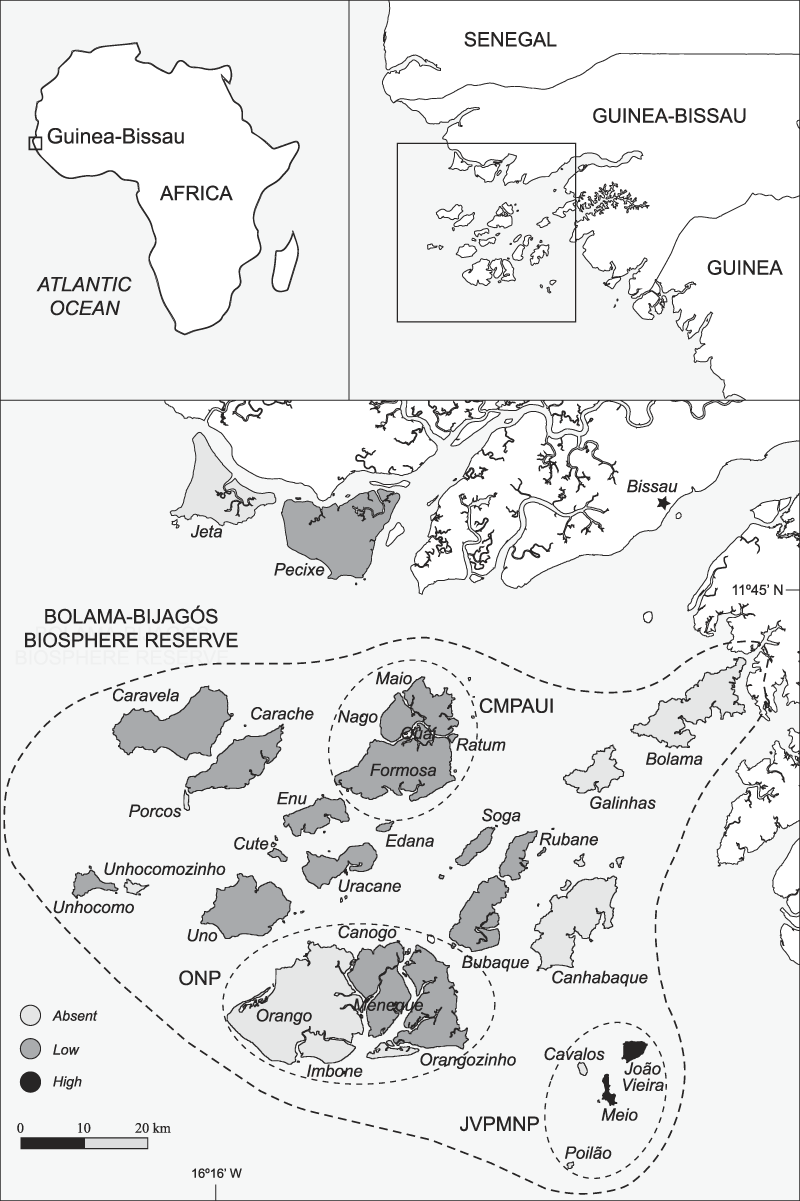
The study focused on a group of islands off the coast of Guinea-Bissau, the majority of which comprise the Bijagós archipelago (approximately 88 islands and islets), together with the nearby islands of Pecixe and Jeta (Figure 1). The area has a tropical climate, with two distinct seasons: a dry season (from mid-November to mid-May) and a rainy season (from mid-May to mid-November). The mean annual temperature is 26.1° C and the mean annual rainfall is 2,000 mm. Apart from shallow marine waters, the environment is dominated by intertidal habitats with vast areas of mangrove, and terrestrial forest representing a relatively small fraction of the area covered by the islands (Table 1). Other habitats include grasslands and savannahs (Cuq Reference Cuq2013). Classified as a Biosphere Reserve by UNESCO in 1996, this archipelago includes three protected areas: Orango National Park (ONP), Communitarian Marine Protected Area of the Urok Islands (CMPAUI) and João Vieira-Poilão Marine National Park (JVPMNP).
Map of the study area, showing the protected areas of the Bijagós archipelago (ONP - Orango National Park, CMPAUI - Communitarian Marine Protected Area of the Urok Islands, JVPMNP - João Viera and Poilão Marine National Park), the location of the islands included in this study, and the distribution and abundance of Timneh Parrots.
Summary of characteristics of islands, survey effort, and indicators of parrot density for the islands of the Bijagós archipelago and Pecixe surveyed in this study.

Island surveys: interviews and line transects
We combined multiple methodological approaches to determine the status of Timneh Parrots throughout the study area. Due to logistical constraints, it was not possible to visit all islands and so surveys were targeted on 27 of the larger islands, selected due to their size, the presence of suitable habitat, and existing knowledge on the status of parrot populations. We visited all islands with an area greater than 1.8 km2, which included all islands with permanent human settlements as well as all islands that occur within the three protected areas. Exceptions were made for five islands for which existing knowledge, based on previous surveys, enquiries with parrot trappers and recent visits by ornithologists, indicated that Timneh Parrots are absent, suggesting further surveys at this time were unnecessary. These include the four inhabited islands of Bolama, Canhabaque, Galinhas and Jeta, and the uninhabited island of Porcos. A total of 32 islands are thus included in this study.
Surveys were conducted between 2013 and 2015, with a subset of the islands visited in each year (Table 1). Interviews were conducted on 24 islands with members of the local communities. Given that baseline data are lacking for most islands, and that the survey team was only able to visit each island for a relatively short period, surveying local knowledge to leverage “community wisdom” can provide valuable insight into population processes and conservation problems (Surowiecki Reference Surowiecki2005, Predavec et al. Reference Predavec, Lunney, Hope, Stalenberg, Shannon, Crowther and Miller2016). Interviewees were initially selected based on recommendations by community leaders and selection subsequently followed a snowball sampling approach (Goodman Reference Goodman1961) to identify additional participants likely to have knowledge relevant to the study’s aims. In total, 69 interviews were conducted involving 207 people; participants were interviewed together in groups in some instances. Although data collected from local knowledge can be comparable to those collected using conventional methods (Danielson et al. Reference Danielson, Burgess and Balmford2005, Jones et al. Reference Jones, Andriamarovololona, Hockley, Gibbons and Milner-Gulland2008, Parry and Peres Reference Parry and Peres2015), the characteristics of observers such as age (Turvey et al. Reference Turvey, Barrett, Yujiang, Lei, Xinqiao and Xianyan2010) and experience (Cerqueira et al. Reference Cerqueira, Cohn-Haft, Vargas, Nader, Abdretti, Costa, Sberze, Hines and Ferraz2013) can influence ability to detect a species accurately. The sampling approach meant that all participants were men, as they were considered to have greater direct experience of parrot behaviour and ecology, since within local culture they typically spend a much greater proportion of their time engaged in activities in forested areas, and traditionally only men trap parrots. The semi-structured interviews covered a wide range of topics, including aspects of parrot ecology relevant to investigations conducted in parallel. Specific questions aimed at establishing local knowledge on the status of populations included: i) have you seen Timneh Parrots on this island in the last year? and ii) what is the largest group you have seen? Interviews were conducted in Creole and translated to English by PC and MH.
Between March and June in 2014 and 2015, at the same time that islands were visited to conduct interviews, observational field surveys were also conducted along line transects (Sutherland et al. Reference Sutherland, Newton and Green2004) Forty-two transects were surveyed covering a total of 132.6 km across 19 islands. The distance surveyed on each island varied between 2.9 and 20.6 km, depending on the size of the island and accessibility. Transects were located along existing trails, since it was not feasible to position transects at random within the landscape, due to the difficulties accessing many areas of each island. All surveys were conducted between 06h30 and 09h30, with each transect surveyed only once. Two observers walked together on each transect at approximately 2 km h-1. The duration of each transect was recorded and every time an individual or group of Timneh Parrots was observed, records were made of the number of individuals and the perpendicular distance of the group from the trail. In addition, their behaviour (perched, flying or feeding) was noted. During this period, the islands of Poilão and Cavalos were also visited by some of the authors and are included in this study, although no interviews nor transects were conducted; these islands are uninhabited, very small (1.8 and 2.1 km2, respectively) and were searched non-systematically for parrots.
On the islands of João Vieira and Meio, which were the focus of additional research and conservation efforts due to their relatively high parrot population densities and status as protected areas (Lopes et al. Reference Lopes, Martin, Henriques, Monteiro, Regalla and Tchantchalam2018a), we additionally conducted counts of Timneh Parrots along flyways (Sutherland et al. Reference Sutherland, Newton and Green2004). The location of these points was chosen based on previous knowledge on the flight paths used every day by Timneh Parrots to move between nesting and feeding areas (Amuno et al. Reference Amuno, Massa and Dranzoa2007, Lopes et al. Reference Lopes, Henriques, Monteiro, Martin, Catry, Catry and Regalla2018b). We established two points on João Vieira (JV1 and JV2), located in an open savannah habitat, with very good visibility in all directions (coordinates UTM 28 N: 0431310/1221740 and 0429853/1219793). On Meio, we established three points (M1, M2 and M3), with two located on beaches in opposite sides of the island and one in an open area in the centre of the island similar to the points used on João Vieira (coordinates UTM 28 N: 0426868/1213486, 0426499/1213744 and 0427305/1213540). An initial full day count suggested that parrots are most active along these flyways during the early morning and late afternoon. These points were then monitored from 06h00 to 09h30, and from 16h30 to 19h30, during which each flying parrot observation was recorded. We conducted a total of 48 counts between March and June 2014, 25 on João Vieira and 23 on Meio. These counts were intended to be part of a repeatable methodology for the local monitoring of Timneh Parrot populations and were additionally used to support the estimates of population size.
Estimates of abundance and trends
Distance sampling along line transects is one of the most common methods for estimating abundance and densities of parrot populations (Marsden and Royle Reference Marsden and Royle2015, Dénes et al. Reference Dénes, Tella and Beissinger2018). However, this method can only be effectively applied when densities are relatively high (Marsden et al. Reference Marsden, Loqueh, Takuo, Hart, Abani, Ahon, Annorbah, Robin and Valle2015). The low densities found within the study area resulted in only 22 encounters of perched parrots despite considerable survey effort. This is substantially lower than the recommended minimum of around 80 encounters required to generate reliable detection functions (Buckland et al. Reference Buckland, Anderson, Burnham, Laake, Borchers and Thomas2007). It has been suggested that basic encounter rates (number of birds encountered per hour) can be used in situations where parrots are too rare to be surveyed effectively using distance sampling, to indicate local abundance (Marsden et al. Reference Marsden, Loqueh, Takuo, Hart, Abani, Ahon, Annorbah, Robin and Valle2015). Given that estimates of population size are often solicited by decision-makers and feed into processes such as the IUCN Red List (IUCN 2012), we report basic encounter rates and use these in combination with information from additional sources, including flyway counts on the islands of João Vieira and Meio, to propose an initial coarse estimate of the number of parrots in Guinea-Bissau.
A semi-quantitative assessment of recent population trends was inferred from the responses received during interviews with local community members. Interviewees were asked if they see more or fewer parrots than in the past and since when have they seen a change in numbers. A total of 41 responses were received and their answers aggregated to determine the proportion of respondents who reported positive, negative or no change in numbers over specific time periods spanning 10–30 years.
Drivers of parrot density between islands
To explore the factors which drive variation in the density of parrots between islands, we examined the relationship between several island characteristics, hypothesised to be linked to parrot density, and an ordinal index of parrot density based on the synthesis of information from multiple sources. We established three categories of abundance which were considered as an ordinal response variable: islands on which enquiries and direct observations suggest that parrots are not present were categorised as ‘absent’, islands on which parrots are known to be present but encounter rates were between 0 and 1.5 groups hr-1 were considered as having ‘low’ density and islands with encounter rates >1.5 groups hr-1 and up to 6.7 were considered ‘high’ density islands. In total, information was available for 32 islands.
We built a statistical model to examine the relationship between three variables, fitted as fixed effects in our model. Following the results of the enquiries, and based on assessments of threats to closely related parrot species (BirdLife International 2017b, Annorbah et al. Reference Annorbah, Collar and Marsden2016), we hypothesised that the availability of suitable habitat and the risk of exploitation for the pet trade would be likely determinants of parrot distribution among the islands. We used total forest area as a proxy measure of habitat availability and obtained this from a supervised classification of a multi-temporal scheme of satellite imagery classification. We used two cloud-free Landsat 8 images (Scenes LC82040522014318LGN00 from 2014-11-14 and LC82040522015081LGN00 from 2015-03-22) to extract Tasseled Cap (Huang et al. Reference Huang, Wylie, Yang, Homer and Zylstra2002) synthetic bands (Greenness, Brightness and Wetness) and vegetation index ratio (NDVI) from Landsat OLI bands 2-7. We trained a Random Forest classifier (Breiman Reference Breiman2001) with 500 trees and four main Land cover types (Forests, Water, Mangroves and Other terrestrial habitats). We split a ground truthing sample obtained in 2014 into training (75%) and test (25%) subsets to obtain an overall accuracy above 98% for the test set. The resulting classification map was relabelled to a binary Forests/Non-forest map. Total forest cover was obtained for each island. Classification procedure was performed with R software (R Core Team 2015) with ‘raster’ (Hijmans Reference Hijmans2015) and ‘caret’ (Kuhn Reference Kuhn, Wing, Weston, Williams, Keefer, Engelhardt, Cooper, Mayer, Kenkel, Benesty, Lescarbeau, Ziem and Scrucca2015) packages.
We used the distance to the nearest island with permanent human settlements as a proxy measure of exploitation pressure, under the assumption that the costs of travel reduce the incentive to exploit more remote populations. Traditionally, communities have relied on non-motorised boats to move between islands and the strong tidal flows make long crossings highly risky. Distances ranged between 0 km (island inhabited by people) to 32.5 km. Following observations of movements of parrots between islands (P. Catry pers. obs.), we further hypothesised that the population of Timneh Parrots may effectively function as a metapopulation and that the proximity of each island to the nearest island inhabited by parrots may also be an important determinant of density. The small sample size (n = 32 islands) precluded the inclusion of additional explanatory variables or the examination of any interaction effects between these three fixed effects.
These data were fitted using a Bayesian generalised linear model with an ordinal error structure using the R package ‘mcmcglmm’ (Hadfield Reference Hadfield2010). An uninformative prior was used with V = 1 and residual variance fixed at 1. The number of model iterations was 650,000 with a burn-in of 100,000. Autocorrelation and convergence were checked visually and we report parameter estimates and 95% confidence intervals.
Results
Parrot distribution and abundance
Of the 24 islands surveyed through interviews with members of local communities, Timneh Parrots were reported by island residents to be recently present on 20 islands: 19 in the Bijagós archipelago and the nearby island of Pecixe (Figure 1). The accounts of local communities indicated that Timneh Parrots occurred in very low numbers on the majority of islands, with groups encountered infrequently and typically numbering between three and 10 individuals, occasionally reaching 30 individuals.
Of the 19 islands on which transect surveys were conducted as part of this study, parrots were observed directly on eight. On these islands, a total of 69 groups were encountered, comprising 225 individuals, in groups ranging between 1 and 30 individuals. Of these, 22 groups were recorded perching or feeding and 47 flying.
When combining the information produced by the different survey methods and the experience of the authors on the islands of Poilão e Cavalos, with the information on five further islands that already existed prior to this study, Timneh Parrots are known to be present on 22 of 32 islands, corresponding to 70% of the larger (area > 1.8 km2) Bijagós islands and Pecixe.
The majority of parrots (78% of groups and 84% of individuals) were observed on the two uninhabited islands of João Vieira and Meio, both within the JVPMNP. Mean encounter rates on these islands were 5.41 groups hr-1. In contrast, mean encounter rates on the other 15 islands were relatively low at 0.23 groups hr-1. Group sizes differed in a similar manner, with the maximum group sizes encountered on João Vieira and Meio containing 30 and 13 individuals respectively, while the largest group seen on all other islands was eight (Table 1). The distribution of Timneh Parrots within the Bijagós islands is presented in Figure 1. Parrots were considered absent from 10 islands. Twenty islands were categorised as having a low density and two as having high density
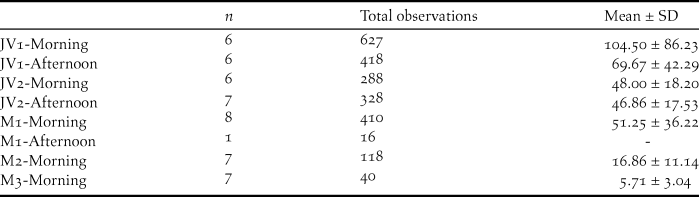
On João Vieira, 25 flyway counts were made at the two count points, during which a total of 1,661 observations of parrots were made. On Meio, 23 counts were conducted at the three count points during which 582 observations were made. The maximum number of observations recorded for João Vieira on a single 3.5-hour count was 261 at one point and 78 at the other. For Meio, the maximum number of observations recorded in one count was 120. Means of the number of observations recorded for each point are presented together with standard deviations in Table 2. Groups observed on flyways were generally small - groups of only two individuals accounted for more than 50% of the observations and groups of 1–3 individuals accounted for more than 80% of the observations. Larger groups were occasionally observed – on João Vieira the maximum recorded group size was 42, and on Meio the largest group had 22 individuals.
Results of flyway counts conducted at five sites on the islands of João Vieira (JV) and Meio (M) during two periods of the day (morning and afternoon); n - number of survey periods; Total observations - total number of parrots recorded, Mean ± SD – mean number of observations per period (± SD). Note that counts covered the hours of parrot feeding activity with movements in opposing directions (possibly moving from and to feeding sites), and therefore almost certainly include repeated observations of the same individuals, hence numbers recorded overestimate the true number of individuals observed.
Trends in populations
Of the 42 interviews conducted with members of local communities on 19 islands during 2014 and 2015, 33 (79%) interviews from 17 (89%) islands reported that Timneh Parrot populations have declined over the last 30 years. One interviewed group claimed not to have sufficient experience to evaluate trends. On one island (Soga), locals reported that parrots occurred in similar numbers as in the past, and on another island (Cute), locals mentioned a recent increase in parrot numbers, but did not compare the current situation with a more distant past. Recent increases in parrot populations were mentioned in 18 (43%) interviews from 10 islands, but no detailed information on the exact timing of the increase could be obtained. During surveys conducted in 2013 on three additional islands (Formosa, Chediã and Nago), long-term population declines were reported on all three. No interviews were made on uninhabited Poilão, however the experience of researchers (Paulo Catry pers. obs., Castro Barbosa pers. comm.) that have visited the island regularly over the last 20 years indicates an apparent decline, with no observations recorded in recent years.
Factors associated with distribution and abundance
Parameter estimates and 95% credibility intervals for the three explanatory variables included in our model are presented in Table 3. Of the three variables, distance from permanent human settlement was found to be marginally positively associated with parrot abundance whereas distance from the nearest island with a parrot population was negatively associated with abundance. There was no indication that the total area of forest cover was associated with the abundance of Timneh Parrots, with 95% confidence intervals overlapping with zero.
Outputs of an ordinal response model examining the association of three variables hypothesised to be linked with variation in the density of parrots among islands.

Discussion
Our study found that although Timneh Parrots are widely distributed among the islands of the Bijagós archipelago and Pecixe, densities were generally low and perceived by members of the local communities to have declined in recent decades. There was considerable variation among islands, and while parrots were absent or at very low densities on some of the larger islands, there were notably higher densities on some smaller, remote and uninhabited islands.
The drivers of the observed variation in density among islands are likely complex and involve a number of factors acting in concert. The islands with the highest densities (João Vieira and Meio) are notable in that they are among a group of small islands on the edge of the archipelago and among the most inaccessible from the Guinea-Bissau mainland. Our analysis suggests that remoteness from permanent human settlements may be linked to local densities. The islands of João Vieira and Meio are owned by communities on the nearest island of Canhabaque through a traditional tenure system which has restricted the activities that take place on them. These restrictions mean that no permanent villages have been established on the islands, and although groups of villagers visit the islands for extended periods to practice shifting agriculture and harvest forest products, the extent of these activities is limited. Since 2000, these islands have been managed by the national institution for protected areas (IBAP) in collaboration with local communities, and form part of the João Vieira-Poilão Marine National Park. These islands also support globally important turtle nesting areas (Catry et al. Reference Catry, Barbosa, Paris, Indjai, Almeida and Benoit2009) and it is possible that their remoteness in combination with traditional protection may have played an important role in shielding Timneh Parrots as well as nesting turtles from levels of exploitation occurring in other areas.
The proximate factors that might link distance to human settlements with parrot densities are unclear but Timneh Parrots have been trapped as adults as well as harvested from nests as chicks to supply the pet trade, and this practice has likely taken place at unsustainable levels. Discussions during interviews revealed that trapping has been widespread among the islands and that once harvested, Timneh Parrots are taken to Bissau, where they likely enter the international market. Although Guinea-Bissau has reported only very few exports of Timneh Parrots (www.trade.cites.org: UNEP WCMC, Cambridge UK, downloaded 14th March 2018), the neighbouring countries of Senegal and Guinea have exported very large numbers and have at times been among the largest exporters of Psittacus parrots (Martin Reference Martin2018b). Given the slow life-history of this species, the trapping of adults can be particularly detrimental to populations (Valle et al. Reference Valle, Collar, Harris and Marsden2018). The recent transfer of Timneh Parrots to Appendix I of CITES, prohibiting international trade in wild-sourced specimens and requiring the verification of captive-breeding facilities aims to reduce demand for wild parrots and may help reduce the pressure from international markets on local populations in Guinea-Bissau.
Timneh Parrots are secondary cavity nesters and are reliant on the natural generation of large cavities, which tend to occur in larger and more mature trees (Lopes et al. Reference Lopes, Martin, Henriques, Monteiro, Regalla and Tchantchalam2018a). An investigation of the distribution of Timneh Parrots nest cavities on the islands of João Vieira and Meio, conducted in parallel to this study, found that nests occur disproportionately in the largest trees and also tend to be clumped in distribution (Lopes et al. 2018). Large trees are used for the construction of canoes, which are used for transport around the islands and for fishing. A scarcity of large trees due to selective felling or abiotic factors such as soil type may explain why Timneh Parrots are scarce or absent on islands that have considerable areas of forest cover. An ongoing study examining whether Timneh Parrots will occupy artificial nest cavities when available will inform the potential for using this approach to address potential nest site limitation.
It is further possible that the conversion of forest for agriculture may also reduce food availability. Timneh Parrots have been recorded feeding on a wide diversity of almost 40 plant species and a range of plant parts including fruits, seeds and even sap (Lopes et al. Reference Lopes, Henriques, Monteiro, Martin, Catry, Catry and Regalla2018b). However, the extent to which Timneh Parrots rely on different food sources at different times of the year and the availability of these foods within different habitat types remains unclear.
It is also possible that some areas of mangroves provide nest cavities or other important resources in addition to terrestrial forests, which creates extra variability not captured by our modelling exercise. The potential importance of mangroves was suggested by several interviewees and an ad hoc visit to a site reported as containing nesting pairs revealed what appeared to be at least one active nest in mangroves. This nesting area, close to the island of Orangozinho, yet difficult to access, may explain why several groups of Timneh Parrots were seen on that island despite it having a high human population and little forest cover. Its close proximity to forested areas of the island of Canogo could also play a role.
The encounter rates recorded on most islands indicated that densities were generally very low and comparable with the lowest densities recorded for Psittacus parrots elsewhere in their range (Marsden et al. Reference Marsden, Loqueh, Takuo, Hart, Abani, Ahon, Annorbah, Robin and Valle2015). However, in contrast, the density observed on the island of João Vieira is the highest recorded to date for Timneh Parrots and comparable with the very high densities observed on the island of Príncipe for Grey Parrots (Marsden et al. Reference Marsden, Loqueh, Takuo, Hart, Abani, Ahon, Annorbah, Robin and Valle2015, Valle et al. Reference Valle, Collar, Harris and Marsden2017). Although estimating the population size of Timneh Parrots of Guinea-Bissau was not an aim of this study at the outset, in order to explore the relative importance of the islands of João Vieira and Meio versus the other islands of the Bijagós, we attempted to infer the population of these islands based on available data on encounter rates and flyway counts. We used the relationship between encounter rates (ER) and Psittacus parrot densities estimated using distance sampling reported by Marsden et al. (Reference Marsden, Loqueh, Takuo, Hart, Abani, Ahon, Annorbah, Robin and Valle2015) to infer crude estimates of densities on the two groups of islands. The mean ER for the islands of João Vieira and Meio, was 5.41 groups hr-1 which corresponds to an approximate density of 59 parrots km-2. The mean ER on all other islands was 0.23 groups hr-1, which corresponds to an approximate density of 0.12 parrots km-2. Multiplying these values by the area of the islands, and excluding areas where parrots are confirmed absent, we estimate approximately 754 individuals on the islands of João Vieira and Meio and approximately 557 individuals on all other islands of the Bijagós archipelago and Pecixe. For João Vieira and Meio we compared this estimate with the data from flyway counts. The maximum numbers counted at each count point on João Vieira were 261 and 78 and on Meio the maximum recorded was 120 individuals. This results in a total of 459 for both islands. However, as these counts covered the hours of parrot feeding activity and we often watched movements in opposing directions (possibly moving from and to feeding sites), we almost certainly made repeated observations of the same individuals and as such these numbers overestimate the true number of individuals observed. Furthermore, we were conservative in the delimitation of areas where parrots are absent in other islands (beyond JVPMNP), and therefore when we multiply estimated densities by the (presumably) occupied area we are overestimating the population. Based on the above we tentatively propose there are at least several hundred, but probably less than a thousand Timneh Parrots in Guinea-Bissau and that at least half of the population likely occurs within the JVPMNP on the islands of João Vieira and Meio.
Local community members throughout the archipelago generally perceived that parrot populations have declined in living memory, a finding which was also suggested by previous studies (Clemmons Reference Clemmons2003). A small number of interviewees reported there has been an increase in numbers of parrots in the last decade, raising the possibility that populations may be beginning to stabilise or even recover, possibly in response to efforts to discourage trapping and encourage pro-conservation behaviour within protected areas.
Implications for conservation
Our findings highlight the precarious situation of Timneh Parrots in Guinea-Bissau with a small and fragmented population and the majority of individuals aggregated in one area, highlighting the importance of its protection. The Bijagós archipelago was recognised as a UNESCO Biosphere Reserve in 1996 and contains three formally protected areas; the Orango National Park, João-Vieira Poilão Marine National Park (JVPMNP) and the Communitarian Marine Protected Area of the Urok Islands. These protected areas encompass 11 of the islands known to be occupied by Timneh Parrots. To date, initiatives aimed at encouraging pro-conservation behaviour have occurred within these protected areas. These have contributed to increase environmental awareness and have discouraged trapping for the pet trade. Conservation efforts have been particularly targeted within the JVPMNP, which was highlighted as a key site for Timneh Parrots. These efforts have involved working with the local communities who participate in managing the areas along with the national park authority, to protect important habitat features, such as nest trees and discourage the harvesting of chicks from nests. Among other activities, former parrot trappers have been employed to assist with the monitoring and protection of nests and the installation of artificial nest cavities. It is critical that these activities are sustained and opportunities to develop additional incentives for communities, such as ecotourism, are explored. Furthermore, such activities should be accompanied by annual monitoring to track their impact and detect any additional threats. Counts at flyways, reported here, provide a baseline index of local abundance against which future changes can be assessed using a standardised methodology.
Acknowledgements
We are very thankful to Alfredo Simão da Silva, Justino Biai, Emanuel Ramos, Domingos Betunde and Castro Barbosa (from IBAP) for all the support received throughout this project, and to José dos Santos, César Banca, Seco Cardoso, Paulino and Saido for the help when travelling around the islands. Thanks are also due to Edna Correia and Joana Romero, who helped in the collection of data in the field. Funding for this work was provided by the MAVA Foundation through a project granted to IBAP (Institute for Biodiversity and Protected Areas, Guinea-Bissau) – ‘La recherche participative au service de la conservation de la biodiversité du Parc National Marin de João Vieira - Poilão (Archipel des Bijagós)’, FCT – Portugal (UID/MAR/04292/2013) granted to MARE - Marine and Environmental Sciences Centre, SOS-Save Our Species through a project granted to The World Parrot Trust - ‘Conserving Timneh parrots (Psittacus timneh) through protection of key breeding areas and the enforcement of wildlife trade legislation in West Africa’, ZooMarine Portugal and The Bridging Peace Foundation.



