


The Hu–Wen Administration: A New Era of Social Policy
President Hu Jintao 胡锦涛 and Premier Wen Jiabao 温家宝 took office in 2003 and their term of service ended in 2013. During their administration, China had the highest continual economic growth rate in its history and contributed the most to the world's poverty reduction efforts. The economic growth rate averaged 10.25 per cent annually during this period, and the poverty rate dropped from 32 per cent in 2002 to 11 per cent in 2010, based on the World Bank purchasing power parity (PPP) poverty line of $1.90 per person per day.Footnote 1 However, this period also saw an elevated level of income inequality and a greater number of public protests than previous decades. The national Gini coefficient increased from 0.44 in 2000 to 0.48 in 2003 and rose to 0.49 by 2008. It then declined to 0.47 by 2012 but remains among the most unequal third of all countries.Footnote 2 The number of small, local protests (or “mass incidents,” quntixing shijian 群体性事件) rose from about 74,000 in 2004 to over 180,000 by 2010.Footnote 3
Adding further tension to these intertwined trends, during this decade, China also experienced significant demographic and socio-economic transitions in three important regards: rapid urbanization, accelerated population aging, and widespread use of telecommunication and social media. The share of the population living in urban areas increased from 39 per cent in 2002 to 53 per cent in 2012,Footnote 4 and the number of migrant workers nearly tripled from 94 million in 2002 to 263 million in 2012, representing 34 per cent of the entire labour force in China.Footnote 5 The 2010 census showed that the number of people aged 60 and above was 178 million, accounting for 13.3 per cent of the population, and those aged 65 and above accounted for 8.9 per cent of the population, up by three and two percentage points respectively from the 2000 census. Probably more important than its large size, the speed of population aging surpassed projections made by both the Chinese government and the United Nations, indicating greater challenges ahead in old-age support than anticipated.Footnote 6
This decade also witnessed rapid developments in mobile communication as well as internet and social media use among the Chinese people. The number of internet users increased from 45.8 million (among which 2.8 per cent used mobile and other non-computer-based connections) in 2002 to 538 million (among which 72.1 per cent used mobile phones) in 2012, reaching a population coverage rate of 40 per cent.Footnote 7 Social media, including blogs and microblogs (boke he weibo 博客和微博) helped expedite information flow and expose the widening income gaps and the imbalances in social benefits enjoyed by different population groups. Such exposure promotes the awareness and questioning of these disparities among the Chinese people and applies pressure to the government to expand social benefit coverage and lift living standards for those left behind.
Facing these mounting challenges and backed by the strong fiscal capacity, the Hu–Wen administration launched a series of social policy reforms to bridge the urban–rural gaps in social protection and move China toward a more integrated and balanced social welfare system. These included establishing a national social insurance system, building a comprehensive social assistance system, a grand campaign of “Building a new socialist countryside” (jianshe shehuizhuyi xinnongcun 建设社会主义新农村), and efforts to improve labour conditions and social protection for rural-to-urban migrants.
What was the nature of these social policy reforms during the Hu–Wen era? Scholars have analyzed their significance and directions from different perspectives. Nearly all agreed that this decade marked a milestone in China's social policy development.Footnote 8 For example, Jane Duckett characterized these reforms as a compromise between the Party-state's responsibility to provide basic social goods and safety nets and the continued dominance of the market and the private sector.Footnote 9 Mark Frazier highlighted the government's push for universal coverage and unified social insurance and assistance systems across the urban–rural divide, despite the persistent large gaps in benefits. He argued that the continuing urbanization trend would drive greater political demands for equal access and benefits and erode the differences between urban and rural social welfare systems.Footnote 10
Joe Leung and Yuebin Xu considered the Hu–Wen era – or, more precisely, the year 2006 when Hu Jintao announced a new developmental directive to construct a harmonious society (hexie shehui 和谐社会) – as the third turning point in China's social welfare history, after the first turning point of the establishment of the People's Republic of China in 1949 and the second turning point of 1978 when the market economy was launched. They argued that, at this third turning point, the Chinese social welfare system started to move from its role of supporting economic growth to a more balanced and inclusive model of social development.Footnote 11 According to Tao Liu and Li Sun, the theme of the Hu–Wen social policy reforms was to “care for the people,” a term used by the Chinese media that highlighted the role of social protection and the improvement of the well-being of vulnerable groups.Footnote 12 Wang concluded that these reforms signified the beginning of China's social policy era.Footnote 13
Despite the differences in perspective and emphasis, these scholars agreed that the social policy reforms during the Hu–Wen era were directed at a more integrated, equitable, and unified social welfare system. While urban residents, especially urban employees, continued to enjoy advantages in social protection, mostly from social insurance programmes, rural residents and migrants gained access to pensions, health insurance, dibao 低保, and other social benefits. The urban–rural gaps in social benefits persisted but began to narrow during this period.
How did the size and structure of social benefits change as a result of these policy reforms? How did the social policy reforms affect income inequality? Did they reduce the income inequality gap between the rich and the poor and thus enhance social harmony and leave a progressive legacy? Using the national China Household Income Project 2002, 2007 and 2013 data, this article provides new evidence to answer these important questions and offer policy implications.
The rest of the article is organized as follows. The next section offers a brief overview of the major social policy reforms during the Hu–Wen era, followed by a section reviewing the existing empirical evidence on how social policy changes during this period affected income inequality and presenting our hypotheses. Data and methods are introduced next, followed by the results section that provides answers to the research questions. The final section concludes and discusses policy implications and future directions.
Social Policy Reforms during the Hu–Wen Era
Four sets of major social policy reforms took place during the Hu–Wen era: the establishment of a social insurance system, the building of a social assistance system, the campaign of “Building a new socialist countryside,” and the efforts to improve the labour conditions and social protection for migrants. A common theme for all these reforms was a push for the unification of the unequal and fragmented urban–rural–migrant systems. While these reforms have helped narrow some of the urban–rural–migrant gaps, the imbalance across these divisions still persists and may take a much longer time to eliminate.
First, the most important social policy reform during the Hu–Wen era was the establishment of a comprehensive social insurance system. The two pillars of modern social insurance systems, pensions and health insurance, were both expanded to provide coverage to urban non-employees, rural residents and migrants. The urban–rural gaps in benefit levels persisted, but began to narrow. The issuance of the 2010 Social Insurance Law (Shehui baoxian fa 社会保险法) was a milestone in social policy development and a major achievement of the Hu–Wen administration in building a harmonious society. This system provided a floor of social protection for the Chinese population regardless of employment status and across the urban–rural division.Footnote 14
Specifically, the former urban pension system covered only civil servants and employees of public institutions and state-owned enterprises (SOEs) and was paid for by central revenue and contributions made by SOEs. Since 1991, following a series of local pilot projects, the State Council worked to transform the previous pay-as-you-go pension system for urban employees (chengzhen zhigong yanglao baoxian 城镇职工养老保险) into a dual system of social pooling and individual accounts. The social pooling system was earnings-based, pay-as-you-go, with defined benefits, while the individual accounts system relied on mandatory individual contributions. In 2005, the State Council issued a new decision that required that basic pensions take into account both average and individual wages before retirement and the number of years of individual contributions.
Urban non-employees and rural residents, however, were mostly left out of the pension system. The Hu–Wen administration worked to address this gap during its second term. Based on several pilot projects in different cities that began in 2009, the urban resident pension system (chengzhen jumin yanglao baoxian 城镇居民养老保险) was established nationwide in 2012 for urban non-employees, with funding from both government subsidies and individual contributions. Based on pilot projects during the early 2000s, the government launched the New Rural Social Pension System (NRSPS, Xinxing nongcun shehui yanglao baoxian 新型农村社会养老保险) in 2009 to provide pension coverage for rural residents. It also provided a national framework to allow migrant workers to participate in the basic pension system. This system included a non-contributory basic pension fully (in the central and western regions) or half (in the eastern region) funded by the central government and a highly subsidized personal savings account. In 2014, the rural pension system was unified with the urban resident pension system to allow equal access and quality of pension systems for urban and rural residents and facilitate rural–urban mobility.Footnote 15
The downside of these expansions was that the benefit levels for the systems for urban non-employees and rural residents remained very low on average and varied substantially across localities.Footnote 16 In many localities, the average pension benefits were much lower than the dibao assistance standards, which were meant to reflect the local minimum level of livelihood. The participation rate was especially low among poor residents due to the lack of resources and motivation for making monthly contributions. Migrant workers, who were allowed to participate in the rural pension system, were often reluctant to do so due to uncertainty about the ability to carry over the benefits across localities. Urban employees, meanwhile, received pension benefits in accordance with their job positions and ranks.
The transformation of China's health insurance system during this period paralleled that of the pension system. The expansions in the health insurance system was signified by the 2009 State Council issuance of the Implementation Plan for the Priorities of the Health Care Reform (Yiyao weisheng tizhi gaige jinqi zhongdian shishi fang'an 医药卫生体制改革近期重点实施方案 [2009–2011]), which aimed to expand basic medical insurance coverage and government subsidies at various levels and to provide a full array of basic public health services. The goal was to firmly establish an equal and unified health insurance system for all urban and rural residents by 2020.Footnote 17
Similar to the pension system, the health insurance system in China also had three different schemes to cover the respective groups of urban employees, urban non-employees, and rural residents. The Hu–Wen era saw the establishment and expansion of health care coverage to urban non-employees and rural residents as well as migrants, and curtailing of the formerly mostly free health services to civil servants and employees of government-affiliated institutions. The benefit levels still remain significantly unbalanced across the groups.
The Urban Employee Basic Medical Insurance (UEBMI, Chengzhen zhigong jiben yiliao baoxian 城镇职工基本医疗保险) has been mandatory for employees in all urban firms, government institutions, and not-for-profit organizations since 1998 and is optional for township and individual-owned businesses.Footnote 18 Initially covering only employees with urban hukou 户口, the UEBMI was expanded during 2009–2011 to also cover rural-to-urban migrant workers.Footnote 19 In 2012, it covered 199 million working urban employees and 66 million urban retirees. Civil servants and those working in government-affiliated institutions used to receive between 90 and 100 per cent health coverage at state expenses (gongfei yiliao 公费医疗). To narrow the gap between this group and other employees, since 1998, the State Council has required provincial governments to gradually abolish the separate insurance scheme for this group and merge them into the UEBMI.Footnote 20 By March 2016, 26 of the 31 provinces abolished this scheme.Footnote 21
The Urban Resident Basic Medical Insurance (URBMI, Chengzhen jumin jiben yiliao baoxian 城镇居民基本医疗保险) was piloted in 79 cities across the country in 2007 and implemented nationwide in 2010 to provide health coverage for urban non-employees, including children, older adults who were ineligible for the UEBMI, and the poor and disabled who were not working.Footnote 22 The premiums for the URBMI are set to be much lower than those for the UEBMI and the benefits are also significantly lower.Footnote 23 By 2013, 300 million urban residents participated in the URBMI, which surpassed the goal set by the Ministry of Health in 2011.Footnote 24
The New Rural Cooperative Medical System (NRCMS, Xinxing nongcun hezuo yiliao zhidu 新型农村合作医疗制度) was initiated by the State Council in 2002 and fully implemented nationwide in 2008. It is a voluntary health insurance programme for rural residents, with low premiums and low benefits and heavily subsidized by the central and local governments.Footnote 25 By 2013, NRCMS's coverage rate reached 98.7 per cent nationwide with 802 million participants.Footnote 26
Second, a comprehensive social assistance system was built gradually over time, centring around the Minimum Livelihood Guarantee (dibao), with supplementary medical, education, housing, and temporary assistance programmes while integrating the traditional sanwu and wubao (三无和五保) programmes into this system.Footnote 27 This system was formally established in the 2014 Social Assistance Temporary Regulations (Shehui jiuzhu zanxing banfa 社会救助暂行办法) during the Xi–Li 习李 administration. The centrepiece of this system, dibao, was established in cities nationwide in 1999 and was expanded significantly during 2001–2002. In 2007, it was further expanded to rural areas to provide a much-needed safety net for the rural poor. From 2002 to 2013, the total dibao expenditures kept increasing in both urban and rural areas, and the pace of increase was much faster for rural than urban dibao. The population coverage of urban dibao peaked at 4.3 per cent in 2003, but then declined gradually to 2.8 per cent by 2013. Rural dibao’s population coverage, however, kept rising from 5.0 per cent in 2007 to 8.6 per cent in 2013, signifying a shift in the government's priorities from urban to rural poverty.Footnote 28
In addition, a series of supplementary social assistance programmes were rolled out gradually during the Hu–Wen era to offer extra support to families in need. Medical assistance was initiated in rural areas in 2003 and in urban areas in 2005. In 2007, it was implemented nationwide to provide cash subsidies – mostly through reimbursements – in support of paying for health insurance premiums, doctor visits, and inpatient treatments for those in need. In 2004, the government started to provide education assistance to children from low-income families. These included free compulsory education for sanwu and wubao children, tuition and fee waiver and boarding subsidies for dibao children in compulsory education (liangmian yibu 两免一补), and subsidies for high school education when necessary. In 2007, cash subsidies for housing began to be provided in the form of housing assistance in urban areas, while rural families residing in shabby or dangerous housing received priority for renovations supported by the government. In 2014, the central government instituted a temporary assistance programme to offer cash and in-kind subsidies as well as referrals for services to individuals and families facing urgent or extreme difficulties due to disasters or severe illness.Footnote 29
Third, the government launched a grand campaign of “Building a new socialist countryside” in 2006 to improve the livelihood of rural residents. In addition to expanding pensions, health insurance, and dibao to rural areas, the government abolished agricultural taxes in 2006, eliminated tuition and fees in rural compulsory education, increased investments in rural infrastructure, and provided a series of direct subsidies to support the production and welfare of farmers.Footnote 30 In 2011, the rural poverty line was raised from 1,196 to 2,300 yuan per capita per year to more accurately reflect the increasing living standards in rural areas and showcase the government's determination to combat rural poverty.Footnote 31
Fourth, the government made important efforts to improve the labour conditions and social insurance coverage for migrant workers. Most significantly, the 2008 Labour Contract Law (Laodong hetong fa 劳动合同法) required employers to sign labour contracts with employees and provide them with social insurance coverage. Migrant workers, who were mostly ineligible for such protection previously, benefitted most as a group from this law.Footnote 32 The government also encouraged cities to allow access to compulsory education for migrant children, which turned out to be difficult to implement in most cities, given local fiscal constraints. Some more developed cities, such as Shanghai and Ningbo, however, had accommodated over 70 per cent of migrant children into their public schools for compulsory education by 2010.Footnote 33
Taken together, policy changes in these four domains indicate that the Hu–Wen era shifted from centring on economic growth to the promotion of social harmony and human well-being, with a particular focus on providing social protection to the disadvantaged groups who were mostly ignored previously. Part of the government's motivation for making these changes was to maintain social stability, as clearly stated in the 2010 Social Insurance Law, and warrant the legitimacy of its regime. These changes manifest China's move toward the unification of the long-segregated urban, rural, and migrant systems, although such changes face continued challenges and difficulties.
Social Policy and Income Inequality: Existing Evidence and Hypotheses
In general, progressive social policies redistribute resources from the rich to the poor and help narrow the income gaps between the low- and high-income groups. Regressive policies, conversely, draw resources from the poor and redistribute to the rich, therefore further widening the income inequality gap. Despite the increasing number of assessments on the significance and directions of the social policy reforms during the Hu–Wen era, rigorous quantitative evaluations of the progressivity or regressivity of these policy changes are still lacking. Several recent studies used national household survey data to provide evidence on how these social policy reforms affected income inequality.
Using the China Household Income Project (CHIP) survey data, Gao and colleaguesFootnote 34 demonstrated that the first half of the Hu–Wen administration (2002–2007) showed signs of the Chinese social welfare system moving toward progressivity, but the urban–rural gaps remained substantial and rural-to-urban migrants continued to be left behind in social protection. They argued that a modern welfare state was emerging in China, but it would remain divided along the urban–rural–migrant lines for quite some time.
Among the studies that focused on specific social policy changes during this period, Wang Yanzhong 王延中 and colleaguesFootnote 35 used 2012 survey data to analyse the redistributive effectsFootnote 36 of social insurance programmes. They found that social insurance income – including pensions, health, maternity, work injury and unemployment insurances – helped lower the overall Gini coefficient by 6.4 per cent. However, this redistributive effect was very unbalanced across the urban–rural–migrant populations: the urban Gini was reduced by 12 per cent, the rural Gini (among rural residents) by 3 per cent, and the migrant Gini only by 0.1 per cent. Across the different social insurance programmes, pensions – especially pensions for urban employees and retirees – had the most significant redistributive effect, lowering the Gini coefficient by 5.88 per cent. The majority of this reduction (5.3 per cent) was due to the pensions for urban employees and retirees, while the pensions for urban non-employees only lowered the Gini by 0.24 per cent and the NRSPS lowered the Gini by 0.32 per cent. Health insurance helped decrease the overall Gini by 0.49 per cent, with 0.27, 0.20, and 0.02 per cent respectively due to the NRCMS, UEBMI, and URBMI. The other social insurances – including maternity, work injury, and unemployment insurances – helped reduce the overall Gini by only 0.04 per cent. Based on these findings, the authors pointed out that the major problem with the Chinese social welfare system was the lack of social insurance and social assistance to the poor and vulnerable populations, particularly rural residents and migrants but also urban non-employees.Footnote 37
Focusing on social assistance, Shi Li 李实 and Sui Yang 杨穗Footnote 38 used CHIP 2007 data to examine the redistributive effects of the urban dibao. They found that, despite its sizable anti-poverty effects, dibao had very small impact on reducing income inequality. Specifically, dibao lowered the overall Gini by only 0.46 per cent, ranging from a reduction of 0.10 per cent in Beijing to 1.23 per cent in Gansu. The ratio between the average income of the highest and lowest income deciles was reduced by 3.19 per cent by dibao, ranging from 0.40 per cent in Beijing to 7.50 per cent in Gansu. Despite the growing number of recent studies on rural dibao,Footnote 39 most focused on its targeting performance and anti-poverty effectiveness while none examined its impact on income inequality.
Shuang Lu and colleaguesFootnote 40 examined the roles of social insurance and social assistance using data from the 2009 China Health and Nutrition Survey. They found that pensions had much greater impact on reducing income inequality than social assistance. Specifically, pensions helped lower the overall Gini coefficient by 0.0595 while social assistance – mainly dibao and subsidies for disabled persons – only helped lower the Gini by 0.0046. However, pensions were distributed regressively, helping raise the top–bottom quintile income ratio from 15.99 to 17.60. Social assistance, by definition, targeted the poor and helped reduce this ratio from 15.99 to 14.80. The authors also examined in-kind subsidies that were mostly employment-based (e.g., assistance for food, gas, coal, electricity and childcare) and found them to play a small but positive role in reducing overall income inequality and narrowing the top–bottom income gap.
Wanlong Lin and Christine WongFootnote 41 examined how direct subsidies to farmers under the “three rurals” (sannong 三农)Footnote 42 policies influenced income inequality. The direct subsidies included three sets: subsidies for farmland production, social welfare and public services (e.g., pensions, health, education and dibao), and living condition subsidies. Using administrative data during 2003–2009, they found that these subsidies played an increasingly greater role in narrowing the urban–rural income gap (e.g., urban–rural income ratio lowered from 3.42 to 3.26 in 2009). However, using data from a 2005 Ministry of Agriculture survey of farm households, the authors found that these subsidy programmes had a strikingly regressive effect, with higher-income households, households with a Party member, and households in richer regions gaining more from the subsidies.
Using CHIP 2002 and 2007 data, Shi Li and Terry SicularFootnote 43 examined the redistributive effects of the abolishment of agricultural taxes. Their estimates showed that the average tax rate paid by rural households dropped from 2.8 per cent in 2002 to 0.3 per cent in 2007, suggesting that the abolition of agricultural taxes and fees had positive distributional effects. This policy change particularly benefitted the low-income groups, with the average tax rate for the lowest income decile decreasing from 6.2 per cent in 2002 to 0.3 per cent in 2007, while that for the highest income decile declined from 1.5 to 0.4 per cent during the same period. However, the effect of this policy change on rural income inequality as measured by the Gini coefficient for rural areas was trivial – in fact, it raised the Gini value by 0.001 in 2002 and had no effect on the Gini in 2007.
Concerning migrants, Luo and SicularFootnote 44 used CHIP 2002 and 2007 data and found that income from migrant employment contributed to robust economic growth in rural households and helped reduce income inequality and narrow the urban–rural income gap. Focusing on the impact of the 2008 Labour Contract Law, a set of recent studiesFootnote 45 using different data sources found that the enactment of this law helped improve the labour conditions and social insurance coverage as well as the subjective well-being of migrant workers. With the protection of this law, migrant workers were more likely to sign a labour contract, receive higher wages, enrol in pensions, health, work injury and unemployment insurances, especially for those who gained a labour contract since the enactment of the law.
In summary, this set of empirical evidence suggests that, during the Hu–Wen era, social insurance – mainly pensions – had much greater impact on reducing income inequality than social assistance, mainly dibao. However, social insurance benefits were mostly regressive and helped further lift the relative positions of the well-off, while social assistance targeted the poor. In particularly, social insurance heavily favoured urban employees and retirees, with urban non-employees, rural residents and migrants lagging behind. Meanwhile, both the campaign of “Building a new socialist countryside” and the efforts to support migrants showed effectiveness in improving the life conditions of rural residents and migrants and helping narrow the urban–rural–migrant income gaps as well as overall income inequality.
Based on these findings, in this article, we offer new empirical evidence to address two interlinked research questions. First, how were the social policy changes during the Hu–Wen era reflected in the size and structure of social benefits for urban, rural and migrant families? Second, what were the redistributive effects of the various types of social benefits among the respective urban, rural and migrant populations? To preview our results, we find that the size of social benefits received by families increased due to the social policy expansions during this period, particularly for rural residents and migrants. The increase in social insurance income was larger than that of social assistance. In turn, social insurance benefits – particularly pensions – played an increasingly larger redistributive role during this period, while social assistance had a much smaller effect on reducing overall income inequality. Overall, social benefits during the Hu–Wen era helped reduce income inequality and left a progressive legacy.
Data and Methods
China Household Income Project (CHIP) data
We use CHIP 2002, 2007, and 2013 survey data to examine the changes in the size, structure and redistributive effects of the Chinese welfare system during the Hu–Wen era. CHIP is a repeated national cross-sectional study designed by a team of Chinese and Western scholars and currently under the auspices of the School of Economics and Business Administration at Beijing Normal University.Footnote 46 Despite the growing number of national household surveys in China during the recent years, CHIP remains one of the best data sources on household income and social benefits and thus is ideal for addressing the research questions of this study. The stability and continuity of the CHIP research team also help ensure the consistency in its study design and data quality across waves.Footnote 47 To test the reliability of the data, the CHIP team randomly selected about 200 households in each of the recent waves for return interviews. The verification data consistently matched the original data collected.
The CHIP samples were drawn from larger National Bureau of Statistics (NBS) samples using a multistage stratified probability method to achieve national representativeness. For the 2002 and 2007 waves, households were drawn from lists of households with official local urban or rural hukou to form the respective urban and rural samples. The urban and rural questionnaires were designed to capture the different income sources and structure of the two groups. However, as urbanization and migration accelerated, relying on hukou as the sampling criterion became no longer feasible or accurate. In 2012, NBS launched its first national household survey using the unified, residence-based sampling frame, which was stratified by province and based on the 2010 census. The sample households of CHIP 2013 were selected from the NBS sample using a multistage stratified probability method.
The most important consequence of this change in sampling strategy is the inclusion of rural-to-urban migrants in the urban sampling frame instead of using a separate sampling frame specially developed for migrants, which was the case for CHIP 2002 and 2007. The key difference is that the CHIP 2002 for the first time included a sub-survey of 2,000 migrant households, with the sample drawn from the same cities as those included in the urban survey. CHIP 2007 used a more systematic approach and purposely chose the cities most populated by migrant families to be in the migrant sample, yielding a sample size of 5,000 households from 15 cities. In the unified CHIP 2013 national sample, rural residents were considered the rural sample, urban residents with urban hukou were considered the urban sample, and urban residents with rural hukou were considered the migrant sample. Because migrants were not purposefully sampled, the sample size dropped to 957 households in 2013. The analyses in this study are based on the mutually exclusive urban, rural and migrant samples separately. Table 1 presents the CHIP sample sizes for the three years examined in this study.
Sample Sizes of the China Household Income Project (CHIP) Study by Year

Source:
Authors’ calculations using CHIP data.
To make the analysis results based on the CHIP samples representative of the national picture, the CHIP team constructed sampling weights for each wave, taking into consideration population distributions in east-central-west regions and, within each region, urban–rural–migrant population sizes. All analyses in this study are weighted and thus can be considered nationally representative at the region and urban–rural–migrant sub-group levels.
Measuring social benefits and their effects on income inequality
Taking advantage of the detailed income measures available in CHIP data, we define household final income as the sum of market income, social benefit income and private transfers, minus taxes, fees and social insurance contribution payments.Footnote 48 Market income includes wage income, net business income, property income (including income from selling and renting out property), and rental value of owner-occupied housing. Social benefits include pensions, health insurance, unemployment insurance, supplementary income, social assistance, housing, food and other in-kind benefits.Footnote 49 The inclusion of these various cash and in-kind benefits enables us to provide a comprehensive examination of the recent social policy changes as reflected at the household level. In addition, private transfers include remittance income sent back by members working away from home, elder support, alimony, and other gifts from family and friends. All incomes are calculated at the household per capita level and adjusted by provincial price deflators compiled by Brandt and HolzFootnote 50 and updated to 2013 by us.
The size of the total social benefits is measured by the percentage of social benefit income in the household final income. This measure has the advantage of taking into consideration the changes in overall income level over time and gauging the relative contribution of social benefit income. However, its limitation is that it does not reflect the actual level of social benefits, especially when compared across the urban, rural and migrant samples. The structure of social benefits is measured by the percentages of specific social benefits in household final income.
We investigate whether and to what extent the redistribution through social benefit transfers raised or reduced overall income inequality by comparing pre- and post-transfer income inequality levels as measured by Gini coefficient, the most widely used measure of inequality. If social benefits helped reduce income inequality during the study period, then it is reasonable to conclude that the Hu–Wen era social policy reforms indeed left a progressive legacy.
Size and Structure of Social Benefits
We first provide empirical evidence to answer the first research question regarding changes in the size and structure of the social benefits during the Hu–Wen era. The results show that, as measured by the percentage of social benefit income in household final income, the size of the urban social benefits decreased from 2002 to 2013, while those for rural and migrant families increased, as a consequence of the powerful push to expand social insurance and social assistance coverage in rural areas and for migrants during this period. Despite the convergence, the urban–rural–migrant gaps remained, with the size of urban social benefits still substantially larger than the rural and migrant ones. Across the three groups, pensions dominated the social benefit package, with noticeable gains by rural and migrant families in 2013. Rural families also gained transfer income through the “Building a new socialist countryside” initiative.
Figure 1 presents the changes in the size of social benefits for urban, rural and migrant families from 2002 to 2013. For the urban sample, the share of social benefits in household final income decreased from 26.9 per cent in 2002 to 20.1 per cent in 2007 and then to 17.5 per cent in 2013. The rural residents, however, saw their social benefit income rise substantially during this period, especially from 2007 to 2013. In 2002, social benefits only accounted for 0.7 per cent of rural families’ final income, which rose to 2.1 per cent by 2007. The expansions in pensions, health insurance and dibao in rural areas as well as policies aiming at “Building a new socialist countryside” (e.g., direct subsidies and abolishment of agricultural taxes) helped boost the rural social benefits during the second half of the Hu–Wen administration. By 2013, social benefits made up 6.4 per cent of rural families’ final income, a significant increase from the earlier years. Yet this still lagged far behind the social benefits for their urban peers, with the rural social benefits accounting for only about one-third of the urban ones on average (e.g., 6.4 per cent in rural areas as compared to 17.5 per cent in urban areas as a percentage of household final income in 2013). This remaining huge gap signifies the continued challenges to achieve a truly unified and balanced urban–rural social welfare system. It is important to note, however, that rural residents mostly have free access to land for housing and farm production, which is not captured in this calculation and thus contributes to the underestimation of rural social benefits. Some rural families, especially those living near cities, may gain income through renting out housing, which is counted as part of their market income as mentioned earlier in the Methods section. The decline in land expropriation during the Hu–Wen administration may have helped more rural families to keep land for housing and farmland production as well as generate rental income when possible.
Shares of Social Benefit Income in Household Final Income (%)
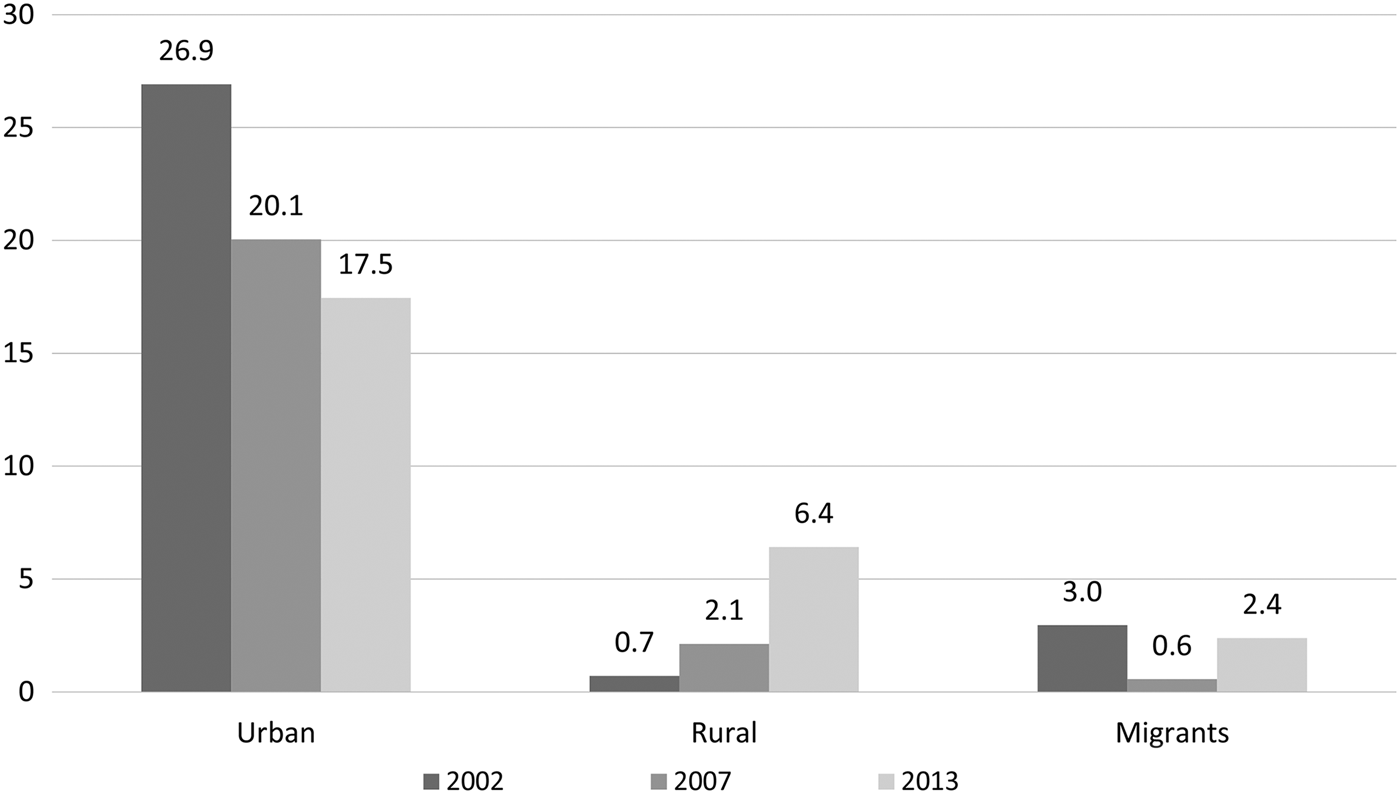
Figure 1 also shows that, among the migrants, social benefits made up 3.0 per cent of their final household income in 2002. However, most of these benefits were from employer-provided food and housing. These items were essentially wages paid in kind and thus included in wage income for 2007 and 2013. The social benefits for migrants increased significantly from 0.6 per cent in 2007 to 2.4 per cent in 2013, a four-fold jump despite its continued small size.
Figure 2 presents the changes in the structure of social benefits for urban, rural and migrant families from 2002 to 2013. In all three years, the largest share of the urban social benefits in household final income was pensions. Pension income made up 14.8 per cent of urban household final income in 2002; it increased to 17.0 per cent in 2007 but declined to 15.6 per cent in 2013. This fluctuation reflected the shift from the previous pay-as-you-go pension system for urban employees into a dual system of social pooling and individual accounts during this period.
Shares of Social Benefits in Household Final Income
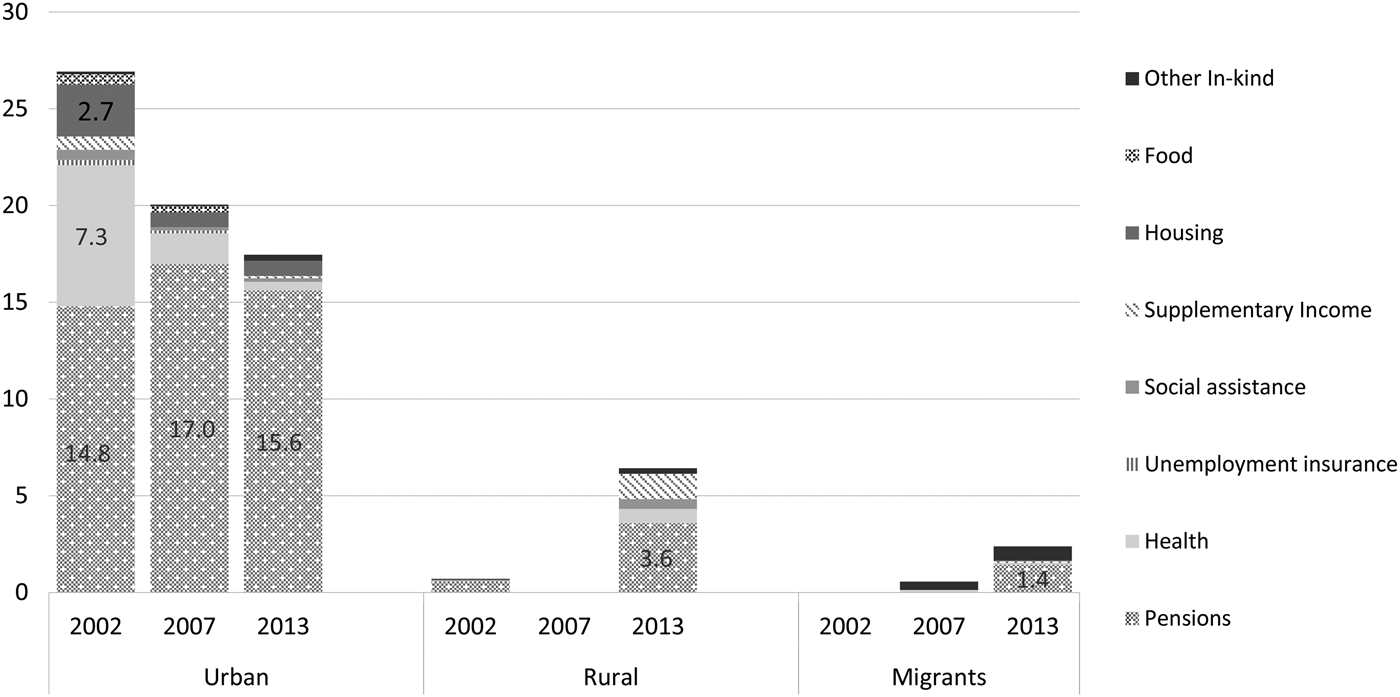
As shown in Figure 2, most of the gains in rural social benefits were also from pensions, enabled by the implementation of the New Rural Social Pension System (NRSPS) in 2009. In 2002, pensions only accounted for 0.6 per cent of rural households’ final income. By 2013, that share increased to 3.6 per cent, a substantial gain. Health benefits in 2013 made up 0.7 per cent of rural household final income and social assistance income amounted to 0.5 per cent, both larger in size as compared to those in 2002 but remaining a very small proportion of household final income. Through the “Building a new socialist countryside” campaign, rural residents gained from supplementary income in the form of agricultural and livelihood subsidies (huinong butie 惠农补贴、shenghuo butie 生活补贴) to farmers. In 2013, cash subsidies received by rural families accounted for 1.3 per cent of household final income while in-kind subsidies accounted for 0.3 per cent of household final income.Footnote 51
Figure 2 also shows that most of the gains in social benefits for migrants between 2007 and 2013 were from pensions (an increase from 0.02 to 1.4 per cent) through their participation in either the pension system for urban non-employees or the NRSPS.Footnote 52 Health benefits remained a small component and actually declined from 0.11 per cent in 2007 to 0.07 in 2013. This may be partly because of the migrants’ reluctance to participate in either the URBMI or NRCMS due to the lack of portability of health care services and partly because of the restrictive reimbursement regulations that forbid them from benefitting from the NRCMS even if they were enrolled. Migrants also gained in other in-kind benefits from 0.4 per cent in 2007 to 0.7 per cent in 2013. Unfortunately, for 2002, we are unable to separate them out from the real social benefits due to how they were reported in the data.
Redistributive Effects of Social Benefits
Our second research question concerns the redistributive effects of the social benefits within the respective urban, rural and migrant populations. We estimate how each social benefit component helped reduce or increase overall income inequality as measured by the Gini coefficient. Overall, we find that the Hu–Wen era social policies indeed played important redistributive roles and helped curtail the widening income inequality gaps driven by market forces. Pensions had the largest redistributive impact for all three groups and most significantly in urban areas. Social policy reforms during the second half of the Hu–Wen administration especially helped reduce income inequality for rural residents and migrants, although only to a small extent.
Figure 3 presents the results on how social benefits affected urban income inequality as measured by the Gini coefficient from 2002 to 2013. Overall, both pre- and post-transfer income inequality levels in urban China increased during the Hu–Wen era. However, it is evident that the government's multiple efforts through social policy reforms were at least partially effective in curtailing the widening income gaps driven by market factors. Specifically, the pre-transfer Gini coefficient was 0.370 in 2002 and reached 0.419 in 2013, as a result of market forces. The public and private transfers helped lower the Gini value to 0.331 in 2002 (a reduction of 0.039) and to 0.355 in 2013 (a reduction of 0.064). Social benefits, together with private transfers, helped mitigate the growing income inequality trend during this period, and to a greater extent in 2013 than in 2002.
Impact of Social Benefits on Income Inequality as Measured by Gini Coefficient in Urban China

Specifically, among the social benefits, pensions played a dominant redistributive role and reduced income inequality substantially across all three years, while other social benefits had only a trivial impact, or none at all, on urban income inequality. In 2002, pensions lowered the Gini coefficient based on market income only from 0.370 to 0.307, a decrease of 0.063 in the Gini value. In 2007, the reduction in the Gini coefficient due to pensions was slightly larger at 0.065, from 0.393 pre-transfer to 0.328 post-transfer. By 2013, the redistributive effects of urban pensions became smaller than those in previous years, with a reduction of 0.056 in the Gini coefficient (from 0.419 pre-transfer to 0.363 post-transfer). This reduced redistributive role of pensions reflected the two major urban pension reforms during this period: a demand for more employee contributions to pensions rather than relying primarily on employers and the merging of the previously almost free health insurance for civil servants and employees of public institutions into the urban employee pension system. The newly implemented pension system for urban non-employees did not seem to significantly expand the average pension income among urban residents to the extent of increasing the redistributive role of pensions.
All other components of urban social benefits had minimal impact on income inequality, as shown in Figure 3, mainly because of their small size as a share of household final income. Health insurance, which was expanded to provide coverage for urban non-employees during the second half of the Hu–Wen administration, had not yet shown a significant redistributive role by 2013. Social assistance, mainly dibao, helped reduce urban income inequality only minimally, lowering the Gini coefficient by 0.002 in 2013. Private transfers played a somewhat bigger role in reducing income inequality than social assistance and lowered the urban Gini coefficient by 0.005 in 2013.Footnote 53
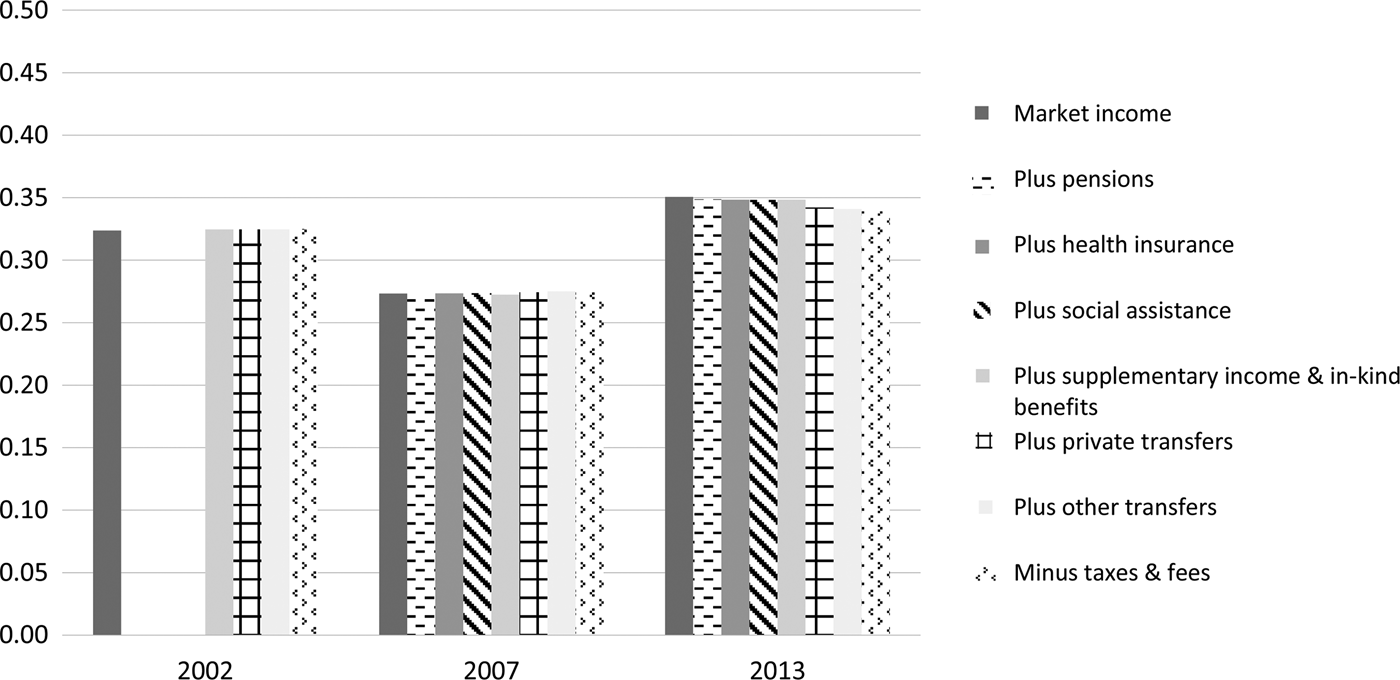
Figure 4 presents the results on how social benefits affected rural income inequality from 2002 to 2013. These results show that, by 2013, the Hu–Wen era rural social policy reforms had some impact on the reduction of income inequality, but private rather than public transfers played the dominant redistributive role. In 2002, rural social benefits and private transfers actually worked to increase rather than reduce income inequality, although only to a small extent, suggesting that most of the social benefits were concentrated among rich rather than poor families. By 2007, social benefits helped reduce income inequality, also only to a small extent.
Impact of Social Benefits on Income Inequality as Measured by Gini Coefficient in Rural China

The major change occurred in 2013, when pre-transfer income inequality soared but public and private transfers led to substantially lower post-transfer income inequality. The pre-transfer Gini coefficient was 0.457 in 2013, which was lowered by 0.006 by pensions, 0.002 by social assistance, and 0.001 by supplementary income – mainly cash and in-kind direct subsidies to farmers. None of these redistributive effects was large, but in combination they worked to reduce rural income inequality. Private transfers had the largest redistributive role in rural China in 2013, lowering the Gini value by 0.048. The post-transfer Gini coefficient was 0.395 in 2013, higher than the post-transfer Gini value of 0.360 in 2002 and 0.358 in 2007, but much lower than the pre-transfer Gini of 0.457 in 2013.
Figure 5 presents the results on the redistributive effects of social benefits among migrants. The results suggest that social benefits had almost no effect on income inequality in 2002 and 2007, but shifted to help reduce income inequality in 2013, although only to a small extent. Pensions had the largest redistributive effects among all social benefits, but lowered the Gini coefficient by only 0.002 in 2013. The other social benefits had minimal redistributive effects. Like for rural residents, private transfers also contributed significantly to the reduction in income inequality among migrants and lowered the Gini value by 0.006.
Impact of Social Benefits on Income Inequality as Measured by Gini Coefficient among Rural-to-urban Migrants in China
Conclusion and Discussion
In this study, we use the CHIP 2002, 2007 and 2013 data to examine the redistributive effects of the Hu–Wen era social policy reforms. We find that, as measured by the share of social benefits in household final income, the size of the urban social benefits decreased from 2002 to 2013, while those for rural and migrant families increased. Despite the convergence, the urban–rural–migrant gaps remained, with the size of urban social benefits still substantially larger than the rural and migrant ones. Across the three groups, pensions dominated the social benefit package, with noticeable gains by rural and migrant families in 2013. The Hu–Wen era social policies indeed left a progressive legacy by playing important redistributive roles and curtailing the widening income inequality gaps driven by market forces. Pensions had the largest redistributive impact in all three groups and most significantly in urban areas. Social policy reforms during the second half of the Hu–Wen administration especially helped reduce income inequality among rural residents and migrants, although only to a small extent.
These results show a clear shift of social policy attention from urban to rural areas and migrants during the Hu–Wen era. What might be the driving forces of such a shift, and more importantly, why did the government not reduce social benefits for urban residents – especially those with stable jobs and employment-based benefits – to further narrow the urban–rural–migrant gaps? The explanations may lie in the historic roots of the Chinese social policies as well as the different expectations urban, rural and migrant citizens had of the government. Historically, during the planned economy era, urban citizens enjoyed secure jobs and comprehensive social benefits. Alongside the economic reforms, many urban residents who lost jobs or had less stable jobs also lost these economic and social privileges. Any further reductions in their social benefits could drive them over the edge of tolerance and turn to protest. Rural citizens (including migrants), on the other hand, used to receive hardly any social benefits and had to rely instead on themselves, their extended family and their community. The rapid expansion of rural social benefits during the Hu–Wen era not only improved their economic security but surpassed their expectations. A recent empirical study using national survey data in 2010 showed that such different expectations indeed existed, with social insurance enrolment associated with better assessment of local government performance among rural citizens only.Footnote 54 The government, well aware of these histories and different expectations, made the rational decision to focus on expansions in rural social policies to narrow the rising income inequality and address potential discontent among the most vulnerable groups.
The findings of this article offer important policy implications. First and foremost, the progressive legacy of the Hu–Wen era social policy reforms deserves documentation, recognition and continuation. Given the rapid developments of these social policy changes and the short history of many of the newly established programmes, rigorous empirical studies on their impacts and effectiveness are still lacking. It takes continued research efforts to fully evaluate these policies, which in turn will inform their future reforms and directions.
Second, while it is important to acknowledge the progress made through these social policy changes, it is also important to be aware of the persistent gaps across the urban–rural–migrant social welfare systems. Despite the recent efforts to expand support to rural residents and migrants, as well as urban non-employees, China's social welfare system remains fragmented and unbalanced. To achieve a truly unified and balanced system in the national context remains extremely challenging. It takes strong political will and significant financial commitment to move the Chinese social welfare system toward this direction. Public demands from those left behind can play an important advocate role.
Third, as an explicit redistributive mechanism, social benefits still play a very limited role in reducing income inequality in China, especially in rural areas and among migrants. Pensions were the only benefits that helped reduce income inequality substantially, and only in urban areas. Other benefits contributed to the reduction in income inequality, but their roles remained small and at times minimal. Moving forward, it is important to boost other important components of social benefits such as health insurance and dibao as well as other social assistance programmes, particularly for rural residents and migrants. More research is needed to understand the effects of the “Building a new socialist countryside” initiative so that similar initiatives can play a more influential positive role in the future.
Lastly, it is important to note that the post-transfer income inequality levels for all three groups were higher in 2013 than in previous years, despite the greater redistributive role played by social benefits. This suggests that the market-driven trend of rising income inequality is likely to continue. It remains a challenge for China's future economic and social policy reforms to address income inequality effectively, prevent social polarization, and promote a just society.
Acknowledgement
We acknowledge the Australian government (Australian Research Council and AusAID), the Ford Foundation, the Institute for the Study of Labor (IZA), the National Natural Science Foundation of China, the Swedish International Development Agency, and the University of Western Ontario who funded the various waves of the China Household Income Project (CHIP) surveys that provided the data for this research. In particular, the funding support from the National Natural Science Foundation of China enabled the collection of the latest wave of CHIP 2013 data. We are also grateful for the support from two National Social Science Fund of China Key Programs (Grant Numbers: 15AJY006 and 16AJY007). We thank the CHIP research team – in particular, Li Shi, Luo Chuliang, Terry Sicular, and Yue Ximing – for helping clarify income definitions and sharing the imputed rental value of owned housing and weights.
Biographical notes
Qin GAO is professor at the Columbia University School of Social Work and founding director of Columbia University's China Center for Social Policy. Dr Gao's research examines the Chinese welfare state in transition; welfare, work and poverty in China; social protection for rural-to-urban migrants in China and Asian-American immigrants; and cross-national comparative social policies and programs. Dr Gao's book, Welfare, Work, and Poverty: Social Assistance in China (Oxford University Press, Reference Gao2017), provides the first systematic and comprehensive evaluation of the world's largest social welfare programme, the dibao.
Sui YANG is assistant professor in the Rural Development Institute at the Chinese Academy of Social Sciences and research fellow in the China Institute for Income Distribution at Beijing Normal University, where she received her PhD in economics in 2014. She studies social policy and poverty alleviation in China through comparative lenses, and has published in the Journal of Social Policy, World Development, Social Policy and Society, Chinese Journal of Population Science, and the Journal of World Economy, among others. She is currently working on a project that examines income mobility in rural and urban China.
Fuhua ZHAI is associate professor at Fordham University Graduate School of Social Service and research associate at both the Columbia Population Research Center and Columbia China Center for Social Policy. His research interests include early childhood education, early interventions, child maltreatment and child welfare, cultural values and childrearing practices, and cross-national child and family policies and programmes. His work has been published in journals in the fields of developmental psychology, economics, social policy, education, demography and social work.



