


The archaeological site of Dodona was reported by several travellers of the nineteenth century (Figure 1.1).Footnote 2
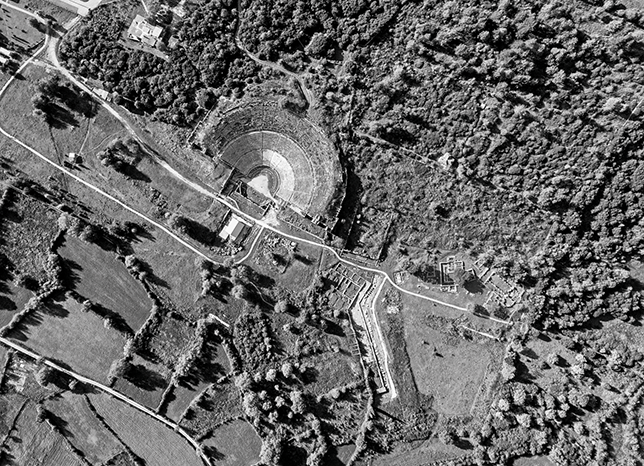
Figure 1.1 Long description
An aerial view of the ruins of the sanctuary of Zeus at Dodona. The Sacred Way runs across the site from east to west. Above the Sacred Way, stands the remains of the ancient theatre and to the East are the remains of temples and treasuries.
In 1875, Konstantinos Carapanos, a Greek politician and merchant, excavated the sanctuary and two years later published the results of his excavations in a two-volume book in which he included a detailed plan of the site.Footnote 3 Before Carapanos’ excavations, the only visible building in the site was the theatre. From the decade of the 1930s until the beginning of the twenty-first century, Dimitrios Evangelidis as well as Sotiris Dakaris, and his collaborators – namely, Drs Chrysiis Souli, Amalia Vlachopoulou and Konstantina Gravani – conducted excavations on behalf of the Greek Archaeological Service.Footnote 4
‘Harsh-wintered’ Dodona was the main cult place of Zeus in Epirus probably since the Bronze Age.Footnote 5 The oldest reference to the shrine derives from Homer in the eighth century BCE.Footnote 6 There is still no evidence from the excavations, however, attesting to the existence of a special place dedicated to the cult before the eighth century BCE. Initially, it was traditionally believed that Mother Earth was worshipped in the area close to the sacred oak tree.Footnote 7 The travel-writer Pausanias provides us with a part of a hymn chanted by the priestesses of Dodona, which refers to her cult: ‘Zeus was, Zeus is, Zeus will be. Earth gives fruits, so you shall praise Mother Earth!’. Footnote 8 It is difficult to define when the oracular activity started at the site, but following the historian Herodotus, it seems that Dodona was the most ancient place of divination in Greece.Footnote 9 Aristotle notes that the oracle was operating during the time of the great cataclysm – by which he means the great flood sent by Zeus, which only Deucalion and Pyrrha survived.Footnote 10
Based on the passage of the Iliad in which Achilles prays to Zeus Dodonaios Pelasgikos,Footnote 11 the hypothesis that the cult of Earth (Gaia) was replaced by the cult of Zeus in the second millennium was put forward.Footnote 12 Use of the adjective ‘Pelasgian’ is connected with the seniority of the cult, as the Pelasgians, in the memory of the Greeks, are their mythical ancestors. Pelasgus, the first inhabitant of the Earth, personified the new values of the Neolithic era (7000–3200 BCE): wheat cultivation, bread production and improvement of nutrition.Footnote 13 According to the myth, Pelasgus brought to humanity bread from the oak tree.Footnote 14
For centuries the shrine remained rather rudimentary. The sanctuary was open-air and various ceremonies were performed around the sacred oak tree. It is believed that, from the eighth to the beginning of the fourth century BCE, the oak tree was surrounded by cauldrons that rested on bronze tripods (Figure 1.2).Footnote 15
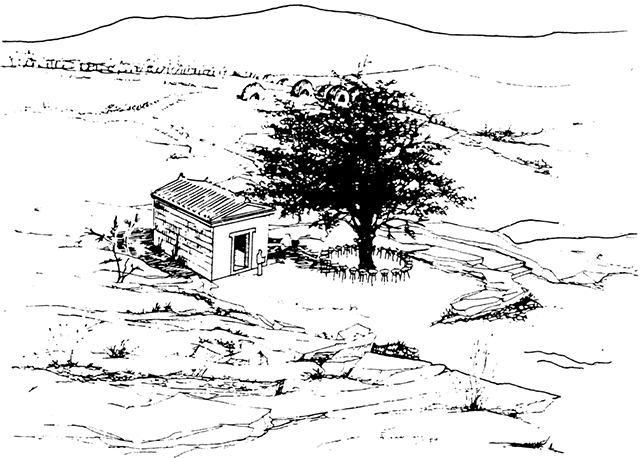
Because all the cauldrons would have touched each other, whenever one of them was struck, the sound would reverberate through the rest. During the eighth century BCE and based on the evidence of the votive offerings found there, which were manufactured in Corinthian workshops, the sanctuary seems to have been involved in the Corinthian expansion.Footnote 16 The late eighth-century BCE bronze warrior statuettes with shield and spear, which were found in the sanctuary of Dodona, are probably the oldest depictions of Zeus at Dodona.Footnote 17 It seems that this type was first formulated in the Peloponnese and arrived in Epirus after the establishment of the Elean colonies (eighth–seventh century BCE).Footnote 18 Bronze cast and concrete warrior statuettes have been used to decorate the handles of big, forged tripod cauldrons.
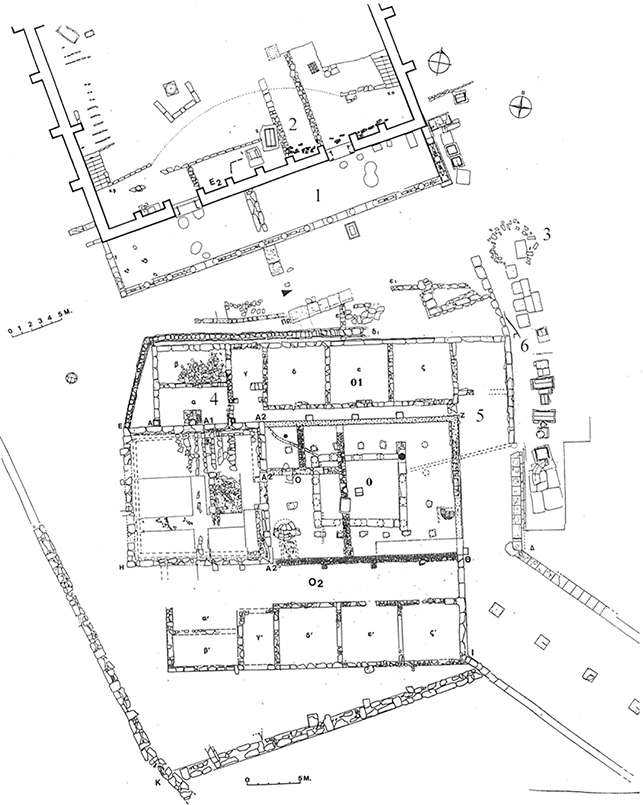
The first architectural remains, which can be related to the so-called prebuilding phase of the sanctuary in Dodona, were unearthed by Evangelidis and Dakaris (1959). They both noted that in the northwestern side of the Sacred HouseFootnote 19 (Temple of Zeus and Dione; E1 on Figure 1.4), a series of flattened limestone slabs had been revealed.Footnote 20 These were positioned vertically in the virgin soil, having an ellipsoidal curve and following an E-W direction (Figure 1.3).
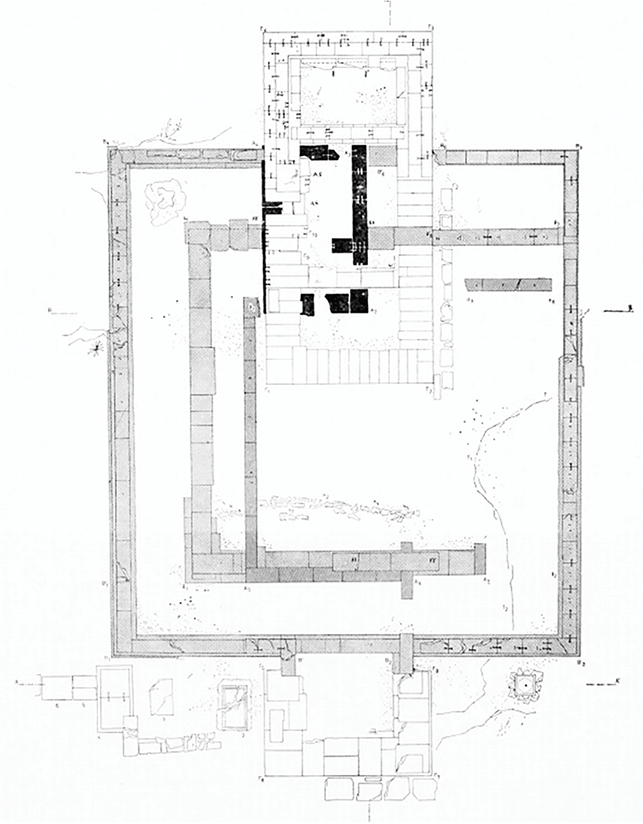
In close proximity, a stone-lined posthole came to light. They identified it as the foundations of a single building that probably acted as a temple during the Geometric period. Later, however, other scholars offered different opinions.Footnote 21
Further excavations brought to light an apsidal edifice at the bouleuterion (E2 on Figure 1.4),Footnote 22 a number of pits and postholes of a rectangular hut in the bouleuterion’s stoa,Footnote 23 a circular building north of the bases of the eastern stoa of the prytaneion (O),Footnote 24 and postholes and relics of a wall also in the prytaneion (O).Footnote 25 These constructions seem to be part of a small settlement of stockbreeders consisting of huts made with perishable materials, dated to the end of Late Helladic–Early Iron Age.Footnote 26 Pastoral activities are closely connected to the development of Zeus’ sanctuary into a supra-regional cult centre, as Dodona is located on important routes used by transhumant shepherds.Footnote 27
The situation differs in the eastern part of the site. A hearth and paving stones at the Sacred House can be associated with a cult activity which would have taken place in the open air.Footnote 28 Miniature pottery vessels and non-utilitarian bronze tools and weapons found in the adjacent area support the idea that this area had a religious function.Footnote 29 The miniature vessels could have been filled with offerings for the worshipped deity. Some of them have been also recognized as ritual vases.Footnote 30 Additionally, a votive character can be attributed to the bulk of the bronze findings (such as knives, axes sometimes bearing incised and impressed decoration and spearheads), dating to the Late Helladic–Early Iron Age period because they were small and sometimes made of sheet bronze.Footnote 31 But it still remains obscure whether or not some sort of cult activity took place in this area.
At the end of the fifth century BCE, Dodona transformed gradually to a place where politics and cult coexisted harmoniously.Footnote 32 During Tharypas’ kingship (423/2–390/85 BCE),Footnote 33 it has been suggested that the Molossians took control of Dodona from the Thesprotians.Footnote 34 A stele with two honorific decrees testifies to this new role of the sanctuary,Footnote 35 which then further developed and became more established with the building of the bouleuterion and the prytaneion.
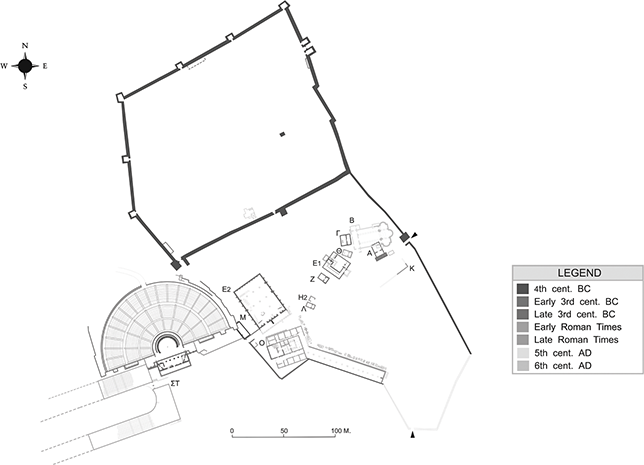
In the first half of the fourth century BCE the landscape of Dodona started changing.Footnote 36 A small naiskos (E1 in Figure 1.4; 4.20 m × 6.5 m) erected near the sacred oak tree in the eastern area seems to have mainly served as a storage room for the offerings that people from all over Greece brought to the divine couple, namely, Zeus and Dione.Footnote 37 The tripods were then replaced by two columns; the first one was topped by a statue of a boy with a whip in his hand (a present from the people of the island of Korkyra, now modern Corfu) and the second with a bronze cauldron. When the wind blew, the whip would strike against the cauldron, creating the prophetic sounds.Footnote 38
To the same period dates the enclosure of Dodona (the so-called ‘Acropolis’Footnote 39), the ancient townFootnote 40 that stands on the mound above the valley in the form of an irregular square, as well as Building M (17.30 x 10.70 m). The latter was later integrated into the sanctuary’s circuit wall together with the bouleuterion or council chamber (E2) and the prytaneion (O), a development that suggested its use as a public guest house.Footnote 41
In the late fourth/beginning of the third century BCE, the so-called oikoiFootnote 42 (buildings Γ, 9.80 m × 9.40 m and Λ, 4.70 m × 8.70 m) were erected near the Sacred House. These have been assigned to Dione and Aphrodite respectively,Footnote 43 who were also known as ‘Naoi gods’, meaning gods who shared the same house (synoikoi) and temple (synnaioi) as Zeus.Footnote 44 According to recent excavations Building Λ (the so-called temple of Aphrodite) had two phases: during the first one (in the first quarter of the fourth century BCE) it consisted of a cella (the inner part of a temple, that usually housed an image of the god), and in the second phase, two Doric columns were added to its entrance (during the beginning of the third century BCE).Footnote 45
On the western side of the shrine, an area developed consisting of the theatre,Footnote 46 which followed the natural shape of the hillside, the bouleuterion (E2; see Figure 1.4) and the prytaneion (O).Footnote 47 More specifically, the bouleuterion (E2) consists of a large hypostyle hall (43.60 × 32, 35 m; hypostyle means that the inner part of the building rests on columns) with a Doric colonnade (stoa) with fifteen columns in front (32.40 × 5.50 m). Near its south wall a stone altar has been revealed. It was dedicated to Zeus Naios and Bouleus (Counsellor) and to Dione by Charops the Elder, an Epirote General. The surviving outside walls formed the stone base of the building, but the upper part was built of baked and unbaked bricks bonded with mud. Its identification was based on the discovery there of a large number of pieces of clay, used probably for voting.Footnote 48 It is suggested that it hosted the meetings of the Molossian koinon (which ran from 370/368 to 334/331–330 BCE), the Epirote Alliance (which ran from 334 or 331/330 to 233/231 BCE) and later of the Epirote koinon (which ran from 233/231 to 148 BCE). At the same time, it was used as a place where other activities, like musical or theatrical performances, took place. Facing the bouleterion, the prytaneion (O) (31.50 × 13.50 m) consisted of a square room (12 × 12 m) and a rectangular peristyle court (19 × 13.50 m) with 4 × 5 Doric columns on a stylobate (a continuous base) and an altar. The representatives of the Epirotes would gather in the large square room, where the hearth of Hestia with the eternal fire was burning.Footnote 49
Alexander the Great had planned to rebuild six Greek sanctuaries, including Dodona, and allocated the huge sum of 1500 talents (9,000,000 ancient drachmas) to this project.Footnote 50 But his premature death prevented him from carrying them out. Nevertheless, they were put into effect by King Pyrrhus (297–272 BCE), who considered the favour of the oracle as a crucial factor in the success of his political ambitions. In fact, Pyrrhus used Dodona to promote his political and military power, through the practices of dedication and renovation.Footnote 51 For example, he dedicated to Zeus a shield of his own, bearing a relief depiction of the winged thunderbolt (okiptera) and an inscription, now fragmentary, that mentions his name and perhaps his title as general (…] Purrou p [ara … / … ē] gētor [os … iōt … .) in the bouleuterion,Footnote 52 as well as the shields of his enemies, which had been taken in battle.Footnote 53
The motif of the okiptera had a double aim: it was used as symbol of the power of Zeus Dodonaios and as an emblem of the ‘Epirote Alliance’ (334 or 331/330–233/231 BCE) and the ‘Epirote koinon’ (233/231–148 BCE). It has also been found on roof tiles and parts of armour (epaulettes, sword-grips, baldric plaques and shoulder plates). Moreover, he adorned the colonnades and the Sacred House with trophies and treaties – and this was the reason that in 219 BCE the Aetolians destroyed the sanctuary with such wrath.Footnote 54 During his reign, the Molossians acquired a greater sense of regional, Epirote identity, and Dodona was transformed into a pan-Epirote cult-centre. Pyrrhus thus portrayed himself as the leader of the Epirotes, and [portrayed] Epirus, not Molossia, as his home base.Footnote 55
The monumentalization of the sanctuary took concrete form during Pyrrhus’ reign. The most important religious centre that belonged to all the people of Epirus was transformed into a ‘showplace’!Footnote 56 New buildings were erected (see Figure 1.3): the edifices A (9.50 m × 16.50 m, known as the ‘Temple of Hercules’), Θ (6.05 m × 9.40 m, known as the ‘New Temple of Dione’) and Ζ (6.25 m × 9.70 m, known as the ‘Temple of Themis’) were erected. The prytaneion (O) was expanded with the addition of two wings (O1–O2) and a porch with four columns, in order to fulfil the needs of the political organization of the Epirotes. The wings consisted of three rooms with nine couches each and with service areas, where the government officials dined (katagogion).Footnote 57 Moreover, it was used during cult practices and in hosting authorities during the festival of the penteric games, the Naia.Footnote 58
In the area east of the bouleuterion’s stoa, the prytaneion and the western stoa, a large number of honorific statues were erected, underpinning the area’s significance (Figure 1.5).Footnote 59
At Dodona, sixty-two statue bases and over one hundred fragments from bronze statues have been revealed, a fact that is particularly important, taking into account the rarity of this sculptural genre.Footnote 60 It is worth mentioning the discovery of a group of six bases to the east of the bouleuterion (E2), three of which bear inscriptions, three for statues on foot and one for an equestrian (Milon, an officer of the Epirote Koinon).Footnote 61 The choice to locate the bases there was not random, as it was the point where the two ‘identities’ of Dodona (sacred and civic) joined.Footnote 62
The old isodomic circuit wall was replaced by a larger circuit wall, with three Ionic colonnades along the north, west and south sides. Thus, the open forecourt and the oak tree were surrounded by three stoas with an Eastern orientation, of a type usual in northwestern Greece. This construction meant that there were two enclosed corner spaces formed at the end of the forecourt.Footnote 63 The east side of the forecourt remained free, without a stoa, because the oracular oak stood there. Sanctuaries in the Hellenistic period commonly included at least one stoa; those in the open-air (as here) were probably devoted to rituals.Footnote 64 South of the naoi there was a wall, known as wall K, which had been revealed during the excavations by Carapanos. Based on the result of recent investigations, these seem to have a Γ-shaped plan and to have functioned as a boundary for the north side of the large open-air space and for the expansion of the platform of the building.Footnote 65
After the destruction of the sanctuary by the Aetolians in 219/218 BCE, the existing structures were restored. The Sacred House was renovated. The small temple was replaced by a larger Ionic temple (5.60 m × 12.95 m) with four columns in the front. The colonnades were restored. The old material was used in the foundations of the new, monumental Hellenistic temple, which was built so that it was exactly symmetrical. On the western side opposite the theatre, the stadium (ST, on Figure 1.4) started functioning, while the eastern colonnade of the prytaneion (O) was connected to the western stoa of the sanctuary, which extended towards the south.Footnote 66 Finally, the sanctuary was re-established in the Roman period, although with a different character. During the reign of Augustus, the theatre was transformed into an arena for wild beast fights and gladiatorial shows. In its lower part, a wall was constructed to protect the spectators, which cut off the proscenium and the skene.Footnote 67 The square room (O) of the prytaneion was transformed into a conference room for the officials of the Epirote koinon. It was furnished with seven rows of stone benches and the peristyle was enlarged with 4 × 7 columns in second use.Footnote 68
The aforementioned architectural remains in the area seem to have developed on three levels.Footnote 69 The citadel is at the top of the hill, an extension of the western foothills of the mountain range of Agios Nikolaos-Manoliasas (alt. 800 m–1000 m). At its foot, on terrain sloping downhill, the buildings of the sanctuary were built on both of its sides, having an amphitheatrical arrangement. Looking at the site plan (Figure 1.4) we can see that the dominant building was the Sacred House (E1), located in the eastern area, around which smaller edifices were erected.
The bouleuterion (E2), the prytaneion (O) and the theatre were all erected on the western side of the shrine. In front of these buildings, stoas were constructed. On the southern side, the porticoes with the temenos wall shaped the overall picture and created a unique ensemble, providing an aesthetically pleasing perspective against the landscape. At the lowest level, in the southwest, the main entrance of the sanctuary was formed in the place where an ancient way once existed.Footnote 70 Overall, it seems, and over time, Dodonaean sacred architecture was characterized by rather small and humble edifices, apart from the Sacred House, which fitted the modest physical environment in which the mountain mass of Tomaros dominated.
Regarding the architectural synthesis of the sanctuary, of special interest is the orientation of the buildings.Footnote 71 As the site plan (Figure 1.4) shows, an axis from east to west passes in front of the Sacred House (E1), the bouleuterion (E2) and the theatre, forming the Sacred Way; it traverses the stadium (ST), and, if we imagine its extension, we can see that it continues to meet mount Tomaros. A second axis, running from south to north, leads to the main gate across the Sacred House, which overlooks the whole sanctuary. The site was thus divided into two zones, a western one that would hold an assembly and cultural activities and an eastern one devoted to cult.Footnote 72 The western zone was accessible from the south, while the eastern one was accessible via the east and south gates which were reinforced by towers. All in all, it can be inferred that the architectural development at Dodona was late in relation to the significant number of pilgrims that visited the shrine during the Archaic and classical periods.
Until the end of the third century BCE, the main building material was the local flysch of light green colour, extracted from the quarries of the region. Due to its sensitivity to weather conditions, it was replaced by calcareous rocks (thin bedded, micro-breccia and breccia, Eocene period).Footnote 73 No stone-based, monumental architecture from before the fourth century BCE has been found at Dodona. This is a phenomenon widespread in Epirus, and it can be assumed that, in general, the architecture of this area was not stone-based before the Hellenistic period. Indeed, as Chiara Lasagni has noted:
the fourth century represents a turning point in the history of Epirus with reference to urbanization. In this phase, the gradual organization of the Epirote tribes into urban nucleated settlements went hand in hand with their entrance into the ‘great history’ of Greece, as well as with their population’s increase and socio-economic development.Footnote 74
The fourth century was the period when the first poleis appeared in Epirus. The Epirotes under the leadership of the Aeakid dynasty organized into states (koina) or kingdoms and started to establish a regional identity.Footnote 75 Dodona, as the main religious and political centre of the region, inevitably played a significant role in the development of Epirus’ political history.Footnote 76
Introduction
Before the pass the great mass of Tomaros begins to rise up on the left, and the way to Dodona winds under its flanks. It passes first through a narrow, winding valley which lies crushed under the outlying masses of the mountain. The massif rises up in splendidly bare and sweeping terraces to a towering ridge which is crowned by horns. The pilgrim’s mind is stunned by the greatness of the landscape scale and by his own smallness. He is made to feel a power far grander than his own, and that power is entirely of the earth, enclosing him, restricting his freedom of movement, directing him with an insistent pressure. The way is narrow, but the whole curve of the passage leads him on. As he moves forward, the mountains begin at once to recede and to soar higher before, as, in a beautifully rhythmic curve, a long valley opens out before him. (…) it is in the center of horns, along the near face of the hillock, that the buildings of the sanctuary are placed. The temenos extends forward into the valley, and its propylon is so calculated as to occur at the exact spot from which no further hills of any kind can be seen beyond the hill itself; it is thus totally open under the sky, and the release which began at the head of the valley is now complete. (…) First of all, they are organized as an arc, and it is clear what that arc accomplishes: it forms in plan a semicircle which complements the semicircle in elevation which is the valley shape, and it faces southward in order to do so. In this way a circle is completed, the circle of earth and sky, the globe of the world. Secondly, it is only because the temple and its treasuries are irregularly spaced and oriented along their arc that they have the power so to complete the valley shape and to act in it as well. If they formed a precise arc they would lose individuality and freeze on it, a tight shape in a big valley.Footnote 1
These lines, written by Vincent Scully in 1962, pose the main question of this volume: can we reconstruct the experience of a pilgrim who travelled to Dodona?Footnote 2 Scully’s description is perhaps too literary, his approach too close to Romanticism. There are constant references to symbolic elements, such as horns, linked to ancient features of Greek culture dating back as far as Minoan times. On the other hand, he takes into account important aspects, such as the route, the weather conditions and the lie of the land. Accordingly, the intention of this essay is to provide a framework that allows for examining this matter more precisely: to this end, I argue, a phenomenological approach is required, and I turn to this first.
Using a Phenomenological Approach
Phenomenology is a complex system of analysis with multiple branches: as Thomas Ryba explains, it is ‘a method of entry into the inner, historically conditioned, self-understanding of religions in order to provide structural descriptions and explanations of religious experiences, concepts, doctrines, myths, ethics, rituals, and institutions’.Footnote 3 Phenomenology of religion has been part of both philosophical and religious-studies approaches, with the result that the term can be used to describe a diverse range of methods.Footnote 4 In this essay, the methodology employed is narrowly connected to landscape archaeology. The latter considers landscape not only in its physical sense but also as an entity connected to human existence, activity and dimensions: experiential, social, emotional. Landscape archaeology, which has gained popularity in the last decades in history, anthropology, archaeology and religious studies,Footnote 5 studies how people visualized the world and the ways they engaged with one another across space. It argues that landscape is not just mere scenery in which humans live; it needs to be contextualized within the human sphere, according to historical conditions and related issues such as gender, age or class.Footnote 6 This approach, more specifically, aims to reconstruct the experiences of people within their environments. It requires delving into our understanding of symbolism and the different methods of communication in the group or society, as a means to recognize behavioural patterns and to extract conclusions concerning how these collectives and their mentality were structured.Footnote 7 The study of this symbolic dimension has been recognized as an underused tool for the interpretation of Greek religion.Footnote 8 Wherever there is human activity, the landscape is deliberately constructed and modified for different purposes, guiding people’s movement and attention. From a collective perspective, each community gives a specific meaning, or meanings, to everything they use, make, build or see. This meaning rests on the variety of aspects that characterize such a group in all areas of its activity. Therefore, for this approach to be used effectively, it is essential to have a deep knowledge of this community.
This raises two potential criticisms. The first is that phenomenology does not consider the agency of individuals: according to its theories, a person does not participate in choosing to act as they do but is simply guided by social structure and customs.Footnote 9 Perhaps we can sidestep this by arguing that we can consider individual experience. But this, in turn, leads to a second question: the difficulty – or even impossibility – of proving that the aspects analysed correspond to a type of reasoning that existed in the past.Footnote 10 In other words, can we really feel and think the same way as a person who lived two millennia ago?
In response, we can argue that the human body and its biological perception system remain the same, independent of culture and period.Footnote 11 Nevertheless, we have to admit that discerning the thoughts and reasonings of ancient societies and their members to such a deep degree is far from straightforward – their circumstances were completely different to ours – and the result of this approach, it can be argued, takes us into the realm of subjectivity – both that of the historian and that of his subject.Footnote 12 Indeed, phenomenology has been criticized because many subjective interpretations are not sustainable by the evidence.Footnote 13 Besides, there are studies that prove that the same activity is perceived differently by different members of the same group.Footnote 14 Every experience of every person we study is thus unique, which suggests that we cannot apply a phenomenological approach to an individual level and expect to reconstruct the entire process. And yet, in response to this, we can still argue that, as Felipe Criado Boado and Victoria Villoc Vázquez explain, there is a sort of transcultural subjectivity whose subjective proximity to our own can allow us to understand it.Footnote 15 By being aware of it, and using this approach carefully, it is possible to recognize certain common patterns of behaviour that indicate particular reasoning and perception. In the case of Dodona, we may be able to trace patterns of behaviour that help us to understand the reasons why people visited the sanctuary, as we will see below.
If we are to adopt this phenomenological approach, there is a series of concepts that we need to define. The first concerns the conception of space and time, which nowadays is completely different to that of ancient societies or, indeed, of more recent ones. We live in a technological era. Communications with far-flung regions are now a daily reality and distance is no longer measured in time.Footnote 16 For example, when Dionysius of Halicarnassus refers to the trip of the hero Aeneas and his men to Dodona, to consult the oracle, he says that it took them two days – dianusantes ēmerōn duein – to reach the site from the harbour of Ambracia.Footnote 17 This is a one-hour drive for us today, which shows to what extent our circumstances have changed.
It is necessary to clarify the meaning of perception, too. This concept does not refer just to how we see something but more specifically to the ways in which we feel and process it with all our senses.Footnote 18 Always following our own experience and intuition, we interpret and understand what we observe.Footnote 19 Landscapes transmit memories. When we see a landscape, even if it is new to us, our mind automatically assimilates and processes it according to previous experiences. In other words, we make comparisons and classify what we observe. John Paul Eberhard explains this idea with his example of the Washington National Cathedral: as soon as you enter the building, your brain connects memory systems – of past visits or visits to similar places – with the perceptual categorization formed by the images that are sent to your visual cortex.Footnote 20 In other words, our mind interprets what we see, hear, smell, touch or taste, in terms of past experiences. Even if we have those interactions with a new thing, we perceive it according to our own classification, which is based on what we have previously lived.
Approaching Dodona Phenomenologically
The possibility of reconstructing the perception of a single individual has been ruled out, or at least the attempt to recreate the entire pilgrimage activity of just a single person. This does not mean that we are not going to use documentation with information regarding the experiences of specific people. This essay will make use of the epigraphic and literary evidence connected to Dodona, which will allow us to obtain data about specific individuals. The lamellae from Dodona provide plenty of data concerning the topics of the consultation. Based on this information, the following pages will offer snippets of their stories, so as to give a sense of what their experiences were like, and to try to reconstruct the activity and process of being a pilgrim in this place. In some cases, it will be beneficial to compare other pilgrimages and religious travels in different cultures and periods, since such parallels can help to elaborate on more fragmentary or otherwise incomplete evidence.
In this context, the writing of Aelius Aristides is very useful. This second-century-CE orator wrote a work entitled Sacred Tales – Hieroi Logoi – a sort of diary of his visits to different sanctuaries all around the Mediterranean. Aristides, a hypochondriac, suffered for years from different illnesses. The gods, primarily Asklepios and Apollo, appeared to him in dreams and commanded him to go to shrines and follow their remedies to find a cure. Throughout his essay, the orator describes his experiences, his divine visions and his visits to holy places. Thanks to this, Aristides provides a very personal point of view of pilgrimage to religious sites.
Since he attended healing sanctuaries, Dodona was never his destination, at least from what is recorded in the Sacred Tales. Nevertheless, this source can be helpful for our understanding of pilgrimage and visits to sanctuaries. The following episode serves as an example: during one of his stays in Pergamon, following a dream, he walked near the statue of Telesphoros – one of the children of Asklepios – trying to get a remedy for his illness. He began to talk with Asklepiakos, a priest, about his dream. The priest suddenly realized that some other pilgrim had deposited an ointment in front of the statue of Hygieia. He brought that salve to Aristides, and as soon as the orator used it, his pain ceased.Footnote 21 This episode is useful for a modern researcher interested in the experience of pilgrimage to Pergamon for at least three reasons: first, it offers a brief description of a section of the sanctuary, suggesting where certain statues stood; it also suggests how the priests operated within the sanctuary; and, finally, it indicates the ways that Aristides specifically interacted with this environment. The use of material that contains fragments of personal experiences can help us to discern the interplay that pilgrims to Dodona might have had with the space where they were and the different elements that shaped them. This interplay could be affected by a series of factors that this essay will explore: factors that we can study from a collective perspective. Although in some cases the information we can gather comes from individual experiences, such as that of Aristides, it is possible to include them within the communal approach.Footnote 22
There is another issue to consider. Travelling to Dodona – and to any other sanctuary – implied not only a physical, but also symbolic, separation. Pilgrims left their place of origin and the specifics of their journey, even when it was brief, determined the way in which they experienced the trip. Following a route, reaching the destination, accomplishing a mission, and returning home created a particular relationship between them and the environments that they encountered. Pilgrims experienced the process, focusing on aspects that others not heading for the sacred place did not.Footnote 23 An example from modern-day visits to the cathedrals of Melbourne and Bendigo in Australia can help to clarify this observation. As Maureen Griffiths shows in her study, visitors to these sorts of places can be divided among those seeking a religious experience, those whose main motivation is to see world’s heritage, and those for whom the religious connotation is totally irrelevant, who are more interested in the architecture or other features of the site.Footnote 24 In this sense pilgrims, understood as a sector within the broader group of religious visitors – hence different from non-religious ones – perceive their visit in a completely different way from those whose attention is more focused on architectural characteristics.
Time is the final aspect we need to have in mind when carrying out this study. This analysis will focus primarily on the sanctuary according to the reconstruction of the site that we can see in Figure 2.1, which shows a reconstruction of Dodona in the middle of the third century during the Hellenistic period, before the Aetolian attack that the sanctuary suffered during the so-called ‘Social War’ (220–217).Footnote 25
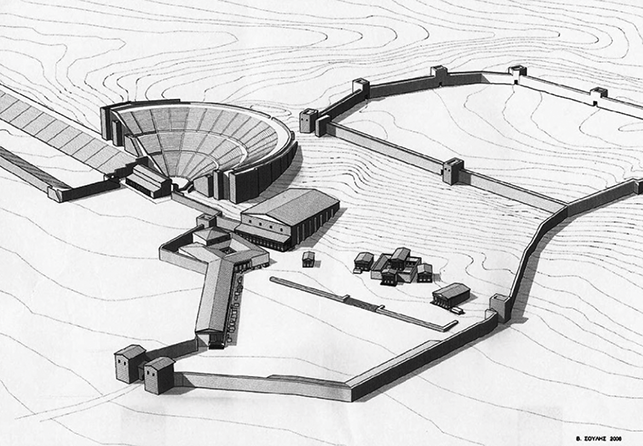
By the mid-third century BCE, Dodona had most of the buildings and structures that have been excavated in recent times – except for the basilica, erected in Christian times – and monuments like the theatre or the stoas undoubtedly conditioned the perception of the site by its visitors.
But while this is the main focus of this essay, it is important to remember that this image represents a mere snapshot of the history of the sanctuary, which developed over centuries. Dodona’s activity as a religious site spanned from at least the eighth century to Late Antiquity.Footnote 26 The place began its existence as an open-air shrine and gradually incorporated votive offerings, temples, altars and other structures. It is essential not to lose sight of this fact: this long process transformed the perception of the site by its visitors; as the landscape of Dodona went through different phases, it may have affected the experience of pilgrims differently. A later section of this essay will extend the approach to other periods of the lifetime of Dodona, and delve into the way changes in a sacred landscape such as new constructions can alter our perception and experience.
This chapter brings all these elements together to contribute to a phenomenological analysis of pilgrimage to Dodona and shows how we can apply this knowledge to better understand the experiences of ancient pilgrims when they visited the site. Before drawing conclusions, this study will consider first visibility and movement, then motivation (e.g., the reasons why people travelled to Dodona): three factors that played an essential role in the experience of visiting the place.
Visibility and Movement
The location of sacred sites is paramount. They often display special features that impress the human eye and evoke feelings of amazement and mystery.Footnote 27 This is one of the reasons why a cult place can be different to a mundane site. Visibility is a key factor when dealing with sacred spaces, as a way to focus on objective elements rather than aspects whose subjectivity reduces the strength of these kinds of studies.Footnote 28 One of the most remarkable moments of the pilgrimage to Dodona was the arrival at the site. The characteristics of the valley of Tcharacovitsa played a significant role, as can be observed in the passage from Scully. As pilgrims approached the sanctuary, the visibility of certain elements will likely have helped to shape their experience.
The sacred area of Dodona is located just to the south of a hillock, on which a fortified acropolis stood since the fourth century. For this reason, those approaching the sanctuary from the north would not see the sacred space until almost arriving there. This is one of the most solid arguments deployed in favour of considering the southern entrance to Dodona as the main one. It can be appreciated in Figure 2.1, a reconstruction of the sanctuary in the mid-third century. For those approaching Dodona from the south, that is, from the bottom of the valley, or from the southeast – after crossing the mountain pass in the vicinity of the modern-day village of Ampelia – the experience of arriving was even more impressive, owing to the fact that the city was clearly visible from afar.Footnote 29 The first building to heave into view would have been the large theatre, whose first construction phase belongs to the beginning of the third century. As they approached the sanctuary, other structures would have begun to be discernible. The movement of the pilgrim, therefore, contributed to their dynamic process of perceiving the sacred landscape.Footnote 30
This then introduces the distribution of the buildings in the sacred space, which was hardly ever random at any religious site. Their placement depended on their specific function and the symbolic meaning of both the sanctuary and the buildings themselves. The building of a theatre provides a good example. In general, across the Greek world, theatres were built so that they took advantage of the slope of the hill, and their orientations were certainly a decisive aspect.Footnote 31 We may assume that if the northern route to Dodona had been the main one, the theatre would have been built on the other side of the hill.
I turn next to the space inside the walls of the sanctuary. These walls delimited the area that formed the temenos of the shrine, thus stressing the sacred character of the elements that were within. Once pilgrims had passed through the southern entrance, they encountered an open-air area in the middle, flanked by two stoas, which contributed to creating a perception of depth. They were lined by a series of statues on pedestals of different kinds. In front of the visitors, slightly higher up thanks to the gradient of the embankment,Footnote 32 there was an ensemble of buildings. According to conventional theories, these were temples, with Building E1, the Hiera Oikia, the temple of Zeus Naios, at the very centre. Nowadays, however, some scholars suggest other possible functions for some of these building, such as treasuries, archives or dining halls.Footnote 33 They tend to face the central open area between both the stoas, where no remains of buildings have been found. On the one hand, at first sight, the other important buildings of the Hellenistic period, to wit, E2 and O-O1 – supposedly the bouleuterion and prytaneionFootnote 34 – occupy more secondary positions. On the other hand, they were the first buildings that visitors using the western entrance would have seen, after passing by the theatre and the stadium. The funnel-shape of this entrance offered them a panoramic view of a wider space: that is, specifically, the sacred area of the site. The movement of pilgrims was a pivotal factor in their experience of visiting a sanctuary, since, depending on their location and route, they were offered different views of the place.Footnote 35
Mobility played a major role in processions and rituals in sacred spaces owing to the experiences and sensations to which it gave rise. The interaction between the body and the surroundings was involved in the process of moving throughout a place. We can find a good example in the Spartan sanctuary of Artemis Orthia. Here, there was an open space surrounded by statues where rituals were performed.Footnote 36 A simple glance at Dodona in Figure 2.1 is enough to see that the sanctuary also had this kind of open-air area, encircled and delimited by a series of structures. If this space was truly empty, it would have been used for religious practices and other purposes. During the performance, both the open-air space and the elements surrounding it could have affected the perception of participants and attendants.
In these areas, pilgrims could also see displays of memorials of individuals or civic activities. As already observed, the stoas were lined with statues. In the area of the purported temples, next to the bouleuterion, there were indeed more life-size honorific statues apparently depicting real people, always dressed for war, whose remarkable feats deserved perennial commemoration.Footnote 37 The collective bodies that dedicated statues did not seek only to glorify those represented in sculpture but also to enhance the identity of their communities.Footnote 38 A three-fold purpose can be distinguished: the memory of the individual depicted (the dedicatee), the reinforcement of collective identity (the dedicant) and the delineation of the place (the landscape). To these should be added plaques and stelae recording activities that had taken place here, mainly manumissions and grants of privileges,Footnote 39 as well as claims of bonds with the Molossians, the ethnos that lived in the region where Dodona is located.Footnote 40 All this material will have formed an ensemble that conditioned the perceptions of pilgrims when entering the sanctuary. That perception varied, however, depending on the reason why each visitor had travelled to Dodona; I will turn to this question next.
Motivation
When people arrive at a place, they tend to focus their attention on those elements that are more closely linked to their expectations and past experiences. As Eberhard notes: ‘Which objects and/or which sensory systems you give particular attention to depends on your personal “value system” – a system established during past events that seemed important to the brain, such as a loud noise, a flash of light, a sudden pain, or a major emotional response to a place’.Footnote 41 In light of this, I suggest that the multiple functionality of Dodona gave rise to different experiences depending on the objective of the pilgrimage and the visit per se. People travelled to Dodona for many reasonsFootnote 42 – some of which will be described later – which all involved interacting with the sanctuary’s different elements and had their peculiarities.
It is important to underscore an additional aspect linked to this process. Individual ritual practices, such as privately consulting the oracle, were different from the collective sort, and both were performed at Dodona. Collective ritual practices connected all those participating in them, and the religious rites were designed to shape their feelings and reactions.Footnote 43 We may add other possible aspects, such as hierarchy, gender and age, which could have influenced the perceptions of the individuals forming the group.
The Oracle
The oracle was the main reason for visiting Dodona. In both Greek and Roman literature, the importance of the site is always associated with it.Footnote 44 So, it seems likely that the vast majority of pilgrims who made the journey did so to consult Zeus Naios and Dione about their concerns. This implies that their perception would have focused on the place in which the oracle was located, namely, the temple of Zeus with the sacred oak. As already noted, the Hiera Oikia occupied a central place in the ensemble of the sanctuary’s temenos. When visitors passed through the southern entrance, they came face to face with the temple. The oak was supposedly located inside the peribolos, the sacred enclosure of the complex, which might have been built in ca. 350–325 and which formed a circuit of walls measuring 13 × 11.80 m.Footnote 45
The remarkable number of preserved lead tablets with questions and a few replies is valuable evidence that gives us a hint of the influence and attraction of Dodona. The questions have been classified by most scholars in two groups: private and public, that is, from individuals or from collectives – communities, ethne, poleis.Footnote 46 Only 32 of the 4,216 texts published in DVC seem to belong to the second group, although those that do not preserve the identity of the consultant have been tagged as private by default.Footnote 47 According to Pierre Bonnechere, around 10 per cent of the total might have been public.Footnote 48
The Naia Festival
Apart from the oracle, the agonistic contests of the Naia also attracted people from all over the Greek world.Footnote 49 Conventionally, epigraphic and literary evidence seemed to prove the existence of this festival from the third century BCE until at least the third century CE. Material evidence from the site, however, suggests that it is likely to have been celebrated – in some form – in earlier times, perhaps since at least the end of the fifth century. Literary accounts and bronze offerings from the site indicate that dramatic and musical contests were held, so it may be that these early events were more regional in scope. Eventually, the Naia incorporated athletic events.Footnote 50 In this way, at some point the festival began to attract visitors from other regions of Greece, as epigraphical evidence shows.Footnote 51 The festival was probably held every four years.Footnote 52
In the case of athletes, they would have had only one thing on their minds on arrival: whether they were going to win or not. Besides, they would have also competed on behalf of their communities, some of whose members surely accompanied them. Those aiming to participate in the Naia festival would have focused their attention on the buildings in which the contests were held, chiefly the theatre and the stadium. The epigraphic sources provide useful information on the celebration of athletic (pentathlon, wrestling, pankration, boxing, etc.) and artistic (drama and music) contests.Footnote 53 The existence of the stadium confirms that the classical race also formed part of the Naia festival.
It warrants noting that this celebration also entailed the arrival of a significant number of spectators and, of course, merchants. During the festival, the sanctuary became an important place for the exchange of ideas and knowledge.Footnote 54 People from different regions met here. There would be plenty of occasions for symposia and other events that would promote conversations about different topics and issues. The transmission of information strengthened bonds among individuals from distant territories, who could benefit each other thanks to these contacts. It also made possible the development and spread of cultural advances, such as new techniques in arts and crafts by means of the offerings deposited, or intellectual meetings in banquets. In this way, whereas consulting the oracle may be considered as having been, for the most part, a more solitary activity, the Naia festival attracted people from far and wide. Therefore, the latter likely gave rise to a collective experience. Either participating in the Naia or just attending it meant being part of a common event, sharing the feelings and excitement that the festival generated.Footnote 55
Processions and Theoria
Dodona, as all ancient Greek sanctuaries, was a destination for processions or pompai. To make these rituals easier, a path, usually called a Sacred Way, was often constructed, connecting a sanctuary with its neighbouring centre.Footnote 56 Processions were imbued with powerful symbolic connotations relating to almost every aspect – who participated and who did not, the route chosen or the kind of objects displayed are just a few examples.Footnote 57 Such an event also united members of the community that participated, expressing civic values, local pride and identity.Footnote 58
Sources occasionally contain useful information that allows us to reconstruct some of these events. In the case of Dodona, direct evidence is scarce, but there is enough to confirm that there were interregional processions. For example, thanks to the literary sources, we know that the Boeotians had the tradition of sending a tripod – a ritual known as the tripodephoria – to Dodona every year. The apparent reason for this was that they had killed one of the three peleiades (‘doves’ as the priestesses of the sanctuary were known) in ancient times, partly because they were suspicious of her and partly because she had ordered them to commit a sacrilege to secure good luck. They killed the priestess in a pyre or in a cauldron of boiling water.Footnote 59 The ruling stated that the culprits would not be executed, but that thenceforth the Boeotians would be obliged to deposit a tripod at the Epirote shrine every year.Footnote 60 Although these Boeotian tripods have yet to be discovered, some fragments of a tripod, dedicated by the city of the Lechoians, have been unearthed.Footnote 61 A relatively small group of people would have participated in this kind of pilgrimage because of the great distances involved.
Hyperides, an Athenian politician and orator from the fourth century, introduces another sort of pilgrimage when he refers to a theoria sent to Dodona by Athens for the worship of Dione, surely not long before 330.Footnote 62 A theoros could serve as a representative of a polis or community in a sacred space. This delegate could attend a festival, consult an oracle, make dedications or announce the festival of his own community. By extension the term theoria can denote a festival itself, a spectator at a festival, an embassy to a sanctuary or the journey to and from a sanctuary.Footnote 63 This theoria by the Athenians included the celebration of an expensive sacrifice and the adornment of the cult statue of Dione. The orator reports that Olympias, probably the regent of the Molossian kingdom at the time, forbade them to perform it, even when it was precisely the oracle of Dodona, who had requested them to do so.
Epigraphy provides information about other theoroi sent to Dodona and received by the theorodokoi, the officials in charge of acting as hosts. One example is Pantaleon, a theorodokos appointed at Dodona in the late third century. He was responsible for receiving a theoria delegation that came from Delphi. We know this from a stele found in the Phocian sanctuary that enumerates the names of theorodokoi at their locations.Footnote 64 The area of the sanctuary of Dodona where the members of the theoria likely performed the pertinent rituals included the open-air space in the heart of the sanctuary. This faced the temples and treasures to the north; it was flanked by the two stoas to the east and west, and was closed by the walls of the site to the south. This ensemble created an enclosure with a relatively large area.
Manumissions and the Granting of Rights and Privileges
The communities of the territory where Dodona is located had this sanctuary as their meeting venue for several official activities. Initially, this role was limited to the ethnos of the Molossians, with a kingdom that controlled part of the hinterland of Epirus. With the passage of time, throughout the fourth and third centuries, the larger political entity that eventually took the form of the Epirote koinon in 232 entailed the arrival of more Epirote communities to Dodona.Footnote 65
Most of the activities that took place here consisted of upgrading the status of certain individuals, one of the best-known being manumission – for example, being released from slavery. The attendants included the slave, the master, witnesses and officials. For the manumitted, the sanctuary would come to symbolize a new stage in their lives, where their life as slaves ended and a new phase started.Footnote 66 In the material sphere, manumissions were recorded on bronze plaques or stone stelae, which were then publicly displayed. At least two pieces of this kind were found inside the bouleuterion in the campaign of Reference Dakaris1969, directed by Sotirios Dakaris.Footnote 67 In one of them, the person that gained their freedom was called Deinon.Footnote 68 The other one registers the manumission of a woman, Agathokleia, who was also called Europia.Footnote 69 Both of them date to the period of the Epirote koinon, that is, between 232 and 167. These texts also follow the classical arrangement of information: first, they mention the main magistrates of the confederation, the strategos and the prostates – this creates a way of dating the document (for the ancients as well as for modern readers). Then, the documents list the names of the people who participated in the ceremony. Based on the location of these two inscriptions, it can be assumed that these kinds of documents were distributed on the walls of other buildings, such as the stoas.Footnote 70
The granting of citizenship and other privileges – mainly proxenia (hospitality ties between a citizen and a foreign individual, whereby the former hosted the latter), ateleia (exemption from all taxes) and enteleia (being granted all the rights) – involved a similar process in which the status of the recipient changed. As before, the location of the plaques or stelae on which they were recorded is still uncertain. Based on the appearance of a stele just north of the basilica and Building Θ,Footnote 71 plus an inscription near the temple of Zeus,Footnote 72 they may have been placed in the same areas as the manumissions, although due to the nature of the privileges granted, which were of higher status, they would probably have occupied a more visible position.
The honorific statues placed in the sacred enclosure of Dodona also contributed to the symbolic construction of the Dodonaean landscape and enhanced its political dimension. The purpose of these sculptures was to endure over time and to legitimize the position of the people mentioned in their inscriptions, usually the ruling class. Some visitors who saw them would have had a special and personal experience due to a connection that they could have with the individuals represented in the statues or mentioned in the inscriptions that accompanied them. For example, the Epirote koinon dedicated an honorific statue to the Thesprotian Milon, son of Sosandros. The reason was his virtue and benevolence towards themselves.Footnote 73 The contemplation of this dedication would be noteworthy for the genos of Milon, but actually not only for them. Members of the community of this person, in this case the Thesprotians, would also have a similar feeling, for someone who represented their community had performed deeds worthy of an honorary statue in the most sacred space of Epirus. Or perhaps the opposite impression, in case they felt jealous or envious of Milon being granted such kind of privileged position.
Effort and Returning Home
Although rather overwritten, the passage from Scully at the beginning of this chapter describes the effort required to reach the sanctuary. This was certainly important. In Arcadia, for example, ascending to the top of the mountain, where the sanctuary of Zeus Lykaios stood, formed part of the ritual.Footnote 74 Aristides also refers to the difficulties that he had during some of his trips to healing sanctuaries.Footnote 75 It was a technique he employed to highlight the value of those travels, for his health would get better after his sufferings. The route taken, therefore, contributed to constructing the symbolic space where the pilgrimage ended, as well as the pilgrimage itself.
Pilgrimages, however, did not end once individuals had made that effort, reached their destination and fulfilled their objective. They still had to make the return journey. During this trip, apart from the effort that is implied, they would share their personal experiences with others, as they did when arriving home, experiences which continually developed as they were recounted. This exchange of experiences could have also motivated other people to follow the same steps and visit the oracle.Footnote 76 Consequently, this may have prompted more people to consult Zeus Naios and Dione about their problems. These pilgrimages themselves, and the subsequent transmission of these experiences, therefore, contributed to the symbolic construction of the sanctuary.Footnote 77 Dodona, with all the sensations and feelings that it evoked, was shaped by the combination of all the different aspects of the pilgrimage, including the return journey.
Regrettably, there are no descriptions by individuals of their experience of consulting Zeus Naios and Dione. An alternative source of information on the sharing of a religious experience in a Greek sanctuary, although not in an oracular context, is the iamata in EpidaurusFootnote 78 and their homologues in Lebena, Crete.Footnote 79 Both Asklepieia had on-site inscriptions about individuals who had visited the site for different ailments or health conditions. Although technically these testimonies refer mostly to healings in the sanctuaries, at the same time they seem to have been intended to facilitate a kind of sharing of experience among visitors. Some of these episodes imply a return home and a second trip to the shrine, as we can infer, for example, from LiDonnici B11, where we learn of Andromache of Epirus, who visited Epidaurus because she had problems getting pregnant. After sleeping at the sanctuary, the woman went back home and had a child with her husband, Arybbas. The recording of this story may have taken place once Andromache had returned to Epidaurus to deliver the news.Footnote 80
The absence of testimonies from Dodona consultants regarding their return home is partly compensated for by the presence of other types of information associated with other activities, such as the Naia festival. Some of the testimonies of the different contests that took place during the festival come precisely from inscriptions in which the champions listed the victories that they had achieved during their lives. That is the case, for example, for the above-mentioned Kallistratos, son of Philothales, who lived in the third century. The inscription that records his athletic deeds was found in Sikyon. From this text we can infer that Kallistratos was a natural, born champion. When he competed as child (pais) he won boxing and pankration contests in festivals all over the Greek world, such as the Basileia, Lykaia, Isthmia, Panathenaia and the Naia. Later, as an adult (andras) he was also the champion in the same sort of competitions in the Isthmia and the Nemea, among others.Footnote 81 For Kallistratos, as for the other athletes and artists who won a victory at the Naia, the pilgrimage to Dodona would be a lasting memory, in some cases also recorded in public for posterity.Footnote 82
Time and Change
In the foregoing, aspects of the experience of visiting the sanctuary of Dodona have been analysed, largely over the Hellenistic period. As I have noted above, the passage of time will have affected the shrine and experiences of pilgrimage to it. During the history of Dodona, its monumentalization brought about major changes in its landscape. The aforementioned buildings making up the sacred space of the sanctuary were erected mainly between the fourth and second centuries.Footnote 83 Before the fourth century Dodona was essentially an open-air sanctuary, with almost no permanent structures. According to the sources, the most significant elements in Dodona at the time included the sacred oak and the cauldrons on tripods associated with it.Footnote 84 This implies that the experiences of pilgrims travelling to Dodona in the Archaic period and during most of the Classical age would have been very different. Apart from other natural elements, the focus of attention was always the tree.
This connection with nature was preserved, despite the sanctuary’s monumentalization. To some extent, Dodona did not lose that bond and its landscape seems to have maintained its original features. Vibius Sequester, a late-Empire writer who catalogued famous geographical spots, mentioned the woods of Dodona.Footnote 85 This is in line with more ancient accounts that refer to the sanctuary’s natural environment, such as those of Pindar and Hesiod, although these writers mention only vast meadows.Footnote 86 In any case, I concur with Bonnechere, who suggests that Dodona was located in an alsos, a sacred grove.Footnote 87 As shown in Figure 2.1, the number of buildings was certainly limited, as was their size, except for the theatre. This could mean that, whereas in its origins Dodona was a purely open-air sanctuary, the subsequent construction of buildings was carried out in such a way that, thanks to its natural features, the experience of pilgrims who visited the place for the different reasons described above still retained its archaic connotations.
Conclusions
Everybody saw the same sanctuary, the same buildings and the same votive offerings. Each individual, however, perceived and interpreted them in a personal and unique way; and there are, as I have discussed, significant difficulties in evoking these individual experiences and perceptions. At the same time, however, there is evidence from certain group activities that can help us to reconstruct experiences and feelings that were shared by the pilgrims to this site.
This case study has attempted to provide a framework that combines elements that could offer such an objective insight, including evidence for the visibility of the site and movement of pilgrims, alongside another aspect that provides a more personal aspect – the motivation of pilgrims. Literature, especially archaeology and epigraphy, has made it possible to get access to specific information regarding these issues. There are, nevertheless, some aspects that this essay has not analysed, such as the influence of age and gender on the pilgrimage phenomenon,Footnote 88 and I hope that this study may prove the beginning of further research.
The two-volume publication of the oracular tablets from Dodona from the excavations of Dimitris Evangelidis between 1929 and 1935, by Sotiris Dakaris, Ioulia Votokopoulou and Anastasios Christidis,Footnote 1 has made available over 4000 inscriptions from Dodona on over 1400 pieces of lead. As well as informing us about the concerns of visitors to the oracle over a period of roughly four centuries (c. 550–167 BCE), the published corpus allows us to engage in quantitative research, which can in turn yield valuable information about aspects of the consultation process. The focus of this chapter will be the life of the lead tablets themselves: the inscriptions on them are important in providing dates for their use, and evidence for how they were reused, but I will not generally be commenting on their contents. While I will have something to say about how they were used in the actual process of consultation, I will not be discussing this in any detail.Footnote 2 After an explanation of the methodology I am using for the quantitative study, I will consider the use of lead as a medium for writing and then look at how and when the lead we have from Dodona reached the sanctuary, and then how it was used once it had arrived.
Methodology
DVC provides text and commentary on 4216 inscriptions engraved on 1242 lead tablets. Each inscription is dated to periods of varying length, for example, ‘end of the 5th cent.’, ‘middle of the 5th cent.’, ‘end of the 5th cent. to beginning of the 4th cent.’, ‘1st half of the 4th cent.’, ‘4th cent.’, ‘5th–4th cent.’ or ‘undated’. The editors of DVC give no explanation for how they have dated the tablets, but dating is in fact based very largely on palaeographic grounds.Footnote 3 Given the inevitable lack of precision in using letter forms to date texts, even these attributions to twenty-five-year periods may be inaccurate, but in the calculations that are based on them, it is assumed that any such inaccuracies will balance each other out. In order to use these dates to create a distribution, I have treated them as covering one or more twenty-five-year period, so ‘end of the 5th cent.’ is read as 425–400, ‘middle of the 5th cent.’ is 475–425 and so on. A probabilistic distribution can then be created by assigning tablets to a number of 25-year periods, so a tablet dated ‘5th cent.’ would be treated as 0.25 in 500–475, 0.25 in 475–450, 0.25 in 450–425 and 0.25 in 425–400.
As Jessica Piccinini has observed, ‘the premature death of the three editors affected the space and quality reserved to the commentary of the enquiries, which goes little beyond the linguistic analysis, as well as the edition of the texts, which is sometimes rather tentative’.Footnote 4 In response to this situation, a number of the tablets have been re-edited as part of two related projects, Dodona Online (DOL) and Choix d’inscriptions oraculaires de Dodone (CIOD).Footnote 5 This latter is the work of Éric Lhôte supported by Jan-Mathieu Carbon, while the former is led by Pierre Bonnechere. DOL has twenty-four entries, not all complete. As of the end of June 2023, CIOD includes 628 new editions of inscriptions from DVC, in many cases offering revised dates, or narrowing the chronological range. Some of these revised dates result from identifying the names of specific historical figures as consultants. For example 3109A, where the enquirer is named as ‘Peseuas’, is taken to be a consultation made by Perseus, king of Macedon, just after the outbreak of the Third Macedonian War.Footnote 6 Dates in CIOD usually explicitly use twenty-five-year divisions (e.g. 350–325), although in some cases they are more precise (e.g. 4146B is dated 410–390, and 3109 A is dated ‘hiver [winter] ca. 170–169’). Wherever there is a difference between DVC and DOL or CIOD I have followed DOL or CIOD.
In a number of cases inscriptions on the same tablet numbered separately in DVC are identified with confidence in CIOD as belonging together (for example because they are in the same hand), that is to say, they are associated with the same act of consultation. DVC does identify some cases where separate inscriptions are ‘most likely’ (pithanotata) linked, but, because these are less confidently established, for the reasons indicated by Piccinini above, these have been treated as separate inscriptions. The work of the editors of CIOD and DOL have reduced the corpus to 4086 elements, as a result of such identifications, and further work is likely to reduce it further. Publication of the tablets excavated before 1929 and after 1935, which is to be hoped for eventually, on the other hand, will increase it. For the study of any aspect of ancient Greek history, this remains a very significant collection of data. We may now turn to the tablets themselves.
Writing on Lead
There has been a tendency to read more into the use of lead as a writing material than is warranted. This is no doubt because of the use of lead in magic, most obviously for curse tablets or binding spells. Lead is heavy, inert and dull grey, although it shines like silver when it is scratched (see Angliker in this volume); it is mined from the earth. These properties make it easy to associate writing on lead with the ‘chthonic’.Footnote 7 But while curse tablets are the most recognisable examples of the use of lead for writing, they are not the only ones, and probably represent only a small fraction of the overall use of lead for writing. We have a number of examples of letters written on lead.Footnote 8 What made lead the most suitable material for use in these letters was not its external associations but some very practical considerations. There was a wide range of available writing media. At the expensive end of the scale was papyrus and vellum; then there were wax tablets; then bark or thin pieces of wood, such as are known from Vindolanda and elsewhere. At the bottom end of the scale would have been ostraca, that is, broken pieces of pottery, or unfired clay, which is the medium of most surviving cuneiform writing. Lead would have been considerably cheaper than papyrus or vellum, and more durable than bark or unfired clay. And the fact that lead can be rolled or folded and then sealed makes lead letters more secure than ostraca. Any discussion of the use of lead at Dodona should start from the assumption that it was the practicality and availability of the material, rather than any magical or religious associations that it might have acquired, that made it the medium of choice for use in the divinatory process.
We can say something about where the lead of the Dodona tablets came from. There is no evidence for lead-working at the site of the oracle, and there were no local sources of metals, so the lead would have been brought to the site from further afield. None of the tablets currently in Ioannina have undergone metallurgical testing. However, a number of tablets were discovered on the site by a Polish engineer, Zygmunt Mineyko probably in the late 1870s. He took the items he found away with him, and some of them at least ended up in the Antikensammlung in Berlin.Footnote 9 In 2016 four of these tablets, dating from the fifth and fourth centuries, were subject to lead isotope analysis, along with various other ancient lead artefacts from Berlin museums.Footnote 10 This analysis demonstrated that the lead of three of the four tablets came from the mines of Laurion in Attica. The other may have come from Chalkidiki, Syros or Thasos – but might conceivably have been a mixture of Laurion lead with a small quantity of lead from Sardinia or Egypt. Lead was mined at Laurion from the Bronze Age. The lead ore, galena, contains silver, but exploiting the region for its silver probably only began in the middle of the first millennium BCE. Even then, the proportion of silver to lead would have been very small: Laurion galena probably contained on average 400 times as much lead as silver.Footnote 11 The fact that extracting silver at this level was still considered economically worthwhile indicates quite how plentiful and cheap lead must have been.
When Did the Lead Reach Dodona?
We can estimate roughly when supplies of lead came to Dodona by noting the date of the earliest inscription on each tablet. There are 1245 tablets with datable inscriptions within the corpus of DVC, and the distribution of dates is shown in Table 3.1.
| DATE | NUMBER | PERCENTAGE |
|---|---|---|
| 550−500 | 19 | 1.6% |
| 500−450 | 228 | 18.3% |
| 450−400 | 385 | 30.9% |
| 400−350 | 423 | 34.0% |
| 350−300 | 161 | 12.9% |
| 300−250 | 16 | 1.3% |
| 250−200 | 7 | 0.6% |
| 200−150 | 4 | 0.4% |
The table demonstrates a sudden and dramatic increase in the number of tablets, and therefore presumably the supply of lead, at the beginning of the fifth century, and a continuing increase until the early part of the fourth century, followed by a rapid drop to the end of the fourth century.Footnote 12 This distribution does not correspond with our understanding of the significance of the oracle over time. The earliest literary references to the oracle at Dodona are found in Homer and Hesiod, and so date to at least as early as the seventh century. Given what we know about the issues which the inquirers brought to the oracle, it would be difficult to argue that external events would have led to this pattern of increase and then decrease in the number of visitors to the sanctuary over the period 550–167. We should assume therefore that the quantity of lead tablet arriving at Dodona is not directly related to the popularity of the oracle. If it were, we would expect significantly more tablets from the seventh and sixth centuries.
One phenomenon which does map onto the pattern of lead use at Dodona is the exploitation by Athens of the Laurion silver mines, from which, as we have seen, three of the four Berlin lead tablets came. Silver production at Laurion began to grow in the late sixth century, and then increased steadily over the following century.Footnote 13 A number of ancient writers refer to the Athenian decision to spend 100 talents of silver revenue on shipbuilding in 483, on the advice of Themistokles.Footnote 14 If this represents 1/24 of the actual silver mined, taking the fourth-century tax rate to apply in the early fifth, the 100 talents would be a levy on 2,400 talents or 62 tonnes of silver mined.Footnote 15 If for each tonne of silver extracted there was also 400 tonnes of lead, it would mean that for the 100 talents of silver available to the Athenians as tax revenue, the by-product was nearly 25,000 tonnes of lead. Not all of this would have been in the form of pure metal, as the process for extracting silver from galena involved the oxidization of lead.Footnote 16 But there would have been an abundant supply, with silver production growing steadily through most of the rest of the century, and, with a probable brief reduction in the period after the loss of Dekeleia in 413, into the first half of the fourth century. This lead would have made its way throughout the Mediterranean, probably in various forms for various purposes. The Dodona tablets are 1–3 mm thick, and possibly travelled in this form, to be cut on site, rather than as ingots that would need to be hammered thin before use. It is reasonable to suggest that pedlars of lead would have found a market for lead sheets wherever there was a need for cheap writing material, and Dodona was one such place.
The ancient literary sources have virtually nothing to say about the use of writing in the consultation process at Dodona at any period. In Sophocles’ Trachiniae, Deianeira says that Herakles had written down the response he received from Zeus at Dodona on a tablet (deltos).Footnote 17 Since he took this tablet with him from the site, it clearly served a different purpose from the lead tablets left at Dodona although, as we will note below, the assumption that no lead tablets were taken away from the sanctuary is not necessarily a safe one. It is a reminder that writing might play a number of roles in oracular consultations. Other examples include the Athenian envoys writing down the answer the Pythia gave them when they consulted Delphi in 481 (Hdt. 7.142) and the story of Mys of Europos snatching a writing table from officials at the Ptoon at Thebes (Hdt. 8.135). Before the fifth century questions and answers may have been written down at Dodona on a variety of materials. It can be suggested that as lead suddenly became available, it became the medium of choice for writing at Dodona. It can further be suggested that some of the qualities of lead, including its durability and its weight (which would, for example, prevent it from being blown around in the famously stormy site),Footnote 18 led to the development of new practices for the way writing was used at the site, and led to lead supplanting all other materials for writing on. This in turn may have led to the development of new practices involving the lead tablets after the moment of consultation.
What Use Was Made of the Lead?
Most lead tablets were used more than once at Dodona. Earlier texts would have been hammered or rubbed out before reuse. In many cases it has been possible to recover the erased texts, wholly or partly. The editors of DVC identified thirteen separate inscriptions on one tablet (M652) and twelve on another (M1307). The latter is probably a misleading case since the tablet broke into twelve pieces after excavation, and the fragment of text on each piece has been treated as a separate inscription and given its own number. It is possible that in some other cases more than one text was inscribed on the same occasion, so the number of inscriptions is greater than the number of occasions of use of the tablet (see the earlier discussion of the corpus). But it is also likely that some erasures were effective enough that texts have completely vanished, and therefore that the data may underestimate the number of occasions on which a tablet was used. Table 3.2 provides the numerical data about table reuse.
| NUMBER OF INSCRIPTIONS ON A TABLET | NUMBER OF TABLETS |
|---|---|
| 1 | 234 |
| 2 | 268 |
| 3 | 256 |
| 4 | 191 |
| 5 | 128 |
| 6 | 80 |
| 7 | 55 |
| 8 | 14 |
| 9 | 11 |
| 10 | 4 |
| 11 | 0 |
| 12 | 1 |
| 13 | 1 |
The distribution has a mode of 2, a median of 3 and a mean of 3.29. It indicates that it was a lot more common for tablets to be reused than for them to be used only once. In some cases the period between uses was quite long. So, for example, tablet M91 has inscriptions dated to the beginning of the fifth century (500–475), the middle of the fifth century (475–425) and the end of the fourth century or beginning of the third (325–275), suggesting a span of use of between 150 and 225 years. And tablet M1268 has two inscriptions dated to the beginning of the fourth century (i.e. 400–375), possibly inscribed at the same time, and a third dated to 225–167, at least 150 years later.Footnote 19 A tablet where all the inscriptions are dated to the same half-century or quarter-century may still have had decades between uses.
If we turn from the tablets to the inscriptions on them, we can say something about the popularity of the oracle over time. As Table 3.3 shows, the distribution of inscriptions looks fairly similar to the distribution of the tablets.
| DATE | NUMBER OF INSCRIPTIONS | PERCENTAGE OF DATED INSCRIPTIONS |
|---|---|---|
| 550−525 | 3 | 0.1% |
| 525−500 | 30 | 0.8% |
| 500−475 | 195 | 5.0% |
| 475−450 | 274 | 7.0% |
| 450−425 | 344 | 8.8% |
| 425−400 | 738 | 18.9% |
| 400−375 | 804 | 20.6% |
| 375−350 | 589 | 15.1% |
| 350−325 | 431 | 11.0% |
| 325−300 | 398 | 10.2% |
| 300−275 | 34 | 0.9% |
| 275−250 | 21 | 0.5% |
| 250−225 | 19 | 0.5% |
| 225−200 | 14 | 0.4% |
| 200−175 | 6 | 0.1% |
| 175−150 | 10 | 0.3% |
| NO DATE | 176 |
While the distribution shows a similar rise to that of the tablets, reaching its peak in the first quarter of the fourth century, the subsequent drop is more gradual, at least until the end of the fourth century. After that we see much smaller numbers: 88 inscriptions for the whole of the third century, compared with 2,222 for the fourth. This difference might be expected: the pieces of lead that arrived in the fifth century were available for reuse in subsequent centuries. What needs explanation here is not the rise in the number of inscriptions in the fifth century but the decline in the fourth and subsequent centuries. By 300 BCE there were potentially 1218 tablets available for inscribing (although some might have become too fragile to be usable), and yet we have only 104 inscriptions from the following century and a half. The simplest explanation is that the number of inquirers visiting Dodona began to decline from around 375 and then dropped significantly from the end of the fourth century. Alternatively, the oracle retained its popularity, but fewer pilgrims made use of lead tablets when they consulted the oracle, or at least left the tablets on site after their consultation. Or possibly fewer of the tablets from later periods have survived, for reasons we will explore below. We will return to this question after following the tablets through the consultation process, and then discuss what happened to them after the pilgrims had received their answers. The way the lead tablets may have been used during the consultation process is explored by Pierre Bonnechere in this volume. Our focus will therefore be on what happened to them next.
It is possible that some inquirers took tablets away with them from the sanctuary, as Herakles is described as doing. As lead was so readily available, we need not assume that individuals would not sometimes have used a piece of it to record the answer they received and then take it away. Nothing resembling a Dodona tablet has been found outside the sanctuary, but that can be explained by subsequent reuse for completely other purposes. However, since a large number of tablets were left behind by pilgrims, we need to be able to explain how and why this happened. And in order to help us to think about possible cognitive processes, we can turn to modern examples of ritual practices that use similar materials in similar settings.
Coin Trees and Love Locks
The coin tree is a phenomenon known from Britain and Ireland, which has become popular in the twenty-first century, but has its roots in the eighteenth or nineteenth centuries. In certain locations, tree stumps or large logs can be found into which people have hammered coins, edge-on.Footnote 20 Such tree stumps will often become so coin-encrusted that the wood is scarcely visible beneath. It has been proposed that the origin of this practice lies in the practice of leaving tokens in the form of pieces of cloth by sacred wells visited for their healing powers. The pieces of cloth would be pinned or nailed to a nearby tree. The pins or nails would outlast the cloth, and eventually these metallic objects would replace the cloth as tokens. Coins would then be used instead of nails or pins, and the focus would then shift from the well to the tree.Footnote 21 The history of one such tree, on Isle Maree in Loch Maree in the northwest Highlands of Scotland, can be traced back to the late eighteenth century.Footnote 22 It was next to a well that had a reputation for curing insanity. Queen Victoria visited the tree in 1877, and noted in her diary:
An old tree stands close to it [the well], and into the bark of this it is the custom, from time immemorial, for everyone who goes there to insert with a hammer a copper coin, as a sort of offering to the saint who lived there in the eighth century, … We hammered some pennies into the tree.Footnote 23
By the end of the nineteenth century, the tree was described as a ‘wishing tree’, and the understanding was that those who hammered a coin into it should make a wish when they did so.Footnote 24 This indicates that over time both the ritual practice and the interpretation of that practice changed. The site, and specifically the tree, remained constant. There are a number of coin trees in Britain and Ireland, mostly considerably more recent than the Isle Maree tree.Footnote 25 In many sites the original tree has become so thickly covered in coins that nearby trees are then also brought into use. Along a short stretch of the Ingleton Waterfall Trail in North Yorkshire, coins have been hammered into twenty-nine trees. At the centre of these is the original, which Houlbrook describes: ‘The Ingleton coin tree is immense. It stretches across the footpath in a graceful arch, tall enough to walk beneath, encrusted with so many folded coins that barely an inch of its bark remains.’Footnote 26 Coin trees are usually in areas of natural beauty, often near waterfalls and streams. As the changing understanding of the Isle Maree tree suggests, it is not always clear why people contribute coins to coin trees. The coin tree at Bolton Abbey started in the 1990s after a tree fell across a path. The forester who cleared it away from the path found a coin on the ground, and pressed it into the tree: other visitors then followed this example.Footnote 27 Hammering a nail into the tree has become a ritual that is carried out because other people have done the same thing before.
The development of coin trees can cast light on the reasons why lead tablets may have been left by visitors to Dodona. The locations of coin trees in woods close to waterfalls and streams suggest that the numinosity of the place may be important. It is clear that the value of the coins is not significant: most coins hammered into trees tend to be copper rather than silver. But the choice to leave something metal, like a coin, does seem to be important. There may be various explanations for this. For example, the fact that metal is unchanging, in contrast to the trees, and the waterfalls and streams, or that they are hard and cold. Lead tablets are too malleable to be hammered into trees, but there would have been other ways of attaching them to trees. We will return to this comparison after looking at another modern practice.
Love locks have become a common sight, particularly on some city bridges, since the early twenty-first century.Footnote 28 Across the world individuals or couples attach small padlocks to the railings of city bridges and other monuments to symbolize romantic relationships. The padlocks are usually very cheap, and often have inscriptions on them – sometimes expensively etched, more commonly scrawled on with a sharpie, or painted on with nail-varnish. Bridges are the preferred location for them because once they have been attached, the key can be thrown into the river below. The popularity of love locks is mainly a twenty-first-century development, inspired by the 2006 novel by Federico Moccia and the 2007 film Ho voglia di te.Footnote 29 Certain sites, particularly in Paris, a city associated with love, became particularly associated with love locks. Between 2008 and 2015 around 700,000 love locks were attached to the Pont des Arts there. The total weight of these was around forty-five tonnes, and this caused significant damage to the bridge.Footnote 30
Although the padlocks are now usually associated with love, the practice appears to have developed in more than one place, with different motivations in each. There are at least three sites where padlocks were left before 2006 and where the ‘meaning’ of the locks appears not to have anything to do with romantic love.Footnote 31 In Pécs in Hungary, locks were first attached to a fence in the early 1980s, and these have been interpreted as representing resistance to the communist authorities and as being inspired by punk rock fashion.Footnote 32 In Merano in northern Italy between the 1980s and 2005, soldiers completing their term of military service would hang the padlock from their barracks locker on the bridge in the centre of the town, sometimes inscribed with their dates of service, as a sign of their freedom from the army.Footnote 33 And there is a fence on Mount Huangshan in Anhui province in China where padlocks were hung from around 2000, although it is not clear how the practice started.Footnote 34 Even at sites where the phenomenon postdates Moccia’s novel, locks may hold other meanings. One person who left a lock on the Weir Bridge in Bakewell in Derbyshire noted, ‘My sister and her husband loved Bakewell, they both passed away within a few short weeks of each other in 2016. There is a padlock in memory of them on the bridge.’Footnote 35
In the Chinese case, and on the Ponte Milvio in Florence, where Moccia himself added a padlock the night before his novel was published,Footnote 36 the number of padlocks at the site grew very rapidly – something also observed in the case of coin trees – and the same is probably true in the other locations. This suggests that there is something instinctively attractive about the action of leaving a padlock, regardless of what meaning is attached to it. The attitude of the civic authorities to padlocks demonstrates an ambivalence that also suggests that the practice cannot be simply ignored. Local councils can simultaneously consider banning the practice because of the damage caused by the weight of the metal to the fences to which the locks are attached, and also advertise the existence of love lock sites to improve tourism. There is also recognition that the locks continue to have meaning, and to belong to the people who left them, leading to proposals to allow padlocks that have been removed to be reclaimed.Footnote 37
What Did Pilgrims to Dodona Do with Their Tablets?
Most of the questions asked by those who visited the oracle were about personal matters, including health, future prospects, having children and so on.Footnote 38 These are very similar to the kind of requests made at healing springs, or the wishes made at wishing wells and wishing trees in Britain and Ireland more recently, at the sites that eventually became coin trees. It is plausible therefore that the same mental processes that led those who visited healing sites to leave behind a token of some kind led visitors to Dodona to leave behind some kind of token. Once the practice of writing questions on lead tablets grew common, as lead became readily available at the site, then the tablets would have become obvious candidates to be left as tokens. Whether we should consider these tokens to be dedications, or votive offerings, or simply markers indicating that someone had visited the oracle is not clear and is not important. As we have seen, the practice of leaving a coin or a padlock did not have to have an explicitly understood meaning. It was something people did because other people had done it, and because it seemed an appropriate thing to do. The sanctuary at Dodona down to the end of the fifth century, and probably through much of the fourth century, will have been a largely wooded area with, presumably, a numinous atmosphere, like the coin tree sites.Footnote 39 Some tablets are long and narrow, extreme examples including M166 (193mm long and 8 mm wide) and M531 (185mm long and 17 mm wide): we could imagine these wrapped around branches. Some have holes in them, suggesting that they were nailed to a tree, for example, M824. Others may have been tied onto branches or stuck in clefts in the bark. Alongside the trees, the sanctuary was noted from an early period for the dedication of large bronze tripods,Footnote 40 and tablets might have been left in or around these as well. Whether explanations were ever provided to visitors to explain the presence of the lead tablets around the site is unknowable. And such explanations may well have changed over time. One thing that visitors could be expected to conclude when they saw a large number of tablets visible in the sanctuary was that the oracle had many pilgrims visiting it. There would be good reason therefore why the practice of having tablets on display would be encouraged by the community that managed the sanctuary.
How Did the Lead Come to Be Reused?
The fact that some of the lead tablets were found in the area west of the enclosure which surrounded the sacred oak, and others to the south, near statue bases, supports the idea that they would have been displayed after consultations.Footnote 41 It is not possible to tell, on the basis of the published reports, which tablets were found where. The vast majority, however, were found together in the area of the Christian basilica in the northeast part of the site. There is no evidence for earlier buildings in this area, and it would not have been on the routes taken by pilgrims visiting the site, at least after the building of the temples to the East of the sacred oak in the fourth century. Those moving through the site would have come to, or moved past, the fronts of these buildings rather than the backs. The most plausible explanation for the presence of so many tablets in this area was that this was where tablets were deliberately moved to, whenever it was decided to move them from places where they had been displayed. Just as the quantities of love locks on some bridges has led to the local authorities removing them, to limit damage to the structures, so those responsible for the sanctuary at Dodona may have been concerned about the potential damage to trees caused by too much lead wrapped around the branches or covering the trunks. If lead was left on or in bronze tripods, it is quite likely that these might buckle under the weight if they were not emptied from time to time. Again, this would have many modern parallels. For example, the low-value coins thrown into the Trevi fountain in Rome are cleared away daily, and in 2006 it was estimated that around €3,000 was being collected every day.Footnote 42 If this were not done the fountain would presumably fill up very quickly. Periodically, therefore, we can assume that the lead on display was cleared away and essentially dumped in an unused area of the sanctuary. If the visibility of lead tablets was considered a good thing, because their number indicated the popularity of the sanctuary and oracle, we should assume that tablets would be cleared away from different places at different times. It is likely that some areas in the sanctuary would have been more popular as places for display than others, and as a result that tablets would be cleared from those areas more frequently than from others.
A process like this would help to explain the somewhat random patterns of reuse of tablets. Some tablets will have remained on display for considerably longer than others before being collected and dumped. As we have seen earlier, the majority of tablets were used more than once. There would have been a number of factors that will have determined when and how often tablets were reused. One would be how easily the inscriptions on the tablets could be erased. The long thin tablets we noted earlier were each only used on one occasion, probably because they would have been difficult to rub or scrape clean without tearing (M166 is now in three pieces). In contrast, M652, which has thirteen inscriptions identified on it (mostly rather short), is almost square, being 23 mm long by 21 mm wide. The larger M1124, which has ten inscriptions on it, is 48 mm long, by 26 mm wide, and M1130, which has nine inscriptions, is 40 mm long by 47 mm wide. But another factor would be how easily accessible a tablet was. Tablets that had been more recently deposited in the storage area would have been nearer the surface of the pile, and they would be more likely to be picked up and reused. It is possible then that a piece of lead might be used for the first time, and then left in a popular spot, so cleared away after a few years, and then erased and reused, before again being put in a popular spot, and being cleared away once again. Another tablet might be left in a less visited spot, and be left there for a century before being removed and returned to the pile. Or it might slip down the pile and remain undisturbed there for a long period.
One more element to bring into this picture is the issue of fresh lead. It is most likely that when fresh supplies of lead arrived at the sanctuary, they would be stored alongside the reused tablets. Not all of the lead that arrived there might be particularly suitable for use as tablets – possibly sheets would be too thick, or too uneven. So while some new lead might be chosen in preference to used tablets, there might be reasons for preferring old lead. As we will see in the next section of this chapter, there were uses for the lead other than just for tablets.
How Do We Explain the Decreasing Number of Inscriptions from the Fourth Century On?
The monumentalization of the sanctuary at Dodona began significantly later than at other major sanctuaries.Footnote 43 Up until the end of the fifth century, to visit the sanctuary would have been to visit a wooded site, with a few simple wooden buildings. There would have been bronze tripods near to the sacred oak, and other smaller metal dedications, including weapons, but the site would have been characterized mainly by natural features, above all trees and the birds that lived in them. The earliest surviving architectural remains date to around 400 BCE, which is roughly when the numbers of consultations attested on lead tablets begins to decline. The oldest stone building was constructed close to the sacred oak, and is described by Dakaris in the guide to the site as a ‘small temple’, dedicated to Zeus.Footnote 44 The next phase of building was in the middle of the fourth century, and included the creation of a low wall around the sacred oak, incorporating the small temple, as well as additional buildings referred to as the old temple of DioneFootnote 45 and the temple of Themis,Footnote 46 close to the temple of Zeus and the sacred oak. None of these building was very large: the longest, the temple of Themis, was just over 10 metres long. Up to the end of the fourth century therefore the sanctuary continued to be characterized more by trees than by stone buildings. This will have changed early in the third century when the theatre and the bouleuterion were constructed, and walls were built to enclose the sanctuary area, and around the acropolis above the sanctuary.Footnote 47 These constructions are associated with Pyrrhos (297–272), and indicate the increased prominence of the sanctuary as the meeting place of Molossian and Epirote leagues and alliances.Footnote 48 From this point onwards, Dodona will have appeared much more like other major Greek sanctuaries, dominated by stone buildings, and statues and other major dedications, rather than by trees.
The architectural development of the site as outlined here is important for our understanding of why there appears to have been so dramatic a drop in the use of lead tablets in the later fourth and third centuries. The monumentalizing of the sanctuary is likely to have had several distinct effects on the practices of pilgrims and the reliability of the archaeological record. We cannot be certain that these provide the full explanation for the pattern of survival of inscribed tablets, but they are likely to be part of it.
First, the change in the character of the sanctuary may have made the practice of displaying lead tablets at the site less attractive. As we have seen, the tablets were probably not considered to be dedications in the way that, for example, the small bronze figurines found at the site were. They were part of a more demotic practice, which probably fitted better in a less formalised sanctuary where the natural features dominated more than the human ones. Visitors may have felt that leaving a lead tablet was less appropriate in a built environment than in a tree-filled area; or those who were responsible for the fabric of the sanctuary may have discouraged pilgrims from leaving the tablets on display, on the basis that it did not fit with the culture of a sanctuary that aimed to look more like Delphi or Olympia.
Second, as the sanctuary became increasingly the focus of regional political and diplomatic activity, the social status of the visitors may have changed. Fewer of the pilgrims may have been non-elite individuals seeking guidance about their life choices, and more of them may have been delegates from communities. A small number of lead tablets recording inquiries by communities have been published.Footnote 49 These date from the fourth century, as does a reference to an oracle from Dodona to the Athenians by Demosthenes.Footnote 50 It was from the fourth century that the sanctuary became the regular meeting point for Epirote and Molossian leagues.Footnote 51 This will have led to the regular presence of delegations from these communities, and they are likely to have consulted the oracle as part of their activities there.Footnote 52 This increased use of the sanctuary and oracle by formal delegations from communities may have made it more difficult for private individuals to gain access. Communities are likely to have received grants of promanteia, giving them greater access to the oracle. Not only might there be less time available for individuals to consult the oracle but the expense of visiting the sanctuary might also have increased: there would be fewer places for pilgrims to stay, and they would presumably be more expensive. Delegates from communities would have prioritised reporting answers back to the communities which sent them, rather than leaving a token of their presence (although of course visitors could do both). If, as we have seen, the practice of leaving lead tablets at the site was not a formal part of the process but something that had become a traditional practice, delegates may have been less likely to follow this tradition, since it was not what was normal at other oracular sanctuaries.
A third explanation for the low number of tablets from the later period may relate to the actual work of constructing the new buildings on the site. The stone blocks from which the monumental buildings at Dodona were constructed were held together by iron dowels and clamps covered in lead. To build the sanctuary walls, the theatre and the bouleuterion would therefore have required large quantities of lead that would have been melted down and poured over the iron fastenings. While extra lead was probably brought to the site for these purposes, as we have seen, the supply from Laurion would have decreased significantly by the end of the fourth century. The storage area for the lead tablets awaiting reuse would have been a very convenient source for lead for the builders. Lead would also have been used for fixing statues to their bases.Footnote 53 There is no easy way to estimate how much lead would have been required for the building works over time, and equally there is no way of estimating how much lead there was at Dodona at the time the various new buildings were constructed. However, we may assume that faced with a large pile of lead the builders will have taken the pieces from the top of the pile. These will have been the most recently deposited, and therefore generally those most recently used in the consultation process. It is quite possible therefore that the rapid fall-off in the number of surviving inscriptions over the course of the fourth century, and the almost complete absence of inscriptions from the third and second centuries, is a result of these tablets being melted down on the site. The evidence from the latest used tablets might support this interpretation. The majority of the sixteen tablets that were used in the second century were either used for the first time then (6) or were previously used at least a century earlier (6).Footnote 54 Had there been tablets used in the third century available at the top of the storage pile, we might have expected a higher proportion of them to be reused in the second century, so either there were few tablets inscribed in the third century or most of those that were used had been taken out of circulation.
What Has the Lead Told Us?
In this chapter I have aimed to explain how the lead tablets from Dodona came to be in the condition in which the excavators found them. In particular I have proposed explanations for the spread of dates of the inscriptions on the published tablets. We have looked at where the lead came from, and why the supply would have increased through the fifth century. We have also considered a range of explanations for why the number of inscriptions decreased through the fourth century and dropped to almost nothing after that. We have looked at what patterns of use and reuse might best explain the range of dates for multiple inscriptions on individual tablets. And I have offered an explanation for why the tablets were found in the places within the sanctuary where they were found. The suggestions about the ritual practices and other human activities that we have examined cannot easily be proved to be true, but at least they are compatible with the state of the evidence.
In order to support the proposals made here, I have introduced examples of ritual practice that might cast light on the actions of pilgrims at Dodona. The similarities between the accounts of the development of coin trees and love locks on the one hand and the use of tablets at Dodona on the other can be summed up in this way: both situations are about ordinary people looking for help at times of personal crisis, in places of numinous significance, using low-value metal objects. I am not suggesting that the different phenomena map onto each other precisely. But I think that the modern examples offer a way of thinking about how the kind of ritual behaviour I am suggesting happened at Dodona might be understood.
So, while this chapter offers a set of hypotheses rather than an irrefutable argument, it is a set of hypotheses that aims to explain why the lead tablets are the way they are. Any alternative account of the way the lead tablets were used at Dodona needs to fit with this evidence at least as convincingly.
Appendix
In 2013 in a chapter exploring the changing ways in which oracular responses were used by communities in Greece and Asia Minor from the fifth century BCE to the fourth century CE, I included a table indicating the distribution of dated oracular consultations at Delphi and Didyma based on the catalogues of Fontenrose. The data are rather different from the lead tablets at Dodona: the material for Delphi and Didyma is entirely based on inscriptions on stone, which were generally erected to be seen by fellow citizens of the inquirers. In the case of Delphi these are all state consultations. In the case of Didyma in the Roman period some of the inscriptions record consultations by individual members of the elite. The evidence for Didyma includes the period between 494 and 334 when the oracle was not functioning. The evidence for consultations of Dodona from inscriptions on stone is much more limited. An inscription from the 260s records a consultation of Dodona by the Athenians in the 430s that led them to allow the Thracians to establish a temple to Bendis in Athens.Footnote 55 The Lindian Chronicle (99 BCE) records that Pyrrhos of Epiros set up a dedication to Athena at Lindos possibly in 274, in accordance with an oracle from Dodona.Footnote 56 At that time Dodona was the central sanctuary of the Epirote state, so Pyrrhus’ consultation of the oracle there tells us little about its wider status. It is important to recognise that the epigraphic evidence gives only a partial picture of the importance of the various oracular sanctuaries over time. As with Dodona, the literary evidence indicates that consultation of Delphi began considerably earlier than the surviving epigraphic material.
In Table 3.4 I have added the data from Dodona (inscriptions both on stone and on lead) to that from Delphi and Didyma. To the extent that meaningful comparisons can be made, we see that Dodona did not have the renaissance in the Roman imperial period that the other oracles had (along with the oracle of Apollo at Klaros). The sanctuary was largely destroyed by the Romans in 167 BCE, and then by Mithridates in 88 BCE. Strabo (7.7.10 450) notes that in his time the oracle was more or less abandoned, although this may give an unduly pessimistic picture.Footnote 57 He mentions the sacred oak tree, but he suggests that divination at the site was through the observation of ‘prophetic doves’ (mantikai peliai 7 fr. 1c = Eustathius on Od. 14.327). Pausanias, writing in the mid-second century, mentions the sanctuary and the oak tree, but has nothing to say about any oracle. We can safely say that any oracular activity in the Roman period did not involve using lead tablets.Footnote 58 We can also note that it did not attract any attention from cities or individuals that has left a trace in the epigraphic record.
| DATE | DELPHI | DIDYMA | DODONA INSCRIPTIONS ON STONE | DODONA LEAD TABLETS |
|---|---|---|---|---|
| 600−550 | 6.5% | |||
| 550−500 | 3.2% | 0.8% | ||
| 500−450 | 12% | |||
| 450−400 | 8.0% | 50.0% | 27.7% | |
| 400−350 | 8.0% | 35.6% | ||
| 350−300 | 18.0% | 21.2% | ||
| 300−250 | 10.0% | 50.0% | 1.4% | |
| 250−200 | 18.0% | 19.4% | 0.9% | |
| 200−150 | 12.0% | 3.2% | 0.4% | |
| 150−100 | 6.0% | 12.9% | ||
| 100−50 | ||||
| 50−1 | 4.0% | |||
| 1−50 | 4.0% | 3.2% | ||
| 50−100 | 6.0% | 3.2% | ||
| 100−150 | 2.0% | 16.1% | ||
| 150−200 | 2.0% | 6.5% | ||
| 200−250 | 2.0% | 9.7% | ||
| 250−300 | 9.7% | |||
| 300−350 | 6.5% | |||
| 50 inscriptions | 31 inscriptions | 2 inscriptions | 4086 inscriptions |
Introduction
For a long time, Greek sanctuaries were studied from a positivist perspective, that is, in terms of spatial evolution and the typologies of their architecture and artefacts, though some attention was also paid to their place within larger socio-historical contexts.Footnote 1 Further, in the past twenty-five years, de Polignac’s highly influential model has helped to account for the ways in which the development of sacred spaces at sanctuaries and temples led to the formation of political boundaries in the articulation of the polis and its territories.Footnote 2 These lines of investigation have been critical both for organizing the materials retrieved from the sanctuaries and for understanding the physical evolution of these sites, but they have revealed little about the religious experience of those who frequented ancient religious spaces.
Accordingly, scholars have begun paying greater attention to the experiences of Greek worshippers by analysing changes in the materials linked to votive practices and applying a range of approaches to Greek divinities.Footnote 3 The experiences of those who visited Greek sanctuaries have also been examined in terms of the relationship between religious institutions and individual agents and through the lens of agency and appropriation.Footnote 4 By taking into account the smells, sights, sounds and other stimuli that accompanied the visitors’ encounters with divinities and the performance of rituals, sensorial studies have also made a crucial contribution to the recreation of worship at ancient sanctuaries.Footnote 5
Adding to this recent research, this essay sheds light on the experience of visiting the sanctuary of Dodona by considering the tablets, or lamellae, found there, a class of object that was crucial to oracular activity at the site. Since the oracle at Dodona was active for centuries, worshippers left behind an enormous amount of material evidence and inscriptions, including the lamellae. Despite this mass of data, reconstructing the experiences of those who consulted the oracle presents challenges in that the material evidence cannot always be associated directly or clearly with oracular activity. The lamellae, on which the questions for the oracle were written and sometimes answered, are, therefore, clearly and directly associated with it, and provide the most important material evidence for the cult practice at Dodona. Though scholars have devoted much effort to examining these texts, they have rarely considered the materiality of the lamellae, that is, their use as material objects that were seen, touched, and transported and existed in relation to other material objects in the sanctuary. In order to help fill this gap in the literature, the present study explores the material features of the tablets and the context in which these objects were used at Dodona.Footnote 6
The Lead Tablets in the Context of the Sanctuary of Dodona
The sanctuary of Dodona, dedicated to Zeus Naios and his consort Dione, was located in Epirus, in the middle of the Tomaros Valley in northwest Greece. The site was located at a point linking the interior of Epirus with the Ambracian Gulf and southern Greece.Footnote 7 Religious activity continued there for centuries, until the fourth century CE, when Christianity became established in the area and Christians destroyed the sacred house, cut down the sacred oak and put an end to the Naia festivals in honour of Zeus.Footnote 8
It is unclear exactly when the oracle started to operate, but references to it in Homer suggest that it was active by the late eighth century BCE, at which time the cult practices would have been conducted in the open air.Footnote 9 It is equally difficult to pinpoint when the oracle ceased to operate, but it seems that, by the third century BCE, its importance had diminished and been compensated for by the establishment of the Penteteric Festival, which featured various events possibly based on those staged at the great Panhellenic sanctuaries of Delphi and Olympia. Whatever the exact chronology, the oracular activity at the sanctuary clearly lasted for centuries.Footnote 10
The long history of the oracle at Dodona is associated with a site that has yielded an enormous variety of archaeological and epigraphic evidence ranging from votives to structures. As noted earlier, the wealth of available material evidence has not served to resolve the various debates about the oracle since little of it can be associated unambiguously with oracular activity. Thus, for instance, the method by which worshippers consulted the oracle, which probably changed over the centuries, remains uncertain. The flight patterns of doves there may have been interpreted as messages from Zeus,Footnote 11 and the sacred oak (drus) connected with Zeus Naios was also linked with prophecies, which were conveyed through the sound produced by the movement of its leaves in the wind.Footnote 12 The renowned tree was located in an open-air sanctuary of Zeus that was augmented with permanent structures only in the fourth century BCE.Footnote 13 The open-air sanctuary of Zeus also included other objects known for their production of sound within the cultic space. According to ancient authors, the cauldrons ‘spoke’ at the sacred site through percussive sounds.Footnote 14
Late Antique sources indicate that tripods were placed around the sacred oak so closely together that, when one of them was struck, the vibration resonated across all of them.Footnote 15 Though these sources are from a period in which the sanctuary no longer existed, the material evidence from Dodona suggests that the use of such vessels for the production of sound is not improbable since numerous tripods and fragments of them have been retrieved from the sanctuary.Footnote 16 Evidently, tripods were a common offering at pan-Hellenic sanctuaries during the Archaic period, but the various references to ‘speaking caldrons’ by ancient authors strongly suggest that those at Dodona were put to a special use.Footnote 17 Between the fifth and fourth centuries BCE, when Dodona fell under the control of the Molossians, a powerful Epirotic tribe, the sanctuary’s sacred space was modified, and the first architectural structure appeared, Building E1 (see Figure 1.4, this volume) which may have functioned as a temple or treasury. Some time after 450 BCE, the open-air sanctuary was surrounded by a stone wall. According to Roman-period sources, the cauldrons surrounding the oak were replaced by a Korkyraean votive, specifically, a bronze statue of a boy on a column holding a bronze whip with three chains that swung in the wind to strike a nearby cauldron.Footnote 18 The exact role of the sound of the cauldrons in the oracle at Dodona remains a matter of debate.Footnote 19 Scholars such as Dieterle have affirmed that the sounds were consulted for oracular purposes, but the evidence is insufficient to confirm or deny this conjecture.Footnote 20 Whatever the case, as Chapinal-Heras has asserted, non-vocal natural and mechanical sounds at the sanctuary would have intensified the sense of sacredness at the site, especially in the area around the oak tree.Footnote 21
Amidst this uncertainty regarding how the oracle was consulted and the sacred space used, one absolute certainty is that the questions addressed to the oracle were written on (usually) lead tablets that were then folded and deposited within the sanctuary. Most of these tablets date to the fifth and fourth centuries BCE (more the latter than the former), though a few date to the sixth century and the last were dedicated around 167 BCE.Footnote 22 The questions are addressed mainly to Zeus, though some are directed to his wife Dione.Footnote 23 More than two thousand oracular tables were uncovered during the systematic excavations that Dimitris Evangelidis conducted at the sanctuary during his campaigns of 1929–1932, 1935 and 1952–1959.Footnote 24 The tablets consist of small sheets of lead (or, in a few cases, bronze) measuring approximately 4 × 1.25 inches. They were produced, again, from around 500 BCE until the second century BCE.Footnote 25 Most ended up in museums in Greece and a few in other museums, such as a collection of 100 at Berlin Antikesammlung.Footnote 26
While the tablets have been known for some time, their translation and interpretation have proceeded slowly because of inherent difficulties. Some lamellae are inscribed on both sides, while others are palimpsests containing texts carved successively on the same side.Footnote 27 The folding of the tablets prevented the content from being read, and, afterward, a lamella was inscribed with an abbreviation of the name of the dedicatee and a brief indication of the content.Footnote 28 The decipherment thus far has revealed that some questions could have been answered with a simple ‘yes’ or ‘no’ and others called for more complex responses.Footnote 29 While most consist only of questions, some consist of answers or, in rare instances, both an answer and a question.Footnote 30 A few tablets have neither questions nor answers, containing only inscriptions with references to the ethnic designation (e.g., Metapontios) or profession (e.g., Philetas tragodos) or only the name of, presumably, the visitor.Footnote 31
Regarding the content, most of the questions concern private matters, though a few deal with matters of public interest. Some include hints that they were meant for use in a lottery while others indicate that visitors tried to point to the answers that they desired or otherwise to negotiate with the gods.Footnote 32 Some of the tablets represent inquiries by official institutions, but most were deposited by individual women and men, both free people and slaves, and thus offer a window into such daily concerns as health, work, travel, the desire for children and questions of paternity, immigration, financial affairs, love and adultery, the emancipation of slaves, theft and murder, and unpaid loans.Footnote 33 The texts show that the purpose of consulting an oracle was not solely, or even primarily, to obtain a glimpse of the future. Rather, dedicatees sought the gods’ advice on specific issues, such as regarding a past action that led to suffering or the mediation of disputes.Footnote 34 Thus, consulting the oracle often involved a perceived need for action.
While the study of the texts provides insight into the identity and concerns of the worshippers, the tablets on which they were written are also important as objects for reconstructing the experiences of the ancient worshippers who, along with the priests, handled them before they were left at the sanctuary. Analyses of the unity of the material of and the writing on these objects can, then, reveal aspects of the experience of visiting the oracle that the textual content alone cannot. The following discussion addresses this gap in the scholarship by exploring the materiality of the Dodona tablets and considering, in particular, why lead was chosen to write the questions for and (occasionally) answers from the oracle, how the tablets were used in the sanctuary, the sensorial properties of the lead and how people engaged with the tablets.
Materiality and Religious Engagement in the Dodona Lamellae
Ancient inscriptions were long studied primarily as disembodied texts. Thus, antiquarians and epigraphists compiled inscriptions, extracting them from their material support without paying much attention to the characteristics of the objects on which the texts were inscribed. In the past fifteen years, however, scholars have started to pay attention not only to the semantic content of the writing but also to the physical properties of the material on which the inscriptions were written. In other words, inscriptions have come to be considered as more than texts, with consideration now being given to the broader physical contexts in which inscribed objects were placed, those for whom the inscriptions were written and those who viewed them, the spatial and archaeological contexts for their use, and the interactions between the viewers and inscribed objects. Contemporary scholars are also exploring the sensorial (visual and tactile) aspects of the inscriptions as well as the objects on which they were written.Footnote 35 Many monumental inscriptions carved on the bases of statues or sacred buildings have been studied from this perspective, and small portable objects, such as curse tablets and inscribed gemstones, have also received scholarly attention in analyses that take into account their material support.Footnote 36 A great many small objects need to be considered together with the inscriptions on them.Footnote 37 The material aspects of curse tablets have already received some attention,Footnote 38 but the tablets from Dodona have, as yet, rarely been considered for their materiality.
An obvious question with which to begin consideration of the materiality of the tablets is why most of them were written on lead, while only a few were written on bronze.Footnote 39 Lead is a by-product of silver smelting and, from the Archaic period to the Classical period, was produced in places such as Kythnos, Siphnos and, in particular, Laurion in Attica.Footnote 40 Indeed, analyses of the chemical composition of three of the tablets showed that the lead came from the latter site. Though few of the tablets from Dodona have yet been submitted to chemical analysis, comparison with the curse tablets used in magic rituals, many aspects of which have been examined may be informative, specifically, isotope analyses showing that those from Tanagra, Megara and Melos were also produced in Laurion. Since the site was the leading producer of lead, particularly in the late fifth century, it is plausible that the material from there made its way to several places in Greece, concluding Dodona.Footnote 41
Scholars attempting to explain the extensive use of lead at Dodona have pointed to the fact that it was available in great quantities and was inexpensive. The affordability of lead made it a commonly used material from the Late Archaic period onwards, not only at Dodona, for writing documents and letters as well as the large-scale production of curse tablets.Footnote 42 Further, once shaped to size and flattened, lead can be easily recycled, and its softness allows for the ready erasure of text, though traces of previous writing may remain.Footnote 43 Affordability and availability, however, do not entirely explain the choice of lead as the medium for most of the tablets at Dodona, for ceramic terracotta ostraka were even less expensive than lead and more widely available in Antiquity. The extensive use of ceramics for writing in daily life and at the sanctuaries has led scholars to refer to this medium as the ‘scrap paper of antiquity’, with thousands of examples surviving from the eighth century BCE onwards.Footnote 44 Thus, both ceramics and lead seem to have been used fairly equally for letters during the Classical period in Attica.Footnote 45 Ceramics, however, were not as common for some uses, including the curse tablets, the vast majority of which were written on lead and only a handful on ostraka. Lamont attributed the clear preference for lead in this context to its association with binding and restraining, references to which sometimes even appear in the ritual vocabulary of the curse tablets, such that the material may have been metonymic for the power of these ritual acts.Footnote 46
Returning to the tablets at Dodona, the advantages of lead as a medium – its affordability and the ease with which it can be shaped and recycled – probably played a significant role in the preference for it as the material on which worshippers wrote questions for the oracle at the sanctuary. The malleability of lead, which made it easier to write on than ceramics and easily folded and closed, was well known to the Greeks, being already mentioned in the Iliad.Footnote 47 Keeping in mind that the questions posed to the oracle were usually private and often involved delicate situations, lead had the additional advantage of allowing for discretion. Further, the malleability of the material would be an advantage if the hypothesis about the use of the tablets for commemoration discussed below is correct since the thin sheets would also be easily organized and transported within the spaces of the sanctuary.
It is unclear whether the choice of lead was related to other factors beyond these practical considerations associated with the process of consulting the oracle. Unlike the curse tablets, the texts on the lamellae at Dodona do not include vocabulary specific to the qualities of the material.Footnote 48 Furthermore, since little is known about the process of consulting the oracle and the precise role of the lamellae therein, it is difficult to ascertain whether the lamellae played a role in any of the rituals. Nevertheless, some physical qualities of the material may have enhanced the experience of writing on the lamellae since lead as a material fosters multiple sensorial experiences. The cold produced by touching it (psychros) was a well-known quality of lead,Footnote 49 and its pallid bluish-grey colour is used in the Hippocratic corpus to describe people suffering from illness.Footnote 50 Lead is also much more dense than iron, bronze or even gold, so its heft contrasts sharply with its softness. Additionally, when worshippers incised letters on tablets with a stylus, the freshly written text would have shone against the grey oxidized surface,Footnote 51 making the tablets dynamic visual objects that seemingly changed depending on how worshippers beheld them. Therefore, while holding a lamella to write on it could give rise to various sensations of the sort produced when an ancient Greek individual was writing an everyday letter, using such a material within the context of a sanctuary, where the sounds, smells and architecture were meant to enhance the encounter with the divinity, may have made the experience special.Footnote 52
Beyond these features of the material itself, the handling of the tablets on which the questions were written may have had other sensorial aspects. Because the tablets were usually small, they would have been easily manipulated by hand and kept in physical contact with the worshippers. Anthropological and psychological studies have shown that handling small portable objects that contain compressed information can create for those who do so the impression of physical enlargement and, thus, of a kind of omnipotence and omniscience. The lamellae contained a kind of compressed information in that the questions needed to be abstracted from the wider real world, and the words could be chosen and condensed to fit within the space on a tablet. Simply put, the feelings associated with the physical control of significant objects such as the lamellae may give individuals a sense of empowerment.Footnote 53
This consideration of the material features of the tablets provides the basis for an exploration of the use of these objects within the sanctuary. As noted, the history of oracular activity at Dodona covers several centuries, with the process of consulting the oracle evolving from the eighth century BCE. The fact that the first tablets appeared only in the sixth century means that, for at least two centuries, the consultation of the oracle took place without the use of tablets. Their introduction, then, is clearly linked to the implementation of a new process for consulting the oracle. When the lamellae first came into use at Dodona, the cultic practices were still performed in the open air. During the Archaic period, however, great changes occurred at the sanctuary as it transitioned from a local sanctuary to a more pan-Hellenic one.
Looking at the votives, during the Iron Age, Dodona seems to have served mainly local worshippers, receiving dedications from local elites and common people alike.Footnote 54 Even the consultation of the oracle by Odysseus, mentioned in the Odyssey, can be seen as a visit by a local since the hero’s island of Ithaka is near mainland Epirus.Footnote 55 Only in the Archaic period did Dodona start to receive more visitors. Myths and proverbs mentioning the presence of Corinthians in Epirus and the neighbouring coastal islands may hint at an increasingly broad clientele at Dodona.Footnote 56 Also observable during the Archaic period is a shift in the votives in terms of the increasing amount and variety of objects.Footnote 57 The tablets that date to the sixth century BCE, therefore, seem to be associated with the increase in visitors to the sanctuary, though the Archaic lamellae are less numerous than those dating to the subsequent centuries.
The changes at Dodona associated with this great increase in the number of tablets, then, coincide with broader changes there. Thus, the peak in the use of lamella in the fifth and fourth centuries BCE coincided with the Molossians asserting control over Dodona from Epirus. The sacred space of the sanctuary of Zeus was extensively modified at this time, including the construction of the small naiskos that was the first temple on the site.Footnote 58 A not particularly high peribolos wall (1.08 m high at its eastern end and 1.50 m at its western end) was erected to enclose the naiskos and the sacred oak, marking them as the two most important features of the cult site, and tripods, which, again, probably served to generate sound, encircled the sacred tree.Footnote 59 In the second half of the fourth century BCE, as mentioned, worshippers from Korkyra dedicated a bronze statue of a boy holding a bronze whip that made noise when the wind caused it to strike a nearby cauldron.Footnote 60 Several public buildings were also constructed at Dodona in the fourth century, including a bouleuterion and prytaneion. In the third century, the sanctuary underwent a third major round of modifications: the low peribolos was replaced with a wall and colonnades that surrounded the small temple and the sacred oak on three sides, a higher wall was built east of the oak,Footnote 61 and, towards the end of the century, a large temple was constructed on a two- or three-stepped krepis with the tripartite division into pronaos, cella and adyton.Footnote 62
Another important material aspect of the tablets is how they were used in the sanctuary, particularly their role in the divinatory process. Again, while the exact procedure for consulting the oracle using the tablets and the precise location in which the tablets were inscribed remains unclear, some conclusions seem fairly certain. To begin with, the fact that the questions written on the tablets use the present tense rather than the perfect or aorist suggests strongly that they were written before the consultation of the oracle.Footnote 63 The use of various dialects and the many grammatical and spelling mistakes further suggest that the visitors wrote the questions themselves. The implication that at least some average citizens achieved a measure of literacy is consistent with current thinking about ancient Greek writing.Footnote 64 Most likely, then, the tablets were written within the temenos of the sanctuary. Piccinini observed that, though they contain formulaic expressions, they tend not to adhere to any precise structure or phrasing, and many of them feature additions, repetitions and/or difficult syntax, likewise indicating that they were written shortly before being handed to the priests (on which more presently). Only a few tablets, such as those representing consultations by poleis and ethne, show standardized formulae, suggesting that they were written some time before consultation.Footnote 65
Moreover, while the exact use of the tablets during consultation remains unclear, given the large number of visitors to the sanctuary, it seems plausible that they were delivered to the oracle by priests. In the case of the many questions on the tablets that could be answered with a simple ‘yes’ or ‘no’, it is possible that a lot system was used. The fourth-century historian Kallisthenes narrates an episode involving an ape owned by the king of Molossia that tossed a pot containing tablets when Spartan ambassadors were visiting the sanctuary to consult the oracle of Dodona and mentions a procedure involving the extraction of one from a pile of tablets, each inscribed with an answer.Footnote 66 This lot system recalls some of the procedures used at Delphi to consult the Pythia. Many questions, however, were too complex to be answered simply in the affirmative or negative and required a more elaborate response, so Parker and Carbon suggested a combination of a lot system and another system at Dodona.Footnote 67 The fact that only a few tablets contain an answer from the oracle suggests that the answers may have been delivered orally in such cases.
Further, the fact that the tablets at Dodona were not found in votive deposits indicates that they were not treated by the visitors as objects with special cultic meaning. It is also unlikely that the visitors would have taken the tablets with them after consulting the oracle. Thus, while Sophocles in the Trachiniae (155–172) mentions a deltos – a rigid support for writing that can be interpreted in context as a lead tablet – given to Herakles at Dodona, archaeological research has shown that the tablets were never deposited in tombs and perhaps were not taken outside the sanctuary after being used to consult the oracle.Footnote 68 Instead, the evidence from Dodona indicates that the tablets were discarded after use, for they were found along with a great number of other items in the area of Building E1, the temple of Zeus.Footnote 69
Possibly, the tablets were deposited in a particular place or container before being transferred to a trash heap. It is not clear who was responsible for the deposition of the tablets – probably the priests – but this information cannot be extracted from the tablets. The great variety in their dimensions and in the syntax of the inscriptions on them, with little in the way of formulaic structure, led Piccinini to suggest that the tablets would not have been involved in the consultation ritual but served only as an aide-mémoire during it.Footnote 70 This suggestion is appealing, but, again, the use of present tense for the questions indicates that the tablets were written prior to consultation. So, while the tablets may not have served exclusively to assist worshippers during consultation, their powerful visual dimension could have served as a sort of memory prompt.
Further, piles of tablets in a single place could provide evidence of the frequency of consultation, that is, a visual display for visitors to the sanctuary of the large number of worshippers who had previously visited the sanctuary. Eventually, the tablets would be removed for reuse. In other words, it is possible that the tablets ended up in a deposit once they were no longer considered important for the process of consulting the oracle. There is a parallel for their collection and discarding in the Western Wall at Jerusalem, where people from all over the world deposit their prayers in writing. While the function of these prayers obviously differs from that of the questions posed to the oracle, the pieces of paper bearing them, when placed in the wall, have an additional function, namely, to serve as a visual memory of the great number of visitors to that sacred place; from time to time, they are removed from the wall and deposited in the sanctuary.Footnote 71
Conclusions
Dodona was among the most important centres for oracular consultation in ancient Greece, and the site has yielded an immense amount of archaeological and epigraphic material, including a singular class of objects, lead sheets or lamellae, that were used to write the questions posed to the famous oracle of Zeus. Scholars have tended to focus on the texts written on these objects, devoting much less attention to the objects themselves and how the visitors to the oracle would interact with them. Helping to fill this gap in the literature by building on the growing interest in the materiality of writing, the discussion in this paper has taken into account the context and properties of the lamellae. Though oracular consultation at Dodona traces back to the Iron Age, only in the Archaic period did the lamellae come into use. Their introduction at the sanctuary seems linked to its growth, with the increasing number of visitors being reflected in the types of votives along with the architectural evolution of the sanctuary. Further, certain physical qualities of lead may explain the choice of this material as the medium for the texts. While these qualities show no clear link with magic or ritual, they may have enhanced the worshippers’ experience of writing their questions for the oracle. The physical properties of the lead would have made this material suitable for use inside the sanctuary in terms of facilitating transport and hiding of a text by folding the tablet (thus maintaining the visitors’ privacy). These qualities, then, likely made lead preferable to ostraka, another inexpensive and readily available material often used for writing in ancient Greece.
Acknowledgements
I would like to thank Irene Salvo and Yulia Ustinova for their support and advice. My gratitude is also extended to Esther Eidinow and Hugh Bowden for the invitation to participate in this volume and for their comments and questions. Any errors that may remain are my own responsibility.
A Divine Soundscape
Our auditory system plays a major role in the way that we understand and interact with the world around us. Perceiving sounds informs us about the events, environments and bodies in the world that produce sounds. Even when the ears cannot perceive a sound, sound vibrations and motion are still felt by our bodies. Our brains detect regularities in the temporal patterns of sounds, and form predictions that influence our perceptions and actions.Footnote 1 Therefore, sound events matter. It is not surprising that the most compelling sound events of our environment, the wind, rain, thunder, rivers, seas, volcanoes, earthquakes, were thought to be of divine origin, and projected onto Zeus and Poseidon, the two major Greek gods routinely described in early literature as deep-crashing (baruktupos), loud-roaring (erispharagos) and loud-sounding (eriktupos).Footnote 2
The sanctuary of Zeus at Dodona offers the opportunity to explore a complex sonic environment, a land ‘full of voice’ (omphēs meston),Footnote 3 in a space where direct communication and consultation with the god was made possible for the pilgrims. Different sounds may have alerted the pilgrims to the divine presence, which was manifested around the land and in the sanctuary in different ways. These sensory inputs are replete with symbolism, often quite abstract and multifaceted, and their perception makes the meaning of symbols palpable. But the worshippers are never passive listeners, and their own emotions and psychological states can influence their perception of the sonic stimuli they receive, as it will be shown.
The natural landscape of ‘wintry Dodona’ (Dōdōnēs … duscheimerou)Footnote 4 made it a very audible place, which perhaps was one of the reasons it became the focus of cult activity early on. There is no doubt that the emotive nature of this landscape, and the interconnectedness that Dodona afforded to the local communities both in the prehistoric period and in the historical era have equally played their part in the establishment and shaping of the cult, and in its development and transformation over time.Footnote 5 A phenomenological and archaeomusicological approach to the Dodonaean landscape and soundscape, supported by a breadth of scattered, yet informative, literary references, reveals the intense sonic impact of human interaction with the natural elements in the religious configurations at Dodona. In what follows, I will consider some examples.
Thunder
Mountainous Dodona is described in the Homeric epics and elsewhere as wintry, with heavy winters.Footnote 6 Rain and thunderstorms are common in the whole region, with the mountainous massif of Tomaros and the oaks at its base attracting strong thunder activity. The recurrent nature of this phenomenon, in all probability noticed by the ancient inhabitants of the wider region, may have endowed the place with its numinous character as an indication of divine epiphany and divine presence. The gorges and corridors which make Dodona an ideal intra-local meeting place also result in torrents and gusts of wind which often blow along the Dodonean valley, filling the space with eerie sounds. The precinct that the sanctuary occupied in the valley, however, was partially protected from the strong north winds, facing the rugged east slopes of the Tomaros massif.Footnote 7
It is well known that such dramatic weather was projected onto the god, Zeus: Homeric formulae such as ‘Zeus’ wind’,Footnote 8 ‘Zeus’ lightning’,Footnote 9 ‘Zeus’ lightning bolt’Footnote 10 and ‘Zeus’ rain’,Footnote 11 and Homeric epithets of Zeus such as hupsibremetēs (‘thundering on high’),Footnote 12 erigdoupos (‘strongly thundering’)Footnote 13 and smerdalea ktupeо̄n (‘terribly thundering’)Footnote 14 demonstrate the imprint of the sonorous weather phenomena on Zeus’ divine character during the Early Iron Age. At Dodona, the experience of such an impactful sonic environment may have been reflected in the material dedications made at the sanctuary: in the historic period, these include, most obviously, statuary. An iconographic type of Zeus striding and hurling his thunderbolt became widespread in the late sixth and first half of the fifth century BCE, with a considerable number and some of the earliest examples found at Dodona, but it would not be surprising if this had been conceptualized much earlier.Footnote 15 It is the thunderbolt that Zeus used like a spearFootnote 16 in the crucial battles for sovereignty against the Titans, the Giants and Typhon,Footnote 17 and with the power of the thunderbolt he also obliterated mortal kings and their sovereignty.
Less obviously, but perhaps just as powerfully, this relationship between thunder, storms and Zeus is reflected in Bronze and Iron Age dedications of weapons, in particular, axes. The symbolic connection between the axe and the thunderbolt from an early age has been convincingly argued by Zolotnikova. She has shown that the battle axe (together with the triple lightning) was emblematic of the Indo-European Storm God from the second millennium onward in Anatolia, and has demonstrated the literary analogies between the thundering nature of Homeric and post-Homeric Zeus and that of the Syro-Phoenician Storm God Baal.Footnote 18 Kleitsas has suggested a similar symbolism for the large number of axes found along with other weaponry at Dodona.Footnote 19 These include stone axes from the Early Bronze Age,Footnote 20 and complete and fragmentary bronze axes from the Late Bronze Age, continuing into the Early Iron Age, many of which were made of sheet metal and did not have a utilitarian function.Footnote 21 Stone and bronze axes are polyvalent cutting tools, also used in war (as offensive weapons), hunting, and as sacrificial tools; due to these functions they also served well as status or ceremonial symbols.
Images and votive axes visually encapsulate the god’s command of an explosive, incinerating, threatening sonority that has a profound effect on the world order and renders him invincible.Footnote 22 To the pilgrims of Dodona, hearing the god’s thunderclap could have been an affective experience that forged a deep sensation of awe, compliance and connection with the god who pronounced their fate.Footnote 23
Water
Even more so than thunder and lightning, which would be sporadic in the summer months, it was the sound of running water that would have accompanied the pilgrims at some point in their journey to the sanctuary, with the river Arachtos flowing at the east of the valley, the Smolitsas stream rushing from the valley into the river Thyamis to the west, the great number of springs emanating from the slopes of Tomaros, and undercurrents crossing the valley itself.Footnote 24 The permeating impression of water in the Dodonaean landscape is reflected in the mythological tradition recorded by the fifth-century BCE Athenian mythographer Pherekydes, which connected with Dodona a group of Nymphs referred to as Rain Nymphs (Hyades) and Dodonean Nymphs (Dodonides), designated in the Latin tradition as Naiads (Nymphs of fountains, springs and streams).Footnote 25 Worship of the Nymphs is also indicated by an oracular lamella (370–350 BCE), which contains a question about pacifying (?) the Nymph.Footnote 26 Latin sources and Late Roman and Byzantine commentators mention a sacred spring whose murmurs conveyed prophetic utterances, the existence of which has not been confirmed archaeologically at the sanctuary and has been contested by some scholars.Footnote 27 Nevertheless, it is certain that the sounds of water continued to be experienced within the sanctuary during the purification rituals that each pilgrim had to perform before or upon entering the temenos and possibly inside as well, in order to access the most sacred precinct of the sanctuary.
Amongst the rivers and the beautiful pastures, the vast number of springs turned part of the valley into marshland which, according to Apollodorus and Proxenus, surrounded the sanctuary.Footnote 28 The marsh biotope, rich in lush but uncultivated vegetation, fauna and decomposing organic matter, would have created a vibrant sonic environment, which may also have had a spiritual dimension. Places replete with life and unspoiled natural beauty, but also difficult to access and filled with dangers, the marshes may have been evocative of ‘that chaotic primordial landscape previous to the coming of mankind and, consequently, of culture’.Footnote 29 Just like other bodies of water, marshlands were also understood to be populated by specific nymphs, the Heleionomai Naiads.Footnote 30
As the pilgrims were getting closer to the sanctuary of Dodona, they would have encountered these marshy landscapes, inadvertently immersing themselves in a natural (and potentially spiritual) soundscape. This was just one part of the vibrant and rich sonic environment that a pilgrim would have been exposed to as they approached the sanctuary, and which was an important part of the pilgrim’s religious experience.
Oak
Above all that could be heard at Dodona, it is the sound of the epicentre of the cult, the sacred oak itself, that is singled out in the literary sources as the acoustic wonder and the source of the oracle.Footnote 31 It may not have been the only oak: according to some ancient authors, the sanctuary was originally located in an oak grove.Footnote 32 The famous age-old oaks (Quercus) of Dodona, nowadays growing at the foot of Tomaros among other trees, would have probably occupied a good part of the Dodonean valley in antiquity.
Sacred groves were often associated with Greek sanctuaries, especially so with oracular ones, as the lushness of the grove was a token of the presence of the god and its power of inspiration.Footnote 33 At Dodona, although the landscape has changed dramatically in modern times, we can still envisage that a grove providing shelter from strong north winds at the end of the valley would have offered a pleasant retreat for all kinds of affairs of regional and intra-regional importance. Its sonic tranquillity would further nurture the sensation of divine presence. Indeed, Pliny remarked on the psychological effect of the stillness of groves, that inspired as much reverence as chryselephantine statues.Footnote 34 The grove’s serenity would be gently animated with the sounds of animals, birds and indeed the trees themselves. From the peacefulness of such idyllic sonic environment, which in the case of Dodona can only be re-imagined with the help of literary descriptions of similar groves,Footnote 35 emerge oracular sounds of unexpected character.
If this was the case, then pilgrims would interact with the grove’s most prominent feature, the sacred oak in this case.Footnote 36 The tradition of the earliest servants of the oracle, the Selloi or Helloi who lay/slept barefoot on the ground,Footnote 37 betrays an emphasis on bodily contact with the tree and its environs. This may have been similar to the practice of enkoimesis, and/or may have included other complex ritual activities, for example, the shaking or pulling of branches to instigate portents or induce trance states in worshippers or priests/priestesses, facilitating communication with Zeus.Footnote 38 In any case, whether by inducing the tree or not, the sacred oak itself was believed to announce the will of Zeus to those that inquired. Some late references suggest that the prophetic indication was given through the natural shaking and creaking of the branches,Footnote 39 which would offer a sign that needed to be interpreted by the priests or priestesses of the sanctuary.Footnote 40 Most Greek writers, however, imply a communication with actual words that spring directly from the tree.Footnote 41 This is sometimes associated with the sound of doves: the local foundation legend recorded by Herodotus features a talking dove perched on the oak manifesting the god’s will, which the historian associates with the Peleiades (translated as ‘Doves’ or ‘Old Women’), the priestesses of Dodona.Footnote 42 Bronze wind-charms, which may have also hung from the tree, would add to the multi-vocality of this most sacred area of the sanctuary.Footnote 43
An Animated Environment
The conception of an animated natural environment in Greek religious thought intensifies and elaborates the meaning that is attributed to the sounds of the landscape, especially in places where the belief in the presence of the divinity has been firmly established through ritual.Footnote 44 The sacred grove at Dodona is such a locus. Consequently, here the encounter with the divinity is anticipated to occur through the materiality of the landscape either spontaneously or when prompted ritually through the formal process of consultation. This ritual setting sets the agenda for human response to acoustic cues. Divinatory sounds are not precisely described and are generally mentioned as voices.
Angliker has recently related the experience of human voices in the non-human sounds of the Dodonaean soundscape to the demonstrated potential for repetitive and monotonous sounds to convey the acoustic properties of speech.Footnote 45 This psychological phenomenon, known as auditory pareidolia or apophenia (patternicity), forms part of the general tendency for human perception to impose a meaningful interpretation onto incoming sensory information.Footnote 46 As the mind primarily perceives and categorizes experiences into a conceptual framework that already exists, the expectations of observers can have a major effect on what is perceived, potentially resulting in the enhancement of an already existing belief.Footnote 47 Prior expectations and suggestion actively shape perceptual experiences, especially for ambiguous stimuli (i.e. the perception of voices in noises),Footnote 48 but it has further been suggested that increased illusory pattern perception is a compensatory mechanism induced by the distressing experience of lacking control.Footnote 49
The level of alertness, psychological factors, as well as individual parameters of processing sensory information, may have been conducive to identifying voices in the sonic repetitiousness of symbolically charged constituents of the oracular environment in general (and in Dodona in particular), that can be heard as speech even though the linguistic message is not readily recognisable. In principle, however, this conceptual transformation of symbolically important vegetal and animal natural sounds of the sacred grove into meaningful speech represents the result of divine modification of the normal landscape and soundscape. The new and extraordinary soundscape that has now been created offers a median space between the human and the divine worlds, where divine knowledge can be communicated, received and understood.
Dodonaean Chalkeion
In addition to the marvel of the talking tree, the soundscape of the oracular sanctuary hosted another remarkable sonic source, the never silenced chalkeion. Descriptions of this sound device derive largely from late antique dictionaries which record the expression Dōdōnaion chalkeion (the Dodona bronze/copper vessel) as a proverbial saying that compares its prolonged resonance to those who talk too much. According to the sources, there were two different versions of the chalkeion.Footnote 50 Stephanus of Byzantium (s.v. Dōdōnē) and Suda (s.v. Dōdōnaion chalkeion) present these in the fullest detail.
The first version, allegedly associated with the earliest period when the open-air sanctuary was unwalled, consists of many different tripod cauldrons placed closely together, side by side; if/when one was touched, they would all resound one after the other. Repeated almost verbatim in the sources, this account is attributed to the Attic annalist Demon, author of Atthis and some forty books on proverbs that he composed around 335–323 BCE.Footnote 51 This has formed the basis of hypothetical visual reconstructions of a ring of cauldrons around the sacred oak in the vicinity of the unwalled Sacred House,Footnote 52 but others have challenged this reconstruction.Footnote 53
The second version presents a very different artistic group comprising two pillars of unequal height. The shorter pillar was surmounted by a single small bronze cauldron (lebēs); the taller by a votive statue of a boy holding a bronze whip (mastigophoros) whose lashes were fitted with bone knucklebones (astragaloi), which struck the cauldron, when set in motion by the wind. This version of the chalkeion is mentioned by the early second-century traveller Polemon of Ilium (possibly quoting a fourth century source), and was linked to another proverbial phrase, ‘the scourge of the Korkyraeans’.Footnote 54 It probably replaced the circle of cauldrons due to the sanctuary’s reorganization and building programme in the mid-fourth century BCE, which included the construction of a tall peribolos wall around the Sacred House.Footnote 55
Both versions of the chalkeion at Dodona reflect the established dedicatory practices of votive tripods in Greek sanctuaries from the eighth century BCE on, with significance for both groups and individuals as tokens of prestige, kleos and victory. We can only assume that the overlapping tripods of the first version of the chalkeion were set up as private or communal dedications at Dodona, either as boundaries to the open-air sanctuary or nearer to the epicentre of the cult.Footnote 56 At other sanctuaries, tripods were the focal points of ritual dances and agonistic events, often closely associated with the establishment of sanctuaries.Footnote 57 Because tripods were often given as prizes at competitions (especially poetic), their dedication served as a testament of high ability, achievement as well as gifts that were conferred by the gods.Footnote 58 Tripods set up as trophies commemorating communal victories were often arranged in groups and sometimes also included figures.Footnote 59
A votive lebēs can differ from another considerably in terms of size, shape and design. The sounding cauldrons of Dodona would most likely have been plain, without decorative attachments that could compromise their resonance. Not much is said about the craftsmanship of the overlapping cauldrons of the first version of the chalkeion, which suggests that they were visually indistinguishable from other similar votives in various sanctuaries. We do know something about the second version of the chalkeion: according to Stephanus of Byzantium, the single cauldron was moderate in size, and another fragmentary manuscript in the Royal Library of Paris remarks on the brightness of its metallic surface, described as leukos (‘white’) in a rather Homeric fashion.Footnote 60 Since in music the adjective leukos denotes a clear, bright, highly perceptible sound or voice,Footnote 61 its singular use in the manuscript could be an allusion to both modes of perception, the visual and the aural.
The single cauldron of the second version of the chalkeion fits better the singular form of the proverbial expression (see above). The group most likely was a communal dedication of the Korkyraeans who, as we know from the lamellae, consulted the oracle for both personal and communal matters and may date to the fourth–third centuries BCE.Footnote 62 The association of the whip with pedagogy and rigid discipline was proverbial for the city of Korkyra.Footnote 63 The well-known practice of flagellation that formed part of the education system and rites of passage in the Doric world, as a testament of endurance, perseverance, as well as corporeal punishment, later also became associated with mystery cults, perhaps as a means of purification.Footnote 64 In addition to being a ritual instrument, however, whips were used by Epirote shepherds in leading their flocks, which Intrieri has argued may have been symbolic of the Dodonaean mastigophoros.Footnote 65 Several fragments of bronze votive whips dating to the fourth and third/second centuries BCE have been recovered from excavations at Dodona.Footnote 66 This votive practice may have been more widespread in the Greek world, as bronze whips have also been dedicated at the Messenian Sanctuary of Apollo Korythos at Longa,Footnote 67 and a whip fitted with astragaloi has also been found in a grave at Taras.Footnote 68
Contextualizing the Sound of the Chalkeion
The multi-vessel chalkeion of the first description resounds due to a harmonic phenomenon known as sympathetic resonance or sympathetic vibration, whereby an actively vibrating body may cause a formerly passive vibratory body to vibrate without contact or impact, provided the two bodies have similar natural vibration frequencies.Footnote 69 Sympathetic vibration could have been routinely experienced in everyday life, for instance, with flexible components rattling after a loud sound such as a thunder. The phenomenon was well known in Greek antiquity for vibrating strings, with crucial relevance for ancient Greek harmonic theory, the concept of harmony and the definition of the concord.Footnote 70
According to Vitruvius, it was also exploited for augmenting the acoustics of theatres by strategically installing bronze vessels of specific frequencies in the koilon of the theatre, known as ēcheia, that would reverberate when similar harmonics were sounded.Footnote 71 Since no such vessels have been found in theatres, Vitruvius’ account has been considered by many as purely theoretical. However, the essential understanding of the acoustic phenomenon and its practical application are undisputedly evidenced in Polybius’ account of the Roman siege of Ambracia in Aetolia in 189 BCE. According to the historian, by placing along the side of a trench parallel to the fortification wall a row of very thin bronze cauldrons (chalkōmata) which vibrated to the enemy’s digging sounds outside the wall due to sympathetic resonance (dia tēs sumpatheias), the besieged Aetolians were able to identify the exact location of the subterranean tunnel that the enemy was opening to breach the wall and enter the city.Footnote 72 The exploitation of the vessels’ resonating properties in a military context that eventually led the Ambraciots to victory may take on an oracular gloss in the light of the Dodonaean chalkeion.
Another application of the cauldron’s reverberating and amplifying potential is demonstrated by the tripous, a complex musical instrument invented by the early/mid-fifth century BCE musician and theoretician Pythagoras of Zakynthos and reported by Athenaeus.Footnote 73 The instrument resembled the Delphic tripod, from which it got its name, and it was played like a triple kithara. Three groups of strings were attached over the spaces of the three legs of the tripod and tuned to the three harmoniae (Dorian, Phrygian and Lydian); at the top, a lebēs joined the three soundboxes that were fixed beside it. The lebēs acted as an amplifier to the soundboxes and was also aesthetically pleasing. A revolving base allowed the swift turning of the three sides of the instrument, so that ‘if one did not actually see what was happening, but judged by hearing alone, one would think that one was hearing three kitharai, all differently tuned’.Footnote 74 What motivated the conception of such a complex instrument, evidently, was the desire to fit seamlessly together all harmonies, which would thus be performed uninterruptedly without the need for intermediate tuning of the instrument. It is worth considering whether the inventor and his post-Pythagorean empirical circles might have conceived of this new instrument and system as the effort to emulate the cosmic harmony articulated through the divine logos, whose unfailing symbol is the tripod. Pythagoras’ tripous indicates that the harmonic sound potential of bronze cauldrons was recognized, at least among learned circles.Footnote 75 Whether such preoccupations had influenced at all the construction of votive tripod cauldrons, sadly, cannot be known.
Due to their shape, size and the ways that they were sounded according to our sources, the acoustics of the cauldrons would be comparable to those of larger bells (with a circular profile) and of singing bowls – a type of standing bell played by striking or rubbing its rim with a wooden or leather-wrapped mallet or, in the case of Chinese singing bowls, by rubbing the vessel’s handles with moistened hand.Footnote 76 This excitation causes the sides and rim of the bowl to vibrate and produce a rich sound. Bells and singing bowls have a distinctive, lasting resonance even when they are knocked softly with the tip or the knuckle of the finger, especially near the rim, or as a result of friction with a soft or hard implement. The contour and weight (mass) of their sounding body, the material and its thickness, and the thickness of their rim determine their complex vibration patterns, which simultaneously execute two kinds of oscillations (cross-sectional and longitudinal).Footnote 77
The frequencies of the overtones (the ‘harmonics’) of larger bells and of singing bowls are not necessarily harmonically related, nor are they multiples of the fundamental frequency (the first and lowest frequency on the spectrum) that provides the definite pitch of a harmonic sound, as is the case in stringed or wind instruments.Footnote 78 Because of this, their spectrums of harmonics are usually ‘anharmonic’, resulting in a multi-harmonious acoustic colour/timbre that may even undermine the sensation of their definite pitch. The overtones fade at different rates, with higher frequencies dampening more rapidly than lower ones, resulting in a tonal decay that undergoes a subtle and continuing transformation, which varies according to the size and profile of the individual instrument.
In the first version of the chalkeion, if the cauldrons were of similar dimensions, mass and material, or if variation in size was balanced by variation in thickness, reverberations in the same frequency (pitch) could be propagated from the first to the second and so on.Footnote 79 If, however, the vessels were not identical, the difference in dimensions and mass would alter the initial sound. Therefore, the make-up of the line of tripods could affect the acoustic result, and it would have to be curated to ensure a concordant, harmonic resonance, if that was indeed required. A more harmonious acoustic effect would probably be achieved with the single vessel chalkeion, where only one cauldron is excited with the touch of the scourge. Indeed, Ps.-Nonnus, Suda and other Byzantine sources describe the sound of this chalkeion as enarmonios (musical, harmonious).Footnote 80 This term has a variety of meanings: in classical antiquity, it generally designates a harmonically well-adjusted set of sounds and is also a technical term for one of the three genera of Greek music;Footnote 81 but in late antique discourse and in particular in Neoplatonic thought, enarmonios acquires a broader philosophical meaning, denoting the musical man whose essence is harmony (from which he is inseparable once he acquires this knowledge).Footnote 82 Building on that notion, the fourth-century CE grammarian Theodosius of Alexandria, whose work Kanones (On Grammar) was a major didactic tool for teaching classical Greek over many centuries, associates the enarmonios phonē (voice/sound) with the (harmonious) prosody of the human voice and the sounds that imitate it.Footnote 83 In this way, for these later writers, the enarmonios sound of the chalkeion is rendered oracular, transposing in human voice the inarticulate voice of the daimon; this meaning, however, cannot be retrojected to the classical period.
Sounds and Meaning
The lexicographers and grammarians that describe the chalkeion do not avail themselves of the language that poets, philosophers and music theorists had previously used for describing the auditory qualities of musical and non-musical sounds, just as the oracular voices of the sacred tree and the doves are not qualified aesthetically in classical sources. Neither do we encounter allusions to the acoustic impressions of other percussion instruments. The consistency with which such language is avoided suggests that the sensory and emotive affect of the chalkeion was different, more subtle, perhaps even ineffable.
A unique reference to the loud volume of the reverberations (‘ēchos apeteleito megas’) is found in a manuscript collection; this draws from the work of Zenobius.Footnote 84 All other descriptions invariably focus on the long duration of the sound, and it is obvious that this was the outstanding aural quality of the chalkeion. Strabo states that one could count to four hundred before the sound faded out, which means that the cauldron could resonate for as long as five or six minutes.Footnote 85 Menander would have it sound all day in a comical and exaggerated fashion,Footnote 86 although this may not be far from the overall aural sensation in the Dodona sanctuary. For a quasi-perpetual sound to be tolerable, we must assume that it was a medium- or low-frequency sound, inviting attention without disturbing the natural calmness of the sacred precinct, and gently blending with the other sounds of the sanctuary as the reverberations faded away.
Such prolonged and uninterrupted resonance quality is lacking from the human voice or from sequenced instrumental sounds such as the musical notes produced by stringed and wind instruments.Footnote 87 On the other hand, longer-than-usual resonances would have been experienced in different performance or ritual contexts with the playing of cup or bowl shaped percussion instruments such as cymbals and bells, or with other cultic sound devices that likely had similar shape, such as the so-called ēcheion of the Eleusinian Mysteries,Footnote 88 and with the tuned bronze vessels (ēcheia) used for resonance reinforcement in theatres (see above).Footnote 89
But even these would offer no comparison to the lingering, droning echo of the ‘never-silenced’ (asigētos) lebēs at Dodona.Footnote 90 The repeated reverberations of the chalkeion lacked the intentionality that characterized comparable ritual sounds. Instead, the prolonged echoing introduces to the listener the opportunity to detach the sound from its visible source and to sustain focus on the sound elements of the quasi-disembodied reverberation, relenting oneself to the sensations experienced in the process.Footnote 91
Lebēs, Sound, Oracle
To fully appreciate the oracular potential of the chalkeion, which is proclaimed in Byzantine sources in particular,Footnote 92 it is essential to consider the cognate aspects of the tripod cauldron as these emerged from the everyday modes of use of the object and shaped its ritual and symbolic significance in religious/political contexts. The Greek lebēs was a deep hollow metal vessel made of hammered bronze, which was chiefly used for cooking. It was thus inextricably linked to the household hearth, the dwelling’s source of warmth and light, and also the focus of household ritual activity, the symbolic expression of the Greek oikos and its sanctity.Footnote 93
Scholars have argued that cauldrons were instrumental in mental constructions of the ‘civilised self’ that consumes cooked rather than raw food, and upholds a value system that is ordained by law (nomos) which, among other things, dictates legitimate gain (as opposed to piracy) to be a major cornerstone of civilized society.Footnote 94 But cauldrons were just as instrumental in expressions of uncivilized conduct, and were equally implicated in a temporary reversal of the cosmic order, whereby the unnatural commensality of men together with gods was doomed by the act of boiling, mixing and serving of human flesh together with animal meat;Footnote 95 they could be a dangerous locus of murder where humans are ‘cooked’ in myth and ritual;Footnote 96 they could also be miraculous incubators for rejuvenation or immortalization.Footnote 97 It is not surprising that boiling cauldrons have found their way in the long list of oracular stories.Footnote 98 The cauldron is a transformative entity, and the outcome could be good or bad.
Made through percussion and fire, with raw material mined from the igneous and sedimentary rocks of the earth, cauldrons can withstand fire and resound when percussed. These attributes may illustrate how the sound of bronze came to be thought as pure, apotropaic and animate.Footnote 99 The shape, hollow and resonant, emulates hollows in the body (i.e. stomach/nourishment, womb/birth) and in the natural environment, for example caves, which were loci of sonorous ritual activity since prehistoric times and considered as passages to the underworld, another hollow in the depths of the earth. As such, the funerary use of cauldrons was also fitting. Few objects could be as multifaceted as the cauldron and advocate their symbolism through their materiality as well as their acoustics. The superimposition of multiple cognate spheres is also the mark of a potent symbol.
The handling of cauldrons, replenished with symbolism, remains a tactile experience with acoustic parameters. Tripods are implicated in many foundation oracles, where the location of the new settlement is revealed through the dropping (i.e. Tripodiskoi in Megaris) or the stealing (i.e. Lake Tritonis in Libya) of a tripod.Footnote 100 An oracle related to the First Messenian War is of particular interest in relation to the first version of the chalkeion at Dodona. According to the oracle, the setting up of a hundred tripods around the altar of the sanctuary Zeus Ithomatas would grant victory and sovereignty over Ithome and Messenia.Footnote 101 In these sovereignty and foundation stories, the tripod is associated not with the invocation of the prophecy but with its fulfilment, which eventually comes to fruition with the handling of the tripod. Whatever sounds emanated from the tripods as they were carried, deposited or dropped became an integral part of the ritual experience; their sonic effect could be bright, distinct and prolonged.
An Emotive Soundmark?
With an agreeable but also unpredictable sound, which would not be contained within the parameters of a single unaltered pitch and could not be readily compared with other human-made or musical sounds, the chalkeion would have provided a captivating acoustic experience that could be perceived as ethereal and otherworldly. After all, one would be justified in expecting divine voices to have an unfamiliar and indescribable flavour.Footnote 102 This extraordinary sound installation masterfully combined the symbolically multifaceted tripod cauldron with purposeful human agency (either in the flesh or in the guise of the symbolically charged mastigophoros) and with divine agency palpable in the natural elements (strong winds); these relationships were articulated audibly via an unending sound, making the chalkeion Dodona’s veritable soundmark.Footnote 103
The emotive impact that the sound itself would have on the worshippers should not be underestimated. Although most of the literary sources explicitly linking the chalkeion with inspired divination come from Christian authors and should be handled with caution,Footnote 104 the possibility that its sound could stimulate the priestess to enter a prophetic state has been suggested by Johnston, based on a reference in Lucan.Footnote 105 The sound qualities detailed so far might corroborate this view – and it is further supported by archaeoacoustic research at various cult sites. This has shown that exposure to low resonance frequencies recorded at several prehistoric cultic sites can affect the human body. More specifically, persistent exposure to low–medium frequencies of 70–140 Hz (i.e. frequencies similar to a deep drum sound) was shown to be responsible for brain wave frequencies that indicated a state of ‘oneiric experience with total consciousness but without the use of chemical substances’.Footnote 106 Every individual is sensitive to different frequencies, so the experience is highly personal.Footnote 107 The prolonged resonance of the chalkeion would add its resonance frequency to the place, and it is possible that the priestesses as well as pilgrims in proximity may have been affected by those frequencies in ways that could be described as an altered state of consciousness or deep meditation. Naturally, the results would vary from individual to individual, and familiarity or predisposition for meditation would also play an important role.
In this way, the chalkeion might have cancelled out the experience of other noises, voices and sounds in the sanctuary before entering the phase of oracular consultation. This sonic aspect of the sanctuary at Dodona stands in notable contrast with the sensations of a thunderous place and a thundering, forceful, even punitive deity that we encountered earlier. Instead, within the sanctuary an ambient sound was set in motion through the interplay of human and divine agency. Enveloping the area of the sanctuary where divination was observed, this immersive soundscape would create a special sensation of space, an acoustic ‘hollow’ separate from everything else. Prolonged exposure to this particular acoustic environment might have helped those seeking consultation to gain relief from the stress of their anxieties, in a similar way that modern ‘sound baths’ are used for relaxation and healing.Footnote 108 Through this distinctive auditory experience, both the pilgrims and the consultants may have reached a state of focus, introspection and self-reflection, so that they could ‘tune in’ with the god and receive his divine insight.
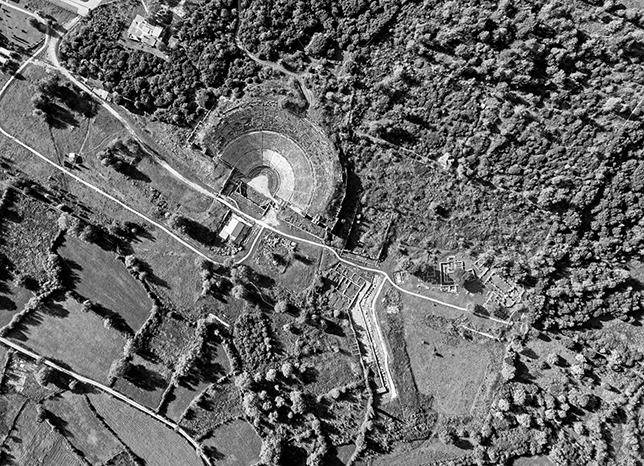
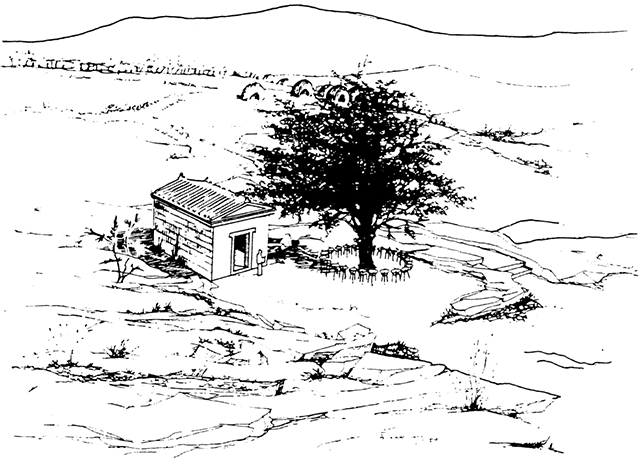
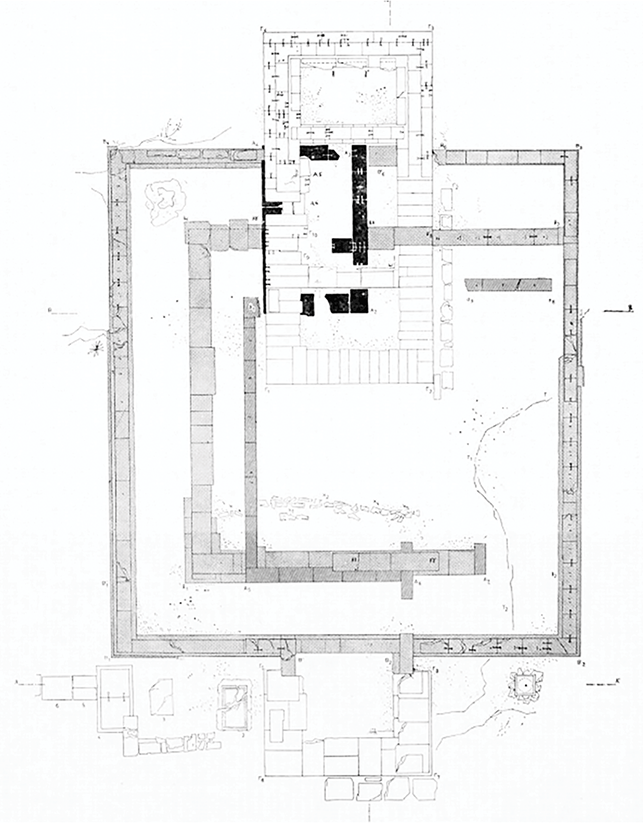
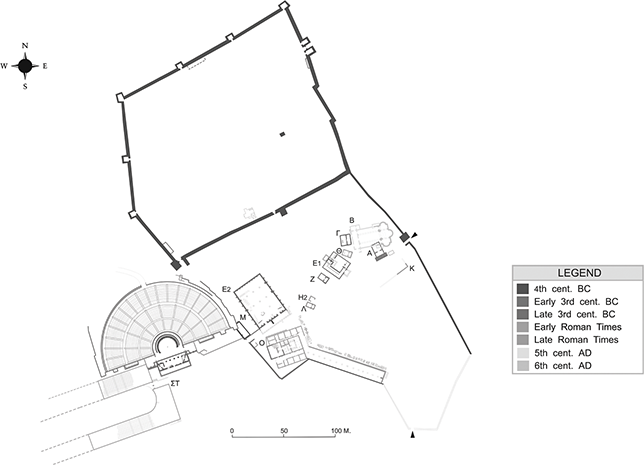
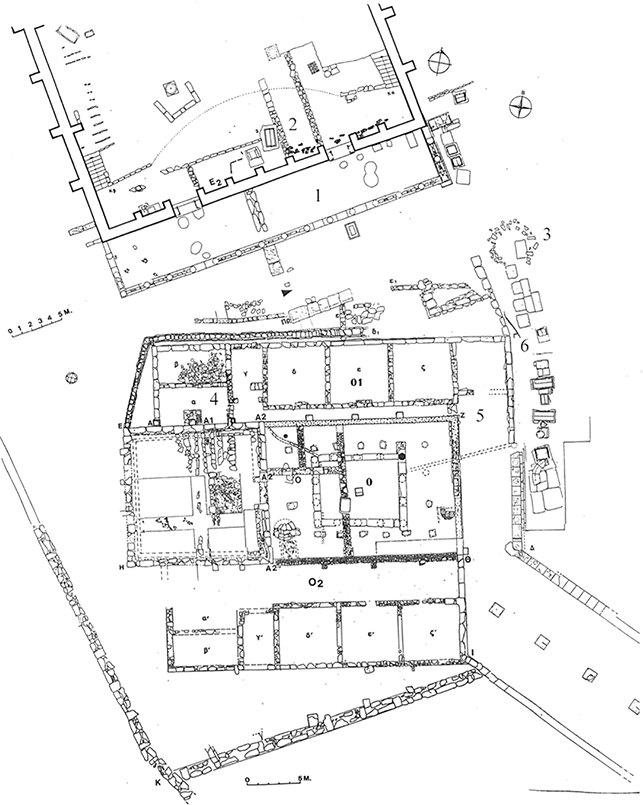
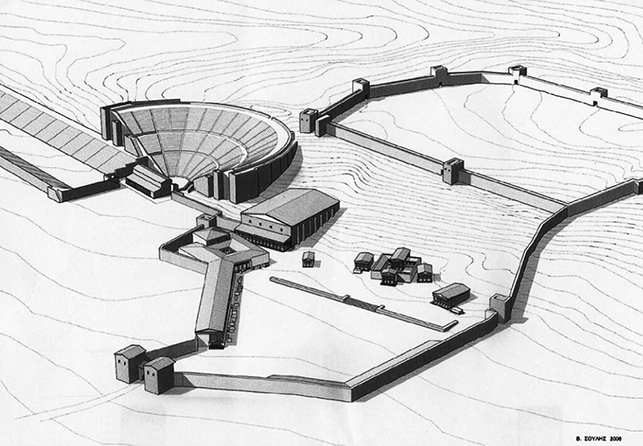

 Open access