

In recent decades, and especially since President Xi Jinping 习近平 assumed power in 2013, the international community has raised concerns about China's increased diplomatic assertiveness.Footnote 1 There is a belief that Chinese nationalism is on the rise and that the internet in particular has become a space for nationalists to agitate for a tougher government. Xi's hard-line stance in diplomacy is thus interpreted as a response to these nationalist voices. Challenging this view, however, several recent studies question the notion of a rising Chinese nationalism and instead argue that nationalist sentiment is declining in China.Footnote 2 Faced with these contradicting accounts, an empirical investigation of Chinese people's political attitudes is timely and important. Specifically, we want to examine the extent to which online political expression is nationalistic and supportive of the regime.
To gauge the popularity of nationalist ideology, previous studies have paid close attention to nationalist sentiment either at moments of crisis (for example, anti-Japanese protests), or in bestselling books such as China Can Say No.Footnote 3 As the internet has become the chief venue for public discussion in China, researchers have directed their attention to studying online nationalism on forums known to be platforms for nationalists. These studies provide valuable insights, especially for exploring nationalist movements. However, bestsellers are of different ideological leanings, as they include not only China Can Say No, but also, for instance, The Ugly Chinaman. Footnote 4 Online platforms feature not only nationalist forums but also liberal-leaning websites. Most research does not investigate nationalism in its broader context where different political opinions coexist and compete. If we examine nationalism as just one ideology within a broad public sphere, how popular does it prove to be?
In addition to its popularity, the nature of nationalism also deserves attention. Nationalism has long been associated with xenophobia. It suggests a consistently negative view of the nation's rivals. Yet, prior studies have rarely tested this assumption by examining how nationalist opinions may differ towards different “rivals.” Moreover, nationalism has long been characterized as an illiberal and pro-regime ideology.Footnote 5 In other words, nationalists allegedly tend to turn a blind eye to domestic political conditions, and are indifferent, if not hostile, to democratic values. In cases where nationalist sentiment turns against the state, scholars assume that this is mostly driven by frustration at the state's diplomatic impotence.Footnote 6 But little research has been done to explicitly investigate how nationalists may view domestic problems that are the concern of liberals and how nationalists may evaluate the regime.
To better understand the popularity and nature of Chinese nationalism, this study goes beyond nationalist forums and publications and looks at the broader online public sphere. We seek to identify the dominant political discourses regarding both China's major rivals, including Japan, the US and Taiwan, and the Chinese regime itself. The aim is to test the conventional wisdom that identifies nationalism as a xenophobic illiberal ideology. We focus on politically opinionated social media celebrities, i.e. opinion leaders, to investigate nationalism.
We conducted this research on Sina Weibo, China's largest social media platform. Weibo resembles a hybrid of Twitter and Facebook and has had more than 600 million registered users. Starting with a novel dataset of 2.7 billion Weibo tweets and 170 million active users collected in 2013, we identified 146 opinion leaders who frequently expressed political opinions and had an average of two million followers on Weibo, regardless of their ideological stances. Further, instead of focusing on a single moment of crisis, we extracted all the accessible tweets of opinion leaders that ever mentioned Japan, the US, Taiwan and China in 2013.
Applying content analysis to this compilation of more than 6,000 tweets, we find that online political expression is primarily characterized by anti-regime sentiment. The nationalist voice, while perhaps vociferous, is actually far from dominant. Further, nationalist discourse is not necessarily bound with illiberal and pro-regime stances: liberal and nationalist views often sit together. In our 2013 data, many people blended nationalistic and liberal opinions when commenting on nationalistic topics. When evaluating the regime, the majority of nationalists profoundly criticized the government from a pro-democracy standpoint. Lastly, nationalist discourse is more pluralistic than commonly assumed. While some nationalists were xenophobic, the majority of nationalists only expressed negative sentiments towards one or two foreign states but were quite friendly to other alleged rivals of China. Ironically, however, the dominance of anti-regime discourse appeared to spark a backlash of nationalist sentiment in certain groups.
Reflections on Chinese Nationalism
Two central questions
Chinese nationalism has long been of interest to scholars, yet two central questions remain controversial. First, is nationalism running high in contemporary China? Second, is the Chinese government capable of controlling this nationalist sentiment? One group of scholars argues that the Chinese government is by and large able to control the sway of nationalist sentiment. In the post-Mao era, as communist ideology has faded away, the Chinese Communist Party (CCP) has redefined itself as the sole representative and defender of China's national interests. Nationalism is therefore seen as an instrument used by the CCP to compensate for its waning legitimacy.Footnote 7 Scholars argue that the government controls nationalism as a way to signal its resolve in diplomatic relations and/or to deflect criticism of domestic affairs.Footnote 8 Accordingly, Chinese nationalism is largely seen as state-led and manipulated.
This view has been challenged since the late 1990s with the emergence of a grass-roots nationalism beyond the state's control. The 1999 US bombing of the Chinese embassy in Belgrade incited tens of thousands of people in China to take to the streets in anti-US protests. In 2008, an “anti-China” campaign in the Western media gave rise to a spate of worldwide protests showing support for the Beijing Olympic Games. Witnessing these incidents, China scholars have turned their attention to popular nationalism, arguing that nationalist ideology is flourishing in China, especially on the internet.Footnote 9 This literature expresses a concern that the Chinese internet is being used to promote nationalism, and that this may dampen China's democratic prospect.
In contrast to these two views, a third group of scholars argues that nationalist sentiment in China is transient and that the notion of a rising nationalism could be false. For instance, Dingxin Zhao surveyed Chinese student protesters after the 1999 embassy bombing and concluded that the demonstrations were a momentary outrage and that anti-US nationalism would not flourish.Footnote 10 Andrew Chubb surveyed 1,000 Chinese citizens in 2013 and found that the majority of them supported making compromises when facing international disputes.Footnote 11 Most recently, Alastair Johnston investigated longitudinal survey data extending back to 1998 and concluded that, contrary to the theory of a rising Chinese nationalism, most indicators show a decline in levels of nationalism since around 2009.Footnote 12 Even when we narrow down the research to Chinese internet users (netizens hereafter), online activism scholars argue that netizens are more likely to be supportive of democracy and to be critical of political conditions in China.Footnote 13 They argue that a novel form of grassroots democracy is unfolding online. This group of scholars provides us with a different account of public sentiment, rendering increasingly important the question: does nationalism really dominate online political expression in China?
The major gaps in the literature
To reconcile the different conclusions in the above studies, we recognize that their respective findings could all be valid, such that nationalist sentiment could be truly high or low within the bounds of their specific cases. However, to better gauge the popularity of nationalism, we need to investigate its influence in the broader context where nationalism competes with other ideologies.
To this end, our study differs from the existing literature in three ways. First, most empirical research relies heavily on case studies to explore nationalism. Some scholars investigate high-profile nationalistic publications,Footnote 14 some study nationalist movements in the heat of the moment,Footnote 15 and still others participate in nationalist forums to observe how nationalists perceive diplomatic relations.Footnote 16 While these studies give us valuable particulars about each specific group of nationalists, they provide much less information about how the nationalists compete with other voices. Alternatively, some scholars use surveys or experiments with representative samples to evaluate the prevalence of nationalism. Still, different survey designs have resulted in different conclusions.Footnote 17 Also, our study takes into account politically sensitive topics, for example evaluation of the regime, which a survey participant may be reluctant to discuss in a survey setting. Thus, instead of using surveys or case studies, we observe the daily expressed political views of people in a public sphere where political discussion naturally occurs.
Second, most of the previous studies tend to explore Chinese nationalism by investigating a single issue, for example Taiwanese independence or the Senkaku/Diaoyu Islands dispute (Diaoyu Islands hereafter).Footnote 18 However, public sentiment in times of conflict does not provide a full picture of public opinion. Further, nationalists themselves may not be a monolithically xenophobic group. Their attitudes may differ according to the particular topic at hand. Our study, therefore, analyses and juxtaposes people's political sentiments towards several foreign states, including Taiwan, the US, and Japan. We also extend the data collection period from crisis moments to a full year. In this way, we are able to discover the variations in nationalist discourse.
Finally, existing literature assumes that liberal democratic values and nationalistic opinions are incompatible, or a contradiction in terms. Although some scholars recognize that liberalism and nationalism once worked hand in hand in early 20th-century China for the sake of national salvation,Footnote 19 many primarily characterize nationalists in Communist China as pro-regime without really asking how they evaluate the regime.Footnote 20 Others warn that while fervent nationalism may backfire on the regime, this anger is mostly provoked by the government's weakness in diplomacy.Footnote 21 These hypotheses, however, lacked empirical support until recently. Christopher Cairns and Allen Carlson's study of online nationalism during the 2012 Diaoyu crisis found that anti-regime sentiment was unexpectedly pervasive in nationalist discourse.Footnote 22 More interestingly, this sentiment was not inflamed solely by diplomatic issues but was also driven by bad political conditions at home. This pioneering research raises an important question: are nationalist and democratic views really at odds?
This study attempts to scrutinize the conventional wisdom regarding Chinese nationalism, which associates the latter with xenophobia and illiberalism, i.e. nationalists are pro-regime and/or tend to turn a blind eye to domestic political conditions. In the rest of this paper, we examine whether nationalism really is the dominant force in online political discussion, and whether nationalists are monolithically xenophobic and illiberal.
Measuring Nationalism in the Digital Public Sphere
Social media as a public sphere
In China, despite the fact that the media and press are heavily censored, multiple studies indicate that there is a vibrant public sphere on the internet, especially on social media websites.Footnote 23 When we conducted our study, Weibo was the largest social media site in China; in 2013 and 2014, it had more than 600 million registered users and around 76 million daily active users. A recent study suggests that Weibo alone hosts up to 47.6 per cent of all social media posts in China.Footnote 24 Therefore, unlike specialized forums or websites, Weibo forms a space where diverse ideologies can coexist and compete. Yet, as social media has only been popular in China for a few years, only a handful of social scientists have conducted systematic research on it. Our study is one of the first attempts to explore nationalism on Weibo.Footnote 25
However, exploring the full set of Weibo tweets is not an ideal way to study the dominant political sentiment expressed in this space. As defined by Habermas, a public sphere is primarily a discursive space formed by active members debating social and political issues.Footnote 26 Nonetheless, the vast majority of social media users rarely post original content regarding politics; instead, they tend to “follow,” “retweet” and “like” the posts of those with similar opinions.Footnote 27 Moreover, even though everyone can have a voice on social media, the chances are that many posts would be invisible in the vast ocean of information. Users attract different levels of attention in this space and influence public opinions to different degrees.
We propose to use opinion leaders as a proxy to identify the dominant political sentiments expressed in this public sphere. On Weibo, few users actively post opinions on social and political issues, while over 95 per cent of users rarely post original content.Footnote 28 However, the average users do consume the opinions of others and vote by following, retweeting or “liking” those users they agree with. During this process, some of the active users outcompete others to successfully garner followers and attention; such users become “opinion leaders” through these audience “votes.” Therefore, opinion leaders’ voices reflect those of their large follower base.
Moreover, opinion leaders are much more powerful in defining agendas and shaping dominant discourse than average users. Opinion leaders on social media are to the digital public sphere what mass media is to the traditional public sphere. In the traditional public sphere, Habermas attaches importance to mass media because it is a “specific means for transmitting information and influencing those who receive it.”Footnote 29 In the era of social media, opinion leaders form and transmit opinions to their millions of followers – in our study they had an average of 2 million followers, and a maximum of 35 million, in 2013. By contrast, Cankao xiaoxi 参考消息, the most widely circulated newspaper in China, had a readership of only 3 million in 2013. Popular opinion leader tweets are also circulated by other major internet portals and print media, extending their influence to an offline audience. The study of opinion leaders is thus important in its own right.
Admittedly, opinion leaders do not constitute a representative sample of Weibo users; however, with their large popular base and significant influence, they are the most important actors in this public sphere. We thus believe that their voices are a reflection of the dominant political opinions in this space. It is also important to note that we identify opinion leaders on the basis of their online popularity irrespective of their political stances. This, therefore, is not a self-selected sample, but rather presents a nationwide source of opinions.
As such, opinion leaders provide critical analytic leverage to assess the popularity of nationalist sentiment within online political discourse. If nationalism is the dominant ideology in this space, we would expect to see that 1) the majority of opinion leaders are nationalistic, and/or 2) nationalist opinion leaders attract more followers than non-nationalist opinion leaders.
Identifying and analysing Weibo opinion leaders
Our study started with a novel dataset featuring 2.7 billion Weibo tweets produced by over 170 million daily active users during 2013. These tweets were collected through a Weibo Application Programming Interface (API) on a daily basis and in real time, so that tweets that were removed at a later time could still be documented.
We combined two sources of data to identify opinion leaders. The first was the Chinese Opinion Leader Ranking, which evaluates the popularity (measured by the number of retweets, likes, and comments the user receives) and the productivity of a given user (measured by the number of original tweets the user produces).Footnote 30 Collecting the top 100 users in ten issues of this ranking gave us 311 non-repetitive names. The second source of data was the follower count of opinion leaders, a measure as important as the readership of print media. We sorted the 170 million Weibo users by follower count and retained the top 5,000 users. Next, we combined the two name lists and removed commercial brands and marketing accounts. Still, many users on this list rarely discussed politics and so to identify users who were active on political issues, we used TF-IDF statistics to identify 93 political keywords from the online posts of 20 widely acknowledged opinion leaders.Footnote 31 We then selected only users who posted at least 15 tweets containing any of these political words.
Ultimately, we identified 146 opinion leaders who frequently discussed social and political issues. On average, they had 2 million followers and posted 443 Weibo tweets in 2013. Their demographics and Weibo behaviour are summarized in Tables 3 and 4 in the online supplementary materials.
Note that, unlike traditional elites, online opinion leaders come from diverse backgrounds: they can be property tycoons (for example, @Ren Zhiqiang) or military officials (for example, @Dai Xu). They can also be purely grassroots personalities (see, for example, @Ranxiang). Some are renowned liberals (such as @Lawyer Yuan Yulai) and some are famous nationalists (for example, @Zhanhao). Such diversity confirms that this is not a self-selected sample biased towards certain people.
Our next step was to identify opinion leader tweets regarding nationalism. We focused mainly on comments about the US, Japan, Taiwan, and China. Using a fuzzy matching algorithm powered by Word2Vec models, we matched all opinion leader tweets with 13 keywords relevant to these subjects (see Table 1).Footnote 32 The final corpus included 6,087 tweets, by 146 opinion leaders, that commented on five topics: the US, Japan, the recovery of the Diaoyu Islands,Footnote 33 Taiwan, and the political regime (tizhi 体制) of China. We included every tweet that mentioned any of the 13 keywords. Some topics were not inherently political or related to bilateral issues, such as Japanese cartoons or the Snowden incident; however, discussions about these issues could still turn out to have nationalistic overtones.
Key Words Used to Identify Politically Related Tweets
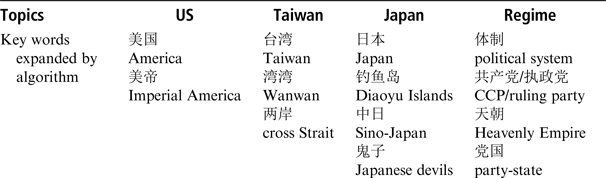
Notes: Terms such as “Imperial America” and “Heavenly Empire” are commonly used, tongue-in-cheek references to America and China and do not indicate any ideological preference. Wanwan is a commonly used term for Taiwan on the internet. Similarly, netizens often refer to China as the “party-state.” These terms are used by both liberals and conservatives and do not necessarily imply positive or negative sentiments. Also note that we did not include 中国/China, since this word is too frequently used in non-political contexts.
Next, we hand coded these tweets according to a five-level sentiment scale ranging from “strongly disfavour” (-2) to “strongly favour” (2). That is, we coded the sentiment revealed in a given tweet towards its subject. For instance, under the topic of Japan, a tweet is coded as “2” if it expresses strong affection – for example, “I love Japan.” A tweet is coded as ”−2” if it shows antipathy to Japan – for example, “Down with the Japanese devils!” The coding scheme and examples are given in Table 5 of the online supplementary materials.
Note that the usage frequency of Weibo varies among opinion leaders. Some post more than ten tweets a day; others tweet much less. Therefore, the absolute number of tweets associated with a certain ideology is not a good measure of its prevalence. Instead, our unit of analysis is “person” rather than “tweet.” We assigned a score for each opinion leader based on the major sentiment revealed in all his/her tweets under a given topic. As such, each person was scored on five topics. In the end, we obtained 146 observations with five scores each. In short, the more negative the score, the stronger the aversion the tweeter would have towards a given topic. To validate the reliability of this hand-coding, a second independent coder applied the same protocol and coded a random sample of 1,243 tweets. The agreement rates of the five topics were all above 75 per cent with a Cohen's Kappa > 0.6.
Is Nationalism Dominating Online Political Expression?
A general picture of voiced political opinion in the digital public sphere
Let us start with a panorama of the four topics related to foreign states: the US, Taiwan, Japan, and the Diaoyu Islands. Figure 1 and Table 2 summarize the distribution of opinion leader sentiment scores. Clearly, more opinion leaders had a favourable opinion of Taiwan and the US, thus the average scores are positive. By contrast, half of opinion leaders expressed disapproval of Japan, lowering its mean score to under zero. The Diaoyu Islands were associated with the strongest nationalist sentiment, with the lowest mean score of -0.89.
Distribution of Opinion Leaders across Different Topics
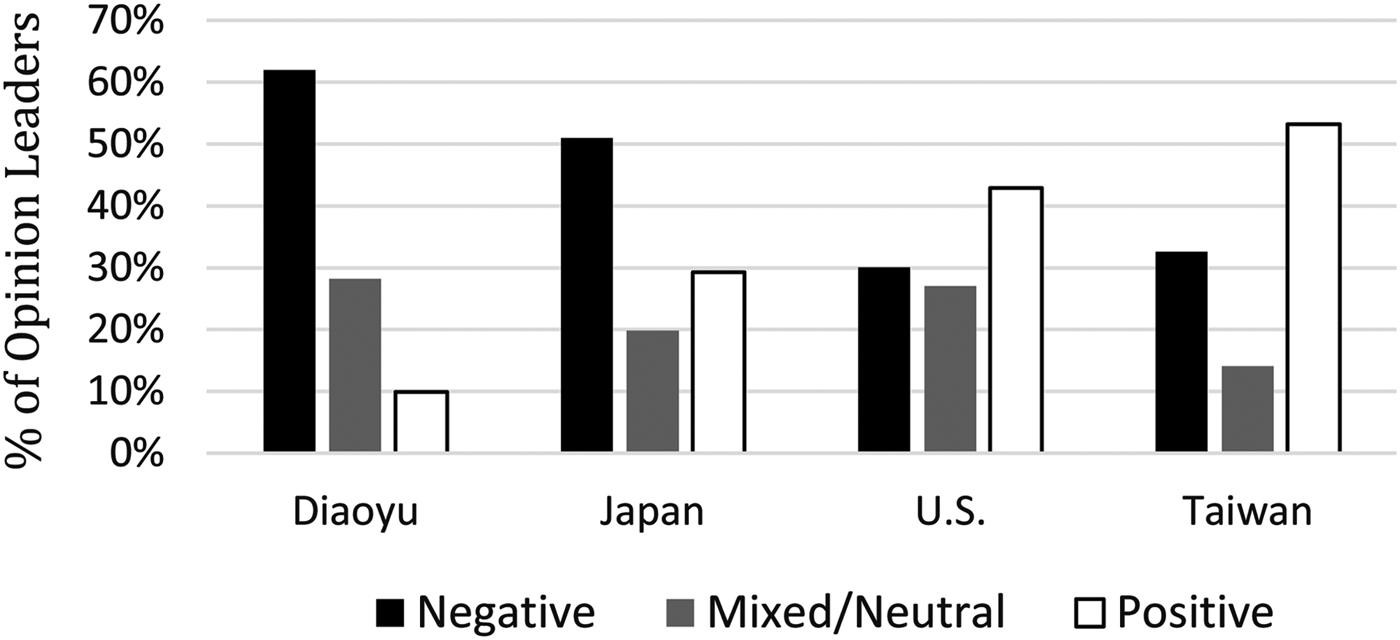
Opinion Leaders’ Sentiment Scores on All Four Topics

The general distribution indicates that nationalist sentiment may dominate discussions on Japan, especially those with regard to the recovery of the Diaoyu Islands, but not discussions on the US and Taiwan. The number of opinion leaders, however, is not sufficient for an assessment of what opinion is more dominant, as leaders themselves enjoy different levels of popularity. Therefore, we further investigated the popularity of anti-Japanese discourse by comparing the follower counts of different leaders, as shown in Table 3. Remarkably, non-nationalist opinion leaders garnered almost three times more followers than anti-Japan nationalists. A one-way ANOVA test indicates that the between-group difference is significant at the 0.05 level. Chinese experts may treat follower counts with scepticism, as users could “buy followers” on Weibo, but fake followers mainly haunt brands and celebrities who need to boost their commercial profiles. There is less incentive for individuals without evident market profiles to do so. Even if opinion leaders were buying followers, no evidence suggests that non-nationalists, more than nationalists, tend to buy many more followers. In fact, if anything, it is the nationalists who are more likely to be funded (by the government). This finding strongly indicates that while slightly more opinion leaders tended to be nationalistic when discussing Japan, this group was actually less popular on Weibo.
Follower Count of Opinion Leaders

Consistency of nationalism
To further examine whether nationalists are xenophobic, we explore the consistency of people's nationalist sentiments by comparing the same opinion leader's attitude across different topics and count the number of topics about which he/she expressed nationalist sentiments (score < 0). We define zero as non-nationalist, one and two as moderate, and three and four as extremely nationalist. That is, nationalist extremists would express hatred towards most foreign states, whereas non-nationalists would show no hostility towards any country. Notably, this is not a measure of the hostility of an opinion leader, but rather a measure of how systematic one's nationalist sentiment is. The more consistently an opinion leader expresses antipathy towards other countries, the more xenophobic and irrational he/she is.
Consistency of Nationalism (Degree of Xenophobia) among Opinion Leaders (N = 146)
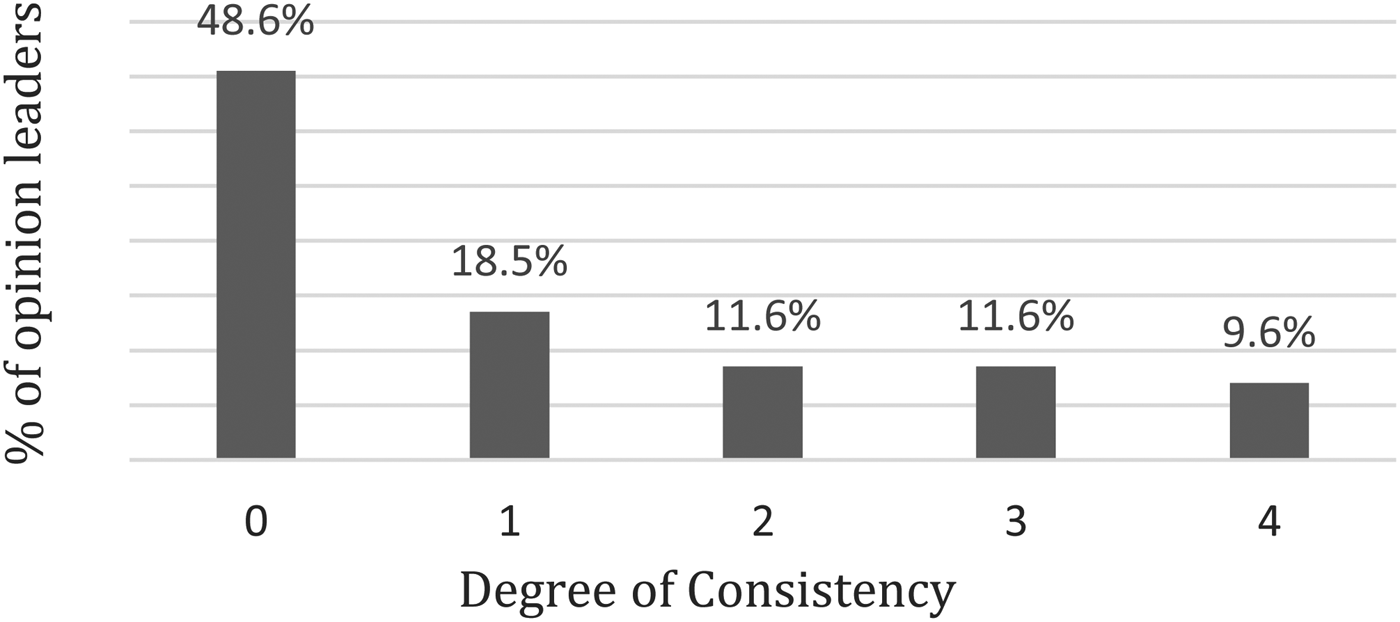
As shown in Figure 2, the proportion of non-nationalists is unexpectedly high: 48.6 per cent of opinion leaders did not hold nationalistic views towards any of the topics studied. More importantly, the significant presence of moderates casts serious doubt on the conventional wisdom about nationalism, and in particular about how to define nationalists. For example, one opinion leader in our study took opposing stances on Japan and America, although both are deemed to be major rivals to China:
[1] I firmly support the government in defending Diaoyu! Japan is lying about the facts!
[2] America is a highly liberal society with a solid foundation of rule-by-law. The respect for both liberty and law is the patron saint of this country. China can never defeat it.Footnote 34
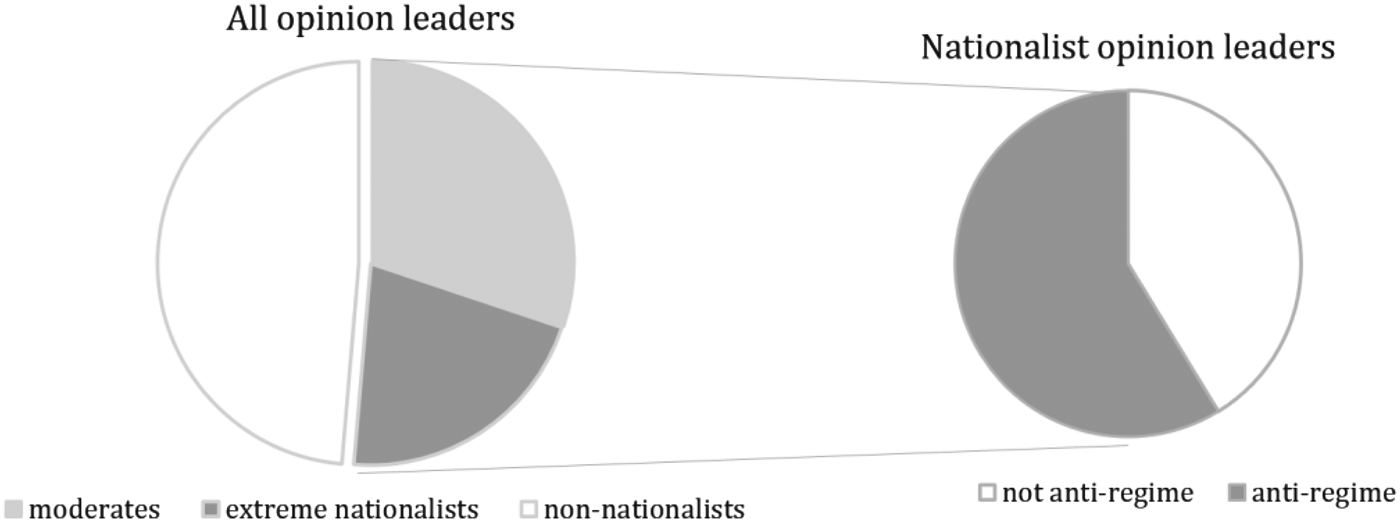
The same person expressed strong nationalist sentiments about the Diaoyu dispute yet also supported the US when talking about Sino-American competition. Given these contrasting views, would it be accurate to characterize him as a nationalist? Note that, among opinion leaders who expressed nationalist sentiments, 58.67 per cent are moderates as such. This indicates that nationalists may not be a united chauvinistic front, but rather a complex coalition of different groups and ideas. Such complexity further supports the view that nationalists are not monolithically xenophobic.
Nationalism versus anti-regime-ism
Cairns and Carlson found that anti-regime sentiment flourished on Weibo during the 2012 Diaoyu dispute. They also discovered that in addition to the ire provoked by the government's handling of the dispute, many tweets also vented dissatisfaction regarding domestic problems such as corruption and police brutality. Building on Cairns and Carlson's findings, we explicitly explored the popularity and intensity of this anti-regime sentiment. After analysing opinion leader comments on the Chinese regime, we found that among the 133 opinion leaders who expressed a clear stance, 102 people (over 76 per cent) were critical of the regime, and the group with the strongest negative opinions accounted for 46.62 per cent of the sample, constituting the largest group (see Figure 3).
Distribution of Sentiment towards the Regime among Opinion Leaders (N = 133)
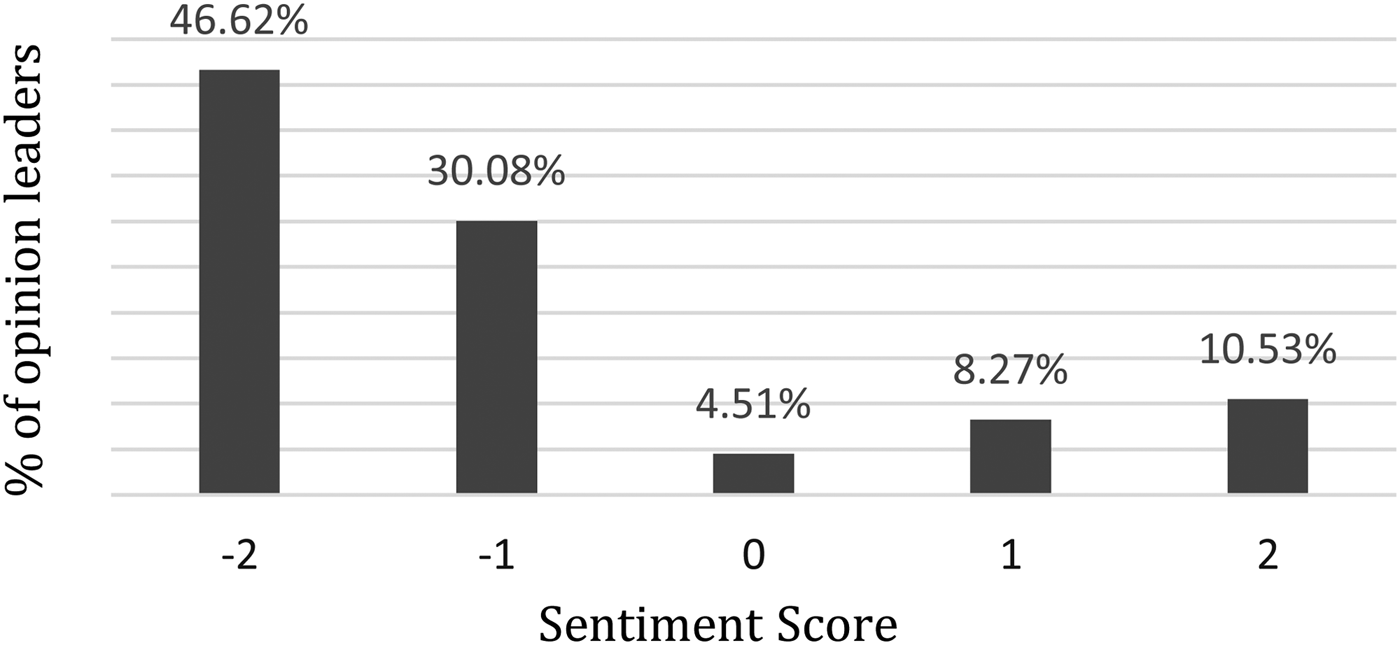
The overwhelming dominance of anti-regime sentiment is remarkable. Even when examining the Diaoyu issue, which elicited the strongest nationalist sentiment, only 44 opinion leaders were anti-Japan. The seemingly high proportion (61 per cent) is partially owing to the fact that 75 of the opinion leaders remained silent on the topic of the Diaoyu Islands in 2013 and were thus excluded. By contrast, here we see that the vast majority of opinion leaders were firmly anti-regime. Therefore, we expand on Cairns and Carlson's findings and show that anti-regime sentiment is, in fact, more pervasive in the public sphere at all times, whether China is experiencing a crisis or not.
This conclusion also holds up for nationalists. As many as 58.73 per cent of nationalists – those who expressed nationalist sentiment towards at least one topic – were clearly anti-regime. Examining how they evaluate the regime outside of nationalist issues allows us to verify that this strong anti-regime sentiment is not just motivated by a nationalistic logic, i.e. dissatisfaction with the state's diplomatic impotence. This finding enriches the existing literature in that 1) the majority of nationalists were not pro-regime but were rather critical of the domestic political conditions, and 2) that they challenged the regime without nationalistic reasons.
Taken together, does nationalism dominate political expression in the online public sphere? While it is true that Japan-related topics do seem to spark highly vocal nationalistic rhetoric, this does not appear to be the case for topics related to the US and Taiwan. However, even when it comes to Japan, nationalists are not as popular as non-nationalists, as the latter attracted many more followers. More importantly, as many as 58.67 per cent of nationalist opinion leaders could only be characterized as being nationalistic in regard to one or two of the four topics studied. That is, someone labelled as a nationalist could turn out to be, for instance, an anti-Japanese admirer of the US, which undermines the conventional ideas of what constellation of opinions nationalists in fact hold.
The relative popularity of nationalist ideology becomes clearer when we compare nationalism with anti-regime sentiment. Figure 4 shows that while users had diverse opinions on nationalist issues, over 76 per cent of opinion leaders shared a strong anti-regime sentiment. Among nationalists, nearly three out of five were anti-regime without nationalistic reasons. This tells us that anti-regime sentiment is significantly broader and more popular in this sphere, existing within and beyond nationalist discourse. We conclude that this digital public sphere is primarily dominated by anti-regime rather than nationalistic sentiment. A quote from one pro-regime opinion leader vividly depicts his frustration when facing such an anti-regime environment, and this effectively verifies our findings: “In this era, people feel proud to be a traitor, but feel ashamed to be a patriot; people feel honoured to fabricate [anti-government] rumours, but attract hatred if they refute the rumour.”Footnote 35
Distribution of Opinion Leaders
Different Topics, Different Voices
We now examine each topic in turn to further explore the nature of Chinese nationalism.
Japan: nationalism amid anti-regime sentiment
We saw the strongest nationalist sentiment in discussions related to Japan and/or the Diaoyu Islands. Owing to the Sino-Japanese Wars and the Second World War, historically the Chinese have harboured more animosity towards Japan than any other nation. Military defeats forced China to cede full sovereignty over several lands to Japan. These territorial disputes and memories of wartime suffering have strained Sino-Japanese relations and rendered anti-Japan nationalism a moral imperative in China.
Unsurprisingly, the topics of Japan and the Diaoyu Islands both received negative mean scores. In 2013, the dispute over the Diaoyu Islands escalated to a short-lived military confrontation.Footnote 36 Typically nationalist declarations such as “We don't forgive Japan!” and “Diaoyu is China's territory!” were commonplace at that time. Nonetheless, similar to the findings of Cairns and Carlson with respect to online discussion of the 2012 Diaoyu crisis, we also found that anti-regime sentiment was pervasive online in 2013. Yet, Cairns and Carlson did not explicitly differentiate between anti-regime sentiments with and without nationalistic motives. Building on Cairns and Carlson's work, our study investigates three types of anti-regime sentiment in Japan-related discussions.Footnote 37
First, as Jessica Weiss argues, some nationalists were riled by the perceived ineffectiveness of the government's international diplomacy. This anti-regime view is driven by purely nationalistic reasons, for instance:
Chairman Mao said imperialism is a paper tiger. But I think China is the biggest paper tiger. Facing the atrocities committed by the Japanese devils, China has been so cowardly and weak. Why?!Footnote 38
However, more often in our data, anti-regime views were simultaneously associated with both nationalistic and liberal concerns and frequently referred to domestic problems when talking about Japan:
[1] We should definitely defend Diaoyu! But someday if the Chinese government really controls this island, we will no longer be able to log on to Facebook there. To control or not, this is a tough choice!Footnote 39
[2] Isn't chengguan 城管 the best army in the world? If you can rule China easily with chengguan, then why not send chengguan to recover Diaoyu? This is the easiest way to defend our territory!Footnote 40
These nuanced views challenge our previous understanding of nationalists. These commentators can be seen as nationalists in that they call for the Diaoyu Islands to be recovered; however, at the same time, they mock the government not only for its diplomatic impotence but also out of concern for issues such as freedom of speech and police brutality. This indicates that nationalist views and liberal concerns can be compatible, and that “liberal nationalist” voices tend to question, rather than defend, the legitimacy of the Chinese regime.
Finally, we found that some opinion leaders expressed anti-regime sentiment for purely liberal reasons. Leaders directly called attention to domestic rather than international conflicts, or posted sarcastic slurs about nationalism:
The priority of citizens is to fight for human rights and freedom. Nationalism is a panacea for deflecting domestic conflicts. Stay vigilant to populism and extreme emotions.Footnote 41
Despite the fact that these are all examples of anti-regime attitudes, the sources of such sentiments are distinct. Showing the coexistence of liberal and nationalistic concerns, together with the fact that 53.06 per cent of anti-Japan nationalists were, in fact, anti-regime outside of nationalist discussions, our study poses a significant departure from the existing literature. Nationalists are not only concerned about national strength but are equally, if not more, concerned about political conditions at home.
Overlooking this anti-regime sentiment, many journalistic accounts suggest that the Chinese people put pressure on the government to wage war against Japan. But, in our data, only three opinion leaders made this suggestion, and they had at most 0.5 million followers, far below the average of 2 million. In contrast, dozens of opinion leaders, who were also more popular, claimed that economic development and social stability were the highest priority. This finding dovetails with Chubb's survey, which shows that there is no evidence that China's population pushes its leaders towards war. An opinion leader with 35 million followers represents this opinion:
China and Japan should look towards the future and let go of the Diaoyu dispute for the sake of common development.Footnote 42
To summarize, Sino-Japanese relations indeed provoke the strongest nationalist reaction. However, anti-regime sentiment was also pervasive in the discussion, and in many cases, this sentiment was derived more from liberal than from nationalistic concerns.
The US: romanticization and “face-slapping”
The US attracted the most attention on Weibo. There was a total of 2,241 tweets about America, seven times more than those about the Diaoyu Islands. The US also received a positive mean score in our analysis. About 43 per cent of opinion leaders favoured the US, whereas 30.1 per cent expressed negative sentiments.
Without territorial disputes or memories of wars, the tensions between the US and China mainly stem from geopolitical struggles. America is currently the sole superpower in the world, and China is a potential rival. The two states also represent two opposing political systems and ideologies: America exemplifies a mature democracy, whereas China is an authoritarian state.
Opinions about America seem to fall into two dichotomous camps. On the one hand, Weibo is full of rosy tales about the US. As a result, Western media surprisingly found that “China's youth admire America far more than we know.”Footnote 43 In academia, Haifeng Huang surveyed a representative sample of Chinese citizens and found that nearly half of them overestimated the socio-economic conditions of America.Footnote 44
On the other hand, Huang's experiment also shows that more accurate information about the US might ironically lead citizens to be less idealistic about the US and more sympathetic towards China.Footnote 45 In the same vein, Rongbin Han's participant observation of online communities found that a marginal yet assertive group of angry netizens were committed to counteracting this type of “flawed” information that romanticized the US.Footnote 46
We find the same pattern in our data. Opinion leaders are split into two camps – “America-admirers” and “face-slappers.” America-admirers frequently praise the US for its strength and democracy and criticize China for representing the pathetic inverse:
American officials fear citizens; Chinese citizens fear officials. The American government is poor but people are rich; the Chinese government is rich but people are poor. American citizens are encouraged to criticize the government; Chinese citizens are encouraged to extol the government.Footnote 47
Extreme America-admirers side with the US even against China itself. For instance, when Edward Snowden exposed the US global surveillance programme, one opinion leader wrote:
To those who laughed at America: do you think your emails and phones are not monitored? … The US surveils its citizens for the sake of its national interests. What is your country doing this for? A person who is fatally ill is in no position to laugh at someone with mild diarrhoea.Footnote 48
Likewise, in response to the anger that flared up when a child on the US TV show Jimmy Kimmel Live suggested that “killing everyone in China” could be a solution to America's debts, one opinion leader tweeted:
America's so-called “debt to China” is not something that America begged China to buy. On the contrary, China begged America, because the US debt has the best credibility and a high return. If China is upset, please lend money to North Korea, Cuba or Syria.Footnote 49
In contrast, “face-slappers” tend to be infuriated by the “partiality” of America-admirers. This face-slapping tweeter, like Han's angry netizens, wants to “slap” them in the face with facts:
When vice-president Biden visited China and spent 79 yuan on a dinner in Beijing, Chinese people extolled the probity of American officials. Then, another day in Paris, Biden's hotel bill for a one-night stay was a whopping $58,000, slapping the sycophants hard in the face.Footnote 50
The source of this nationalist sentiment merits special attention. As suggested by Huang's experiment, this sentiment is not attributable to ignorance or to manipulation by state propaganda. On the contrary, nationalist sentiment may arise as the dominant pro-US narrative is called into question by greater exposure to more information. In this way, some people claimed they were “forced to become patriotic” when they realized the “bias” of liberal discourses. One opinion leader wrote:
When American police used pepper spray and truncheons to attack protesters who caused a disturbance, she [a famous liberal journalist] praised this as professional and efficient; when Chinese police expelled street vendors who disrupted public order, she called this police brutality.Footnote 51
Discussions about the US could be characterized as a contest between these two camps. Our data show that pro-America opinions are more prevalent than nationalist discourse. However, because this dominant view could be too idealistic, increasing knowledge about the US is unintentionally provoking a nationalist reaction, ironically diminishing disaffection with the Chinese regime.
Taiwan: family reunification and the yearning for democracy
Ever since the Kuomintang (KMT) was defeated by the CCP and fled to Taiwan in 1949, Taiwanese independence has been an area of contention between China and Taiwan. Nevertheless, as many as 53 per cent of the opinion leaders expressed affection towards Taiwan, making Taiwan score the highest in our study.
To clarify, most netizens do support national reunification. However, similar to the liberal nationalist voices in the Japan case, this nationalistic stance is associated with more pro-democracy views. Chinese people see Taiwan as a blood brother of the mainland: both belong to “China” in a cultural sense. But this view is not necessarily in line with the political ambition of the CCP. Opinion leaders delivered a subtle message that mainland China, currently an authoritarian regime, was not “qualified” to undertake unification with a democratic state like Taiwan. In fact, the nationalist call for reunification was rhetorically deployed by some opinion leaders for the purpose of criticizing the regime and calling for democracy. For instance, tweets of this nature frequently cited the official narrative of the “brotherhood with Taiwan” to make a case for political reform. One opinion leader wrote:
Mainland [China] and Taiwan belong to the same China … We encourage the CCP to run election campaigns in Taiwan, but we should also allow Taiwan to launch newspapers and television programmes on the mainland. Only in this way can we realize the Chinese nation's century-long dream of freedom of speech.Footnote 52
Some opinion leaders went so far as to use the CCP slogans of “territorial integrity and state sovereignty” to attack the regime itself:
Taiwan's leaders once remarked that if “One China” is inevitable, Taiwan would […] demand parliamentary democracy. In this case, guess who is the culprit hindering national unification and undermining territorial integrity?Footnote 53
These commentaries indicate that many opinion leaders see Taiwan as an exemplary democracy, a symbol of hope for change on the mainland. While people support national reunification, this nationalistic stance was actually used to urge political reform at home. Again, nationalist views were combined with liberal views in this case, reworking the “reunification” rhetoric into a call for democracy and liberalism.
Beyond these liberal nationalist claims, conservative nationalists were still vocal in prioritizing reunification. However, these voices were outflanked by the anti-regime and pro-liberal trend. As a result, their rhetoric was often agitated and defensive:
Why can Taiwan people support Taiwanese independence, but we cannot freely support Chinese reunification?Footnote 54
It is also commonly held that mainland Chinese people tend to support the use of force to reunite with Taiwan. Our data, however, show that over the course of 2013, only one opinion leader called for forced reunification with Taiwan. In an environment where many people regard Taiwan as the hope for a liberal China, forced reunification is simply seen as “illegitimate.”
Overall, the dominant voices among opinion leaders clearly favoured Taiwan. Importantly, nationalist discourse in many cases turned out to be complemented by liberal voices, linking the dream of family reunification with a yearning for democracy.
Discussion
We analysed political expression in the digital public sphere and found that anti-regime sentiment is stronger and more prevalent than nationalist sentiment. Could this finding be biased? We now address several concerns and provide a theoretical explanation for this finding.
The role of Weibo
Our results could be biased if anti-regime users are over-represented on Weibo. It is certainly possible that Weibo is more liberal than some websites, especially nationalist forums such as Strong Nation (Qiangguo luntan 强国论坛). Yet, it is also more conservative than other known liberal websites, for example, Kednet (Kai di shequ 凯迪社区). So far, we have not seen any academic work indicating that Weibo is more likely to be anti-regime than other websites. Moreover, in 2013, Weibo was ranked as one of the 15 most-visited websites in the world and the largest social media website in China. Compared to smaller platforms tailoring to specific audiences, Weibo with 600 million users is less likely to be biased towards a particular population. We thus believe it is a good representation of the “public sphere” in 2013.Footnote 55
Some may also be sceptical about the findings as there has been so much nationalistic comment on Weibo and on other websites. Nationalistic comments are commonplace; but so are anti-regime comments. In fact, individuals who post online comments constitute a biased sample as the vast majority of netizens tend to be silent. We, therefore, identified the dominant discourse by examining who can become an opinion leader and which opinion leaders attract a larger popular base, taking into account the preferences of the “silent majority” according to who they follow, retweet or like.
The role of the state
Another concern is the state's ability to shape the Weibo environment. The Chinese government engages in extensive online censorship and Weibo itself also conducts self-censorship. A recent study even finds that the government fabricates about 488 million pro-regime tweets a year with the aim of influencing public opinion.Footnote 56 This would appear to be a particularly hostile environment for anti-regime voices. However, one may argue that extreme nationalists could also be heavily censored as they may incite collective action.
To address this concern, we analysed another dataset, released by the WeiboScope project, which collected the timelines, including censored ones, of more than 350,000 Weibo users in 2012.Footnote 57 We sampled 1 per cent of the censored tweets for each month and hand-coded them along two dimensions: whether the sentiment of the tweet was nationalist, and whether it was anti-regime.Footnote 58 The results show that the proportion of censored nationalist tweets is strikingly low, estimated to be at most 2.65 per cent at alpha = 0.01 level. By contrast, the proportion of anti-regime non-nationalist tweets is estimated to be between 32.81 per cent and 41.02 per cent, indicating that there were either fewer nationalist tweets and/or they were less censored compared to liberal anti-regime tweets. In fact, the state even launched a crackdown on anti-regime opinion leaders in August 2013. In a classified document entitled, “Communiqué on the current state of the ideological sphere,” circulated prior to the crackdown, the CCP alleged that the “Western values” promoted on the internet were a severe challenge to its rule. Official media outlets commented that public opinion has been dominated by liberal online celebrities who have amassed enough power to rival a national newspaper or even a national television station.Footnote 59 Perhaps more than anything else, the crackdown itself indicates how pervasive and influential liberal voices were by 2013.
However, even if nationalists had been heavily censored, there are two reasons why this does not invalidate our conclusions. First, our unit of analysis is the individual opinion leader rather than each individual tweet. Censorship may affect a proportion of certain tweets, but it hardly affects our judgement of the ideological leaning of a given person. We analysed the online speeches of opinion leaders for over a year, and this provided enough information for such identification, even if some of the tweets were missing. Second, we also rely on the popular bases of opinion leaders to gauge the influence of a certain ideology. Censorship may intimidate some speakers, but it cannot flip public opinion nor can it undermine the popularity of an opinion leader. As Margaret Roberts finds, censorship may incite users to be more rebellious and dedicated to spreading censored information.Footnote 60 In fact, many anti-regime critics were censored much more heavily but yet still attracted many more followers than nationalists. Taken together, we believe censorship does not undermine the validity of our findings.
Despite heavy censorship of anti-regime tweets and the fabrication of pro-regime posts, our data still show that anti-regime opinion leaders largely outnumber nationalists and win more followers on Weibo. Therefore, the existence of state intervention only strengthens our argument, rendering the significance of the marginal status of nationalists even more pronounced.
The role of nationalists
If nationalists only constitute a minority, does this mean that they do not play a role in China's foreign policies? We are not suggesting that this marginal status will remain constant in the long run. Nationalism is a powerful ideology in any state with a strong nationalist mandate in times of foreign aggression or national crisis. Even moderately nationalistic states are susceptible to radicalization when conflicts escalate. Furthermore, even minority opinions can play a role. Sometimes strident nationalist sentiment dovetails with the state's foreign policy agenda, allowing the state to play the nationalist card abroad. Even though nationalists might not represent the general opinion, the regime can still promote the nationalists’ concerns to serve its own strategic ends. However, it is dangerous to align state policies with the general public opinion in China and assume that the Chinese people are hawkish as a whole. While there are those who call for hard-line policies, there is a more pervasive anti-regime liberal voice. Attributing state policies to the general public might alienate potential liberal supporters. Instead, we should recognize and amplify those already strong rational voices in order to counter the force of nationalist voices.
The predicament of Chinese nationalism
In most countries, nationalism has come to be seen almost as a moral imperative when national interests are at stake. This is certainly the case with China. However, today, anti-regime sentiment in China is so pervasive that nationalism, often viewed as a pro-regime ideology, is delegitimized.
Chinese nationalism is therefore in an ambiguous position: on the one hand, people feel obliged to defend national dignity, especially during times of crisis; on the other, the unpopularity of the authoritarian regime delegitimizes any support for the state. Confronting this dilemma, Chinese nationalists widely circulate a quote to clarify their stance: “To love the country is not equal to loving the regime” (Aiguo budengyu ai chaoting 爱国不等于爱朝廷). Our data also confirm that the majority of nationalists were anti-regime outside of nationalistic topics. But why is anti-regime sentiment so pervasive in the first place?
We propose that this can be explained by the vulnerability of state legitimacy. As the legitimacy of communism has waned in the post-Mao era, China has relied heavily on its governing performance to maintain support, yet it has provided neither full citizen rights nor transparent government. This legitimacy problem curbs the development of nationalism in three aspects.
First, the citizenry's sense of nationhood and national responsibility cannot be fully developed if the state denies citizens their rights. The notion of nationalism suggests a transformation of the individual's identity from “subject” to “citizen,” granting the people a share of the “ownership” of their country and empowering them with citizen rights. However, the development of nationalism in China was not concurrent with the provision of full citizen rights, including universal suffrage and freedom of speech. When people's personal interests and rights are in jeopardy, discontent will arise, even among nationalists. Dingxin Zhao, citing Xiaodong Wang 王小东 (a renowned nationalist in China), argues that “patriotism would be constrained in a country without human rights and political democracy.”Footnote 61
Second, without a dominant state ideology, the government's ideological authority has been largely undermined. This situation is further worsened by acute domestic problems and non-transparent political procedures, thereby facilitating the spread of political distrust and a sense of insecurity. Against this backdrop, instead of shaping public opinion, state propaganda prompts criticism and disdain. Regime-denouncing discourse, therefore, gains the moral high ground. State criticism appears just, and nationalists, in turn, are invalidated as they may be accused of being “the real traitors to the Chinese nation.” Accordingly, “true” patriotism has been defined as criticizing the regime:
Defending human rights is the only way to love our country. So to betray a corrupt government is completely patriotic.Footnote 62
Lastly, despite the fact that the Chinese government uses nationalism to buttress its own legitimacy, it has been cautious with popular nationalism, as nationalists may become aggressive when the state cannot meet their demands. Moreover, once the government allows the masses to freely mobilize and express their nationalist concerns, it is difficult to prevent such freedom from spreading to other political spheres.
To summarize, authoritarianism's vulnerability in terms of legitimacy has led to the tensions encountered by Chinese nationalism. This partially explains why it is anti-regime rather than nationalist sentiment that dominates the online political discourse.
The present and the future
Readers may also be curious about how our findings hold up in more recent years, especially since the 2013 crackdown on opinion leaders. As long as there is no strong nationalist mandate nor dramatic change in the state's legitimacy, we suspect that nationalist sentiment will continue to be restrained by anti-regime discourse. Nonetheless, continued liberal dominance may provoke a backlash of nationalist sentiments, as has been seen in attitudes towards America. Recent years have seen the rise of a pro-regime group named the “little pinks” (xiaofenhong 小粉红). This group mainly is composed of young people born after the 1990s. Much like the “face-slappers,” these young people are attuned to the foreign media. We thus suspect that their antipathy towards liberals is similarly rooted in the disparities between the reality they see and that presented by liberals. However, while the little pinks participate in online discussions, they have been criticized and stigmatized by mainstream discourse.
Most recent examples come from the 2016 anti-Philippine protests driven by the South China Sea dispute and the ongoing anti-Lotte campaign amid Sino-Korean tensions over the US-backed THAAD system. While many netizens, including the little pinks, have advocated for boycotts in the name of patriotism, scathing criticism against nationalism has quickly flourished online. It seems that citizens have gone through a learning curve. They frequently refer to the vandalism committed during the previous anti-Japan protests to attack the irrationality and “small-mindedness” of nationalism. There have not been any large-scale nationalist protests like those in previous years. Highly sensitive, both the media and citizens even falsely decried an irrelevant local security incident as nationalist violence when a Korean car was smashed.
Perhaps more than anything else, the response of nationalists themselves best reflects the restraining influence of the growing contingency of rational citizens and anti-nationalist voices. A Party media outlet attacked “the widespread smear campaign against patriotism online.” Top nationalist articles circulated on WeChat declared: “Stop demonizing patriotism” and “Don't be ashamed to love your country.” People's Daily echoed this by coining the phrase “rational patriotism,” which was described as quiet, rational and “focuses more on building a better China” than criticizing other countries. In these cases, we are seeing a fast-growing rational citizenry which has largely forestalled the development of nationalism.
Starting from 2017, the changes in international politics, especially the Trump administration's threats of waging a trade war and supporting Taiwan independence, have the potential to destabilize this trend. However, as Guobin Yang has written, changes occurring today do not render what happened yesterday meaningless.Footnote 63 The course that Chinese nationalism has taken in the past is an integral part of its present identity, and will undoubtedly influence its development in the future.
Conclusion
By examining the online comments of 146 opinion leaders, this study shows that nationalist sentiment does not dominate political expression on Weibo. Rather, the dominant voice tends to be anti-regime, with as many as over 76 per cent of opinion leaders being clearly critical of the regime. Nationalist sentiment is strong in Japan-related discussions, but not in US and Taiwan-related discussions. Meanwhile, the follower counts of non-nationalists may be double or triple those of nationalist leaders, indicating a smaller popular base for the nationalist ideology.
Decomposing and magnifying the nuances of these online discussions, we discover that nationalism is multifaceted. First, nationalists are not necessarily pro-regime and illiberal: in fact, the majority of nationalists are critical of the domestic political conditions. Second, nationalists are not monolithically xenophobic. A person can hold strong opinions against Japan but still support the US at the same time. Third, nationalist and liberal views can be combined, criticizing the regime because of domestic problems (in the Japan case) and calling for democracy (in the Taiwan case).
Note, however, that nationalist sentiment may experience a resurgence when the liberal narrative is too biased in the eyes of an increasingly aware population (in the America case), causing a disillusioned public to revert back to supporting the Chinese regime. But it should be noted that this backlash is primarily a response to the liberal dominance rather than rooted in a strong identification with the regime.
Taking all these nuances into consideration, the complexity of Chinese nationalism requires us to revisit this notion and attach more importance to its irreducible plurality. The dynamics between liberal dominance and a backlash of nationalism on the internet also warrants further investigation.
Supplementary Material
To view supplementary material for this article, please visit https://doi.org/10.1017/S0305741018000863.
Acknowledgement
Funding for this research was provided by the Center for East Asian Studies Pre-dissertation Grant at the University of Chicago, the Fundamental Research Funds for the Central Universities, and the Research Funds of Renmin University of China (Grant No. 13XNL005; Grant No. 2018030202). The authors gratefully acknowledge this support. The authors also thank Dingxin Zhao and Yang Cao for their guidance and careful reading of each version of this manuscript, as well as the members of the Department of Sociology Writing Seminar and the East Asia Workshop at the University of Chicago for their helpful comments.
Biographical notes
Yinxian Zhang is a doctoral candidate in sociology and a Hanna Holborn Gray Fellow at the University of Chicago. She is primarily interested in political sociology, with a particular focus on how different types of regime shape/confine the public sphere and, in turn, influence the development of the state–society relationship. Methodologically, she is trying to combine computational methods with a qualitative approach, for example, deep reading in big data research.
Jiajun Liu is an associate professor in computer science at Renmin University of China. He received his PhD and BEng from the University of Queensland, Australia, and from Nanjing University, China, in 2012 and 2006, respectively. His main research interests are in multimedia and spatiotemporal data management and mining. He serves as a reviewer for multiple journals such as VLDBJ, TKDE, TMM, and as a PC member of ACM MM and CCF Big Data.
Ji-Rong Wen is a professor in computer science and the dean of School of Information at Renmin University of China. His research interests include big data management and analytics, information retrieval, data mining and machine learning. Before joining Renmin University, he worked at Microsoft Research Asia for 14 years and led the Web Search and Data Mining Group. He has contributed to important Microsoft products (such as Bing) and has filed more than 50 US patents. He is currently an associate editor of ACM TOIS and IEEE TKDE.



