

Introduction
Stroke survivors face cognitive, physical, and emotional challenges (Lincoln et al., Reference Lincoln, Brinkmann, Cunningham, Dejaeger, De Weerdt, Jenni, Mahdzir, Putman, Schupp, Schuback and De Wit2013), with approximately 24% developing post-stroke depression (PSD; Liu et al., Reference Liu, Xu, Marshall, Wolfe, Wang and O’Connell2023). It is associated with diminished quality of life and poorer recovery (Kim et al., Reference Kim, Kang, Kang, Koo, Kim, Kim, Kim, Kim, Kim, Kim, Kim, Kim, Nah, Park, Park, Park, Park, Park, Park and Bae2018). Psychosocial factors, such as disrupted identity and low self-esteem, play a critical role in PSD (Chun et al., Reference Chun, Ford, Kutlubaev, Almeida and Mead2022; Lapadatu and Morris, Reference Lapadatu and Morris2019).
Cognitive behavioural therapy (CBT) is commonly recommended for treating PSD because of its focus on identifying and modifying unhelpful patterns of thinking and behaviour. While CBT has a robust evidence base in non-stroke populations, empirical evidence for its effectiveness in PSD remains mixed. A meta-analysis by Ahrens et al. (Reference Ahrens, Shao, Blackport, Macaluso, Viana, Teasell and Mehta2023) found that CBT can significantly reduce depressive and anxiety symptoms in stroke survivors. However, the overall quality of included studies was low, with concerns about small sample sizes, methodological heterogeneity, and limited long-term follow-up. Similarly, the Cochrane review by Allida et al. (Reference Allida, Cox, Hsieh, Lang, House and Hackett2020) concluded that psychological therapies, like CBT, may offer modest benefits, but the certainty of evidence was low, and effect sizes were smaller than those observed in non-stroke populations. Stroke-related challenges such as altered self-concept, memory and language impairments, and reduced motivation are known to disrupt the core processes required for CBT to be effective and may partially explain the smaller effect sizes observed in stroke (Broomfield et al., Reference Broomfield, Laidlaw, Hickabottom, Murray, Pendrey, Whittick and Gillespie2011; Chun et al., Reference Chun, Ford, Kutlubaev, Almeida and Mead2022; Lapadatu and Morris, Reference Lapadatu and Morris2019). Collectively, this evidence suggests that although CBT may benefit some individuals, standard psychological interventions may not fully address the unique cognitive, emotional, and identity-related challenges faced by stroke survivors, highlighting the need for more tailored, adaptive approaches.
Biases in autobiographical memory retrieval may contribute to both the high prevalence of depression and its resistance to treatment after stroke. The CaR-FA-X model (Williams, Reference Williams2006) explains why depressed individuals struggle with autobiographical memory retrieval, often recalling over-generalised memories due to three interacting mechanisms: capture and rumination (CaR), where repetitive negative thinking impedes recall; functional avoidance (FA), where emotionally intense memories are subconsciously avoided; and executive control deficits (X), which limit cognitive resources needed for specificity. In PSD, such deficits and biases in retrieval may be exacerbated by cognitive impairments, such as memory difficulties or executive dysfunction. These deficits could inhibit reflective processes and access to personal wisdom while reinforcing avoidance tendencies and social withdrawal (Broomfield et al., Reference Broomfield, Laidlaw, Hickabottom, Murray, Pendrey, Whittick and Gillespie2011; Laidlaw, Reference Laidlaw2010; Laidlaw, Reference Laidlaw and Wenzel2021; Laidlaw and Kishita, Reference Laidlaw and Kishita2015).
Given these challenges, interventions that specifically enhance reflective processes and support adaptive autobiographical memory, such as wisdom-based approaches, may be particularly beneficial in PSD. Wisdom is commonly defined as a multi-dimensional construct encompassing cognitive flexibility, emotional regulation, self-reflection, and meaning-making, all of which support resilience and identity coherence (Ardelt, Reference Ardelt2003; Jeste and Lee, Reference Jeste and Lee2019; Glück and Weststrate, Reference Glück and Weststrate2022). Contemporary models such as the MORE model (Glück and Bluck, Reference Glück, Bluck, Ferrari and Weststrate2013) and the Integrative Model of Wise Behaviour (Glück and Weststrate, Reference Glück and Weststrate2022) highlight self-reflection and flexible perspective-taking as central features of wisdom. These qualities have been empirically linked to greater psychological well-being, post-traumatic growth, and reduced depression, especially in populations facing significant adversity (Etezadi and Pushkar, Reference Etezadi and Pushkar2013; Kadri et al., Reference Kadri, Leddy, Gracey and Laidlaw2022; Webster et al., Reference Webster, Westerhof and Bohlmeijer2014). Notably, evidence suggests that mood regulation tends to follow, rather than precede, successful meaning-making and self-affirmation in post-stroke adjustment (Beaumont, Reference Beaumont2009).
Stroke survivors, who often experience profound disruptions in their self and meaning, may particularly benefit from interventions that cultivate these wisdom-related capacities. The Y model of identity change after acquired brain injury (Gracey et al., Reference Gracey, Evans and Malley2009) conceptualises post-stroke recovery as a process of re-evaluating, integrating, and reconstructing identity in the face of loss and change. Interventions that foster self-reflection, flexible thinking, and meaning-making, core aspects of wisdom, may therefore support adaptation, resilience, and identity reconstruction in this population (Gracey et al., Reference Gracey, Evans and Malley2009; Ownsworth, Reference Ownsworth2014). Although wisdom often emerges from significant life experiences (Bluck and Glück, Reference Bluck and Glück2004; Glück et al., Reference Glück, Bluck, Baron and McAdams2005; Webster, Reference Webster2007), it also requires structured reflective practices to foster adaptation (Weststrate and Glück, Reference Weststrate and Glück2017). Whilst wisdom has traditionally been considered a relatively stable trait, growing evidence suggests that it can also be experienced as a state, fluctuating within individuals depending on the situation and over time (Grossmann, Reference Grossmann2017). Recognising wisdom as a malleable state opens the possibility that interventions like psychotherapy could help cultivate it. Supporting this, a randomised controlled trial (RCT) showed that therapy increased wisdom in older adults, with effects lasting at follow-up (Chow and Fung, Reference Chow and Fung2021).
Laidlaw (Reference Laidlaw and Wenzel2021) developed a wisdom enhancement model within CBT, using the Wisdom Enhancement Timeline to harness the benefits of wisdom. This technique helps individuals construct a timeline of life events, identify resilience, accept uncertainties, and develop a sense of agency. By systematically reflecting, clients cultivate a wise perspective, reframing challenges as opportunities for growth, mitigating over-generalised thinking, and enhancing psychological well-being and coping.
The Wisdom Enhancement Timeline is included in UK clinical guidelines for CBT interventions for older adults (British Association for Behavioural and Cognitive Psychotherapies (BABCP), 2024), indicating potential applicability within NHS settings (Kadri et al., Reference Kadri, Leddy, Gracey and Laidlaw2022). Preliminary evidence supports its effectiveness in treating depression in older adults (Kadri et al., Reference Kadri, Leddy, Gracey and Laidlaw2022), yet it remains unevaluated in PSD. Given PSD’s prevalence and the absence of specific psychotherapy guidelines, investigating wisdom-based interventions like the timeline technique could offer valuable treatment options.
This study seeks to answer the question: Does enhancing wisdom through the timeline technique improve mood in post-stroke depressed individuals? Additionally, does enhancing wisdom restore identity continuity and improve self-esteem? It is hypothesised that wisdom will improve first, followed by gains in identity clarity or self-esteem, as structured self-reflection fosters agency and self-worth. Finally, mood regulation is expected to improve last, aligning with findings that emotional stabilisation follows meaning-making and self-affirmation rather than co-occurring (Beaumont, Reference Beaumont2009).
Method
Design
A single-case experimental multiple baseline design (MBD) was adopted. RCTs are often unfeasible in post-stroke depression research due to heterogeneous presentations, low participant numbers, and the need for tailored interventions (Broomfield et al., Reference Broomfield, Laidlaw, Hickabottom, Murray, Pendrey, Whittick and Gillespie2011; Kootker et al., Reference Kootker, Fasotti and Rasquin2012; Wang et al., Reference Wang, Bin, Zhang, Wu, Ng, Ungvari, Chen, Wang, Jia and Xiang2018). In contrast, SCEDs offer a flexible and pragmatic alternative, allowing interventions to be adapted to the individual while providing rigorous within-person controls. MBDs, a robust form of SCED, further strengthen internal validity by staggering intervention onset across individuals, enabling the identification of causal effects and examination of lag effects across different psychological traits or outcomes (Kratochwill et al., Reference Kratochwill, Hitchcock, Horner, Levin, Odom, Rindskopf and Shadish2013).
In keeping with Christ’s (Reference Christ2007) recommendations, participants were randomly assigned, using Random.org, to pre-determined baseline durations (14, 21, or 28 days), with a non-concurrent intervention introduced to enhance flexibility. The intervention was the independent variable, while the dependent variables were mood, wisdom, identity, and self-esteem, measured repeatedly. Blinding was not implemented due to feasibility constraints.
Although stability is generally recommended before intervention, Krasny-Pacini and Evans (Reference Krasny-Pacini and Evans2018) suggest that five baseline data points are sufficient to distinguish natural fluctuations from intervention effects. Replication was built into the multiple-baseline design, with each participant serving as an independent test of the intervention’s effects.
Procedure
Recruitment involved NHS clinical teams identifying potentially eligible individuals and seeking their permission to be contacted by the researcher. The first author conducted eligibility assessments and subsequently delivered the intervention. Sessions were delivered either in-person at a local hospital or remotely via secure video conferencing, depending on participant preference and accessibility needs. Initially, a one-month follow-up review was planned. However, due to insufficient time, this was omitted.
Patient and public involvement
Four individuals with lived experience of stroke were involved as patient and public involvement (PPI) contributors in the development of this study. Each had previously experienced a stroke and provided independent feedback on all study materials, including the intervention workbook, outcome measures, participant information sheet, and consent forms.
PPI members reviewed all materials, including workbooks, participant information sheets, consent forms and measures for accessibility, clarity, and relevance, with particular attention to the wording, layout, and cognitive demands of the content to ensure suitability for a stroke-affected population. Their input informed adaptations to language, formatting, and overall presentation to enhance comprehension and inclusivity.
Intervention
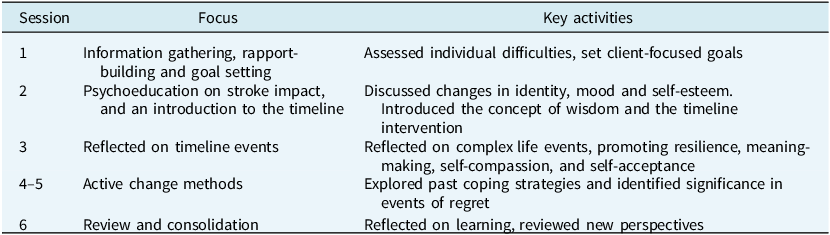
Laidlaw’s (Reference Laidlaw and Wenzel2021) Wisdom Enhancement Timeline was delivered in six structured, manualised sessions (Table 1), guiding participants through autobiographical reflection using a visual timeline of meaningful life events.
Overview of the intervention sessions and key objectives

Fidelity
Fidelity was monitored through recorded sessions and assessed using the Revised Cognitive Therapy Scale (CTS-R; James et al., Reference James, Blackburn, Reichelt, Garland and Armstrong2001), which evaluates therapeutic quality and adherence to the CBT framework. Ratings were conducted by the third author, a clinical psychologist supervising the first author, to ensure competence and consistency in intervention delivery.
Participants
This study aimed to recruit at least three participants, consistent with established methodological standards for SCEDs, which recommend a minimum of three cases to enable replication and strengthen internal and external validity (Epstein et al., Reference Epstein, Bickel, Czajkowski, Paluch, Moeyaert and Davidson2021; Kratochwill et al., Reference Kratochwill, Hitchcock, Horner, Levin, Odom, Rindskopf and Shadish2013). Recruitment was conducted through local NHS stroke services. Inclusion criteria specified adults experiencing PSD who could provide informed consent and participate in psychological therapy. Exclusion criteria included severe cognitive impairment, acute psychiatric risk, medical instability, substance dependence, concurrent psychological therapy, participation in other clinical trials, or recent changes in psychotropic medication that had not yet stabilised.
Measures
Participants received a measure pack containing all measures, along with questions on medication use and adverse events.
Idiographic visual analogue scale
The primary outcome was assessed using a visual analogue scale (VAS), a widely used measure for tracking subjective experiences in clinical research (McCormack et al., Reference McCormack, Horne and Sheather1988). Participants rated their agreement with four daily statements on a vertically presented 10 cm scale, with higher scores indicating stronger agreement. VAS items were aligned with the research questions.
The four VAS items were as follows:
-
1. Today, my mood is good (VAS_mood);
-
2. Today, I feel able to accept the person I am/Today, I feel like I am adapting to life after my stroke (identity; VAS_ID);
-
3. Today, I feel good about myself (self-esteem; VAS_SE);
-
4. Today, I feel that I can use the wisdom of my life to help me deal with my current problems (VAS_wisdom).
Standardised measure
The Patient Health Questionnaire (PHQ-9; Kroenke et al., Reference Kroenke, Spitzer and Williams2001) assessed pre–post clinical mood changes. This 9-item tool (scoring 0–27) reliably detects clinically significant depression and is validated for PSD screening across diverse demographic groups with minimal somatic symptom confounding (Blake et al., Reference Blake, Munyombwe, Fischer, Quinn, Van der Feltz-Cornelis, De Man-van Ginkel, Santos, Jeon, Köhler, Schram, Wang, Levin-Aspenson, Whooley, Hobfoll, Patten, Simning, Gracey and Broomfield2025; Katzan et al., Reference Katzan, Thompson, Schuster, Wisco and Lapin2021).
Analysis
Both single-case visual and statistical techniques were used following best practices (Harrington and Velicer, Reference Harrington and Velicer2015; Manolov and Moeyaert, Reference Manolov and Moeyaert2017). Visual analysis assessed phase variability using a ±25% stability envelope (Lane and Gast, Reference Lane and Gast2014). Higher percentages indicate greater stability, and lower percentages reflect greater variability.
To assess whether VAS ratings during the intervention phase were higher than baseline, Tau-U (Parker et al., Reference Parker, Vannest, Davis and Sauber2011) was implemented. It accounted for baseline trends, effect sizes, and phase non-overlap. Resistant to autocorrelation, Tau-U provides strong statistical power in small datasets (Parker et al., Reference Parker, Vannest, Kratochwill and Levin2014). Interpretations followed Vannest and Ninci’s (Reference Vannest and Ninci2015) guidelines, with baseline corrections applied as needed to prevent inflated effect sizes.
Piecewise regression (Center et al., Reference Center, Skiba and Casey1985) complemented Tau-U findings by quantifying change over time within each phase. Level and slope changes were examined, estimating the breakpoint for outcome improvements. This approach modelled level shifts and gradual trends while considering data variability and abrupt changes (Tate and Perdices, Reference Tate and Perdices2018). To address autocorrelation, lag-1 autocorrelation was assessed, and if detected, generalised least squares (GLS) regression with an AR(1) structure was applied (Somer et al., Reference Somer, Gische and Miočević2022).
Reliable change in PHQ-9 was measured via the reliable change index (RCI; Jacobson and Truax, Reference Jacobson and Truax1991), with Cronbach’s α=0.79 (De Man-Van Ginkel et al., Reference De Man-Van Ginkel, Gooskens, Schepers, Schuurmans, Lindeman and Hafsteinsdóttir2012) and a stroke sample SD of 5.1 (Strong et al., Reference Strong, Fritz, Dong, Lisabeth and Reeves2021). Clinically significant change (CSC) could not be determined due to limited non-clinical-normative data for stroke populations. Given concerns about the comparability of PHQ-9 scores between stroke and non-stroke populations (Blake et al., Reference Blake, Munyombwe, Fischer, Quinn, Van der Feltz-Cornelis, De Man-van Ginkel, Santos, Jeon, Köhler, Schram, Wang, Levin-Aspenson, Whooley, Hobfoll, Patten, Simning, Gracey and Broomfield2025), data from other populations were not considered. Instead, a cut-off of 10 was applied to approximate clinically meaningful change based on validated studies (De Man-Van Ginkel et al., Reference De Man-Van Ginkel, Gooskens, Schepers, Schuurmans, Lindeman and Hafsteinsdóttir2012; Negeri et al., Reference Negeri, Levis, Sun, He, Krishnan, Wu, Bhandari, Neupane, Brehaut, Benedetti and Thombs2021; Williams et al., Reference Williams, Brizendine, Plue, Bakas, Tu, Hendrie and Kroenke2005).
Results
Participant flow
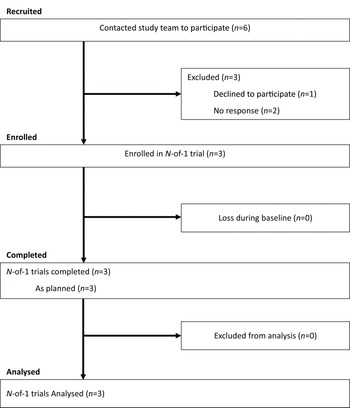
Three participants meeting the inclusion criteria consented to take part, all of whom completed the study. Each participant completed a baseline phase followed by six weekly sessions of the Wisdom Enhancement Timeline intervention.
All participants remained eligible throughout the study, including one who initiated psychotropic medication during the intervention phase.
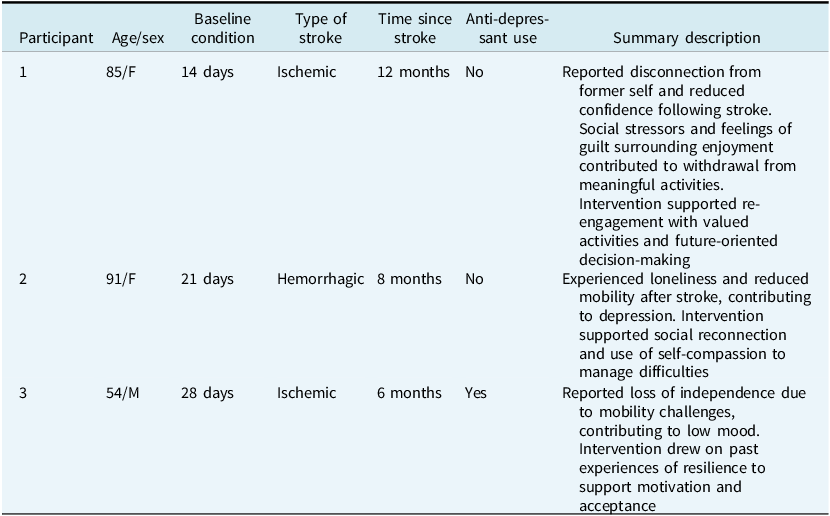
Figure 1 shows the flow of participants enrolled in the study. Table 2 provides a summary of each participant.
Participant flowchart – flow diagram illustrating the recruitment, screening, and participation process for the study.

Participant characteristics

Analysis of depression and daily VAS scores
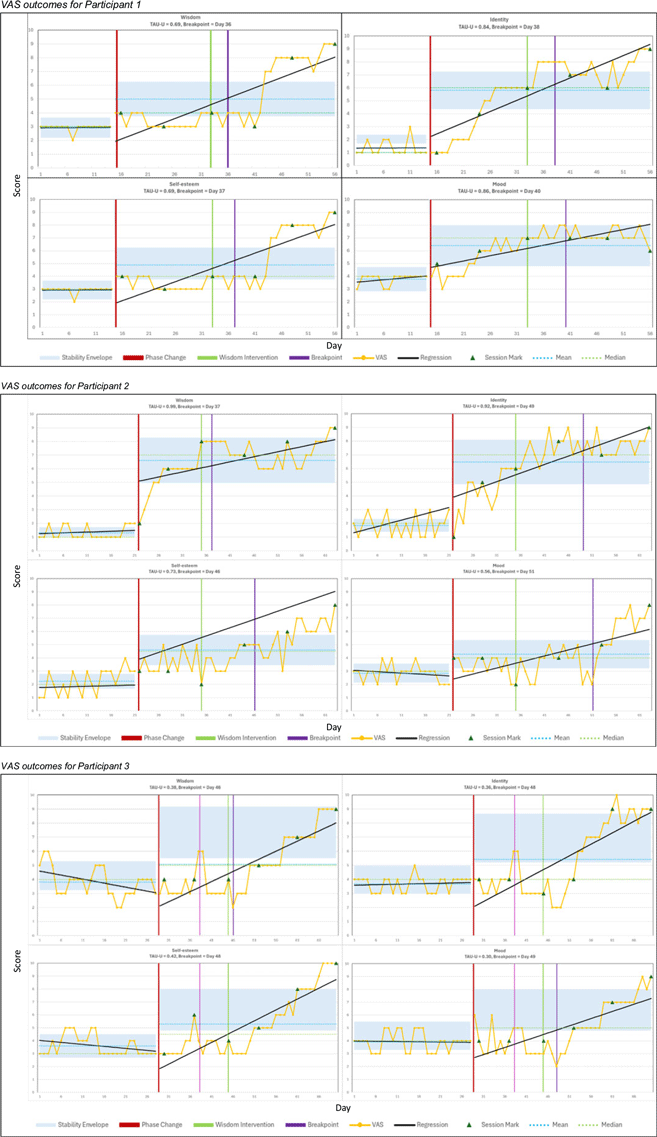
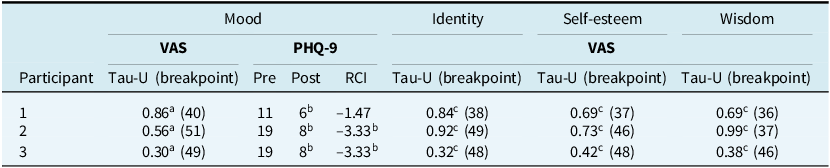
Participants’ data are presented in Fig. 2. All participants completed the six intervention sessions with no drop-outs or deviations. No adverse events were reported. Individual participant analyses are summarised in Table 3.
Visual analogue scale (VAS) outcomes for participants – line graphs depicting changes in mood, identity, self-esteem, and wisdom over the intervention period for all three participants. Stability envelopes, regression lines, and breakpoints are marked to indicate changes.

Summary of participant results

Tau-U values indicate effect sizes for each outcome; breakpoint days indicate when each outcome showed initial improvement.
a Significant (p <0.05);
b Reliable change at post-intervention;
c Clinically meaningful change (cut-off <10).
Participant 1
Baseline Tau-U trend analyses indicated no significant changes across identity (Tau=– 0.0330, p=.8695, 90% CI [–0.363, 0.297]), self-esteem (Tau=0.0110, p=.9563, 90% CI [–0.319, 0.341]), or wisdom (Tau=0.0110, p=.9563, 90% CI [–0.319, 0.341]), while mood showed a small, non-significant upward trend (Tau=0.1868, p=.3520, 90% CI [–0.143, 0.517]). These results suggest a stable baseline, supporting the internal validity of the intervention effects.
Baseline regression analyses further confirmed this pattern. Significant intercepts (β0, p<.05) were recorded across all outcomes, while slopes were non-significant: wisdom (β1=0.002, p=.961), self-esteem (β1=0.002, p=.907), identity (β1=0.002, p=.961), and mood (β1=0.037, p=.197).
Tau-U analyses of the intervention revealed statistically significant improvements across all outcome measures. Moderate-to-large effects were observed for wisdom (Tau=0.69, p=.0001, 90% CI [0.395, 0.986]) and self-esteem (Tau=0.69, p=.0001, 90% CI [0.395, 0.986]), while identity (Tau=0.84, p<.001, 90% CI [0.546, 1.000]) and mood (Tau=0.86, p<.001, 90% CI [0.568, 1.000]) produced large effects.
Treatment-phase regression analyses showed significant intercept shifts across all outcomes. Wisdom and self-esteem improved sharply (β0=1.79, p<.001 for both), with non-significant slope changes (wisdom: β1=0.149, p=.073; self-esteem: β1=0.149, p=.097). Identity and mood demonstrated both significant level shifts and progressive increases (identity: β1=0.173, p<.001; mood: β1=0.082, p<.001).
Significant autocorrelation (Pearson’s r>0.90) was addressed using GLS models with an AR(1) correction. Breakpoint analysis indicated sequential change: wisdom on day 36, self-esteem on day 37, identity on day 38, and mood on day 40. The participant’s PHQ-9 score decreased from 11 (moderate depression) to 6 post-intervention, suggesting a clinically meaningful but not statistically reliable change (RCI=–1.47).
Participant 2
Baseline Tau-U trend analyses revealed a significant increasing trend for self-esteem (Tau=0.40, p=.0103, 90% CI [0.145, 0.664]), indicating the need for baseline correction. Wisdom (Tau=0.09, p=.5459), identity (Tau=0.038, p=.8091), and mood (Tau=–0.13, p=.3978) trends remained stable. These results suggest a stable baseline, supporting the internal validity of the intervention effects.
Baseline regression analyses supported these findings: identity showed a small but significant upward trend (β1=0.092, p=.004), while slopes for wisdom (β1=0.012, p=.555), self-esteem (β1=0.009, p=.759), and mood (β1=–0.021, p=.392) were non-significant. All outcomes demonstrated significant intercepts (β0, p<.05).
Tau-U analyses of the intervention revealed statistically significant improvements across all outcome measures. Large intervention effects were observed for wisdom (Tau=0.99, p<.001, 90% CI [0.736, 1.000]) and identity (Tau=0.92, p<.001, 90% CI [0.674, 1.000]). Mood demonstrated a moderate effect (Tau=0.56, p=.0003, 90% CI [0.305, 0.817]. Following baseline correction, self-esteem also showed a large intervention effect (Tau=0.73, p<.001, 90% CI [0.568, 1.000]).
Treatment-phase regression analyses revealed significant intercept shifts across all outcomes: wisdom (β0=5.03, p<.001), identity (β0=2.65, p<.001), self-esteem (β0=3.79, p<.001), and mood (β0=2.33, p<.001). Slope changes were non-significant for wisdom (β1=0.0739, p=.073) and self-esteem (β1=0.1248, p=.097), while identity (β1=0.0907, p<.001) and mood (β1=0.0911, p<.001) showed significant progressive improvements.
Significant autocorrelation (Pearson’s r>0.90) was addressed using GLS models with an AR(1) correction. Breakpoint analysis revealed sequential change: wisdom (day 37), self-esteem (day 46), identity (day 49), and mood (day 51). The participant’s PHQ-9 score reduced from 19 (moderately severe depression) to 8 post-intervention.
Participant 3
Baseline Tau-U trend analyses identified a small, significant downward trend for wisdom (Tau=–0.2407, p=.0722, 90% CI [–0.461, –0.020]), indicating the need for baseline correction. Self-esteem (Tau=–0.1931, p=.1492, 90% CI [–0.413, 0.027]), identity (Tau=0.0608, p=.6495, 90% CI [–0.159, 0.281]), mood (Tau=–0.02, p=.8900, 90% CI [–0.239, 0.202]), trends were non-significant. These results suggest a stable baseline, supporting the internal validity of the intervention effects.
Baseline regression analyses further supported these findings. Identity (β1=0.007, p=.603), self-esteem (β1=–0.031, p=.093), and mood (β1=–0.004, p=.812) showed no significant slopes. Wisdom showed a slight but significant downward trend (β1=–0.057, p=.017). All outcomes showed significant intercepts (β0, p<.05), indicating consistent measurement levels during baseline.
Tau-U analyses of the intervention revealed statistically significant improvements across all outcome measures. Moderate intervention effects were observed for self-esteem (Tau=0.4209, p=.003, 95% CI [0.188, 0.654]), identity (Tau=0.3206, p=.024, 95% CI [0.087, 0.554]), and mood (Tau=0.3027, p=.033, 95% CI [0.069, 0.536]). Following baseline correction, wisdom also showed a moderate intervention effect (Tau=0.3886, p=.0062, 95% CI [0.155, 0.622]).
Treatment-phase regression analyses showed significant immediate level shifts for all outcomes: wisdom (β0=1.97, p<.001), identity (β0=1.93, p<.001), self-esteem (β0=1.68, p<.001), and mood (β0=2.59, p<.001). These were accompanied by progressive improvements across all outcomes: wisdom (β1=0.144, p<.001), identity (β1=0.163, p<.001), self-esteem (β1=0.168, p<.001), and mood (β1=0.112, p<.001).
Significant autocorrelation (Pearson’s r>0.90) was addressed with GLS models using AR(1) correction. Breakpoint analysis indicated changes beginning with wisdom (day 46), followed by identity and self-esteem (day 48), and mood (day 49). Importantly, the participant began anti-depressant medication on day 38, which may have contributed to improvements in the latter part of the intervention. Their PHQ-9 score dropped from 19 to 8 (RCI=–3.33), indicating a reliable and clinically meaningful reduction.
Intervention fidelity
The supervisor CTS-R ratings indicated consistent delivery of the intervention within the competent range, with total scores of 44.5/72 and 53/72, respectively. These scores suggest moderate to high adherence and competence in the delivery of CBT adapted for wisdom enhancement.
Discussion
This study evaluated the effectiveness of the Wisdom Enhancement Timeline technique in addressing PSD using a single-case experimental design. Findings showed significant improvement in the primary outcome measures (VASs) for all participants with small-to-large effect sizes, and reliable change on the secondary outcome measure (PHQ-9) in two (P2 and P3). These results suggest that wisdom-based interventions offer a novel approach to PSD, particularly in addressing identity and self-esteem.
As hypothesised, gains in wisdom emerged after the timeline intervention (session 3), suggesting that structured autobiographical reflection played a key role in initiating change. A consistent pattern of improvement followed, with increases in wisdom preceding gains in self-esteem or identity, and subsequent improvement in mood. This sequence aligns with theoretical models that position wisdom as a driver of psychological adaptation (Ardelt, Reference Ardelt2003; Jeste and Lee, Reference Jeste and Lee2019) and supports the adaptive trajectory proposed in the Y-shaped model of rehabilitation (Gracey et al., Reference Gracey, Evans and Malley2009). These findings highlight the potential of reflective, narrative-based techniques to facilitate emotional regulation and promote identity continuity.
Despite consistent trends, response trajectories varied. Whilst participants 1 and 2 showed early improvements followed by a plateau, participant 3 exhibited gradual, sustained change across all outcomes. This variability may reflect individual differences in response style or external factors such as medication effects, social context, or readiness to engage with reflective processes. Notably, participant 3 initiated anti-depressant treatment during the intervention. While this complicates interpretation, the latency of pharmacological effects suggests that the intervention likely contributed to early improvements, with medication potentially reinforcing gains in later sessions.
Several limitations should be acknowledged. The small sample size, although consistent with SCED standards, limits generalisability. Only one participant was assigned per baseline length, and the absence of follow-up data precludes conclusions about the persistence of change. The study relied on self-report measures, which may be influenced by mood-congruent recall or response bias, and did not include performance-based assessments of wisdom. Fidelity to the intervention was assessed by the supervisor, which may introduce bias due to their involvement in supporting the study. Additionally, no a priori criteria for clinical response were established, limiting the interpretability of individual outcomes.
Nevertheless, the study design offers several strengths. The multiple-baseline SCED approach enabled the detection of individual change processes while accounting for variability in stroke recovery. The use of Tau-U and piecewise regression provided robust analytical tools to quantify change and identify temporal patterns in outcome trajectories.
These findings have promising implications for PSD treatment. Wisdom-based interventions such as the Wisdom Enhancement Therapy offer a novel, structured approach that may complement existing psychological therapies by fostering self-reflection, meaning-making, and emotional resilience. Unlike traditional CBT, which primarily targets symptom reduction, wisdom-based techniques emphasise narrative coherence and identity reconstruction, which may be particularly relevant for stroke survivors.
Future research should evaluate the long-term efficacy of Wisdom Enhancement Therapy, its adaptability across age groups, and its integration within stroke rehabilitation pathways. Larger trials with standardised measures, follow-up assessments, and delivery by non-specialist staff could inform scalable implementation. Adapting intervention length based on individual needs, shorter formats for rapid responders, and extended support for others may optimise outcomes in routine care.
Supplementary material
To view supplementary material for this article, please visit https://doi.org/10.1017/S1352465825101124
Data availability statement
The data that support the findings of this study are available from the corresponding author, E.H., upon reasonable request.
Acknowledgements
None.
Author contributions
Ercan Hassan: Conceptualization (lead), Data curation (lead), Formal analysis (lead), Investigation (lead), Methodology (lead), Project administration (lead), Resources (lead), Validation (lead), Writing - original draft (lead), Writing - review & editing (lead); Fergus Gracey: Conceptualization (supporting), Data curation (supporting), Formal analysis (supporting), Investigation (supporting), Methodology (supporting), Project administration (supporting), Resources (supporting), Supervision (equal), Validation (supporting), Writing - review & editing (equal); Joshua Blake: Conceptualization (supporting), Data curation (supporting), Formal analysis (supporting), Investigation (supporting), Methodology (supporting), Project administration (supporting), Supervision (equal), Validation (supporting), Writing - original draft (supporting), Writing - review & editing (equal).
Financial support
This research received no specific grant from any funding agency, commercial or not-for-profit sectors.
Competing interests
The authors declare none.
Ethical standards
The study adhered to the Ethical Principles of Psychologists and Code of Conduct set by the BABCP and BPS. Ethical approval was granted by the South Yorkshire Research Ethics Committee (24/YH/0055) and the UK Health Research Authority. The study was registered on ClinicalTrials.gov (NCT06451965).


 Open access


Comments
No Comments have been published for this article.