

Introduction
Yoghurt is a semi-solid, fermented milk product obtained from lactic acid fermentation by the activity of a symbiotic mixture of lactic acid bacteria: Streptococcus thermophilus and Lactobacillus delbrueckii subsp. bulgaricus (O'Rell and Chandan, Reference O'Rell, Chandan, Chandan and Kilara2013). This fermentation causes the milk to acidify and coagulate without adding rennet. Due to its low pH, it also increases the shelf life of the product (Corrieu and Béal, Reference Corrieu and Béal2016).
Nomadic societies processed milk into long-lasting products like yoghurt. Turkish communities pioneered its production, which spread to Europe during the Ottoman Empire, and was valued for its healing properties (Özden, Reference Özden2008). The broader introduction of yoghurt to Europe is attributed to Dr. Isaac Carasso, a doctor from Thessaloniki. During the Balkan Wars, Carasso relocated to Barcelona, where he noticed a diarrhea outbreak affecting children. Drawing on the use of yoghurt as a remedy in Thessaloniki, he began using it to treat the condition. In 1919, Carasso established a small workshop to produce yoghurt, later founding the Danone Company in Paris with his son Daniel Carasso, pioneering industrial yoghurt production in Europe. Nobel Prize-winning Russian bacteriologist Ilya Metchnikoff further propelled Yoghurt's popularity in Europe. In 1910, he proposed the “Theory of Longevity,” highlighting the health benefits of yoghurt in his work The Prolongation of Life (Yıldırım et al., Reference Yıldırım, Kökbaş, Sezer, Işık and Güzeler2014). The growing popularity of yoghurt, both locally and globally, can be attributed to its numerous health benefits, including cholesterol reduction, cancer prevention, immune system support, and enhanced gastrointestinal function (Öncel and Özdemir, Reference Öncel and Özdemir2023).
Yoghurt is significant in Turkish culinary tradition and has been widely used in various forms. In Central Asia, Turks referred to yoghurt as “tuzluk.” Historical records indicate that the Seljuks used yoghurt as a standalone food and an ingredient in numerous soups. During the Ottoman era, yoghurt, which was introduced to Iranian and Arab cuisines by the Seljuks, became a versatile component of meals. It was paired with cucumber and melon during the summer, used in preparing soups with noodles or wheat, served alongside rice pilaf, and consumed at breakfast across all social classes.The Huns had previously flavoured yoghurt with cherries and apricots to create a beverage called “lo.” Yoghurt was also processed into “ayran,” by dilution, or “kurut,” by drying under the sun. Moreover, butter was churned from yoghurt, and cheese varieties such as çökelek and keş were produced from it (Sezgin and Sönmez, Reference Sezgin and Sönmez2024).
Traditional Turkish yoghurts
Yoghurt has a prominent place in Turkish culinary culture and can be categorised in various ways. For example, according to the species from which the milk was obtained, it can be classified as buffalo yoghurt, sheep yoghurt, goat yoghurt, or cow yoghurt. According to the type of packaging, yoghurt varieties include tray yoghurt, clay pot yoghurt, and tulum (animal skin) yoghurt. Additionally, preserved yoghurt varieties are subdivided into winter yoghurt, strained yoghurt, cooked yoghurt, salted yoghurt, burnt yoghurt, and dried yoghurt (Tan, Reference Tan and Saberi2010).
In Turkish cuisine, yoghurt is consumed on its own and serves as a thickening agent and flavour enhancer in soups, desserts, appetisers, sauces, and main courses. It is also diluted and enjoyed as ayran, a popular yoghurt-based beverage (Sezgin and Sönmez, Reference Sezgin and Sönmez2024).
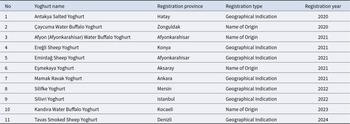
As of December 2024, the Turkish Patent and Trademark Office has registered 11 types of yoghurt in Türkiye (Table 1). Additionally, at the European level, “Silifke Yoghurt” has been granted protected geographical indication (PGI) status, recognizing its unique characteristics linked to its place of origin. Two other Turkish yoghurts are currently in the application phase: “Tavas Smoked Sheep Yoghurt,” which has applied for PGI status, and “Afyon Water Buffalo Yoghurt,” which seeks protected designation of origin (PDO) status (European Commission, 2025). These registrations highlight the rich diversity of Turkish yoghurt and its deep-rooted cultural significance. Apart from these, no other Turkish yoghurt has been granted geographical indication certification by any other country.
Turkish geographical indicated yoghurt types (Turkish Patent and Trademark Office, 2024)

Similar to Greece's “Greek Yoghurt” strategy, Türkiye can also develop strategies to promote its yoghurt varieties in the European Union and other countries. Countries like France, Italy, and Spain have been actively working to register their local dairy products outside of the European Union (e.g., in the U.S., Japan, China). While the “Greek Yoghurt” concept has become a major brand worldwide, Turkish yoghurt distinguishes itself with its traditional and nutritious characteristics. However, a strong brand perception under the name “Turkish Yoghurt” has not yet been established in international markets (Gurel, Reference Gurel2016; Zeng and Chen, Reference Zeng and Chen2017).
Although Türkiye's yoghurt exports have increased over the years, there is a need to develop strategies around brand value and geographical indication protection. Geographical indication certification guarantees that a product is associated with a specific region and produced using traditional methods. By registering its other types of yoghurt in the European Union and other markets, Türkiye can ensure their protection and enhance their economic value. This approach could contribute to the broader international recognition of Turkish yoghurt varieties. The Turkish government, dairy producers, exporters, and academics should collaborate to promote Turkish yoghurt in the global market and expedite geographical indication processes.
Salted yoghurt
Salted yoghurt, also known as winter yoghurt or cooked yoghurt, is a traditional dairy product commonly produced in Turkish regions such as Van, Hatay, Sivas, and other parts of the Mediterranean. This yoghurt is typically prepared during seasons of milk abundance and consumed in various forms during the winter. It can be spread on bread, used in soups or pastries, and prepared as a refreshing drink like ayran. Additionally, it is often enriched with olive oil and spices to serve as a breakfast item or appetiser (Kaygısız et al., Reference Kaygısız, Dündar, Polat, Kadıoğlu and Uğur2019). Salted yoghurt is classified as a “concentrated fermented milk product with a protein content of at least 5.6% before or after fermentation” under the Turkish Food Codex for Fermented Milk Products and it can contain up to 1% salt and, for certain types, starch may be used after fermentation for textural purposes (Turkish Food Codex, 2022). Typically made from cow or goat milk, salted yoghurt undergoes heat treatment to concentrate the product, after which salt is added. It can be stored for up to a year. Covering the surface with olive oil or clarified butter helps extend its shelf life by preventing air contact. This yoghurt features a characteristic tangy and salty flavour and is rich in solids, fat, protein, and minerals, making it highly nutritious. Approximately 2.5–3.5 kg of regular yoghurt yields 1 kg of salted yoghurt (Say et al., Reference Say, Çayır and Güzeler2020). In traditional production, yoghurt or strained yoghurt is placed in copper kettles and stirred continuously while boiling. Salt, usually 1%, is added once boiling starts, and the mixture is cooked for another 10 minutes. After cooling briefly, it is jarred, topped with olive oil or clarified butter, and stored in a cool place or refrigerator. For industrial production, the process involves double-walled or bottom-heated vats with automatic stirrers. Salted yoghurt is cooled in tanks before being packed in plastic containers or hot-filled jars (Şahan and Say, Reference Şahan and Say2003; Say et al., Reference Say, Çayır and Güzeler2020). Antakya Salted Yoghurt was registered with a geographical indication for the Hatay province in 2020 (Turkish Patent and Trademark Office, 2024).
Winter yoghurt
It is made by processing regular yoghurt to reduce its water content by cooking and adding salt, making it less perishable. Limiting its exposure to air, which promotes spoilage, gives it a longer shelf life. Commonly prepared with abundant sheep milk during summer, it is an essential ingredient for soups and baked dishes or diluted to make ayran. Olive oil and spices are often added to enhance its flavour for breakfast (Köse, Reference Köse2018). Despite the absence of universal standards for winter yoghurt composition, small-scale producers and consumers aim for consistency in quality and functionality. Comparable products are made worldwide, including Labneh in the Middle East, Leben Zeer in Egypt, Skyr in Iceland, Chakka in India, Than in Armenia, and Ymer in Denmark (Köse and Ocak, Reference Köse and Ocak2011). Production methods for winter yoghurt vary regionally based on local traditions and lifestyles. In regions like Sivas and Hatay, goat milk is predominantly used. Milk is first filtered to remove impurities and boiled. It is then cooled to fermentation temperature, inoculated with starter cultures, and left for incubation. The fresh yoghurt is placed into cloth bags and hung in the shade for 2–5 hours to drain excess whey. The next day, the whey-drained yoghurt is mixed with equal water and boiled for 1–1.5 hours. After adding 1–4% salt, the mixture is boiled for 10–15 minutes. The final product is transferred into containers, covered with clarified butter, animal fat, or olive oil, and stored for winter use (Köse, Reference Köse2018).
Smoked yoghurt
Smoked (burnt) yoghurt is a fermented dairy product unique to Denizli, Türkiye. The distinct burnt aroma primarily arises from the scorching of milk when a small amount (about one glass) is poured into a copper kettle heated over a wood fire. Additionally, the traditional cooking method over a wood fire imparts a smoky flavour to the yoghurt. After cooking, the yoghurt is fermented using a homemade culture and left to rest for a day. It is then transferred into cloth bags to drain excess whey, a step that intensifies the burnt flavour (Tan, Reference Tan and Saberi2010). Traditionally, it is made from sheep's milk (Doğan, Reference Doğan2021). This yoghurt is registered as a geographically indicated product under the name Tavas Smoked Sheep Yoghurt is used by the Turkish Patent and Trademark Office (Turkish Patent and Trademark Office, 2024), is also known that a similar yoghurt type is produced in Karaman Province under the name Ayrancı Burnt Yoghurt (Şen, Reference Şen2023).
Silifke Yoghurt
In the Silifke region of Mersin, Türkiye, nomadic Yörüks traditionally engaged in livestock farming. As a result of this lifestyle, milk from their animals was processed into yoghurt to extend its shelf life. Over time, “Silifke Yoghurt” became a well-known product nationwide. This yoghurt is typically made from the milk of goats raised in the Taurus Mountains. The yoghurt prepared in mountain villages is called “tuluk yoghurt,” while that from lowland villages is referred to as “chingil” or “jar yoghurt.” Due to seasonal changes in milk composition, the texture of the yoghurt varies, being thicker in summer and more liquid in spring. It is produced by heating the milk over a fire made with “milk brushwood,” a local, fast-burning fuel. During heating, foam is continuously removed, and no additives are used. Traditional fermentation is carried out at a temperature where the finger can be dipped without burning (38–39°C) (Eryılmaz et al., Reference Eryılmaz, Demir and Pektaş2019; Özbek and Güzeler, Reference Özbek and Güzeler2022).
Silivri Yoghurt
Using traditional or industrial methods, Silivri Yoghurt is made from cow, sheep, buffalo milk, or an equal mix of cow-sheep or cow-buffalo milk. It is characterised by its yellowish colour, thick consistency, and a rough, thick cream layer on top. For industrial production, milk with standardised solids and fat content is pasteurised at 90–95°C for 30 minutes. The hot milk is then filled into containers to create foam. Afterwards, the containers are incubated at 50°C for at least 2 hours. Yoghurt is then inoculated with starter cultures (1.5–3%) at 42–45°C and fermented for 2–3 hours (until pH reaches 4.6). The final product is cooled and stored at 4°C. The composition of Silivri Yoghurt varies based on the type of milk used. Fat content ranges from 4–6%, while non-fat solids are in the 10–12% range (Salık and Çakmakçı, Reference Salık and Çakmakçı2022; Turkish Patent and Trademark Office, 2024).
Kanlıca yoghurt
Kanlıca yoghurt is a renowned and traditional dairy product from Istanbul. Once celebrated for its unique flavour and texture, this yoghurt has unfortunately fallen into obscurity recently. The decline of pastures in the Kanlıca region, environmental concerns associated with dairy farms, and the disappearance of itinerant milk vendors have significantly impacted its production. Today, Kanlıca yoghurt is produced primarily for gastronomic tourism, imitating traditional methods using semi-skimmed cow's milk, and served in plastic containers to visitors of Kanlıca. Historically, authentic Kanlıca yoghurt was made with a mixture of milk from different animals, typically 80% cow's milk and 20% sheep's milk, or 90% cow's milk and 5–10% buffalo milk, and was served in glass bowls. The milk intended for yoghurt production was boiled extensively in tinned copper cauldrons over a wood fire without skimming the cream and constantly stirred to ensure proper evaporation. The goal was to reduce the milk volume to 850–900 grams per kilogram of raw milk. The milk was cooled to a temperature tolerable to the touch and inoculated with a starter culture resembling thick ayran or boza, prepared from fresh yoghurt. The starter was added just below the milk skin along the edges of the cauldron and mixed with a wooden rod. Once slightly cooled, the inoculated milk was poured with a ladle into small bowls or larger pans. During this step, the milk was poured from a height to encourage the formation of a cream layer. The bowls were then placed on straw mats and covered with a cloth. Fermentation lasted approximately six hours, followed by 2–3 hours of cooling. This process yielded a firm and dense yoghurt (Ünsal, Reference Ünsal2019).
Mamak Ravak Yoghurt
Mamak Ravak Yoghurt is a traditional from the Mamak district in Ankara, Türkiye. “Ravak” is derived from the word “ıravak,” meaning cream. This yoghurt is made using traditional methods, where cow's milk is fermented with a unique starter culture known locally as “ravak yeast.” It is exclusively produced from milk fat, contributing to its distinct characteristics. On August 6, 2021, Mamak Ravak Yoghurt was officially trademarked, further solidifying its cultural and regional significance. This yoghurt has a rich, viscous texture with a unique flavour and aroma, and it meets the standards for full-fat yoghurt. Its consistency lies somewhere between cream and regular yoghurt (Sezgin and Sönmez, Reference Sezgin and Sönmez2024). In the production of Mamak Ravak Yoghurt, only the creamy portion of the milk is used, and the starter culture is made from milk fat. This method plays a key role in giving the yoghurt its special qualities. Following traditional production techniques, about 2% of ravak starter is added to 5 litres of milk, and the fermentation process takes approximately 4.5 hours. To achieve the desired thick consistency, it is recommended to refrigerate the yoghurt for 3 days (Turkish Patent and Trademark Office, 2024).
Kandıra Water Buffalo Yoghurt
Kandıra Water Buffalo Yoghurt is produced from the milk of buffaloes raised in Kandıra, Kocaeli. Known for its firm texture and white colour, this yoghurt is rich in carbohydrates, fats, proteins, calcium, and sugars. It is made using both traditional and industrial methods. In traditional production, boiled milk is poured into containers from a height to create a thick layer of cream due to foaming. A perforated strainer, locally called “gözef,” is placed on top, and the milk is left to cool for four hours. The yoghurt itself is used as a starter culture in the traditional process. After cooling, 10–20 grams of yoghurt is added to individual containers for fermentation, followed by a further four-hour resting period. Once cooled, the containers are sealed. Kandıra Water Buffalo Yoghurt was registered in 2023 by the Kocaeli Chamber of Commerce, officially recognizing it as a regional product (Ercan et al., Reference Ercan, Kaya, Mutlubaş and Erdoğan2024; Turkish Patent and Trademark Office, 2024).
Afyon (Afyonkarahisar) Water Buffalo Yoghurt
This fermented dairy product is made from the residual milk after producing buffalo cream derived from the Anatolian buffalo breed. It has a thick consistency, white colour, and distinctive aroma and flavour. Industrial production involves standardisation, homogenisation, heat treatment (90–95°C for 5–10 minutes), cooling (40–45°C), inoculation, filling, incubation (3–5 hours at 42–45°C), pre-cooling, and storage. Homemade methods involve separating the cream milk, boiling, cooling, inoculating with pre-prepared yoghurt, and incubating at 40–45°C for 3–5 hours, followed by precooling and refrigeration. This product was registered in 2021 by the Afyonkarahisar Chamber of Commerce and Industry (Turkish Patent and Trademark Office, 2024).
Çaycuma Water Buffalo Yoghurt
Due to its natural structure, Çaycuma is rich in fertile agricultural lands, surrounded by plateaus and green fields. This environment has made livestock farming, particularly water buffalo raising, an integral part of the region. Çaycuma Water Buffalo Yoghurt is a cultural heritage product requiring expertise in its production. The area's diverse plant flora contributes to the milk's quality as the animals graze freely in the meadows, enhancing milk productivity. The production process involves boiling buffalo milk and fermenting it at 39–40°C for approximately 4 hours, about 15–20 minutes after boiling. The yoghurt is then cooled and stored in a refrigerator. In Çaycuma, buffalo milk and yoghurt are primary sources of income for local businesses. In 2020, the Çaycuma Chamber of Commerce and Industry registered Çaycuma Water Buffalo Yoghurt as a protected product. This registration helps differentiate the product from others, prevents unfair competition, ensures consistent production and quality standards, increases value, and supports branding efforts (Ercan et al., Reference Ercan, Kaya, Mutlubaş and Erdoğan2024; Turkish Patent and Trademark Office, 2024).
Emirdağ Sheep Yoghurt
Produced in Emirdağ, a district of Afyonkarahisar renowned for sheep farming, this yoghurt has a high fat content and a creamy, white texture with a layer of cream on top. Approximately 20 grams of yoghurt is a starter culture for every litre of sheep milk. Fermentation temperature varies with the season: 50–55°C in winter and 40–45°C in summer. The starter is mixed with lukewarm milk until it becomes liquid, then added to the milk. Fermentation lasts 5–6 hours in insulated conditions, followed by a 48-hour storage period at 4°C to enhance the consistency. Registered in 2021 by the Emirdağ Municipality, this yoghurt is an important local product for Afyonkarahisar (Turkish Patent and Trademark Office, 2024).
Ereğli Sheep Yoghurt
Ereğli Sheep Yoghurt, with a high fat and protein content, is made by heating milk over a wood fire until it reaches 90°C in 20–30 minutes, imparting a distinctive smoky flavour. After cooling to 40–45°C, it is inoculated with yoghurt culture and left to ferment for at least three hours at room temperature under a cloth covering. This yoghurt, known for its unique smoky aroma, was registered in 2021 by the Ereğli Municipality (Turkish Patent and Trademark Office, 2024).
Eşmekaya Yoghurt
This yoghurt, made from sheep milk, is known for its rich protein and fat content and extremely thick consistency. Production peaks in April and June due to the seasonal aroma imparted by local endemic plants. The milk is heated to 36–38°C, inoculated with its own culture, and left to ferment for at least three hours at room temperature under a clean cloth. After refrigeration for six hours, it is ready for consumption. Recognised as a significant product for Aksaray, Eşmekaya Yoghurt was registered in 2021 by the Aksaray Commodity Exchange (Turkish Patent and Trademark Office, 2024).
Kalaba yoghurt
Known locally as “Yüz Yoğurdu” or “Makine Ağzı Yoğurdu,” this product is specific to the Kalaba village in Avanos, Nevşehir, in the Cappadocia region. It is typically consumed at breakfast. Fresh raw milk is heated to 48–50°C, separated into cream using a cream separator, and then mixed with raw milk at a ratio of 2:1. The mixture is heated to 95°C, cooled to 45–46°C, inoculated with yoghurt culture, and fermented for 3–4 hours before being cooled to ± 4°C for storage (Özer et al., Reference Özer, Esen, İçigen and Özer2021).
Torba yoghurt
In Anatolia and some Middle Eastern countries, yoghurt is processed to reduce its water content, producing a more durable type of yoghurt. This concentrated yoghurt, known locally as “Süzme Yoğurt,” “Torba Yoğurt,” or “Kese Yoğurt,” is made by placing yoghurt in cloth bags and removing approximately 70% of its water content (Şahan and Say, Reference Şahan and Say2003). This type of yoghurt is called “Leben Zeer” in Egypt, “Labneh” in Lebanon, “Labneh anbais” in Israel, “Chakia and Shirkland” in India, “Skry” in Iceland, and “Ymer” in Denmark. In Türkiye, cow, sheep, goat, and buffalo milk are commonly used to produce concentrated yoghurt. During the water removal process, some changes occur in the composition of the yoghurt. Water-soluble lactose and certain minerals are removed while the protein and fat content increases. Set yoghurt is traditionally made by draining whey overnight. Modern methods use ultrafiltration and reverse osmosis (Say et al., Reference Say, Çayır and Güzeler2020).
Trabzon külek yoghurt
Trabzon Külek Yoghurt, unique to the Trabzon province in the Eastern Black Sea Region, is made from full-fat cow's milk in the evening. The milk is continuously stirred with a wooden spoon while heated on a stove (kuzine). After resting, it is transferred to earthenware pots and allowed to cool. When the milk is cool enough to burn a finger slightly, it is inoculated with a starter made from previous yoghurt added from the edges of the pot. The pot is wrapped in a cloth and left to ferment for 2–3 hours It is ready for sale about two hours after fermentation (Ünsal, Reference Ünsal2019).
Kilis yörük (nomads) yoghurt
Nomad yoghurt made in the Kilis province of South-eastern Anatolia is produced by the nomadic Yörüks using fresh goat milk or a mixture of goat and sheep milk milked in the morning. The milk is filtered and boiled in large pots while stirred with a ladle. During the boiling process, religious rituals that are believed to bring blessings are performed. The milk is then transferred to metal containers with handles, known as satıl, which have a capacity of 10 kg, and are allowed to cool. Once the milk cools enough to slightly burn a finger, ayran (a 1:1 mixture of yoghurt and water) is added as a starter culture. The satıl is covered with a cloth and left to ferment for 1–3 hours. It is placed in the refrigerator after resting for half an hour (Ünsal, Reference Ünsal2019).
Sivas peskütan yoghurt
Peskütan, a durable type of yoghurt widely consumed in the Sivas region, involves churning, cooking, straining, and preserving processes. After the milk is turned into yoghurt using traditional methods, it is churned to separate its fat. The remaining buttermilk is cooked with whole or crushed wheat and salt. The starch in the cooked wheat helps achieve a more homogeneous, creamy curd. The mixture is then transferred to cloth bags to strain the liquid portion, and the thickened curd is pressed into wooden or plastic containers for storage. Properly produced peskütan can be preserved without spoiling for 1–2 years. It is frequently used in soups, dishes, and appetisers (Dinçer, Reference Dinçer2020).
Gesi dorak yoghurt
Dorak, meaning “filter,” refers to a special stone known as Dorak Stone, extracted from a quarry 3 km northeast of Ağırnas in Kayseri. This stone is traditionally used as a storage container. Dorak Yoghurt is made by storing traditionally produced yoghurt in Dorak Stones. A small amount of pure salt is added to the yoghurt when placed into the stone, and additional salt is sprinkled with each subsequent addition of yoghurt. The Dorak Stone quickly strains the liquid from the yoghurt, resulting in Dorak Yoghurt. In the Koramaz Valley, the yoghurt stored in Dorak Stones is kept in caves, preserving its natural state for a long time without spoilage. To protect the yoghurt from contamination, the top of the stone is covered with a thin cloth, a piece of fabric, or a small tray. A pressing stone is sometimes placed inside the Dorak Stone to apply weight. The Dorak Stone is placed on a tray or a container, preferably in a cool area with drainage. This method ensures the yoghurt's shelf life for up to two or three months (Akkaş and Pehlevan, Reference Akkaş2022).
Sustainability aspects of traditional production methods
Traditional yoghurt production methods are highly regarded for their sustainability benefits, especially in terms of environmental impact (Tigan et al., Reference Țigan, Brînzan, Obrad, Lungu, Mateoc-Sîrb, Milin and Gavrilaș2021). One key advantage is the reduced environmental footprint compared to industrial yoghurt manufacturing. Traditional yoghurt production often involves minimal use of synthetic additives, relying more on natural cultures and fermentation processes, which leads to less chemical pollution and overall environmental harm. Additionally, traditional methods typically consume less energy, as they require fewer mechanical processes and more manual labour, reducing carbon emissions compared to large-scale industrial yoghurt factories. These methods also support the preservation of local agricultural practices, as they are often linked with the use of local milk sources and promote biodiversity in dairy farming. Furthermore, traditional yoghurt production plays an important role in cultural sustainability by preserving regional recipes and techniques that are passed down through generations, contributing to local identities (Hayek et al., Reference Hayek, El Bachawati and Manneh2021; Houssard et al., Reference Houssard, Maxime, Pouliot and Margni2021).
Despite the clear environmental and cultural advantages, traditional yoghurt production methods also face challenges, especially when considering scalability and economic sustainability. One of the main obstacles is the labour-intensive nature of these methods, which can limit their ability to meet the high demand of larger populations or global markets. This often results in higher production costs, making traditional yoghurt less competitive compared to industrial yoghurt products that benefit from economies of scale. Additionally, while traditional methods are sustainable in the short term, they may not incorporate technological advancements that can further optimize resource use, reduce waste, and enhance productivity, such as modern pasteurisation or automated fermentation. Economic viability remains a challenge, as traditional yoghurt production can be more costly than mass-produced counterparts, limiting its ability to compete in a globalised dairy market (Enyoghasi and Badurdeen, Reference Enyoghasi and Badurdeen2021; Salama and Bhattacharya, Reference Salama and Bhattacharya2022).
Industrial yoghurt types produced in Türkiye
Yoghurt is produced traditionally or industrially. Traditionally, yoghurt is made on small-scale livestock farms in rural areas to be put up for sale in local retail stores and markets. The yoghurts produced in small family businesses are generally made after boiling the raw milk, adding yoghurt to the milk, cooling it to the fermentation temperature, and leaving it for incubation. After fermentation, yoghurts stored in the refrigerator or in a cool place are offered for sale in a short time. On the other hand, industrial yoghurts are produced as a Set type or Stirred type under controlled conditions (Güngör et al., Reference Güngör, Gürbüz, Mutlu, Musa and Palabiçak2020). Yoghurt production techniques have altered little over the years. While some improvements have been made, particularly regarding lactic acid bacteria causing fermentation, the essential steps remain the same. These steps are increasing the total solids in the process of milk, heating the milk, and inoculating the milk with Lactobacillus delbrueckii subsp. bulgaricus and Streptococcus thermophilus, incubating the inoculated milk, cooling (if desired, further processing) and packaging (Tamime and Robinson, Reference Tamime and Robinson2007).
Yoghurt products are generally classified according to their physical properties (i.e., solid, semi-solid, liquid/viscous, and powder). In particular, yoghurt is divided into different groups: legal and/or proposed standards classify the product; the physical nature of the product; the flavours of yoghurt; probiotic, bio, and/or therapeutic yoghurts; and miscellaneous yoghurts (Tamime, Reference Tamime2002).
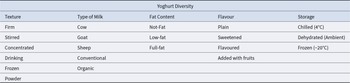
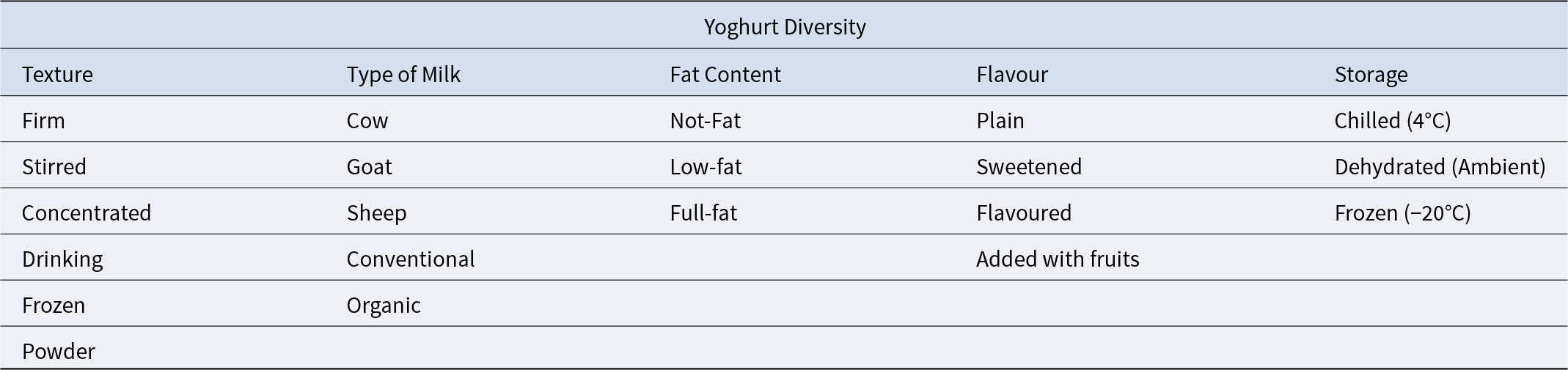
According to Corrieu and Béal (Reference Corrieu and Béal2016), the diversity of yoghurt is given in Table 2. Yoghurt diversification is reflected by various textures, flavours, shelf life and nutritional properties. The industrial yoghurt types differ according to their chemical composition, production method, flavour and the nature of post-incubation processing (Tamime and Deeth, Reference Tamime and Deeth1980).
Classification of yoghurts and fermented milk (Corrieu and Béal, Reference Corrieu and Béal2016)
Türkiye's yoghurt industry encompasses various products, with plain set yoghurt being the most commonly consumed type due to its simplicity and traditional appeal. Below are the key industrial yoghurt categories produced in Türkiye, reflecting both local and global practices (Üçüncü, Reference Üçüncü2018).
Plain yoghurt
Plain yoghurt produced by vat incubation or cup incubation is in the refrigerated yoghurt category. It, has a wide variety of formulations, and the total solid content varies between 12.5% and 14%. It is offered for sale as non-fat, low-fat, or full-fat yoghurt in the market. This yoghurt typically includes no added sugars or flavourings. Plain yoghurt can be used to cook or prepare salads with fresh fruit or grated vegetables. It also replaces sour cream in many recipes, ensuring a lower fat or calorie alternative (O'Rell and Chandan, Reference O'Rell, Chandan, Chandan and Kilara2013).
Non-fat, low-fat and full-fat yoghurts
High milk fat in the diet can cause digestive disorders, high serum cholesterol levels, heartburn and stress (Dai et al., Reference Dai, Corke and Shah2016). Excessive fat consumption harms human health and increases consumers’ demand for low-fat or non-fat dairy products (Aziznia et al., Reference Aziznia, Khosrowshahi, Madadlou and Rahimi2008). Normal or plain yoghurts are produced from full-fat, low-fat, partially skimmed and skim milk. According to this explanation, milk's origin is unimportant (Baglio, Reference Baglio2014).
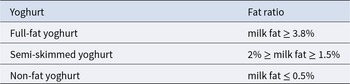
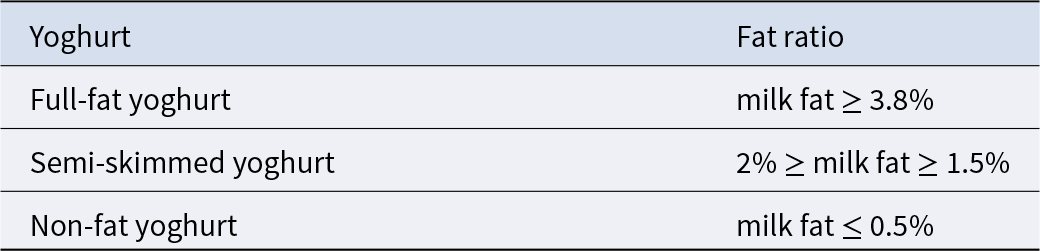
To meet existing regulations, yoghurt fat content can range from 0.1% to over 10% (Özer, Reference Özer and Yıldız2010). Many countries have their yoghurt identification standards, generally based on the fat and solids, non-fat content and acidity (Surono and Hosono, Reference Surono, Hosono, Fuquay, Fox and McSweeney2011). According to the Turkish Food Codex Communiqué on Fermented Dairy Products, the yoghurts’ fat ratio classification is given in Table 3.
Fat ratios for yoghurt (Turkish Food Codex, 2022)
Due to seasonal changes during lactation, milk fat standardisation is essential before yoghurt production. To adjust the milk fat level, methods such as removing part of the fat from milk, mechanical separation, mixing whole cream milk with skimmed milk, adding cream to fresh skimmed, semi-skimmed or full-fat milk or a combination of these methods are applied (Özer, Reference Özer and Yıldız2010).
Set and stirred yoghurts
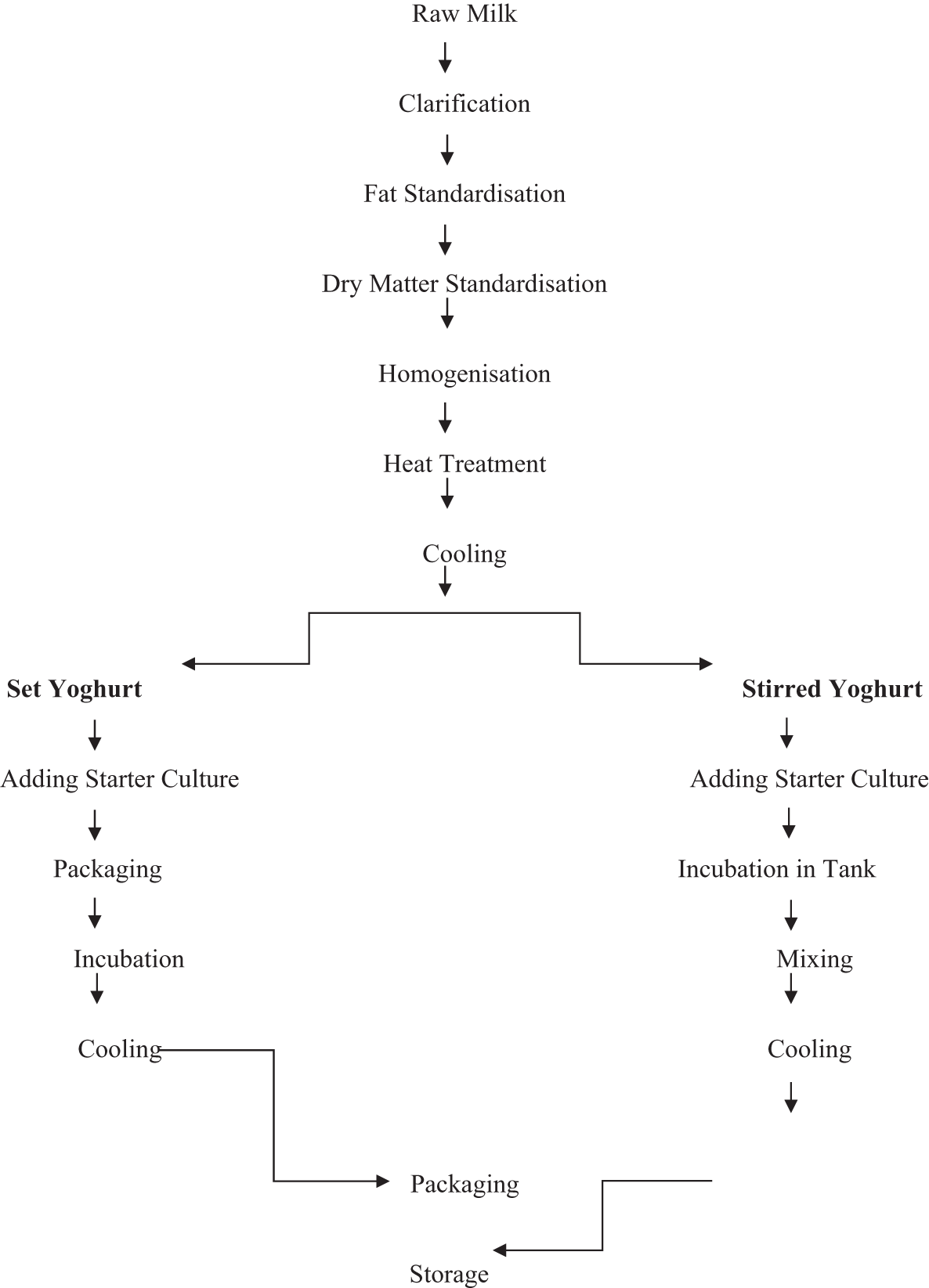
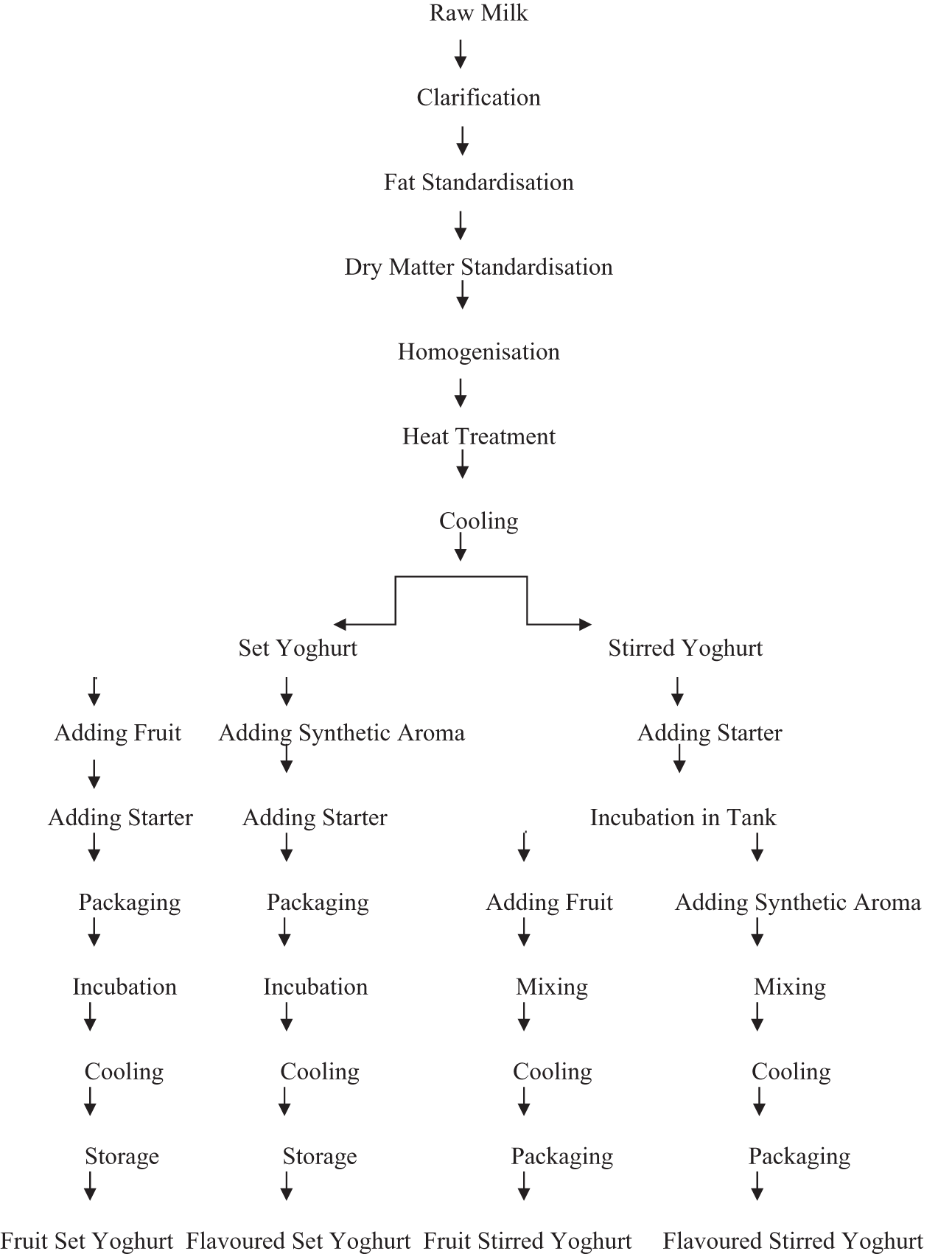
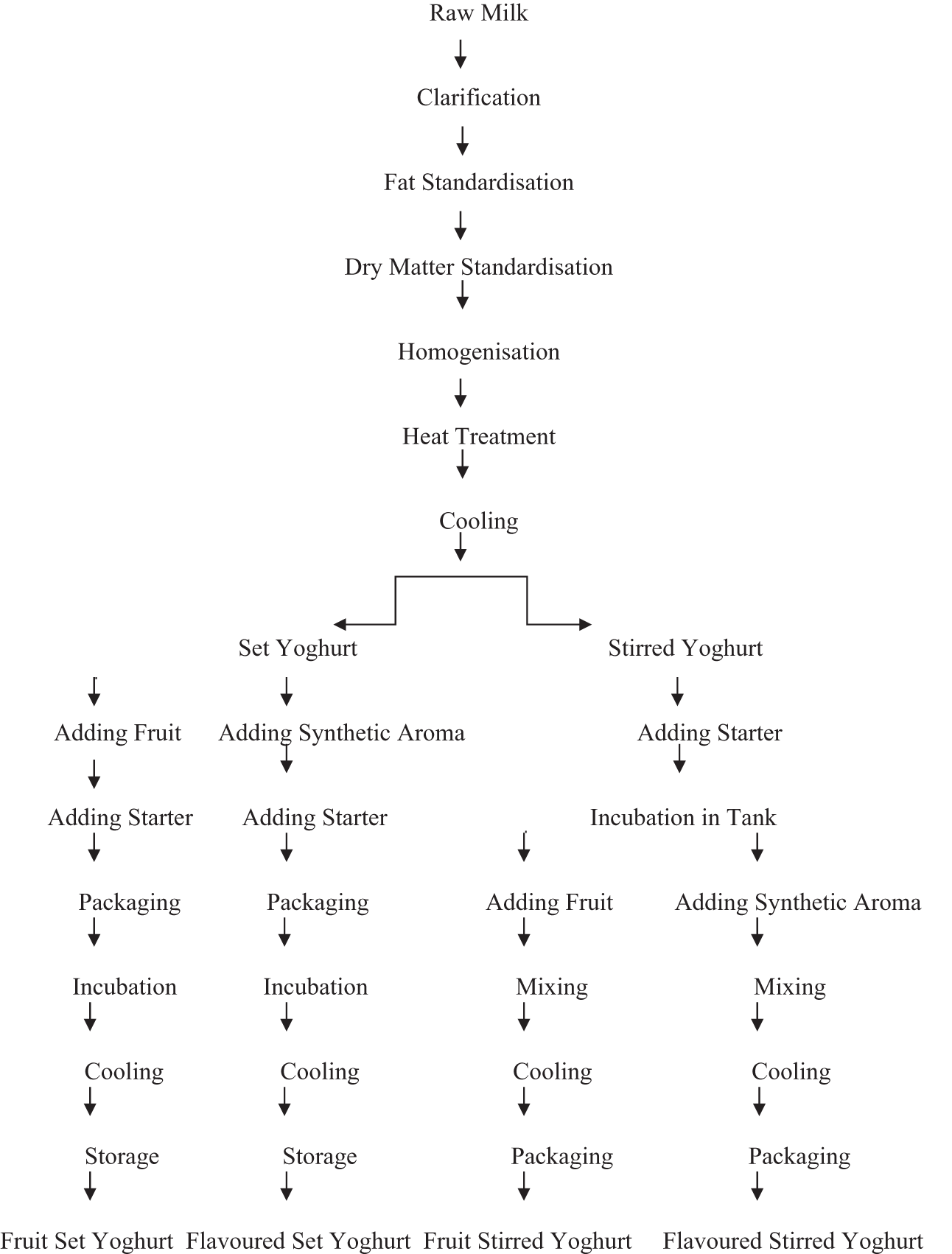
Yoghurt is generally divided into unclotted (set) or curdled (stirred) yoghurt (Tekinsen, Reference Tekinsen2000). Set yoghurt is fermented directly in retail containers; it has a gel-like texture, meeting consumer demand for traditional-style yoghurts. Coagulation occurs in individual packages. Stirred yoghurt is fermented in tanks, stirred to create a smooth texture, and then packaged. This is the most popular yoghurt type worldwide. However, set-type yoghurt is more popular in Türkiye than stirred-type yoghurt for consumers. Only fruity yoghurts are processed as stirred yoghurt (Durlu Özkaya et al., Reference Durlu Özkaya, Coşansu and Ayhan2013; Robinson and Tamime, Reference Robinson, Tamime and Robinson1993; Üçüncü, Reference Üçüncü2018). The production of set and stirred yoghurts is given in Fig. 1.
Production of set and stirred yoghurt (Durlu Özkaya et al., Reference Durlu Özkaya, Coşansu and Ayhan2013).

Fruit-flavoured yoghurts
Fruit and flavoured yoghurts are increasingly popular to develop new products and enhance their functional properties (Çelik et al., Reference Çelik, Ünver, Güç and Ceylan2018). Flavoured yoghurts are made by adding flavouring substances, colourants, sugar, and stabilisers to yoghurt. Fruit yoghurts contain fruits, fruit juices, syrups, pulp, concentrates, jams, sugar, colourants, hydrocolloids, pH regulators, and preservatives (Üçüncü, Reference Üçüncü2018). Studies show that increasing flavour variety and sweetness boost yoghurt consumption, as fruit flavours enhance the sensory appeal and reduce the characteristic taste of “plain” yoghurt (Ayar et al., Reference Ayar, Sert and Kalyoncu2005). Fruit pectin and sugars increase yoghurt's viscosity and improve mouthfeel (Amal et al., Reference Amal, Eman and Nahla2016). Additives like fruits, jams, chocolate, and cereals are common in yoghurt, increasing total solids and appealing to both children and adults (Ayar et al., Reference Ayar, Sert and Kalyoncu2005).
Plain yoghurt, generally made from homogenised cow's milk, becomes ‘fruit-flavoured’ yoghurt when sugar, additives, and various fruits or flavouring substances are added while still containing live yoghurt cultures (Şireli, Reference Şireli1998). Fruit can be added to yoghurt formulas individually or blended as chilled, frozen, canned fruit, juice or syrup (Amal et al., Reference Amal, Eman and Nahla2016). Fruit-flavoured yoghurts are generally produced using two different methods. In the first method (Sundae type), the fruit is placed at the bottom of the containers, and fermented milk is added to it (Şireli, Reference Şireli1998). In the production of the blended method, culture-added milk is left to incubate until the pH reaches 4.40. Then, the curd is mixed using the hot or cold mixing method. Then, fruit-based mixtures are added and filled into containers (Üçüncü, Reference Üçüncü2018). The manufacture of fruit and flavoured yoghurts is presented in Fig. 2.
Manufacture of fruit and flavoured yoghurts (Durlu Özkaya et al., Reference Durlu Özkaya, Coşansu and Ayhan2013).
Concentrated yoghurt
Yoghurt's shelf life is limited by its high water content and ongoing bacterial activity, even at low temperatures. To extend its shelf life, yoghurt's water content is reduced to create “Concentrated Yoghurt,” commonly produced in Anatolia and the Middle East (Kırdar and Gün, Reference Kırdar and Gün2007). In Türkiye, it's called as bag (torba) yoghurt or strained yoghurt. Concentrated yoghurt, with about 25 g/100 g dry matter, removes the serum through methods like cloth filtration, centrifuges, or membrane techniques. Its colour changes from white to yellow depending on the milk type. The yield is 20–30% (Yaralı and Çetiner, Reference Yaralı and Çetiner2020). In traditional production, yoghurt is placed in an animal skin bag or cloth to drain whey until the solids reach 230–250 g/kg, fat is 80–100 g/kg, and lactic acid is 1.8–2.0 g/100 g. Industrial methods include recombination of milk powder, ultra-filtration, reverse osmosis, or centrifugal separation of whey from yoghurt (Özer and Robinson, Reference Özer and Robinson1999).
Frozen yoghurt
Yoghurt ice cream or frozen yoghurt is made by freezing milk fat, non-fat milk solids, sweeteners, stabilisers, fruit, and yoghurt. It combines yoghurt's acidic taste with ice cream's cooling effect (Dağlı and Gürsoy, Reference Dağlı and Gürsoy2008). The production process involves mixing cold, stirred yoghurt with fruit syrup, stabilisers, emulsifiers, and sugar, then freezing the mixture. Additional ingredients include starter cultures, stabilisers, emulsifiers, milk fat, skimmed milk powder, and flavour compounds. Stabilisers bind free water, while emulsifiers reduce surface tension between water and fat (Şireli and Orhan, Reference Şireli and Orhan2015). Additionally, Mousse yoghurt is produced by mixing hot fruit syrup with Mousse yoghur (Durlu Özkaya et al., Reference Durlu Özkaya, Coşansu and Ayhan2013).
Long-life yoghurt
Yoghurts undergo microbiological, enzymatic, and chemical deterioration during storage, and it's impossible to fully prevent this, even at recommended storage temperatures (0–7℃) (Güldaş and Atamer, Reference Güldaş and Atamer1995). With growing markets and longer transportation distances, there is a need to extend yoghurt's shelf life. Some countries demand sterilised yoghurt that can be stored at room temperature due to challenges in controlling the cooling chain. Heat treatment extends shelf life before packaging or in aseptic conditions (Bylund, Reference Bylund1995). Pasteurisation of yoghurt prevents spoilage from microorganisms and enzymes. The pasteurisation temperature ranges from 55℃ to 87.7℃ (Güldaş and Atamer, Reference Güldaş and Atamer1995). To prevent syneresis in pasteurised yoghurts, inclusion of 1% stabiliser is recommended (Bulut-Solak and Akın, Reference Bulut-Solak and Akın2012). Heat treatment extends shelf life but reduces beneficial bacteria, causes protein network contraction, and accelerates syneresis. Additionally, it removes volatile compounds like acetaldehyde, acetone, and diacetyl, weakening the taste and aroma (Durlu Özkaya et al., Reference Durlu Özkaya, Coşansu and Ayhan2013).
Probiotic yoghurts
The food industry has realised the market potential created by the positive health benefits of probiotic bacteria. Due to their long-term safe use in foods, both Lactobacillus spp. and Bifidobacterium spp. have generally been recognised as safe status (Talwalkar and Kailasapathy, Reference Talwalkar and Kailasapathy2004). Bifidobacteria are important probiotic microorganisms used in the dairy industry for nutritional and health benefits. One of the fastest-growing areas in the fermented milk products industry is probiotic yoghurts containing some bifidobacteria species (Fenderya and Akalın, Reference Fenderya and Akalın2003).
Creamy yoghurt
The production of creamy yoghurts with a smooth structure and rich milk fat cream is similar to set yoghurts. The principle of accumulation of fat globules on the surface of the milk is used since the densities of the milk fat and skimmed milk phase are different. Mainly, the mobility of fat globules towards the surface of the milk increases in parallel with the increase in milk temperature. When the forming of a cream layer on the surface is desired, yoghurt containers are filled at relatively high temperatures (46–48°C), and cream binding is allowed until the temperature drops to 42–43°C. Homogenisation is not applied to milk to produce cream (Bulut-Solak and Akın, Reference Bulut-Solak and Akın2012).
Organic yoghurt
Organic yoghurt is legally defined. Additives used in organic yoghurts must be certified organic ingredients. These organic products must be sourced from a certified organic farm and/or cows raised on a certified organic farm (Bulut-Solak and Akın, Reference Bulut-Solak and Akın2012).
Yoghurt hydrolysed lactose
During yoghurt fermentation, starter cultures metabolise 30–35% of lactose, with the remaining lactose converting to lactic acid during cold storage, increasing acidity. To address this, β-galactosidase hydrolyses the unprocessed lactose to increase sweetness, shorten fermentation time, and raise acetaldehyde concentration. However, hydrolysing over 55–60% of lactose negatively affects yoghurt's sensory properties. Industrial production of low-calorie, low-lactose yoghurt is limited (Durlu Özkaya et al., Reference Durlu Özkaya, Coşansu and Ayhan2013).
Yoghurt whips/mousse
Yoghurt whip has a different eating quality, a light texture, and a fluffy and pleasant taste. Foam formation of the mixture occurs during processing. The mixture for whipped yoghurt includes more stabilisers and sugar than stirred yoghurt. Using suitable stabilisers and emulsifiers in the mix facilitates the stability of the foam. The stabiliser is responsible for the mouthfeel, viscosity and stability of the foam and emulsion structure. The emulsifier provides foam formation. The stabiliser-emulsifier effect prevents the collapse of the bubbles formed during the shelf life (O'Rell and Chandan, Reference O'Rell, Chandan, Chandan and Kilara2013).
Turkish yoghurt products
Yoghurt is a very important part of Turkish culinary culture. Yoghurt can be consumed as the main food at almost every meal, or it can be used as an accompaniment to meals or as an ingredient There are many traditional Turkish dairy products where yoghurt is transformed into a different product by using it as a raw material, mostly due to the desire to have a longer shelf life (Yıldırım et al., Reference Yıldırım, Kökbaş, Sezer, Işık and Güzeler2014). It is possible to list these products as ayran, çökelek, keş, yoghurt cheese and dried yoghurt (kurut).
Ayran
According to the Fermented Dairy Products Communiqué (Turkish Food Codex, 2022), ayran is a fermented milk product prepared by adding water to yoghurt or by adding cultures of Streptococcus thermophilus and Lactobacillus delbrueckii subsp. bulgaricus to milk whose dry matter has been adjusted. Ayran is called differently in some countries, such as drinkable yoghurt, yoghurt drink, liquid yoghurt or lactic drink (Yeniçeri et al., Reference Yeniçeri, Göçer and Küçükçetin2021). In addition to being easy to prepare, ayran stands out with its unique taste and aroma, as well as its nutritional properties (good quality protein, calcium, phosphorus, vitamin B1, B2, B6) and refreshing effect (Yalçın et al., Reference Yalçın, Gün and Soyuçok2022). Ayran, which is consumed more in the summer months, has high nutritional value, like yoghurt. In addition, it is known that the digestibility of yoghurt is easier than milk due to the activity of lactic acid bacteria, that it increases the utilisation of calcium and phosphorus, and that it contains a higher amount of vitamins. Since ayran contains all the nutritional elements of yoghurt in different proportions depending on the amount of water added, these benefits are also valid for ayran (Türkmen et al., Reference Türkmen, Akal and Koçak2017).
Çökelek
Çökelek is a traditional cheese type produced from yoghurt as a raw material. It is obtained by diluting yoghurt with drinking water at a ratio of 1:5 and then separating the milk fat by the churning process. While the separated fat is used as a cream, the remaining serum is called ayran. Ayran is boiled until precipitation occurs. The resulting curd is placed in cloth bags and hung on to remove the whey. Then, the cheese is pressed for 30 minutes and kneaded by hand by adding 1–2% salt. Çökelek is generally consumed for breakfast. It is reported that the Çökelek contains approximately 18.15% dry matter, 1.2% fat, 8.04% protein and 0.94% ash (Öksüztepe et al., Reference Öksüztepe, Patır, Dikici, Bozkurt and Çalıcıoğlu2007). Çökelek cheese is recommended by the Turkish Heart Foundation in diets, especially because it is low-fat, low in calories and a good source of protein and calcium (Önganer and Kırbağ, Reference Önganer and Kırbağ2009). For low-income consumers, Çökelek is an inexpensive option. It may be known by different names in different parts of Türkiye. For example, it is known as “Ekşimik” in Western Anatolia, “Akkatık”, “Kesik”, “Torak”, “Urda” and “Süt Kırması” in the Mediterranean and Eastern Anatolia. While Çökelek can be consumed fresh, it is also possible to preserve them in packages called “küp” (pot) or “tulum” (animal skin) (Kavaz et al., Reference Kavaz, Arslaner and Bakirci2012).
Keş
Keş, produced from yoghurt or butter in our country, is known as a type of cheese. The yoghurt is separated from its oil, salted, placed in cloth bags and pressed for 1–2 days to ripen. In some regions of Türkiye, it is also known as raw sediment, çökelek or kurut (Hastaoğlu et al., Reference Hastaoğlu, Erdoğan and Işkın2021). However, Keş cheese has many varieties such as Taze (Fresh) Keş (Ham (Raw) Keş, Yaş Keş), Sarı (Yellow) Keş, Deri (Animal skin) Keş (Katık Keş, Ovmalı Keş), Gök Keş (Molded Keş) and Kuru (Dry) Keş. It was reported that fresh keş cheese contains approximately 35% dry matter, 3% fat and 27% protein, yellow keş cheese contains 57% dry matter, 8.7% fat and 30% protein, and dry keş cheese contains 89.5% dry matter, 4.4% fat and 73% protein (Kalender and Güzeler, Reference Kalender and Güzeler2013). After the yoghurt is produced, it is processed into butter and ayran. Ayran is heated to 90–100°C for approximately 10 minutes until a white coagulum forms on the surface, then strained through cheesecloth and pressed until the desired level of solids is achieved. The curd is then salted at 2–3% with dry salt and placed into cotton bags. These bags are suspended from a platform in a warm room for 2–3 days, occasionally rotated for even drying. Recently, a mixture of 20–30% white cheese curd has been added to the Keş cheese curd to enhance its appeal, resulting in a mosaic-like pattern in the final product. Keş cheeses, with a total solids content of up to 60–70%, can be stored in a cool environment for 4–5 months (Tarakçı et al., Reference Tarakçı, Dervişoğlu, Temiz and Aydemir2010).
Yoghurt cheese
Yoghurt cheese, typically crafted from goat's milk in households and small-scale enterprises or from cow's milk when goat's milk is scarce, is commonly found in local markets. With its distinct white and creamy appearance, yoghurt cheese boasts high dry matter content and a unique flavour profile. It has a firm and dense texture devoid of holes, lending to its elasticity. This local delicacy is enjoyed either fresh or aged. Apart from being a staple in breakfasts and appetisers, yoghurt cheese is also a versatile ingredient in various desserts such as “Künefe” and “Taş kadayıf” (Say et al., Reference Say, Çayır and Güzeler2020). It is produced based on the coagulation mechanism of milk with the acidity of yoghurt. Yoghurt cheese, which is classified as fresh cheese, is produced by adding yoghurt to boiling milk, and after the milk is coagulated, it is filtered and pressed. Then it is kept in brine or pressed into pots/canisters, depending on the place of production (Özbek and Güzeler, Reference Özbek and Güzeler2022).
Dried yoghurt (kurut)
Dried yoghurt (Kurut), obtained by drying yoghurt or buttermilk, is a Turkish word from the “drying” word. Kurut is a delicious dairy product with a sour taste and a thick, yoghurt-like consistency when diluted, made in the Eastern and South-eastern Anatolia Regions of Türkiye, mostly to meet the needs of families during summer periods when milk is abundant and consumed in winter. This dairy product is produced using similar methods under Kashk in Iran, Kishk in Lebanon, Jub-Jub in Syria and Kuşuk in Iraq. It is also made by Kyrgyz, Kazakh, Tatar and Uzbek Turks in Central Asia (Say et al., Reference Say, Soltani and Güzeler2015). The most important characteristic of kurut is its ability to last several years without spoiling when stored under appropriate conditions. Kurut is generally consumed with soup, manti and some local dishes in Kars province. During the winter months, they are also consumed by adding them to soups prepared with chickpeas, bulgur and lentils. There are local dishes from the Eastern Anatolia region where the kurut is used. The most well-known among these are “Keledoş”, “Sengeser”, “Hangel” and “Ayran aşı” (Dinçel and Alçay, Reference Dinçel and Alçay2017). For the production of kurut, the freshly milked milk undergoes a heat treatment phase in a pot, maintaining a temperature of 80–85 °C for 15–20 minutes until thoroughly processed. Subsequently, the milk is cooled to the optimal fermentation temperature and mixed with freshly prepared yoghurt from the preceding day. The fermentation process takes place over 2.5–3 hours. Once the desired consistency of yoghurt is achieved, it is carefully strained through linen cloth bags for a duration of 10–20 days to ensure thorough drainage. The resulting strained yoghurt is then transferred into large containers, seasoned with salt and kneaded. Following this, the yoghurt is portioned into 20–60 g pieces, shaped by hand, and laid out on clean clothes to undergo a drying process either on spacious terraces or flat surfaces under the sun's warmth for 1–2 weeks until fully dried. Finally, the kuruts are stored in a cool and dry environment to maintain their quality and freshness (Güven and Karaca, Reference Güven and Karaca2009).
Yoghurt-like products produced by different coagulants
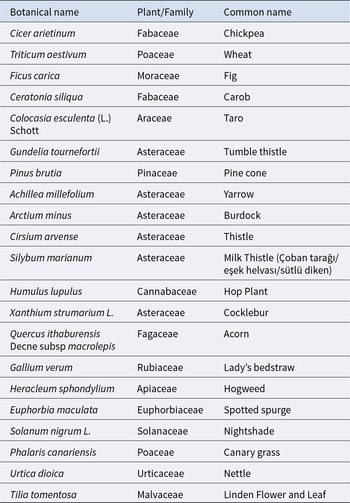
In Turkish cuisine, cheese and yoghurt are the most widely consumed fermented dairy products. The transformation of milk into yoghurt heavily relies on coagulation (Aça, Reference Aça2023). Yoghurt production involves the fermentation of lactose in milk into lactic acid, facilitated by the starter cultures Lactobacillus delbrueckii subsp. bulgaricus and Streptococcus thermophilus. This fermentation process lowers the pH of milk from its initial value of 6.3–6.5 to approximately 4.6, enabling coagulation (Alwazeer et al., Reference Alwazeer, Bulut and Tunçtürk2020). Although modern microbial inoculation technologies, originating in the mid-19th century, are now widely utilised, traditional Turkish yoghurt-making methods often incorporate various animal-based, plant-based, and culturally significant fermentation techniques. Many of these methods are still in practice today. Among the historically employed coagulation techniques, animal-derived coagulants have been more commonly used than plant-based alternatives. For instance, “kor,” a starter culture made from leftover yoghurt or fermented mare's milk, has been traditionally utilised among Oghuz Turks and other Turkish communities. The process involves adding milk to the remnants to produce yoghurt or kımız (fermented mare's milk) (Aça, Reference Aça2023). Animal-based coagulants such as kefir have also been employed in yoghurt production for acidifying milk (Esen and Güzeler, Reference Esen and Güzeler2019). Unique practices like using ant eggs, found among Anatolian nomadic communities, involve crushing the eggs and adding them to milk as a natural starter. In some regions, soil from ant nests is also added. When animal-based starters are unavailable, plants are often used as substitutes (Aça, Reference Aça2023). Table 4 illustrates various plants traditionally used for yoghurt production in Anatolia.
Plants traditionally used for yoghurt production in anatolia (Aça, Reference Aça2023; Say and Güzeler, Reference Say and Güzeler2016)
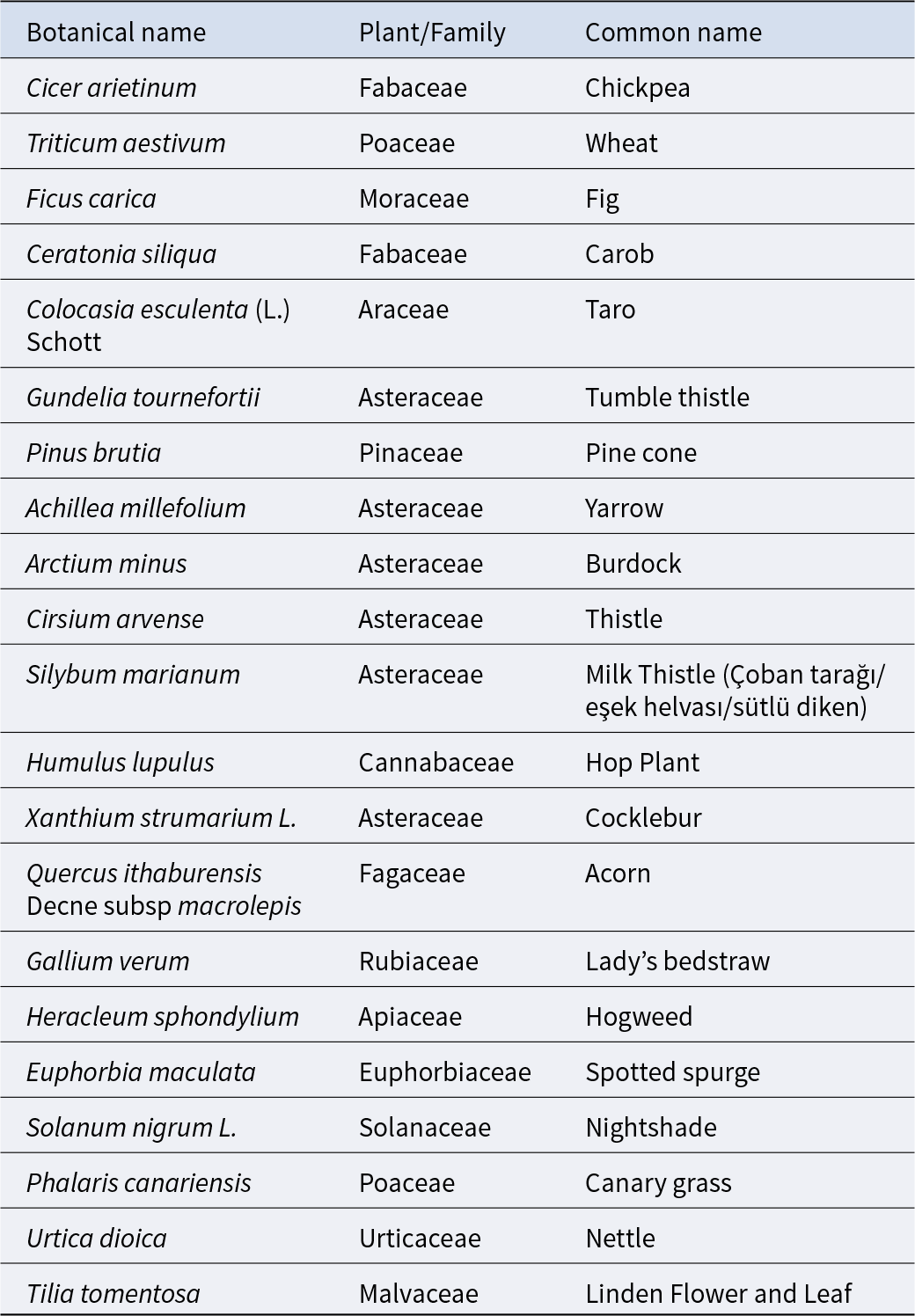
Field studies and literature reviews highlight the widespread use of legumes such as chickpeas and wheat as yoghurt starters. In the Afyonkarahisar region, raw chickpeas or a handful of wheat are added to milk once it has cooled to a temperature tolerable to touch. The mixture is left in a closed container for 24 hours, after which the grains are strained to obtain a coagulated starter. This starter is subsequently mixed with boiled milk to produce yoghurt, which can be consumed after another 24-hour fermentation. Other recipes involve blending chickpeas with mature fruits like figs and carob, along with small amounts of alum, to create a coagulating paste. In addition to legumes, fig sap and fig branches are commonly used in regions like Gaziantep to prepare cheeses such as “teleme.” Pinecones have also been a popular coagulant in rural areas near Mount Kazdağı, where fresh green pinecones are added to milk for fermentation. The yoghurt produced using pinecones is said to have a longer shelf life and resists souring. Other plants like thistle, nettle, mastic, and yarrow, among others, have also been traditionally used. Certain fermentation practices carry symbolic meanings such as prosperity and purification. For example, “dew yoghurt,” a Hıdırellez tradition, involves collecting morning dew from plants like daisies, pine needles, and linden flowers. The dew is added to milk to initiate fermentation, yielding in yoghurt within 24 hours. Interestingly, utensils used during this process are often restricted to non-metallic materials to preserve the quality of fermentation (Aça, Reference Aça2023).
Including plant extracts during yoghurt fermentation can influence the metabolic activity of starter cultures, impacting acidification rates and reducing capacities. These interactions may alter fermentation time, product quality, and sensory characteristics. Additionally, incorporating fruits, vegetables, and medicinal plants has been shown to enhance yoghurt's phenolic content, antioxidant activity, and the viability of lactic acid bacteria (Alwazeer et al., Reference Alwazeer, Bulut and Tunçtürk2020; Say, Reference Say2024).
Conclusion
Turkish yoghurt represents a harmonious blend of tradition and innovation, reflecting the region's rich cultural and geographical diversity. Yoghurt, categorised as a fermented milk product, has been produced industrially for years, with basic production steps remaining largely unchanged. However, its evolution has introduced various types to the food industry, classified by texture, fat content, aroma, probiotic properties, type of milk, and storage methods. Traditionally produced as set or stirred yoghurt, its diversity has expanded to include non-fat, low-fat, and full-fat variations, as well as innovative forms like fruit-flavoured, concentrated, frozen, long-life, probiotic, creamy, organic, lactose-hydrolysed, whipped, and soy yoghurt.
This study underscores the importance of preserving regional yoghurt practices, utilising unique coagulants and production techniques, while adapting to modern consumer demands. Turkish yoghurt's historical and cultural significance, and versatility, ensure its continued prominence in both traditional culinary heritage and global food markets.
Funding statement
This research did not receive any specific grant from funding agencies in the public, commercial, or not-for-profit sectors.
Competing interests
No potential conflict of interest was reported by the authors.
Data availability
No data was used for the research described in the article.