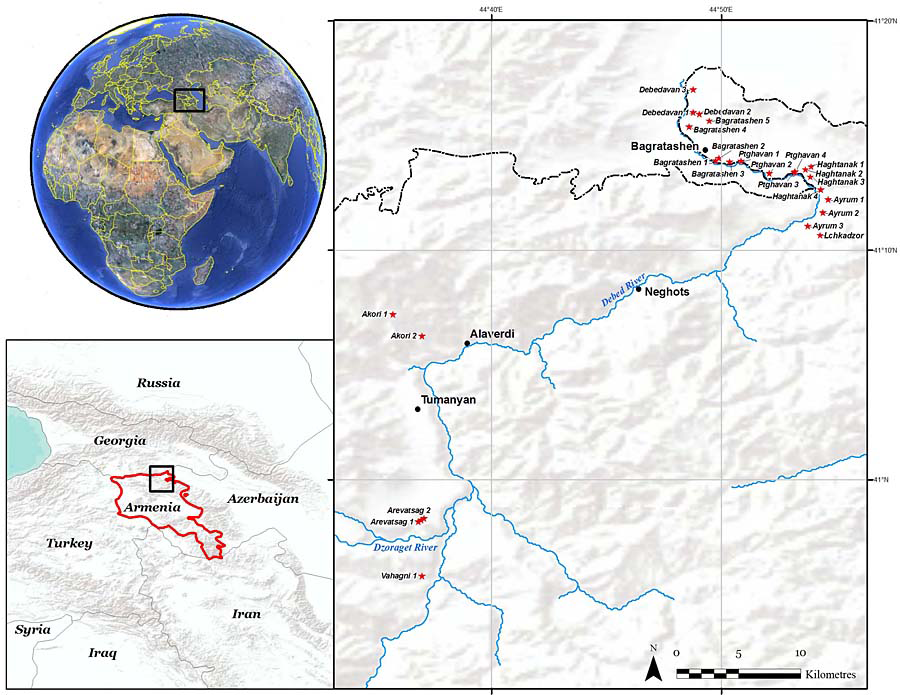


Map of the survey area with identified archaeological sites.

Introduction
The southern Caucasus is well known for the site of Dmanisi (Republic of Georgia), which provides the earliest well-accepted evidence for a human presence outside Africa around 1.8 million years ago (Gabunia et al. 2001), the Kura-Araxes culture, which dominated the area during the Early Bronze Age c. 35002400 BC (Reference SmithSmith 2005), and the Iron Age Urartian Empire, which lasted from the mid-ninth century BC until its collapse in the early sixth century BC (Reference PiotrovskyPiotrovsky 1969). The modern Republic of Armenia lies at the heart of this dynamic geographic corridor and is therefore poised to play a key role in understanding broader issues of prehistoric and historic human settlement. Here, we report briefly on archaeological surveys conducted by a joint Armenian-American team in the Debed river valley of north-eastern Armenia (Figure 1).
Archaeological work along the Debed dates to the late nineteenth century (Reference Yeritsov and MansvetovYeritsov 1882; de Morgan 1889). The best-known sites in the area are the impressive Early Bronze Age fortresses that overlook the river (Reference YesayanYesayan 1976) but, apart from very limited reports of stone tools from the area (Chillingaryan 1971), the Palaeolithic occupation of the Debed is virtually unknown. During the summer of 2009 a preliminary survey was conducted along the river between its confluence with the river Dzoraget in the south and the Georgian border in the north. Limited time in the field precluded a complete and systematic survey of the entire stretch, so, guided by GIS predictive modelling (Egeland et al. 2010), the survey team was transported by vehicle to high potential localities for pedestrian surveys.
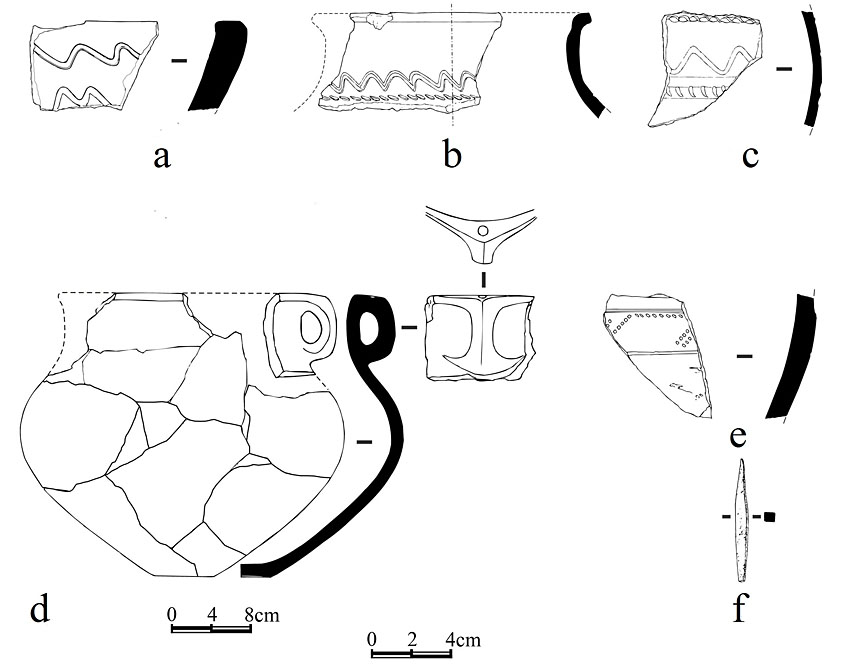
Holocene artefacts from the Debed sites. (a): developed medieval period II ceramic tub rim fragment from Haghtanak 3; (b): developed medieval period II ceramic rim fragment from Bagratashen 1; (c): developed medieval period II ceramic body sherd from Debedavan 2; (d): Early Bronze Age III (27th to 25/24th centuries BC) ceramic pot with lug handle from Arevatsag 1; (e): Early Bronze Age III ceramic body sherd from Arevatsag 1; (f): Early Bronze Age III bronze pick from Arevatsag 1.

Survey results
In 2009 a total of 25 sites spanning from the Lower Palaeolithic to the medieval period were identified from surface scatters (Figure 1). Palaeolithic material was recovered on all 25 sites, with a total of 447 lithic artefacts recovered. Lower Palaeolithic items were present on 15 sites (60% of the sites); Middle Palaeolithic artefacts were collected on 24 sites (96%of the sites); and the Upper Palaeolithic was documented on 11 sites (44% of the sites). There are clear differences in raw material choice between Palaeolithic periods, as limestone dominates Lower Palaeolithic assemblages, dacite predominates in the Middle Palaeolithic and flint is dominant among Upper Palaeolithic artefacts. Holocene-period assemblages were discovered at 15 sites, with a total of 136 artefacts documented. Neolithic/Chalcolithic artefacts were present on 4 sites (16% of the sites), Bronze Age objects occurred on 11 sites (44% of the sites), Iron Age material was collected on 4 sites (16% of the sites) and medieval items were recovered on 3 sites (12% of the sites). Obsidian is the dominant raw material for the Holocene lithics, the diagnostic tools being chisels, notched tools, scrapers and sickle fragments. The ceramic material is extremely fragmentary; a single almost complete vessel was recovered (Figure 2). We provide additional details on two of these sites below.
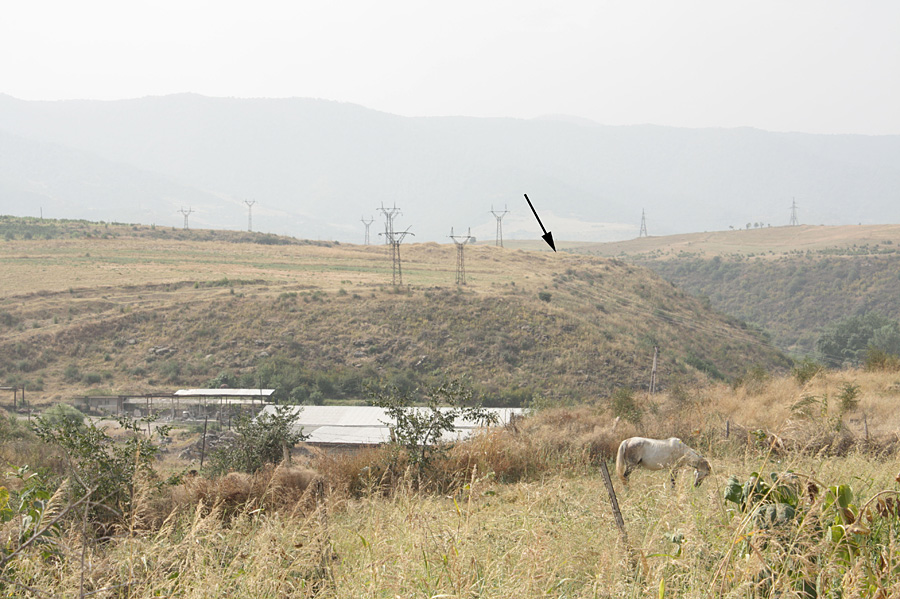
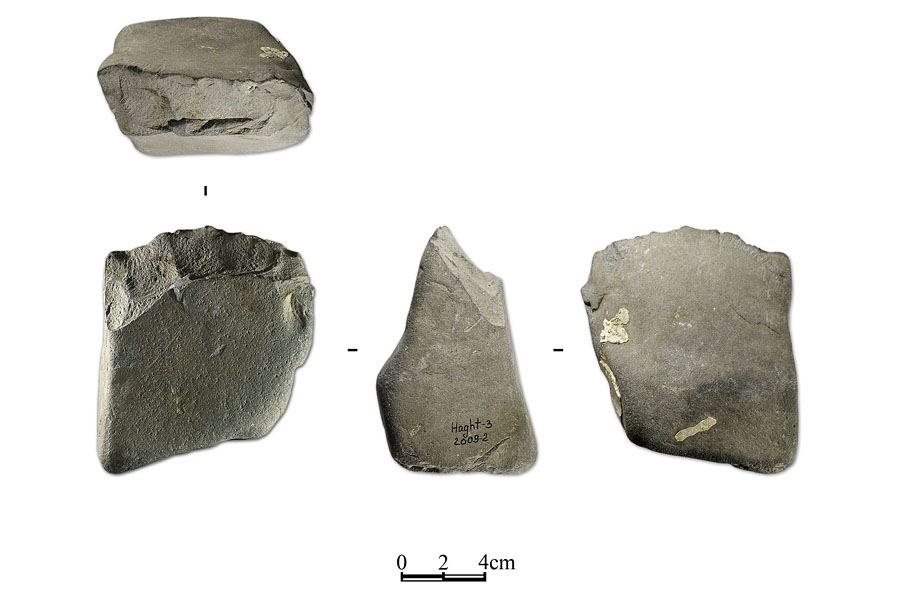
Haghtanak 3 This site lies atop a plateau overlooking the Debed (Figure 3). A total of 117 Palaeolithic (all lithic), 18 Late Chalcolithic (17 lithic, 1 ceramic), and one Late Bronze Age (ceramic) pieces were recovered from the surface. The area is littered with commercial gypsum mining trenches, which are most probably responsible for bringing most of the artefacts to the surface. Although a majority of the diagnostic lithic material is of Middle Palaeolithic age, a handful of artefacts are reminiscent of Lower Palaeolithic chopper forms (e.g. Figure 4). Sub-surface tests are currently underway to identify similar material in situ.
View of Haghtanak 3 (arrow) looking south.

Chopper-like tool flaked from basalt, Haghtanak 3.

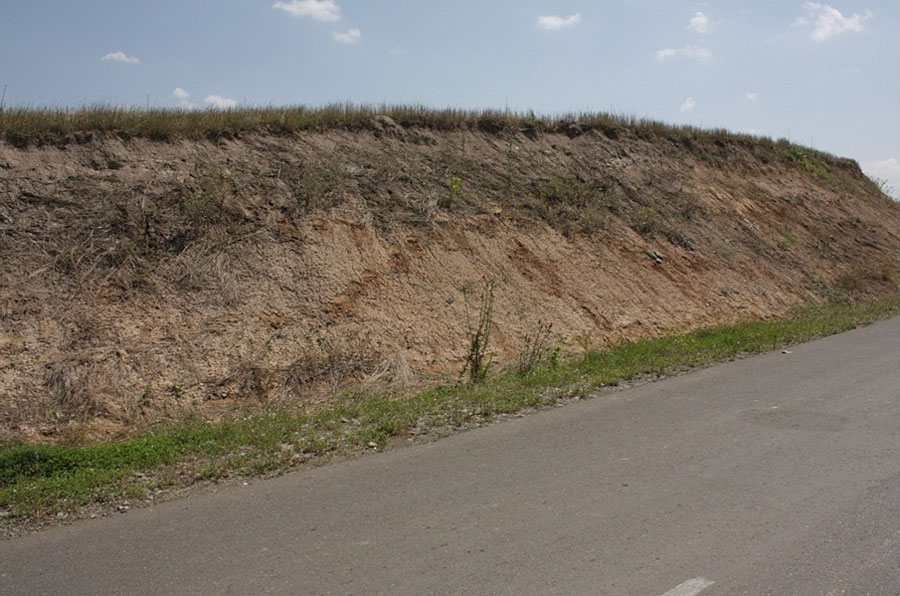
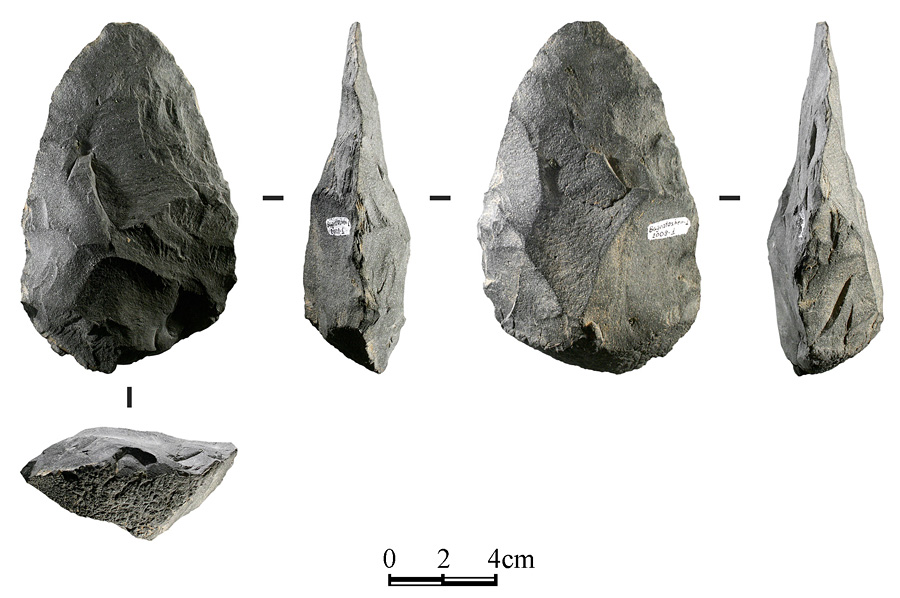
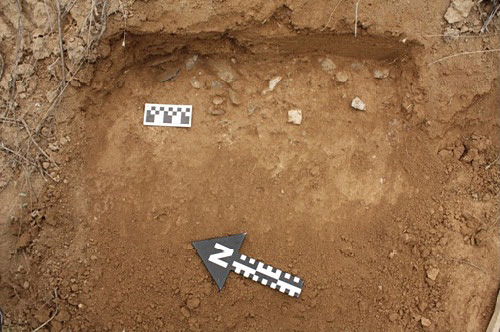
Bagratashen 1 Bagratashen 1 was discovered when lithic material was encountered as it eroded out of a recently built road cutting (Figure 5). The initial hint of the site's presence was a well-made handaxe (Figure 6). A total of 52 Palaeolithic (all lithic), one Neolithic/Chalcolithic (lithic), two Iron Age (lithic), and one Medieval (ceramic) pieces were recovered from the surface. A small test excavation revealed the presence of in situ Middle Palaeolithic artefacts (Figure 7).
View of Bagratashen 1 looking east.

Handaxe flaked from basalt, Bagratashen 1.

Conclusions
Test excavation at Bagratashen 1 showing Middle Palaeolithic material in situ.

Previous research has documented a long record of prehistoric and historic occupation in the southern Caucasus in general, and in Armenia in particular. The data presented here from the Debed river valley confirms this general pattern. However, the Palaeolithic settlement of the valley has, until now, been virtually unknown. It is clear that the Debed has great potential to provide novel data on this aspect of human settlement.
Acknowledgments
This paper is based on the work of the Lori Depression Paleoanthropological Project (LDPP). Members of the team not appearing as authors include Suren Kesejyan and Robert Ghukasyan. We are most grateful to Dr. Pavel Avetisyan and the Institute of Archaeology and Ethnography (National Academy of Sciences, Republic of Armenia) for supporting this research. Funding for the LDPP was provided through a grant from the National Science Foundation (BCS-0936385) to Charles Egeland, the Gfoeller Foundation, and the Institute of Archaeology and Ethnography.