




Introduction
Contextual factors, broadly defined as all intervening factors that affect a complex phenomenon (Stange et al., Reference Stange, Breslau, Dietrich and Glasgow2012; Bate et al., Reference Bate, Robert, Fulop, Ovretveit and Dixon-Woods2014), are recognized as critical to successful health care delivery and implementation of health care innovations (Ovretveit, Reference Ovretveit2011; Evans et al., Reference Evans, Grudniewicz, Gray, Wodchis, Carswell and Baker2017; Pfadenhauer et al., Reference Pfadenhauer, Gerhardus, Mozygemba, Lysdahl, Booth, Hofmann, Wahlster, Polus, Burns, Brereton and Rehfuess2017; Abuzour et al., Reference Abuzour, Lewis and Tully2018). Examples of contextual factors are: (a) the external context (eg, policy and legislation, buy-in by internal or external stakeholders) (b) the organization (eg, organizational culture, leadership, resources, and relationships) (c) professionals (eg, roles, competency); and (d) intervention (eg, nature and characteristics, complexity) (Damschroder et al., Reference Damschroder, Aron, Keith, Kirsh, Alexander and Lowery2009; Lau et al., Reference Lau, Stevenson, Ong, Dziedzic, Treweek, Eldridge, Everitt, Kennedy, Qureshi, Rogers, Peacock and Murray2016). In primary care settings, consideration of contextual factors when implementing health care innovations is recognized as a strategy for maximizing uptake and success (Lau et al., Reference Lau, Stevenson, Ong, Dziedzic, Treweek, Eldridge, Everitt, Kennedy, Qureshi, Rogers, Peacock and Murray2016).
Innovation in primary care consists of implementing creative solutions to provide high quality care for clients through efficient and strategic use of available resources (eg, funding and staff) (Okie, Reference Okie2008). The lack of consideration of contextual factors has negative implications for successfully implementing health care innovations, sustainability, and scalability (Stirman et al., Reference Stirman, Kimberly, Cook, Calloway, Castro and Charns2012; Milat et al., Reference Milat, Bauman and Redman2015). However, contextual factors are rarely recorded, analyzed or considered when implementing change (Tomoaia-Cotisel et al., Reference Tomoaia-Cotisel, Scammon, Waitzman, Cronholm, Halladay, Driscoll, Solberg, Hsu, Tai-Seale, Hiratsuka and Shih2013). Thus, attempts to implement or transfer innovations to other settings are often unsuccessful, because contextual factors are poorly integrated into change efforts (Shekelle et al., Reference Shekelle, Pronovost, Wachter, Taylor, Dy, Foy, Hempel, McDonald, Ovretveit and Rubenstein2010; Kringos et al., Reference Kringos, Sunol, Wagner, Mannion, Michel, Klazinga and Groene2015; May et al., Reference May, Johnson and Finch2016).
Previous work has explored the influence of contextual factors on change in primary care settings (Carlfjord et al., Reference Carlfjord, Lindberg, Bendtsen, Nilsen and Andersson2010; Tierney et al., Reference Tierney, Kislov and Deaton2014; Shea et al., Reference Shea, Turner, Albritton and Reiter2018; Ward et al., Reference Ward, Lane, McDonald, Powell-Davies, Fuller, Dennis, Kearns and Russell2018). This work suggests a number of contextual factors as important to consider for successful implementation of health care innovations, such as: teamwork climate (Shea et al., Reference Shea, Turner, Albritton and Reiter2018), organizational capacity to take on new initiatives (Carlfjord et al., Reference Carlfjord, Lindberg, Bendtsen, Nilsen and Andersson2010; Shea et al., Reference Shea, Turner, Albritton and Reiter2018), objectives and perceived value of the innovation (Shea et al., Reference Shea, Turner, Albritton and Reiter2018; Ward et al., Reference Ward, Lane, McDonald, Powell-Davies, Fuller, Dennis, Kearns and Russell2018), and top-level endorsement (Tierney et al., Reference Tierney, Kislov and Deaton2014).
Tomoaia-Cotisel et al. (Reference Tomoaia-Cotisel, Scammon, Waitzman, Cronholm, Halladay, Driscoll, Solberg, Hsu, Tai-Seale, Hiratsuka and Shih2013) reported on contextual factors across 14 studies of primary care practice transformation to patient-centered medical homes (PCMHs). Using results from these 14 studies, they developed a novel framework for reporting contextual factors, based on the work of Stange and Glasgow (Reference Stange and Glasgow2013). Stange and Glasgow’s (2013) template includes the following contextual factors: national, provincial and local policy, community norms, organization of health care, practice culture, and historical factors. Tomoaia-Cotisel et al.’s (Reference Tomoaia-Cotisel, Scammon, Waitzman, Cronholm, Halladay, Driscoll, Solberg, Hsu, Tai-Seale, Hiratsuka and Shih2013) framework expands on the template and describes contextual factors in three hierarchical dimensions (practice, larger organization, and external environment) and two cross-cutting dimensions (implementation pathway and motivations). While this paper provides a valuable framework that can be used to report contextual factors in primary care change initiatives, it is focused on one specific type of transformation, that of PCMHs, and does not describe strategies that could be used to address these contextual factors.
The purposes of this paper are to: (1) describe contextual factors that impacted the implementation of community-based primary health care (CBPHC) innovations among 12 Canadian research teams and (2) describe strategies used by the teams to address contextual factors influencing implementation of CBPHC innovations. In 2012, as part of a signature initiative in CBPHC research, the Canadian Institutes of Health Research (CIHR) funded 12 pan-Canadian research teams (hereafter referred to as 12 teams) to conduct five-year programmatic cross-jurisdictional innovative research projects (CIHR, 2012a; CIHR, 2013). The funding’s key aims included: (a) reduction of inequities in access to CBPHC and health outcomes of vulnerable populations and (b) prevention and management of chronic conditions (CIHR 2012b).
Teams were also required to collaborate and produce knowledge beyond what could be produced by any one team, including collection of data on a common set of patient and practice indicators (Wong et al., Reference Wong, Langton, Katz, Fortin, Godwin, Green, Grunfeld, Hassani, Kendall, Liddy, Ploeg, Wodchis and Haggerty2018) and description of the structures and context that influence the implementation and potential for scale-up of successful CBPHC innovations (Ben Charif et al., Reference Ben Charif, Hassani, Wong, Zomahoun, Fortin, Freitas, Katz, Kendall, Liddy, Nicholson, Petrovic, Ploeg and Légaré2018). The 12 teams are composed of researchers, trainees, patient and community research partners and decision makers. The teams are located within rural and urban settings in multiple provinces across Canada (eg, Alberta, British Columbia, Manitoba, New Brunswick, Newfoundland and Labrador, Nova Scotia, Northwest Territories, Nunavut, Ontario, Prince Edward Island, and Quebec) and some teams included international partners (eg, Australia, Belgium, Denmark, France, New Zealand, Philippines, Singapore, and the United States). The areas of focus are varied and include, for example, prevention and management of chronic conditions and access to care for vulnerable groups. These teams are implementing innovative projects to improve CBPHC for diverse populations such as children, youth, older adults, immigrants, low-income groups and Indigenous Peoples. The teams have varied goals such as using technology to improve HIV care and self-management, using patient experiences in reshaping primary health care (PHC) to address the needs of First Nation communities, and partnering with local community health and social care providers to improve care for older adults with diabetes and multimorbidity. More detail about the 12 teams is available on the CIHR website: http://www.cihr-irsc.gc.ca/e/50370.html.
An example of one of the teams and their innovations follows. Canadian Team to Improve Community-Based Cancer Care along the Continuum (CanIMPACT) is a multi-disciplinary team of primary care providers, cancer specialists, researchers, patients and caregivers who are working together to improve care coordination for patients with cancer. In collaboration with the Champlain BASE™ eConsult team, CanIMPACT is evaluating an asynchronous online communication system (“eOncoNote”) that aims to improve communication between primary care providers and cancer specialists (Grunfeld, Reference Grunfeld2017; Grunfeld and Petrovic, Reference Grunfeld and Petrovic2017).
Methods
Design
A qualitative evaluation approach was used.
Data collection
Data collection was conducted using self-administered questionnaires and follow-up telephone interviews with representatives of the 12 teams, from May to December 2017. Two authors (KH and JP) developed a questionnaire adapted from Stange and Glasgow’s Context Matters Reporting Template (Reference Stange and Glasgow2013), and Tomoaia-Cotisel et al.’s (Reference Tomoaia-Cotisel, Scammon, Waitzman, Cronholm, Halladay, Driscoll, Solberg, Hsu, Tai-Seale, Hiratsuka and Shih2013) framework of contextual factors in PHC. The questionnaire was piloted with the co-leads of one of the 12 teams to assess face validity (ie, questions were clear and relevant). The questionnaire asked teams to describe their project, study population, and partnering stakeholders (eg, clinicians, community members, and decision makers). Teams were then asked to describe contextual factors impacting the implementation of their innovations, regional public policy, and multi-jurisdictional nature of the work (See Supplementary material – Appendix 1 for survey questions).
Follow-up semi-structured individual and group telephone interviews, lasting 30–45 min, were conducted by two authors (KH and JP) with each team. One to three persons from each team were interviewed, including researchers and research staff (research coordinators and managers). Participants were asked to identify the contextual factors that had been most influential in the implementation of their innovation, how these factors had influenced their work, and strategies they used to address contextual factors. Additional probing questions were asked to clarify responses to the questionnaires. Interviews were audio-recorded and transcribed (See Supplementary material – Appendix 2 for sample interview questions).
Data analysis
We used a combination of directed and conventional content analysis approaches (Hsieh and Shannon, Reference Hsieh and Shannon2005) to analyze the questionnaire and interview data. Using a directed content analysis approach, we started with Tomoaia-Cotisel et al.’s (Reference Tomoaia-Cotisel, Scammon, Waitzman, Cronholm, Halladay, Driscoll, Solberg, Hsu, Tai-Seale, Hiratsuka and Shih2013) framework to develop general codes and categories of the contextual factors that impacted the implementation of CBPHC innovations. Building on this framework, we then used a conventional content analysis approach where additional codes and categories were derived directly from the questionnaire and interview texts.
Three authors (KH, JP and MY) independently reviewed the questionnaire and interview data and developed initial codes and categories. These authors met monthly over four months to discuss and compare codes and categories and develop a final coding structure. Two authors (KH and MY) applied the final coding scheme to the data. Coded data were reviewed and themes and sub-themes were identified by consensus and reviewed by the larger research team. We used N-Vivo 11® (QSR International) to assist with qualitative data analysis.
We ensured rigor by using Lincoln and Guba’s (Reference Lincoln and Guba1985) validation criteria (ie, credibility, transferability, dependability, and confirmability). Credibility was established by seeking a broad range of participants (team leads, project managers, and research coordinators) and using investigator triangulation. In addition to the three primary data analysts (KH, JP, and MY), nine co-authors (SW, MF, CK, CL, MMR, BP, ED, CS, and WPW) with expertise in program evaluation, CBPHC, and qualitative research provided feedback on the themes to ensure that they were accurate and reflective of their experiences. Descriptions of the teams and their innovations help to ensure transferability of findings (Creswell, Reference Creswell2017). Dependability and confirmability were achieved by maintaining a record of all analytic decisions.
Ethics statement
All procedures contributing to this work comply with the ethical standards of the Tri-Council Policy Statement, Ethical Conduct for Research Involving Humans.
Results
Participants
Representatives from all 12 teams completed the questionnaire and 11 teams participated in the interviews (one team was not available for an interview). A total of 40 people participated in the data collection, of whom 29 (72%) were senior and junior researchers (principal investigators, collaborators, and postdoctoral researchers) and 11 (28%) were research staff (research managers and research coordinators). Between 1 and 6 people per team participated in the data collection (median = 3). The representatives were diverse in terms of gender, age, years of research experience, and work locations. Table 1 provides a brief summary of the 12 teams including location, study population, area of focus and research or innovation project.
Overview of the 12 CBPHC teams

See Canadian Institutes of Health Research website for more information on the teams http://www.cihr-irsc.gc.ca/e/50370.html.
Contextual factors
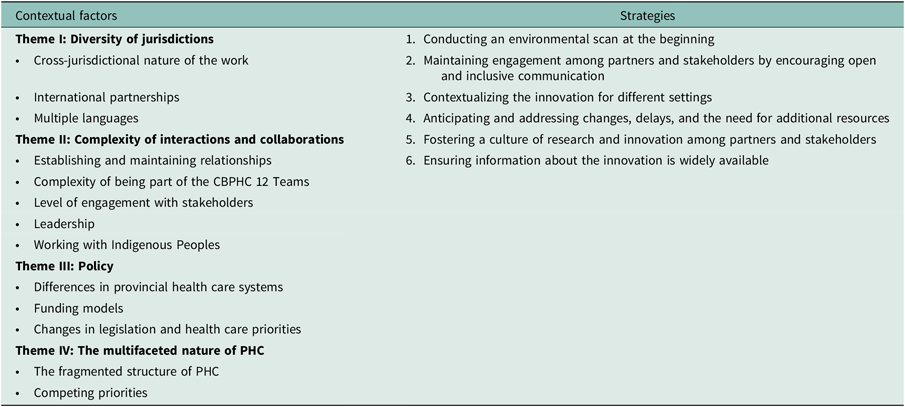
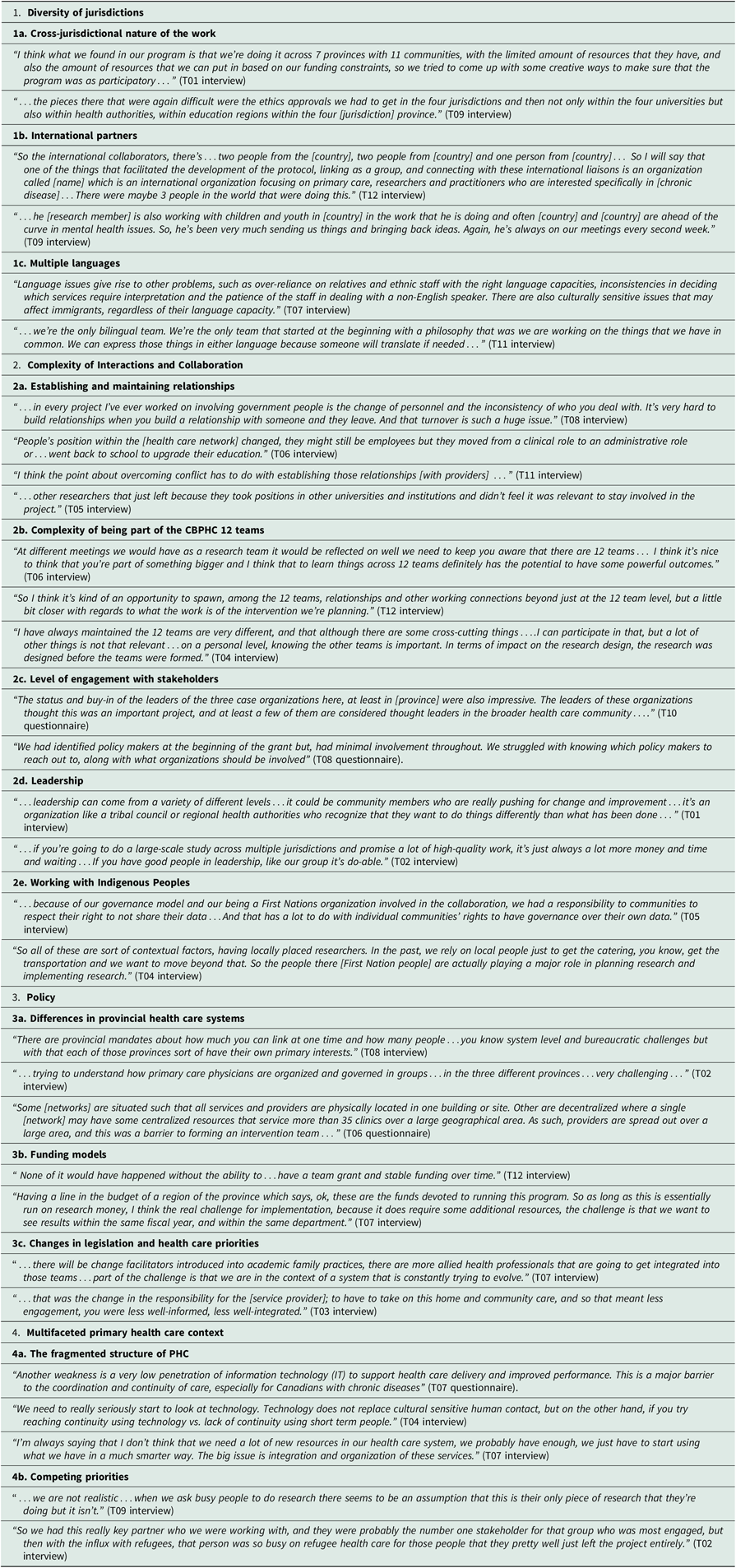
We categorized the contextual factors that impacted the implementation of CBPHC innovations of the 12 teams into four main themes with related sub-themes: (I) diversity of jurisdictions (II) complexity of interactions and collaborations (III) policy, and (IV) the multifaceted nature of PHC (See Table 2 for a summary of themes and sub-themes). Descriptions of the themes and sample quotations from interviews and questionnaires are provided below. Additional quotes are displayed in Table 3 to provide rich examples from the 12 teams.
Summary of contextual factors influencing CBPHC innovations of the 12 teams and strategies to address these factors

Additional examples of data for contextual factors influencing implementation of CBPHC innovations by theme

Contextual theme I: diversity of jurisdictions
The diversity of settings and jurisdictions that teams worked in influenced the implementation of their innovations. Teams worked across multiple Canadian provinces and territories. Five teams had international partners and three teams worked with Indigenous communities in Canada.
Cross-jurisdictional nature of the work
Challenges in working across jurisdictions included differences in provincial structures, limited resources, and maintaining cohesiveness among the research team members.
“Ensuring cohesiveness among [project] activities and working toward common goals are some of the challenges related to managing a research team involving a large number of players, located in different jurisdictions.” (T07 questionnaire)
Working across jurisdictions was a barrier to implementing innovations due to the nature of cross-collaborative projects. Ethics approvals were required from multiple jurisdictions and institutions, each with their own set of requirements. Privacy regulations varied across provinces and impacted timely access to data. Working within rural and remote areas with limited access to health care services also impacted innovation implementation.
International partnerships
International partnerships promoted collaboration and shared suggestions in development of CBPHC innovations. Collaborating internationally acted both as a facilitator and barrier for shared learning for the teams. Some teams had international research trainees who attempted to replicate Canadian projects to fit their country’s context. Collaborating with international research partners also created challenges due to differences in time zones, research styles, PHC structures and privacy regulations.
“… the intellectual context in Europe is quite different. So there’s this intellectual exchange that is really important and the other was the notion of how their primary care system works…” (T11 interview)
Multiple languages
Recognizing the need for diversity in languages acted as a facilitator for implementing innovations. The broad term of language was perceived by teams as including unique terminology, cultural differences, and culture of work. Implementing innovations in settings with multiple languages, though challenging, increased the accessibility of the projects across diverse populations. Some teams recognized that concepts could not be easily translated from English into, for example, Indigenous languages.
“…even the concepts that we were trying to have a dialogue around like health and wellness and well-being and mental wellness. All of those concepts were very difficult to describe in Indigenous languages where the parallel definition did not exist…” (T05 interview)
Contextual theme II: complexity of interactions and collaborations
The success of implementing innovations in CBPHC was dependent on complex collaborations and interactions between research teams, community members, providers, decision makers, patients, and caregivers.
Establishing and maintaining relationships
The outcomes of teams’ innovations were dependent on new and existing relationships with diverse partners and stakeholders. Focusing on relationships with others was an enabler for innovation implementation. However, turnover in government officials, partnering decision makers, and clinicians required teams to build new relationships and sometimes modify aspects of their projects.
“All of those directors have changed, there has been some turnover. Talking about adapting our program to different contexts, well the context keeps changing and we need to keep adapting to their new priorities, new programs and new structure.” (T07 interview)
Similarly, turnover of clinicians and research personnel sometimes delayed implementation of innovations as new clinical or research staff needed time to be trained.
Complexity of being part of the CBPHC 12 teams
There were mixed findings about collaborating across the 12 teams as working within a large cross-jurisdictional network of independent research programs acted both as a barrier and facilitator in implementing innovations. Working across the 12 teams was seen as an opportunity to share ideas, learn about each other’s innovations and increase cross-team collaboration.
“I think it’s nice to think that you’re part of something bigger and I think that to learn things across 12 teams definitely has the potential to have some powerful outcomes.” (T06 interview)
One team, for example, adapted an innovation from another team to their own context. The funder’s expectation for the 12 teams to collect common process and outcome indicators, however, was at times recognized as inconsistent with the diversity of the teams in terms of their innovations, the communities and health systems they worked with and the team itself. This was a particularly challenging contextual factor for the teams working with Indigenous communities, where the communities made decisions pertaining to the data that was important to them.
Levels of engagement with stakeholders
The level of engagement of stakeholders, such as policy and decision makers as well as clinicians, patients and caregivers, was an important contextual factor that facilitated the successful implementation of innovations. This was often associated with recognizing the potential value of innovations for larger communities.
“I think in [province] we have achieved some excitement about [innovation] within our health authority…they have invested interest in [innovation], seeing how [innovation] can help inform the work that they’re doing.” (T02 interview)
Despite the teams’ best efforts in engaging stakeholders, some decision makers still did not “buy-in” to their projects or feel that their projects were worth implementing due to competing priorities and the dynamic nature of the policy worlds.
Leadership
Teams described the important contextual factor of leadership to facilitate implementation of innovations and often fostered leadership at various levels (individuals, communities, and organizations) to achieve success. Leadership was perceived by teams as consisting of supportive mentorship and led to trusting relationships among providers in team environments. Strong leadership helped teams to navigate the different perspectives of diverse stakeholders (eg, community members, decision makers, patients and caregivers, researchers). Teams recognized that effective leaders should encourage shared leadership, be open to change, promote and maintain commitment, and ensure that members have the resources to achieve their goals. This made it easier to conduct large CBPHC projects and offset issues that were not always in the control of the teams (eg, time and financial resources).
“The leadership, the engagement from the beginning and the commitment of the individuals involved in this topic all have led to a more engaged team than you would see in any other projects.” (T08 interview)
Working with Indigenous peoples
Involving Indigenous Peoples in research acted as a facilitator to promote the success of innovations. Recognizing the unique cultural and historical context of Indigenous Peoples in Canada, three teams working with Indigenous communities followed Ownership, Control, Access, and Possession (OCAP®) standards of how to conduct research with First Nations (First Nations Information Governance Centre, 2014). These guidelines assert that First Nations have control over data collection processes in their communities and they own and control how that data will be used.
“You have to have mutual respect that is spelled out through OCAP® on how to partner and work collaboratively with First Nations. The Truth and Reconciliation [Truth and Reconciliation Commission of Canada, 2018 ] is a list of recommendations that highlight the issues of colonialism in Canada with creating recommendations as a path to move forward…” (T01 interview)
When collaborating with Indigenous Peoples, teams also had to navigate complex health care funding structures and limited PHC resources to realize the implementation of innovations in these communities.
Contextual theme III: policy
National and provincial political structures and changes to these structures and policies impacted the implementation of CBPHC innovations.
Differences in provincial health care systems
The diversity of health care system structures across provinces acted as a barrier to innovation implementation. Researchers had to familiarize themselves with health care systems in different jurisdictions to determine how they could best implement innovations in different settings. These included differences in structure, services, regulations, and interests.
Funding models
Teams reported that funding models for PHC services varied within and across provinces, resulting in differences in available health care services, the organization and delivery of health and other social services, and ability to implement innovations across various sectors. Varying funding models acted as barriers to implementation of CBPHC innovations.
“Funding sources [for usual PHC] were the same in three sites but the funding models differed and, as a result, the services offered were different when comparing acute and community settings.” (T06 questionnaire)
Teams also discussed the need to create a line in the research budget of the region or province related to the innovation, to ensure sustainability beyond research funds.
Changes in legislation and health care priorities
Researchers considered the constant changes in political structures and regulations when implementing innovations. These changes impeded successful implementation of innovations. For example, the requirement of clinicians to meet new practice standards led to lower interest for clinicians and decision makers in supporting this type of research initiatives. Changes in legislation and priorities also led to changes in the organizational resources required for an intervention.
“…they [health ministry] imposed a quota of patients that practices had to take…well that would definitely influence the practices’ interest in taking part in things, and how we were going to roll out the intervention.” (T03 interview)
Contextual theme IV: the multifaceted nature of PHC
PHC is organized by multiple groups of care providers and stakeholders. Having multiple players involved in PHC has been perceived by the teams to lead to lack of communication with other tiers of service and complex care delivery.
The fragmented structure of PHC
Lack of PHC coordination and gaps in services were pronounced both in rural and remote as well as urban areas, influencing innovation implementation. The structure of the current state of PHC acted as a barrier to implementing innovations. The differences in defining PHC across jurisdictions impacted the types of innovations that could be implemented and the evaluation of innovations. The low penetration of information technology in PHC was seen as a particular contextual challenge for the teams.
“Imagine sort of the fragmentation [of primary care] in larger urban centres. I think that’s sort of a real challenge.” (T07 interview)
Competing priorities
Researchers experienced challenges in implementing innovations when PHC clinicians had to meet the high demands of providing clinical services over research.
“…we would produce something and then we wouldn’t hear from them [providers]…this is all because of different priorities, right? They have a huge responsibility in front of them and they need to prioritize that, they can’t let care delivery drop.” (T03 interview)
Researchers also recognized that clinicians were often engaged in a number of different research projects.
Strategies to address contextual factors
By reflecting on contextual factors that were influential in their work, representatives of the 12 teams also discussed strategies they used to address these factors in order to successfully implement innovations. Six main strategies were identified and are described below. See Table 4 for additional qualitative data.
Additional examples of data for strategies to address contextual factors in CBPHC

1. Conduct an environmental scan at the beginning
Some teams conducted environmental scans, scoping and realist reviews, needs assessments and/or reviews at the start of their projects to understand what programs already exist, what works in different contexts, and what constitutes usual care related to the innovation. The evidence provided decision-making stakeholders with program options outside their context-bound purview and focused feedback from PHC providers regarding areas for improvement. Understanding the geographical, political, and social context helped the teams appropriately plan and fine-tune their innovations to better meet the needs of the communities.
“Our KT group conducted an environmental scan across Canada in terms of what kinds of initiatives have been conducted to improve coordination of care between primary care and [specialists]. So that really allowed us to kind of get a sense of what’s out there and really get input from these different areas in terms of the work that’s already been done.” (T12 interview)
2. Maintaining engagement among partners and stakeholders by encouraging open and inclusive communication
Teams recommended ensuring that all team members, partners, and stakeholders are appropriately engaged and committed throughout the course of their projects. The importance of meaningful engagement was particularly pronounced in the engagement of Indigenous Peoples.
“So, a lot of our resources went into that for our project to ensure that we had continual engagement of the community. But then I think…let the First Nations take the leadership role in determining some of the questions in the outcome and how things are structured…” (T05 interview)
To maintain meaningful engagement, teams tailored communication strategies such as workshops and in-person meetings to the particular needs of different partners and stakeholders. These strategies considered how feedback from others would be collected and incorporated into the projects. Teams used various methods of communication such as tele-conferences, newsletters, progress reports, websites and social media, and in-person gatherings.
“Regular meetings, a collaborative electronic platform and yearly face-to-face meetings have been essential to maintain the momentum for the study and learning from one another.” (T03 questionnaire)
Unique strategies to address the language context and improve communication across jurisdictions included having a bilingual research team, strong collaborations, investment in communication tools, and focusing on commonalities.
3. Contextualizing the innovation for different settings
The teams described how they tested the innovations in different settings and jurisdictions and tailored and adapted the innovation to fit the unique contexts as needed.
“…by actually testing and modifying the program in different settings, until you sort of demonstrated that yes, you’re going to get positive results, and the program is implementable across different settings, different populations, and of course different diseases.” (T07 interview)
Integrating feedback from communities and stakeholders was critical in adapting the innovations to local needs. Researchers discussed retaining the core principles of the innovation while tailoring flexible aspects (innovation components and implementation strategies) to ensure effective integration of the innovation into existing care systems.
4. Anticipating and addressing changes, delays, and the need for additional resources
Implementing a CBPHC innovation is a very complex process requiring engagement of multiple stakeholders and consideration of many contextual factors. Therefore, research teams recommended planning for changes in implementation plans, flexible timelines, and the need for additional resources.
“…just thinking about advice for someone who would be taking on this type of project would just be mindful that things will take a lot longer than you may have originally anticipated. It’s probably going to be for the better in the end because there’s going to be different inputs and it’ll lead to hopefully a better outcome.” (T12 interview)
Teams also had to be responsive to turnover and changes in team composition and expect delays in implementation while having a plan to address these. While collecting feedback and adapting the innovation led to longer implementation timelines, it also led to important program improvements.
5. Fostering a culture of research and innovation among partners and stakeholders
Researchers used multiple strategies to foster a culture of innovation among partners and stakeholders. They recognized that research may not be valued in the same ways in practice and policy environments as in academic environments and emphasized the importance of fostering a culture of innovation within health care.
…we need to think about how can we foster a research culture within our healthcare system?…when we would approach them [providers] we’re considered an outsider rather than seen as part of the team that can help improve patient care. I think that definitely affects uptake of intervention because it’s perceived as not my job, I’m too busy. (T06 interview)
Many teams were involved with building research capacity among their partners and stakeholders to help facilitate the uptake of innovations. Examples included involving patients and community members in research activities and creating faculty positions in the North.
6. Ensuring information about the innovation is widely available
Teams described using numerous strategies to promote awareness and sustainability of the innovation among stakeholders to enhance dissemination of findings. They ensured that information about their innovations was publicly available and developed tailored resources for various stakeholders. This ensured that findings were shared with community members who were not part of the research using social media, websites, policy briefs, newsletters, toolkits and other approaches.
“We wanted to use it [website] as a tool to disseminate what we were doing and eventually it will be a tool that people will use as a resource and various groups can eventually use it as a resource like teachers, clinicians, families, parents, children, youth…” (T09 interview)
Discussion
Key findings
Based on the perspectives of the 12 teams, implementing CBPHC innovations across jurisdictions is a complex experience involving multiple and interrelated contextual factors and this complexity should be recognized by decision-maker stakeholders. Teams had to frequently adapt their innovations to fit diverse settings. Further, it was challenging for teams to implement innovations in contexts where there were ongoing changes at government levels such as new policies, priorities, structures, and leaders. The 12 teams used a variety of strategies to ensure successful implementation of CBPHC innovations by addressing contextual factors, especially strategies focused on building and maintaining relationships with stakeholders including Indigenous peoples.
Comparison with the literature
This present study expands on the Tomoaia-Cotisel et al. (Reference Tomoaia-Cotisel, Scammon, Waitzman, Cronholm, Halladay, Driscoll, Solberg, Hsu, Tai-Seale, Hiratsuka and Shih2013) framework by providing a much more detailed description of contextual factors that impact the implementation of CBPHC innovations. Rather than being limited to five domains of the framework (ie, practice, larger organization, external environment, implementation pathway, and motivation for implementation), our study highlights the interrelatedness and the interactive dynamic of contextual factors in how they mutually influence and transform one another. We also consider the diversity and landscape of jurisdictions as an important factor to consider when implementing innovations across Canada and beyond (Sutherland and Busse, Reference Sutherland and Busse2016). The current study further extends the work of Tomoaia-Cotisel et al. (Reference Tomoaia-Cotisel, Scammon, Waitzman, Cronholm, Halladay, Driscoll, Solberg, Hsu, Tai-Seale, Hiratsuka and Shih2013) by providing concrete examples of strategies used by the 12 teams to address contextual factors in implementing PHC innovations.
The contextual factors identified align well with some of the key contextual factors identified by Lau and colleagues (Reference Lau, Stevenson, Ong, Dziedzic, Treweek, Eldridge, Everitt, Kennedy, Qureshi, Rogers, Peacock and Murray2016) in their review of reviews of complex changes in primary care: (a) professional: attitudes to change; (b) organization: relationships, and processes and systems; and (c) external context: stakeholder buy-in, governance and financing, and policy and legislation. The present study makes a new contribution by highlighting the importance of selected contextual factors, namely, diversity in settings and jurisdictions, and establishing and maintaining relationships with a broad range of stakeholders, including Indigenous peoples. It is critical that PHC innovations take into consideration the contextual challenges faced by Indigenous peoples such as the inadequate patchwork of policies and health care practices currently in existence (Katz et al., Reference Katz, Enns and Kinew2017).
Our results also confirm the conclusions by Lau et al. (Reference Lau, Stevenson, Ong, Dziedzic, Treweek, Eldridge, Everitt, Kennedy, Qureshi, Rogers, Peacock and Murray2016) of the importance of being aware of the dynamic nature of context, as the 12 teams encountered ongoing changes in areas such as decision-maker partners and government priorities and funding. It is not enough to simply assess context at the start of a change project; this needs to be an ongoing effort throughout the phases of implementing the innovation. Teams felt that the poor uptake of information technology was a barrier to health care coordination. There is a need for more innovative approaches in using technology as an instrumental component to practice rather than an electronic documentation system (Gray et al., Reference Gray, Barnsley, Gagnon, Belzile, Kenealy, Shaw, Sheridan, Nji and Wodchis2018).
The opportunities for shared learning across the 12 teams in this study, and the 14 teams in the study by Tomoaia-Cotisel et al. (Reference Tomoaia-Cotisel, Scammon, Waitzman, Cronholm, Halladay, Driscoll, Solberg, Hsu, Tai-Seale, Hiratsuka and Shih2013) share some similarities with what has been described as learning communities (Carpenter et al., Reference Carpenter, Hassell, Mardon, Fair, Johnson, Siegel and Nix2018): “a select group of potential adopters and stakeholders who engage in a shared learning process to facilitate adaptation and implementation of innovations” (Carpenter et al., Reference Carpenter, Hassell, Mardon, Fair, Johnson, Siegel and Nix2018: 567). The new incremental learnings generated by the 12 teams have certainly advanced our understanding of the contextual factors important for the implementation of PHC innovations.
Strengths and limitations
A strength of this evaluation was the inclusion of 12 CBPHC research teams representing diversity in terms of the jurisdictions and settings they involved, the target populations including Indigenous peoples, and the focus of innovation. Two data sources (ie, questionnaires and interviews) contributed to the richness of the data and a rigorous analytic method was used.
However, participants in this evaluation included only researchers and their team members; the inclusion of decision makers, providers, patient and public research partners could have provided different understandings of contextual factors influencing primary care innovation implementation. Such broader stakeholder sampling is recommended for future research. The PHC innovations were focused, as required by the funder, on two key areas, namely, improving access for vulnerable populations, and innovations in chronic disease management and prevention; thus, the contextual factors and strategies to address these factors might be different for other focal areas of PHC.
Conclusion
This paper provides a comprehensive overview of contextual factors impacting the implementation of CBPHC innovations among 12 multi-jurisdictional teams. Strategies used by the teams to address common contextual factors provide guidance for other research teams interested in implementing CBPHC innovations across different jurisdictions. Research teams should be considering and accommodating context by ensuring flexibility of their programs. Yet funders do not necessarily facilitate such accommodation. Grant requirements and specificities can create rigid barriers for teams to effectively and meaningfully (a) engage different stakeholders (b) develop meaningful partnerships, and (c) achieve results in a dedicated timeframe using specific tools. Future research should explore the relationship between context and outcome measures associated with innovations. Contextual factors also need to be explored in relation to how they impact spread and scale-up of CBPHC innovations. Finally, future research should examine which contextual factors are important, and how, why, when and for whom they are important in various settings, such as the planned realist review on healthcare quality improvement initiatives (Coles et al., Reference Coles, Wells, Maxwell, Harris, Anderson, Gray, Milner and MacGillivray2017).
Author ORCIDs
Christian Dimaano 0000-0001-8168-8449
Acknowledgements
The authors thank the 12 teams who participated in this project and the numerous partners, stakeholders, policy-makers, and decision makers who supported and assisted the 12 teams in implementing their innovations.
Conflicts of interest
None.
Financial support
This work was supported by the Canadian Institutes of Health Research Signature Initiative in Community Based Primary Health Care: (J.P., grant number TTF-128261) (S.W., grant number 128265) (C.K., grant number TT5-128270) (M.F., grant number TT2-128268) (C. L., grant number FRN TT5-128270) (B.P (PI: E.G), grant number-128272) (E.D. (PI: J.H.), grant number-130729), and (W.P.W., grant number TTF-128263 and the Health Research Council of New Zealand grant number 12/850).
Supplementary material
To view supplementary material for this article, please visit https://doi.org/10.1017/S1463423619000483.



 Open access

