

1. Introduction
In December 2023, the U.S. Food and Drug Administration (FDA) approved its first polygenic risk score (PGS) test.Footnote 1 The test, AvertD, was approved to assess an individual’s genetic risk of developing opioid use disorder (OUD).Footnote 2 OUD is defined by the Diagnostic and Statistical Manual of Mental Disorders (DSM-5) as a “problematic pattern of opioid use leading to problems or distress,”Footnote 3 and it may result in overdose and death. In 2021, 80,816 people died from overdose deaths involving opioids,Footnote 4 and overdose-related deaths nearly quadrupled between 2010 and 2021.Footnote 5 The CDC estimates that the opioid crisis in the United States has been responsible for almost 645,000 deaths over twenty years.Footnote 6
In order to address the opioid crisis in novel and creative ways, policy makers and scholars argue that the opioid epidemic would be more effectively ameliorated by looking to “stop people from becoming addicted in the first place” rather than intervening only when individuals are already “in the throes of addiction.”Footnote 7 The AvertD test’s approval was predicated on “the urgent need for medical devices that can make a positive impact on the overdose crisis, and specifically devices that can help assess the risk of developing OUD.”Footnote 8 Thus, those who champion the test view it as a weapon in the arsenal against opioid misuse, in order to avoid prescribing opioids to those patients who are most likely to develop OUD.Footnote 9 According to Keri Donaldson, CEO of SOLVD Health, the maker of the AvertD device, the test is “absolutely transformative in this space … in terms of the ability to inform patients and providers of the genetic risks prior to prescribing.”Footnote 10
However, SOLVD Health explains that because it is a PGS test, AvertD is not intended to diagnose OUD.Footnote 11 Instead, the test is a genetic risk assessment tool.Footnote 12 It is intended to provide more accurate predictions of who will develop OUD as a result of opioid prescriptions, particularly for patients being treated for acute pain,Footnote 13 such as those scheduled to undergo a planned surgical procedure.Footnote 14 Both the FDA and SOLVD Health have stressed that the test is intended to be used as part of a broader evaluation of patients.Footnote 15 SOLVD Health’s CEO referred to the genetic information that AvertD provides a “missing piece of information” that can be used in better clinical decision-making.Footnote 16
In its approval, the FDA provided guidance on the use of results of the AvertD test, warning that they are “not [to] be used in treatment decision-making in isolation but as part of the complete clinical evaluation process.”Footnote 17 The FDA’s approval requires that educational materials be provided to physicians who utilize the test to make opioid prescribing decisions.Footnote 18 “The test also includes a ‘black box’ warning on its label, which cautions patients about its limitations and emphasizes that it shouldn’t be the only measure used to evaluate OUD risk.”Footnote 19
The FDA approved AvertD over the objections of its own advisory committee, which voted eleven to two against its approval.Footnote 20 And since then, experts have petitioned the FDA to rescind its approval and for the Centers for Medicare and Medicaid Services (CMS) to deny reimbursement for administration of the test.Footnote 21 They argue that AvertD is unreliable.Footnote 22 It often returns false positive results, which would lead to potential undertreatment of pain, and false negatives results, which would lead to inappropriate opioid prescriptions.Footnote 23
But if the test is available, physicians will use it. And, in fact, due to a combination of genetic determinism and genetic illiteracy,Footnote 24 the test will be relied upon to make opioid prescription decisions without also looking to the environmental, socioeconomic, lifestyle, and other factors that contribute to an individual’s OUD risk.Footnote 25
Usually, when patients are harmed due to clinical decision making, they can turn to tort law.Footnote 26 Here, however, tort law is inadequate to addressing the potential harms associated with genetic risk testing in opioid prescribing. Physicians may face liability for either over-relying on or disregarding genetic test results, resulting in a “damned if you do, damned if you don’t” dilemma.Footnote 27
This article argues that relying on tort law will not mitigate the harms raised by the introduction of a PGS test for OUD. But the introduction of AvertD may expose physicians to liability, whether they rely on the test or not. Thus, this article covers various physician liability scenarios, from inappropriate prescribing based on genetic test results to failure to test and informed consent issues. It concludes that tort liability is ill-equipped to protect patients and ensure appropriate integration of these tests into clinical practice.
II. The AvertD Test
The AvertD test’s unreliability and lack of clinical utility challenges the advisability of incorporating the test into clinical practice. The test’s high rate of false positives could lead to potential undertreatment of pain, and its high risk of false negatives could lead to inappropriate opioid prescriptions.
A. Unreliability
While the AvertD test is the first PGS to be approved by the FDA, it has been widely understood that PGS are unreliable in making diagnostic and treatment decisions.Footnote 28 One study recently found “poor performance of polygenic risk scores in population screening, individual disease prediction, and population risk stratification” and concluded that the enthusiasm for PGS appears “disproportionate to their performance.”Footnote 29 Experts warn that “currently there is no unequivocable proof of [PGS] clinical utility to improve patients’ outcomes compared with the current standard of care.”Footnote 30 Importantly, the utility of PGS in making medical decisions is limited because such scores “usually only account for the heritable component of a trait and ignore the etiological role of environment and lifestyle.”Footnote 31
Unlike certain genetic tests in which a single gene mutation indicates that patients will develop that disease,Footnote 32 PGS are intended to help predict the risk of developing a complex or multifactorial condition.Footnote 33 Thus, a test like AvertD can, at best, only aid in predicting the risk of developing OUD, but that risk is confounded by the interaction of genes with each other and with environmental and other factors.Footnote 34
Despite concerns expressed by the Clinical Chemistry and Clinical Toxicology Devices Advisory Committee of the FDA’s Medical Devices Advisory Committee of independent experts, the FDA approved AvertD in December 2023.Footnote 35 In October 2022, the Committee voted eleven to two to reject the test,Footnote 36 generally agreeing that there was not enough evidence to prove its efficacy. It stated, “[t]he panel agreed that the predictive power should be better and that genetic risk is only one component of risk and should be treated as such.”Footnote 37 And it concluded that the test’s risks outweighed its benefits, “for reasons ranging from the test’s clinical study design to how its results could be misinterpreted by clinicians. Others cited uncertainty in the accuracy of its algorithms and in how the test’s genetic criteria would translate to a larger and more diverse real-world population.”Footnote 38
In April 2024, after AvertD’s approval, thirty-one scientists wrote to the FDA and CMS, asking the agencies to “agree with the expert consensus that that the decision to approve AvertD was a mistake.”Footnote 39 In the letters, they asked FDA to rescind approval of AvertD and attempted to influence an anticipated CMS coverage decision on AvertD.Footnote 40 The letters “argued that fifteen genetic markers were not adequate to reliably predict a person’s genetic risk of OUD and that the test failed to account for differences in geographic ancestry, which can skew results.”Footnote 41 The scientists pointed to a critical review of gene-by-environment interaction research published in 2011 that concluded that algorithms that used the same fifteen genetic markers to predict opioid addiction performed no better than chance, and argued that the test’s approval relied on “an approach that has been abandoned by mainstream genetics.”Footnote 42 An independent evaluation of the “claim that the gene markers underlying AvertD can predict OUD” found that “the algorithm used for AvertD fell into known pitfalls of genetic prediction that give the appearance of predicting genetic risk, without being a true measure of genetic risk.”Footnote 43 The authors asserted that “[c]urrent scientific knowledge about OUD genetics is strong enough for us to state that AvertD does not predict genetic risk of OUD.”Footnote 44
In early 2024, an independent group of scientists analyzed the fifteen genetic variants for OUD risk tested by the AvertD test.Footnote 45 The authors observed high rates of false positives and negatives, with almost half (47/100) of predicted cases or controls being incorrectly classified.Footnote 46 The authors recognized that clinicians, without reliance on the AvertD test, “could better predict OUD risk using an individual’s age and sex than the 15 genetic variants.”Footnote 47 Finally, they concluded that “although the test approved by the FDA is intended to complement standard clinical assessment, its use is unlikely to confer additional benefits and may instead give providers and patients false and potentially harmful information.”Footnote 48
B. False Test Results
The Advisory Committee that cautioned against the FDA’s approval of AvertD, as well as the groups of experts that have called for the test to be removed from the market, all expressed concerns about the risks of the test reporting false results.Footnote 49 While false negative (wrongly categorizing an individual as “low risk” on the basis of their PGS) and false positive (wrongly categorizing an individual as “high risk” on the basis of their PGS) results can be expected with almost all PGS,Footnote 50 they are particularly concerning in the context of the AvertD test.
As part of its application to the FDA, SOLVD Health submitted sensitivity and specificity measures, which are intended to determine the effectiveness of the test.Footnote 51 The company reported that AvertD had demonstrated a sensitivity of approximately 82.5 percent and a specificity of 79.5 percent.Footnote 52 In other words, comparing the test’s predictions to a clinician’s diagnosis, those numbers suggest that approximately twenty percent of results would be false negatives and twenty percent of results would be false positives.Footnote 53 Based on these numbers, in its deliberations in October 2022, the FDA advisory committee concluded “that results of a genetic test could lead to over reliance on the result to change prescribing behaviors. Patients receiving a ‘high risk’ result may not be prescribed much needed opioids, and patients receiving a ‘low risk’ result may be over-prescribed opioids based on a sense of security.”Footnote 54
False positive test results can result in patients being denied appropriate pain relief, resulting in un- or undertreated pain. In October 2021, the Pew Charitable Trusts identified “real risks” associated with genetic tests, explaining that “[a]ccording to FDA, inaccurate tests could cause patients to undergo unnecessary, costly, and risky treatment when tests return false-positive results.”Footnote 55 Interestingly, in most instances, a “false positive” medical test results in mis- or overtreatment, because the patient will be (inappropriately) diagnosed with a disease that has a particular treatment protocol.Footnote 56 However, a false positive AvertD result — one that inaccurately predicts that a patient has a higher-than-normal risk of developing OUD — could result in denying patients access to opioids when they are the best, or only, available approach for acute pain. Thus, in the case of AvertD, a false positive result can, for some patients, lead to inadequate pain management due to avoidance of opioids, “which may prevent patients from receiving optimal medical care to treat their acute pain.”Footnote 57
This is not to say that there are no alternatives to opioid treatment for acute pain. Physicians can prescribe non-steroidal drugs such as acetaminophen, gabapentin, or non-steroidal anti-inflammatory drugs, or regional anesthetic techniques (for example, epidural catheters and peripheral nerve blocks), to help reduce or eliminate the need for prescription opioids.Footnote 58 But in some instances, and for some indications, these alternatives will not adequately address a patient’s pain.
Experts note “real and substantial harms associated with overestimating a patient’s overdose risk.”Footnote 59 The risks related to untreated and undertreated painFootnote 60 include physical risks:
A body in pain produces high levels of hormones that cause stress to the heart and lungs. Pain can cause blood pressure to spike, leading to heart attacks and strokes. Pain can also consume so much of the body’s energy that the immune system degrades. Severe chronic pain sometimes leads to suicide.Footnote 61
As Professors Kelly Dineen and James DuBois explain, “[t]he failure to utilize opioids in appropriate circumstances causes suffering and creates a barrier to effective pain care.”Footnote 62 Professor Ben Rich has argued that “undertreatment of pain [is] a major ethical, and not merely a clinical, failing of the medical profession.”Footnote 63 Studies have shown that undertreatment of pain can have major economic impacts as well, resulting in “over $70 billion per year in health care spending and lost productivity.”Footnote 64
When patients are denied adequate pain control, they may seek pain relief in other ways. Patients with unmet post-surgical pain control needs as a result of refusal of appropriate medication due to false positive AvertD test results “may be driven to the illegal market, where counterfeits and illicit substances are increasingly being adulterated with fentanyl and other potential lethal consequences.”Footnote 65
Conversely, a false negative test result could give individuals “false reassurance,”Footnote 66 leading to opioid addiction because the test indicated they were not at increased risk for opioid use disorder.Footnote 67 In fact, “[g]etting it wrong has consequences: A test that fails to identify a person at risk may give both the patient and the doctor a false sense of security about opioid use.”Footnote 68 One of the authors of the letters calling for the FDA to rescind AvertD from the market worries, “[m]ost people who take this test are going to test negative and be left with the impression that they don’t have to worry about getting addicted … and if they subsequently take opioids more aggressively for that reason, they are going to be more likely to get addicted.”Footnote 69
III. Physician Liability for Relying on a Genetic Test to Predict OUD
As demonstrated in Section II, polygenic risk scores for OUD are not a great predictor of addiction. Despite the unreliability of tests such as AvertD, physicians will likely (over)rely on genetic test results to make decisions about who will and will not receive access to opioids. But physicians are woefully untrained in genetics.Footnote 70 Thus, they may be ill-equipped to contextualize the (limited) utility of a “genetic test for opioid use” in an appropriate, moderated way. And although the AvertD test has only been approved for use in making decisions about opioid prescriptions for acute pain (e.g., post-surgical pain) for the opioid-naïve, it is predictable that physicians will rely on these tests in other contexts (e.g., for making prescription decisions to address chronic pain).
Genetic test results that purport to predict OUD — or really, any behavioral or psychiatric trait or diagnosis — may have enormous consequences for individual lives. Some of these concerns, such as the potential denial of appropriate pain relief or triggering of an OUD, could potentially be addressed through tort law remedies.
But tort law is inadequate to address the potential harms associated with genetic risk testing in opioid prescribing. Regardless of whether they rely on the AvertD test or not, the introduction of the test exposes physicians to liability, resulting in a “damned if you do, damned if you don’t” dilemma.Footnote 71 And looking to tort law will not mitigate the individual and systemic issues raised by the introduction of a PGS test for OUD. Tort liability is ill-equipped to protect patients and ensure appropriate integration of these tests into clinical practice.
A. Tort Law
Tort law is “the law of wrongs.”Footnote 72 Tort law is generally described as having two main goals (or at least two primary effects): deterring harms and compensating those who have been injured by others.Footnote 73 Professors David M. Studdert, Michelle M. Mello, and Troyen Brennan have explained that the goals of malpractice litigation are “to deter unsafe practices, to compensate persons injured through negligence, and to exact corrective justice.”Footnote 74 These goals are echoed by Gary Marchant and colleagues in their analysis of liability in the context of genomics.Footnote 75 They explain that medical malpractice liability “is intended to deter health care providers from engaging in substandard and unreasonable health care practices, while incentivizing appropriate uptake of improved medical technologies and practices. Second, medical malpractice liability is intended to compensate those patients who are injured by negligent medical care.”Footnote 76
Professor Barry Furrow has argued that medical malpractice law serves four primary functions.Footnote 77 It “reinforces good medical practice,” protects patients by giving a voice to those “who have been patronized, ignored, actively manipulated, or cruelly treated by physicians,” guides more consistent practice based on empirically validated clinical practice guidelines,Footnote 78 and “articulates new duties of care for providers.”Footnote 79
A claim alleging medical malpractice must prove the classic four elements of a tort claim: (1) a duty of care owed by the defendant to use reasonable care to prevent harm to the plaintiff, (2) breach of that duty by failing to adhere to the standard of care, (3) harm or injury to the plaintiff, and (4) a causal link between the injury and the breach of duty.Footnote 80 Most jurisdictions define the standard of care for medical malpractice as based on what “the average careful, diligent and skillful physician in the community or like communities, would do or not do in the care of similar cases.”Footnote 81 Proving the second element — breach of the duty of care — has historically been achieved through expert testimony showing that the physician’s actions were not in accord with the customary practice of physicians in the same specialty in that same locality.Footnote 82 However,
[T]he locality rule is being replaced in a number of jurisdictions with a national standard of care, in which a physician is not judged solely against similar practitioners in the same geographic region, but rather against doctors across the nation. Second, the standard of care based on custom (i.e., what other doctors are doing) is giving way in many jurisdictions to a more objective “reasonableness” standard in which the jury gets to determine whether a physician’s actions were reasonable, regardless of the practice patterns of other physicians.Footnote 83
Technological innovation often pushes tort law to evolve in novel ways. In fact, research has shown that scientific advances, particularly in genomics, has driven malpractice liability.Footnote 84 Professor Gary Marchant and colleagues explain that this “is because physicians and other providers are often unfamiliar with the new technologies and thus make more frequent mistakes, plus there is differential uptake of the technologies, which can lead to disputes over whether the standard of care at a given time requires use of the new technology.”Footnote 85 Even before the AvertD test was introduced, scholars recognized that
Many genomic tests will give probabilistic rather than deterministic outcome — in other words, the test will indicate that patients may have a certain risk. The fact that an individual patient has a bad outcome is not in and of itself evidence of negligence, and in this area of clinical practice as in others, the clinician cannot be a guarantor of the patient’s positive outcome. Rather, the negligence inquiry should focus on whether the clinician’s recommendation of and reliance on a test was reasonable in the circumstances of the individual patient and consistent with the prevailing standard of care.Footnote 86
B. AvertD as the Standard of Care
The FDA’s approval of AvertD was predicated on the expectation that physicians exercise their best judgment in relying on the test results, in conjunction with all other information about the patient, to inform their decisions about whether to prescribe opioids to a patient.Footnote 87 The AvertD test is intended to provide probabilistic insights into a patient’s risk of OUD.Footnote 88 It is not a definitive diagnostic tool. Physicians relying solely on the test’s results without considering the broader clinical picture may expose themselves to liability if adverse outcomes occur. This underscores the importance of using the test as one component of a comprehensive assessment.
However, physicians may ignore or override the test results at their own risk. Because AvertD is a very new (and unproven) PGS test, it cannot be argued that it is the standard of care, because it has not been around long enough for a custom to develop.Footnote 89 However, using and relying on a diagnostic test — genetic or otherwise — can quickly become the standard of care.Footnote 90 With the introduction of the AvertD test, a physician may still, despite a positive test result, prescribe a patient experiencing acute pain an opioid, with adverse results. In such a case, the positive test result may be evidence that the physician, rather than simply exercising her professional judgment, violated the standard of care. As the test becomes more accepted amongst treating physicians, a doctor may be judged to be bucking custom by prescribing opioids despite a test result indicating a higher risk of OUD. Or a jury might find that a reasonable physician would have relied on these test results, particularly if the patient did, in fact, develop an OUD as a result of their opioid use. And if a professional society endorses AvertD (or a similar genetic test) to predict the likelihood of a patient developing OUD, physicians’ “best judgment” could be quickly replaced by an expectation that the test be used to make opioid prescription decisions. To the extent that making opioid prescription decisions in reliance of the AvertD test results becomes the standard of care, physicians may avoid making decisions that are more patient-specific to evade liability.
By way of analogy, Professor Sonia Suter describes a situation where, despite warnings that a new prenatal test was “of uncertain value,” a professional society’s endorsement of the test led to it quickly becoming the standard of care, “not for medical reasons, but in response to liability concerns.”Footnote 91 She describes an “alert” issued by the American College of Obstetrics and Gynecology (“ACOG”)’s Department of Liability, which warned that it was imperative that every prenatal patient be advised about the availability of this test” and that discussion about the test and the patient’s decision with respect to the test be documented in the patient’s chart.Footnote 92
Moreover, in the context of opioids, physician prescribing behavior is already under a microscope.Footnote 93 Thus, for example, the decision to prescribe opioids despite a positive test result might be heavily scrutinized, and physicians may need to justify their prescribing decisions at a much higher evidentiary level — despite the fact that the test itself is in no way conclusive about its ability to predict a patient’s likelihood of developing OUD.
C. Tort Law Claims that May Arise from Relying on AvertD in Clinical Practice
Prior to the recognition of the U.S. opioid epidemic, a consensus had begun to emerge that physicians were overly cautious in treating pain.Footnote 94 Scholars and policy makers argued that physicians have a duty to adequately treat painFootnote 95 and that “the courts, through malpractice cases, should force the adoption of the new practices by imposing them now as the standards of care, thus holding physicians liable when a patient unnecessarily suffers pain.”Footnote 96 They pointed to clinical practice guidelines as establishing a new standard of care for pain management,Footnote 97 and noted that the medical community seemed to be constantly underutilizing pain medication, a condition that some termed “opiophobia.”Footnote 98
However, as the opioid epidemic intensified, physicians began to face both civil and criminal liability for their prescribing decisions.Footnote 99 These efforts were intended to check inappropriate prescription decisions, with the hope of reducing the risk of developing OUD.Footnote 100 However, restricting opioid prescriptions could also lead to undertreated pain.Footnote 101 It quickly became clear that, “[w]hile liability can serve to deter physicians with reckless prescribing behaviors … it may also discourage well-intentioned prescribers and compromise patient pain management.”Footnote 102
Today, physicians bear heightened responsibility when prescribing opioids compared to other medications, as “[p]hysicians can face serious legal sanctions for inappropriate prescribing, including malpractice liability, medical board discipline, and criminal convictions.”Footnote 103
With the introduction of a polygenic risk score that purports to predict an individual’s likelihood of developing opioid use disorder, physicians will be in a “damned if you do, damned if you don’t” situation. Ignoring test results (e.g., prescribing opioids after a positive result or denying opioids after a negative result) may lead to liability; but relying on the test results could also result in liability. Thus, physicians may face liability if they fail to treat patients with opioids in reliance on a positive test result. Or they may face liability if they treat patients despite a positive result. Or they may even face liability for decisions to prescribe a patient opioids in reliance of a negative test result.
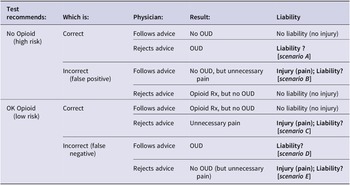
Table 1 enumerates some of the possible tort claims to which a physician may be exposed with the introduction of a genetic test for OUD to clinical practice, as well as possible outcomes. The following sections will address each of these in turn.
Potential Legal Outcomes Related to Genetic Risk-Based Prescription DecisionsFootnote 104

1. Failure to Provide the Test
Beyond the possible outcomes of administering and relying — or not relying — on the AvertD test outlined in Table 1, physicians may face liability for failure to provide the test when making opioid prescription decisions.
Even before the AvertD test was approved, physicians could be found liable for failure to administer a genetic test that could yield actionable results.Footnote 105 For example, in one case, a breast cancer patient brought a medical malpractice lawsuit against her physician for failing to recommend a genetic test — an Oncotype Dx assay.Footnote 106 She had been diagnosed with non-invasive cancer, which was treated but later returned and metastasized.Footnote 107 The patient alleged that had the genetic test been administered, the test results would have indicated the need for chemotherapy, which may have prevented the tumor recurrence.Footnote 108 The case was settled for 1.5 million dollars.Footnote 109
Likewise, a patient who is prescribed opioids and subsequently develops an OUD could allege that, had the physician administered a genetic test (that would have yielded a positive result), they would not have been prescribed the drugs and developed a dependence. As the test becomes more accepted and incorporated into clinical practice, it will become increasingly possible that physicians who do not use the test will be susceptible to claims that they violated the standard of care.
2. Informed Consent
As a medical intervention, the law requires that patients must consent to administration of a genetic test.Footnote 110 Such consent includes disclosures of a “general description of the test, including the purpose of the test and the condition for which the testing is being performed,” how the test will be administered, what test results could mean, the possibility of uninformative or false positive or negative test results, and physical or emotional risks of the test.Footnote 111
Interestingly, despite the general liability rule that a physician must obtain informed consent before administering a test for a genetic mutation, the AvertD package insert explicitly calls for consent for the test to be administered.Footnote 112 This appears to be an outlier, as most package inserts do not include such language.Footnote 113
However, one might question whether true informed consent is even possible with the administration of the AvertD test. Is it possible for a patient to consent to administration of the test if she worries that her refusal will result in the physician believing the patient to be a “drug seeker”? Physicians may easily deny the patient opioid pain relief because of negative assumptions resulting from the patient’s refusal. Elizabeth Joniak-Grant, a non-voting member of the AvertD advisory committee that voted against its approval, similarly worried that pain patients might be treated unfairly if they decline to use AvertD.Footnote 114 And others have opined, “this is unlikely to be a genuinely free choice: patients may fear being stigmatized as potentially addicted if they don’t agree to be tested.”Footnote 115
Similar concerns have been raised with regard to proposed brain scans that are intended to predict and measure chronic pain. Critics have cautioned,
Whether refusal to undergo a scan should result in adverse inferences and legal consequences depends, in part, on the reliability of any brain imaging tests that are introduced. Unless the technology is highly accurate, adverse inferences should not be made about claimants who refuse to undergo the scan, and no legal requirement should be put in place. Any legal requirement to have a brain scan must also balance issues of autonomy, efficiency, and resource allocation.Footnote 116
3. Physician Liability for Prescribing Opioids Despite a Positive Genetic Test Result [Scenario A]
Medical malpractice can attach when physicians fail to act on clinically significant information, particularly when there is “medical consensus regarding how to respond.”Footnote 117 So, if the genetic test becomes so widely adopted that using it becomes the standard of care, a physician could be liable for failure to withhold opioid medications after a positive test result. The patient (or the patient’s estate) may claim that the physician knew or should have known, based on the genetic test result, that prescribing the controlled substances would lead to addiction.
Already, in the absence of an FDA-approved genetic test that purports to predict OUD risk, physicians face civil and criminal liability for the harm that can occur when a patient is prescribed opioids.Footnote 118 For example, in February 2002, a Florida jury convicted Dr. James Graves of manslaughter in the deaths of four patients for whom he prescribed oxycontin for chronic pain relief, sentencing him to 62.9 years in prison.Footnote 119
The introduction of the AvertD test may increase the possibility that a physician faces liability for opioid prescription decisions if the patient develops OUD. A test result indicating that a patient has a genetic predisposition to OUD could be relied on as evidence that the physician acted negligently in prescribing that particular patient an opioid for her pain control. Even though physicians are instructed to use discretion in making prescription decisions and to rely on the AvertD test results in context with environmental and other risk factors, it is foreseeable that a physician who prescribes an opioid to a patient despite a positive test result will face liability.
4. Physician Liability for Not Prescribing Opioids in Reliance of a False Positive Genetic Test Result [Scenario B]; Physician Liability for Not Prescribing Opioids Despite a Negative Test Result [Scenario C]; and Physician Liability for Treating Despite a False Negative Genetic Test Result [Scenario E]
If a patient receives a positive AvertD test result, a physician may rely on that result to abstain from prescribing that patient opioids, for fear of the patient developing OUD. However, in the event that the test resulted in a false positive, a patient may be denied pain medication and suffer from unnecessary or undertreated pain. Similarly, if a patient receives a negative test result, but the physician still decides to refuse to prescribe opioids, the patient may suffer from undertreated pain. Or (to consider an even more complex scenario), a physician may administer a genetic test that falsely indicates that the patient is not at a high risk of developing OUD, the physician rejects the false results (by exercising her professional judgment) and does not prescribe opioids anyhow. In all three scenarios, the patient does not receive opioids (and therefore, presumably, does not develop an OUD), but may suffer unnecessary pain as a result. Thus, Scenarios B, C, and E will be considered together.
Tort law’s customary practice sets the medical standard of care, without focusing on “the effectiveness of that practice.”Footnote 120 As discussed above, medical custom has been to undertreat pain.Footnote 121 And, “[b]ecause undertreatment of pain often constitutes the prevailing practice amongst physicians, adhering to that practice does not violate any professional duty imposed by law on the physician.”Footnote 122 In fact, physicians are much more likely to be sued or held liable for over-prescribing opioids than under-prescribing them.Footnote 123
Historically, it has been widely acknowledged that “there is no medical malpractice cause of action for failure to adequately treat pain.”Footnote 124 As a general rule, treatment decisions that result in un- or undertreated pain are not legally actionable harms.Footnote 125 In other words, “a physician’s failure to adequately treat pain does not expose that physician to liability for medical malpractice.”Footnote 126 And, in practice, patients have been unsuccessful in claiming that physicians ineffectively managed their pain.Footnote 127
Over the years, however, some scholars have advocated “that chronic pain patients should utilize tort law to vindicate their rights” by recognizing “a tort claim in medical malpractice against physicians who under-prescribe [sic] opioid medications for those suffering chronic pain.”Footnote 128 They argue that “for a population whose pain remains undertreated, legal remedies that ensure access to appropriate analgesia is indicated.”Footnote 129
Although these proposals had already begun to lose traction as the opioid epidemic took hold,Footnote 130 recently, courts have demonstrated a bit more openness to claims against physicians for under prescribing pain medication.Footnote 131 They have begun to entertain the possibility of malpractice liability for inadequate pain control.Footnote 132 That said, most cases that have allowed a patient to recover have involved patients suffering from chronic pain who are often at the end of life. For example, in 1991, a jury returned a fifteen million dollar verdict against a nursing home and its nursing staff for failure to provide appropriate pain management to a terminally ill patient with metastatic prostate cancer.Footnote 133 They withheld medication due to concerns that the patient was “addicted to morphine.”Footnote 134 The court noted that its decision was based on the allegation that the defendants “caused increased pain and suffering.”Footnote 135
Likewise, in 2000, a jury found a physician liable for under-treatment of pain.Footnote 136 In Bergman v. Chin, the jury awarded the patient’s family 1.5 million dollars for their father’s pain and suffering, which was reduced to 250,000 dollars due to the state’s cap on noneconomic damages under the Elder Abuse Act.Footnote 137 Again, the case involved chronic — rather than acute — pain management. In 1998, eighty-five-year-old William Bergman was hospitalized after presenting to the emergency room with severe pain.Footnote 138 The attending physician, Dr. Chin, testified that he typically gauged patients’ pain by asking them how they are feeling and observing their demeanor.Footnote 139 However, despite reporting that his pain was a “10 on a 10-point scale[,] the worst pain imaginable,” Dr. Chin planned to discharge Bergman from the hospital without a medication strong enough to control the pain.Footnote 140 Only after the patient’s daughter objected “did Dr. Chin order another administration of Demerol and prescribe a fentanyl patch.”Footnote 141 However, after Bergman was discharged, Dr. Chin refused to prescribe morphine for Mr. Bergman’s pain.Footnote 142 Bergman died of advanced lung cancer three days later.Footnote 143
Supported by the national Compassion in Dying Federation, Bergman’s daughter filed suit against Dr. Chin for failure to adequately manage her father’s pain.Footnote 144 Because, in California, medical malpractice damages for pain and suffering are not available following a patient’s death, she instead relied on the state’s Elder Abuse Law.Footnote 145 The jury found Dr. Chin liable for gross negligence.Footnote 146
The verdict in Bergman may be an outlier, as California’s elder abuse statute is somewhat anomalous.Footnote 147 However, despite the fact that most states do not have similar laws, the decision may still have affected medical practice across the country. In response to this case, Professor Robyn Shapiro opined, “So I find it exciting … . It sends a message to physicians and other health care providers that pain management has to be an integral part in what they need to think about to provide adequate care.”Footnote 148 Scholars argue that in such cases, physicians
are between a rock and a hard place, damned if they do and damned if they don’t. The suggestion here is that when physicians are aggressive in their use of opioid analgesics, they are disciplined by medical boards or at risk of prosecution under the criminal law. When they are cautious and conservative (presumably like Dr. Chin) in prescribing such narcotics, they are vulnerable to lawsuits by patients or families and the wrath of juries.Footnote 149
However, all these cases address the failure to provide pain control for chronic (and often end-of-life) pain. In contrast, courts have not yet opined on undertreatment of acute pain. As policy statements and clinical practice guidelines that delineate standards for appropriate pain management continue to be developed, it may be more likely that courts will find that the failure to address a patient’s pain constitutes medical negligence. When a patient’s un- or undertreated pain is the direct result of a physician’s surgical intervention, the patient has a stronger argument that the physician’s duty has not been met.Footnote 150 In other words, if the physician had not performed the surgical intervention, the patient would not have experienced the pain, thereby requiring amelioration.
Proposals to impose liability on health care providers for failure to administer proper pain management may face a steeper challenge if the decisions to refuse to prescribe opioids is premised on genetic test results. This is particularly true where, due to genetic test results that indicate that the patient is not at risk of developing OUD (Scenario C), the physician has less justification for withholding opioids for acute pain control. The introduction of the AvertD test bares striking similarities to the reliance on NarxCare, a “clinical decision support [CDS] and analytics solution” that “helps clinicians and care team members evaluate controlled substance data from government managed and regulated prescription drug monitoring programs to make more informed prescribing decisions”Footnote 151 to guide opioid prescription decisions, in which patients can be denied certain pain care — apparently without recourse — even when such care is medically indicated.Footnote 152 As Maia Szalavitz reported, NarxCare returned potentially incorrect risk assessments, and medical staff members operated in fear about disregarding NarxCare scores.Footnote 153 Physicians may similarly be concerned about liability for failure to rely on AvertD test results, even when they would pursue a different treatment approach in its absence.
Even if a court were to recognize a claim for undertreatment of pain due to reliance on a genetic test for OUD, proving pain as damages may prove daunting. In such a case, the patient’s pain is not caused directly by the physician’s intervention, but rather by her passivity. In contrast,
In the normal tort case, pain is the result of a bodily injury caused by the defendant. The court is willing to instruct juries on pain and suffering when the plaintiff has suffered tangible injury due to the defendant. In the medical setting, pain from a missed diagnosis and lost opportunity to treat can be part of damages. The pain management failures are more complicated: The physician or provider is responsible not for the patient’s condition, but for the mismanagement of pain, which is a by-product and symptom of an underlying disease. Pain, therefore, becomes the only component of damages, by analogy to the mental distress torts. The loss of enjoyment of life, as a corollary of the pain, may be allowed as a separate component of damages. The plaintiff’s reactions to the pain and his or her sense of loss as a result may also be compensable.Footnote 154
5. Physician Liability for Not Treating in Reliance of a False Negative Genetic Test Result [Scenario D]
When an AvertD test returns a false negative genetic test result, and the physician prescribes the patient opioids in reliance of those results, they may face liability if the patient nevertheless develops an OUD. In other words, relying on an FDA-approved genetic test may not be enough to obviate physician liability. In the event a physician prescribes a patient opioids, relying solely on genetic test results that indicate a normal likelihood that the patient will develop an OUD, without considering the non-genetic factors that contribute to OUD risk, the physician may be liable — particularly if the test returned a false negative result.
By way of analogy, physicians have been unable to avoid liability by arguing that they relied on electronic health records (EHRs) or clinical algorithms to make their treatment and prescribing decisions. For example, “[t]he case law on EHRs … establishes that ‘physicians can be held liable for harm that could have been averted had they more carefully studied their patients’ medical records.’ Use of the models could cause clinicians to reduce the time they spend with those medical records and thus increase their liability.”Footnote 155 Liability can still be found due to courts’ concern that physicians will over-rely on the results of tests or records, instead of considering the whole patient.Footnote 156 In the case of the AvertD test, solely relying on the test results to make treatment decisions is particularly problematic because genetics is only one contributing factor, and, as discussed in Section II, test results are intended to be considered within the context of all the other factors that may contribute to a patient’s likelihood of developing OUD.
The AvertD test’s high return of false negative and false positive test results also opens physicians up to increased liability when they rely on the tests to make treatment decisions. Similarly, “[i]n the case of computer decision support software more generally, some legal scholars suggest that courts are likely to fault a physician for failing to question bad advice given by the software — even if the error was in the software — because courts would assume that physicians would ultimately rely on their own judgment and professional knowledge.”Footnote 157
In such cases, it may be useful to look to another area of torts where genetic knowledge is transforming how the law approaches liability: toxic tort liability. In the context of toxic tort liability, genetic testing is used to demonstrate that a manufacturer was not responsible for the outcome because the individual had a preexisting genetic susceptibility.Footnote 158 Like toxic tort cases, where the question of liability focuses on whether a particular toxic substance — or an individual’s individual genetic makeup — produced the disease in a particular individual,Footnote 159 here, the question is whether an individual’s genetic makeup led to the patient’s OUD.
Like in toxic tort cases, however, proving causation may be challenging.Footnote 160 First, the patient would have to show that the original test, administered by the prescribing physician, returned a false negative result — presumably by taking another genetic test that yielded a different result.Footnote 161 In other words, the plaintiff would have to demonstrate that she, in fact, had the relevant genetic susceptibility to OUD. Further, the patient would need to demonstrate that her (misdiagnosed) genetic predisposition caused her OUD, rather than any other number of other epigenetic and environmental causes.Footnote 162 In other words, she would then have to prove that, had the physician taken other factors into consideration, such as environmental and lifestyle factors, the physicians would have abstained from prescribing opioids to the patient, thereby avoiding the patient’s OUD. She would have to show that, but for the test, she would have received different treatment.
In toxic tort cases, “[t]o satisfy this causation requirement, some (but not all) courts require that plaintiffs demonstrate that the defendant’s action doubled their background risk (i.e., relative risk > 2.0) such that the exposure was ‘more likely than not’ the cause of the illness in the individual.”Footnote 163 The AvertD marketing materials state that “Patients with Elevated Genetic Risk were shown to be eighteen times more likely to develop OUD than patients with a Non-Elevated Genetic Risk.”Footnote 164
As discussed above, it is likely that, eventually, reliance on PGS for OUD (and other behavioral traits or psychiatric illnessesFootnote 165) will become the standard of care.Footnote 166 If this becomes the case, the physician’s reliance on the test, even with the false negative result, may protect the physician from liability. This result is particularly problematic in cases where the tests are not highly accurate or are only partially informative of one’s true risk, and it undermines arguments that physicians should be expected to exercise their best judgment in the context of all other contributing factors. More specifically, if a patient presents with other factors that indicate a probability of developing OUD, but the physician ignores those by relying solely on the AvertD test, then presumably there should be liability.
SolvD Health makes efforts to insulate itself from responsibility if a patient with an AvertD test result that indicates a “non-elevated genetic risk” for OUD develops or has an OUD, seemingly intending to shift the blame to physicians who rely on the test with problematic outcomes.Footnote 167 On its website describing the test to health care providers, it disclaims,
Because genetic variations only account for a portion of a person’s risk of developing OUD, it is possible that an individual with a “Non-Elevated Genetic Risk” result will develop OUD or may already have OUD. AvertD test results should not be used as the sole basis for treatment or patient management decisions, including prescribing oral opioids.Footnote 168
6. Liability for Off-Label Uses
While AvertD was specifically approved for use in making decisions about opioid prescription for acute pain, there is no limiting how these tests could, in fact, be used. Not only is it likely that physicians will (over)rely on the AvertD test for its stated purpose of making opioid treatment decisions for opioid-naïve patients with acute pain, it is also likely that they will rely on the test for other off-label purposes. Because the FDA does not regulate the practice of medicine, physicians are free to use approved medical devices for other reasons beyond that for which they were approved.Footnote 169 Thus, while the FDA approved the test for a specific, narrow use with the stated goal of protecting patients and avoiding some of the concerns raised by the advisory committee when it recommended against the test’s approvalFootnote 170 physicians are privileged to administer the test for off-label use, or use not specified in the device’s FDA-approved labeling. In fact, off-label use is an “important part of mainstream, legitimate medical practice.”Footnote 171
Once approved, physicians have the authority to rely on these tests for other decisions as well, including the treatment of chronic pain or for patients with a history of opioid use.Footnote 172 Even when physicians administer the test for its intended use,
Patient advocates wonder if time-strapped doctors, despite FDA-mandated labeling, will lean too heavily on results instead of asking probing questions of patients. Will doctors prescribe the test off-label? Could a test indicating a risk for addiction be memorialized in medical records and used against a patient years later — in a custody dispute in court, or by an employer? Will someone with an elevated test come to believe they are prone to addictions of all sorts?Footnote 173
The implications of relying on the AvertD test, or any genetic test for that matter, in the treatment of chronic pain are vast. For non-opioid-naïve patients, a positive AvertD test result could lead to concerning health decisions. Already, responses to the opioid epidemic have led to an increase in reports of long-term pain patients being abruptly tapered off their medication or abandoned of care altogether.Footnote 174 And, “[a]s a result, patients report damage to their mental and physical health. Some are no longer able to work or function and have suffered financial devastation as a result. Others have resorted to the illegal market and even suicide when their medication or care is denied.”Footnote 175 In response to a positive test result, physicians may modify patients’ prescribed dosages or even stop providing care, like we have seen in response to NarxCare data.Footnote 176 Patients who are denied continued pain control are vulnerable to seeking care illegally or turning to street drugs.Footnote 177 Relying on a genetic test in making pain treatment decisions runs the risk of exacerbating these outcomes.Footnote 178
Thus, reliance on these tests to deny individuals care upon which they have already become reliant may further exacerbate the very problem utilizing the test is intended to avoid. And just like with acute pain patients, physicians who continue to prescribe opioids to chronic pain patients who received a positive test result could open themselves up to increased liability.
IV. AvertD’ing Physician Liability
Although the introduction of AvertD may expose physicians to liability, relying on tort law will not mitigate the individual harms raised by the introduction of a PGS test for OUD. In cases where patients are denied access to opioid treatment due to AvertD test results that indicate a higher risk of developing OUD, patients are unlikely to succeed in cases alleging insufficient treatment, leading to uncontrolled pain.Footnote 179 In cases where patients are (inappropriately) prescribed opioids in reliance of the test, it will be difficult to prove causation.Footnote 180 Similarly, patients will have difficulty accessing claims alleging failure of informed consent.Footnote 181
The delineation of clear rules often goes a long way in guiding consistent, ethical behavior. But in the case discussed here, it is difficult to imagine what a clear tort rule would look like. For example, it might be suggested that states implement liability protections for those who incorporate PGS tests for OUD into clinical practice by using them to guide opioid prescription decisions. Liability shields are invoked when policy makers seek to encourage certain behaviors or actions.Footnote 182 However, due to the unreliability of the AvertD test and the myriad ethical concerns that may arise,Footnote 183 in the case of AvertD, it would be inappropriate to incentivize the use of the test through liability protections.
Further, modifying tort rules would likely remain insufficient to changing physician behavior.Footnote 184 Other fears, such as threats of disciplinary and criminal actions, would continue to deter physicians from providing adequate pain relief.Footnote 185 As James Blaufuss explains, “[t]here is no evidence that the deterrence effect of tort liability can overcome or even mitigate the deterrence effect of imprisonment or loss of medical license that has deterred so many physicians into playing it safe — and, in effect, undertreating pain.”Footnote 186
To address the lack of clarity and consistency, prescribers may be well served if professional societies establish empirically validated clinical practice guidelines (CPGs) to guide the standard care in incorporating genetic tests like AvertD into medical decision-making. CPGs have been described as a “type of written industry standard,”Footnote 187 and are usually treated as “admissible, probative evidence of the defendant’s duty.”Footnote 188 CPGs issued by medical societies demonstrate professional consensus and therefore often establish custom,Footnote 189 or what a reasonable physician would do in such instances.Footnote 190 When done right, guidelines can help standardize care, protect physicians from liability, and ensure patient safety.Footnote 191 They can be relied upon by physicians who are accused of malpractice for their decisions to administer, or rely on, the PGS test, to determine the standard of care.Footnote 192 However, in crafting such position statements, caution should be exercised to avoid over-reliance on, over-use of, or misuse of these tests.Footnote 193 CPGs should emphasize patient-centered care, ensuring that physicians do not over-rely on genetic tests at the expense of considering environmental, socioeconomic, and behavioral factors that influence addiction risk.
Overall, tort law is ill-equipped to protect patients and ensure appropriate integration of these tests into clinical practice. Existing liability rules are unlikely to have either a compensatory or deterrent effect, as there exists little threat of liability for over-relying on the test, even when doing so results in harm to the patient or the community.Footnote 194 The tort system offers patients little recourse for decisions that physicians make that could leave their pain un- or undertreated, or, on the other hand, that result in them developing avoidable OUDs.

 Open access

