


1. Introduction
This explorative literature review initiates deeper research into the topic of user-inspired design of applications from mycelium “leather-likes”. It aims to map the properties of pure mycelium material (PMM), the factors that influence these properties and consequently also the material performance, while also identifying their current practical application fields. As designers progressively adopt living organisms, as they strive to use more ecological aspects in their designs (Reference Chayaamor-Heil, Houette, Demirci and BadarnahChayaamor-Heil et al., 2024), mycelium emerges as promising biomaterial(s). From a biological lens, it can be described on macroscopic level as a network of hyphal biomass produced by filamentous fungi and on microscopic level as interconnected tubular cells. From an industry lens, they exhibit a wide range of properties; however, all are consistently sustainable, biocompatible, and biodegradable (Reference Verma, Jujjavarapu and MahapatraVerma et al., 2023).
There is an upcoming focus on using mycelium as a biomaterial, in order to develop a sustainable and safe solution for key global challenges (Reference Verma, Jujjavarapu and MahapatraVerma et al., 2023). Accordingly pure mycelium can be promising leather substitutes, since it exists out of branched, interconnected hyphae and exhibits properties similar to those of petroleum-based polymers (Reference An, Wang, Huang, Wang, Liu, Xun, Church, Dai, Yi, Tang and ZhongAn et al., 2023). Regardless of the fact that they may solve environmental issues, PMM are still, due to difficult and sophisticated processing methods, exclusive and hold only a few applications (Reference Verma, Jujjavarapu and MahapatraVerma et al., 2023) and these mycelium materials still cannot outperform animal leather (Reference An, Wang, Huang, Wang, Liu, Xun, Church, Dai, Yi, Tang and ZhongAn et al., 2023). However, PMM have lots of advantages. According to Reference Le FerrandLe Ferrand (2024), the most important barriers to entry for mycelium-based materials include knowledge gaps, technological need, limited performance and high competitors on the market. Hence it is a challenge to anticipate on how these mycelium materials would integrate within today’s design society. These fungal-based materials come with concerns on usability, practical implications and durability, which makes that they’re viewed with scepticism by industry, designers and consumers. However, consumers’ acceptance and sustainable consumption of PMM are an important step towards their success in the bioeconomy (Reference Delvendahl, Dienel, Meyer, Langen, Zimmermann and SchlechtDelvendahl et al., 2023). Biomaterials, including PMM, face four new challenges as observed by Erwin: radical transparency, performance parity, supply chain volatility and aesthetic paradox (Reference ErwinErwin, 2025).
It is not just a matter of perfecting an industrial process, it is a matter of industrializing biology for PMM to be applicable in design. This study therefore emerged from a certain interdisciplinary complexity, translating insights from the microbiological scientific domain into a design perspective. It presents a first version of a framework that offers designers a clear understanding of the material’s versatility. Given that PMM’s implementation in design lags research on its applicability, this exploratory literature review addresses the following research questions:
-
• What are the characteristics of pure mycelium materials?
-
• How do these characteristics and properties influence their potential performance and usability in different design contexts?
-
• In which application fields are pure mycelium materials being explored?
-
• What factors (characteristics) contribute to or hinder the effective implementation of pure mycelium materials in applied design and industry contexts?
-
• Which gaps exist in current literature and how can these gaps guide future research and design experimentation with pure mycelium materials?
2. Methodology for exploratory literature review
This study is a qualitative literature review on the state-of-the-art of pure mycelium materials and their application fields, from a design perspective. The purpose of this literature review is to explore and critically analyse reviews on pure mycelium material (PMM) in context to material characteristics and performance. The literature review also pursues to synthesize the existing knowledge and translating it into design implications, to inform future design researchers and practitioners on pure mycelium material.
Initial search: data sources, search terms and search strategies: In the first phase of this review an initial keyword search was carried out. The papers were retrieved from the following databases, Google Scholar, Web of Science (WoS), ScienceDirect and ResearchGate, and included search terms pertaining to pure mycelium material, with their abbreviations also covered in this search. TITLE-ABS-KEY (“Pure mycelium materials: characteristics and applications” OR “State-of-the-art mycelium materials” OR “Leather substitutes mycelium materials” OR “Mycelium textiles” OR “Engineered living materials: mycelium”) Additionally, snowball and citation searches were conducted on the most relevant papers within the domain, which were selected based on their abstracts.
Descriptive data: topic modelling: The search involved the use of topic modelling on a reasonable number of papers, since there was not an excessive number of papers published within the theme of this explorative literature review. Based on the initial title and abstract screening of the articles, four main topic-groups could be identified. Topic groups depending on their main focus are: ‘Material characteristics and properties, ‘Functional qualities and performance’, ‘Design and application domains’ and ‘Implementation and innovation’.
Selection criteria: inclusion and exclusion: Inclusion criteria were decided around the keywords used to facilitate the initial search. Nevertheless, many of the titles of the retrieved papers referred to the characterization and application of mycelium composite materials, which do not contribute to the scope of this study and were therefore considered as exclusion criteria. Consequently, it was decided to exclude reviewed papers focused purely on mycelium-based composite (MBC), only focused on production techniques and solid-state fermentation and only focused on feedstocks and fungi species. All papers that could not be found in English or Dutch were excluded from the review, as well as all papers that could not be fully accessed. In addition, the reviewed papers were limited by publication time between January 2021 and October 2025.
Screened data: subtopic division: Finally, all articles were screened based on their full texts, with a focus on the results and discussion sections, resulting in a literature review incorporating n=41papers. The topic groups identified above were further subdivided into three subtopics following an additional screening of the papers. These topics and subtopics served as a framework for the thematic structure of the study, as described in the results section. In addition, expert recommendation sources were consulted alongside the literature review.
3. Results
This section starts from the PMMs and zooms out towards functional qualities, to design applications, and to innovative implementation to cover the full perspective. As PMMs exhibit a unique constellation of structural, chemical, and mechanical properties, making them promising candidates for a range of sustainable design applications, if all existing gaps are taken into consideration, below, each level is discussed on all these aspects to provide further insight.
3.1. Results on material characteristics and properties of PMM
3.1.1. Results in terms of structural, chemical en mechanical characteristics
At the core of the mycelium’s properties is the mycelial cell wall, which gives the mycelium mechanical strength, while the compressive, tensile strength and visco-elasticity are enhanced by its binding properties (Reference Verma, Jujjavarapu and MahapatraVerma et al., 2023). Mechanical and thermal properties get determined by the binding and crosslinking mechanisms of the mycelium itself (Reference Raman, Kim, Kim, Oh and ShinRaman et al., 2022). Crosslinking significantly increases the tensile strength and stiffness of the material (Reference Elsacker, Vandelook and PeetersElsacker, Vandelook, et al., 2023; Reference Song, Liu, Xiao, Yuan and HanSong et al., 2025). Therefor a plasticizing agent (any kind of polyols or common polymer plasticizers) is used to keep it flexible (Reference Elsacker, Vandelook and PeetersElsacker, Vandelook, et al., 2023). PMM treated with glycerol is more flexible but loses part of its strength (Reference Wijayarathna, Svensson, Sar and ZamaniWijayarathna et al., 2025).
Measurement of the mechanical characteristics is important because Mycelium based leather (MBL) reacts different to stress and strain according to conventional leather. This is due to the fact that PMM is structurally inhomogeneous, resulting in an inherent variability to its mechanical response (Reference Raman, Kim, Kim, Oh and ShinRaman et al., 2022). In literature, the use of intermediate layers is often described as a means to make the material’s characteristics more adaptable, thereby accelerating and facilitating the design process. Elsackers study describes that an intermediate layer (e.g., cotton as applicable feedstock), which bio-welds with the mycelium sheet, forming a composite material, improves its properties (Reference Elsacker, Vandelook and PeetersElsacker, Vandelook, et al., 2023; Reference Saini, Kaur and BrarSaini et al., 2024).
3.1.2. Results in terms of species, production and processing influences
Applied research into the potential of mycelium-based materials goes hand in hand with fundamental studies on fungal species diversity, growth, and associated properties (Reference Sharma, Fleischmann, McInnis, Rodriguez-Uribe, Misra, Lim and KaurSharma et al., 2025). The production process and the final materials properties and biological characteristic in PMM design, can be significantly influenced by the choice of the fungal species (Reference Cartabia, Girometta, Milanese, Baiguera, Buratti, Branciforti, Vadivel, Girella, Babbini, Savino and DondiCartabia et al., 2021; Reference Elsacker, Vandelook and PeetersElsacker, Vandelook, et al., 2023). There are distinct growth and density differences in MBL across the Polyporales species (Reference Raman, Kim, Kim, Oh and ShinRaman et al., 2022). The Basidiomycetes: Ganoderma, Trametes, Fomes, Pleurotus and Schizophyllum are the most commonly used genera, however there is still an unexplored variety of species with different properties and PMM advantages (Reference Elsacker, Vandelook and PeetersElsacker, Vandelook, et al., 2023).
In the growth process, the mycelium’s properties can also be tailored by playing with the nutrient source and quantity within the liquid feedstock (Reference Le FerrandLe Ferrand, 2024; Reference Sharma, Fleischmann, McInnis, Rodriguez-Uribe, Misra, Lim and KaurSharma et al., 2025). Various morphological modifiers/parameters such as relative humidity and airflow speed can affect the properties of the fungal biopolymer. An increased airflow speed, increases the tensile strength (Reference Elsacker, Vandelook and PeetersElsacker, Vandelook, et al., 2023). Whereas growing PMM in larger culture trays cause property variations between the centre and edges (Reference Jeong, Im, Park, Seo, Joo and ShinJeong et al., 2025). The weak regions could be mitigated through bio-welding and the interweaving of multiple sheets. Re-incubated fungal sheets form a multilayer fungal material with enhanced mechanical properties (Reference Elsacker, Vandelook and PeetersElsacker, Vandelook, et al., 2023). Also a lamination process, applying a polymeric film (PLA) improves mechanical properties (Reference Pertile, Fontana, Isoton, Brandalise and CamassolaPertile et al., 2025) and creates a protective barrier at the same time. Moreover, binding this PLA film onto the surface of PMM, with heat and pressure, increases strength and durability (Reference Elsacker, Vandelook and PeetersElsacker, Vandelook, et al., 2023).
To align with consumer demands for durability and aesthetics, post-processing is essential. Chemical, enzymatic, and physical modifications critically influence the mechanical, thermal, and visual qualities of mycelium materials (Reference Benetti, Conti and DimitriadisBenetti et al., 2025). Controlling the density and microstructure of the mycelium could be a way to tailor the final properties of the material (Reference Le FerrandLe Ferrand, 2024). Here mechanical pressure is used to flatten the layer and increase bonding of the material, increasing its strength as well. Raman et al. express the need for complete drying and rolling to increase the elongation percentage and tensile strength (Reference Raman, Kim, Kim, Oh and ShinRaman et al., 2022). Furthermore, genetic engineering of fungal strains or the use of engineered bacterial strains during co-cultivation is an approach to improve material characteristics (Reference Vandelook, Elsacker, Van Wylick, De Laet and PeetersVandelook et al., 2021).
3.1.3. Gaps and challenges regarding characteristics and properties
To fully unlock the sustainable potential of this pure mycelium material, there is a need for standardized characterization of the relevant material properties of PMM: thickness, density, tensile strength, percentage elongation, tear strength, abrasion resistance and colourfastness (Reference Elsacker, Vandelook and PeetersElsacker, Vandelook, et al., 2023). An integrated, multi-focus characterization approach is essential to advance process optimization of mycelium-based materials for design (Reference Cartabia, Girometta, Milanese, Baiguera, Buratti, Branciforti, Vadivel, Girella, Babbini, Savino and DondiCartabia et al., 2021). Further improvements in mechanical performance and durability may be achieved through genetic modification and optimized cultivation techniques (Reference Sahu, Bhardwaj, Singh, Bhalla and AryaSahu et al., 2025). Moreover, the main challenge remains achieving uniformity in mycelium mat thickness, colour and mechanics. Addressing mechanical property concerns will be critical to the future viability of these materials as replacements for established ones (Reference Whabi, Yu and XuWhabi et al., 2024). The study of Manan outlines the complex interrelations between processing variables and their effects on material properties. This enables designing PMM with tuneable characteristics (Reference Manan, Ullah, Ul-Islam, Atta and YangManan et al., 2021). Standardization in assessment and reporting, combined with targeted process optimization, will thus drive the advancement and adoption of pure mycelium-based materials for sustainable design solutions.
3.2. Results on functional qualities and performance of PMM
3.2.1. Results in terms of structural, chemical en mechanical performance
Structurally, PMM display type II isotherm properties, typical of hydrophilic materials, similar to cotton or conventional leather, pure mycelium mats are strongly hygroscopic (Reference Mazian, M’barek, Almeida, Augusto and PerréMazian et al., 2023). However mycelium textiles show slower water absorption than cotton fabrics (Reference Karunarathne, Nabiyeva, Rasmussen, Alkhoury, Assem, Bauer, Chester, Khalizov and GorKarunarathne et al., 2024). To develop a PMM with better performance to repel water, synthetic methods such as coatings with hydrophobic protecting resins can be used, to keep its hydrophobicity on the long term. Thus, adding agents make MBL hydrophobic (Reference Raman, Kim, Kim, Oh and ShinRaman et al., 2022). However, they may drastically reduce the biodegradability and sustainability but it may boost the level of improvement and may reduce the material integration barrier (Reference Le FerrandLe Ferrand, 2024). Improving sustainability and biodegradability can also be achieved by hybridizing with naturally sourced nanomaterials, by tailoring the nutrients and growth conditions or by using symbiotic relationships, this seems to be a promising option. Likewise the use of natural oils and waxes (like beeswax) can be used to increase durability and performance (Reference Le FerrandLe Ferrand, 2024). On the other hand incorporating natural fibres results in a textile composite material that also provides improved sustainability, next to an enhanced strength (Reference Hao, Wang, Tian, Zhang and ShiHao et al., 2025). In contrast, reducing the fibre-to-volume ratio can enhance fibre–matrix adhesion (Reference Kniep, Graupner, Reimer and MüssigKniep et al., 2024). Incorporating responsive polymers and functional coatings through advanced fabrication techniques may yield self-healing, shape-memory, or thermally adaptive functionalities (Reference Wattanavichean, Phanthuwongpakdee, Koedrith, Laoratanakul, Thaithatgoon, Somrithipol, Kwantong, Nuankaew, Pinruan, Chuaseeharonnachai and BoonyuenWattanavichean et al., 2025). As a result, PMM’s performance is developing toward an adaptive, multifunctional material responsive to temperature, humidity, and mechanical stress.
Texture and colour of mycelium-based leathers (MBLs) can be modified by plasticizing, crosslinking and surface-coating methods (Reference Raman, Kim, Kim, Oh and ShinRaman et al., 2022). Furthermore, the use of bacterial cellulose and cellulose nanocrystals result in an increased scratch resistance, and bleu staining resistance (Reference Le FerrandLe Ferrand, 2024). Compared to petrochemical-derived substitutes, PMM show reduced combustibility (Reference Vandelook, Elsacker, Van Wylick, De Laet and PeetersVandelook et al., 2021). The thermal stability of fungal leather, reaching up to 250 °C, is comparable to that of natural leather (Reference Karunarathne, Nabiyeva, Rasmussen, Alkhoury, Assem, Bauer, Chester, Khalizov and GorKarunarathne et al., 2024). Through this combination of performances, PMM can be more appealing and functionally robust according to other biological materials for various design applications.
3.2.2. Results in terms of species, production and processing influences
Significant performance improvements are achieved through pre- and post-modifications, including tannin treatment for fungal protein stabilization and the use of glycerol and binders (Reference Singh, Singh, Agrawal and KumarSingh et al., 2025; Reference Wijayarathna, Mohammadkhani, Soufiani, Adolfsson, Ferreira, Hakkarainen, Berglund, Heinmaa, Root and ZamaniWijayarathna et al., 2022). Industry companies, such as Mylea™, process textiles that are colonized by mycelium during the production or growth process to achieve stronger performance (Reference Vandelook, Elsacker, Van Wylick, De Laet and PeetersVandelook et al., 2021; Reference Verma, Jujjavarapu and MahapatraVerma et al., 2023). Coating techniques and agents, like dyes, resins, oils, paraffins and polymers, as used in the traditional leather and textile industry, also enhance the performance of PMM (Reference Elsacker, Vandelook and PeetersElsacker, Vandelook, et al., 2023). Moreover, biodegradable polymers are carried, into the fungal matrix, by water during the production process, to fortify the hyphae, improve abrasion resistance and colourfastness (Reference Elsacker, Vandelook and PeetersElsacker, Vandelook, et al., 2023). It is important to note that post-production moisture content governs the mechanical, dimensional, and textural stability of the materials performance (Reference Karunarathne, Nabiyeva, Rasmussen, Alkhoury, Assem, Bauer, Chester, Khalizov and GorKarunarathne et al., 2024). For example, air drying of the mycelium leather induces shrinkage, which in turn reduces pore size and porosity (Reference Karunarathne, Nabiyeva, Rasmussen, Alkhoury, Assem, Bauer, Chester, Khalizov and GorKarunarathne et al., 2024).
Furthermore bonding and lamination strategies employing mycowelding, a process in which mycelial hyphae fuse together, for example in stacked sheets, offer a method for producing stronger and thicker PMMs, leading to a greater performance (Reference Crawford, Stefanov, Miller, Leary and JohnsonUniversity of Colorado Denver et al., 2025). Fungal Engineered Living Materials (ELMs) are capable of self-repair, which introduces new opportunities for PMM functionalities. For instance, Elsacker’s work demonstrates effective self-healing of damage within two days, highlighting both structural and restorative potential (Reference Elsacker, Zhang and Dade-RobertsonElsacker, Zhang, et al., 2023).
But also thin mycelium mats can show improved resistance, when treated with citric acid and low absorbance when treated with salts, the latter presenting promise for performance in textile applications (Reference Romero-Cedillo, Robledo-Leal, Aguilar-Marcelino, Acosta-Urdapilleta and Téllez-TéllezRomero-Cedillo et al., 2025). Furthermore, the performance from the material can also be increased by using genetic editing, resulting in genetically modified filamentous fungi, so they grow stronger mycelium, more skin or other useful properties (Reference Le FerrandLe Ferrand, 2024). Finally it is worth mentioning that ionizing radiation post-treatment modifies tactile and mechanical performance of the PMM sheets (Reference Abdelkader and GomaaAbdelkader & Gomaa, 2025). These strategies can converge to an enhanced PMM performance.
3.2.3. Gaps and challenges regarding functional qualities and material performance
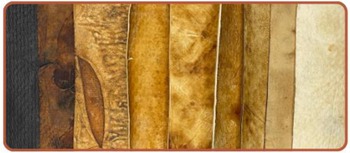
Published testing findings show differences in mechanical and physical qualities of different myco-leather products as shown below (Figure1). At this moment, different elements are almost always involved to fulfil the PMM’s functional role. Consequently, many mushroom leathers currently on the market do not fully comply with sustainability standards (Reference ChenChen, 2025).
An important factor in the variability of PMM quality and performance is that contamination and growth defects cause local variations in material morphology, resulting in visual pigmentation irregularities and reduced mechanical performance in certain areas (Reference Gandia, Van Den Brandhof, Appels and JonesGandia et al., 2021). Moreover, consumer preference for conventional leathers is influenced by multiple interrelated mechanical and physical performance properties, such as fullness, hand feel, drape, and break. Comparable mechanical characterizations are scarcely available for PMMs (Reference Karunarathne, Nabiyeva, Rasmussen, Alkhoury, Assem, Bauer, Chester, Khalizov and GorKarunarathne et al., 2024). This lack of performance further contributes to the challenge of adopting PMM alternatives in design.
Variety of PMM skins

3.3. Results on design and application domains of PMM
3.3.1. Results in terms of structural, chemical en mechanical design implications
It is a core benefit that PMM can be tuned to the users’ requirements with a customizable tensile strength, density and fibre orientation (Reference Elsacker, Vandelook and PeetersElsacker, Vandelook, et al., 2023). The inherent design flexibility of PMMs allows for a wide range of industrial applications (Reference Sharma, Fleischmann, McInnis, Rodriguez-Uribe, Misra, Lim and KaurSharma et al., 2025). This flexibility rather than rigidity is desired in PMM applications (Reference Vandelook, Elsacker, Van Wylick, De Laet and PeetersVandelook et al., 2021). In addition PLA-coated PMM exhibited properties comparable to leather, suggesting strong potential for various applications (Reference Pertile, Fontana, Isoton, Brandalise and CamassolaPertile et al., 2025). In the context of textile applications, permeability properties are closely associated with clothing comfort. The research findings of Reference Rathinamoorthy, Bharathi, Snehaa and SwethaRathinamoorthy et al. (2023) indicate that the moisture, air permeability, and absorbency properties of the developed mycelium sheet are comparable to those of conventional textile materials. Furthermore, they reported low handling properties and limited bursting strength. Repeated folding and unfolding tests revealed rapid formation of crease marks, and after multiple cycles, evident damage to the structural integrity of the PMM was observed.
Mycelium composite textile electrodes show low interface impedance, reliably capturing ECG, EMG, and EEG signals, making them promising for wearable devices and bio signal monitoring (Riu, n.d.). In addition the findings of Adamatzky provide a proof of concept of designing intelligent sensing patches of mycelial tissues integrated into reactive fungal wearables (Reference Adamatzky, Nikolaidou, Gandia, Chiolerio and DehshibiAdamatzky et al., 2021). By expanding into sectors like automotive and packaging, PMM could broaden its impact and redefine industrial practices (Reference Sahu, Bhardwaj, Singh, Bhalla and AryaSahu et al., 2025). Thanks to these unique application characteristics, PMM is suitable for more uses than designers initially assume.
3.3.2. Results in terms of species, production and processing influences
Living fungi can be a material for construction in new environments, and as such it allows to explore new areas, for example space exploration (Reference Le FerrandLe Ferrand, 2024). While this mainly applies to MBC, the key advantage is that the material grows itself, enabling small amounts to be transported to other environments, such as space, where it can be expanded exponentially. Moreover PMM has the advantage to have a material-efficient production process, where the waste of cutting is reduced (Reference ChenChen, 2025; Reference Elsacker, Vandelook and PeetersElsacker, Vandelook, et al., 2023). Additionally the aesthetic appeal for design application purposes can be improved through post-treatment processes including dyeing, stamping, and embossing (Reference ChenChen, 2025). These (post-)processing steps enable customization to make PMM suitable for diverse design applications.
In previous studies, no skin allergies or toxic effects of PMM were reported. However, future research should further evaluate potential skin allergic responses (Reference Rathinamoorthy, Bharathi, Snehaa and SwethaRathinamoorthy et al., 2023). In parallel Reference French, Du and FosterFrench et al. (2023) showed that mycelium-based textiles hold promise as essential filtration materials for mask applications, combining high filtration efficiency with satisfactory breathability, which is determined by the length of the production process. Elsacker’s research on biological ELMs highlights opportunities for innovative product applications of PMM, including furniture, automotive seating, and fashion (Reference Elsacker, Zhang and Dade-RobertsonElsacker, Zhang, et al., 2023). Also producing under certain optimized liquid fermentation circumstances, like a precise pH regulation and dynamic agitation, ensures homogeneous mycelial growth and structural integrity, making PMM more applicable (Reference Song, Liu, Xiao, Yuan and HanSong et al., 2025). This results in higher-quality, consistent, and reliable mycelium-based materials suitable for various advanced design contexts.
3.3.3. Gaps and challenges regarding design and application domains for PMM
Equestrian saddlery is one of the most demanding real-world tests for leather performance: high abrasion, outdoor exposure, load-bearing stress and an expectation of durability and usefulness over at least a decade. If bio-based leather can meet these standards, it can compete in any category (Reference Song, Liu, Xiao, Yuan and HanSong et al., 2025). Nevertheless PMM currently exhibits a shorter lifespan than high-quality conventional leathers (Reference ChenChen, 2025), which might hint to other applications.
Reported data indicates variations in mechanical and physical properties across different myco-leather manufacturers (Reference Vandelook, Elsacker, Van Wylick, De Laet and PeetersVandelook et al., 2021). As a result, PMMs require substantial enhancement of their properties to meet the standards of textile/leather applications (Reference Rathinamoorthy, Bharathi, Snehaa and SwethaRathinamoorthy et al., 2023). The inherent variability of liquid-state fermentation influences both the scalability of the production and material consistency of PMM, thereby hindering its broader adoption. To address these limitations, smart design strategies, process optimization, genetic modification, and integration with other biodegradable materials may help overcome these challenges (Reference Gandia, Van Den Brandhof, Appels and JonesGandia et al., 2021). However, this is not straightforward, as these challenges primarily occur at the molecular level, which falls within the expertise of material scientists. The application of design strategies, on the other hand, is the responsibility of designers, who must translate the material into meaningful products. At present, the most evident opportunities and thus also application challenges are situated within the automotive, fashion and hospitality industries.
3.4. Results on implementation and innovation of PMM
3.4.1. Systemic barriers
Implementation and innovation of PMM requires a perspective that goes beyond the boundaries of materials and products. Greater awareness of the material’s properties and corresponding performances among designers and industry stakeholders is essential to foster wider adoption of PMM applications. Additionally, the results of Dwan’s study suggest that perceptions of grown surfaces, whether positive or negative, are influenced by several interrelated contextual factors (Reference Dwan, Edvard Nielsen and WurmDwan et al., 2024). To proactively guide consumer acceptance of fungal-based materials, positive narratives must be paired with scientific evidence. Effective storytelling and involvement of citizens through scientific communication, active citizen participation and art to design scenarios can dissolve negative connotations of fungi (Reference Delvendahl, Dienel, Meyer, Langen, Zimmermann and SchlechtDelvendahl et al., 2023). This is a crucial approach, as mycelium materials are grown by fungi and have properties which may not be accepted by the customers, while they have a high variability. Furthermore, in Europe a binary mycophilia vs mycophobia behaviour is reported. This indicates that there remains room to change the perception of the general public (Reference Le FerrandLe Ferrand, 2024).
Matching visibility to operational readiness is required to ensure the successful implementation of such biomaterials, not aspiration (Reference ErwinErwin, 2025).The timeline, developed by Erwin, highlights the significant gap between public promises and production realities (Reference ErwinErwin, 2025). Currently, the production of PMMs remains expensive and limited to small-scale volumes (Reference ChenChen, 2025). Addressing these systemic barriers through design will be essential to move PMM from niche applications to well-established applications.
3.4.2. Research gaps
This leads us to the biggest gap in the implementation process of PMM, the limited adoption of PMM beyond niche markets (Reference Crawford, Stefanov, Miller, Leary and JohnsonUniversity of Colorado Denver et al., 2025). There is a gap between laboratory promise and market reality, none of the existing mycelium companies have yet proven that the fundamental scaling economics of biomaterials can be solved by a specific approach (Reference ErwinErwin, 2025). As mycelium materials are generated through the growth of living microorganisms, it constitutes an emerging domain of research that warrants further exploration (Reference Le FerrandLe Ferrand, 2024).
The replication of mycelial leather and/or textiles remains under explored within the scientific community (Reference KhanKhan, 2025). However, patent data, reveal that material-based fungal applications constitute a fast-growing sector, underscoring the need for applied transdisciplinary research (Reference Onorato, Madeu, Tsakalova, Deligkiozi and Zoikis KarathanasisOnorato et al., 2024).
4. Discussion
The gaps and challenges related to PMM applications, as discussed above, point to an interdisciplinary pitfall. Multiple constraints confine their application to small-scale prototyping/designing (Reference Rashdan and AshourRashdan & Ashour, 2023). This challenge, highlighted by Reference ErwinErwin (2025), requires the duality between the scientific foundations of PMM and the strategic perspective designers must apply to the material. Furthermore, both the scientific and design communities lack consistent nomenclature. The boundary between what constitutes PMM and what should be classified as a composite remains undefined, and terms such as mycelium sheet, PMM, mycelium textile, and mycelium mat are used interchangeably. Therefor it is essential that designers develop a taxonomy and nomenclature, translating the characteristics of PMMs into performance under specific contextual condition. From this point, exploratory experimentation should reveal new performance opportunities and the corresponding experiential application fields.
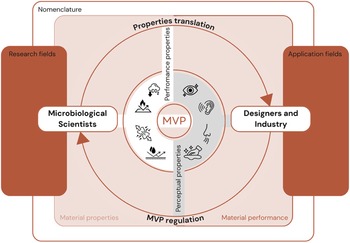
The framework (Figure 2) illustrates how biomaterial-driven design is positioned at the intersection of biology and design. This framework is centred on the material expression of PMM and the design of applications derived from it and it is driven by two main actor groups: scientists (microbiologists) and designers. The essence of this framework is understanding the material: designers must develop a new relationship with PMMs, moving beyond traditional design paradigms and embracing a hybrid designer-producer role. This dual expertise enables the translation of material insights into minimum viable products (MVP’s), which may then feed back into scientific research to optimize product concepts and move beyond small-scale prototyping. The core of this framework refers to all characteristics that affect the material, ranging from capacitive properties, including structural, mechanical, and chemical aspects, to sensory properties such as tactile and visual features.
Framework of the intersection between biology and design

The results described above demonstrate that PMM is highly modifiable, showing that the material can exhibit a wide range of properties. Consequently, PMM should not be confined to a single type of performance category. Instead, PMM should be regarded as a material family, analogous to the broad category of plastics, which comprises multiple polymer types with diverse characteristics and performance applied across diverse domains. Like the rapid establishment of plastics, within the next decade, fungi may shift from niche, yet art, to mainstream or more industrialized, reshaping how we manage materials and resources. Realizing this potential requires interdisciplinary effort, like a streamlined language and a feedback-driven design innovation to overcome current barriers and overcome the full spectrum of PMM.
5. Conclusion
Designers and industry play a crucial role in advancing PMM by ensuring multidimensional material characterization and a clear material identity tailored to the variety of performances of the material. Smart design strategies informed by a biomaterial-driven design approach may enable PMM to finally establish a competitive material position. These insights guide future sustainable innovation, highlighting the importance of standardized nomenclature, taxonomy development, and a synergistic approach to design and material science for mainstream adoption and expanded experiential qualities.
This underscores the necessity for continued research into the full spectrum of PMM perceptions, ultimately enabling the development of clear MVPs for the different material types within the PMM family. Future research on the intersection on design and the use of PMM, leveraging the inherent properties of mycelium materials, could add substantial value to particular sectors. Moreover, greater emphasis should be placed on enhancing adoption rates and exploring further application possibilities in future studies.
Acknowledgements
The authors would like to thank Simon Vandelook for providing insight through his wide variety of PMM samples, which were incorporated into ‘Figure 1: Variety of PMM skins’.

 Open access

