




Introduction
Global dependence on fossil fuels; depletion of energy-producing raw materials, such as oil, coal and natural gas; and growing energy demands have forced countries to actively search for alternative energy sources, such as renewable energy, which are environmentally friendly (Panwar et al., Reference Panwar, Kaushik and Kothari2011). One of the most important alternative energy sources is anaerobic biomass digestion. Many studies have highlighted that the production of biogas through anaerobic digestion (AD) offers additional advantages (socio-economic, technological and environmental opportunities) over other forms of renewable energy production (Rocha-Meneses et al., Reference Rocha-Meneses, Luna-delRisco, González, Moncada, Moreno, Sierra-Del Rio and Castillo-Meza2023).
AD effectively converts biowaste into two valuable economic by-products: (1) biogas, a sustainable energy source and (2) anaerobic digestate, sometimes known as ‘digestate’, which can be used to fertilize and amend soil (Nkoa, Reference Nkoa2014). AD produces clean energy from waste materials (e.g. food waste, animal manure and agricultural waste and residues) while reducing environmental risk from untreated waste (Bhatt and Tao, Reference Bhatt and Tao2020; Lee et al., Reference Lee, Steiman and St. Angelo2021). However, AD faces challenges in sustainably managing digestive residues. According to Czekała (Reference Czekała2022), excessive digestate production may occur as a result of intensive biogas plants, leading to additional environmental problems if this extra digestate is not well managed (Antoniou et al., Reference Antoniou, Monlau, Sambusiti, Ficara, Barakat and Zabaniotou2019).
AD preserves large quantities of nutrients from the feedstock, resulting in a nutrient-rich digestate that serves as a fertilizer for plants. Digestates are a complex mixture of organic compounds, minerals (macroelements and microelements) and microorganisms and can affect crop growth, yield and quality (Bolzonella et al., Reference Bolzonella, Fatone, Gottardo and Frison2018). Alburquerque et al. (Reference Alburquerque, de la Fuente, Ferrer-Costa, Carrasco, Cegarra, Abad and Bernal2012) indicated that agrochemical characteristics of digestates vary depending on substrate composition (feedstock) and digestation type. AD can be used as a fertilizer for various species. Doyeni et al. (Reference Doyeni, Baksinskaite, Suproniene and Tilvikiene2021) reported that the digestate increased the grain yield and quality of Triticum aestivum L. compared with a synthetic N fertilizer. Moreover, Koszel et al. (Reference Koszel, Parafiniuk, Szparaga, Bochniak, Kocira, Atanasov and Kovalyshyn2020) reported that digestate treatment in winter rapeseed increased the yield as well as protein, macronutrient and saturated and unsaturated fatty acid contents compared with the control. Panuccio et al. (Reference Panuccio, Papalia, Attinà, Giuffrè and Muscolo2019) emphasized that digestates increased phenol and flavonoid contents as well as antioxidant activity (AA) in cucumber compared with the unfertilized control. Finally, Barzee et al. (Reference Barzee, Edalati, El-Mashad, Wang, Scow and Zhang2019) reported that tomatoes fertilized using digestate had a higher soluble solid content compared with those fertilized using a synthetic fertilizer.
Digestate can be separated into solid and liquid fractions, which have different physical and chemical properties (Yu et al., Reference Yu, Li, Zhang, Li and Yu2021). Thus, the solid and liquid fractions of digestates vary from each other. This variation can be attributed to the origin of substrates, operating parameters used in the digester and the type of solid–liquid separation used (Akhiar et al., Reference Akhiar, Battimelli, Torrijos and Carrere2017). Defined attributes, such as dry or organic matter content, NH4 content, C/N ratio and nutrient content of solid or liquid fractions that form the digestates, may have different efficiencies in plants and soils.
Conversely, chemical fertilization is one of the most widely used regimes in intensified agriculture (Hernández et al., Reference Hernández, Chocano, Moreno and García2014). Although chemical fertilization is an effective regime for obtaining higher crop yields, its excessive and long-term use is expensive and causes several problems, such as degradation of soil fertility and soil microbial population, erosion, soil acidity and ground-water pollution (Shen et al., Reference Shen, Hu, Qian, Xue, Gao and Lin2021; Carricondo-Martínez et al., Reference Carricondo-Martínez, Berti and Salas-Sanjuán2022). The use of AD may result in additional benefits. Many studies have reported that the application of digestate has positive effects on soil physical, chemical and biological properties, which are key factors for soil functioning. Mayerová et al. (Reference Mayerová, Šimon, Stehlík, Madaras, Kou-bová and Smatanová2023) reported that the long-term application of digestate improves bulk density, soil aggregate stability and water infiltration, and Makádi et al. (Reference Makádi, Szegi, Tomócsik, Orosz, Michéli, Ferenczy, Posta and Biró2016) indicated that the consecutive application of liquid digestate decreases the soil pH, despite the alkaline property of the applied digestate, especially in soils with low buffering capacity. Moreover, the addition of digestate into soil increases microbial biomass and activity of several enzymes involved in C and N cycles, which depend on digestate carbon and nutrient contents (Barra Caracciolo et al., Reference Barra Caracciolo, Bustamante, Nogues, Di Lenola, Luprano and Grenni2015; Van Midden et al., Reference Van Midden, Harris, Shaw, Sizmur and Pawlet2023). Pan et al. (Reference Pan, Qi, Adriamanohiarisoamanana, Yamashiro, Iwasaki, Nishida, Tangtaweewipat and Umetsu2018) reported that the application of digestate may suppress soil-borne plant diseases caused by antagonistic bacteria.
Tomato (Lycopersicon esculentum Mill.) is one of the most important industrial crops and accounts for a global production of 189.1 million tonnes harvested from approximately 5.2 million ha (FAOSTAT, 2022). More than 80% of the tomatoes cultivated globally are processed into sauce, juice, ketchup, canned tomato, stew, soup, etc., which have high nutritional qualities (Petropoulos et al., Reference Petropoulos, Fernandes, Xyrafis, Polyzos, Antoniadis, Barros and Ferreira2020). Plants, particularly processing tomatoes, must have unique traits to improve production and fruit quality with respect to the processing sector while meeting the quality criteria of the market (Moura and Golynski, Reference Moura and Golynski2018).
Studies have investigated the use of digestate as a fertilizer for the tomato plant in greenhouses (under controlled environment) (Zheng et al., Reference Zheng, Li, Zhang, Zhang and Wang2019; Bergstrand et al., Reference Bergstrand, Löfkvist and Asp2020; Cristina et al., Reference Cristina, Camelin, Tommasi, Fino and Pugliese2020; Li et al., Reference Li, Yuan, Shimizu, Magaña, Gong and Na2023) and under field conditions (Yu et al., Reference Yu, Luo, Song, Zhang and Shan2010; Ferdous et al., Reference Ferdous, Ullah, Datta, Anwar and Ali2018; Morra et al., Reference Morra, Cozzolino, Salluzzo, Modestia, Bilotto, Baiano and del Piano2021; Li et al., Reference Li, Yuan, Shimizu, Magaña, Gong and Na2023). In addition, studies have referred to different forms of digestates, such as pelleted, concentrated biogas slurry, liquid or solid fractions and biochar. The only data available on the two digestate fractions (solid and liquid) of tomato, which was grown in a greenhouse and used plastic pots (Panuccio et al., Reference Panuccio, Mallamaci, Attinà and Muscolo2021), are different from those obtained under open field conditions. Although these experiments provide a basis for the use of digestate as a fertilizer for tomato, more research is needed to determine the use of digestate as a fertilizer under different treatment and environmental conditions. Furthermore, several studies have emphasized on tomato fruit quality and health-related traits, which can vary on the basis of genotype (Chea et al., Reference Chea, Erika, Naumann, Smit, Horneburg and Pawelzik2021) or genotype in interaction with the environment (Panthee et al., Reference Panthee, Labate, McGrath, Breksa and Robertson2013). Considering these findings, our study aimed to (1) compare the effects of the solid and liquid digestate fractions with those of chemical fertilizer (CF) on yield-quality traits and health-related compounds in processing tomato in a 2-year experiment conducted in an open field setting, (2) assess the fertilizer value of the two digestate fractions by accounting for the two genotypes of processing tomatoes and (3) evaluate new fertilization regimes in which AD can be used as the main source of fertilizer and sustainably produce similar yields and quality characteristics as CFs.
Materials and methods
Plant material and crop management
During 2019 and 2022, field experiments were conducted in the experimental fields of the Odemis Vocational School at Ege University, Izmir, Turkey (latitude 38°12′N, longitude 27°52′E and altitude 111 m a.s.l.). Field trials of the project were planned for two consecutive years. However, due to the COVID-19 pandemic in 2020 and 2021, the second year of field trials was performed in 2022. Two varieties of processing tomatoes were used as plant material: cv. ‘Arte F1’ (May Seed Company, Turkey) and cv. ‘Zeplin F1’ (Vilmorin Seed Company, France). These varieties are widely grown for the commercial production of tomato in Turkey. Tomato seedlings were obtained from a commercial nursery.
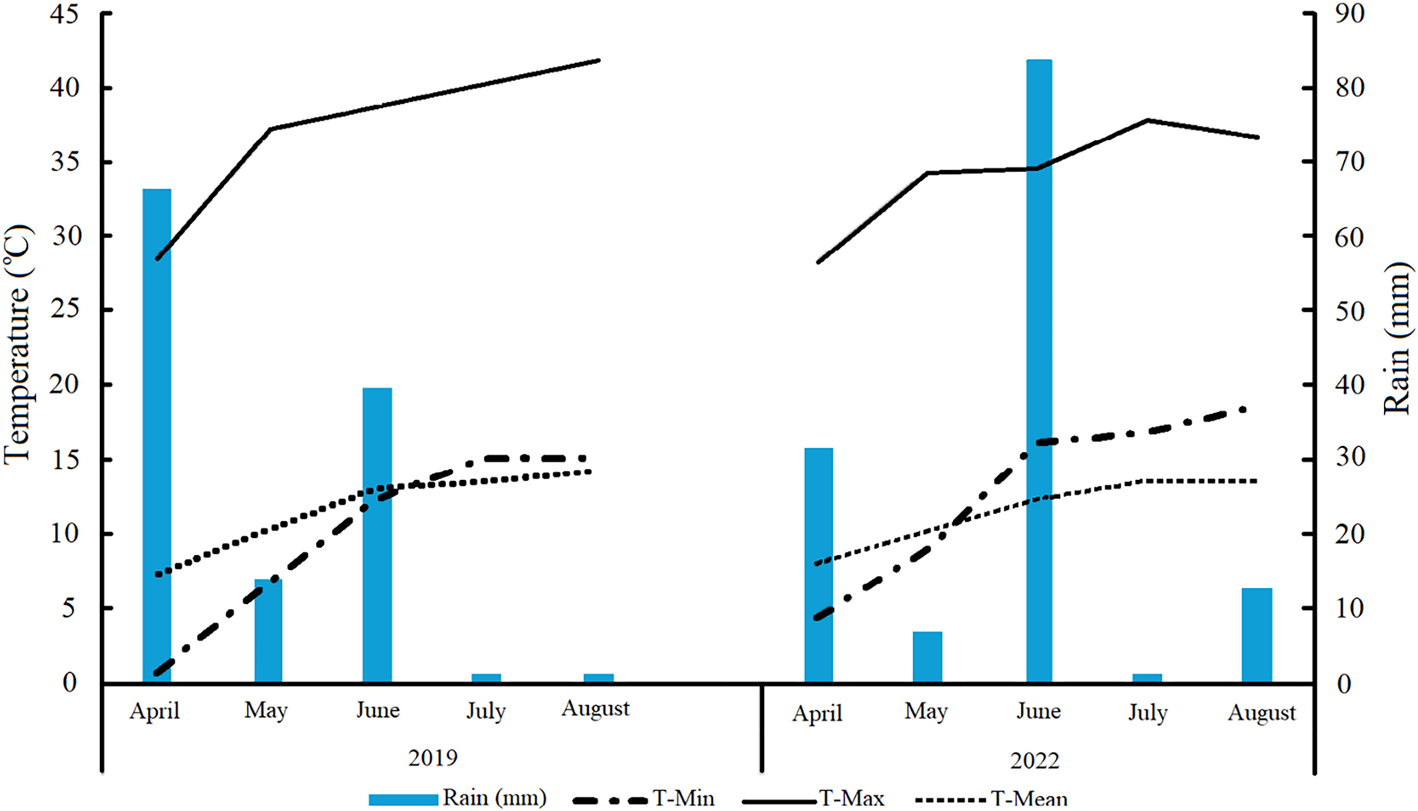
Soil samples were obtained from a depth of 0–30 cm before transplantation. The physical and chemical properties of the soil are listed in Table 1. The air temperature and mean total rainfall recorded during the cropping cycles (April–August) were 42–0.8°C and 24.4 mm in 2019 and 37.9–4.3°C and 27.1 mm in 2022, respectively (Fig. 1).
Physical and chemical properties of the soil in the 2-year experiment
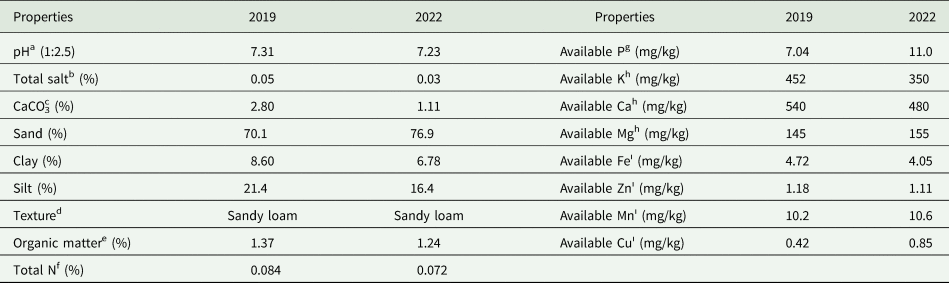
a, 1:2.5 water extract; b, 1:2.5 soil: conductimetric in water extract; c, calcimetric; d, hydrometric; e, Walkley–Black method; f, Kjeldahl method; g, available Olsen; h, available 1 N NH4OAc extract; ı, available DTPA extract.
Air temperature and total rainfall recorded during the cropping cycles (April–August) in the two growing seasons (2019 and 2022) (T-Min, minimum temperature; T-Max, maximum temperature; T-Mean, monthly mean temperature).
Solid digestate (SD) and liquid digestate (LD) fertilizers were obtained from the biogas plants of ENFAŞ I.C., a subsidiary of SÜTAŞ I.C., operating in the Izmir-Tire district of Turkey. The raw materials used in AD were manure (65%) (50% cow manure + 15% poultry/chicken manure), agricultural waste (30%) and dairy waste (5%). The heavy metal contents of SD and LD were below the values permitted by Turkish directives (RG, 2010). The chemical characteristics of SD and LD in 2019 and 2022 are shown in Table 2. The nutrient content of SD in 2019 and 2002 was as follows: total nitrogen (3.3 v. 1.1%), phosphorous (P2O5, 1.97 v. 0.54%), potassium (K2O, 2.1 v. 0.91%) and organic matter (81.3 v. 86.6%). The nutrient content of LD in 2019 and 2002 was as follows: total nitrogen (0.8 v. 0.6%), phosphorous (P2O5, 0.48% v. not detected), potassium (K2O, 1.15 v. 0.5%) and organic matter (6.6 v. 7.6%).
Main chemical characteristics of SD and LD used in the 2-year experiment
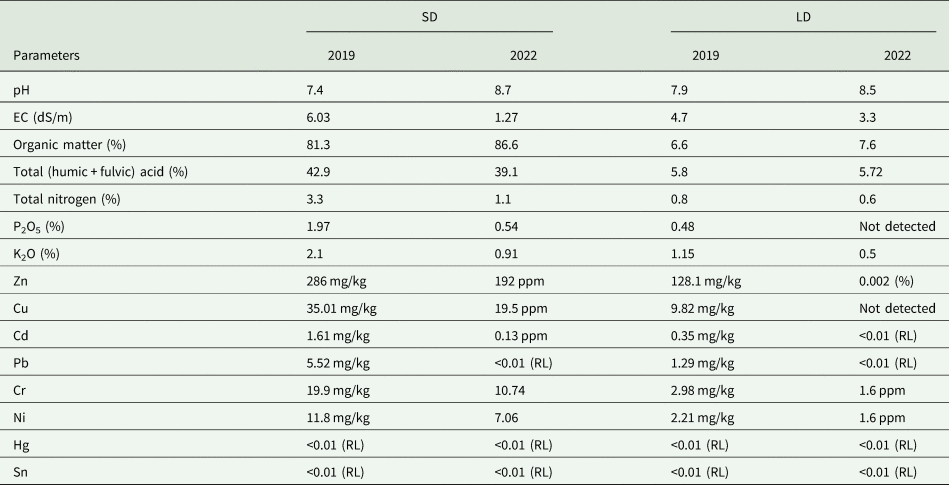
RL, reporting limit; SD, solid digestate; LD, liquid digestate.
Field experiments were conducted under four treatment regimens: (1) control (C), unfertilized plants (null control); (2) CF, fertilization with 150 kg N/ha of NPK fertilizer; (3) SD and (4) LD. Composite fertilizer for CF; and experimental materials for SD and LD were homogeneously spread on the soil surface. Then, all experiment plots were tilled at a depth of 0–15 cm with a rototiller 1 week before tomato seedlings were transplanted into the open field (within the last week of April in both years). The seedlings were transplanted at a density of 2.75 plants/m2 in a single row with a spacing of 1.40 m between each row and 0.26 m between plants in the row. A randomized complete block design with three replications was used. The experimental plots were 28 m2 in area (5.6 m × 5.0 m).
For one tomato crop cycle, 150 kg/ha N was used, considering the nitrogen requirement of tomato plants. The amounts of SD and LD used were calculated considering N dosage (150 kg/ha). The moisture and nutrient contents of SD and LD differed in the 2 years of the experiment (Table 2). Therefore, the application rates of SD and LD in the second year were established according to the amount of N applied in the first year (SD, 16.66 tonne/ha in 2019 and 49.8 tonne/ha in 2022; LD, 21.16 L/ha in 2019 and 28.14 L/ha in 2022). For basic chemical fertilization, zinc-enriched composite fertilizer (15% N, 15% P2O5 and 15% K2O + Zn) was used. In addition to basic fertilization, first dressing (side dressing) was applied in May and urea (46% N) was used as N source. The second dressing was applied in June and calcium ammonium nitrate (26% N) and potassium nitrate (13-0-46) were used as N sources. Drip irrigation and plant protection from pests were managed according to the farm standard.
Yield assessment
A single harvest was performed at the end of the growing seasons in each year – within the first weeks of August 2019 and 2022. When the tomato fruits reached harvest maturity (ripe fruits accounting for approximately 85% of the total yield), eight plants from the centre of each replication were harvested randomly by hand in the morning. Then, the plants were taken to the processing lab and fruits were graded as red (ripe), green (unripe), unmarketable and affected by sunscald (SS) and blossom-end rot (BER). The mean fruit weight (MFW) was calculated using marketable red fruits, number of fruits per plant was calculated using red and green fruits, and TFW was calculated using marketable red fruits. Brix yield (t/ha) was calculated by dividing the marketable yield (t/ha) by total soluble solid (TSS) content, as described by Duman et al. (Reference Duman, Gümüş and Erkan2003). Morphology, chemical composition and health-related compounds were determined using ripe fruits (20 fruits for each parameter).
Physical analysis of fruits
In total, 20 tomato fruits for each variety in each replication were used to determine MFW using a precision scale (XB 12100; Presica Instruments Ltd., Switzerland) as well as fruit diameter (FD), fruit length (FL) and fruit pericarp thickness (PT) using a digital compass (SC-6; Mitutoyo, Japan). The results were expressed in mm.
The peel colour was measured at the equatorial level on both sides of 20 plums with a colorimeter (CR-400; Minolta Co., Osaka, Japan), and the average scores were recorded in terms of CIE L* a* b* values. Chroma (C*), which indicates intensity or colour saturation, and hue angle (h°), which was expressed as follows: 0° (red-purple), 90° (yellow), 180° (bluish-green) and 270° (blue) (McGuire, Reference McGuire1992), were calculated by using the following equation:


The a*/b* ratio can be used to report the brightness of the red colour of tomato fruit and its products (Akdeniz et al., Reference Akdeniz, Demirbüker Kavak and Ağdatlioğlu2012). Colour measurement in fruit pulp samples was conducted using the same method.
Fruit firmness (FF) was determined for 20 tomato fruits per replicate using a texture analyser (GS-15, GÜSS Manufacturing Ltd., South Africa) by plunging the 7.9 mm-diameter tip to 10 mm depth with 10 cm/min speed after removing the skin from the equatorial section of the fruit. The results were expressed in Newton (N).
Chemical analysis of fruits
The TSS content of tomato juice was determined using a digital refractometer (PR-1; Atago, Tokyo, Japan) and expressed in percentage. Dry matter (DM) content was determined by drying the samples in an oven (Memmert, Germany) at 65°C until a constant weight was obtained and calculated on the basis of the percentage of weight loss (AOAC, 1990). Titratable acidity (TA) was determined by titrating 10 ml of the juice with 0.1 N NaOH up to pH 8.1. The results were expressed as gram citric acid per 100 ml of fruit juice. pH value was determined using a pH metre (MP220, Mettler Toledo, Germany) (Karaçalı, Reference Karaçalı2012).
Lycopene content, vitamin C content, TPC and AA
The amount of lycopene, i.e. the colour obtained from an extract of tomato sample treated with acetone solvent and homogenized, was measured using a spectrophotometer at 503 nm. The results were expressed as mg/kg and calculated using the following formula: lycopene (mg/kg) = 62.43 × OD503/sample weight (Davis et al., Reference Davis, Fish and Perkins-Veazie2003).
A sample of 50 g tomatoes was mixed with 50 ml of oxalic acid (0.4%), blended in a Waring blender (Blender 8011ES, USA) and filtered. Vitamin C (L-ascorbic acid) content in the filtrate was measured using 2,6-dichloroindophenol according to a titrimetric method (AOAC, 1995). The results were expressed as mg L-ascorbic acid per 100 g fresh FW.
Fruit extracts (in methanol) were prepared from tomato fruits according to the method described by Thaipong et al. (Reference Thaipong, Boonprakob, Crosby, Cisneros-Zevallos and Hawkins Byrne2006), with some modifications for TPC and AA analysis. TPC analysis was conducted using the Folin–Ciocalteu method according to Zheng and Wang (Reference Zheng and Wang2001), with an incubation time of 120 min for colour development. Absorbance was measured at 725 nm using a spectrophotometer (Carry 100 Bio; Varian, Australia) and the results were expressed as milligram gallic acid equivalent (GAE) per 100 g of FW with reference to a standard curve of gallic acid (0–0.1 mg/ml).
The ferric reducing ability of plasma was assayed according to Benzie and Strain (Reference Benzie and Strain1996), where reductants (‘antioxidants’) in the sample reduce Fe (III)/tripyridyltriazine complex to a blue ferrous form, with an increase in absorbance at 593 nm. The final results were expressed in μmol trolox equivalents (TE)/g FW with reference to a standard curve of trolox (25–500 μmol).
Statistical analysis
The experimental design was randomized for cultivated plants, with three replicates. For quality attributes and health-related assays, 20 fruits of both varieties were analysed and all assays were performed in triplicates. Statistical analysis of variance was performed using SPSS 19.0 for Windows (SPSS Inc., Chicago, IL, USA). Data from 2019 and 2022 were analysed separately. A split-plot model with three replicates was used for variance analysis of all parameters, where variety was attributed to the main plots and fertilizer treatments to the subplots. Significant differences among groups were compared using least significant difference (LSD) test at P < 0.05. In addition, the technique for order preference by similarity to ideal solutions (TOPSIS) method, one of the multi-criteria decision-making methods, was used.
Results
Yield parameters
The fruit diameter, fruit length, mean fruit weight, the number of fruits per plant, total fruit weight and Brix yield of the treatments are presented in Table 3. Regarding FD, no significant differences were found in 2019; however, in 2022, treatment and the interaction between experimental factors had significant effects (P < 0.01). On the basis of average results, CF and SD treatments increased FD by approximately 11.4 and 10.3% compared with C treatment and by 4.4 and 3.4% compared with LD treatment, respectively.
Effect of digestate fractions on fruit size and yield parameters of processing tomato cultivars
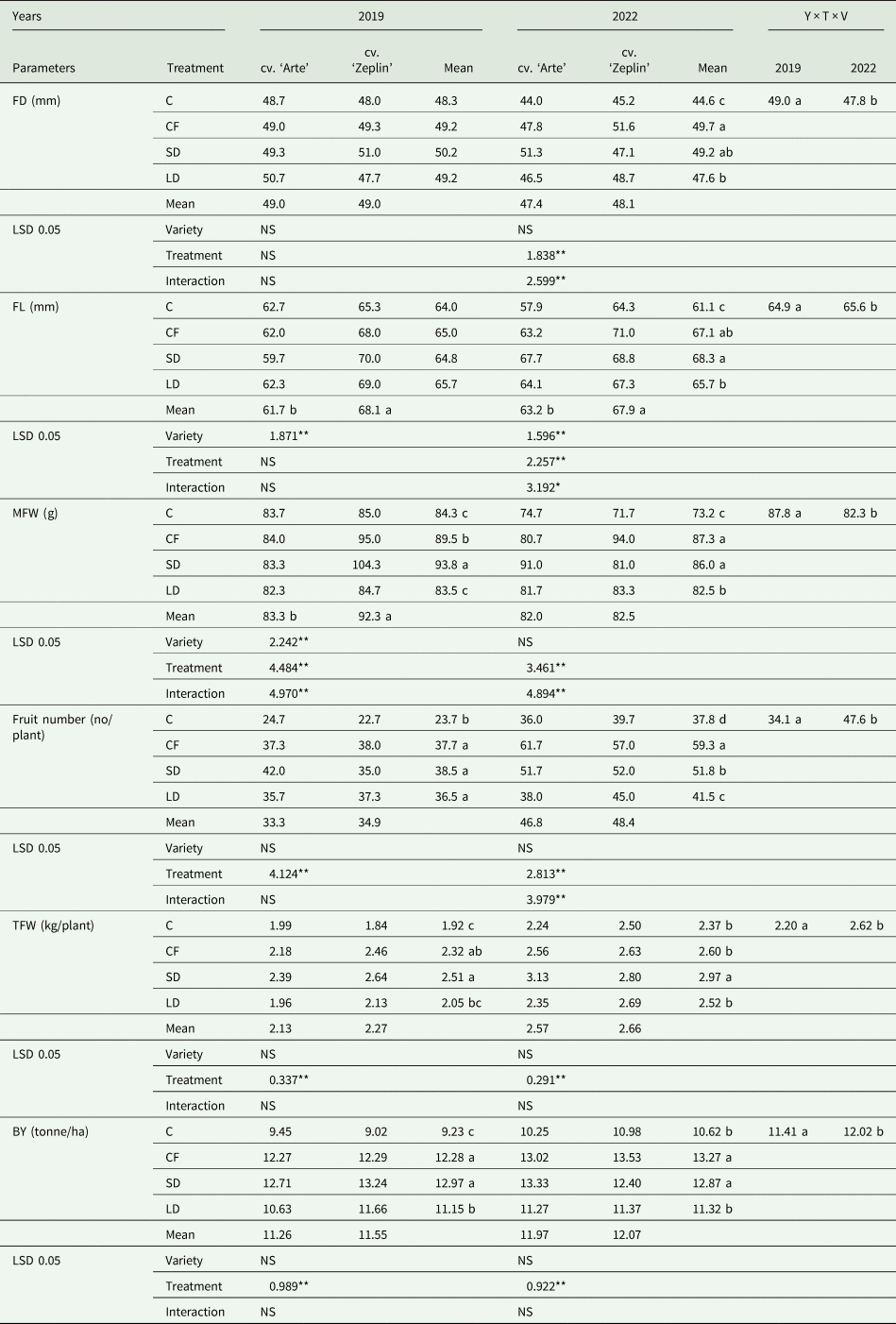
C, control; CF, chemical fertilizer; SD, solid digestate; LD, liquid digestate; FD, fruit diameter; FL, fruit length; MFW, mean fruit weight; TFW, total fruit weight; BY, Brix yield.
*P < 0.05; **P < 0.01; NS, not significant.
Regarding FL, only variety had a significant effect in 2019 (P < 0.01). In the second year of the experiment, variety, treatment and the interaction between experimental factors had significant effects (P < 0.01, P < 0.01 and P < 0.05, respectively). CF and SD treatments of cv. ‘Zeplin’ had similar and highest FL values. The lowest FL was found with C treatment of cv. ‘Arte’. On the basis of average results, SD and CF treatments increased FL by approximately 11.8 and 9.8% compared with C treatment and by 4.0 and 2.1% compared with LD treatment, respectively. MFW was significantly affected by variety, treatment and interaction (P < 0.01) in 2019; however, in 2022, treatment and the between experimental factors were found to be significant (P < 0.01) (Table 3). The MFW changed between 104.3 g (SD treatment of cv. ‘Zeplin’) and 82.3 g (LD treatment of cv. ‘Arte’). On the basis of average results, SD treatment increased MFW by11.3, 4.8 and 12.3% compared with C, CF and LD treatments, respectively. In 2022, MFW changed between 94.0 g (CF treatment of cv. ‘Zeplin’) and 71.7 g (C treatment of cv. ‘Zeplin’). According to average results, CF and SD treatments increased MFW by approximately 19.3 and 17.5% compared with C treatment and by 5.8 and 4.2% compared with LD treatment, respectively.
In 2019, the number of fruits per plant was significantly influenced by treatment (P < 0.01) (Table 3). CF, SD and LD treatments increased fruit number per plant by an average of 59.1, 62.4 and 54.0%, respectively, compared with control. In 2022, the differences between treatments and interactions were statistically significant (P < 0.01). The highest fruit number was obtained from the CF treatment of cv. ‘Arte’, whereas C treatment of cv. ‘Arte’ yielded the lowest. On the basis of average results, CF treatment resulted in the highest fruit number that significantly differed by unfertilized and fertilized thesis and this value was 56.9, 14.5 and 42.9% greater than those obtained from C, SD and LD treatments, respectively (Table 3).
For total fruit weight, statistical analysis revealed differences (P < 0.01) only between treatments in both years (Table 3). In 2019, the TFW value of SD treatment was the highest, with 2.51 kg per plant, followed by that of CF treatment (2.32 kg per plant). In the second year of the experiment, SD treatment resulted in the highest TFW (2.97 kg per plant) that significantly differed by unfertilized and fertilized thesis and this value was 25.3, 14.2 and 17.9% greater than those obtained from C, CF and LD treatments, respectively.
Regarding Brix yield, only treatment had a significant effect (P < 0.01) in both years (Table 3). The highest values were observed in CF and SD treatments in both years. CF and SD treatments increased Brix yield by approximately 33.0 and 40.5% in 2019 and 25.0 and 21.2% in 2022 compared with C treatment and by 10.0 and 16.3% in 2019 and 17.2 and 13.7% in 2022 compared with LD treatment, respectively.
As a result of ANOVA including the interactions between the experimental year (Y), treatment (T) and variety (V) of the parameters in Table 3, it was found that the mean of the years is different at 0.05 significance level.
Quality parameters
The colour characteristics of fruits are presented in Table 4. Fruit skin C* was significantly affected by variety (P < 0.01) and treatment (P < 0.05) in 2019; however, in 2022, only treatment affected fruit skin C* (P < 0.05). LD and CF treatments yielded the highest skin C* values, followed by C treatment. In the second year of the experiment, CF, LD and C treatments showed similar and higher skin C* values than SD treatment. For the h° value of fruit, variety and interaction showed significant differences in 2019 (P < 0.01 and P < 0.05, respectively). CF and SD treatments of cv. ‘Zeplin’ showed similar and lowest h° values. In the second year of the experiment, fruit h° values were significantly affected by variety and treatment (P < 0.01). Considering average results, CF treatment yielded the lowest h° value (39.5), whereas SD, C and LD treatments gave the highest h° values (Table 4). The a*/b* ratio of fruit skin was significantly affected by variety, treatment (P < 0.01 and P < 0.05, respectively) and the interaction between experimental factors (P < 0.05) in 2019 (Table 4). The highest skin a*/b* ratio was found with CF treatment of cv. ‘Zeplin’, followed by SD treatment of cv. ‘Zeplin’. C and CF treatments of cv. ‘Arte’ gave the lowest a*/b* ratio. In 2022, the skin a*/b* ratio was significantly affected by variety and treatment (P < 0.01). The highest a*/b* ratio was attained from CF treatment, with a mean value of 1.22.
Effect of digestate fractions on the colour characteristics of processing tomato cultivars
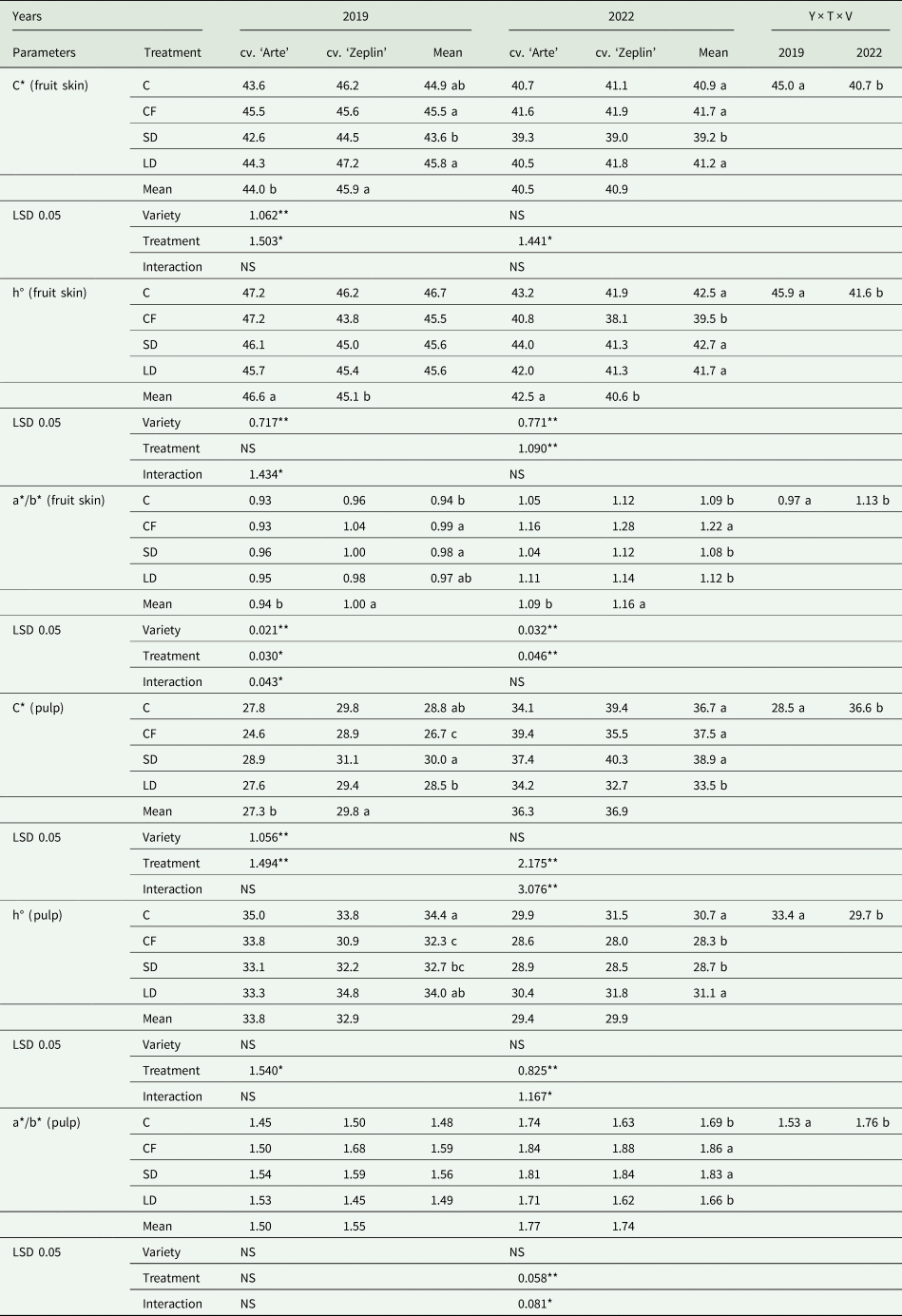
C, control; CF, chemical fertilizer; SD, solid digestate; LD, liquid digestate; C*, chroma; h°, hue angle; a*/b*, ratio.
*P < 0.05; **P < 0.01; NS, not significant.
Pulp C* was significantly influenced by variety and treatment in 2019 (P < 0.01) (Table 4). The highest and lowest values of pulp C* were obtained from SD and CF treatments, respectively. In 2022, the effects of treatment and interaction were significant (P < 0.01). Pulp C* values changed between 34.1 (C treatment of cv. ‘Arte’) and 40.3 (SD treatment of cv. ‘Zeplin’). Pulp h° was significantly affected by treatment in 2019 (P < 0.05). The lowest pulp h° value was obtained from CF treatment, followed by SD treatment, whereas control yielded the highest pulp h° value. In 2022, pulp h° values were significantly affected by treatment and interaction (P < 0.01 and P < 0.05, respectively). CF and SD treatments of cv. ‘Zeplin’ and cv. ‘Arte’ had similar and lowest h° values. For the a*/b* ratio of pulp, non-significant differences were found in the first year of the experiment; however, the a*/b* ratio of pulp was significantly affected by treatment (P < 0.01) and interaction (P < 0.05) in 2022 (Table 4). CF and SD treatments of cv. ‘Zeplin’ and cv. ‘Arte’ showed similar and highest a*/b*.
At the 0.05 significance level, the mean of the years differed, according to the results of an ANOVA that included the interactions between the experimental year (Y), treatment (T) and variety (V) of the factors in Table 4.
The pericarp thickness, fruit firmness, dry matter, total soluble solid, titratable acidity and pH of the treatments are presented in Table 5. PT was significantly affected by variety (P < 0.01) and treatment (P < 0.05) in the first year of the experiment. However, in 2022, statistical analysis revealed differences between the treatment and the interaction between experimental factors (P < 0.01). On the basis of average results, in 2019, C treatment yielded the highest PT, followed by SD treatment. C and SD treatments increased PT by approximately 13.0 and 7.1% compared with CF treatment and by 9.9 and 4.5% compared with LD treatment, respectively. In 2022, PT values changed between 6.99 and 5.83 mm. According to the average results, SD treatment resulted in the highest value of PT that significantly differed by unfertilized and fertilized thesis and SD treatment increased 7.3, 12.8 and 6.2% compared with C, CF and LD treatments, respectively.
Effect of digestate fractions on the technological traits of processing tomato cultivars
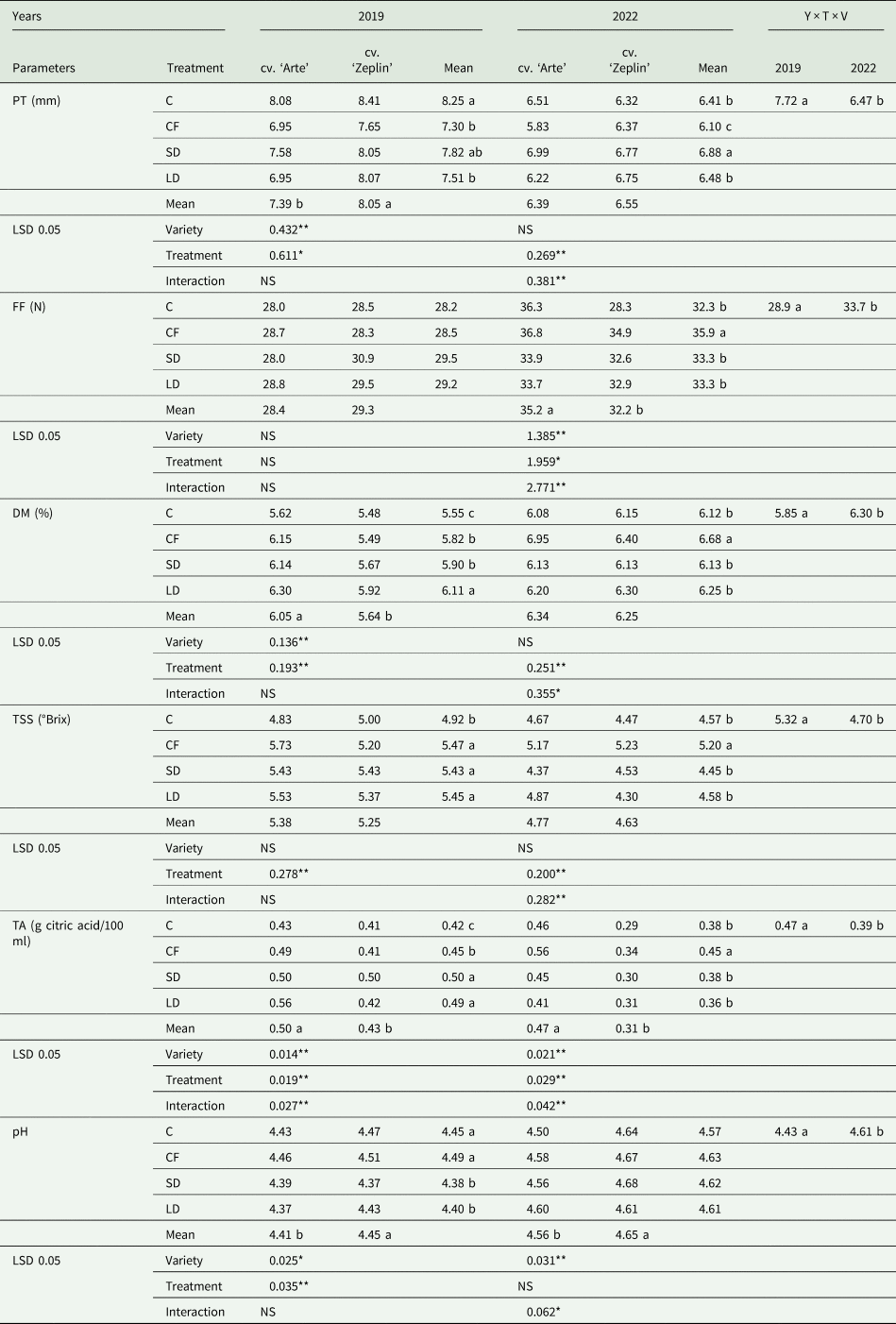
C, control; CF, chemical fertilizer; SD, solid digestate; LD, liquid digestate; FT, pericarp thickness (mm); FF, fruit firmness; DM, fruit dry matter; TSS, total soluble solid; TA, titratable acidity.
*P < 0.05; **P < 0.01; NS, not significant.
Regarding fruit firmness, no significant differences were found in 2019; however, in 2022, FF was significantly affected by variety, treatment and their interactions (P < 0.01, P < 0.05 and P < 0.01, respectively) (Table 5). FF changed between 28.3 and 36.8 N. On the basis of average results, CF treatment increased FF by 11.0, 7.7 and 7.7% compared with C, SD and LD treatments, respectively.
For dry matter content was significantly influenced by variety and treatment (P < 0.01) in 2019; however, in 2022, the differences were statistically significant between the treatment (P < 0.01) and interaction (P < 0.05) (Table 5). In the first year of the experiment, the DM content decreased among the treatments in the following order: LD (6.11%) > SD (5.90%) > CF (5.82%) > C (5.55%). In 2022, the highest DM content was obtained from the CF treatment of cv. ‘Arte’, whereas the lowest DM content was obtained from the control treatment of cv. ‘Arte’. According to the average results, the CF treatment resulted in the highest value of DM that significantly differed by unfertilized and fertilized thesis and this treatment increased 9.2, 9.0 and 6.9% compared with C, SD and LD treatments, respectively.
Total soluble solid content (Brix) was significantly affected by treatment (P < 0.01) in 2019. CF, SD and LD treatments showed similar and higher TSS contents than C treatment (Table 5). In 2022, the effects of treatment and interaction on TSS content were significant (P < 0.01). TSS content changed between 5.23°Brix (CF treatment of cv. ‘Zeplin’) and 4.30°Brix (LD treatment of cv. ‘Zeplin’). On the basis of average results, TSS content of fertilizer treatments was in the order of CF (5.20°Brix) > LD (4.58°Brix) > C (4.57°Brix) > SD (4.45°Brix).
The effects of variety, treatment and their interactions on TA were statistically significant (P < 0.01) in both years (Table 5). TA changed between 0.41 g/100 ml and 0.56 g/100 ml in 2019. According to the average results, SD and LD treatments increased TA by 11.1 and 8.9% compared with CF treatment and by 19 and 16.7% compared with C treatment, respectively. In 2022, TA changed between 0.29 g/100 ml and 0.56 g/100 ml. Considering average results, the CF treatment resulted in the highest value of TA that significantly differed by unfertilized and fertilized thesis and this treatment increased 18.4, 18.4 and 25% compared with C, SD and LD treatments, respectively.
Fruit pH was influenced by variety and treatment (P < 0.05 and P < 0.01, respectively) in 2019; however, in 2022, treatment had no effect on fruit pH, whereas variety and interaction had significant effects (P < 0.01 and P < 0.05, respectively) (Table 5). In 2019, SD treatment yielded the lowest fruit pH, followed by LD treatment. In the second year of the experiment, fruit pH was the lowest with the C and SD treatments of cv. ‘Arte’.
The application of ANOVA to the parameters presented in Table 5, which includes the interactions between the experimental year (Y), treatment (T) and variety (V), revealed that the mean values for the years are statistically different at the 0.05 level of significance.
Health-related compounds
Table 6 presents the contents of lycopene, vitamin C and total phenolics as well as AA of tomato fruits. Lycopene content was significantly influenced by variety, treatment and their interactions (P < 0.01) in both years. CF and LD treatments of cv. ‘Zeplin’ showed similar and higher lycopene contents than all other treatments in both years. The lowest lycopene content was found with the C treatment of cv. ‘Arte’ in both years.
Effect of digestate fractions on the health-related compounds of processing tomato cultivars
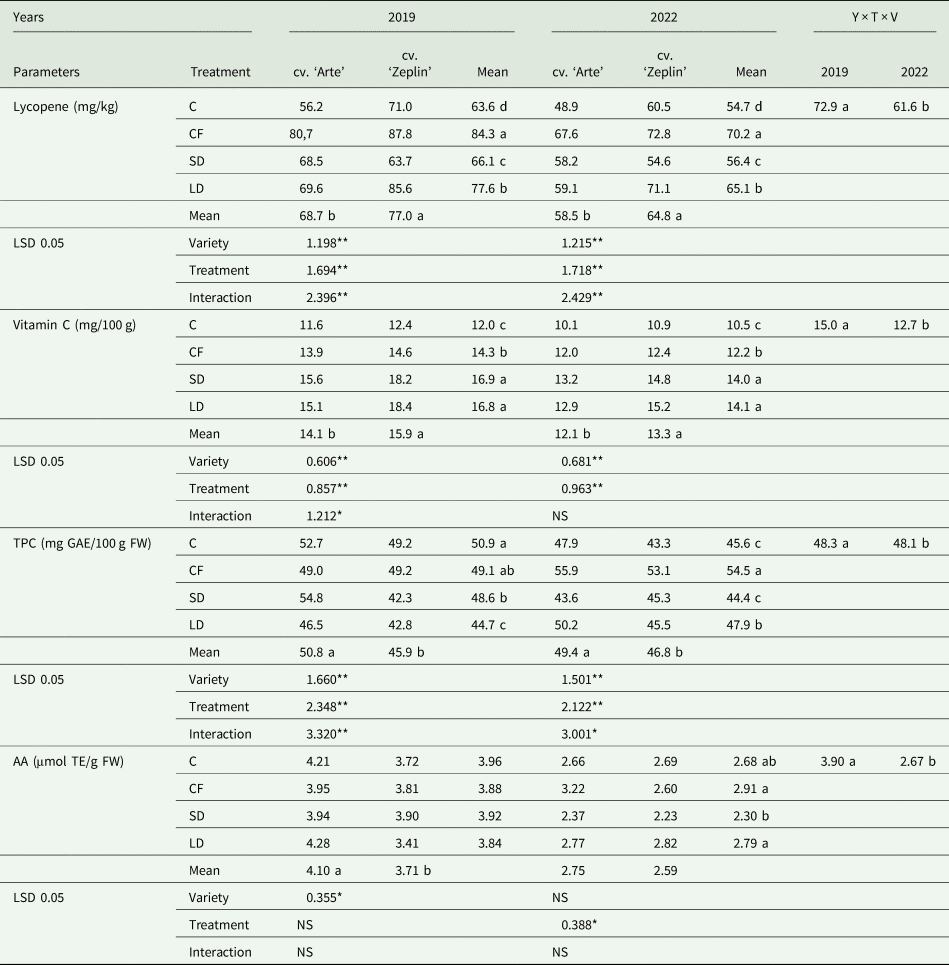
C, control; CF, chemical fertilizer; SD, solid digestate; LD, liquid digestate; TPC, total phenolic content; AA, antioxidant activity.
*P < 0.05; **P < 0.01; NS, not significant.
Variety, treatment and interaction had a significant effect on vitamin C content (P < 0.01, P < 0.01 and P < 0.05, respectively) in 2019; however, in 2022, the effects of variety and treatment were significant (P < 0.01) (Table 6). LD and SD treatments of cv. ‘Zeplin’ showed similar and highest vitamin C values. The lowest content of vitamin C was found with the C treatment of cv. ‘Arte’ in both years.
Concerning another health-related compound, total phenolic content was significantly affected by variety, treatment and their interactions (P < 0.01) in both years (Table 6). In 2019, TPC changed between 54.8 mg GAE/100 g FW and 42.3 mg GAE/100 g FW. In 2022, TPC was the highest with the CF treatment of cv. ‘Arte’ and CF treatment of cv. ‘Zeplin’, whereas the C treatment of cv. ‘Zeplin’ yielded the lowest amount of TPC. On the basis of average results, TPC was the highest with C and CF treatments in 2019, whereas in the second year of the experiment, TPC was highest only with CF treatment.
AA was significantly affected (P < 0.01) by variety (P < 0.05) in 2019; however, in 2022, variety had no effect on AA, whereas treatment had a significant effect (P < 0.05) (Table 6). The AA of tomato fruits reduced in the following order: CF (2.91 μmol TE/g FW) > LD (2.79 μmol TE/g FW) > C (2.68 μmol TE/g FW) > SD (2.30 μmol TE/g FW).
The mean of the years differs at the 0.05 significant level, according to the results of an ANOVA that takes into account the interactions between the experimental year (Y), treatment (T) and variety (V) of the factors in Table 6.
Physiological disorders of tomato fruit
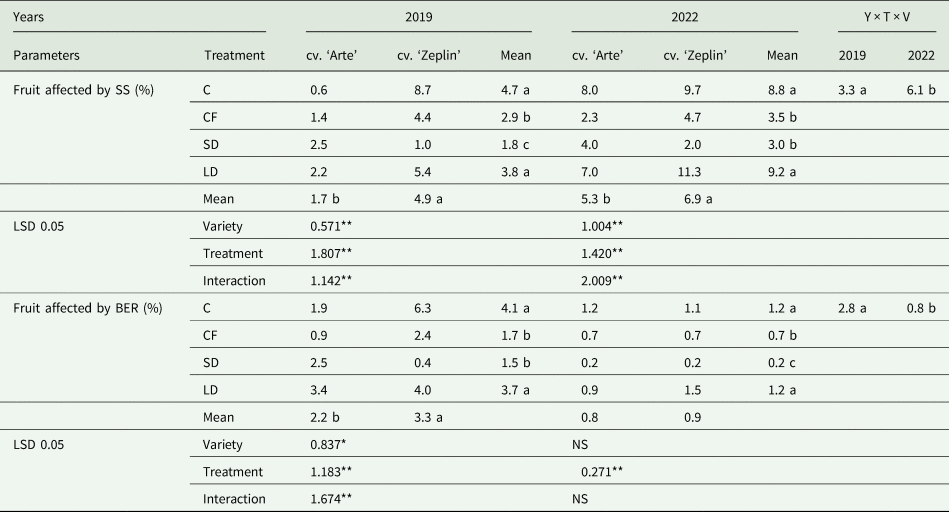
The ratio of SS and BER in tomato fruits is presented in Table 7. SS was significantly affected by variety, treatment and interaction (P < 0.01) in both years. In 2019, SD treatment decreased fruit SS by approximately 61.7, 37.9 and 52.6% compared with C, CF and LD treatments, respectively. In the second year of the experiment, CF and SD treatments decreased fruit SS by approximately 60.2 and 65.9% compared with C treatment and by 62.0 and 67.4% compared with LD treatment, respectively.
Effect of digestate fractions on the physiological disorders of processing tomato cultivars
C, control; CF, chemical fertilizer; SD, solid digestate; LD, liquid digestate; SS, sunscald; BER, blossom-end rot.
*P < 0.05; **P < 0.01; NS, not significant.
BER was significantly influenced by variety (P < 0.05), treatment and interaction (P < 0.01) in 2019; however, in 2022, BER was significantly influenced only by treatment (P < 0.01) (Table 7). In 2019, according to the average results, CF and SD treatments decreased BER by approximately 58.5 and 63.4% compared with C treatment and by 54.1 and 59.5% compared with LD treatment (2019), respectively. In the second year of the experiment, the lowest value of fruit BER was achieved by SD treatment. This value was 83.3, 71.4 and 83.3% lower than those obtained from C, CF and LD treatments, respectively.
As a result of ANOVA including the interactions between the experimental year (Y), treatment (T) and variety (V) of the parameters in Table 7, it was found that the mean of the years is different at 0.05 significance level.
Discussion
Effect of fertilizer treatments on yield parameters
The present study showed that tomato plants fertilized with SD had equal or even higher fruit size and yield production parameters than tomato plants fertilized with CF in both years (Table 3). LD did not decrease fruit size and tomato yield – their values were similar, with no significant differences between control, or slightly higher than those of the control in both years. Nkoa (Reference Nkoa2014) reported some conflicting results regarding crop yields with respect to anaerobic digestate fertilizer treatments. Yu et al. (Reference Yu, Luo, Song, Zhang and Shan2010) reported that livestock digestates showed lower yields in tomatoes than the synthetically fertilized control. Moreover, no difference was found in the size of tomatoes treated with control, mineral N fertilizer and LD (Barzee et al., Reference Barzee, Edalati, El-Mashad, Wang, Scow and Zhang2019). However, Panuccio et al. (Reference Panuccio, Mallamaci, Attinà and Muscolo2021), who assessed the effectiveness of two digestate fractions (liquid and solid) on tomato production, demonstrated that digestate treatments decreased the number and size of tomato fruit compared with control. Our results, which were consistent with the results of SD used in this study, were in agreement with those described by Barzee et al. (Reference Barzee, Edalati, El-Mashad, Wang, Scow and Zhang2019) and Li et al. (Reference Li, Yuan, Shimizu, Magaña, Gong and Na2023). In contrast to the present study, Zheng et al. (Reference Zheng, Li, Zhang, Zhang and Wang2019) reported that compared with CF, LD increased tomato yield. Comparing studies on tomato treated with various digestates is difficult because of the varying cultivars, environments and agronomic practices used in each study. The variation in yield can be explained by changes in the physical and chemical properties of the digestates, which are mostly associated with the origin of the substrates (feedstock), operating parameters used in the digester and type of solid–liquid separation (Alburquerque et al., Reference Alburquerque, de la Fuente, Ferrer-Costa, Carrasco, Cegarra, Abad and Bernal2012; Akhiar et al., Reference Akhiar, Battimelli, Torrijos and Carrere2017). According to Barzee et al. (Reference Barzee, Edalati, El-Mashad, Wang, Scow and Zhang2019), the mode of application, split fertilization and time of application play a large role in nutrient availability, with some fertigation systems capable of reducing nutrient loss. Finally, in the present study, SD led to higher yield than LD, which can be explained by the higher nutrient (total nitrogen, phosphorus and potassium) and organic matter content of SD leading to better plant nutrition (Table 2). The results of the present study also showed that the effects of fertilizer treatment on FD, FL, MFW and fruit number per plant varied with genotype (Table 3).
Effect of fertilizer treatments on fruit quality parameters
Colour is probably the first quality factor considered by tomato product buyers. Therefore, an attractive deep red colour is a major quality attribute for tomato products (Garcia and Barrett, Reference Garcia and Barrett2006). In the present study, fertilizer treatments had an unstable effect on colour traits, which varied with year and genotype (Table 4). These results were consistent with those reported by Morra et al. (Reference Morra, Cozzolino, Salluzzo, Modestia, Bilotto, Baiano and del Piano2021) and Tallou et al. (Reference Tallou, Aziz, Garcia, Salcedo, El Minaoui and Amir2022), where digestate treatment significantly affected the colour traits of tomato fruits and fertilizer treatment had an unstable effect. By contrast, Barzee et al. (Reference Barzee, Edalati, El-Mashad, Wang, Scow and Zhang2019) found no clear differences in colour traits among tomato plants treated with control, mineral N fertilizer and digestate. One of the most important aspects of tomato fruit quality is its colour, which forms through a complex carotenoid pigment system that is influenced by genetics as well as the environment (López Camelo and Gómez, Reference López Camelo and Gómez2004).
The current paper showed that SD treatment yielded higher PT values in both years and the effects of fertilizer treatment on PT varied with genotype. PT in tomato fruit indicates firmness, thereby revealing whether fruits are suitable for canning, storage and long-distance transportation (Avdikos et al., Reference Avdikos, Tagiakas, Tsouvaltzis, Mylonas, Xynias and Mavromatis2021).
Fruit firmness is one of the most important quality traits of tomatoes processed by the canning industry (Bilalis et al., Reference Bilalis, Krokida, Roussis, Papastylianou, Travlos, Cheimona and Dede2018). In the current work, CF treatment yielded the highest FF value, and the FF of tomato fruits treated with different fertilizer treatments showed variation with genotypes.
Similar results were reported by Viskelis et al. (Reference Viskelis, Radzevicius, Urbonaviciene, Viskelis, Karkleliene, Bobinas and ElShemy2015), who compared the FF of conventional and organic tomato fruits and demonstrated that conventional fruits presented significantly higher FF values than organic ones, but only in some cultivars. In contrast to our study, a previous study showed that LD treatment yielded higher FF than CF and C treatments (no fertilization) (Zheng et al., Reference Zheng, Li, Zhang, Zhang and Wang2019).
In the present study, LD treatment yielded the highest DM value during the first year, whereas CF treatment yielded the highest DM value in the second year. Our results showed that the effects of fertilizer treatment on DM content varied with genotype. Data regarding the effects of digestates on DM content are not consistent in the literature. Morra et al. (Reference Morra, Cozzolino, Salluzzo, Modestia, Bilotto, Baiano and del Piano2021) found that the DM content of tomato was unaffected by fertilizer treatment (SD combined with reduced rates of NP fertilizers and control). However, Przygocka-Cyna et al. (Reference Przygocka-Cyna, Barłóg, Spiżewski and Grzebisz2021) reported that treatment with a digestate combined with biomass ash increased the DM content of tomato compared with CF and control (no fertilization).
For the tomato processing business, TSS content (Brix) is economically important because even a slight increase in its value can result in a huge improvement in product output and reduce the cost of dehydrating puree into sauce and paste (Young et al., Reference Young, Juvik and Sullivan1993). The results of current study showed that CF, SD and LD treatments yielded the highest TSS values during the first year, whereas CF treatment yielded the highest TSS value during the second year. The findings of the present study also demonstrated that the effects of fertilizer treatment on TSS content varied with genotype. Ronga et al. (Reference Ronga, Caradonia, Parisi, Bezzi, Parisi, Allesina, Pedrazzi and Francia2020) evaluated the effects of different digestate fertilizers (LD, combined LD–biochar, pelleted digestate and control) and reported that LD induced the highest TSS (Brix) in processing tomato under the organic farming system. Moreover, Yu et al. (Reference Yu, Luo, Song, Zhang and Shan2010) and Zheng et al. (Reference Zheng, Li, Zhang, Zhang and Wang2019) reported that digestate treatments increased TSS content compared with control and conventional and/or CF management. Panuccio et al. (Reference Panuccio, Mallamaci, Attinà and Muscolo2021) demonstrated that LD treatment increased the TSS content of tomato fruit compared with control and SD treatment.
Because TA enhances the flavour of tomato products, it is an important attribute of processing tomatoes (Bilalis et al., Reference Bilalis, Krokida, Roussis, Papastylianou, Travlos, Cheimona and Dede2018). In this study, the highest TA values were observed with solid and LD treatments during the first year and with CF treatment during the second year. The effects of fertilizer treatment on TA varied with genotype. These results were consistent with those reported by Zheng et al. (Reference Zheng, Li, Zhang, Zhang and Wang2019), Panuccio et al. (Reference Panuccio, Mallamaci, Attinà and Muscolo2021) and Tallou et al. (Reference Tallou, Aziz, Garcia, Salcedo, El Minaoui and Amir2022), where digestate treatment increased TA values compared with control and/or CF treatments.
In the present study, SD and LD treatments decreased tomato fruit pH compared with control and CF treatments, except during the second year. Moreover, the effects of fertilizer treatment on pH varied with genotype (Table 5). These results were similar to the findings of Panuccio et al. (Reference Panuccio, Mallamaci, Attinà and Muscolo2021) and Ronga et al. (Reference Ronga, Caradonia, Parisi, Bezzi, Parisi, Allesina, Pedrazzi and Francia2020), who indicated that LD treatment decreased the pH value of tomato fruits. In contrast to the current research, Barzee et al. (Reference Barzee, Edalati, El-Mashad, Wang, Scow and Zhang2019) reported that there was no difference in the pH values of tomato fruits treated with control, mineral N fertilizer and digestate.
Effect of fertilizer treatments on fruit health-related compounds
Lycopene is the most prevalent carotenoid in the tomato fruit because of its AA against chronic diseases (Viskelis et al., Reference Viskelis, Radzevicius, Urbonaviciene, Viskelis, Karkleliene, Bobinas and ElShemy2015). In this study, the highest lycopene content was achieved with CF treatment. Regarding vitamin C content, SD and LD treatments yielded higher vitamin C values in both years. The effects of fertilizer treatment on lycopene and vitamin C contents varied with genotype. These results were consistent with those of Panuccio et al. (Reference Panuccio, Mallamaci, Attinà and Muscolo2021), who reported that LD increased lycopene content compared with the control, and both LD and SD increased vitamin C content compared with the control. Some studies have indicated that the lycopene content of tomatoes is most significantly influenced by a range of genetic and environmental factors, including the cultivar, growing season and cultivation conditions (Toor et al., Reference Toor, Savage and Heeb2006; Rickman Pieper and Barrett, Reference Rickman Pieper and Barrett2008).
In the present study, control and CF treatments yielded the highest TPC value during the first year, whereas CF treatment yielded the highest TPC value during the second year. The effects of fertilizer treatment on TPC varied with genotype. Regarding AA, CF and LD treatments yielded higher in comparison with other treatments for only the second year of the experiment. These results were consistent with those reported by Panuccio et al. (Reference Panuccio, Mallamaci, Attinà and Muscolo2021), who indicated that TPC and AA levels increased with LD in a concentration-dependent manner compared with control. TPC and AA are influenced by genotype, environmental conditions, cultural practices, postharvest handling and processing techniques and their interactions (Ceglie et al., Reference Ceglie, Amodio and Colelli2016; Panuccio et al., Reference Panuccio, Papalia, Attinà, Giuffrè and Muscolo2019).
Effect of fertilizer treatments on fruit physiological disorders
In the present study, SD reduced the incidence of SS and BER and their incidence was similar or even lower than those obtained with CF treatment in both years. LD did not increase these fruit physiological disorders, and their incidence was similar, with no significant differences, to that observed in the control group or slightly lower than those observed in the control group in both years. This result was consistent with that of Ronga et al. (Reference Ronga, Caradonia, Parisi, Bezzi, Parisi, Allesina, Pedrazzi and Francia2020), who reported that LD increased the incidence of BER compared with control. The differences observed in this study could be attributed to genotypic variability as well as the chemical, biochemical and biological properties of the soil, which have both direct and indirect influences on nutrient availability, thereby affecting BER occurrence. Djangsou et al. (Reference Djangsou, Francia, Ronga and Buti2019) reported that fruit calcium deficiency and translocation cannot be considered as the sole primary factors of BER incidence in tomato and that the occurrence of BER is associated with a multitude of environmental, genetic, agronomical and physiological factors, which play complex roles and interactions. Regarding SS, the different results can be attributed to the genetic background of tomato varieties as well as the higher N content and higher leaf-shoot dry weight of plants treated with SD and CF treatments (data not published) than others. These results were consistent with those of Parisi et al. (Reference Parisi, Burato, Pentangelo and Ronga2022), who highlighted the effects of N fertilization on the enhancement of vegetative biomass and revealed that N fertilizer provided good fruit covering and better protection against SS damage than the control.
Effect of fertilizer treatments on the yield, quality, health-related compounds and physiological disorders based on the multi-criteria decision-making method
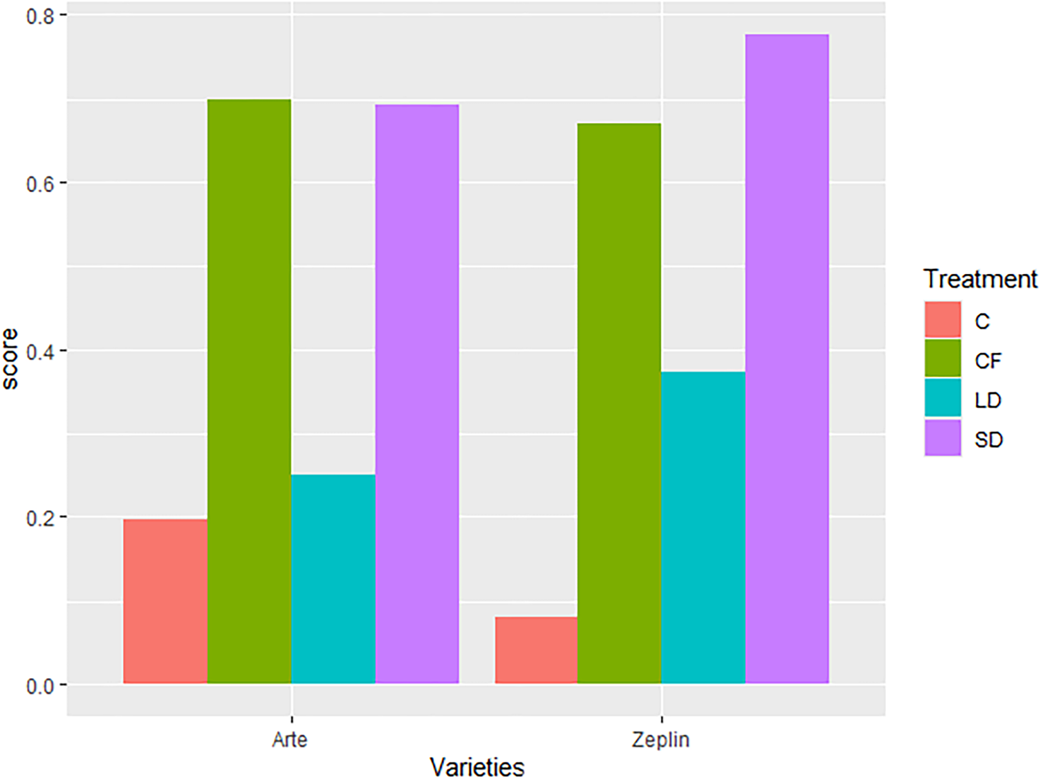
The TOPSIS method was used based on the year averages of four fertilizer treatments and 15 parameters (Table 8). In the present study, fertilizer treatments showed significant differences in terms of yield, quality, health-related compounds and physiological disorder parameters (Fig. 2). Regarding the parameters considered in the TOPSIS method, the SD treatment of cv. ‘Zeplin’ showed the highest yield and quality, whereas the C treatment of cv. ‘Arte’ and cv. ‘Zeplin’ showed the lowest yield and quality. The closest to the ideal solution for the decision maker who had to choose between fertilizer treatments was determined as the CF treatment with 0.6991 for cv. ‘Arte’ and SD treatment with 0.7765 for cv. ‘Zeplin’.
Results for the ideal solution for different varieties and treatments based on TOPSIS
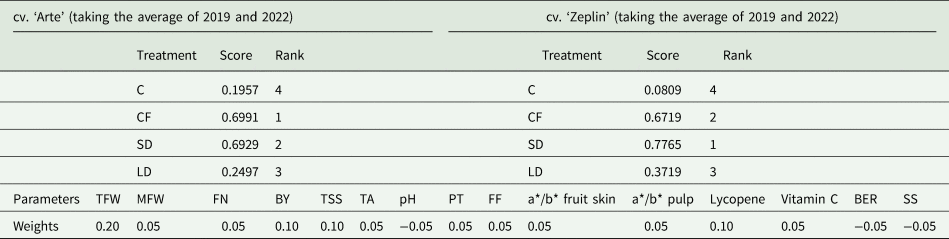
TFW, total fruit weight; MFW, mean fruit weight; FN, number of fruits per plant; BY, Brix yield; TSS, total soluble solid; TA, titratable acidity; PT, pericarp thickness; FF, fruit firmness; BER, blossom-end rot; SS, sunscald.
Bar plot showing the relative proximity to the ideal solution for fertilizer treatments (C, control; CF, chemical fertilizer; SD, solid digestate; LD, liquid digestate).
Conclusion
In conclusion, the application of SD yielded similar or higher fruit size and yield parameters than the application of CF in both years. Furthermore, the application of both fractions significantly maintained or improved fruit quality. However, their effects on fruit quality traits varied with year and variety. Moreover, the 2-year average results of the TOPSIS method revealed that the SD treatment of cv. ‘Zeplin’ showed the highest performance in terms of yield, quality, health-related compounds and physiological disorders. These results prove that SD can be successfully applied as the main fertilizer source to specialty crops, such as processing tomatoes, using the industry standard.
Acknowledgements
We are grateful to Ege University Planning and Monitoring Coordination of Organizational Development and Directorate of Library and Documentation for their support in editing and proofreading this manuscript. We also thank Professor Ozlem Alpu (Eskisehir Osmangazi University, Faculty of Science, Department of Statistics, Eskisehir, Turkey) for the TOPSIS analysis method.
Author contributions
O. A. and F. S. conceived the presented idea. O. A. and B. B. planned and carried out the experiments. M. T. and A. R. O. performed the numerical calculations for the suggested experiment. O. A. and F. S. conducted data collection. O. A. and F. S. performed the statistical analyses. O. A. wrote the manuscript with help from F. S.
Funding statement
This study was funded by the PROJECT titled ‘Research on the Use of Digestates as Fertilizer Source in Agricultural Production: processing tomato and silage maize in the frame of the program Ege University Service and Consultancy Agreement’ under the grant agreement number ‘20180204’. SÜTAŞ Dairy Products Inc. had no role in the design, analysis or writing of this article.
Competing interests
None.
Ethical standards
Not applicable.


 Open access

