




INTRODUCTION
Innovation Platforms (IPs) are considered to be promising vehicles for increasing the impact of agricultural research for development (AR4D) (Sanyang et al., Reference Sanyang, Taonda, Kuiseu, Coulibaly and Konaté2016; Schut et al., Reference Schut, Klerkx, Sartas, Lamers, Mc Campbell, Ogbonna, Kaushik, Atta-Krah and Leeuwis2016a; van Mierlo and Totin, Reference van Mierlo and Totin2014; van Paassen et al., Reference van Paassen, Klerkx, Adu-Acheampong, Adjei-Nsiah and Zannoue2014). An IP is a space for learning and change. It is a group of individual or organisational actors with different backgrounds and interests. Depending on the issue at stake, IPs can include farmers, extension officers, policymakers, researchers, Non-Governmental Organisations (NGOs), development donors, the private sector and other stakeholder groups. The IP members come together for the purpose of defining, analysing and prioritising agricultural problems, and exploring, designing, implementing and monitoring agricultural innovations to deal with these problems (Homann-Kee Tui et al., Reference Homann-Kee Tui, Adekunle, Lundy, Tucker, Birachi, Schut, Klerkx, Ballantyne, Duncan, Cadilhon and Mundy2013). In doing so, IPs aim at fostering agricultural innovation by facilitating the interaction and collaboration within networks of stakeholders. The nature of agricultural innovation can be both technological (e.g. agricultural inputs, machinery or crop management techniques) as well as institutional (markets, policies and new forms of social organisation), or a combination of these.
There are many good IP case studies published over the past decade (e.g. Lamers et al., Reference Lamers, Hicintuka, Nibasumba, Kanyaruguru, van Schagen, Njukwe, Okafor, Sartas and Schut2015a, Reference Lamers, Kagabo, Ndayisaba, Zawadi, Ngamije, Nabahungu, Okafor, Sartas and Schutb, Reference Lamers, Mapatano, Katunga, Lunzihirwa, Zozo, Okafor, Sartas and Schutc; Nederlof and Pyburn, Reference Nederlof and Pyburn2012; Nederlof et al., Reference Nederlof, Wongtschowski and van der Lee2011; Sanyang et al., Reference Sanyang, Pyburn, Mur and Audet-Belanger2014). However, the majority of these case studies tend to focus on emerging platforms with a narrow focus (e.g. on a single commodity or value chain), and that have a limited number of (in)direct beneficiaries. With a new ‘wave’ of IPs emerging in international AR4D, there is a need to reflect on the implementation, sustainability and impact of IPs that provide insight in system trade-offs (and synergies), focus on multiple commodities or enterprises and have successfully facilitated the scaling of innovation; which we define as ‘mature’ IPs. According to the best knowledge of the authors, a meta-review of mature IP case studies, which includes data from different continents,Footnote 1 has not been conducted. The objective of this paper is to identify success factors for impact of IPs in the AR4D landscape.
This paper is structured as follows: In the following section (Conceptual Framework: Innovation Platforms in Agricultural Research for Development), we identify key components of IPs and discuss how these are related to achieving agricultural development outcomes and impact. In the section ‘Methodological and Analytical Framework’ of this paper we provide the data collection and analysis methods, and also provide further detail on how case studies were selected and analysed. In the section ‘Results, Analysis and Discussion’, we present and reflect on our data around three main themes, namely (1) Multi-stakeholder processes; (2) Content matter; and (3) Platform support functions. We also provide some more general reflections on mature IPs. Finally, in the section ‘Conclusions’, our main findings are presented.
CONCEPTUAL FRAMEWORK: INNOVATION PLATFORMS IN AGRICULTURAL RESEARCH FOR DEVELOPMENT
IPs build on experiences with earlier collaborative research for development approaches such as Farmer Field Schools (Kenmore et al., Reference Kenmore, Litsinger, Bandong, Santiag, Salac, Tait and Napompeth1987; Pontius et al., Reference Pontius, Dilts and Bartlett2002), Participatory Research (Kerr et al., Reference Kerr, Snapp, Chirwa, Shumba and Msachi2007), Learning Alliances (Lundy et al., Reference Lundy, Gottret and Ashby2005; Mvumi et al., Reference Mvumi, Morris, Stathers, Riwa, Sanginga, Waters-Bayer, Kaaria, Njuki and Wettasinha2009), Local Agricultural Research Committees (Hellin et al., Reference Hellin, Bellon, Badstue, Dixon and La Rovere2008) and Natural Resource Management Platforms (Röling, Reference Röling1994). In the field of AR4D, IPs can form an important element to strengthening more structural and long-term engagement and collaboration between stakeholder groups (Sumberg et al., Reference Sumberg, Heirman, Raboanarielina and Kaboré2013a). This is deemed important for three reasons. First, different stakeholder groups can provide various insights in the biophysical, technological and institutional dimensions of agricultural problems, and what type of innovations are technologically sound, economically viable, and socially, culturally and politically acceptable (Esparcia, Reference Esparcia2014; Schut et al., Reference Schut, van Paassen, Leeuwis and Klerkx2014b). Second, stakeholder groups become aware of their fundamental interdependencies and the need for concerted action to address their constraints and reach their objectives (Leeuwis, Reference Leeuwis2000; Messely et al., Reference Messely, Rogge and Dessein2013). Third, stakeholder groups are more likely to support and promote specific solutions when they have been part of the decision-making or innovation process (Faysse, Reference Faysse2006; Neef and Neubert, Reference Neef and Neubert2011). By bringing different stakeholder groups together, IPs provide space for exchange of knowledge and learning (Ngwenya and Hagmann, Reference Ngwenya and Hagmann2011), but also space for negotiation, conflict and dealing with power dynamics (Cullen et al., Reference Cullen, Tucker, Snyder, Lema and Duncan2014b). In so doing, IPs can contribute to enhancing ‘capacity to innovate’ across stakeholder groups (Leeuwis et al., Reference Leeuwis, Schut, Waters-Bayer, Mur, Atta-Krah and Douthwaite2014). Capacity to innovate can be described as the ability of individuals, groups and networks of people to continuously adapt to change. If capacity to innovate is high, such individuals, groups and networks are better able to act proactively, flexibly and creatively to shocks, challenges and opportunities (Boogaard et al., Reference Boogaard, Dror, Adekunle, Le Borgne, van Rooyen and Lundy2013).
Recent studies on IPs demonstrate their potential in terms of realising robust agricultural research, development and policy strategies (e.g. Ayele et al., Reference Ayele, Duncan, Larbi and Khanh2012; Kilelu et al., Reference Kilelu, Klerkx and Leeuwis2013; Schut et al., Reference Schut, Cunha Soares, van de Ven and Slingerland2014a; Swaans et al., Reference Swaans, Boogaard, Bendapudi, Taye, Hendrickx and Klerkx2014). However, experiences also show that IPs’ performance and development impact depend on many variables. For example, the quality of platform organisation and facilitation (van Rooyen et al., Reference van Rooyen, Swaans, Cullen, Lema and Mundy2013), communication (Victor et al., Reference Victor, Ballantyne, Le Borgne and Lema2013), stakeholder representation (Cullen et al., Reference Cullen, Tucker and Homann-Kee Tui2013) determine to a large extent whether IPs can lead to real outcomes and impact. Despite IP rhetoric, there may be an institutional context which leads to continuation of ‘business as usual’ practices, where science develops and tests technologies that are then transferred to end users, often farmers (Cullen et al., Reference Cullen, Tucker, Snyder, Lema and Duncan2014b; Friederichsen et al., Reference Friederichsen, Minh, Neef and Hoffmann2013; Schut et al., Reference Schut, Klerkx, Sartas, Lamers, Mc Campbell, Ogbonna, Kaushik, Atta-Krah and Leeuwis2016a; Sumberg et al., Reference Sumberg, Thompson and Woodhouse2013b).
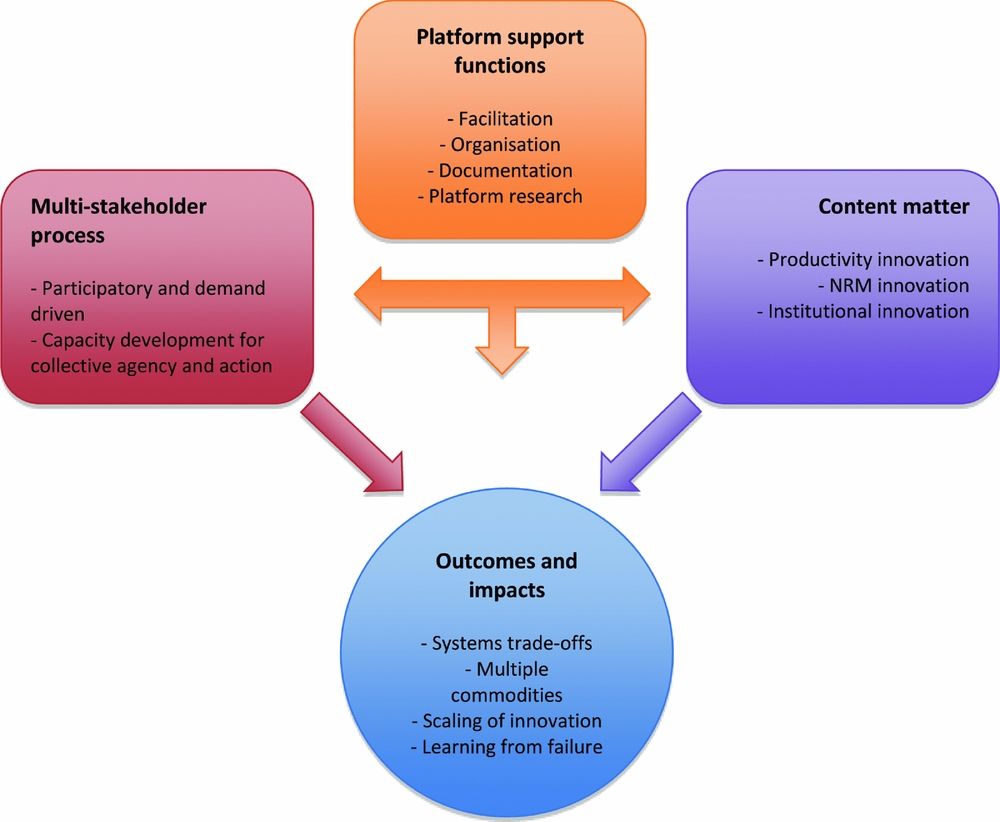
Based on a review of the scientific literature on IPs and agricultural innovation more broadly, we have identified three key IP components that can support us to unravel the contribution of mature IPs to achieving agricultural development impact: (1) the multi-stakeholder process, (2) the content matter, and (3) the platform support functions. Figure 1 shows how platform support (e.g. facilitation) connects the multi-stakeholder processes of learning, negotiation and experimentation (‘how’ a problem or opportunity is identified and dealt with) to the specific IP content matter (‘what’ is the problem or opportunity that is bringing different stakeholders together). Outcomes and impacts can result both from the process as well as from the content matter. An example of process impact could be strengthening of stakeholder networks, collaboration, interaction and willingness to engage in joint actions. An example of content matter impact could be an improved seed, breed or other technology, more sustainable Natural Resource Management (NRM) practices or enhanced policy or market environments. The three components and their subcomponents are discussed in more detail below, followed by a definition of the categories of IP outcomes and impacts in the context of this paper.
Relation between key IP components of multi-stakeholder process, content matter, platform support functions, and outcomes and impacts (Schut et al., Reference Schut, Klerkx, Sartas, Lamers, Mc Campbell, Ogbonna, Kaushik, Atta-Krah and Leeuwis2016a).
Multi-stakeholder process
IPs in AR4D can form an important vehicle for participatory and demand-driven research for development activities (Kilelu et al., Reference Kilelu, Klerkx, Leeuwis and Hall2011, Reference Kilelu, Klerkx and Leeuwis2013). Research and development processes are often disconnected because of their different objectives, time-lines and institutional dynamics (Schut et al., Reference Schut, van Paassen, Leeuwis and Klerkx2014b). To provide better insight in the information, technology and service needs of different groups and their communication and collaboration preferences towards achieving development impact, it is important that their multiple objectives and interests are reflected in AR4D processes. Furthermore, the continuous involvement of stakeholders (including politicians, donors and other change agents) can facilitate the scaling of innovation (Faysse, Reference Faysse2006). Inclusive and participatory research can support the continuous alignment of AR4D activities with the changing context and stakeholder demands (Greenwood and Levin, Reference Greenwood and Levin2007). This requires a degree of flexibility and adaptive capacity in IP processes.
Multi-stakeholder processes can foster capacity development across individual, organisational and systems levels for collective agency and action (Donnet et al., Reference Donnet, Hellin and Riis-Jacobsen2012). Stakeholder groups become aware of how their constraints and opportunities for innovation are interrelated and why joint action is essential to reach their objectives (Leeuwis, Reference Leeuwis2000). This can provide a basis for better interaction, investment, joint resource mobilisation and policy advocacy. Participatory Learning and Action Research (Kristjanson et al., Reference Kristjanson, Reid, Dickson, Clark, Vishnubhotla, Romney, Bezkorowajnyj, Said, Kaelo, Makui, Nkedianye, Nyangaga, Okwi, Puskur, Tarawali, MacMillan, Grace, Randolph and Affognon2008; Stroud, Reference Stroud, Pound, Snapp, McDougall and Braun2003; Wopereis et al., Reference Wopereis, Defoer, Idinoba, Diack and Dugué2007) and Participatory Action Research (e.g. Ottosson, Reference Ottosson2003) can provide a good basis for developing the capacity of all involved in IPs.
Content matter
To analyse the content matter addressed in agricultural IPs, we identify three categories of agricultural innovations. The first are productivity innovations, which include novel technologies and management practices to increase agricultural production and yield based on laboratory and field science (Klerkx and Leeuwis, Reference Klerkx and Leeuwis2009). The second are NRM innovation, which deal specifically with problems related to low soil fertility, erosion, deforestation, water availability and climate change (Misiko et al., Reference Misiko, Mundy and Ericksen2013). The third are institutional innovations, which are geared towards creating an enabling environment for, amongst others, collective action and access to land, services, finance and markets (Hounkonnou et al., Reference Hounkonnou, Kossou, Kuyper, Leeuwis, Nederlof, Röling, Sakyi-Dawson, Traoré and van Huis2012).
To address complex agricultural problems, productivity, NRM and institutional innovations need to emerge in an integrated way, making smart use of available agro-ecological, human and financial resources across different levels (e.g. plot, farm, community and landscape level) (Robinson et al., Reference Robinson, Ericksen, Chesterman and Worden2015). Trade-offs and synergies across different types of innovations and levels need to be explored.
Platform support functions
Effective support to, and learning from, IPs requires the fulfilment of different types of functions (Sartas et al., Reference Sartas, Schut and Leeuwis2017). The first function, facilitation, is usually fulfilled by a small team of people. Facilitation refers to the empowerment of IP members, supporting collaboration between them and linking the IP to the broader networks of markets, donors and political decision makers (van Rooyen et al., Reference van Rooyen, Swaans, Cullen, Lema and Mundy2013). The second function is organisation, which implies the provision of logistical and financial support, as well as backstopping of IP events and activities. Typical examples are organising IP legal support and handling IP administration and accountability. The third function is documentation, which refers to the systematic capturing and reporting of IP events, process dynamics and impacts. Documentation and learning systems should be inclusive and IP members participate in monitoring and evaluation. As such, documentation becomes a tool for reflection on both the IP dynamics (the multi-stakeholder process) and the platform's ability to develop concrete solutions to problems (the content matter) (Lundy et al., Reference Lundy, Le Borgne, Birachi, Cullen, Boogaard, Adekunle and Victor2013). Lastly, research on the platform process is critical as it provides recommendations to enhance IP performance towards achieving development outcomes and impact (Schut et al., Reference Schut, Klerkx, Sartas, Lamers, Mc Campbell, Ogbonna, Kaushik, Atta-Krah and Leeuwis2016a).
Outcomes and impact
In our analysis we follow the four categories of IP outcomes and impacts as defined by Dror et al. (Reference Dror, Cadilhon, Schut, Misiko and Maheshwari2016) which are based on the analysis of reasons for institutionalising IPs in AR4D (e.g. Schut et al., Reference Schut, Klerkx, Sartas, Lamers, Mc Campbell, Ogbonna, Kaushik, Atta-Krah and Leeuwis2016a). The first category of mature IP outcomes and impact is systems trade-offs: exploring synergies and competition between different interventions and strategies across plot, household, community and landscape levels. Trade-offs can be of financial (where to invest in?), social (how will this affect labour dynamics between men and women?), or technological (mono- versus inter-cropping?) nature (Giller et al., Reference Giller, Tittonell, Rufino, van Wijk, Zingore, Mapfumo, Adjei-Nsiah, Herrero, Chikowo, Corbeels, Rowe, Baijukya, Mwijage, Smith, Yeboah, van der Burg, Sanogo, Misiko, de Ridder, Karanja, Kaizzi, K'Ungu, Mwale, Nwaga, Pacini and Vanlauwe2011). Insights in trade-offs can guide investment decisions at household, but also at policy levels on where maximum return on investment can be achieved. The second outcome or impact category of mature IPs involves multiple commodities or enterprises (rather than a focus on a single crop, commodity or enterprise), for example, through understanding and managing complex tree-crop-livestock interactions (Schiller et al., Reference Schiller, Giller, van der Hoek and Klerkx2015). The third category of mature IP outcomes and impact is related to the scaling of agricultural innovations. Scaling refers to the spread of new technologies, dissemination of (scientific) knowledge, collaborations between different stakeholder groups, access to markets, etc., beyond the original scope, geographical focus or target audience of the IP (World Bank, 2012). In the general agricultural innovation literature, authors distinguish between outscaling and upscaling. Outscaling refers to the horizontal diffusion process of innovations at the same level (e.g. from working in 3 communities to working in 30 communities). Upscaling of an innovation refers to the embedding of processes or technologies at higher levels (e.g. institutionalising new crop management practices in agricultural policies). The fourth category of mature IPs concerns (learning from) failure. Learning from failure is a key characteristic of mature sectors, in which there is space to learn from positive and negative experiences, outcomes and impacts. Although failure is incontrovertible, we did not find many examples of failed IPs in the literature.
METHODOLOGICAL AND ANALYTICAL FRAMEWORK
Outcomes and impacts of IPs are generally hard to measure (Boogaard et al., Reference Boogaard, Dror, Adekunle, Le Borgne, van Rooyen and Lundy2013). There can be time lags between a platform's activities and its impact, and it may be difficult to attribute the exact contribution of an IP to change (Duncan et al., Reference Duncan, Le Borgne, Maute and Tucker2013). We decided to use a case study approach to gather evidence about mature IP outcomes and impacts. The case study approach allows researchers to develop in-depth, holistic and meaningful analyses of real-life social phenomena or processes (Yin, Reference Yin2009). The approach is particularly useful when studying multi-dimensional phenomena that cross multiple domains, themes and levels (de Vaus, Reference de Vaus2001), and when the boundaries of the phenomena under study (the IP) and context are blurring (Yin, Reference Yin2009). The case studies included in this review were ‘crowd-sourced’ through an open, online call for ‘Mature IPs in the agricultural systems research landscape’. This call was launched in December 2014 and spread through several online channels (mailing lists, blogs and other popular media). Under this overarching theme, case studies could be submitted under the four outcome or impact categories described above (systems trade-offs, multiple commodities, scaling and failure).
IP case study selection
The case study call guidelines encouraged contributors to focus on cases that demonstrate proven results of outcome and impact. Likewise, contributors were urged to elaborate on how general IP components (e.g. related to the multi-stakeholder process, content matter and platform support) had contributed to achieving the outcomes. Through the open call, 28 case study abstracts were received. The 28 cases were evaluated for their (1) content strength, (2) quality of writing and (3) usefulness of the case study to illustrate the impact of a mature IP. The four authors of this paper independently reviewed and evaluated the abstracts using a scale ranging from 1 to 10 for each of the three criteria. Reviewers were not allowed to assess cases in which they had a personal or institutional stake to avoid potential conflict of interest. Average scores across the independent reviewers resulted in the short-listing of 12 case studies.
The lead authors of these 12 cases were invited to submit a full case study (of max 5000 words) and to attend a writeshop to further develop and analyse their case study. The objective of the writeshop was to allow the 12 case authors to work on the writing of their case studies and to produce convincing narratives around evidence that demonstrated the impacts of their IP. The writeshop was organised in Nairobi, Kenya, in February 2015. The writeshop adapted guidelines provided by Gonsalves and Armonia (Reference Gonsalves and Armonia2010) and Ballantyne (Reference Ballantyne2014) to encourage authors’ thinking about the main messages and outline of their case study. The three-and-a-half day writeshop allocated 11 hours for the authors to write on their cases but also facilitated peer-review and feedback among case study authors. During the writeshop, the analysis of the success factors for impact of mature IPs in the AR4D landscape was conducted together with the case study authors.
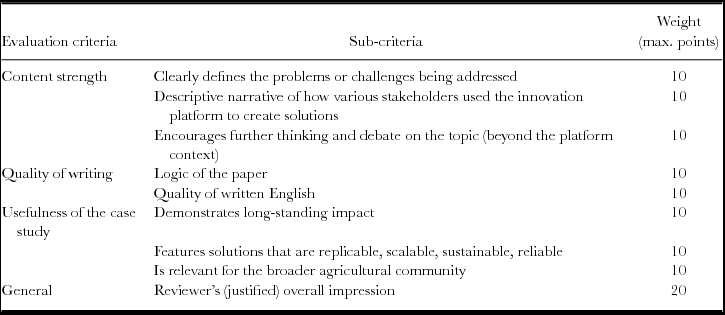
After the writeshop, case study authors were given three weeks to finalise and submit their cases. Upon finalisation, the 12 case studies were again independently evaluated and scored by the four reviewers. A more operational evaluation framework based on the assessment criteria listed in the case study call guidelines was used to evaluate the cases (Table 1).
Evaluation criteria and sub-criteria for full case study assessment.
Similar to the first round of evaluation, cases in which a reviewer had a personal or institutional interest were not assessed by that particular reviewer. Average scores across the independent reviewers and the reviewers’ overall justified impression resulted in a consensus on the selection of eight cases that were found to be suitable for analysis. Each of the case studies is described in more detail in the next section.
IP case study description
The first IP case study is that of the Nicaragua Learning Alliance (NLA), submitted in the category ‘scaling up agricultural innovations’. The NLA is a national IP founded in 2008. Its members are 10 international and national NGOs, research organisations and one national farmers’ cooperative. The IP's objective is to develop the agribusiness capacities of Nicaraguan farmers. It has developed relevant training material and used a dense network of partner farmers’ cooperatives all over the country to train farmers from national to village levels. The same partner network also collects feedback on the IP's training, which helps adapting the training curriculum for future learning cycles.
The second IP case study describes experiences from the Consortium for Improving Agriculture-based Livelihoods in Central Africa (CIALCA). This IP was launched in 2006 concurrently in Burundi, Rwanda and eastern DR Congo. CIALCA's objective is to foster adaptive collaboration between different groups of stakeholders in the region to improve agricultural productivity. The IP involves international and national agricultural research centres, farmers’ groups, public and private extension service providers, NGOs and policy makers. Submitted under the category ‘systems trade-offs’, this case highlights the role of stakeholder engagement in generating and disseminating knowledge to address challenges arising at the nexus between crops, people and policies.
The third case study features the Bubaare Innovation Platform (Bubaare) from Uganda. Bubaare started as an international agricultural research project with research institutes, farmers’ groups, private food processors and distributors. The initial objective was value addition to the farmers’ sorghum. By fostering market linkages for the farmers, the IP started several other value addition projects. It became so successful at marketing all kinds of locally processed food that it had to register formally to stay in business, thus, becoming a multi-commodity cooperative society of farmers. It still keeps all its former IP partners as business and development consultants. Bubaare was submitted as a ‘scaling up agricultural innovations’ case.
The fourth IP case study describes the story of the Mukono-Wakiso Innovation Platform (Mukono-Wakiso IP) from Uganda. Submitted under the category ‘platforms focussing on multiple commodities’, this IP was formed in 2014 to help integrate the processes, work and expertise of several international agricultural research centres with national agricultural research organisations, other public sector bodies, non-governmental organisations and the private sector to respond better to the needs of Ugandan smallholder farmers in two highly populated and peri-urban districts. Working together is enabling these institutions to offer more practical and holistic tree-crop-livestock production solutions to farmers and their value chain partners.
The fifth IP case study is on WeRATE from Kenya. The objective of WeRATE is rural transformation in West Kenya. Its members test the new agricultural technologies and input products developed by international and local researchers but trialled through a network of local NGOs on actual smallholder farms. Submitted under the category ‘scaling up agricultural innovations’, WeRATE evaluated resistant maize to kill parasitic Striga weeds. It demonstrated that grain legumes required blended fertiliser, leading to commercialising of an inoculant-fertiliser blend, which has reached over 37,000 households in over four years of collaboration.
The sixth IP case study presents the Humidtropics Ethiopia Local Innovation Platforms (NBDC), whose objective was to enhance agricultural production and improve NRM to sustain agricultural intensification in three Ethiopian districts. Started by the International Livestock Research Institute with local farming communities, village elders, NGOs and government officials, the IPs first tested the introduction of improved planted forages on different land plots for over two years. Its positive results attracted more international research partners, government officials and farmers’ groups from other districts. NBDC thus diversified to cover other commodities while keeping its initial focus on preventing soil erosion. NBDC was submitted as a ‘platform focussing on multiple commodities’.
The seventh IP case study is on SysCom India. Submitted under the category ‘systems trade-offs’, SysCom was launched in 2006 as a consortium of scientists, development practitioners and farmers to develop locally relevant organic cotton production techniques. The initial trade-off to tackle was between relatively flexible conventional production practices and the more sustainable organic farming options. SysCom's principal innovation has been a new locally produced organic phosphorous fertiliser. It has organised farmer competitions to spur local innovation and facilitated its dissemination. As a result, although achieving lower yields, organic cotton systems are as rewarding as conventional ones due to lower production costs.
The eighth and final IP case is the Dairy Value Chain and Feed Innovation Platform (MilkIT) from Northern India. The MilkIT project was launched in 2013 in a relatively remote mountainous region where women had to manage their farms and households alone because of male labour migration. MilkIT united dairy development actors, researchers and farmers who had tended to work individually rather than together. The expected outcome was to improve dairy stock, increase fodder availability and improve access to dairy markets through knowledge synergies from farm and business development in practice and science. MilkIT was submitted under the category ‘scaling up agricultural innovations’.
IP case study analytical framework
The eight selected case studies were analysed in different ways. First, general characteristics were explored including geographical spread, outcome or impact category and year of establishment. Second, during the writeshop, case study authors were assisted by a team of editors, innovation scientists and subject matter experts in coming up with concrete examples under the subcategories of the three IP components: (1) multi-stakeholder process, (2) content matter and (3) platform support functions. Authors were also asked to provide examples of ‘what works’ as well as of ‘what does not work’, which were collected. Third, the four authors of this paper analysed the eight cases independently using a scale ranging from 1 to 5 for their strength in relation to the three IP components and their subcomponents. Reviewers also provided feedback on the strongest and weakest element of each case study. Average scoring across the four reviewers provided an insight in which of the cases scored high in terms of how one or more of the IP components (multi-stakeholder process, content matter and platform support) contributed to the IP's development outcomes or impact. Subsequently, cases were analysed qualitatively for exemplary evidence of the relation between the IP (sub-) component and their development outcome and impact.
RESULTS, ANALYSIS AND DISCUSSION
Five of the eight cases originate from East and Central Africa, two are from India and one from Central America. A possible explanation for this is that the ‘IP’ approach was piloted by the Forum for Agricultural Research in Africa (FARA), under the Sub-Saharan Africa Challenge Programme (SSA-CP) (Adekunle and Fatunbi, Reference Adekunle and Fatunbi2012) and the Dissemination of New Agricultural Technologies for Africa (DONATA) project. The presence of these IP programmes and their spin-off can explain why the call for mature IPs mainly yielded responses from Africa. Other programmes, such as the CGIAR Research Program on Integrated Systems for the Humid Tropics (Humidtropics) and the CGIAR Research Program on Dryland Cereals, have adopted the IP approach for achieving multi-stakeholder engagement and realising their research for development outcomes in Africa, Central America and Asia. However, these programmes were only initiated in 2012, and in many sites their IPs are still immature. Although multi-stakeholder approaches have been trialled in other regions than Africa, it is possible that they had used another name than ‘IP’; their champions may thus not have seen the call for case studies on IPs as relevant to them. Finally, the fact that the call for case studies stipulated English as the language of submission might have deterred Spanish-speaking from Latin America and francophone authors from West Africa to submit a case study of their platform.
Analyses show that maturity of innovation platforms does not only have to do with the actual platform's date of establishment. The youngest platform among those studied was the Mukono-Wakiso IP which was only established in 2013. The oldest platform is WeRATE, which started operating as a grouping of NGOs in 2002. IPs generally go through several steps of ‘life stages’ (Tucker et al., Reference Tucker, Schut and Klerkx2013). Reaching ‘maturity’ may need more or less time depending on the internal dynamics as well as the external environment. For example, the NLA case from Nicaragua needed seven years of activity to reach maturity, whereas the MilkIT platform in India had reached that same life stage after only two years of activity.
Of the eight case studies included in the final analysis, half were categorised by the case study authors under the ‘scaling’ category, and the rest were equally divided with two IPs classified as ‘systems trade-offs’ and two in the ‘multiple commodity’ category. No case study focussed on learning from failure although the call explicitly encouraged authors to submit failed IP cases. Table 2 shows the results of the independent scoring of the cases by the four reviewers. In the below sections, exemplary evidence is provided from the identified cases on whether and how the IP (sub-)components contributed to achieving development outcomes and impact, followed by a number of more general reflections.
Case study categorisation and analysis of IP components.
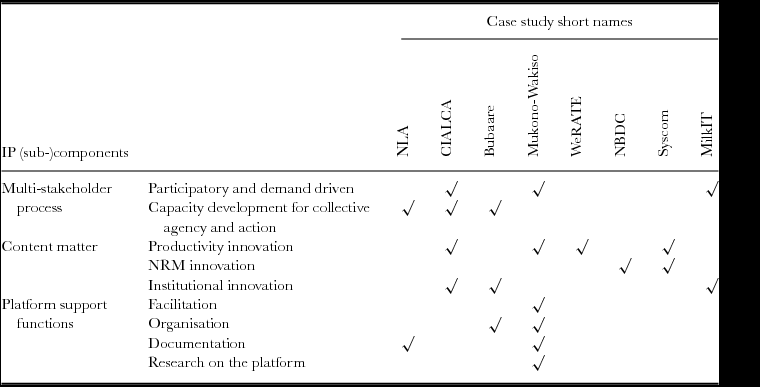
Note: Reviewers independently analysed each case study on a scale of 1–5. Cases that scored an average of 4 or higher are indicated with a tick: ✓.
Multi-stakeholder processes leading to platform outcomes and impact
Observation 1: Participatory processes and demand-driven activities contribute to impactful platforms: The CIALCA case showed how IPs emerged organically rather than through a planned intervention by a development project external to the local system. CIALCA IPs naturally fulfilled the mutual needs of farmers, government officials, the private sector and other agricultural stakeholders to work together around specific problems. This led to having different stakeholder groups in the platform, which enabled access to various sources of knowledge and expertise. CIALCA IPs also organised field trials with pilot farmers and field visits for exchange of information between farmers and other agricultural stakeholders. In other settings, such as in MilkIT and Mukono-Wakiso IPs, initial multi-stakeholder meetings led to identifying resource and knowledge gaps, which allowed the IP to co-opt other stakeholders to help solve the problem faced by farmers. Similar examples of how participatory and demand-driven processes can contribute to achieving development outcomes and impacts have been documented (Adekunle and Fatunbi, Reference Adekunle and Fatunbi2012; Cullen et al., Reference Cullen, Lema, Tucker, Snyder, Duncan, Triomphe, Waters-Bayer, Klerkx, Schut, Cullen, Kamau and Borgne2014a, Reference Cullen, Tucker, Snyder, Lema and Duncanb; Leeuwis et al., Reference Leeuwis, Schut, Waters-Bayer, Mur, Atta-Krah and Douthwaite2014; Neef and Neubert, Reference Neef and Neubert2011). Other IPs were still locked into a more top-down model of experts identifying the solution for the problem faced by farmers and providing their expertise through an IP (see also Lynam and Blackie, Reference Lynam, Blackie and Anderson1994). For example, NLA members in Nicaragua complained of not being able to influence the content of the agribusiness training delivered by the platform. The cases analysed thus provide evidence that solid participatory processes at the initiation and establishment of a platform ensure that an IP responds to a problem prioritised by stakeholders. In addition, this ensures ownership of solutions, which provides a basis for scaling of innovations (Faysse, Reference Faysse2006).
Observation 2: Capacity development for collective agency and action is a prerequisite to allow platform stakeholders to become actors of change: Capacity development and backstopping, not as an end in itself but rather as a means to achieve progress and sustainability, was an essential ingredient across all IPs. Sustainability of IPs refers to members being capacitated to take on the challenges they may face in the future, thus, contributing to the likelihood that the IP will keep going after initial project support is over. The IPs analysed illustrate the importance of targeted training, especially designed to address specific capacity needs. The IP training played a key role to enhance self-help, to facilitate innovation, enable engagement with other stakeholders and more critically utilise the knowledge and skills detained by fellow farmers, institutional and business partners within and orbiting around the IP. The NLA case provides the best example of an IP investing in the capacity development of its members to give them more autonomy for self-help. The NLA used Nicaragua's extensive cooperative network to reach its objective of training individual smallholder farmers in agribusiness management on value chains, business plan development and strengthening of the farmer groups’ services to their members. In addition to the core business management training, the NLA training course also devoted two separate manuals to self-evaluation on the organizational skills of rural associative enterprises and to strengthening farmer groups’ socio-organizational processes. The NLA core members only provided training directly to representatives of the national farmer groups who then replicated the training within their own networks of local farmer groups down to the individual farmers. This allowed the NLA to train representatives in 77 producers’ organisations, reaching 19,347 households across Nicaragua who were empowered to interact with market stakeholders. The NLA and its capacity development process thus achieved a tangible impact at scale through the large number of Nicaraguan farmers trained. Other examples of scaling capacity development through IPs are found in World Bank (2012). The cases of CIALCA and Bubaare provide other good examples of how capacity development can lead to impact. In particular, CIALCA's training of MSc and PhD students led to the development of capacity in the national agricultural research systems. Furthermore, several of the students ended up in influential science or policy positions in the national systems. This facilitated subsequent CIALCA activities requiring strong support from government and national research centres, as well as the design of new joint research and development proposals for Central Africa. The broader literature also acknowledges that IPs – in their capacity to promote exchange of knowledge and skills between its members and with associated partners – can provide a solid base to develop the capacity of agricultural actors in working together to solve common problems (Adekunle and Fatunbi, Reference Adekunle and Fatunbi2012; Ngwenya and Hagmann, Reference Ngwenya and Hagmann2011).
Content matter leading to platform outcomes and impact
Observation 3: Productivity innovation through multi-stakeholder interactions increases farmers’ yields: Among the case studies analysed, the impact reached through productivity innovation is best illustrated by WeRATE. The IP conducted farmer field trials for an inoculant-fertiliser blend technology for soybean. After having validated its successful trials, the IP used its network of member NGOs and commercial partners to disseminate its results to 37,000 farmer households. The potency of the technological innovation was confirmed by a 64% adoption rate over four years. The case shows how technology development and testing within the setting of an IP comprising both non-profit members and stakeholders with a business interest can lead to commercialisation and dissemination of the innovation through the IP network. The SysCom case shows similar impact – though at a smaller scale – of innovative technologies suited to the local context of cotton production in Central India. In particular, the innovative soil fertility management techniques developed and tested by SysCom and its network of farmers and government extension workers were key to identifying the pros and cons of organic cotton production systems. The mix of empirical scientific trials and indigenous stakeholder knowledge that an IP can facilitate contributes to identifying the most appropriate techniques for productivity improvement; a phenomenon that has also been acknowledged by other scholars (Téno and Cadilhon, Reference Téno and Cadilhon2016). The SysCom productivity innovation trials thus provided the basis for informed decision making by farmers, based on the trade-off analysis of conventional and organic farming systems. Likewise, CIALCA was particularly instrumental in advocating for the reintroduction of banana–coffee intercropping in Rwanda after its trade-off analysis demonstrated the superior quality of the coffee, while not negatively affecting banana yields in banana–coffee intercropping field trials (Jassogne et al., Reference Jassogne, Nibasumba, Wairegi, Baret, Deraeck, Mukasa, Wanyama, Bongers, van Asten, Blomme, van Asten and Vanlauwe2013; Voice of America, 2011). This analysis was aimed to guide decision making at national policy level.
Observation 4: NRM innovations facilitated through mature IPs strengthen the sustainability of agriculture: The NBDC case describes how the researchers involved in the IP identified that water bunds dug along steep slopes combined with new fodder production techniques would help address the soil degradation problem faced by the IP's farmers. Indeed, this rather simple technological innovation led to increased protection against soil erosion. Although still small in scale, the local government has acknowledged the success of this NRM innovation tested by the NBDC IPs and wants to replicate this in other districts affected by soil degradation and erosion. SysCom provides another good example of how NRM through IPs led to development impact. The IP researchers developed innovative methods for producing improved farmyard manure enriched with organic rock phosphorus for growing cotton. The methods were tested with the IP's farmers, with additional advice from input suppliers and local researchers. A competition launched by SysCom to encourage farmer-designed storage sheds for phosphorus-improved manure likewise resulted in the blossoming of this farmer innovation and its wide dissemination. CIALCA's research focus on integrating multiple crops on the hilly landscapes of the highlands of Central Africa. Its advocacy for the sustainability advantages of these multi-cropping systems to policy makers have resulted in a more favourable view on the role of these traditional production systems in integrated soil fertility management by governments in the region. This has allowed these practices to flourish, in turn helping reduce soil erosion and leading to more resilient cropping systems. These findings are supported by results from previous studies compiling the positive impact of NRM innovations through IPs in tackling challenges like erosion, deforestation, water management and climate change (Warner, Reference Warner2007; Misiko et al., Reference Misiko, Mundy and Ericksen2013).
Observation 5: Institutional innovations provide an enabling environment for the scaling of IP innovations: CIALCA provides a good example of how an IP can impact policy. One of the key principles underlying CIALCA was that IPs would facilitate the embedding of R4D activities in local collaborative arrangements and institutions. In Rwanda, where public institutions are relatively strong, the government's research and extension system were key partners. In Burundi and DR Congo, besides the government organisations, NGOs and research organisations played a bigger role to allow innovations to reach potential end users. In all countries, messages were packaged into suitable communication formats using local radio and video. Combined with the targeted training of future policy makers, this led to policy influence in the three countries (e.g. influencing perceptions on intercropping). The MilkIT project shows how the IP, as an institutional innovation in itself, facilitated the joint planning of activities between farmers and other actors in the agricultural system leading to increased marketing of farmers’ milk. The IP activities to disseminate simple feed improvement technologies resulted in increasing milk production. The IP also fostered the grouping of farmers’ milk production in collection centres and introduced milk collectors and dairy cooperative supply agents to the participating farmers. Farmers from remote mountainous communities could thus profitably sell milk and increase their income. These and other impacts were confirmed by an independent evaluation of the project (Subedi et al., Reference Subedi, Cadilhon, Thanammal and Teufel2014). In Uganda, the Bubaare IP decided to register itself as a multi-purpose cooperative society to overcome constraints of its prior informal legal status as a multi-stakeholder group. As a result of the legalisation, the IP has been able to help its farmer members gain the official standard certification from the Uganda National Bureau of Standards, allowing access to higher-end markets in Kampala city. A private company was contracted as a key customer within the network of commercial partners of the multi-purpose cooperative. The resulting stable demand for sorghum led to increasing its supply from 500 to 2000 kg per year per individual farmer. The success of the IP resulted in an expansion of its membership from 32 to 1121 farmer groups. This innovative legal framework for an IP will be particularly useful as a precedent for other IPs seeking to legalise their activities and enhance their (financial) sustainability within commercial agrifood chains (Cadilhon and Dedieu, Reference Cadilhon and Dedieu2011). These findings align with other studies that recognise the essential contribution of IPs to enhancing collaboration between stakeholders, developing social infrastructure, access to finance, certification, brokering land tenure arrangements, establishing public goods and markets and influencing policy making for greater impact on value chain development (Cadilhon et al., Reference Cadilhon, Diep and Maass2016; Kago et al., Reference Kago, Cadilhon, Maina and Omore2015; Shepherd et al., Reference Shepherd, Cadilhon and Gálvez2009; van Paassen et al., Reference van Paassen, Klerkx, Adu-Acheampong, Adjei-Nsiah and Zannoue2014; Zewdie et al., Reference Zewdie, Cadilhon and Werthmann2015).
Platform support functions that lead to outcomes and impact
Observation 6: Facilitation of IPs is a key to achieve impact: The Mukono-Wakiso IP facilitator supported the platform members to identify their priorities considering the needs of the farmers. By stimulating a holistic analysis of problems, the platform agreed to work on integrated tree, crop and livestock innovations to address farmers’ challenges. The fast-track achievements of the Mukono-Wakiso IP can to a large extent be attributed to its dynamic facilitation process, which led to the multi-stakeholder agreement on the program of activities. A comparative study between MilkIT projects in Tanzania and India has underlined the essential role of the full-time Indian platform's facilitator in achieving more tangible results in the field as compared to the Tanzania platform (Duncan et al., Reference Duncan, Teufel, Ravichandran, Hendrickx and Ballantyne2015). Swaans et al. (Reference Swaans, Cullen, van Rooyen, Adekunle, Ngwenya, Lema and Nederlof2013b) have likewise showed the essential role facilitation plays in making IPs more impactful and sustainable. Facilitation in the context of multi-stakeholder innovation processes is also referred to as innovation, knowledge or network brokerage (Klerkx et al., Reference Klerkx, Hall and Leeuwis2009, Reference Klerkx, Schut, Leeuwis and Kilelu2012; Schut et al., Reference Schut, Leeuwis, van Paassen and Lerner2011).
Observation 7: Robust organisation of the IP strengthens its legitimacy and sustainable impact: Both the Mukono-Wakiso and the Bubaare IPs in Uganda can attribute some of their impact to the demonstrated robust organisation of their activities. For Mukono-Wakiso, the regular IP meetings combined with science-based field trials have allowed farmers, input traders and scientists to experiment the best components of tree-crop-livestock integrated systems. This experimentation led to the satisfaction of urban consumer demand, which materialised through the commodity traders who also joined the IP. WeRATE has also built its success on a similar organisation. For Bubaare, its new legal entity as a multi-purpose cooperative society has allowed it to streamline its administration to its new cooperative goals and to become a recognised actor in various commodity value chains of Uganda, which benefitted its farmer members. Although the arguments in favour of a formal organisation are strong for IPs trying to develop value chains (Cadilhon and Dedieu, Reference Cadilhon and Dedieu2011; Kago et al., Reference Kago, Cadilhon, Maina and Omore2015; Shepherd et al., Reference Shepherd, Cadilhon and Gálvez2009), a looser organisational model may be more suited to tackle environmental and local community development issues (Swaans et al., Reference Swaans, Boogaard, Salazar and Hendrickx2013a; Zewdie et al., Reference Zewdie, Cadilhon and Werthmann2015). This largely depends on contexts and the range of activities and objectives an IP seeks to achieve. For example, for an IP (as opposed to one of its members or partners) to carry out a business venture and secure a bank loan, it will need a formal status in Uganda and Kenya; but no formal status is necessary to undertake farmer field trials and community development, as shown by the examples of Mukono-Wakiso in Uganda and WeRATE in Kenya. Indeed, WeRATE kept an informal status for 12 years before finding it necessary to become a legal entity to be able to conduct formal institutional and business collaborations with larger international partners.
Observation 8: The documentation of activities and decisions enhances reflexivity on IP processes and lessons application: All Mukono-Wakiso IP events, in addition to the regular formal platform meetings, are being documented using a platform learning and documentation system (Sartas et al., Reference Sartas, Schut and Leeuwis2017). Documentation includes reports stating the major decisions taken, capturing stakeholder, gender and age group representation in platform events, and mapping of changing platform members’ needs and objectives. Outcome of the documentation is shared with all members, and beyond, mainly using online data repositories. This supports the work of the chairperson, facilitator and secretariat of the platform in keeping the activities going. The reports are useful for newcomers into the platform to catch up on previous activities and decisions. The documentation feeds into regular reflection meetings. During these meetings, the facilitator and other people involved in platform support discuss the performance of the platform and explore room for improvement. The NLA provides another good example of documenting its agribusiness training progress in attaining expected outcomes. Feedback from the local trainees is shared with national IP members who can then adjust their training materials and processes. Regular documentation of IP processes is increasingly being implemented in projects using IPs as their primary intervention tool (Makini et al., Reference Makini, Kamau, Makelo, Adekunle, Mburathi, Misiko, Pali and Dixon2013), but is still not widespread for various budgetary historical and philosophical reasons (Snyder and Cullen, Reference Snyder and Cullen2014). Documentation of the IP's process, business meetings (minutes) or profits is often needed when such a community-based organisation or cooperative ventures into business or credit borrowing. Beyond these business considerations, documentation is fundamental to stimulate learning within the IP, or as evidence to guide research, development and policy investments (Cadilhon et al., Reference Cadilhon, Diep and Maass2016; Kago et al., Reference Kago, Cadilhon, Maina and Omore2015).
Observation 9: Research on the platform process and impact are useful monitoring tools to improve IP performance: The Mukono-Wakiso IP is the object of research on multi-stakeholder processes by social scientists involved in the Humidtropics program. This ongoing research is meant to help the platform in terms of its process, content and support functions in order to understand how platforms are or are not contributing to achieving development impacts. The baseline data collected before the MilkIT project started in India, together with continuous data collection during the lifetime of the project, have enabled MilkIT to gather strong evidence to present concrete IP impacts in India and compare those with the parallel project site in Tanzania (Duncan et al., Reference Duncan, Teufel, Ravichandran, Hendrickx and Ballantyne2015). The NLA in Nicaragua also benefits from regular monitoring and impact studies by its researcher partners. Together with the feedback gathered from its members and beneficiaries, these research results contribute to suggesting better organisational models to reach the platforms’ training goals more efficiently. The NBDC platform in Ethiopia benefitted from the regular close scrutiny of an anthropologist throughout its existence as a project. This resulted in in-depth understanding of the social relationships existing between men, women, the elderly and youth within a village, how each type of villager relates with input suppliers and output traders, and their relationship with local government officials, extension services and technical assistants from external projects, all of which shape, foster or thwart natural resources innovations and dissemination in the rural Ethiopian highlands. This has allowed the IP's researchers to fine-tune their organisational model and make it ready for replication in other settings (Cullen et al., Reference Cullen, Lema, Tucker, Snyder, Duncan, Triomphe, Waters-Bayer, Klerkx, Schut, Cullen, Kamau and Borgne2014a). Research outcomes need to be included in reflexive learning processes in the IP (Sanyang et al., Reference Sanyang, Pyburn, Mur and Audet-Belanger2014). Findings must be communicated among members, to provide a basis for (needs assessment) of capacity development and training (Makini et al., Reference Makini, Kamau, Makelo, Adekunle, Mburathi, Misiko, Pali and Dixon2013).
General reflections on mature innovation platforms in AR4D
Observation 10: Our framework provides insight in IPs’ success factors but needs further refinement: A closer look at the framework (Figure 1) and its resulting impact matrix leads us to conclude that the three key IP pillars identified (multi-stakeholder process, content matter and platform support functions) form a useful starting point for understanding IP performance and success factors. We found pockets of success, but cannot claim we found compelling evidence of outcomes and impact across all case studies. Key strengths are found in the IP's capacity to (1) adapt and respond to changing contexts, and evolving needs and interests of its members (e.g. CIALCA), (2) provide an enabling environment for capacity development and learning (e.g. NLA), and (3) to provide incentives for different groups of stakeholders to engage in joint action (e.g. WeRATE). It is relatively easy to create these conditions for a small group of people in a particular locality around a specific problem or opportunity. It is much more difficult to preserve these enabling conditions when IPs are being institutionalised at higher systems or policy levels (what is often referred to as the Agricultural Innovation System) (Schut et al., Reference Schut, Klerkx, Sartas, Lamers, Mc Campbell, Ogbonna, Kaushik, Atta-Krah and Leeuwis2016a). Despite increasing evidence that achieving development impact at scale requires institutional innovations at policy level (Sanyang et al., Reference Sanyang, Taonda, Kuiseu, Coulibaly and Konaté2016), the AR4D sector seems to refrain from embarking on institutional experimentation. A recent study by Schut et al. (Reference Schut, van Asten, Okafor, Hicintuka, Mapatano, Nabahungu, Kagabo, Muchunguzi, Njukwe, Dontsop-Nguezet, Sartas and Vanlauwe2016b) provided several reasons for this, including limited expertise and (perceived) mandate to work on institutional innovation, short project cycles that impede work on institutional innovation that generally require more long-term investments, and the likelihood that institutional experimentation can be seen as political. This leads us to conclude that as long as IPs are not able to influence the institutional context in which they are implemented, their development outcomes and impacts are likely to remain local and limited. IPs need to be strongly embedded in and linked to higher systems levels where institutional innovations can lead to broader development outcomes and impact.
Observation 11: IPs and the AR4D organisations implementing them are not comfortable in recognising their failures: As previously mentioned, we received no entry under the ‘learning from failures’ category. Although there is increasing attention and space for acknowledging and learning from failure (e.g. IFAD, 2013; World Bank, 2011), the IPs and the organisations supporting them do not seem comfortable with embracing failure, and analysing both positive and negative lessons. A potential (ethical) reason could be that multi-stakeholder processes are people-centred, and accepting failure when working with vulnerable farmers and other stakeholder groups (e.g. a poorly functioning IP due to poor process design and facilitation) may be more sensitive as compared to failure in research for development processes that are more technology-centred (e.g. an on-station field trial that failed due to poor design or drought). More generally, the international AR4D sector is under increasing pressure from its donors to ‘prove’ (positive) impact, which results in organisational cultures that leave little space for acknowledging and learning from what did not work. To understand the full range of determinants for success of IPs in the AR4D landscape, we need to analyse the bad practices, the missteps and the unintended negative outcomes, which is a suggestion for further research.
Observation 12: Critical reflection on the role of IPs in fostering agriculture development impact at scale is required: Our cases show that IPs provide an effective vehicle for participatory action research and can have local development impacts. However, there is insufficient examination of scalability of the solutions developed by these platforms. Certainly, there is a need for better availability of data on, and analysis of, the comparative return on investment (financial and otherwise) of IPs compared to other intervention strategies. We have seen little evidence of a sense of urgency amongst researchers and practitioners alike to come up with a rigorous framework for documentation, measuring and reporting on this. The lack of such an evidence-based approach inadvertently weakens the credibility of the good work that is being achieved and reported, as well as insights in what IPs can and cannot achieve within the broader framework of AR4D. We find that IPs are increasingly proposed in AR4D programs as the main intervention approach to reach thousands of beneficiaries. We could not find evidence across our case study that IPs are indeed the most suitable and cost-effective mechanisms for doing so. Nevertheless, IPs can fulfil an important role in scaling pathways. For example, IPs can be good mechanisms for participatory, demand-driven action research with a relatively small group of committed stakeholders. This can provide a basis for achieving development impact at scale if IP solutions and processes are firmly embedded in, and linked with organisations, networks and mechanisms that have the capacity to facilitate outscaling of a context-relevant basket of options, as well as upscaling platform roles and functions within the broader Agricultural Innovation System (Hermans et al., Reference Hermans, Stuiver, Beers and Kok2013; Klerkx et al., Reference Klerkx, Aarts and Leeuwis2010). Sanyang et al. (Reference Sanyang, Taonda, Kuiseu, Coulibaly and Konaté2016) confirm this by claiming that IPs must be ‘woven into impact infrastructure’, and that this can ‘enhance the uptake and use of localized technology and innovations by farmers and entrepreneurs and facilitate learning on options for scaling up and out’. It is important to acknowledge that these scaling pathways should not be developed during dissemination stages, but as an integral part of AR4D project and IP design and implementation (Wigboldus et al., Reference Wigboldus, Klerkx, Leeuwis, Schut, Muilerman and Jochemsen2016).
CONCLUSION
IPs are supposed to drive participatory, demand-driven AR4D at local level, by bringing together different stakeholder groups and supporting a facilitated process of joint problem identification, analysis and prioritisation, and of developing, testing and implementing solutions. IP outcomes and processes are supposed to provide a basis for outscaling of innovations beyond the original scope, geographical focus or target audience of the IP, as well as the upscaling of innovations to higher (policy) levels where some of the more structural opportunities and institutional constraints for agricultural development can be identified. To explore the potential of IPs in achieving this, we conducted a meta-analysis of mature IPs.
Our analysis showed pockets of success. IPs that are demand-driven and participatory allow the IP members to work on issues and problems that are relevant for different stakeholder groups. Through their ability to bring together local and scientific knowledge, IPs can guide informed decision-making about which innovations are technologically sound, financially feasible, and politically and socio-culturally acceptable. Developing a legal entity around an IP can enhance its sustainability in terms of its independence, (financial) benefits for its members, and its potential to become certified and access credit. What type of legal arrangement is most suitable depends on the (country) context and specific focus of the IP. Documentation and learning systems that provide continuous and short-term feedback can contribute to better understanding of platform performance and what actually contributes to the IP's impact. It enables flexible and adaptive management of the platform, which can speed up maturation of IPs. However, the majority of IPs still root their assessment in baselines and impact studies that do not provide any insight on what type of process interventions or activities contribute (positively) to the IP functioning and impact. Several of the cases analysed in this paper showed how IPs ‘emerged’ based on organic evolution of AR4D partnerships. This is quite different from the current wave of IPs that are often ‘implemented’ as part of a planned intervention strategy in AR4D projects. When institutionalising the IP approach, some of its key strengths and success factors (flexibility, partnerships based on common interests, joint investments, etc.) may get diluted.
Although we did not find evidence across the board of IPs achieving impact at scale, we do believe that IPs can be of value in developing and testing scalable technological and institutional innovations. However, IPs need to be firmly embedded in other private or public mechanisms and networks that have the capacity to reach target populations beyond the original scope of the IP.
Acknowledgements
We are grateful for the support provided by the International Livestock Research Institute (ILRI), the Forum for Agricultural Research in Africa (FARA) and the International Institute of Tropical Agriculture (IITA) under the CGIAR Research Program on Integrated Systems for the Humid Tropics (Humidtropics). We acknowledge Humidtropics and the CGIAR Fund Donors (http://www.cgiar.org/about-us/governing-2010-june-2016/cgiar-fund/fund-donors-2/) for their provision of core funding without which this research could not have been possible. The authors of this paper would like to thank all IP case study teams for sharing their enthusiasm and experiences.


 Open access

