


Although guidelines for the optimal use of psychotropics are widely available, prescribing in real-world settings routinely differs from suggested standards (Reference Wilkie, Preston and WesbyWilkie et al, 2001; Reference Harrington, Lelliott and PatonHarrington et al, 2002; Reference Lelliott, Paton and HarringtonLelliott et al, 2002). Polypharmacy, high-dose antipsychotic use, and maintenance use of benzodiazepines or anticholinergic agents, all lack a robust evidence base and can be associated with serious adverse effects (Reference MacKayMackay, 1994; Reference Marken, Stoner and BunkerMarken et al, 1996; British Medical Association & Royal Pharmaceutical Society, 2002; Reference Taylor, Paton and KerwinTaylor et al, 2003). This gap between evidence generated in the highly controlled paradigms of evidence-based medicine and the reality of everyday practice has been highlighted for research attention.
The implementation of agreed prescribing guidelines has been advocated as an effective way of assuring quality in the drug treatment of major mental disorders (Reference Steele, Duncan and ShortSteele et al, 2000; Reference Taylor, Mir and KerwinTaylor et al, 2000) but other work has indicated that change in practice is difficult to achieve in reality (Reference BauerBauer, 2002). Successful implementation of guidelines tends to occur where change is supported by multi-faceted interventions that include educational sessions, feedback mechanisms and additional or altered utilisation of existing resources (Reference Thomson O'Brien, Oxman and HaynesThomson-O’Brien et al, 2000; Reference Elliot, Woodward and OborneElliot et al, 2001; Reference BauerBauer, 2002). More optimal prescribing has been reported with a specialised review service for antipsychotic medication (Reference Stone, Ohlsen and TaylorStone et al, 2002) but there has been little study of the applicability of evidence-based prescribing standards in routine services.
Previous cross-sectional studies have identified the frequency of six key areas of suboptimal prescribing in a generic community mental health service (Box 1); age, being in receipt of intramuscular antipsychotic preparations, and degree of contact with consultant staff were predictors of prescribing quality (Reference Meagher and MoranMeagher & Moran, 2003). This study reports the impact of a multifaceted intervention on psychotropic prescribing within this service.
Method
The South-East Limerick Mental Health Services operating through St Anne's Day Hospital provides mental healthcare for a mixed urban-rural population of 46 000 in Southeast city and county Limerick. A generic multidisciplinary team operates from a community-based day hospital providing a typical range of psychological and pharmacological treatments.
Initial assessment
Over a 3-day period in 2001, all open case files in the service were evaluated with regard to demographics, history of service contact and current treatment (including drug treatment and contact with members of the multidisciplinary team). Clinical diagnoses were made by the consultant or senior registrar according to ICD-10 criteria (World Health Organization, 1993).
Assessment of prescribing practices
The quality of prescribing practices within the service was compared with standards outlined in the Psychotropic Drug Directory (Reference BazireBazire, 2001) and the Maudsley 2001 Prescribing Guidelines (Reference Taylor, McConnell and KerwinTaylor et al, 2001). Six common suboptimal prescribing practices were rated (absent=0, present=1) to produce a Prescribing Practice Quality (PPQ) score such that higher scores reflect less judicious prescribing practice (see Box 1). Patients were considered in receipt of treatments if they were receiving a regular prescription for the agent at the time of the audit or received the agent on an as-required basis for more than 2 of the previous 4 weeks. Chlorpromazine equivalents (Reference Centorrino, Eakin and BahkCentorrino et al, 2002) were calculated according to accepted criteria. The total PPQ score was considered an indicator of quality of overall prescribing and its relationship to other aspects of service use was examined.
Follow-up assessment
All available case files were re-evaluated 1 year later after the implementation of a multicomponent intervention that included guidelines to address suboptimal prescribing (see Boxes 2 and 3).
Box 1. Prescribing Practice Quality (PPQ) items and scoring
-
• Polypharmacy, i.e. use of two agents of same class
-
• Receiving thioridazine
-
• High-dose antipsychotic use, i.e. total dose in chlorpromazine equivalents greater than 1 g/day
-
• Maintenance benzodiazepine treatment
-
• Maintenance hypnotic treatment
-
• Routine use of anticholinergic agent.
1 point per item present; Score range 0-6; higher scores suggest less optimal prescribing.
Box 2. Multicomponent intervention to address suboptimal prescribing
-
• Evidence-based guidelines were agreed by consensus and derived from the Maudsley 2001 Prescribing Guidelines (see Box 3)
-
• Specific psychoeducational and anxiety management sessions were made available to support change, especially for patients receiving maintenance benzodiazepine medication
-
• Weekly multidisciplinary team meetings were used to regularly re-emphasise the importance of implementing the policies through case examples, highlighting how protocols should be applied.
Box 3. Guidelines to avoid suboptimal prescribing practice
-
• The use of antipsychotics in high doses (greater than 1g/day in chlorpromazine equivalents) should be avoided unless specific evidence exists to indicate a benefit for the patient, and even then the usefulness of such dosing should be regularly reviewed.
-
• Polypharmacy, i.e. the use of more than one agent from any psychotropic class, should be avoided except where there is either an evidence base to support such practice (e.g. mood stabiliser combinations) or evidence of specific benefit to the patient.
-
• Thioridazine should not be used where antipsychotic treatment is being initiated. Patients already receiving thioridazine should be informed of the new evidence concerning use and encouraged to undergo a discontinuation programme. Those patients who are unwilling to change from thioridazine or who appear to have a specific response to this agent should have an electrocardiogram and serum potassium levels should be monitored at least bi-annually.
-
• Maintenance anticholinergic agents can be necessary for some patients receiving antipsychotics but most can be optimally managed without routine use. Patients receiving anticholinergic agents should be educated regarding the adverse effects of these agents and encouraged to reduce and/or discontinue use on a trial basis. Those patients receiving depot antipsychotic preparations who have previously experienced significant side-effects should be given the option of reducing anticholinergic use to the initial 5-7 days post-depot.
-
• Patients should be educated regarding the problems of benzodiazepine agents and the need to minimise use. Those with sleep disturbance should be educated about non-pharmacological methods of enhancing sleep quality (e.g. caffeine avoidance, exercise, etc.). Hypnotic agents should only be used in severe cases and agents with lower addictive potential should be preferred. Allpatients receiving benzodiazepines should be encouraged to attempt phased discontinuation and offered support with anxiety management sessions and/or supportive counselling.
Statistical analysis
Statistical analyses were conducted using the Statistical Package for the Social Sciences (SPSS) version 10 for Windows. Changes in PPQ scores (non-normal data) were calculated with Wilcoxon signed ranks testing. Predictors of improved PPQ score were identified by logistic regression analysis.
Results
Demographics
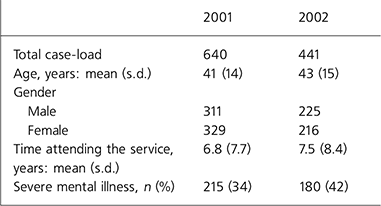
During the course of the year the total case-load was substantially reduced by a policy of active follow-up of non-attenders, with discharge from the service as appropriate. The diagnostic and demographic characteristics of the total population at each assessment point are shown in Table 1. A total of 264 patients were attending the service at both assessment points and thus exposed to the period of intervention. This ‘intervention cohort’ tended to have been in contact with the service for a longer period (mean 10.6 years), with a high frequency of severe mental illness (56%) and use of psychotropic medication (94%).
Clinical characteristics of those attending the St Anne's Day Hospital in 2001 and 2002
| 2001 | 2002 | |
|---|---|---|
| Total case-load | 640 | 441 |
| Age, years: mean (s.d.) Gender | 41 (14) | 43 (15) |
| Male | 311 | 225 |
| Female | 329 | 216 |
| Time attending the service, years: mean (s.d.) | 6.8 (7.7) | 7.5 (8.4) |
| Severe mental illness, n (%) | 215 (34) | 180 (42) |
Prescribing practices
At the initial assessment, 232 patients (46% of those receiving psychotropics) had at least one suboptimal prescribing practice. At follow-up, 139 patients (38% of those receiving psychotropics) had at least one suboptimal aspect of prescribing. Within the intervention cohort, the number with suboptimal practices decreased from 155 (59%) to 120 (45%) over the period of follow-up. Similarly mean PPQ scores substantially diminished both in the service attenders overall at each point (0.75 in 2001 to 0.52 in 2002) and also within the intervention cohort (0.96 in 2001 to 0.67 in 2002). The mean reduction in PPQ score within the intervention cohort was 0.28 points. At the second assessment in 2002, PPQ scores were reduced in both the population overall and in the intervention cohort (P=0.0005), indicating a reduction in both initiation and continuation of suboptimal practices.
Specific aspects of prescribing practice
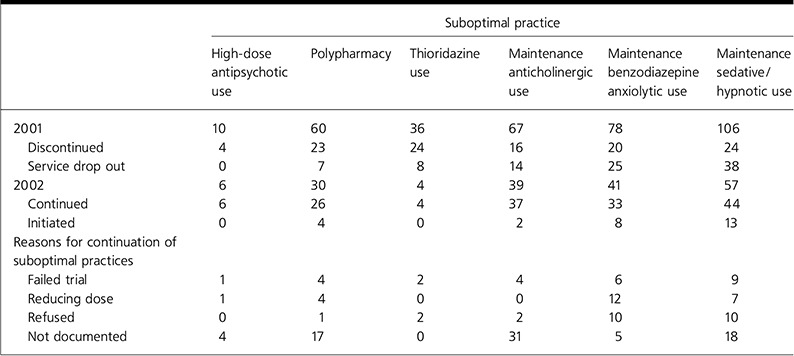
The change in the six aspects of prescribing practice are depicted in Table 2. For those patients who remained in contact with the service during the intervention, the rates of full implementation of guidelines to discontinue suboptimal practices were: thioridazine use (89%), polypharmacy (47%), high-dose antipsychotic use (40%), maintenance benzodiazepine use (38%), maintenance hypnotic use (35%) and maintenance anticholinergic use (30%). In addition, many patients, although still receiving benzodiazepine and hypnotic agents, had undergone substantial dose reduction (n=27). Many patients receiving benzodiazepine agents dropped out from the service during this period of prescribing rationalisation (n=32).
Prescribing practices in 2001 and 2002
| Suboptimal practice | ||||||
|---|---|---|---|---|---|---|
| High-dose antipsychotic use | Polypharmacy | Thioridazine use | Maintenance anticholinergic use | Maintenance benzodiazepine anxiolytic use | Maintenance sedative/hypnotic use | |
| 2001 | 10 | 60 | 36 | 67 | 78 | 106 |
| Discontinued | 4 | 23 | 24 | 16 | 20 | 24 |
| Service drop out | 0 | 7 | 8 | 14 | 25 | 38 |
| 2002 | 6 | 30 | 4 | 39 | 41 | 57 |
| Continued | 6 | 26 | 4 | 37 | 33 | 44 |
| Initiated | 0 | 4 | 0 | 2 | 8 | 13 |
| Reasons for continuation of suboptimal practices | ||||||
| Failed trial | 1 | 4 | 2 | 4 | 6 | 9 |
| Reducing dose | 1 | 4 | 0 | 0 | 12 | 7 |
| Refused | 0 | 1 | 2 | 2 | 10 | 10 |
| Not documented | 4 | 17 | 0 | 31 | 5 | 18 |
The reasons for continued suboptimal practices for each of the six aspects of prescribing are shown in Table 2. Failed discontinuation of benzodiazepines was frequently a result of patient refusal (26%). In contrast, continued anticholinergic use (83%) was frequently related to the implementation of policy not being explicitly considered, i.e. no documented comment in case notes.
Exposure to multicomponent interventions
Potential predictors of improved prescribing (age, gender, duration attending service, diagnosis, number of medications, receipt of supportive psychological inputs to facilitate medication changes, duration of suboptimal practice, principal medical contact) were assessed by logistic regression analysis (PPQ score improved v. PPQ score not improved). Two variables emerged as significant independent predictors of reduced PPQ score: total number of medications received (P<0.001) and receipt of supportive psychological inputs to facilitate changes in medication (P=0.003), with those who received adjunctive psychological support (e.g. anxiety management) almost four times as likely to experience improved prescribing practice.
Discussion
This study of prescribing in a busy multidisciplinary mental health service concurs with studies from other centres that indicate that prescribing practices frequently deviate from recommended evidence-based guidelines (Reference Harrington, Lelliott and PatonHarrington et al, 2002; Reference Lelliott, Paton and HarringtonLelliott et al, 2002). At any time, between one-third and one-half of those attending the St Anne's community mental health service had one or more aspect of their medication regime which was outside suggested guidelines. Such practices can reflect unproven prescribing strategies but more typically relate to educational deficits or to other constraints (Reference TaylorTaylor, 2002).
Discontinuation of thioridazine and use of polypharmacy were most amenable to change with this programme. Benzodiazepine use altered less, partly because of the high rate of drop out among the population receiving these agents but also the reluctance of these patients to participate in dose reduction programmes, which has been noted in other studies (Reference Oude Voshaar, Gorgels and MolOude Voshaar et al, 2003). Recent reports of thioridazine discontinuation in people with learning disability (Reference Matthews and WestonMatthews & Weston, 2003) indicate adverse effects in more than half. Although we did not measure such events, it is reassuring that the majority of patients successfully discontinued thioridazine (89%), with only four continuing because of an apparent specific response to this agent (n=2) and patient refusal (n=2).
The introduction of clear prescribing policies can improve prescribing practice (Reference Steele, Duncan and ShortSteele et al, 2000; Reference Taylor, Mir and KerwinTaylor et al, 2000) but education alone tends to produce only modest and transient improvement (Reference Eagles, McCann and MacLeodEagles et al, 2000; Reference BauerBauer, 2002). Identification of suboptimal practices along with clear guidelines as to how improvements can be made is helpful for junior doctors who may lack knowledge about good practice. Moreover, given that decisions about prescribing are often greatly influenced by the attitudes of nursing staff or relatives, clear policies that have been agreed by consensus and are supported by the multidisciplinary team increase the likelihood of adherence to good practice. In addition, regular review of prescribing is a disincentive to the commencement of new bad practice. The reduction in suboptimal prescribing practice in both the intervention cohort and those entering the service suggests that this intervention impacted on initiation and continuation of such practice.
This work has limitations. The lack of a control group raises the possibility that the changes noted may reflect a reduction towards the norm from a high baseline rate of suboptimal practice. However, baseline rates of high-dose antipsychotic use and polypharmacy are somewhat lower than those reported in other studies (Lelliot et al, 2002). In addition, these suboptimal practices tend to be ingrained, particularly among those using services over a long period, and are unlikely to be reduced without a potent intervention. It is interesting that the provision of multidisciplinary support to facilitate medication change predicted reduced suboptimal practices but it remains unclear to what extent different components of the multi-modal intervention interact to facilitate change. Studies have indicated that educational interventions or dissemination of guidelines alone have little impact on prescribing practices. Multifaceted interventions that include reorganisation or additional resource allocation, as well as the provision of alternatives to suboptimal practice, are more likely to result in altered practice (Reference BauerBauer, 2002).
This study involved a 1-year follow-up period but short-term gains may not endure (Reference Lin, Katon and SimonLin et al, 1997), particularly where the intervention, or particular components of it, are not continued over time. Nevertheless it is encouraging that in this study of a typical community mental health service with a high patient turnover, prescribing practices improved both in the intervention cohort as well as in the overall population that included many newer patients. This suggests that better prescribing is relatively independent of the duration of service attendance.
Finally, this study is typical of the majority of studies of intervention to improve practices in health settings in that it does not include a specific measure of clinical outcome, but rather presumes that adherence to evidence-based guidelines will deliver superior outcomes. Thomson-O’Brien et al (Reference Thomson O'Brien, Oxman and Haynes2000) reviewed 37 studies of the effects of audit and feedback on practice and found that less than one-quarter included measures of patient outcome to support findings. Improved adherence to evidence-based practices does not necessarily translate into improved outcomes for patients. Bauer (Reference Bauer2002) in a review of 41 studies of adherence to mental health practice guidelines found that only 6 of the 13 that included outcome measures demonstrated a positive impact. Evidence-based medicine, as its name suggests, is limited by the availability of evidence to inform any specific situation. Given that many complex areas of practice are relatively unstudied, evidence-based medicine cannot provide absolute guidance for many clinical questions. Moreover, even where guidelines for prescribing are followed, patient adherence is by no means guaranteed (Reference Fischer and OwenFischer & Owen, 1999). The current evidence-based approach to disseminating scientific knowledge is heavily reliant on meta-analytical reviews that are more applicable to specific treatments than to the services that control their delivery. More research on the applicability and impact of treatment guidelines should inform efforts to bridge the substantial gap between ideal and real-world practice.
Declaration of interest
None.
Acknowledgements
We thank the staff of St Anne's multidisciplinary team who contributed substantially to data collection and delivery of the service intervention.


 Open access


eLetters
No eLetters have been published for this article.