


1. Introduction
The demand for lightweight assemblies is driven by the necessity to reduce the carbon footprint (Reference Gonçalves, Monteiro and ItenGonçalves et al., 2022). The utilization of mechanical joints, such as clinching, facilitates the joining of similar materials with reduced energy consumption when compared to conventional techniques, including welding (Reference Kascak, Spisak and MajernikovaKascak et al., 2019). The design process of clinch joints mainly relies on expert knowledge and a process of trial-and-error and includes costly validation of the design with simulations and experiments (Reference Zirngibl, Martin, Steinfelder, Schleich, Tröster, Brosius and WartzackZirngibl, Martin, et al., 2023). Metamodel-based approaches have been developed to address this limitation (Reference Zirngibl, Schleich and WartzackZirngibl et al., 2021). However, using metamodels in early design stages is frequently constrained to predictions within conditions that are adequately represented in the training data. Therefore, it must be assessed whether an existing metamodel can be reused or whether new metamodels and additional datasets are required when design tasks change, e.g., when the parameter range is exceeded or new materials are employed. This decision may result in time- and cost-intensive simulation runs and metamodel training. To overcome this, strategies, such as transfer learning or recalibration, have been developed to adapt existing metamodels. Nevertheless, a systematic decision strategy in the design context to determine when to apply which strategy remains limited. To address this gap, this contribution is structured as follows. Section 2 summarizes the state of the art, Section 3 derives the research question, and Section 4 describes the methodical approach and the Decide-Adapt-Reuse framework with its evaluation presented in Section 5. Section 6 discusses the findings, and Section 7 concludes the paper and provides an outlook.
2. State of the art
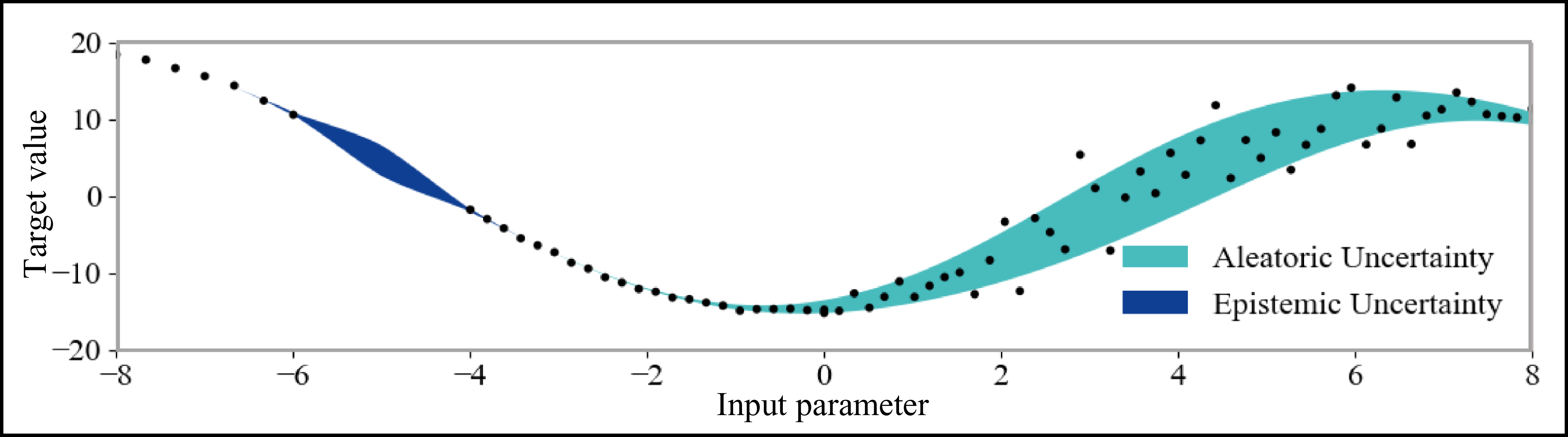
Metamodel-based approaches demonstrate considerable promise in substituting simulations, thereby reducing expenses and duration (Reference Jin, Chen and SimpsonJin et al., 2001). In the context of clinch joints, the employment of predictive metamodels trained on a broad parameter variation has been demonstrated to be a sufficiently effective method for predicting small parameter variation with comparable results to variation simulations for neck thickness (NE), interlock (IL) and bottom thickness (BT) (Reference Einwag, Steinfelder, Wartzack, Brosius and GoetzEinwag et al., 2025). However, the predictive accuracy of metamodels can decrease during inference and, consequently lead to an increase of model uncertainty, when data is missing or noisy (Reference Yang and LiYang & Li, 2023). In general, a reliable prediction of uncertainty is desirable, particularly in domains that are safety-critical (Reference Yang, Wang, Mi, Lin and CaiYang et al., 2009). According to Reference Kiureghian and DitlevsenKiureghian and Ditlevsen (2009), two main types of uncertainty can be delineated: epistemic and aleatoric, as illustrated in Figure 1. The epistemic uncertainty, which is characterized by a deficiency in knowledge or data and can be mitigated through the generation of new data. Aleatoric uncertainty on the other hand, such as measurement uncertainty, is defined as a random phenomenon intrinsic to observation, and thus it is not possible to reduce it. In the context of Machine Learning, epistemic uncertainty is often referred to as model uncertainty and aleatoric uncertainty as data uncertainty (Reference Abdar, Pourpanah, Hussain, Rezazadegan, Liu, Ghavamzadeh, Fieguth, Cao, Khosravi, Acharya, Makarenkov and NahavandiAbdar et al., 2021).
Illustration of aleatoric and epistemic (model-) uncertainties (Reference Yang and LiYang & Li, 2023)

Estimates of the model uncertainty can be derived through the utilization of Gaussian process regression, as demonstrated by Reference Zirngibl, Martin, Steinfelder, Schleich, Tröster, Brosius and WartzackZirngibl et al. (2023), or by using Monte Carlo (MC)-Dropout for deep neural networks (Reference Gal and GhahramaniGal & Ghahramani, 2016). A comprehensive overview of uncertainty consideration in deep neural networks is provided in Reference Gawlikowski, Tassi, Ali, Lee, Humt, Feng, Kruspe, Triebel, Jung, Roscher, Shahzad, Yang, Bamler and ZhuGawlikowski et al. (2023). The primary advantage of employing MC-Dropout is that it enables the estimation of model uncertainty during both training and testing and does not necessitate expert knowledge of the user (Reference Gawlikowski, Tassi, Ali, Lee, Humt, Feng, Kruspe, Triebel, Jung, Roscher, Shahzad, Yang, Bamler and ZhuGawlikowski et al., 2023). The consideration of data uncertainty, necessitates employing an explicit noise model (Reference Kiureghian and DitlevsenKiureghian & Ditlevsen, 2009). This can be achieved by heteroscedastic neural networks that jointly predict the mean and the variance (Reference Nix and WeigendNix & Weigend, 1994) or with Mixture-Density Networks (Reference BishopBishop, 1994). To reduce the model uncertainty, adaptive sampling places new evaluations (data), where predictions are most uncertain (Reference Valdenegro-Toro and MoriValdenegro-Toro & Mori, 2022), in active learning, the same criterion is employed to either efficiently build models from the ground up or to enhance existing models (Reference Guo, Nath, Mahadevan and WitherellGuo et al., 2024). In machine learning, models are expected to perform reliably on in-distribution (ID) samples, which are samples drawn from the same distribution as the training set (Reference Lu, Wang, Sheng, He, Zheng and LiangLu et al., 2026). By contrast, predictions on out-of-distribution (OOD) samples typically exhibit a higher model uncertainty (Reference Yang and LiYang & Li, 2023). However, it has been demonstrated that metamodels, including neural networks, may overestimate their confidence (Reference Kendall and GalKendall & Gal, 2017), despite the fact that the prediction was incorrect (Reference Hüllermeier and WaegemanHüllermeier & Waegeman, 2021; Reference Tan and LeTan & Le, 2019). The input-reduction approach proposed by Reference Zirngibl, Schleich and WartzackZirngibl et al. (2022) does not explicitly consider OOD samples. However, by removing parameters that are dispensable for reliable predictions, model robustness can be increased when distribution shifts occur specifically in those pruned dimensions. In order to sufficiently estimate whether the test sample falls within or outside the model domain, a number of approaches have been developed (Reference Lu, Wang, Sheng, He, Zheng and LiangLu et al., 2026). For instance, the k-Nearest Neighbour (kNN)-distance can be calculated and compared to a threshold. This assumes that normal data resides in a dense neighbourhood, while anomalies are distant from their closest neighbours (Reference Chandola, Banerjee and KumarChandola et al., 2009), or by calculating the Mahalanobis distance (Reference MahalanobisMahalanobis, 1936). Transfer learning strategies are intended to facilitate the reuse of metamodels in novel domains (Reference Weiss, Khoshgoftaar and WangWeiss et al., 2016) such as a reuse of existing models for new materials (Reference Zhang, Wang and TangZhang et al., 2025). General metamodels, which are metamodels that explicitly incorporate material descriptors, are capable of providing accurate predictions, but their ability to make prediction for new materials adequately is limited. The incorporation of samples from target materials, in conjunction with the implementation of transfer learning, has been demonstrated to enhance the predictive quality (Reference Zhang and TangZhang & Tang, 2025). A frequently employed transfer learning and refitting strategy is fine-tuning, which entails adapting the weights of a pre-existing artificial neural network (ANN) to align with new data (Reference Pinto, Messina, Li, Hong, Piscitelli and CapozzoliPinto et al., 2022). Existing approaches, as demonstrated in works such as those proposed by Reference You, Liu, Wang and LongYou et al. (2021), seek to evaluate the general transferability of existing models and to select those that are the most applicable. A more lightweight transfer learning approach involves recalibrating an existing metamodel in the presence of a systematic discrepancy between its predictions and the new target data. The recalibration process involves the estimation of the necessary scaling factor and offset, to achieve alignment between the prediction of the metamodel and the results of the new domain (Reference Pan, Vermetten, López-Ibáñez, Bäck and WangPan et al., 2024). While the above methods provide mechanisms for uncertainty estimation, adaptive sampling, recalibration, and transfer learning, the present research lacks a systematic, designer-oriented procedure for determining the most effective strategy for new design tasks. This focuses on the decision of whether to reuse or recalibrate an existing predictive metamodel, or to employ transfer learning strategies (e.g., to mitigate model uncertainty or employ the model in new design spaces).
3. Research questions
The proposed framework addresses this gap by proposing a decision framework that supports designers in selecting an appropriate strategy. Therefore, the following research question can be defined:
How can designers systematically decide if existing metamodels can be reused or need to be adapted?
The framework is demonstrated on the design of clinch joints but is generalizable across metamodel-based design approaches. Given that the present framework is rooted in the design domain, it is not necessary to provide instant predictions in real time, instead the generation of new datasets in the target domain is possible.
4. Methodical approach
The objective of this study was to develop a framework for determining the reusability of existing metamodels or the necessity for adaptation, which was evaluated on two exemplary joining tasks.
4.1. Data generation and metamodeling
The generation of datasets was achieved through the implementation of validated two-dimensional simulations in LS-DYNA (Reference Bielak, Böhnke, Beck, Bobbert and MeschutBielak et al., 2021), accompanied by a process chain in LS-OPT, analogous to (Reference Einwag, Steinfelder, Wartzack, Brosius and GoetzEinwag et al., 2025), with an automated evaluation of the geometric clinch joint properties from (Reference Zirngibl and SchleichZirngibl & Schleich, 2021). A Design of Experiment (DoE) with 250 samples was generated with uniformly distributed parameters using the Latin-Hypercube Sampling method within representative ranges, illustrated in Figure 2.
LS-DYNA 2D-simulation model with parameters and parameter ranges of initial dataset and geometric clinch joint properties (Reference Zirngibl, Schleich and WartzackZirngibl, Schleich, et al., 2023)

Following the simulations, samples with NE and IL of less than 0.05 mm were removed, to eliminate samples that do not contain any IL or NE, as well as samples that exhibit excessive thinning of the sheets. The training and initial evaluation of the ANNs with MC-Dropout was conducted using Tensorflow, the Adam optimizer and a 5-fold cross-validation (CV). Each metamodel is a fully connected network (256-128-65 neurons, GELU activations, linear output) with dropout layers (p = 0.2) after each hidden layer, and uncertainty was evaluated using T = 2000 stochastic forward passes at inference. One metamodel was trained for each geometric clinch joint property, resulting in three base-metamodels. The mean Coefficient of Prognosis (CoP) was calculated on the basis of the CV models, which were subsequently refitted on the whole dataset for inference. The 95 % model-uncertainty (p95) was calibrated on the initial dataset to estimate the mean model uncertainty (epistemic uncertainty) from MC-Dropout over training points, which was then used as an acceptable threshold.
4.2. Decide-Adapt-Reuse framework
The initial phase of the framework entails the identification of whether the new joining task is within (ID) or beyond the training distribution (OOD). Based on this classification, either a new dataset is generated on which the base-metamodel is evaluated (OOD), or the model uncertainty of the base-metamodel is evaluated (ID).
Overview of the workflow of the decide-adapt-reuse framework

4.2.1. Identify if new joining task is in- or out of distribution for metamodels
The identification, if the new joining task is ID or OOD, comprises two stages. The first is a direct calculation based on the parameter-ranges of the dataset, the second stage is the calculation of the kNN-distance. To allow for an OOD estimation, the 95% -distance of all samples in the training set is employed as a threshold. The new sample is deemed as OOD, if the kNN-distance is higher than this threshold and the new sample is out of the parameter range of the training dataset, while it is defined as ID, if the new sample is below the kNN-distance threshold and within the parameter range.
4.2.2. If ID: estimate epistemic uncertainty and provide recommendations and compare to baselines
To estimate a higher-than-usual model uncertainty of the metamodel, the p95 threshold is calculated. In the event that the model uncertainty for the new joining task falls below this threshold, the model can be reused. For a higher model uncertainty, the model needs to be adapted. It can be assumed that in the context of active learning, the new sample itself is most beneficial for reducing the model uncertainty. Consequently, the new joining task is simulated and the base-model is adapted using single-sample assimilation with replay. Therefore, the new sample is combined with a small subset of the base dataset (n = 16) to regularize the fine-tuning and to avoid catastrophic forgetting. The base-metamodel is subsequently fine-tuned on this combined data. To evaluate these decision criteria, the prediction of the base-metamodel and the fine-tuned model was compared to the simulation results.
4.2.3. If OOD: calculate metrics of base model on new dataset and provide recommendation and compare to baselines
In the event that the new sample is classified as OOD, a new dataset with the respective parameters, such as a new material, is generated using the process simulation chain. Subsequently, the base-metamodel is evaluated on the new dataset, and performance metrics are calculated. To this end, the CoP, calculated according to the formula outlined in Equation 1 (Reference Most and WillMost & Will, 2008) and the R²-score, calculated according to Equation 2 (Reference WrightWright, 1921), are employed.


In these equations,
 $${y_{p,i}}$$
is the predicted value of the metamodel on the sample i,
$${y_{p,i}}$$
is the predicted value of the metamodel on the sample i, ${y_{t,i}}$
is the simulation result,
${y_{t,i}}$
is the simulation result, ${\bar y_p}$
and
${\bar y_p}$
and ${\bar y_t}$
the mean and
${\bar y_t}$
the mean and ${\sigma _p}$
and
${\sigma _p}$
and ${\sigma _t}$
the standard deviations of the predicted and the simulated results. With these equations, the agreement of the metamodel-based prediction with the test data can be calculated. The CoP, equivalent to the squared Pearson correlation on test data, ranges between 0 and 1 with an automatic scaling (Reference Most and WillMost & Will, 2008) and is invariant to a constant scaling or additive offset of the prediction. The R²-score on the other hand ranges between -∞ and 1 and is interpreted as the proportion of the variance in the dependent variable that is predictable from the independent variables. (Reference WrightWright, 1921). Under perfect agreement between predictions and references, both metrics yield the same value (CoP = R² = 1). Based on earlier publications, predictive metamodels trained on a broad parameter space can substitute variation simulations with comparable accuracy to simulations with a CoP above 0.95 (Reference Einwag, Steinfelder, Wartzack, Brosius and GoetzEinwag et al., 2025). Consequently, this is used as a sufficient threshold for the CoP and the R²-score to consider a model as sufficient. For a CoP above 0.95 and a R² below 0.95, the prediction aligns well with the data, but is shifted or wrongly scaled. In this case, the model can be recalibrated. If both, the CoP and the R² are below the defined threshold, a fine-tuning of the base-metamodel is necessary. For fine-tuning the refitted base-model is initialized with the pretrained weights and updated on 60 % of the new dataset (40 % holdout) using early stopping and a reduced learning rate, while updating all layers.
${\sigma _t}$
the standard deviations of the predicted and the simulated results. With these equations, the agreement of the metamodel-based prediction with the test data can be calculated. The CoP, equivalent to the squared Pearson correlation on test data, ranges between 0 and 1 with an automatic scaling (Reference Most and WillMost & Will, 2008) and is invariant to a constant scaling or additive offset of the prediction. The R²-score on the other hand ranges between -∞ and 1 and is interpreted as the proportion of the variance in the dependent variable that is predictable from the independent variables. (Reference WrightWright, 1921). Under perfect agreement between predictions and references, both metrics yield the same value (CoP = R² = 1). Based on earlier publications, predictive metamodels trained on a broad parameter space can substitute variation simulations with comparable accuracy to simulations with a CoP above 0.95 (Reference Einwag, Steinfelder, Wartzack, Brosius and GoetzEinwag et al., 2025). Consequently, this is used as a sufficient threshold for the CoP and the R²-score to consider a model as sufficient. For a CoP above 0.95 and a R² below 0.95, the prediction aligns well with the data, but is shifted or wrongly scaled. In this case, the model can be recalibrated. If both, the CoP and the R² are below the defined threshold, a fine-tuning of the base-metamodel is necessary. For fine-tuning the refitted base-model is initialized with the pretrained weights and updated on 60 % of the new dataset (40 % holdout) using early stopping and a reduced learning rate, while updating all layers.
To evaluate these decision criteria, the prediction of the base-metamodel, the fine-tuned metamodel and of a new metamodel trained on the entire new dataset are compared to the simulation results using the predicted mean value and the 90 % (± 1.64σ) confidence interval.
5. Results
We evaluate the decision framework on two exemplary joining tasks (ID & OOD). First, we report the dataset, base-models and uncertainty thresholds employed.
The initial dataset comprises 170 samples after filtering. The base-metamodels for predicting NE, IL and BT all yield a mean CoP across the CV and a R² after refitting to the entire dataset above 0.95 and are consequently deemed as sufficient. The model uncertainty threshold of the NE model is 0.204 mm, for the IL model 0.107 mm and for BT 0.081 mm. The threshold of the p95 kNN-distance of the initial dataset is 3.787. To evaluate the framework and the decision criteria, two joining tasks are defined.
5.1. First joining task
The first exemplary joining task is a single material joint with two EN AW-6014 sheets. The used tool- and process parameters are shown in Table 1.
Parameters and values of first joining task

Following the approach illustrated in Figure 2, the new sample is evaluated whether its ID or OOD. Therefore, the kNN-distance of the new joining task is calculated resulting in a value of 3.304, which is lower than the threshold of 3.787. In combination with the direct comparison to the dataset, the new sample is classified as ID. Subsequently, the model uncertainty is evaluated, with a model uncertainty of 0.254 mm for NE, 0.053 mm for IL and 0.052 mm for BT. Consequently, the models for predicting IL and BT are sufficient and can be reused, while the model for predicting NE has to be fine-tuned on new simulation data of the new sample.
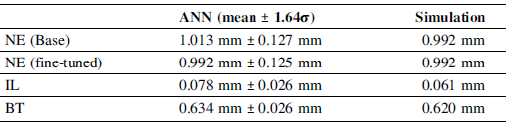
The results of the prediction of the base-metamodel and the fine-tuned model and the simulation results are shown in Table 2. One can see, that the simulation results are well inside the predicted 90 % confidence interval (± 1.64σ) of all metamodels. The fine-tuned metamodel shows a better prediction of the mean value, compared to the base-metamodel. However, the uncertainty range for the new sample is with a value of 0.250 still higher than the calibrated threshold range.
Predicted and simulated geometric properties of first joining task

5.2. Second joining task
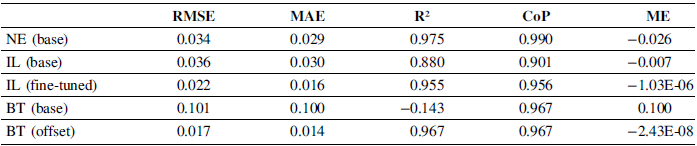
The second exemplary joining task has identical tool- and process-parameters (see Table 1), but two sheets of HCT590X are employed instead of EN AW-6014. The new task is classified as OOD, since a new material is used, that is not present in the dataset. Consequently, a new dataset with the new material is generated with identical parameter ranges, according to Figure 2. After the filtering of samples with NE and IL below 0.05 mm, the resulting dataset contains 143 samples. The R² and CoP of the base-metamodels are calculated with the results shown in Table 3. The results show a high CoP and R² for the for the NE metamodel, a low CoP and R² for the IL metamodel and a high CoP and a R² below the threshold of 0.95 for the BT model. Consequently, the base-metamodel for NE is sufficient to be reused on the new dataset, the base-metamodel for IL needs to be fine-tuned on the new data (60 %) and the base-metamodel for predicting BT can be recalibrated. To illustrate the agreement between prediction and simulation, scatterplots of the predicted values of the base-metamodels compared to the simulation results are illustrated in Figure 4 a) – c). The prediction of NE shows a good agreement, the prediction of IL is highly scattered and the prediction of BT shows a clear offset. Consequently, the mean error (ME) is used as offset to shift the prediction of BT and recalibrate the model, while retaining the scaling.
Performance metrics of base-models, base-model with offset on BT and fine-tuned model for IL on new dataset

After fine-tuning the model for predicting IL and recalibrating the model for BT, the adapted models show a sufficient R² and CoP above 0.95. The scatterplots of the reused (NE), fine-tuned (IL) and recalibrated (BT) are additionally illustrated in Figure 4 d) – e), with the performance metrics in Table 3.
a)-c) Scatterplots of base-models on new dataset and of d) reused, e) fine-tuned and f) recalibrated models on new dataset for NE, IL and BT

Figure 4 e) demonstrates a lower scattering for IL in comparison to the base-metamodel in Figure 4 b) and a good agreement to the simulation results for the recalibrated metamodel for BT (Figure 4 f). The predicted and simulated results for the second joining task in comparison to a new metamodel trained on the entire new dataset and the simulation results are shown in Table 4.
Predicted and simulated geometric properties of second joining task

The simulation results are well in the predicted ranges of the base-metamodels, the fine-tuned and recalibrated models for IL and BT and of the newly trained models. The base-metamodel for NE and the fine-tuned metamodel for IL show a better agreement to the simulation than the new model for the mean values, while the recalibrated metamodel for BT has a larger discrepancy than the completely new model when compared to simulation results.
6. Discussion
The proposed Decide-Adapt-Reuse framework addresses the lack of a designer-oriented decision procedure for selecting an appropriate strategy when predictive metamodels are applied to new design tasks, by providing recommendations on whether existing metamodels should be reused, recalibrated or fine-tuned. This recommendation is based on an ID or OOD categorization, existing models and their performance (model uncertainty, CoP and R²). The calculation of the uncertainty range is performed on each training dataset to allow for a comparison of the fine-tuned model and the new trained model. The threshold of the CoP is based on literature, to allow for substituting variation simulation (Reference Einwag, Steinfelder, Wartzack, Brosius and GoetzEinwag et al., 2025). The model fine-tuned for the prediction of the first joining task, yields a better prediction of the mean, compared to the base-metamodel. However, the uncertainty of the model is still higher than the threshold, which may still result from a lack of samples in that specific parameter range. The kNN-distance for the new joining task, calculated after adding the new sample, is with a value of 3.215 only slightly lower than without this sample, underlining this statement. The model fine-tuned on only 60 % of the new dataset with new materials show comparable results to the new model trained on the entire dataset. In this specific use case, this results in a time-reduction of approximately three hours, as training of a new metamodel and the additional generation of a comprehensive dataset are avoided. Additionally, recalibrating the base-metamodel of BT with a constant offset can provide rapid predictions without any retraining. However, using a global offset might align well for global evaluations, such as CoP and R², but may not perform as well as training a new model on a comprehensive dataset. The comparatively large scattering for BT may result in slightly worse predictions, as shown in Table 4. The model uncertainty estimated with MC-Dropout is currently higher than uncertainty values reported for GPR-based metamodels in related clinch joint studies (Reference Zirngibl, Schleich and WartzackZirngibl, Schleich, et al., 2023). Additionally, the agreement between the metamodel predictions and the simulation results shows a slightly larger deviation than reported in comparable studies (Reference Einwag, Steinfelder, Wartzack, Brosius and GoetzEinwag et al., 2025). Both observations most likely stems from the comparatively low sample size and broad parameter space. Additionally, the exclusion of samples with low NE or IL, might shift the distribution by removing edge-cases that may influence the calculation of kNN-distance and model uncertainty. A limitation of the proposed approach is that the framework is dependent on existing models and the ability to generate data or datasets for new joining tasks. For instance, the material is considered solely by a material identifier, and no material descriptors are used in the dataset. Consequently, the metamodels rely on new data and cannot extrapolate to unseen materials. A further constraint is that the approach relies on selected thresholds for acceptable model uncertainty, kNN-distance and CoP and R² thresholds and employs only a single fine-tuning strategy (fine-tune all weights on 60 % of data). Consequently, broader ablation studies across new materials and parameter ranges are needed to sufficiently assess the generality of the framework.
7. Conclusion and outlook
In this contribution, an approach is proposed to estimate if existing metamodels can be reused for predicting new joining tasks. The approach employs the kNN-distance in combination with a direct comparison to the training dataset to estimate if a new joining task is ID or OOD. For ID joining tasks, the calculation of the model uncertainty using MC-Dropout allows for the evaluation, if the metamodel is sufficient for prediction. If the new joining task is OOD, the metamodel is evaluated using CoP and R² on a newly generated dataset, which yields clear actions on comprehensible metrics to reuse, recalibrate or fine-tune the base-metamodel. The benefit for the product development is a metrics driven framework, that allows for a safe assessment, if existing metamodels can be reused for new joining tasks. This increases the confidence of the decision and shortens design cycles, by adapting or reusing existing metamodels and avoiding the necessity of comprehensive new datasets to train completely new models, since fine-tuning or recalibrating the base-metamodel can improve the prediction accuracy. In future research, a systematic comparison of OOD detection and re-sampling approaches should be conducted to investigate, if the metamodel prediction accuracy can be further improved even with sparse data. Another promising research is to train metamodels for predicting clinch joint properties with an explicit modelling of material parameters and investigate the transferability to unseen materials. Additionally, a consideration of aleatoric uncertainties in the metamodel by an explicit noise modelling, in conjunction with a comparison to experimental results, would be a pertinent avenue for future research.
Acknowledgement
Funded by the Deutsche Forschungsgemeinschaft (DFG, German Research Foundation) – TRR – 285/2 418701707 subprojects B05. Data regarding the contents of the publication can be requested at www.trr285.de.






 Open access

