


Although the core symptoms of autism (World Health Organization, 1993; American Psychiatric Association, 2000) tend to show improvement over time, the majority of individuals with autism need substantial support throughout their lives. Intellectual impairment and the development of mental health problems during adolescence or early adulthood are strong predictors of outcome; for people with autism, the poorest outcomes being experienced by those with the severest intellectual impairment and those who develop psychiatric problems (Reference Howlin, Goode and HuttonHowlin et al, 2004). The prevalence of autism in the population of individuals with learning disabilities is substantial; estimates range from 5% to 40% (Reference Wing and GouldWing & Gould, 1979; Reference Shah, Holmes and WingShah et al, 1982; Reference Nordin and GillbergNordin & Gillberg, 1996). Despite the overlap between learning disabilities and autism, and the impact of mental health problems on outcome in autism, there has been little exploration of mental health problems in persons with learning disabilities with and without autism. Only two such studies are reported in the literature (Reference Bradley, Summers and WoodBradley et al, 2004; Reference Brereton, Tonge and EinfeldBrereton et al, 2006). Both studies reported higher levels of emotional and behavioural problems in the group with autism. Both used checklists to measure mental health disturbances, and thus did not differentiate between those disturbances that were long-standing and those that were episodic, nor whether these disturbances met clinical criteria for psychiatric illness. Episodic psychiatric disorders (such as mood and psychotic disorders) represent some of the most frequently presenting mental health disorders in the general population. Determining their prevalence in the population with learning disabilities, with and without autism, has implications for service development, treatment and prediction of outcomes.
METHOD
Target population
Teenagers with learning disabilities were identified through an epidemiological survey of learning disabilities and autism conducted in the Niagara region, Ontario, Canada. The sampling and selection methods are described in detail elsewhere (Reference Bradley and BrysonBradley & Bryson, 1998; Reference Bradley, Thompson and BrysonBradley et al, 2002). Briefly, individuals with learning disabilities, aged 14–20 years (born between 1 June 1973 and 31 May 1980) were drawn from the population residing in the Niagara region (total population 400 000; Statistics Canada, 1996). The study was conducted in several successive stages including:
-
(a) identifying the population of teenagers with developmental problems and inviting them to participate in the study;
-
(b) individual assessments of participants to confirm learning disabilities and to identify autism;
-
(c) psychiatric assessment of matched groups (this study).
Psychological assessment of learning disabilities
Depending on their age and level of functioning, participants’ non-verbal intelligence was assessed using either the Merrill–Palmer Scale of Mental Abilities (excluding the verbal items) or the Performance Scale of the Wechsler Intelligence Tests (Reference StutsmanStutsman, 1948; Wechsler, Reference Wechsler1974, Reference Wechsler1981). Teenagers with a performance IQ of 75 or less formed the target population (n=171 participants).
Identification of autism
Autism was identified using the Autism Diagnostic Interview – Revised (ADI–R; Reference Lord, Rutter and CouteurLord et al, 1994). This is an investigator-guided structured interview administered to a primary caregiver. For those with severe or profound learning disabilities (IQ<35), some of whom also had sensory and/or motor impairments, the threshold for a diagnosis of autism was elevated (revised scoring). These methods and our approach in applying the ADI–R to more impaired individuals will be detailed in a subsequent paper.
Among the participant group, 41 people met ADI–R criteria for autism and had a non-verbal IQ less than 75; 27 of these met criteria in each of the three domains using the unrevised scoring, and 14 met criteria using the revised scoring. These 41 individuals were individually matched by research staff (on age, gender and non-verbal IQ) to participants without autism. Research staff involved in the SAPPA interview and analyses (E.B., P.B. and Dr Y. Lunsky), did not take part in this matching and were masked to the autism status of each individual. In these matched groups, 5 individuals dropped out of the study before the SAPPA interview was completed (1 died, care providers of 4 did not want to participate in the last stage of the study), leaving 36 matched pairs. There were no differences in age, gender or nonverbal IQ between this group of 5 people and the remaining 36 with autism.
The SAPPA interview and episodes of psychiatric illness
The Schedule for the Assessment of Psychiatric Problems Associated with Autism (and Other Developmental Disorders) (SAPPA; Reference Bolton and RutterBolton & Rutter, 1994) is a semi-structured investigator-based interview with an informant, and is linked to Research Diagnostic Criteria (RDC; Reference Endicott and SpitzerEndicott & Spitzer, 1978; Reference Spitzer, Endicott and RobinsSpitzer et al, 1978) for major psychiatric disorders. The SAPPA has been used in one follow-up study (Reference HuttonHutton, 1998) and is still being developed for wider use in research. In its present form it provides a rigorous assessment framework for use by the clinician experienced in the psychiatric assessment of persons with autism and with learning disabilities. The first part of the SAPPA focuses on identifying episodes of behavioural change against the background of usual baseline behaviours for the individual; the latter include pervasive and chronic problems that may have been present from an early age (such as self-injurious, hyperkinetic, obsessive, compulsive and other anxiety-type behaviours, tics, stereotypies and other non-specific challenging behaviours). A significant part of the interview is spent, therefore, establishing baseline behaviours for the individual against which any episode of change in behaviour is evaluated. Criteria for an episode of behaviour change include:
-
(a) either psychotic symptoms (delusions, hallucinations, catatonia, etc.) lasting at least 3 days;
-
(b) or a change in behaviour outside the range of normal variation for the individual, lasting at least 1 week;
-
(c) and definite diminution in level of social functioning as shown by at least two of the following:
-
(i) loss of interest in play
-
(ii) loss of self-care
-
(iii) loss of social involvements
-
(iv) loss of initiative
-
(v) need for change in supervision and/or placement.
-
Episodes of changed behaviour are explored further to obtain systematic standardised information on symptoms. A symptom is deemed clinically significant if:
-
(a) it is outside the range of normal behaviour for that individual;
-
(b) it intrudes into, or disrupts, the individual's ordinary activities;
-
(c) it is of a degree that is not readily controlled by the individual or caregivers;
-
(d) it is sufficiently pervasive to extend into at least two activities.
In addition, the duration of each episode is determined, as well as the timing in the context of other circumstances (e.g. life events such as loss, bereavement, medication changes or medical concerns such as seizures) occurring in the person's life. The symptoms during an episode that meet inclusion criteria and the pattern of the episodes are used to establish a psychiatric diagnosis according to RDC criteria.
Psychiatric disorder is identified as being absent, possible, probable or definite according to SAPPA criteria. Episodic psychiatric disorders identified using the SAPPA interview include mood (manic, hypomanic, depressive), anxiety and psychotic (schizophrenia, schizoaffective, unspecified psychotic) disorders. Disorders that meet criteria for an episode of change from established baseline, with intensity level 2 or above for three prominent symptoms, are referred to as other disorders if the pattern of symptoms is not clearly indicative of a specific RDC diagnosis. In the first part of the SAPPA interview, enquiry is also made as to family history of psychiatric illness.
The second part of the SAPPA interview deals with behaviours and disorders that do not follow an episodic course (e.g. some self-injurious, hyperkinetic, obsessive, compulsive and other anxiety-type behaviours, tics, stereotypies and other non-specific challenging behaviours). A description of these background behaviour disturbances and non-episodic disorders will be reported separately. Further details of the SAPPA interview are available on request.
Procedure
ADI–R interviews were conducted by one of two people, both of whom met recommended research reliability criteria for scoring ADI–R items (>85%). All interviews were audiotaped and independently rated by an experienced psychologist (Dr S. Bryson) or psychiatrist (E.B.). Disagreements in scoring were resolved through consensus among investigators.
All the SAPPA interviews were administered by the first author, a researcher/clinician experienced in developmental and psychiatric evaluations, but without knowledge of ADI–R outcomes or group membership. All interviews were audiotaped.
The ADI–R, Vineland Adaptive Behaviour Scales Interview (Reference Sparrow, Balla and CicchettiSparrow et al, 1984) and SAPPA interview were completed with an informant (89% of informants were parents) who had known the participant on a daily basis for at least the previous 5 years. Informed written consents were obtained from both participants (wherever possible and using a simplified form) and informants.
In all, 13 SAPPA tapes were rated independently (by P.B. and an experienced psychologist, Dr Y. Lunsky) for episodes. Overall agreement was 92% (for 12 out of 13 participants) with 100% agreement (for 7 of 7 participants) that there were no episodes, and 83% agreement on identified episodes (9 episodes for 5 participants). The number of individuals in the autism and non-autism groups meeting criteria for one or more episodes of behaviour change was calculated, as well as the total number of episodes in each group.
Nine SAPPA tapes were rated independently for psychiatric disorder. Where such disorders occurred, there was 100% agreement on non-episodic psychiatric disorder (1 participant) and 100% agreement on depressive disorder (2 participants), adjustment disorder (2 participants) and substance-induced disorder (1 participant). One person with autism was rated by the interviewer as having psychiatric subtype ‘probable psychosis, query schizophrenia’, whereas the independent rater made the more conservative diagnosis ‘unspecified psychiatric disorder, possible psychosis’. There was general agreement that the behaviour was, by its description, psychotic; but there was insufficient clinical evidence (e.g. lack of clear symptoms, inability of participant to provide sufficient subjective experience) to determine whether the psychotic behaviour represented a psychotic disorder. This conservative position was adopted throughout the study whenever subtyping of psychiatric disorders was not possible.
RESULTS
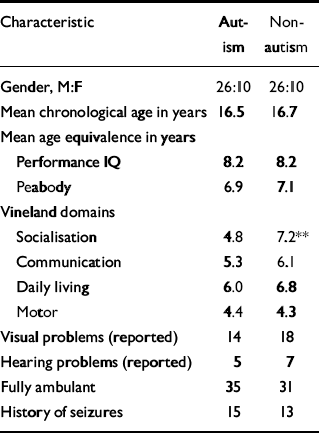
The profiles of the groups are shown in Table 1. On the Vineland Scale, the autism group, as might be expected, scored lower in the socialisation domain (t=3.3881, d.f.=70, P=0.0012); lower scores in the communication and daily living domains were not significantly different.
Profiles of autism and non-autism groups: 36 pairs matched on age, gender and non-verbal IQ
| Characteristic | Autism | Non-autism |
|---|---|---|
| Gender, M:F | 26:10 | 26:10 |
| Mean chronological age in years | 16.5 | 16.7 |
| Mean age equivalence in years | ||
| Performance IQ | 8.2 | 8.2 |
| Peabody | 6.9 | 7.1 |
| Vineland domains | ||
| Socialisation | 4.8 | 7.2** |
| Communication | 5.3 | 6.1 |
| Daily living | 6.0 | 6.8 |
| Motor | 4.4 | 4.3 |
| Visual problems (reported) | 14 | 18 |
| Hearing problems (reported) | 5 | 7 |
| Fully ambulant | 35 | 31 |
| History of seizures | 15 | 13 |
Episodes of psychiatric illness
Compared with the non-autism group, more individuals with autism had experienced at least 1 episode of psychiatric illness (17 in the autism group compared with 6 in the non-autism group, χ2=7.73, d.f.=1, P<0.005). The total number of episodes was greater in the autism group (32 compared with 9, mean 0.89 compared with 0.23, t=2.286, d.f.=41.63, P=0.027), with a range of 1–6 episodes compared with the non-autism group range of 1–3 episodes. The most frequent psychiatric disorders were mood (major depressive and bipolar affective), followed by other (circumscribed episodic) disorders. A further five individuals were considered to have unclassifiable disorders. Individuals with autism were prone to higher rates of all subtypes of psychiatric disorder. Details of episodes and disorders by groups are shown in Table 2 and described below. Episodic disorders were not related to gender nor to severity of learning disabilities. There was no difference in seizure history between the groups, and multivariate logistic regression analysis did not show any significant association between seizures and episodes nor any interaction between group and seizures in predicting episodes.
Number of individuals in autism and non-autism groups with episodic illness meeting criteria for psychiatric disorders

| Episode | Autism | Non-autism | ||||
|---|---|---|---|---|---|---|
| N | M | F | N | M | F | |
| Individuals with at least one episode of psychiatric illness | 17 | 12 | 5 | 6** | 4 | 2 |
| Total episodes | 32 | 9* | ||||
| Depressive disorder | 8 | 7 | 1 | 3 | 2 | 1 |
| Total episodes | 13 | 11 | 2 | 6 | 5 | 1 |
| Mean age at first episode (years) | 16 | 16.0 | ||||
| Mean duration (weeks) | 12.3 | 6.0 | ||||
| Mean number of episodes | 1.5 | 2.0 | ||||
| Bipolar disorders | 2 | 2 | 0 | |||
| Total episodes | 7 | |||||
| Mean age first hypomanic episode (years) | 7.5 | |||||
| Mean duration (months) | 14.0 | |||||
| Mean number of hypomanic episodes | 2.5 | |||||
| Mean age at first depression (years) | 17.0 | |||||
| Mean duration (weeks) | 8.0 | |||||
| Mean depressive episodes | 1.0 | |||||
| Circumscribed episodic disorder | 3 | 1 | 2 | 2 | 2 | 0 |
| Total episodes | 8 | 6 | 2 | 2 | 2 | 0 |
| Mean age at first episode (years) | 15.3 | 10.5 | ||||
| Mean duration (weeks) | 8.8 | 130.0 | ||||
| Mean number of episodes | 2.7 | 1.0 | ||||
| Persistent and unclassifiable disorders | 4 | 2 | 2 | 1 | 0 | 1 |
| Age at first occurrence of behaviour change | Childhood to 16 years | |||||
| Duration of behaviour change | Many years | |||||
Major depressive disorder
There was a tendency for longer episodes in the autism group (P=0.056), but otherwise the pattern of the depressive episodes was similar in the two groups. There was no difference in age of onset of first episode. Half of each group had single episodes and half had recurrent disorder. For the majority of individuals in each group, certain life events preceded the onset of the episodes (themes of loss involving family members, friends, disruption to usual routine and major disappointments). Many in both groups had not sought treatment, and in both groups interventions were similar and included increased structure, support and sometimes counselling and/or medication and some episodes improved spontaneously. All in the autism group returned to their previous levels of functioning after each episode of illness. One of the three in the non-autism group, after the second (of three) episode, did not return to previous functioning level.
Bipolar affective disorder
Two of the autism group showed bipolar affective disorder compared with none of the non-autism group. First episode occurred early and, in both cases, started with a hypomanic episode. Both experienced their first depressive episode in late adolescence. The hypomanic episodes typically lasted several months to over a year, whereas the depressive episodes were shorter, lasting 6 weeks for one individual and for the other several months. Treatment included increased support and structure, and medication. Both returned to previous baseline behaviours after the hypomanic and depressive episodes. Both individuals were reported to have immediate family members in treatment for either mood disorder or mood-related problems.
Circumscribed episodic disorders
These episodes were associated with adverse circumstances, such as change in care arrangements or schooling and seemed to resolve when the change was reversed and care arrangements were improved. The symptoms were not sufficiently distinct to warrant a specific diagnosis. It seems likely that these disorders were forms of adjustment disorder as conceptualised in DSM–IV (American Psychiatric Association, 1994), but this diagnostic category does not exist in RDC. Moreover, there was some lack of clarity over the precise timing of the interrelationship between the stressor and the onset and offset of the episodic disorders, so it remains unclear whether they all represent adjustment phenomena. Except for one individual in the autism group, these were single-episode disorders. Mean duration of episodes was greater for the non-autism group (≥2 years compared with ≤3 months in the autism group), but the small numbers involved did not permit a meaningful statistical analysis. Identified stressors were similar for both groups, and included lack of understanding of needs in the school setting, transition to high school and inadequate supports, and physical and sexual abuse at home and at school. One individual with autism suffered an episode of illness with the approach of Christmas each year, and a further episode when his mother was unable to provide the usual level of support because of her own mental health problems. These circumscribed episodes were characterised by challenging behaviours. The adverse circumstances giving rise to such behaviours were not always immediately obvious to care providers, and often came to be understood as relevant only after the circumstance was no longer present.
Unclassifiable persistent disorders
These represented changes in behaviours from previous established baselines. However, because of the complexity of the emerging symptoms, sometimes against a background of challenging behaviours from an early age (i.e. behaviours that were ongoing, not episodic and of unknown aetiology), it was not possible to subtype these new onset behaviours with certainty into specific RDC categories. For four individuals (three with autism, one without), by the time of the SAPPA interview, the symptoms were still present or had worsened. For two (both females with autism) in this group of five with unclassifiable persistent disorders, the deterioration in behaviours was linked to poor seizure control; for another (male with autism), behaviours deteriorated further during school holidays; and for the remaining two individuals (a male with autism and a female without) behavioural deterioration occurred for the first time around the age of 16 years. All individuals in this group had at least one additional diagnosable coexisting psychiatric (non-episodic) problem (such as Tourette syndrome, self-injurious behaviour, phobic disorder), and some had as many as four additional such disorders (further details available from E.B. on request). In addition, several informants described other family members with severe psychiatric illness.
Prescribed medication
Over twice as many in the autism group had at some point received psychotropic medication (OR=4.3, exact P<0.01); antipsychotic and stimulant medications were most frequently prescribed, and these largely accounted for the between-group differences in prescriptions (Table 3). Interestingly, 9 out of 19 individuals who received stimulant medication also received antipsychotics, whereas only 7 of 53 individuals who did not take stimulant medication received prescriptions for antipsychotics (Fisher's exact P<0.01). There were no group differences in the prescription of other drugs (e.g. those prescribed for epilepsy or other medical illnesses). Both past and present medication exposure was significantly higher in the groups with episodic disorders (past P<0.001; present P<0.003), and the number of episodes of disorder was significantly correlated with the number of medications prescribed (Spearman's rho=0.527, P<0.01). Binary logistic regression was undertaken to determine whether the group differences in the prescription of psychotropic medication were still evident after taking into account the group differences in history of episodic psychiatric disorder. This indicated that the group differences in prescription rates were associated with history of episodic disorder (P=0.001) and that, in the presence of this predictor, the group differences were no longer significant (P=0.14). Ordinal logistic regression analyses of the number of medications prescribed indicate that this was strongly associated with the number of episodes of disorder (P=0.001), but even so there remained significant group differences in the prescription of psychotropic medication (P=0.002). Further logistic regression analyses revealed that the prescription of antipsychotic medication was strongly associated with history of episodic psychiatric disorder, and that the group differences in prescription of these drugs no longer quite reached significance (P=0.058) in the presence of this predictor. The prescription of stimulant medications was not related to history of episodic disorder (exact P=0.15), although it was weakly associated with the number of episodes of disorder (P=0.053). The group differences in the frequency of prescriptions for stimulant medication were not explained by the inclusion of history of episodic disorder or the inclusion of the number of episodes of disorder as predictors in a multiple regression model.
Prescribed medication

| Psychotropic medication | Autism | Non-autism |
|---|---|---|
| Number treated | 22/36 | 10/36** |
| Antipsychotic | 13/36 | 2/36** |
| Stimulant | 14/36 | 2/36** |
| Other1 | 29/144 | 11/144 |
DISCUSSION
Psychiatric disorder
This is the first study to document an increased prevalence of psychiatric illness associated with autism in an epidemiological sample of individuals with learning disabilities. Two previous studies using behavioural checklists have described greater emotional and behavioural problems in those with autism and learning disabilities compared with those with learning disabilities alone (Reference Bradley, Summers and WoodBradley et al, 2004; Reference Brereton, Tonge and EinfeldBrereton et al, 2006). The focus of the present study was on episodic psychiatric illness and on controlling for variables known to impact on mental health. Almost one in two of the individuals with autism had suffered episodic psychiatric disorder, compared with one in six of those without autism. With the exception of bipolar affective disorder, which was seen only in the autism group, depressive and other circumscribed episodic and persistent disorders were diagnosed in cases both with and without autism but, for all psychiatric subtypes, more in the autism group were so affected.
Most individuals with unclassifiable persistent disorders showed deterioration with the onset of the first episode, from which they had not recovered at the time of the study. Previous studies have documented deterioration during adolescence in autism, many recover but, for a small but significant minority, an absence of recovery is described (Reference Rutter, Greenfeld and LockyerRutter et al, 1967; Reference Gillberg and SteffenburgGillberg & Steffenburg, 1987; Reference Kobayashi, Murata and YoshinagaKobayashi et al, 1992). In our study, 18% of those with autism and psychiatric disorder showed deterioration without return to baseline, compared with 17% of those without autism. This suggests that the deterioration may not be specifically associated with autism, but rather with learning disabilities in general and the addition of predisposing factors, such as family history and/or comorbid psychiatric disorder. Behavioural deterioration in autism associated with catatonia has been described by Wing & Shah (Reference Wing and Shah2000); none of the individuals in our study met criteria for catatonia.
Only one individual (autism group; unclassifiable persistent disorder subtype) was diagnosed with a possible psychotic disorder; this is in contrast to the greater prevalence of psychotic disorder, compared with mood and anxiety disorders, that is generally reported in the population with learning disabilities (Reference Deb, Matthews and ThompsonDeb et al, 2001). This finding may reflect the younger age of the population. On the other hand, the much higher prevalence of mood disorders relative to psychotic disorder reported in this study, using an instrument more specifically designed for persons with communication and cognitive impairments, may provide confirmation of the under-diagnosing of mood disorders in persons with learning disabilities. Notable also was the absence of episodic anxiety disorders. Whereas this may reflect the difficulty of making such a diagnosis in individuals with marked communication impairment, further analyses of our data showed that anxiety-type behaviours and disorders were present in our sample, but were not specifically associated with episodic illness (see also below).
Previous studies have suggested that depression is probably the most common psychiatric disorder seen in those with autism (Reference Ghaziuddin, Ghaziuddin and GredenGhaziuddin et al, 2002). Substantial associations between negative life events and the onset of depressive disorders in adults (Reference Brown and HarrisBrown & Harris, 1978; Reference KesslerKessler, 1997) and adolescents (Reference Goodyer and GoodyerGoodyer, 1995) have been described. The impact of significant life events on those with learning disabilities is beginning to be explored (Reference Stack, Haldipur and ThompsonStack et al, 1987; Reference Ghaziuddin, Alessi and GredenGhaziuddin et al, 1995; Reference Nadarajah, Roy and HarrisNadarajah et al, 1995), and a stress survey schedule for persons with autism has now been developed (Reference Groden, Diller and BausmanGroden et al, 2001). Clearly, further work identifying the meaning and role of life events in the onset of psychiatric illness in persons with learning disabilities with and without autism is needed.
Circumscribed episodic disorders (‘adjustment disorders’, DSM–IV) are not often reported in prevalence studies of psychopathology in persons with learning disabilities, and may be under-diagnosed, particularly in those with greater cognitive and communication impairments. Such individuals may experience chronic stressors which are beyond their capacity to escape or change independently, and which are not recognised by care providers. Our data suggest that the onset and continuation of challenging behaviours should alert care providers to possible adjustment disorder and to look for possible stressors in the individual's life.
Prescribed medication
Autism and non-autism groups also differed significantly in lifetime exposure to psychotropic medication (particularly antipsychotics and stimulants). The group differences in the use of medication appears in part to reflect the fact that the autism group had more episodes of disorder, and that these were often treated with antipsychotic medication. However, the individuals with autism also more often received stimulant medications. The use of stimulants was not associated with a history of episodic disorder. It seems likely that stimulants were prescribed for the treatment of hyperactivity and attentional problems, which are often comorbid problems with autism. Indeed, in support of this premise, further analyses of our data (to be reported separately) have pointed to a greater prevalence of other non-episodic disorders such as inattention, hyperactivity, impulsivity and attention-deficit hyperactivity disorder in those with autism in this sample (Reference Bradley and IsaacsBradley & Isaacs, 2006). It is noteworthy that many individuals who received stimulants also received antipsychotics. This suggests that individuals with autism often present with a complex mix of behavioural and psychiatric problems that require treatment with several drugs. Alternatively, it raises the possibility that the use of stimulant medication in susceptible individuals may precipitate or exacerbate psychotic-like episodes.
Although the prevalence of seizures is reported to be greater in the population of persons with autism compared with the general population (Reference Giovanardi Rossi, Posar and ParmeggianiGiovanardi Rossi et al, 2000), in our study there was no difference between autism and non-autism groups in reported seizures (currently or in the past). This is perhaps not a surprising result, as the prevalence of seizures in the population with learning disabilities is also increased compared with the general population, and even greater prevalence estimates are reported with greater cognitive impairment (Reference DebDeb, 2000).
This study demonstrates that clearly identifiable episodic psychiatric illness can be seen in teenagers with learning disabilities, with and without autism, across the range of functioning from mild to severe learning disabilities. It remains to be determined why those with autism are more vulnerable to developing episodic disorders. Our data point to the need to consider both biological (e.g. genetic) and psychosocial circumstances (e.g. psychological impact of autism on daily experience) as well as life-span issues (e.g. physiological and psychological changes associated with adolescence) in the onset of these disorders. Future studies need to address, systematically, the biopsychosocial contributions to these episodic psychiatric disorders as well as the impact of idiosyncratic experience associated with specific life events.
Acknowledgements
The authors thank the participants and their families, the staff within the school and developmental disability services, Ann Thompson for research support, Dr Bryson for reviewing an earlier draft of the manuscript and for her leadership and contributions to the psychological assessments and assessments of autism, Dr Lunsky for assistance in rating and Marika Korossy for editorial assistance.
This research was funded by Health Canada through the National Health Research and Development Program (Dr E. Bradley and Dr S. Bryson). Dr Bradley was also supported from the Retarded Children's Fund, Department of Psychiatry, University of Toronto.




eLetters
No eLetters have been published for this article.