


Impact statement
Wear and surface degradation are among the dominant failure mechanisms of engineering components in industrial applications, leading to increased maintenance costs, energy consumption, and material losses. This study investigates the tribological performance of 42Cr4 steel subjected to Tungsten Inert Gas (TIG) surface remelting assisted by a high-frequency magnetic field. The proposed hybrid surface engineering approach significantly enhances surface hardness and wear resistance while preserving the integrity of the bulk material. These enhancements are attributed to microstructural refinement and homogeneous elemental redistribution induced by electromagnetic stirring in the molten pool. From an industrial perspective, the improved durability of components such as shafts, gears, and load-bearing elements contributes to extended service life and reduced replacement frequency. This is particularly relevant for repair, restoration, and remanufacturing strategies, which are central to circular economy frameworks. By enabling the recovery and reuse of worn components, the proposed method reduces raw material consumption, minimizes waste generation, and improves overall resource efficiency. The process is compatible with existing TIG-based repair infrastructures, making it a scalable and cost-effective solution for industrial implementation. Overall, the findings provide a practical and sustainable surface engineering route aligned with global sustainability goals, particularly through component life extension and reduction of full replacement demand.
1. Introduction
In modern industrial systems, wear and surface degradation of mechanical components are among the primary factors limiting service life, increasing maintenance costs and accelerating the consumption of raw materials. These degradation processes also contribute to environmental impacts through increased waste generation and depletion of finite resources. In this context, sustainable manufacturing strategies emphasize extending component lifetime through repair, surface renewal, and reuse approaches, thereby improving resource efficiency and reducing environmental burden [Reference Katiyar, Rao, Rani, Sulaiman and Davim1].
From a tribological standpoint, wear-induced failure remains one of the most persistent and economically significant challenges in engineering applications. In many industrial systems, maintenance and operational costs exceed initial manufacturing costs, making surface durability a critical design and performance parameter [Reference Orgeldinger, Seynstahl, Rosnitschek and Tremmel2,Reference Katiyar and Rao3]. Consequently, improving surface properties through advanced engineering methods is essential for enhancing reliability and extending the functional lifespan of components operating under severe contact conditions.
When bulk material properties are insufficient to meet service requirements, surface modification techniques such as thermal, chemical, and thermo-chemical treatments are widely applied. These methods enable localized enhancement of surface characteristics while preserving the mechanical integrity of the substrate, which is particularly important in repair and remanufacturing applications [Reference Katiyar, Rao, Rani, Sulaiman and Davim1,Reference Orgeldinger, Seynstahl, Rosnitschek and Tremmel2,Reference Katiyar and Rao3]. Typically, such approaches aim to establish a functional gradient structure consisting of a hard, wear-resistant surface layer and a tough, ductile core, ensuring an optimal balance between surface hardness, fatigue resistance, and structural integrity.
Among surface engineering techniques, laser- and arc-based remelting processes have attracted significant attention due to their ability to generate rapid melting and solidification cycles. These processes promote microstructural refinement, reduced defect density, and improved surface integrity [Reference Mitelea, Bordeașu and Frânț4,Reference Niu, Wang and Chen5,Reference Niu, Wang and Chen6,Reference Mikuš, Kováč, Žarnovský, Baláži and Midor7]. For example, laser remelting has been shown to enhance wear resistance and surface homogeneity through controlled grain refinement and phase transformation [Reference Mitelea, Bordeașu and Frânț4,Reference Niu, Wang and Chen5], while arc-based remelting techniques similarly improve hardness and structural uniformity by modifying solidification dynamics [Reference Niu, Wang and Chen6,Reference Mikuš, Kováč, Žarnovský, Baláži and Midor7]. In advanced alloys such as Inconel 718, remelting has been reported to significantly enhance mechanical performance through microstructural refinement and redistribution of strengthening phases [Reference Jha, Shukla, Choudhary, Manoharan and Muvvala8].
A further development in this field is the application of external electromagnetic fields during processing. The interaction between magnetic fields and molten metals has been widely studied in electromagnetic processing, where Lorentz forces influence fluid flow, heat transfer, and solidification behavior [Reference Shirzadov, Sadykhov and Gasimova9]. By modifying convection within the molten pool, magnetic fields can effectively control solute transport and microstructure evolution [Reference Ширзадов, Садыхов and Гасимова10].
Recent studies have demonstrated that magnetic field-assisted processing can reduce porosity, enhance coating density, and improve mechanical and tribological properties [Reference Jiang, Qi, Zhang, Yu and Sun11,Reference Gao, Yuan and Li12]. Electromagnetic stirring stabilizes molten flow, suppresses turbulence, and promotes uniform grain formation, while also improving interfacial bonding and wear resistance [Reference Kirilichev, Zyuban and Rutskiy13]. However, despite these advantages, the integration of magnetic fields into Tungsten Inert Gas (TIG)-based remelting processes remains insufficiently explored, particularly in the context of surface restoration and remanufacturing applications.
In a TIG–magnetic field hybrid system, the interaction between the arc and a high-frequency electromagnetic field generates Lorentz forces within the molten pool, resulting in electromagnetic stirring and localized compression effects. These phenomena enhance convective flow, improve chemical homogeneity, and promote uniform distribution of alloying elements and carbide-forming phases. Simultaneously, melt pool stabilization reduces surface fluctuations and improves geometric control of the remelted layer.
As a consequence, the coupled thermo-electromagnetic interaction leads to the formation of a refined, dense and chemically homogeneous microstructure with reduced porosity. These microstructural characteristics directly contribute to increased hardness, improved wear resistance, and more stable tribological behavior under lubricated contact conditions.
The novelty of this study lies in the real-time coupling of TIG surface remelting with a high-frequency magnetic field, where electromagnetic forces actively govern molten pool dynamics during processing. Unlike conventional approaches where magnetic fields are applied as a secondary treatment or used in coating deposition systems, the proposed method enables in-situ modification of the surface layer during remelting. This in-situ coupling enables simultaneous thermal and electromagnetic control of solidification, leading to superior microstructural refinement and eliminating the need for additional post-processing steps.
In this work, the mechanical and tribological behavior of 42Cr4 steel treated by magnetically assisted TIG remelting is systematically investigated. The influence of the hybrid process on hardness, wear resistance, and friction behavior under lubricated conditions is analyzed and compared with untreated material. The results demonstrate that the proposed approach significantly enhances surface performance through controlled microstructural evolution and stabilized melt pool dynamics.
Overall, the findings indicate that the combination of TIG remelting and high-frequency magnetic field application represents a robust and scalable surface engineering strategy with strong potential for industrial implementation in repair, restoration, and remanufacturing applications requiring enhanced durability and resource efficiency.
2. Materials
The base material used in this study was 42Cr4 steel, selected due to its widespread application in load-bearing and tribologically stressed mechanical components. To modify the surface properties, commercially available electrodes were employed for cladding. The chemical compositions and theoretical hardness values of the electrodes are presented in Table 1.
Chemical composition (wt.%) and nominal hardness of electrodes used for cladding.

Table 1. Long description
The table consists of 12 columns and 4 data rows. The columns are: Electrode grade, C, Si, Mn, V, Mo, W, Nb, Cr, B, Balance, and Nominal hardness in H V.
* Row 1: U T P 7100 contains 5.0 C, 35.0 Cr, with a balance of F e and a nominal hardness of 790 H V.
* Row 2: U T P Ledurit 65 contains 4.5 C, 1.5 V, 6.5 Mo, 2.2 W, 5.5 Nb, 23.5 Cr, and a nominal hardness of 860 H V.
* Row 3: U T P D U R 600 contains 0.5 C, 2.3 Si, 0.4 Mn, 9.0 Cr, and a nominal hardness of 660 H V.
* Row 4: T 590 contains 3.2 C, 2.2 Si, 1.2 Mn, 25.0 Cr, 1.0 B, and a nominal hardness of 840 H V.
All chemical values are in weight percent. Dashes indicate the absence of that specific element in the electrode grade.
The cladding process was used as a preliminary surface modification step to introduce alloying elements into the near-surface region, thereby creating a chemically enriched layer suitable for subsequent thermophysical transformation during remelting. This step introduced alloying elements into the surface layer, forming a chemically enriched region for subsequent remelting.
Following cladding, the deposited layers were subjected to TIG surface remelting assisted by a high-frequency magnetic field. This hybrid processing route was designed to modify both thermal and fluid flow conditions within the molten pool, thereby promoting enhanced microstructural refinement and improved surface integrity.
The combined cladding–remelting strategy was specifically developed to produce a dense, homogeneous, and mechanically stable surface layer with improved resistance to wear and plastic deformation. Such characteristics are essential for applications involving repair, restoration, and remanufacturing of worn components within circular manufacturing systems.
3. Method and Equipment
The experimental procedure consisted of three sequential stages: (1) surface cladding using MMA electrodes, (2) TIG surface remelting, and (3) in-situ application of a high-frequency magnetic field during the remelting stage.
In this configuration, the magnetic field was not applied as an independent post-processing step but acted as an active physical field directly interacting with the molten pool during TIG remelting. This real-time coupling enabled simultaneous thermal and electromagnetic control of the solidification process.
3.1. Electromagnetic System
A TTH15 induction system with a maximum output power of 15 kW was employed to generate the high-frequency electromagnetic field. The system operated at frequencies up to 450 kHz, allowing precise adjustment of electromagnetic energy input.
During experiments, the operating frequency was maintained at 200 kHz, while the power level was varied between 25% and 100% depending on the processing stage. The generated electromagnetic field induced Lorentz forces within the molten pool, resulting in electromagnetic stirring and localized magnetic pressure effects. These phenomena significantly influenced melt flow behavior, enhancing convective transport and stabilizing solidification dynamics.
3.2. TIG Remelting Setup
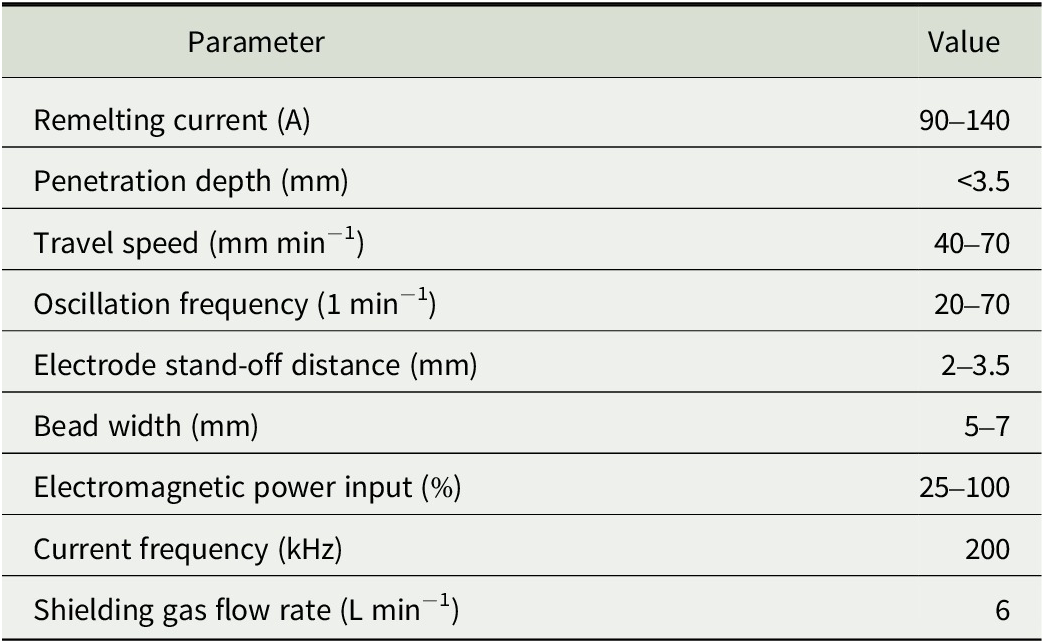
Cladding and remelting parameters are summarized in Tables 2 and 3. Surface remelting was performed using a TIG 200 AC/DC welding machine with a maximum current capacity of 200 A. A tungsten electrode with a diameter of 2.4 mm was used throughout all experiments to ensure process consistency and repeatability. Argon gas was supplied as a shielding medium at a constant flow rate of 6 L min−1 to prevent oxidation and stabilize arc conditions.
Cladding parameters for different electrode grades.

Table 2. Long description
The table consists of seven columns and four data rows. The columns are Electrode grade, Cladding current in Amperes, Current type, Welding position, Electrode diameter in millimeters, Bead height in millimeters, and Number of layers.
* Row 1: Electrode grade U T P 7100, Cladding current 140, Current type D C electrode plus, Welding position Horizontal, Electrode diameter 4.0, Bead height 2 to 3, Number of layers Single layer.
* Row 2: Electrode grade U T P Ledurit 65, Cladding current 170, Current type D C electrode plus, Welding position Horizontal, Electrode diameter 4.0, Bead height 2 to 3, Number of layers Single layer.
* Row 3: Electrode grade U T P D U R 600, Cladding current 160, Current type D C electrode plus, Welding position Horizontal, Electrode diameter 4.0, Bead height 2 to 3, Number of layers Single layer.
* Row 4: Electrode grade T 590, Cladding current 200, Current type D C electrode plus, Welding position Horizontal, Electrode diameter 4.0, Bead height 2 to 3, Number of layers Single layer.
Process parameters of magnetically assisted TIG remelting.

Table 3. Long description
The table consists of two columns titled Parameter and Value.
* Remelting current in A: 90 to 140.
* Penetration depth in m m: less than 3.5.
* Travel speed in m m min super negative 1: 40 to 70.
* Oscillation frequency in 1 min super negative 1: 20 to 70.
* Electrode stand-off distance in m m: 2 to 3.5.
* Bead width in m m: 5 to 7.
* Electromagnetic power input in percent: 25 to 100.
* Current frequency in k H z: 200.
* Shielding gas flow rate in L min super negative 1: 6.
3.3. Specimen Geometry and Processing Conditions
Rectangular specimens with dimensions of 20 × 20 × 10 mm were used. The TIG current was initially set to 140 A to establish a stable molten pool. Upon activation of the electromagnetic field, the current was reduced to 90 A, while the induction power was maintained at approximately 25%.
This adjustment was necessary to achieve a controlled balance between thermal input and electromagnetic forces, thereby preventing excessive melt pool instability, minimizing dilution, and ensuring uniform surface modification.
3.4. Process Control and Reproducibility
The interaction between the TIG arc and the high-frequency magnetic field generated Lorentz forces within the molten pool, leading to electromagnetic stirring and magnetic compression effects. These mechanisms enhanced fluid flow stability, improved temperature distribution, and promoted more uniform solidification.
Heat input was precisely controlled using a foot-operated current regulation system, ensuring stable energy delivery and minimizing process fluctuations. All specimens were processed under identical conditions to ensure experimental repeatability.
For each parameter set, a minimum of three samples was prepared and average values were reported in the results section. A single-pass strategy was adopted to maintain a consistent thermal history and eliminate variations associated with multi-pass processing.
3.5. Effect of Magnetic Field on Molten Pool Dynamics
The application of the high-frequency magnetic field during remelting significantly altered molten pool behavior. Electromagnetic stirring enhanced chemical homogeneity through improved solute transport, while magnetic compression reduced surface irregularities and porosity formation.
As a result, a more uniform, dense, and structurally stable surface layer was formed. This microstructural stabilization is critical for achieving reliable mechanical performance in restored components and directly contributes to improved wear resistance and load-bearing capacity.
3.6. Test Program
Microstructural characterization was performed using a LEICA DMRM optical microscope equipped with IMATEC image analysis software. Elemental composition and spatial distribution of alloying constituents were analyzed using energy-dispersive X-ray spectroscopy (EDX), enabling detailed assessment of chemical homogeneity within the modified surface layers.
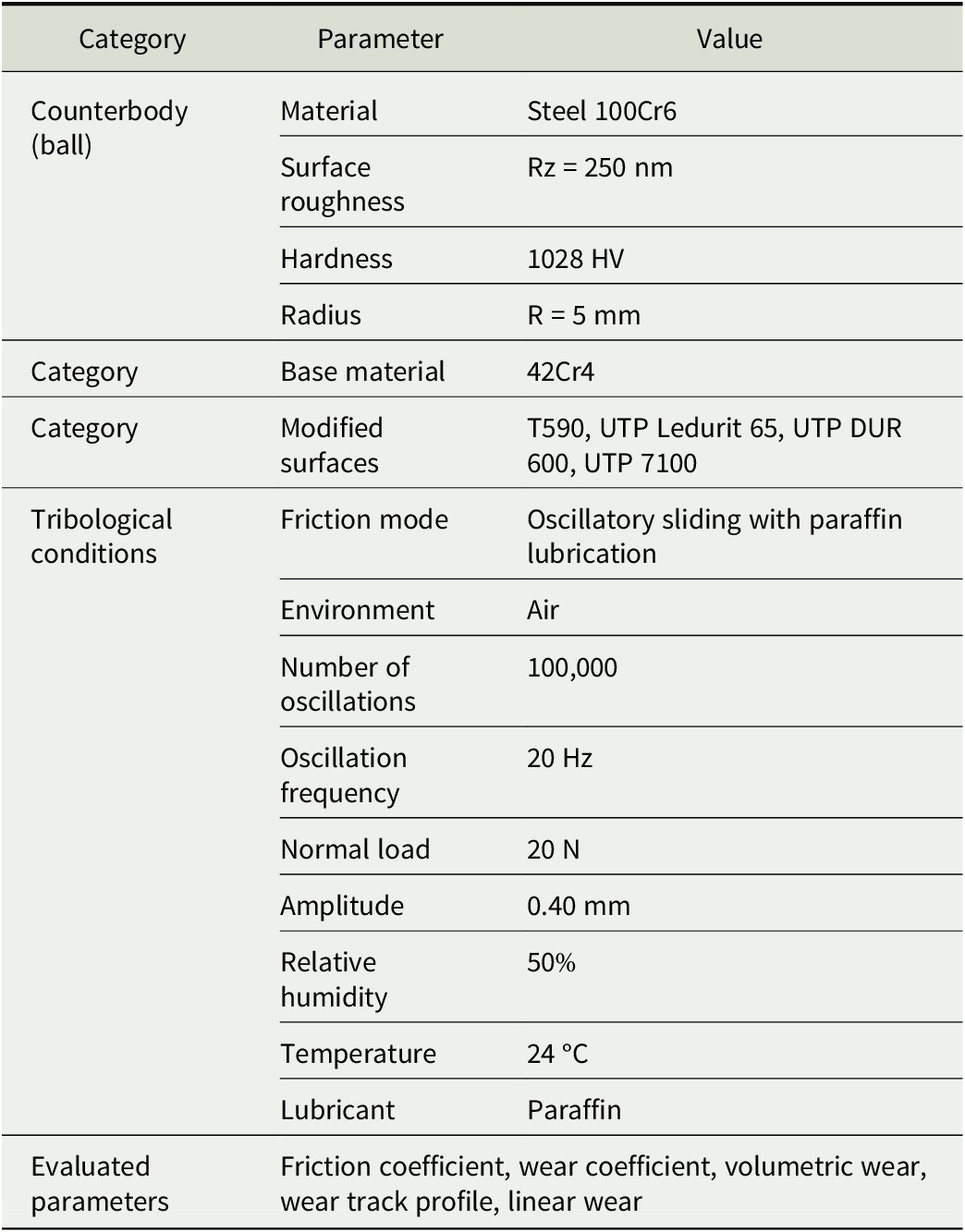
The specimens investigated for their tribological, physical, and mechanical properties, together with the corresponding experimental conditions, are summarized in Table 4.
Physico-mechanical and tribological test conditions and investigated parameters.

Table 4. Long description
The table is organized into three columns: Category, Parameter, and Value.
Category: Counterbody ball.
- Material: Steel 100 C r 6.
- Surface roughness: R z equals 250 nanometers.
- Hardness: 1028 H V.
- Radius: R equals 5 millimeters.
Category: Base material.
- Parameter: Base material.
- Value: 42 C r 4.
Category: Modified surfaces.
- Parameter: Modified surfaces.
- Value: T 590, U T P Ledurit 65, U T P D U R 600, U T P 7100.
Category: Tribological conditions.
- Friction mode: Oscillatory sliding with paraffin lubrication.
- Environment: Air.
- Number of oscillations: 100,000.
- Oscillation frequency: 20 Hertz.
- Normal load: 20 Newtons.
- Amplitude: 0.40 millimeters.
- Relative humidity: 50 percent.
- Temperature: 24 degrees Celsius.
- Lubricant: Paraffin.
Category: Evaluated parameters.
- Parameters: Friction coefficient, wear coefficient, volumetric wear, wear track profile, linear wear.
3.7. Tribological Testing
Tribological performance was evaluated using a ball-on-disc tribometer under controlled laboratory conditions. A 100Cr6 bearing steel ball was used as the counterbody due to its high hardness, dimensional stability, and well-established use in standardized wear testing.
Friction force and wear evolution were continuously recorded using horizontal and vertical load sensors integrated into the ball holder and machine frame. This configuration enabled real-time monitoring of tangential and normal force components during sliding contact, ensuring high measurement accuracy.
3.8. Surface Preparation
Prior to testing, all specimens were mechanically polished to an average surface roughness of approximately Ra ≈ 3 μm. Subsequently, the surfaces were ultrasonically cleaned with ethanol to remove residual contaminants. After drying, a thin paraffin film was applied to establish boundary lubrication conditions and ensure repeatable contact behavior during testing.
3.9. Experimental Reliability
All experiments were conducted under strictly controlled and identical conditions to ensure reproducibility. The use of standardized specimen preparation, consistent loading parameters, and controlled lubrication conditions provides a high level of data reliability.
Such an approach is essential for accurately evaluating the influence of surface modification on friction and wear behavior, particularly in the context of component restoration and remanufacturing applications where repeatability and process stability are critical.
Process repeatability was confirmed by consistent bead geometry and comparable hardness distributions across all replicated samples, indicating stable process behavior under identical experimental conditions.
To improve the spatial uniformity and effective intensity of the high-frequency electromagnetic field, spiral inductors were positioned at an optimized inclined angle relative to the workpiece surface. The inductor geometry and electrical coupling were carefully designed to maximize electromagnetic field overlap within the molten pool region.
The magnetic field intensity generated by a spiral inductor increases with the number of turns due to the cumulative contribution of each coil. In this study, a five-turn copper spiral inductor was employed. This configuration reduces local field gradients and ensures a more uniform electromagnetic field distribution across the processing zone.
As a result, a stable Lorentz-force-driven flow is established within the molten pool, promoting enhanced melt convection, improved elemental homogenization, and more uniform solidification during TIG remelting. These effects directly contribute to improved microstructural stability and surface integrity of the modified layer.
4. Results and Discussion
4.1. Microstructural Analysis (SEM/EDX)
The microstructural evolution of surface-modified 42Cr4 steel was systematically investigated using scanning electron microscopy (SEM) coupled with EDX. The main objective was to correlate processing conditions with solidification behavior, microstructural development, and tribological performance.
SEM observations clearly indicate that TIG remelting under a high-frequency magnetic field significantly refines the solidification structure compared to conventional remelting. The modified layers exhibit reduced porosity, improved metallurgical continuity, and a more homogeneous phase distribution. These features confirm a transition from dendrite-dominated solidification to a refined, convection-controlled solidification regime.
This refinement is governed by electromagnetic interactions within the molten pool. The combined action of the TIG arc and the high-frequency magnetic field generates Lorentz forces, which induce strong electromagnetic stirring. This enhances melt convection and promotes: (1) suppression of solute segregation, (2) increased nucleation rate, and (3) grain refinement during solidification. Consequently, a denser and more structurally stable surface layer is formed.
EDX elemental mapping further confirms improved chemical homogeneity in magnetically assisted samples. In particular, chromium and other carbide-forming elements exhibit a more uniform distribution compared to conventionally processed layers, where pronounced concentration gradients are observed. This homogenization stabilizes carbide precipitation and enhances the load-bearing capacity of the surface layer.
Localized chromium-enriched regions identified by EDX indicate the formation of hard chromium-rich carbide phases. These phases act as primary strengthening constituents, increasing hardness and improving resistance to both adhesive and abrasive wear. Importantly, their uniform dispersion under magnetic field assistance reduces stress concentration sites and delays crack initiation.
A quantitative microstructural comparison reveals a significant refinement induced by the magnetic field. The average grain size decreases from approximately 80–100 μm in conventionally remelted coatings to 8–10 μm in magnetically assisted samples, depending on the electrode system. This consistent refinement across all coatings indicates the strong role of electromagnetic field–controlled solidification kinetics.
4.1.1. Microstructure–Property Relationship
The improved tribological performance of the modified surfaces can be directly attributed to these microstructural transformations. Grain refinement increases grain boundary density, which impedes dislocation motion and enhances hardness. Simultaneously, reduced porosity improves load transfer efficiency and minimizes localized stress concentration under sliding contact.
In addition, the homogeneous distribution of carbide phases ensures stable load-bearing behavior during tribological loading. This suppresses premature material removal and stabilizes frictional response, particularly under lubricated conditions.
4.1.2. Microstructural Evolution of Individual Coatings
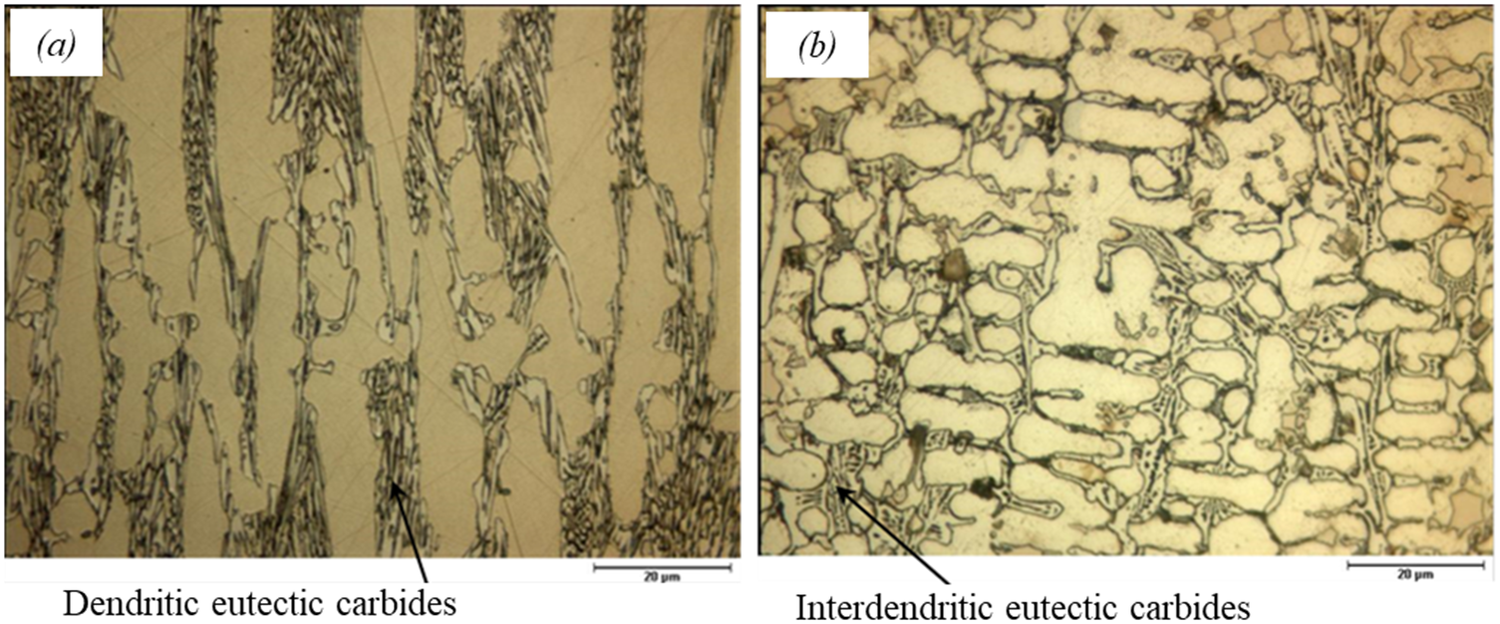
For the UTP 7100 coating, conventional remelting results in a coarse dendritic carbide network with pronounced dendritic and interdendritic eutectic carbides, whereas magnetic field-assisted processing promotes dendrite fragmentation and the formation of fine, uniformly distributed carbide particles (Fig. 1). This transformation significantly improves structural uniformity and mechanical stability. The application of a high-frequency magnetic field enhances this effect by intensifying electromagnetic stirring and improving melt pool convection, which accelerates solute transport, suppresses segregation, and promotes uniform solidification, leading to a refined and more homogeneous microstructure.
Microstructure of the UTP 7100 coating after TIG remelting under (a) conventional conditions and (b) high-frequency magnetic field assistance.

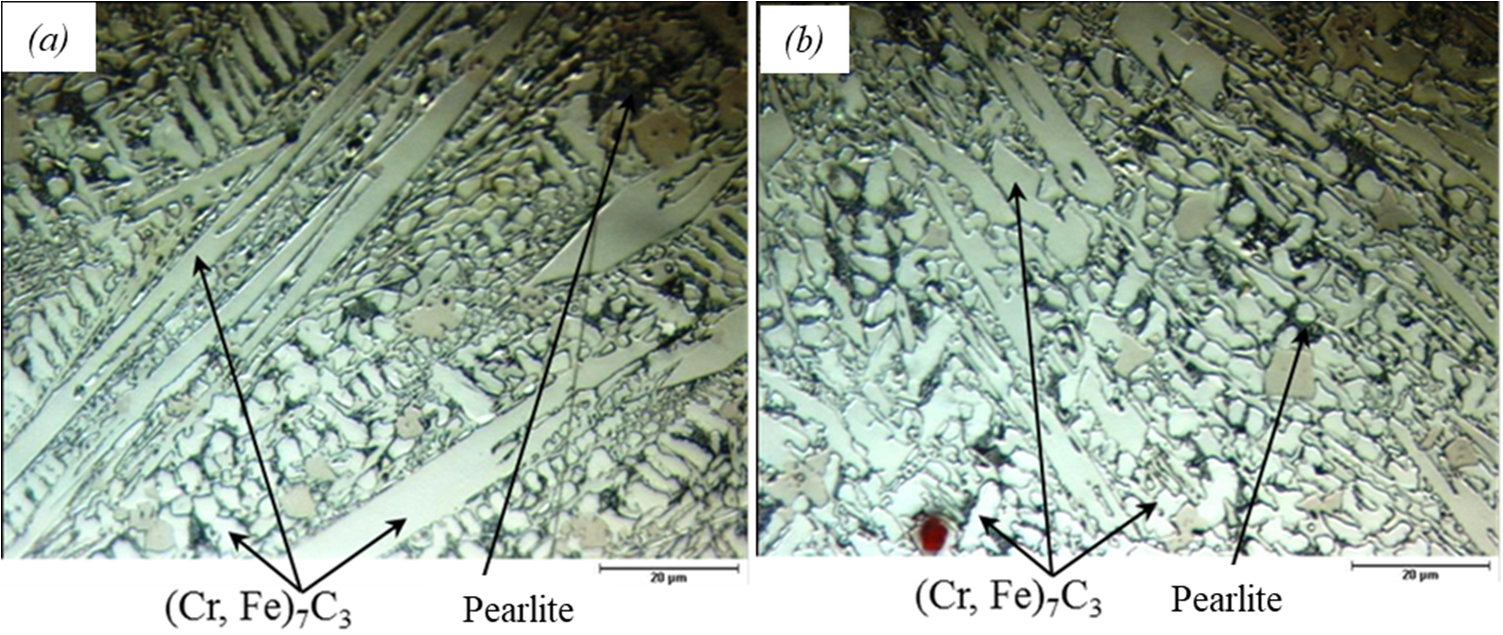
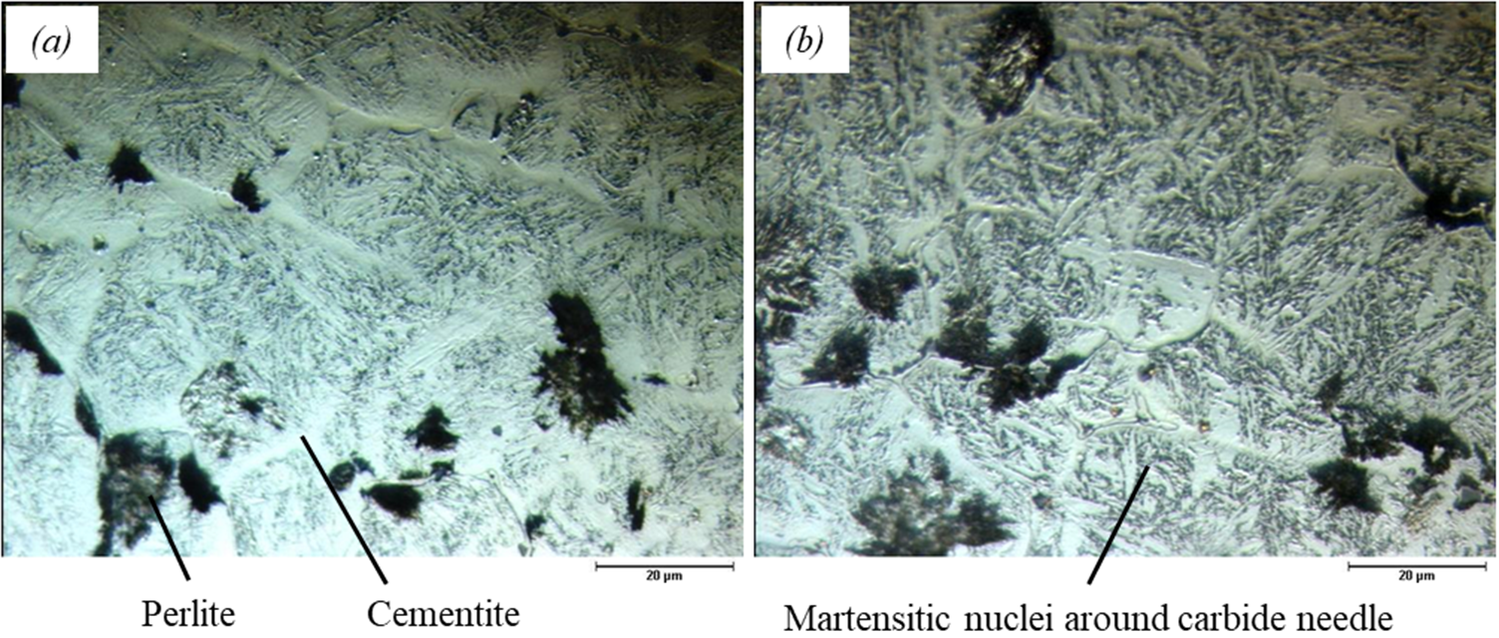
For UTP Ledurit 65, coarse carbide clusters—primarily consisting of (Cr,Fe)₇C₃ carbides embedded within a pearlitic matrix—observed under conventional processing are effectively broken down and redistributed under electromagnetic stirring, resulting in a refined and more isotropic microstructure (Fig. 2). High-frequency magnetic field assistance facilitates this process by intensifying electromagnetic stirring within the molten pool, which enhances solute transport, reduces microsegregation, and promotes a more homogeneous solidification structure through the uniform redistribution of carbide-forming elements within the matrix.
Microstructure of the UTP Ledurit 65 coating after TIG remelting under (a) conventional conditions and (b) high-frequency magnetic field assistance.

Figure 2. Long description
A two-panel micrograph showing metallic microstructures with a 20 micrometer scale bar at the bottom right of each panel.
Panel a, labeled at the top left, shows the conventional condition. It features long, needle-like or blade-shaped light gray structures identified by three arrows as C r comma F e sub 7 C sub 3 carbides. These primary carbides are oriented diagonally from the bottom left toward the top right. The dark, fine-grained matrix between these blades is identified by a single arrow pointing to the top right as Pearlite.
Panel b, labeled at the top left, shows the high-frequency magnetic field assisted condition. The microstructure appears more refined and fragmented compared to panel a. The light gray C r comma F e sub 7 C sub 3 carbides, indicated by three arrows, are shorter and more blocky or rounded rather than long blades. The dark Pearlite matrix, indicated by an arrow on the right, is distributed more evenly between the smaller carbide grains.
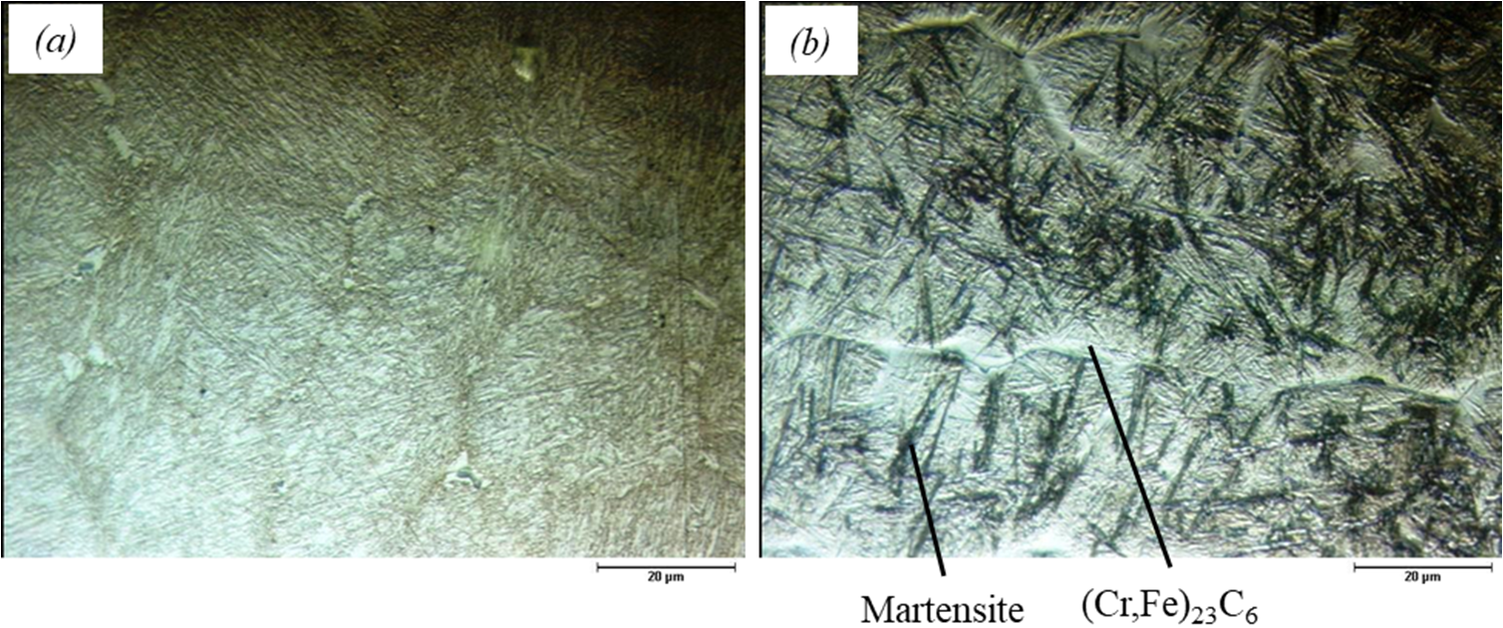
In the case of UTP DUR 600, the microstructure evolves from coarse martensitic laths, accompanied by pearlite and (Fe,Cr)₂₃C₆ carbides, to a refined martensitic network with improved uniformity, which enhances resistance to plastic deformation and stabilizes surface response under load (Fig. 3). This transformation is further promoted by the application of a high-frequency magnetic field, which leads to additional refinement of martensitic laths and improved structural uniformity. The effect is attributed to enhanced electromagnetic stirring and more uniform heat and mass transfer within the molten pool, which stabilize solidification dynamics and promote a more controlled and refined microstructural evolution.
Microstructure of the UTP DUR 600 coating after TIG remelting under (a) conventional conditions and (b) high-frequency magnetic field assistance.

The T590 coating exhibits a complex microstructure composed predominantly of bainite, retained austenite, and boride (M₃B₂ and M₂B) phases, with minor amounts of pearlite (Fig. 4). High-frequency magnetic field assistance promotes uniform phase distribution and suppresses elemental segregation, resulting in improved structural coherence and mechanical stability. This improvement is attributed to enhanced solute redistribution during solidification, driven by electromagnetic stirring within the molten pool, which ensures more stable and homogeneous phase formation within the bainite–austenite–boride system.
Microstructure of the T590 coating after TIG remelting under (a) conventional conditions and (b) high-frequency magnetic field assistance.

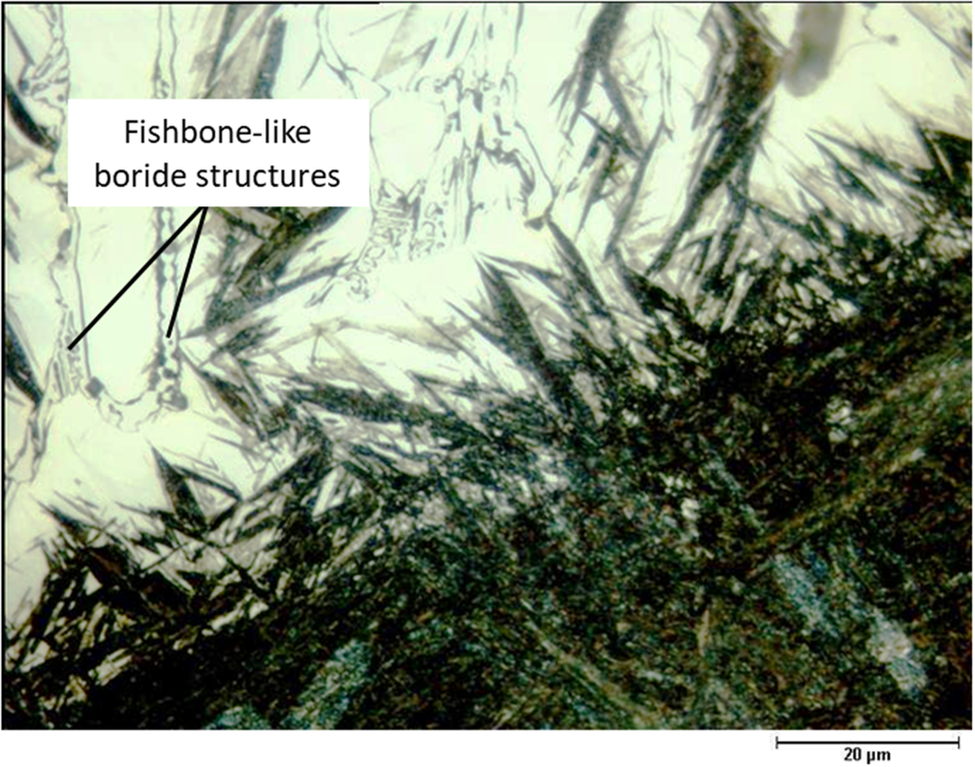
Boride Phase Formation and Reinforcement Mechanism. The microstructure of the T590 coating is characterized by the formation of M₃B₂ and M₂B boride phases, which originate from boron enrichment in the electrode composition (Fig. 5). These phases exhibit a fishbone-like morphology, indicating directional solidification under steep thermal gradients combined with electromagnetic field influence during TIG remelting.
Fishbone-like boride phases formed in the T590 coating after MMA cladding followed by TIG remelting under a high-frequency magnetic field.

The application of a high-frequency magnetic field enhances melt convection through Lorentz-force-driven stirring, leading to improved redistribution of boron and other alloying elements (Fe, Cr, Mn). This promotes the nucleation and growth of a continuous, well-dispersed boride network rather than localized clustering.
Directional solidification under electromagnetic field influence further stabilizes the formation of this boride network by enhancing solute redistribution, controlling phase growth, and preventing localized boride agglomeration. As a result, a uniform and continuous reinforcing structure is achieved within the metallic matrix.
These boride phases act as rigid load-bearing reinforcements, significantly increasing surface hardness and wear resistance. At the same time, the surrounding ferritic and retained austenitic matrix provides plastic accommodation, mitigating crack propagation and reducing the risk of brittle failure. This synergistic microstructure results in a balanced hardness–toughness combination, which is essential for stable tribological performance under service conditions.
Summary of Microstructural Mechanism. Overall, the combined action of TIG remelting and a high-frequency magnetic field results in a synergistic modification of the molten pool and solidification behavior. The dominant effects include Lorentz-force-driven melt pool convection, suppression of chemical segregation, accelerated nucleation, grain refinement, and a more uniform distribution of carbide and boride phases. Collectively, these phenomena lead to improved microstructural stability.
These microstructural modifications directly translate into enhanced hardness, reduced wear rate, and improved tribological stability of the surface-modified 42Cr4 steel.
4.2. Energy-Dispersive X-ray Spectroscopy (EDX) Analysis
The chemical composition and elemental distribution of magnetically assisted TIG remelted coatings were investigated using EDX. Cross-sectional analyses were conducted to evaluate elemental homogeneity, solute redistribution, and the influence of high-frequency magnetic fields on solidification behavior and carbide-forming element partitioning.
The results demonstrate that the application of a high-frequency magnetic field during TIG remelting significantly enhances elemental redistribution within the molten pool. Compared with conventionally processed coatings, magnetically assisted layers exhibit a more uniform distribution of alloying elements, confirming intensified melt convection and reduced microsegregation during solidification.
EDX analysis was performed on two representative systems (UTP Ledurit 65 and T590), selected due to their contrasting alloy chemistries and carbide-forming potentials. This approach enables a more reliable assessment of electromagnetic field effects on compositional uniformity and phase stability.
For the T590 coating, EDX results indicate a Fe-rich matrix (≈83–85 wt.%) containing a significant Cr content (≈11–14 wt.%). Chromium acts as the primary carbide-forming element, promoting the formation of hard secondary phases responsible for improved wear resistance. Minor alloying elements such as Si and Mn are uniformly distributed, contributing to solid-solution strengthening and enhanced structural stability.
In the UTP Ledurit 65 coating, a multicomponent alloy system containing Cr, Mo, Nb, and W is observed. These elements exhibit strong carbide-forming tendencies, leading to the formation of complex hard phases. Magnetic field assistance reduces compositional segregation and promotes a more homogeneous elemental distribution across the remelted layer.
Overall, the EDX results confirm that electromagnetic stirring induced by the high-frequency magnetic field enhances solute transport, suppresses elemental clustering, and stabilizes solidification conditions. These effects result in chemically uniform and mechanically robust surface layers.
From an application standpoint, elemental homogenization is critical for achieving stable tribological performance, which is essential for reliable surface restoration and remanufacturing in circular economy-oriented manufacturing systems.
Finally, observed spatial variations in elemental distribution can be attributed to non-uniform magnetic field intensity within the processing zone, governed by inductor geometry and electromagnetic coupling efficiency. This highlights the necessity for further optimization of inductor design to ensure a uniform electromagnetic field distribution and reproducible surface modification outcomes.
4.2.1. EDX-based Interpretation of Elemental Distribution
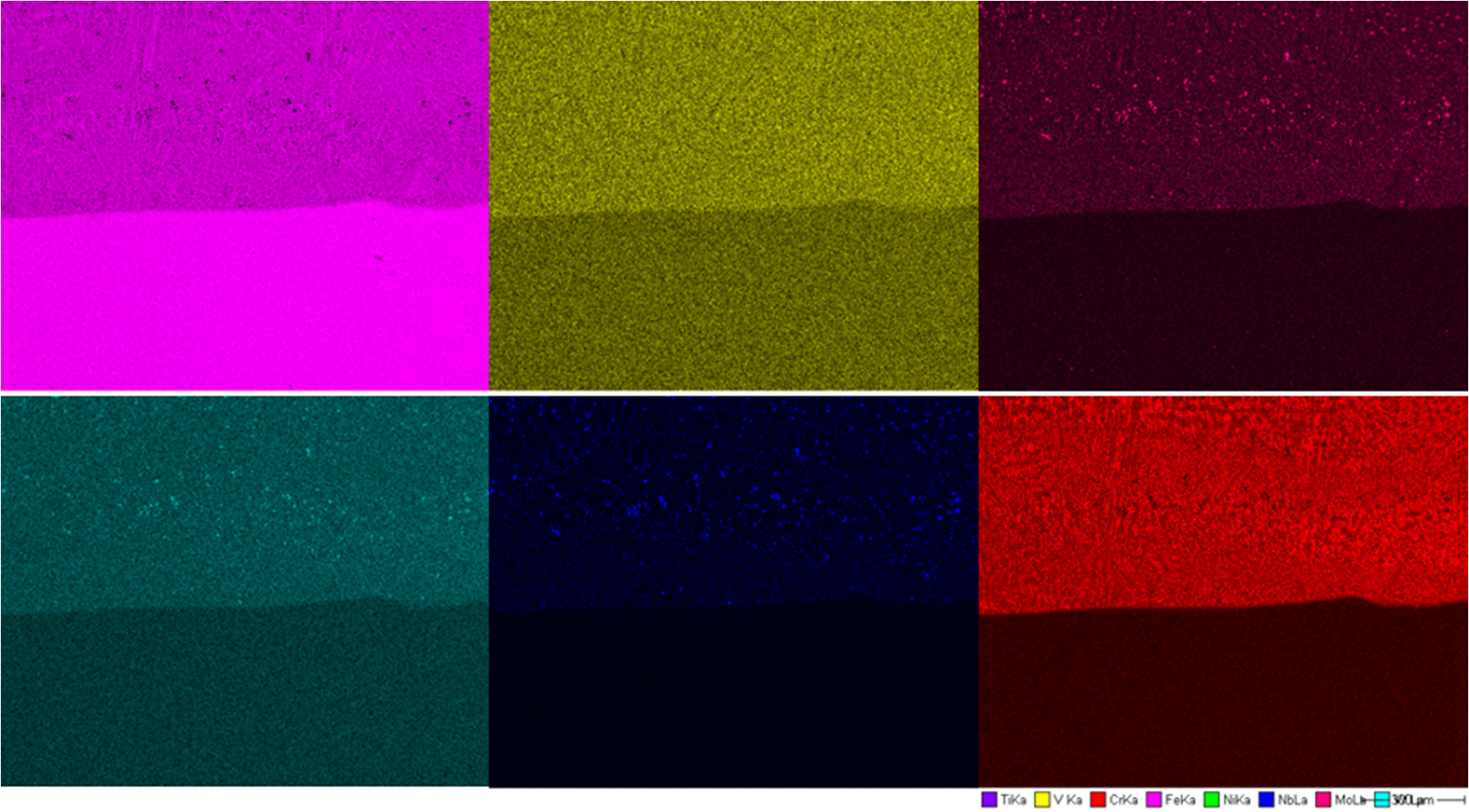
Under high-frequency magnetic field-assisted TIG remelting of the UTP Ledurit 65 cladded layer, the elemental constituents exhibit a nearly uniform distribution throughout the coating, indicating pronounced chemical homogenization driven by electromagnetic stirring within the molten pool (Fig. 6). The results reveal a multicomponent carbide-forming system (Cr–Mo–Nb–W) with enhanced elemental dispersion across the remelted layer. This homogenization is governed by Lorentz-force-induced convection within the molten pool, which enhances solute transport and suppresses microsegregation.
EDX analysis of the UTP Ledurit 65 coating after TIG remelting assisted by a high-frequency magnetic field.

Figure 6. Long description
This multi-panel E D X analysis consists of six rectangular maps arranged in two rows of three. Each map shows a distinct horizontal boundary between an upper coating layer and a lower substrate.
Top row from left to right
* The first panel shows F e K alpha in magenta. The top layer has a textured, dendritic appearance while the bottom layer is a solid, high-intensity magenta block.
* The second panel shows V K alpha in yellow. The top layer is densely populated with yellow pixels while the bottom layer shows a significantly lower concentration.
* The third panel shows M o L alpha in dark pink. The top layer contains scattered bright pink spots against a dark background while the bottom layer is nearly black.
Bottom row from left to right
* The fourth panel shows N i K alpha in teal. The top layer shows a moderate distribution of teal pixels while the bottom layer is a darker, uniform teal.
* The fifth panel shows N b L alpha in blue. The top layer contains sparse blue clusters while the bottom layer is almost entirely black.
* The sixth panel shows C r K alpha in red. The top layer displays a complex dendritic microstructure in bright red while the bottom layer is a dark, solid maroon.
A legend at the bottom right identifies the elements and includes a scale bar indicating 300 micrometers.
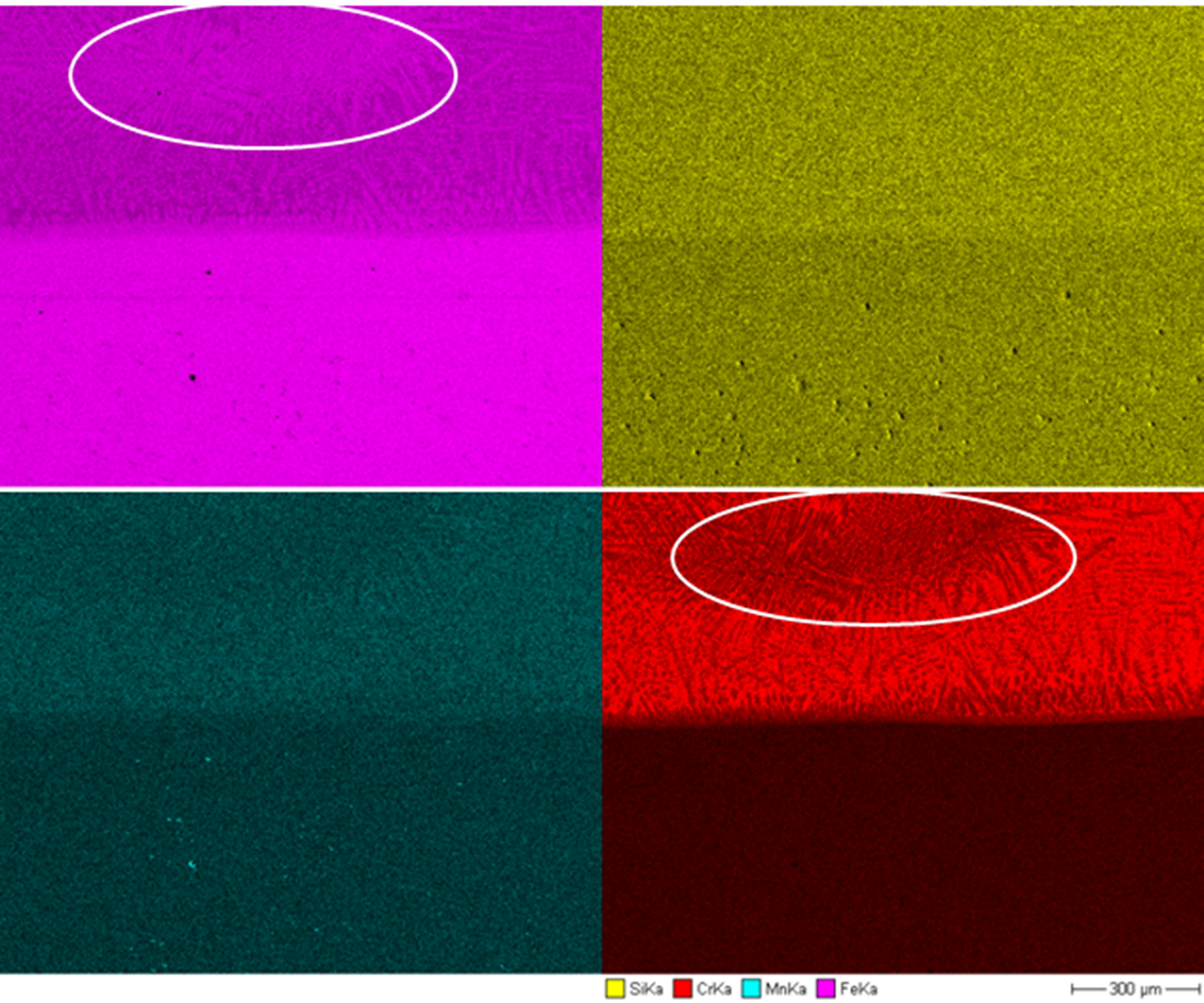
In contrast, the T590 coating reveals localized regions where elemental distribution is less uniform, particularly in zones outside the effective influence of the magnetic field or subjected to reduced field intensity (Fig. 7). This observation demonstrates that the efficiency of solute redistribution and electromagnetic stirring is strongly dependent on the spatial distribution and local intensity of the applied magnetic field.
EDX elemental distribution of the T590 coating after TIG remelting under a high-frequency magnetic field.

Figure 7. Long description
The multi-panel display consists of four E D X maps arranged in a two-by-two grid. A scale bar at the bottom-right indicates 300 micrometers.
* Top-left panel: F e K alpha map in magenta. The top half shows a dendritic microstructure highlighted by a white oval, while the bottom half is a solid, uniform magenta region.
* Top-right panel: S i K alpha map in yellow. The distribution is relatively uniform across the top and bottom halves, with small dark speckles scattered throughout.
* Bottom-left panel: M n K alpha map in teal. The distribution is uniform and dense across the entire cross-section with no distinct structural features.
* Bottom-right panel: C r K alpha map in red. The top half shows a bright red dendritic structure highlighted by a white oval, contrasting sharply with the darker, solid red region in the bottom half.
A legend at the bottom identifies the elements: yellow for S i K alpha, red for C r K alpha, teal for M n K alpha, and magenta for F e K alpha.
Nevertheless, a Fe-dominated matrix with relatively uniform distribution of Cr, Mn, and minor alloying elements is observed, attributed to Lorentz-force-driven electromagnetic stirring that enhances melt convection and reduces microsegregation. However, localized Fe and Cr non-uniformity (elliptical regions) indicates an uneven magnetic field distribution, which locally reduces stirring efficiency and elemental homogenization.
These observations confirm that achieving uniform elemental homogenization requires optimized inductor geometry and improved electromagnetic coupling conditions. Such optimization is essential to ensure a stable and spatially uniform Lorentz-force field, thereby promoting consistent melt convection and homogeneous solidification across the entire treated surface.
4.3. Hardness
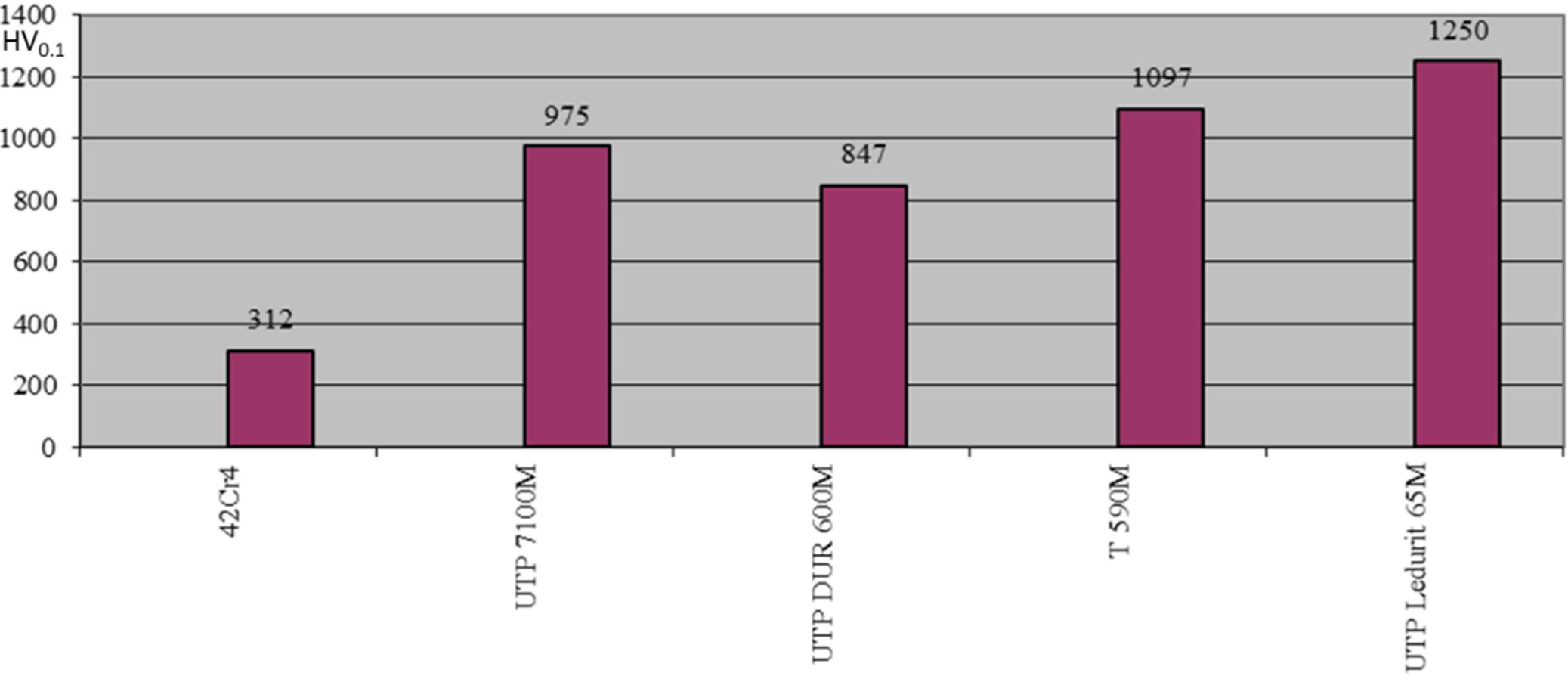
The hardness values of the 42Cr4 base material and the cladded layers after TIG remelting under a high-frequency magnetic field are presented in Graph 1. The results indicate an average hardness increase of approximately 20 HRC in the modified surface layers compared to the untreated substrate.
Hardness variation of 42Cr4 steel and cladded layers after TIG remelting under a high-frequency magnetic field.

The governing mechanism is associated with thermodynamically favorable processing conditions, including the availability of carbide-forming elements (notably Cr), electromagnetic pressure effects acting on the molten pool, and accelerated carbide precipitation under high thermal gradients.
As a result, a dense and chemically homogeneous microstructure with a uniform distribution of hard carbide phases is formed. Similar electromagnetic field-assisted densification effects have been reported by Yun et al. [Reference Kirilichev, Zyuban and Rutskiy13], where alternating magnetic fields enhanced coating density, interfacial bonding strength, and hardness through intensified convective flow and oscillatory melt dynamics.
The final hardness response is governed not only by total carbide content but also by carbide morphology, size distribution, and spatial uniformity within the matrix. Accordingly, the observed increase in hardness and elastic modulus enhances load-bearing capacity and improves resistance to plastic deformation under contact loading conditions. However, hardness alone is not a sufficient indicator of wear resistance, as tribological performance is also influenced by microstructural integrity, residual stress state, lubrication regime, and counterface interactions.
To ensure statistical reliability, hardness, friction coefficient, and wear parameters were obtained from repeated measurements, with variations remaining within acceptable limits, confirming the reproducibility and stability of the process.
Microstructural and compositional evidence supporting these findings is provided by SEM and EDX analyses, which confirm grain refinement and improved elemental homogeneity within the modified layers.
It should be noted that the hardness of the cladded layer prior to TIG remelting was not directly measured; therefore, the reported improvement reflects the combined effect of the initial cladding stage and subsequent magnetic field-assisted remelting.
4.4. Tribological Quantities
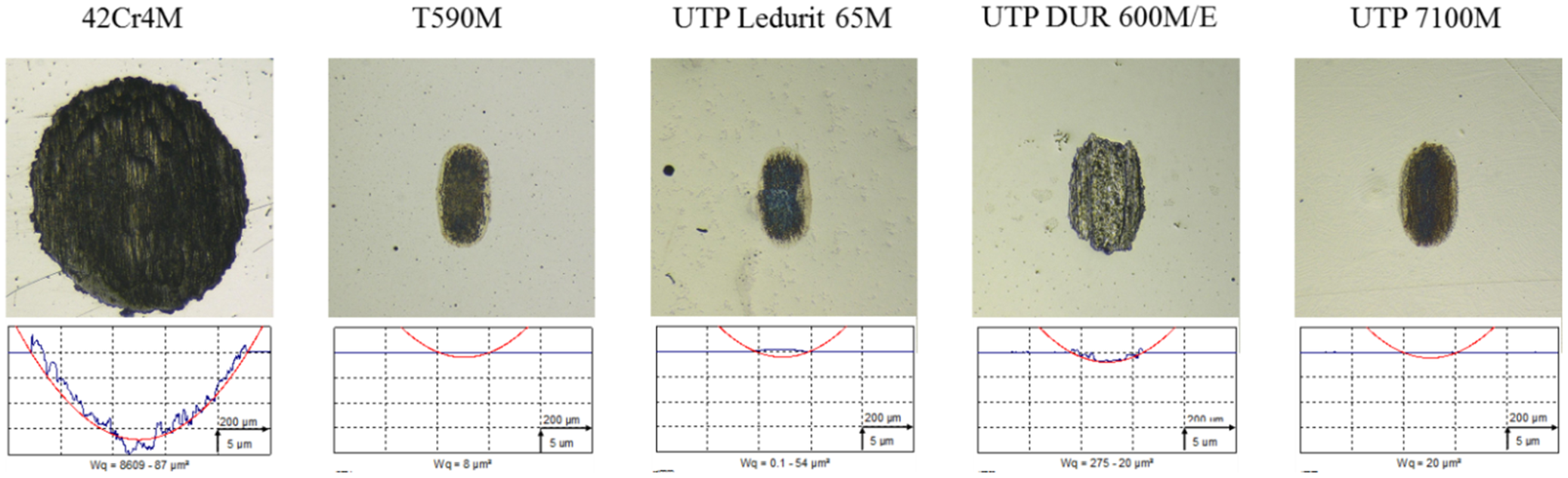
Wear tracks, wear profiles, and friction coefficient evolution of the investigated specimens are presented in Graph 2. These results provide a comparative evaluation of the tribological response of the surface-engineered systems under lubricated sliding conditions, highlighting their potential for service life extension and remanufacturing applications.
Wear tracks and wear profiles of 42Cr4 substrate and coated specimens after TIG remelting under a high-frequency magnetic field.

Graph 2. Long description
The multi-panel display consists of five columns, each representing a different material specimen.
Column 1, labeled 42 C r 4 M, shows a large, dark, circular wear scar. The profile graph below shows a deep, wide parabolic curve with a W q value of 8609 minus 87 micrometers squared.
Column 2, labeled T 590 M, shows a significantly smaller, oval-shaped wear scar. The profile graph shows a very shallow indentation with a W q value of 8 micrometers squared.
Column 3, labeled U T P Ledurit 65 M, shows a small, dark wear scar similar in size to the second column. The profile graph indicates a nearly flat surface with a W q value range of 0.1 to 54 micrometers squared.
Column 4, labeled U T P D U R 600 M forward slash E, shows a small wear scar with a slightly more irregular, textured appearance. The profile graph shows a shallow, jagged indentation with a W q value range of 275 to 20 micrometers squared.
Column 5, labeled U T P 7100 M, shows a small, dark oval wear scar. The profile graph shows a shallow, smooth indentation with a W q value of 20 micrometers squared.
All profile graphs include a scale bar indicating 200 micrometers on the horizontal axis and 5 micrometers on the vertical axis. A red reference arc is overlaid on each profile to illustrate the depth of the wear relative to the original surface.
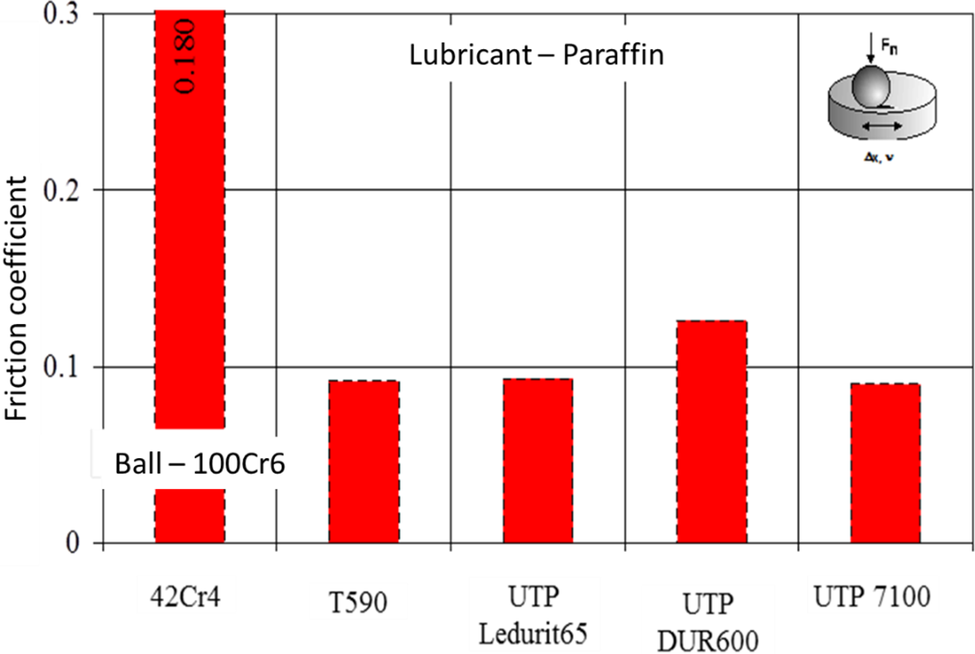
The results show a clear reduction in wear track width and depth for the coated and magnetically assisted specimens compared with the untreated 42Cr4 substrate, which is attributed to increased surface hardness and a more homogeneous microstructure that enhance resistance to plastic deformation and reduce material removal under lubricated sliding conditions. As shown in Graph 2, the 42Cr4 substrate and UTP DUR 600 coating exhibit significantly larger wear areas, consistent with their lower hardness and higher friction coefficients (Graphs 1 and 3), indicating insufficient resistance to plastic deformation and localized surface failure under contact loading.
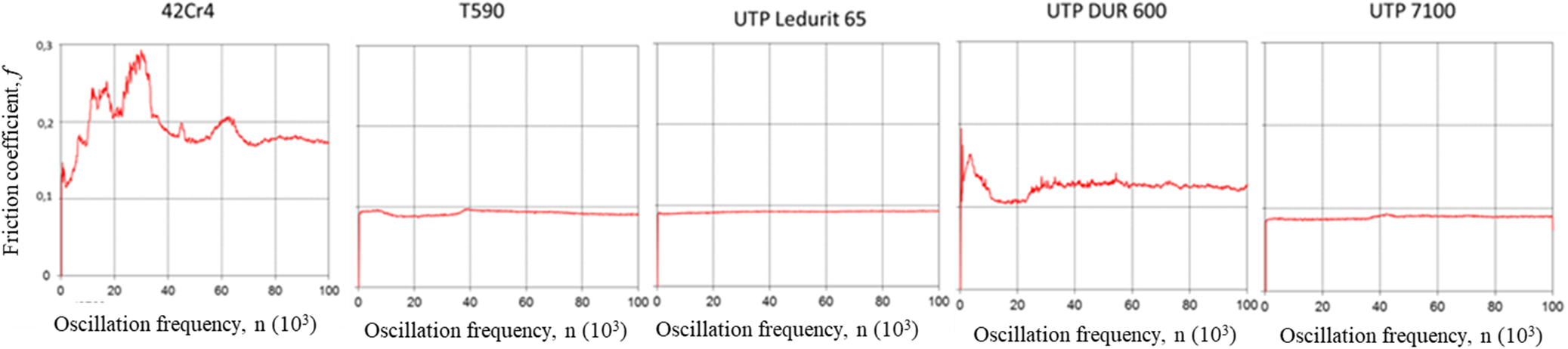
The friction response of these specimens is characterized by pronounced instability throughout the test (Graph 3). These fluctuations are associated with cyclic plastic deformation, progressive work hardening, and localized surface damage, leading to repeated transitions between stick–slip regimes. In addition, the absence of a stable and continuous tribo-layer further contributes to frictional instability and accelerates material removal under sliding contact conditions.
Friction coefficient evolution of 42Cr4 substrate and coated specimens under lubricated sliding conditions.

Graph 3. Long description
This multi-panel line graph features five individual plots. All plots share a common Y axis labeled Friction coefficient, f, ranging from 0 to 0.3, and a common X axis labeled Oscillation frequency, n times 10 super 3, ranging from 0 to 100.
Moving from left to right.
Panel 1, 4 2 C r 4. The data shows high instability. The friction coefficient rises sharply from 0.1 to a peak of nearly 0.3 at 30,000 cycles, followed by a jagged decline and stabilization around 0.18 after 60,000 cycles.
Panel 2, T 5 9 0. The data shows a very stable, nearly horizontal line. The friction coefficient remains constant at approximately 0.08 throughout the entire 100,000 cycles.
Panel 3, U T P Ledurit 65. Similar to the second panel, the data shows a highly stable linear trend, maintaining a friction coefficient of approximately 0.08 with negligible fluctuation.
Panel 4, U T P D U R 600. The data shows initial volatility with a sharp spike to 0.2 at the start, followed by a drop to 0.1 at 20,000 cycles. It then stabilizes into a slightly wavy line around 0.12 for the remainder of the test.
Panel 5, U T P 7 1 0 0. The data shows a very stable horizontal line, maintaining a friction coefficient slightly below 0.08 for the full duration of the oscillation frequency.
In contrast, the T590, UTP Ledurit 65, and UTP 7100 coatings exhibit lower and more stable friction coefficients, reflecting improved microstructural integrity and enhanced resistance to surface degradation. Their stable tribological response indicates effective suppression of severe adhesive interactions and more stable interfacial conditions under lubricated sliding.
The results illustrate a clear distinction in friction stability between the untreated substrate and the coated specimens. The 42Cr4 substrate exhibits pronounced fluctuations in friction coefficient, indicating unstable sliding behavior and intermittent surface failure. In contrast, the coated and magnetically modified specimens show lower and more stable friction levels, which can be attributed to improved surface integrity, reduced plastic deformation, and the formation of more stable contact conditions under lubricated sliding (Graph 4).
Average friction coefficient of 42Cr4 substrate and coated specimens modified by TIG remelting assisted by a HF magnetic field.

The UTP DUR 600 coating exhibits a predominantly adhesive wear mechanism, accompanied by intermittent fluctuations in the friction coefficient. A similar tendency is observed for the UTP Ledurit 65 coating, where material transfer from the counterbody promotes the formation of a discontinuous secondary adhesive layer on the worn surface, contributing to frictional instability.
The highest average friction coefficient is recorded for the 42Cr4 substrate, followed by the UTP DUR 600 coating. This increase is attributed to strong adhesive interactions between the steel counterbody and the relatively softer substrate, resulting in localized junction formation, partial seizure and pronounced stick–slip behavior. Such response confirms the limited tribological stability of the unmodified material under the applied loading conditions.
In contrast, the T590, UTP Ledurit 65, and UTP 7100 coatings exhibit comparatively similar and lower friction levels, indicating a more stable balance between hardness, phase stability, and microstructural refinement. This leads to improved resistance to severe adhesive interactions, more stable sliding behavior and reduced susceptibility to accelerated surface degradation.
Areal wear measurements further support these findings (Graph 2). The 42Cr4 substrate exhibits the highest wear volume among all tested specimens, confirming its limited resistance to material removal under sliding contact conditions. In contrast, the UTP Ledurit 65 coating demonstrates the lowest wear, indicating superior resistance to surface degradation. Intermediate wear behavior is observed for the UTP DUR 600 coating, which is consistent with a mixed adhesive and plastic deformation-controlled wear mechanism governing its tribological response.
The areal wear values demonstrate a pronounced reduction in material loss for all surface-modified specimens compared with the untreated 42Cr4 substrate. The substrate exhibits the highest wear value (8609 μm2), accompanied by a dominant adhesive wear contribution, indicating severe surface degradation under sliding contact conditions.
In contrast, the T590M coating shows the lowest wear (8 μm2), reflecting superior resistance to material removal due to enhanced microstructural refinement and improved phase stability induced by TIG remelting under a high-frequency magnetic field. The UTP Ledurit 65 M coating also exhibits extremely low wear (0.1 μm2), confirming highly effective suppression of adhesive and abrasive wear through uniform carbide distribution.
Intermediate wear behavior is observed for UTP DUR 600 (275 μm2) and UTP 7100 M (20 μm2), which is consistent with their mixed wear mechanisms, including adhesive interaction and moderate plastic deformation resistance. The variation in wear response across the coatings highlights the strong influence of alloy composition and electromagnetic-field-assisted microstructural modification on tribological performance.
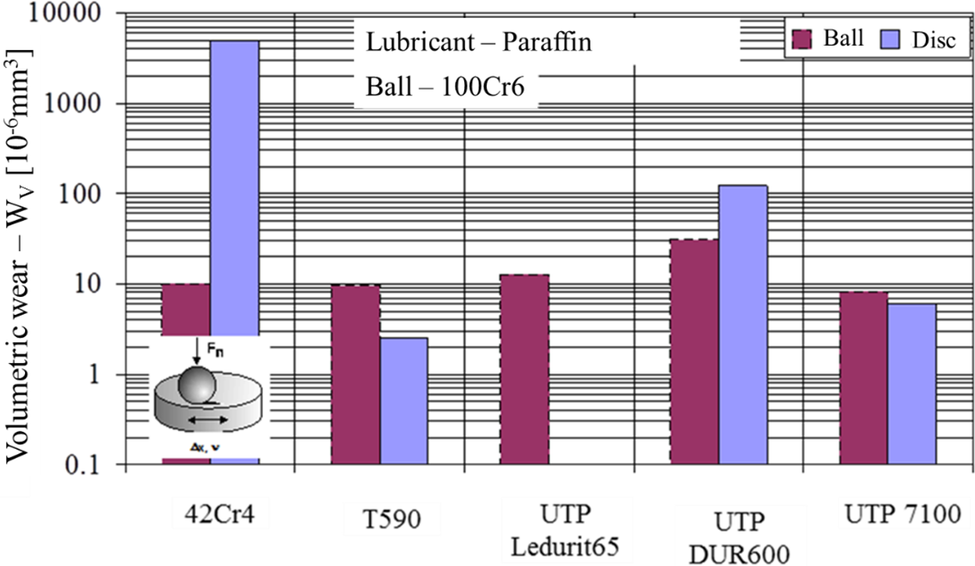
Volumetric wear analysis (Graph 5) confirms a significant improvement in wear resistance for all coated and magnetically modified specimens compared to the untreated 42Cr4 substrate. This reduction in wear is primarily attributed to increased surface hardness, microstructural refinement, and enhanced load-bearing capacity induced by TIG remelting under a high-frequency magnetic field.
Volumetric wear of 42Cr4 substrate and coated specimens measured under paraffin-lubricated ball-on-disc conditions after TIG remelting assisted by a high-frequency magnetic field.

Graph 5. Long description
The y-axis represents Volumetric wear W sub V in units of 10 super negative 6 cubic millimeters, ranging from 0.1 to 10000 on a logarithmic scale. The x-axis lists five specimens: 42 C r 4, T 5 9 0, U T P Ledurit 65, U T P D U R 600, and U T P 7100. A legend at the top right identifies maroon bars as the Ball and light blue bars as the Disc.
* For 42 C r 4: The ball wear is approximately 10 while the disc wear is the highest on the chart at nearly 5000.
* For T 5 9 0: The ball wear is approximately 10 and the disc wear is significantly lower at approximately 2.5.
* For U T P Ledurit 65: The ball wear is approximately 12 and the disc wear is negligible, appearing near the baseline.
* For U T P D U R 600: The ball wear is approximately 30 and the disc wear is approximately 120.
* For U T P 7100: The ball wear is approximately 8 and the disc wear is approximately 6.
Text at the top center specifies the Lubricant as Paraffin and the Ball material as 100 C r 6. An inset diagram at the bottom left illustrates the ball-on-disc setup with a vertical force F sub n and horizontal displacement delta x, v.
From a mechanistic standpoint, the wear of the 42Cr4 substrate is dominated by severe plastic deformation and micro-cutting caused by counterbody penetration under constant normal load. In contrast, the modified coatings effectively suppress plastic flow localization, thereby reducing material removal rates and stabilizing the tribological contact interface. This leads to a transition from severe adhesive/abrasive wear toward a more stable mild wear regime in the treated specimens.
The UTP DUR 600 coating exhibits an intermediate tribological response, where wear is governed by a combination of adhesive interactions and friction-induced surface instability. This mixed mechanism leads to intermittent material removal and moderate fluctuations in friction behavior.
In contrast, the UTP Ledurit 65 coating demonstrates the most favorable wear resistance among the investigated systems. Although localized material transfer from the counterbody is observed, it results in the formation of a thin and mechanically stable tribo-transfer layer. This layer may contribute to a partial stabilization of the friction process without causing any significant degradation of the coating integrity.
5. Conclusions
This study investigated the mechanical and tribological performance of 42Cr4 steel surfaces modified via TIG remelting under a high-frequency magnetic field, with reference to the untreated substrate, within a circular economy-oriented surface engineering framework. Tribological behavior was systematically evaluated using ball-on-disc testing under identical lubricated conditions, enabling a direct correlation between processing parameters, microstructural evolution and functional surface response.
The results demonstrate that the application of a high-frequency magnetic field during TIG remelting significantly enhances surface hardness and wear resistance of 42Cr4 steel. The results demonstrate that high-frequency magnetic field-assisted TIG remelting significantly enhances the surface integrity of 42Cr4 steel through microstructural refinement, porosity reduction, and elemental homogenization.
From a mechanistic perspective, the externally applied electromagnetic field modifies molten pool dynamics through Lorentz-force-driven convection, promoting intensified solute transport, suppressing microsegregation, and stabilizing solidification conditions. This results in the formation of a dense, chemically uniform and mechanically stable surface layer with improved resistance to plastic deformation and adhesive wear under sliding contact.
Tribological evaluation confirms a substantial reduction in wear volume and a more stable friction response for all magnetically assisted coatings compared with the untreated substrate. The most significant improvements were observed under lubricated conditions, where microstructural refinement effectively mitigates severe adhesive interactions and stabilizes the tribological interface.
A key finding of this study is that the spatial uniformity of the applied electromagnetic field is critical for achieving consistent melt pool behavior and homogeneous microstructural development. Accordingly, optimization of inductor geometry, coil configuration, and electrical coupling is essential to improve process stability, reproducibility, and industrial scalability.
The proposed hybrid TIG–high-frequency magnetic field treatment provides a robust and scalable surface engineering strategy for both manufacturing and the repair, restoration, and remanufacturing of worn components. The process enables effective surface functionality recovery, enhances load-bearing capacity and reduces the need for full component replacement.
From a sustainability perspective, the approach directly supports circular economy principles by extending component service life and reducing raw material consumption, energy demand and waste generation. Even partial surface restoration offers significant lifecycle resource savings, contributing to more sustainable manufacturing systems.
Future work will focus on tribological performance under dry sliding and more industrially representative lubrication conditions. Additionally, advanced microstructural characterization using SEM, EDS, and XRD will be conducted to further elucidate phase evolution and validate the proposed strengthening mechanisms.
Overall, the combined SEM and EDX results confirm that high-frequency magnetic field-assisted TIG remelting induces pronounced microstructural refinement and elemental homogenization, which are the primary mechanisms responsible for the observed improvements in hardness and tribological performance.
Open peer review
To view the open peer review materials for this article, please visit http://doi.org/10.1017/S2978168X26000015.
Author contributions
Conceptualization: F.S.; Data curation: F.S.; Experimental investigation: F.S.; Experimental support: M.S.; Formal analysis: F.S.; Materials characterization: M.S.; Methodology: F.S; Resources: M.S.; Supervision: Y.B.; Validation: Y.B.;Writing—original draft: F.S.; Writing—review and editing: Y.B.
Acknowledgments
The welding experiments and tribological testing were carried out at Technische Universität Berlin and the Federal Institute for Materials Research and Testing (BAM), respectively. The authors gratefully acknowledge Professor Lutz Dorn, Dr.-Ing. Rolf Waesche and Ms. Ch. Neumann for their valuable technical support and assistance during the experimental work.
Financial Support
This research received no external funding.
Competing interests
The authors declare that they have no competing interests.
Data availability statement
The data that support the findings of this study are available from the corresponding author upon reasonable request.



 Open access


Comments
Cover Letter to the Article
Submission of Manuscript for Consideration – “Enhancing the Circularity of 42Cr4 Steel Components Through TIG Surface Remelting Under a High-Frequency Magnetic Field: A Sustainable Approach to Restoration and Remanufacturing”
Dear Editor in Chief,
We are pleased to submit our manuscript titled “Enhancing the Circularity of 42Cr4 Steel Components Through TIG Surface Remelting Under a High-Frequency Magnetic Field: A Sustainable Approach to Restoration and Remanufacturing” for consideration for publication in Cambridge Materials: Circularity.
Our research addresses a critical challenge in modern industry: the wear and degradation of mechanical components, which leads to significant material waste and economic costs. In line with the core mission of Cambridge Materials: Circularity, this study focuses on developing sustainable solutions that promote the principles of the circular economy, particularly through the restoration and remanufacturing of valuable materials.
In this manuscript, we present a novel approach involving the TIG surface remelting of 42Cr4 steel under a high-frequency magnetic field. Our findings demonstrate that this method significantly enhances both the hardness and wear resistance of the steel, thereby extending the lifespan of components. Crucially, these improvements directly facilitate the repair, restoration, and remanufacturing of worn parts, offering a viable alternative to the conventional linear “take-make-dispose” model. By enabling components to be returned to service with enhanced properties, our work contributes to reducing raw material demand, minimizing industrial waste, and improving overall resource efficiency.
We believe that the innovative methodology and the strong emphasis on circularity, restoration, and remanufacturing presented in our paper will be of great interest to the readership of Cambridge Materials: Circularity. The practical implications of our findings offer a sustainable surface engineering solution that aligns perfectly with the journal’s scope and focus on materials efficiency and industrial sustainability.
We confirm that this manuscript is original, has not been published elsewhere, and is not under consideration for publication by any other journal. All authors have approved the manuscript and agree with its submission to Cambridge Materials: Circularity. We also declare that there are no conflicts of interest.
Thank you for your time and consideration. We look forward to your positive response.
Sincerely,
Ass.Prof. Dr.-İng., PhD Shirzadov Farhad
Azerbaijan Technical University, Specialist in Technology
E-mail: farhad.shirzadov@aztu.edu.az
Mob. +994559029446
Ass.Prof., PhD Yadullah Babayev
Azerbaijan Technical University, Dean of Special Technique and Technology
E-mail: yadullah.babayev@aztu.edu.az
Mob. +994503995906
Ass.Prof., PhD Mehti Soltanov
E-mail: mehti.soltanov@azmiu.edu.az
Mob. +994705490069
H.Javid ave 25, Baku, Azerbaijan AZ 1073 Azerbaijan Technical University.