


There is substantial evidence that depressive symptoms following a myocardial infarction or acute coronary syndrome (ACS) are associated with increased risk of recurrent cardiac events and impaired quality of life. Reference Lichtman, Froelicher, Blumenthal, Carney, Doering and Frasure-Smith1,Reference Dickens, Cherrington and McGowan2 However, depression is not the only psychological factor that is relevant to the prognosis and recovery of patients after ACS; causal attributions, anxiety and illness perceptions all appear to be relevant. Reference Affleck, Tennen, Croog and Levine3–Reference Roest, Martens, Denollet and de Jonge5 Variations in psychological coping may underlie some of these emotional and cognitive responses. Psychological coping can be defined as the thoughts and behaviours used to manage the internal and external demands of situations that are appraised as stressful. A number of different measures are used to assess coping styles, depending on the taxonomy of coping that is adopted. Reference Skinner, Edge, Altman and Sherwood6 One common distinction that is drawn is between problem- or task-oriented coping, describing purposeful efforts aimed at solving the problem, altering the situation or cognitively restructuring the problem; emotion-oriented coping, reflecting responses directed at managing emotional responses such as self-blame, wish fulfilment and expressing emotions to others; and avoidant coping, describing actions and cognitions that are directed towards avoiding the problem such as distraction and distancing. Reference Endler and Parker7
Research on coping following ACS has focused primarily on emotional adaptation. Reference Folkman and Moskowitz8 However, we surmised that task-oriented coping might be particularly relevant to recovery following an ACS for three reasons. First, successful rehabilitation often involves the active engagement of the patient in protective health behaviours such as adherence to medication, increased physical activity and healthy dietary choices. An individual who habitually takes a problem-focused approach may be more likely to engage in such actions. Second, it is known that chronic stress following ACS is a predictor of future adverse cardiac events; Reference Arnold, Smolderen, Buchanan, Li and Spertus9–Reference Aboa-Eboule, Brisson, Maunsell, Masse, Bourbonnais and Vezina11 task-oriented coping may be a way of managing life stressors more effectively. Third, task-oriented coping has been associated with favourable biological responses such as reduced cortisol output over the day. Reference O'Donnell, Badrick, Kumari and Steptoe12 In the present study, we therefore tested the hypothesis that higher levels of task-oriented coping measured soon after ACS would be associated with reduced long-term risk of major adverse cardiac events in a longitudinal cohort of ACS patients. We also assessed relationships with adherence to medication, physical activity and prudent diet following ACS, to test the secondary hypothesis that associations with adverse cardiac outcomes would be mediated by health behaviours. Additionally, we took depressive symptoms in the weeks after ACS into account, since patients reporting high levels of depressive symptoms may regard themselves as less capable of managing their situation, leading to confounding between feeling depressed and reporting low levels of task-oriented coping. We also examined associations between recurrent cardiac events and emotion-orientated coping and avoidant coping, in case either was associated with recovery. Finally, we carried out an exploratory analysis of whether the combination of low task-oriented coping and elevated depressive symptoms would be particularly pathogenic.
Method
Study population
This analysis involved 158 patients admitted with ACS to St George's Hospital in South London between June 2007 and October 2008 as part of the TRACE study of psychological and biological factors contributing to adaptation in acute cardiac patients. Reference Steptoe, Molloy, Messerli-Burgy, Wikman, Randall and Perkins-Porras13,Reference Steptoe, Molloy, Messerli-Burgy, Wikman, Randall and Perkins-Porras14 Patients were included if they had a diagnosis of ACS based on the presence of chest pain plus verification by diagnostic electrocardiogram (ECG) changes, troponin T or troponin I ≥99th percentile of the upper reference limit and/or a creatine kinase measurement more than twice the upper range of normal for the measuring laboratory. Our additional inclusion criteria were age of 18 years or over, absence of comorbid conditions that might influence either symptom presentation or mood (such as neoplasia, unexplained anaemia, immunotherapy), non-cardiac conditions that might cause troponin positivity and the ability to complete interviews and questionnaires in English. The study was approved by the Wandsworth Research Ethics Committee and written consent was obtained.
Clinical and sociodemographic measures
We obtained information from medical notes about cardiovascular history, clinical factors during admission and management. Admission ECGs were reviewed for presentation as ST-elevation myocardial infarction or non-ST-elevation myocardial infarction/unstable angina. We computed the composite risk index based on the algorithm developed in the Global Registry of Acute Coronary Events (GRACE) study; Reference Eagle, Lim, Dabbous, Pieper, Goldberg and Van de Werf15 this uses nine criteria (age, congestive heart failure, history of myocardial infarction, systolic blood pressure and heart rate on admission, ST segment depression, initial serum creatinine, elevated cardiac enzymes and in-hospital percutaneous coronary intervention) to define risk of 6-month post-discharge death applicable to all types of ACS. We measured a number of other clinical cardiological characteristics including history of ACS, ST-segment depression during admission, ventricular fibrillation and number of coronary arteries with significant stenosis. However, none of these variables were related to psychological coping, so were not included in the statistical analyses.
Socioeconomic status (SES) was measured using a social deprivation index based on three criteria: living in a crowded household (defined as one or more people to a room), renting as opposed to owning a home and not having use of a motor vehicle (car or van). Reference Steptoe, Molloy, Messerli-Burgy, Wikman, Randall and Perkins-Porras13,Reference Strike, Perkins-Porras, Whitehead, McEwan and Steptoe16 Patients were classified as low deprived (negative on all items), medium deprived (one positive) and high deprived (2–3 positive). We categorised the educational attainment of participants into three groups: primary, secondary and degree or higher. Information concerning ethnicity and smoking was obtained by interview.
Assessment of psychological coping and depressed mood
Patients were assessed in their homes on average 21.6 days (s.d. = 8.5) following admission to hospital. We measured psychological coping using the Coping Inventory for Stressful Situations (CISS). Reference Endler and Parker17 This 21-item questionnaire assesses coping along three dimensions:
-
(a) task-oriented coping, describing purposeful task-oriented efforts aimed at solving the problem, attempts to alter the situation or cognitively restructuring the situation;
-
(b) emotion-oriented coping, reflecting responses directed at managing emotional responses such as self-blame, wish fulfilment and expressing emotion to others; and
-
(c) avoidant coping, describing actions and cognitions that are directed towards avoiding the problem such as distraction and distancing.
Each item (for example ‘I focus on the problem and see how I can solve it’) was rated on a five-point score from ‘not at all’ to ‘very much’. Seven items contributed to each scale and ratings were averaged to generate a score from one to five with higher values indicating greater use of that coping strategy. The Cronbach α for the three scales in this study was 0.82, 0.82 and 0.76 for task-oriented, emotion-oriented coping and avoidant coping, respectively.
Depressed mood was assessed using the Beck Depression Inventory (BDI). Reference Beck, Steer and Garbin18 This consists of 21 items rated on a scale of 0–3, and total scores can range from 0 to 63. The Cronbach α in this sample was 0.86. We also obtained information on lifetime history of clinical depression using the Depression Interview and Structured Hamilton (DISH). Reference Freedland, Skala, Carney, Raczynski, Taylor and Mendes de Leon19
Health-related behaviours
We measured patient adherence to medication at the interview 3 weeks after ACS using the Medication Adherence Report Scale (MARS), a scale comprising five items related to adherence, such as ‘I forget to take my medicines’ and ‘I decide to miss out a dose’. Reference Horne and Weinman20 Each was rated on a five-point scale from ‘always’ to ‘never’. Because the majority of patients reported complete adherence and the measure was positively skewed, we created a binary variable contrasting those who said they were adherent on all items with those who reported being less than completely adherent. We assessed physical activity by asking patients how many minutes of brisk walking they did each day. Responses were skewed because a substantial proportion did not do any brisk walking, so patients were classified as doing some or no brisk walking. In the dietary domain, we measured the number of portions of fruit and vegetables eaten each day, using a validated measure. Reference Cappuccio, Rink, Perkins-Porras, McKay, Hilton and Steptoe21 Attendance at cardiac rehabilitation was assessed through a combination of self-report and hospital records.
Clinical outcomes
Clinical outcome was indexed by the occurrence of major adverse cardiac events, defined as cardiovascular death, readmission with reinfarction or unstable angina, the development of heart failure and coronary artery bypass graft surgery. Information was obtained from clinical records with an average follow-up of 59.8 months (s.d. = 4.4). When a patient experienced more than one major adverse event (one participant), we used the first event as the outcome.
Analytic sample
There were 298 patients in the complete TRACE study, but only 162 completed the CISS. The reason is that the measure was administered at a home interview following ACS, and many patients did not complete this interview. There were missing data on covariates for four participants, so the analytic sample consisted of 158 individuals. There were no differences between patients included and excluded from the analysis in gender distribution, education, clinical cardiological features or the incidence of major adverse cardiac outcomes. However, the patients who did not complete the CISS were an average 3.3 years younger (mean 58.4 (s.d. = 11.4) v. 61.7 (s.d. = 11.3) years) and had higher social deprivation scores.
Statistical analysis
Data were analysed using Cox proportional hazards regression to assess time-dependent associations between task-oriented coping and adverse cardiac outcomes. To make the pattern of associations clear, we divided the sample into high and low task-oriented coping groups by binary split (score of 3.6 on the 1–5 scale), and computed hazard ratios (HR) of major adverse cardiac outcomes and 95% confidence intervals associated with high task-oriented coping, using the low task-oriented coping group as the reference category. Survival time was measured in days from the date of ACS to cardiac event or follow-up census date. We fitted three models. In model 1, we included gender, age, ethnicity, deprivation and GRACE score along with task-oriented coping. History of clinical depression and depressive symptoms recorded 3 weeks after ACS were added in model 2 and in model 3 we included smoking status prior to ACS, adherence to medication and attendance at cardiac rehabilitation. Associations between task-oriented coping and adverse cardiac outcomes are illustrated with fully adjusted Kaplan–Meier curves. Measures of brisk walking and fruit and vegetable consumption were missing for two more participants. Instead of reducing the sample size for the primary analyses, we therefore included these factors in secondary analyses. Additionally, as a sensitivity analysis, we analysed continuously distributed task-oriented coping scores instead of using the binary index. The associations between emotion-focused and avoidant coping and cardiac outcomes were analysed using the same methods.
Our exploratory analysis of the interaction between task-oriented coping and depressive symptoms involved computing the cross-product of continuously distributed coping (negatively scored) and BDI ratings, so that individuals reporting low task-oriented coping and higher depressive symptoms had higher scores. This interaction term was then entered into Cox regression models as before. Significant effects were explored by creating four groups by binary split on task-oriented coping and BDI ratings (cut-off point 5), with the high task-oriented coping/low depressive symptom group as the reference category.
Results
The characteristics of participants who were high and low in task-oriented coping are outlined in Table 1. We found that patients who reported greater use of task-oriented coping were slightly younger on average, but did not differ from the low task-oriented coping group on any other demographic, clinical or behavioural characteristic. Nor did the groups differ on other aspects of clinical care, medication at admission or medication at 12 months (data not shown). It is notable that participants high and low in task-oriented coping did not differ on the two other coping scales of the CISS, reflecting the independence of these psychological coping dimensions. The correlation between continuously distributed task-oriented coping and depressive symptom scores was not significant(r = −0.05,P= 0.58) and high and low task-oriented coping groups did not differ on depressive symptoms 3 weeks after ACS.
Characteristics of patients high and low in task-oriented coping (n = 158)

| High task-oriented coping (n = 77) |
Low task-oriented coping (n = 81) |
P difference | |
|---|---|---|---|
| Gender, n (%) | 0.66 | ||
| Men | 67 (87.0) | 68 (84.0) | |
| Women | 10 (13.0) | 13 (16.0) | |
| Age, mean (s.d.) | 59.62 (11.8) | 63.63 (10.4) | 0.025 |
| Black and minority ethnic, n (%) | 12 (15.6) | 9 (11.1) | 0.49 |
| Deprivation, n (%) | 0.17 | ||
| Low | 62 (80.5) | 60 (74.1) | |
| Medium | 13 (16.9) | 14 (17.3) | |
| High | 2 (2.6) | 7 (8.6) | |
| EducationFootnote a | 0.60 | ||
| Primary | 40 (51.9) | 45 (56.3) | |
| Secondary | 24 (31.2) | 23 (28.8) | |
| Degree and higher | 13 (16.9) | 12 (15.0) | |
| GRACE score, mean (s.d.) | 92.14 (26.2) | 97.87 (25.6) | 0.17 |
| Smoker pre-ACS, n (%) | 24 (31.2) | 26 (32.1) | 1.00 |
| ST-elevated myocardial infarction, n (%) | 69 (89.6) | 73 (90.1) | 1.00 |
| Number of coronary vessels with significant stenosis, mean (s.d.) | 1.84 (0.81) | 1.90 (0.93) | 0.68 |
| History of clinical depression, n (%) | 20 (26.0) | 23 (28.4) | 0.86 |
| Full adherence to medication 3 weeks post-ACS, n (%) | 57 (74.0) | 68 (84.0) | 0.17 |
| Some brisk walking,Footnote a n (%) | 24 (31.2) | 26 (32.5) | 0.50 |
| Fruit and vegetables, servings per day,Footnote a mean (s.d.) | 3.79 (2.2) | 3.36 (1.7) | 0.17 |
| Depressive symptoms 3 weeks post-ACS, mean (s.d.) | 5.93 (6.5) | 6.05 (4.7) | 0.89 |
| Major adverse cardiac events, n (%) | 8 (10.4) | 21 (25.9) | 0.014 |
| Task-oriented coping, mean (s.d.) | 4.26 (0.39) | 2.99 (0.53) | <0.001 |
| Emotion-oriented coping, mean (s.d.) | 2.38 (0.86) | 2.51 (0.80) | 0.32 |
| Avoidant coping, mean (s.d.) | 2.14 (0.85) | 2.11 (0.68) | 0.78 |
GRACE, Global Registry of Acute Coronary Events; ACS, acute coronary syndrome.
a. For this variable total n = 157.
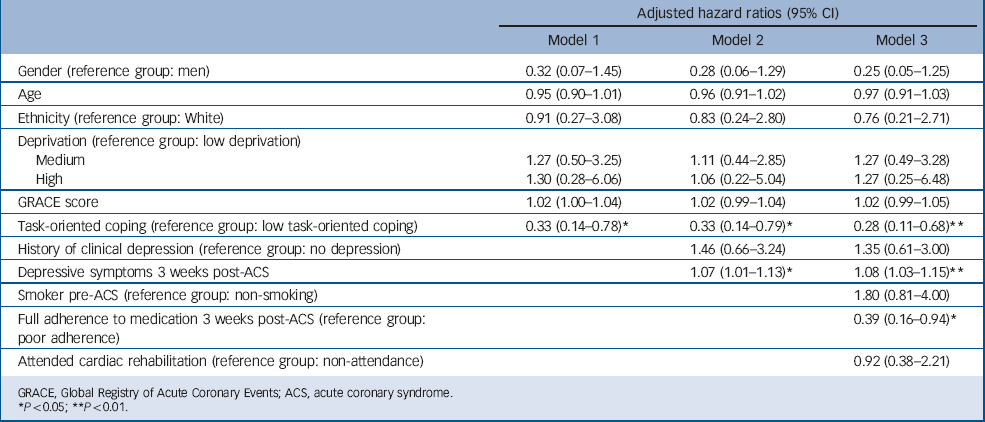
There were 29 (18.4%) participants who had major adverse cardiac events over the study period, comprising 8 deaths, 8 readmissions with myocardial infarctions, one heart failure and 13 coronary artery bypass grafts (one participant had two events). The incidence of adverse cardiac events was 25.9% (n = 21) in the low and 10.4% (n = 8) in the high task-orientated coping group, with an unadjusted HR of 0.37 (95% CI 0.17–0.84, P = 0.018). The results from the adjusted Cox regression models are summarised in Table 2. Model 1 indicates that high task-oriented coping was associated with a 67% reduction in hazard of major adverse cardiac events after adjustment for gender, age, ethnicity, deprivation and GRACE score (HR = 0.33, 95% CI 0.14–0.78, P = 0.011). Inclusion of history of depression and depressive symptoms (model 2) did not alter the HR associated with task-oriented coping, although depressive symptoms themselves predicted future cardiac events (HR = 1.07, 95% CI 1.01–1.13, P = 0.018). Task-oriented coping remained a protective factor in model 3, with the hazard ratio becoming slightly greater (HR = 0.28, 95% CI 0.11–0.68, P = 0.005). In addition, patients who were fully adherent to medication showed reduced risk (HR = 0.39, 95% CI 0.16–0.94, P = 0.036), whereas participants with higher scores for depressive symptoms were at increased risk (HR = 1.08, 95% CI 1.03–1.15, P = 0.004). The protective effect of high task-oriented coping in the fully adjusted model is illustrated in Fig. 1.
Task-oriented coping and future major adverse cardiac events
| Adjusted hazard ratios (95% CI) | |||
|---|---|---|---|
| Model 1 | Model 2 | Model 3 | |
| Gender (reference group: men) | 0.32 (0.07–1.45) | 0.28 (0.06–1.29) | 0.25 (0.05–1.25) |
| Age | 0.95 (0.90–1.01) | 0.96 (0.91–1.02) | 0.97 (0.91–1.03) |
| Ethnicity (reference group: White) | 0.91 (0.27–3.08) | 0.83 (0.24–2.80) | 0.76 (0.21–2.71) |
| Deprivation (reference group: low deprivation) | |||
| Medium | 1.27 (0.50–3.25) | 1.11 (0.44–2.85) | 1.27 (0.49–3.28) |
| High | 1.30 (0.28–6.06) | 1.06 (0.22–5.04) | 1.27 (0.25–6.48) |
| GRACE score | 1.02 (1.00–1.04) | 1.02 (0.99–1.04) | 1.02 (0.99–1.05) |
| Task-oriented coping (reference group: low task-oriented coping) | 0.33 (0.14–0.78)Footnote * | 0.33 (0.14–0.79)Footnote * | 0.28 (0.11–0.68)Footnote ** |
| History of clinical depression (reference group: no depression) | 1.46 (0.66–3.24) | 1.35 (0.61–3.00) | |
| Depressive symptoms 3 weeks post-ACS | 1.07 (1.01–1.13)Footnote * | 1.08 (1.03–1.15)Footnote ** | |
| Smoker pre-ACS (reference group: non-smoking) | 1.80 (0.81–4.00) | ||
| Full adherence to medication 3 weeks post-ACS (reference group: poor adherence) |
0.39 (0.16–0.94)Footnote * | ||
| Attended cardiac rehabilitation (reference group: non-attendance) | 0.92 (0.38–2.21) | ||
GRACE, Global Registry of Acute Coronary Events; ACS, acute coronary syndrome.
* P<0.05;
** P<0.01.
Kaplan–Meier curves for survival without experiencing a major adverse cardiac event in patients with low (dashed line) and high (solid line) scores for task-oriented coping.
Results were adjusted for age, gender, ethnicity, socioeconomic status, Global Registry of Acute Coronary Events (GRACE) risk score, history of clinical depression, depressive symptoms, smoking and adherence to medication.

We carried out further analyses including brisk walking and fruit and vegetable consumption in models involving a slightly reduced sample size. The association between task-oriented coping and adverse cardiac outcomes was similar to that detailed above (HR = 0.24, 95% CI 0.09–0.64, P = 0.004) and neither walking nor fruit and vegetable intake was related to cardiac outcome. The association between task-oriented coping and outcome was present for each of the adverse events measured (death, readmission for myocardial infarction and coronary bypass surgery), but the numbers of participants was too small to carry out separate analyses. Neither emotion-oriented (HR = 0.95, 95% CI 0.53–1.70, P= 0.95) or avoidant coping (HR = 0.90, 95% CI 0.53–1.53, P = 0.69) was associated with major adverse cardiac events.
The association between task-oriented coping and major adverse cardiac events was confirmed in the sensitivity analysis that modelled coping as a continuous variable. The hazard ratio in model 1 was 0.57 (95% CI 0.35–0.89, P = 0.015), indicating a 43% reduction in hazard for every unit rise in task-oriented coping scores. Effects were similar for model 2 (HR = 0.58, 95% CI 0.36–0.93, P = 0.025) and model 3 (HR = 0.51, 95% CI 0.31–0.83, P = 0.007). Depressive symptoms and adherence to medication remained significant independent predictors in these analyses using continuous coping scores.
We carried out an exploratory analysis testing whether the combination of low task-oriented coping and elevated depressive scores would be particularly relevant for adverse cardiac outcomes. The association between the coping–depression interaction term and major adverse cardiac events was significant (HR = 1.06, 95% CI 1.03–1.09, P<0.001) in the model adjusted for age, gender, ethnicity, deprivation, GRACE score, history of clinical depression, ratings on the task-oriented coping and depression scales, smoking, medication adherence and rehabilitation attendance. We further explored this association by comparing coping/depression groups. As shown in Table 3, 32.6% of patients in the low task-oriented coping/high depressive symptoms category experienced a major adverse cardiac outcome during the follow-up period, compared with 8.7% in the high task-oriented coping/low depressive symptoms category, with an adjusted hazard ratio of 6.25 (95% CI 1.88–20.82, P = 0.003). The hazard of adverse cardiac outcomes was moderately elevated in the other two groups, but not significantly in comparison with the outcomes for the high task-oriented coping/low depressive symptom category. Such an association could be as a result of higher levels of depressive symptoms in the low task-oriented/high depressive symptom and high task-oriented/high depressive symptom groups, but this was not the case; the mean BDI scores were 9.44 (s.d. = 3.9) and 11.12 (s.d. = 7.54) in these two groups.
Task-oriented coping, depressive symptoms and cardiac events

| Major adverse cardiac event rate |
Major adverse cardiac events (%) |
Adjusted hazard ratio (95% CI)a |
P | |
|---|---|---|---|---|
| High task-oriented coping/low depressive symptoms | 4/46 | 8.7 | 1 (reference) | |
| High task-oriented coping/high depressive symptoms | 4/31 | 12.9 | 1.43 (0.34–5.97) | 0.63 |
| Low task-oriented coping/low depressive symptoms | 7/38 | 18.4 | 2.23 (0.63–7.90) | 0.22 |
| Low task-oriented coping/high depressive symptoms | 14/43 | 32.6 | 6.25 (1.88–20.82) | 0.003 |
Adjusted for age, gender, ethnicity, socioeconomic status, Global Registry of Acute Coronary Events (GRACE) score, history of clinical depression, depressive symptom level s, task-oriented coping ratings, smoking, adherence to medication and attendance at cardiac rehabilitation.
Discussion
Main findings
In this longitudinal study of participants surviving an ACS, we found that higher levels of task-oriented coping measured 3 weeks after hospital admission predicted reduced risk of major adverse cardiac events over an average 60 months' follow-up period. Being in the upper half of the task-oriented coping distribution was associated with a 73% relative reduction in hazard of adverse cardiac outcomes (Table 2). The association was independent of age, gender, ethnic background, SES, clinical risk defined by GRACE scores and history of clinical depression. The effect was also independent of concurrent depressive symptoms, adherence to medication, attendance at cardiac rehabilitation and health behaviours (smoking, physical activity and fruit and vegetable consumption), although both depressive symptoms and poorer adherence to medication were independently associated with adverse cardiac events. We also carried out an exploratory analysis suggesting that risk of adverse cardiac outcomes is particularly high in patients reporting low task-oriented coping and elevated depressive symptoms.
To our knowledge this is the first demonstration that task-oriented coping is associated with favourable cardiac outcomes and reduced recurrence rates. Problem-focused coping strategies are thought to be beneficial for the quality of life of cardiac patients, Reference Graven and Grant22 as it is for adaptation to other illnesses. Reference Hurt, Thomas, Burn, Hindle, Landau and Samuel23,Reference Wootten, Burney, Foroudi, Frydenberg, Coleman and Ng24 The long follow-up averaging 5 years may have strengthened the possibility of observing relationships with outcomes in these analyses, since major adverse outcomes take many months to accrue (Figure 1).
Significance of our findings
The CISS conceptualises psychological coping as consisting of three independent dimensions. Reference Endler and Parker7 This is reflected in the present data-set, in which task-oriented coping was not associated with either emotion-oriented or avoidant coping. Thus, it cannot be assumed that an individual high in active task-focused coping is less likely to use avoidant or emotion-focused coping strategies than someone low in task-focused coping. Thinking analytically about the situation and planning how to tackle the problem can coexist with avoidant strategies, self-blame and other ways of coping. Emotion-oriented and avoidant coping were unrelated to cardiac outcomes. These forms of coping may be more relevant to other aspects of the experience of acute coronary diseases such as delays in seeking help for symptoms, and short-term physiological outcomes. Reference Chiavarino, Rabellino, Ardito, Cavallero, Palumbo and Bergerone25–Reference Perkins-Porras, Whitehead, Strike and Steptoe27
It is possible that the association between task-oriented coping and cardiac outcomes was the result of selection bias, with patients reporting high task-oriented coping having more favourable cardiac profiles and hence better long-term outcomes. However, task-oriented coping was not related to our primary measure of clinical disease severity (the GRACE risk score) or to other indices of cardiac risk not included in the final statistical models. Task-oriented coping could also be confounded with depressive symptoms. But the correlation between task-oriented coping and depressive symptoms was not significant, and high and low task-oriented coping groups did not differ in depressive symptom levels, making this possibility unlikely.
The relationship between task-oriented coping and cardiac events was not mediated by the health behaviours we measured, including adherence to medication, attendance at cardiac rehabilitation, regular physical activity or dietary choice. We had hypothesised that patients with a stronger orientation towards active problem-solving would have a healthier behavioural profile than those low in task-oriented coping, but this was not the case. The reasons are not clear. There may be no relationship between task-oriented coping and health behaviour in this population. Alternatively, the measures of behavioural pathways may not have been sufficiently robust, since they were based on self-report. Against this is our observation that self-reported poor adherence was associated with worse cardiac outcomes, suggesting that the measure does have some validity. We may have measured health behaviours too early after ACS, and associations could have emerged at a later date. Additionally, task-oriented coping may be related to other behaviours that we did not assess such as alcohol consumption and more prompt seeking of medical help for new symptoms.
If the association between task-oriented coping and adverse cardiac outcomes is not mediated through behavioural choices, direct biological pathways may be involved. A limited number of studies have shown associations between psychological coping style and physiological indicators such as cortisol. Reference O'Donnell, Badrick, Kumari and Steptoe12,Reference Sjogren, Leanderson and Kristenson28 Coping responses are particularly relevant during exposure to stress, which has a recognised set of biological consequences that are relevant to cardiac health. Reference Brotman, Golden and Wittstein29 It is notable that not all cardiac patients experiencing severe life stress following ACS succumb to further adverse cardiac events, suggesting that effective coping may ameliorate the impact of stress on health outcomes. Reference Arnold, Smolderen, Buchanan, Li and Spertus9,Reference Laszlo, Ahnve, Hallqvist, Ahlbom and Janszky30
In addition to the association between greater use of task-oriented coping and reduced risk of recurrent cardiac events, we also observed an interaction between coping and depressive symptoms measured soon after ACS. Patients who reported the combination of low task-oriented coping and elevated depressive symptoms had a more than six-fold increased risk of major adverse cardiac events in comparison with those in the high task-oriented coping/low depressive symptom category. This result suggests that patients who were more depressed who also fail to deploy effective task-oriented coping strategies may be at particular risk, a pattern observed in other settings. Reference Nrugham, Holen and Sund31,Reference Uehara, Sakado, Sato and Takizawa32 The association was not because of differences in absolute levels of depressive symptoms in patients high and low in task-oriented coping. However, these findings must be interpreted cautiously for a number of reasons. This was a post hoc result, and the study sample and the number of events is small for investigating such effects. Consequently, the confidence intervals for the increased hazard ratio for the low task-oriented coping/high depressive symptom category were large. The estimates presented in these analyses are therefore imprecise and the result is therefore in need of corroboration in other studies.
Strengths and limitations
The strengths of this study include the longitudinal design with outcomes assessed an average of nearly 5 years after the ACS, complete ascertainment of outcomes, the assessment of psychological coping using a standard measure and the inclusion of important covariates in the regression models. However, interpretation is limited by the use of a composite clinical endpoint; there were insufficient numbers of participants to permit statistical analysis of individual outcomes such as new ACS or cardiac death. The study sample was predominantly male, and different results might emerge among women. We did not measure life stress during the period between ACS and clinical outcomes, so cannot determine whether task-oriented coping helped to protect against the impact of severe stress. A substantial proportion of participants who took part in the parent study did not provide ratings of coping so could not be included in the analyses. Although they did not differ from active participants on many factors, they were slightly younger and more socially deprived, so we do not know whether similar findings would emerge in a wider sample. The measurement of some mediating pathways was limited; for example, although we had information about whether or not the patient had attended cardiac rehabilitation, we did not have complete data on the number of sessions attended.
Implications
Nevertheless, the identification of task-oriented coping as a factor associated with favourable long-term outcomes may have significant clinical implications. Coping can be measured in patients soon after ACS, and people low in task-oriented coping might be offered appropriate advice. Changing coping styles is a fundamental goal in many psychotherapeutic interventions. For instance, cognitive–behavioural therapies encourage patients to take a more active role in confronting problems and seeking possible solutions, engendering a perspective on stress that incorporates the principles of task-oriented coping. If our results can be replicated in larger studies, they may stimulate new avenues for supporting patients following ACS.
Funding
This research was supported by the British Heart Foundation () and the Swiss National Science Foundation.




eLetters
No eLetters have been published for this article.