

During World War I, hundreds of thousands of Egyptians—most of them illiterate workers and peasants from the countryside—worked in the Egyptian Labor Corps (ELC). At the height of the war, at least 10,000 ELC laborers were working in French port cities such as Marseilles, Calais, and Boulogne.Footnote 1 In France, they served alongside other migrant laborers recruited from places as far-flung as China, the West Indies, and South Africa, loading and unloading ships and transferring their contents to the nearest railhead for transport to the Western Front. When the Ottoman Empire entered the war, the British changed Egypt's legal status from an Ottoman province to a British protectorate, and recruited hundreds of thousands of Egyptians to work as logistical laborers supporting British imperial troops against the Ottomans and their allies in the Dardanelles, Mesopotamia, the Sinai Peninsula, Palestine, the Western Desert, and Sudan (see Tables 1 and 2).Footnote 2
Schedule of Egyptians employed with the Egyptian Expeditionary Force, March 1916–June 1918

Source: FO 141/797/2 No. 2689/142 Wingate to Balfour, 15 September 1918.
Note: ELC, Egyptian Labor Corps; CTC, Camel Transport Corps; ICC, Imperial Camel Corps; HTA, Horse Transport, ASC; VS, Veterinary Service.
Total number of Egyptians recruited for service with the British army from 17 March 1917 to 30 June 1918
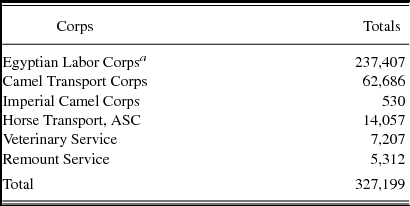
Source: FO 141/797/2 No. 2689/142 Wingate to Balfour, 15 September 1918.
a Including France, Mesopotamia, Salonika, Mudros, and Aqaba.
In this article, I detail the British imperial system of human resource mobilization that recruited workers and peasants from the Egyptian countryside to serve as logistical laborers in World War I. Labor recruitment networks bound ordinary Egyptians from all corners of the Nile Valley to one another, to their local administrative officials, and to wartime decision makers in Cairo, in London, and on the front lines of the war. By reconstructing this network and analyzing the variety of ways that state officials and recruits acted within its constraints, this article provides a case study in the relationship between the Anglo-Egyptian colonial state and rural society in Egypt. Whereas many historians of Egypt have portrayed the central state and rural society in the late 19th and early 20th centuries as separate, autonomous, and mutually antagonistic entities, I argue that the brief history of ELC recruitment suggests a more nuanced and interdependent relationship between them. In this article, I outline how workers and peasants developed new ways of interacting with state officials in reaction to wartime mobilization efforts, while simultaneously uncovering how the Anglo-Egyptian state changed its labor recruitment practices in response to recruits, their families, and their communities in the countryside.
THE SEARCH FOR THE PEASANT IN THE HISTORIOGRAPHY OF THE MIDDLE EAST
Workers and peasants occupy a tenuous position in the historiography of the Middle East. For generations, historians ignored these figures and instead emphasized the role of elites. The “urban notables” paradigm pioneered by Albert Hourani in the mid-1960s, which focused on elites in the Syrian provinces and their relationship to their respective hinterlands and the imperial capitals of Cairo and Istanbul, provided a durable framework for scholars.Footnote 3 The ascent of “new social history” in the 1980s and 1990s led to the first wave of efforts in Middle East studies to write “history from below,” incorporating the perspectives of previously neglected historical actors such as workers, peasants, women, slaves, and others.Footnote 4 But, in recent years, the “cultural turn” has pushed back against the impulses that used to motivate the new social history. One influential critique originated in French poststructuralism, after intellectuals such as Louis Althusser, Michel Foucault, Gilles Deleuze, and Félix Guattari began to focus in different ways on the question of psychic subjection through the repression of desire or assujetissement—which can be translated as being “subject to” power, but also as being “constituted by” it.Footnote 5 Scholars focused on the Middle East have used this line of philosophical inquiry to critique the new social history, arguing that the quest to “recover lost subject perspectives” takes the enlightenment conception of the liberal humanist subject for granted, and thus normalizes and reifies forms of knowledge that are deeply contingent and—perhaps more importantly—deeply implicated in the history of colonialism. Instead of conceptualizing the political subjectivity of workers and peasants in terms of the self-formed, autonomous subject, scholars such as Timothy Mitchell and Lila Abu-Lughod have rethought consciousness, subjectivity, and agency as effects of modern forms of power and domination.Footnote 6 For historians of the Middle East, the result of this shift has been to redirect scholarly attention toward the literate intellectuals who produced texts available for us to read on the one hand, and to cultural representations of rural people, women, and others constituted as objects of elite discourse on the other.Footnote 7
Those interested in the lives of illiterate workers and peasants—who produced goods and services rather than texts accessible to the historian—therefore find themselves stuck in an epistemological quagmire. Some scholars have tended to cast the rural peasant as an obstacle or adversary to state policies.Footnote 8 Scholars of peasant politics in Egypt during the late 19th and early 20th centuries cling to a parochial conception of the peasantry when they employ concepts such as “rural modes of production” or “peasant moral economy” to explain contentious politics in the countryside at different places and times.Footnote 9 One recent manifestation of this tendency argues that world empires from the Ottomans to the British “failed” to establish hegemony in the peripheral region of Upper Egypt, where romantic representations of “outlaws” and “bandits” kept alive an essential spirit of resistance among the people over the course of five centuries.Footnote 10 More recent efforts at colonial discourse analysis have analyzed peasant political subjectivities in modern Egypt as effects of certain national discourses and forms of knowledge production, thus subsuming the discussion of peasant political subjectivity entirely within the realm of elite culture.Footnote 11 These competing tendencies have led social historians of modern Egypt to an epistemological crossroads, summed up aptly by John Chalcraft: “the existing historiography, while varying the historical role, value, and meaning of peasant and state, preserves both as radically distinct, self-creating, and self-defining collective agents involved in zero-sum and violent antagonism.”Footnote 12
This article builds on recent efforts to transcend this impasse in Middle East studies. These efforts focus neither on recovering lost subject perspectives nor on analyzing peasant subjectivity as an effect of modern forms of power, but rather on the complex and dialectical relationship between power and resistance as two poles in the constitution of political subjectivity. In a recent study of petitions sent to the Khedive in Egypt during the second half of the 19th century, Chalcraft argues that petitioning should be seen as a distinct mode of politics that evokes “not passivity, silent subversion, or revolution, but sophisticated engagement and negotiation with state practice and discourse.”Footnote 13 Similarly, Anne Clément's study of folk songs sung by migrant laborers on the archaeological dig sites of Upper Egypt, and collected by the archaeologists themselves, locates peasant subjectivity in the act of “performance” in front of the powerful employer. According to Clément, the relational dynamics embodied in performative acts allowed laborers to variously internalize, negotiate, and subvert the liberal norms that were being imparted to them by the encroaching system of labor contracting.Footnote 14 These scholars provide more nuanced depictions of the mutually constituting dynamics involved in the formation of peasant political subjectivity and elite power. Rather than seeing rural society and the Anglo-Egyptian colonial state as diametrically opposed, starting from different points, and locked in perpetual struggle, scholars such as Chalcraft and Clément foreground the importance of social relationships and acts of exchange, which structure peasant social and political processes while simultaneously providing opportunities to transcend structural domination and assert individual or collective interests.
In this article, I extend this nuanced picture of the relationships between power and resistance, state and society, and city and countryside, to the history of Egypt during World War I. The participation of Egyptian peasants in World War I has largely been ignored in the historiography of the war. Although the vast majority of World War I studies focus on the Western Front, some historians have recently begun to explore the Middle Eastern theaters of battle. Their work has examined the Ottoman war effort, the technical and logistical aspects of the British campaigns in Mesopotamia and Egypt, and the human experiences of troops and civilians in the Sinai Peninsula and Syria-Palestine.Footnote 15 Other recent studies have acknowledged the large role played by non-Western laborers in all theaters of the war.Footnote 16 One article by Mario Ruiz even focuses on the ELC laborers as they were represented in wartime photography in Palestine, but it does not address the question of ELC recruitment.Footnote 17 As for scholars of British imperialism in Egypt, many have used 1914 as a convenient end point in periodizing their studies.Footnote 18 While this choice is understandable given the variety of new circumstances inside and outside Egypt caused by the war, it obscures the significant continuities in the state–society relationship before and during the war. The situation is somewhat better in the Arabic-language scholarship. Important studies by ʿAbd al-Rahman al-Rafiʿi, Amin ʿIzz al-Din, and Latifa Salim all provide rich detail about the wartime mobilization efforts and place them in the context of Egyptian history, but mostly lack a rigorous analytical framework.Footnote 19 To date, we lack a comprehensive analytical study of the wartime mobilization effort in English.
The few scholars who have addressed the wartime mobilization effort in Arabic and English have relied on the same problematic model of the state–society relationship outlined earlier by portraying ELC recruitment as either “voluntary” or “coercive.” During World War I, the British went to great lengths to characterize ELC recruiting as “voluntary” in their official communications within the government and in the press.Footnote 20 But Egyptian nationalist leaders challenged this assertion, with Saʿd Zaghlul writing in his memoirs, “the men of the government boast that they oppose forced conscription [al-tajnīd al-ijbārī] [and] even prohibit it, but the authorities in all the corners of the country, for several days, have taken to kidnapping people [yatakhaṭṭafūn al-nās] from the markets and the roads, and from their homes in the villages.”Footnote 21 Historians have preserved the terms of this debate between British colonial officials and Egyptian nationalists. For example, Amin ʿIzz al-Din characterizes the early years of ELC recruitment as “voluntary contracting” (taʿāqud ikhtiyārī), but later in the text refers to it as “kidnapping” (khaṭaf).Footnote 22 Ellis Goldberg describes a similar type of chronological development, whereby the “British . . . offered wage employment to peasants in the Labor Corps and forcibly recruited them when too few volunteered.”Footnote 23 ʿIzz al-Din and Goldberg thus reproduce the binary in terms of a teleological development from voluntary to forced recruitment—which ultimately culminates in the anticolonial nationalist revolution of 1919. Furthermore, Goldberg analyzes the decision to join the ELC in terms of a “chicken game,” following political scientists such as Samuel Popkin in reading the history of peasant politics through the frame of “rational choice.”Footnote 24 In many ways, then, the existing historiography of ELC recruitment reproduces the binary thinking that has played itself out in this historiography of peasant and state in late 19th- and early 20th-century Egypt, described earlier.
In this article, I argue that reducing the complex phenomenon of labor migration to something that is simply either voluntary or coercive obscures the variety of ways that the labor recruitment effort transformed the terrain of peasant life and state power. “Volunteers,” though they did exist, were hemmed in by the realities of wartime social and economic life. Similarly, those who were “kidnapped” against their will were able to assert their agency and, ultimately, to transform the practices of the colonial state. On a more fundamental level, then, this history of ELC recruitment calls into question the rigid distinction between the state and rural society that exists in much of the historiography of Egypt under British imperialism. Rather than imagining workers and peasants as set apart from state mobilization efforts—either rationally deciding to enter into labor contracts or being forced against their will to join up with the ELC—I focus on how labor recruitment bound the Anglo-Egyptian state and rural society together, dialectically transforming the contours of political subjectivity and state power.
ADMINISTRATIVE PRESSURE
With the Sinai/Palestine campaign grinding to a stalemate in early 1917, discussion began in London as to whether Egypt was contributing its “fair share” to the war effort. On 21 May, the head of the British army sent a telegram to the commander of the Egyptian Expeditionary Force (EEF), which had been formed the previous year to begin the offensive against the Ottomans in Syria-Palestine via the Sinai Peninsula (Tables 1 and 2). The message read, “It is essential that all parts of the empire should share in the strain [of the war] as far as local conditions admit . . . As regards Egypt, I am not satisfied that this is the case.”Footnote 25 The commander responded, “It has always been my opinion that . . . Egypt has not felt the strain of war at all and I have constantly studied the question as to how to utilize Egyptian resources more fully.”Footnote 26 On 2 June, the War Office, which oversaw the military wing of His Majesty's Government in London, sent a telegram to the Foreign Office, which oversaw the British High Commissioner in Egypt, inquiring the opinion of the secretary of state Arthur Balfour if forced conscription could be instituted in the country. The military wanted to raise 17,000 more men, on a permanent basis not subject to renewals, and at the low level of pay prevailing for soldiers at the time.Footnote 27
This request was communicated to the High Commissioner, and a meeting was convened in Cairo on the subject. At that meeting, representatives of the Anglo-Egyptian army objected to forced conscription on the grounds that the army could not spare enough officers to manage such a large force of workers. Foreign Office officials on the ground also objected because “no sense of loyalty towards the British Empire could be counted upon to secure the support of any appreciable proportion of the population.”Footnote 28 Therefore, in his telegram to the War Office, the undersecretary of state wrote, “Balfour is in agreement with . . . the conclusions reached by the committee at Cairo,” effectively rebuffing the War Office's request to institute forced conscription.Footnote 29
But the impression that “Egypt is profiting by the war without endeavoring to make any adequate return” persisted among military leaders in the War Office and was continuously communicated to the high commissioner, Reginald Wingate.Footnote 30 Wingate passed along these criticisms to the Egyptian prime minister, Husayn Rushdi, writing in August 1917 about “the urgent need of a telegraph here at the earliest possible moment to detail the measure that you have the intention of taking to increase recruitment.”Footnote 31 Rushdi responded quickly with a proposal.Footnote 32 At the next meeting of the Egyptian Council of Ministers, Rushdi communicated his plan to the Ministry of Interior.Footnote 33 In light of objections by the Anglo-Egyptian army, it was decided that an increase in pay for engagements in the ELC was impracticable, but that exemption from military service and an extra effort from provincial functionaries—referred to under the euphemism “administrative pressure”—could be done. So, on 20 October 1917, the minister of war issued a decree modifying the Egyptian Conscription Law (qānūn al-qurʿa) so that “every person liable for military service . . . shall be exempt from the obligation to such service if he shall enlist in and serve for a continuous period of one year with . . . any auxiliary service attached to the British troops.”Footnote 34 In order to publicize the scheme, a decree from the Egyptian monarch, Fuʾad I, was published in the Egyptian daily al-Afkar (Thoughts) touting the benefits of service in the “Egyptian Labor Corps [firqat al-ʿumāl al-miṣriyya] or the Camel Transport Corps [firqat al-naql bi-l-jamal] or any other branch of service attached to the armies of his Highness the King.”Footnote 35
An effort was also made to distribute the recruiting burden more evenly throughout the country. In the course of his investigations, Wingate was “interested to learn” that recruitment had, until that point, “practically affected Upper Egypt alone.”Footnote 36 British officials explained this imbalance with reference to the lower wages prevailing in the south—which made the terms of the labor contracts offered by military authorities more attractive to southerners—and to the basin irrigation in the four southernmost provinces of the country—which resulted in little to no local demand for labor after the harvest.Footnote 37 According to official statistics, 28,986 men were recruited in Upper Egypt from the beginning of the war through 2 May 1917, while 53,549 were enlisted in Lower Egypt between 6 December 1916 and the end of April 1917.Footnote 38 Lower Egypt offered some advantages in that the bulk of the rural population lived in the fertile lands of the Delta, and thus there was a much larger pool of laborers from which to draw compared to Upper Egypt. But, the British found that the fellahin from the Delta were less willing to leave their homes for protracted periods of time compared to the ṣaʿāyda of Upper Egypt, perhaps because they were less accustomed to the practice of migrant labor. Consequently, through the summer of 1917, contracts for Lower Egyptians had been fixed for three months at a time, while those for Upper Egyptians extended to six months. On 1 November 1917, contracts were standardized for all laborers throughout the country at six months.Footnote 39
The system of “administrative pressure,” therefore, was formed out of a sort of compromise between the military authorities of the War Office, the civilian diplomats in the Foreign Office, and the Egyptian government of Rushdi. The War Office pushed for conscription, but the Foreign Office rebuffed its repeated calls. Instead of conscription, the diplomats of the Foreign Office decided to put pressure on the system of village administration to produce the massive number of laborers requested by the War Office. Under this new system, the local functionaries in the Ministry of Interior—the ʿumdas (village headmen), maʾmūrs (district-level executives), khafīrs (village security guards), and mudīrs (provincial-level executives)—would be the crucial intermediaries responsible for securing the laborers demanded for the war effort.
ʿUMDAS, MAʾMūRS, KHAFīRS, AND MUDīRS
The Ministry of Interior was important to the recruitment effort because it served as the administrative link between the government in Cairo and the countryside of Egypt. At the time, Egypt was divided into fourteen mudiriyyāt (provinces), each directed by a mudīr (governor); mudiriyyāt were further subdivided into marākiz (districts), each directed by a maʾmūr (overseer).Footnote 40 Mudīrs and maʾmūrs were required to send regular reports to the Ministry of Interior in Cairo on judicial and political measures undertaken in their respective jurisdictions.Footnote 41 This system penetrated into the villages through the figure of the ʿumda or shaykh al-balad. By World War I, then, the small cadre of British diplomats circulating between Cairo and Alexandria leveraged a much larger network of officials in the Ministry of Interior, which had official or quasiofficial representatives in many of Egypt's over 3,000 villages.
In issuing orders to the local administrative officials in the Ministry of Interior, Rushdi tried to impress upon them that they had to handle the task of recruitment delicately and use their “moral authority.” A circular from Rushdi to the provincial authorities followed up the October decree. Rushdi urged the maʾmūrs and the ʿumdas to “encourage the rural folk to enroll themselves in the ‘Labor Corps,’ and to offer their efforts to spread this idea to the public.”Footnote 42 In Rushdi's communications with Wingate prior to the order, he also emphasized the need to spread “propaganda in the villages through the maʾmūrs and the ʿumdas in favor of entrance into the corps” and for “the mudīrs . . . to support entrance into the corps with the full weight of their authority.”Footnote 43 Rushdi seemed to conceive of the authority held by these local functionaries in the Ministry of Interior as a benign, charismatic force able to “encourage the rural folk to enroll themselves” in the ELC through “propaganda” and “applying the full weight of their authority,” rather than forcibly conscripting them to join the ELC against their will.
But if officials in the Egyptian government hoped that workers and peasants would flock to join the Labor Corps because of the “moral authority” of their local village headman, this was wishful thinking on their part. In implementing the system of “administrative pressure,” local officials carried out their duties and dealt with problems in a manner that was much more dependent on sheer violence than charisma or moral influence. In his report of 1 May 1916, the British inspector in charge of the Camel Transport Corps (CTC), which included a force of Egyptian laborers drawn from the same pool as the ELC to serve in the Sinai/Palestine campaign as camel drivers, noted that “drivers supplied through the governors of the provinces are not all volunteers” and “forced labor . . . is practically what has been supplied up to now.”Footnote 44 G.E. Badcock's description of the CTC lends credence to this conclusion: “the first recruits were volunteers, which is to say that of every three, one came to avoid the police, one was sent by the police, and one was a respectable wage earner.”Footnote 45 In February 1918, the adviser to the Ministry of Interior complained, “Mamurs and Omdehs are using pure compulsion to show good recruiting figures.”Footnote 46 In the summer of 1918, the Ministry of Interior issued instructions to the British inspectors, warning against the practice of “grabbing men off roads.”Footnote 47 Salama Musa describes the scene at a recruiting levy as he claims to have witnessed it:
I traveled to the countryside [al-rīf]—a village near al-Zaqaziq—and I saw how the English ruled over us [using] the Egyptian administration [muwaẓẓafīn] [including] maʾmūrs, mudīrs, and policemen to kidnap our resources [li-khaṭaf maḥṣūlātna] . . . . A man would be tied by a thick rope around his trunk and [he would be] behind another like him, and they marched in this state until they reached the district. There, they were put into a jail cell, and then sent to Palestine.Footnote 48
According to Musa, then, Egyptians would be snatched up off their fields, bound by a thick rope, and led away to join the Labor Corps. This style of recruitment, backed up with the armed force of the khafīrs, essentially amounted to kidnapping laborers and sending them off to war.
Some ʿumdas also amassed large fortunes by accepting bribes to exempt people from recruitment. In March 1915, the Egyptian daily newspaper al-Ahram (The Pyramids) ran a series of articles on the ʿumda of the village of al-Mahmudiyya in al-Buhayra province. The initial article of 1 March reports that the ʿumda had been accused of “accepting bribes from one of [the villagers] in order to exempt him from the draft [al-qurʿa].”Footnote 49 Two days later, al-Ahram issued a retraction. The retraction mentions that the public was “shocked” by the article, but reassures readers that ultimately the case was unfounded, and the newspaper had been “lying” and was guilty of “libel.”Footnote 50 The initial article may have been an instance of libel. But it is also possible that British censors caught the writers at al-Ahram reporting on a subject they did not want publicized: the recruitment of laborers for the war effort. In the context of the massive censorship effort by the British during the war, these reports may be an instance where one report slipped past the censors only to be retracted later.Footnote 51 Contemporary observers also accused the ʿumdas of accepting bribes. Musa recounts one story of an ʿumda “owning six acres, who gathered 5,000 LE [for himself], while the peasants went hungry because they paid these bribes out of pocket.”Footnote 52 P. G. Elgood also notes that many ʿumdas made personal fortunes by taking such bribes.Footnote 53 By accepting bribes and forcing those without the means to pay them into service, recruitment under the system of administrative pressure became a deeply regressive, in-kind tax on the rural inhabitants of the provinces.
ʿUmdas also used their new discretionary powers to protect themselves, their family, and their property from being subject to the whims of the British colonial state. The ʿumdas were able to secure their own sons exemptions from recruitment.Footnote 54 In addition, some managed to protect their own property from confiscation by the Military Authorities. By the fall of 1917, the British had moved towards forcible dispossession of camels in the provinces to meet the demands of the CTC.Footnote 55 In October of that year, the ʿumda of Asyut was involved in a trial that received press coverage after he was forced to resign for hiding his camels from the Military Authorities.Footnote 56 In addition, in the summer of 1917, the British recorded the activities of certain notables who were “hindering the voluntary commitments to the ELC” around their personal agricultural estates.Footnote 57 By impeding labor recruitment, these large landowners endeavored to maintain a steady supply of agricultural laborers at harvest time in order to avoid having to pay inflated wages in conditions of labor scarcity. Local officials, therefore, were able to take advantage of the labor recruitment network not only through positive authorities accumulated in their hands, but also through the negative ability to keep the state from expropriating their own family and property.
All of Rushdi's attempts to represent the ʿumdas, maʾmūrs, khafīrs, and mudīrs as possessing some kind of “moral authority” in the countryside that they could wield as “soft power” to convince the villagers to join the Labor Corps ultimately rang hollow. Although the Egyptian government attempted to frame their authority along these lines, their recruitment efforts could not be carried out without recourse to violent and arbitrary force. With their actions essentially unchecked by central authorities in Cairo, local officials were able to consolidate financial and social power in the countryside through a variety of practices such as taking bribes and generally manipulating the recruitment process to their own benefit. But their growing boldness and audacity in these manipulations led them into conflict with the workers and peasants whom they were tasked with recruiting.
ENGAGING WITH THE RECRUITMENT NETWORK
Thus, a new generation of workers and peasants throughout Egypt confronted the imposition of a harsh tax to be paid to the state in the form of their own bodily labor. In this section, I examine how workers and peasants engaged with this new labor recruitment network. The first option available to them was, of course, to join the ELC. Latifa Salim finds evidence of laborers approaching the military authorities of their own intiative and asking to sign up for terms of service in the Gallipoli campaign.Footnote 58 A report published in al-Ahram in March 1916 announced, “Out of work laborers and others looking for work [can] find a good opportunity [furṣa sāniḥa] to join in service to the Military Authorities, which gives an active wage of not less than seven piasters per day . . . and [pays the workers] salaries in advance of their travel.”Footnote 59 This report—issued as it was during a time of heavy military censorship—offers a particularly positive valence to joining up with the auxiliary labor corps. It also seems to have exaggerated the wages expected for a low-level laborer, which were five piasters per day for the ELC and six piasters per day for the CTC.Footnote 60 But even at these rates, peasants could make more than the normal wage of three piasters per day for migrant laborers before the war.Footnote 61 New recruits were also supposed to be given an advance on their salaries of three pounds (i.e., 300 piasters or roughly one hundred times the daily wage of a migrant laborer at the time) to support their dependents during their absence.Footnote 62
The memoir of ʿAbd al-Hamid Muhammad Husayn provides insight into the considerations at play for workers who joined the ELC. According to this document—which was published more than fifty years after the war in the Egyptian magazine Ruz al-Yusuf—Husayn was a rare example of a literate recruit. In the beginning of his story, Husayn emphasizes the paramount role played by financial constraints in the space of his village, writing, “poverty is what governed over everything in [my] humble neighborhood . . . and poverty gives birth to values and laws” (wa-mʿa al-faqr tawlida al-muthul wa-l-qawānīn).Footnote 63 He writes that he had been working in casual migrant labor since the age of eleven, treating the actual moment of his recruitment into the ELC very briefly by writing only that he “found himself joining the soldiery” (wajadtu nafsī iltaḥiq bi-l-ʿaskariyya).Footnote 64 He continued to re-enroll in the ELC multiple times. After his first tour of duty in Gallipoli in 1915, he returned to Egypt and joined up again for multiple tours in Sudan. Finally, in 1917, Husayn re-entered the ELC for a final tour supporting the EEF in the Sinai/Palestine campaign.Footnote 65 Because he was literate, Husayn rose quickly through the ELC hierarchy, ataining the rank of awmbashi, which gave him authority over the storehouse for his ELC encampment in Palestine.
Just as Husayn described poverty as imposing certain “laws” that “governed over” his neighborhood, poverty and financial constraints played a paramount role for many families in the rural and urban working classes at the time. After the outbreak of World War I in the summer of 1914, general uncertainty led British industry to reign in expenses. With demand decreasing in the Lancashire cotton mills, it soon became clear that the Egyptian cotton harvest of summer 1914 would be “left unpicked, rotting in the ground.”Footnote 66 Buying and selling of cotton, which was the lifeblood of the Egyptian economy, ground to a halt when the market at Alexandria simply shut down in August and September. Soon afterwards, banks and moneylenders became fearful of debtor insolvency, and began to make a more concerted effort to collect outstanding loans from small farmers.Footnote 67 This created a downward spiral for cash-poor peasants who were accustomed to living off credit while they waited to reap the rewards of their harvest. Workers in Egypt's major urban centers also suffered from economic hardship at the beginning of the war. Unemployment skyrocketed as major businesses tried to cut back on expenses, and the businesses of enemy nationals were closed. Many of the workers in urban areas were originally migrants from the countryside, so, in light of public security concerns, the government took steps to return migrant laborers back to their villages of origin. In September 1914, 3,000 Upper Egyptians were relocated from the Mediterranean ports of Alexandria and Port Saʿid, and an additional 1,900 were evacuated from the Delta town of Damanhur.Footnote 68
For this large population of cash-strapped and unemployed peasants and laborers, the ELC could provide opportunities for financial relief. If laborers could get themselves classified as “skilled,” they could receive “bounties” of fifty to one hundred piasters (i.e., ten to twenty times the daily wage for an “unskilled” laborer in the ELC) for each additional time they re-enrolled in the auxiliary labor corps.Footnote 69 British military authorities established schools that provided courses for laborers to attain skills to become mechanical transport drivers, clerks, or officer attendants.Footnote 70 Others would take a premium for waiting until a man was condemned to service and then offering to take his spot in the ELC. One British adviser wrote of “thousands” of recruits “ready to volunteer” who “stand out for something extra before joining.” According to his report, men could make from one to seven pounds (i.e., 2,000 to 14,000% of the daily wage for a low-level unskilled laborer in the ELC) extra by doing this. The adviser also mentions a second-hand report of eighty men in Damanhur “waiting outside [of the markaz building] . . . who were willing, for a consideration, to take [the recruits’] places.”Footnote 71 Although British characterizations of their own policies in Egypt should certainly be taken with a grain of salt, it seems that there is some evidence—both in English and Arabic—that workers approached the recruitment effort as a financial or even entrepreneurial opportunity and sought to join the military authorities.
As for those who were not eager to sign up for service in the ELC, they resorted to a variety of means to negotiate with, subvert, or resist the recruitment network. One important means of engaging with the state over the subject was petitioning the government for exemption from recruitment. According to the British adviser, the Ministry of Interior had received 4,919 such petitions and granted exemptions in 596 or 12 percent of cases between May 1918 and March 1919.Footnote 72 The ministry received petitions “from recruits or their parents,” indicating that kinship networks were often mobilized in the course of drafting each petition.Footnote 73 At the time, petitioning was a common method employed by villagers seeking redress for their grievances with the state.Footnote 74
Besides petitioning, workers and peasants used violence to resist incorporation into the recruitment apparatus entirely. The Foreign Office files in the British National Archives contain thirty-five reports of violent resistance to recruitment issued within the Ministry of Interior in just over three months from 19 May 1918 to 27 August 1918.Footnote 75 Historians have rarely discussed these reports, but they hold important implications for our understanding of peasant politics during this crucial period in Egypt's transition from empire to nation-state. All told, the records show that the battles between villagers and the local officials who were working to conscript them in the summer of 1918 led to the deaths of three khafīrs, two ʿumdas, and eighteen villagers. A further thirty-five khafīrs and twenty-two villagers were wounded, and at least seventy-nine villagers were arrested.
The most common method of violent resistance was for individuals to fight back against recruitment officials as they grabbed them off of roads or from their homes. Eighteen of the thirty-five cases (51 percent) can be categorized as this type of individual resistance. These acts were generally unsuccessful, as local administrative or judicial officials ultimately apprehended the perpetrators. Although firearms constituted the largest category of weapons used in the incidents, the records show almost as many cases of stabbing, along with a significant number of cases in which recruiting officers were beaten with seemingly any implement available to the villagers, including sticks, stones, kitchen knives, and axes.Footnote 76
The Ministry of Interior also received a number of reports of physical resistance by kinship groups, with eleven out of thirty-five cases (31%) qualifying. Family members could have coordinated their effort in advance once knowledge of the recruitment process became widespread in the countryside. One important reason families were able to mobilize quickly to respond to threats on a family member was because they often lived nearby.Footnote 77 The family as a site of resistance also involved the women of the countryside. One British NCO in charge of an ELC company in Palestine described the “departure of a levy” of workers as “an occasion of despondent disarray”:
The recruited men [walked] along together escorted by native police, who were hard pressed to restrain the crowd of women and other relatives following their menfolk to the railway station, wailing and waving mournful arms as the train of open trucks moved northward, bearing its human load irresolute between the grief of parting and doubts as to unknown troubles ahead.Footnote 78
This description of the police as “hard pressed to restrain the crowd of women” betrays the physical threat posed by women as actors involved in resistance against conscription. Another case involving women comes from Nagʿ Hamadi in the Upper Egyptian province of Qina, where relatives “interfered” with the recruiting process. Upon seeing this interference, the khafīrs fired at the offenders, “wounding a man and a woman.”Footnote 79 Wives were also called to testify against their husbands after they had been apprehended for resisting.Footnote 80 Another way women contributed to resisting labor recruitment was through marriage. ʿIzz al-Din relates a spate of marriages that “spread like wildfire” in an unspecified village in response to a rumor that the military authorities had decided to “gather” (ḥashd) the unmarried in their conscription tours.Footnote 81 Indeed, the family status of recruits was supposed to be taken into account by recruiting officials, with “heads of families” exempt from recruitment according to the law.Footnote 82 Women could thus be involved in outright physical resistance or a more subtle style of resistance through marriage, and they were persecuted and attacked by judicial and administrative authorities for their role in such acts.
Besides resistance on an individual or family level, mass uprisings took place encompassing larger groups of actors—up to and including entire villages. At least seven examples of mass resistance connected to recruitment for the ELC and CTC are preserved in the Foreign Office records. The largest example of mass resistance reported in the archives comes from the Delta province of Daqhiliyya. The report focuses on the police lieutenant posted at the “Biala Outpost,” who was preparing to leave for the Talkha district center with recruits in tow when “about two hundred villagers gathered and interfered with him, persistently asking for the release of Mohamed el Sayed.” The confrontation apparently came to blows, as the lieutenant and some of the other policemen at the outpost required medical treatment for the wounds they received. The maʾmūrs from Talkha and Kafr al-Shaykh, along with policemen from outposts in Kafr al-Gharb and Bilkas, were sent to the scene and thirty-one villagers were arrested.Footnote 83
The recruitment effort therefore sparked a variety of new repertoires of contentious politics in the Egyptian countryside by the end of World War I. Workers and peasants responded in ways that engaged with the state, such as sending in petitions to the central government, as well as ways that rejected the state through physical violence directed against state officials. The situation seems to have come to a head in the summer of 1918, when at least thirty-five separate incidents of violent resistance took place in a three-month period.
THE GOVERNMENT'S RESPONSE: REINSTITUTING THE CORVéE
So far, we have traced the process of recruiting workers and peasants for the ELC from the top down. We have seen how demands for conscription from the Military Authorities in the War Office were relayed to civilian officials in the Foreign Office, how those diplomatic officials worked with the Egyptian government to produce the compromise solution of “administrative pressure,” how this system empowered the midlevel officials in the Ministry of Interior, and how the villagers who were subject to recruitment responded. But the recruiting process was also driven from the bottom up. In this section, we will see how the actions of the peasantry and the numerous acts of violent resistance taking place in the countryside described above ultimately fed back into the decision-making process and impacted the form of the recruitment effort.
As early as February 1918, the British were aware of the problems with “administrative pressure.” In a report from that month, the adviser to the Ministry of Interior complained, “Mamurs and Omdehs are using pure compulsion to show good recruiting figures. This gives recruiting a bad name and it is against the wish of the army.”Footnote 84 On 6 May, a meeting was convened of the British advisers and the military authorities to find a solution to the problems. At the meeting, John Haines, the adviser to the Ministry of Interior, suggested, “Labor should be requisitioned from the villages on a sort of corvée system.”Footnote 85 This would be based on the system for public works projects known as “Nile Defense Works,”Footnote 86 which had already prepared lists of 16,000 men to work for 150 days before the Nile flood to dredge irrigation canals and dig new canals to divert water in order to ensure the canals did not overflow.Footnote 87 These Nile Defense Works were the last remaining relic of the old corvée system, but they received a new lease on life during the recruitment effort for the Labor Corps.
The reinstitution of the corvée was significant because it represented a total reversal in British policy of the past thirty years. In his communications with Foreign Secretary Arthur Balfour in London, Wingate provided a mixed assessment of the decision to employ the corvée. He referred to it as “the methods which we have now in a sense been constrained to employ” and called it an “expedient . . . not in agreement with the general sentiment and character of our administration of Egypt.” But he nevertheless justified the decision to use “the corvée, which has legal force and with which the population is familiar.”Footnote 88 With its long history in the countryside, the corvée proved to be a tool that was ready-at-hand for the British when demand for Egyptian labor ramped up in 1918.
The British attempted to portray the reintroduction of the corvée as an effort to reduce the abuses of the ʿumdas. Indeed, when Fuʾad I complained of recruiting abuses, Wingate pointed to the reintroduction of the corvée scheme as the solution to the problem.Footnote 89 The preface to the Ministry of Interior announcement of the scheme stated that the reasons behind its promulgation were “the numerous complaints received by the ministry, some of which presume an exercise of abuse, by the Omdehs and public employees, of their powers, for reasons of a purely personal nature.”Footnote 90 The British accused the ʿumdas of “neglect” when they saw that the proportion of recruits to total population was much smaller in some districts as compared to others.Footnote 91 It was therefore hoped that the use of corvée lists would centralize and systematize recruiting; by having a list they could refer to, the British attempted to take some of the discretionary power away from the local functionaries, thereby reducing complaints of abuse and corruption from the population.Footnote 92
But if the theoretical goal of reintroducing the corvée lists was to limit the exposure of recruits to the arbitrary whims of the ʿumdas, the practical implementation of the system actually left much up to their discretion. It was clear that the lists prepared by the Ministry of Public Works could not be imported wholesale to the task of military recruitment without modifications. In a circular to the provinces, the Ministry of Interior instructed none other than the ʿumdas themselves to prepare the new lists “on the basis of lists prepared over the past year for the men charged with guardianship of the Nile banks.” The final lists should exempt anyone less than eighteen years or more than forty-five years of age, along with military recruits who have already passed a medical exam, heads of families, and employees of “societies and administrations occupied with technical employment.” In addition, no more than three men per family were to be subject to recruitment.Footnote 93 According to the British, the ʿumdas were the only figures with enough “official intelligence” about the locality in which they lived and governed to be able to make judgments about such detailed classes of exemption.Footnote 94
Complaints persisted about the ʿumdas into the summer of 1918. According to Haines, the reforms succeeded in that the ʿumda “has no choice about whom he sends,” but, he wrote, “the trickery is in the lists themselves.”Footnote 95 By giving the local authorities the ability to write the list, the British had essentially institutionalized their arbitrary power in the villages. The Ministry of Interior soon came up with a further reform proposal. It suggested that the ʿumdas produce double the number of recruits required for his district, where the ma'mūr would “make enquiries and release half of those produced.” It was hoped that this would “give greater contentment” to the workers and peasants subjected to recruitment by giving them a chance to appeal to an authority above the ʿumda, even if the total number recruited remained the same.Footnote 96 By August, Haines was reporting on the status of the reform: “I was in Mansura Markaz a day or two ago when the Mamur was going through [the recruits] and everything was going smoothly.”Footnote 97
By the end of World War I, then, the British push to recruit laborers had given the ʿumdas an unprecedented ability to consolidate power in their own hands. The ʿumdas amassed fortunes by taking bribes to exempt potential laborers and were able to protect their own property from being expropriated by the colonial state. Attempts to reign in these abuses led the British to reintroduce the old practice of corvée labor, which they had strongly denounced in the years prior. Moreover, the actual implementation of this policy—dependent as it was on the intelligence at the village level only the ʿumda could provide—had the effect of giving the ʿumdas an institutionalized means through which to continue exercising arbitrary authority. The most the British could do to check the concentration of power in the hands of the ʿumdas was to install checks and balances in the figure of the maʾmūr, another class of rural intermediaries, which added an additional layer between British colonial officials and the population they were attempting to administer.
CONCLUSION
By studying the recruitment of the ELC, this article has attempted to transcend the epistemological impasse in studies of rural Egypt, which see peasant and state as two mutually opposed, self-creating, and antagonistic entities. After a close study of ELC recruitment in 1917–18, we can see a number of problems with this model of the state-society relationship. First, in closely following the decision-making process of the Anglo-Egyptian colonial state during the recruiting effort, we have seen that military officials in London and on the front lines in the Sinai Peninsula and Palestine received pushback from diplomatic officials in London and Cairo, officials in the Egyptian government, and officers in the Anglo-Egyptian army. These administrators, far from implementing their negotiated solution from on high, came to rely on the ʿumdas, maʾmūrs, mudīrs, and khafīrs who had the local knowledge, experience, and ability to gather recruits. In turn, the village administrators acted not as subordinates to the central state, but as leaders of their own private fiefdoms, within which they were now able to consolidate wealth and power and exile personal rivals into ELC service. The decision to reimplement the corvée in 1918 is perhaps the best example of the limits of Anglo-Egyptian state power. The corvée had a long history in Egypt dating at least to Ottoman times, and while official policy had long been to work towards its abolition, the proliferation of incidents and riots associated with ELC recruitment ultimately led the British to renege on this policy and further devolve power to provincial intermediaries.Footnote 98 Compared to the notion of state power advanced by colonial discourse analysts, the picture of the Anglo-Egyptian colonial state that emerges from this history is less totalizing, more open to influences from global developments and local actors, and fundamentally dependent on intermediaries who were able to refashion colonial governmentality to suit their own ends.
This article has also shown that workers and peasants cannot be seen as separate, self-contained actors, thinking only in terms of their parochial interests and fundamentally in tension with the state. It is true that a great many rejected the recruitment effort and worked—often in vain—to free themselves from service to the ELC. But to reduce all labor recruitment to “forced conscription” is to miss crucial parts of the story. In enacting their displeasure with recruitment—both through peaceful means such as petitioning and through the use of violence—workers and peasants changed the course of state policy in the countryside as it had been practiced for a generation. Furthermore, not all laborers were “forced” to go. Cash-strapped workers and peasants chose to join the ELC, and others found ways to make extra money by offering to take the place of the forcibly conscripted or enrolling in the schools established by military authorities. Even in the difficult and bloody summer of 1918, laborers such as ʿAbd al-Hamid Husayn were volunteering to reenter the ELC on multiple tours of duty. As draft riots turned to nationalist revolution in the spring of 1919, ELC laborers remained loyal to their British officers.Footnote 99 One British MP even floated the idea of using the ELC to replace coalers in Port Said who were on strike in sympathy with the nationalist cause.Footnote 100
In this sense, then, the ELC recruitment effort constitutes an important part of the prehistory of the 1919 revolution. Less than a year after the draft riots of 1918, the countryside would again erupt into violence after the exile of nationalist political leaders during their bid to represent Egypt at the Paris Peace Conference. In March 1919, rioters took to the streets in provincial towns and villages across the Egyptian countryside. They destroyed train tracks, cut telegraph wire, and protested against many of the same government employees who were responsible for labor recruitment, and who were also symbols of British colonialism. Scholars have long seen the rural riots of March 1919 as having spread from Cairo to the countryside as part of a “nationalist revolution.” But a nationalist revolution centered in Cairo cannot account for why rural inhabitants worked to close off their villages from the railroads and telegraph lines that connected them to the cities, nor why some provincial towns went so far as to establish so-called “national committees” or autonomous governments that claimed independence from the central state in Cairo.Footnote 101 Understanding the ELC recruitment effort that unfolded in the years prior to the revolution as a complex and networked process—which devolved power to local actors such as midlevel officials in the Ministry of Interior or rioting peasants just as much as it centralized power in the hands of British decision makers—provides important background for understanding how the revolution unfolded at a local level in villages and towns throughout the Egyptian countryside.



