

Introduction
Pain is a common reason for seeking health careReference Cordell, Keene and Giles 1 - Reference Tanabe and Buschmann 3 and adequate pain management is a basic human rightReference Kellogg, Fairbanks and O’Connor 4 , Reference Corwin, Kessler and Auerbach 5 . Inadequate pain management in infancy and early childhood can lead to detrimental effects later in life, including fear of medical events, avoidance or overuse of medical care, and heightened sensitivity to subsequent medical care.Reference Corwin, Kessler and Auerbach 5 - Reference Stevens 7 Children are at particularly high risk for pain under-treatment, or oligoanalgesia, in the emergency department (ED) setting.Reference Yanuka, Soffer and Halpern 8 , Reference Kennedy, Luhmann and Zempsky 9 Children in the ED receive relatively less analgesia than adults with comparable medical conditions,Reference Taylor, Boyer and Campbell 10 and younger children receive proportionally less analgesia than do older childrenReference Stevens 7 , Reference Kaplan, Sison and Platt 11 . Multiple factors contribute to oligoanalgesia, including health care provider hesitancy to prescribe strong pain medications, and misperceptions that children perceive pain differently than adults.Reference Kellogg, Fairbanks and O’Connor 4 , Reference Stevens 7 , Reference Kennedy, Luhmann and Zempsky 9 , Reference Le May, Johnston and Choiniere 12
It can be difficult to recognize and assess a child’s pain in the ED. Health care providers often underestimate that pain,Reference Rajasagaram, Taylor and Braitberg 13 - Reference Maciocia, Strachan and Akram 15 while parents/caregivers (referred to as “caregivers” henceforth) are often considered a valid proxyReference Singer, Gulla and Thode 16 , Reference Manne, Jacobsen and Redd 17 . This reliance on caregiver feedback persists, even when children are able to speak for themselves.Reference McGrath, Walco and Turk 18 - Reference Belleville and Seupaul 20 As their child’s primary advocate across all health care settings, caregivers’ perspective need to be considered and more clearly understood.Reference Chan, Russell and Robak 21 - Reference McNeill, Sherwood and Starck 24
Recent studies have suggested that the type of ED setting, specifically general (GED) versus pediatric (PED) ED, is associated with how health care providers assess and manage children’s pain.Reference Kircher, Drendel and Newton 25 , Reference Cimpello, Khine and Avner 26 It has been shown that there are differential practices for medication choices, frequency and treatment of measurement of pain, and discharge pain treatment advice.Reference Kircher, Drendel and Newton 25 , Reference Cimpello, Khine and Avner 26 Soliciting caregiver perspectives is a first step towards understanding how pain and satisfaction relate to one another. To our knowledge, no study has compared caregiver perspectives across both PEDs and GEDs. Our study objectives were to: (1) measure caregiver estimates of children’s pain levels, pain treatment, and experience; (2) determine caregiver level of satisfaction; and (3) determine factors associated with caregiver satisfaction.
Methods
Study setting and population
This study was conducted at two tertiary care hospitals in Edmonton, Alberta, Canada. The Royal Alexandra Hospital ED sees patients of all ages, had an average annual census of 66,701 patients (of which 4,076 were <17 years of age) during the study period (2009–2011), and was staffed by emergency medicine specialists. The Stollery Children’s Hospital ED only treats children less than 17 years old, had an average annual census of 27,513 during the study period (2009–2011), and was staffed by pediatric emergency medicine specialists. There was research assistant (RA) coverage in the EDs for six to eight hours, approximately three to five days per week (including days, evenings, and weekends), during the study recruitment periods (summer 2009, summer and winter 2010, and all of 2011).
Design
This study was a prospective cross-sectional survey. A convenience sample of 97 families who met the following inclusion criteria participated: caregivers presenting to the ED with children (0 to 17 years) who were treated for acute pain and then discharged home; pain was part of the triage-reported presenting problem; and families could understand spoken and written English. Study data were collected from 2009 to 2011. The University of Alberta Health Research Ethics Board approved this study.
Study variables and measures
For each participating child-caregiver pair, data were collected regarding general demographic characteristics, including the child’s age, sex, and presenting complaint, as well as their caregiver’s age, sex, and relationship to the child. At the end of their ED visit, caregivers were asked to report pain scores, management provided in the ED, and discharge advice from physicians/nurses. These questions were followed by the American Pain Society Patient Outcome Questionnaire–Modified (APS-POQ-M) (see Appendix A), a validated survey instrument, designed for hospitalized adult patients,Reference Gordon, Polomano and Pellino 27 which has since been used to also document caregiver perspectives of acute pain managementReference Treadwell, Franck and Vichinsky 28 - Reference Gill, Drendel and Weisman 30 . The APS-POQ-M asks caregivers to report several pain scores (maximum and average pain score in the preceding 24 hours, and pain score immediately prior to discharge). A 100 mm Visual Analog Scale (VAS) was used to measure pain, and pain scores were classified into mild (<30 mm), moderate (30–69 mm) and severe (> 69 mm), based on the World Health Organization’s pain ladder 31 . The APS-POQ-M also asks caregivers to report on interference with daily activities and perspectives on pain medication in general, and also assesses satisfaction with various aspects of care, including overall pain treatment and nurse/physician response to their child’s pain. The entire survey was pilot tested with five adult caregivers prior to its implementation, in order to ensure face and content validity, as well as sensibility for the newly created questions.
Study protocol
A trained RA approached families prior to ED discharge. Interested caregivers were screened for eligibility, and, if deemed eligible, the RA provided a 10-minute printed questionnaire. Consent was implied through completion of the survey, after the RA verbally explained the purpose of the survey, and provided a written information letter regarding the study purpose and length. Caregivers were free to respond to as many or as few of the questions as they felt comfortable, leading to differential response rates for questions. Surveys were returned, in a sealed envelope, in person to the RA or treating nurse, or mailed back in a self-addressed stamped envelope provided to the caregiver. The health care staff (e.g., treating physicians and nurses) was not aware of the study objectives. A trained RA entered all anonymized data in a secure Microsoft Access database (Microsoft Corporation, Kansas City). A second team member (SA) reviewed 10% of data entered for accuracy.
Data analysis
Statistical analyses were performed using IBM Statistics for Windows, Version 20.0 (IBM Corp., Armonk, NY). Means, standard deviations, and 95% confidence intervals (CIs) were computed for continuous data (e.g., age, VAS), while rates were calculated for categorical data (e.g., sex). Group differences were tested using Student t-test (continuous variables) while associations were compared using chi-square or Fisher exact test (categorical variables). A p-value <0.05 was considered statistically significant.
Results
Demographic characteristics
Ninety-seven completed surveys were collected (PED=51/97 and GED=46/97). Demographic characteristics are shown in Table 1. The caregivers surveyed were mostly mothers (n=69, 71%), fathers (n=18, 19%), and grandparents (n=4, 4%).
Child and caregiver demographics (n=97)

* Tests of associations between variable and caregiver reported satisfaction.
Pain severity
Table 2 presents the caregivers’ estimation of their child’s maximum pain reported in the 24 hours prior to ED arrival, and at ED discharge. Mean maximum pain score recalled by parents in the 24 hours prior to survey administration was severe (75 mm; 95% CI: 70–80), while mean pain score reported at ED discharge was moderate (39 mm; 95% CI: 32–46). Of the 12/85 caregivers who reported their children had severe pain at ED discharge, 50% of these children (n=6) were treated for musculoskeletal injury. Caregivers in the GED were more likely to report a higher maximum pain score in the 24 hours preceding ED visit (p=0.015). There was no statistically significant difference between reported pain scores at discharge from the PED and GED (p=0.658).
Caregiver reports of children’s ED discharge and maximum pain scores (n=86)

* Statistically significant, with p-values calculated for combined GED+PED.
ED analgesia and discharge advice
Figure 1 summarizes caregiver recollection of analgesia used in the ED. Eighty-four percent of caregivers reported that their child received pharmacologic pain treatment, with 62% (48/77) receiving pain medication by mouth and 22% receiving it intravenously (17/77). Several caregivers (19/77, 25%) reported use of non-pharmacologic treatments while in the ED, including massage (n=5), music (n=2), and heat (n=2). Caregivers in the PED (n=32) were more likely to report use of oral pain medications than those in the GED (n=16) (p=0.01). There was no statistically significant difference in the use of non-pharmacologic approaches to pain management between sites (p=0.757).
Pain Treatment Reported to be Used During the ED visit. (n=77 respondents)

Figure 2 summarizes caregiver recall of discharge advice. Over half of caregivers (49/77, 63%) received discharge advice about pain medication at home; 16% (12/77) reported that they did not receive instructions for pain management at home. There was no statistically significant difference in caregiver recall of discharge advice between sites (p=0.066).
Caregiver Recollection of Nurse and Physician Discharge Advice. (n=77)

Caregiver perspectives on pain treatment
Table 3 summarizes caregiver perspectives on their child’s pain treatment. Over half of respondents indicated they would not request a stronger dose of pain medicine if their child were still having pain (54/96, 57%). More caregivers in the PED felt that team members prioritized pain treatment than caregivers in the GED (PED: 32/51, 63%; GED: 16/44, 36%; p=0.013).
Caregiver perceptions of the ED experience (n=95)
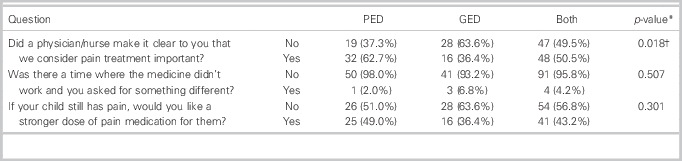
* Denotes statistical difference between “yes” answers for each question.
† Statistically significant.
Table 4 outlines caregiver perspectives of their children’s pain treatment. On a five point scale where 0=“strongly disagree” and 5=“strongly agree,” most caregivers disagreed (rating of 0–2) with the statement, “It is easier to put up with the pain than with the side effects that come from pain medicine” (63/93, 68%). Two-thirds of caregivers (60/91, 66%) disagreed with the statement, “Pain medicine cannot really control pain.” Caregivers also disagreed with the statement, “Good patients avoid talking about pain” (81/93, 87%).
Caregiver perspectives on pain treatmentFootnote *
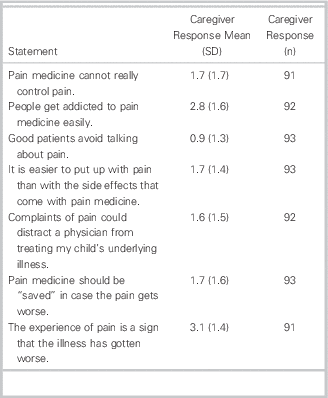
* Response scale: 0=do not agree at all; 5=very much agree.
Caregiver satisfaction
Nearly 90% (80/89) of caregiver respondents were satisfied with their child’s pain treatment in the ED; there was no statistically significant difference between the PED and GED (p=0.270). Table 1 reports that demographic characteristics, including caregiver age, caregiver sex, child age, and child’s pain location, did not demonstrate a statistically significant association with caregiver satisfaction (p=0.118, 0.552, 0.063, 0.129, respectively). Reported maximum pain score in the 24 hours preceding survey administration did not have a statistically significant association with caregiver satisfaction (p=0.097). Caregivers who felt their children were in severe pain at the time of ED discharge were less likely to be satisfied than those who felt their children were in mild or moderate pain (p=0.034) (Table 2).
Discussion
Most caregivers reported that their children experienced severe pain (>69 mm) immediately before or during their ED visit. Although pain scores were lower at ED discharge, nearly half of caregivers reported that their children had moderate to severe pain (30–69 mm) and over 10% reported severe pain at ED discharge. Pain persists well beyond a family’s ED departure. It has been recently shown that leaving the ED with suboptimal pain treatment puts children at risk for ongoing oligoanalgesia at home.Reference Gill, Drendel and Weisman 30 Studies have found that most children treated for musculoskeletal injury have moderate to severe pain 24 hours after ED discharge.Reference Gill, Drendel and Weisman 30 , Reference Selbst and Clark 32 Our findings are consistent with this, and reinforce the need for frequent reassessment of analgesia requirements, both during an ED visit and following discharge. Standardized triage pain protocols, clinical pathways, and innovative approaches to discharge education could be ways to address these barriers to children’s pain treatment.Reference Corwin, Kessler and Auerbach 5 , Reference Harrison, Yamada and Adams-Webber 6 , Reference Treadwell, Franck and Vichinsky 28
Our findings highlight discrepancies between caregiver perceptions and current best practices in pediatric pain treatment. Despite persistently high reported pain scores, over half of caregivers would not provide a second dose of analgesia if their child were still in pain. Adams-McNeillReference McNeill, Sherwood and Starck 24 reported similar findings in hospitalized adults, where most reported moderate-severe pain, but 41% did not wish to receive a stronger or additional dose of pain medicine. To the best of our knowledge, no studies have examined caregiver attitudes towards repeat medication dosing or pain reassessment following analgesia, and this could be an essential and mandated step towards improving children’s care both in the ED and at home after discharge.Reference Selbst and Clark 32 - Reference Zempsky and Cravero 34
This study also demonstrated that caregivers commonly use non-pharmacologic treatment modalities in the ED, including distraction, touch, and prayer. Despite their relative frequency of use in this study, there is a paucity of literature examining the use of these complementary therapies (particularly touch and prayer) for treatment of acute pain in the ED. Small studies suggest that music and other modalities may be a valuable adjunct to treat pain in the ED,Reference Sobieraj, Bhatt and LeMay 35 , Reference Wente 36 but definitive evidence is lacking, as is a deeper understanding of parental reasons for utilizing (or not utilizing) these modalities. Further exploration of non-pharmacologic therapies is merited, as they may prove to be minimally invasive, cost-effective ways to improve children’s pain and anxiety.
Despite the high caregiver-reported pain scores, caregivers were generally satisfied with their child’s ED pain treatment. Similar to our findings, both pediatricReference Magaret, Clark and Warden 22 and adultReference Downey and Zun 23 , Reference McNeill, Sherwood and Starck 24 , Reference Kelly 37 studies have previously reported that pain severity does not determine patient satisfaction in the ED, and many patients provide high satisfaction ratings after receiving minimal or no pain treatment. Kelly surveyed adult ED users and found that satisfaction was not related to initial or discharge pain score.Reference Kelly 37 Similarly, Magaret et al.Reference Magaret, Clark and Warden 22 surveyed PED parent-child pairs and found that parental report of their child’s pain resolution was not significantly associated with satisfaction. The strongest positive association was the quality of provider interactions and information provided; parents who responded affirmatively to the questions, “How pleasant were your interactions with your physician?” and “How adequate was the information provided?” were far more likely to be satisfied.Reference Magaret, Clark and Warden 22 Downey and ZunReference Downey and Zun 23 found a similar association when surveying adult ED patients with pain. They reported that satisfaction was most strongly correlated with the following statements: “The doctor told me all I wanted to know about my illness,” “The doctor seemed warm and friendly to me,” and “This is a doctor I would trust with my life.”Reference Downey and Zun 23 In our study, most caregivers report being satisfied with their child’s pain management despite continued pain upon discharge. There may be other unmeasured or unreported variables that account for this observation, such as a shorter wait time or the communication skills of the nursing staff. Physicians should be careful not to interpret family satisfaction as equivalent to adequate provision of analgesia.
Pain scores at discharge were comparable between the GED and PED, as was the use of non-pharmacologic pain treatments. Further, there was no statistically significant difference in caregiver recall of discharge advice. Still, caregivers reported that the GED clinical team was not prioritizing their children’s pain to the same degree as the PED. This would suggest that while treatment of pain might have been comparable between our two sites, the caregiver perception of prioritization and adequacy of communication of this prioritization was lower for the GED setting. Our study suggests that perhaps some of the previously reported disparity between GED and PED treatment of children’s painReference Kircher, Drendel and Newton 25 , Reference Cimpello, Khine and Avner 26 may be a result of differences in communication with the caregivers regarding the importance of treating a child’s pain.
Limitations
The convenience sampling method, with its inherent selection bias, small sample size, and exclusion of non-English speakers, are notable limitations of this study. Due to staffing and funding limitations, participants were recruited over a three-year period, which is unusually lengthy for a modest-sized study such as this; of note, this extended recruitment period did allow for representation of all seasons. We asked caregivers about maximum pain in the previous 24 hours, which may not necessarily have been experienced in the ED. As surveys were permitted to be submitted both in person or via mail, it is possible that this dual method of survey return may have led to differential responses between the two types of responders; we did not pursue sub-group analysis based on this factor. Finally, this study only included families who were treated for pain in the ED; as such, the experiences of caregivers whose children who had pain but did not receive medication or non-pharmacologic therapies are not represented in this study.
Conclusion
Caregivers reported that their children had significant pain before and during an ED visit. Despite this high burden of pain, almost all caregivers were satisfied with their child’s ED pain treatment. Caregivers who reported that their children were in severe pain immediately prior to ED discharge were least likely to be satisfied with their children’s pain treatment. Of note, over half of caregivers surveyed would not provide an additional dose of medicine if the child’s pain persisted. Health care providers should be careful not to misinterpret family satisfaction and hesitance to request more pain medication as equivalent to the provision of adequate analgesia. The complex relationship between satisfaction and pain management needs to be further explored, and barriers to adequate pain treatment addressed. In the future, caregiver reports of satisfaction could be correlated with child satisfaction reports, as well as medical record reviews.
Acknowledgements
We would like to acknowledge the research coordination of Ms. Erin Logue, data entry of Mrs. Yvonne Klatt, and the tireless recruitment efforts of our pediatric emergency research assistants in completing this study. We would also like to thank Dr. Ashraf Kharrat for her work on this project during her summer research studentship.
Competing Interests: Dr. Rosychuk is salary supported by an Alberta Innovates-Health Solutions (AI-HS; Edmonton, Canada) Health Scholar Award. Dr. Newton holds a Canadian Institutes of Health Research (CIHR) New Investigator Award. The authors have no additional financial or other conflicts of interest to disclose.
Supplementary Material
To view supplementary material for this article, please visit http://dx.doi.org/10.1017/cem.2015.68



