




Impact statement
The current generation of climate models has been helpful in understanding human-induced climate change, but they fall short in examining the interactions of climate tipping elements and their impact on overall climate stability. This gap in knowledge means that commonly used climate projections in the drinking water industry used to consider the resilience of their systems do not adequately represent potential tipping element activations. Nevertheless, recent evidence suggests the existence and possible imminent activation of some of these tipping elements. While the drinking water sector operates on long time scales, the potential changes associated with tipping elements can happen much more quickly. This article underlines the importance of taking potential tipping element activations into consideration in the longer-term planning and management of drinking water infrastructure. When one does so, a broader range of plausible climate scenarios comes into view. This demands an even greater system resilience, potentially a broader portfolio of adaptation measures, and greater flexibility in their implementation.
Introduction
Context
The scenarios for our changing climate are generated by the scientific community and included in IPCC (Intergovernmental Panel on Climate Change) reports and their regional and national derivatives. These scenarios provide a very valuable resource for water utilities worldwide that need to prepare themselves. The importance of considering climate change scenarios for water utilities has long been recognized (e.g., Danilenko et al. Reference Danilenko, Dickson and Jacobsen2010) and various utilities around the world are doing so (e.g., Howard et al. Reference Howard, Calow, Macdonald and Bartram2016; Rickert et al. Reference Rickert, van den Berg, Bekure, Girma and de Roda Husman2019). Still, awareness of climate hazards risks may vary among utilities (e.g., Lyle et al. Reference Lyle, VanBriesen and Samaras2023). Indeed, with long lead times for developing new water sources and very long lifetimes for infrastructure, many water utilities are accustomed to looking a long way ahead. This is crucial for being able to continue providing their essential services in the future. Significant and rapid deviations from these climate scenarios, which by themselves already embody a certain degree of uncertainty, are, however, possible. This is true in particular when climate tipping points are surpassed and associated tipping elements are activated that are not included in and/or emerging from coupled global circulation/ocean and Earth system models. A tipping point can be defined as “a critical threshold at which a tiny perturbation can qualitatively alter the state or development of a system”; with tipping elements, we mean the associated large-scale components of the Earth system (Lenton et al. Reference Lenton, Held, Kriegler, Hall, Lucht, Rahmstorf and Schellnhuber2008). There is a broad scientific consensus on the causes, processes and general consequences of anthropogenic climate change. There is much less consensus on the importance and potential consequences of tipping elements for Earths’ climate. The current generation of state-of-the-art models has been reported to be insufficient for studying the interactions of tipping elements and their impact on the overall stability of our climate (Wunderling et al. Reference Wunderling, Donges, Kurths and Winkelmann2021; Hewitt et al. Reference Hewitt, Fox-Kemper, Pearson, Roberts and Klocke2022; McCarthy et al. Reference McCarthy and Caesar2023), even though their activation does sometimes emerge or can be forced (e.g. Drijfhout Reference Drijfhout2015; Drijfhout et al. Reference Drijfhout2015; Jackson et al. Reference Jackson, Kahana, Graham, Ringer, Woollings, Mecking and Wood2015, Reference Jackson, Alastrué de Asenjo, Bellomo, Danabasoglu, Haak and Hu2023; Bellomo et al. Reference Bellomo, Meccia, D’Agostino, Fabiano, Larson, von Hardenberg and Corti2023). Paleoclimate proxies do, however, provide ample evidence for the repeated incidence of rapid climate change in Earth’s past (e.g. Alley et al. Reference Alley, Marotzke, Nordhaus, Overpeck, Peteet, Pielke and Wallace2003) that may be associated with tipping point activations (Brovkin et al. Reference Brovkin, Brook, Williams, Bathiany, Lenton, Barton and Yu2021; Boers et al. Reference Boers, Ghil and Stocker2022; Weldeab et al. Reference Weldeab, Schneider, Yu and Kylander-Clark2022). Collins et al. (Reference Collins, Sutherland, Bouwer, Cheong, Frölicher, Jacot Des Combes, Koll Roxy, Losada, McInnes, Ratter, Rivera-Arriaga, Susanto, Swingedouw, Tibig, Pörtner, Roberts, Masson-Delmotte, Zhai, Tignor, Poloczanska, Mintenbeck, Alegría, Nicolai, Okem, Petzold, Rama and Weyer2019) write that “it is difficult to assess the probability of occurrence of abrupt climate events [but] they are physically plausible events that could cause large impacts on ecosystems and societies and may be irreversible.” We thus need to acknowledge that there remains considerable uncertainty about climate tipping points and whether tipping elements will actually be activated. Nevertheless, the plausibility of such scenarios needs to be acknowledged as well. As such, climate tipping points form a hidden, largely underinvestigated and perhaps underestimated risk for the water sector.
Recognizing the risks of climate tipping points means that the water industry must (1) identify key tipping points that should be monitored, (2) understand what magnitude of change in the water system and the effects on infrastructure and processes associated with the possible activation of these tipping elements can be expected and (3) understand what timescales these would allow water utilities to act and adapt.
Water utilities worldwide use (model-based) climate scenarios to look at potential impacts to their water supplies, assets and infrastructure (EPA 2011; Heyn et al. Reference Heyn and Winsor2015). Drought, flooding and sea-level rise and storm surge risks are taken into account in their long-term water supply and systems planning. Heyn et al. (Reference Heyn and Winsor2015) write that all utilities identified climate change as a future threat to some part of their system and several acknowledged a range of plausible future conditions. Lyle et al. (Reference Lyle, VanBriesen and Samaras2023) note that many case studies focus on mitigating hydrologic changes to water resources but not so much on climate change effects on business functions and operations.
Objective and structure
The objective of this article is to assess the possibility of tipping elements or tipping cascades leading to climate trajectories that diverge significantly from those that are used worldwide by the water sector for long-term planning and to discuss their possible implications for drinking water provision. We approach this by:
-
1. introducing and discussing tippling points, their significance for the accuracy of climate predictions and the potential impact on the drinking water sector resilience;
-
2. providing an overview of climate model deficiencies in representing tipping elements and potential consequences;
-
3. presenting implications for the drinking water sector;
-
4. presenting a methodology of identifying the most critical tipping elements and the analysis done in this article, for creating proximate plausible temperature and tipping element activation trajectories and for investigating the climate effects of an activation of the most critical tipping element for Europe;
-
5. providing the results of these analyses;
-
6. discussing the results, implications, context and limitations and providing conclusions.
Because tipping points and elements are beyond the field of view of most water sector academics and professionals, and because a significant amount of research has been done in this field in recent years, we have chosen to provide a relatively comprehensive review in steps 1–3. This both forms a foundation for the following steps and allows the reader to better gauge the potential relevance and uncertainties of the material presented in the rest of the article.
Literature review
Climate tipping points and elements
Though still incomplete and rife with uncertainties, our understanding of tipping points and elements has significantly grown over the past one-and-a-half decade (Lenton et al. Reference Lenton, Armstrong McKay, Loriani, Abrams, Lade, Donges, Milkoreit, Powell, Smith, Zimm, Buxton, Bailey, Laybourn, Ghadiali and Dyke2023, provide the most up-to-date overview). A quantitative review was provided by Armstrong McKay et al. (Reference Armstrong McKay, Staal, Abrams, Winkelmann, Sakschewski, Loriani and Lenton2022). Their overview of tipping elements, threshold values, timescales and impacts is shown in Figure 1. The values in the figure are derived from a wide range of studies, including paleoclimate proxies, present-day observations and modeling studies (for details, see the Supplementary Material of Armstrong McKay et al. (Reference Armstrong McKay, Staal, Abrams, Winkelmann, Sakschewski, Loriani and Lenton2022). Magnitudes of temperature changes are reported both on a global scale (left part of boxes) and a regional scale (where the tipping element is operating; right part of boxes), following Armstrong McKay et al. (Reference Armstrong McKay, Staal, Abrams, Winkelmann, Sakschewski, Loriani and Lenton2022).
Overview of tipping elements discussed by Armstrong McKay et al. (Reference Armstrong McKay, Staal, Abrams, Winkelmann, Sakschewski, Loriani and Lenton2022) and estimated threshold values (horizontal axes), timescales (vertical axes) and impact magnitudes (colors, left half of boxes: global, right half of boxes: regional), based on numbers assembled by Armstrong McKay et al. (Reference Armstrong McKay, Staal, Abrams, Winkelmann, Sakschewski, Loriani and Lenton2022). Uniform filling indicates explicitly stated range boundary values; gradient fill indicates uncertainty on the range boundary. For parameter boundary values for which Armstrong McKay et al. provide a range, the mean of this range is shown. For parameters for which an increase per oC temperature increase is given, we assume an increase of 2°C. For parameters for which no numerical value is given for the impact, a 0°C change is shown. Note that EAIS is truncated at the right upper bound and that element labels may be located anywhere close to the center of a box (positions chosen for visual clarity). Tipping elements have been distributed over frames a–d to minimize overlap for visual clarity. Explanation of symbols:  collapse;
  dieback, die-off, (abrupt) loss;
  abrupt thaw;
  gradual thaw;
  northern expansion, greening;
  southern dieback;
  weakening; ø dissociation.

(a, b) Incidence of temperature change-time scale combinations in the model runs, using a 5-year (−2 to +2) running average smoothing function; (c, d) Incidence of temperature change-time scale combinations in the model runs, using a 5-year (−2 to +2) running average smoothing function; (e, f) Incidence of temperature change-time scale combinations in the model runs, using a 5-year (−2 to +2) running average smoothing function, and allocation to selected tipping element. (1) SSP1–1.9; (2) SSP2–4.5; (3) SSP5–8.5.

Incorporation and/or resolution of tipping elements in earth system models
Subsequent generations of coupled global circulation/ocean and Earth system models culminating in the present-day ones have contributed significantly to our understanding of the responses of the atmosphere, oceans and cryosphere to the new forcings that mankind has been exposing them to. This is truly a remarkable feat. However, the resolution of the current generation of coupled global circulation/ocean and Earth system models may be insufficient to fully resolve relevant processes for tipping point activation. Furthermore, not all relevant processes may be modeled explicitly or parameterized to a sufficient degree to capture tipping points and their behavior. The climate modeling community generally acknowledges these limitations (as discussed above, and see also IPCC Reference Masson-Delmotte, Zhai, Pirani, Connors, Péan, Berger, Caud, Chen, Goldfarb, Gomis, Huang, Leitzell, Lonnoy, Matthews, Maycock, Waterfield, Yelekçi, Yu and Zhou2021b, Box 1.1 and Box 12.1) – indeed, their descriptions form the basis of our analysis here. A lot of attention is paid to the communication of uncertainty in, e.g., IPCC reports, and the need for alternative or additional approaches such as event-based storylines (Shepherd et al. Reference Shepherd, Boyd, Calel, Chapman, Dessai, Dima-West and Zenghelis2018; Sillmann et al. Reference Sillmann, Shepherd, van den Hurk, Hazeleger, Martius, Slingo and Zscheischler2021). Despite the awareness of uncertainty associated with those climate models, user communities, including those in the water sector, lack understanding of how much the models are uncertain or might be different from the climate evolution.
Table 1 provides an overview of the literature analysis of the confidence levels that individual tipping processes are adequately included in or emerging from (1) the current generation of ESM for all known global core tipping points and (2) threshold-free nonlinear feedbacks (regional tipping elements not included). Also included is the evaluation of the current level of scientific understanding and predictability of models for 10 proposed tipping elements included in the review by Wang et al. (Reference Wang, Foster, Lenz, Kessler, Stroeve, Anderson and Hausfather2023). A general conclusion from this analysis is that there are significant limitations to how the listed elements can be incorporated into the climate models or could emerge from modeling exercises, which warrants their further consideration in addition to current ESM climate predictions by practitioners that base strategic decisions on climate projections.
Estimates of the confidence that tipping elements are fully represented in Earth system model results, either by including the physics or a parameterization of the processes involved, or emerging from the simulations, for the global core tipping elements and threshold-free non-linear elements. A substantiation of the author’s evaluation is provided in the Supplementary Material

a Greenland and Antarctic ice sheets jointly considered by Wang et al. (Reference Wang, Foster, Lenz, Kessler, Stroeve, Anderson and Hausfather2023).
b Generic category Permafrost carbon release in Wang et al. (Reference Wang, Foster, Lenz, Kessler, Stroeve, Anderson and Hausfather2023).
Coupling of tipping elements
The literature reports on coupling between multiple tipping elements. There are multiple mechanisms for this. The most general is through the global temperature effect of a tipping element. This, and the resulting potential for tipping point cascades, will be discussed in more detail below. This section discusses more direct couplings between tipping elements that have been identified in the literature.
Hu and Fedorov (Reference Hu and Fedorov2019) showed that warming of the Indian Ocean helps to maintain the AMOC by affecting salinity in the Atlantic (through rainfall) and westerly winds over the subpolar North Atlantic, thus potentially delaying an AMOC slowdown.
Connections between the AMOC, Labrador Sea (LABC) and Greenland Ice Sheet (GrIS) tipping elements have received much attention in the literature, but consensus on the direction and magnitude is yet to emerge. Menary et al. (Reference Menary, Jackson and Lozier2020) demonstrate by numerical modeling that the importance of the Labrador Sea (LABC) in the dynamics of the AMOC has been overestimated so far and that overturning in the eastern subpolar gyre is more prominent than that in the western. Tagklis et al. (Reference Tagklis, Bracco, Ito and Castelao2020) show the opposite, writing that “submesoscale circulations modify and control the Labrador Sea contribution to the global meridional overturning.” This indicates that changes in the Labrador Sea convection may spill over into the AMOC. Similarly, Böning et al. (Reference Böning, Wagner, Handmann, Schwarzkopf, Getzlaff and Biastoch2023) find suggestions of “a dominant influence on the AMOC by large Labrador Sea buoyancy forcing anomalies on multi-decadal time scales.” The latter two studies, which are based on model simulations, link the LABC and AMOC tipping elements. Also, the Greenland Ice Sheet tipping element has a direct influence on the AMOC, since its melting releases freshwater into the North Atlantic that may contribute to the latter’s halting (Boers and Rypdal Reference Boers and Rypdal2021). Contrastingly, He and Clark (Reference He and Clark2022) find that the freshwater forcing of the AMOC has been overestimated and that an ocean–atmosphere climate model with muted AMOC response to this shows “a better agreement between simulated and proxy temperatures of the past 21,000 years.”
Other connections that are described in the literature are those between AMOC and MMHD (marine methane hydrates) and between the Amazon Rainforest (AMAZ) and the West Antarctic ice sheet (WAIS). Weldeab et al. (Reference Weldeab, Schneider, Yu and Kylander-Clark2022) find evidence for large-scale methane hydrate dissociation in the Atlantic at low latitudes during the penultimate interglacial warming (126,000–125,000 years BP), which they ascribe to the warming of intermediate waters through a reduced influx of cold water from the north by weakening of the AMOC. This provides a link between the AMOC and MMHD (marine methane hydrates) elements. Interactions between tipping elements tend to destabilize them and may shift critical threshold values toward lower values by acting as cascade triggers (Wunderling et al. Reference Wunderling, Donges, Kurths and Winkelmann2021; Wang et al. Reference Wang, Foster, Lenz, Kessler, Stroeve, Anderson and Hausfather2023). Liu et al. (Reference Liu, Chen, Yang, Meng, Wang, Ludescher, Fan, Yang, Chen, Kurths, Chen, Havlin and Schellnhuber2023) study the connections between tipping elements in the Earth system. They find that “the [Amazon Rainforest Area (ARA)] exhibits strong correlations with regions such as the Tibetan Plateau (TP) and WAIS. Models show that the identified teleconnection propagation path between the ARA and the TP is robust under climate change.” These authors also remark that snow cover extent on the Tibetan Plateau has been losing stability since 2008, and show that “various climate extremes between the ARA and the TP are synchronized under climate change.”
Evidence for activation of tipping elements in Earth’s past
Several authors describe evidence for the activation of tipping elements in the late Pleistocene and Holocene. Brovkin et al. (Reference Brovkin, Brook, Williams, Bathiany, Lenton, Barton and Yu2021) provide a review of abrupt changes and tipping points in Earth’s recent history (the past 30,000 years) and show how their impacts cascaded through the Earth system. They write that several “abrupt climate changes were associated with substantial changes in the AMOC” related to cryosphere-ocean interactions. Other abrupt changes are related to ice sheet melt, sea level rise, ocean warming and shifts in monsoonal rainfall belts. They show how these changes influenced human civilizations by their strong impacts on ecosystems.
Boers et al. (Reference Boers, Ghil and Stocker2022) review the proxy evidence for past abrupt climate transitions. They describe a well-documented seesaw pattern generated by the interplay of sea ice, atmospheric dynamics and the AMOC. In particular, the so-called Dansgaard-Oeschger events exhibiting 16°C warming in Greenland over mere years are good examples that, although we are not currently in a glacial period, may be quite relevant examples because similar mechanisms may be triggered by anthropogenic heating (Boers et al. Reference Boers, Ghil and Stocker2022). Other examples that they describe include so-called Bond events, such as the desertification of the previously green Sahara around 5.9 kyr before present. They also identify some candidates for future abrupt transitions in response to ongoing anthropogenic forcing: the Greenland and Antarctic ice sheets, the AMOC and the tropical monsoon system.
As described in the previous section, Weldeab et al. (Reference Weldeab, Schneider, Yu and Kylander-Clark2022) find evidence for large-scale methane hydrate dissociation in the Atlantic at low latitudes during the penultimate interglacial warming (126,000–125,000 years BP).
Evidence has also been presented for delays in tipping element activation. Kim et al. (Reference Kim, Kim, Dijkstra and An2022) note that a lag has been observed in the response of the AMOC to the meltwater pulse 1A (MWP-1A, ~14,000 years ago) of about 1,000 years. They explain this by the so-called slow passage effect, i.e. a tipping point overshoot due to a time-varying forcing and demonstrate by a numerical model that this also makes the transition less abrupt. However, they also note that a different type of tipping, so-called rate-induced tipping, which is advanced rather than delayed, may also be possible (Ashwin et al. Reference Ashwin, Wieczorek, Vitolo and Cox2012). This type of behavior is described by Lohman and Ditlevsen (Reference Lohmann and Ditlevsen2021).
Observations indicative of possible imminent activation of tipping elements
Several authors investigate and interpret observations that relate to the AMOC. Smeed et al. (Reference Smeed, Josey, Beaulieu, Johns, Moat, Frajka-Williams and McCarthy2018) report that “the AMOC has been in a state of reduced overturning since mid-2008” with a decreased magnitude that is similar to what had been predicted by climate models. Numerical simulations by Peng et al. (Reference Peng, Xie, Wang, Huang, Chen, Shu and Liu2022), which force a general circulation model with CMIP6 ensemble mean changes in wind, sea surface temperature and salinity reproduce this slowdown, while observing an acceleration for most of the oceans’ surface flows.
Weijer et al. (Reference Weijer, Cheng, Drijfhout, Fedorov, Hu, Jackson and Zhang2019) reviewed all relevant work that had been done up to that point on the stability of the AMOC to conclude that it cannot be ruled out that “the AMOC in our current climate is in, or close to, a regime of multiple equilibria.” They also note that there remains considerable uncertainty as to the AMOC’s position in relation to possible thresholds.
Early-warning signals for tipping of a system to a different state can be found in an increase in variance and autocorrelation of relevant signals. Ditlevsen and Ditlevsen (Reference Ditlevsen and Ditlevsen2023) have analyzed these for the AMOC and investigated their statistical significance, concluding that a complete collapse of the AMOC is likely to take place halfway through the 21st century (95% confidence interval 2025–2095). However, Lohman et al. (Reference Lohmann, Dijkstra, Jochum, Lucarini and Ditlevsen2023) show using a primitive-equation global ocean model that the transition from a fully operating to a collapsed state of the AMOC may involve switching between multiple stable circulations states through intermediate tipping points (ITP). This makes its prediction more difficult.
Van Westen et al. (Reference van Westen, Kliphuis and Dijkstra2024) warn that the purely statistical approach that is followed by Ditlevsen and Ditlevsen (Reference Ditlevsen and Ditlevsen2023) to predict an AMOC shutdown hinges on several of assumptions and that a more physics-based indicator would be more meaningful. They propose to use the minimum of the AMOC-induced freshwater transport at 35oS in the Atlantic (FovS) and note that this parameter is currently dropping, suggesting that “the AMOC is on route towards tipping.”
Other tipping elements for which observational evidence points to a possible imminent activation and the Greenland Ice Sheet and the Amazon Rainforest. Boers and Rypdal (Reference Boers and Rypdal2021) investigated long-term melt rate and ice sheet height reconstructions from the central-western GrIS in combination with model simulations to quantify the stability of this part of the GrIS. “[They] reveal significant early-warning signals (EWS) indicating that the central-western GrIS is close to a critical transition … and suggest substantial further GrIS mass loss in the near future and call for urgent, observation-constrained stability assessments of other parts of the GrIS. Boulton et al. (Reference Boulton, Lenton and Boers2022) studied the loss of vegetation optical depth in the Amazon in the period 1991–2016. Using established resilience indicators, they determine that the Amazon rainforest has been losing resilience since the early 2000s. They note that this is consistent with an approach to a critical transition. This is supported by a more extensive global analysis by Smith et al. (Reference Smith, Traxl and Boers2022).
Modeling results indicative of possible imminent activation of tipping elements
Additional lines of evidence for the possibility of imminent tipping element activation come from numerical modeling studies. Deutloff et al. (Reference Deutloff, Held and Lenton2023) “investigate the probabilities of triggering climate tipping points under various shared socioeconomic pathways (SSPs), and how they are altered by including the additional carbon emissions that could arise from tipping points within the Earth’s carbon cycle.” They apply a probabilistic approach in a Monte Carlo framework, together with a zero-dimensional (0D) reduced complexity climate model FaIR (Leach et al. Reference Leach, Jenkins, Nicholls, Smith, Lynch, Cain and Allen2021) and a conceptual carbon tipping element model. They find that even under the low emissions SSP1–1.9 scenario, no less than five tipping elements are more likely than not to be activated by 2031. Similarly, Rao et al. (Reference Rao, Davi, Magney, Andreu-Hayles, Nachin, Suran and Griffin2023) observe that “under high emission trajectories we may approach an abrupt ecological tipping point in southern boreal Eurasian forests substantially sooner than ESM estimates that do not consider plant thermal tolerance traits.”
Jackson et al. (Reference Jackson, Alastrué de Asenjo, Bellomo, Danabasoglu, Haak and Hu2023) have outlined an experimental protocol to investigate mechanisms of AMOC weakening and recovery across multiple climate models, providing some of the most recent numerical results that we have identified. They find that hosing (i.e. adding freshwater to the North Atlantic in numerical simulations) results in a weakening of the AMOC, which recovers in about half of the models when the hosing is stopped, but stays weakened in the other half. Mecking and Drijfhout (Reference Mecking and Drijfhout2023) show that projected reductions in heat transport by ocean circulation are significantly larger in current generation CMIP6 models than in the previous generation CMIP5 models, citing a factor 2.5 difference for the Atlantic Ocean in a weaker forcing scenario (SSP1–2.6).
Lohman and Ditlevsen (Reference Lohmann and Ditlevsen2021) warn that transitions to a new state in a bifurcation tipping point can even occur at small-amplitude forcing if the rate of change is fast enough. They show, using global ocean model simulations, that an AMOC collapse can be triggered in this way. Wunderling et al. (Reference Wunderling, Winkelmann, Rockström, Loriani, Armstrong McKay, Ritchie and Donges2023) show that also temporary overshoots of mean global surface temperature targets significantly increase the risk of activating tipping elements.
Tipping cascades
The activation of a tipping element that has a positive effect on the mean global surface temperature may cause the activation of a second tipping element if this has a threshold temperature that is being crossed by the temperature effect of the first one, leading to a tipping cascade. Klose et al. (Reference Klose, Wunderling, Winkelmann and Donges2021) review the literature and climate tipping point cascades and conclude that the use of terminology varies among different publications. In this publication, we adhere to their definitions. They distinguish three kinds of cascades: (1) two-phase cascades, which are characterized by an intermediate stable state in which the first tipping element has been activated but the second is not, requiring a further increase of the control parameter for activation; (2) domino cascades, in which the tipping of the first element directly results in the tipping of the second element without further external forcing and (3) joint cascades, in which the two tipping elements are activated simultaneously. They study the dynamics of these cascades using and expanding an approach that was described by Dekker et al. (Reference Dekker, Von Der Heydt and Dijkstra2018). Tipping cascades are often considered to lead to a runaway effects. However, this is not necessarily the case. Gaucherel and Moron (Reference Gaucherel and Moron2017) used graph grammar models to study the interaction between nine tipping elements in Earth’s climate. They concluded that rather than causing a destabilization or runaway effect, the interactions between multiple tipping points seem to result in a stabilization of the system instead.
Using Monte Carlo simulations in a conceptual network approach, Wunderling et al. (Reference Wunderling, Donges, Kurths and Winkelmann2021) show that the polar ice sheets on Greenland and West Antarctica are often the initiators of tipping cascades, whereas the AMOC acts as a mediator that transmits cascades, connecting Earth’s two hemispheres and having two-way interactions with the other tipping elements.
In their review of tipping elements and mechanisms, on the other hand, Wang et al. (Reference Wang, Foster, Lenz, Kessler, Stroeve, Anderson and Hausfather2023) surmise that our current scientific understanding of tipping cascades and their model predictability are low. Nevertheless, they conclude that the effects of tipping element activations are likely to be secondary to human-induced global warming. Furthermore, “[it] thus seems unlikely that this additional warming is sufficient to self-perpetuate global-scale climate change independent of the human emissions pathway” over the coming centuries.
A mutual interaction and cascade have been described for the Greenland Ice Sheet (GrIS) and the AMOC: ice loss of the GrIS works toward destabilization of the AMOC through its freshwater influx, but AMOC weakening results in regional cooling which stabilizes the GrIS. Klose et al. (Reference Klose, Donges, Feudel and Winkelmann2024) find that two types of cascades are possible: (1) an overshoot tipping cascade in which both elements tip and (2) a rate-induced tipping cascade where the AMOC tips due to fast ice-loss of the GrIS despite not having passed its tipping point. They conclude that there is an upper bound to safe rates of environmental change for preventing tipping cascades.
Consequences of tipping element activations for drinking water
Overview of potential effects
In addition to global warming by greenhouse gas accumulation, climate tipping elements may introduce or aggravate multiple climate hazards. In turn, these climate hazards may affect multiple aspects of drinking water provision. An overview of these effects, on a global and a regional scale, and possible mitigating measures is provided in Table 2. Selected aspects are discussed in more detail for Europe, which is the focus area of this study, in the following paragraphs. Table 2 also clearly illustrates the interrelatedness between climate related and other environmental challenges, in particular those related to water pollution. Mitigation measures that address multiple of these issues at the same time are, if available, therefore preferred (Stofberg et al. Reference Stofberg, Engelenburg and van Broers2023).
Overview of climate hazards, potentially responsible mechanisms, direct effects and possible mitigating actions for water abstraction, treatment and distribution, in comparison to present-day conditions

a Van Westen et al. (Reference van Westen, Kliphuis and Dijkstra2024).
b Sgubin et al. (Reference Sgubin, Swingedouw, Drijfhout, Mary and Bennabi2017).
c Bellomo et al (Reference Bellomo, Meccia, D’Agostino, Fabiano, Larson, von Hardenberg and Corti2023).
d Orihuelo-Pinto et al. (Reference Orihuela-Pinto, England and Taschetto2022).
f Lyle et al. (Reference Lyle, VanBriesen and Samaras2023).
g Wols and Van Thienen (Reference Wols and Van Thienen2016).
i Sjerps et al. (Reference Sjerps, ter Laak and Zwolsman2017).
j Armstrong McKay et al. (Reference Armstrong McKay, Staal, Abrams, Winkelmann, Sakschewski, Loriani and Lenton2022).
k IPCC (2022).
l Mens et al. (Reference Mens, Hunink, Delsman, Pouwels and Schasfoort2020).
m Agudelo Vera et al. (Reference Agudelo-Vera, Avvedimento, Boxall, Creaco, De Kater, Di Nardo and Blokker2020).
n Valdivia-Garcia et al. (Reference Valdivia-Garcia, Weir, Graham and Werner2019).
o Gobler (Reference Gobler2020).
p Kraemer et al. (Reference Kraemer, Boudet, Burlakova, Haltiner, Ibelings, Karatayev, Karatayev, Rossbacher, Stöckli, Straile and Spaak2023).
q Vahala (Reference Vahala2016).
r García-Ruiz (Reference García-Ruiz, Palacios, Hughes, Andrés, Palacios, Hughes, García-Ruiz and Andrés2023).
s Barrette and Lindenschmidt (Reference Barrette and Lindenschmidt2023).
t Casselgren et al. (Reference Casselgren, Hellström and Lundberg2015).
u Daly and Barrette (Reference Daly and Barrette2023).
v Bruaset and Sægrov (Reference Bruaset and Sægrov2018).
w Semadeni-Davies et al. (Reference Semadeni-Davies, Hernebring, Svensson and Gustafsson2008).
x Ramos et al. (Reference Ramos, Lizaga, Gaspar and Navas2022).
y Stofberg et al. (Reference Stofberg, Engelenburg and van Broers2023).
z Jones et al. (Reference Jones, Smith, Betts, Canadell, Prentice and Le Quéré2020).
aa Paul et al. (Reference Paul, LeDuc, Lassiter, Moorhead, Noyes and Leibowitz2022).
Availability and quality of raw water
Reduced (seasonal) precipitation has been predicted for parts of Europe and has already been observed (EEA 2021). In combination with increased potential evapotranspiration that results from increased temperature, the precipitation surplus may decrease overall or seasonally.
Depending on the temporal patterns, in combination with landscape characteristics (response time), groundwater levels may be affected (Mens et al. Reference Mens, Hunink, Delsman, Pouwels and Schasfoort2020; Riedel and Weber Reference Riedel and Weber2020; Van Huijgevoort et al. Reference Van Huijgevoort, Voortman, Rijpkema, Nijhuis and Witte2020). Even though lower groundwater levels would generally not lead to depletion of aquifers, they would make the surroundings of groundwater abstraction wells more vulnerable to the effects of such abstractions.
Depending on the type of river (rain- or glacier-fed) and the precipitation and evaporation changes within drainage basins, river discharge patterns are affected (Lobanova Reference Lobanova, Liersch, Nunes, Didovets, Stagl, Huang, Koch, Rivas López, Maule, Hattermann and Krysanova2018). Sperna Weiland et al. (Reference Sperna Weiland, Visser, Greve, Bisselink, Brunner and Weerts2021) combine CORDEX regionally downscaled climate models with three different hydrological models and apply these to seven European river basins. In line with earlier predictions and these observations, they project likely river discharge decreases in southern Europa, with increases being more likely in northern Europe. For rivers such as the Rhine and Danube, an increase of winter discharge and a decrease of summer discharge is predicted (Buitink et al. Reference Buitink, Melsen and Teuling2021; Probst and Mauser Reference Probst and Mauser2023).
The reduced availability of surface water may affect water quality through the increase in the concentration of contaminants as well as salinization in coastal regions (Sjerps et al. Reference Sjerps, ter Laak and Zwolsman2017; van Vliet et al. Reference van Vliet, Ludwig, Zwolsman, Weedon and Kabat2011; van Vliet and Zwolsman Reference van Vliet and Zwolsman2008; Zwolsman and van Bokhoven Reference Zwolsman and Van Bokhoven2007; Zwolsman and Becker Reference Zwolsman and Becker2012; Sheahan et al. Reference Sheahan, Maud, Wither, Moffat and Engelke2013; Viaroli et al. Reference Viaroli, Bartoli, Castaldelli, Naldi, Nizzoli and Rossetti2013). Surface water abstraction locations may be affected by biological effects as well, such as overgrowth by (bluegreen) algae or dreissenid mussels (Fernald et al. Reference Fernald, Caraco and Cole2007).
However, also groundwater quality may be affected. Uhl et al. (Reference Uhl, Hahn, Jäger, Luftensteiner, Siemensmeyer, Döll and Griebler2022) describe how reduced precipitation may cause streams to change from gaining (i.e., being partially fed by groundwater) to losing (i.e., partially feeding groundwater). This would provide a mechanism to introduce surface water contaminants into the groundwater on a large scale. Groundwater quality may also be affected more directly (Nistor Reference Nistor2020), for example, by changes in land use, aboveground activities (e.g. pesticide use, Delcour et al. Reference Delcour, Spanoghe and Uyttendaele2015), soil biological activity (Jansson and Hofmockel Reference Jansson and Hofmockel2020) and salinization in coastal regions (Oude Essink et al. Reference Oude Essink, Van Baaren and De Louw2010).
Furthermore, sudden events like extreme precipitation events, and wildfires, may lead to contamination of both groundwater wells and surface water basins as well (Hohner et al. Reference Hohner, Rhoades, Wilkerson and Rosario-Ortiz2019). In case of scenarios that exhibit (regional) drying and cooliong, the cooling may mitigate the effects of drought slightly, as evapotranspiration would probably decrease as a result of lower temperatures. Furthermore, lower temperatures may lead to an increase in snow and ice formation, which may act as seasonal storage of fresh water (e.g. in glaciers that feed rivers). However, drought could still lead to problems for drinking water abstraction and infrastructure, similar to the scenarios that exhibit warming and drying. The decreasing temperatures could potentially lead to new problems as well, such as the formation of (frazil) ice in regions where intake structures and are not adapted to such phenomena.
Treatment of water
In general, an increase of temperature results in more efficient (biological and physico-chemical) water treatment processes, with some exceptions (e.g. faster fouling of membranes requiring more frequent flushing). However, extreme rainfall events may require changes in plant operation to ensure the required water quality (Verlicchi et al. Reference Verlicchi, Grillini, Maffini, Benini, Mari and Casoni2024). Climate warming may also lead to an increase in the formation of trihalomethanes as disinfection byproducts, as was shown and discussed for Scotland by Valdivia-Garcia et al. (Reference Valdivia-Garcia, Weir, Graham and Werner2019).
Vahala (Reference Vahala2016) gives an overview of the characteristics of drinking water production and distribution in cold climates. His findings can be summarized as follows. Lower temperatures cause the optimum pH for the coagulation to increase and the rate of the chemical reactions to decrease. This may result in longer mixing times needed and the use of alternative coagulants, which may be less effective. Also, several aspects of flocculation are affected by low temperatures (Fitzpatrick et al. Reference Fitzpatrick, Fradin and Gregory2004; Xiao et al. Reference Xiao, Huang, Zhang and Cui2009), resulting in smaller, more irregular and less compact flocs. This can be counteracted by selecting an appropriate coagulant (preferably iron-based) and increasing the mixing intensity. The clarification process is mostly affected by the temperature dependence of water viscosity, which results in lower sedimentation rates. Larger basins and/or lamellae may be needed, and plant and process design may need modification. The higher viscosity at lower temperatures also results in a decrease in the filtration rate of sand filters, but also a reduced backwash water quantity requirement because a lower flow rate is needed to fluidize the bed, and lower temperatures result in lower rates of activity for biological treatment steps. Adsorption generally increases with decreasing temperature, improving removal. Finally, for membrane filtration, the decrease of permeability with temperature results in better NOM removal, and a specific design may be needed for the lowest temperatures.
Distribution
Increased temperatures may negatively affect drinking water as it is distributed, as a result of physical, chemical and biological processes. Drinking water distribution pipes may heat up as a result of increased soil temperature, especially in urban environments. Deeper pipe burial, increased soil moisture and general measures against urban heat island effects (such as tree cover, shade, etc.) may mitigate these effects (Agudelo-Vera et al. Reference Agudelo-Vera, Avvedimento, Boxall, Creaco, De Kater, Di Nardo and Blokker2020).
To prevent freezing in the cold season, pipes are usually installed at greater depths at higher latitudes. For example, whereas a depth of 1 m is the common practice in the Netherlands, Finland installs its drinking water pipes at 1.8 m depth in the south and at 2.6 m in the north of the country. Alternatively/additionally, insulation and/or heating may be applied (Vahala Reference Vahala2016).
Failure rates of drinking water pipes increase markedly for lower surface temperatures (Bruaset and Sægrov Reference Bruaset and Sægrov2018), in particular for PVC and gray cast iron pipes, the latter by as much as a factor 4 (Wols and Van Thienen Reference Wols and Van Thienen2016). Warming, on the other hand, leads to an increase in the failure rate of AC pipes (Wols and Van Thienen Reference Wols and Van Thienen2016).
Zooming in on the most relevant tipping points for Europe
Overview
In the following sections, we assess which tipping points appear to be most relevant for Europe’s drinking water industry. We then continue to provide an illustration of plausible magnitudes of change and associated timescales and provide equivalent climate locations as a information basis for utilitity adaptation measures.
Materials and methods
Assessment of relevance and selection of individual tipping elements
The relevance of individual tipping elements to society at large and the water industry, in particular, may be judged by the magnitude and time scales of their effects on our climate and hydrosphere. Tipping elements with major climate effects may require more or more severe adaptation measures from water utilities than those with minor effects, and their rate of onset dictates the time a water utility may have to prepare or adapt. Therefore, the relevance, formulated appropriately, suggests which tipping elements to consider in future scenarios and for which tipping elements early warning signs may be sought and monitored.
In particular, we consider the relevance of an individual tipping element to be determined by (1) the magnitude of its effect, (2) its potential proximity to activation (lower estimate for its threshold), (3) its activation time and (4) its transition timescale. For the regional evaluation, the focus is on the question of whether the tipping element under consideration may be expected to have a regional effect in Europe. We use the parameter values for all tipping elements as compiled by Armstrong McKay et al (Reference Armstrong McKay, Staal, Abrams, Winkelmann, Sakschewski, Loriani and Lenton2022, see Figure 1 of the current article), with some modifications, see below. For the first two parameters, we score each tipping element by the absolute magnitude of its effect relative to the largest absolute magnitude among the effects of all tipping elements, reflecting the tenet that a major climate effect results in a greater need for utilities to adapt:
 $$ {S}_{1a, bi}= abs\left({\Delta T}_i\right)/\underset{j}{\max}\left( abs\left({\Delta T}_j\right)\right)\hskip0.24em $$
 $$ {S}_{2i}={T}_i/\underset{j}{\max}\left({T}_j\right) $$
For the third and the fourth, we take 1 minus the relative activation/transition time, reflecting the tenet that a shorter activation time leaves utilities less time to adapt:
 $$ {S}_{3,4i}=1- abs\left({t}_i\right)/\underset{j}{\max}\left({t}_j\right) $$
These parameters are combined in global and regional scores, R G and R R, respectively, that can be considered equivalent to a risk score, multiplying the likelihood of imminent exposure (closeness to the lower threshold, activation and transition timescales) with its effect (magnitude of change). By applying a multiplication rather than an alternative operator (sum, mean, etc.), we ensure that the score is only high when an activation may be imminent, fast, and has significant consequences. In cases where not all three apply, there is likely less need or urgency for measures by water utilities. This is very similar to the commonly used approach of defining risk as the product of likelihood, effect and sometimes exposure.
Hence, the global score is calculated by calculating the product of the four parameters S 1a , S 2, S 3 and S4.
 $$ {R}_G={S}_{1a}\bullet {S}_2\bullet {S}_3\bullet {S}_4 $$
The regional score is the product of the four parameters S 1b , S 2, S 3 and S 4 with regionality factor bR (either 1 for including the regional effect or 0 for not) added to the global score:
 $$ {R}_R={R}_G+{S}_{1b}\bullet {S}_2\bullet {S}_3\bullet {S}_4\bullet {b}_R $$
Monte-Carlo simulations
We estimate global and regional mean surface temperature change trajectories that include the effects of tipping element activations. We consider the global mean surface temperature change to be the control parameter for all of them, with the intention of illustrating the uncertainty that is introduced in climate projections when considering tipping points. We also use this approach for studying potential magnitudes and timescales of changes relevant to the water industry.
In a Monte-Carlo approach, we assess the temperature changes that are expected for the different tipping elements as compiled by Armstrong McKay et al. (Reference Armstrong McKay, Staal, Abrams, Winkelmann, Sakschewski, Loriani and Lenton2022) including their uncertainties and apply these to the mean global mean temperature curves for IPCC’s SSP1–2.6, SSP2–4.5 and SSP5–8.5 scenarios (IPCC Reference Masson-Delmotte, Zhai, Pirani, Connors, Péan, Berger, Caud, Chen, Goldfarb, Gomis, Huang, Leitzell, Lonnoy, JBR, Maycock, Waterfield, Yelekçi, Yu and Zhou2021a; Fyfe et al. Reference Fyfe, Fox-Kemper, Kopp and Garner2021; linear extrapolation beyond 2100), including these projections’ uncertainty ranges as well. These temperature effects may contribute to (additional) tipping elements being activated, potentially leading to tipping cascades. The actual tipping mechanisms beyond the activation at a certain threshold level, as described above, are implicit in this approach and not considered explicitly. In other words, when two tipping elements have the same threshold value, they will be activated simultaneously in this approach (joint cascade), otherwise the temperature effect of a first tipping element may push the global mean surface temperature beyond the threshold of the second (domino cascade). Furthermore, an additional background temperature increase may be necessary to activate a second tipping element after a first has been activated (two-phase cascade).
In addition to considering the global mean surface temperature effect, regional temperature anomalies caused by tipping element activation are modeled in the same way.
The modeling process generates an ensemble of global and regional mean temperature trajectories through the following steps:
-
• Initialization:
-
○ Sample threshold temperature, timescale, maximum temperature impacts and activation times from the values shown in Figure 1, using a triangular distribution with the minimum and maximum values as bounds and the estimated value as the peak.
-
○ Sample SSP trajectory scaling factor from the temperature standard errors in 2100, using truncated normal distributions on both sides of the mean value.
-
○ Start from the present-day mean global temperature.
-
-
• Projection, year-by-year:
-
○ Project global and regional mean temperatures for each subsequent year based on the IPCC’s temperature projection curves for the suite of SSPs, using year-to-year changes and adding a small amount of symmetrically distributed random noise, with a standard deviation of 0.01°C. This is smaller than an observational value of ~0.17°C for a 5-year time-window reported by Kajtar et al, (Reference Kajtar, Collins, Frankcombe, England, Osborn and Juniper2019), but selected to prevent an unphysical Brownian random walk away from the SSP temperature trajectory.
-
○ Identify the activation of tipping elements based on the parameter values (global mean temperature and timing parameters) for each tipping element for this ensemble member.
-
○ Apply temperature effect linearly over the appropriate time scale starting after the activation time to global mean temperature.
-
○ Apply regional temperature effects linearly to separate regional temperature deltas instead of the global temperature effects.
-
Ensembles containing 10,000 members are generated in this way for each scenario (combination of SSP and tipping element set).
Two postprocessing are applied to the ensemble:
-
• generation of probability density maps for temperature projections;
-
• extraction of all contiguous temperature increases and decreases from the ensembles and their association with tipping element activations in order to plot plausible scenarios for temperature change – time scale pairs.
Discussion of simplifications and assumptions
As described above, our modeling approach is simple and naïve, using the following approximations:
-
• The approach ignores the complexities of tipping point (cascade) dynamics. These dynamics have been studied in more detail by Gaucherel and Moron (Reference Gaucherel and Moron2017), Dekker et al. (Reference Dekker, Von Der Heydt and Dijkstra2018) and Wunderling et al. (Reference Wunderling, Willeit, Donges and Winkelmann2020, Reference Wunderling, Winkelmann, Rockström, Loriani, Armstrong McKay, Ritchie and Donges2023). They are particularly interesting for identifying early warning signals for imminent or early-stage tipping activation. However, that is not the focus of the present article.
-
• Our modeling approach assumes a fixed temperature effect for a tipping point activation, which linearizes the non-linear temperature effect of the GHG emission that is associated with the tipping element in question.
-
• We assume a one-way interaction between tipping elements, with the global mean surface temperature as an intermediary (control and effect) parameter, which is a simplification of true relations. This means that once activated, the tipping process in our model is eventually completed regardless of how this control parameter evolves after the initiation, during the activation process and the tipping transition itself. This caveat could become relevant only in cases where the control parameter changes direction during the tipping process.
The simulations presented in the article should be considered potentially useful for understanding risks associated with rapid climate change due to tipping element activation. They also illustrate and indicate of possible magnitudes and timescales of changes but are not considered predictions (following the reasoning of Wunderling et al. Reference Wunderling, Winkelmann, Rockström, Loriani, Armstrong McKay, Ritchie and Donges2023).
Assessment of AMOC weakening effect magnitudes in Europe
We evaluate simulation results for the experiments with introduced additional freshwater (hosing) by Bellomo et al. (Reference Bellomo, Meccia, D’Agostino, Fabiano, Larson, von Hardenberg and Corti2023), who used the EC-Earth3 earth system model, and by Jackson et al. (Reference Jackson, Alastrué de Asenjo, Bellomo, Danabasoglu, Haak and Hu2023), who used the HadGEM3 earth system model. Both models include the same ocean model (NEMO3.6) but a different atmosphere model (IFS 36r4 for EC-Earth3 in Bellomo et al. Reference Bellomo, Meccia, D’Agostino, Fabiano, Larson, von Hardenberg and Corti2023, and UMGA7 for the HadGEM3 of Jackson et al. Reference Jackson, Alastrué de Asenjo, Bellomo, Danabasoglu, Haak and Hu2023). In these simulations, the magnitude of the AMOC was reduced by artificially introducing a significant freshwater flux into the North Atlantic Ocean under stable climate conditions, by 57% (Bellomo et al. EC- Earth3) and 49% (Jackson et al. HadGEM3). The simulated climate conditions over Europe under reduced AMOC magnitude conditions are compared to those of control runs in which no freshwater forcing was applied and the AMOC magnitude was not decreased.
Equivalent climate location
An approach to better understanding what climate-specific challenges can be encountered by a water utility is to study current best practices under equivalent (or analog) present-day climate conditions (e.g., FitzPatrick and Dunn Reference Fitzpatrick and Dunn2019). This approach builds on the insight from psychology that human decision making is often not based on analytical but rather on an intuitive, experiential, affective basis (Van der Linden et al. Reference Van der Linden, Maibach and Leiserowitz2015). To do this and illustrate future conditions for drinking water abstraction, treatment and distribution, we determine location-specific equivalent climates. That is to say, for a specific location, we consider its future climate (SSP projections and those projections plus AMOC collapse effect) and find the location in the current climate (1981–2010) that best matches those conditions.
We consider mean monthly temperatures and precipitation sums as the primary driving parameters for water availability and drinking water processes. For both parameters, the L2 norm of the difference vector is determined on a 1o × 1o grid over Europe, based on ERA5 reanalyzed weather data (Hersbach et al. Reference Hersbach, Bell, Berrisford, Biavati, Horányi, Muñoz Sabater, Nicolas, Peubey, Radu, Rozum, Schepers, Simmons, Soci, Dee and Thépaut2023). Both norm values are normalized to the maximum occurring over the grid, and the summed value is used as the measure for climate similarity (value to be minimized).
For the SSP scenarios, we use monthly mean values for all CMIP6 ensemble members for the SSP1–2.6, SSP2–4.5 and SSP5–8.5 scenarios using the Climate Explorer from the KNMI (KNMI 2023). For the AMOC collapse scenario, we consider the difference between the AMOC collapse and control runs from the simulations of Jackson et al. (Reference Jackson, Alastrué de Asenjo, Bellomo, Danabasoglu, Haak and Hu2023) and Bellomo et al. (Reference Bellomo, Meccia, D’Agostino, Fabiano, Larson, von Hardenberg and Corti2023). When applying the AMOC shutdown effect, we are assuming that the difference between hosing and control runs from the GCMs that we have used can be considered additive to the SSP projections (without hosing). Note that the hosing experiments and control runs were performed without thermal forcing (i.e., in a fixed, non-warming climate, Bellomo et al. Reference Bellomo, Meccia, D’Agostino, Fabiano, Larson, von Hardenberg and Corti2023, Jackson et al. Reference Jackson, Alastrué de Asenjo, Bellomo, Danabasoglu, Haak and Hu2023). It is, however, conceivable that combinations of particular SSP scenarios with an AMOC shutdown would result in a different dynamic situation which would invalidate our assumption of linearity. Indeed, simulations by Orbe et al. (Reference Orbe, Rind, Miller, Nazarenko, Romanou, Jonas and Schmidt2023) suggest that an AMOC collapse may “result in profound changes in the northern hemisphere circulation.”
Results
Relevance of tipping elements
We apply the approach to determining tipping elements’ relevance as described above (expressions (1)–(4)) to the tipping element parameter values as compiled by Armstrong McKay et al. (Reference Armstrong McKay, Staal, Abrams, Winkelmann, Sakschewski, Loriani and Lenton2022) and depicted in Figure 1. The parameter value and resulting scores are shown in Table 3. This leads to the conclusion that the Labrador Sea and AMOC are the most relevant tipping points to consider by a significant margin. The AMOC ranks first when looking at a regional scale of Europe. In view of the existing uncertainty concerning the magnitudes of temperature effects of tipping element activations, it can be easily verified that when the magnitudes for LABC and AMOC collapse are halved, these remain the highest scoring tipping elements on a regional (Europe) scale (0.492 and 0.635, respectively), and they remain in the top 3 on a global scale (0.268 and 0.212, respectively).
Scoring and ranking of global core tipping elements and threshold-free non-linear elements

a Assuming 0 for unknown values.
b Assuming a 2 degrees global mean surface temperature rise.
c Unquantified minimal effect, set to 0.
d Estimated max. Regional effect in northwestern Europe, based on Sgubin et al. (Reference Sgubin, Swingedouw, Drijfhout, Mary and Bennabi2017).
e <10, set to 5.
f <0.5, set to 0.25.
g Estimated value ~ 2°C, likely lower bound unknown, assuming 1.5°C.
h Set to 80 years as an assumed time window for reaching the temperature increase as assumed under b.
Projected climate conditions for Europe for AMOC weakening or shutdown
Global climate models (Earth system models, global circulation models coupled to ocean models) provide a useful tool to predict the effects of a tipping element activation even if it does not emerge self-consistently (i.e. directly resulting from the model equations and state) from these models. These models have been used by many authors to evaluate and quantify these effects through forcing or imposing the tipping element activation. This section provides an overview of the results of such modeling efforts from the literature. In all cases, the temperature and precipitation effects are discussed and reported as compared to a reference model with the same background climate forcing (generally RCP/SSP) but without the tipping element activation in question.
Jackson et al. (Reference Jackson, Kahana, Graham, Ringer, Woollings, Mecking and Wood2015) studied the effects of an AMOC slowdown or shutdown on the regional climate in Europe using a global circulation model. Their main findings include a cooling for the North Atlantic region and the Northern Hemisphere in general. Large parts of Europe would experience a mean temperature drop of 2–4°C both in summer and in winter, strengthening of the North Atlantic storm track, a decrease in summer precipitation in northern Europe (and an increase in southern Europe). Winter precipitation may locally increase, associated with stronger winter storms. Jackson et al. (Reference Jackson, Kahana, Graham, Ringer, Woollings, Mecking and Wood2015) expect combined effects to result in weaker peak river flows and vegetation productivity. A contemporaneous and methodologically comparable study by Drijfhout (Reference Drijfhout2015) finds temperature drops of similar magnitudes: 1–2°C for most of mainland Europe, 2–3 degrees for northwestern coastal areas, up to 5 degrees in Scotland and northern Scandinavia.
An AMOC collapse was incited to emerge from a global circulation model by correcting for AMOC stability model bias by Liu et al. (Reference Liu, Xie, Liu and Zhu2017). Their model shows an AMOC collapse 300 years after abruptly doubling atmospheric CO2 concentrations and suggests a mean annual temperature drop of more than 2.4°C for the north of Ireland, Scotland and the northwest of Scandinavia and more moderate drops in the Baltic, North Sea and Atlantic coastal regions of Europe. Interestingly, and contrary to the results of Jackson et al. (Reference Jackson, Kahana, Graham, Ringer, Woollings, Mecking and Wood2015), they find that mean annual precipitation remains more or less the same in the northern half of Europe and decreases by 0.2–0.6 mm/day in its southern half.
In these cases, however, the model resolution may be insufficient to draw conclusions on the geographical scale below the full continent and we need to be mindful of interpolation/smoothing effects. More recent modeling efforts show effects of similar magnitudes. Liu et al. (Reference Liu, Fedorov, Xie and Hu2020) find a mean annual temperature drop of 0.5–1°C for most of mainland Europe and 1–1.5°C for the northwestern coastal regions, along with a reduction in mean precipitation of 0.05–0.15 mm/day (except for western Norway, the British Isles and Normandy, which shows a larger drop). Bellomo et al. (Reference Bellomo, Angeloni, Corti and von Hardenberg2021) look at 4 × CO2 models. From their results, mean temperature decrease of 1.4–2.8°C for the coastal regions of northwestern Europe for a strong AMOC in comparison to a weak AMOC decline can be interpreted. The associated change in mean precipitation is between 0 and 1.13 mm per day for most of Europe, with a stronger decrease of up to −2.26 mm per day for northern Scotland and western Scandinavia.
Sgubin et al. (Reference Sgubin, Swingedouw, Drijfhout, Mary and Bennabi2017) predict a 0.5–1.5 degree mean surface temperature drop in Northwestern Europe as a consequence of SPG collapse (relative to control runs) for RCP2.6, 4.5 and 8.5 scenarios and a 2.5–8 degree drop for the British Isles, Scandinavia and coastal Northwestern Europe for an AMOC collapse (RCP2.6, RCP4.5). For the RCP8.5 scenario, the cooling effect of the AMOC shutdown is secondary to the general global warming effect. In all cases, the effect on precipitation is less than 300 mm/yr., except for northern Scotland in the RCP4.5 scenario.
More recent relevant simulations have been published by Orihuela-Pinto et al. (Reference Orihuela-Pinto, England and Taschetto2022). Their results show a mean surface temperature decrease of 10 or more degrees Celsius along the Scandinavian west coast and Scotland (relative to the control run without AMOC collapse), reducing to approximately −3 to −6°C in the rest of Northwestern Europe. The associated mean precipitation decrease is between 0 and 1 mm per day for most of Europe, except for Western Scandinavia and the Northwest of the British Isles, where it is predicted to be more than 1 mm per day on average. Interestingly, their models also show a marked increase in mean near-surface wind speeds of >2–3 m/s for all of Northwestern Europe.
Bellomo et al. (Reference Bellomo, Meccia, D’Agostino, Fabiano, Larson, von Hardenberg and Corti2023) model an AMOC that has been weakened by 57% in the state-of-the-art EC-Earth3 GCM to investigate its implications on the European climate. Note that this scenario is different from the more or less complete AMOC shutdown that we are considering here, but it is relevant nevertheless, as it indicates the direction of its effects in a relatively high resolution. Their results show a decrease in annual mean temperature of 3–5 degrees for most of mainland Europe and larger reductions still for Scotland and northern Scandinavia. The associated decrease in annual mean precipitation is between 0.2 and 0.4 mm per day for most of mainland Europe, 0.4–0.6 mm per day for mountain ranges (Alps, Carpathians) and more so for western Scotland and western Scandinavia. In these model results, also southern Europe shows a drying, with reduced annual mean precipitation by 0–0.4 mm per day. We will look in more detail into their simulation results below. Van Westen et al. (Reference van Westen, Kliphuis and Dijkstra2024) show that very strong temperature effects can be expected in parts of Europe due to an AMOC collapse, in particular in wintertime. For example, London could experience a temperature drop of 5°C in summertime and up to 15°C in wintertime. They also find a reduction in mean precipitation for Europe by about 20%, and also a dynamic sea level rise of 30 cm (Mediterranean Sea) up toward 100 cm (northern Scandinavia).
To summarize, the results discussed in this section suggest that a partial or complete AMOC shutdown may result in a drop in the mean annual temperature in northwestern Europe of 1–5 degrees or more (considering that the top end of the range is derived from a model with a weakened rather than stalled AMOC and more recent models) compared to the control runs with background warming but no AMOC shutdown. Also, a drying is to be expected, reducing mean annual precipitation by up to 0.6 mm per day (over 200 mm per year), as well as increased windiness.
Global and regional mean temperature projection
Figure 2a and b project global and regional (NW Europe) mean surface temperatures for SSP1–2.6, SSP2–4.5 and SSP5–8.5, showing probability densities for the simulated ensembles, as well as the original SSP projections and 90% confidence intervals.
Surprisingly, the bulk of the model simulation results in Figure 2a,b lie below the SSP projections, even though most of the tipping elements listed in Figure 1 have a positive global mean surface temperature effect. This can be explained by the fact that the three tipping elements that have a negative temperature effect have a significant amplitude, relatively low threshold value, and short timescales of activation and transition, thus dominating the temperature effects in Figure 2. A more pronounced impact of tipping elements with a positive temperature effect is to be expected for longer simulation runs.
No runaway tipping element cascades were observed in our simplified simulation approach over a relatively short time period of a single century. This is consistent with the observation of Gaucherel and Moron (Reference Gaucherel and Moron2017) that tipping elements seem to stabilize rather than destabilize the climate.
Rates of change
Figure 2c and d shows the incidence of magnitude-duration combinations of contiguous periods of temperature increase or decrease in our simulations for the SSP1–2.6, SSP2–4.5 and SSP5–8.5 model runs with tipping element effects. Figure 2e and f shows the combinations of tipping elements that may be associated with these magnitude-duration combinations (75% of the tipping element trajectory being part of the contiguous temperature change). Both figures apply a 5-year centered moving average smoothing on the temperature curves before the determination of the contiguous changes. Note that both Figure 2c and d and e and f show a concentration of results in the upper right corner for the SSP5–8.5 scenario, resulting from the occurrence of long, contiguous temperature increases right up to the last simulation time step.
The panels of Figure 2a (global mean surface temperature) show the temperature changes that we recognize from the SSP projections, on the order of one to several degrees over a century or equivalent fractions of both. The panels of Figure 2b, however, show a significant “belly” in addition to a pattern comparable to that depicted in the associated left-hand side panel. This region represents models that show a significant cooling of generally 2–4°C over timescales which become increasingly shorter with higher amplitude SSP projections (SSP1–2.6: >20 years versus >10 years for SSP5–8.5). Figure 2d shows that these regions are, as is to be expected, associated with the activation of the LABC and/or AMOC tipping elements.
Geographical distribution of AMOC weakening effects in Europe
Figure 3a and b illustrates how mean annual temperature and precipitation changes as a result of an AMOC collapse are distributed over Europe for the two sets of ESM simulations (by Bellomo et al. Reference Bellomo, Meccia, D’Agostino, Fabiano, Larson, von Hardenberg and Corti2023; Jackson et al. Reference Jackson, Alastrué de Asenjo, Bellomo, Danabasoglu, Haak and Hu2023). Not surprisingly, both models show a decrease in effect from the northwest toward the southeast. The EC-Earth3 results generally show more pronounced temperature and precipitation effects; the HadGEM3 show extensive areas of reduced precipitation that are different from those in the EC- Earth3 results, in particular in eastern Europe. Note that for both models a 30-year period is selected before the strength of the AMOC is at its weakest. As a result of a difference in model set-up of the experiment a one-on-one comparison was difficult to construct.
Month-to-month and year-to-year variation within these sets of models are illustrated in Figure 3 for a smaller area bounded by 3°E–8°E and 48°N–54°N – averages over the entire continent are less pronounced and less meaningful. This area is selected as it encompasses an illustrative area of interest: the Netherlands and the main streams of the river Rhine and Meuse catchments. Averaged over 30 years, the temperature for the area of interest is lower in both hosing experiments. The temperature is 2.3–4.2°C lower on monthly basis in the EC-Earth3 simulations and 1.3–3.2°C in the HadGEM3 simulations. This difference has its maximum in spring (March–April–May) in both experiments. Average yearly temperatures are somewhat lower and more variable for the EC-Earth3 results than for the HadGEM3 results. At the end of the 30-year period, the temperatures in the EC-EARTH diverge from each other. The precipitation for the bounded area is for the same period in both simulations lower in the hosing experiments. For EC-EARTH, this is on an yearly basis of 52 mm, and for HadGEM3, this is more than double, namely 106 mm. Note that it is still possible that the cumulative rainfall for an individual year can be higher in the hosing experiments than in the control simulations.
Difference in temperature (°C, upper panels) and precipitation (mm year-1, lower panels) between the control simulation and hosing experiment for EC- Earth3 (a) and HadGEM-LL (b). Monthly and yearly mean temperatures and monthly mean precipitation for the EC-Earth3 (c) and HadGEM3 (d) model results from Bellomo et al. (Reference Bellomo, Meccia, D’Agostino, Fabiano, Larson, von Hardenberg and Corti2023) and Jackson et al. (Reference Jackson, Alastrué de Asenjo, Bellomo, Danabasoglu, Haak and Hu2023), for control and hosing experiments. This a spatial average for an area bounded by 48 °N and 54 °N and 3 °E and 8 °E.

Equivalent climate locations
Selected examples of equivalent climatic conditions for projections are shown in Figure 4. Illustrated are equivalent climate conditions for SSP1–2.6 and SSP5–8.5 scenarios in 2050 (2041–2060) without and with an AMOC collapse. Such results may be helpful to utilities to study present-day drinking water sourcing, treatment and distribution practices in the projected equivalent climate locations to inspire adaptation measures. More results, including SSP2–4.5 projections and many other European cities, are included in the Supplementary Material. Note that these are provided as examples. Smaller degrees of AMOC collapse can be expected to result in less pronounced shifts of the equivalent climate locations; larger degrees, as those reported by Van Westen et al. (Reference van Westen, Kliphuis and Dijkstra2024) from their modeling study, in a farther shift.
Equivalent locations – locations at which present-day climate conditions most closely resemble projected climate conditions for a location of interest – for SSP1–2.6 and SSP5–8.5 simulations and AMOC collapse (by approximately 50%) effects from simulations by Jackson et al. (Reference Jackson, Alastrué de Asenjo, Bellomo, Danabasoglu, Haak and Hu2023) (HadGEM3) and Bellomo et al. (Reference Bellomo, Meccia, D’Agostino, Fabiano, Larson, von Hardenberg and Corti2023) (EC-EARTH3), for selected cities in Europe. Maps for additional cities are provided in the Supplementary Material.

Discussion
Requirements for the water industry
Our understanding of tipping points and their possible activation in a warming climate has significantly increased over the past decade. We recognize that there is currently still no uniform consensus in the climate science community on the need to take tipping elements into consideration for climate projections. On the one hand, there is IPCC’s 6th assessment report (IPCC Reference Masson-Delmotte, Zhai, Pirani, Connors, Péan, Berger, Caud, Chen, Goldfarb, Gomis, Huang, Leitzell, Lonnoy, Matthews, Maycock, Waterfield, Yelekçi, Yu and Zhou2021b), IPCC’s Special Report on the Ocean and Cryosphere in a Changing Climate (IPCC Reference Pörtner, Roberts, Masson-Delmotte, Zhai, Tignor, Poloczanska, MintenbeckK, Nicolai, Okem, Petzold, Rama and Weyer2019), and the review paper by Wang et al. (Reference Wang, Foster, Lenz, Kessler, Stroeve, Anderson and Hausfather2023), which do not identify sufficient evidence to ascribe a possible key role for tipping elements in the climate of the coming century. On the other hand, there are authors like Lenton et al. (Reference Lenton, Rockström, Gaffney, Rahmstorf, Richardson, Steffen and Schellnhuber2019), Armstrong McKay et al. (Reference Armstrong McKay, Staal, Abrams, Winkelmann, Sakschewski, Loriani and Lenton2022), Ripple et al. (Reference Ripple, Wolf, Lenton, Gregg, Natali, Duffy and Schellnhuber2023) and Deutloff et al. (Reference Deutloff, Held and Lenton2023) who argue that the activation of some tipping elements is already inevitable and because of the many uncertainties that still exist, we cannot take any chances. In addition to this, specific indications for possible imminent activation are emerging in papers by Boers and Rypdal (Reference Boers and Rypdal2021), Ditlevsen and Ditlevsen (Reference Ditlevsen and Ditlevsen2023) and Van Westen et al. (Reference van Westen, Kliphuis and Dijkstra2024).
The drinking water sector is, by necessity, a slow-moving industry with an infrastructure that is meant to operate for many decades and often does even longer. Upgrading infrastructure to meet evolving requirements takes significant time and investments. As the time scales of possible changes associated with tipping element activations and smaller than these, the water industry does not have the luxury of waiting for scientific consensus to arise on this topic: given the deep uncertainty and far-reaching consequences, it is essential to include tipping scenarios in our decision making (indeed, this argument could also be made with a wider reach). For sure, increasing the resilience of water supply systems (through infrastructure upgrades and new technologies) also requires significant investment on the part of utilities. However, as these are proactive rather than reactive measures, they allow for better planning and fewer potential shocks.
It does not suffice for water utilities to prepare for conditions that are predicted by IPCC climate models or their local/regional derivatives, but in addition to and on top of those, the effects of tipping element activations should be considered. A quantitative risk-based framework (i.e. considering likelihood and effect) is difficult to apply due to a lack of model-based insights in the likelihood of occurrence, but this may be supported by the analysis of geological evidence for prior activations in Earth’s recent history (i.e. Pleistocene). A storyline-based approach (Shepherd et al. Reference Shepherd, Boyd, Calel, Chapman, Dessai, Dima-West and Zenghelis2018; Sillman et al. Reference Sillmann, Shepherd, van den Hurk, Hazeleger, Martius, Slingo and Zscheischler2021) may be more appropriate. In this way, a more qualitative risk perspective should be sought. Sutton (Reference Sutton2019), building on the climate change risk assessment principles by King et al. (Reference King, Schrag, Dadi, Qui and Gosh2015), argues that “[d]ecision-relevant climate scenarios could usefully be developed to sample all the major dimensions of epistemic uncertainty” including those related to climate model and system uncertainties, and in particular also physically plausible high impact scenarios (Sutton Reference Sutton2019), for example, AMOC collapse and monsoon shifts. This is in line with the recommendation of King et al. (Reference King, Schrag, Dadi, Qui and Gosh2015) to “[c]onsider the full range of probabilities, bearing in mind that a very low probability may correspond to a very high risk, if the impact is catastrophic.”
Possibility of tipping element activation and cascading in the coming decades
From our evaluation in Table 3, it is already clear that of all known tipping elements, the LABC and AMOC and likely the most relevant for European climate in the near future. Our simulation results (Figure 2) illustrate this observation by showing activation of the LABC element in many simulations and AMOC collapse in some. The Labrador Sea convection collapse has very a short transition time scale (5–50 years) while that of the AMOC collapse may be somewhat longer at 15–300 years (see Figure 1). We must note, however, that the system may already be in the transition. For the AMOC, a slowdown has been reported from the 1950s (Caesar et al. Reference Caesar, Rahmstorf, Robinson, Feulner and Saba2018) or even the late 19th century (Dima et al. Reference Dima, Nichita, Lohmann, Ionita and Voiculescu2021) and an accelerated rate of its slowdown since the 1980s (Zhu et al. Reference Zhu, Liu, Zhang and Wu2023).
For the other known tipping elements, the reported timescales and magnitudes (Figure 1) do not result in appreciable deviations from the SSP-based climate projects in the coming decades.
Changes and consequences w.r.t. water supply
The climate conditions that have been projected in the previous section for Europe in an AMOC collapse can be understood by looking at equivalent present-day climate conditions. This is illustrated for several European cities in Figure 4 and in the Supplementary Material.
As we have seen in Figures 1 and 2, the time scale on which such a change can take place may be only two decades or shorter, and we may already be in the transition phase. It is on these time scales that water utilities would need to adapt.
Mean values and extremes
The results and discussion above have been mostly focused on mean climatic conditions. These differ between different parts of Europe but are generally manageable from a drinking water supply system perspective (drinking water is supplied in all parts of Europe). This can be expected to remain the case in a changing climate (potentially apart from the water availability in relation to demand). However, a more serious risk is posed by weather extremes within the climate. The shift of a climate parameter toward higher (lower) values may be expected to result in the more frequent occurrence of high (low) extreme values if the shape and width of the probability distribution remain the same. This is, however, uncertain. Climate simulations suggest that higher temperatures are determined primarily by an increase in temperature and most likely not by increased variability in temperature, or a widening of the probability distribution (Van der Wiel and Bintanja Reference Van der Wiel and Bintanja2021). For extreme precipitation, this is less clear. In contrast, a recent study by Contzen et al. (Reference Contzen, Dickhaus and Lohmann2023) shows both a shift and a broadening of the probability distributions for temperature for large parts of the world. Observations (Vautard et al. Reference Vautard, Cattiaux, Happé, Singh and Bonnet2023; Soares et al. Reference Soares, Lemos and Lima2023) indicate that the current generation of models underestimates the occurrence of extreme weather events (heatwaves, precipitation).
Early warning signals to monitor
Brovkin et al. (Reference Brovkin, Brook, Williams, Bathiany, Lenton, Barton and Yu2021), following Dakos et al. (Reference Dakos, Scheffer, Van Nes, Brovkin, Petoukhov and Held2008), describe Early Warning Signals (EWS) as “quantitative indicators of the proximity of a system to a tipping point, [applying] mathematical principles of dynamical systems to Earth system components.” They often consider an increase of variance, interpreted as decreased resilience, and/or autocorrelation, interpreted as critical slowing down, of relevant (measured or reconstructed) signals. Brovkin et al. (Reference Brovkin, Brook, Williams, Bathiany, Lenton, Barton and Yu2021) note that interpretation of these signals is neither easy nor unambiguous “because climate variability can change due to many reasons unrelated to changes in stability,” due to the spatial complexity of Earth’s surface and the different relevant components and the possibility of cascading of changes in the climate system. Even though researchers have worked on methods for detecting precursors of abrupt changes for decades (Reeves et al. Reference Reeves, Chen, Wang, Lund and Lu2007; Flach et al. Reference Flach, Gans, Brenning, Denzler, Reichstein, Rodner and Mahecha2017).
Boers et al. (Reference Boers, Ghil and Stocker2022) state that “Predicting such transitions remains difficult and is subject to large uncertainties.” They state that “substantial improvements in our understanding of the nonlinear mechanisms underlying abrupt transitions of Earth system components are needed.” This would require combining insights from paleoclimatic records numerical simulations and time series analysis of pertinent recent observation-based data.
Jackson and Wood (Reference Jackson and Wood2020) investigated which parameters would be most suitable to monitor the AMOC. They found temperature metrics based on large-scale differences, the large-scale meridional density gradient and the vertical density difference in the Labrador Sea perform best. Because the processes driving the change determine which is most suitable, “the best strategy would be to consider multiple fingerprints to provide early detection of all likely AMOC changes.”
The EWS described by Ditlevsen and Ditlevsen (Reference Ditlevsen and Ditlevsen2023), i.e., the variance and autocorrelation of the AMOC fingerprint (subpolar gyre sea surface temperature anomaly minus twice the global mean sea surface temperature anomaly), is a temperature metric based on large-scale differences, in line with Jackson and Wood’s recommendation. The one proposed by Van Westen et al. (Reference van Westen, Kliphuis and Dijkstra2024), i.e., the minimum of the AMOC-induced freshwater transport at in the southern boundary of the Atlantic, is not so, but may be considered related to the large-scale meridional density gradient.
These early warning signs can inform the water industry of impending changes in the hydro-climate system and as such inform decisions on preparations, modifications and expansions of their sources, treatment and distribution processes and/or infrastructure.
Potential additional biases in climate projections
Other biases in global circulation models, that are outside the scope of this article, and their impacts on climate projections also need to be recognized, as they may equally have an impact on the future climate that the water sector is preparing for. For example, in recent years, blocking circulation patterns in the northern hemisphere associated with a more meandering jet stream and circumglobal Rossby waves have been interpreted as the cause of many observed weather extremes, in particular droughts and floods (Kornhuber et al. Reference Kornhuber, Osprey, Coumou, Petri, Petoukhov, Rahmstorf and Gray2019; Vogel et al. Reference Vogel, Zscheischler, Wartenburger, Dee and Seneviratne2019). Luo et al. (Reference Luo, Selten, Wehrli, Kornhuber, Le Sager, May and Coumou2022) and Kornhuber et al. (Reference Kornhuber, Coumou, Vogel, Lesk, Donges, Lehmann and Horton2020, Reference Kornhuber, Lesk, Schleussner, Jägermeyr, Pfleiderer and Horton2023) describe how the current generation of models mostly underestimates surface weather anomalies associated with these dynamics. A connection between this process and AMOC strength and stability may also be surmised. The North Pole may be expected to cool due to an AMOC collapse; the tropics, however, will not be affected (see simulation results of Bellomo et al. (Reference Bellomo, Angeloni, Corti and von Hardenberg2021) and Jackson et al. Reference Jackson, Alastrué de Asenjo, Bellomo, Danabasoglu, Haak and Hu2023). As the jet stream is mainly fed by the temperature difference between the tropics and Arctic, a stronger jet stream can be expected in case of an AMOC collapse, which reduces the likelihood of atmospheric blockages. An important question is where the jet stream will position itself, i.e., does it move southward or not?
The incidence and potential consequences of these additional mechanisms and biases need to be further investigated and, if found pertinent, considered in an equal manner in the water industry’s strategic planning and design.
Relation and comparison to other work
Our proximal objective and general approach are somewhat similar to those of Deutloff et al. (Reference Deutloff, Held and Lenton2023). However, we chose to follow an even simpler modeling approach, sidestepping uncertainties in GHG budgets, emissions and sensitivities that are included in their modeling framework, and instead accepting the (wide) uncertainties in the direct mean global surface temperature effects that are reported by Armstrong McKay et al. (Reference Armstrong McKay, Staal, Abrams, Winkelmann, Sakschewski, Loriani and Lenton2022) and their sources. Notably, Deutloff et al. (Reference Deutloff, Held and Lenton2023) find that tipping of LABC is more likely than not activated by 2041 even for SSP1–2.6; their results for AMOC suggest a tipping likelihood of about 15% by 2,500 for SSP1–2.6, up to a 90% likelihood for SSP5–8.5, the latter passing the 50% bar by 2075. Our results are broadly consistent with these, even though we refrain from expressing our results as model-frequentist likelihoods – this is unsurprising, considering that we use the same datasets as a starting point.
Limitations
The risk scoring approach presented in this article fails to include specific climate hazards for specific aspects of the drinking water system, instead relying on temperature as a single proxy parameter. This is defensible, as all other hazards are driven by temperature changes. As such, the scoring is relatively simple (and simplistic) and transparent. A more elaborate approach might include separate scoring for each of the climate hazards described in Table 1, at the cost of more complexity and the requirement to introduce weighing for the contributing hazards and drinking water processes.
The stochastic simulation approach described in this article is a simplified one which is meant to give illustrations and directions rather than predictions. A more comprehensive study could include the nudging/forcing/imposition of all relevant climate tipping elements as a basis for the analysis provided in this article. This will result in numbers for possible timescales and magnitudes that can be used for decision making with more confidence. Other non-TE processes the effects of which may be underrepresented in currently used climate projections, such as the wave number 5 and 7 Rossby waves, may have strong regional effects. These have not been included in the present study, but should also be part of a comprehensive risk analysis for the water industry.
All of the above has focused on the natural (though forced by human action) Earth system responses. We must stress that in response to climate change, human society adapts, also in terms of its interaction with the water cycle. For example, land use or water retention by dams may change. These so-called indirect effects may even have a larger impact on the availability and/or quality of water than the direct effects of climate change (Brosse et al. Reference Brosse, Benateau, Gaudard, Stamm and Altermatt2022).
We note that an AMOC collapse would also have major impacts on climate and hydrological cycles outside of Europe, in particular due to the shifting of the intertropical convergence zone (ITCZ), see, e.g., Orihuela Pinto (Reference Orihuela Pinto2022). Though these effects are outside the scope of and therefore not discussed in this article, they merit equal attention and elaboration.
Conclusions
Considering the high inertia, long planning and implementation time scales and long lifecycles of drinking water supply infrastructure, water utilities would be wise to take notice of aspects of climate change that are not well represented by or emerging from models. These include climate tipping elements, in particular the Atlantic Meridional Overturning Circulation and the Labrador Sea, which we identify as potentially most relevant for Europa in the coming decades. In addition, other climate processes are not well represented in or emerging from Earth System Models, such as Rossby wave blocking patterns. This latter aspect requires further examination.
The consideration of tipping elements further broadens the range of possible climate change outcomes in terms of mean surface temperature in both directions. This approach adds a new class of scenarios that, at least for Europe, show a significant cooling and additional drying over a period of mere decades. Whereas the water industry is well aware of the consequences of climate warming (including those on water availability, infrastructure, treatment processes, etc.), it has so far been unaware of cooling effects (e.g., requiring deeper burial of pipes). Also, additional dynamic sea level rise by 30–100 cm will impact the availability and quality of surface and ground water in coastal areas.
This class of scenarios has thus far been considered high-impact-low-likelihood but is in fact of unknown likelihood with historical precedents. The best way for the water industry to deal with this further broadening of the range of plausible scenarios seems to be to make our water supply systems as flexible as possible. It is important that utilities do not limit themselves to preparing adaptation strategies based on changes in the local climate that appear likely. The focus should be on resilience rather than robustness of the systems. That is to say, not necessarily resilience in the traditional engineering interpretation, which focuses on maintaining the operation of a system close to a single equilibrium state and aiming for a fast return to this state after a disturbance, but rather in the ecological interpretation, which allows for many equilibrium states and considers conditions for any of these (Quitana et al. Reference Quitana, Molinos-Senante and Chamorro2020). The latter better reflects both the wider range of possible environmental conditions that may be experienced by the system over the coming decades and the system flexibility that may be needed to continue operating under these changing conditions. This requires (1) a permissive legislative framework, (2) agile stakeholder engagement and decision-making processes, (3) scalable and modular technologies and perhaps above all and (4) a change in mindset from efficiency-focused to resilience-focused, from the biggest bang for the buck to whatever it takes. Some measures that can be taken are no-regret measures, or in other words, sensible in any case. These include addressing water quality issues, addressing interactions with the surroundings at the water system and the stakeholder levels and contingency planning at the (national) water supply level.
Early warning signs for tipping element activations have been identified, but may not be unambiguous. The water industry should nevertheless watch closely as these are monitored by the climatology and oceanography communities.
Open peer review
To view the open peer review materials for this article, please visit http://doi.org/10.1017/wat.2024.14.
Supplementary material
The supplementary material for this article can be found at http://doi.org/10.1017/wat.2024.14.
Data availability statement
The numerical simulation results that support the findings of this study are available from the corresponding author, [PvT], upon reasonable request. For the simulation data that underlie Figure 3, readers are referred to the authors of the original publications.
Acknowledgements
Constructive criticism on draft versions of this article by Dragan Savić and Katinka Bellomo is gratefully acknowledged. Katinka Bellomo and Laura Jackson kindly provided numerical simulation results. Thoughtful reviews by two anonymous reviewers helped to improve the article.
Author contribution
Peter van Thienen: Conceptualization, Formal Analysis, Investigation, Methodology, Software, Validation, Visualization, Writing – original draft, Writing – review and editing, Supervision. Herbert ter Maat: Investigation, Data curation, Visualization, Writing – original draft. Sija Stofberg: Investigation, Writing – original draft, Writing – review and editing.
Financial support
This research was financially supported by the NATALIE project, which is funded by the European Union’s Horizon Europe programme under grant agreement No. 101112859.
Competing interest
The authors report no conflicts of interests.
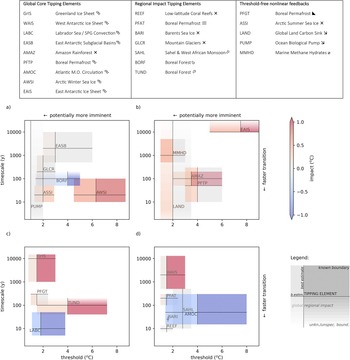
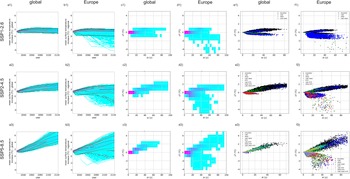

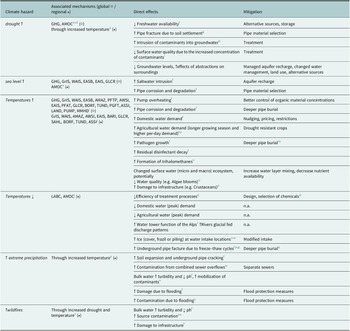
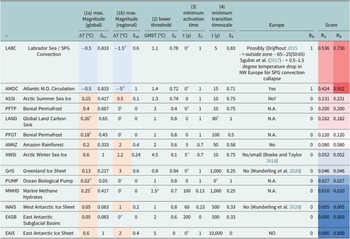
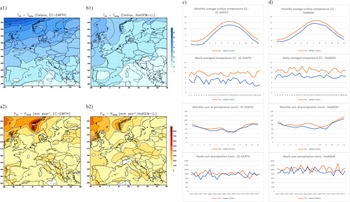


 Open access


Comments
Dear prof. Fenner,
It is our pleasure to submit our paper entitled “Climate tipping points and their potential impact on drinking water supply planning and management in Europe” for possible publication in Prisms: Water.
The paper provides a review of our current understanding of climate tipping points, the associated uncertainties, and their relevance for drinking water provision in Europe. Building on this review, we present a simple model, discuss climate model simulation results, and introduce the concept of equivalent climate conditions as tools and illustrations for water utilities to better comprehend their operating environment in a changing climate. In this, we focus in particular on the climate tipping element that we identify as the most important (urgency and magnitude): a collapse of the Atlantic Meridional Overturning Circulation.
We are of the opinion that because of its interdisciplinary nature of our paper, our contribution may appeal to a large part of Prisms: Water’s readership. It aims to provide a comprehensive review, but also offers novel results and visualizations that provide insight in a broadened range of climate conditions that may be relevant for the water sector and beyond. Our paper fits under the journal categories “Land-Water-Atmosphere Interactions”, “Climate Driven Variability, Uncertainty and Risk Assessment” and “Extreme and Compound Events” (though the latter is on a larger spatial and temporal scale than what is usually meant by this).
We recognize that our paper is relatively long, at 11000 words plus 4 elaborate figures, 3 tables, and 100+ pages of supplementary material. This is a deliberate choice. Because climate tipping points and elements appear to be beyond the field-of-view of most water sector academics and professionals, and indeed also more broadly speaking in the environmental sciences community, and because a significant amount of research has been done in this field in recent years, we have chosen to provide a relatively comprehensive review. This both forms a foundation for our own analysis and also allows the reader to better gauge the potential relevance and uncertainties of this analysis. The elaborate supplementary material allows readers from all over Europe to find illustrations of potential additional climate change scenarios for their particular region.
We thank you in advance for your consideration of our submitted article.
Yours sincerely,
Peter van Thienen, Herbert ter Maat and Sija Stofberg