





Impact Statement
This paper presents an innovative standalone smartwatch exergame that promotes physical activity through proximity-based gameplay and remote health monitoring. The system uniquely combines low-cost Internet of Things (IoT) and wearable technologies to enable location-based challenges and activity tracking without relying on GPS or smartphones. Testing demonstrated the effectiveness and accuracy of using Bluetooth Low Energy for proximity detection in diverse environments. Real-time activity syncing to the cloud allows for remote health tracking. Overall, this novel wearable exergame platform provides an accessible and engaging way to improve physical activity levels, highlighting the potential of gamification and unobtrusive wearables to positively impact health behaviors.
1. Introduction
With sedentary lifestyles becoming more prevalent, there is a need to encourage increased physical activity through innovative and engaging solutions. The prevalence of smartphones has created many unique opportunities, but there remain numerous situations where a more ubiquitous wearable solution would be beneficial. The increasing capabilities of microcontrollers and edge computing are enabling many new possibilities for small computing devices such as wearables. Gamification and wearable technologies have immense yet untapped potential to promote healthy behaviors. By eliminating the reliance on smartphones and leveraging low-cost Internet of Things (IoT) devices, this research explores how purpose-built wearable experiences can overcome adoption barriers while also enabling the monitoring of physical activity.
The technological domains of the IoT, wearable devices, and sensors have made significant progress in developing innovative solutions with exceptional user interactivity. These advancements have equipped modern applications with sophisticated features to support intricate usage scenarios and meet the demands for seamless user experiences. In the healthcare industry, there is a long-standing need to encourage an increase in users’ physical activity, given the sedentary lifestyle patterns of modern lifestyles (Park et al., Reference Park, Moon, Kim, Kong and Oh2020).
The overarching motivation is to develop an accessible exergame platform that seamlessly promotes increased physical activity through fun location-based challenges and gameplay directly on a low-cost smartwatch. GameOnEdge is a platform that consists of a stand-alone wearable device with display, sensors and gamification features based on proximity detection, which will help promote healthy lifestyles. Beside the wearable device, a network of IoT devices will be distributed around the open space for proximity detection. Each IoT device will be placed near a physical point of interest (POI), which will then detect the user’s presence in the nearby vicinity based on Bluetooth signals detected by the wearable.
Furthermore, the comprehensive solution must feature a modular design and employ low-cost readily available hardware to ensure uncomplicated implementation, seamless integration with other platforms, compatibility, and cost-effectiveness. The proposed platform for game development is based on IoT technologies, tools for advanced user engagement, and effective evaluation of users’ activity. The prototype comprises three key components: (a) an IoT-based platform for proximity detection in real time, (b) a smartwatch application for wearable devices, and (c) an external database that stores activity data from the watch in real time. This approach allows for continuous activity monitoring via a smartwatch while simultaneously incentivizing physical activity through gamification.
The use of gamification on wearable devices, for providing location-based gameplay, ease of use, and activity monitoring, involves a combination of methodologies and technologies, which is not present in the current state of research. The major contribution of the proposed platform for exergame development is that, in order to play the game and perform the various location-based operations, GPS is not required, eliminating the need for GPS availability within smartwatches, reliable and stable connectivity, and reducing the impact on battery life. The exergame has been developed using a low-cost open-source wearable device (Lilygo T-watch), thus offering ease of access and use. Players can take advantage of advanced interactivity features, monitor their physical activity during the game, and send the results for remote monitoring. The user interface delivers simplicity in a general user experience when displaying in-game real-time metrics. This example demonstrates the benefits of developing exergames on wearables for healthcare use cases, and the positive impact it can have on users’ physical activity.
The rest of the paper is structured as follows. Section 2 analyses the related research concerning location-based games, exergaming, and IoT in healthcare and assisted living scenarios. Section 3 presents the details about the architecture, system design, and implementation of the prototype. Real-time game scenarios, performance, and limitations taken from the application in real-time conditions are presented in Section 4. Section 5 explroes the limitations of the current implementation and Section 6 offers a discussion and concludes along with describing future extensions of this work.
2. Related work
Since the launch of the mobile phone, the ability to play games anywhere at any time has made them one of the most popular forms of entertainment. The main mobile gaming platforms have a huge catalog of mobile games available that are extremely complex and take advantage of many modern features.
2.1. Location-based games
By combining the augmented reality capabilities, exercise games (exergames), and location-based multiplayer features, Pokémon Go exploded onto smartphones in the summer of 2016. Many users have reported that their daily activity had increased since starting to play games such as Pokémon Go (Althoff et al., Reference Althoff, White and Horvitz2016), which shows that exergames can have a great benefit to the user’s health. In the short term, the benefits that exergames bring to users’ health are undeniable. However, for a user to maintain these health benefits for the long term, consideration of how to keep the user engaged has to be considered (Althoff et al., Reference Althoff, White and Horvitz2016). Pokémon Go is still widely played by many users, with 147 million still playing as of May 2018 and over 1 billion downloads as of May 2019, which shows that this game has successfully kept users engaged for the long term (Wang and Skjervold, Reference Wang and Skjervold2021).
While Pokémon Go is still one of the most popular location-based games, there has been a rise in the number of location-based exercise games to promote physical activity. Some of these include “World of Workout” which is a mobile exergame that detects users’ steps to play a conventional role-playing the game, completing quests by walking a specific number of steps (Doran et al., Reference Doran, Pickford, Austin, Walker and Barnes2010). Similarly, in PiNiZoRo, players had to find enemies by walking and then complete puzzle games to defeat them (Stanley et al., Reference Stanley, Livingston, Bandurka, Kapiszka and Mandryk2010) and Zombies, Run! encourages players to run in different directions in order to avoid virtual zombies (Clare, Reference Clare2014).
All of these games promote physical activity, such as walking or running, using only a smartphone app; however, they all rely on GPS, not taking advantage of advances in IoT and AI to enable new game options and increase engagement. For example, current location-based games are often focused on the game logic and the reward mechanism rather than the connection between the player and the environment, and the space around them.
Location-based games that rely purely on GPS also include more technical issues due to the limitations and inherent flaws in GPS. In one study, GPS service was problematic, particularly on the smartwatch, and required the linked smartphone to be nearby to solve the problems they were facing (Vukovic et al., Reference Vukovic, Car, Fertalj, Penezic, Miklausic, Ivsac, Pavlin-Bernardic and Mandic2016). When users were asked about their experience using “Pokémon Go,” GPS and networking issues were among the list of technical problems reported (Paavilainen et al., Reference Paavilainen, Korhonen, Alha, Stenros, Koskinen and Mäyrä2017). Since most location-based games rely heavily on GPS for location tracking, they do not link players to their local environment or key points of interest, which means the same game can be played in any place without giving the current area or venue any consideration. This demonstrates the need for utilizing new emerging technologies that can incorporate AI and IoT for proximity and context awareness, as there are currently no stand-alone wearable location-based games.
2.2. Wearable technology
Smartwatches are a wearable technology that has become increasingly popular in recent years. Although some of these wearables are capable of running standalone, most commercial wearable devices ultimately have to rely on a mobile phone and are intended to be companion devices to a mobile phone to help better monitor health, deliver notifications, and bring some basic applications to the wrist. These advances create more opportunities in several areas, including the area of gaming (Seneviratne et al., Reference Seneviratne, Hu, Nguyen, Lan, Khalifa, Thilakarathna, Hassan and Seneviratne2017). Advances in the communication technologies present on wearable devices have improved too, with most modern wearables being equipped with several different communication methods such as Wi-Fi, Cellular, and Bluetooth Low Energy (BLE) (Sun et al., Reference Sun, Zhang, Hu and Qian2018).
In terms of wearable location-based games, there is a range of gaming options available on smartwatches. Previously, six different categories for smartwatch games were drawn out, including location-based games where physical activity, GPS, and sensors are used for game progression (Asadi, Reference Asadi2020). This shows that there is the capability and demand for location-based games on wearables, considering their increasing popularity on smartphones.
The year following the launch of Pokémon Go, Niantic introduced an accessory called the Pokémon Go Plus. The Pokémon Go Plus is an optional wearable in addition to the Pokémon game that allows players to complete key game actions without the player needing to look at the mobile phone (Sablatura and Karabiyik, Reference Sablatura and Karabiyik2017). This demonstrates the benefits of a wearable approach to location-based gaming. However, the Pokémon Go Plus wearable did not embed a screen and therefore offered very little interaction or gamification. Alternatively, a location-based smartwatch application tracked people with complex communication needs, although this did not include gamification to motivate players and had to rely on a smartphone as backup as it was not capable of running independently (Vukovic et al., Reference Vukovic, Car, Fertalj, Penezic, Miklausic, Ivsac, Pavlin-Bernardic and Mandic2016).
Smartwatches provide many opportunities for healthcare monitoring with many able to monitor physical activity such as steps along with physiological data such as heart rate. However, there has been little consideration of gamifying a smartwatch experience for physical activity monitoring, with many existing health monitoring technologies requiring additional, often expensive hardware such as virtual reality headsets.
Much work has been completed on location-based and ubiquitous games since the emergence of smart mobile phones. However, our proposed system is significantly different in terms of the utilization of wearable technology to facilitate the game interaction in open space using sensors and IoT features for health monitoring. Smartwatches bring many benefits for remote health monitoring, and the addition of a gamified experience to motivate users to be more physically active presents unique opportunities.
3. System architecture
The developed platform is a form of an interactive game that challenges users to find specific locations as part of a virtual treasure hunt while also recording physical activity data. This is all achieved with the use of a wearable smartwatch. The components of the smartwatch application are responsible for overseeing the system’s operations. These components include the game controller, the Bluetooth service manager, and the physical activity manager. The primary function of the app lies within the service manager, which continually scans Bluetooth devices. The physical activity manager is responsible for collecting sensor readings, such as step counts. Finally, the game controller is responsible for managing the game logic, activating the treasure hunt feature, tracking player proximity to treasure hunt locations, logging completed activities, and maintaining a total score. Additionally, the game controller retrieves measurements from the measurement controller, displays game-related elements on the screen, and manages user interactions.
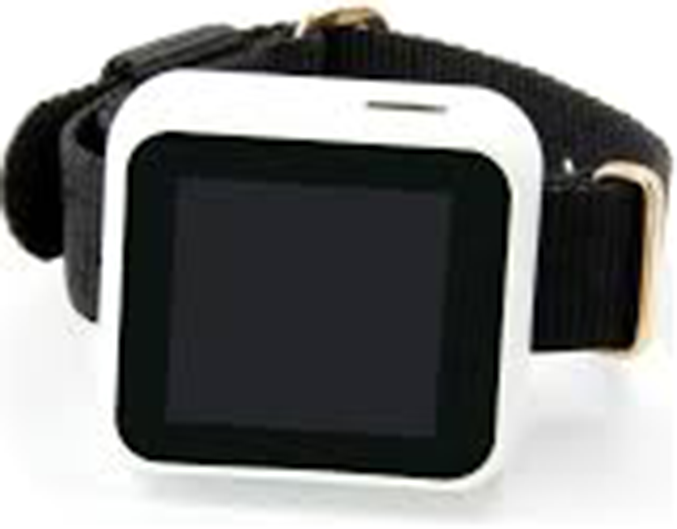
A Lilygo T-watch was selected to develop the wearable platform due to its low cost, open-source nature, and embedded functionality, including touchscreen, Bluetooth 5.0, and Wi-Fi connectivity (Figure 1). The wearable application was designed using the Arduino platform. The features are implemented through a smartwatch application that can be installed on a device that works independently of any smartphone. The app is launched automatically when starting the smartwatch, and during the game, the smartwatch continuously scans for POI using Bluetooth.
Lilygo T-watch.
The main functionalities of the game platform are implemented in the smartwatch application. The proposed solution includes a framework for the development of quests and challenges exploiting ready-to-use game elements and functionalities. The game entails several locations for players to discover, each with varying types and levels of difficulty, and upon locating each site, players receive points that reflect the gamification concept. Notably, these parameters can be customized for each game location, taking advantage of the unique POI that different venues offer. The gameplay offers a number of unique characteristics:
-
• Gamification—The player earns a point each time they find one of the treasure hunt locations.
-
• Remote monitoring—Step count and game progress data are transmitted to a real-time database for remote monitoring.
-
• Game personalization—Gameplay is adapted to the venue and local place features.
-
• Works indoors and outdoors—Using BLE for localized proximity detection allows the game to function in all environments.
Overall, the system consists of three components, which are discussed in the following sections: (A) the game development framework that runs on smartwatches, (B) the real-time database for remote healthcare monitoring, and (C) the IoT platform that provides real-time proximity detection to activate gameplay.
3.1. Gameplay
The aim of the game is to connect users with their local environment while also promoting physical activity through the use of gamification. The game offers a proximity-based treasure hunt experience to the user combined with real-time step indicators. The goal of the game is to walk around the area to try and find all of the hidden treasure hunt locations. This is aided by on-screen representations of the location to visit along with visual indications of how far the player is from the location, as shown in Figure 2. As users walk closer to one of the treasure hunt locations, the background color of the screen will change from red to amber to green, allowing users to quickly glance at the watch to understand their relative proximity to the next location. There is no specific order in which users must find the treasure hunt locations, and not all locations need to be found in a single gaming session, ensuring the game can be played repeatedly. Furthermore, the treasure hunt locations can be simply changed by moving the Bluetooth beacon, allowing the game to be regularly updated. We envision the game being utilized in large areas such as local parks and in unfamiliar locations such as a university campus to gamify the experience of showing new students around the campus.
The developed wearable game showing different locations to visit along with score and step count and the final game completion screen.

3.2. Physical activity monitoring
A core part of the system is the cloud platform for the storage of the game results and physical activity metrics. The smartwatch records the user movements and steps, storing all of the data locally, while at the same time, indicating the results live on the watch screen.
Once the user reaches one of the treasure hunt locations, all recorded data (step count, number of locations visited, and timestamp) are automatically uploaded to the real-time database for remote monitoring. The use of metrics allows for care professionals to remotely assess different parameters of users’ physical health over time, enabling trends to be established.
3.3. Proximity detection
A vital aspect of the application is the ability to wirelessly scan for nearby Bluetooth beacons and calculate their approximate distance (Figure 3), enabling the app to understand when a treasure hunt location has been found. The developed smartwatch application uses the following RSSI equations to calculate the distance the player is from the nearby BLE beacons.
BLE smartwatch system schematic.

Suppose that the distance estimation is based on M samples of $ {RSSI}_{k,i} $
, which represents the ith RSSI sample measured by the kth the receiver node. For getting a good performance, the median value of
$ {RSSI}_{k,i} $
, which represents the ith RSSI sample measured by the kth the receiver node. For getting a good performance, the median value of $ {RSSI}_{k,i} $
is used to obtain the distance estimate:
$ {RSSI}_{k,i} $
is used to obtain the distance estimate:
 $$ {d}_k=10\left(\frac{A_k-{RSSI}_K}{10^{\ast }{n}_k}\right), $$
where $ {RSSI}_k $
is the median RSSI value measured by the kth and the receiver node is given by
$ {RSSI}_k $
is the median RSSI value measured by the kth and the receiver node is given by
 $$ {RSSI}_k= MEDIAN\left({RSSI}_{k,i},i=1,\dots, M\right). $$
Once a location is detected, the approximate distance can be measured. The distance of propagation path loss show the channel fading characteristic follows a lognormal distribution. Thus, the instant RSSI distance measurement generally uses the logarithmic distance path-loss model and the propagation model that reveals the corresponding relationship between distance and RSSI can be expressed as Equation (3.3) (Faragher and Harle, Reference Faragher and Harle2015):
 $$ RSSI=-10 nlog\left(\frac{D}{D_0}\right)+A+{X}_{\sigma }, $$
Where RSSI is a dependent variable of the received signal strength indication, D is the estimated distance between the transmitter and the receiver, and n is a path-loss parameter related to the specific wireless transmission environment. The more obstacles there are, the larger n will be. A is the RSSI with distance $ {D}_0 $
from the transmitter, which is a constant value.
$ {D}_0 $
from the transmitter, which is a constant value. $ \sigma $
is a parameter representing the path loss exponent while
$ \sigma $
is a parameter representing the path loss exponent while $ {X}_{\sigma } $
is a Gaussian-distribution random variable with mean 0 and variance
$ {X}_{\sigma } $
is a Gaussian-distribution random variable with mean 0 and variance $ {\sigma}^2 $
. For the convenience of calculation,
$ {\sigma}^2 $
. For the convenience of calculation, $ {D}_0 $
usually takes a constant value. Since
$ {D}_0 $
usually takes a constant value. Since $ {X}_{\sigma } $
has a mean of 0, the distance-loss model can be obtained expressed as Equation (3.4):
$ {X}_{\sigma } $
has a mean of 0, the distance-loss model can be obtained expressed as Equation (3.4):
 $$ RSSI=-10{n}_k\mathit{\log}\left({d}_k\right)+{A}_k, $$
where $ {d}_k $
is the distance from the unknown transmitter node to the kth the receiver node, and
$ {d}_k $
is the distance from the unknown transmitter node to the kth the receiver node, and $ {A}_k $
and
$ {A}_k $
and $ {n}_K $
are the model parameters of the kth receiver node.
$ {n}_K $
are the model parameters of the kth receiver node. $ {A}_k $
is the measured RSSI when the received node is a fixed distance away from the transmitting node. The
$ {A}_k $
is the measured RSSI when the received node is a fixed distance away from the transmitting node. The $ {n}_k $
parameters are relevant with the wireless transmission environment which can be obtained through the optimization of many experimental measurements.
$ {n}_k $
parameters are relevant with the wireless transmission environment which can be obtained through the optimization of many experimental measurements. $ {A}_k $
depends on the transmitting power of Bluetooth. Ideally,
$ {A}_k $
depends on the transmitting power of Bluetooth. Ideally, $ {A}_k $
should be determined by specifying one of the Bluetooth signals.
$ {A}_k $
should be determined by specifying one of the Bluetooth signals.
Accurately calculating the relationship between RSSI and distances using the logarithmic distance loss model due to complex environments is extremely difficult for researchers (Subhan et al., Reference Subhan, Khan, Saleem, Ahmed, Imran, Asghar and Bangash2022). Therefore, there are several methods for modeling the RSSI with the most accurate distances based on any application system. However, several applications do not require a high accuracy localization, but need area-based localization. Similarly, this article does not require the actual position of the tracked object but rather ensures that the smartwatches are within a certain range of the POI.
4. Experimental study
4.1. Methodology
A total of seven participants were recruited to complete the game finding six different locations using the same smartwatch and the same BLE beacons. Participants repeated the game in six different conditions: indoors with limited interference, indoors with high pedestrian traffic, indoors with high BLE traffic, outdoors with limited interference, outdoors with high pedestrian traffic, and outdoors with high BLE traffic. While playing the game in different environments, the distance the wearable detected the BLE beacon was measured to explore the impact pedestrian and building interference has on the gameplay.
4.2. Results
The developed smartwatch application demonstrates an exergame that is capable of running entirely independently on a smartwatch, not requiring a connected smartphone like many commercial smartwatches. This section outlines the key performance indicators when testing the watch playing the game.
4.2.1. Bluetooth
Accurate Bluetooth performance is vital for the developed gaming platform to find the POI and enable the virtual treasure hunt. Table 1 shows the average Bluetooth performance results of the indoor gaming sessions with limited interference measured at 1 m and 4 m distance from the POI after 5 s. The RSSI equations, described previously in Section 3.3, were used to estimate distances based on the measured signal strengths during testing.
Bluetooth RSSI and distance at 1 m and 4 m intervals across five indoor locations with limited interference, using the developed wearable gaming platform

The results demonstrate that Bluetooth measurement is not reliable for accurate distance measurement even with little interference as the accuracy widely varies even though all locations are indoors with similar surroundings. However, it is possible to measure approximate distances such as 1–2 m and 3–4 m. There is significantly more variance at 1 m compared with 4 m showing small distances are more difficult to reliably measure. For the developed game on the smartwatch, precise measurement is not required; instead, it is only required to ensure the user has visited the location (~4 m), which can be reliably achieved using BLE.
Further experiments were conducted to explore the impact on different environmental conditions on the RSSI signal. The experiments explored the impact of indoor and external conditions without artificial interference, high BLE traffic where numerous BLE devices were placed between the wearable and beacon, and finally pedestrian traffic where people continuously walked between the wearable and the beacon. Figure 4 shows the difference in performance for BLE and pedestrian interference both indoors and outdoors. The test was conducted similar to the initial test with the RSSI measured at 1 m and 4 m distances at the six different conditions. The results show that outdoor and indoor environments have a significant impact on the RSSI value at both 1 m and 4 m distances. At a 1 m distance, the received signal strength was stronger in the outdoor conditions, whereas at 4 m, the received signal strength was stronger in the indoor conditions. This may be because there is more potential for interference outdoors such as weather and obstacles when measuring over larger distances. Surprisingly, pedestrian or BLE traffic had very little impact on the signal strength, with the largest variation being outdoor BLE interference. The largest variation was indoor pedestrian traffic which increased the RSSI value by 18.2% with all other interferences having less than 10% impact on distance accuracy. The BLE and pedestrian traffic had an average accuracy impact of 1.6% at 1 m and 4.7% at 4 m showing that while interference increases as the distance increases, it has little impact on overall accuracy.
RSSI (dBm) values across six different conditions at 1 m and 4 m distances.

4.2.2. Battery
The total battery life was calculated by initially fully charging the watch, followed by playing the game across five locations until the battery dies. Battery life ranged from 1:04:00 to 1:08:16, showing consistently high battery life of over 1 hour. The battery life is not impacted by the number of BLE beacons as the wearable is continuously scanning for BLE devices. It is possible to increase battery life by reducing the frequency of the BLE scanning, but this results in worse game performance as the wearable takes longer to detect locations even when nearby. Small battery lifetime is a major limitation of small wearable devices, especially when continuously scanning for nearby BLE beacons. However, the ability for the watch to last over an hour provides sufficient time to promote physical activity in line with recommendations (National Health Service, 2018). Overall, BLE has helped to improve battery performance in comparison with more battery intensive solutions such as GPS while still enabling location-based wearable gaming.
In comparison, the battery life of the BLE beacons to enable the proximity detection is up to 8 years depending on the power transmission and advertising interval. We used a radio power of +4 dBm and an advertising interval of 800 ms, which provides a good balance of responsiveness and battery life, which is around 2 years of continued usage. Once the battery is depleted, the beacon allows for the easy replacement of standard batteries, simplifying the process of resuming functionality.
4.2.3. Physical activity monitoring
The step count was manually measured and compared with the step count displayed on the watch. The step count was measured five times playing the game across five locations, with results ranging from 96.7% of the measured step count, showing a slight underrepresentation, to 104.9% of the true step count, showing a slight overrepresentation. The overall step count had an average accuracy of 101.2%. This demonstrates the step counter built into the game is sufficiently accurate and can be used for reliable measurement of physical activity.
5. System limitations
Various factors affect the performance of the game, although they do not affect the gameplay to a significant extent. While not severely limiting core gameplay functionality, the following factors indicate opportunities for continued refinement of the wearable exergame platform through future work. Addressing aspects such as expanded beacon support, battery optimization, and tutorial design would further improve the overall player experience and health benefits.
5.1. Display
The small 1.3″ display on the Lilygo T-watch presented challenges in displaying detailed game graphics or extensive tutorial instructions. To provide an intuitive user experience within the screen space, simple color changes and icon representations were used to indicate proximity and locations. However, additional tutorial content may be necessary for first-time users to understand this non-textual guidance. Future iterations could investigate minimalist graphical tutorials optimized for tiny wearable displays.
5.2. Offloading tasks
By introducing a novel stand-alone wearable game, we are demonstrating the growth and possibilities of the wearable technology. For example, one area of growth was the little processing power available to wearable devices because of their small footprint. To help resolve this limitation, methods of how to offload heavy computational tasks to either the paired mobile or to a server could be used, but this can increase latency and therefore the overall time it takes to achieve the task. We successfully implemented the game solely on the wearable device, negating any need for additional hardware, making the game more accessible to those without smartphones, such as children, while also making the game easier to view and use in real-world environments. However, we did encounter limitations when scanning for numerous BLE beacons simultaneously, resulting in limiting the total number of locations.
5.3. Physical device constraints
Wearables are limited due to their size and what they can offer. For example, all of the mainstream smartwatches do not embed a camera, as placing a camera on a small form factor is challenging based on size constraints and difficulties placing it in an optimal position to give the best results. The exclusion of additional sensors, such as a camera, limits potential game options. However, by making the game passive, whereby users do not need to actively interact with the screen or additional sensors it makes the game simpler to use in real-world environments.
5.4. Wearable power
The smartwatch battery life of 1 hour limited continuous gameplay time. A benefit of not having consistent companion communications and GPS communication in this game means that the battery is capable of lasting longer, which would be required considering the consistent BLE scanning required for the game. The constant BLE scanning and frequent display updates for game graphics were the primary battery drain factors. Optimizing the scanning duty cycle and reducing unnecessary interface updates could extend the playable time per charge. However, even with current battery life, gameplay sessions exceeded most standard daily exercise recommendations of around 30 min (National Health Service, 2018). Longer-term deployments would need to consider typical smartwatch charging patterns to ensure availability throughout the day.
Some wearables do not have an interactive screen and they therefore have much more battery life in comparison to other smartwatches that do have screens. One of the most power-consuming items on wearables and smartphones is powering a display. Research shows that battery life of wearables is significantly greater in those without interactive screens (Liang et al., Reference Liang, Xian, Liu, Fu, Zhang, Tang and Lei2018). These screens are much smaller than their mobile phone counterparts, but so is the battery powering these devices. However, the screen is necessary aspect of the developed exergame to inform users of their proximity to the locations while also offering additional context such as step count.
5.5. BLE proximity detection
Frequent BLE scanning for multiple beacons caused some instability in the proximity detection accuracy. In testing, measured distances varied from 60 to 120% of the actual distance at a 1-m separation between the wearable and BLE beacons. This variability arose from interference between concurrent advertising from multiple beacons. To mitigate this, the beacons were placed over 20 m apart, and median RSSI values were used to calculate proximity. While this allowed general positioning, more robust statistical filtering techniques could improve stable accuracy under dense beacon deployments.
There are many factors that can affect Bluetooth’s received signal strength, including (i) emission power, (ii) emitting device antenna path, (iii) fight path, (iv) receiving device antenna path, and (v) receiver sensitivity. The first two are tied to the emitter and the last two are tied to the receiver. The middle one is tied to what happens between the two. However, research has found that the greatest signal attenuation and variation was caused by pedestrian traffic blocking the line of sight between transmitter and receiver, which is something to consider when placing the Bluetooth beacons for the treasure hunt (Kwok et al., Reference Kwok, Wong, Griffiths, Wong, Kam, Chin, Xiong and Mok2020). High temperature and strong winds also caused minor discrepancies to the signals, whereas trees and nearby vehicle traffic did not have any negative effects on the signals (Kwok et al., Reference Kwok, Wong, Griffiths, Wong, Kam, Chin, Xiong and Mok2020). This highlights the importance of the placement of the BLE beacons for the treasure hunt locations. However, as beacon detection is only required within a large area (~4 m2) for the exergame rather than accurate measurement, this is not a major limitation.
6. Discussion
In this section, we discuss the inspirations we took from GameOnEdge and the future directions enabled by this new wearable gaming experience. In this work, we proposed a location-based game to promote physical activity that exploits low-cost edge devices in the form of wearables and proximity detection to offer an engaging gaming experience in open spaces while also enabling the remote monitoring of physical activity. Unlike other serious games for health (Gentry et al., Reference Gentry, Gauthier, Ehrstrom, Wortley, Lilienthal, Car, Dauwels-Okutsu, Nikolaou, Zary, Campbell and Car2019), this platform uses technologies that eliminate the need for extra and expensive equipment, such as smartphones, screens, and so forth, while simultaneously monitoring important aspects of users’ physical health.
The game was successfully implemented on a low-cost, open-source smartwatch and was capable of detecting the Bluetooth-based POI automatically in order to gamify physical activity through an interactive treasure hunt. This is the result of a software configuration that seamlessly merged the virtual gaming world with the physical environment and local POI. While BLE-based gaming has been utilized before (Nilsson et al., Reference Nilsson, Blackwell, Hogsden and Scruton2016a; Vavoula et al., Reference Vavoula, Placeholder TextTseliou and Tsiviltidou2019; Kanjo and Woodward, Reference Kanjo and Woodward2023), previous works have always used smartphones rather than wearable devices, that offer a more ubiquitous gaming experience. This wearable approach allows for a user-friendly experience where the screen is continuously updated to show relative location to nearby POI through simple colors and on-screen representations of locations, enabling the platform to be used easily by any user, not only by tech-savvy people.
Many smartwatches do not embed GPS for location monitoring; therefore, BLE was used for real-time proximity detection that additionally helps improve battery life, which is a frequent limitation with wearables. By utilizing a wearable device rather than a smartphone or similar device, it ensures the game is easy to play in the real world as users simply have to glance at their wrist for a quick visualization of their proximity to the next treasure hunt location. Smartphone apps that promote physical activity can become distracting and difficult to use in the real world, making low-cost wearables an ideal solution (Niemiec et al., Reference Niemiec, Wagas, Vigen, Blanchard, Barber and Schoenhals2022).
The gamification element on a smartwatch to promote increased physical activity is a unique proposition, with previous research focusing solely on the use of wearable technologies to monitor fitness (Neupane et al., Reference Neupane, Hansen, Sharma, Fails, Neupane and Beutler2020). While games have been developed for smartwatches, they have not focused on improving fitness, even though wearable platforms are ideal for this due to their continuous activity monitoring (Williams et al., Reference Williams, Nurse and Creese2019; Asadi, Reference Asadi2020). Furthermore, previous BLE-based smartphone games have mostly focused on educational content, such as for use within museums, rather than promoting and monitoring physical activity (Nilsson et al., Reference Nilsson, Blackwell, Hogsden and Scruton2016a, Reference Nilsson, Hogsden, Perera, Aghaee, Scruton, Lund and Blackwell2016b).
An additional benefit of the proposed solution is the integrated connection with a wearable device that tracks users’ health data, thereby offering a comprehensive overview of their physical condition during gameplay. While the amalgamation of gamification and IoT is not novel, the integration of serious wearable games within the healthcare sector remains infrequent (Alla and Nafil, Reference Alla and Nafil2019). This novel feature distinguishes the proposed solution, presenting an off-the-shelf environment for gamifying local areas without relying on a smartphone and integrating IoT as a fundamental aspect. Consequently, the proposed solution provides a holistic approach that enables users and healthcare professionals to effectively collaborate toward the monitoring and improvement of physical activity.
The results shown in Table 1 demonstrate the capability of the developed platform to accurately detect BLE beacons with enough accuracy for the gamified experience, as similarly demonstrated by previous work (Jeon et al., Reference Jeon, She, Soonsawad and Ng2018), precisely measure step count (101.2% accuracy), and have sufficient battery life to play the game (~1 h). Along with cutting-edge technological benefits, core reasons as to why users will be motivated to play the game involve its nature and the gameplay experience. The game scenarios and the multiple possible game implementations have been developed to attract users. In addition, the game implementation and the design of the treasure hunt provide further motivation for using the system, since it is tailored to the user’s particular location. This motivation is the goal of using the system and results in an increase in the users’ physical activity through the gamification of finding new locations.
The proposed system includes a real-time database connection that enables healthcare professionals to continually monitor users during physical activity and provide timely feedback. Alongside the activity monitoring capability, this system has the potential to be a pleasant and motivating experience for users, owing to the gamification techniques employed, such as earning points for locating different POIs. The aforementioned aspects are the main novel contributions of this work, which are not currently available as part of a single offering. The proposed solution brings together unique sets of technologies and features for gamification using wearable technology and IoT in the healthcare domain.
In summary, this platform utilizes IoT, wearable, and cloud technologies by proposing a platform that, aside from being a physical activity exergame, also monitors the user’s current physical activity and game progress for remote monitoring. Furthermore, it is hardware independent and may operate on a number of Arduino-based microcontrollers and wearables, thus maintaining very low ownership costs. Overall, the proposed platform can motivate users to be more physically active through gamification, offering a unique way to improve health without requiring a smartphone.
In the future, it would be beneficial to continue exploring the capabilities of AI on wearable devices. It can be argued that the use of machine learning on devices has become more viable as wearables, such as smartwatches, become more capable (Ray, Reference Ray2022). On the other hand, previous studies have demonstrated that the use of machine learning directly on the wearable, but this could prove challenging in the gamified context using resource-constrained devices (Qaim et al., Reference Qaim, Ometov, Campolo, Molinaro, Lohan and Nurmi2021).
7. Lessons learned
This research highlighted several key learnings regarding the development of a stand-alone wearable exergame platform using BLE for proximity detection:
-
• The wearable form factor provides unique advantages for exergame design compared to smartphones. The smartwatch interface enabled real-time activity monitoring through a glanceable display and passive proximity detection without distracting users from their environment. This facilitated a more seamless exergame experience.
-
• BLE proved effective for proximity detection in the wearable gaming context, with accuracy rates of 60–120% for 1 m distances and −10% to −27.5% for 4 m distances. Despite some variance, this allowed reliable detection of general proximity zones. BLE achieved this without relying on power-intensive GPS required by most location-based games.
-
• The customizable, low-cost nature of the Arduino-based platform makes exergames accessible to a wider audience. The hardware-independent design also allows flexibility in selecting wearable devices. This could enable broader adoption of wearable exergames in healthcare.
-
• Real-time activity data tracking and cloud integration provide healthcare professionals with valuable insights into patient engagement and progress. In testing, the step count accuracy averaged 101.2%, enabling precise activity monitoring.
-
• Gamification techniques such as points, incentives, and location-based challenges, effectively motivated physical activity in testing.
In conclusion, this research demonstrated the feasibility of a standalone smartwatch exergame leveraging BLE and cloud connectivity to promote physical activity through engaging gameplay and remote health monitoring. User studies validated the real-world effectiveness of this novel approach.
Author contribution
Conceptualization: K.W., E.K., W.P., B.P.; Evaluation/Experiment: K.W., W.P.; Methodology: K.W., W.P.; Software: K.W., W.P.; Writing—original draft: K.W., E.K., W.P., B.P.; Writing—review and editing: K.W., E.K., W.P., B.P. All authors approved the final submitted draft.
Data availability statement
The datasets generated during the testing of the wearable gaming platform contain Bluetooth RSSI values and game metric data. These minimal datasets are not sufficiently meaningful or comprehensive to warrant public archiving. Any additional inquiries can be directed to the corresponding author.
Competing interest
The authors declare none.
Funding statement
This research was supported by grants from the Department for Digital, Culture, Media & Sport.
Ethical standard
The research meets all ethical guidelines, including adherence to the legal requirements of the study country.


 Open access


Comments
No Comments have been published for this article.