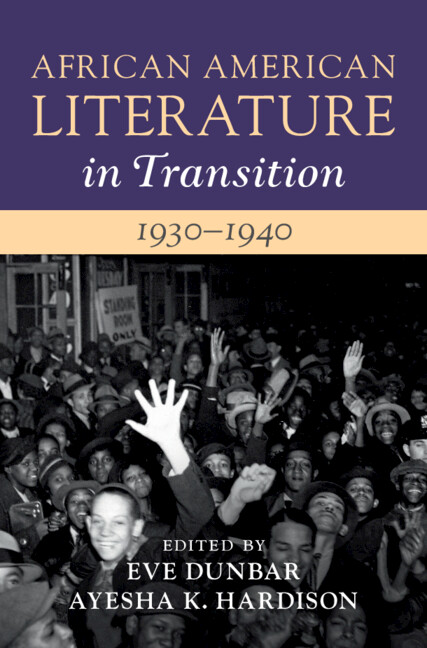

The volume explores 1930s African American writing to examine Black life, culture, and politics to document the ways Black artists and everyday people managed the Great Depression's economic impact on the creative and the social. Essays engage iconic figures such as Sterling Brown, Langston Hughes, Zora Neale Hurston, Dorothy West, and Richard Wright as well as understudied writers such as Arna Bontemps and Marita Bonner, Henry Lee Moon, and Roi Ottley. This book demonstrates the significance of the New Deal's Works Progress Administration (WPA), the Communist Party of the United States (CPUSA) and Black literary circles in the absence of white patronage. By featuring novels, poetry, short fiction, and drama alongside guidebooks, photographs, and print culture, African American Literature in Transition 1930-1940 provides evidence of the literary culture created by Black writers and readers during a period of economic precarity, expanded activism for social justice, and urgent internationalism.
‘… an important collection that helps us rethink the presumptions about an artistically thriving decade in African American literary history.’
Jesse Cook Source: MELUS
Loading metrics...
* Views captured on Cambridge Core between #date#. This data will be updated every 24 hours.
Usage data cannot currently be displayed.
This section outlines the accessibility features of this content - including support for screen readers, full keyboard navigation and high-contrast display options. This may not be relevant for you.
Accessibility compliance for the PDF of this book is currently unknown and may be updated in the future.
