


The long history of Hungarian twin studies dates back in the 1970s and 1980s when Andrew Czeizel and Julia Metneki developed three different databases: the Budapest Twin Registry, a volunteer adult twin registry, and the Hungarian Congenital Abnormality Registry (Littvay et al., Reference Littvay, Metneki, Tarnoki and Tarnoki2013). In 2006, Adam Tarnoki, David Tarnoki and Levente Littvay began an effort to revive the Hungarian Twin Registry (HTR) with the help of Julia Metneki. Based on the previous available twin contact data, classical twin studies have been launched on the active core group of 310 twin-pairs (Littvay et al., Reference Littvay, Metneki, Tarnoki and Tarnoki2013). Media reports helped to raise attention toward these studies, which contributed to the significant increase in the membership. Research focused mainly on cardiovascular and respiratory health (Littvay et al., Reference Littvay, Metneki, Tarnoki and Tarnoki2013). During the international twin study project, the core team grew as a twin participant, Dora Melicher, became involved in twin research and became a productive contributor and leadership board member of the HTR team. Since the last report on the HTR in Twin Research and Human Genetics, this team worked on the expansion of the HTR to a population-based one. The team now reports the progress of this project, the launch of the population-based twin registry in Hungary and additional future plans.
Current Voluntary Registry: Increasing Size
The HTR increased its sample size thanks to the continuous media presence, and currently involves 1044 twin-pairs of all age groups (50% monozygotic [MZ], 50% dizygotic [DZ], 70% women, average age 34 ± 22 years), including 24 triplets and 1 quadruplet from the entire country. Zygosity is assessed with multiple questions and latent class analysis in line with the recommendations of Heath et al. (Reference Heath, Nyholt, Neuman, Madden, Bucholz, Todd and Martin2003).
Since the last review in Twin Research and Human Genetics, nearly 50 papers have been published. The largest twin studies in this period included the GLOBAL study (2013 and 2014; Maurovich-Horvat et al., Reference Maurovich-Horvat, Tarnoki, Tarnoki, Horvath, Jermendy, Kolossvary and Merkely2015) and sleep study (2014–2019) (Szily et al., Reference Szily, Tarnoki, Tarnoki, Kovacs, Forgo, Lee and Bikov2019), while the analysis of the results of the International Twin Study 2009 (2009–2010) was still in progress (Tarnoki, Baracchini et al., Reference Tarnoki, Baracchini, Tarnoki, Lucatelli, Boatta, Zini and Schillaci2012; Tarnoki, Tarnoki et al., Reference Tarnoki, Tarnoki, Stazi, Medda, Cotichini, Nistico and Schillaci2012; Tarnoki, Tarnoki, Horvath et al., Reference Tarnoki, Tarnoki, Horvath, Metneki and Littvay2013). Since 2013, respiratory health-related studies have also been published (Szily et al., Reference Szily, Tarnoki, Tarnoki, Kovacs, Forgo, Lee and Bikov2019; Tarnoki, Tarnoki, Lazar et al., Reference Tarnoki, Tarnoki, Lazar, Medda, Littvay, Cotichini and Horvath2013; Tarnoki, Tarnoki, Medda et al., Reference Tarnoki, Tarnoki, Medda, Littvay, Lazar, Toccaceli and Horvath2013).
Between 2009 and 2015, a 4-year-old follow-up study of 214 MZ and 154 DZ Hungarian and Italian twins was performed, during which we examined the longitudinal changes of the atherosclerotic and antropometric markers (Pucci et al., Reference Pucci, Tarnoki, Medda, Tarnoki, Littvay, Maurovich-Horvat and Stazi2018; Tarnoki, Tarnoki, Molnar et al., Reference Tarnoki, Tarnoki, Molnar, Berczi, Garami and Karlinger2013). Among the imaging methods, twins were subjected to state-of-the-art examinations that used brain magnetic resonance imaging (MRI, e.g., diffusion tensor imaging), transcranial Doppler (TCD) tests and ultrasound measurements with new software (liver and thyroid elastography, arterial analysis). Additionally, we carried out the first twin studies examining the telomere-telomerase system and involving the investigation of telomere-mitochondria interplay (Melicher et al., Reference Melicher, Illes, Pallinger, Kovacs, Littvay, Tarnoki and Falus2018, Reference Melicher, Illés, Littvay, Tárnoki, Tárnoki, Bikov and Falus2019).
With our current twin study, accurate measurements of carotid and femoral plaque volume, automatic intima–media thickness (IMT) and local stiffness parameters are performed to characterize the relationship between different phenotypes of atherosclerosis with molecular biology markers (telomere length, mitochondrial DNA copy number, extracellular vesicles, gut microbiome), to find out about their epigenetic mechanism. Examination of MZ twins discordant for cardiovascular disease can help our understanding of how genetic and environmental effects contribute to their radiological appearance. Imaging genetics is an integrated research method that combines imaging and genetics to assess the impact of genetic variations on various phenotypes. MZ twins discordant for a chronic disease are unique tools for genomic, epigenomic, and transcriptomic studies combined with imaging (MRI, computed tomography) in an integrative manner from this perspective. This is referred to as radiogenomics or imaging genomics in cancer discordant twins, that is, the study of relationship between imaging phenotypes and genomics (Mazurowski, Reference Mazurowski2015). In addition, imaging epigenetics — which is a multidisciplinary field combining imaging and epigenetics — is capable of answering whether different imaging phenotypes covary and predict epigenetic modifications that are related to the structure, function and metabolism of organs (e.g., vascular), which affect the risk and progression of disease (Lancaster et al., Reference Lancaster, Morris and Connelly2018).
There are many Hungarian institutes and research groups working together with us, among which the examination of dental, writing analysis and linguistics are of particular importance.
The list of the currently available parameters collected from the Hungarian twins is shown in Table 1.
Variables collected from the Hungarian twins in the past and plans for future data collection
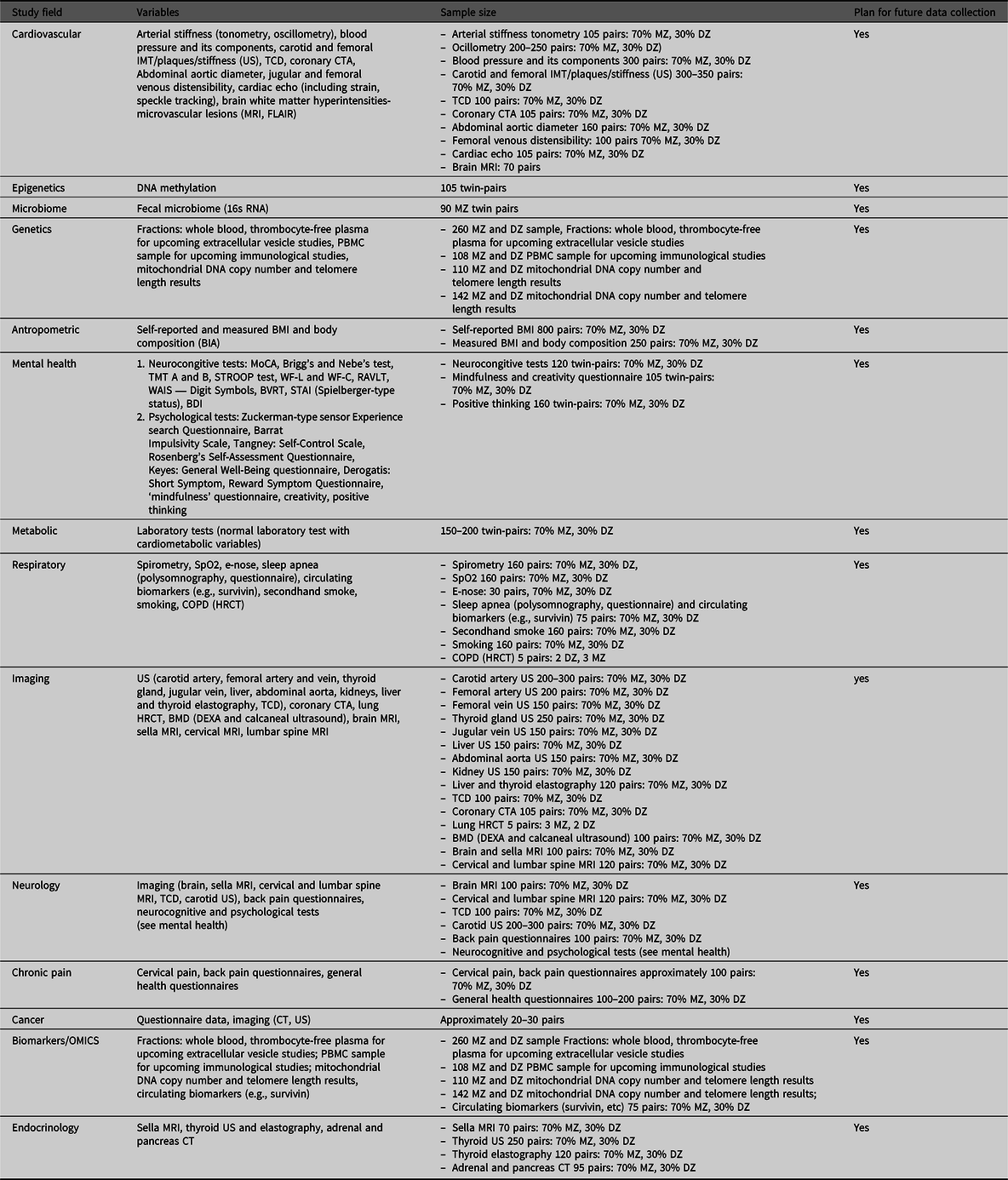
BDI = Beck Depression Inventory, BIA = bioelectrical impedance analysis, BMD = bone mineral density, BMI = body mass index, BVRT = Benton Visual Retention Test, COPD = chronic obstructive pulmonary disease, CT = computed tomography, CTA = computed tomography angiography, DEXA = dual-energy X-ray absorptiometry, DNA = deoxyribonucleic acid, DZ = dizygotic, FLAIR = Fluid Attenuated Inversion Recovery, HRCT = high-resolution computed tomography, IMT = intima–media thickness, MoCA = Montreal Cognitive Assessment, MRI = magnetic resonance imaging, MZ = monozygotic, OMICS = radiomics, genomics, epigenomics, metabolomics, transcriptomics, PBMC = peripheral blood mononuclear cell, RAVLT = Rey-Osterreich Auditory Verbal Learning Test, RNA = ribonucleic acid, SpO2 = oxygen saturation, STAI = State-Trait Anxiety Inventory, TCD = transcranial Doppler, TMT = Trail Making Test, US = ultrasound, WAIS = Weschler Adult Intelligence Scale, WF-L = word fluency with the letter, WF-C = word fluency with category naming.
Professional and Academic Activities
The HTR served as a local host of the Joint 3rd World Congress on Twin Pregnancy & 15th ISTS International Congress in Budapest, November 16–19, 2014. Moreover, we hosted the ISTS Twin Registries’ Networking Meeting between 15 and 16 April, 2019, at Semmelweis University, Budapest, which served as a platform for discussion about future collaborations on retrospective and prospective studies among twin registries.
The HTR collaborated not only with Hungarian institutes but also with foreign twin researchers. The most active collaboration is with the Italian, Osaka, South Korean (Healthy Twin Study) and the Australian twin registries. The Italian Twin Registry was helpful in providing support with statistical analyses. To acknowledge their help, Maria Antonietta Stazi was recommended to be elected the Doctor Honoris Causa of Semmelweis University, which was approved in 2018.
In the past years, active exchange programs and joint research activities have been conducted with the financial support of the bilateral Erasmus+ Exchange Program. The program provided a platform to collaborate with Seoul National University (Prof Dr Joohon Sung; 2-2 instructors, 4-4 PhD students, 2016–2018) and the Methodist DeBakey Heart and Vascular Center, Houston, Texas, USA (Dr Zsolt Garami; 1-1 instructor, PhD student 2-2, 2016–2018) and the Osaka University (Ass Prof Chika Honda, Prof Dr Norio Sakai; 2-2 teachers, 2-2 instructors, 4-4 PhD students exchange, 2018–2020), as well as with the University of Sydney (Ass Prof Dr Paulo Ferreira, 2-2 instructors, 2018–2020).
The increasing interest in the HTR resulted in dozens of student scientific researchers pursuing twin studies for their diploma work and seven PhD students (Bianka Forgo finished in 2019) working in twin research on Hungarian twins.
Population-Based Twin Registry
The HTR is undergoing transformation to a population-based twin registry, which provides a unique opportunity to become the largest twin research center in the Central and Eastern European region. The large database will allow us to perform world-class, modern genetic research. Comparing the imaging traits, molecular biology markers, genome, epigenome and microbiome of the discordant MZ twins for a chronic disease can unravel the specific biomarkers.
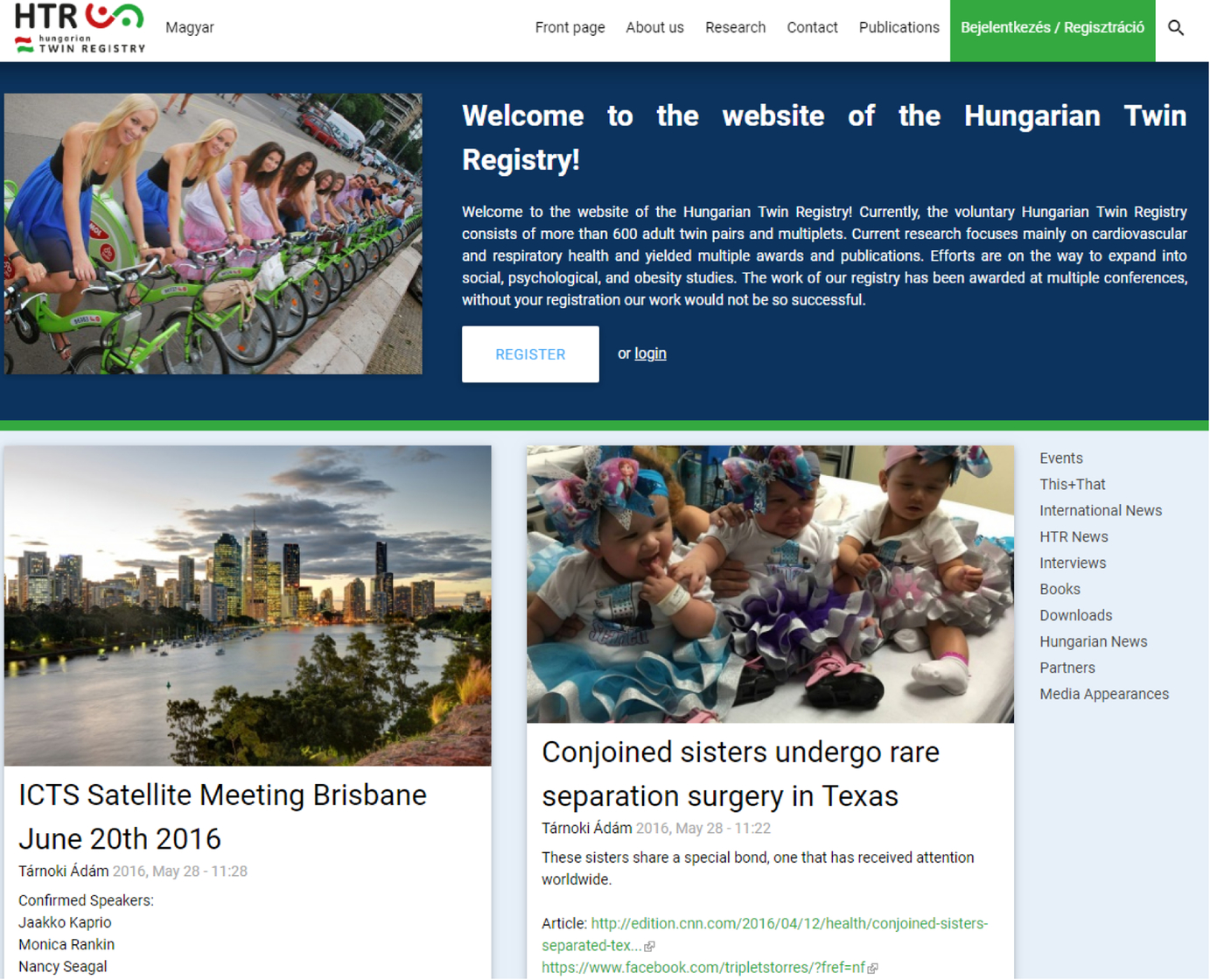
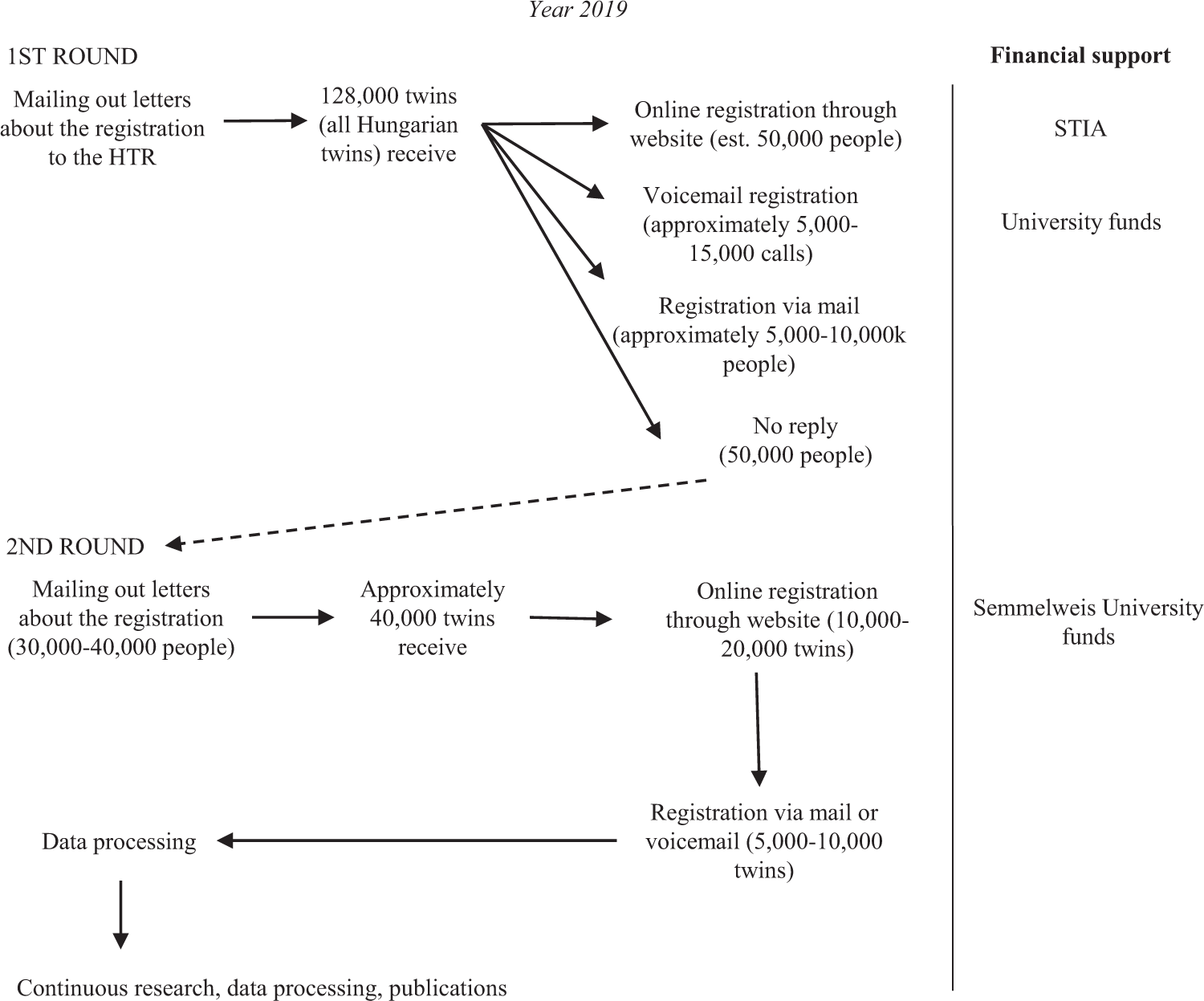
The population-based twin registry will be established with the support of the Semmelweis University. All twin-pairs living in Hungary (ca. 128,000 individuals) will be contacted by mail in 2019 (Figure 1), requesting them to register online by filling out a detailed questionnaire. The infrastructure (e.g., refrigerators, document recognition, data capture, language processing softwares, document scanners, telephone system for twin registrations) is ready to use. Thanks to Semmelweis University’s innovation application (Semmelweis Tudományos és Innovációs Alap, STIA), we have finalized the data protection licenses after lengthy negotiations with the Hungarian National Authority for Data Protection and the Freedom of Information Authority. The administrative material related to twin research and a new website (www.ikrek.semmelweis.hu; Figure 2) have been completed, and the twins and their relatives can register through the new website. The infrastructure of the Twin Registry (IT and other devices) has also been set up, including a telephone and voicemail system, a computer network (e.g., laptops, scanner software), and a freezer (Innova U535 Upright Freezer). The Central Office for Administrative and Electronic Public Services of the Ministry of the Interior is ready to release the data of twins (name and postal addresses) shortly. According to the legal procedure, the data of the twins (i.e., name and postal addresses) will be released within 3 months from the date of the request, and around 120,000 letters will be mailed in a closed envelope. For twins who do not have internet access, we will post the survey sheets by Hungarian Post. Data collection is expected to begin in the second half of 2019 (Figure 3).
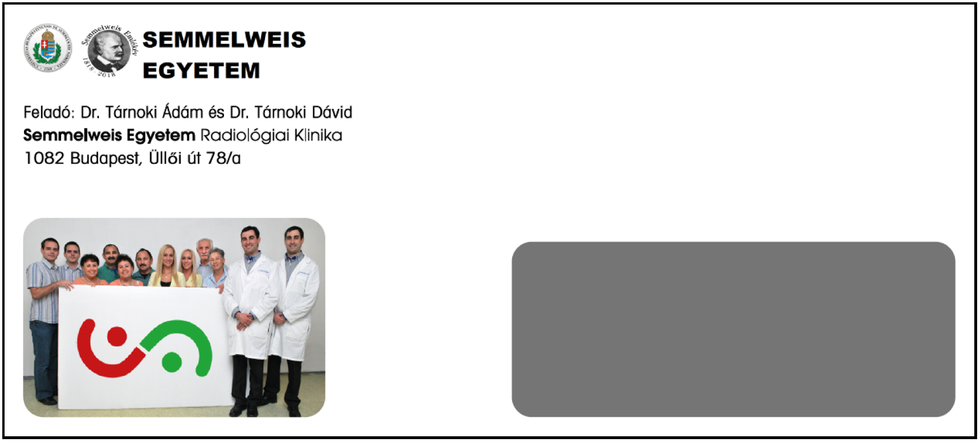
Envelope which will be sent to the twins requesting them to register in the population-based Hungarian twin registry.
New website of the population-based Hungarian twin registry.
Flowchart of the foundation of the population-based registry.
With the help of the population-based twin register in Semmelweis University, we will be able to conduct high-level twin research in the following areas: (1) molecular medicine and molecular markers; (2) microbiome; (3) cardiovascular, immunological, brain research; (4) imaging genetics (e.g, radiogenomics, radioepigenetics).
Accordingly, the HTR aims to become one of the largest European twin research centers and in the top 10 largest population-based twin registries in the world. Based on the newly established registry and its biorepository, disease-discordant MZ twins suffering from certain chronic diseases (e.g., cancer, cardiovascular, neurodegenerative and respiratory diseases) will be selected and studied. Phenotypic data and biological samples will be acquired and collected after genetic material purification, genetic material quality control, molecular zygosity testing and DNA banking. The detailed registration through our website will allow us to build a nationwide biobank and select the appropriate disease concordant and discordant twin-pairs for further specific epigenetic studies. Using radiogenomics, imaging phenotypes will be associated with gene expression patterns, gene mutations and genome-related characteristics, as well as molecular biology patterns, enabling deeper insights into tumor and disease biology by means of integration of genomic and imaging data. So far, no radiogenomics twin study has been published, making this field innovative worldwide.
The HTR biorepository will facilitate and support medical and scientific studies by providing a valuable resource for investigating these complex phenotypes and their underlying biology. A multidisciplinary approach of the project will be accomplished by the combination of imaging, genetic, epigenetic, molecular biology and microbiome studies. Genetic and epigenetic research will include next-generation sequencing of the disease-associated genes and the whole mitochondrial genome, extracellular vesicle and microRNA profiling, methylation analysis, telomere length and mitochondrial DNA copy number measurements. Incorporating the results and finding synergies of the molecular biological and imaging techniques will be the focus of the project, with the aim of finding clinically relevant biomarkers. In the modern genomic era and evolving field of personalized medicine, such twin studies will lead to the discovery of disease liability and novel targets for individualized treatment.
Acknowledgements
We would like to acknowledge the support of Semmelweis University, Central European University, and the help and work of medical and PhD students of the HTR team, Agota Kovacs designer, Imre Benko photographer, Anita Hernyes, MD, Tamas Horvath, MD, PhD, and Prof. Dr. Nick Martin.
Conflict of interest
None.


 Open access

