



INTRODUCTION
Escherichia coli O157 was first identified as an emerging zoonotic pathogen in 1982, following the isolation of an atypical E. coli isolate during an outbreak of haemorrhagic colitis (HC) [Reference Riley1]. Since then, numerous outbreaks and sporadic cases of human E. coli O157 infection have been reported worldwide [Reference Chase-Topping2]. Human infection presents as a range of clinical entities, ranging in severity from asymptomatic infection to thrombocytopenia and haemolytic uraemic syndrome (HUS) [Reference Griffin and Tauxe3].
Transmission of E. coli O157 to humans follows a faecal–oral route [Reference Ferens and Hovde4]. Most outbreaks have been foodborne, although other routes of transmission are being increasingly reported, including exposure to contaminated water and soil, and direct contact with livestock [Reference Caprioli5]. Ruminants are the primary livestock reservoir for E. coli O157; they are generally infected asymptomatically and shed the pathogen periodically in their faeces [Reference Armstrong, Hollingsworth and Morris6]. Cattle are assumed to be the major livestock reservoir [Reference Chase-Topping2], although studies have documented the carriage of potentially human pathogenic E. coli O157 by sheep [Reference Ferens and Hovde4].
Limited prevalence data for E. coli O157 in sheep has been published and on-farm estimates range from 0% [Reference Johnsen7] to 9·3% [Reference Kudva, Hatfield and Hovde8]. Geographical and seasonal variations in the number of culture-positive animals have also been reported, with an increase during spring and summer [Reference Johnsen7]. Published data suggest that the prevalence of E. coli O157 in sheep and cattle may be similar [Reference Chapman9], although direct comparisons of such data are difficult due to variations in screening and isolation methodologies, which differ considerably in their reported sensitivities [Reference Chapman10]. Typically, detection of E. coli O157 involves culture on sorbitol MacConkey agar supplemented with cefixime and potassium tellurite (CT-SMAC), and 4-methylumbelliferyl-β-d-glucoronic acid dihydrate (MUG), which is used to indicate β-glucaronidase activity [Reference March and Ratnam11]. Pre-enrichment in selective or non-selective media has also been used to increase the sensitivity of detection [Reference Kudva, Hatfield and Hovde8].
Recto-anal mucosal swab (RAMS) culture was proposed as a means of detecting E. coli O157 following the observation that E. coli O157 preferentially colonizes the mucosal surface of the recto-anal junction in cattle [Reference Naylor12]. Studies have demonstrated RAMS culture to be at least as sensitive as faecal culture for the detection of E. coli O157 in cattle [Reference Rice13, Reference Greenquist14]. Importantly, RAMS culture has been used to detect E. coli O157 in cattle during the latter stages of infection, when E. coli O157 has persistently colonized the gastrointestinal mucosa, but is not being actively excreted [Reference Rice13].
Studies have shown that both E. coli O157 and non-O157 species colonize the ovine gastrointestinal tract; however, there is debate regarding the specific location of colonization [Reference La Ragione15]. Using ovine intestinal in vitro organ culture techniques, a number of studies have demonstrated an association between E. coli O157 and the rectal mucosa of neonatal lambs: following oral inoculation of 30 neonatal lambs, Best et al. [Reference Best16] observed small, diffuse E. coli O157 colonies at numerous locations in the gastrointestinal tract, while large, densely packed colonies were only observed at the terminal rectum. Using a similar method, Aktan et al. [Reference Aktan, La Ragione and Woodward17] did not observe preferential colonization of any single location in the gastrointestinal tract. Studies of naturally infected lambs have also been inconclusive [Reference Wales18], with characteristic attaching-and-effacing lesions observed at various locations along the gastrointestinal tract.
Colonization of the gastrointestinal mucosa by E. coli O157 has been shown to influence the concentration and duration of faecal shedding of E. coli O157 [Reference Cobbold19]. In cattle, persistent colonization has been linked to the phenomenon of ‘super-shedding’, most commonly defined as the excretion of ⩾104 colony-forming units per gram (c.f.u./g) faeces [Reference Chase-Topping2, Reference Cobbold19]. Super-shedding cattle comprise a small subset of the population, yet are thought to be responsible for 80–96% of E. coli O157 shed into the environment [Reference Omisakin20, Reference Matthews21]. In this context, the identification of super-shedders would be a critical step in reducing the on-farm prevalence of E. coli O157, and the use of RAMS culture may be an effective way of identifying these animals. Studies have documented sheep excreting E. coli O157 at concentrations exceeding 104 c.f.u./g [Reference Franco22, Reference Odgen, MacRae and Strachan23]; however, unlike cattle, the phenomenon of super-shedding and the factors that prompt super-shedding by sheep have not yet been characterized.
The aims of this study were to: (1) compare the use of RAMS culture and faecal culture for detection of E. coli O157 in sheep; (2) to detect super-shedding sheep; and (3) to assess whether the use of immunomagnetic separation (IMS) improved the rate of recovery of E. coli O157 in sheep.
METHOD
Animals used in this study
All sheep included in this study were randomly selected from a flock (n = 120) of Merino wethers and maiden ewes located at The University of Sydney, Camden, Australia. The flock had been maintained on pasture prior to the commencement of the study. To estimate the prevalence of E. coli O157 in the flock prior to the study commencing, 50 sheep were randomly selected from the flock and both a RAMS and faecal sample were collected from each sheep (week 1). One week later, a second group of 50 sheep were randomly selected from the same flock and moved into five indoor pens, with 10 sheep randomly assigned to each pen. To minimize transmission between pens, all sheep were kept in the pen to which they were initially assigned for the duration of the study. All sheep were provided Lucerne hay and water ad libitum. All pens were swept and hosed out on a daily basis. The cohort was sampled five times between October 2013 and January 2014. Each group of 10 sheep was run separately through a single holding pen and race to collect samples. At each sampling point both a RAMS and a faecal grab sample was collected from each sheep. Individuals sampling the sheep were blinded to previous test results at each sampling point.
Collection of RAMS
RAMS were collected following the method of Williams et al. [Reference Williams24], with minor modifications. Where possible, RAMS were collected before faecal samples to minimize faecal contamination of the RAMS. RAMS were collected aseptically from each sheep by inserting a sterile cotton-tipped swab about 2–3 cm into the anus. Using a circular motion, the entire surface of the recto-anal mucosa was swabbed. Each RAMS was placed into a 5-ml culture tube containing 2 ml buffered peptone water (BPW; Oxoid, UK) for transportation to the laboratory in a cooler box within 30 min of collection.
Collection of faecal samples
Rectal faecal samples were collected aseptically from each sheep immediately after RAMS by digital insertion or directly into an individual bag during defecation. Faecal samples were placed into individually sealed bags for transportation to the laboratory in a cooler box within 30 min of collection.
All methods used in this study were approved by the University of Sydney Animal Ethics Committee (AEC Approval no. 5836).
Culture and isolation of E. coli O157 from RAMS
Culture tubes were vortexed for 30 s and enriched via overnight incubation at 37 °C. Following incubation, 50 μl aliquots were spread-plated onto individual sorbitol MacConkey agar (SMAC; BD, USA) plates containing MUG (100 μg/ml), and supplemented with cefixime (0·05 mg/l) and potassium tellurite (2·5 mg/l) (Oxoid) (CT-SMAC). Sorbitol and β-glucaronidase-negative (straw-coloured) colonies (up to three for each plate) were subcultured onto CT-SMAC, and incubated for 24 h at 37 °C. Following incubation, the identity of presumptive E. coli O157:H7 colonies was confirmed by latex agglutination [Statens Serum Institut (SSI), Denmark]. Pure colonies confirmed as E. coli O157 (up to two for each plate) were subcultured onto nutrient agar, and incubated for 24 h at 37 °C. Five-millilitre culture tubes containing 3 ml BPW were inoculated with pure cultures from nutrient agar and incubated for 24 h at 37 °C, after which 500 μl aliquots of BPW cultures were collected for DNA extraction.
Culture and isolation of E. coli O157 from faeces
About 2 g of each faecal sample was added to separate culture tubes containing 10 ml BPW, homogenized using a sterile wooden stirrer, and vortexed for about 30 s. Homogenized faecal samples were then enriched by incubation overnight at 37 °C and 50 μl aliquots of each dilution were spread-plated onto individual CT-SMAC plates, and incubated overnight at 37 °C. The identity of presumptive E. coli O157 colonies was confirmed, and pure cultures prepared for DNA extraction using the same method as described above for RAMS.
Categorization of primary CT-SMAC cultures
Briefly, both RAMS and faecal primary cultures on CT-SMAC were placed into one of two categories based on the level of contamination with background flora; ‘Overgrown’, indicating that the plate was entirely covered with non-O157 species; or ‘Non-overgrown’, indicating low to moderate contamination with background flora.
Enumeration of E. coli O157 from faecal cultures
Based on the primary culture results of enriched faecal samples, those that yielded presumptive E. coli O157 colonies were selected for enumeration via direct (non-enriched) culture. Two grams of the original faecal sample (held overnight at 4 °C) were diluted fivefold in BPW, and both 50 μl and 100 μl aliquots were spread-plated directly onto individual CT-SMAC plates, to determine the number of c.f.u.s present in each gram of faeces. The identity of presumptive E. coli O157:H7 colonies was confirmed by latex agglutination (SSI, Denmark). The identity of presumptive E. coli O157 colonies was confirmed using the same method as described above and pure cultures prepared for DNA extraction.
IMS
Fifty RAMS and 50 faecal samples collected at week 4 were tested by IMS following the method of Williams et al. [Reference Williams24].
DNA extraction
DNA extracts were prepared following the method of Williams et al. [Reference Williams24].
Confirmation of E. coli
Further species confirmation of all ovine E coli O157 isolates was performed via polymerase chain reaction (PCR) amplification of a variable region of the E. coli 16S rRNA gene and Rfb-O157, which encodes the E. coli somatic antigen O157 [Reference Wang, Clark and Rodgers25].
Statistical analyses
To determine the level of agreement between RAMS and faecal cultures, kappa statistics (κ) were calculated using 2 × 2 contingency tables. Kappa statistics were calculated in Win Episcope v. 2·0. (Facultad de Veterinaria, Universidad de Zaragoza).
To compare the number of overgrown vs. non-overgrown cultures using RAMS and faecal culture, a χ 2 statistic was calculated using a 2 × 2 contingency table. The χ 2 statistic was calculated in Statistix v. 8. (Analytical Software, USA).
Due to the absence of a gold standard with which to compare culture results, relative sensitivities of RAMS and faecal culture were calculated using a 2 × 2 contingency table: RAMS against faecal sampling as a pseudo-gold standard, and faecal sampling against RAMS as a pseudo-gold standard. Relative sensitivities were calculated using Win Episcope v. 2·0. (Facultad de Veterinaria).
Finally, the effect of pen and sampling point on E. coli O157 shedding was investigated using a generalized linear model with sheep as a random effect (SPSS Statistics v. 20; IBM, USA).
RESULTS
Detection of E. coli O157
E. coli O157 was not detected in the first group of 50 sheep sampled while on pasture; however, the organism was isolated from 32% (16/50) of sheep from the second group moved into indoor pens to be sampled for the longitudinal study. Weekly prevalence in this group ranged from 4% (2/50) to 16% (8/50). Of the 16 sheep that were shown to be infected with E. coli O157, 12·5% (2/16) were identified using the RAMS technique only, while 37·5% (6/16) were detected using faecal culture only. The remaining eight sheep (50·0%) were detected by both the RAMS technique and faecal culture. In total, E. coli O157 was isolated from 8·0% (20/250) of RAMS, with a weekly variation of 0% (0/50) to 12% (6/50), and from 9·6% (24/250) of faecal samples, with a weekly variation of 4% (2/50) to 14% (7/50).
Longitudinal results of study comparing RAMS culture and faecal culture for the detection of E. coli O157 in a mob of Merino sheep

RAMS, Recto-anal mucosal swab; EFC, enrichment faecal culture; ERC, enrichment RAMS culture; SS, super-shedding event.
Proportion of primary RAMS and faecal cultures overgrown with background flora
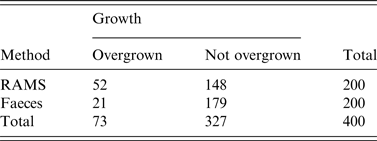
RAMS, Recto-anal mucosal swab.
χ2 = 16·1, P = 0·0001.
Longitudinal data
Of the 16 sheep that were culture positive, eight (50·0%) were culture positive on one occasion only, six (37·5%) were culture positive on two occasions, one (6·25%) was positive on three consecutive occasions, and one (6·25%) was positive on four consecutive occasions (Table 1). There was no significant difference (Wald statistic = 2·224, P = 0·376) in the proportion of sheep culture-positive between pens. Of the 16 sheep that were culture-positive for E. coli O157, 43·8% (7/16) were housed in pen 1, 25·0% (4/16) were housed in pen 2, 18·8% (3/16) were housed in pen 3, and 12·5% (2/16) were housed in pen 4. No culture-positive sheep were identified in pen 5. A significant (P = 0·01) difference between sampling weeks was detected for both faecal samples (P = 0·021) and RAMS (P = 0·006), with the prevalence at the mid-point of sampling (week 4) significantly (P < 0·05) higher than at the beginning (week 2) or end (weeks 5 and 6 for faecal samples and week 6 for RAMS) of the study.
Categorization of CT-SMAC cultures
Overall, 26·0% (52/200) of enriched RAMS cultures were overgrown with background flora, while 10·5% (21/200) of enriched faecal cultures were overgrown with background flora (Table 2).
Enumeration of E. coli O157
Using direct (non-enriched) faecal culture, we detected four super-shedding events (Table 3).
Sheep identified as super-shedders (excreting >104 E. coli O157 c.f.u./g faeces) in a mob of 50 Merino sheep, using direct (non-enriched) faecal culture

IMS
Using an additional stage of IMS, we isolated E. coli O157 from 1/35 sheep that were previously culture-negative by enrichment culture alone (data not shown). However, using IMS we failed to isolate E. coli O157 from four RAMS and one faecal sample that were positive by enriched culture alone.
Agreement and relative sensitivity
The calculated kappa statistic indicated a moderate level of agreement between RAMS and faecal samples (κ = 0·583, 95% CI 0·460–0·707) (Table 4).
Isolation of E. coli O157 from a mob of Merino sheep by RAMS culture and faecal culture

RAMS, Recto-anal mucosal swab.
Kappa statistic = 0·583 (95% CI 0·460–0·707).
There was a significant difference between the number of overgrown enriched RAMS and faecal cultures (χ 2 = 16·1, P = 0·0001) (Table 2).
Using faecal culture as a pseudo-gold standard, the relative sensitivity of RAMS culture for the detection of E. coli O157 in sheep was 57% (95% CI 34–77). Using RAMS culture as a pseudo-gold standard, the relative sensitivity of faecal culture for the detection of E. coli O157 in sheep was 67% (95% CI 41–86).
DISCUSSION
We detected E. coli O157 in 32% (16/50) of sheep, with a weekly prevalence ranging from 4% (2/50) to 16% (8/50). For means of comparison, we also screened 50 RAMS and 50 faecal samples collected at week 3 using an additional stage of IMS, which led to the isolation of E. coli O157 from one sheep that was previously culture-negative by enrichment culture alone. Had this data been included in our overall prevalence estimate, the prevalence would have been 34% (17/50). As such, the prevalence estimate reported here is likely to be a conservative estimate of the true prevalence. The prevalence reported of E. coli O157 in this study is markedly higher than previous studies of sheep maintained on pasture, which is typically below 2% [Reference Chapman9, Reference Fegan and Desmarchelier26]. Numerous factors are likely to have contributed to this outcome, particularly the type of housing used in the present study, as our findings are consistent with surveys of sheep housed in confined environments such as feedlots and holding yards [Reference Kilonzo27]. Such environments promote faecal–oral transmission and increase the rate of contact between infected and naive individuals, favouring horizontal transmission of enteric pathogens [Reference Edrington28]. The dietary change that occurred when moving the mob into indoor pens may also have influenced the concentration and duration of faecal shedding reported here. Dietary disruptions have previously been shown to influence the duration of faecal shedding of E. coli O157 by sheep [Reference Kudva29], possibly due to differences in the resulting pH of the gastrointestinal tract or to changes in the kinetics of digesta passage. A more gradual transition (2–3 weeks) between diets prior to the sampling period may have attenuated this effect to some extent. Climatic conditions are also likely to have been a contributing factor, as the current study was conducted in spring; previous studies have reported seasonal fluctuations in the prevalence of E. coli O157 in sheep [Reference Kudva, Hatfield and Hovde8, Reference Franco22], with the highest prevalence estimates reported in late spring and summer.
It was expected that excessive challenge with E. coli O157 due to the presence of super-shedders would influence the number of culture-positive sheep in some pens, as described previously [Reference Arthur30]. We identified a significant pen effect for RAMS (P = 0·033) and marginally significant pen effect for faecal samples (P = 0·069), indicating that transmission of E. coli O157 within pens occurred within this trial. This pen effect is likely to have contributed to the number of positive RAMS reported here. Even though sheep were sampled on only five occasions while penned, the pattern of transmission represented an epidemic curve that could reflect the spread of E. coli O157 in naive flocks of sheep when first introduced. It should be noted that despite all sheep being maintained in their same pen throughout the study, some unintended transmission between different pens may have also occurred during the collection of RAMS and faecal samples, as the same race and holding crate was used to sample each group of sheep.
To our knowledge, this is the first report directly comparing the use of RAMS culture and faecal culture for the detection of E. coli O157 in a mob of sheep. In the present study, we have shown that there is a moderate level of agreement between the two methods (κ = 0·583) (Table 4). Consistent with previous studies [Reference Williams24, Reference Khaitsa31, Reference Cernicchiaro32], some variation in the level of agreement between the two methods was noted when data from each sampling point was analysed separately (data not shown). On a weekly basis, the level of agreement between the two methods ranged from moderate (κ = 0·56) to near perfect (κ = 0·81). Such variation is to be expected in longitudinal studies; the relative sensitivities of RAMS culture and faecal culture have previously been shown to differ according to the stage of infection, and the subsequent number of animals actively excreting the organism [Reference Rice13]. During the early stages of infection the rate of detection is higher using faecal culture, presumably because E. coli O157 is transiently passing through the gastrointestinal tract but has not yet attached to the gastrointestinal mucosa [Reference Rice13]. Following colonization, sheep that are carrying E. coli O157 – but are not excreting the organism in their faeces – are less likely to be detected using faecal culture.
Differences in the choice of screening methodology are likely to have been a contributing factor, as the rate of recovery of E. coli O157 from both RAMS and faecal samples is greater using pre-enrichment in selective media than either non-selective enrichment or direct (non-enriched) culture [Reference Rice13]. Selective agents such as vancomycin and cefixime favour growth of E. coli O157 and suppress the growth of non-O157 species [Reference De Boer and Heuvelink33]. In the present study, there were significantly more RAMS cultures than faecal cultures overgrown with non-O157 species (P < 0·001) (Table 2). This outcome was unexpected, given that only minor faecal contamination was observed on most RAMS. We primarily attribute this outcome to the use of non-selective enrichment media; however, the reasons for this difference are unclear. The decision to exclude selective agents was based on previous studies, which indicate that selective agents reduce the recovery of injured and stressed cells [Reference Blackburn and McCarthy34]. The ability to detect injured and stressed cells is important given previous studies indicate that the majority of sheep in a given population are likely to be excreting low numbers of E. coli O157 [Reference La Ragione15]. Furthermore, the decision to collect RAMS prior to faecal samples may have influenced the number of positive faecal samples reported here. Naylor et al. [Reference Naylor12] suggested that in cattle, faecal material is inoculated with E. coli O157 as it passes the recto-anal mucosa. As such, swabbing the mucosal surface of the recto-anal junction is likely to affect the rate of recovery of E. coli O157 from the faeces. Given that the location of E. coli O157 colonization in the ovine gastrointestinal tract has not yet been identified, the extent to which this methodology may have affected the number of positive faecal cultures is unknown.
Due to the absence of a gold standard with which to compare our data, we compared the relative sensitivities of the RAMS technique and faecal culture, which were calculated as 57% and 67%, respectively. These estimates were not significantly (P < 0·05) different, which suggests that the RAMS technique is not necessarily a superior method to traditional faecal sampling for sheep, as has been suggested for cattle [Reference Rice13]. However, given that these values were calculated using a pseudo-gold standard, they should be interpreted with caution, since the two methods are measuring different biological processes. Nevertheless, there were five occasions on which a sheep was positive by RAMS culture but negative by faecal culture (Table 1), which suggests that RAMS may be useful as an adjunct to faecal sampling to generate more robust prevalence data.
An unexpected finding of this study was the presence of multiple super-shedding sheep. During the course of the study, four (25·0%, 4/16) culture-positive sheep were found to be excreting >104 E. coli O157 c.f.u./g faeces (Table 3), one of which was excreting E. coli O157 at ~10·4 × 105 c.f.u./g. This finding is concordant with previous surveys of cattle and sheep at slaughter, which have found less than 10% of culture-positive animals to be high-concentration shedders [Reference Omisakin20, Reference Franco22]. One of the sheep identified as a super-shedder in this study was consistently culture positive using both RAMS culture and faecal culture. This finding differs from previous reports of super-shedding in cattle, which have found no association between persistent culture-positivity and super-shedding [Reference Williams24]. Interestingly, one of the super-shedding sheep was culture negative at the sampling point prior to it being detected as a super-shedder, and the point after.
While the epidemiology of human E. coli O157 infection has been the subject of a plethora of studies [Reference Ferens and Hovde4], little attention has been given to the importance of sheep as carriers of E. coli O157. In Australia, foodborne outbreaks attributed to sheep and lamb products are rare, most likely due to the efficacy of slaughtering methodologies and carcass washing procedures, which prevent significant carcass contamination [Reference Phillips35]. Nevertheless, recent outbreaks of human E. coli O157 infection attributed to direct contact with lambs reinforce the finding that sheep are a potential source of human E. coli O157 infection, with outbreaks having been reported in the UK and Australia [Reference Chapman10, Reference Heuvelink36]. Given the popularity of barnyard nurseries and petting zoos, coupled with the disproportionate number of paediatric cases in each of these outbreaks, the likelihood of similar outbreaks occurring should be regarded as a considerable public health concern.
An additional aspect that is frequently overlooked in the epidemiology of human E. coli O157 infections is that sheep may also contribute to the maintenance of E. coli O157 in cattle populations, and vice versa [Reference Söderlund37]. Published data suggest that various pathways of transmission exist between cattle, sheep and humans; genomic typing of E. coli O157 isolates using PCR-based fingerprinting, phage typing, and pulsed-field gel electrophoresis have revealed clonal similarities between ovine, bovine and clinical isolates collected from different geographical sites [Reference Bertrand and Roig38]. While transmission of E. coli O157 from cattle to sheep is more likely than the reverse due to their respective grazing habits, overlooking the role of sheep as a persistent biological reservoir is likely to hinder efforts to reduce the on-farm prevalence of E. coli O157, particularly in circumstances where sheep and cattle are co-grazed.
CONCLUSION
This study has demonstrated that sheep shed E. coli O157 frequently, and often at super-shedding levels. We have shown for the first time that RAMS culture is moderately effective for the detection of E. coli O157 in sheep. Given that the precise location of gastrointestinal colonization in sheep is yet to be confirmed, RAMS culture is best used as an adjunct to traditional faecal culture. We have also reported super-shedding by sheep, which may be a previously unrecognized on-farm source of E. coli O157, particularly in systems where sheep and cattle are co-grazed, or have access to common areas. The existence of super-shedding sheep is also a considerable public health risk, particularly in light of recent outbreaks attributed to direct contact with sheep at agricultural fairs and open farms; however, the full significance of sheep in the epidemiology of human E. coli O157 infection requires further investigation. The model system used in this study (penned sheep) could serve as a future model for studies of E. coli O157 transmission, shedding and super-shedding in sheep.
ACKNOWLEDGEMENTS
The authors acknowledge Dr Karen Williams and Lechelle Van Breda for their ongoing assistance. This work was supported by the Faculty of Veterinary Science, The University of Sydney, NSW, Australia.
DECLARATION OF INTEREST
None.



