


Two decades ago cross-sectional surveys in community settings found a different profile of eating disorders from that described by clinicians in treatment settings. Reference Mann, Wakeling and Wood1 Fully fledged anorexia and bulimia nervosa appeared to be relatively rare. In contrast, partial syndromes – with some but not all symptoms of the full clinical syndrome – were common in young women. Population-based surveys consistently found point prevalence rates of around 0.5% for anorexia nervosa and 1% for bulimia nervosa in female teenagers. In contrast, rates for partial syndromes were around 3–5%. Reference Johnson-Sabine, Wood, Patton, Mann and Wakeling2–Reference Rastam, Gillberg and Garton4 Early longitudinal studies considered the possibility that partial syndromes might develop into full syndromes and thereby be a point for early intervention. However, on 12-month follow-up most partial syndromes appeared to have resolved spontaneously without progression to either full anorexia or bulimia. Reference Patton, Johnson-Sabine, Wood, Mann and Wakeling5 Subsequent retrospective studies with a longer time frame found higher lifetime rates of clinical syndromes than were observed in cross-sectional ‘snapshots’. Lifetime risks of eating disorders in adult women have been estimated to be around 8% for bulimia nervosa Reference Kendler, Maclean, Neale, Kessler, Heath and Eaves6 and 3% for anorexia nervosa. Reference Walters and Kendler7,Reference Steinhausen, Winkler and Meier8 Such findings raised the possibility that eating disorders commonly emerge in milder forms in the mid-teenage years with slower progression to more severe disorders. This would be consistent with the often reported lag of some years before clinical presentation. Reference Fairburn, Welch, Doll, Davies and O'Connor9
A question about the progression of adolescent partial syndromes requires prospective study, ideally in a community setting. Prospective studies of eating disorders outside the clinical setting remain rare. The high rates of continued poor social functioning into young adulthood found in patients with anorexia nervosa Reference Steinhausen, Boyadjieva, Grigoroiu-Serbanescu, Seidel and Winkler10 have been replicated in the one study in which a community-based sample was used. Reference Rastam, Gillberg and Gillberg11 Available community studies of bulimia nervosa also suggest high rates of continued symptoms and social dysfunction. Reference Fairburn, Cooper, Doll, Norman and O'Connor12 The outcomes for adolescents with a partial syndrome of eating disorder are far less clear. One study has found that symptoms of eating disorder are associated with psychosocial difficulties in adolescence, but that these problems had largely resolved by young adulthood. Reference Steinhausen, Gavez and Winkler13 Another found modest evidence for adolescent–young adult continuity in eating disorder symptoms and their associated problems. In a three-wave cohort study of 538 young females from their mid-teens to the age of 24 years, just under a third of those with a teenage disorder had persisting disorder in young adulthood. Reference Lewinsohn, Striegal-Moore and Seeley14 Risks of other psychopathological disorders, particularly depression, as well as poor overall psychosocial adjustment, appeared higher in the adolescent eating disorders group. Reference Lewinsohn, Striegal-Moore and Seeley14,Reference Striegel-Moore, Seeley and Lewinsohn15 The available studies are, however, limited in a number of respects: in sample size, in numbers of assessment points for disorders that fluctuate in intensity, in the use of retrospective ascertainment of eating disorders or in the definitions used for adolescent eating disorders. Reference Steinhausen, Gavez and Winkler13,Reference Lewinsohn, Striegal-Moore and Seeley14,Reference Kotler, Cohen, Davies, Pine and Walsh16 For these reasons the clinical relevance of partial syndromes of eating disorder in adolescence has remained unclear.
The study reported here adopted a prospective design in a close-to-representative community sample of almost 2000 participants, with multiple adolescent assessment points, to study the outcomes of adolescent partial syndromes in young adulthood. We examined outcomes that included persisting eating disorder, depressive and anxiety symptoms, body mass, sexual and reproductive health, and social role transitions.
Method
Between August 1992 and March 2003 we conducted an eight-wave cohort study of adolescent and young-adult health in the state of Victoria, Australia. Data collection protocols were approved by The Royal Children's Hospital's ethics in human research committee. The cohort was initially defined with a two-stage cluster sample in which we selected two classes at random from each of 44 schools drawn from a stratified frame of all schools (government, Catholic and independent) in the state (total number of students 60 905). School retention rates to year 9 in the year of sampling were 98%. One class from each school entered the cohort in the latter part of the 9th school year (wave 1), with a second class entering 6 months later, early in the 10th school year (wave 2). Participants were subsequently reviewed at a further four 6-month intervals during their teenage years (waves 3 to 6) with two follow-up waves in young adulthood, at age 20–21 years (wave 7) and 24–25 years (wave 8). In waves 1 to 6, participants self-administered the questionnaire on laptop computers, Reference Paperny, Aono and Lehman17 with telephone follow-up of those absent from school. The 7th and 8th waves of data collection were undertaken with computer-assisted telephone interviews.
From a total sample of 2032 students, 1943 (96%) participated at least once during the first six (adolescent) waves. In the 7th wave, 1601 young adults (79% of the initial sample or 82% of teenage participants) were interviewed between April and December 1998. In the 8th wave, 1520 (75% of the initial sample, 78% of teenage participants) were interviewed between April 2002 and June 2003. Response rates are shown in Fig. 1. Reasons for non-completion at follow-up were refusal (wave 7, n=152; wave 8, n=269), loss of contact (wave 7, n=192; wave 8, n=152) and death (wave 7, n=2; wave 8, n=7). The mean ages at waves 1, 7 and 8 were 14.5 years (s.d.=0.5), 20.7 years (s.d.=0.5) and 24.1 years (s.d.=0.6) respectively.
Sampling and ascertainment in the Victorian Adolescent Health Cohort, 1992–2003.

Measures
Weight and height
Weight was measured to the nearest 0.1 kg, with participants wearing minimal school uniform and a further 1 kg deducted to account for this clothing. Height was taken with shoes removed using a stadiometer and measured to the nearest centimetre. Self-reported weights were used for those who had left school. At waves 7 and 8, weight and height were assessed using self-report, after prior notification that these two questions would be asked at interview.
Eating disorder
The Branched Eating Disorders Test (BET) was used to assess DSM–IV criteria for eating disorder. 18 This test was designed for use in teenaged community samples and covers symptoms of eating disorder over the previous 4 weeks. Partial syndromes of eating disorder were based on the DSM–IV criteria for bulimia nervosa and anorexia nervosa, this being the approach most commonly adopted in the definition of these syndromes. Reference Graber and Brooks-Gunn19 A partial syndrome of anorexia nervosa was defined as meeting two of the following four criteria:
-
(a) low body weight, defined on the basis of a z score for body mass index (BMI) below the 5th percentile for age and gender, using the reference data from the international taskforce for the standardisation of overweight and obesity in children and adolescents; Reference Cole, Bellizzi, Flegal and Dietz20
-
(b) intense fear of gaining weight or becoming fat when under the 25th percentile z score for BMI for age and gender;
-
(c) disturbance in the experience of body weight, size and shape when under the 25th percentile z score for BMI for age and gender;
-
(d) amenorrhoea, defined as missing three consecutive menstrual periods.
A partial syndrome of bulimia nervosa was defined as meeting at least two of the following criteria:
-
(a) objective bingeing at least weekly for at least 4 weeks;
-
(b) use of any of the following for at least 4 weeks: self-induced vomiting at least twice weekly, laxatives at least twice weekly, diuretics at least twice weekly, daily fasting (12 h or longer) for at least 4 weeks or daily vigorous exercise to control weight;
-
(c) report of body weight and shape as extremely important to the participant's sense of self.
Definitions of partial syndrome of bulimia nervosa using the BET have previously been shown high agreement with the Eating Disorders Examination in community sample of schoolgirls in Australia (sensitivity 1.0, specificity 0.99, positive predictive value 0.7). Reference Selzer, Hamill, Bowes and Patton21 The BET was administered from wave 2 through to wave 6. At follow-up in wave 7 the BET was administered to female participants only. Therefore this report examines continuity of eating disorder in young females only.
Depression and anxiety
Symptoms of depression and anxiety were assessed from waves 1 to 7 using the Revised Clinical Interview Schedule (CIS–R). Reference Mann, Wakeling, Wood, Monck, Dibbs and Szmukler22 The total scores on this measure were dichotomised at a cut-off point of 11/12 to delineate a mixed depression–anxiety state at a lower threshold than syndromes of major depression and anxiety disorder but where clinical intervention would still be appropriate. Reference Harrington, Fudge, Rutter, Pickles and Hill23,Reference Lewis, Pelosi, Araya and Dunn24 Specific anxiety and depressive syndromes were also defined using the CIS–R. Reference Mann, Wakeling, Wood, Monck, Dibbs and Szmukler22 The 12-item General Health Questionnaire (GHQ) Reference Goldberg25 was used to assess these symptoms at wave 8: a cut-off score of 2/3 was used to define a group with high psychiatric morbidity.
Substance use (wave 8)
Nicotine dependence was assessed with the Fagerstrom Test for Nicotine Dependence and was defined as a score of 4 or more. Reference Fagerstrom, Heatherton and Kozlowski26 Alcohol misuse and dependence was assessed using the Composite International Diagnostic Interview 2.1, 12-month version (CIDI) to define DSM–IV categories. 27 Cannabis use was assessed on the basis of self-reported frequency of use over the past year, with high use defined as reported use at least weekly. Amphetamine use was defined as self-reported use in the previous 12 months.
Analysis
Data collection was undertaken at a developmental point when young people are difficult to trace because of high mobility. Although the initial response was high and attrition low, 36% of respondents missed at least one wave of data collection in the adolescent phase (waves 1 to 6), leading to a potential bias in summary measures of exposure to cannabis and mental health problems calculated from these data. For example, when we examined characteristics of wave 7 non-completers using logistic regression models, male participants were overrepresented (OR=1.9, 95% CI 1.5–2.4), as were those with a background of parental divorce or separation (OR=1.8, 95% CI 1.4–2.5) and those who were daily smokers at study inception (OR=2.1, 95% CI 1.5–2.9). To address this selection bias, we used the method of multiple imputation, Reference Rubin28 with five complete data-sets created by imputation under a multivariate normal model that incorporated all the outcome variables of interest measured at all waves of data collection, along with the fixed covariates of gender, age, rural/urban residence and parental education (available for all participants). Reference Schafer29 Participants were classified according to whether they fell into categories of interest at least once during waves 1 to 6 (adolescence) and, separately, in waves 7 and 8 (young adulthood). Data analysis was undertaken using Stata version 8 for Windows. Univariate logistic regression analyses were used to model associations, and Wald tests and related confidence intervals were used to assess statistical significance and precision.
Results
Table 1 shows the estimated prevalence for partial and full syndromes of eating disorder between the ages of 15 years and 17 years (waves 3 to 6). Just under one in ten of the female participants fulfilled criteria for an eating disorder over this time. One participant fulfilled all criteria for anorexia nervosa during this time, and four fulfilled all criteria for bulimia nervosa. Eight participants fulfilled criteria for partial syndromes of anorexia and bulimia at different waves. The prevalence rate for partial syndromes in male participants was low, at just over 1%. The OR of an eating disorder was 7.9 (95% CI 4.1–15) times greater for female participants than for males.
Cumulative prevalence of partial-syndromal eating disorders in 1943 participants in the Victorian Adolescent Health Cohort Study for waves 3 to 6

| Cumulative prevalence of adolesent eating disorders | ||||||||||||
|---|---|---|---|---|---|---|---|---|---|---|---|---|
| Males (n=943) | Females (n=1000) | Total (n=1943) | ||||||||||
| Eating disorder | n a | % | (95% CI) | % | (95% CI) | % | (95% CI) | |||||
| Bulimic disorder | 72 | 1.0 | (0.3–1.6) | 6.4 | (4.8–8.0) | 3.7 | (2.8–4.6) | |||||
| Anorexic disorder | 42 | 0.4 | (0.0–0.8) | 3.8 | (2.5–5.1) | 2.2 | (1.4–3.0) | |||||
| Any eating disorder b | 107 | 1.4 | (0.6–2.1) | 9.4 | (7.3–11.4) | 5.5 | (4.3–6.7) | |||||
a. Frequencies obtained by averaging across five imputed data-sets
b. Eight participants fulfilled criteria for both anorexia and bulimia partial syndromes at different waves
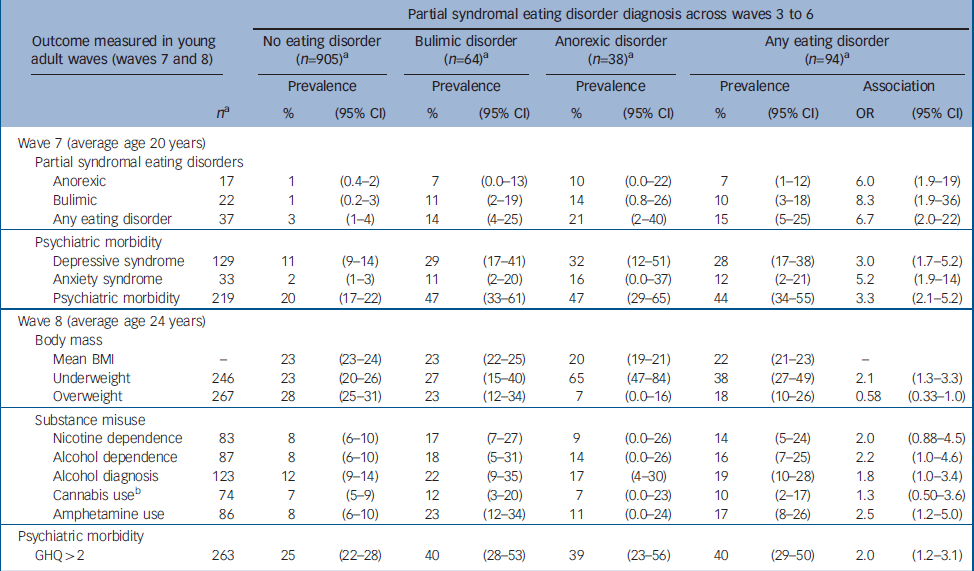
Health outcomes for partial syndromes in young adulthood are shown in Table 2. Results are presented for outcomes at wave 7 (average age 20 years) and wave 8 (average age 24 years). Eating disorders at a partial syndrome level were found in 14% of those who had an adolescent bulimic partial syndrome and 21% of those who had had an anorexic partial syndrome. The majority of young-adult cases from the adolescent bulimic group were also bulimic in form. In contrast, new partial syndromes were uncommon in young women without a teenage years diagnosis. Forty-four per cent of those with an adolescent partial syndrome reported significant psychiatric morbidity at age 20 years, compared with rates of 20% in other cohort participants (OR=3.3, 95% CI 2.1–5.2). A similar pattern was evident at the age of 24 years where 40% of those who had had an adolescent partial syndrome reported high levels of morbidity on the GHQ compared with 25% of those with no adolescent syndrome (OR=2.0, 95% CI 1.2–3.1).
Prevalence of health outcomes in young adulthood of adolescent eating disorders among 999 living female cohort participants according to adolescent eating disorder status
| Partial syndromal eating disorder diagnosis across waves 3 to 6 | ||||||||||||||||||||
|---|---|---|---|---|---|---|---|---|---|---|---|---|---|---|---|---|---|---|---|---|
| Outcome measured in young adult waves (waves 7 and 8) | No eating disorder (n=905) a | Bulimic disorder (n=64) a | Anorexic disorder (n=38) a | Any eating disorder (n=94) a | ||||||||||||||||
| Prevalence | Prevalence | Prevalence | Prevalence | Association | ||||||||||||||||
| n a | % | (95% CI) | % | (95% CI) | % | (95% CI) | % | (95% CI) | OR | (95% CI) | ||||||||||
| Wave 7 (average age 20 years) | ||||||||||||||||||||
| Partial syndromal eating disorders | ||||||||||||||||||||
| Anorexic | 17 | 1 | (0.4–2) | 7 | (0.0–13) | 10 | (0.0–22) | 7 | (1–12) | 6.0 | (1.9–19) | |||||||||
| Bulimic | 22 | 1 | (0.2–3) | 11 | (2–19) | 14 | (0.8–26) | 10 | (3–18) | 8.3 | (1.9–36) | |||||||||
| Any eating disorder | 37 | 3 | (1–4) | 14 | (4–25) | 21 | (2–40) | 15 | (5–25) | 6.7 | (2.0–22) | |||||||||
| Psychiatric morbidity | ||||||||||||||||||||
| Depressive syndrome | 129 | 11 | (9–14) | 29 | (17–41) | 32 | (12–51) | 28 | (17–38) | 3.0 | (1.7–5.2) | |||||||||
| Anxiety syndrome | 33 | 2 | (1–3) | 11 | (2–20) | 16 | (0.0–37) | 12 | (2–21) | 5.2 | (1.9–14) | |||||||||
| Psychiatric morbidity | 219 | 20 | (17–22) | 47 | (33–61) | 47 | (29–65) | 44 | (34–55) | 3.3 | (2.1–5.2) | |||||||||
| Wave 8 (average age 24 years) | ||||||||||||||||||||
| Body mass | ||||||||||||||||||||
| Mean BMI | – | 23 | (23–24) | 23 | (22–25) | 20 | (19–21) | 22 | (21–23) | – | ||||||||||
| Underweight | 246 | 23 | (20–26) | 27 | (15–40) | 65 | (47–84) | 38 | (27–49) | 2.1 | (1.3–3.3) | |||||||||
| Overweight | 267 | 28 | (25–31) | 23 | (12–34) | 7 | (0.0–16) | 18 | (10–26) | 0.58 | (0.33–1.0) | |||||||||
| Substance misuse | ||||||||||||||||||||
| Nicotine dependence | 83 | 8 | (6–10) | 17 | (7–27) | 9 | (0.0–26) | 14 | (5–24) | 2.0 | (0.88–4.5) | |||||||||
| Alcohol dependence | 87 | 8 | (6–10) | 18 | (5–31) | 14 | (0.0–26) | 16 | (7–25) | 2.2 | (1.0–4.6) | |||||||||
| Alcohol diagnosis | 123 | 12 | (9–14) | 22 | (9–35) | 17 | (4–30) | 19 | (10–28) | 1.8 | (1.0–3.4) | |||||||||
| Cannabis use b | 74 | 7 | (5–9) | 12 | (3–20) | 7 | (0.0–23) | 10 | (2–17) | 1.3 | (0.50–3.6) | |||||||||
| Amphetamine use | 86 | 8 | (6–10) | 23 | (12–34) | 11 | (0.0–24) | 17 | (8–26) | 2.5 | (1.2–5.0) | |||||||||
| Psychiatric morbidity | ||||||||||||||||||||
| GHQ>2 | 263 | 25 | (22–28) | 40 | (28–53) | 39 | (23–56) | 40 | (29–50) | 2.0 | (1.2–3.1) | |||||||||
BMI, body mass index; GHQ, General Health Questionnaire
One female had died by wave 8 and so was excluded from the analysis
a. Frequencies obtained by averaging across five imputed data-sets
b. Weekly use or more
The proportion of those underweight in their mid-20s (wave 8) was higher in those with an adolescent partial syndrome (OR=2.1, 95% CI 1.3–3.3). This was principally because around two-thirds of those with an anorexic partial syndrome remained underweight (OR=6.3, 95% CI 2.7–14). Conversely, those with an adolescent partial syndrome were less likely to be overweight, largely because of the very low rates of overweight in those who had had an adolescent anorexia syndrome (Or=0.18, 95% CI 0.04–0.82).
Substance misuse was generally higher in the group who had had a partial syndrome during the teens, particularly in the bulimic subgroup. Nicotine dependence was higher in the partial syndrome group at the age of 20 years (OR=2.3, 95% CI 1.0–5.3) and at age 24 years (OR=2.2, 95% CI 0.88–4.6). Alcohol dependence was over twice as common in the partial syndrome group (OR=2.2, 95% CI 1.0–4.9), as was amphetamine use (OR=2.5, 95% CI 1.2–5.0). In contrast, rates of cannabis use were similar in the two groups.
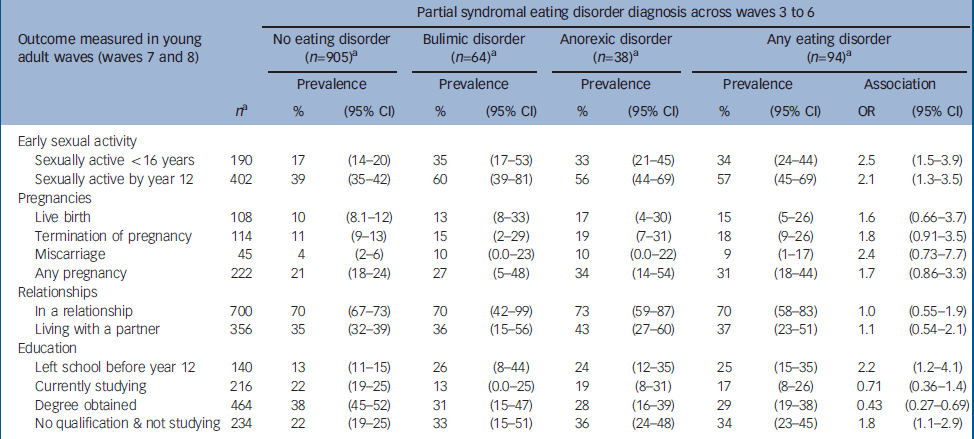
Table 3 reports social and sexual health outcomes in the mid-20s of those with an adolescent partial syndrome. Females with a partial syndrome were more sexually active before the age of 16 years (OR=2.5, 95% CI 1.5–3.9) and before leaving school (OR=2.1, 95% CI 1.3–3.5). There was a tendency for this group to be more likely to have had a pregnancy and to have had both terminations and spontaneous abortions. Females with partial syndrome were more likely to have left school before year 12 (OR=2.2, 95% CI 1.2–4.1), were less likely to have attained a degree by their mid-20s (Or=0.43, 95% CI 0.27–0.69) and were more likely to find themselves neither working nor studying (OR=1.8, 95% CI 1.1–2.9).
Prevalence of social outcomes in young adulthood of adolescent eating disorders among 999 living female cohort participants according to adolescent eating disorder
| Partial syndromal eating disorder diagnosis across waves 3 to 6 | ||||||||||||||||||||
|---|---|---|---|---|---|---|---|---|---|---|---|---|---|---|---|---|---|---|---|---|
| Outcome measured in young adult waves (waves 7 and 8) | No eating disorder (n=905) a | Bulimic disorder (n=64) a | Anorexic disorder (n=38) a | Any eating disorder (n=94) a | ||||||||||||||||
| Prevalence | Prevalence | Prevalence | Prevalence | Association | ||||||||||||||||
| n a | % | (95% CI) | % | (95% CI) | % | (95% CI) | % | (95% CI) | OR | (95% CI) | ||||||||||
| Early sexual activity | ||||||||||||||||||||
| Sexually active <16 years | 190 | 17 | (14–20) | 35 | (17–53) | 33 | (21–45) | 34 | (24–44) | 2.5 | (1.5–3.9) | |||||||||
| Sexually active by year 12 | 402 | 39 | (35–42) | 60 | (39–81) | 56 | (44–69) | 57 | (45–69) | 2.1 | (1.3–3.5) | |||||||||
| Pregnancies | ||||||||||||||||||||
| Live birth | 108 | 10 | (8.1–12) | 13 | (8–33) | 17 | (4–30) | 15 | (5–26) | 1.6 | (0.66–3.7) | |||||||||
| Termination of pregnancy | 114 | 11 | (9–13) | 15 | (2–29) | 19 | (7–31) | 18 | (9–26) | 1.8 | (0.91–3.5) | |||||||||
| Miscarriage | 45 | 4 | (2–6) | 10 | (0.0–23) | 10 | (0.0–22) | 9 | (1–17) | 2.4 | (0.73–7.7) | |||||||||
| Any pregnancy | 222 | 21 | (18–24) | 27 | (5–48) | 34 | (14–54) | 31 | (18–44) | 1.7 | (0.86–3.3) | |||||||||
| Relationships | ||||||||||||||||||||
| In a relationship | 700 | 70 | (67–73) | 70 | (42–99) | 73 | (59–87) | 70 | (58–83) | 1.0 | (0.55–1.9) | |||||||||
| Living with a partner | 356 | 35 | (32–39) | 36 | (15–56) | 43 | (27–60) | 37 | (23–51) | 1.1 | (0.54–2.1) | |||||||||
| Education | ||||||||||||||||||||
| Left school before year 12 | 140 | 13 | (11–15) | 26 | (8–44) | 24 | (12–35) | 25 | (15–35) | 2.2 | (1.2–4.1) | |||||||||
| Currently studying | 216 | 22 | (19–25) | 13 | (0.0–25) | 19 | (8–31) | 17 | (8–26) | 0.71 | (0.36–1.4) | |||||||||
| Degree obtained | 464 | 38 | (45–52) | 31 | (15–47) | 28 | (16–39) | 29 | (19–38) | 0.43 | (0.27–0.69) | |||||||||
| No qualification & not studying | 234 | 22 | (19–25) | 33 | (15–51) | 36 | (24–48) | 34 | (23–45) | 1.8 | (1.1–2.9) | |||||||||
One female had died by wave 8 and so was excluded from the analysis
a. Frequencies obtained by averaging across five imputed data-sets
Discussion
This study confirms that partial syndromes are common during adolescence. Around one in ten young females fulfilled criteria for these conditions at some time between the ages of 15 and 17 years. Around one in six of those with an adolescent eating disorder had a persisting partial syndrome as a young adult, consistent with an earlier report from the USA that a majority of such disorders do not persist into young adulthood. Reference Lewinsohn, Striegel-Moore and Seeley30 There was little to suggest that partial syndromes progress to clinical eating disorders in the medium term. Nevertheless, female participants with a partial syndrome had a broad range of ongoing health and social problems as young adults. Depressive and anxiety syndromes were two to three times more common in this group. Weight disturbance persisted in those with adolescent anorexia partial syndromes, with over two-thirds remaining underweight in their mid-20s. Substance misuse was generally higher, with over two-fold higher rates of nicotine dependence, alcohol use disorders and amphetamine use. The psychosexual profile of the partial syndrome group also differed, with high rates of early initiation of sexual intercourse and a tendency towards more early pregnancies. Those with adolescent eating disorder were less likely to have successfully completed their education and to have made a successful transition into employment or vocational training by their mid-20s.
Early studies of the outcomes of partial syndromes focused on clinical samples from which generalisation may be difficult, had limited follow-up or used uncertain measures of the symptoms of eating disorders. Reference Herzog, Hopkins and Burns31,Reference Patton, Johnson-Sabine, Wood, Mann and Wakeling32 The term ‘partial syndrome’ defines syndromes that are likely to be similar to the DSM–IV category of ‘eating disorder not otherwise specified’. A close-to-representative community sample, high participation rates and frequent measures of symptoms during the teenage years are strengths of this study. The use of multiple imputation should have minimised possible biases arising from missing data. It nevertheless remains possible that patterns of association among those who were non-responders might not be fully captured by the imputation modelling, leading to some residual bias in the final estimates. One further limitation is the availability of only one point of assessment for eating disorders in young adulthood. Given that eating disorders may continue to fluctuate in intensity, it is possible that we have underestimated the degree of continuity from adolescence to young adulthood. The ongoing low weight of those who had had an anorexia syndrome is noteworthy in this respect. It would be consistent with continuing body image sensitivity and efforts to control weight even if the individual does not fulfil formal criteria for an eating disorder.
A majority of later health and adjustment problems in young females with an adolescent partial syndrome were not specifically related to ongoing eating disorder. Some of these problems might arise because of the presence of other psychiatric syndromes that commonly co-occur with eating disorders. Reference Kaye, Bulik, Thornton, Barbarich and Masters33 Other problems such as educational failure might be the result of disruption to school attendance during the teenage years, a process to which the symptoms of eating disorder may contribute. It is also possible that adolescent partial syndromes are best viewed as a marker for an ongoing susceptibility to a range of psychiatric and behavioural disorders, rather than being linked specifically to anorexia and bulimia nervosa.
Later substance misuse was prominent in the partial syndrome group, suggesting that risk of substance misuse is not limited to those with fully fledged syndromes. Reference Herzog, Franko, Dorer, Keel, Jackson and Manzo34 Earlier reports have noted that a range of substances are commonly used by adolescents and young adults with weight concerns and dieting. Reference Krahn, Kurth, Gomberg and Drewnowski35,Reference Curran and Robjant36 In our study an association with tobacco and amphetamine use, but not with cannabis use, was prominent. This perhaps reflects an ongoing preoccupation with weight control, with tobacco and amphetamines being recruited for their effects on appetite and weight control. In contrast, cannabis intoxication often brings an increase in appetite that may be a disincentive for use.
A range of difficulties in social adjustment in young adulthood found in fully fledged eating disorders were also evident in those with partial syndromes. Reference Striegel-Moore, Seeley and Lewinsohn15,Reference Hudson, Hiripi, Pope and Kessler37 The pattern of psychosexual development differed somewhat from that found in fully fledged eating disorders, in which sexual milestones are typically delayed. Reference Schmidt, Evans, Tiller and Treasure38 It is, however, consistent with the finding of larger population-based surveys, in which bulimic symptoms have been linked to early menarche and in turn to earlier sexual activity. Reference Kaltiala-Heino, Rimpela, Rissanen and Rantanen39 It is also possible that the impulsivity associated with bulimic syndromes has a role in early sexual activity and the trend towards higher rates of pregnancy. However, these factors cannot account for the apparently high rate of spontaneous first-trimester abortion. Earlier reports have found that active bulimia nervosa during pregnancy is associated with higher rates of miscarriage and that these differences were not accounted for by intercurrent substance misuse. Reference Morgan, Lacey and Chung40 Our findings raise the possibility that lower levels of eating disorder symptoms might also predict poor pregnancy outcomes.
Few partial syndromes appear to progress to clinical eating disorders in community settings. As a means of preventing full clinical syndromes of anorexia and bulimia nervosa, there appears little justification for early screening and intervention. However, partial syndromes are common and are linked to a range of later health and social problems. From this alternative perspective there is justification for giving clinical attention to this group. Yet clinical response is not likely to be easy. Although screening tools exist for use in community settings, those with probable eating disorder will often not accept referral for treatment. Reference Rees, Clark-Stone, Rees and Clark-Stone41 Eating disorders are not often routinely identified by general practitioners, and given their high prevalence these disorders present a major challenge for existing services. Reference King42 Treatment may well require the kind of multifaceted psychological approach advocated for the full syndromes of anorexia and bulimia nervosa. Reference Fairburn, Cooper and Shafran43 This may be one reason why those presenting for specific treatment of eating disorders in primary care are unlikely to persist with treatment if the clinical intervention is not sufficiently intense. Reference Walsh, Fairburn, Mickley, Sysko, Parides, Walsh, Fairburn, Mickley, Sysko and Parides44 However, several strategies of response seem worth considering. For particular subgroups such as young females who are pregnant or those with diabetes mellitus, screening and clinical interventions are more likely to meet with success. Reference Newton, Chizawsky, Newton and Chizawsky45,Reference Goodwin, Hoven, Spitzer, Goodwin, Hoven and Spitzer46 In primary care a greater attention to general psychosocial risk screening may be more effective in engaging this group than specific screening for eating disorders. Reference Goldenring and Rosen47 For those identified as having a partial syndrome, there may be greater value in attending to symptoms of depression and anxiety, substance misuse and sexual health problems, as well as the social and educational difficulties so commonly associated with having a partial syndrome. Self-help interventions in non-clinical settings, tied to the promotion of health literacy around eating disorders, might also reduce the substantial disease burden associated with the most common eating disorders of adolescence. Reference Pratt and Woolfenden48,Reference Mond, Hay, Rodgers and Owen49 A recent finding that internet delivery of cognitive–behavioural therapy brought substantial reductions in symptoms and adverse consequences of common eating disorders for up to 2 years illustrates the potential of this approach. Reference Taylor, Bryson, Luce, Cunning, Doyle, Abascal, Rockwell, Dev, Winzelberg and Wilfley50
Acknowledgements
This research was supported by funding from the National Health and Medical Research Council, the Victorian Health Promotion Foundation, and the Victorian Centre for Excellence in Eating Disorders.




eLetters
No eLetters have been published for this article.