





1. Introduction
The term “soil age” is used diversely both in manner and meaning by various fields of science (archaeology, soil science, palaeoclimatology) (Tóth et al. Reference Tóth, Prónay, Braun, Nagy, Pethe, Tildy, Buró, Kertész, McIntosh and Molnár2018; Zacháry et al. Reference Zacháry, Filep, Jakab, Molnár, Kertész, Király Cs, Gáspár and Szalai2020). As a complex system, soil is typically composed of inhomogeneous non-coeval organic materials making the interpretation of its age complicated (Molnár and Svingor Reference Molnár and Svingor2010; Molnár et al. Reference Molnár, Joó, Barczi, Svingor, Futó and Rinyu2006; Scharpenseel and Becker-Heidmann Reference Scharpenseel and Becker-Heidmann1992; Tóth et al. Reference Tóth, Prónay, Braun, Nagy, Pethe, Tildy, Buró, Kertész, McIntosh and Molnár2018; Wang et al. Reference Wang, Amundson and Trumbore1996). Various materials are potentially available to determine the age of soil samples using radiocarbon-dating (total organic carbon, carbon content of specific fractions only, as well as macrofossils, such as charcoal, wood/vegetal detritus, snails and shells) (Chichagova and Cherkinsky Reference Chichagova and Cherkinsky1993; Hemingway et al. Reference Hemingway, Rothman, Grant, Rosengard, Eglinton, Derry and Galy2019; Scharpenseel and Becker-Heidmann Reference Scharpenseel and Becker-Heidmann1992; Tamm and Östlund Reference Tamm and Östlund1960; Trumbore Reference Trumbore2000; Wang et al. Reference Wang, Amundson and Trumbore1996). However, in some cases the examined soil layer lacks a sufficient amount of radiocarbon-datable material. The age of the macrofossils may differ from the age of the surrounding sediments depending on their deposition mode, on sedimentation processes and on post-burial/deposition taphonomical processes.
The reservoir effect must also be considered during the dating of total or fractional carbon content, as the integration time of this carbon pool can be as long as several hundred years (Buró et al. Reference Buró, Lóki, Győri, Nagy, Molnár and Négyesi2019; Molnár and Svingor Reference Molnár and Svingor2010; Novák et al. Reference Novák, Molnár and Buró2018; Scharpenseel and Becker-Heidmann Reference Scharpenseel and Becker-Heidmann1992; Tóth et al. Reference Tóth, Prónay, Braun, Nagy, Pethe, Tildy, Buró, Kertész, McIntosh and Molnár2018; Wang et al. Reference Wang, Amundson and Trumbore1996).
The radiocarbon dating method can be satisfactorily used to ascertain the age of short-lived materials. However, not every sedimentary and soil layer contains well-preserved, good-quality macrophytes with such properties in sufficient amounts. The use of radiocarbon dating of secondary carbonates (specifically the earthworm biospheroids) can provide an alternative way to determine the burial age of these layers (Canti Reference Canti2009), especially in the case of long-lasting soil formation with a very low sedimentation rate. Therefore contexts, but also expectations, are thus different for Late Glacial–Holocene soils or soil complexes and for Last Glacial pedogenetic horizons. For the first case, single biospheroid based dating may thus be preferable to highlight the chronological heterogeneity of the dated material.
Earthworm biospheroids are secondary carbonates whose formation and distribution within the soil/sediment complex might be driven by the vertical, horizontal, or in situ relocation of primary sediments (Barta Reference Barta2011; Becze-Deák et al. Reference Becze-Deák, Langohr and Verrecchia1997; Gerei et al. Reference Gerei, Balogh and Reményi1995; Pécsi Reference Pécsi1990). These biospheroids are crystallized in earthworm Morren glands and excreted in soils with high carbonate content (Darwin Reference Darwin1881; Robertson Reference Robertson1936). Many species belonging to the Lumbricidae family (earthworms) can produce and excrete carbonate biospheroids in various amounts (Canti and Piearce Reference Canti and Piearce2003).
According to the literature, earthworms typically feed on recent biological carbon, from which they excrete the CaCO3 contained in biospheroids. There are multiple reasons for this excretion: 1) to protect the organism from calcium-poisoning, 2) to moderate the pH of their body fluids against the high CO2 content of their environment created by the precipitation of CaCO3, and 3) due to the CO2-regulation of their respiratory system (Becze-Deák et al. Reference Becze-Deák, Langohr and Verrecchia1997; Darwin Reference Darwin1881; Piearce Reference Piearce1972; Robertson Reference Robertson1936). Radiocarbon examination of these biospheroids is only possible with an accelerator mass spectrometer (AMS) due to their small mass (<2 mg each).
Biospheroids consist of converging mostly clear rhombohedral calcite crystals which are produced by the earthworms by crystallizing micrometre-sized amorphous calcium carbonate (ACC) (Gago-Duport et al. Reference Gago-Duport, Briones, Rodriguez and Covelo2008; Morgan Reference Morgan1981; Piearce Reference Piearce1972; Robertson Reference Robertson1936). The granules are usually ellipsoidal with an average diameter and mass of 0.4–2 mm and 1.5–2 mg, respectively. This can vary though as the natural population is a composition of younger and older singles hence the size of the granules is diverse as well (Barta Reference Barta2011; Canti and Piearce Reference Canti and Piearce2003). The Lumbricus terrestris L. and Lumbricus rubellus Hoffmeister have one of the highest biospheroid production rates, which is estimated to be about 2.2 mg/day/single (Canti Reference Canti2007, Reference Canti2017; Canti and Piearce Reference Canti and Piearce2003; Lambkin et al. Reference Lambkin, William, Layton, Canti, Piearce and Hodson2011). Although they typically have irregular morphology based on form and size, both in the Lumbricidae family and among specific species, a few characteristic shapes can be observed. Admittedly, these characteristic shapes can only be loosely connected to specific groups of species, as e.g. Lumbricus terrestris biospheroids are often ellipsoidal while Lumbricus rubellus biospheroids are often a bit thinner in comparison, the forms are not exclusive to these groups and thus can only be used as a guideline (Canti Reference Canti2007).
Beside the ages, the preservation state and surface condition of the biospheroids can give information about the characteristics of the formation, the sedimentary composition of the soil, and the possible events of deposition and redeposition. As a result of these, the granules may break, their outer crystal layers may erode, or their surrounding organic coating may disappear. The presence or absence of these characteristics can indicate whether or not they were redeposited (Barta Reference Barta2011).
It is important to mention that the biospheroids have been used for paleoenvironmental reconstructions using stable isotopes (Prud’homme et al. Reference Prud’homme, Lécuyer, Antoine, Moine, Hatté, Fourel, Martineau and Rousseau2016, Reference Prud’homme, Lécuyer, Antoine, Hatté, Moine, Fourel, Amiot, Martineau and Rousseau2018; Versteegh et al. Reference Versteegh Emma, Black, Canti and Hodson2013) or counting (Prud’homme et al. Reference Prud’homme, Antoine, Moine, Turpin, Huguenard, Robert and Degeai2015, Reference Prud’homme, Moine, Mathieu, Saulnier-Copard and Antoine2019). Also, there are few radiocarbon dating attempts of Holocene soil horizons (Canti et al. Reference Canti, Bronk-Ramsey, Hua and Marshall2015) and Last Glacial pedogenetic horizons in loessic contexts (Fischer et al. Reference Fischer, Jöris, Fitzsimmons, Vinnepand, Prud’homme, Schulte, Christine, Hambach, Lindauer, Zeeden, Peric, Lehmkuhl, Wunderlich, Wilken, Schirmer and Vött2020; Moine et al. Reference Moine, Antoine, Hatté, Landais, Mathieu, Prud’homme and Rousseau2017).
Some publications have already reported successful applications of earthworm biospheroids to determine the burial time of soil samples (Canti et al. Reference Canti, Bronk-Ramsey, Hua and Marshall2015; Moine et al. Reference Moine, Antoine, Hatté, Landais, Mathieu, Prud’homme and Rousseau2017; Prud’homme et al. Reference Prud’homme, Lécuyer, Antoine, Moine, Hatté, Fourel, Martineau and Rousseau2016, Reference Prud’homme, Lécuyer, Antoine, Hatté, Moine, Fourel, Amiot, Martineau and Rousseau2018; Versteegh et al. Reference Versteegh Emma, Black, Canti and Hodson2013), although the number of such papers is still low. Earthworm biospheroids could even be used for paleoenvironmental reconstruction, the correlation of various pedogenetic horizons/paleosols in Last Glacial loess-palaeosol sequences, as well as the burial time of soils can be ascertained (Canti Reference Canti1998, Reference Canti2009, Reference Canti, Bronk-Ramsey, Hua and Marshall2015; Prud’homme et al. Reference Prud’homme, Lécuyer, Antoine, Moine, Hatté, Fourel, Martineau and Rousseau2016, Reference Prud’homme, Lécuyer, Antoine, Hatté, Moine, Fourel, Amiot, Martineau and Rousseau2018). According to these studies, biospheroids can be a perspective and useful alternative to classical radiocarbon dating with the highly developed AMS technology, capable of reliably measuring masses of carbon as small as 0.1–1 mg (Moine et al. Reference Moine, Antoine, Hatté, Landais, Mathieu, Prud’homme and Rousseau2017).
In this study, we undertook a series of measurements at the Institute for Nuclear Research, in Debrecen, Hungary to test the 14C dating of recent earthworm biospheroid granules. The method was validated on IAEA reference materials (C1 [marble] and C2 [travertine]). Next, we inspected several natural biospheroid samples collected from recent (zero age) soils of various environments to check if this material yields reasonable ages for recent soils. The main goal of our study was to test the performance of biospheroid-based soil age determination on real, natural modern samples (after 1960 AD), which contain bomb-peak radiocarbon. This approach gave the unique possibility of very high age resolution dating, thus even rather small effects (5–10-yr age shift) could be revealed. On the other hand, we investigated natural soil, where the natural environmental condition was present, which could have any alternation effect on the sample age. Using modern topsoil, we know exactly the “age” of the soil (zero age, recent), no other independent age determination was needed.
At the same time, we investigated the statement that earthworms typically feed on recent biological carbon only, leaving behind the other higher apparent-age carbonaceous components of the soil, which would otherwise cause a reservoir effect (Canti Reference Canti2007, Reference Canti2009). Instead of the preparation procedures described in the previous literature (Canti et al Reference Canti, Bronk-Ramsey, Hua and Marshall2015; Moine et al. Reference Moine, Antoine, Hatté, Landais, Mathieu, Prud’homme and Rousseau2017), we developed a mild acid (HCl) procedure to dissolve the outer surface (at least 10% weight loss) of the compact granules. Based on the results, we draw conclusions on the newly developed sample preparation, measurement and data evaluation methods in connection with the dating of old, buried soils.
2. Materials and methods
2.1 Study area
The applicability of the method was applied to recent surface soil samples from five different sample areas, both on multiple (n >1) (18 samples) and single (6 pieces) biospheroids from the Hajdúság area (Hungary) on the Great Hungarian Plain.
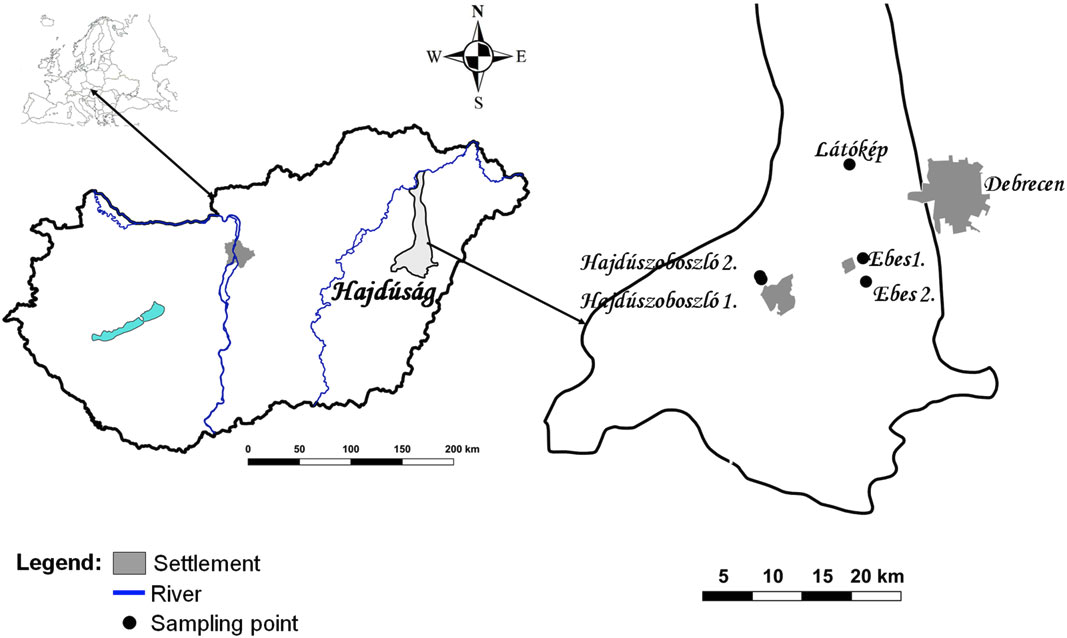
The Hajdúság (1500 km2) is located in the north, northeast part of the Great Hungarian Plain extending in a north–south direction (Figure 1). In this area fluvial (abandoned paleo channel, natural levee), aeolian deflation (deflation depression, deflation hollows) and accumulation (sand hummock) landforms can be found. Furthermore, there are several kurgans (Borsy Reference Borsy1969; Lóki Reference Lóki2014).
Locations of the sampling sites.
This area is characterized by different types of Chernozem, that were formed on the loess parent material. The main texture types of the soils are very different: sandy loam, loam, clay loam and clay. The organic carbon content of these soils varies between 3–4%. The topsoils usually contain small amounts of carbonates (3%), as they migrate and accumulate downward (>10%) in the lower part of the soil profile due to the leaching (Borsy Reference Borsy1969; Lóki et al. Reference Lóki2014; Mester et al. Reference Mester, Balla, Botos, Gy, Sándor and Novák2017; Novák et al. Reference Novák, Márta and Sz2020).
Due to the good fertility of the soil, the vast majority of the area is under large-scale arable cultivation (Balogh et al. Reference Balogh Sz, Márta and Novák2019), with cultivation of different crops. Furthermore, lower lying, lower productivity patches are used as grazing land and there is several small extent forest patches or shelterbelts (mainly Robinia pseudoacacia).
The study area is located in the temperate zone. In this area, the climate is warm summer and humid continental (Kottek et al. Reference Kottek, Grieser, Beck, Rudolf and Rubel2006). The mean annual temperature is 9.7–10.1°C, January and July monthly mean temperatures are −3°C and 21–21.5°C respectively, the average annual rainfall is 520–560 mm (Borsy Reference Borsy1969).
The goal of our approach was to exclude any artificial effect of some “rearing” experiments. We wanted to investigate if reworking or other effect is present in the natural environment, or not significant. We have chosen several different environments and multiple sampling depths to see if the method works properly for them, or if we observe significant “reworking” and other effect. Our results shows that the method works very well for modern, natural biospheroids, especially for geochronological purposes. All the sampled biospheroids gave realistic, young age (1995–2015 AD) within ±10 yr scatter.
2.2 Sampling locations and methods
In the Hajdúság sampling area, 5 sites with a high calcareous (Chernozem) soil layers have been identified (E1, 2: Ebes 1 and 2, H1, 2: Hajdúszoboszló 1 and 2; and L: Látókép), which provided a suitable environment for the formation and preservation of earthworm biospheroids.
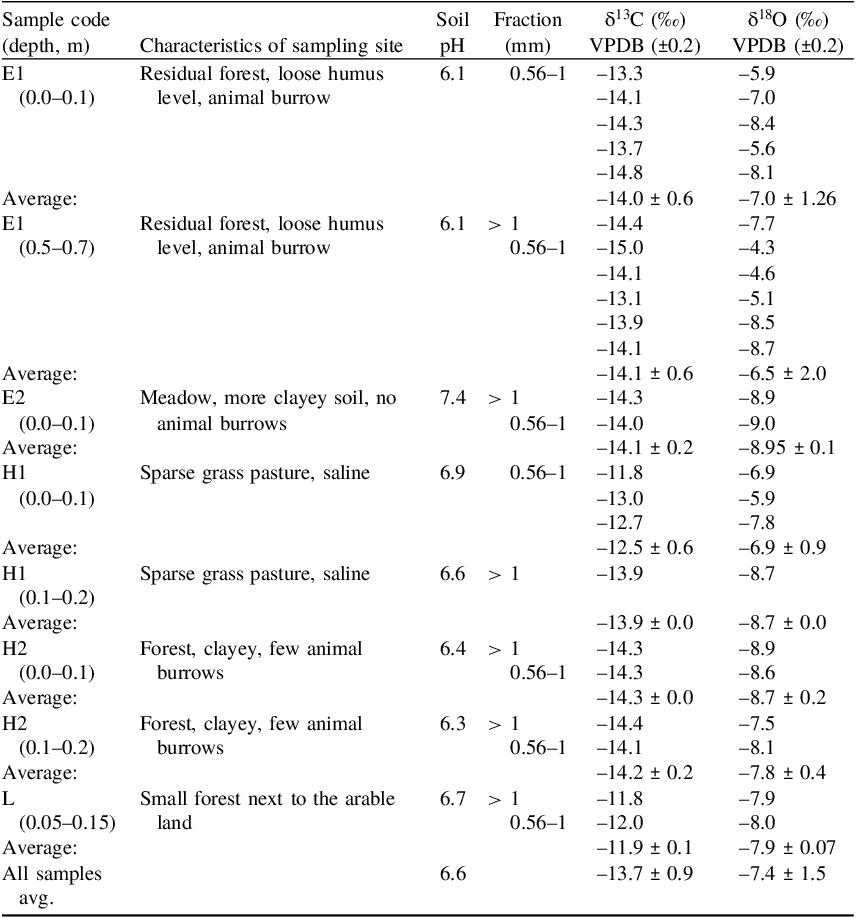
For recent biospheroid radiocarbon measurements, a total of 8 sediment samples were collected from the 5 sites (Figure 1) at depth between 0 and 70 cm, within recent A soil horizons. Samples were collected from undisturbed environments (grazing area and forest patch/shelterbelt), meaning no significant agricultural activity had occurred there (Table 1). Three sites (Ebes 1, Hajdúszoboszló 1 and Látókép) were totally undisturbed (non-disturbed by human activity), at two other sites grazing might be present (Ebes 2 and Hajdúszoboszló 2). The very top layer (0.0–0.1 m) of the recent soil was always sampled and, in some cases, we took a second sample, from a slightly deeper horizon, but still in the A-horizon (typically between 0.1–0.2 m depth). In some access animal burrows were observed (Table 2), which were more traces of microfauna (insects, earthworms). No trace of the life of larger organisms was detected. The sediment samples were stored in a cool and dry container until preparation process began.
Carbon and oxygen stable isotope results of the 23 samples. (E1: Ebes 1; E2: Ebes 2; H1: Hajdúszoboszló 1; H2: Hajdúszoboszló 2; L: Látókép)
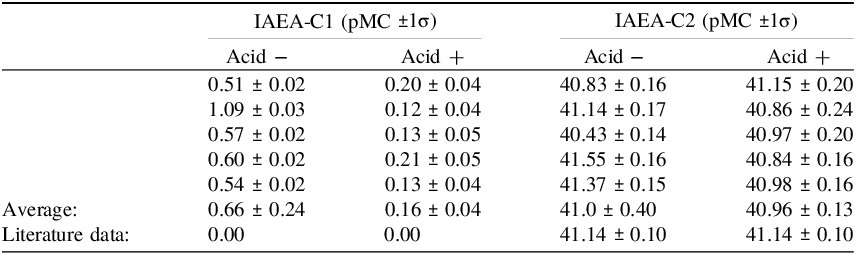
14C results of the prepared reference samples (literature data: Rozanski Reference Rozanski1991; Rozanski et al. Reference Rozanski, Stichler, Gonfiantini, Scott, Beukens, Kromer and van der Plicht1990)
2.3 Separation of biospheroids from the soil samples
For the radiocarbon measurement, the soil samples (avg.: 2.5 kg each) were first wet-sieved into two separate fractions (0.56–1 mm and >1 mm). Subsequently, we used a Zeiss KL 1500 LCD type stereomicroscope for careful manual separation of the earthworm biospheroids from the other remaining soil components. A sufficient amount of biospheroids were found for the 14C measurements.
2.4 Radiocarbon sample preparation and measurement method
The surface of the biospheroids had a thin organic coating of soil origin and sometimes a lime layer from the groundwater. Before the biospheroid samples processing, to develop a proper removal process of the possible foreign surface contamination, we performed some tests on IAEA international reference (C1 and C2) carbonate materials (Table 2).
We left out ultrasonic cleaning for the granules (Moine et al. Reference Moine, Antoine, Hatté, Landais, Mathieu, Prud’homme and Rousseau2017), as during our tests most of the granules broke into very small pieces or were very often destroyed. Using our method, the granules remained as compact bodies. Then, we apply first a H2O2 leaching step (30% aq.) to remove the organic contamination than the dissolution of the surface of the compact granules by 0.01 M HCl at 75°C. After these steps all kind of surface organic material contamination is also very likely removed. In this way, we avoid the use of HNO3 acid step. We applied MilliQ ultraclean C-free water (< 1 uS conductivity, UV sterilized, reverse-osmosis based ion exchange) for granule washing. Before use, all the test tubes were washed several times with HCl and MilliQ water in an ultrasonic bath, then after drying (at 60°C), finally they were heated/baked out at 300°C (1 hr).
We aimed for at least 10–15% dissolution when multiple biospheroids were prepared together (multiple samples to gain enough material for graphite-based AMS analyses, > 0.2 mg C each), thus first leaching by 30% H2O2 was used and followed by 0.01 M HCl acid wash for a short period of time. In the case of single granules, only 0.001 M of HCl solution was used, to avoid their complete dissolution.
We performed the CO2 extraction and purification from our samples at the AMS facilities of the Hertelendi Laboratory of Environmental Studies (HEKAL). The acid treatment of snails, shells, and other carbonaceous depositions occurred in a vacuum-tight, 2-finger glass flask with a special valve. We placed the sample into the vertical finger, and the phosphoric acid in the other. After evacuating the flask, the acid (100% H3PO4 aq) was poured onto the sample in the other finger. The 100% H3PO4 was prepared using 85% H3PO4 (aq) solution and P2O5 reagent. The applied preparation chemistry tools and steps were tested by IAEA-C1 and -C2 reference material preparation and analyses, as it is described in the text. The CO2 produced from the carbonate in the sample was introduced into our CO2 purification system (Molnár et al. Reference Molnár, Janovics, Major, Orsovszki, Gönczi, Veres, Leonard, Castle, Lange, Wacker, Hajdas and Jull2013a). The carbon dioxide was cryogenically separated from the water at −78°C, using a mixture of isopropyl-alcohol and dry ice. The gas pressure was measured in a known volume, to calculate the yield. Then, the purified CO2 gas sample was transferred to a sealed tube for graphitization.
In most cases, the last step of the sample preparation is the graphite production from the CO2 gas samples. Graphite targets were prepared by a sealed tube graphitization method at HEKAL (Rinyu et al. Reference Rinyu, Orsovszki, Futó, Veres and Molnár2015). After transfer of the CO2 gas and sealing of the reaction tubes, the graphitization process consists of 2 steps: 1) 3 hr at 500°C to release the hydrogen and reduce the iron powder, and 2) 5 hr at 550°C regular graphitization process.
All of the 14C measurements reported below were performed using our EnvironMICADAS AMS (Molnár et al. Reference Molnár, Rinyu, Janovics and Major2013b). Measurement time and conditions were set to collect at least 200,000 net counts for every single target in case of a modern sample. The overall measurement uncertainty for a modern sample is <3‰, including normalization, background subtraction, and counting statistics. For testing carbonate sample preparation procedures, the laboratory used international reference materials with known 14C activity carbonate sample IAEA-C1 (marble) and IAEA-C2 (travertine).
The 13C/12C ratio of the sample was simultaneously measured on the EnvironMICADAS, which is essential for the correction of the radiocarbon age. The maximum age of 14C measured with this instrument is 50 kyr and the average measurement time of each sample is approximately half an hour (Molnár et al. Reference Molnár, Rinyu, Janovics and Major2013b; Stuiver and Polach Reference Stuiver and Polach1977; Svingor Reference Svingor2012). The blank level for each type of samples in case of 1 mg C (carbon content) has good reproducibility of 0.3–0.5 pMC.
The raw radiocarbon (14C/12C) results are expressed in the unit of pMC (percent Modern Carbon). The pMC unit is generally used for environmental samples (Stenström et al. Reference Stenström, Skog, Georgiadou, Genberg and Johansson2011; Stuiver and Polach Reference Stuiver and Polach1977), 100 pMC is equal to a specific radiocarbon activity of 0.226 Bq/g carbon, which is equal with the hypothetical specific activity of atmospheric carbon of year 1950.
 $${{\rm{F}}^{14}}{\rm{C}} = {{\rm{A}}_{{\rm{SN}}}}/{{\rm{A}}_{{\rm{ON}}}} = {\rm{ pMC}}\left( \% \right)$$
where ASN is the normalized specific activity of the sample, and AON is the normalised sample activity, and their ratio is named Fraction Modern (F14C). This ratio does not depend on sampling and measurement year. We use the pMC units as the expression in % of F14C ratio (Stenström et al. Reference Stenström, Skog, Georgiadou, Genberg and Johansson2011).
Single biospheroid particles were measured with the AMS gas ion source system, because their amount of carbon content was only 30–80 µg. Thanks to the gas ion source (GIS), the AMS is able to analyze samples in CO2 forms, for masses less than 100 µg carbon content, such as carbonate, or aerosol, collagen and water samples, avoiding the graphitization step (Molnár et al. Reference Molnár, Mészáros, Janovics, Major, Hubay, Buró, Varga, Kertész, Gergely, Vas, Orsovszki, Molnár, Veres, Seiler, Wacker and Jull2020). The measurement error of the method is 1% for modern samples (Molnár et al. Reference Molnár, Rinyu, Janovics and Major2013b, Reference Molnár, Mészáros, Janovics, Major, Hubay, Buró, Varga, Kertész, Gergely, Vas, Orsovszki, Molnár, Veres, Seiler, Wacker and Jull2020).
Conversion of 14C values measured in pMC to calendar ages was performed using Calibomb software (http://calib.org/CALIBomb/), using data from the post-1950 atmospheric 14C bomb peak (Stuiver and Reimer Reference Stuiver and Reimer1993; Hua et al. Reference Hua, Barbetti and Rakowski2013). Calibrated ages are reported as age ranges at the 1 sigma confidence level (68.3%).
The pH of the soil samples was measured at the Institute of Agrochemistry and Soil Science of the University of Debrecen using an Adwa AD1020 instrument.
2.5 Stable isotope analyses
The samples were studied for δ13C and δ18O using a Finnigan Delta XP Plus mass spectrometer (Vodila et al. Reference Vodila, Palcsu, Futó and Zs2011). A Finnigan Delta XP Plus mass spectrometer was used for measurement of δ13C/δ18O values from all sample groups. The 13C content of the CO2 samples derived from the carbonate samples were measured and expressed as δ13C/δ18O values relative to V-PDB (Belemnitella americana from the PeeDee formation), following the equation: δ (‰) = (Rsample/Rstandard −1), where R is the 13C/12C ratio in the sample or in the international standard. The precision of the measurements is better than ± 0.2‰ for δ13C/δ18O (Hertelendi Reference Hertelendi1990). The preparation implies the production of a highly pure amount of CO2 gas from each sample, because the mass spectrometers can handle only CO2 gas (for δ13C/δ18O analyses) production. In most cases, the materials to be examined were not in pure CO2 in the gas phase. Different methods were used to convert the samples to CO2. The carbon content conversion to CO2 was done using the sample preparation line described above for AMS 14C analyses.
3. Results and discussion
3.1 Results of biospheroid of selection
The exact data (number of pieces) of the biospheroids extracted during sieving are summarized in Figure 2.
Concentration of biospheroids in soil samples (E1: Ebes 1; E2: Ebes 2; H1: Hajdúszoboszló 1; H2: Hajdúszoboszló 2; L: Látókép).
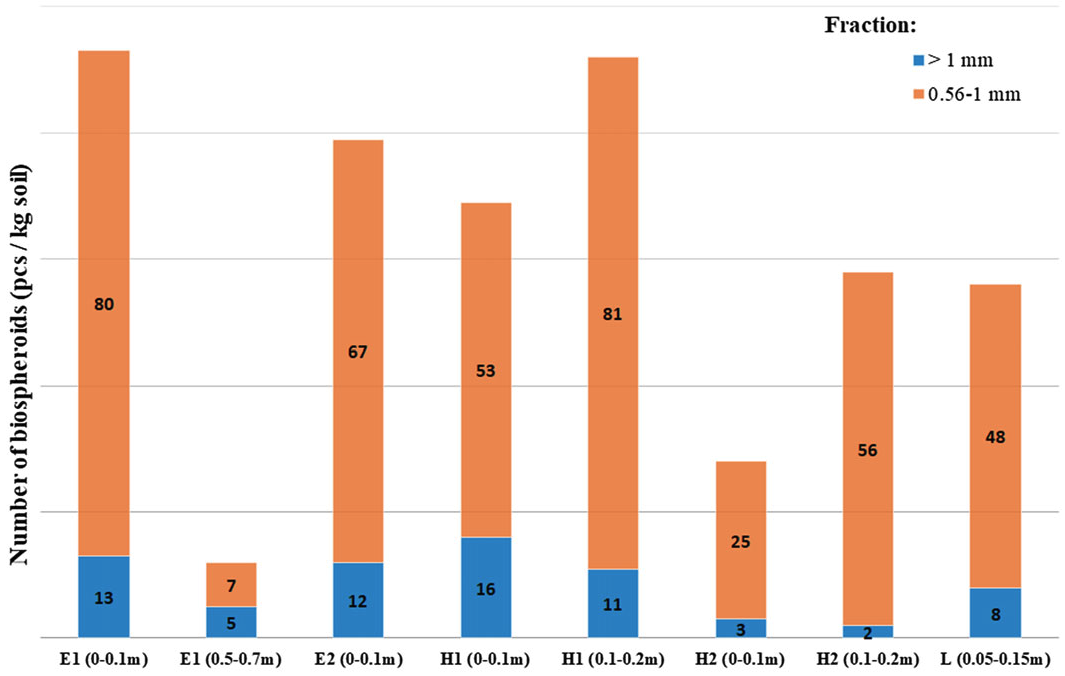
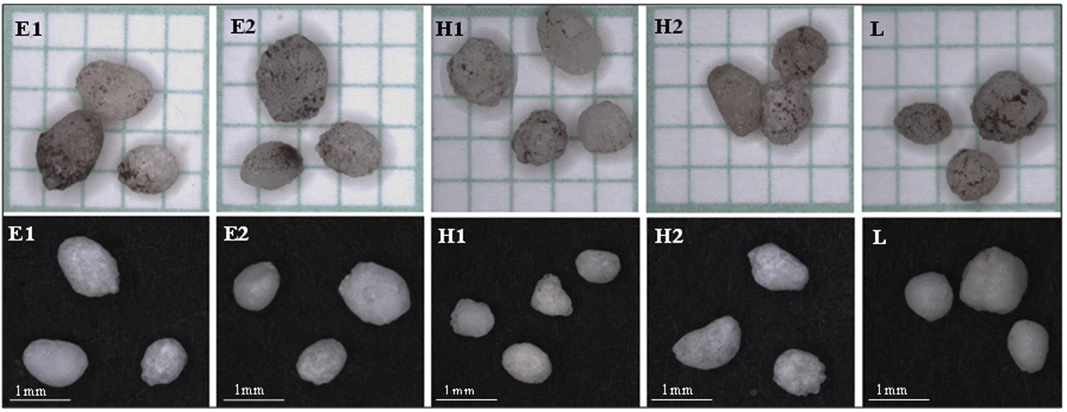
During separation, biospheroids were found in the soil after sieving and microscopic examination. On average, per kg of sieved soil, 2–16 biospheroid (10–20 mg) particles were found in the fraction larger than 1 mm, and 7–81 specimens (36 mg) from the 0.56–1 mm fraction. Some representative raw (first line) and cleaned (second line) biospheroids per sample site are shown in Figure 3 (cleaning process is described later in Section 3.3.1).
Example of raw (upper line) and cleaned (lower line) biospheroid samples (> 1 mm).
3.2 Results of stable isotopes
A total of 23 biospheroid samples from 8 different soil samples were measured for stable isotope ratios (δ13C and δ18O) (Figure 4; Table 1).
Stable isotope results of biospheroid samples. Samples larger than are 1mm (blue circles) and between 0.56 to 1 mm (orange diamonds). Error margins are typical (2 σ) errors of measurement on individual sample. The blue rectangle highlights the range of literature data (Canti Reference Canti2009; Prud’homme et al. Reference Prud’homme, Lécuyer, Antoine, Hatté, Moine, Fourel, Amiot, Martineau and Rousseau2018).
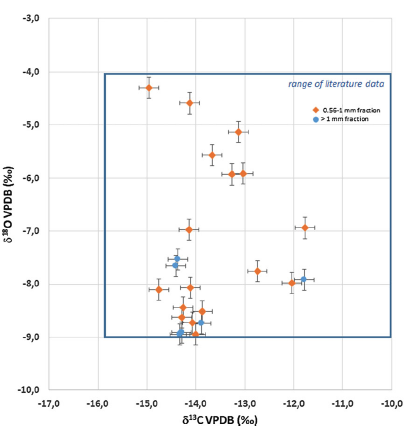
The whole series of measurements gave an average value of −13.7 ± 0.9‰ δ13C and −7.8 ± 1.5‰ δ18O for biospheroids (Table 1). Some of the measurement results are single biospheroids, but in some cases, an average sample of some stochastically selected biospheroids was used, to obtain the minimum amount of carbon required for the multiple 14C and δ13C measurements. The main aim of our stable isotope analyses was simply to justify that the investigated biospheroids were not significantly different from the previously published/measured ones. In respect of 14C age determination, the stable isotope composition and possible isotope fractionation is corrected/normalized in every results. That is why it is irrelevant regarding the age result. Consequently, the scope of our study was not to present a detailed stable isotope investigation as that would need much more samples to have reliable statistics.
3.3 Radiocarbon results
3.3.1 Standard 14C
The mild acid surface treatment was first performed on IAEA radiocarbon C1-C2 standard materials (20 samples). Particles from IAEA-C1 marble were the most suitable for background testing, as it has no measurable 14C content, so if external impurities remain in the sample, any extra 14C is observed during the measurement. First, reference materials C1 and C2, of similar mass as the samples of interest, were prepared by splitting the small reference samples into two groups of 10. We dissolved at least 10% of the sample with acid (H2O2 + HCl [see Section 2.4]) from the surface of one half of the sample, while the other half of the samples remained untreated for 14C measurement. The purpose of the acid treatment is to remove other carbonate contaminants deposited on the surface of the sample, which could affect the actual age of the sample.
Table 2 summarizes the results of 14C measurements of the IAEA-C1 and C2 standard materials (Rozanski Reference Rozanski1991; Rozanski et al. Reference Rozanski, Stichler, Gonfiantini, Scott, Beukens, Kromer and van der Plicht1990).
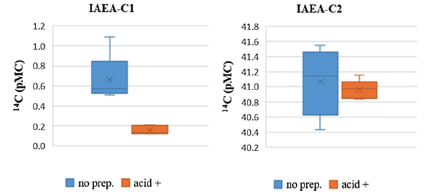
The measured results are shown in Figure 5. show that the acid pretreatment of the samples is appropriate and effective, because the average 14C content of the prepared IAEA-C1 dropped to 0.16 ± 0.04 pMC from 0.66 ± 0.24 pMC, and the standard deviation (n = 5) is significantly smaller (0.04 instead of 0.24) when acid prep is applied. It helps significantly to get better detection limit, higher detectable maximum age. In case of IAEA-C2, after proper blank correction, the results remained equally good, but also in case of acid pretreatment the standard deviation of the repeated analyses (n = 5) is only 0.13 pMC, while it was three times higher (0.40 pMC) without the acid prep.
Results and standard deviation of samples (before and after acid treatment).
The international reference materials (IAEA-C1 marble, IAEA-C2 travertine) were prepared in equal amounts and co-prepared with biospheroid samples. During the preparation of the reference materials, the same tools and chemicals were used in the same amount as with our biospheroid samples. The reference graphites were measured simultaneously with the real biospheroid samples. The obtained reference results match well with the expected, literature reference values which shows the applied sample preparation and measurement methods were reliable, for IAEA-C1 and C2 materials are known.
3.3.2 Recent earthworm biospheroids
A total of 24 biospheroid (18 multiple and 6 single) samples from 8 recent surface soil samples from the study area were measured by AMS. The results are summarized in Table 3, which clearly shows a rather uniform age (within a 20–30-year interval), with averaged radiocarbon values centered on 105.6 pMC, with a standard deviation of only ± 2.6 pMC (1σ) for the multiple and single biospheroid samples.
Measured 14C ages and calculated calendar ages of the samples (avg: average, * single sample). (E1: Ebes 1; E2: Ebes 2; H1: Hajdúszoboszló 1; H2: Hajdúszoboszló 2; L: Látókép) (calibrated age results before 1960 AD are excluded, as no samples between 1960–1995 were found)
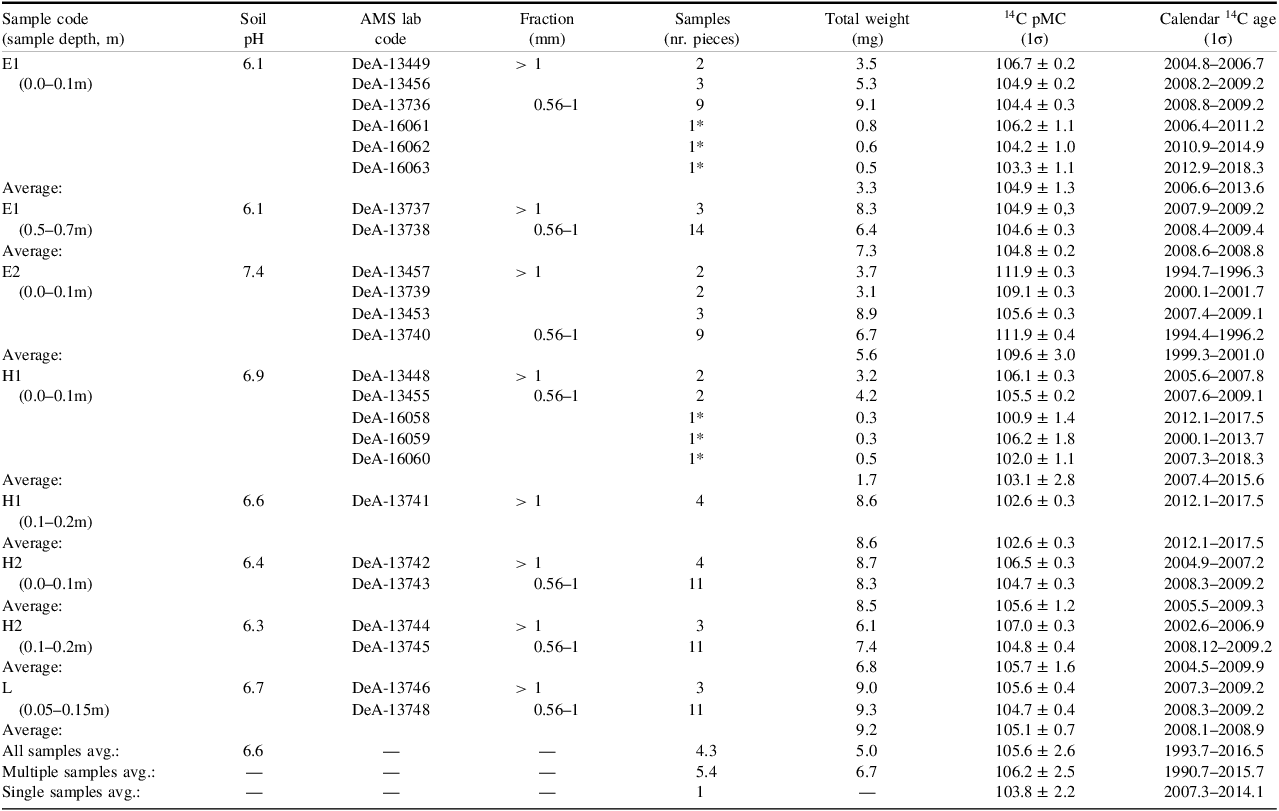
Taking advantage of the “atomic bomb” peak of the 1960s, biospheroids from recent soils can be 14C dated with great precision (calibrated age uncertainty is on the level of ± 1 year), providing a unique opportunity for an in-depth understanding of the soil mapping potential of these macrofossils.
We excluded the few-years period before the bomb-peak (possible age range is 1955–1959 AD) from the calibrated age range results (1σ) (Table 3, last column of Calendar 14C age [1σ]). If there would be (any) ∼60-yr-old samples (1955–1959) in the studied group of the samples (n = 24), then the 20–60-yr age range period should also be present (between 1959–1995). No samples from the period between 1959–1995 were found, only ages after 1995 are present (1σ). The very likely explanation for this observation is that all samples formed after 1995 AD, and ages from the AD 1950s can be excluded.
During 2–3 repeated measurements for each soil sample, our results reproducibly remained within a ± 3.0 pMC range (Figure 6). The 14C values measured for the multiple biospheroids ranged from 103–112 pMC. The highest average (109.6 ± 3.0 pMC) radiocarbon concentration was found in the Ebes 2. (0–0.1 m) area, where the soil has a weakly alkaline pH (7.4).
Measured 14C (pMC) values of earthworm biospheroid samples, indicated by piece numbers.
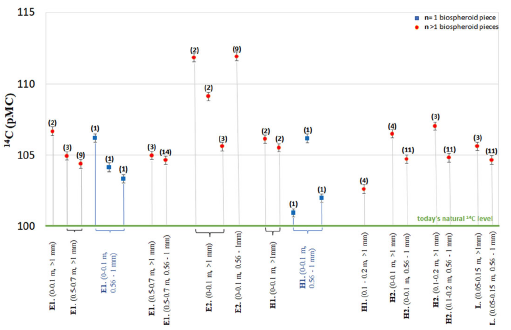
One of the multiple biospheroid samples gave the lowest pMC value (Hajdúszoboszló 1. 0.1–0.2 m), which almost corresponds to 14C activity level at the time of collection (100–102 pMC, for the last 10 yr). This represents a very young multiple biospheroid sample up to a few years old. We randomly selected 18 multiple and 6 single biospheroid samples from the 100 biospheroids collected from each of the 5 sites. When calibrating samples, the CaliBomb software typically gives the period before 1965 with a less than 5% probability of a possible age of origin. The single biospheroid samples came from Ebes 1. (0–0.1 m, 0.56–1 mm) and Hajdúszoboszló 1. (0–0.1 m, 0.56–1 mm), where the largest numbers of earthworm biospheroids were found during the separations.
As the measured 14C values (except for one sample: Ebes 2. [0–0.1 m]) covered a rather narrow range (for 18 different multiple samples: 105.6 ± 2.6 pMC), the calculated calendar ages (Figure 7) consequently also designate a relatively narrow time interval (cal AD 1995–2015), so no age older than 30 yr was observed.
The calculated calendar age of the recent biospheroid samples.
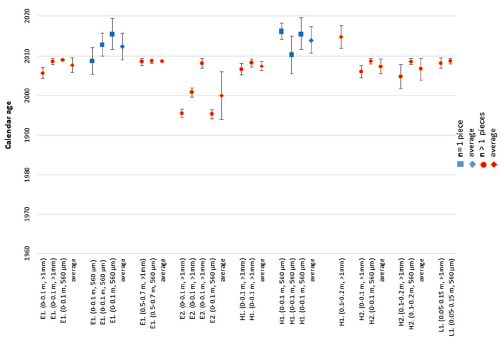
In the six single biospheroid samples, an extremely narrow time interval is shown by the calendar ages were derived from the 14C measurement. This period covers the period 2005–2015, that is, 2–12 yr of age compared to the date of sampling (2017). An age interval of 8–12 yr was also obtained for two multiple biospheroid samples of the deepest sampled soil layer Ebes 1. (0.5–0.7 m). Sample Hajdúszoboszló 1. (0.1–0.2 m) combining 4 biospheroids gave an age ∼ 2015, a bit younger than other multiple biospheroid samples.
In the case of multiple biospheroids, each measured sample is usually the result of 5–10 biospheroid explorations, so each measured 14C based age is considered an average. The “averaged age” of 10 ± 2 yr can be said to be a very characteristic, well-reproducible average age for biospheroid samples extracted from today’s topsoil, as we obtained this result in 14 of the 18 measurements. In the case of the examination of single particles, a total of 6 stochastic biospheroid samples (3 per soil sample in two sites) were measured with AMS 14C using the gas ion source technique (GIS-AMS, Molnár et al. Reference Molnár, Mészáros, Janovics, Major, Hubay, Buró, Varga, Kertész, Gergely, Vas, Orsovszki, Molnár, Veres, Seiler, Wacker and Jull2020), the results of which are shown in (Table 3). Consistent 14C values (102–106 pMC) were obtained for single particles, and half of the samples resulted in ages younger than 5 yr compared to the sampling date (2017). The obtained 14C age results from the 2 grazing sites (Ebes 2 and Hajdúszoboszló 2) were not significantly different from the three non-disturbed ones.
Since the measured 14C values cover a rather narrow range, the average radiocarbon concentration for the 6 different samples was 103.8 ± 2.2 pMC. Consequently, the calculated calendar ages also designate a relatively narrow time interval (2000–2017) (Figures 6–7).
4. Summary and conclusion
A new perspective research direction is the use of secondary carbonates—more specifically the application of earthworm biospheroids in measuring soil age 14C. These are highly sensitive paleoenvironmental indicators, which makes them suitable for paleoenvironmental reconstruction. This fact also motivated us to start studying these calcite earthworm biospheroids. Our goal was to develop and elaborate a sample preparation protocol for earthworm biospheroids for the 14C method and test it on international IAEA (C1 and C2) reference materials. Comparing it to the previously published other protocols (Canti et al. Reference Canti, Bronk-Ramsey, Hua and Marshall2015; Moine et al. Reference Moine, Antoine, Hatté, Landais, Mathieu, Prud’homme and Rousseau2017), we did not crush the biospheroid bodies but kept them intact. We dissolved their outer surface effectively in a very controlled way, while using less aggressive chemicals. Subsequently, the applicability of the pretreatment method was checked on several biospheroid samples obtained from recent soils (from recently buried surfaces) from different environments (residual forest, meadow, grass pasture, forest). As the age of the recent topsoil (as burial time) is known, this can be considered essentially “zero age,” as not buried yet. Furthermore, taking advantage of the “atomic bomb” peak of the 1960s, biospheroids from recent soils can thus be bound with very high accuracy (calibrated age uncertainty is on the level of ±1 year), thus they are very useful for this study. It is providing a unique opportunity for an in-depth understanding of the soil burial time mapping potential using these macrofossils (earthworm biospheroids).
As a result of the sieving of the soils and the selection of biospheroids, 5–10 grains (1 mm <) were found on average from 1 kg of soil samples, while 50 specimens were found between 0.56–1 mm. In the case of the radiocarbon IAEA standard materials and both the multiple and single biospheroids from recent, surface soils, we found that the mild acidic (10% surface solution) pretreatment was successful and expedient.
A total of 23 stable isotopes, 18 samples of 14C, 6 single biospheroids and 20 standard samples were measured for recent topsoil samples collected from 5 different areas.
Based on the δ13C results of the investigated 23 biospheroid samples, their carbon content is from mostly biogenic origin; the measured δ13C (–13.7 ± 0.9‰ on average) and δ18O (–7.4 ± 1.5‰ on average) results are in a good agreement with the published stable isotope proportions (δ13C: −10‰ – −15‰, and δ18O: −4‰ – −9‰ VPDB, respectively) (Canti Reference Canti2009; Prud’homme et al. Reference Prud’homme, Lécuyer, Antoine, Hatté, Moine, Fourel, Amiot, Martineau and Rousseau2018).
The 24 (multiple and single) biospheroid samples extracted from, recent soils near Debrecen show extremely uniform 14C results. The average radiocarbon concentration is 105.6 pMC ± 2.6 pMC (1σ). It means a rather small standard deviation (2.6 pMC) for all the biospheroid sample measurements (n = 24).
None of the 8 recent topsoil (A-horizon) samples collected in 5 different sites yielded biospheroids older than about 30 yr. It is clear from the fact, that we have not observed even a single biospheroid with such high a bomb-peak 14C result as it was typical of the 1960s and 1990s. As all our results of 560 µm–1 mm sized biospheroids collected from recent topsoil show quite recent ages (10–25 yr), it suggests that the method might be suitable to measure the burial time, as long as earthworm biospheroids can be found in the soil layer. The expected overall uncertainty of this burial time analyses is rather small, within the margin of analytical error of the radiocarbon dating method, considering the typical uncertainty of the other soil dating methods. The potential and possible errors of the method should be further tested and verified on already buried soil layers, where the burial time can be measured/estimated in an independent way.
Our observations confirm that earthworms do indeed consume almost exclusively recent biogenic carbon, not other organic compounds or inorganic carbonates previously bound in the soil, and thus the age of their biospheroids is extremely close to the real age of the surface. No single biospheroids older than 30 yr were found in the studied soils. No “reservoir effect” is seen for these macrofossils. Thus, we conclude that biospheroid-based 14C age determination method may be suitable to measure the burial time as long as earthworm biospheroids can be found in the soil. Is a very promising tool to estimate the age of soils, at least in similar environment as it is now in the Carpathian Basin. Further studies might be needed to test possible different effect of other type environment. The method was tested in 5 locations for soils growing in different environments. We obtained positive results in all investigated cases, i.e. the aging worked well on recent samples. There are a few examples in the literature when the results obtained were successfully compared with other (conventional) 14C dating and with the OSL method (obviously, the results were not given by the bomb tip with a high-precision verification error band, but by the other methods with wider error ranges). Currently, we are not aware of any circumstances that would justify the use of the method not working in the past (Moine et al. Reference Moine, Antoine, Hatté, Landais, Mathieu, Prud’homme and Rousseau2017).
Acknowledgments
The research was supported by the European Union and the State of Hungary, co-financed by the European Regional Development Fund in the project of GINOP-2.3.2-15-2016–00009 “ICER.” We acknowledge the support of the ÚNKP-20-3-I-DE-386 New National Excellence Program of the Ministry for Innovation and Technology from the source of the National Research, Development and Innovation Fund.


 Open access

