


The bilingual skills of children of immigrants are crucial for the children's cognitive development, academic achievements, and family relations (Bakken, Reference Bakken2003; Bialystok, Reference Bialystok2011; Tannenbaum & Berkovic, Reference Tannenbaum and Berkovic2005). Western European countries have experienced a notable increase in the population of immigrants during the last decades. Children in these minority groups have the opportunity and the challenge of acquiring two languages, as opposed to their monolingual majority peers. Accumulating research suggests that children of immigrants may benefit from learning both the majority and the minority language, as bilingualism is associated with positive outcomes in cognitive, academic, and social domains (Bialystok, Reference Bialystok2011; Cummins, Reference Cummins2000; Tannenbaum & Berkovic, Reference Tannenbaum and Berkovic2005). However, more knowledge is needed regarding which factors predict competence in each of the children's two languages. This study focuses on children who were born in Norway to two immigrant parents born in Turkey and the minority (Turkish) and majority (Norwegian) language skills of these children. We explore the effect of parental background factors, more specifically father's and mother's education and age at migration, on children's competence in both of their languages for two different age groups. In this study, we focus on children's vocabulary. A well-developed vocabulary helps a child to comprehend the content of communication in everyday life and in the classroom. Furthermore, vocabulary is clearly related to literacy skills in both monolingual (Snow, Burns, & Griffin, Reference Snow, Burns and Griffin1998) and bilingual (Lervåg & Aukrust, Reference Lervåg and Aukrust2010) children.
TURKISH IMMIGRANTS IN NORWAY
Various immigrant groups have unique migration histories and characteristics that distinguish them from other groups (Henriksen, Reference Henriksen2007). Before the immigration ban in 1975, which is still enforced, Turkish immigrants came as low-skilled labor immigrants hired in low-status jobs. After 1975, Turks continued immigrating to Norway, by means of family reunions and migration marriages. In three out of four marriages among Turkish immigrants in Norway, the spouse is a citizen of Turkey (Henriksen, Reference Henriksen2007). As a group, Turkish immigrants in Norway are slower in social mobility and educational attainment, lagging behind most other immigrant groups and the majority of the Norwegian population. Women, especially, have low participation in the labor force (Henriksen, Reference Henriksen2007). Research on Turkish immigrant families in Norway suggests that there are both “traditional” and “modern” gender roles within this immigrant group (Sandrup, Reference Sandrup2013). In some families, the father has the traditional role as the main provider in the household, less directly involved in the upbringing of the child. In other families, however, the father takes on a more modern gender role, being more directly involved in interaction with the child. Most families have access to Turkish media (TV and radio; Scheele, Leseman, & Mayo, Reference Scheele, Leseman and Mayo2010) and visits to Turkey during holidays are frequent (Blom & Henriksen, Reference Blom and Henriksen2008), thereby exposing children to the minority language.
Most children, including children within the immigrant population, attend preschool in Norway (Statistics Norway, 2012). The children are immersed in a Norwegian language context within the preschools. The language of education in Norway is Norwegian. Teaching in other mother-tongue languages and bilingual education are only offered during transition periods and only as a means for the child to learn Norwegian and/or understand the subject matter (Garthus-Niegel, Oppedal, & Vike, Reference Garthus-Niegel, Oppedal and Vike2016). It is therefore not likely that children born in Norway, to two Turkish immigrant parents, receive any bilingual education or education in their mother tongue.
PARENTAL EDUCATION AND CHILDREN'S VOCABULARY
Socioeconomic background (SES) is a composite variable, comprising indicators such as income, occupational status, and educational level. SES may be measured by mother's and father's background variables, or by a combination of information from both. The most common operationalization of SES in studies of language skills is mother's education (Hoff, Reference Hoff2006). Mother's education predicts children's language skills more consistently than other SES indicators such as income (Hammer, Farkas, & Maczuga, Reference Hammer, Farkas and Maczuga2010). In a Norwegian sociocultural context, parental education appears to be a more valid SES measure than income and occupation. In spite of their educational resources, immigrants with high education might have low-paid, low-skilled jobs (Fekjær, Reference Fekjær2007).
Majority language
Cross-sectional research studies have consistently demonstrated that SES is associated with children's vocabulary in monolingual samples (Hoff, Reference Hoff2003, Reference Hoff2006; Hart & Risley, Reference Hart and Risley1995). Furthermore, the differences in vocabularies associated with SES that were identified among 3-year-old children in the United States persisted even when the children were from 5 to 10 years of age (i.e., even when they had gained school experience; Walker, Greenwood, Hart, & Carta, Reference Walker, Greenwood, Hart and Carta1994). Walker et al. (Reference Walker, Greenwood, Hart and Carta1994) concluded that in the high-SES families, parents engaged their children in activities associated with better vocabulary skills, such as child-oriented language games, fantasy elaboration of everyday events, oral storytelling, and frequent verbal communication. SES, more specifically parental education, is also related to bilingual children's vocabulary skills, but the relationship varies depending on the language being measured (August & Shanahan, Reference August and Shanahan2006; Dixon, Wu, & Daraghmeh, Reference Dixon, Wu and Daraghmeh2012; Dixon, Zhao, Quiroz, & Shin, Reference Dixon, Zhao, Quiroz and Shin2012; Hoff & Elledge, Reference Hoff, Elledge, Cohen, McAlister, Rolstad and MacSwan2005).
Far more studies have focused on bilingual children's majority language skills than on their minority language, and the results are similar to the results from studies on monolingual children (Dixon, Zhao, et al., Reference Dixon, Zhao, Quiroz and Shin2012). There are positive relations between parental SES and bilingual children's majority vocabulary in the United States (Buac, Gross, & Kaushanskaya, Reference Buac, Gross and Kaushanskaya2014; Duursma et al., Reference Duursma, Romero-Contreras, Szuber, Proctor, Snow, August and Calderon2007; Hammer et al., Reference Hammer, Komaroff, Rodriguez, Lopez, Scarpino and Goldstein2012; Hoff & Elledge, Reference Hoff, Elledge, Cohen, McAlister, Rolstad and MacSwan2005; Quiroz, Snow, & Zhao, Reference Quiroz, Snow and Zhao2010), in Canada (Golberg, Paradis, & Crago, Reference Golberg, Paradis and Crago2008), in the multilingual and multicultural context of Singapore (Dixon, Reference Dixon2011; Dixon, Wu, et al., Reference Dixon, Wu and Daraghmeh2012; Dixon, Zhao, et al., Reference Dixon, Zhao, Quiroz and Shin2012; Saravanan, Reference Saravanan2001), as well as in European immigration contexts (Prevoo et al., Reference Prevoo, Malda, Mesman, Emmen, Yeniad, van Ijzendoorn and Linting2014; Rydland, Grøver, & Lawrence, Reference Rydland, Grøver and Lawrence2014; Scheele et al., Reference Scheele, Leseman and Mayo2010). However, a study among Turkish–Dutch 3-year-olds in the Netherlands showed no such relationship (Scheele et al., Reference Scheele, Leseman and Mayo2010). The researchers concluded that the language maintenance patterns and language use within Turkish immigrant families might not correspond with SES.
SES is typically measured by mother's education, or by a composite index that includes mothers’ education in the studies mentioned above. In two studies that involved separate measures of mother's and father's level of education, only the mothers’ education correlated significantly with the majority language competence of the child (Hoff & Elledge, Reference Hoff, Elledge, Cohen, McAlister, Rolstad and MacSwan2005; Hammer et al., Reference Hammer, Komaroff, Rodriguez, Lopez, Scarpino and Goldstein2012). The study design involved children and parents from a variety of immigrant groups, which makes it difficult to separate potentially different associations between education and ethnicity.
Studies investigating the effect of parental SES on children's majority language competence have typically involved young children between 2 and 7 years of age (Buac et al., Reference Buac, Gross and Kaushanskaya2014; Dixon, Wu, et al., Reference Dixon, Wu and Daraghmeh2012; Dixon, Zhao, et al., Reference Dixon, Zhao, Quiroz and Shin2012; Golberg et al., Reference Golberg, Paradis and Crago2008; Hammer et al., Reference Hammer, Komaroff, Rodriguez, Lopez, Scarpino and Goldstein2012; Hoff & Elledge, Reference Hoff, Elledge, Cohen, McAlister, Rolstad and MacSwan2005, Prevoo et al., Reference Prevoo, Malda, Mesman, Emmen, Yeniad, van Ijzendoorn and Linting2014; Quiroz et al., Reference Quiroz, Snow and Zhao2010; Scheele et al., Reference Scheele, Leseman and Mayo2010). A few studies that included children up to 10 years yielded similar results to those found in younger samples (Golberg et al., Reference Golberg, Paradis and Crago2008; Rydland et al., Reference Rydland, Grøver and Lawrence2014). To the best of our knowledge, this association has not been examined among children older than 10 years. Considering that vocabulary skills predict academic achievements, this age gap in the research is unfortunate. The present study therefore includes a group of 12-year-olds in addition to a group of 5-year-olds.
Minority language
Some of the studies previously mentioned included children's minority language scores. In general, they did not find significant relations between SES and minority vocabulary. Nonsignificant associations between parental SES and minority vocabulary were observed in studies within the Spanish–English context in the United States (Buac et al., Reference Buac, Gross and Kaushanskaya2014; Hammer, Davison, Lawrence, & Miccio, Reference Hammer, Davison, Lawrence and Miccio2009; Hammer et al., Reference Hammer, Komaroff, Rodriguez, Lopez, Scarpino and Goldstein2012; Quiroz et al., Reference Quiroz, Snow and Zhao2010), for Chinese, Malay, and Tamil children's minority vocabulary in the multicultural context of Singapore (Dixon, Wu, et al., Reference Dixon, Wu and Daraghmeh2012; Dixon, Zhao, et al., Reference Dixon, Zhao, Quiroz and Shin2012) and in immigration contexts in Europe, including Turkish immigrants (Prevoo et al., Reference Prevoo, Malda, Mesman, Emmen, Yeniad, van Ijzendoorn and Linting2014; Scheele et al., Reference Scheele, Leseman and Mayo2010). In contrast, parental education positively predicted children's minority language scores in a US study of 5-year-olds (Bohman, Bedore, Pena, Mendez-Perez, & Gillam, Reference Bohman, Bedore, Pena, Mendez-Perez and Gillam2010). The authors argued that children in low-SES groups were likely to represent families who were recent immigrants to the United States and that parental generational status and SES were somehow confounded in the study.
As in the case for studies focusing on the majority language, studies on minority vocabulary also focus on preschoolers and young school-age children (Buac et al., Reference Buac, Gross and Kaushanskaya2014; Dixon, Wu, et al., Reference Dixon, Wu and Daraghmeh2012; Dixon, Zhao, et al., Reference Dixon, Zhao, Quiroz and Shin2012; Hammer et al., Reference Hammer, Davison, Lawrence and Miccio2009, Reference Hammer, Komaroff, Rodriguez, Lopez, Scarpino and Goldstein2012; Quiroz et al., Reference Quiroz, Snow and Zhao2010; Scheele et al., Reference Scheele, Leseman and Mayo2010). Willard, Agache, Jäkel, Glück, and Leyendecker (Reference Willard, Agache, Jäkel, Glück and Leyendecker2015), however, examined the minority vocabulary skills among both 6- and 10-year-old bilingual children with Turkish immigrant background. The results showed that father's education had a direct effect on the oldest children's vocabulary scores. The effect on the younger children's scores was “marginally significant” (p = .09) and indirect, through the home literacy environment. The differences in type and magnitude of effect show the importance of doing studies across various age groups.
The effect of mother's versus father's education level
Previous research has indicated that, even though mother's and father's education levels often correspond, they influence children's language skills differently (Cabrera, Shannon, & Tamis-LeMonda, Reference Cabrera, Shannon and Tamis-LeMonda2007; Driessen, van der Slik, & De Bot, Reference Driessen, van der Slik and De Bot2002; Hoff & Elledge, Reference Hoff, Elledge, Cohen, McAlister, Rolstad and MacSwan2005; Pancsofar & Vernon-Feagans, Reference Pancsofar and Vernon-Feagans2010; Willard et al., Reference Willard, Agache, Jäkel, Glück and Leyendecker2015). Willard et al. (Reference Willard, Agache, Jäkel, Glück and Leyendecker2015) found a positive relationship between Turkish immigrant fathers' education and their children's vocabulary, in contrast to the negative effect of mothers' education. Their results indicated that father's education had an effect over and above mother's education and highlighted the importance of studying mother's and father's background separately. In their study, Driessen et al. (Reference Driessen, van der Slik and De Bot2002) suggested the occurrence of a “male-dominance” pattern in which characteristics of the father more often affected bilingual children's language competence rather than the characteristics of the mother. A male-dominance pattern is often most pronounced in families in which the mother does not have a job outside the home. The current sample is drawn from a group of Turkish immigrants in Norway, a group characterized by low participation in the labor force among women (Henriksen, Reference Henriksen2007). It is therefore possible that a similar male-dominance pattern may be found in our sample.
PARENTAL AGE AT MIGRATION AND CHILDREN'S BILINGUAL VOCABULARY
Researchers have argued that immigrant status is the most potent family predictor of the child's linguistic outcomes as parents’ beliefs about dual language learning and their own patterns of language use vary as a function of immigrant status (Pearson, Reference Pearson2007). Language use tends to shift toward the majority language over immigrant generations (Bhatia & Ritchie, Reference Bhatia and Ritchie2004; Hakuta & D'Andrea, Reference Hakuta and D'Andrea1992), and language shifts have also been observed within generations of immigrants (Pease-Alvarez, Reference Pease-Alvarez2002). Several studies have shown that parental age at migration is associated with language shifts and that this impacts on the language competence of their children (Becker, Reference Becker2011; Bhatia & Ritchie, Reference Bhatia and Ritchie2004; Hammer et al., Reference Hammer, Komaroff, Rodriguez, Lopez, Scarpino and Goldstein2012; Hurtado & Vega, Reference Hurtado and Vega2004; Lambert & Taylor, Reference Lambert and Taylor1996; Pease-Alvarez, Reference Pease-Alvarez2002; Portes & Schauffler, Reference Portes and Schauffler1994; Quiroz et al., Reference Quiroz, Snow and Zhao2010; Tran, Reference Tran2010; Willard et al., Reference Willard, Agache, Jäkel, Glück and Leyendecker2015). Age at migration reflects the number of years the parent spent in Turkish society. An alternative measure is length of residence, as this is a sensitive measure of the number of years the parent has spent in the Norwegian society. National statistics, however, suggest that length of residence and Norwegian skills often do not correspond in immigrant groups with low participation in the labor force, such as Turkish women in Norway (Blom & Henriksen, Reference Blom and Henriksen2008). In addition, a 40-year-old mother migrating at the age of 20 has the same length of residence as a 25-year-old mother migrating at age 5. Their Norwegian skills and participation in Norwegian society, however, might be worlds apart. Hence, we chose age at migration as the relevant measure of immigration status in the present study.
Majority language
With respect to the impact of parents’ immigrant status on their children's majority vocabulary scores, research among Latino children in the United States showed that mother's age at migration, defined as length of residence in the United States, was positively related to children's majority vocabulary (Quiroz et al., Reference Quiroz, Snow and Zhao2010). Likewise, a German study of bilingual preschool children of Turkish origin showed that children of second-generation parents (i.e., their parents were born in Germany to Turkish immigrant parents) had higher scores than children of first-generation parents (Becker, Reference Becker2011). However, when parents differed in generation status (one first-generation and one second-generation parent), the children's majority vocabulary scores were lowest when mothers were first-generation and fathers were second-generation immigrants. If mothers were second-generation, however, the children's scores increased. The group of children with two second-generation parents had the highest majority vocabulary scores. The results of Becker's study underscore the necessity of including details about both parents’ generation status in studies of children's language development.
Minority language
The results from studies regarding the association between parental immigrant status and children's minority language are generally consistent. Children of first-generation mothers have higher vocabulary scores than children of second-generation mothers (Hammer et al., Reference Hammer, Komaroff, Rodriguez, Lopez, Scarpino and Goldstein2012; Willard et al., Reference Willard, Agache, Jäkel, Glück and Leyendecker2015). Likewise, children's minority vocabulary is negatively related to the length of the mothers’ stay in the host country (Quiroz et al., Reference Quiroz, Snow and Zhao2010). Father's generational status is often not included in the studies (e.g., Hammer et al., Reference Hammer, Komaroff, Rodriguez, Lopez, Scarpino and Goldstein2012), and if included, it is not related to children's vocabulary scores (e.g., Willard et al., Reference Willard, Agache, Jäkel, Glück and Leyendecker2015). One study compared the associations between the generational status of mothers versus fathers and their children's minority vocabulary scores (Willard et al., Reference Willard, Agache, Jäkel, Glück and Leyendecker2015). The children of second-generation mothers had lower scores than children of first-generation mothers. For fathers, however, no association between generational status and minority vocabulary was found.
In general, the evidence from this research reflects a process where the majority language becomes stronger and the minority language becomes weaker over the generations. This pattern, however, may be related to the SES of the family. A study of Cuban immigrants in the United States (Lambert & Tyler, Reference Lambert and Taylor1996) demonstrated loss of minority vocabulary over generations among low-SES but not among high-SES families. In the high-SES families, the minority language and cultural competence were encouraged at the same time as the children learned the majority language. These findings underscore the importance of including both SES variables and immigrant status in studies of children's bilingual skills.
In summary, this literature review revealed five important shortcomings often found in research on parental background and children's language competence:
1. A single focus on the majority language, excluding the minority language (Dixon, Zhao, et al., Reference Dixon, Zhao, Quiroz and Shin2012)
2. A single focus on mothers’ background, excluding the fathers (Driessen et al., Reference Driessen, van der Slik and De Bot2002), making it difficult to detect potential effects of fathers' background
3. A single focus on one age group, most often preschoolers
4. Parents’ age at migration not considered (Becker, Reference Becker2011)
5. Often heterogeneous study samples, including immigrants speaking a variety of languages and coming from a variety of ethnic groups
AIM
The present study was designed to fill in these gaps in the literature by including the minority language, fathers’ background, two different age groups, parents' age at migration, and participants from only one immigrant group. In doing so, the study aims to examine potential relations between both parents’ background factors and both majority and minority language skills among their children, without ethnic background possibly confounding the results. Knowledge of which parental factors significantly predict children's language skills may help in identifying which children may be more vulnerable and could potentially benefit from compensating educational interventions. Our study takes an exploratory approach to answer two questions:
1. Do mothers’ and fathers’ education levels predict 5- and 12-year-olds' vocabulary scores in their minority and majority language?
2. Do mothers’ and fathers’ ages at migration predict 5- and 12-year-olds' vocabulary scores in their minority and majority languages?
METHOD
Participants
Participants were drawn from a larger investigation on children of Turkish heritage in Norway, Germany, and the Netherlands (Social Integration of Migrant Children: Uncovering Family and School Factors promoting Resilience). The study design aimed to recruit a convenience sample of 120 children from Norway in each of the age cohorts. The 5-year-olds were preschoolers about to transition to first grade and the 12-year-olds were seventh graders about to transition from elementary to secondary school. Children were recruited over a 2-year period. The National Population Registry provided contact information for children born in 1998/1999 or 2004/2005, with parents born in either Turkey or Norway, but with all four grandparents born in Turkey. However, all children identified by the Norwegian registry had both parents born in Turkey.
A total of 202 families (97 preschoolers, 105 preadolescents) participated at the Norwegian site. The present study included 174 families (81 preschoolers, 53% girls; 92 preadolescents, 41% girls) from this sample. We excluded (a) children who migrated to Norway at/after the age of 3 (n = 7); (b) children who reported that they spoke a language other than Turkish or Norwegian at home (n = 5); (c) children with physical impairments (n = 2); (d) children missing data on two or more predictor variables (n = 9); and (e) children missing data on one or both criterion variables (n = 6). Given the research showing that crucial language learning takes place before the age of 3 to 4 (Torkildsen von Koss, Reference Torkildsen von Koss, Moe, Slinning and Hansen2010), we excluded children who migrated to Norway after/at the age of 3 to ensure a uniform sample with regard to the children's early language learning context and their immigrant generation.
In the present sample, all the preschoolers and 92% of the preadolescents had attended preschool. Of the mothers, 69%/57% (preschool/preadolescent group) reported speaking mostly or only Turkish to their child, 26%/38% reported speaking an equal amount of Norwegian and Turkish, and only 5%/5% reported speaking mostly or only Norwegian. Of the fathers, 69%/67% (preschool/preadolescent group) reported speaking mostly or only Turkish to their child, 22%/26% reported speaking an equal amount of Norwegian and Turkish, and only 7%/7% reported speaking mostly or only Norwegian. Among both mothers and fathers, a majority reported that they could speak Turkish very well (65%/76% of the mothers, 67%/72% of the fathers), while a much smaller percentage reported that they could speak Norwegian very well (27%/22% of the mothers, 25%/26% of the fathers).
Procedures
We sent an information brochure in Turkish and Norwegian to possible participants, with subsequent phone calls and door-to-door visits. Data were collected in 2010 and 2011. The Regional Committee for Medical and Health Ethics approved the project. The parents were informed that there were no negative consequences to saying no to participating or withdrawing from the study at any time.
Two trained research assistants visited the families in their homes: one research assistant collected interview, test, and questionnaire data from the child while the other interviewed the mother in her preferred language, either Turkish or Norwegian. The children's test battery involved various cognitive tests, in addition to the two vocabulary tests that were the focus of the present study. The mothers provided information about the family and child. For the purpose of the present study, we used the relevant demographic background information about SES and parents’ age at migration (immigrant status). The families received a small toy/game for the participating child and cakes and/or tea for the household as a token of appreciation for their participation.
Measures
Demographic measures
PARENTS’ AGE AT MIGRATION
The each mother provided information about her and her partner's age at migration.
AGE OF THE CHILD
Children's age was determined by calculating the child's age in months at the day of testing.
PARENTAL LEVEL OF EDUCATION
The mothers reported years of educational attainment for both parents. This information was converted employing the International Standard Classification of Education (OECD, 1999), which includes six categories: 0 = no education, 1 = primary school, 2 = lower secondary, 3 = upper secondary, 4 = tertiary less than 4 years, 5 = tertiary more than 4 years, and 6 = PhD.
Vocabulary measures
MAJORITY VOCABULARY
Norwegian expressive vocabulary was assessed using an adapted research version modeled on the Expressive One Word Vocabulary Test (Brownell, Reference Brownell2000). The children were presented colored pictures and asked to name a variety of objects, actions, or concepts. All test administrations were audio-recorded to assist in scoring decisions afterward in case of ambiguous answers. Pictures were presented on a computer screen instead of the original test booklet. The Expressive One Word Vocabulary Test, originally normed on a monolingual population in the United States, was adapted to the Norwegian context by replacing the item with a map of the United States with a map of Norway. The other test items were retained, in the same order as the original test. We followed the original test rules for establishing the basal (eight correct responses in a row) and ceiling (six incorrect responses in a row) items for each child. Item-response analyses showed that this Norwegian version of the test generally captured the same increase in difficulty level as in the original English version. The Spearman–Brown split-half reliability (odd vs. even items) was .98 for the preschoolers and .97 for the preadolescents. Raw scores were used in the analyses.
MINORITY VOCABULARY
We chose to assess receptive over expressive vocabulary for the minority language, after pilot testing showed likely floor effects on expressive vocabulary tests for the younger cohort. This is consistent with research suggesting that bilingual children may have difficulty accessing their expressive minority language vocabulary (Gibson, Oller, Jarmulowicz, & Ethington, Reference Gibson, Oller, Jarmulowicz and Ethington2012). As no standardized Turkish vocabulary test was available, an adapted and computer-based research version modeled on the Peabody Picture Vocabulary Test—4th edition (Dunn & Dunn, Reference Dunn and Dunn2007) was used to assess the children's receptive vocabulary in Turkish. In this version, four illustrations were presented on screen while a recorded voice provided a stimulus word in Turkish. The child was asked to point to the picture that matched the spoken word. Items were translated and adapted by a team of speech–language professionals that included native speakers of Turkish at the German research site. The Peabody Picture Vocabulary Test—4th edition is originally normed on a monolingual population in the United States. Cultural and linguistic differences between the United States and the Turkish immigrant community in Germany were considered, and in some cases a different target picture was chosen. Based on the results of efforts to standardize the test adaptation for Turkish language heritage speakers, the children were not tested using the original test administration procedure, in which items are ordered by increasing difficulty and a basal and ceiling level are determined. Instead, fixed item sets were selected for specific age ranges based on prior test development data (Glück, Reference Glück2009). The reason for this is that translation and adaptation of the items lead to changes in item difficulty. For example, several of the most difficult items in the original English version were included in the item sets for preschoolers because the translations were high-frequency words in Turkish. For example, osculating translated to the Turkish equivalent of kiss, and torrent to the equivalent of downpour or thunderstorm. The item sets included 156 and 133 items for the preschoolers and the preadolescents, respectively. The test items within each set were arranged according to the original English test. It was originally intended for item sets to be administered in full, but this proved too exhausting for many children in the younger cohort. We applied a ceiling of eight incorrect responses in a row, which was harder for the children to reach than the original ceiling of eight errors within a 12-item set. Requiring errors to be made consecutively minimized the chances that the ceiling was reached due to fluctuations in item difficulty. The Spearman–Brown split-half reliability was .73 for the preschoolers and .86 for the preadolescents. Raw scores were used in the analyses.
Analyses
We used IBM SPSS version 22.0 for the purpose of the descriptive and hierarchical multiple regression analyses. All analyses were conducted separately for each age group. A solid base of research has found gender- and age-related differences in children's vocabulary skills, and we therefore considered it necessary to control for these two factors in the analyses. By age-related differences we hereby mean within-group age differences and by gender we mean the gender of the child (not the parent).
Missing data were replaced using the expectation-maximization method (Enders, Reference Enders2001). Little's missing completely at random test revealed missing values to be randomly distributed in our data set, among both the preschoolers: χ2 = 19.6, df = 28, p = .88, and the preadolescents: χ2 = 23.3, df = 29, p = .77.
RESULTS
Descriptive statistics
Descriptive statistics are presented in Table 1. The preschool and the preadolescent groups were similar with respect to parental age at migration. The preschoolers’ mothers, but not fathers, reported higher educational level (M = 2.5, SD = 1.3) than the preadolescents’ mothers (M = 2.0, SD = 1.2), t (171) = 2.28, p = .014. The fathers were slightly higher educated (M = 2.4, SD = 1.2) than the mothers in the preadolescent group (M = 2.0, SD = 1.3), t (92) = –2.77, p = .007.
Descriptive statistics: language scores, age of children and parents, and parents’ background
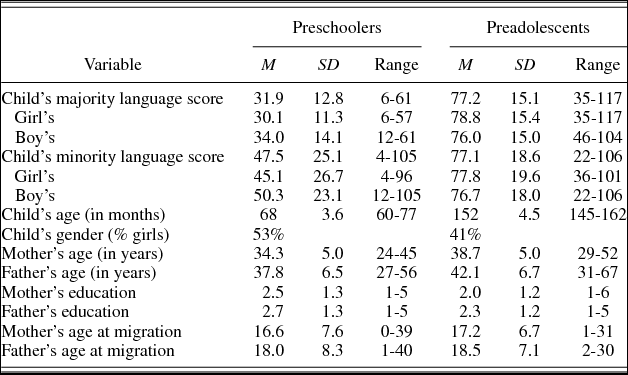
Note: Mother's and father's education: 0 = no education, 1 = primary school, 2 = lower secondary, 3 = upper secondary, 4 = tertiary less than four years, 5 = tertiary more than four years, 6 = PhD.
Results from bivariate correlation analyses are presented in Table 2. It can be seen that both mother's and father's education level correlated positively with the minority and majority language vocabulary scores of both preschoolers and preadolescents. However, there was one notable exception: the correlation between mother's education and the preadolescents’ minority vocabulary score was not significant. With respect to age at migration, the findings showed that mother's age at migration correlated significantly and negatively with the preschoolers’, but not with the preadolescents’ majority vocabulary scores. This implies that the older the mothers were at the time of migration, the lower the preschoolers’ majority vocabulary scores. In addition, mother's age at migration was positively associated with the preadolescents’ minority vocabulary scores, whereas among the preschoolers, the correlation was low and nonsignificant. There was a strong positive correlation between mothers’ and fathers’ education in both age groups, suggesting that spouses tended to have a similar level of educational attainment. In contrast, the association between mothers’ and fathers’ age at migration was nonsignificant.
Correlations among study variables
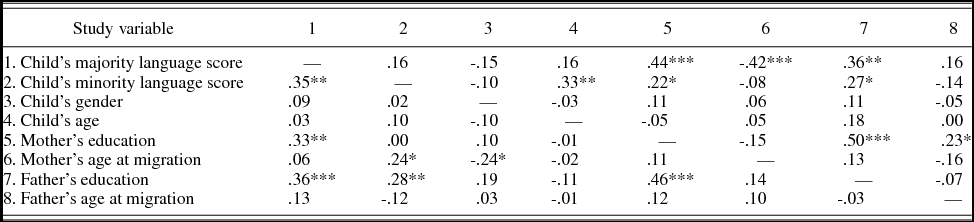
Note: Coefficients above the diagonal for preschoolers and below the diagonal for preadolescents. *p<.05 **p<.01 ***p<.001
Hierarchical regression analyses
We conducted two separate hierarchical regression analyses for each age group: one with the majority and one with the minority vocabulary scores as the criterion. We entered the control variables (children's age and gender) in Step 1 and added mothers’ and fathers’ education and age at migration in Step 2. All predictors, except child's gender, were grand mean-centered within age group before they were entered in the analysis. All analyses are based on raw scores. Both unstandardized and standardized scores are reported in the regression analyses.
Majority language scores
Among the preschoolers, mothers’ age at migration and mothers’ and fathers’ level of education significantly predicted majority language vocabulary scores, when the child's age and gender were controlled for. The total variance explained by the model was 44%, F (6, 74) = 9.59, p < .001 (Table 3). Among the preadolescents, fathers’ education was the only significant predictor and the total model accounted for 22% of the variance, F (6, 85) = 3.89, p = .002 (Table 3).
Hierarchical multiple regression analyses predicting majority vocabulary scores
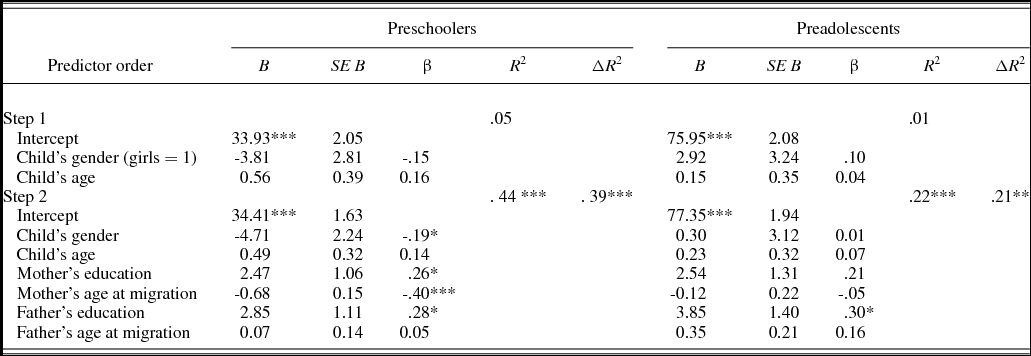
*p < .05 **p < .01 ***p < .001
Minority language scores
Among the preschoolers, none of the parental predictors reached significance in relation to the minority language vocabulary scores; nevertheless, the change in the variance explained by these predictors was significant (Table 4). The child's age was the only significant predictor. The total variance explained by the model in this age group was 24%, F (6, 74) = 3.89, p = .002. Among the preadolescents, fathers’ education and mothers’ age at migration were significant predictors of the children's scores. The total model explained 17% of the variance, F (6, 85) = 2.90, p = .013 (Table 4).
Hierarchical multiple regression analyses predicting minority vocabulary scores
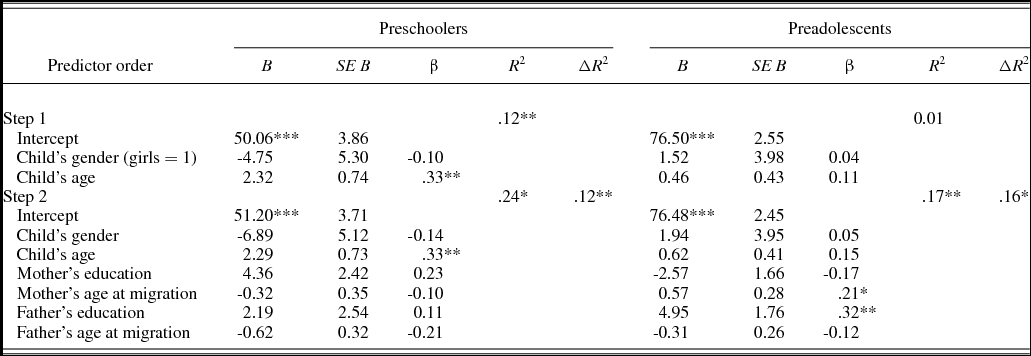
*p < .05 **p < .01 ***p < .001
DISCUSSION
The purpose of this study was to investigate whether mother's and father's education level and age at migration predicted preschoolers’ and preadolescents’ bilingual vocabulary. The parental background variables predicted the majority vocabulary scores in both age groups while they predicted the minority vocabulary scores only among the preadolescents. Our findings show that for children who are immersed in Norwegian language contexts in preschools and schools, parental factors still impact their vocabulary scores.
The dynamics between mother's and father's education level
Majority language
Children in both age groups show higher majority vocabulary scores as parental education level increases, a finding in line with a large body of research (e.g., Dixon, Reference Dixon2011; Driessen et al., Reference Driessen, van der Slik and De Bot2002; Hammer et al., Reference Hammer, Komaroff, Rodriguez, Lopez, Scarpino and Goldstein2012; Hoff & Elledge, Reference Hoff, Elledge, Cohen, McAlister, Rolstad and MacSwan2005; Leseman, Reference Leseman2000; Prevoo et al., Reference Prevoo, Malda, Mesman, Emmen, Yeniad, van Ijzendoorn and Linting2014; Quiroz et al., Reference Quiroz, Snow and Zhao2010; Rydland et al., Reference Rydland, Grøver and Lawrence2014; Tran, Reference Tran2010). Our results resemble the findings from a Dutch study (Prevoo et al., Reference Prevoo, Malda, Mesman, Emmen, Yeniad, van Ijzendoorn and Linting2014) that found parental education to be a resource for children's majority vocabulary. In contrast, Scheele et al. (Reference Scheele, Leseman and Mayo2010) did not find significant relations between parental education and children's vocabulary among Turkish immigrants in Germany. One potential explanation for these conflicting results may be the differences in the recruitment procedures. Scheele et al. (Reference Scheele, Leseman and Mayo2010) excluded children spending more than 2 days per week in day care facilities and children experiencing less than 70% of language input in the minority language. The Dutch and the Norwegian studies did not have such exclusion criteria. The use of day care facilities is common among Turkish immigrant families in Norway, Germany, and the Netherlands, and language use varies considerably. Based on their exclusion criteria, the Scheele et al. (Reference Scheele, Leseman and Mayo2010) sample was drawn from a somewhat different population than the participants in the two other studies. The conflicting results suggest that the proportion of language exposure may moderate the effects of parental education level on test scores. Moreover, Scheele et al. (Reference Scheele, Leseman and Mayo2010) used a slightly different SES measure; the highest education of the parents was combined with their occupational level. However, there is often a mismatch between immigrant parents’ level of education and the types of jobs they have (Fekjær, Reference Fekjær2007). Our results suggest that using a disaggregated SES measure, in which education and occupation is separated, may be more relevant for research on family background and children's language development.
Our finding that fathers' education plays a significant role contradicts the results of two US studies (Hammer et al., Reference Hammer, Komaroff, Rodriguez, Lopez, Scarpino and Goldstein2012; Hoff & Elledge, Reference Hoff, Elledge, Cohen, McAlister, Rolstad and MacSwan2005). Hoff and Elledge (Reference Hoff, Elledge, Cohen, McAlister, Rolstad and MacSwan2005) studied children younger than those in the present study. One may consider that 2- to 3-year-olds are potentially less influenced by their fathers, as mothers are often the primary caretaker at that age. The researchers included children from various bilingual families, ranging from families in which one parent spoke French to families in which both spoke Spanish. Their findings might therefore not correspond to children with two Turkish first-generation immigrant parents. In the second US study by Hammer et al. (Reference Hammer, Komaroff, Rodriguez, Lopez, Scarpino and Goldstein2012) involving 5-year-olds, father's education level was lower than mother's education level. This was not the case in our sample. Hammer et al. (Reference Hammer, Komaroff, Rodriguez, Lopez, Scarpino and Goldstein2012) did not find any relationship between fathers' education and children's majority vocabulary, as we did. One possible explanation for these discrepancies may be that it is the highest education level in the family that affects the children's majority vocabulary, irrespective of the gender of the parent. Our finding, that father's level of education significantly predicted children's majority vocabulary, supports this rationale, as the fathers generally had a higher educational level than the mothers in the current sample. An alternative explanation is that fathers play a different role in the language development of bilingual children in the US sociocultural context, than in Western Europe/ Scandinavia.
Our findings suggest that father's education has an impact over and above mother's education, in accordance with previous European research (Driessen et al., Reference Driessen, van der Slik and De Bot2002; Jäkel, Schölmerich, Kassis, & Leyendecker, Reference Jäkel, Schölmerich, Kassis and Leyendecker2011; Willard et al., Reference Willard, Agache, Jäkel, Glück and Leyendecker2015). A study on gender roles in Turkish immigrant families in Norway sheds light on our results (Sandrup, Reference Sandrup2013). Sandrup described patterns of both “modern” and “traditional” gender roles among Turkish immigrant fathers. In a modern gender role, highly educated Turkish immigrant fathers spent time directly engaging their children in language learning activities. In a traditional gender role, fathers contributed indirectly by allocating income and resources on books, holidays, evening classes, preschool, and other language-stimulating activities. The significant influence of the fathers can furthermore be seen as a pattern of male dominance (e.g., Bonesrønning, Reference Bonesrønning2009; Driessen et al., Reference Driessen, van der Slik and De Bot2002; van der Slik, De Graaf, & Gerris, Reference van der Slik, De Graaf and Gerris2002). Male dominance is more pronounced in families in which the mother does not have paid work outside the home. This is a likely situation for many of the families of Turkish immigrants (Henriksen, Reference Henriksen2007). It is interesting that this predictive effect was found for the majority language, despite the fact that only a relatively small percentage of fathers (and mothers) reported that they speak Norwegian well and use it in communicating with their child (i.e., the effect cannot be solely attributed to majority language use and exposure in the home).
Minority language
Parental education predicted the minority language vocabulary differently in the two age cohorts. The effect was only significant among the preadolescents and only for father's education level. The lack of correspondence between parental education and young children's minority vocabulary is consistent with previous research (Leseman, Reference Leseman2000; Prevoo et al., Reference Prevoo, Malda, Mesman, Emmen, Yeniad, van Ijzendoorn and Linting2014; Quiroz et al., Reference Quiroz, Snow and Zhao2010). However, a German study by Willard et al. (Reference Willard, Agache, Jäkel, Glück and Leyendecker2015), which involved both preschoolers and fourth graders (10-year-olds), showed that the effect of father's education on minority language among the preschoolers was indirect, as mediated by the home literacy environment. The corresponding effect among the fourth graders, however, was direct. This suggests that the effect of fathers' education may increase as children grow older.
In the present study, father's education significantly predicted both the minority and the majority language vocabulary in the preadolescent group. Factors similar to those potentially linking parental education to children's majority vocabulary may also be at work with regard to the minority language. Turkish immigrant fathers with more education might spend more time conversing in Turkish with their children, engaging them more in language-learning activities (modern gender role). They may also contribute indirectly through allocating income and resources on Turkish books, visits to Turkey, evening classes, and other language-stimulating activities (traditional gender role).
Mother's age at migration significantly predicts children's vocabulary
Majority language
Mother's age at migration was the strongest predictor of majority language vocabulary among the preschoolers. The younger the mothers were when they migrated to Norway, the larger the child's vocabulary. Fathers' age at migration did not have significant impact. Previous research has demonstrated the importance of mother's generational status for young (3- to 5-year-olds) children's majority vocabulary (Becker, Reference Becker2011; Quiroz et al., Reference Quiroz, Snow and Zhao2010). A German study on Turkish immigrant families found young children's majority vocabulary scores to be lower among children of first-generation mothers and second-generation fathers, when compared to children of second-generation mothers and first-generation fathers (Becker, Reference Becker2011). In line with our results, a study that included separate measures of mother's and father's age at migration showed that mothers' but not fathers’ age at migration predicted the children's school achievement in Danish (Nielsen & Rangvid, Reference Nielsen and Rangvid2012). The researchers argued that mothers are better equipped to support the majority language if they have resided in the host country for a longer period of time. In a study of Hispanic children in the United States (Quiroz et al., Reference Quiroz, Snow and Zhao2010), mothers’ years of residence significantly predicted preschoolers’ majority vocabulary scores, with longer residence associated with higher scores. However, this effect became nonsignificant when factors such as mother's language use and school involvement were included in the regression model. In addition, in a study on Turkish immigrants in the Netherlands, the effect of parental length of residence was primarily an indirect effect mediated by parental language use, affecting the majority language skills of 7- to 10-year-olds (Driessen et al., Reference Driessen, van der Slik and De Bot2002). The authors speculated that this was due to a shift toward using the majority language more after many years of residence. These results underscore the importance of separating the effect of mother's versus father's background.
In a study from the United States, Hammer et al. (Reference Hammer, Komaroff, Rodriguez, Lopez, Scarpino and Goldstein2012) showed that parental generational status did not affect preschoolers’ majority language skills among Hispanic immigrants in various regions of the United States. This implies that the larger sociocultural and language context is also of importance to children's bilingual competence. It should be noted that the preadolescents’ parents have all spent at least 12 years in Norway at the day of testing, compared to the preschool parents’ minimum of 5 years. Although length of residence and Norwegian skills often do not correspond in immigrant groups (Blom & Henriksen, Reference Blom and Henriksen2008), we may still speculate that the preschoolers’ parents in the current study have not acquired the majority language fully. The preadolescents’ parents have had more years of language exposure for doing so. Preadolescents may therefore not be systematically affected by differences related to parental age at migration due to less variance in language use and skills in the parent generation.
A second explanation for our findings is that factors other than parental age at migration, such as the quality of the preschool and school (Monsrud, Thurman-Moe, & Meyer Bjerkan, Reference Monsrud, Thurman-Moe and Meyer Bjerkan2010; Rydland et al., Reference Rydland, Grøver and Lawrence2014) and the ethnic composition of the neighborhood (Rydland et al., Reference Rydland, Grøver and Lawrence2014), have a larger effect on children's majority language scores as the children grow older and they participate in a wider range of social arenas.
Minority language
Only mother's age at migration predicted the minority vocabulary scores and only in the preadolescent group. Higher age at migration was associated with higher scores, consistent with previous research (Hammer et al., Reference Hammer, Komaroff, Rodriguez, Lopez, Scarpino and Goldstein2012; Quiroz et al., Reference Quiroz, Snow and Zhao2010; Tran, Reference Tran2010; Willard et al., Reference Willard, Agache, Jäkel, Glück and Leyendecker2015). However, in our study, no such effect was detected among the preschoolers, contradicting the significant effect of mother's age at migration seen in the German study on preschoolers in Turkish immigrant families (Willard et al. Reference Willard, Agache, Jäkel, Glück and Leyendecker2015). This may be due to the larger variation in parental age at migration in the German study. It could also be a result of the positive association between mothers’ age at migration and education level, which makes it difficult to disentangle the effect of mother's education from her age at migration. In our study, education level and age at migration were not significantly correlated, and the effects hence not confounded.
In accordance with findings from other studies, father's age at migration did not have a significant effect on children's minority vocabulary scores (Willard et al., Reference Willard, Agache, Jäkel, Glück and Leyendecker2015). As previously mentioned, this finding suggests that mothers possibly define the language use within the family. That is, if the mother migrated at a later age, the family may be oriented toward Turkish; if the mother migrated at a younger age, the family may be more oriented toward Norwegian. National statistics on Turkish immigrants (e.g., Henriksen, Reference Henriksen2007) suggest that fathers are more likely to be integrated in the job market than mothers, with the consequence of mothers potentially having the primary responsibility in the home and thereby defining the family's language use.
Limitations
The study is based on a convenience sample, rather than a sample drawn using a representative sampling procedure. This puts into question the representativeness of our sample and potentially sacrifices generalizability to the Turkish immigrant population. However, this is more likely to impact the actual measure of the study variables; the relations between study variables are considered less likely to be affected by nonrepresentative samples. Furthermore, the within-group age differences in the current sample is a potential limitation, even though we controlled for this factor in the analyses. As children's vocabulary expands month by month, especially in young children, future studies should seek to reduce within-group age differences to a minimum.
Our results are correlational and cross-sectional. Longitudinal studies would likely provide more insight into the nature of the relationships between parental background variables and the children's vocabulary development, compared to a single time point and potential cohort effect. Given the cohort differences in the effects of the parents’ education and age at migration on bilingual vocabulary, following a cohort of children longitudinally could provide more detailed information about changes in these associations over time.
Another limitation is integral to the nature of test translation and adaptation. The original language tests were designed to gradually increase in difficulty. However, translation can impact a word's difficulty level, thereby affecting the way the test was structured. We attempted to compensate for this by employing a difficult-to-reach ceiling criterion, especially for the minority vocabulary test. The absence of normative data and the use of raw scores, in addition to the issues around translation and adaptation, can compromise the comparability of our findings to other studies. Moreover, as we used one expressive and one receptive vocabulary test, we cannot do between-language comparisons, which would have provided a better understanding of the children's bilingual vocabulary skills. While there is currently a growing number of language tests that may be used both with monolingual and bilingual preschool children, there is still a need for valid tests for older children for use in both research and clinical practice.
A final limitation is that we could not take into account several potentially influential factors for majority and minority language maintenance. Factors such as birth order, number of siblings, and language exposure should be controlled for or studied in future studies with larger samples than that of the current study.
Summary and conclusion
By addressing important methodological gaps in the current research literature, our findings contribute important new information that shows the complexity in the relation between immigrant parents’ background and their children's bilingual competence. By focusing on two different age cohorts with one minority language background, we demonstrated variation in the ways that parental level of education and age at migration predict the vocabulary scores in the majority and minority languages. First, the findings show variation in the amount of variance of the minority and majority language that parental education and age at migration account for. Second, we show that the effect of the predictors differs between the two age groups. Third, we show that fathers' education is a consistent predictor of children's vocabulary, whereas mothers' age at migration predicts majority language among the preschoolers and minority language among the preadolescents. Our results demonstrate a complicated pattern specific to Turkish immigrant families in Norway. The results demonstrate that parental background variables predict children's vocabulary skills even though the children are immersed in Norwegian language contexts in preschool and school and only a small percentage of parents report that they speak Norwegian well and use it in the home.
Our findings suggest that studies on bilingualism in immigrant families need to explore the complicated interactions between fathers' and mothers' resources. Mother's age at migration stands out as a possible indicator of the language use patterns in these families, potentially explaining the relation between mother's age at migration and children's language skills. Our findings also show the significant relationship between fathers’ education and children's language skills, possibly through the father's support of language-learning activities either directly (by actively engaging with the child) or indirectly (by allocating income and resources). Both parents’ resources appear to play a role in their children's language development, but fathers impact the vocabulary outcomes of their children in a different way than mothers do. These findings have potential implications for immigrant language programs and language stimulation programs. For example, interventions can be directed toward children whose parents immigrated at an older age or have limited education. Interventions should address acquisition not only of the majority language but also of the children's minority language (particularly in first-generation families).
Our findings suggest that future research on bilingual immigrant children's language skills needs to avoid previous methodological shortcomings and to take the fathers, the minority language, parents' age at migration, and various age groups into consideration, as well as acknowledge that mechanisms underlying bilingual development may differ across immigrant groups. Future research needs to acknowledge that bilingual development cannot be understood as monolingualism multiplied by two. Researchers and other professionals need to consider that language use, language skills, and language development in immigrant groups are essentially dynamic, both across and within generations.
ACKNOWLEDGMENTS
Financial support from the NORFACE Research Programme on Migration in Europe—Social, Economic, Cultural and Policy Dynamics is acknowledged.



