













1. Introduction
Given a graph $H$
, we say that a graph
$H$
, we say that a graph $H'$
is a subdivision of
$H'$
is a subdivision of $H$
(or an
$H$
(or an $H$
-subdivision) if
$H$
-subdivision) if $H'$
is obtained by replacing one or more edges from
$H'$
is obtained by replacing one or more edges from $H$
with vertex-disjoint paths. In this paper, we will seek simple conditions on a graph
$H$
with vertex-disjoint paths. In this paper, we will seek simple conditions on a graph $G$
that force the containment of a subdivision of the complete graph on
$G$
that force the containment of a subdivision of the complete graph on $t$
vertices, which is denoted by
$t$
vertices, which is denoted by $K_t$
. This problem has been studied since the 60s, when Mader [Reference Mader22] proved that there is a function
$K_t$
. This problem has been studied since the 60s, when Mader [Reference Mader22] proved that there is a function $f(t)$
such that every graph with an average degree at least
$f(t)$
such that every graph with an average degree at least $f(t)$
contains a
$f(t)$
contains a $K_t$
-subdivision. After this influential result, many researchers have been looking for optimal degree conditions forcing the containment of
$K_t$
-subdivision. After this influential result, many researchers have been looking for optimal degree conditions forcing the containment of $K_t$
-subdivisions. For example, Bollobás and Thomason [Reference Bollobás and Thomason3] and Komlós and Szemerédi [Reference Komlós and Szemerédi16] showed that one can take
$K_t$
-subdivisions. For example, Bollobás and Thomason [Reference Bollobás and Thomason3] and Komlós and Szemerédi [Reference Komlós and Szemerédi16] showed that one can take $f(t)=\Theta (t^2)$
so that every graph with average degree at least
$f(t)=\Theta (t^2)$
so that every graph with average degree at least $f(t)$
contains a
$f(t)$
contains a $K_t$
-subdivision, settling a conjecture of Mader [Reference Mader22] and of Erdős and Hajnal [Reference Erdős and Hajnal8]. Another direction of this problem is to ask for the containment of a
$K_t$
-subdivision, settling a conjecture of Mader [Reference Mader22] and of Erdős and Hajnal [Reference Erdős and Hajnal8]. Another direction of this problem is to ask for the containment of a $K_t$
-subdivision which is also balanced, where a balanced subdivision of
$K_t$
-subdivision which is also balanced, where a balanced subdivision of $K_t$
is a graph obtained by replacing every edge of
$K_t$
is a graph obtained by replacing every edge of $K_t$
with vertex-disjoint paths of the same length. Solving a conjecture of Thomassen [Reference Thomassen31], Liu and Montgomery [Reference Liu and Montgomery20] proved that having a large average degree is enough to force the containment of a balanced
$K_t$
with vertex-disjoint paths of the same length. Solving a conjecture of Thomassen [Reference Thomassen31], Liu and Montgomery [Reference Liu and Montgomery20] proved that having a large average degree is enough to force the containment of a balanced $K_t$
-subdivision. Shortly after, Luan, Tang, Wang, and Yang [Reference Luan, Tang, Wang and Yang21] and Gil Fernández, Hyde, Liu, Pikhurko, and Wu [Reference Fernández, Hyde, Liu, Pikhurko and Wu9] independently proved that average degree
$K_t$
-subdivision. Shortly after, Luan, Tang, Wang, and Yang [Reference Luan, Tang, Wang and Yang21] and Gil Fernández, Hyde, Liu, Pikhurko, and Wu [Reference Fernández, Hyde, Liu, Pikhurko and Wu9] independently proved that average degree $\Omega (t^2)$
is enough to contain a balanced
$\Omega (t^2)$
is enough to contain a balanced $K_t$
-subdivision.
$K_t$
-subdivision.
When the host graph is dense, one typically expects to find even larger subdivisions, and thus it is natural to ask for a Dirac-type result for spanning subdivisions. Given a graph $H$
, one aims to find the smallest number
$H$
, one aims to find the smallest number $\delta \gt 0$
such that every
$\delta \gt 0$
such that every $n$
-vertex graph
$n$
-vertex graph $G$
with minimum degree
$G$
with minimum degree $\delta (G)\ge \delta n$
contains an
$\delta (G)\ge \delta n$
contains an $H$
-subdivision using all the vertices of
$H$
-subdivision using all the vertices of $G$
. For instance, a spanning
$G$
. For instance, a spanning $K_3$
-subdivision is just a Hamilton cycle, and thus Dirac’s theorem [Reference Dirac5] tells us that, for
$K_3$
-subdivision is just a Hamilton cycle, and thus Dirac’s theorem [Reference Dirac5] tells us that, for $n\ge 3$
, minimum degree at least
$n\ge 3$
, minimum degree at least $\frac {n}{2}$
is enough. In general, for
$\frac {n}{2}$
is enough. In general, for $t=O(\sqrt {n})$
, Pavez-Signé [Reference Pavez-Signé30] proved that every
$t=O(\sqrt {n})$
, Pavez-Signé [Reference Pavez-Signé30] proved that every $n$
-vertex graph with minimum degree at least
$n$
-vertex graph with minimum degree at least $(1+o(1))\frac {n}{2}$
contains a spanning
$(1+o(1))\frac {n}{2}$
contains a spanning $K_t$
-subdivision, which is also nearly balanced.Footnote
1
See [Reference Cheng, Wang and Yan4, Reference Lee19, Reference Mycroft and Naia28] for similar results in the directed setting.
$K_t$
-subdivision, which is also nearly balanced.Footnote
1
See [Reference Cheng, Wang and Yan4, Reference Lee19, Reference Mycroft and Naia28] for similar results in the directed setting.
In this paper, we will look for pseudorandom properties in a graph that forces the containment of a subdivision of the complete graph which is also spanning.
1.1 $(n, d, \lambda )$
-graphs
$(n, d, \lambda )$
-graphs

Informally speaking, we say that a graph $G$
is pseudorandom if
$G$
is pseudorandom if $G$
resembles certain properties that appear with high probabilityFootnote
2
in a random graph. A convenient way to define pseudorandomness in graphs is via a spectral gap condition, as follows. We say an
$G$
resembles certain properties that appear with high probabilityFootnote
2
in a random graph. A convenient way to define pseudorandomness in graphs is via a spectral gap condition, as follows. We say an $n$
-vertex graph
$n$
-vertex graph $G$
is an
$G$
is an $(n,d,\lambda )$
-graph if
$(n,d,\lambda )$
-graph if $G$
is
$G$
is $d$
-regular and all the non-trivial eigenvalues of the adjacency matrix of
$d$
-regular and all the non-trivial eigenvalues of the adjacency matrix of $G$
are bounded (in absolute value) by
$G$
are bounded (in absolute value) by $\lambda$
. The well-known Expander Mixing Lemma states that the distribution of the edges of an
$\lambda$
. The well-known Expander Mixing Lemma states that the distribution of the edges of an $(n,d,\lambda )$
-graph
$(n,d,\lambda )$
-graph $G$
is controlled by
$G$
is controlled by $\lambda$
, and thus the smaller that
$\lambda$
, and thus the smaller that $\lambda$
is, the closer to random that
$\lambda$
is, the closer to random that $G$
looks like. We recommend the survey of Krivelevich and Sudakov [Reference Krivelevich and Sudakov18] for a detailed exposition about pseudorandom graphs.
$G$
looks like. We recommend the survey of Krivelevich and Sudakov [Reference Krivelevich and Sudakov18] for a detailed exposition about pseudorandom graphs.
One of the central problems in pseudorandom graphs is the following: How large does $d$
need to be (with respect to
$d$
need to be (with respect to $\lambda$
) so that every
$\lambda$
) so that every $(n,d,\lambda )$
-graph contains a copy of a certain spanning graph
$(n,d,\lambda )$
-graph contains a copy of a certain spanning graph $F$
? This problem has shown to be quite challenging, as the only cases that are fully understood are perfect matchings [Reference Krivelevich and Sudakov18], triangle factors [Reference Morris27], and only recently the Hamiltonicity problem was settled by Draganić, Montgomery, Munhá Correia, Pokrovskiy and Sudakov [Reference Draganić, Montgomery, Correia, Pokrovskiy and Sudakov7] who solved a central problem in the area posed by Krivelevich and Sudakov [Reference Krivelevich and Sudakov17] in 2003. A natural next step after Hamiltonicity is then to look for spanning trees, in which case Alon, Krivelevich and Sudakov [Reference Alon, Krivelevich and Sudakov1] conjectured that for every
$F$
? This problem has shown to be quite challenging, as the only cases that are fully understood are perfect matchings [Reference Krivelevich and Sudakov18], triangle factors [Reference Morris27], and only recently the Hamiltonicity problem was settled by Draganić, Montgomery, Munhá Correia, Pokrovskiy and Sudakov [Reference Draganić, Montgomery, Correia, Pokrovskiy and Sudakov7] who solved a central problem in the area posed by Krivelevich and Sudakov [Reference Krivelevich and Sudakov17] in 2003. A natural next step after Hamiltonicity is then to look for spanning trees, in which case Alon, Krivelevich and Sudakov [Reference Alon, Krivelevich and Sudakov1] conjectured that for every $\Delta \ge 2$
, there is some constant
$\Delta \ge 2$
, there is some constant $C$
so that if
$C$
so that if $G$
is an
$G$
is an $(n,d,\lambda )$
-graph with
$(n,d,\lambda )$
-graph with $d/\lambda \ge C$
, then it contains all
$d/\lambda \ge C$
, then it contains all $n$
-vertex trees with maximum degree at most
$n$
-vertex trees with maximum degree at most $\Delta$
. This conjecture is true for trees with many leaves, as shown by Pavez-Signé [Reference Pavez-Signé29], but in general is wide-open, as the current record is
$\Delta$
. This conjecture is true for trees with many leaves, as shown by Pavez-Signé [Reference Pavez-Signé29], but in general is wide-open, as the current record is $d/\lambda =\Omega (\log ^3 n)$
as proved by Hyde, Morrison, Müyesser and Pavez-Signé [Reference Hyde, Morrison, Müyesser and Pavez-Signé14].
$d/\lambda =\Omega (\log ^3 n)$
as proved by Hyde, Morrison, Müyesser and Pavez-Signé [Reference Hyde, Morrison, Müyesser and Pavez-Signé14].
Our first result is that $(n,d,\lambda )$
-graphs with
$(n,d,\lambda )$
-graphs with $d/\lambda \gg 1$
contain a spanning subdivision of the complete graph even for unbounded degrees.
$d/\lambda \gg 1$
contain a spanning subdivision of the complete graph even for unbounded degrees.
Theorem 1.1.
There exist constants $C\gt 0$
and
$C\gt 0$
and $0\lt c\leq 1$
such that the following holds. If
$0\lt c\leq 1$
such that the following holds. If $G$
is an
$G$
is an $(n,d,\lambda )$
-graph with
$(n,d,\lambda )$
-graph with $d/\lambda \ge C$
, then
$d/\lambda \ge C$
, then $G$
contains a spanning
$G$
contains a spanning $K_t$
-subdivision for all
$K_t$
-subdivision for all $2\le t\le \min \{cd,c\sqrt {\frac {n}{\log n}}\}$
.
$2\le t\le \min \{cd,c\sqrt {\frac {n}{\log n}}\}$
.
A condition of the form $t\le cd$
is certainly needed, as each branch vertex of a
$t\le cd$
is certainly needed, as each branch vertex of a $K_t$
-subdivision has degree
$K_t$
-subdivision has degree $t-1$
and the host graph is
$t-1$
and the host graph is $d$
-regular. If we insist on the
$d$
-regular. If we insist on the $K_t$
-subdivision having each edge subdivided, then
$K_t$
-subdivision having each edge subdivided, then $t=O(\sqrt {n})$
is needed as each of the
$t=O(\sqrt {n})$
is needed as each of the $\binom {t}{2}$
branch paths adds at least one extra vertex. The log-factor in Theorem1.1 is also needed, as there are celebrated constructions of
$\binom {t}{2}$
branch paths adds at least one extra vertex. The log-factor in Theorem1.1 is also needed, as there are celebrated constructions of $(n,d,\lambda )$
-graphs with girth
$(n,d,\lambda )$
-graphs with girth $\Omega (\log n)$
(see Example 11 in [Reference Krivelevich and Sudakov18]) showing that Theorem1.1 is best-possible up-to the multiplicative constant. The only drawback in Theorem1.1 is that one of the paths in the
$\Omega (\log n)$
(see Example 11 in [Reference Krivelevich and Sudakov18]) showing that Theorem1.1 is best-possible up-to the multiplicative constant. The only drawback in Theorem1.1 is that one of the paths in the $K_t$
-subdivision is notoriously longer than the rest of the branching paths. If one insists on all paths having roughly the same length, then a different approach is needed. To address this problem, we use the existence of sorting networks in sparse expanders, showing that
$K_t$
-subdivision is notoriously longer than the rest of the branching paths. If one insists on all paths having roughly the same length, then a different approach is needed. To address this problem, we use the existence of sorting networks in sparse expanders, showing that $d/\lambda \gg (\log n)^3$
suffices to guarantee the containment of a nearly balanced subdivision, which is also spanning.
$d/\lambda \gg (\log n)^3$
suffices to guarantee the containment of a nearly balanced subdivision, which is also spanning.
Theorem 1.2.
There exist constants $C\gt 0$
and
$C\gt 0$
and $0\lt c\leq 1$
such that the following holds. If
$0\lt c\leq 1$
such that the following holds. If $G$
is an
$G$
is an $(n,d,\lambda )$
-graph with
$(n,d,\lambda )$
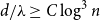
-graph with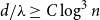 $d/\lambda \ge C\log ^3n$
, then
$d/\lambda \ge C\log ^3n$
, then $G$
contains a spanning nearly balanced
$G$
contains a spanning nearly balanced $K_t$
-subdivision for all
$K_t$
-subdivision for all $2\le t\le \min \{cd,c\sqrt {\frac {n}{\log ^3n}}\}$
.
$2\le t\le \min \{cd,c\sqrt {\frac {n}{\log ^3n}}\}$
.
The extra polylog factor comes from the fact that the depth of the sorting network we are using is $\Theta (\log ^3n)$
, which forces us to use connecting paths of length
$\Theta (\log ^3n)$
, which forces us to use connecting paths of length $\Omega (\log ^3 n)$
. We believe the right bound on
$\Omega (\log ^3 n)$
. We believe the right bound on $t$
should be of the form
$t$
should be of the form $t\ll \sqrt {\frac {n}{\log n}}$
as in Theorem1.1.
$t\ll \sqrt {\frac {n}{\log n}}$
as in Theorem1.1.
Conjecture 1.3.
There exist positive constants $C \gt 0$
and
$C \gt 0$
and $0 \lt c \lt 1$
such that the following holds. If
$0 \lt c \lt 1$
such that the following holds. If $G$
is an
$G$
is an $(n,d,\lambda )$
-graph with
$(n,d,\lambda )$
-graph with $d/\lambda \ge C$
, then
$d/\lambda \ge C$
, then $G$
contains a spanning nearly balanced
$G$
contains a spanning nearly balanced $K_t$
-subdivision for all
$K_t$
-subdivision for all $2\le t\le \min \{cd,c\sqrt {\frac {n}{\log n}}\}$
.
$2\le t\le \min \{cd,c\sqrt {\frac {n}{\log n}}\}$
.
1.2 Graphs without large bipartite holes
Arguably, the weakest notion of pseudorandomness that has been considered in the literature is that of having no large bipartite holes, as in the following definition.
Definition 1.4.
For $m\in \mathbb N$
, say a graph
$m\in \mathbb N$
, say a graph $G$
is
$G$
is $m$
-joined if for every pair of disjoint subsets
$m$
-joined if for every pair of disjoint subsets $A, B \subset V(G)$
with
$A, B \subset V(G)$
with $|A|=|B|=m$
, there is an edge between them.
$|A|=|B|=m$
, there is an edge between them.
Observe that Definition1.4 is a fairly weak pseudorandom property as, for instance the binomial random graph $G(n,p)$
is w.h.p.
$G(n,p)$
is w.h.p. $m$
-joined for
$m$
-joined for $m=\lceil {5\log (np)}/{p}\rceil$
and
$m=\lceil {5\log (np)}/{p}\rceil$
and $pn\gt 20$
(see Proposition 3.26 in [Reference Montgomery24]). On the other hand, if
$pn\gt 20$
(see Proposition 3.26 in [Reference Montgomery24]). On the other hand, if $G$
is an
$G$
is an $(n,d,\lambda )$
-graph, the expander mixing lemma implies that
$(n,d,\lambda )$
-graph, the expander mixing lemma implies that $G$
is
$G$
is $\frac {\lambda n}{d}$
-joined for every choice of the parameters
$\frac {\lambda n}{d}$
-joined for every choice of the parameters $n,d$
and
$n,d$
and $\lambda$
. Moreover, if
$\lambda$
. Moreover, if $G$
is an
$G$
is an $m$
-joined graph, then there is no guarantee of
$m$
-joined graph, then there is no guarantee of $G$
containing any particular spanning connected structure, as
$G$
containing any particular spanning connected structure, as $G$
might contain isolated vertices. For example, the graph consisting of a copy of
$G$
might contain isolated vertices. For example, the graph consisting of a copy of $K_{n-m+1}$
together with
$K_{n-m+1}$
together with $m-1$
isolated vertices is
$m-1$
isolated vertices is $m$
-joined but not connected. One can even add a perfect matching from the isolated vertices to the complete graph
$m$
-joined but not connected. One can even add a perfect matching from the isolated vertices to the complete graph $K_{n-m+1}$
and still fail to find a Hamilton path. This suggests one needs some sort of extra condition, and a usual choice is to add a minimum degree condition on top of the
$K_{n-m+1}$
and still fail to find a Hamilton path. This suggests one needs some sort of extra condition, and a usual choice is to add a minimum degree condition on top of the $m$
-joined property. The first result in this direction is due to McDiarmid and Yolov [Reference McDiarmid and Yolov23], who showed that every
$m$
-joined property. The first result in this direction is due to McDiarmid and Yolov [Reference McDiarmid and Yolov23], who showed that every $n$
-vertex
$n$
-vertex $o(n)$
-joined graph with a linear minimum degree is Hamiltonian (they even provide the optimal dependency between the minimum degree and the size of the bipartite holes). Similar results have been proved for the containment of spanning trees with bounded degree [Reference Han, Hu, Ping, Wang, Wang and Yang11], for an almost decomposition into almost spanning trees of bounded degree [Reference Kim, Kim and Liu15], and for loose spanning trees in hypergraphs [Reference Han, Im, Kim and Yang12].
$o(n)$
-joined graph with a linear minimum degree is Hamiltonian (they even provide the optimal dependency between the minimum degree and the size of the bipartite holes). Similar results have been proved for the containment of spanning trees with bounded degree [Reference Han, Hu, Ping, Wang, Wang and Yang11], for an almost decomposition into almost spanning trees of bounded degree [Reference Kim, Kim and Liu15], and for loose spanning trees in hypergraphs [Reference Han, Im, Kim and Yang12].
Our last result says that if $G$
has a linear minimum degree and no large bipartite holes, then we can find a spanning
$G$
has a linear minimum degree and no large bipartite holes, then we can find a spanning $K_t$
-subdivision even for
$K_t$
-subdivision even for $t=O(\sqrt {n})$
.
$t=O(\sqrt {n})$
.
Theorem 1.5.
For every $\mu \gt 0$
, there exist constants
$\mu \gt 0$
, there exist constants $0 \lt c,\varepsilon \leq 1$
and
$0 \lt c,\varepsilon \leq 1$
and $n_0\in \mathbb N$
such that the following holds for all
$n_0\in \mathbb N$
such that the following holds for all $n\ge n_0$
. If
$n\ge n_0$
. If $G$
is an
$G$
is an $n$
-vertex
$n$
-vertex $\varepsilon n$
-joined graph with
$\varepsilon n$
-joined graph with $\delta (G)\ge \mu n$
, then
$\delta (G)\ge \mu n$
, then $G$
contains a spanning nearly balanced
$G$
contains a spanning nearly balanced $K_t$
-subdivision for all
$K_t$
-subdivision for all $2 \le t \le c\sqrt {n}$
.
$2 \le t \le c\sqrt {n}$
.
A nice implication of Theorem1.5 is a result regarding the randomly perturbed graph model. In this model, one starts with an $n$
-vertex (deterministic) graph
$n$
-vertex (deterministic) graph $G_\mu$
satisfying
$G_\mu$
satisfying $\delta (G_\mu )\geq \mu n$
, and then sprinkles a few random edges on top of
$\delta (G_\mu )\geq \mu n$
, and then sprinkles a few random edges on top of $G_\mu$
, say by using an instance of the binomial random graph
$G_\mu$
, say by using an instance of the binomial random graph $G(n,p)$
. This model is interesting as it attempts to describe graphs which are essentially deterministic but for whose overall structure there may be some slight uncertainty. A desired result in this setting would be to sprinkle as few edges as possible whilst guaranteeing that
$G(n,p)$
. This model is interesting as it attempts to describe graphs which are essentially deterministic but for whose overall structure there may be some slight uncertainty. A desired result in this setting would be to sprinkle as few edges as possible whilst guaranteeing that $G_\mu \cup G(n,p)$
satisfies certain properties with high probability. For example, the above-mentioned result of McDiarmid and Yolov [Reference McDiarmid and Yolov23] implies a result of Bohman, Frieze and Martin [Reference Bohman, Frieze and Martin2], which says that
$G_\mu \cup G(n,p)$
satisfies certain properties with high probability. For example, the above-mentioned result of McDiarmid and Yolov [Reference McDiarmid and Yolov23] implies a result of Bohman, Frieze and Martin [Reference Bohman, Frieze and Martin2], which says that $G_\mu \cup G(n,C/n)$
is w.h.p. Hamiltonian as long as
$G_\mu \cup G(n,C/n)$
is w.h.p. Hamiltonian as long as $C=C(\mu )$
is large enough. As a corollary of Theorem1.5, we obtain the following result for spanning clique subdivisions in the randomly perturbed setting.
$C=C(\mu )$
is large enough. As a corollary of Theorem1.5, we obtain the following result for spanning clique subdivisions in the randomly perturbed setting.
Corollary 1.6.
For every $\mu \gt 0$
, there exist constants
$\mu \gt 0$
, there exist constants $C \gt 0$
and
$C \gt 0$
and $0 \lt c \leq 1$
such that the following holds. Let
$0 \lt c \leq 1$
such that the following holds. Let $G$
be an
$G$
be an $n$
-vertex graph with
$n$
-vertex graph with $\delta (G)\ge \mu n$
and let
$\delta (G)\ge \mu n$
and let $p\ge C/n$
. Then w.h.p.
$p\ge C/n$
. Then w.h.p. $G\cup G(n,p)$
contains a spanning nearly balanced
$G\cup G(n,p)$
contains a spanning nearly balanced $K_t$
-subdivision for all
$K_t$
-subdivision for all $2\le t \le c\sqrt {n}$
.
$2\le t \le c\sqrt {n}$
.
2. Preliminaries
We use standard graph theory notation. For a graph $G$
, we let
$G$
, we let $V(G)$
and
$V(G)$
and $E(G)$
denote the set of vertices and edges of
$E(G)$
denote the set of vertices and edges of $G$
, respectively, and write
$G$
, respectively, and write $|G|=|V(G)|$
for the size of
$|G|=|V(G)|$
for the size of $G$
. Given a vertex
$G$
. Given a vertex $x\in V(G)$
, we denote by
$x\in V(G)$
, we denote by $N(x)$
the set of neighbours of
$N(x)$
the set of neighbours of $x$
and write
$x$
and write $d(x)\,:\!=\,|N(x)|$
for the degree of
$d(x)\,:\!=\,|N(x)|$
for the degree of $x$
. We let
$x$
. We let $\delta (G)$
denote the minimum of
$\delta (G)$
denote the minimum of $d(x)$
among all vertices
$d(x)$
among all vertices $x\in V(G)$
. Given a subset
$x\in V(G)$
. Given a subset $U\subset V(G)$
, we write
$U\subset V(G)$
, we write $N(x,U)$
for the set of neighbours of
$N(x,U)$
for the set of neighbours of $x$
in
$x$
in $U$
and write
$U$
and write $d(x,U)\,:\!=\,|N(x,U)|$
for the degree of
$d(x,U)\,:\!=\,|N(x,U)|$
for the degree of $x$
in
$x$
in $U$
. We write
$U$
. We write $\Gamma (U)=\bigcup _{u\in U}N(u)$
for the neighbourhood of
$\Gamma (U)=\bigcup _{u\in U}N(u)$
for the neighbourhood of $U$
and
$U$
and $N(U)=\Gamma (U)\setminus U$
for the external neighbourhood of
$N(U)=\Gamma (U)\setminus U$
for the external neighbourhood of $U$
. Given a subset
$U$
. Given a subset $A\subset V(G)$
, we write
$A\subset V(G)$
, we write $G[A]$
for the graph induced by
$G[A]$
for the graph induced by $A$
and for
$A$
and for $B\subset V(G)\setminus A$
, we denote by
$B\subset V(G)\setminus A$
, we denote by $G[A,B]$
the bipartite graph induced by
$G[A,B]$
the bipartite graph induced by $A$
and
$A$
and $B$
, which has bipartition classes
$B$
, which has bipartition classes $A$
and
$A$
and $B$
and edges
$B$
and edges $ab\in E(G)$
with
$ab\in E(G)$
with $a\in A$
,
$a\in A$
, $b\in B$
. We will use subscripts to indicate which graph we are working with if we are dealing with more than one graph at the same time. For a graph
$b\in B$
. We will use subscripts to indicate which graph we are working with if we are dealing with more than one graph at the same time. For a graph $G$
and a subset of vertices
$G$
and a subset of vertices $U \subset V(G)$
, we let
$U \subset V(G)$
, we let $I(U)$
denote the empty graph on the vertex set
$I(U)$
denote the empty graph on the vertex set $U$
.
$U$
.
A path in $G$
is a sequence of distinct vertices
$G$
is a sequence of distinct vertices $P=v_1\ldots v_{t+1}$
such that
$P=v_1\ldots v_{t+1}$
such that $v_iv_{i+1}\in E(G)$
for all
$v_iv_{i+1}\in E(G)$
for all $i\in [t]$
, in which case we say
$i\in [t]$
, in which case we say $v_1$
and
$v_1$
and $v_{t+1}$
are the endpoints of
$v_{t+1}$
are the endpoints of $P$
and the interior of
$P$
and the interior of $P$
is the set
$P$
is the set $\text{int}(P)=\{v_2,\ldots , v_t\}$
. The size of a path
$\text{int}(P)=\{v_2,\ldots , v_t\}$
. The size of a path $P$
is the number of vertices of
$P$
is the number of vertices of $P$
and the length of
$P$
and the length of $P$
is its number of edges. For vertices
$P$
is its number of edges. For vertices $a,b\in V(G)$
, an
$a,b\in V(G)$
, an $(a,b)$
-path is a path with
$(a,b)$
-path is a path with $a$
and
$a$
and $b$
as endpoints and for sets
$b$
as endpoints and for sets $A,B\subset V(G)$
, an
$A,B\subset V(G)$
, an $(A,B)$
-path is a path with one endpoint in
$(A,B)$
-path is a path with one endpoint in $A$
and another in
$A$
and another in $B$
. Given a subgraph
$B$
. Given a subgraph $H\subset G$
and a path
$H\subset G$
and a path $P\subset G$
, we let
$P\subset G$
, we let $H+P$
denote the graph with vertex set
$H+P$
denote the graph with vertex set $V(H+P)=V(H)\cup V(P)$
and edge set
$V(H+P)=V(H)\cup V(P)$
and edge set $E(G+P)=E(G)\cup E(H)$
. If
$E(G+P)=E(G)\cup E(H)$
. If $F$
is a fixed graph and
$F$
is a fixed graph and $F'$
is an
$F'$
is an $F$
-subdivision, the set of branch vertices of
$F$
-subdivision, the set of branch vertices of $F'$
is the image of the vertices in
$F'$
is the image of the vertices in $V(F)$
and the set of branching paths of
$V(F)$
and the set of branching paths of $F'$
corresponds to the set of all paths connecting distinct branch vertices.
$F'$
corresponds to the set of all paths connecting distinct branch vertices.
For positive integers $k\leq n \in \mathbb N$
, we let
$k\leq n \in \mathbb N$
, we let $[n]=\{1,\ldots , n\}$
,
$[n]=\{1,\ldots , n\}$
, $[n]_0=[n]\cup \{0\}$
and we also let
$[n]_0=[n]\cup \{0\}$
and we also let ${\binom{[n]}{k}}$
denote the set of
${\binom{[n]}{k}}$
denote the set of $k$
-element subsets of
$k$
-element subsets of $[n]$
. Given numbers
$[n]$
. Given numbers $a,b\in \mathbb R$
and
$a,b\in \mathbb R$
and $c\gt 0$
, we write
$c\gt 0$
, we write $a=b\pm c$
to denote that
$a=b\pm c$
to denote that $b-c\le a\le b+c$
. Also, we use standard hierarchy notation; that is, we write
$b-c\le a\le b+c$
. Also, we use standard hierarchy notation; that is, we write $a\ll b$
if given
$a\ll b$
if given $b$
one can choose
$b$
one can choose $a$
sufficiently small so that all the subsequent statements hold. We will omit floor and ceiling symbols in order to avoid cumbersome notation, as long as it does not affect the arguments.
$a$
sufficiently small so that all the subsequent statements hold. We will omit floor and ceiling symbols in order to avoid cumbersome notation, as long as it does not affect the arguments.
2.1 Probabilistic tools
We will need two probabilistic results stating that degrees of vertices are inherited by taking random samples in graphs. The first result can be proved using the local lemma (see Section 2.4.2 in [Reference Montgomery, Müyesser, Pokrovskiy and Sudakov25] for a proof of a stronger result).
Lemma 2.1.
Let $s\ge 1$
be fixed and let
$s\ge 1$
be fixed and let $1/d\ll \gamma \ll p\ll 1/s$
and let
$1/d\ll \gamma \ll p\ll 1/s$
and let $p_1,\ldots , p_s\in (0,1)$
with
$p_1,\ldots , p_s\in (0,1)$
with $p_i\ge p$
, for
$p_i\ge p$
, for $i\in [s]$
, and
$i\in [s]$
, and $p_1+\ldots +p_s=1$
. Let
$p_1+\ldots +p_s=1$
. Let $G$
be a
$G$
be a $d$
-regular graph and let
$d$
-regular graph and let $V(G)=X_1\cup \ldots \cup X_s$
be a random partition where each vertex
$V(G)=X_1\cup \ldots \cup X_s$
be a random partition where each vertex $v\in V(G)$
belongs to
$v\in V(G)$
belongs to $X_i$
with probability
$X_i$
with probability $p_i$
, making all choices independently. Then, with positive probability, for each
$p_i$
, making all choices independently. Then, with positive probability, for each $i\in [s]$
,
$i\in [s]$
, $|X_i|=(1\pm \gamma )p_in$
and, for each
$|X_i|=(1\pm \gamma )p_in$
and, for each $v\in V(G)$
,
$v\in V(G)$
, $d(v,X_i)=(p_i\pm \gamma )d$
.
$d(v,X_i)=(p_i\pm \gamma )d$
.
In the second result, we partition the vertex set into $O(\log ^4n)$
sets at the cost of needing a stronger bound on the minimum degree. To do so, we use the following result (see Lemma 3.1 in [Reference Hyde, Morrison, Müyesser and Pavez-Signé14]).
$O(\log ^4n)$
sets at the cost of needing a stronger bound on the minimum degree. To do so, we use the following result (see Lemma 3.1 in [Reference Hyde, Morrison, Müyesser and Pavez-Signé14]).
Lemma 2.2.
Let $1/n\ll \gamma \ll 1$
and let
$1/n\ll \gamma \ll 1$
and let $G$
be an
$G$
be an $n$
-vertex graph with
$n$
-vertex graph with $\delta (G)\geq \log ^6 n$
. Let
$\delta (G)\geq \log ^6 n$
. Let $R$
be a uniformly random subset of
$R$
be a uniformly random subset of $V(G)$
of size
$V(G)$
of size $k\geq n/\log ^4 n$
, and let
$k\geq n/\log ^4 n$
, and let $v\in V(G)$
. Then,
$v\in V(G)$
. Then,
 \begin{align*}\mathbb{P}\left (d(v, R)=(1\pm \gamma )d(v)\cdot \frac {k}{n}\right )\geq 1-n^{-2}. \\[-45pt] \end{align*}
Corollary 2.3.
Let $1/n\ll \gamma \ll 1$
and let
$1/n\ll \gamma \ll 1$
and let $G$
be an
$G$
be an $n$
-vertex graph with
$n$
-vertex graph with $\delta (G)\ge \log ^6 n$
. Let
$\delta (G)\ge \log ^6 n$
. Let $s\ge 2$
and suppose
$s\ge 2$
and suppose $n$
decomposes as
$n$
decomposes as $n=n_1+\ldots +n_s$
, where
$n=n_1+\ldots +n_s$
, where $n_i\ge n/\log ^4 n$
for each
$n_i\ge n/\log ^4 n$
for each $i\in [s]$
. If
$i\in [s]$
. If $V(G)=V_1\cup \ldots \cup V_s$
is a partition chosen uniformly at random subject to
$V(G)=V_1\cup \ldots \cup V_s$
is a partition chosen uniformly at random subject to $|V_i|=n_i$
for each
$|V_i|=n_i$
for each $i\in [s]$
, then, with probability
$i\in [s]$
, then, with probability $1-o(1)$
, for every vertex
$1-o(1)$
, for every vertex $v\in V(G)$
and
$v\in V(G)$
and $i\in [s]$
,
$i\in [s]$
, $d(v,V_i)=(1\pm \gamma )d(v)\cdot \frac {n_i}{n}$
.
$d(v,V_i)=(1\pm \gamma )d(v)\cdot \frac {n_i}{n}$
.
Proof. Note that, for each $i\in [s]$
,
$i\in [s]$
, $V_i$
has the same distribution as a uniformly chosen
$V_i$
has the same distribution as a uniformly chosen $n_i$
-element subset of
$n_i$
-element subset of $V(G)$
. For each vertex
$V(G)$
. For each vertex $v\in V(G)$
and index
$v\in V(G)$
and index $i\in [s]$
, Lemma2.2 gives
$i\in [s]$
, Lemma2.2 gives
 \begin{equation*}\mathbb P\Big (d(v,V_i)=(1\pm \gamma )d(v)\cdot \frac {n_i}{n}\Big )\ge 1-n^{-2}.\end{equation*}
Therefore, by a union-bound over all vertices $v\in V(G)$
and indices
$v\in V(G)$
and indices $i\in [s]$
, we have
$i\in [s]$
, we have
 \begin{equation*}\mathbb P\left (\exists v\in V(G)\,\text{and } i\in [s] \text{ s.t. }\big |d(v,V_i)-d(v)\cdot \frac {n_i}{n}\big |\gt \gamma d(v)\cdot \frac {n_i}{n}\right )\le s\cdot n\cdot n^{-2}\le \frac {\log ^4 n}{n}.\end{equation*}
2.2 Pseudorandom properties of
$(n,d,\lambda )$
-graphs

The following lemma collects all the basic properties of $(n,d,\lambda )$
-graphs that will be used throughout the paper (see [Reference Krivelevich and Sudakov18] for the proofs).
$(n,d,\lambda )$
-graphs that will be used throughout the paper (see [Reference Krivelevich and Sudakov18] for the proofs).
Lemma 2.4.
For an $(n,d,\lambda )$
-graph
$(n,d,\lambda )$
-graph $G$
, the following properties hold.
$G$
, the following properties hold.
-
(i)
$\lambda \ge \sqrt {d\cdot \frac {n-d}{n-1}}$
. -
(ii)
$G$
is
$\frac {\lambda n}{d}$
-joined.
-
(iii) For every pair of (not necessarily disjoint) sets
$A,B\subset V(G)$
, we have
\begin{equation*}\left |e(A,B)-\tfrac {d}{n}|A||B|\right |\lt \lambda \sqrt {|A||B|}.\end{equation*}


The next lemma says that minimum degree conditions in $(n,d,\lambda )$
-graphs are enough to force the expansion property of small sets.
$(n,d,\lambda )$
-graphs are enough to force the expansion property of small sets.
Lemma 2.5.
Let $D, k\ge 1$
and let
$D, k\ge 1$
and let $d,\lambda \gt 0$
satisfy
$d,\lambda \gt 0$
satisfy $d/\lambda \gt k D$
. Let
$d/\lambda \gt k D$
. Let $G$
be an
$G$
be an $(n,d,\lambda )$
-graph which contains a subset
$(n,d,\lambda )$
-graph which contains a subset $X\subset V(G)$
such that every vertex
$X\subset V(G)$
such that every vertex $v\in V(G)$
has at least
$v\in V(G)$
has at least $k D\lambda$
neighbours in
$k D\lambda$
neighbours in $X$
. Then, every subset
$X$
. Then, every subset $S\subset V(G)$
of size
$S\subset V(G)$
of size $|S|\le (k-1)\lambda n/d$
satisfies
$|S|\le (k-1)\lambda n/d$
satisfies $|N(S)\cap X|\ge (D - 1)|S|$
.
$|N(S)\cap X|\ge (D - 1)|S|$
.
Proof. Let $S\subseteq V(G)$
be a vertex subset of
$S\subseteq V(G)$
be a vertex subset of $G$
with
$G$
with $|S| \leq (k-1)\lambda n / d$
. By Lemma2.4 (iii), the following inequality holds.
$|S| \leq (k-1)\lambda n / d$
. By Lemma2.4 (iii), the following inequality holds.
 \begin{equation} kD\lambda |S| \leq e(S, \Gamma _G(S)\cap X) \leq \frac {d}{n}|S||\Gamma (S)\cap X| + \lambda \sqrt {|S||\Gamma (S)\cap X|}. \end{equation}
Assume $|\Gamma (S)\cap X| \lt D|S|$
. Then (2.1) implies that we have
$|\Gamma (S)\cap X| \lt D|S|$
. Then (2.1) implies that we have
 \begin{equation*} kD\lambda |S| \lt \frac {d D}{n}|S|^2 + \lambda \sqrt {D} |S|. \end{equation*}
Thus, we deduce that $|S| \gt (k-1)\lambda n/ d$
, a contradiction. Hence, we have
$|S| \gt (k-1)\lambda n/ d$
, a contradiction. Hence, we have $|N(S) \cap X| \geq |\Gamma (S)\cap X| - |S| \geq (D-1)|S|$
. This completes the proof.
$|N(S) \cap X| \geq |\Gamma (S)\cap X| - |S| \geq (D-1)|S|$
. This completes the proof.
The last result of this section gives a sufficient condition to find perfect matchings between small subsets of $(n,d,\lambda )$
-graphs.
$(n,d,\lambda )$
-graphs.
Lemma 2.6 (Lemma 3.6 in [Reference Hyde, Morrison, Müyesser and Pavez-Signé14]). Let $0 \lt 1/C \ll \varepsilon \ll 1$
and let
$0 \lt 1/C \ll \varepsilon \ll 1$
and let $n,d\in \mathbb N$
such that
$n,d\in \mathbb N$
such that $n\ge 3$
and
$n\ge 3$
and $\lambda \gt 0$
satisfy
$\lambda \gt 0$
satisfy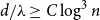 $d/\lambda \ge C\log ^3n$
. Suppose
$d/\lambda \ge C\log ^3n$
. Suppose $G$
is an
$G$
is an $(n,d,\lambda )$
-graph that contains disjoint subsets
$(n,d,\lambda )$
-graph that contains disjoint subsets $A,B\subset V(G)$
with
$A,B\subset V(G)$
with $|A|=|B|$
and
$|A|=|B|$
and $\delta (G[A,B])\ge \varepsilon d/2\log ^3n$
. Then,
$\delta (G[A,B])\ge \varepsilon d/2\log ^3n$
. Then, $G[A,B]$
contains a perfect matching.
$G[A,B]$
contains a perfect matching.
2.3 The extendability method
The main tool we will use in the proof of Theorems1.1 and 1.2 is the extendability method, which was first introduced by Friedman and Pippenger [Reference Friedman and Pippenger10] in 1987 and subsequently developed over the years (see e.g. [Reference Draganić, Krivelevich and Nenadov6, Reference Haxell13, Reference Montgomery24, Reference Montgomery, Pavez-Signé and Yan26]).
Definition 2.7.
Let $D,m\in \mathbb N$
with
$D,m\in \mathbb N$
with $D\ge 3$
. Let
$D\ge 3$
. Let $G$
be a graph and let
$G$
be a graph and let $S\subset G$
be a subgraph with
$S\subset G$
be a subgraph with $\Delta (S) \leq D$
. We say that
$\Delta (S) \leq D$
. We say that $S$
is
$S$
is $(D,m)$
-extendable if for all
$(D,m)$
-extendable if for all $U\subset V(G)$
with
$U\subset V(G)$
with $1\le |U|\le 2m$
we have
$1\le |U|\le 2m$
we have
 \begin{equation} |\Gamma _G(U)\setminus V(S)|\ge (D-1)|U|-\sum _{u\in U\cap V(S)}(d_S(u)-1). \end{equation}
The following result states that it is enough to control the external neighbourhood of small sets to verify extendability.
Proposition 2.8.
Let $D,m\in \mathbb N$
with
$D,m\in \mathbb N$
with $D\ge 3$
. Let
$D\ge 3$
. Let $G$
be a graph and let
$G$
be a graph and let $S\subset G$
be a subgraph with
$S\subset G$
be a subgraph with $\Delta (S)\le D$
. Assume for all
$\Delta (S)\le D$
. Assume for all $U\subset V(G)$
with
$U\subset V(G)$
with $1\leq |U|\leq 2m$
, the following inequality holds
$1\leq |U|\leq 2m$
, the following inequality holds
 \begin{equation*}|N_G(U)\setminus V(S)|\geq D|U|.\end{equation*}
Then $S$
is
$S$
is $(D,m)$
-extendable in
$(D,m)$
-extendable in $G$
.
$G$
.
The main property of the extendability method is that, given an extendable subgraph $S$
and a vertex
$S$
and a vertex $x\in V(S)$
of small degree in
$x\in V(S)$
of small degree in $S$
, one can find an edge
$S$
, one can find an edge $xy$
, with
$xy$
, with $x\in V(S)$
and
$x\in V(S)$
and $y\not \in V(S)$
, so that
$y\not \in V(S)$
, so that $S+xy$
remains extendable. This key property can be iterated to find large structures in expander graphs, such as long cycles or large trees. In the proof of our main theorems, we frequently use the following lemma, which says that in an extendable subgraph
$S+xy$
remains extendable. This key property can be iterated to find large structures in expander graphs, such as long cycles or large trees. In the proof of our main theorems, we frequently use the following lemma, which says that in an extendable subgraph $S$
, one can connect any pair of distinct vertices from
$S$
, one can connect any pair of distinct vertices from $S$
by paths of logarithmic length, as long as some mild conditions hold.
$S$
by paths of logarithmic length, as long as some mild conditions hold.
Lemma 2.9 (Corollary 3.12 in [Reference Montgomery24]). Let $D,m\in \mathbb N$
with
$D,m\in \mathbb N$
with $D\ge 3$
, and let
$D\ge 3$
, and let $k=\lceil \log (2m)/\log (D-1)\rceil$
. Let
$k=\lceil \log (2m)/\log (D-1)\rceil$
. Let $\ell \in \mathbb N$
satisfy
$\ell \in \mathbb N$
satisfy $\ell \ge 2k+1$
and let
$\ell \ge 2k+1$
and let $G$
be an
$G$
be an $m$
-joined graph which contains a
$m$
-joined graph which contains a $(D,m)$
-extendable subgraph
$(D,m)$
-extendable subgraph $S$
of size
$S$
of size $|S|\le |G|-10Dm-(\ell -2k-1)$
. Suppose that
$|S|\le |G|-10Dm-(\ell -2k-1)$
. Suppose that $a$
and
$a$
and $b$
are two distinct vertices in
$b$
are two distinct vertices in $S$
with
$S$
with $d_S(a),d_S(b)\le D/2$
. Then, there exists an
$d_S(a),d_S(b)\le D/2$
. Then, there exists an $a,b$
-path
$a,b$
-path $P$
of length
$P$
of length $\ell$
such that
$\ell$
such that
-
(i) all internal vertices of
$P$
lie outside
$S$
, and
-
(ii)
$S+P$
is
$(D,m)$
-extendable.


3. Proofs
3.1 Proof of Theorem1.1
We need a result establishing that expander graphs are Hamilton-connected, which means that for every pair of distinct vertices, there is a Hamilton path with those vertices as endpoints.
Definition 3.1.
We say that a graph $H$
is a
$H$
is a $C$
-expander if
$C$
-expander if $H$
is
$H$
is $\frac {n}{2C}$
-joined and
$\frac {n}{2C}$
-joined and
-
A for all sets
$X\subset V(G)$
with
$1\le |X|\le \frac {n}{2C}$
,
$|N(X)|\ge C|X|$
.


Theorem 3.2 ([Reference Draganić, Montgomery, Correia, Pokrovskiy and Sudakov7, Theorem 7.1]). There exists a universal constant $C_0 \gt 0$
such that the following holds for all
$C_0 \gt 0$
such that the following holds for all $C \geq C_0$
. If a graph
$C \geq C_0$
. If a graph $G$
is a
$G$
is a $C$
-expander, then
$C$
-expander, then $G$
is Hamilton-connected.
$G$
is Hamilton-connected.
Proof of Theorem 1.1. We introduce auxiliary constants satisfying
 \begin{equation*}0 \lt 1/C\ll 1/d\ll \gamma \ll \varepsilon \ll c, p\ll 1\end{equation*}
so that $C\ge 100C_{3.2}/p$
. Let
$C\ge 100C_{3.2}/p$
. Let $V(G)=X_1\cup X_2\cup X_3$
be a random partition so that for each
$V(G)=X_1\cup X_2\cup X_3$
be a random partition so that for each $v\in V(G)$
,
$v\in V(G)$
, $\mathbb P(v\in X_2)=\mathbb P(v\in X_3)=p$
and
$\mathbb P(v\in X_2)=\mathbb P(v\in X_3)=p$
and $\mathbb P(v\in X_1)=1-2p$
, and all choices are made independently. Then, Lemma2.1 implies that there exist pairwise disjoint sets
$\mathbb P(v\in X_1)=1-2p$
, and all choices are made independently. Then, Lemma2.1 implies that there exist pairwise disjoint sets $X_1,X_2,X_3$
such that
$X_1,X_2,X_3$
such that $|X_1|=(1-2p\pm \gamma )n$
,
$|X_1|=(1-2p\pm \gamma )n$
, $|X_2|,|X_3|=(p\pm \gamma )n$
and for each
$|X_2|,|X_3|=(p\pm \gamma )n$
and for each $v\in V(G)$
,
$v\in V(G)$
,
 \begin{align*}\!\!\!\!\!\!\!\!\!\!\!\!\!\!\!\!\!\!\!\!\!\!\!\!\!\!\!\!\!\!\!\! (\! \star \!) \,\,\, d(v,X_1)=(1-2p \pm \gamma )d, d(v,X_2)=(p\pm \gamma )d, \textrm{and} \ d(v,X_3)=(p\pm \gamma )d \\[-20pt] \end{align*}
Our first step is to find the branch vertices of the $K_t$
-subdivision.
$K_t$
-subdivision.
Claim 1.
There is a collection $\{S_1,\ldots , S_t\}$
of vertex-disjoint stars with
$\{S_1,\ldots , S_t\}$
of vertex-disjoint stars with $t-1$
leaves, where for each
$t-1$
leaves, where for each $i\in [t]$
, the star
$i\in [t]$
, the star $S_i$
is in
$S_i$
is in $G[X_1]$
.
$G[X_1]$
.
Proof. Let $\{S_1,\ldots , S_\ell \}$
be a maximal collection of vertex-disjoint stars with
$\{S_1,\ldots , S_\ell \}$
be a maximal collection of vertex-disjoint stars with $t-1$
leaves in
$t-1$
leaves in $G[X_1]$
. Suppose
$G[X_1]$
. Suppose $\ell \lt t$
and let
$\ell \lt t$
and let $Y = X_1\setminus \cup _{i\in [\ell ]}V(S_i)$
. Using that
$Y = X_1\setminus \cup _{i\in [\ell ]}V(S_i)$
. Using that $|Y|\ge |X_1|-t^2\ge (1-4p)n$
, the expander mixing lemma (Lemma2.4 (iii)) gives
$|Y|\ge |X_1|-t^2\ge (1-4p)n$
, the expander mixing lemma (Lemma2.4 (iii)) gives
 \begin{equation*}e(G[Y])\ge \frac {1}{2} \left (\frac {d}{n}|Y|^2-\lambda |Y|\right )\ge \frac {|Y|}{2}\cdot \left ( (1-4p)d-\lambda \right ) \ge \frac {|Y|}{2}\cdot (1-5p)d,\end{equation*}
which implies that there is a vertex in $Y$
with at least
$Y$
with at least $(1-5p)d\ge t$
neighbours in
$(1-5p)d\ge t$
neighbours in $Y$
, contradicting the maximality of
$Y$
, contradicting the maximality of $S_1,\ldots , S_\ell$
. The factor of
$S_1,\ldots , S_\ell$
. The factor of $1/2$
in the first inequality comes from the observation that
$1/2$
in the first inequality comes from the observation that $e(Y,Y)=2 \cdot e(G[Y]).$
For each $i\in [t]$
, let
$i\in [t]$
, let $s_i\in V(S_i)$
be the centre of
$s_i\in V(S_i)$
be the centre of $S_i$
which we identify as the
$S_i$
which we identify as the $i$
-th branch vertex of the
$i$
-th branch vertex of the $K_t$
-subdivision and let
$K_t$
-subdivision and let $L_i = V(S_i) \setminus \{s_i\}$
be the leaves of
$L_i = V(S_i) \setminus \{s_i\}$
be the leaves of $S_i$
. Set
$S_i$
. Set $Z=(X_1\cup X_2)\setminus \{s_1,\ldots , s_t\}$
and let
$Z=(X_1\cup X_2)\setminus \{s_1,\ldots , s_t\}$
and let $L\,:\!=\, I \left ( \cup _{i\in [t]}L_i\right ) \subset G[Z]$
be the empty graph. We now claim that
$L\,:\!=\, I \left ( \cup _{i\in [t]}L_i\right ) \subset G[Z]$
be the empty graph. We now claim that $L$
is
$L$
is $(10,\frac {\lambda n}{d})$
-extendable in
$(10,\frac {\lambda n}{d})$
-extendable in $G[Z]$
. To prove this, we will show that each set
$G[Z]$
. To prove this, we will show that each set $U\subset Z$
with
$U\subset Z$
with $1\le |U|\le 2 \lambda n/d$
satisfies
$1\le |U|\le 2 \lambda n/d$
satisfies $|N(U)\cap (X_1\cup X_2)\setminus \cup _{i\in [t]}V(S_i)|\ge 10|U|$
, from which the
$|N(U)\cap (X_1\cup X_2)\setminus \cup _{i\in [t]}V(S_i)|\ge 10|U|$
, from which the $(10, \lambda n/d)$
-extendability is a consequence of Proposition2.8. Note that (⋆) implies that every vertex
$(10, \lambda n/d)$
-extendability is a consequence of Proposition2.8. Note that (⋆) implies that every vertex $v\in V(G)$
satisfies
$v\in V(G)$
satisfies
 \begin{equation*}d_G(v,X_2)\ge (p-\gamma )d\ge \frac {pd}{2}\ge 40\lambda \end{equation*}
and thus, for any subset $U\subset Z$
of size
$U\subset Z$
of size $1\le |U|\le 2\lambda n/d$
, Lemma2.5 implies
$1\le |U|\le 2\lambda n/d$
, Lemma2.5 implies
 \begin{equation*}|(N(U)\cap Z)\setminus V(L)|\ge |N(U)\cap X_2| \ge 10|U|.\end{equation*}
Our goal now is to find $\binom {t}{2}-1$
vertex-disjoint paths joining distinct branch vertices so that the size of the unused vertices in
$\binom {t}{2}-1$
vertex-disjoint paths joining distinct branch vertices so that the size of the unused vertices in $X_1\cup X_2$
is at most
$X_1\cup X_2$
is at most $200\varepsilon n$
. Let
$200\varepsilon n$
. Let $\mathcal Q$
be the set of pairs
$\mathcal Q$
be the set of pairs $(i,j)$
with
$(i,j)$
with $1\le i\lt j\le t$
such that
$1\le i\lt j\le t$
such that $(i,j)\not =(1,t)$
and find a collection of positive integers
$(i,j)\not =(1,t)$
and find a collection of positive integers $(\ell _{e})_{e\in \mathcal Q}$
such that
$(\ell _{e})_{e\in \mathcal Q}$
such that
-
(i)
$\ell _{e}\ge 100\log n$
for each
$e\in \mathcal Q$
, and -
(ii)
$(1-p)n-200\varepsilon n \leq \sum _{e\in \mathcal Q}\ell _e\le (1-p)n-100\varepsilon n.$



This is clearly possible as $t^2\le c^2n/\log n$
and
$t^2\le c^2n/\log n$
and $c$
is small enough.
$c$
is small enough.
Claim 2.
There is a collection of vertex-disjoint paths $(P_e)_{e\in \mathcal Q}$
with internal vertices in
$(P_e)_{e\in \mathcal Q}$
with internal vertices in $Z$
such that, for
$Z$
such that, for $e=(i,j)$
,
$e=(i,j)$
, $P_e$
is an
$P_e$
is an $(s_i,s_j)$
-path of length
$(s_i,s_j)$
-path of length $\ell _e$
.
$\ell _e$
.
Proof. We will construct a collection of paths $(P'_e)_{e\in \mathcal Q}$
connecting distinct vertices in
$(P'_e)_{e\in \mathcal Q}$
connecting distinct vertices in $L$
and using only vertices from
$L$
and using only vertices from $Z\setminus V(L)$
in the process. Say a vertex
$Z\setminus V(L)$
in the process. Say a vertex $v\in V(L)$
is saturated if it has already been used in one of the constructed paths. For each
$v\in V(L)$
is saturated if it has already been used in one of the constructed paths. For each $e=(i,j)\in \mathcal Q$
in turn, find a path
$e=(i,j)\in \mathcal Q$
in turn, find a path $P'_{e}$
of length
$P'_{e}$
of length $\ell _e-2$
in
$\ell _e-2$
in $G[Z]$
so that
$G[Z]$
so that $P'_e$
is an
$P'_e$
is an $(L_i,L_j)$
-path connecting two unsaturated vertices and such that
$(L_i,L_j)$
-path connecting two unsaturated vertices and such that $L$
together with all the paths we have constructed so far is a
$L$
together with all the paths we have constructed so far is a $(10,\frac {\lambda n}{d})$
-extendable subgraph of
$(10,\frac {\lambda n}{d})$
-extendable subgraph of $G[Z]$
. If this algorithm ends with
$G[Z]$
. If this algorithm ends with $\binom {t}{2}-1$
paths
$\binom {t}{2}-1$
paths $(P'_e)_{e\in \mathcal Q}$
as described above, we can extend each of these paths to their respective branch vertex to find the desired collection of paths. So suppose the algorithm stops with a collection of paths
$(P'_e)_{e\in \mathcal Q}$
as described above, we can extend each of these paths to their respective branch vertex to find the desired collection of paths. So suppose the algorithm stops with a collection of paths $P'_{e_1},\ldots , P'_{e_r}$
so that
$P'_{e_1},\ldots , P'_{e_r}$
so that $r\lt \binom {t}{2}-1$
and
$r\lt \binom {t}{2}-1$
and $L+P'_{e_1}+\ldots +P'_{e_r}$
is
$L+P'_{e_1}+\ldots +P'_{e_r}$
is $(10,\frac {\lambda n}{d})$
-extendable. Let
$(10,\frac {\lambda n}{d})$
-extendable. Let $e=(i,j)\in \mathcal Q\setminus \{e_1,\ldots , e_r\}$
. Note that both
$e=(i,j)\in \mathcal Q\setminus \{e_1,\ldots , e_r\}$
. Note that both $L_i$
and
$L_i$
and $L_j$
contain at least one unsaturated vertex, say
$L_j$
contain at least one unsaturated vertex, say $v_i\in L_i$
and
$v_i\in L_i$
and $v_j\in L_j$
, as the path
$v_j\in L_j$
, as the path $P'_e$
is missing. As
$P'_e$
is missing. As $\ell _e-2\ge 100\log n-2\ge 10\log _9(\frac {2\lambda n}{d})$
and
$\ell _e-2\ge 100\log n-2\ge 10\log _9(\frac {2\lambda n}{d})$
and
 \begin{equation*}|L+P'_{e_1}+\ldots +P'_{e_r}|+(\ell _e-2)\le \sum _{e\in \mathcal Q}\ell _e\le (1-p)n-100\varepsilon n\le |Z|-100\cdot \frac {\lambda n}{d},\end{equation*}
we can use Lemma2.9 to find a $(v_i,v_j)$
-path of length
$(v_i,v_j)$
-path of length $\ell _e-2$
in
$\ell _e-2$
in $G[Z]$
whose internal vertices avoid
$G[Z]$
whose internal vertices avoid $V(L+P'_{e_1}+\ldots +P'_{e_r})$
and such that
$V(L+P'_{e_1}+\ldots +P'_{e_r})$
and such that $(L+P'_{e_1}+\ldots +P'_{e_r})+P'_e$
is
$(L+P'_{e_1}+\ldots +P'_{e_r})+P'_e$
is $(10,\frac {\lambda n}{d})$
-extendable in
$(10,\frac {\lambda n}{d})$
-extendable in $G[Z]$
. This proves the algorithm ends with all the required paths, finishing the proof.
$G[Z]$
. This proves the algorithm ends with all the required paths, finishing the proof.
Note that up to this point, we have found all but one of the paths in the $K_t$
-subdivision. Thus, it only remains to find a
$K_t$
-subdivision. Thus, it only remains to find a $(s_1,s_t)$
path using all the remaining vertices in the graph at the same time. Let
$(s_1,s_t)$
path using all the remaining vertices in the graph at the same time. Let $Z'=(Z\cup X_3)\setminus \cup _{e\in \mathcal Q}V(P'_e)$
and let
$Z'=(Z\cup X_3)\setminus \cup _{e\in \mathcal Q}V(P'_e)$
and let $u_1\in L_1\cap Z'$
and
$u_1\in L_1\cap Z'$
and $u_t\in L_t\cap Z'$
be the remaining leaves after
$u_t\in L_t\cap Z'$
be the remaining leaves after $\cup _{e\in \mathcal Q}P_e$
is constructed. We know
$\cup _{e\in \mathcal Q}P_e$
is constructed. We know $d/\lambda \geq C\geq 100C_{3.2}/p$
, so suppose
$d/\lambda \geq C\geq 100C_{3.2}/p$
, so suppose $d/\lambda =100C'/p$
for some
$d/\lambda =100C'/p$
for some $C' \geq C_{3.2}$
.
$C' \geq C_{3.2}$
.
Claim 3. $G[Z']$
is a
$G[Z']$
is a $C'$
-expander.
$C'$
-expander.
Proof. Firstly, note that $|Z'|\leq (p+\gamma )n+200\varepsilon n \leq 1.02pn$
. Thus, we just need to check that
$|Z'|\leq (p+\gamma )n+200\varepsilon n \leq 1.02pn$
. Thus, we just need to check that $G[Z']$
satisfies A, as
$G[Z']$
satisfies A, as $G[Z']$
is
$G[Z']$
is $\frac {\lambda n}{d}$
-joined (Lemma2.4 (ii)) and
$\frac {\lambda n}{d}$
-joined (Lemma2.4 (ii)) and $\frac {\lambda n}{d}=\frac {pn}{100C'}\leq \frac {|Z'|}{2C'}$
. To check A, we need to verify the expansion property of subsets
$\frac {\lambda n}{d}=\frac {pn}{100C'}\leq \frac {|Z'|}{2C'}$
. To check A, we need to verify the expansion property of subsets $U \subset Z'$
of size at most
$U \subset Z'$
of size at most $|Z'|/2C'\leq 0.51pn/C'$
. Observe that (⋆) implies each vertex
$|Z'|/2C'\leq 0.51pn/C'$
. Observe that (⋆) implies each vertex $v\in Z'$
satisfies
$v\in Z'$
satisfies $d(v,Z')\ge d(v,X_3)\ge 0.99pd=99C'\lambda$
.
$d(v,Z')\ge d(v,X_3)\ge 0.99pd=99C'\lambda$
.
An application of Lemma2.5 with $k_{3.2}=90$
and
$k_{3.2}=90$
and $D_{3.2}=1.1C'$
implies that sets
$D_{3.2}=1.1C'$
implies that sets $U \subset Z'$
of size
$U \subset Z'$
of size $|U| \leq \frac {(k-1)\lambda n}{d}=\frac {89pn}{100C'}$
expand by a factor of at least
$|U| \leq \frac {(k-1)\lambda n}{d}=\frac {89pn}{100C'}$
expand by a factor of at least $(1.1C'-1)\geq C'$
, thus proving the claim.
$(1.1C'-1)\geq C'$
, thus proving the claim.
Finally, use Theorem3.2 to find a Hamilton path in $G[Z']$
with endpoints
$G[Z']$
with endpoints $v_i$
and
$v_i$
and $v_j$
to complete the spanning
$v_j$
to complete the spanning $K_t$
-subdivision.
$K_t$
-subdivision.
3.2 Proof of Theorem1.2
In this section, we find a $K_t$
-subdivision where all branching paths have nearly the same length. To do so, we rely on the existence of sorting networks in sparse expanders as proved by Hyde, Morrison, Müyesser and Pavez-Signé [Reference Hyde, Morrison, Müyesser and Pavez-Signé14].
$K_t$
-subdivision where all branching paths have nearly the same length. To do so, we rely on the existence of sorting networks in sparse expanders as proved by Hyde, Morrison, Müyesser and Pavez-Signé [Reference Hyde, Morrison, Müyesser and Pavez-Signé14].
Lemma 3.3 (Lemma 2.3 in [Reference Hyde, Morrison, Müyesser and Pavez-Signé14]). There is a constant $C$
such that the following holds. Let
$C$
such that the following holds. Let $1/n\ll 1/K\ll 1/C$
, and let
$1/n\ll 1/K\ll 1/C$
, and let $D,m\in \mathbb{N}$
satisfy
$D,m\in \mathbb{N}$
satisfy $m\leq n/100D$
and
$m\leq n/100D$
and $D\ge 100$
. Suppose
$D\ge 100$
. Suppose $G$
is an
$G$
is an $n$
-vertex
$n$
-vertex $m$
-joined graph which contains disjoint subsets
$m$
-joined graph which contains disjoint subsets $V_1, V_2\subseteq V(G)$
with
$V_1, V_2\subseteq V(G)$
with $|V_1|=|V_2|\leq n/K\log ^{3}n$
such that
$|V_1|=|V_2|\leq n/K\log ^{3}n$
such that $I(V_1\cup V_2)$
is
$I(V_1\cup V_2)$
is $(D,m)$
-extendable in
$(D,m)$
-extendable in $G$
.
$G$
.
Then, for $\ell \,:\!=\,\lfloor C \log ^3 n \rfloor$
, there exists a
$\ell \,:\!=\,\lfloor C \log ^3 n \rfloor$
, there exists a $(D,m)$
-extendable subgraph
$(D,m)$
-extendable subgraph $S_{res}\subseteq G$
such that for any bijection
$S_{res}\subseteq G$
such that for any bijection $\sigma \colon V_1\to V_2$
, there exists a
$\sigma \colon V_1\to V_2$
, there exists a $P_\ell$
-factor of
$P_\ell$
-factor of $S_{res}$
where each copy of
$S_{res}$
where each copy of $P_\ell$
has as its endpoints some
$P_\ell$
has as its endpoints some $v\in V_1$
and
$v\in V_1$
and $\sigma (v)\in V_2$
.
$\sigma (v)\in V_2$
.
Note that if $G$
is an
$G$
is an $(n,d,\lambda )$
-graph with
$(n,d,\lambda )$
-graph with $d\geq (1-\varepsilon )n$
for some
$d\geq (1-\varepsilon )n$
for some $\varepsilon \gt 0$
sufficiently small, then by Theorem1.5 we can already find a spanning nearly balanced
$\varepsilon \gt 0$
sufficiently small, then by Theorem1.5 we can already find a spanning nearly balanced $K_t$
-subdivision for all
$K_t$
-subdivision for all $2 \leq t \leq c\sqrt {n}$
. Thus, when proving Theorem1.2 we may assume that
$2 \leq t \leq c\sqrt {n}$
. Thus, when proving Theorem1.2 we may assume that $d \leq (1-\varepsilon )n$
, in which case it is well known that
$d \leq (1-\varepsilon )n$
, in which case it is well known that $\lambda =\Omega (\sqrt {d})$
[Reference Krivelevich and Sudakov18]. This, combined with the statement of the theorem implies that
$\lambda =\Omega (\sqrt {d})$
[Reference Krivelevich and Sudakov18]. This, combined with the statement of the theorem implies that $d\geq \log ^6n$
, provided
$d\geq \log ^6n$
, provided $C$
is large enough. This allows us to use Lemma2.2.
$C$
is large enough. This allows us to use Lemma2.2.
Proof of Theorem 1.2. We start by choosing constants
 \begin{equation*}1/n_0\ll 1/C\ll \varepsilon \ll c\ll 1/K_{3.3}\ll 1/C_{3.3}\ll \alpha , 1/D\ll 1.\end{equation*}
Suppose that $n\ge n_0$
and let
$n\ge n_0$
and let $G$
be an
$G$
be an $(n,d,\lambda )$
-graph with
$(n,d,\lambda )$
-graph with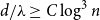 $d/\lambda \ge C\log ^3 n$
. Let
$d/\lambda \ge C\log ^3 n$
. Let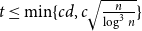 $t\le \min \{cd,c\sqrt {\frac {n}{\log ^3n}}\}$
be fixed and let
$t\le \min \{cd,c\sqrt {\frac {n}{\log ^3n}}\}$
be fixed and let $\ell =\lfloor C_{3.3}\log ^3 n\rfloor$
. Set
$\ell =\lfloor C_{3.3}\log ^3 n\rfloor$
. Set $m=2c^2n/\log ^3n$
,
$m=2c^2n/\log ^3n$
, $m'=m-\binom {t}{2}$
and
$m'=m-\binom {t}{2}$
and $k=\lfloor (\log ^3n)/(20c)\rfloor$ $-1$
, and pick disjoint random subsets
$-1$
, and pick disjoint random subsets $V_0,V_1,\ldots , V_{k+3}\subset V(G)$
subject to
$V_0,V_1,\ldots , V_{k+3}\subset V(G)$
subject to $|V_{0}|=\alpha n$
,
$|V_{0}|=\alpha n$
, $|V_1|=\ldots =|V_k|=\varepsilon m$
, and
$|V_1|=\ldots =|V_k|=\varepsilon m$
, and $|V_{k+1}|=|V_{k+2}|=|V_{k+3}|=m$
. Then, by Lemma2.2, we have w.h.p. that
$|V_{k+1}|=|V_{k+2}|=|V_{k+3}|=m$
. Then, by Lemma2.2, we have w.h.p. that
-
• for every
$v\in V(G)$
and
$i\in [k+3]_0$
,
$d(v,V_i)=(1\pm 0.1)d\cdot \frac {|V_i|}{n}$
.



Use Lemma3.3 to find a $(D,m)$
-extendable subgraph
$(D,m)$
-extendable subgraph $S_{res}\subset G-\cup _{i\in [k+1]_0}V_i$
of size
$S_{res}\subset G-\cup _{i\in [k+1]_0}V_i$
of size $|S_{res}|=$ $(\ell +1)\cdot m$
and such that
$(\ell +1)\cdot m$
and such that $V_{k+2},V_{k+3}\subset V(S_{res})$
and
$V_{k+2},V_{k+3}\subset V(S_{res})$
and
-
B for every bijection
$\sigma \,:\,V_{k+2}\to V_{k+3}$
there is a
$P_\ell$
-factor in
$S_{res}$
such that each copy of
$P_\ell$
has as its endpoints some
$v\in V_{k+2}$
and
$\sigma (v)\in V_{k+3}$
.



Let $W=V(S_{res})\setminus (V_{k+2}\cup V_{k+3})$
. The next claim finds a collection of vertex-disjoint stars, each of size
$W=V(S_{res})\setminus (V_{k+2}\cup V_{k+3})$
. The next claim finds a collection of vertex-disjoint stars, each of size $t$
, and we omit its proof as it is identical to the proof of Claim1 in Theorem1.1.
$t$
, and we omit its proof as it is identical to the proof of Claim1 in Theorem1.1.
Claim 1.
There is a collection $\{S_1,\ldots , S_t\}$
of vertex-disjoint stars with
$\{S_1,\ldots , S_t\}$
of vertex-disjoint stars with $t-1$
leaves such that
$t-1$
leaves such that $\cup _{i\in [t]}S_i$
is disjoint from
$\cup _{i\in [t]}S_i$
is disjoint from $\cup _{i\in [k+3]_0}V_i$
and
$\cup _{i\in [k+3]_0}V_i$
and $W$
.
$W$
.
For each $i\in [t]$
, let
$i\in [t]$
, let $s_i$
be the centre of
$s_i$
be the centre of $S_i$
and let
$S_i$
and let $L_i=\{u_{i,j}\,:\,j\in [t]\setminus \{i\}\}$
be the set of leaves of
$L_i=\{u_{i,j}\,:\,j\in [t]\setminus \{i\}\}$
be the set of leaves of $S_i$
. We will use
$S_i$
. We will use $s_1,\ldots , s_t$
as the branch vertices of the
$s_1,\ldots , s_t$
as the branch vertices of the $K_t$
-subdivision. Let
$K_t$
-subdivision. Let $V'=\cup _{i\in [k]}V_i\cup W\cup \{s_1,\ldots , s_t\}$
,
$V'=\cup _{i\in [k]}V_i\cup W\cup \{s_1,\ldots , s_t\}$
, $Z=\cup _{i\in [t]}L_i \cup V_{k+1}\cup V_{k+2}\cup V_{k+3}$
, and set
$Z=\cup _{i\in [t]}L_i \cup V_{k+1}\cup V_{k+2}\cup V_{k+3}$
, and set $G'=G-V'$
.
$G'=G-V'$
.
Claim 2. $I(Z)$
is
$I(Z)$
is $(D,\frac {\lambda n}{d})$
-extendable in
$(D,\frac {\lambda n}{d})$
-extendable in $G'$
.
$G'$
.
Proof. By Proposition2.8, it suffices to show that for any $U \subset V(G')$
of size
$U \subset V(G')$
of size $1 \leq |U| \leq \frac {2\lambda n}{d}$
, it holds true that
$1 \leq |U| \leq \frac {2\lambda n}{d}$
, it holds true that $|N_{G'}(U)\setminus Z|\geq D|U|$
. Recall that for every vertex
$|N_{G'}(U)\setminus Z|\geq D|U|$
. Recall that for every vertex $v \in V(G')$
we have that
$v \in V(G')$
we have that $d_G(v,V_0)\geq 0.9 \alpha d$
. An application of Lemma2.5 with
$d_G(v,V_0)\geq 0.9 \alpha d$
. An application of Lemma2.5 with $D_{2.5}=D+1$
and
$D_{2.5}=D+1$
and $k_{2.5}=3$
completes the proof as then for any
$k_{2.5}=3$
completes the proof as then for any $U \subset V(G')$
with
$U \subset V(G')$
with $|U| \leq \frac {2\lambda n}{d}$
, we have that
$|U| \leq \frac {2\lambda n}{d}$
, we have that $|N_{G'}(U)\setminus Z|\ge |N_G(U)\cap V_0|\geq D |U|.$
We now briefly describe how we will connect the branch vertices $s_i$
and
$s_i$
and $s_j$
. Clearly, it suffices to do so for
$s_j$
. Clearly, it suffices to do so for $u_{i,j} \in L_i$
and
$u_{i,j} \in L_i$
and $u_{j,i}\in L_j$
. We only give an overview at this point and postpone exact definitions until later.
$u_{j,i}\in L_j$
. We only give an overview at this point and postpone exact definitions until later.

The numbers above the arrows indicate the lengths of the corresponding path segments. The sets $V'_i$
,
$V'_i$
, $i \in \left [ k \right ]$
, will satisfy
$i \in \left [ k \right ]$
, will satisfy $V_i \subset V'_i$
and
$V_i \subset V'_i$
and $|V'_i|=m$
, and the path lengths
$|V'_i|=m$
, and the path lengths $q_{i,j}$
,
$q_{i,j}$
, $q_{j,i} \in \mathbb{N}$
will be appropriately chosen as to ensure that the final spanning subdivision is nearly balanced. The backward arrow indicates that we may visit some vertex parts multiple times (if
$q_{j,i} \in \mathbb{N}$
will be appropriately chosen as to ensure that the final spanning subdivision is nearly balanced. The backward arrow indicates that we may visit some vertex parts multiple times (if $|J_{\{i,j\}}|$
is non-zero).
$|J_{\{i,j\}}|$
is non-zero).
We let $\mathbb{M}=100\log n +\ell + k+1$
, and note that this is the length of a single loop segment and that
$\mathbb{M}=100\log n +\ell + k+1$
, and note that this is the length of a single loop segment and that $\mathbb{M} \leq \log ^3n/(10c)$
. Furthermore, observe that if the above sketch is true, then the length of the branching path from
$\mathbb{M} \leq \log ^3n/(10c)$
. Furthermore, observe that if the above sketch is true, then the length of the branching path from $u_{i,j}$
to
$u_{i,j}$
to $u_{j,i}$
will be equal to
$u_{j,i}$
will be equal to $q_{i,j}+q_{j,i}+ |J_{\{i,j\}}| \cdot \mathbb{M}+\ell +k +1$
.
$q_{i,j}+q_{j,i}+ |J_{\{i,j\}}| \cdot \mathbb{M}+\ell +k +1$
.
We now connect the vertices from $\cup _{i\in [t]}L_i$
with
$\cup _{i\in [t]}L_i$
with $V_{k+1}$
and
$V_{k+1}$
and $V_{k+3}$
. To do so, we first pick subsets
$V_{k+3}$
. To do so, we first pick subsets $A\subset V_{k+1}$
and
$A\subset V_{k+1}$
and $B\subset V_{k+3}$
of size
$B\subset V_{k+3}$
of size $|A|=|B|=m'\,:\!=\,m-\binom {t}{2}$
. Letting
$|A|=|B|=m'\,:\!=\,m-\binom {t}{2}$
. Letting $a_1,\ldots , a_{m'}$
and
$a_1,\ldots , a_{m'}$
and $b_1,\ldots , b_{m'}$
be a labelling of
$b_1,\ldots , b_{m'}$
be a labelling of $A$
and
$A$
and $B$
, respectively, use Lemma2.9 to find a collection of paths
$B$
, respectively, use Lemma2.9 to find a collection of paths $P_1,\ldots , P_{m'}$
such that, for each
$P_1,\ldots , P_{m'}$
such that, for each $i\in [m']$
,
$i\in [m']$
,
-
•
$P_i$
is an
$(a_i,b_i)$
-path of length
$100\log n$
, -
•
$\text{int}(P_i)$
is disjoint from
$I(Z)+P_1+\ldots +P_{i-1}$
, and -
•
$I(Z)+P_1+\ldots +P_{i}$
is
$(D,m)$
-extendable.





This is clearly possible, as $m'\le m\le 2c^2n/\log ^3n$
implies
$m'\le m\le 2c^2n/\log ^3n$
implies
 \begin{equation} |I(Z)+P_1+\ldots +P_{m'}|\le t(t-1)+3m+m'\cdot 100\log n\le 10c^2n. \end{equation}
Let $[m']=\cup _{\{i, j\}\in \binom {[t]}{2}} J_{\{i,j\}}$
be a partition so that
$[m']=\cup _{\{i, j\}\in \binom {[t]}{2}} J_{\{i,j\}}$
be a partition so that $||J_{\{i,j\}}|-|J_{\{i',j'\}}||\le 1$
for all
$||J_{\{i,j\}}|-|J_{\{i',j'\}}||\le 1$
for all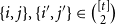 $\{i,j\}, \{i',j'\}\in \binom {[t]}{2}$
. Pick a collection of positive integers
$\{i,j\}, \{i',j'\}\in \binom {[t]}{2}$
. Pick a collection of positive integers $(q_{i,j})_{i\neq j\in [t]}$
such that for all
$(q_{i,j})_{i\neq j\in [t]}$
such that for all $i\neq j\in [t]$
and
$i\neq j\in [t]$
and $a\neq b \in [t]$
,
$a\neq b \in [t]$
,
-
C1
$100\log ^3 n\le q_{i,j},q_{j,i}\le 0.99n$
, -
C2
$\Big |\left (q_{i,j} +q_{j,i}+|J_{\{i,j\}}|\cdot \mathbb{M}\right )-\left (q_{a,b}+q_{b,a}+|J_{\{a, b\}}| \cdot \mathbb{M}\right )\Big |\le 1$
, and -
C3
$n-|V'|-|Z|-m'(100\log n-1)- \sum _{1\leq i\lt j \leq t}\left ((q_{i,j}-1)+(q_{j,i}-1)\right )=(1-\varepsilon )km$
.



This is possible as the number of leftover vertices after the $m'$
paths of length
$m'$
paths of length $100\log n$
are embedded is more than
$100\log n$
are embedded is more than $n-|V'|-|Z|-100m'\log n\ge 0.8n$
and we want to find a collection of
$n-|V'|-|Z|-100m'\log n\ge 0.8n$
and we want to find a collection of $t(t-1)\le c^2n/\log ^3 n$
numbers, each of them greater than
$t(t-1)\le c^2n/\log ^3 n$
numbers, each of them greater than $100\log ^3 n$
. Moreover, note that only the sum
$100\log ^3 n$
. Moreover, note that only the sum $(q_{i,j}+q_{j,i})$
matters, as one could increase either at the cost of decreasing the other and the final branching path’s length will remain the same. Also, for each
$(q_{i,j}+q_{j,i})$
matters, as one could increase either at the cost of decreasing the other and the final branching path’s length will remain the same. Also, for each $i\neq j\in [t]$
,
$i\neq j\in [t]$
, $|J_{\{i,j\}}|=x\,\, \textrm {or} \,\,x+1$
for some number
$|J_{\{i,j\}}|=x\,\, \textrm {or} \,\,x+1$
for some number $x$
and this follows from construction. Hence, we must have that, for each
$x$
and this follows from construction. Hence, we must have that, for each $i\neq j \in [t]$
,
$i\neq j \in [t]$
, $(q_{i,j}+q_{j,i})=y\pm 1 \,\,\textrm {or}\,\,y+\mathbb{M} \pm 1$
for some number
$(q_{i,j}+q_{j,i})=y\pm 1 \,\,\textrm {or}\,\,y+\mathbb{M} \pm 1$
for some number $y$
, in order to satisfy C2. From then on, we may ‘increase’
$y$
, in order to satisfy C2. From then on, we may ‘increase’ $y$
so that condition C3 is also satisfied.
$y$
so that condition C3 is also satisfied.
Set $\mathcal Q=\emptyset$
and
$\mathcal Q=\emptyset$
and $F=I(Z)+P_1+\ldots +P_{m'}$
, and iteratively, while
$F=I(Z)+P_1+\ldots +P_{m'}$
, and iteratively, while $\mathcal Q\not =\binom {[t]}{2}$
, do the following. Choose a pair
$\mathcal Q\not =\binom {[t]}{2}$
, do the following. Choose a pair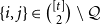 $\{i, j\} \in \binom {[t]}{2}\setminus \mathcal Q$
and pick some unused vertices
$\{i, j\} \in \binom {[t]}{2}\setminus \mathcal Q$
and pick some unused vertices $u'_{i,j}\in V_{k+1}\setminus A$
and
$u'_{i,j}\in V_{k+1}\setminus A$
and $u'_{j,i}\in V_{k+3}\setminus B$
, and, if possible, perform the following step.
$u'_{j,i}\in V_{k+3}\setminus B$
, and, if possible, perform the following step.
-
D ij Find vertex-disjoint paths
$Q_{j,i}$
and
$Q_{i,j}$
such that
$Q_{j,i}$
is a
$(u_{j,i},u'_{j,i})$
-path of length
$q_{j,i}$
,
$Q_{i,j}$
is a
$(u_{i,j},u'_{i,j})$
-path of length
$q_{i,j}$
,
$Q_{i,j}$
and
$Q_{j,i}$
are internally disjoint from
$F$
, and
$F+Q_{i,j}+ Q_{j,i}$
is
$(D,\frac {\lambda n}{d})$
-extendable in
$G'$
. Then we update the set
$Q$
and the graph
$F$
as
$\mathcal Q\,:\!=\,\mathcal Q\cup \{ij\}$
and
$F\,:\!=\,F+ Q_{i,j}+ Q_{j,i}$
.



We now show that it will be always possible to perform step D
ij
. Indeed, by C3, we know that there are always at least $(1-\varepsilon )km\geq cn/20$
many unused vertices in
$(1-\varepsilon )km\geq cn/20$
many unused vertices in $G'$
. Thus, by Lemma2.9 we may find the desired paths
$G'$
. Thus, by Lemma2.9 we may find the desired paths $Q_{i,j}$
and
$Q_{i,j}$
and $Q_{j,i}$
to complete step D
ij
.
$Q_{j,i}$
to complete step D
ij
.
Note that to finish the embedding of the $K_t$
-subdivision, we only need to connect, for each
$K_t$
-subdivision, we only need to connect, for each $\{i,j\}\in \binom {[t]}{2}$
, the vertices
$\{i,j\}\in \binom {[t]}{2}$
, the vertices $u'_{ij}\in V_{k+1}$
and
$u'_{ij}\in V_{k+1}$
and $u'_{ji}\in V_{k+3}$
. Let
$u'_{ji}\in V_{k+3}$
. Let $U$
denote the set of vertices that we have not yet used in
$U$
denote the set of vertices that we have not yet used in $G'$
. By C3,
$G'$
. By C3, $|U|=(1-\varepsilon )km$
and so we may distribute these leftover vertices to the sets
$|U|=(1-\varepsilon )km$
and so we may distribute these leftover vertices to the sets $V_1,V_2,\ldots ,V_k$
, to form pairwise disjoint sets
$V_1,V_2,\ldots ,V_k$
, to form pairwise disjoint sets $V_1',V_2',\ldots ,V_k'$
satisfying
$V_1',V_2',\ldots ,V_k'$
satisfying
-
•
$|V'_1|=\ldots =|V'_k|=m$
, -
•
$V_i\subset V'_i$
for each
$i\in [k]$
, -
•
$\left (V'_1\cup \ldots \cup V_k'\right )\setminus \left (V_1,\ldots ,V_k\right )=V(G')\setminus V(F)$
, and -
• for every vertex
$v\in V(G)$
,
$d(v,V'_i)\ge 0.9d\cdot \frac {|V_i|}{n}\ge \frac {\varepsilon c^2d}{2\log ^3 n}$
.





Use Lemma2.6, iteratively, to find a collection of matchings $M_0, M_1,\ldots , M_{k+1}$
such that
$M_0, M_1,\ldots , M_{k+1}$
such that
-
•
$M_0$
is a perfect matching in
$G[V_{k+1},V'_1]$
, -
• for
$i\in [k-1]$
,
$M_i$
is a perfect matching in
$G[V'_i,V'_{i+1}]$
, and -
•
$M_{k+1}$
is a perfect matching in
$G[V'_k,V_{k+2}]$
.


The union of these $k+2$
matchings gives a family of
$k+2$
matchings gives a family of $m$
vertex-disjoint paths of length
$m$
vertex-disjoint paths of length $k+1$
so that each such path has as endpoints some vertex from
$k+1$
so that each such path has as endpoints some vertex from $V_{k+1}$
and some vertex from
$V_{k+1}$
and some vertex from $V_{k+2}$
. It is thus left only to connect the endpoints of those paths in a suitable order to finish the embedding.
$V_{k+2}$
. It is thus left only to connect the endpoints of those paths in a suitable order to finish the embedding.
To do so, we first partition $B$
into sets
$B$
into sets $B=\cup _{(i,j)\in \binom {[t]}{2}}B_{(i,j)}$
, where
$B=\cup _{(i,j)\in \binom {[t]}{2}}B_{(i,j)}$
, where $B_{(i,j)}=\{b^{(i,j)}_1,\ldots ,b^{(i,j)}_{|J_{\{i,j\}}|}\}$
. For each
$B_{(i,j)}=\{b^{(i,j)}_1,\ldots ,b^{(i,j)}_{|J_{\{i,j\}}|}\}$
. For each $(i,j)\in \binom {[t]}{2}$
, let
$(i,j)\in \binom {[t]}{2}$
, let $v'_{i,j}\in V_{k+2}$
be the other endpoint of the path starting at
$v'_{i,j}\in V_{k+2}$
be the other endpoint of the path starting at $u'_{i,j}\in V_{k+1}$
and using edges from
$u'_{i,j}\in V_{k+1}$
and using edges from $M_0,\ldots , M_{k+1}$
. For each
$M_0,\ldots , M_{k+1}$
. For each $(i,j)\in \binom {[t]}{2}$
, and
$(i,j)\in \binom {[t]}{2}$
, and $1\le z\le |J_{\{i,j\}}|$
, let
$1\le z\le |J_{\{i,j\}}|$
, let $c^{(i,j)}_z\in V_{k+2}$
be the other endpoint of the path which starts at
$c^{(i,j)}_z\in V_{k+2}$
be the other endpoint of the path which starts at $b^{(i,j)}_z$
, goes through the corresponding path
$b^{(i,j)}_z$
, goes through the corresponding path $P_l$
,
$P_l$
, $l\in [m']$
, and then uses edges from the matchings
$l\in [m']$
, and then uses edges from the matchings $M_0, M_1,\ldots , M_{k+1}$
. Let
$M_0, M_1,\ldots , M_{k+1}$
. Let $\sigma \,:\,V_{k+2}\to V_{k+3}$
be the permutation defined as follows: for each
$\sigma \,:\,V_{k+2}\to V_{k+3}$
be the permutation defined as follows: for each $(i,j)\in \binom {[t]}{2}$
, set
$(i,j)\in \binom {[t]}{2}$
, set $\sigma (v'_{i,j})=b^{(i,j)}_1$
,
$\sigma (v'_{i,j})=b^{(i,j)}_1$
, $\sigma (c_{z}^{(i,j)})=b^{(i,j)}_{z+1}$
for each
$\sigma (c_{z}^{(i,j)})=b^{(i,j)}_{z+1}$
for each $1\le z\lt |J_{\{i,j\}}|$
, and
$1\le z\lt |J_{\{i,j\}}|$
, and $\sigma (c_{|J_{\{i,j\}}|}^{(i,j)})=u'_{j,i}$
. Then, using property B, we can complete the embedding of the
$\sigma (c_{|J_{\{i,j\}}|}^{(i,j)})=u'_{j,i}$
. Then, using property B, we can complete the embedding of the $K_t$
-subdivision.
$K_t$
-subdivision.
3.3 Proof of Theorem1.5
The proof of Theorem1.5 uses the absorption method as implemented by Montgomery [Reference Montgomery24] in his solution of Kahn’s conjecture on the threshold of bounded degree spanning trees in random graphs.
Definition 3.4.
Given a graph $G$
and a vertex
$G$
and a vertex $v\in V(G)$
, an absorber for
$v\in V(G)$
, an absorber for $v$
is a tuple
$v$
is a tuple $(A,x,y)$
that consists of a subset
$(A,x,y)$
that consists of a subset $A\subset V(G-v)$
and vertices
$A\subset V(G-v)$
and vertices $x,y\in A$
such that
$x,y\in A$
such that
-
E both
$G[A]$
and
$G[A\cup \{v\}]$
contain a Hamiltonian
$(x,y)$
-path.


The $(x,y)$
-path
$(x,y)$
-path $P_{x,y}$
with
$P_{x,y}$
with $V(P_{x,y})=A$
is called an absorbing path for
$V(P_{x,y})=A$
is called an absorbing path for $v$
.
$v$
.
Suppose that $(A,x,y)$
and
$(A,x,y)$
and $(A',x',y')$
are disjoint absorbers for vertices
$(A',x',y')$
are disjoint absorbers for vertices $v$
and
$v$
and $v'$
, respectively. The key observation here is that if
$v'$
, respectively. The key observation here is that if $P$
is an
$P$
is an $(y,x')$
-path which avoids
$(y,x')$
-path which avoids $A\cup A'\cup \{v,v'\}$
, then
$A\cup A'\cup \{v,v'\}$
, then $(A\cup A'\cup V(P),x,y')$
is an absorber for both
$(A\cup A'\cup V(P),x,y')$
is an absorber for both $v$
and
$v$
and $v'$
. The main idea introduced by Montgomery [Reference Montgomery24] was that of using a sparse template for combining absorbers of different vertices so that every single absorber is capable of ‘robustly’ absorbing a ‘large’ set of vertices. The following key lemma gives the existence of the template.
$v'$
. The main idea introduced by Montgomery [Reference Montgomery24] was that of using a sparse template for combining absorbers of different vertices so that every single absorber is capable of ‘robustly’ absorbing a ‘large’ set of vertices. The following key lemma gives the existence of the template.
Lemma 3.5 ([Reference Montgomery24, Lemma 10.7]). There is a constant $n_0$
such that, for every
$n_0$
such that, for every $n\geq n_0$
and
$n\geq n_0$
and $k\leq n$
, there exists a bipartite graph H with
$k\leq n$
, there exists a bipartite graph H with $\Delta (H) \leq 100$
and bipartition classes
$\Delta (H) \leq 100$
and bipartition classes $X$
and
$X$
and $Y \cup Z$
, with
$Y \cup Z$
, with $|X|=3n$
and
$|X|=3n$
and $|Y|=2n$
and
$|Y|=2n$
and $|Z|=n+k$
, such that the following holds. For every
$|Z|=n+k$
, such that the following holds. For every $Z' \subseteq Z$
with size
$Z' \subseteq Z$
with size $|Z'|=n$
, there exists a perfect matching between
$|Z'|=n$
, there exists a perfect matching between $X$
and
$X$
and $Y \cup Z'$
.
$Y \cup Z'$
.
The last ingredient we need is that $m$
-joined graphs contain almost spanning paths, a result which is obtained by a simple depth-first search analysis of the graph.
$m$
-joined graphs contain almost spanning paths, a result which is obtained by a simple depth-first search analysis of the graph.
Lemma 3.6.
If $G$
is an
$G$
is an $m$
-joined graph, then
$m$
-joined graph, then $G$
contains a path of length at least
$G$
contains a path of length at least $|G|-2m$
.
$|G|-2m$
.
We are now ready for the proof.
Proof of Theorem 1.5. We start by choosing constants
 \begin{equation*}0 \lt 1/n_0\ll c\ll \varepsilon \ll \theta \ll \alpha \ll \mu \lt 1.\end{equation*}
Suppose that $n\ge n_0$
and that
$n\ge n_0$
and that $G$
is an
$G$
is an $n$
-vertex graph which is
$n$
-vertex graph which is $\varepsilon n$
-joined and has minimum degree
$\varepsilon n$
-joined and has minimum degree $\delta (G)\geq \mu n$
. During the proof, we will repeatedly use the following observation. Let
$\delta (G)\geq \mu n$
. During the proof, we will repeatedly use the following observation. Let $U, Z\subset V(G)$
and let
$U, Z\subset V(G)$
and let $v,v'$
be distinct vertices.
$v,v'$
be distinct vertices.
-
F If
$d(v,U),d(v',U)\gt |Z|+4\varepsilon n$
, then there is a
$v,v'$
-path of length 3 whose interior vertices belong to
$U\setminus Z$
.



Indeed, if $d(v,U),d(v',U)\gt |Z|+4\varepsilon n$
, we can find disjoint sets
$d(v,U),d(v',U)\gt |Z|+4\varepsilon n$
, we can find disjoint sets $X\subset N(v,U)\setminus (Z\cup \{v'\})$
and
$X\subset N(v,U)\setminus (Z\cup \{v'\})$
and $Y\subset N(v',U)\setminus (Z\cup \{v\})$
such that
$Y\subset N(v',U)\setminus (Z\cup \{v\})$
such that $|X|=|Y|=\varepsilon n$
and then find an edge between
$|X|=|Y|=\varepsilon n$
and then find an edge between $X$
and
$X$
and $Y$
using that
$Y$
using that $G$
is
$G$
is $\varepsilon n$
-joined.
$\varepsilon n$
-joined.
Step 1. Fixing the reservoirs. Let $1\le t\le c\sqrt {n}$
be fixed from now on, and let
$1\le t\le c\sqrt {n}$
be fixed from now on, and let $r=\theta n$
and
$r=\theta n$
and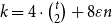 $k=4\cdot \binom {t}{2}+8\varepsilon n$
. We start by setting aside three disjoint random sets
$k=4\cdot \binom {t}{2}+8\varepsilon n$
. We start by setting aside three disjoint random sets $R_1, R_2, R_3\subset V(G)$
with the following properties.
$R_1, R_2, R_3\subset V(G)$
with the following properties.
-
G1
$|R_1|=2r$
,
$|R_2|=r +k$
, and
$|R_3|=\alpha n$
. -
G2 For all
$v\in V(G)$
and
$i\in [3]$
,
$d(v,R_i)\ge \frac {\mu |R_i|}{2}$
. -
G3 For all
$v\in V(G)$
,
$d(v,V(G)\setminus \cup _{i\in [3]}R_i)\ge \frac {\mu n}{2}$
.



Step 2. Constructing the absorbers. Our aim now is to construct a collection of absorbing paths that is capable of absorbing $R_1$
together with any set of
$R_1$
together with any set of $r$
vertices from
$r$
vertices from $R_2$
. To do so, we first construct a collection of 100 vertex-disjoint absorbers for each vertex in
$R_2$
. To do so, we first construct a collection of 100 vertex-disjoint absorbers for each vertex in $R_1\cup R_2$
.
$R_1\cup R_2$
.
Claim 1.
For each $v\in R_1 \cup R_2$
there exists a collection
$v\in R_1 \cup R_2$
there exists a collection $\{(\{a_{v,i},b_{v,i}\},a_{v,i},b_{v,i})\}_{i\in [100]}$
of absorbers for
$\{(\{a_{v,i},b_{v,i}\},a_{v,i},b_{v,i})\}_{i\in [100]}$
of absorbers for $v$
such that
$v$
such that $a_{v,i},b_{v,i}\in V(G)\setminus \cup _{j\in [3]}R_j$
and all the absorbers are pairwise disjoint.
$a_{v,i},b_{v,i}\in V(G)\setminus \cup _{j\in [3]}R_j$
and all the absorbers are pairwise disjoint.
Proof of Claim 1. We observe first that an absorber of size 2 for $v$
is just a triangle supported at
$v$
is just a triangle supported at $v$
. We will find the triangles greedily using G3 and the joinedness condition. Indeed, firstly note that for every vertex
$v$
. We will find the triangles greedily using G3 and the joinedness condition. Indeed, firstly note that for every vertex $v\in V(G)$
we have
$v\in V(G)$
we have
 \begin{equation} d(v,V(G)\setminus \cup _{i\in [3]}R_i)\overset {G3}{\ge }\frac {\mu n}{2}\ge \frac {\mu n}{4}+200|R_1\cup R_2|, \end{equation}
as $1/n_0\ll \alpha ,\theta \ll \mu$
.
$1/n_0\ll \alpha ,\theta \ll \mu$
.
Secondly, for each vertex $v\in R_1\cup R_2$
, use that
$v\in R_1\cup R_2$
, use that $G$
is
$G$
is $\varepsilon n$
-joined to find
$\varepsilon n$
-joined to find $100$
vertex-disjoint edges in the neighbourhood of
$100$
vertex-disjoint edges in the neighbourhood of $v$
, disjoint from all the other choices and disjoint from
$v$
, disjoint from all the other choices and disjoint from $\cup _{i\in [3]}R_i$
. This is possible as
$\cup _{i\in [3]}R_i$
. This is possible as
 \begin{equation*}d(v,V(G)\setminus \cup _{i\in [3]}R_i)\overset {(3.2)}{\ge } \frac {\mu n}{4} +200 |R_1 \cup R_2|\ge 2\varepsilon n+200|R_1\cup R_2|.\end{equation*}
So, for a vertex $v\in R_1\cup R_2$
, at each step we can pick disjoint subsets
$v\in R_1\cup R_2$
, at each step we can pick disjoint subsets $X_v, Y_v\subset N(v)\setminus \cup _{i\in [3]}R_i$
of unused vertices such that
$X_v, Y_v\subset N(v)\setminus \cup _{i\in [3]}R_i$
of unused vertices such that $|X_v|=|Y_v|=\varepsilon n$
and then pick an edge between
$|X_v|=|Y_v|=\varepsilon n$
and then pick an edge between $X_v$
and
$X_v$
and $Y_v$
using that
$Y_v$
using that $G$
is
$G$
is $\varepsilon n$
-joined.
$\varepsilon n$
-joined.
Our aim now is to suitably glue these absorbers to create robust absorbers.
Claim 2.
There exists an auxiliary bipartite graph $H$
with vertex classes
$H$
with vertex classes $[3r]$
and
$[3r]$
and $R_1\cup R_2$
, and a collection of vertex-disjoint paths
$R_1\cup R_2$
, and a collection of vertex-disjoint paths $Q_1,\ldots , Q_{3r}$
in
$Q_1,\ldots , Q_{3r}$
in $G$
such that
$G$
such that $\cup _{i\in [3r]}V(Q_i)$
is disjoint from
$\cup _{i\in [3r]}V(Q_i)$
is disjoint from $\cup _{i\in [3]}R_i$
,
$\cup _{i\in [3]}R_i$
,
-
H1
$Q_i$
is an absorbing path of size
$1000$
for each
$v\in N_H(i)$
and
$i\in [3r]$
, and
-
H2 for every subset
$R_2'\subset R_2$
of size
$|R_2'|=r$
, there is a perfect matching in
$H$
between
$R_1\cup R_2'$
and
$[3r]$
.


Proof of Claim 2. Let $H$
be the bipartite graph from Lemma3.5 with
$H$
be the bipartite graph from Lemma3.5 with $r$
in the place of
$r$
in the place of $n$
, and let
$n$
, and let $R_1$
and
$R_1$
and $R_2$
play the role of the sets
$R_2$
play the role of the sets $Y$
and
$Y$
and $Z$
, respectively, and let
$Z$
, respectively, and let $X=[3r]$
. For every vertex
$X=[3r]$
. For every vertex $v\in R_1\cup R_2$
, let
$v\in R_1\cup R_2$
, let $f_v\,:\,N_H(v)\to [100]$
be an injective function listing the neighbours of
$f_v\,:\,N_H(v)\to [100]$
be an injective function listing the neighbours of $v$
in
$v$
in $H$
. Letting
$H$
. Letting $Q_0$
be the empty graph, suppose that we have found
$Q_0$
be the empty graph, suppose that we have found $Q_0,\ldots , Q_{i-1}$
for some
$Q_0,\ldots , Q_{i-1}$
for some $i\in [3r]$
and let us show how to find
$i\in [3r]$
and let us show how to find $Q_i$
. Let
$Q_i$
. Let $v_1,\ldots , v_q$
be a labelling of
$v_1,\ldots , v_q$
be a labelling of $N_H(i)$
and note that
$N_H(i)$
and note that $q\le \Delta (H)\le 100$
. Using F, for each
$q\le \Delta (H)\le 100$
. Using F, for each $1\le j\lt q$
, find a path
$1\le j\lt q$
, find a path $Q'_{ij}$
of length
$Q'_{ij}$
of length $3$
between
$3$
between $b_{v_j,f_{v_j}(i)}$
and
$b_{v_j,f_{v_j}(i)}$
and $a_{v_{j+1},f_{v_{j+1}}(i)}$
, which is possible because
$a_{v_{j+1},f_{v_{j+1}}(i)}$
, which is possible because
 \begin{equation*}d(v,V(G)\setminus \cup _{i\in [3]}R_i)\overset {(3.2)}{\ge }\frac {\mu n}{4}+200|R_1\cup R_2|\ge \frac {\mu n}{8}+2\cdot 10^5|R_1\cup R_2|,\end{equation*}
provided $1/n_0\ll \alpha ,\theta \ll \mu$
. Then, repeatedly using F, find a path
$1/n_0\ll \alpha ,\theta \ll \mu$
. Then, repeatedly using F, find a path $Q'_{iq}$
starting from
$Q'_{iq}$
starting from $b_{v_q,f_{v_q}(i)}$
and having suitable size so that
$b_{v_q,f_{v_q}(i)}$
and having suitable size so that $\cup _{j\in [q]}Q'_{i,j} \cup \{ a_{v_1,f_1(i)}b_{v_1,f_1(i)}\}$
has exactly 1000 vertices. Again, this is possible due to (3.2) and because we are looking for a path with
$\cup _{j\in [q]}Q'_{i,j} \cup \{ a_{v_1,f_1(i)}b_{v_1,f_1(i)}\}$
has exactly 1000 vertices. Again, this is possible due to (3.2) and because we are looking for a path with $1000\gt 4q$
vertices.
$1000\gt 4q$
vertices.
Step 3. Finding an almost spanning $K_t$
-subdivision. Let
$K_t$
-subdivision. Let $A= \cup _{i\in [3r]}V(Q_i)$
be the set of vertices covered by the absorbing paths we found in Claim2. Note that
$A= \cup _{i\in [3r]}V(Q_i)$
be the set of vertices covered by the absorbing paths we found in Claim2. Note that $|A|=3000r$
as each path has exactly
$|A|=3000r$
as each path has exactly $1000$
vertices. Let
$1000$
vertices. Let $V'=V(G)\setminus (R_1\cup R_2\cup R_3\cup A)$
and pick arbitrarily our branching vertices
$V'=V(G)\setminus (R_1\cup R_2\cup R_3\cup A)$
and pick arbitrarily our branching vertices $u_1,\ldots ,u_t \in V'$
. To connect the branching vertices, we will find a collection of
$u_1,\ldots ,u_t \in V'$
. To connect the branching vertices, we will find a collection of $\binom {t}{2}$
vertex-disjoint paths covering most of
$\binom {t}{2}$
vertex-disjoint paths covering most of $G[V']$
. Indeed, as
$G[V']$
. Indeed, as $G$
is
$G$
is $\varepsilon n$
-joined, we can use Lemma3.6 to find a path
$\varepsilon n$
-joined, we can use Lemma3.6 to find a path $P$
in
$P$
in $G'-\{u_1,\ldots , u_t\}$
such that
$G'-\{u_1,\ldots , u_t\}$
such that
 \begin{equation*}|P|\ge |V'|-t-2\varepsilon n.\end{equation*}
Divide $P$
into paths
$P$
into paths $(P'_{e})_{e\in \binom {[t]}{2}}$
so that
$(P'_{e})_{e\in \binom {[t]}{2}}$
so that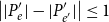 $\big ||P'_{e}|-|P'_{e'}|\big |\le 1$
for all
$\big ||P'_{e}|-|P'_{e'}|\big |\le 1$
for all $e,e'\in \binom {[t]}{2}$
. Next, for each
$e,e'\in \binom {[t]}{2}$
. Next, for each $e=ij\in \binom {[t]}{2}$
, form a
$e=ij\in \binom {[t]}{2}$
, form a $(u_i,u_j)$
-path
$(u_i,u_j)$
-path $P_{ij}=P_e$
by using
$P_{ij}=P_e$
by using $P'_{ij}$
and connecting through
$P'_{ij}$
and connecting through $R_3$
, using F, the endpoints of
$R_3$
, using F, the endpoints of $P'_{ij}$
with
$P'_{ij}$
with $u_i$
and
$u_i$
and $u_j$
. This is possible, as for all
$u_j$
. This is possible, as for all $v\in V(G)$
, G2 gives
$v\in V(G)$
, G2 gives $d(v,R_3)\ge \mu \alpha n/2\ge c^2n+ 100\varepsilon n\ge t^2n+100\varepsilon n$
. Thus, we have found a
$d(v,R_3)\ge \mu \alpha n/2\ge c^2n+ 100\varepsilon n\ge t^2n+100\varepsilon n$
. Thus, we have found a $K_t$
-subdivision, say
$K_t$
-subdivision, say $S$
, such that
$S$
, such that
-
• S is nearly balanced, and
-
•
$|V(S)\setminus \cup _{i\in [3]}R_i|\ge n-|R_1\cup R_2\cup R_3|-|A|-2\varepsilon n$
, and -
•
$|V(S)\cap R_3|=4\cdot \binom {t}{2}$
.


Step 4. Finding a spanning $K_t$
-subdivision. The last step of the proof consists of using the absorbing paths we built in Step 2 to turn the
$K_t$
-subdivision. The last step of the proof consists of using the absorbing paths we built in Step 2 to turn the $K_t$
-subdivision
$K_t$
-subdivision $S$
into a spanning nearly balanced subdivision. To do so, we first need to incorporate each of the absorbing paths
$S$
into a spanning nearly balanced subdivision. To do so, we first need to incorporate each of the absorbing paths $(Q_i)_{i\in [3r]}$
into
$(Q_i)_{i\in [3r]}$
into $S$
.
$S$
.
For $1\le i\le 3r$
, pick a path
$1\le i\le 3r$
, pick a path $P_{e}$
of minimal length and take two consecutive vertices
$P_{e}$
of minimal length and take two consecutive vertices $x,y\in V(P_e)$
, and replace the edge
$x,y\in V(P_e)$
, and replace the edge $xy\in E(P_e)$
with the
$xy\in E(P_e)$
with the $(x,y)$
-path which consists of
$(x,y)$
-path which consists of $Q_i$
together with two paths of length
$Q_i$
together with two paths of length $3$
connecting the endpoints of
$3$
connecting the endpoints of $Q_i$
with
$Q_i$
with $x$
and
$x$
and $y$
, respectively, and whose interior vertices belong to
$y$
, respectively, and whose interior vertices belong to $R_3$
. This is done, again, using G2 and F, and it is possible as, for every
$R_3$
. This is done, again, using G2 and F, and it is possible as, for every $v\in V(G)$
,
$v\in V(G)$
,
 \begin{equation*}d(v,R_3\setminus V(S)){\ge } \frac {\mu |R_3|}{2}-4\cdot \binom {t}{2}\ge \frac {\mu \alpha n}{2}-2c^2n\ge \frac {\mu \alpha n}{4}+4\cdot 3r,\end{equation*}
as $1/n_0\ll c\ll \theta \ll \alpha \ll \mu$
. Thus we have found a
$1/n_0\ll c\ll \theta \ll \alpha \ll \mu$
. Thus we have found a $K_t$
-subdivision, say
$K_t$
-subdivision, say $S'$
, whose branching path lengths differ by at most
$S'$
, whose branching path lengths differ by at most $1005$
. Indeed, unless
$1005$
. Indeed, unless $3r$
divides
$3r$
divides ${\binom{t}{2}}$
, then some of the branching paths will contain one more absorbing path
${\binom{t}{2}}$
, then some of the branching paths will contain one more absorbing path $Q_i$
than others. Hence, they may contain at most
$Q_i$
than others. Hence, they may contain at most $1005$
more vertices,
$1005$
more vertices, $1000$
for the path itself,
$1000$
for the path itself, $2$
to glue each side and one final vertex which is not in
$2$
to glue each side and one final vertex which is not in $S'$
yet but will be embedded right at the end of the proof. Moreover,
$S'$
yet but will be embedded right at the end of the proof. Moreover, $S'$
satisfies
$S'$
satisfies $|V(S')\setminus \cup _{i\in [3]}R_i|\ge n-|R_1\cup R_2\cup R_3|-2\varepsilon n$
,
$|V(S')\setminus \cup _{i\in [3]}R_i|\ge n-|R_1\cup R_2\cup R_3|-2\varepsilon n$
, $|V(S')\cap R_3|=4\cdot \binom {t}{2}+4\cdot 3r$
, and
$|V(S')\cap R_3|=4\cdot \binom {t}{2}+4\cdot 3r$
, and
-
I each path
$Q_i$
is a subpath of one of the paths from
$S'$
.


The last step we need before using the absorbing paths is to include each vertex from $V(G)\setminus (V(S')\cup R_1\cup R_2)$
into the
$V(G)\setminus (V(S')\cup R_1\cup R_2)$
into the $K_t$
-subdivision. To do that, we will connect through
$K_t$
-subdivision. To do that, we will connect through $R_2$
now. Observe that the number of vertices used from
$R_2$
now. Observe that the number of vertices used from $R_3$
thus far is exactly
$R_3$
thus far is exactly $4\cdot {\binom{t}{2}}+4\cdot 3r$
and that
$4\cdot {\binom{t}{2}}+4\cdot 3r$
and that
 \begin{equation} |R_3|=\alpha n\geq 4\cdot {\binom{t}{2}}+4\cdot 3r +1005\cdot {\binom{t}{2}}+2\varepsilon n . \end{equation}
Therefore, by Lemma3.6 we may find a path $P''$
in
$P''$
in $V(G)\setminus (V(S')\cup R_1\cup R_2)$
covering all but exactly
$V(G)\setminus (V(S')\cup R_1\cup R_2)$
covering all but exactly $2\varepsilon n$
vertices. Furthermore, by 3.3
$2\varepsilon n$
vertices. Furthermore, by 3.3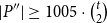 $|P''|\geq 1005 \cdot {\binom{t}{2}}$
.
$|P''|\geq 1005 \cdot {\binom{t}{2}}$
.
Firstly, we embed into $S'$
those vertices in
$S'$
those vertices in $V(G)\setminus (V(S')\cup R_1\cup R_2)$
which are not covered by
$V(G)\setminus (V(S')\cup R_1\cup R_2)$
which are not covered by $P''$
. This is done using F to make the connections through paths of length
$P''$
. This is done using F to make the connections through paths of length $3$
with internal vertices in
$3$
with internal vertices in $R_2$
. We do this by embedding one vertex at a time in a shortest branching path, ensuring that the lengths of the branching paths differ by at most
$R_2$
. We do this by embedding one vertex at a time in a shortest branching path, ensuring that the lengths of the branching paths differ by at most $1005$
still. Since
$1005$
still. Since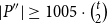 $|P''| \geq 1005\cdot {\binom{t}{2}}$
, we may subdivide the path into
$|P''| \geq 1005\cdot {\binom{t}{2}}$
, we may subdivide the path into ${\binom{t}{2}}$
segments of appropriate lengths, taking into consideration the fact that some branching paths may contain one more absorbing path
${\binom{t}{2}}$
segments of appropriate lengths, taking into consideration the fact that some branching paths may contain one more absorbing path $Q_i$
than others, and embed them into the subdivision. This is once again done by using F and connecting by paths of length 3 with internal vertices in
$Q_i$
than others, and embed them into the subdivision. This is once again done by using F and connecting by paths of length 3 with internal vertices in $R_2$
. In particular, embedding the
$R_2$
. In particular, embedding the $2\varepsilon n$
vertices as well as the
$2\varepsilon n$
vertices as well as the ${\binom{t}{2}}$
segments of
${\binom{t}{2}}$
segments of $P''$
is possible as, as for every every vertex
$P''$
is possible as, as for every every vertex $v\in V(G)$
we have
$v\in V(G)$
we have
 \begin{equation*}d(v,R_2)\overset {G2}{\ge } \frac {\mu |R_2|}{2}\ge \frac {\mu \theta n}{4}+4\cdot 2\varepsilon n+4\cdot \tbinom {t}{2},\end{equation*}
and at each step, we use exactly four new vertices from $R_2$
. Note that picking the segment lengths of
$R_2$
. Note that picking the segment lengths of $P''$
carefully ensures that at this point the branching path sizes differ by at most one. We are now left to embed the remainder of
$P''$
carefully ensures that at this point the branching path sizes differ by at most one. We are now left to embed the remainder of $R_1 \cup R_2$
.
$R_1 \cup R_2$
.
Let $R_2'\subset R_2$
be the set of leftover vertices in
$R_2'\subset R_2$
be the set of leftover vertices in $R_2$
and note that
$R_2$
and note that $|R_2'|=|R_2|-4\cdot {\binom{t}{2}}-8\varepsilon n=r$
. Now we are ready to use the property of the absorbing paths. By H2, there is perfect matching, say
$|R_2'|=|R_2|-4\cdot {\binom{t}{2}}-8\varepsilon n=r$
. Now we are ready to use the property of the absorbing paths. By H2, there is perfect matching, say $M$
, between
$M$
, between $[3r]$
and
$[3r]$
and $R_1\cup R_2'$
. For each edge
$R_1\cup R_2'$
. For each edge $iz_i\in E(M)$
, by H1 we know that
$iz_i\in E(M)$
, by H1 we know that $Q_i$
is an absorbing path for
$Q_i$
is an absorbing path for $z_i$
and thus, by I and E, we can include
$z_i$
and thus, by I and E, we can include $z_i$
into the
$z_i$
into the $K_t$
-subdivision. Since
$K_t$
-subdivision. Since $M$
is a perfect matching, we have included each vertex from
$M$
is a perfect matching, we have included each vertex from $R_1\cup R_2'$
and thus found a spanning nearly balanced
$R_1\cup R_2'$
and thus found a spanning nearly balanced $K_t$
-subdivision.
$K_t$
-subdivision.
4. Concluding remarks
As mentioned in the introduction, the result of McDiarmid and Yolov [Reference McDiarmid and Yolov23] gives an optimal dependency between the minimum degree of the graph and the size of the bipartite holes forcing Hamiltonicity. To state this result precisely, we need some definitions. Say a graph $G$
has a
$G$
has a $(s,t)$
-bipartite-hole if there are disjoint sets
$(s,t)$
-bipartite-hole if there are disjoint sets $A,B\subset V(G)$
with
$A,B\subset V(G)$
with $|A|=s$
,
$|A|=s$
, $|B|=t$
, and no edges between
$|B|=t$
, and no edges between $A$
and
$A$
and $B$
. The bipartite-hole number of
$B$
. The bipartite-hole number of $G$
, which we denoted by
$G$
, which we denoted by $\tilde {\alpha }(G)$
, is the smallest integer
$\tilde {\alpha }(G)$
, is the smallest integer $m$
that can be written as
$m$
that can be written as $m=s+t-1$
for some positive integers
$m=s+t-1$
for some positive integers $s$
and
$s$
and $t$
so that
$t$
so that $G$
has no
$G$
has no $(s,t)$
-bipartite-hole.
$(s,t)$
-bipartite-hole.
Theorem 4.1 (McDiarmid and Yolov [Reference McDiarmid and Yolov23]). If $G$
is a graph with at least 3 vertices and
$G$
is a graph with at least 3 vertices and $\delta (G)\ge \tilde {\alpha }(G)$
, then
$\delta (G)\ge \tilde {\alpha }(G)$
, then $G$
is Hamiltonian.
$G$
is Hamiltonian.
The minimum degree condition in Theorem4.1 is best possible, as, for any $r\ge 1$
,
$r\ge 1$
, $G=K_{r,r+1}$
has minimum degree
$G=K_{r,r+1}$
has minimum degree $\delta (G)=r$
and bipartite-hole number
$\delta (G)=r$
and bipartite-hole number $\tilde {\alpha }(G)=r+1$
but is not Hamiltonian. Note that in Theorem1.5, the
$\tilde {\alpha }(G)=r+1$
but is not Hamiltonian. Note that in Theorem1.5, the $\varepsilon n$
-joined condition of
$\varepsilon n$
-joined condition of $G$
implies that
$G$
implies that $\tilde {\alpha }(G)\le 2\varepsilon n-1$
and, from the proof of Theorem1.5, we require that
$\tilde {\alpha }(G)\le 2\varepsilon n-1$
and, from the proof of Theorem1.5, we require that $\varepsilon \ll \mu$
, which then implies
$\varepsilon \ll \mu$
, which then implies $\tilde {\alpha }(G)\le 2\varepsilon n-1\le \delta (G)$
. It would be interesting to see if Theorem4.1 can be extended in the context of Theorem1.5.
$\tilde {\alpha }(G)\le 2\varepsilon n-1\le \delta (G)$
. It would be interesting to see if Theorem4.1 can be extended in the context of Theorem1.5.
Question 4.2.
Is it true that there is a constant $c\in (0,1)$
such that for
$c\in (0,1)$
such that for $n$
large enough the following holds. If
$n$
large enough the following holds. If $G$
is an
$G$
is an $n$
-vertex graph with
$n$
-vertex graph with $\delta (G)\ge \tilde {\alpha }(G)$
, then
$\delta (G)\ge \tilde {\alpha }(G)$
, then $G$
contains a spanning
$G$
contains a spanning $K_t$
-subdivision for all
$K_t$
-subdivision for all $2\le t\le c\sqrt {n}$
.
$2\le t\le c\sqrt {n}$
.
Funding statement
Hyunwoo Lee supported by the National Research Foundation of Korea (NRF) grant funded by the Korea government (MSIT) No. RS-2023-00210430, and the Institute for Basic Science (IBS-R029-C4). Matías Pavez-Signé supported by ANID-FONDECYT Regular grant No. 1241398, by ANID Basal Grant CMM FB210005, and by the European Research Council (ERC) under the European Union Horizon 2020 research and innovation programme (grant agreement No. 947978). Teo Petrov supported by the Warwick Mathematics Institute Centre for Doctoral Training and by funding from the UK EPSRC (grant number: EP/W524645/1).





 Open access

