

1. Introduction
The openness of markets depends not only on what happens at the border but also on a plethora of ‘behind the border’ policy choices made by governments. The presence of chapters on ‘regulatory cooperation’, ‘regulatory improvement’, and ‘regulatory coherence’ in preferential trade agreements (PTAs) that have recently been concluded, or are currently under negotiation, create legal precedents that may inform the design of other PTAs and the evolution of global norms at the World Trade Organization (WTO). In this context, the Canada–European Union Comprehensive Trade and Economic Agreement (CETA), the Chile–Colombia–Mexico–Peru Pacific Alliance Protocol (PAAP), the uncertain Trans-Pacific Partnership Agreement (TPP), and the now suspended US–EU Transatlantic Trade and Investment Partnership (TTIP), represent major new developments in trade governance.
Such developments raise important questions to which this article seeks answers: What are the main conceptual similarities and differences between the notions of regulatory cooperation, coherence, and improvement? Do semantics matter or are all these iterations of a broader concept? What is the substantive remit of the obligations that states assume when committing to these disciplines and what will be required to implement them? Are they achievable solely through legally ‘binding’ commitments, or could ‘soft’ (non-binding) commitments play a role?
In exploring this new frontier in international trade law and policy, this article introduces the concept of ‘regulatory convergence’ as an overarching notion of reducing unnecessary regulatory incompatibilities between countries in order to facilitate cross-border trade and investment.
The article is organized as follows. Section 2 explores the legal and political foundations of the notion of regulatory convergence. Section 3 looks at the origins of regulatory convergence in an international context while Section 4 maps and compare its different denominations in recent PTAs. The final section ponders the positive and negative effects of this new discipline, concluding that both substantive and procedural obligations linked to this concept and its implementation could raise legitimate concerns about the distinction between ‘rule-making’ and ‘rule-taking’ nations in global governance.
2. The notion of regulatory convergence
It is not uncommon for policy problems to have multiple solutions that can be implemented through different legal means. There are several reasons why regulatory divergence might occur: local preferences, public policy choices, information asymmetries, and network effects, among them (Chirico and Larouche, 2013: 12–15). In addition, the legal framework and social norms that countries have inherited from the past display strong path dependent characteristics that intrinsically limit the cross-country convergence of legal systems, and countries usually choose rules that are primarily consistent with their own traditions (Glaeser and Shleifer, Reference Glaeser and Shleifer2002; La Porta et al., Reference La Porta, Lopez-De-Silanes and Shleifer2008).
The rationale behind the introduction of regulatory convergence provisions in PTAs stems from the idea that regulatory diversity may entail significant costs that can hinder cross-border exchanges (Hoekman, Reference Hoekman2015), and that the maintenance of needlessly burdensome cross-border differences in regulations can result in a number of additional negative policy impacts, including higher transaction costs stemming from information asymmetries (Chirico and Larouche, 2013: 23–24). Divergent regulatory requirements can lead to costly duplication in product development, manufacturing, and testing – obstacles that are important for all internationally active businesses and especially so for small or medium-size firms (SMEs), for which such fixed costs can be a deciding factor in whether or not to export or invest, including across borders (Malmström, Reference Malmström2015: 2–3). Lack of transparency or clarity of regulations, as well as excessive, inefficient, or ineffective regulations, create unnecessary delays or impose costs on traders and investors (Sheargold and Mitchell, Reference Sheargold and Mitchell2016).
Regulatory convergence can also be understood through the theory of legal convergence,Footnote 1 which holds that significant distinctions between legal systems are frequently cosmetic in character (Canuel, Reference Canuel and Cordero-Moss2011: 80). While different legal systems may apply differing solutions to a problem starting from different points of departure, they can ultimately lead to similar outcomes (Mattei et al., Reference Mattei, Antoniolli, Rossato, Bouckaert and De Geest2000: 508). In some cases, functional convergence may occur even as formal regulations diverge (Crettez et al., Reference Crettez, Deffains and Musy2014: 20–21). Some scholars have gone so far as to suggest that there is often a unique, optimal, solution to a legal problem, and thus countries should spontaneously converge towards the same rule even without any interactions among them (a process dubbed ‘natural convergence’) (Merryman, Reference Merryman1994). Without a minimum level of convergence, the modern multi-layered legal order may otherwise result in far-reaching fragmentation of legal norms and principles, legal instruments, and methods; thereby generating legal uncertainty (Lierman, Reference Lierman2014: 611–613).
Several scholars have argued that a key driver of legal convergence is the growing perception of policymakers, traders, investors, and academics that convergence occurs through repeated interactions at the international level. Vectors of this phenomenon include improvements in communication means or the perceived need (or pressure) to comply with a dominant culture (that of regulatory hegemons); for example, by using ‘legal transplants’ (Crettez et al., Reference Crettez, Deffains and Musy2014: 20). Therefore, international law can be a key driver of legal convergence, through dissemination of shared standards and underlying values or ideologies, and by facilitating the adoption and implementation of uniform laws (Street, Reference Street2013: 11). Seen in this way, interaction between rule-makers becomes a key driver of regulatory convergence.
However, it bears noting that regulatory convergence is an incomplete process. Equal rules may mean different things under differing legal systems (e.g. same rule, different meaning) or within differing implementation cultures (e.g. same rule, different application). The pace, form, and degree of regulatory convergence also differ across sectors, influenced by variations in knowledge over time, the magnitude of the costs (and benefits) of change, sources of market failure, bureaucratic cultures, and the importance of the process from a cultural or social point of view (Crettez et al., Reference Crettez, Deffains and Musy2014: 26). At the same time, through the evolution of jurisprudence, tribunals are typically willing to accept a degree of divergence in the application of laws.Footnote 2 Even where PTA members agree to similar regulations, the identical wording of terms can mean different things for each country in the context of their respective legal systems or in the application of such regulations in practice. Regulatory convergence involves many actors with ‘regulatory capacity’ and different degrees of autonomy, and its effectiveness would require coordination across the whole State (Young, Reference Young2015: 1253, 1258–1259) Furthermore, the causes of regulatory divergence may evolve over time, either fostering convergence or nurturing further divergence. In short, both regulatory convergence and divergence are dynamic and incomplete processes (Hoekman, Reference Hoekman2015: 613).
Divergence is also widespread as regards the mechanisms to achieve regulatory convergence, with different nomenclatures – regulatory cooperation, coherence, improvement, coordination, or harmonization, among others – with no agreed typology. Scholars use these concepts interchangeably, without much clarification of underlying differences – if any.
Yet, some do draw distinctions between them. For Mavroidis, while ‘regulatory cooperation’ denotes the presence of an international element, ‘regulatory coherence’ describes the quality of a domestic regulatory process (Mavroidis, Reference Mavroidis2016: 8). Arvíus and Jachia identify two ‘segments’ of regulatory cooperation organized around increasing steps of complexity and levels of engagement (‘ladders of ambition’). The first segment is the disciplines on national regulatory practices (observation of good regulatory practices and transparency measures); and the second is the different levels of trans-national regulatory cooperation (recognition of tests, conformity assessment procedures, and accreditation systems, and their results; recognition of functionally equivalent technical regulations; and the establishment of fully harmonized technical regulations) (Arvíus and Jachia, Reference Arvíus and Jachia2015). Drezner defines regulatory coordination as ‘the codified adjustment of national standards in order to recognize or accommodate regulatory frameworks from other countries’ (Drezner, Reference Drezner2008: 11). Mumford considers that regulatory coherence requires a multidimensional strategy with three interrelated elements: (i) coherence between domestic laws and domestic agencies; (ii) coherence between domestic and international policy goals; and (iii) coherence between the laws and agencies of two or more economies (Mumford, Reference Mumford2014: 3–5). Young believes that regulatory convergence means that countries’ regulations become more similar without necessarily being the same, which would constitute ‘regulatory harmonization’ (Young, Reference Young2015: 1256–1259).
Without following any specific taxonomy, others have focused on the different sources and modes of regulatory convergence. On the sources, it is important to note that the distinction between public and private regulations is not always clear, having different sources of regulations interacting in a continuum that includes state-led, private-led, and collaborative regulations, following the ‘governance triangle’ developed by Abbot and Snidal (Reference Abbott and Snidal2010). The OECD has identified 11 forms of international ‘regulatory co-operation’, (IRC), with a range that goes from the least to the most legally binding.Footnote 3
This article considers that regardless of the above semantics, all mechanisms should be viewed as forming part of the overarching notion of ‘regulatory convergence’, since they all aim to reduce unnecessary regulatory incompatibilities between countries, but in a process that is both dynamic and incomplete.
Focusing on those PTAs that have included a chapter on regulatory convergence as a case study, we advance the idea that regardless of their denomination, all regulatory convergence mechanisms include substantive or procedural aspects that are aimed at two different types of regulatory outcomes. In some agreements, regulatory convergence aims to achieve substantive regulatory harmonization (similar or equivalent regulations – ‘substantive convergence’). Other agreements consider harmonization of the processes by which regulations are developed, adopted, publicized, and implemented (similar or equivalent procedures – ‘procedural convergence’). While mechanisms that address problems related to the quality of the regulations and their effects are mainly substantive in nature, mechanisms that address problems of design and implementation of regulations are largely procedural in character (Sheargold and Mitchell, Reference Sheargold and Mitchell2016: 592). With different denominations (Hoekman and Mavroidis, Reference Hoekman and Mavroidis2015: 2–3), both approaches are present in the PTAs examined in this article.
Regulatory convergence can thus be achieved both through a top-down process, e.g. via harmonization at the international level, or through a bottom-up process, e.g. through the implementation of good regulatory practices (Chirico and Larouche, 2013: 27–31). None of the above distinctions is always clear-cut, but they are used in what follows to try to illustrate the different types of regulatory convergence found in PTAs.
3. The origins of regulatory convergence
3.1 Regulatory convergence at the WTO
Behind-the-border’ measures have raised policy concerns since the establishment of the General Agreement on Tariffs and Trade (GATT), as they affect products or people once they are within the territory of the relevant country, diluting or even nullifying the value of tariff bindings and affecting trade. For that reason, drafters of the GATT included general rules covering broad categories of measures, notably the ‘national treatment’ and the ‘most-favoured nation treatment’ (MFN) obligations in articles I and III of the agreement.Footnote 4 Similar provisions are respectively enshrined in articles XVII and II of the General Agreement on Trade in Services (GATS) with respect to services and services suppliers.Footnote 5
Over time, more specific disciplines were negotiated in the WTO, as Members recognized that the effective implementation of good regulatory practices was key to minimizing unnecessary barriers to trade and investment (Bollyky, Reference Bollyky, Lim, Elms and Low2012: 174–175). Once a product (a good or a service) has crossed a border, regulatory protectionism may impose a disadvantage on imported products by discriminating against them in a manner that is not necessary for the attainment of legitimate public policy objectives (Sykes, Reference Sykes1999). Regulatory protectionism often involves trade barriers that operate in a grey area. They are not as easy to detect or measure as are tariffs or quotas applied at the border. Areas such as food inspection, product labelling, and safety guidelines are governed by internal health, safety, and technical regulations, all of which can be designed or implemented in such a way as to raise costs for foreign firms in comparison with domestic firms and give domestic firms and products an advantage in the home market (Fishbein and Trebilcock, Reference Fishbein, Trebilcock, Guzman and Sykes2007: 37).
The question arises of whether trade and investment liberalization can be achieved without infringing the freedom of governments to pursue legitimate regulatory objectives. One of the main problems lies in distinguishing between ‘unintended protectionism’, where domestic policies enacted with no protectionist intent discriminate against foreign competitors, using ‘disguised protectionism’, where a government uses a legitimate objective as an excuse to design domestic policies that inhibit foreign competition (Mattoo and Subramanian, Reference Mattoo and Subramanian1998: 303–304).
If a country was not constrained in its use of regulatory measures, the latter could be widely used to manipulate the terms of trade. The most important agreements constraining such discrimination are the WTO Agreement on Technical Barriers to TradeFootnote 6 (TBT Agreement), which deals with technical regulations, standards, and procedures for testing and certification; and the Agreement on Sanitary and Phyto-Sanitary MeasuresFootnote 7 (SPS Agreement), which deals with food safety and animal health.
The inclusion of regulatory convergence provisions in PTAs draws on the above WTO agreements, but such provisions differ in at least two aspects: respect to their scope and implementation mechanisms.
Regarding scope, the regulatory convergence chapters under review in this article go beyond technical barriers (technical regulations, standards, and conformity assessment procedures) and sanitary and phytosanitary measures, by addressing a broad range of regulations that may affect trade and investment. However, all agreements reviewed allow States to exclude certain measures from the scope of regulatory convergence.
As regards implementation mechanisms, both WTO agreements and PTAs with regulatory convergence chapters share similar tools, such as transparency obligations, recognition of equivalence, or mutual recognition agreements, and have treaty bodies to oversee treaty implementation. However, regulatory convergence chapters may also include other tools, notably regulatory impact assessments and the participation of different stakeholders in the rule-making process. Nevertheless, there is one further key difference. While TBT and SPS disciplines address the quality of regulatory interventions by creating international obligations (Mavroidis, Reference Mavroidis2016: 6) – e.g. that States shall refrain from creating unnecessary obstacles to international trade, or that SPS decisions must be grounded in scientific principles and sufficient scientific evidence – the commitments found in PTAs under review either are excluded from dispute settlement mechanisms or are only facultative in nature.
As the WTO is not a standard-setting body, the principal means through which it promotes regulatory convergence is by encouraging members to use international standards and to exercise temperance in their regulatory choices, opting for least-trade or investment-restrictive ways of satisfying public policy objectives or minimizing the adverse effects on trade and investment where these exist. Neither the TBT nor the SPS Agreements compel WTO members to use international standards.Footnote 8 However, although WTO members may adopt SPS measures or technical regulations that depart from international standards (United Nations, 2012: 198), in such cases the burden of proving the necessity of the measure shifts to the country adopting any regulation that departs from the international norm – something that could be particularly burdensome for developing or least developed economies.
Reconciling the objectives of domestic regulation and international trade is not always straightforward. WTO rules have been effective in limiting discriminatory regulatory measures, but arguably less so in eliminating economically inefficient, unclear, and redundant but non-discriminatory regulations that can obstruct international trade and investment and nullify or impair treaty commitments.
Yet, for the most part, trade agreements have not led to significant improvements in collaborative dialogue between regulatory agencies (Bollyky (Reference Bollyky, Lim, Elms and Low2012: 173). If the introduction of regulatory convergence disciplines in PTAs were successful in this regard, it would likely inform the evolution of WTO-embedded global norms. Yet, for the reasons explained in what follows, it appears unlikely that PTA chapters on regulatory convergence will exert such effects.
3.2 Regulatory convergence in international economic law
The notion of regulatory convergence is relatively new in international trade and investment regulations. ‘Regulatory cooperation’ emerged in the mid-1990s within the Organisation for Economic Co-operation and Development (OECD), in the work of member states of the Asia-Pacific Economic Cooperation (APEC) forum, and in political spaces like the Transatlantic Economic Council (TEC).
3.2.1 OECD
In an early attempt to define ‘regulatory cooperation’, a 1994 OECD study noted that it required ‘institutional and procedural frameworks within which national governments, sub-national governments, and the wider public can work together to build more integrated systems for rule-making and implementation, subject to the constraints of democratic values, such as accountability and openness’ (Jacobs, Reference Jacobs1994: 15).
OECD members were the first to consider concerted actions directed at improving the quality of their regulatory systems, particularly by using Regulatory Impact Analysis (RIAs).Footnote 9 In 1997, another OECD study drew attention to the fact that, from an initial sample of one or two countries in 1980, improvements in regulatory decisions through impact assessment of new regulatory proposals was becoming an increasingly common reform tool. By 1996, more than half of OECD members had adopted RIA programs assessing an increasing proportion of laws and other regulations affecting citizens (Jacobs, Reference Jacobs1997: 13). In 2009, the OECD noted the mainstreaming of the RIA process, observing that it formed a core component of the regulatory management strategy of all Member states and was a widely used means of improving the quality of regulatory decision-making and in informing decision-makers on whether and how to regulate to achieve public policy goals (OECD, 2009: 12–13).
Domestic stakeholders are key drivers of the adoption of RIAs. This includes groups concerned with the costs of regulations and the impact of regulations on business activity, those who see regulations as a tool to promote certain values like transparency and accountability, and those concerned with the impact of regulations in other areas, such as job creation or the environment (Jacobs, Reference Jacobs1997: 13).
3.2.2 The APEC–OECD checklist
In the context of a joint initiative on regulatory reform conducted with the OECD, APEC economies developed a work program on regulatory reform with a strong emphasis on openness and market competition. At their 2000 Summit, APEC members reached an agreement to establish the APEC–OECD Integrated Checklist on Regulatory Reform (the ‘APEC–OECD Checklist’) (APEC–OECD, 2005: 1). The checklist is a voluntary tool that members may use to evaluate their respective regulatory reform efforts. It contains key issues that should be considered during the process of development and implementation of regulatory policy, with due consideration given to the need for required flexibility in the methods applied, as it also recognizes the diversity of economic, social, and political environments and values of APEC economies (ibid.).
The checklist comprises four pillars: (i) regulatory policy; (ii) competition policy; (iii) market liberalization policy; and (iv) regulatory reform. Regulatory policies are to be designed in order to maximize efficiency, transparency, and accountability, based on an integrated approach to the process of making rules (Bollyky, Reference Bollyky, Lim, Elms and Low2012: 174–176). Competition policies should promote economic growth and efficiency by eliminating or minimizing the distorting impact of laws, regulations, and administrative practices and procedures (ibid.). Market liberalization policies are aimed at ensuring that a country can obtain the benefits of globalization and international competition by eliminating or minimizing the distorting effects of border and ‘behind the border’ regulations and practices (APEC–OECD, 2005: 2–3). Finally, regulatory reforms are to be developed horizontally as a ‘reflection on the degree of integration of regulatory, competition and market openness policies across levels of government, and on the accountability and transparency mechanisms needed to ensure their success’ (ibid.: 2).Footnote 10
In the APEC–OECD Checklist, RIAs play a central role in the design of regulatory policies by allowing for comparisons between policies, thereby enhancing efficiency and promoting predictability. However, RIAs alone cannot build a regulatory policy. Governments need to focus on achieving an integrated system, involving all sectors of the state acting in a coordinated and mutually supportive fashion, thereby avoiding the ‘isolation or undue capture of the regulator’. Experience shows that it is often difficult for regulators to reform themselves, as close identification with the objectives of an out-dated regulatory regime, countervailing pressures from different parts of society, or personal or bureaucratic interests, all challenge self-reform efforts (ibid: 15). To achieve this goal, the Checklist proposes two mechanisms: the creation of a central coordinating body and the establishment of a coordination mechanism. As regulations apply across multiple areas, controlling for their quality and consistency improves with shared responsibility between regulators and a central quality control entity or mechanism (ibid.).
High standards of transparency applied on a non-discriminatory basis can ensure that stakeholders understand how laws and regulations affect them, also ensuring their consistent application (ibid.). The Checklist addresses the participation of national and foreign stakeholders in the creation of regulations, through appropriate and well-publicized procedures of public consultation. Such consultations should not be limited to insiders but rather be open to all interested parties, including affected business, trade unions, wider interest groups such as consumer or environmental organizations, and other pertinent levels of government (ibid.).
Finally, the APEC–OECD Checklist suggests a procedure for evaluating a proposed regulatory action's compliance with international obligations, such as conformity with international commitments under the WTO, PTAs, and international investment instruments (ibid.).
3.2.3 The Transatlantic Economic Council
In 2007, during the process of forming the Transatlantic Economic Council (TEC) to ‘oversee and accelerate government-to-government cooperation in furthering economic integration’ (Posner and Wolff, Reference Posner and Wolff2011: 2), the US and the EUFootnote 11 addressed the issue of ‘regulatory cooperation’ for the first time by establishing a framework for fostering cooperation and reducing regulatory burdens.Footnote 12
The TEC created a political space to avoid increased cross-border trade costs stemming from any duplicative regulations. To meet these objectives, two kinds of cooperative efforts were established: first, steps to advance regulatory integration in specific sectors (cosmetics, medical devices, pharmaceuticals, automobiles, electrical equipment, and nano-materials);Footnote 13 and, second, actions to promote the exchange of experiences and information among regulators. To this end, the TEC developed a methodological framework allowing comparisons to be made between regulatory impact declarations, risk assessments, and cost–benefit analyses relating to regulations (Polanco Lazo, Reference Polanco Lazo and Voon2013: 233).
Both mechanisms are different in nature and pursue different objectives. While risk assessments are much closer to a standardization process, familiar in international trade circles, cost–benefit analysis aims to be a cooperative effort. It does not seek to make the rules generated by regulators comparable, but rather aims to inform the processes used by regulators to produce regulations.Footnote 14
The TEC did not prove successful in promoting regulatory convergence between the US and the EU, and its first two meetings stumbled ‘over efforts to resolve disputes involving sales of poultry, cosmetics, and electrical equipment’ (Ahearn, Reference Ahearn2009). Obstacles to bilateral regulatory cooperation remained, particularly in the areas of food safety, environment, and security, where both parties maintained diverging risk perceptions and differing regulatory philosophies in highly politicized policy environments (Mildner and Ziegler, 2009). Following its first five meetings, the TEC stopped meeting at the Ministerial level in 2010, and discussions on regulatory issues resumed in 2013 when negotiations on a Transatlantic Trade and Investment Partnership (TTIP) were launched, although cooperation through the TEC is still being pursued at a technical level (European Commission, 2015a).
3.3 Regulatory convergence in early preferential trade agreements
Tangible processes of regulatory convergence, whether under regulatory cooperation or regulatory coherence schemes, have proven scarce, and generally more difficult to effect in practice (Mattoo and Sauvé, Reference Mattoo, Sauvé, Chauffour and Maur2011: 248). It was only around 2010–11 that the term emerged in trade policy circles, particularly in the context of discussions that would lead to the conclusion of the TPP (Mumford, Reference Mumford2014: 4).
Before analysing the innovative advances made within PTAs, the following section offers a brief depiction of the treatment of the regulatory convergence process in a number of important earlier PTAs.
3.3.1 ANZCERTA
With a view to promoting regulatory convergence, the Australia–New Zealand Closer Economic Relations Trade Agreements (ANZCERTA)Footnote 15 concluded in 1983 established joint institutions, including common regulatory agencies, to develop ‘joint food standards, harmonized approaches to certification of quality management systems, and mutual recognition of product standards and occupational qualifications’ (Steger, Reference Steger2012: 114–115). The agreement also saw the establishment of a joint competition authority and the replacement of trade remedy provisions by competition law once tariffs were fully phased out between the Parties.
The ANZCERTA approach aims at a significantly deeper level of integration, with regulatory harmonization features such as a joint regulatory agency for food standards (established in 1995), a mutual recognition arrangement for product standards and professional qualifications (the 1997 Trans-Tasman Mutual Recognition Arrangement), and a common food standards code (the 1999 FSANZ) (Sheargold and Mitchell, Reference Sheargold and Mitchell2016: 594). However, in subsequent PTAs concluded with other countries, both Australia's and New Zealand's approach to regulatory convergence has been generally softer and less institutionalized, without clearly defined mechanisms of regulatory convergence, neither in the form of regulatory cooperation or regulatory coherence, until the conclusion of the TPP (Steger, Reference Steger2012: 118).Footnote 16
3.3.2 NAFTA
The North American Free Trade Agreement of 1994 (NAFTA),Footnote 17 addressed matters of regulatory coherence in a somewhat oblique manner, reflecting the Parties’ proclivity to treat regulatory issues in a vertical, sector-specific, manner, rather than horizontally, thus limiting cross-linkages. To fill this institutional gap, ad hoc or informal cooperative arrangements, mostly of a bilateral nature, were created between Canadian and American or between American and Mexican counterparts (Hart, Reference Hart2007: 34).
After the failure of a joint Security and Prosperity Partnership (SPP),Footnote 18 a trilateral process of technical negotiations that aimed to eliminate ‘the tyranny of small differences’ in regulations (Anderson and Sands, Reference Anderson and Sands2007: 1, 18) by means of regulatory cooperation over a broad spectrum of sectors’, two bilateral councils were established. Both the Canada–US Regulatory Cooperation Council (RCC) (United States Department of Commerce, 2015) and the Mexico–US RCC (United States Department of Commerce, 2013) have a mandate to identify and recommend opportunities to enhance bilateral regulatory cooperation through different mechanisms such as increased regulatory transparency, reduced burdens and costs of regulations in specific sectors, and greater recourse to the mutual recognition of regulatory practices.
Although other committees and working groups have been established under the NAFTA, their impact with respect to regulatory convergence has generally proven ‘minimal’ because of the lack of oversight or of implementation power. Additionally, problems were exacerbated after the September 2001 terrorist attack, after which the United States significantly strengthened its border protection controls (Steger, Reference Steger2012: 112).
3.3.3 ASEAN
Among the ten member states of the Association of Southeast Asian Nations (ASEAN),Footnote 19 the approach to regulatory convergence has generally been to align domestic norms to international standards and to develop MRAs on conformity assessment and on professional services between ASEAN members (Steger, Reference Steger2012: 116). This has been done mainly through the Consultative Committee on Standards and Quality (ACCSQ) with the goal of ‘One Standard, One Test, Accepted Everywhere’ (ASEAN, 2014a), and the implementation of the 1998 ASEAN Framework Agreement on Mutual Recognition Arrangements (ASEAN, 2014b). Under these agreements, ASEAN members have reached MRAs on medical services, architecture, accountancy, and tourism services among other areas (Sheargold and Mitchell, Reference Sheargold and Mitchell2016: 595).
With ongoing steps towards the end-2015 realization of the ASEAN Economic Community (AEC), ASEAN Members have aimed for greater regulatory convergence and harmonization and the strengthening of policy coordination (Peetman, Reference Peetman2013: 1–2). To this date, little has been achieved in developing common ASEAN standards or common regulatory procedures, beyond efforts at alignment (harmonization) with international practices, or the conclusion of MRAs. This might be explained by the variable geometry approach to integration that ASEAN has pursued, given the marked differences in development levels and institutional capacities among member states. Cho has pointed out that ASEAN has traditionally followed a ‘non-legalized’ path, often described as the ‘ASEAN way’, with a view to avoiding internal tensions, favouring decisions taken based on consultations and by consensus (Cho, Reference Cho2016).
3.3.4 MERCOSUR
At its inception, the Common Market of the South (MERCOSUR)Footnote 20 embraced a ‘standardization policy’ which aimed at identifying and eliminating technical regulations that created trade obstacles, and making national conformity assessment procedures compatible through regional harmonization initiatives (Lesser, Reference Lesser2007). In pursuing this objective, MERCOSUR member states established a Standardization CommitteeFootnote 21 with the mission of elaborating voluntary standards, promoting cooperation to facilitate harmonization, aligning members’ regulations on international standards, promoting training in standardization and quality control, and encouraging the development of certification systems and MRAs. An ad hoc group was also established to work on harmonizing technical regulations and the mutual recognition of conformity assessment procedures (Steger, Reference Steger2014: 116–117).
However, the Standardization Committee is no longer part of the formal structure of MERCOSUR, as the Protocol of Ouro Preto (1995) suppressed it without providing further explanations on the reasoning behind this decision. In December 1999, MERCOSUR signed an agreement with the Mercosur Association of Standardization (AMN),Footnote 22 a non-profit, non-governmental association, made up of the national standardization bodies of MERCOSUR countries, which became the body responsible for the management of voluntary technical standardization in the region.Footnote 23
To this day, MERCOSUR still does not have a permanent structure mandating the harmonization of rules. The regional grouping's impact has been weak, although some progress was registered on issues such as intellectual property, competition laws, and trade in services (Falcón, Reference Falcón2005: 45–46). In certain areas, such as the automotive industry, regulatory integration has proceeded through the adoption of voluntary standards approved by MERCOSUR countries, but private sector interests have generally exerted the predominant influence in their creation (Moisés and Jacoby, 2014: 187).
3.3.5 EU–South Korea FTA
The EU–South Korea Free Trade Agreement of 2011 took a step forward with respect to regulatory convergence by promoting ‘regulatory cooperation’ between the Parties through the exchange of information, experiences, and data as well as through deepened scientific and technical cooperation. It also set up dialogue platforms and committees to encourage regulators to avoid needless or unjustified differences in future rule making, subject to an affirmation of Parties’ sovereign right to regulate in the public interest. The agreement further commits both Parties to good regulatory practices, such as transparency, public consultations, and the adoption of international standards whenever possible (Malmström, Reference Malmström2015: 3–4).
The adoption of international standards has been important in specific sectors, such as pharmaceuticals and the automotive industry. For instance, both Parties have agreed to recognize the standards emanating from the World Forum for Harmonization of Vehicle Regulations within the framework of the United Nations Economic Commission for Europe (UNECE). They further agreed to refrain from introducing any new domestic technical regulations diverging from UNECE Regulations and to review any technical regulations that differ from UNECE norms every three years from the agreement's entry into force.Footnote 24
The EU and South Korea also committed to take into account international provisions, practices, and guidelines for pharmaceutical products and medical devices, including those developed by the World Health Organization (WHO), the OECD, the International Conference on Harmonization of Technical Requirements for Registration of Pharmaceuticals for Human Use (ICH), the Global Harmonization Task Force (GHTF), and the Pharmaceutical Inspection Convention and Pharmaceutical Inspection Cooperation Scheme.Footnote 25
Though multiple factors are at play in the bilateral relationship, the regulatory convergence framework put in place appears to have generated some positive impacts. For example, EU exports of pharmaceutical products to South Korea are up by a third since the treaty's entry into force while exports of cars are up by 90% (Malmström, Reference Malmström2015: 3–4). Still, the long-term effects of the agreement's regulatory provisions need to be seen for what they are – there are no signs of common EU–South Korea standards, nor have common regulatory procedures emerged beyond alignment with international standards.
4. Regulatory convergence chapters in recent PTAs: CETA, the Pacific Alliance and the TPP
This section offers a comparative reading of provisions contained in the only PTAs that currently include regulatory convergence chapters: CETA, the Pacific Alliance,Footnote 26 and the TPP.
When the CETA was concluded in August 2014, the text included a dedicated chapter on ‘regulatory cooperation’ (Chapter 21).Footnote 27 This marked a first in a PTA setting. CETA affirms the Parties’ aim to ‘promote good regulatory practices’ and to ‘reduce regulatory differences’ through facilitation of joint initiatives, including data collection and analysis, regulatory impact analyses, and regulatory proposals, joint high-level dialogue on regulatory matters, and specific sectoral cooperation initiatives dealing with consumer safety, among others (Steger, Reference Steger2014).
The members of the Pacific Alliance (PA) – Chile, Colombia, Mexico, and Peru – have concentrated their efforts at regulatory convergence on a broad swathe of behind the border issues able to deepen intra-regional trade and investment ties and the mobility of talents and ideas. Another focus of cooperative efforts among PA members has been on improving regulatory processes and their transparency.Footnote 28 On 3 July 2015, the PA's Parties signed a Protocol Amending the First Additional Protocol to the Framework Agreement of the Pacific Alliance (PAAP, in force since 1 May 2016), which includes (in its Annex 4) a new chapter on ‘Regulatory Improvement’.Footnote 29 In this chapter, the PA countries affirm their shared desire to improve their regulatory performance through the establishment and systematic implementation of tools such as transparency and public consultation, review, and ex ante and ex post measurement of the impact of regulations and the simplification of procedures.Footnote 30
On 4 February 2016, after almost seven years of negotiations, the TPP was signed by 12 negotiating countries. TPP negotiations stemmed in large measure from the proliferation of regulatory and non-tariff barriers (NTBs), which had become a major hurdle for businesses seeking enlarged access to member country markets. Negotiating efforts focused on improving regulatory practices, eliminating unnecessary barriers, reducing regional divergences in standards, conducting regulatory processes in a more trade-facilitative manner, eliminating redundancies in testing and certification, making regulatory systems of member countries more compatible and transparent, increasing stakeholder engagement, and promoting cooperation on specific regulatory issues.Footnote 31
Although the TPP chapter on ‘regulatory coherence’ was concluded after CETA and the PAAP, its negotiations and advances on regulatory convergence predate both agreements. However, the ratification process of the TPP has been stalled in the wake of the January 2017 decision of the United States to withdraw from the agreement. In November 2017, the remaining 11 TPP countries agreed on the core elements of a ‘Comprehensive and Progressive Agreement for Trans-Pacific Partnership’ (CPTPP) (DFATA, 2017).
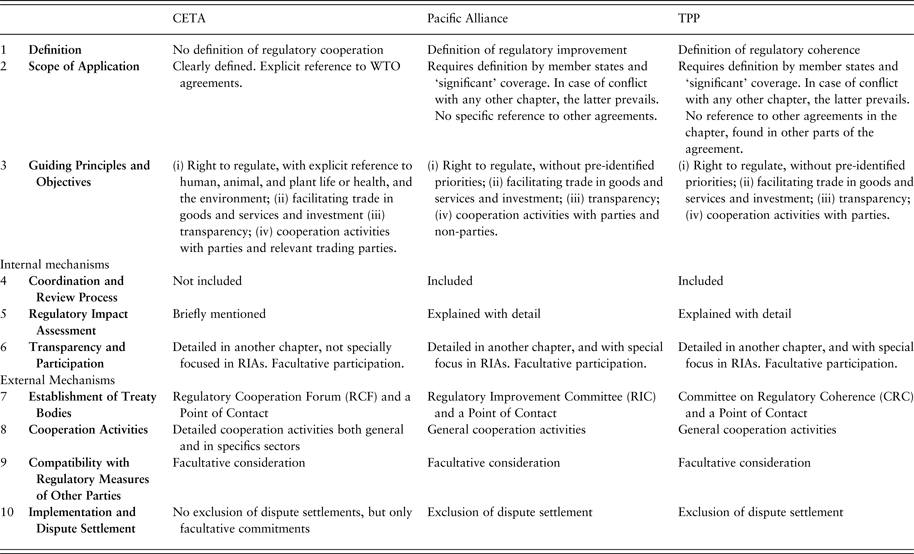
Table 1 offers a comparative reading of the treatment of regulatory convergence matters across the three agreements using ten parameters.
The treatment of regulatory convergence under CETA, the Pacific Alliance, and the Trans-Pacific Partnership
4.1 Definition
CETA's chapter on regulatory cooperation does not include a definition of such a discipline. In contrast, both the PAAP and TPP respectively define regulatory improvement and regulatory coherence.
In the PAAP, ‘regulatory improvement’ is defined as:
the use of international best regulatory practices in the planning, preparation, adoption, implementation and review of regulatory measures to facilitate the achievement of objectives of national public policy, and the efforts of governments to improve regulatory cooperation in order to achieve these objectives and to promote international trade, investment, economic growth and employment.Footnote 32
The TPP's definition of ‘regulatory coherence’ is essentially identical to the one of the PAAP,Footnote 33 with one telling difference: while the TPP refers to the use of ‘good regulatory practices’, for the PA regulatory improvement refers to the use of ‘good international regulatory practices’. Such a subtle difference would appear to acknowledge that good practices are most likely to be ‘imported’ and not to arise from within the PA member countries. Thus, seemingly the PAAP focuses on the use of international best regulatory practices, not on the creation of new ones (according to the PAAP, Parties can consider the existing measures of member states or of regional forums).
4.2 Scope of application
CETA's regulatory cooperation chapter has a clearly defined scope of application, which includes the development, review, and methodological aspects of regulatory measures of the Parties' regulatory authorities that are covered by WTO agreements, including the TBT and SPS Agreements, the GATT 1994, and the GATS, all of which should be deemed incorporated in CETA, as the parties explicitly reaffirm their rights and obligations.Footnote 34 Although the list of agreements seems to be illustrative, there are no concrete mechanisms to expand the scope of application of this chapter beyond the discussion of regulatory policy issues of mutual interest that the Parties have identified, for example through consultations or at the regulatory cooperation forum level.
In contrast, PAAP and TPP feature a definition of the ‘covered measures’ to which the chapter applies. These are measures of general application related to any matter covered by the respective agreements, adopted by regulatory agencies with which compliance is mandatory. In determining the scope of covered regulatory measures, each Party should aim to achieve ‘significant’ coverage, defining the scope of application promptly after the date of entry into force of the agreement (no later than one year after for the TPP and three years for the PAAP) and make it publicly available.Footnote 35 Neither the PAAP nor the TPP refer to their relation with other agreements in their respective regulatory improvement or regulatory coherence chapters.Footnote 36
A further important limitation of the PAAP and the TPP is that in the event of any inconsistency between their respective chapters on regulatory improvement and regulatory coherence, and any other chapter of the PAAP or the TPP, the latter will prevail.Footnote 37 There is no similar provision in CETA.
4.3 Guiding principles and objectives
Although CETA specifically upheld the principle of the right to regulate in its investment chapter and in chapters dealing with trade and labour and trade and the environment,Footnote 38 there is no explicit mention of the right to regulate in the treaty's regulatory cooperation chapter.
All three PTAs under review treat the state's regulatory autonomy differently. In CETA, the Parties commit to ensuring high levels of protection for human, animal, and plant life or health, and the environment, while in the PAAP and the TPP, they reaffirm each Party's sovereign right to establish regulations, identify its regulatory priorities and implement measures to address them, at the scope and the levels deemed appropriate by the government.Footnote 39
While the CETA emphasizes the prevention of unnecessary barriers, enhancement of the climate for competitiveness and innovation (including through the pursuit of regulatory compatibility, recognition of equivalence, and convergence), and the promotion of transparency measures, in both the PAAP and the TPP emphasis is laid on inputs received from interested stakeholders in the development of regulatory measures. PAAP countries aim to ‘improve’ regulations, the business environment, and foster intensified competition.Footnote 40 One of the declared goals of the TPP was to ease the conditions and costs of trade between Parties ‘while affirming their right to regulate in pursuit of legitimate policy objectives’ (Fergusson et al., Reference Fergusson, McMinimy and Williams2015: 41).
CETA foresees limited regulatory cooperation, which is in principle recognized only between parties and with their ‘relevant trading partners’, and is open to others ‘only if practicable and mutually beneficial’. In contrast, the PAAP focuses on activities of cooperation and capacity building between the parties but is open to international regulatory cooperation with non-parties without exclusion. For its part, the TPP considers cooperation only between treaty partners, although activities with other countries are not expressly limited as in CETA.Footnote 41
Compared to the PAAP and TPP, the CETA more clearly delineates its regulatory objectives. These include: contributing to the protection of human life, health, or safety; animal or plant life or health; and the environment (mainly through research, pre-market review, and risk analysis); and improving regulatory quality and convergence (by avoiding or reducing unnecessary differences, identifying alternatives, and minimizing administrative costs).Footnote 42 Again, CETA's larger focus on the content of regulations is consistent with its substantive approach to regulatory convergence.
4.4 Mechanisms of regulatory convergence
PAAP, and the TPP consider both internal and external mechanisms of regulatory convergence. Internal mechanisms relate to bottom-up processes of coordination and review, and the implementation of good regulatory practices, such as regulatory impact assessments, transparency, and stakeholder participation. External mechanisms are those that follow a top-down process, such as the establishment of treaty bodies or cooperation activities between parties to the agreement.Footnote 43
CETA's focus seems to have been placed on substantive convergence and not on the domestic regulatory processes of parties. For example, other parties may comment on proposed regulatory changes, but private stakeholders have no guaranteed participation, as their involvement is facultative for both the EU and Canada.Footnote 44 Another example of this substantive focus is the preference for concurrent or joint risk assessments and regulatory impact assessments, achieving harmonized, equivalent, or compatible solutions, and using mutual recognition in selected cases.Footnote 45
In contrast, the PAAP and the TPP focus on internal mechanisms of regulatory convergence within each country, such as domestic mechanisms that facilitate or increase interagency coordination or consultation, establishing and maintaining a national or central coordinating body, or detailing some basic characteristics of those mechanisms or processes.Footnote 46
4.5 Compatibility with regulatory measures of the other parties
All three PTAs call for a general ‘consideration’ of other treaty parties’ regulatory measures, but they leave plenty of room for divergence. Whereas the CETA bases such divergence in domestic legislation, the PAAP and TPP call on Parties to consider development at regional and international levels.
In CETA, both sides undertake, when appropriate, to consider the regulatory measures or initiatives of the other Party on the same or related topics, although such a consideration does not prevent either Party from adopting differing measures or approaches, for reasons that include differing institutional and legislative setup, circumstances, values, or priorities.Footnote 47
In the PAAP and TPP, each Party should encourage its relevant regulatory agencies to consider regulatory measures in other Parties, as well as relevant developments in international, regional, and other fora when planning covered regulatory measures, but only to the extent appropriate and consistent with its law.Footnote 48
4.6 Implementation mechanisms and dispute settlement
An important limitation of the PAAP and TPP chapters on regulatory improvement and regulatory coherence is that they are not subject to the dispute settlement provisions of both agreements. This means that instances of non-compliance with the obligations of the chapter are not directly enforceable by the Member States.Footnote 49
Yet, for purposes of transparency and to serve as a basis for forward-looking capacity-building, PAAP and TPP members undertook to issue a regular report on the implementation of the chapter on regulatory improvement/coherence.Footnote 50
Both the PAAP and the TPP stipulate that for purposes of transparency and to serve as a basis for cooperation and capacity-building activities, each Party shall submit a ‘notification of implementation’ to the free trade commission (FTC) through national contact points. In this notification, each party shall describe the steps taken since the entry into force of the treaty and those steps intends to take in implementing the regulatory improvement/coherence chapter. The FTC will examine these notifications and ask questions or discuss specific aspects of the notification of that Party.Footnote 51
Although there is not explicit exclusion from the dispute settlement mechanism, the limitations inherent in the CETA approach to regulatory convergence become readily apparent: the Parties commit to engage in regulatory cooperation only if it does not limit their ability to carry out their regulatory, legislative, and policy measures.Footnote 52 There can be little room for conflict if the commitments undertaken by the Parties are only voluntary in character. This also affects the assessment of the Agreement's implementation, as activities like conducting, comparing, and sharing post-implementation reviews are also only facultative.
4.7 The transatlantic trade and investment partnership
The negotiation of the TTIP between the EU and the US should have been the natural next step in the evolution of regulatory convergence disciplines in PTAs, involving as the talks did both substantive and procedural approaches. Yet, it is far from clear at the time of writing when or whether such negotiations will resume, let alone conclude.
In June 2013, the 28 Member States of the EU provided the European Commission (EC) with a negotiating mandate for a Transatlantic Trade and Investment Partnership (TTIP) with the United States, whose predominant focus on tackling behind the border measures implied a need for an ambitious chapter on regulatory cooperation. The EU's proposal, which was revised in 2015, consisted of three main elements (European Commission, 2015b):
(a) Adherence to a number of good regulatory practices – transparency, stakeholder consultations, and an assessment of regulatory impacts that both the EU and the US have long promoted in international fora.
(b) Mutual agreement to accommodate regulatory exchanges upon reasoned request from the other side, clearly spelling out the steps each party is to take when receiving a request, and establishing focal points to facilitate the process. In cases where specific common interests have been identified – such as car safety standards – the cooperation process may bring in regulators to jointly examine methods, leading to greater compatibility through, for example, recognition of equivalence or harmonization of regulatory acts.
(c) An institutional mechanism: a Regulatory Cooperation Body (RCB) to frame enhanced regulatory cooperation, including a framework for promoting regulatory cooperation and compatibility through horizontal provisions complemented by a number of additional commitments in nine specific sectors: automotive; chemicals; cosmetics; pharmaceuticals; information, communication, and technology (ICT); engineering; financial services; medical devices; and textiles – almost the same areas that had been examined under the TEC. The proposed RCB would not have regulatory or rule-making competences per se, and both Parties would continue to regulate in accordance with their domestic regulatory frameworks, procedures, and principles. The degree to which this proposed body would differ from the TEC remained unclear at the time TTIP negotiations were suspended.
A July 2014 proposal by the US was reported to have sought to cover only federal rule-making on the US side but both Community-level and member states’ legislation and regulations on the EU side (US Chamber of Commerce, 2015). According to the EU, the fact that certain sectors of relevance are regulated at the sub-national level by one Party and at the national (or Community) level by the other – insurance being one example – may be agreed in the sector-specific provisions of TTIP, which are being negotiated in parallel to the regulatory cooperation chapter (European Commission, 2015).
A subsequent proposal by the US Chamber of Commerce went beyond what the US government had proposed, seeking to set up a domestic coordination body for both Parties. To some extent, the US already has such an institution in the form of the Office of Information and Regulatory Affairs (OIRA), though such an Office exerts no authority over independent regulators (US Chamber of Commerce, 2015).
Hoekman noted that the focus of attention in the TTIP context revolved around mutual recognition and equivalence. Equivalence involves an agreement that the regulatory objectives of the parties involved are equivalent, and acceptance that implementation and enforcement mechanisms in the parties’ jurisdictions are effective. This is a major difference with mutual recognition, which requires that norms involve considerably more similar approaches to testing, inspections, and sampling (Hoekman, Reference Hoekman2015: 614).
A necessary condition for an equivalence approach is trust: there must be a prior process of mutual assessment or evaluation of the regulatory goals and implementation regime in the relevant jurisdictions that results in a judgment that these are equivalent. The equivalence model has important potential benefits in terms of learning, the monitoring of upstream and downstream performance and the adoption of more effective or efficient regulatory approaches over time, thereby improving regulatory outcomes. Indeed, an important element of the approach is likely to be convergence toward more similar or common technical standards and regulatory enforcement approaches over time … Regulatory equivalence requires identification of areas of regulation and related implementation systems that pursue similar goals and have similar outcomes. (Ibid.: 614–615)
While the outcome of TTIP discussions remains indeterminate, the main emphasis placed in the bilateral talks seems to have been on promoting substantive convergence between the US and the EU around international instruments, and on producing more compatible regulatory outcomes that fulfil each side's public policy objectives. In that context, enhanced cooperation, exchanges of information, and stakeholder engagement would be favoured to help regulators produce outcomes informed by greater regulatory temperance and proportionality. This process would remain voluntary in character, and exchanges of information or mechanisms of recognition would be considered where common interests arose.
However, a TTIP negotiating draft leaked by Greenpeace Netherlands suggested a change in the US approach described above, with a newer focus addressing both procedural and substantive matters. The procedural part featured a section on ‘Good Regulatory Practices’, including regulatory impact assessment, decision-making based on evidence, internal coordination of regulatory development, early information on planned acts (so-called ‘prior notification’ procedures), stakeholder consultations, transparency obligations in the description, development and access of regulations, and the possibility to review regulations. The substantive part proposed the adoption of a bilateral cooperation mechanism, information and regulatory exchanges, the promotion of regulatory compatibility and international cooperation, as well as the establishment of a Regulatory Cooperation Body.Footnote 53 It is notable that the TTIP Parties had yet to agree on a title for this chapter while negotiations proceeded, with the US proposing to call it ‘Regulatory Coherence, Transparency and Other Good Regulatory Practices’, while the EU advocated ‘Regulatory Cooperation’, in line with its agreements with South Korea and Canada.
5. Concluding observations
5.1 Semantics do not really matter
While PTAs originally addressed classic trade barriers, they have recently morphed into instruments that also promote regulatory convergence, building on the WTO experience in the areas of technical standards and SPS measures. Regulatory convergence has become a new frontier in PTA governance, even as no clear understanding of what the concept actually entails has taken root in policy or scholarly circles.
The introduction of principles of regulatory convergence in PTAs has taken different forms, spanning the notions of regulatory cooperation, improvement, or coherence, although the distinction between them is far from clear. Mumford has already pointed out the apparent lack of ‘coherence’ just in descriptions of regulatory coherence (Mumford, Reference Mumford2014: 5).
Until a clearer understanding emerges of what the notion of regulatory convergence actually entails, it will remain difficult to study and measure it as a distinct political and legal phenomenon (Posner and Wolff, Reference Posner and Wolff2011: 3). However, evidence from recent PTAs allows us to identify the main elements of this nascent concept.
Abstracting from semantic differences, the analysis put forward in this article shows that countries have followed different paths to reduce unnecessary regulatory differences. While some agreements favour an approach that fosters substantive convergence between countries (same, similar, or equivalent regulations), others promote procedural convergence inside countries (same, similar, or equivalent regulatory processes).
On substance, the existence of diverse approaches to regulatory convergence can be explained by the fact that while countries negotiating PTAs typically aim at ‘approximate’ or ‘functionally equivalent’ regulations, they face distinctive challenges rooted in differing levels of development, diverse procedural traditions in issuing and enacting regulations, dissimilar protection levels and competing values, all of which can weigh on attempts at reaching agreement on whether differences in regulations are ‘necessary’. The different approaches observed in the PTAs under review should accordingly not come as a surprise. Variance in approaches to regulatory convergence can actually be found within specific PTAs, as diverse tools of regulatory convergence are used in different sectors or chapters of a PTA. Mavroidis has concluded that homogeneity is a facilitating factor of regulatory convergence, which among heterogeneous players is often more targeted on specific product categories (Mavroidis, Reference Mavroidis2016: 6). The most common mechanisms envisaged to achieve substantive convergence in PTAs are the establishment of treaty bodies (up to now with rather limited or indirect regulatory powers) and a host of cooperation activities, both general and specific.
On the procedural front, the key characteristics that can be identified from the various approaches taken to minimize regulatory differences are: (i) economic rationality, usually using the mechanism of regulatory impact assessment (RIAs); (ii) transparency and the legitimizing participation of relevant stakeholders, especially through notification and consultation mechanisms featuring open, prompt. and impartial public review and appeal processes; and (iii) governmental coordination through a public sector agency or public policy procedure that checks the consistency of proposed regulations with domestic and/or international policies and treaty commitments.
While the CETA chapter on regulatory cooperation follows a clear model of substantive convergence – probably under the assumption that both Canada and the EU share similar procedural mechanisms to develop regulations, the PAAP and TPP chapters on regulatory coherence chiefly target matters of procedural convergence, with far greater emphasis on intra-governmental regulatory reform efforts than on inter-governmental regulatory convergence per se. In the case of the TPP, this is likely a reflection of resistance by US regulators of seeing domestic prerogatives subject to potentially increased international scrutiny under trade agreements. It may also reflect the more defensive suspicions of NGOs in this contentious and sensitive new area of trade and investment diplomacy (Bollyky, Reference Bollyky, Lim, Elms and Low2012: 180). The PAAP clearly influenced the final contours of the TPP text on regulatory coherence, agreed almost six months before the closing of the TPP text featuring very similar provisions.Footnote 54
The practice of reducing regulatory differences across countries suggests that such a task is singularly more complex, both administratively and politically, than the liberalization of traditional border impediments (Young, Reference Young2015: 1257). The CETA, PAAP, and TPP have all registered in advance in this regard, but with important shortcomings.
Although the CETA foresees an important number of cooperation activities, both general and sector-specific, the agreement does not entail a change in the nature of substantive regulatory convergence between both Parties, which still remains a voluntary undertaking under which neither Party is obliged to enter into particular regulatory cooperation activities, and where either Party may refuse to cooperate or withdraw from on-going cooperation initiatives.
Although the PAAP and TPP mark an important step forward on the path towards treaty-induced procedural regulatory convergence, certain of its features may dilute its overall impact. For example, cross-country differences in the agreed scope of ‘covered measures’ could lead to greater divergence, as several measures could be excluded from this new discipline. Similarly, a number of commitments are arguably too ‘soft’, and if not implemented in the same way across member states, could lead to further regulatory divergence within the regional bloc (e.g. as when Parties only ‘endeavour to ensure’ the establishment of a coordination and review process, or when they only ‘encourage’ the use of RIAs.)
5.2 The risks of coherence
There is an inherent tension in the treatment of regulatory divergence in PTAs. In negotiations, parties try to strike a balance between setting international regulations, or standardized procedures to develop them (which may erode the regulatory autonomy of states), and restating the right of states to regulate or their ability to decide an appropriate level of protection (which in turn leads to non-binding provisions in treaties that promote ‘cooperation’ or ‘good regulatory practices’). All regulatory convergence mechanisms can be seen as diminishing the regulatory autonomy of States, limiting their choices in how to pursue public policy objectives (Sheargold and Mitchell, Reference Sheargold and Mitchell2016: 589, 601).
Many of the provisions on regulatory convergence found in latest generation PTAs are aspirational in nature. This raises questions regarding their ultimate effectiveness. Some of them are also excluded from dispute settlement provisions, begging the question of why some countries want to foster regulatory convergence through ‘legal’ means (e.g. treaty-making) if their level of commitments is similar to those found in ‘soft’ (non-binding) instruments (e.g. OECD–APEC Checklist).
None of the PTAs examined in this article speak of ‘good and bad’ regulations, but if countries do not use the regulatory convergence tools described in them, regulations risk to be characterized as unnecessary or ineffective. Yet if the notion of regulatory convergence does not entail any legally binding and enforceable obligations, why should such soft law disciplines be embedded in an international treaty?
We can identify three risks related to the establishment of regulatory convergence disciplines in PTAs: ‘regulatory challenge’, ‘regulatory capture’, and ‘regulatory gospel’.
As regards regulatory challenge, the fact that regulations fail to comply with procedural requirements established in a PTA could expose them to challenge under other provisions of these agreements, such as non-discrimination, fair and equitable treatment (FET), or, if they can amount to ‘indirect’ expropriation (ibid.: 589), using mechanisms such as investor–State dispute settlement (ISDS). Complying with these obligations, however, offers no guarantee that a tribunal will find the measure to be a reasonable or legitimate regulation (ibid: 612). This is because regulatory convergence does not work in the same way as provisions on national treatment, FET, or indirect expropriation. While the former usually require an ex post infringement of the rules governing international investment, regulatory convergence could allow an ex ante analysis of the rule even before its legal existence, without necessarily examining the effects of the measure in a given market (Polanco Lazo, Reference Polanco Lazo and Voon2013: 257).
Thus, even if a party undertakes a RIA and adopts a measure that has net benefits, such a measure could still be deemed inconsistent with investment obligations if it disproportionately affects foreign entities. Similarly, although the purpose of a measure subject to an impact assessment may not be to expropriate or treat a foreign investor unfairly, it could be considered to do so if the assessment does not appropriately balance certain policy goals with science- or evidence-based information.Footnote 55
Regarding regulatory capture, transparency commitments found in the CETA, PAAP, and TPP, could raise additional problems in the absence of clear delineation of how the foreseen consultation processes should be conducted, and whether they should be opened to include other stakeholders and governments other than the one planning to regulate. For example, some fear of the fact that as ‘interested persons’ or ‘stakeholders’ are not clearly defined, this could lead to agenda capture by major corporations and business lobby groups (Kelsey, Reference Kelsey2011: 9). But it could also be the case that the influence of private standards could decrease trade costs and facilitate convergence, particularly in sectors where private standards are commonplace, as in the automotive industry (Costa and Jacoby, Reference Costa, Jacoby, Bruszt and McDermott2014: 187).
High-income countries have been slow in many sectors to adopt international standards. This may undermine their relevance, particularly in the low- and middle-income countries least equipped to develop their own standards. Businesses increasingly rely on private or non-profit organization standards, third-party certifications, and their own safety and quality management systems to regulate their suppliers. The proliferation of alternative standards may however increase divergence, inflate trade costs, and undermine regulatory compliance and enforcement efforts (Bollyky, Reference Bollyky, Lim, Elms and Low2012: 173).
Finally, the notion of regulatory convergence raises challenging questions of influence and legitimacy: which standard will dominate in any given situation and why? In a world of pronounced regulatory asymmetries, will the standards of the most powerful actors not tend to prevail? Will this increase the tendency towards convergence in the harmonization or adoption of dominant regulatory standards issued by the small group of rule-making nations that have greater power to negotiate (‘regulatory hegemons’)? (Kelsey, Reference Kelsey2011: 6). Does it run the risk of resulting in the dissemination of ‘the regulatory gospel’ of ‘regulation-exporting’ states? (Slaughter, Reference Slaughter2005: 172–177)
Studying the export and import of regulatory frameworks using network theory, Raustiala noted that because networks are characterized by extensive sharing of information, enforcement coordination efforts, and joint policymaking activities, ‘the more regulatory agencies participate in coordinating and reciprocating enforcement efforts, the better off all other agencies are’ (Raustiala, Reference Raustiala2002: 1, 64).
Yet, other factors may be at play. For example, developing countries may prefer to ascribe to international standards – either public or private (such as in the case of ASEAN and the Pacific Alliance) for reasons of ‘natural convergence’. On the other hand, regulatory convergence by ‘developed economies’ (as in CETA or TTIP) may not lead to emerging markets automatically upgrading to higher standards, either because they were not part of the negotiation that created the standard or because they are simply unable to meet and implement such standards. Domestic priorities and the vocal demands of a rising, price-sensitive, cohort of middle-class consumers will likely result in diverse regulatory regimes in emerging markets over the medium-term (Karmakar, Reference Karmakar2013).
5.3 Living with differences
Regulatory convergence could play a major role in a wide range of subject areas subject to PTA disciplines, including technical barriers to trade, intellectual property rights, financial services, investment, competition policy, consumer rights, and the recognition of professional service qualifications (Stoler et al., Reference Stoler, Pedersen and Herreros2014: 25–26).
However, if PTAs seek to promote deeper economic integration and lend more targeted support to cross-border trade and investment in a world of global value chains, then Parties to such agreements must be prepared to offer greater clarity on the nature and level of the regulatory convergence they seek and its effect on behind-the-border barriers. Moreover, trade and investment negotiators, and their brethren in regulatory circles, should bear in mind that regulatory convergence could be facilitated by a variety of devices, but that such provisions need to be approached with adequate precaution to prevent undue or inappropriate influence from being exerted over sovereign policy and regulatory decisions.
In the end, the mere existence of regulatory divergence need not always be problematic. That the maintenance of different regulatory requirements entails compliance costs does not necessarily mean that such requirements are inefficient. Alternative legal solutions adopted by countries might be neutral from an efficiency viewpoint (Mattei et al., Reference Mattei, Antoniolli, Rossato, Bouckaert and De Geest2000: 509). Such differences can also be explained by legitimate cross-country differences in collective preferences, attitudes to risk and uncertainty, legal traditions, etc. (Chirico and Larouche, 2013: 23). Fostering deeper forms of regulatory convergence could generate even higher costs, particularly if enacted in the context of asymmetrical North–South relations and agreements. Moreover, even where regulatory divergence clearly increases compliance costs, it is possible that a push for deeper forms of convergence could generate even higher costs (ibid.). Addressing the competition-impairing effects of regulatory differences can be administratively and politically more challenging than eliminating traditional impediments to trade and investment liberalization.



