




Over the past few decades, our understanding of cuisine in the Maya area has undergone a radical expansion thanks to the application of new techniques (Kaplan et al. Reference Kaplan, Umaña, Hurst, Sun, Stanley, Pingarrón and Cardona2017; King et al. Reference King, Skaggs, Powis, Luke, Micheletti, Cheong and Gaikwad2022). Some of these methods provide the unique opportunity to establish direct connections between artifacts and features (e.g., Morell-Hart Reference Morell-Hart2019; Morell-Hart et al. Reference Morell-Hart, Pugliese, McNeil and Barrios2021; Pugliese Reference Pugliese2023; Venegas Durán et al. Reference Venegas Durán, Herrera-Parra and Novelo-Pérez2021; Watson Reference Watson2022), and the residues of plant-based foods (Morell-Hart Reference Morell-Hart and Ardren2020; Novelo-Pérez et al. Reference Novelo-Pérez, Herrera-Parra, Fernández-Souza, Ancona-Aragón and Jiménez-Álvarez2019). The capacity to obtain microscopic remnants of food from sediments, artifacts, and human teeth has not only unveiled a comprehensive list of ingredients but also exposed a diverse range of culinary practices and recipes (Fernández-Souza Reference Fernández-Souza and Ayora-Diáz2017; Fernández-Souza et al. Reference Fernández-Souza, Zimmermann, del Pilar Jiménez Álvarez and Ardren2020; Hendon Reference Hendon and Ardren2020). Here, we leverage insights from our prior paleoethnobotanical research conducted across the Maya Lowlands to construct a nuanced view of Classic-period elite cuisines, incorporating evidence from the Southern and Northern Lowlands.
Our analysis delves into how gastronomic practices of the elite were mobilized in private performances and contributed to broader political maneuvers, though also necessarily constrained by surrounding landscapes and differential access. Furthermore, we identify situated taxonomies of local traditions, traditions that deviated from structured adherence to a single elite culinary “grammar.” By exploring commonalities and differences in core and canonical elite cuisine, we emphasize how local elite expressions solidified some culinary norms but also displayed fluidity and flexibility in culinary practices. In alignment with studies of other types of elite artifact assemblages, we shed light on how privileged individuals drew upon broader cultural logics to render their cuisines intelligible while simultaneously incorporating local improvisations. All of these pursuits are made possible through the application of paleoethnobotanical methods, which yield critical insights about plant ingredients used, culinary techniques employed, and intricate relations between plant foods and ancient Maya elites of the Classic period.
In the following sections we define elite and canonical cuisine in the Maya area, outlining how ingredient choice, preparation techniques, and presentation styles intersected with political performance and social distinction. We then review archaeological, epigraphic, and ethnobotanical evidence for elite foodways, considering both exotic imports and transformed everyday foods, as well as the culinary equipment that sustained them. Drawing on a multi-method paleoethnobotanical approach that includes the recovery and identification of charred seeds, starch grains, and phytoliths, we present six case studies from the Northern Lowlands, the Central Usumacinta Region, and the Eastern Maya area. We compare plant assemblages, preparation practices, and performance to assess the diversity of elite culinary repertoires. This comparative framework allows us to explore how high-class preferences, environmental settings, and social display shaped both the commonalities and variations in Maya elite cuisine.
Parsing elite and canonical cuisine in the Maya area
Cuisines can be defined through the patterned use of specific ingredients, culinary techniques, and traditional principles of flavoring, all of which are shaped by specific regional, cultural, and temporal contexts (Cuéllar et al. Reference Cuéllar, Rodríguez, Morell-Hart and King2024:3; deFrance Reference deFrance, Alfonso-Durruty and Blom2023:348; Mintz and Du Bois Reference Mintz and Du Bois2002:109). Cuisines are composed of both tangible ingredients and intangible ideas, have a role in the ceremonial as well as the quotidian, and exhibit diversity across space and time (Cuéllar et al. Reference Cuéllar, Rodríguez, Morell-Hart and King2024:3).
During the Classic Maya period, eliteness would have been performed through a number of routes, from complex political maneuvers, to elaborate regalia, to historic etchings on monuments. Common indices of eliteness are found in elaborate palaces and monumental ceremonial centers, where polychrome vessels and diverse mural paintings show rulers, visitors, and diverse foodstuffs consumed and given in tribute (Carrasco Vargas and Cordeiro Baqueiro Reference Carrasco Vargas, Cordeiro Baqueiro, Golden, Houston and Skidmore2012; Houston and Inomata Reference Houston and Inomata2009; Triadan Reference Triadan2000). Eliteness could also have been performed through food itself (Barthes Reference Barthes, Forster and Ranun1979; Bourdieu Reference Bourdieu1984; Morell-Hart Reference Morell-Hart, McAnany and Masson2024). In exclusive and high-class cuisines, ingredients are frequently exotic and difficult to acquire, require intricate preparations and specialized expertise, and are presented in elaborate ways, involving sumptuous serving wares and complex performances (modified from Twiss Reference Twiss2019:75). A defining characteristic of elite cuisines is the inclusion of enjoyable, though not necessarily indispensable, ingredients (Twiss Reference Twiss2019:84). Within a vertical economy, eliteness can be manifested through harder-to-acquire foodstuffs and culinary equipment (following Sheets Reference Sheets2000). Among Maya elites, the use of polychrome vessels, ingredients such as cacao, annatto, and vanilla, and cooking implements of foreign origin served to underscore and reify social distinction from the broader population (following Bourdieu Reference Bourdieu1984; Weismantel Reference Weismantel1988; see also Caso Barrera and Aliphat Reference Caso Barrera and Aliphat2006), though such displays required continual maintenance and upkeep (Morell-Hart Reference Morell-Hart, McAnany and Masson2024).
In other cases, exclusivity and superiority were connoted through other means. Although many plant species were shared by diverse social classes, elite cuisine can include the transformation of these common, ordinary foods into special dishes, through unique processing or presentation methods (Twiss Reference Twiss2019:85). In this context, while not classified as elite, specific cooking techniques and their reception by certain classes mark them as high or low status (Bourdieu Reference Bourdieu1984; Weismantel Reference Weismantel1988). The epigraphic record references a diverse variety of beverages, including several cacao-based drinks (Beliaev et al. Reference Beliaev, Davletshin, Tokovinine, Staller and Carrasco2010; Hull Reference Hull, Staller and Carrasco2010; Stuart Reference Stuart2016), which likely held greater prestige in regions where cacao was not locally cultivated, as in much of the Northern Lowlands. However, other documented beverages include alcoholic drinks made from more readily available ingredients, such as balché, honey meads, agave pulque, and corn beers. These beverages are represented epigraphically in the Classic period, recorded in ritual depictions in Postclassic murals at Tulum, and chronicled by Spaniards in the colonial period (Beliaev et al. Reference Beliaev, Davletshin, Tokovinine, Staller and Carrasco2010; Carter and Matsumoto Reference Carter, Matsumoto and Ardren2020; Hull Reference Hull, Staller and Carrasco2010; Pérez De Heredia et al. Reference Pérez De Heredia, Bíró and Boucher2021; Tokovinine Reference Tokovinine2016; Vail and Dedrick Reference Vail, Dedrick and Ardren2020). Cocoyol palm wine, as suggested by McNeil (Reference McNeil, Hutson and Ardren2020), was also likely consumed. Similarly, ground spice mixtures, or recados, commonly seen in markets today (Fedick Reference Fedick, Mathews and Guderjan2017), may also have been viewed as sumptuous, even when made of local ingredients, due to their ability to evoke exotic flavor profiles and transport exotic flavor combinations to distant places. Another way of highlighting social differences was through sheer abundance, as evidenced in feasting contexts where the quantity of food served as a marker of power and prestige (Brown and Freiwald Reference Brown, Freiwald and Ardren2020; Dietler and Hayden Reference Dietler and Hayden2001).
We draw other insights into the food repertoire and its active role from culinary equipment. Culinary equipment across the Maya area was diverse, encompassing a wide range of ceramic vessels, obsidian blades, metates, and manos, and other specialized materials. Serving vessels played dual roles as literal and metaphorical containers, holding foodstuffs as well as “intangible substances such as specialized knowledge, local identities, or personal connections” (Jackson Reference Jackson2009:82). Although different types of vessels were sometimes marked with glyphs related to contents, ownership, or patronage (Stuart Reference Stuart, Kerr and Coe1989), the foodstuffs themselves often carried the message (Morell-Hart Reference Morell-Hart and Ardren2020). Terminal Classic and Postclassic culinary equipment expanded the repertoire of Classic forms, likely connected to new types of cuisine (Ardren Reference Ardren and Ardren2020; Taube Reference Taube1989:33). In this way, similar ingredients may have been presented in a novel way but were still considered “comfortable” enough for participants and intelligible as food.
Culinary equipment was diverse, as evidenced by depictions in vessel imagery of courts, residues of offerings in tombs, and arrays of ceramics recovered from middens. In tracking the movement of vessels through elite contexts (e.g., Chase and Chase Reference Chase and Chase2017), long-distance trade of fine servingware is evident, including long-distance contact between the Maya heartland and the Pacific coast. However, significant questions remain. Were the majority of vessels presented empty, as noted by Diego de Landa, who describes gifts of food and vessels to participants at Postclassic feasts (Tozzer Reference Tozzer1941:92)? Or did some vessels contain special contents, akin to holiday sweets exchanged in decorated tins—some of them even labeled with contents, origin, and intended recipients?
Meanwhile, raw ingredients and sources of culinary equipment serve as indices of trade and negotiation, the scale of feasting events, and degrees of culinary connoisseurship. Tribute appears to have been a primary mechanism for acquiring ingredients and materials used in elite cuisines. We find tribute recorded in imagery of bundles presented to rulers—marked sometimes by symbols of contents and sometimes with bars and dots representing quantity—on many ceramic vessels and in murals such as those at Bonampak (Reents-Budet Reference Reents-Budet1994:262; Schele and Miller Reference Schele and Miller1986:144, 153, 218; Tokovinine Reference Tokovinine2014). Curiously, no tribute scenes depict maize, though beans and other types of food ingredients are represented (Houston and Inomata Reference Houston and Inomata2009:242). We find one example represented on a polychrome vase from the Río Azul area, where the IB logogram–referring to Phaseolus sp.–is attached to three bags (Figure 1) (Kerr 2914; Tokovinine Reference Tokovinine2014:14). Cacao, in contrast, is frequently depicted as tribute and often illustrated as bags with numerical markings. These are sometimes represented on painted vases, as well as in Room 1 of the Bonampak paintings (Miller and Martin Reference Miller and Martin2004:62). Depictions and descriptions of foodstuffs on ceramics reveal raw-ingredient tribute and prepared dishes, demonstrating both ruler enjoyment of distinction-marking sumptuous foods as well as the power of rulers over staple and commodity supplies. Prepared foods are represented in imagery alongside raw-ingredient tribute, perhaps demonstrating both the munificence of rulers when hosting guests as well as the power of rulers to obtain their cut of foodstuffs.
Elite scene depicting a palatial setting in which the ruler receives three bags of beans along with bundles of fabric. The red squares on the bags indicate the number of bags being offered as tribute. Figure taken with permission from Justin Kerr’s archive Maya Vase Database (K2914).

Whether materials arrived as tribute, tithe, tax, or trade items, or were intended for communally held stores, thus far we have little evidence of large-scale food storage under elite control in lowland Maya cities. At highland Kaminaljuyu, however, Bárbara Arroyo (Reference Arroyo, Hutson and Ardren2020:88) described stamps and seals found on a variety of jar shapes in a storage area, which she interpreted as administration of surplus foodstuffs including maize, beans, pumpkin, jocote, and other raw ingredients. In the Maya Lowlands, we instead find evidence of small-scale storage in palace complexes, as seen at Aguateca (Inomata Reference Inomata2001; Inomata et al. Reference Inomata, Triadan, Ponciano, Pinto, Terry and Eberl2002) and La Corona (Lamoureux‐St‐Hilaire et al. Reference Lamoureux‐St‐Hilaire, Canuto, Wells, Clarissa and Barrientos2019). We also find large-scale water storage in reservoirs and cisterns like those at Caracol (Chase and Chase Reference Chase and Chase2017), Tikal (Dunning et al. Reference Dunning, Lentz, Scarborough, Lentz, Dunning and Scarborough2015; Lentz et al. Reference Lentz, Hamilton, Dunning, Scarborough, Luxton, Vonderheide, Tepe, Perfetta, Brunemann, Grazioso, Valdez, Tankersely and Weiss2020), and elsewhere. Given the evidence thus far, rulers in lowland Maya cities seemed to have regularly moved smaller portions of ingredients—as tribute, tithe, and/or trade—while bulk redistribution of ingredients by rulers seemed less common. Small-scale redistribution of luxury items appears to have been the norm.
When considering elite culinary settings, analyses of food storage and serving places help us understand aspects such as relative access to rulers, seen in public versus secluded meal settings that represent relative degrees of performance and privacy. Food residues from feasting preparation and disposal areas can grant huge insight into how commensality and competition played out through foodways (following Bray Reference Bray2003; Brown and Gerstle Reference Brown, Gerstle and Sheets2002; Dietler and Hayden Reference Dietler and Hayden2001). Elite food preparations and labor are harder to parse, with only faint suggestions from imagery and architectural layouts.
The intricate relationship between elite Maya foodways, politics, and performance was evident in Classic-period imagery and manifested in highly specialized culinary equipment, such as decorated cylindrical vases. These elements highlight the capabilities of Maya elites to obtain exotic ingredients or very elaborate dishes, a distinction that simultaneously showcased political power, reinforced alliances, and marked social differences (Ardren Reference Ardren and Ardren2020; Morell-Hart Reference Morell-Hart, McAnany and Masson2024:224). Rulers also reinforced their eliteness by depicting themselves eating and drinking in courtly scenes, often in the presence of or accompanied by various deities (Doyle Reference Doyle2017) (see Figure 2). In this sense, when we refer to canonical elite cuisine, we consider how elites would have utilized, manipulated, and displayed food—whether high in quantity or quality, and whether of exotic or local origin—to signify rank, rivalry, exclusion, community, and intimacy. All are practices that Appadurai coalesced under the term “gastropolitics,” highlighting not only static distinctions in presentation but also active differentiation, and sometimes manipulation, in performance (Appadurai Reference Appadurai1981:495; Dietler and Hayden Reference Dietler and Hayden2001; see also Morell-Hart Reference Morell-Hart, McAnany and Masson2024).
Scene depicting supernatural beings. Gods N and K share drinks and foods with mortals in a setting of courtly interaction. The representation of sharing food with Gods and other beings seems to be important for rulers to maintain their eliteness. Figure taken with permission from Justin Kerr’s archive Maya Vase Database (K114).

Previous studies across the Maya Lowlands have penciled a sketch of how a core and canonical elite cuisine might appear (e.g., Cagnato Reference Cagnato2016, Reference Cagnato2016, Reference Cagnato2017, Reference Cagnato2018a, Reference Cagnato2018b, Reference Cagnato2019, Reference Cagnato2021; Cagnato et al. Reference Cagnato, Ponce, Canuto and Tomás Barrientos2024; Cagnato and Ponce Reference Cagnato and Ponce2017; Chen et al. Reference Chen, He, Li, Ramos, Li and Liu2022; King et al. Reference King, Skaggs, Powis, Luke, Micheletti, Cheong and Gaikwad2022; Lamoureux‐St‐Hilaire et al. Reference Lamoureux‐St‐Hilaire, Canuto, Wells, Clarissa and Barrientos2019; Lentz Reference Lentz1991, Reference Lentz2001; Lentz et al. Reference Lentz, Dunning, Scarborough, Magee, Thompson, Weaver, Carr, Terry, Islebe, Tankersley, Sierra, Jones, Buttles, Valdez and Hernandez2014, Reference Lentz, Graham, Vinaja, Slotten and Jain2016, Reference Lentz, Dunning, Scarborough and Grazioso2018, Reference Lentz, Hamilton, Dunning, Scarborough, Luxton, Vonderheide, Tepe, Perfetta, Brunemann, Grazioso, Valdez, Tankersely and Weiss2020, Reference Lentz, Hamilton, Dunning, Tepe, Scarborough, Meyers, Grazioso and Weiss2021, Reference Lentz, Hamilton, Meyers, Dunning, Reese-Taylor, Hernández, Walker, Tepe, Esquivel and Alison2024; Montero López et al. Reference Montero López, Trabanino, Scherrer and Liendo-Stuardo2016; Morehart and Helmke Reference Morehart and Helmke2008; Powis et al. Reference Powis, Valdez, Hester, Hurst and Tarka2002; Simms Reference Simms2014; Simms et al. Reference Simms, Berna and Bey2013; Spenard et al. Reference Spenard, King, Powis, Gaikward and Ardren2020; Trabanino Reference Trabanino2008; Trabanino Reference Trabanino2014; Trabanino and Liendo-Stuardo Reference Trabanino and Liendo-Stuardo2012; Trabanino and Meléndez Guadarrama Reference Trabanino and Meléndez Guadarrama2016; Venegas Durán Reference Venegas Durán2020; Venegas Durán et al. Reference Venegas Durán, Herrera-Parra and Novelo-Pérez2021). Following previous studies, we would expect ample quantities of key staples—traditionally framed as maize, beans, and squash—grown away from elite residences, and the incorporation of high-valued ingredients, such as cacao. We would also expect to find succulent fruits and pungent herbs, potentially grown in elite gardens. In terms of practices, we would expect more elaborate and time-consuming preparations of such foods as labor-intensive tamales, complex sauces, and frothed drinks like chocolate. Regarding performances, we would expect expensive servingware, specialized presentations, and status-marking gestures and deportment.
Materials and methods
We turn here to direct residues of elite Maya foods, focusing on macro- and microbotanical remains of foodstuffs and foodways. The studies included in this paper employed common paleoethnobotanical approaches to recover and analyze macroremains and microremains. Macroremains include charred seeds, fruits, and other plant tissues that can be seen with the naked eye, while microremains include starch grains and phytoliths that require high magnification equipment to identify (Marston et al. Reference Marston, Guedes and Warinner2014; Morell-Hart Reference Morell-Hart2019; Pearsall Reference Pearsall2015, Reference Pearsall2018). The studies described here employed one or more of these approaches to analyze residues from sediments, artifacts, and human teeth.
For macroremains, 10 L soil samples were collected during excavation, then divided into two 5 L portions, and processed using flotation to separate heavy fractions (bones, stones, artifacts) from light fractions (charcoal, seeds, and other plant remains) (Pearsall Reference Pearsall2015). The light fraction was dried and examined under a stereoscope at 10x magnification, with plant identifications made using botanical reference collections and specialized manuals (Lentz and Dickau Reference Lentz and Dickau2005).
From each original soil sample, a 100 g subsample was reserved for phytolith analysis, which involved chemical digestion to isolate phytoliths, followed by microscopic examination at 200x, 400x, and 630x magnifications for identification based on published reference materials (Integrated Laboratory of Archaeological Sciences 2024a; International Committee for Phytolith Taxonomy (ICPT) et al. Reference Neumann, Strömberg, Ball, Albert, Vrydaghs and Cummings2019; Pearsall Reference Pearsall2015; Piperno Reference Piperno2006).
To recover starch grains, artifacts were subjected to a three-step washing procedure (Integrated Laboratory of Archaeological Sciences 2024b; Morell-Hart Reference Morell-Hart2019; Morell-Hart et al. Reference Morell-Hart, Pugliese, McNeil and Barrios2021). A “dry wash” collected soil adhering to the surface for contextual information, a “wet wash” targeted intermediate residues, and a “sonicated wash” targeted specific surfaces to provide direct evidence of use. This combined approach allowed for the identification of plant remains from both soil contexts and artifact residues, although some projects only targeted one approach.
Canonical foods and culinary diversity in the Maya lowlands
In the following passages, we review six case studies in the Lowlands Maya area, focusing on the elite contexts that are the bulk of the dataset. All our case studies date to a 500-year span from the Late Classic period through the early Postclassic period. We divide our study into three regions, each with distinct landscapes and ecological niches (Figure 3). The Northernmost Maya Lowlands are characterized by a flat karstic landscape, shallow soils, highly permeable ground, and the presence of underground water bodies known as cenotes. The region also features seasonally inundated depressions, or bajos, a low- to middle-elevation seasonal forest, and a marked dry season that goes from December to May. The Central Usumacinta Region, by contrast, is shaped by limestone hills and karstic uplands with elevations ranging from 100 to 500 m above sea level (masl), along with extensive river valleys. The presence of the Usumacinta River and its tributaries provides abundant aquatic resources, supports riverine floodplains, and sustains a semi-deciduous to evergreen forest. Finally, the easternmost margin of the Maya area consists of a fertile basin situated within a mountainous and moderately elevated landscape. The area receives high annual rainfall, supports a tropical perennial forest, and contains a variety of water systems, with the Motagua River as the principal hydrological feature. These different spaces likely played an important role in the procurement of plant species but also channeled the distribution and exchange of exotic goods. We compare these case studies with each other, and to the broader expectations set up by previous research, to begin to understand the range and diversity of elite Maya cuisines.
Location of sites included in the research and other major archaeological centers in the Maya area. Map by Herrera-Parra.

Northernmost Maya lowlands: Sihó (Yucatán) and T’isil (Quintana Roo)
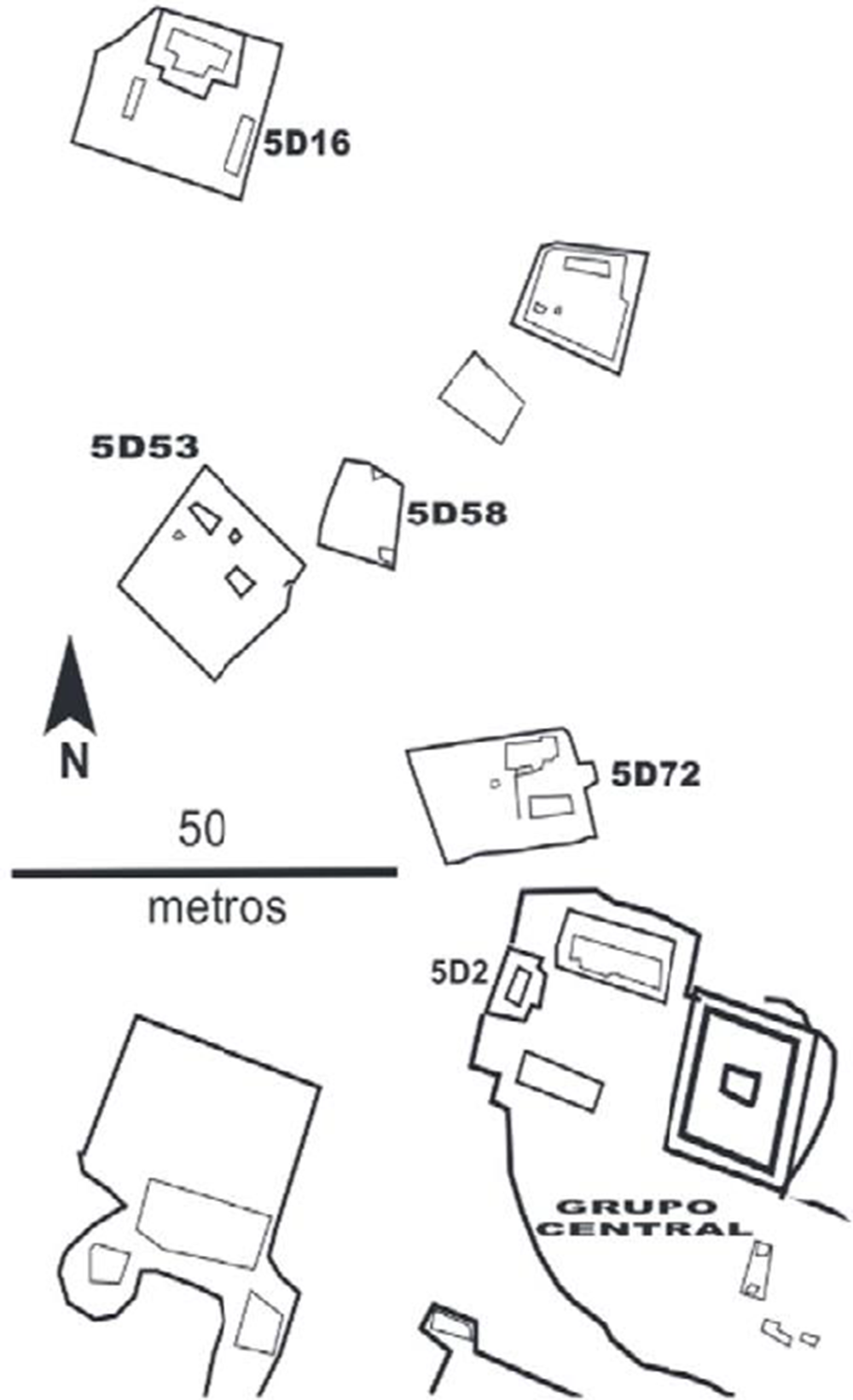
Sihó: Sihó has been documented over the past two decades through excavations conducted by the Universidad Autónoma de Yucatán (UADY). The initial field seasons carried out between 2001 and 2003 focused on the core center, documenting elite structures, exploring relations with other political entities in the region, and uncovering the sequence of occupation spanning from the Middle-Late Preclassic to the Terminal Classic periods (Figure 4) (Cobos Palma et al. Reference Cobos Palma, Fernández-Souza, May, Ayora, Pat Cruz, Jiménez Álvarez, Tiesler, Götz and Lacadena2004). Paleoethnobotanical analyses were conducted after the first season, and during the Project “La Vida Cotidiana en Sihó” (Fernández-Souza et al. Reference Fernández-Souza, Jiménez Álvarez, Hernández Álvarez, Novelo-Pérez, Matos Llanes, Balam Lara, Chaparro Pech, Herrera-Parra, Pujo Piza, Espinoza and Venegas de la Torre2016). The recovery of microbotanical residues focused on starch grains. From the 2001–2003 field seasons, ceramic sherds were sampled, including tripod dishes, bowls, vases, jars, as well as tecomates and molcajetes or mortars (Novelo-Pérez et al. Reference Novelo-Pérez, Herrera-Parra, Fernández-Souza, Ancona-Aragón and Jiménez-Álvarez2019:87–88). Samples from the 2013 season included five metates, one mano, one panucho or honeycomb lid, and 19 ceramic sherds (Matos Llanes Reference Matos Llanes2014:37–38). Finally, 10 soil samples recovered from activity areas from the 2015 field season were analyzed (Herrera-Parra Reference Herrera-Parra2023:62). Here, we synthesize that previous research, focusing on elite contexts.
Sihó’ central precinct and structures explored in past archaeological seasons. Figure taken from Fernández-Souza et al. Reference Fernández-Souza, Zimmermann, del Pilar Jiménez Álvarez and Ardren2020:196.

The residues of plants identified by members of the Taller de Análisis Químicos y Microscópicos at UADY in diverse low, middle, and high status domestic groups were linked to 15 taxa (Herrera-Parra Reference Herrera-Parra2023; Matos Llanes Reference Matos Llanes2014; Novelo-Pérez et al. Reference Novelo-Pérez, Herrera-Parra, Fernández-Souza, Ancona-Aragón and Jiménez-Álvarez2019). The most predominant species is maize (Zea mays L.), surpassing 50 percent ubiquity across contexts and yielding starch grains with various types of damage, indicating diverse forms of preparing and consuming maize. Sweet potatoes (Ipomea batatas (L.) Lam.) also exhibited high ubiquity. Common beans (Phaseolus vulgaris L.) were more prevalent in both high- and medium-status contexts.
Other less ubiquitous species that could be cultivated in milpa or home garden spaces included manioc (Manihot esculenta Crantz), arrowroot (Maranta arundinacea L.), and chile peppers (Capsicum spp. L.). Other cultivated geophytes included jícama (Pachyrhizus erosus (L.) Urb.), malanga (Xanthosoma spp. (L.) Schott), and yam (Dioscorea spp. L.). These plants grow in diverse areas, but ethnographic documentation suggests they were sometimes planted after the milpa cycle as a form of secondary resource (see Terán and Rasmussen Reference Terán and Rasmussen2009). Matos Llanes (Reference Matos Llanes2014) reported particular species such as papaya (Carica papaya L.), ramón (Brosimum alicastrum Sw.), possible annatto (Bixa orellana L.), and cacao (Theobroma cacao L.) in a medium-high-status group, correlating these particular species with high-status residences (see Table 1). The overall plant assemblage represents some staple ingredients such as maize and common beans, and geophytes such as sweet potatoes, alongside condiments such as chile pepper and annatto, and highly valued species like cacao.
Presence of plant species, arranged by culinary category, region, and site. Type of paleoethnobotanical remain is specified for each location where that taxon is present: phytolith (p), starch grain (s), and macrobotanical remain (m). Note: a single taxon may occupy multiple culinary categories

Note: m = macrobotanical remain; s = starch grain; p = phytolith.
T’isil: At the site of T’isil, in northern Quintana Roo, members of the Yalahau Regional Human Ecology Project carried out excavations in 2002 (Morell-Hart Reference Morell-Hart2005), including sampling for botanical residues. Morell-Hart carried out paleoethnobotanical analysis of macro- and microbotanical remains. All recovered botanical residues were from a single unit, on the side of one of the larger structures at the center of the site, within 100 m of the large central cenote (Figure 5: Structure 13M-2). During excavations, typical residential trash was recovered, including ceramic sherds, shells, obsidian tool fragments, and animal bones. This Early Classic structure, an elite residential housemound yielded the highest number of ceramic varieties at T’isil.
T’isil central precinct, with close-up view of Structure 13M-2 elite house mound and superstructures. Figure generated by Kathryn Sorensen.

The recovered archaeobotanical materials appear to indicate typical food plants, including maize, as well as several species that may have been for other purposes, such as fuel or construction. Macrobotanical remains included non-domesticate seeds in the grass family (Poaceae), bean family (Fabaceae), verbena family (Verbenaceae), and sunflower family (Asteraceae), as well as potential domesticates from the amaranth family (such as goosefoot), palm endocarp fragments (Arecaceae), maize, a potential chile pepper seed (cf. Capsicum), and an additional seed from the potato family (Solanaceae) (see Table 1). Several charred and unidentifiable tissue fragments were crushed to see if any microbotanical residues could be identified. Most of these “lumps” yielded nondiagnostic tissues or highly damaged unidentifiable starch grains. But one set of lumps did yield many partially gelatinized starches, one even identifiable as maize.
The combined results of the microbotanical and macrobotanical analyses help us to populate this elite Maya household with plants and the practices that are linked to them. Maize cupules and the single starch grain likely originated in milpa production. Two of the taxa classes may have come from a home garden—the palm fruits and the possible chile pepper. The rest of the species, including potential amaranth family species, verbena family species (Verbenaceae), and goosefoot (Chenopodium sp. L.), could have been obtained from managed forests, fallow fields, homegardens, and/or wetland areas. These taxa could have been opportunistically gathered or deliberately grown and represent the use of plants from a range of local ecological niches and growing conditions. The plant assemblage overall represents basic foodstuffs, such as maize, alongside condiments such as chile peppers and pungent leaves.
The central Usumacinta region of the southern Maya lowlands: Budsilhá (Chiapas), Lacanjá-Tzeltal (Chiapas), and Piedras Negras (Guatemala)
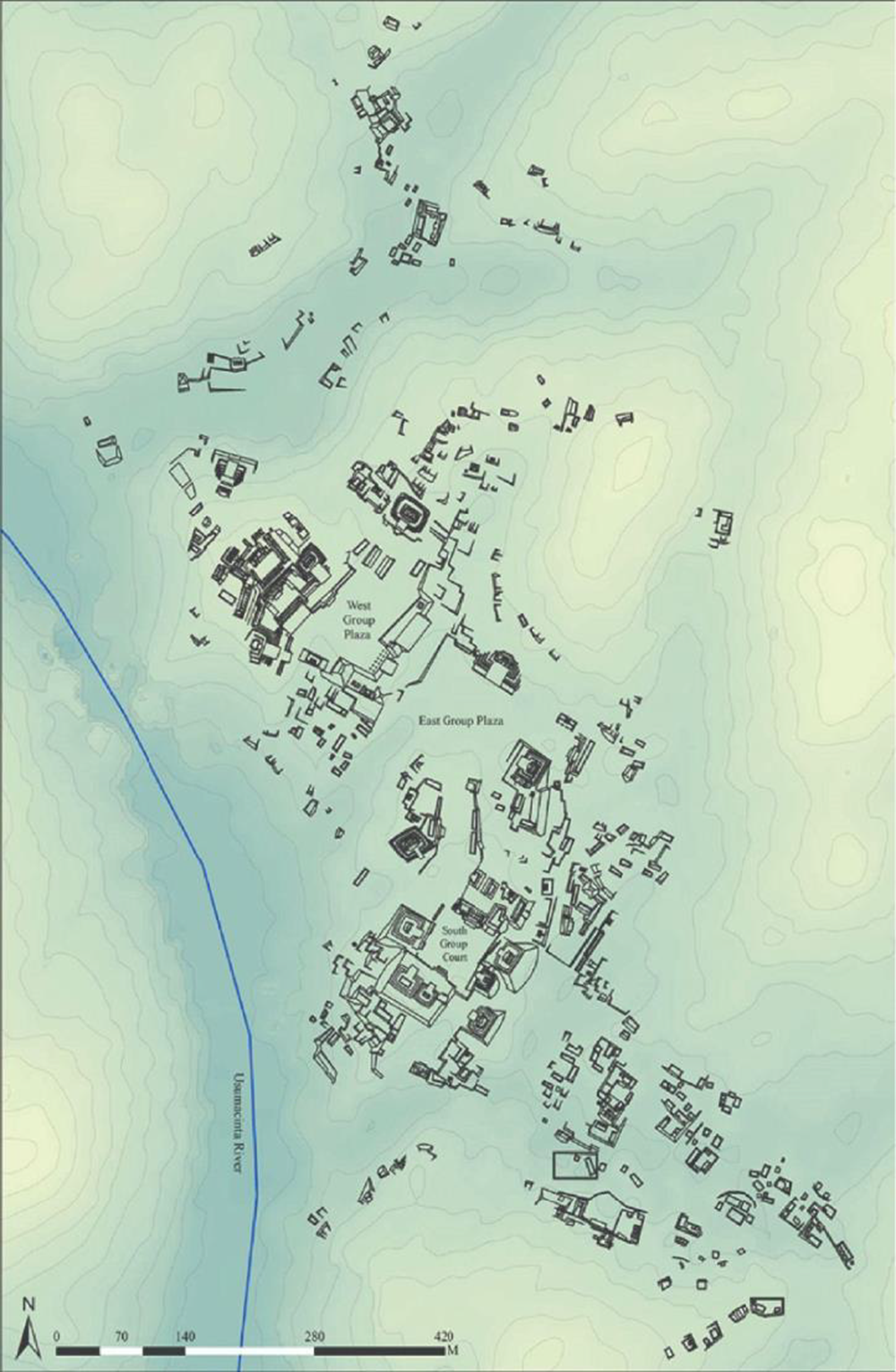
Lacanjá-Tzeltal: Paleoethnobotanical research has been carried out as part of the Proyecto Arqueológico Busiljá-Chocoljá (PABC) in the Central Usumacinta Region for the past seven years (Golden et al. Reference Golden, Scherer, Houston, Schroder, Morell-Hart, del Pilar Jiménez Álvarez, Van Kollias, Talavera, Matsumoto, Dobereiner and Firpi2020; Matsumoto et al. Reference Matsumoto, Scherer, Golden and Houston2023; Scherer and Golden Reference Scherer and Golden2019). Between 2018 and 2023, excavations targeted architecture in the central core, plazas, and some domestic units, revealing prolonged occupation dating from the Middle Preclassic to the Terminal Classic periods (Scherer and Golden Reference Scherer and Golden2018) (Figure 6). Paleoethnobotanical samples were recovered from at least 12 elite area contexts, including plazas, burials, platform fills, floor deposits, and a ballcourt located in the core of Lacanjá-Tzeltal. Macrobotanical remains were extracted from sediments recovered during the excavations and correspond to the spaces mentioned previously. Microbotanical extractions were conducted on obsidian blades and flakes, metates and manos, ceramic sherds from polychrome plates and cajetes, as well as human teeth (Morell-Hart, Watson, et al. Reference Morell-Hart, Watson, Dine, MacLeod, Scherer and Golden2018; Morell-Hart, Bérubé, et al. Reference Morell-Hart, Bérubé, Dine, Scherer and Golden2019; Morell-Hart et al. Reference Morell-Hart, Herrera-Parra, Horseman, Golden, Scherer and Godos2024).
Lacanjá-Tzeltal monumental center. Figure taken from Golden et al. (2023:11).

To date, botanical analysis has shown an extensive number of cultivated and non-cultivated plants used by the inhabitants of Lacanjá-Tzeltal for food, seasonings, medicines, containers, fibers, and more (Morell-Hart, Watson, et al. Reference Morell-Hart, Watson, Dine, MacLeod, Scherer and Golden2018; Morell-Hart, Bérubé, et al. Reference Morell-Hart, Bérubé, Dine, Scherer and Golden2019; Herrera-Parra Reference Herrera-Parra2024). Families like those of sunflowers (Asteraceae) and grasses (Poaceae) stand out as the most representative among all other taxa. Maize has been identified in various forms, including starch grains, phytoliths, seeds, and cupules, although not in high percentages. Other common edible species, such as squash (Cucurbita sp. L.) and common beans, are also present, indicating milpa system production. Roots and tubers such as sweet potatoes, manioc, and arrowroot could also be cultivated in the milpa or homegardens. Possible condiments and seasonings such as chile pepper, annatto, pepperleaf (Piper spp. Kunth), and tomatillo (Jaltomata sp. (Cav.) J.L. Gentry), may have grown in diverse spaces. Fruits such as nance (cf. Byrsonima crassifolia (L.) Kunth) and cocoyol (Acrocomia sp. (Karw. ex Mart.) H. Wendl.) are represented only through endocarps (Herrera-Parra Reference Herrera-Parra2024) (see Table 1). Finally, containers such as calabash (cf. Crescentia cujete L.) have been inferred through the identification of exocarps. The high diversity of species recorded at Lacanjá-Tzeltal (n=68) includes basic ingredients such as maize, squashes, and beans; local plants such as pepperleaf and tomatillos that might have been used as condiments; and others that were shared between regions such as annatto (Herrera-Parra Reference Herrera-Parra2024:27). The botanical assemblage also highlights a diversity of growing spaces including milpas, homegardens, and possible forest gardens.
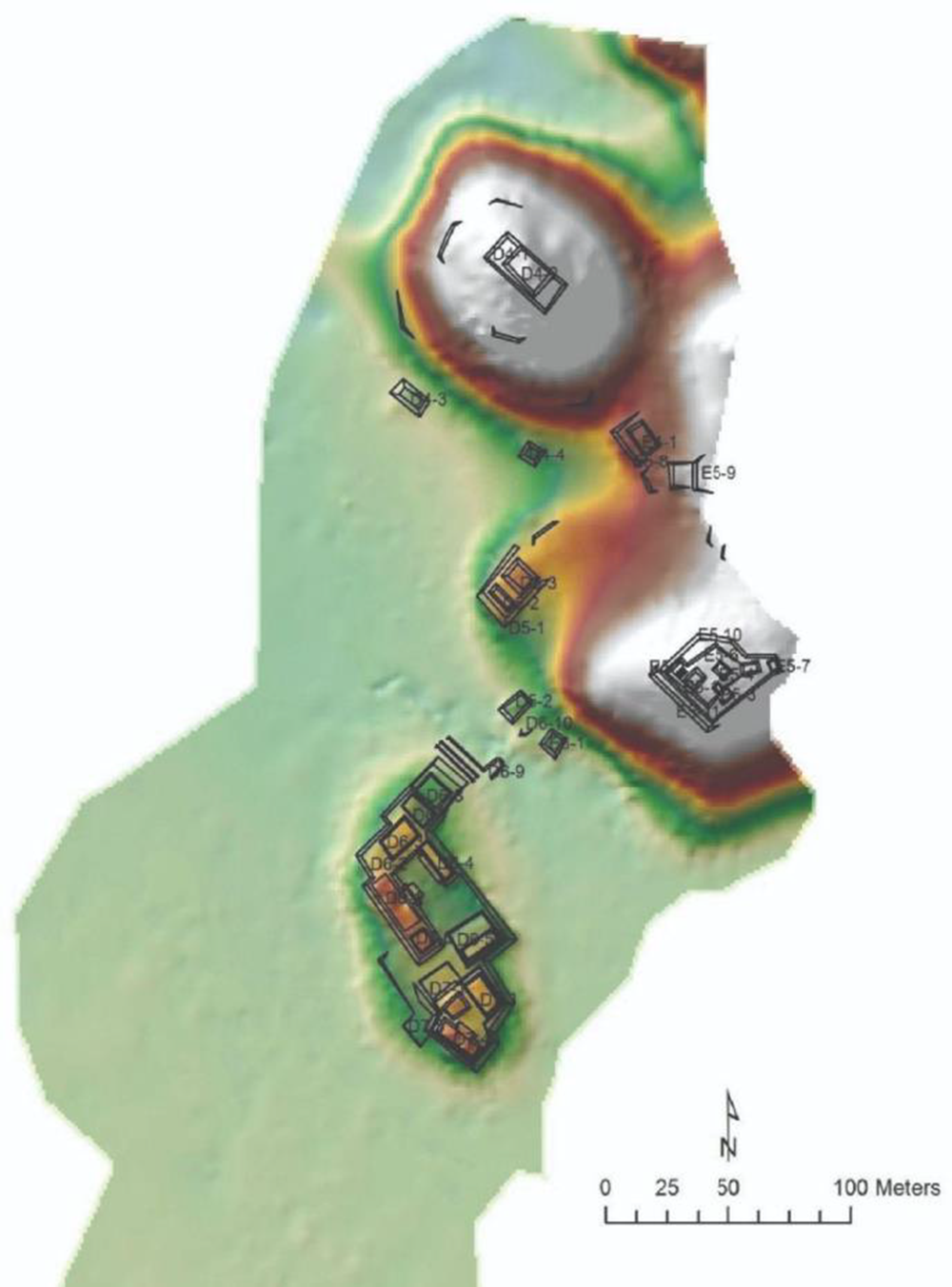
Budsilhá: Situated within the Upper Usumacinta River region on the eastern side of the Usumacinta River, Budsilhá functions as a secondary political center of Piedras Negras (Golden et al. Reference Golden, Scherer, Muñoz and Hruby2012, Reference Golden, Scherer, Muñoz and Hruby2012; Schroder et al. Reference Schroder, Golden and Scherer2017). All analyzed samples for this study were collected during the 2018 field season by members of PABC, from excavations atop the site’s large central platform, which features elite residential architecture (Figure 7). In total, 11 sediment samples were recovered from nine different lots, representing contexts that included a central swampy area interpreted as a potential agricultural field, a residential core, and the west end of the main plaza. Residue analysis was conducted on six artifacts: a metate, the proximal fragment of an obsidian blade, and a basal sherd recovered from a waste deposit at the west end of the main plaza; a basal sherd and a metate recovered from a potential sweeping or dumping area within the residential core; and a basal sherd from a small bowl recovered from the burial of a child. Residues from four teeth, each associated with separate burials, were also analyzed. Analysis of these materials resulted in the identification of at least 31 distinct taxa.
Central area of Budsilhá. Map taken from Scherer and Golden (2018:86).

Pugliese (Reference Pugliese2023) identified a diverse assemblage of plant taxa in the sediment samples, with a total of 16 species representing 10 different plant families. Phytolith residues from the sunflower family (Asteraceae) were ubiquitous across all sediment contexts and dominated the assemblages, comprising more than half of the identified taxa. Based on the identified taxa from the sediments, palm species (Arecaceae) represented the second most abundant group followed by other less ubiquitous grass species, including Bambusoideae, Panicoideae, and Pooideae. A wide range of geophyte food species (roots, tubers, and rhizomes) were also recovered from artifact residues, human teeth, and sediment samples. These included sweet potato, achira (Canna edulis Ker Gawl.), manioc, and members of the arrowroot family (Marantaceae) such as arrowroot and lerén (Calathea sp. (Aubl.) Lindl.). Edible species also included maize and beans as well as various squashes (Cucurbitaceae), including C. moschata and C. pepo.
A total of 23 different plant families were identified from macrobotanical remains. Botanical remains recovered from the lower-lying area of Budsilhá, interpreted as a possible agricultural zone, contained wild species from the sunflower, verbena (Verbenaceae), grass, nightshade (Solanaceae), and grape (Vitaceae) families (Dine Reference Dine2019). In the residential core area, remains from the sunflower, bean (Fabaceae), grass, and mint (Lamiaceae) families were recovered. The elite midden context yielded a wide variety of species, including several plant families not represented in the other two contexts. These included palm species, as well as taxa from the borage (Boraginaceae), arum (Araceae), evening primrose (Onagraceae), rose (Rosaceae), mallow (Malvaceae), and purslane (Portulacaceae) families.
Maize was not highly ubiquitous across the Budsilhá samples, appearing in only 21 percent of contexts analyzed. Maize starch grains were analyzed from the sonicated wash of an adult tooth recovered from a burial context. It is possible that the low ubiquity of maize in the sediment samples is due to maize being grown not as the primary staple crop in Budsilhá, but rather as one of several key foods, including geophyte crops, consumed by Budsilhá residents. The plant assemblage overall represents basic foodstuffs such as maize and beans alongside condiments such as chile pepper and pungent leaves. It also reflects the use of diverse geophytes and wild plants, highlighting a broad culinary repertoire shaped by both daily subsistence and localized practices.
Piedras Negras: In the Petén region of Guatemala, two years of excavations at Piedras Negras have yielded a cross-section of diverse culinary practices through recovered botanical residues. In the 2016 and 2017 field seasons, the Proyecto Paisaje Piedras Negras (PPPNY) conducted small-scale and large horizontal excavations at various locations, targeting craft-production areas, monumental architecture and plazas, defensive features, and small dwellings, in deposits ranging from the Classic to the Terminal Classic periods (Figure 8). We present only a portion of the results here, from elite residential areas. These results are drawn from bulk flotation samples and microbotanical residues from human tooth and artifact extractions, including obsidian blades, ceramic sherds, and a mano.
Piedras Negras central precinct. Map by Omar Alcover (2016).

The plants recovered from Piedras Negras, combining all macro- and microremain proxies, include over 40 identified taxa (see Table 1). Sunflower family species, grass family species, and maize have been recovered as both microremains and macroremains. Maize has relatively low ubiquity, overall, considering that maize is identifiable in three ways: diagnostic phytoliths, starch grains, and macroremains (both kernels and cupules). There is also a selection of edible leaves, condiments, and geophytes. Morell-Hart and colleagues (Morell-Hart Reference Morell-Hart, Robles, Scherer and Golden2017; Morell-Hart, Dine, et al. Reference Morell-Hart, Dine, Watson, Teesdale, Urquizú and Firpi2018; Morell-Hart, Joyce, et al. Reference Morell-Hart2019) recovered edible and potentially edible goosefoot and pepperleaf plants two and four times, respectively. These plants grow in a number of places, both with human intervention and without. One manioc starch grain was tentatively identified, which could indicate local cultivation of tuberous root crops.
A wide array of fruits and edible seed plants were recovered, including common bean, squash, chile pepper, tomatillo, pitahaya (Hylocereus sp. (Haw.) Britton & Rose), cocoyol palm (Acrocomia sp.), and nance. All of these plants are commonly cultivated today in milpas and homegardens, while other plants such as Hirtella and Acnistus are fairly uncommon plants, likely collected from fallowing milpa or forest areas. The full suite of plants demonstrates active engagement with the landscape in a number of different ways, from actively minding crops, to transplanting wild species in a home garden, fallowing milpa areas or forests. In sum, the assemblage also reveals expected basic foodstuffs such as maize, beans, and squash, alongside pungent herbs and spices such as goosefoot and chile peppers. The assemblage also includes sweet fruits such as pitahaya and nance, and buttery palm fruits such as cocoyol.
The eastern periphery of the Maya lowlands: Río Amarillo (Honduras)
Río Amarillo: Since 2011, archaeological investigations by the Proyecto Arqueológico Río Amarillo, Copán (PARAC) and Proyecto Arqueológico Río Amarillo (PARA) have generated valuable insights into relationship between Río Amarillo, Copán, and the surrounding environment (McNeil et al. Reference McNeil, Barrios, Brown, Terry and Morell-Hart2017). Located in the eastern part of the Valley, Río Amarillo functioned as a Late Classic ceremonial core, and served as a key region of trade and communication, connecting major urban centers throughout the region (Figure 9) (McNeil et al. Reference McNeil, Barrios, Tokovinine and Burgos2016; Webster Reference Webster1999). During the Classic period, many of the area’s inhabitants likely contributed to the economic infrastructure of the Copán polity by producing and supplying goods (McNeil et al. Reference McNeil, Barrios, Tokovinine and Burgos2016, Reference McNeil, Barrios, Brown, Terry and Morell-Hart2017).
Río Amarillo central precinct. Figure taken from Barrios et al. (Reference Barrios, McNeil, Díaz, Arroyo, Salinas and Álvarez2018:88).

In 2020, five artifacts were analyzed, including two obsidian blades, an obsidian flake, an obsidian microblade, and a ceramic cuenco vessel (Pugliese Reference Pugliese2020). These findings were integrated with previous results by Morell-Hart in 2017. In total, 22 artifacts were examined, representing a variety of artifact classes, including mano, ceramic cántaro, obsidian blade, chert retouched flake, ceramic cuenco, obsidian flake, obsidian macroblade, ceramic cilindro, machacador, and metate. This analysis revealed a broad range of plant species at Río Amarillo, underscoring the diversity of botanical use at the site.
The frequent presence of microbotanical remains of maize, beans, and arrowroot on ceramic artifacts suggests that these cultivated plants were integral to the cuisine at Río Amarillo. Microremains of palm, lerén, beans, certain types of wild grasses, and maize were all identified on ceramics. Maize was especially present on obsidian tools, and sometimes exhibited evidence of food processing, as seen in a flattened maize starch grain. Alongside cultivated crops such as sweet potato, beans, arrowroot, and maize, non-domesticated plants including those in the sunflower family and various wild grasses were also used. Panicoideae phytoliths were found on a ceramic sherd, machacador, five manos, and two obsidian blades (43.5 percent ubiquity), while Chloridoideae subfamilies were found on ceramic, two manos, and a machacador (17.4 percent ubiquity), highlighting some role in the daily food practices at the site. The assemblage also includes expected basic foodstuffs such as maize, beans, and sweet potato alongside pungent herbs such as goosefoot, edible rhizomes of spiral ginger, arrowroot, and achira, and buttery palm fruits such as cocoyol (see Table 1).
Comparing elite cuisines in the Maya lowlands
Northern and Southern sites, from Preclassic to Postclassic time periods, all suffer from the scarcity of “phantom artifacts”––which may have accounted for “as much as 90% of a household’s artifact inventory” (Dahlin et al. Reference Dahlin, Bair, Beach, Moriarty, Terry, Staller and Carrasco2010:193). These “phantom artifacts” include perishable items made of wood such as boxes, benches, and low tables; fibers used for petates or mats; various fabrics, especially of cotton, for clothing, curtains, and pillows; fruits exocarps used as containers; and particularly foodstuffs. The locus of the court and courtly activities, or the locus of the council and conciliary activities, was itself distributed, making it difficult to pinpoint culinary activities. As represented in architecture and on ceramic vessels (Inomata Reference Inomata2006; Inomata and Houston Reference Inomata2001; Reents-Budet Reference Reents-Budet, Inomata and Stephen2001), elite settings included ball courts, tall pyramids, plazas, terraced platforms, and palace complexes—all loci of socially charged food activities, whether casual consumption or sacralized offering. That distribution has made the reconstruction of culinary practices complex, yet not impossible.
To contend with these limitations, paleoethnobotanical research has incorporated a number of different approaches, exemplified by the projects presented here. While some studies concentrated solely on specific datasets like macroremains or starch grains, others employed a broader methodological suite, thus recovering a greater variety of species (see Morell-Hart Reference Morell-Hart2019). The absence of certain species in some regions likely reflects a methodological challenge, underscoring the importance of incorporating multiple paleoethnobotanical methodologies into our projects. Meanwhile, more recent studies have provided us with further details to better connect the layouts of elite complexes to the culinary activities carried out within them (e.g., Inomata et al. Reference Inomata, Triadan, Ponciano, Pinto, Terry and Eberl2002; Lamoureux‐St‐Hilaire et al. Reference Lamoureux‐St‐Hilaire, Canuto, Wells, Clarissa and Barrientos2019; Masson and Hare Reference Masson, Hare, Hutson and Ardren2020:794).
Table 1 summarizes the species recorded at the six archaeological sites under investigation (see also Figures 10, 11, and 12). It also accounts for these species as ingredients in one or more dishes that likely were used for preparing beverages, foods, or sauces, as well as those used in condiments, seasonings, aromatics, or wrappings. As anticipated, maize emerges as a core ingredient across all regions during Classic times. This finding is reinforced across Classic imagery and texts that show diverse varieties of maize atoles with fruits and seasonings, and tamales with fillings and sauces. As Traci Ardren succinctly summarizes (Reference Ardren and Ardren2020), maize played a role in portrayals of Classic Maya kings as sacred hunters, royal Maya women providing cosmologically charged foodstuffs, and Maya royalty embodying the Maize Deity, deliberately linking rulers directly to the fertility and life cycle of maize.
Select macrobotanical remains referenced in this study. (a) Endocarp of coyol (Acrocomia sp.) recovered from Piedras Negras. (b) Pepperleaf seeds (Piper hispidum) from Budsilhá. (c) Maize (Zea mays) cupules identified at Budsilhá. Photos by Morell-Hart.

Select starch grains referenced in this study, all recovered from artifacts. (a–f) Maize (Zea mays), with (a) and (b) recovered from Rio Amarillo, (c) and (d) from Piedras Negras, and (e) and (f) from Lacanjá-Tzeltal. (g–h) Sweet potato (Ipomea batatas) from Budsilhá. (i–l) Manioc (Manihot esculenta): (i–j) recovered from Budsilhá; (k–l) from Lacanjá-Tzeltal and with some morphological damage. (m–n) Probable achira (cf. Canna edulis) with damage, recovered from Lacanjá-Tzeltal. (o–p) chile pepper (Capsicum sp.) from Lacanjá-Tzeltal. (q–t) Unknown starch grains with some thermal alterations: (q) from Rio Amarillo, (r–t) from Lacanjá-Tzeltal. Starch grains photographed under transmitted light and polarized light, with magnification of 400x–630x. Photos by the authors.

Select phytoliths referenced in this study. (a–b) Sunflower family (Asteraceae) from Budsilhá. (c–d) Palm phytoliths (Arecaceae): (c) from Budsilhá and (d) from Lacanjá-Tzeltal. (e–f) Arrowroot (Maranta arundinacea): (e) from Budsilhá and (f) from Lacanjá-Tzeltal. (g) Common bean (Phaseolus sp.) from Lacanjá-Tzeltal. (h) Possible pepperleaf (Piper sp.) from Lacanjá-Tzeltal. Phytoliths photographed under transmitted light and polarized light, with magnification of 400x–630x. Photos by the authors.

Chile peppers also feature prominently at nearly all the sites, indicating their widespread use, possibly as a condiment and likely in sauces. This latter use is depicted in some tamale representations, while epigraphic evidence alludes to their use in beverages (Stuart Reference Stuart2016). The use of chile peppers is substantiated not only by microbotanical remains dating to the Classic period (e.g., Cagnato Reference Cagnato2016, Reference Cagnato2018b, Reference Cagnato2019; Devio Reference Devio2016; Novelo-Pérez et al. Reference Novelo-Pérez, Herrera-Parra, Fernández-Souza, Ancona-Aragón and Jiménez-Álvarez2019; Simms Reference Simms2014), but also by chemical signatures dating back to Preclassic times (e.g., Powis et al. Reference Powis, Murrieta, Lesure, Bravo, Grivetti, Kucera and Gaikwad2013), highlighting persistent use over time.
Geophyte consumption in the form of beverages like atoles has been documented epigraphically in elite contexts by Beliaev and colleagues (Reference Beliaev, Davletshin, Tokovinine, Staller and Carrasco2010), indicating that some atoles were made with a combination of sweet potatoes. At Sihó, sweet potatoes showed high ubiquity despite socioeconomic status of groups (Novelo-Pérez et al. 2019). This suggests that although the same plant species were used by both elites and non-elites, distinctions were made through combinations with other plants, methods of elaboration, and possible forms of presentation. Among elites, specific types of atoles were prepared according to tastes and preferences, sometimes marking distinctions between kingdoms as previously noted by Beliaev and colleagues (Reference Beliaev, Davletshin, Tokovinine, Staller and Carrasco2010). Notably, geophytes are also prevalent across nearly all regions, with the exception of T’isil—the only area from which no residues were recovered from artifacts, thus limiting geophyte recoverability (see Table 1).
Although we hypothesize that squashes were also integral to elite core cuisine, based on their important use in early descriptions and contemporary times (e.g., de Landa Reference de Landa and Dorado1985; Redfield and Villa Rojas Reference Redfield and Rojas1962; Terán and Rasmussen Reference Terán and Rasmussen2009), microbotanical remains of this species (Cucurbita spp.) have only been identified through phytoliths, particularly in the Central Usumacinta Region where this technique has been implemented. Therefore, the absence of this species may be attributed to methodological limitations, as previously described. Similarly, cacao has been identified exclusively through a starch grain at Sihó in the Northern Lowlands. However, cacao detection is generally more reliably achieved through chemical signatures (e.g., Hall et al. Reference Hall, Tarka, Hurst, Stuart and Adams1990; Henderson et al. Reference Henderson, Joyce, Hall, Hurst and McGovern2007; Kaplan et al. Reference Kaplan, Umaña, Hurst, Sun, Stanley, Pingarrón and Cardona2017), a method not employed at any of the sites included in this study.
Regardless of whether these foods were tribute or trade items, assemblages of regional species offer valuable insights, including notable variations across the areas under study. In the Central Usumacinta Region, species from the pepperleaf family, such as hoja santa, and the members of the Cannaceae family, including achira, are uniquely present, suggesting localized culinary practices or ecological availability (see Figures 10, 11, and 12). These species may have been more common in the region due to their adaptation to more humid environments. Nevertheless, their presence may mark specific aromas and flavors as more characteristic of the cuisines at Lacanjá-Tzeltal, Budsilhá, and Piedras Negras—all located in the Central Usumacinta Region.
Other species are better suited for drier environments, such as jícama, which was identified exclusively in samples collected from the Northern Lowlands at Sihó, and was absent in all other regions examined. This pattern aligns with historical and ethnographic records documenting jícama consumption in the Northern Lowlands (e.g., de Landa Reference de Landa and Dorado1985; Redfield and Villa Rojas Reference Redfield and Rojas1962). However, its consumption does not appear confined to this northern area. In the Petén region, Devio (Reference Devio2016:100) reports starch grains similar to jícama extracted from lithic implements at Xunantunich, Belize, while Cagnato (Reference Cagnato2016:262) reports the presence of jícama starch grains from grinding stones at La Corona in Guatemala.
Overall, in Table 1 we highlight some commonalities across regions, in the use of certain species such as maize, chile peppers, sweet potatoes, arrowroot, and manioc. This suggests the existence of a core set of ingredients that likely formed the foundation of both elite and non-elite cuisines throughout the Maya area. Elites might have presented dishes combining common species yet preparing them in novel ways or incorporating prestige items—such as imported ceramic wares—to showcase and highlight status. Other species, such as those from the Piperaceae family, and certain geophytes, like jícama or achira, probably had more restricted ecologies, confining these fresh leaves and succulent geophytes to smaller regions. Although species such as cacao may have been restricted to upper-class groups, the non-standardized data collection represented across studies does not allow us robust insight into such specifically “elite” plants, beyond noting their presence.
At all of these sites, the quantity of prestige items, such as jade, fine ceramic wares, and obsidian blades, generally increases in correlation with inferred status of the domestic group (see Jiménez Álvarez et al. Reference Jiménez, del Pilar, Novelo-Pérez, Fernández-Souza and Luis2017 for specifics at Sihó). It is possible that certain “elite” plant species were more accessible to elites than to the rest of the community, while other more common species were regularly supplied through tribute. Meanwhile, given the nature of our evidence, it is likely that elites also enjoyed the produce of their own homegardens, as documented for Tikal (Lentz et al. Reference Lentz, Hamilton, Dunning, Tepe, Scarborough, Meyers, Grazioso and Weiss2021).
Another point of comparison can be seen through faunal remains. At Classic-period Copan, Julia Hendon (Reference Hendon and Ardren2020:234) described the scarcity of deer remains throughout the city, except in contexts associated with groups located near the Main Group. She inferred that venison held higher value, especially for lower-status individuals, for whom its consumption would have been rare and likely reserved for special occasions as invited guests. Meanwhile, at Postclassic Mayapán, iguanas—ubiquitous across the Maya area—may instead have enjoyed special status as sumptuous foods, as they were commonly recovered from elite residences in the urban core but not from the rural outskirts (Masson et al. Reference Masson, Hare, Hutson and Ardren2020). Plant foods were likely also part of this dynamic through differential management, acquisition, and restriction. Elites sought high-value species not only to denote status among the community but also for specific tastes, aromas, and textures. While the Central Usumacinta Region would have featured unique aromatic foods, reflected in the ubiquitous presence of the pepperleaf family and the possible use of their leaves to wrap tamales, in the Northern Lowlands geophytes might have allowed elites to enjoy thick atoles with earthy flavors. Such beverages were likely sweetened with honey, as suggested by archaeological evidence (e.g., Paris et al. Reference Paris, Lope, Masson, Kú and Escamilla Ojeda2018, Reference Paris, Briseño Castrejon, Walker and Lope2020).
Classic-period elite cuisines: Residue visibility and broader culinary understanding
This study offers both interpretative and methodological contributions to understandings of Classic Maya elite cuisine. Methodologically, we demonstrate the value of integrating diverse paleoethnobotanical analyses with contextual data to reconstruct cuisine. On an interpretative level, we underscore regional and cultural variations on plant use and culinary practices, exploring status-related patterns of food access that might have been shaped by regional preferences and environmental constraints. Drawing on six case studies from across the Maya Lowlands, we highlight how elite cuisine was both regionally grounded and widely intelligible, reflecting a shared yet flexible culinary logic.
The six cases in this study contribute to methodological pursuits in two ways. First, we highlight the inclusion of multiple paleoethnobotanical remains, including charred seeds, starch grains, and phytoliths, to reveal the variety of species used by elites across Maya regions, as well as mark similarities and differences between assemblages. Secondly, we emphasize the importance of integrating multiple paleoethnobotanical techniques into archaeological projects whenever possible. Ancient Maya cooks were adept at developing local dishes that also performed eliteness in broadly intelligible ways. The use of multiple techniques allows us to recover a more diverse and richer assemblage of food plants. By seeing a wider set of ingredients, Maya researchers are better positioned to diversify their scholarly offerings, just as ancient Maya cooks made use of this wide set of ingredients to enrich their culinary offerings.
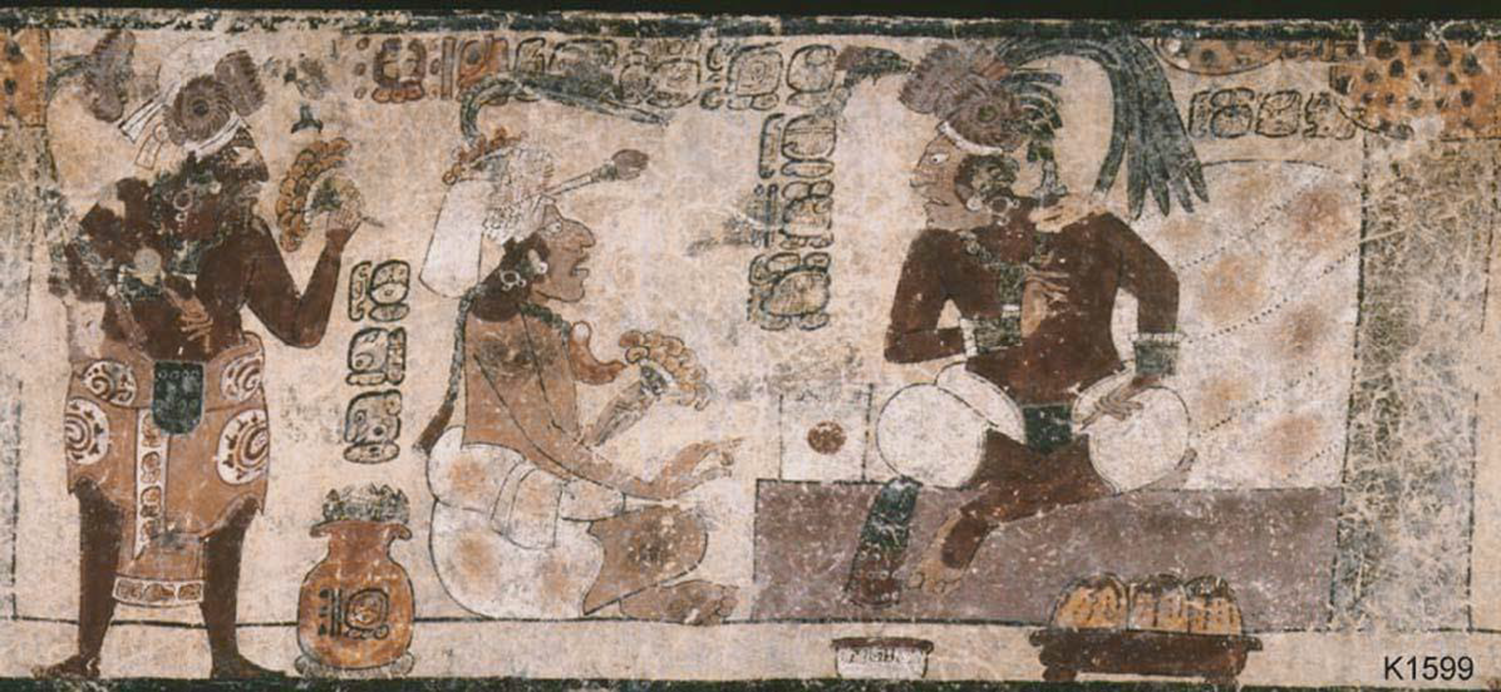
The potential dishes constructed from the identified plant ingredients had more elaborations than we can enumerate here, and certainly numbered thousands more than we could possibly reconstruct from residues and epigraphic descriptions. Courtly imagery foregrounds chocolate drinks and tamales as especially favored foods (Figures 13, 14, 15, and 16). Depictions of tamales and drinks such as chocolate and pulque on polychromic ceramics show lords sharing these foods with, or displaying them to, their courtly visitors, potentially as a means of extending political networks through commensality (Tokovinine Reference Tokovinine2016:21) (Figures 13, 14, and 15). Tamales are notably displayed on large open ceramic plates, often accompanied with diverse sauces, while drinks appear in tall vases, likely symbols of abundance, and intricate preparation (Figure 16). In other scenes elites offer and share foods and drinks with deities, reinforcing their divine right to rule. In addition, the visual splendor of clothing, finely painted polychrome vessels, and decorated spaces amplified these occasions, turning the act of eating and drinking into a performance of wealth, cosmic order, and political authority. In both scenes, the deliberate arrangement of foods in front of the ruler may reflect another “grammar” of presentation among elites (see Figures 14 and 15). However, food offerings in tombs display greater diversity than what is represented in food imagery. Discarded food residues reveal yet an even broader range of consumption practices.
Palatial scene depicting Maya lords, including a dish with tamales and a vase with a foamed beverage. Photograph by Justin Kerr, figure from Kerr Maya Vase Database (K6418).

Palatial scene from Dos Pilas depicting a lord and two other elite people sharing tamales and beverages. Photograph by Justin Kerr, figure from Kerr Maya Vase Database (K1599).

Late Classic vessel showing a scene interpreted as a drunken party. Narrow necked ollas likely contain a fermented drink, possible pulque shared among royal protagonists although only one figure is drinking it. As in many other scenes, it seems that there was an emphasis on the display of food and drinks. Photograph by Justin Kerr, figure from Kerr Maya Vase Database (K1453).

Vessel recovered from Tayasal, Guatemala belonging to the Late Classic (c. a.d. 830–889). The scene shows three people sharing a possible tamale. Photograph by Justin Kerr, figure from Kerr Maya Vase Database (K2707).

Every Maya polity would have had food specialists providing for rulers and elites, from farmers, fishers, and salt makers producing raw ingredients; to traders and tributaries moving foodstuffs along the landscape; to specialist chefs (attached or unattached) preparing feasts and meals, perhaps on a rotating basis. Some were lower-ranking family members, some were attached artisans, some were independent merchants, and some were likely enslaved. In this regard, some plant species could have been used both by the elites and non-elites. Besides maize, beans, and squashes, and some geophytes such as sweet potatoes and cassava, another common shared species is arrowroot, whose ubiquity across regions suggests that all social strata might have commonly used it (e.g., Herrera-Parra Reference Herrera-Parra2023; Novelo-Pérez et al. Reference Novelo-Pérez, Herrera-Parra, Fernández-Souza, Ancona-Aragón and Jiménez-Álvarez2019; Pugliese Reference Pugliese2023; Simms et al. Reference Simms, Berna and Bey2013).
Meanwhile, in courtly scenes, imagery shows a more constrained set of ingredients and activities, where bundles of tribute foods and dishes of prepared foodstuffs might have been used to highlight sociopolitical position to courts, visitors, and dignitaries. Calakmul murals show us what was likely a market scene and consumption of prepared foods such as atole and tamales (Boucher and Quiñones Reference Boucher and Quiñones2007; Carrasco Vargas and Cordeiro Baqueiro Reference Carrasco Vargas, Cordeiro Baqueiro, Golden, Houston and Skidmore2012; García Barrios Reference García Barrios and and2017). Supernatural scenes in codices show food cultivation practices and prepared foodstuffs such as cacao beverages. Across various media we find recurring representations of tribute as well as specifications for cacao beverages (Figure 13) (Stuart Reference Stuart and McNeil2006).
Conclusions
The comparison of culinary repertoires between the sites described here allows us to see a broad spectrum of possible maneuvers employed by elites. Although similarities in the use of species like maize, beans, chile peppers, sweet potatoes, cassava, and arrowroot within the Maya area possibly show how elites shared broad cultural logics about these “core” ingredients, they often also used the same ingredients as their non-elite counterparts. However, elite cooks improvised new forms of mixing these ingredients and presenting the prepared dishes. These localized distinctions included the use of different locally available species, such as the pepperleaf family in the Central Usumacinta Region, and the possibility of trading harder-to-grow species, such as cacao, to the Northern Lowlands.
The repertoire of plants discussed here shows how the extensive use of common species, their manipulation, and ecological restriction played an important role in elite foodways from diverse regions of the Maya area. Showcasing foods through fine ceramic servingware was only one mode of marking status. The elaboration of the foods presented in these vessels also influenced performances. The diversity of tamales recorded through ceramic and mural paintings (e.g., Carrasco Vargas and Cordeiro Baqueiro Reference Carrasco Vargas, Cordeiro Baqueiro, Golden, Houston and Skidmore2012; Hull Reference Hull, Staller and Carrasco2010; Staller and Carrasco Reference Staller and Carrasco2010; Taube Reference Taube1989) indicates diverse forms and high degree of elaboration. Regional variations might have also been part of these performances, displaying some tamales with particular sauces and spices characteristic of the region. In this sense, not only did the visual encounters of the food and the vessels impact people in courtly spaces. Aromas and flavors also influenced the transmission of messages, denoting particularities among regions while also cohering into a core intelligible cuisine.
Resumen en español
En las últimas décadas, nuestro entendimiento de las prácticas culinarias en el Área Maya se han extendido radicalmente a través del reconocimiento de diversas técnicas de preparación de alimentos. Algunos métodos de aproximación ofrecen la oportunidad de estudiar y vincular directamente los artefactos y rasgos arqueológicos con los remanentes de plantas. La habilidad de recuperar dichos residuos microscópicos en sedimentos, artefactos y dientes humanos, ha revelado no solo una extensa lista de ingredientes, sino también un amplio conocimiento de las prácticas culinarias y posibles recetas. En este trabajo nos basamos en nuestras investigaciones paleoetnobotánicas previas a lo largo de las Tierras Bajas Mayas, incluyendo T’isil y Sihó en las Tierras Bajas del Norte; Piedras Negras, Lacanjá-Tzeltal, y Budsilhá, pertenecientes a la región del Alto Usumacinta, e integramos nueva evidencia proveniente de las Tierras Bajas Mayas del Sur, específicamente de Río Amarillo, con el objetivo de desarrollar un entendimiento de las cocinas del periodo Clásico.
Consideramos el surgimiento de las costumbres alimentarias de la élite y cómo las prácticas gastronómicas de este rango de la sociedad maya formaron parte de amplias estrategias políticas y también prácticas privadas. Sugerimos tentativamente una taxonomía de tradiciones locales que no formaron parte de una estricta gramática de la élite. A través de la identificación de similitudes y puntos en común considerados en la cocina “canónica” de la élite, estresamos cómo estos grupos materializaron normas culinarias mientras también presentaban fluidez y flexibilidad en las prácticas gastronómicas. Paralelamente con el trabajo de otros conjuntos materiales de élite, evidenciamos cómo los actores sociales recurrieron a lógicas culturales más amplias para hacer evidentes sus prácticas culinarias, aunque también improvisaron localmente de maneras significativas.
La conjunción de distintas evidencias paleoetnobotánicas como gránulos de almidón, fitolitos, y semillas carbonizadas, hacen evidente especies de plantas en común que fueron utilizadas en todas las regiones como maíz, frijoles, y calabazas, mientras que otras especies como hoja santa, achiote, tomatillo, cacao y epazote únicamente fueron recuperadas en regiones particulares como en la Region del Usumacinta Central. Esta evidencia indica el uso de plantas que formaron parte de la cocina canónica Maya, mientras que las restricciones ecológicas locales pudieron haber influido en el reforzamiento de la distinción de las cocinas entre regiones.
Los casos que incluimos en este estudio contribuyen a la discusión metodológica de dos maneras. En primer lugar, destacamos la inclusión de diversos restos paleobotánicos para revelar la variedad de especies utilizadas tanto por las élites como por los otros estratos sociales en distintas regiones del área maya, así como para señalar similitudes y diferencias entre los conjuntos recuperados. En segundo lugar, enfatizamos la importancia de integrar múltiples técnicas paleobotánicas en los proyectos arqueológicos siempre que sea posible. Las cocineras y cocineros mayas antiguos fueron expertos en desarrollar platillos locales que también comunicaban estatus de forma ampliamente comprensibles. Al observar un repertorio más amplio de ingredientes, las investigaciones relacionadas con prácticas culinarias están mejor posicionadas para diversificar las propuestas teóricas de la misma manera en la que las y los cocineros mayas antiguos aprovecharon esta diversidad para enriquecer sus ofertas culinarias.








 Open access

