





1. Introduction
Since the beginning of humankind, our planet's global ecology has never been in such a critical state as it is today. Our planet has seen major changes caused by humans, starting from the Neolithic revolution some 10,000 years ago, which introduced agriculture and constituted the starting point of the development of modern civilisations and a rapid population growth (Ganivet, Reference Ganivet2020). This evolution, in turn, was made possible by the relative stability on Earth during the warm Holocene inter-glacial, the geological Epoch humanity has benefited from since Earth left the last Ice Age some 12,000 years ago (Rockström et al., Reference Rockström, Steffen, Noone, Persson, Chapin, Lambin, Lenton, Scheffer, Folke, Schellnhuber and Nykvist2009).
While agriculture began in Mesopotamia in the early Holocene, it was not until the 1950s that humanity's unsustainable pressures on the Earth system started rising in an exponential way. This Great Acceleration (Steffen et al., Reference Steffen, Richardson, Rockström, Cornell, Fetzer, Bennett and Bi2015) provides the scientific evidence that human modern civilisations have now reached a magnitude and pace equivalent to a geological force. We are now in the Anthropocene (Folke et al., Reference Folke, Polasky, Rockström, Galaz, Westley, Lamont, Scheffer, Österblom, Carpenter, Chapin III and Seto2021; Head et al., Reference Head, Zalasiewicz, Waters, Turner, Williams, Barnosky, Steffen, Wagreich, Haff, Syvitski and Leinfelder2022; Slaughter, Reference Slaughter2012; Zalasiewicz et al., Reference Zalasiewicz, Waters, Williams, Gradstein, Ogg, Schmitz and Ogg2020), where human-made degradation of Earth's natural resources causes shocks, stress, and change, which exceed those caused by natural external forcing. In other words, humanity is degrading and eroding its own life-support system (MEA, 2005).
The rise of human civilizations and the sustainability of current and future human societies are inextricably linked to natural resource management in agroecosystems and to soils in particular and the wide array of services that soils and ecosystems provide to society. The increase in agricultural technologies (e.g., the Green Revolution) during the twentieth century enabled humanity to produce a larger amount of food, making possible a global population expansion from 1 billion around 1830, to about 2.5 billion by 1950 and now reaching about 8 billion, projected to peak around 9–10 billion by 2050 (Ganivet, Reference Ganivet2020; United Nations, 2019).
Providing food, for such a large number of people, has inevitably led to significant environmental impacts, affecting every ecosystem of the planet (Crist et al., Reference Crist, Mora and Engelman2017), summing up to one of humanities greatest impacts on the environment (Montgomery, Reference Montgomery2007a; Reicosky, Reference Reicosky, Dent and Boincean2021; Ritchie & Roser, Reference Ritchie and Roser2020; Rockström et al., Reference Rockström, Steffen, Noone, Persson, Chapin, Lambin, Lenton, Scheffer, Folke, Schellnhuber and Nykvist2009; Steffen et al., Reference Steffen, Richardson, Rockström, Cornell, Fetzer, Bennett and Bi2015). At present, approximately 50% of terrestrial land areas on Earth have been converted from intact nature to agriculture and infrastructure (Winkler et al., Reference Winkler, Fuchs, Rounsevell and Herold2021). In 2005, nearly 90% of all ecosystems were assessed to be degraded or severely degraded (MEA, 2005). Environmental degradation, caused by anthropogenic land uses (mainly tillage agriculture, deforestation, excessive agrochemical use, and over grazing), eutrophication, scarcity of water resources, all together accelerated soil erosion and sedimentation, degradation of most ecosystems including coastal ecosystems, and loss of biodiversity.
Climate change and agriculture are deeply interlinked. Earth is warming fast, and at 1.3–1.4°C of global mean surface temperature rise above the pre-industrial average (1850–1900), it is clear that this change is a result not exclusively of fossil-fuel burning. Agriculture is the second largest sector in society emitting greenhouse gases (GHG) after the energy sector (approximately 25% of total emissions globally). Moreover, the expansion of agriculture has turned terrestrial carbon sinks (intact nature) into carbon sources (unsustainable agriculture). Overall, agriculture thereby not only constitutes a major driver of climate warming, but is also the largest cause behind the degradation of the resilience of the Earth system, and the capacity of natural ecosystems, such as soils, wetlands, and forests, to sequester carbon and to withstand extreme climate events (IPCC, Reference Masson-Delmotte2021).
This complexity requires a wider understanding of the complexity of the different processes on Earth. The Planetary Boundaries framework, introduced in 2009 (Rockström et al., Reference Rockström, Steffen, Noone, Persson, Chapin, Lambin, Lenton, Scheffer, Folke, Schellnhuber and Nykvist2009) is uniquely suited to help understanding the multifaceted impacts of both unsustainable agricultural practices and at the same time develop concepts for well-balanced alternative strategies. In 2009, several of the safe planetary boundaries had been assessed to be exceeded, namely for climate change, rate of biodiversity loss, and changes to the global nitrogen cycle. The current state of more boundaries could since then be quantified in a better way, including land use changes and the global phosphorus cycle (Steffen et al., Reference Steffen, Richardson, Rockström, Cornell, Fetzer, Bennett and Bi2015) – both exceeding safe levels. In the latest scientific update (Richardson et al., Reference Richardson, Steffen, Lucht, Bendtsen, Cornell, Donges, Drüke, Fetzer, Bala, Von Bloh and Feulner2023), the conclusion is that also the freshwater change boundary, and the novel entities boundaries have been transgressed (Persson et al., Reference Persson, Carney Almroth, Collins, Cornell, De Wit, Diamond, Fantke, Hassellov, MacLeod, Ryberg and Søgaard Jørgensen2022; Wang-Erlandsson et al., Reference Wang-Erlandsson, Tobian, van der Ent, Fetzer, te Wierik, Porkka, Staal, Jaramillo, Dahlmann, Singh and Greve2022), which means that the world continues on a path that risks undermining the stability of the entire Earth system, with the original four transgressed boundaries continuing deeper into high-risk zone (Rockström et al., Reference Rockström, Donges, Fetzer, Martin, Wang-Erlandsson and Richardson2024).
The global food production system is the single largest cause behind this transgression of the planetary boundaries (Richardson et al., Reference Richardson, Steffen, Lucht, Bendtsen, Cornell, Donges, Drüke, Fetzer, Bala, Von Bloh and Feulner2023; Willett et al., Reference Willett, Rockström, Loken, Springmann, Lang, Vermeulen, Garnett, Tilman, DeClerck, Wood and Jonell2019). Five of them are directly related to agriculture: land use change, freshwater change, modification of biogeochemical flows [nitrogen (N), phosphorus (P)], climate change (GHG emissions), and biosphere integrity (measured in terms of extinctions per million species-years, and in terms of human appropriation of net primary production), (Richardson et al., Reference Richardson, Steffen, Lucht, Bendtsen, Cornell, Donges, Drüke, Fetzer, Bala, Von Bloh and Feulner2023). This situation does not only show how far unsustainable agricultural practices along with other drivers have moved the planet out of a save operating space for humanity. The connection between food production and PB transgression also highlights a critical need to scientifically define and move towards a safe operating space for the global food and agriculture system within planetary boundaries (Rockström et al., Reference Rockström, Edenhofer, Gaertner and DeClerck2020).
There is also a rising recognition that the only way to hold the Paris Accord's temperature increase of ‘well below 2°C and aim for 1.5°C’ is to succeed with both a global energy transformation to net-zero emissions by 2050 (tackling direct drivers of climate change) and, at the same time, transform global agriculture from a GHG source to become a major sink over the course of the coming 30 years. This corresponds to nothing less than a new agricultural revolution (Rockström et al., Reference Rockström, Edenhofer, Gaertner and DeClerck2020), with a consistent view on climate along with impacts on all other planetary boundaries. The strategic goal of this new agricultural revolution is to achieve sustainable stewardship of the entire Earth system within planetary boundaries.
It is well established that a fundamental paradigm shift towards ecologically sustainable agricultural production and healthy food system is required worldwide to reverse environmental degradation and climate extremes while regeneratively managing agricultural production within planetary boundaries (Rockström et al., Reference Rockström, Edenhofer, Gaertner and DeClerck2020; Willett et al., Reference Willett, Rockström, Loken, Springmann, Lang, Vermeulen, Garnett, Tilman, DeClerck, Wood and Jonell2019). In this paper, we provide: (a) evidence of degradation of soils and landscapes by tillage agriculture, (b) elaborate on the need for transition to a carbon centric (c-centric), multifunctional sustainable agriculture, and (c) show that Conservation Agriculture (CA) is the corner stone of this transition, constituting a necessary (while not sufficient) transformation of agricultural operations and resource management in all managed landscapes and land-based production systems, and to have a chance of rapidly shifting global agriculture from source to sink of carbon, while upholding global provisioning of sufficient healthy food and environmental services to all citizens.
2. Soils and the impacts of tillage agriculture
A little history of soils: Soil is the prime resource base for agriculture, forestry, and other biological production. Although it is common to all land-based human habitats, it is only recently being recognized as a biological system or microbiome, full of many types of meso and micro fauna and other forms of biota (Toensmeier, Reference Toensmeier2016).
Soils have developed in a very long process from the withering of the base rock by physical and chemical forces, followed by the actions of the biosphere and the flora and fauna living in this material which finally formed what we call soil. Mechanical alteration was not part of this final biological process. On the contrary, the mechanical alteration of soil destroys the habitat of the soil-inhabiting live forms and, with this, their functions in maintaining healthy soils. Mechanical soil tillage was introduced to open the soil surface in order to introduce crop seeds into the soil on larger pieces of land than it was possible with a planting stick and it was used to suppress undesired plants and help the crops to compete against them.
Many factors are of critical importance to provide healthy and sustainable soils, including longer-term carbon storage, soil aggregation, structure and aeration, optimal rhizosphere functions, soil biodiversity, contributing to insect and pest-antagonist dynamics for natural pest management, to weed suppression, optimal nutrient and moisture conditions, and managing soil pH. Both traditional and intensive tillage agricultural practices affect these factors: The resulting soil degradation commonly involves soil loss (erosion), depletion of soil organic matter, loss of soil structure, pH changes (acidification), degraded soil function, and disruption of life and biodiversity in general (Baveye et al., Reference Baveye, Schnee, Boivin, Laba and Radulovich2020). Currently, more than 50% of agricultural lands are moderately to severely degraded and nearly all managed land is in a process of degradation (Friedrich, Reference Friedrich and Kassam2020).
The intensification of tillage practices, promoted largely as part of modern ‘green revolution’ farming, was complemented by large-scale monocultures, high applications of nitrogen fertilizers and pesticides, maximising yields by increasing use of inputs in support of grain and animal protein based western diets, has been one of humanity's largest impacts on the environment and human health, and to date the results have not been good for the planet (Lal et al., Reference Lal, Reicosky and Hanson2007). But the first effect of soil tillage is a significant reduction of the soil biodiversity. The last living forms remaining in agricultural tilled soils are bacteria – as long as they find organic matter to degrade – and plant pathogens living on the crops.
Soil health and ‘living soils’: Many ‘soil’ processes and properties are actually biological processes and properties. The ‘living soil’ includes a jungle of creatures, seen and unseen, working underfoot performing countless critical functions (Bardgett & van der Putten, Reference Bardgett and van der Putten2014; Brussaard, Reference Brussaard1999; Wall & Nielsen, Reference Wall and Nielsen2012). Biodiversity is an element of sustainability and is necessary for functions and services of nature both for ecosystem and biosphere stability and for direct contributions to people, e.g., quality food, biomass, energy (Balvanera et al., Reference Balvanera, Siddique, Dee, Paquette, Isbell, Gonzalez, Byrnes, O'Connor, Hungate and Griffin2014; Diaz et al., Reference Diaz, Demissew, Carabias, Joly, Lonsdale, Ash, Larigauderie, Adhikari, Arico, Báldi and Bartuska2015; Forest et al., Reference Forest, Gonzalez, Loreau, Cowles, Díaz, Hector, Mace, Wardle, O'Connor, Duffy and Turnbull2017; Nielsen et al., Reference Nielsen, Ayres, Wall and Bardgett2011).
Hence, there is the need to change from soil fertility to soil health concepts. Soil health is a metaphor defined as the capacity of soil to function as a vital living system, within ecosystem and land use boundaries, to sustain plant and animal productivity, maintain or enhance water and air quality, and promote plant and animal health (Doran et al., Reference Doran, Sarantonio and Leibig1996; Doran & Zeiss, Reference Doran and Zeiss2000; Karlen, Reference Karlen and Wall2012).
The importance of the soil–human health nexus has also been recognized ever since the dawn of civilization (Brevik, Reference Brevik, Brevik and Burgess2014; Brevik & Sauer, Reference Brevik and Sauer2015; Wall et al., Reference Wall, Nielsen and Six2015; Kemper & Lal, Reference Kemper and Lal2017; Magdoff, Reference Magdoff2001; Oliver & Gregory, Reference Oliver and Gregory2015). Viewing soil as a ‘living’ ecosystem with ‘health’ characteristics helps transform our understanding about soil ecology and how to improve it to advance our agricultural production without degrading environmental quality. The science of soil health in agriculture is slowly evolving (Derpsch et al., Reference Derpsch, Kassam, Reicosky, Friedrich, Calegari, Basch, Gonzalez-Sánchez and Dos Santos2024), in response to information needs for addressing multiple complex problems including climate change, GHG, and the C cycle, soil erosion and land degradation, crop disease and pests, depletion and pollution of water resources, loss of biodiversity, and eventually some of the non-transmittable human diseases (Eagle et al., Reference Eagle, Henry, Olander, Haugen-Kozyra, Millar and Robertson2012; FAO, 2008; Montgomery et al., Reference Montgomery, Biklé, Archuleta, Brown and Jordan2022; Stirling et al., Reference Stirling, Hayden, Pattison and Stirling2016).
Tillage: Tillage-based agriculture has been a major contributor to expansion of agricultural land, environmental degradation and loss of ecosystem services (Montgomery, Reference Montgomery2007a; Kassam, Reference Kassam2020b, Reference Kassam2021). About 70% of earth's ice-free land surface is habitable land. The planetary boundary for land system change is clearly transgressed on the global level (Richardson et al., Reference Richardson, Steffen, Lucht, Bendtsen, Cornell, Donges, Drüke, Fetzer, Bala, Von Bloh and Feulner2023), and agriculture plays a major role in this transgression: Of the habitable land, agriculture occupies 50%, with 77% of the agricultural land used for pasture and rangeland for animal production and 23% used for cropland for food for human and animal consumption (Ritchie & Roser, Reference Ritchie and Roser2020).
Tillage has been the most prominent land management practice in agriculture over thousands of years (Lal et al., Reference Lal, Reicosky and Hanson2007; Montgomery, Reference Montgomery2007a). It was particularly intensified when inversion tillage was introduced in 17th century. The act of tillage creates an instantaneous change in the soil environment by opening physical spaces between soil aggregates, breaking aggregates, allowing for greater oxygen concentration and exchange of GHGs between the soil and atmosphere, and inducing immediate abiotic oxidation of freshly exposed surfaces containing organic C (Homyak et al., Reference Homyak, Blankinship, Marchus, Lucero, Sickman and Schimel2016). This mechanical practice is a major cause of biotic disturbance of the soil medium that seriously disrupts and damages soil biological constituents including microbiomes and fungi and all other health components of the soil. Mechanical tillage destroys macro-pores and, at the same time, the larger soil fauna, such as earthworms and other burrowing and surface-layer organisms that create macro-pores, so infiltration and root penetration are reduced (Kemper et al., Reference Kemper, Schneider and Sinclair2011; Kladivko, Reference Kladivko2001). Tillage disrupts fungal hyphae networks and upsets the balance between fungi and bacteria in the soil (Bailey et al., Reference Bailey, Smith and Bolton2002), so tilled soils have less fungal activity and less stored C as those maintained under native vegetation or no-till systems; Six et al. (Reference Six, Frey, Thiet and Batten2006) found that most agricultural soils are dominated by bacterial activity. Tillage creates a priming effect for some micro arthropods and microbes (Kuzyakov, Reference Kuzyakov2010) as well as the destruction of mycorrhizal fungi hyphae network structure. To store more C and N within the soil for subsequent crops, there is need to maximize the fungi/bacteria ratio which means virtually no soil disturbance because of the way any tillage destroys the delicate fungal network.
The ecological implications of inversion tillage with the mouldboard plough in some instances appeared to last for a long time after the ploughing was discontinued. For example, Isbell et al. (Reference Isbell, Tilman, Reich and Clark2019) found nearly 100 years following agricultural abandonment, recovery of local plant diversity was only incomplete, and plant productivity did not significantly recover. By 91 years after agricultural abandonment, despite gaining many local species, formerly ploughed fields still had only three-quarters of the plant diversity and half of the plant productivity observed in a nearby remnant ecosystem that had never been ploughed.
Tillage and soil organic carbon: Conversion of native soil to agricultural uses typically leads to a decline in soil organic carbon (SOC) levels (Derpsch & Moriya, Reference Derpsch and Moriya1998; Derpsch et al., Reference Derpsch, Florentín and Moriya2006; Sá et al., Reference Sá, Séguy, Tivet, Lal, Briedis, Hartman and Dos Santos2015, Reference Sá, Tivet, Lal, Ferreira, Breidid and Kassam2020). Firstly, the physical disruption and mixing of soil enhances aeration and decomposition by making the soil organic matter (SOM) more accessible to microbes (Six et al., Reference Six, Elliott, Paustian and Doran1998). Secondly, and perhaps more importantly, agriculture is designed to remove as much harvestable biomass as possible from the ecosystem, so C inputs are usually much lower in agricultural systems than in the preceding natural condition (Janzen, Reference Janzen2005; Lal et al., Reference Lal, Delgado, Gulliford, Nielsen, Rice and Van Pelt2012).
Land use and land cover change has resulted in substantial losses of C as CO2 from soils globally, but credible estimates of how much soil carbon has been lost have been difficult to generate (Smith et al., Reference Smith, Soussana, Angers, Schipper, Chenu, Rasse, Batjes, Van Egmond, McNeill, Kuhnert and Arias‐Navarro2019; Lal et al., Reference Lal, Reicosky and Hanson2007; Reicosky & Lindstrom, Reference Reicosky and Lindstrom1993; Reicosky, Reference Reicosky, Lal, Kimble, Follett and Stewart1997a & Reference Reicosky1997b; Reicosky & Archer, Reference Reicosky and Archer2007; Sá et al., Reference Sá, Tivet, Lal, Ferreira, Breidid and Kassam2020). The rate and extent of decline in SOC stocks vary greatly across the globe, due to differences in soil properties, climate, type of land-use conversion, and, importantly, the specific management implementation of a given form of land use. The loss of the SOC pool from agricultural soils may be as much as 30 to 60 Mg ha−1 depending on the antecedent pool, climate, land use and management systems (Lal, Reference Lal2001). Tillage has caused a 25 to 75% decrease in SOC, since many soils were brought into agricultural production more than 100 years ago (Lal, Reference Lal, Kang and Banga2013; Lal et al., Reference Lal, Reicosky and Hanson2007; Sanderman et al., Reference Sanderman, Hengl and Fiske2017; Schlesinger, Reference Schlesinger, Trabalka and Reichle1986). A meta- analysis of the available literature by Sanderman et al. (Reference Sanderman, Hengl and Fiske2017) found median SOC loss values of 26% for the upper 30 cm and 16% for the top 100 cm of soil. But ranges of − 36 to 78% and − 25 to 61%, respectively, have been reported for these two depth increments. They further state that scaling these limited point measurements to calculate a cumulative SOC loss for the world's agricultural land corresponds to estimates ranging from 40 Pg C to over 500 Pg C (Lal, Reference Lal2001). The upper estimate of SOC loss corresponds roughly to the cumulative CO2 emissions from fossil-fuel burning and cement production since 1750 until today (≈450 Pg C).
Well-documented examples of how intensive mouldboard plough tillage has impacted agricultural production systems and SOC are illustrated in the long-term soil C trends in the Morrow plots in Champaign, Illinois, (Odell et al., Reference Odell, Melsted and Walker1984, Reference Odell, Walker, Boone and Oldham1982) and in Sanborn Field experiment station of the University of Missouri, USA (Brown, Reference Brown1993; Wagner, Reference Wagner and Brown1989). More than a century of field experiments showed that, regardless of the cropping system, continually tilled plots continuously lose SOM (Odell et al., Reference Odell, Melsted and Walker1984, Reference Odell, Walker, Boone and Oldham1982; Wagner, Reference Wagner and Brown1989). Both locations used the mouldboard plough and disk harrow, showed similar trends in SOC decline over the years of the studies related to cropping system and rotation, with location differences attributed to differences in soil type and climate. On the Morrow plots, the corn-oat-hay rotation lost 35% C and the continuous corn rotation lost 59% C. On the Sanborn Field plots, continuous wheat with 6 tons of manure annually lost 47% C, while the continuous corn rotation lost 70% C. Substantial differences in C loss due to rotation were observed at both locations. Much of the loss can be explained by intensive inversion tillage, and the change from perennial species to annual agronomic species with less C input. Alternately, Stockfisch et al. (Reference Stockfisch, Forstreuter and Ehlers1999) observed that SOM stratification and accumulation as a result of long-term minimum tillage (20 years) were completely lost by a single mouldboard plough tillage. Shahidi et al. (Reference Shahidi, Dyck and Malhi2014) found accelerated emissions of CO2 following tillage reversal after ∼ 30 years of no-tillage, indicating a prolonged effect on subsequent decomposition of SOM. It is necessary to understand tillage and cropping systems in agriculture production and the various mechanisms leading to C loss, because carbon loss can be linked to soil building, soil quality, soil health, carbon storage, crop production, and ultimately, many other types of ecosystem services (Kassam et al., Reference Kassam, Basch, Friedrich, Shaxson, Goddard, Amado, Crabtree, Hongwen, Mello, Pisante, Mkomwa, Lal and Stewart2013; Kassam & Kassam, Reference Kassam and Kassam2020; Reicosky, Reference Reicosky, Dent and Boincean2021) and environmental degradation (Paustian et al., Reference Paustian, Lehmann, Ogle, Reay, Robertson and Smith2016).
Research showed the immediate release of CO2 simply due to soil disturbance (Ellert & Janzen, Reference Ellert and Janzen1999; Reicosky & Lindstrom, Reference Reicosky and Lindstrom1993; Rochette & Angers, Reference Rochette and Angers1999). An invisible cloud of CO2 erupted behind the tillage implement; the volume of gas was directly proportional to the volume of soil disturbed and continued long after the tillage operation. Ruis et al. (Reference Ruis, Blanco-Canqui, Jasa and Jin2022) found that after 38–40 years of management in a rainfed corn-soybean cropping system, CO2 fluxes decreased in the order: mouldboard plough > chisel plough ≈ disk harrow > no-till, indicating that as tillage intensity decreased, CO2 fluxes decreased. Over the longer term, we may envisage frequent, greater oxygenation of the soil and accelerated mineralization of SOC from the pulverized soil clods and aggregates.
Omonode et al. (Reference Omonode, Vyn, Smith, Hegymegi and Gál2007) assessed short-term chisel and mouldboard plough effects on soil CO2 and CH4 fluxes relative to no-till and determined how tillage and rotation interactions affected seasonal gas emissions in continuous corn and corn–soybean rotations. Both CO2 and CH4 emissions were significantly affected by tillage but not by rotation in the short-term following tillage, and by rotation during the growing season. Mean emissions of CO2 were 16% higher from continuous corn than from rotation corn during the two growing seasons. After 3 decades of consistent tillage and crop rotations for corn and soybean producing above average grain yields in the Midwest, US, continuous no-till in the corn–soybean rotation was identified as the system with the least soil C emissions to the atmosphere.
Tillage and land degradation: Despite large geographic and soil differences around the world (Don et al., Reference Don, Schumacher and Freibauer2011; Guo & Gifford, Reference Guo and Gifford2002; Wei et al., Reference Wei, Shao, Gale and Li2014), there is a common tillage-induced degradation from loss of SOC, destruction of soil structure and the biopore network that results in limited pore space, aeration and rooting depths and decreased infiltration rates and biodiversity and reduced water retention and storage depth. As organic C is the primary structural element and energy source for all life forms on earth, especially in the soil, such degraded soils in tillage agriculture result in production environments that are sub-optimal in attainable yield potentials and increasingly more susceptible to extremes of climate change, as well as to the vagaries of international markets (Kassam et al., Reference Kassam, Gonzalez-Sánchez, Goddard, Hongwen, Mello, Mkomwa, Shaxson, Friedrich and Kassam2020a). For example, dust storms have been recorded in recent years in parts of Europe, such as Germany and Ukraine, and in the USA; e.g., in Illinois, where the degraded topsoil due to intensive tillage is prone to severe wind erosion during dry periods (Reicosky et al., Reference Reicosky, Brandt, Lal and Montgomery2023). In Ukraine, which is a breadbasket, soil erosion, both from wind and water, due to excessive tillage, is massive in the fertile dark soils (chernozems) that have high SOC levels (Menshov & Kruglov, Reference Menshov, Kruglov, Pereira, Muñoz-Rojas, Bogunovic and Zhao2023). Similar problems exist in West Asia (Bashour et al., Reference Bashour, Bachour, Haddad, Dbaibo and Kassam2021) and in China (Li & He, Reference Li and He2021). Montgomery (Reference Montgomery2007b) found that erosion rates from ploughed agricultural fields average 1–2 orders of magnitude greater than rates of soil erosion under native vegetation and long-term geological erosion.
Tillage also pulverizes the soil surface, creating a condition that seals the soil with surface crusts, resulting in more runoff and less effective rainfall or irrigation. Ploughing can also create compact and hardpan layers in the soil that are impenetrable for roots of crops, causing higher risk of root zone water scarcity and crop water stress.
Tillage for crop establishment and weed control, along with excessive use of agrochemicals and fossil fuel for intensification in high output agriculture is one of the leading causes of soil, land, and environmental degradation. This is also true for traditional low input tillage agriculture (Friedrich, Reference Friedrich and Kassam2020; Kassam, 2020). Also, tillage agriculture is part of the ‘cause’ of climate change, as tillage-based land management is (within the climate relevant GHG emissions of the agricultural sector) the biggest contributor. The unintended consequences of tillage agriculture have therefore contributed to the ‘climate problem’ and now only carbon (C) centric agriculture, in conjunction with enhanced water management, can contribute to the ‘climate solution’.
3. Paradigm shift away from tillage agriculture
Agricultural land use systems have so far been based on the use and often mining of natural resources, and more lately after the event of the green revolution, complementing them with synthetic inputs. This paradigm has proven unsustainable and hence there is the need for a shift in paradigm to a different, nature-based way of doing agriculture (Derpsch et al., Reference Derpsch, Kassam, Reicosky, Friedrich, Calegari, Basch, Gonzalez-Sánchez and Dos Santos2024).
The required paradigm shift must aim at repositioning world agriculture from its current role as the world's single largest driver of global environmental and climate change, to becoming a key contributor of a global transition to a sustainable world within our finite safe operating space on planet Earth (Willett et al., Reference Willett, Rockström, Loken, Springmann, Lang, Vermeulen, Garnett, Tilman, DeClerck, Wood and Jonell2019) and within planetary boundaries (Richardson et al., Reference Richardson, Steffen, Lucht, Bendtsen, Cornell, Donges, Drüke, Fetzer, Bala, Von Bloh and Feulner2023). In the context of rapidly rising global environmental changes, sustainable intensification of agriculture must focus on eradicating hunger and poverty while contributing to human well-being (Gerten et al., Reference Gerten, Heck, Jägermeyr, Bodirsky, Fetzer, Jalava, Kummu, Lucht, Rockström, Schaphoff and Schellnhuber2020; Rockström et al., Reference Rockström, Williams, Daily, Noble, Matthews, Gordon, Wetterstrand, DeClerck, Shah, Steduto and de Fraiture2017). Agriculture needs to be resilient and regenerative utilizing soil and agroecosystem health principles for a major enhancement of farming that aligns with functions of intact nature.
Future food security requires agricultural policies that support sustainable land management which copies and/or aligns with nature's way of managing carbon, water, nitrogen, phosphorus, and pollutants – that means staying as close as possible to the Holocene mode of operation for these essential planetary boundary processes.
These policies, while taking a global perspective, must also address people down to the individual level: Half of the Earth's habitable land (about 5.1 billion ha) is actively managed by farmers and herders/pastoralists. Consequently, it is the land management decisions made by a myriad of large and small land users and the technologies they apply, which directly and indirectly impact soil and agroecosystem health, and are decisive for a continued provision of global ecosystem services. It is also their decisions that drive systems worsening climate change and habitat degradation for both human and non-human life (Kassam et al., Reference Kassam, Gonzalez-Sánchez, Goddard, Hongwen, Mello, Mkomwa, Shaxson, Friedrich and Kassam2020a; Kassam and Kassam, Reference Kassam and Kassam2020; Reicosky, Reference Reicosky, Dent and Boincean2021). In other words, the consequences of agriculture management decisions go far beyond one planetary boundary for land use change (and even beyond the boundary for biogeochemical flows and water) – they ultimately affect the two core boundaries of climate change and biosphere integrity in a substantial manner.
There are several primary issues revolving around the soil health that need to be considered for such a paradigm shift:
• A healthy soil is a biological system and requires a regular supply of energy, nutrients, good quality water, aeration, and minimal disturbance, to maintain the habitat and functions of the soil microbiome.
• Understanding and nurturing the biodiversity within soils is needed to ensure that management practices sustain ecosystem services (Brussaard, Reference Brussaard, Wall, Bardgett, Behan-Pelletier, Herrick, Jones, Ritz, Six, Strong and van der Putten2012; Brussaard et al., Reference Brussaard, Behan-Pelletier, Bignell, Brown, Didden, Folgarait, Fragoso, Freckman, Gupta and Hattori1997; Costello et al., Reference Costello, May and Stork2013; Lal, Reference Lal and Hawksworth1991, Reference Lal2015c; Pascual et al., Reference Pascual, Termansen, Hedlund, Brussaard, Faber, Foudi, Lemanceau and Jørgensen2015; Pereira et al., Reference Pereira, Navarro and Martins2012).
• Soil organic matter is a finite but essential natural resource, and it must be used, enhanced, and restored by land use and management systems that create a positive soil/ecosystem C budget (Baveye et al., Reference Baveye, Schnee, Boivin, Laba and Radulovich2020; Chenu et al., Reference Chenu, Angers, Barré, Derrien, Arrouays and Balesdent2019; Jackson et al., Reference Jackson, Lajtha, Crow, Hugelius, Kramer and Piñeiro2017; Reicosky & Forcella, Reference Reicosky and Forcella1998; Wiesmeier et al., Reference Wiesmeier, Urbanski, Hobley, Lang, von Lützow, Marin-Spiotta, van Wesemael, Rabot, Ließ, Garcia-Franco and Wollschläger2019). This is achieved by decreasing C losses (e.g., through erosion and decomposition/mineralization) and increasing C input (e.g., crop biomass, including roots and root exudates, diverse cover crops, and manure).
• Organic C, by nature, is dynamic; a C atom captured by photosynthesis and entering the soil as plant biomass is likely to reappear in the atmosphere again as CO2 within a few months or years or even possibly centuries and may travel long distances. Only about one-third of the fresh crop biomass C remains in the soil after one year (Angers & Chenu, Reference Angers, Chenu and Lal1997; Jenkinson & Rayner, Reference Jenkinson and Rayner1977; Voroney et al., Reference Voroney, Paul and Anderson1989); and only 5–20% remains after 2 years in the soil (Broder & Wagner, Reference Broder and Wagner1988; Buyanovsky & Wagner, Reference Buyanovsky, Wagner, Paul, Paustian, Elliot and Cole1977). Reicosky and Janzen (Reference Reicosky, Janzen, Lal and Stewart2018) suggest that only a small fraction of the initial C input is ‘stabilized’; however, this C is not permanently locked away but remains vulnerable to slow, gradual release over periods of decades to centuries, leaving a very small portion of C in the form of recalcitrant humus, a loose term for a group of C compounds that are extremely resistant to decomposition (Lehmann & Kleber, Reference Lehmann and Kleber2015). As a result, SOM is susceptible to continuous decomposition and transformation through microbial activity and cannot be seen as a permanent ‘storehouse’ for C and may be better visualized as C ‘flowing’ through the soil-plant-atmosphere system ending up back in the atmosphere as CO2 (Janzen, Reference Janzen2006, Reference Janzen2015; Reicosky & Janzen, Reference Reicosky, Janzen, Lal and Stewart2018).
The development of virgin and fertile soils, as a result of these processes, was a long-lasting process (see Section 2), and therefore the recovery of the soil ecosystems creating those soils also takes a long time; longer than a human life and definitively far too long for any recovery to happen before the next tillage operation is due in typical agriculture contexts.
Therefore, there is no sustainable agriculture with any form of mechanical soil tillage (Derpsch, Reference Derpsch2003; Lal et al., Reference Lal, Reicosky and Hanson2007; Montgomery, Reference Montgomery2007a, Reference Montgomery2007b). Nor is it possible for a tillage farmer with years of experience and expertise of tillage farming to transform and establish on the farm an optimal and sustainable no-till carbon centric agriculture in an instant or by just switching in one season. This is because the development of such a farming system is a time dependent multi-dimensional regenerative process, involving biological, physical, chemical, and hydrological properties in the functionally degraded agroecosystem. However, once the planned transformation to an alternate paradigm begins, there is ample scientific and empirical evidence that regeneration and benefits begin to accrue almost immediately in the first season, while gradually improving over several decades (Derpsch, Reference Derpsch, Goddard, Zoebisch, Gan, Ellis, Watson and Sombatpanit2008).
The criteria and approach we propose, for a paradigm shift towards sustainable intensification of agriculture, integrates the dual and interdependent goals of using sustainable concepts to meet rising human needs while contributing to soil and agroecosystem resilience and sustainability of landscapes, the biosphere, and the entire Earth system (Gerten et al., Reference Gerten, Heck, Jägermeyr, Bodirsky, Fetzer, Jalava, Kummu, Lucht, Rockström, Schaphoff and Schellnhuber2020; Rockström et al., Reference Rockström, Edenhofer, Gaertner and DeClerck2020, Reference Rockström, Williams, Daily, Noble, Matthews, Gordon, Wetterstrand, DeClerck, Shah, Steduto and de Fraiture2017).
CA is the foundation of such a sustainable transformation in agricultural production systems and agroecosystem management. It is not surprising, therefore, that CA relates directly and indirectly to several of the UN environmental conventions, namely the UN Framework Convention on Climate Change, UN Convention to Combat Desertification, and the UN Convention on Biodiversity. It contributes directly or indirectly to the achievement of most of the global Sustainable Development Goals (SDGs) established by the United Nations.
The following sections highlight the unique characteristics of CA as resilient regenerative agricultural production and land use systems with many attributes to address climate warming and environmental degradation, as an alternative to intensive tillage agriculture (Tubiello et al., Reference Tubiello, Salvatore, Ferrara, House, Federici, Rossi, Biancalani, Condor Golec, Jacobs, Flammini and Prosperi2015).
4. CA: definition and description
CA is an eco-agricultural approach to sustainable intensification, regenerative and climate smart agriculture.
The development of CA globally is described in Kassam et al. (Reference Kassam, Gonzalez-Sánchez, Goddard, Hongwen, Mello, Mkomwa, Shaxson, Friedrich and Kassam2020a). CA was defined in 1998 by FAO as being a production system that is based on the application of the following three interlinked principles:
I. Continuous no or minimum mechanical soil disturbance: implemented by the practice of no-till seeding or broadcasting of crop seeds and direct placing of planting material into untilled soil; no or minimum soil disturbance from any cultural operation, harvest operation, or farm traffic. Sowing seed or planting crops directly into untilled soil and no-till weeding reduces runoff and soil erosion; minimises the loss of soil organic matter through oxidation; reduces disruptive mechanical cutting and smearing of pressure faces and the pulverization of soil aggregates; avoids the danger of tillage-induced erosion and soil compaction including the formation of plough pans; promotes soil microbiological processes; protects and builds soil structure and connected pores as habitat for meso- and macrofauna and for gas and water transport; and promotes overall soil health.
II. Permanent mulch cover on the soil surface: implemented by retaining crop biomass, rootstocks, and stubbles and biomass from cover crops and other sources of biomass including from other sites. At least 30% of the ground must be covered at any time but 100% is recommended. Use of crop residues (including stubbles) and cover crops reduces runoff and soil erosion; protects the soil surface; conserves water and nutrients; supplies organic matter and carbon to the soil system; regulates soil temperature, provides shelter to soil meso- and macrofauna, promotes soil microbiological activity to enhance and maintain soil health including structure and aggregate stability (resulting from glomalin production by mycorrhiza); and contributes to integrated weed, insect pest, and pathogen management by providing habitat to beneficial organisms and to integrated nutrient and water management. In perennial crop systems such as orchards and plantations, cover crops are undersown to provide live ground cover.
III. Diversification of species in the cropping system: implemented by adopting a cropping system with crops in rotations, and/or sequences and/or associations (mixed cropping) involving annuals and perennial crops, including a balanced mix of legume and non-legume crops and cover crops. Use of diversified cropping systems contributes to diversity in rooting morphology and root compositions; enhances microbiological activity; enhances crop nutrition and crop protection through the suppression of pathogens, diseases, insect pests, and weeds; and builds up soil organic matter. Crops can include annuals, short-term perennials, trees, shrubs, nitrogen-fixing legumes, and pastures with crop-livestock integration, as appropriate. When formulating crop rotations, assuring permanent soil mulch cover must be considered, i.e., sequencing two low residue crops is not recommended, as the risk of leaving the soil unprotected would be high.
The above three principles when applied together provide an ecological foundation for sustainability which is further modified by the application of complementary practices involving integrated crop, soil, nutrient, water, pest, and energy management based on the type and purpose of production systems whether manual, animal traction or mechanized, rainfed or irrigated, non-organic or organic, and annual or perennial systems such as orchards, plantations, crops with trees or agroforestry (Kassam et al., Reference Kassam, Basch, Friedrich, Shaxson, Goddard, Amado, Crabtree, Hongwen, Mello, Pisante, Mkomwa, Lal and Stewart2013; Kassam et al., Reference Kassam, Gonzalez-Sánchez, Cheak, Rahman, Roman-Valquez, Marquez-Garcia, Carbonell-Bojollo, Veróz-Gonzalez, Garrity and Kassam2020b; Leakey, Reference Leakey2017; Menichetti et al., Reference Menichetti, Bolinder and Kätterer2020). Together they are key to climate change mitigation and adaptability.
CA principles are guided by key conservation principles (Delgado et al., Reference Delgado, Groffman, Nearing, Goddard, Reicosky, Lal, Kitchen, Rice, Towery and Salon2011; Kassam, Reference Kassam, Farooq and Pisante2019). The emphasis is on conservation practices that have important regenerative and protective potential for developing continual production and environmental benefits in food and agricultural production systems. Applied together in a system context (Klerkx et al., Reference Klerkx, Aarts and Leeuwis2010; Lal, Reference Lal2015b; Meadows, Reference Meadows2008; Mitchell et al., Reference Mitchell, Harben, Sposito and Shrestha2016), they enable synergistic benefits of the production system, but the application of one or two practices without the others provides less than anticipated results. Each of the principles can be complemented by practices, such as integrated crop, nutrient, water, and pest management to improve performance and resilience, applied individually or in combination, providing that they do not contravene the basic tenets of the principles involved. CA is the baseline land management system for agricultural croplands, annual and perennial cropping systems, range lands and managed trees and forests for the future. CA systems are driven by the carbon cycle that yield both production and environmental services critical to our food security and quality of life (Jackson et al., Reference Jackson, Lajtha, Crow, Hugelius, Kramer and Piñeiro2017; Reicosky, Reference Reicosky and Kassam2020, Reference Reicosky, Dent and Boincean2021; Reicosky & Janzen, Reference Reicosky, Janzen, Lal and Stewart2018). CA mimics the ecological functions and carbon cycling in natural systems. This mimicry leads to new weed, insect pest and pathogen management options as well as new nutrient and water management options (Kassam, 2020).
CA systems terminology first appeared in 1997 (Kassam et al., Reference Kassam, Derpsch, Friedrich and Kassam2020c) when it was realized that no-tillage alone was not adequate to control soil erosion and sustain soil health, and it did not address other ecological factors required for optimum production performance and resiliency, and ecosystem functions. It was the mulch or ground cover combined with no-till and diversified cropping that led to minimization of runoff and soil erosion, building soil health and resilience, and enhancing productivity and ecosystem functioning. The practice was codified by FAO in 1998 at a regional CA conference in Harare, which described the three interlinked principles of CA as we know them today and their practical application (Kassam et al., Reference Kassam, Derpsch, Friedrich and Kassam2020c). CA has continued to evolve in term of its practice by farmers worldwide, enhancing its performance with locally adapted ways of implementing the CA principles and integrating them with complementary practices that add productivity, ecological, economic, and social value to the farming system. CA has provided an opportunity for farmers in all agroecological zones to move away from the degrading tillage farming to a multifunctional land management system that delivers a range of benefits to the farmer, society, and the planet (Kassam et al., Reference Kassam, Friedrich and Derpsch2022), in line with the goal to navigate back into the safe operating space within planetary boundaries.
CA is the base and not an alternative for regenerative agriculture, soil health initiatives, sustainable intensification, and climate smart agriculture resulting in synergistic benefits associated with enhanced biodiversity and carbon flow through the soil–plant–atmosphere system. The term regenerative agriculture has become popular often without a true understanding of the term covering tillage systems as well as no-till systems. Whenever, in scientific literature, regenerative agriculture has been defined as a no-till system, it is identical to that of CA which has a proven ability to regenerate degraded soils and landscapes. Originally regenerative agriculture includes farming animals and permanent living roots as a default component in its definition. Although animal agriculture is not a universal part of farming, integrating domesticated animals into crop farming can be beneficial as it is a way to make animal husbandry sustainable and it facilitates more diverse crop rotations; however, it is not required to make cropping systems sustainable, and livestock is also not universally applicable everywhere, similar to permanent living roots. Different to other popular approaches to sustainable agriculture, such as tillage-based organic farming or agroecology whose proponents also claim to be practicing regenerative agriculture, CA is well defined, practically proven, and scientifically well researched in its functions and effects (FAO, 2014; Jackson et al., Reference Jackson, Lajtha, Crow, Hugelius, Kramer and Piñeiro2017; Kassam et al., Reference Kassam, Friedrich and Derpsch2017a, Reference Kassam, Friedrich and Derpsch2019; Kassam & Kassam, Reference Kassam and Kassam2020; Kassam et al., Reference Kassam, Friedrich and Derpsch2022; Reicosky & Janzen, Reference Reicosky, Janzen, Lal and Stewart2018; Reicosky, Reference Reicosky and Kassam2020, Reference Reicosky, Dent and Boincean2021). CA as a basis for sustainable intensification refers to intensification of output in terms of biomass, economic yield, and ecosystem services with minimum production input. Thus, in CA, sustainable intensification relates to multifunctional production and land use systems that operate optimally or in a positive sum fashion and avoiding trade-offs and an ecological footprint which is smaller than the natural recovery capacity of the ecosystems. CA is, we conclude, the most scalable land management practice that can be universally applied across the world, in support of delivering both regenerative agriculture and sustainable intensification, on all policy agendas (Friedrich and Kassam, Reference Friedrich and Kassam2016; Gliessman, Reference Gliessman2017; Kassam and Kassam, Reference Kassam and Kassam2020) while still enhancing rural livelihoods and addressing most of the United Nations SDGs (Kassam, Reference Kassam, Farooq and Pisante2019, 2020; Kassam et al., Reference Kassam, Friedrich and Derpsch2022, Reference Kassam, Mkomwa and Friedrich2017b).
5. Integrated practices in CA
We need to connect practices and principles from Conservation and Agriculture, to get a better and deeper understanding and acceptance of the systemic role of CA as a path to sustainable intensification aligned with regenerative agriculture (Kassam, Reference Kassam, Farooq and Pisante2019). The notion of a ‘living soil’ and conservation of ‘living resources’ and health concepts, using them in such ways that vital stocks of soil biota, plants, and animals are maintained for succeeding generations, is not new. Conservation progress has been lamentably slow, largely because it has been seen as peripheral to society's continuing quest for social and economic welfare based on a neoliberal/capitalistic economic system. That system seeks infinite growth and profit in a finite natural world with planetary boundaries and is inherently divisive and unable to meet the basic needs of all humanity (Kassam and Kassam, Reference Kassam and Kassam2020). The global community must start collaborating at all social, economic, and political levels to reduce environmental degradation and climate extremes through understanding and applying CA systems (Klerkx et al., Reference Klerkx, Aarts and Leeuwis2010; Lal, Reference Lal2015b; Meadows, Reference Meadows2008; Mitchell et al., Reference Mitchell, Harben, Sposito and Shrestha2016). These system concepts and mechanisms are required to fully integrate all the principles and practices of conservation and agroecology.
The application of the three interlinked principles of CA essentially creates a biologically active ecological foundation of practices for the production system which sets up a spiral of regeneration and enhancement that provides a sustainable base for complex integrated CA production systems as illustrated in Figure 1 (Anderson, Reference Anderson2015). To further enhance the agroecological crop and land potentials and biological and environmental outputs of the CA production system towards its full potential, complementary conservation practices of integrated crop, soil, nutrient, pest, water, and energy management that may be site specific, need to be incorporated. Essentially, the perspective on local problems needs to be widened enough to consider all planetary boundaries. Additional agroecological potential and resilience can be built into the CA cropland systems by integrating trees and shrubs and/or animals. All the complementary additions enhance biodiversity and strengthen the productivity, environmental, economic, and social performance of the whole CA-based farming system within the prevailing agroecological potential of the land with the three principles of CA as foundation for sustainability like a well-structured house with an enduring foundation as depicted in Figure 2 (Friedrich, Reference Friedrich2013).
A spiral of regeneration and enhancement in CA systems, based on the three interlinked principles (top). Each year, their application enhances four basic conditions for agriculture (bottom), which in turn allows ecological processes to regenerate, supporting the successful application of the three CA principles with less and less need for pesticides and fertilizers. Over time, sustainable, integrated CA systems can develop. Adapted from Anderson (Reference Anderson2017).

The three principles of CA as the foundation for sustainability applied with complementary best practices to form regenerative agricultural production systems for sustainable intensification (adapted from Friedrich, Reference Friedrich2013).

Besides reducing the environmental footprint of agriculture, CA is also increasing factor productivity and overall production, but between different agroecological regions and cropping systems there are large differences. While Pittlekow et al. (Reference Pittlekow, Lindquist, Lundy, Liang, van Groenigen, Lee, van Gestel, Six, Venterea and van Kessel2015) found in a meta-analysis a slight yield penalty for no-till systems, Wall et al. (Reference Wall, Thierfelder, Ngwira, Govaerts, Nyagumbo, Baudron, Jat, Sahrawat and Kassam2014) found that maize yields were generally higher. Different findings also depend on the quality of CA implementation. Meta analyses comparing any reduced tillage system with conventional systems usually conclude no yield benefits from reduced tillage systems, while studies concentrating on well implemented CA normally result in yield increases over time. Sorrenson and Montoya (Reference Sorrenson, Montoya, Derpsch, Sidiras and Kopke1991) found that while yields under conventional tillage-based systems declined over a period of 10 years by 5–15%, they increase over the same period under CA by 5–20%. Maize yields in Brazil increased from 1976/77 to 2010/11 by 50% under CA (Calegari et al., Reference Calegari, de Araújo, Costa, Fuents-Lanillo, Dos Santos, Jat, Sahrawat and Kassam2014). In general, the yields under CA would become more stable and increase over time as a result of the better soil environment. However, depending on the starting conditions there might be also small yield declines in the first years as a result of the adaptation to the new system, particularly where the yield gap under conventional cropping systems is small. In regions with very high crop yields under conventional farming, the further yield increases are usually marginal and take some years, but they can be obtained with significant reduction in input (Kassam et al., Reference Kassam, Gonzalez-Sánchez, Carbonell-Bojollo, Friedrich, Derpsch and Lal2021). Yield increases in regions with already high yields and favourable climatic conditions will be smaller and slower. On the other hand, under unfavourable conditions, such as drought, and with a traditionally low yield level and a large yield gap, immediate and significant yield increases of 50 or even more than 200% have been observed in the first year (Silici, Reference Silici2010).
5.1. Soil management
Soils have developed in a very long process of physical and chemical forces, followed by the action of the biosphere, whereas mechanical alteration was not part of this process. Therefore, soil management under CA consists of interfering mechanically as little as possible in the soil. Avoiding or minimizing mechanical soil disturbance and protecting the soil surface with mulch cover and providing substrate to soil microorganisms, integrated soil management must work to develop a healthy soil environment that can undertake all its functions related to production and ecosystem services. This does not exclude eventually an initial subsoiling or even ploughing before converting from tillage-based agriculture to CA in order to open-up soil compactions and plough pans or to assure that the field is levelled or has the desired surface structure in case of furrow irrigation systems to remain untouched in future. While no-till is the ultimate objective, different forms of minimum-tillage can often be effective mid-way solutions in between the abandoning of ploughing (turning the soil) and no-till. Here sub-soiling and ripping, which only opens the soils for planting rows of cultivated crops, has proven to work well as CA practices in regions with very limited biomass and high degree of water scarcity (e.g., small-scale rainfed farming in semi-arid regions in sub-Saharan Africa) (Nyakudya & Stroosnijder, Reference Nyakudya and Stroosnijder2015).
From that moment on soil disturbance has to be minimized with seeding and eventual fertilizer placement operations, as well as with the harvest of root crops. For all other operations, soil disturbance can be avoided, for example using weed management non-soil engaging tools like knife rollers or choppers and choosing low pressure tyres with lighter machines or controlled traffic systems for heavier machines to avoid soil compaction (Friedrich, Reference Friedrich and Kassam2020).
In this way, the common operation of land preparation for seeding in a CA system changes from the different tillage operations to form a seedbed to non-soil engaging management of residues and cover crops or weeds after harvest often combined with the seeding. In case of accidental damage to the soil by tyre tracks and local compactions, those should be ‘repaired’ punctually and not by tilling the entire field. To loosen lighter compactions, the use of deep rooting cover crops, so called biological subsoilers is recommended. Those should be inserted anyway regularly into the crop rotations if there is no strict use of controlled traffic systems. More serious local compactions can be removed with subsoilers that break up the compaction without altering too much of the soil structure, such as the Paraplough® or Paratill® which were specifically designed for use in No-Till systems (Friedrich, Reference Friedrich and Kassam2020).
These soil management operations must be in harmony with nature and other integrated components of crop, nutrients, pest, water, and energy management. This involves being sensitive to the root-soil relations and to soil life and biology. Soil management practices in CA recognize the “living soil” and must include physically protecting the soil and its health from climatic elements, providing a source of biomass for soil life and function, soil organic matter enhancement and for longer-term carbon storage, soil aggregation, structure and aeration, optimal rhizosphere functions, soil biodiversity, contribute to insect pest-predators dynamics for insect pest management, to weed suppression, to optimal nutrient and moisture conditions, and managing soil pH.
Carbon is the primary energy for the microbes and soil fauna flowing through the soil-plant-atmosphere system (Janzen, Reference Janzen2006, Reference Janzen2015; Reicosky & Janzen, Reference Reicosky, Janzen, Lal and Stewart2018). The success of CA systems therefore relies on and benefits from the interactive synergies between the biological, physical, hydrological, and chemical properties and processes in the soil that enhance C management (Baveye et al., Reference Baveye, Schnee, Boivin, Laba and Radulovich2020; Chenu et al., Reference Chenu, Angers, Barré, Derrien, Arrouays and Balesdent2019; Jackson et al., Reference Jackson, Lajtha, Crow, Hugelius, Kramer and Piñeiro2017; Lehmann & Kleber, Reference Lehmann and Kleber2015; Wiesmeier et al., Reference Wiesmeier, Urbanski, Hobley, Lang, von Lützow, Marin-Spiotta, van Wesemael, Rabot, Ließ, Garcia-Franco and Wollschläger2019).
5.2. Crop management
The goal for crop management is to achieve the desired multiple objectives of economic, environmental, and social sustainability compatible with the changing needs of society. Within a no-till cropping system integrated crop management components are based on enhancing biodiversity and managing cropping systems optimally in space and time involving adapted cultivars, crop combinations in rotations and/or sequences and/or association, plant spacings and densities, crop establishment, phenology, growth and yield, and water management. Basche and DeLonge (Reference Basche and DeLonge2017) found long-term use of a winter rye cover crop can improve soil water dynamics without sacrificing cash crop growth in maize-soybean crop rotations in the Midwestern USA. The cover crop increased soil water storage in both wet and dry years. With the cover crop, topsoil water content was 10–11% higher and plant available water was 21–22% higher. Kim et al. (Reference Kim, Zabaloy, Guan and Villamil2020) found cover cropping significantly increased parameters of soil microbial abundance, activity, and diversity by 27%, 22%, and 2.5%, respectively, compared to those of the bare fallow treatment. Asbjornsen et al. (Reference Asbjornsen, Hernandez-Santana, Liebman, Bayala, Chen, Helmers, Ong and Schulte2013) note that perennial grasses, with their deep roots and high water use efficiency (WUE), can improve climate resilience. However, in managed agricultural systems, there are challenges combining annual and perennial species (Glover et al., Reference Glover, Cox and Reganold2007; King & Blesh, Reference King and Blesh2018). Integrated crop management is practiced in combination with all the other production system management requirements dealing with integrated soil, nutrient, pest, water and energy management so that all the components are mutually synergistic and compatible, in other words: not playing out one planetary boundary against the other.
Cropping system design is an important part of integrated crop management function that is dynamic to cope with the changing economic, market, climatic, and pest (weeds, insects, pathogens) situations. A great deal of crop resilience depends on the design and management of the cropping system in relation to other components of the overall production system. Crop diversification as a default principle of CA calls for the cropping system to respond to multi-year objectives while being ready to change cropping system components including cover crops in response to the changing biophysical, pest, and market conditions as well as availability of new knowledge and new cultivars. The soil-related webs of biodiversity both below and above the ground surface play a major role in a range of ecosystem functions, especially when we understand that the combined root biomass and root exudates contribute 2–5 times more to soil organic matter than the above ground plant biomass (Balesdent & Balabane, Reference Balesdent and Balabane1996; Jackson et al., Reference Jackson, Lajtha, Crow, Hugelius, Kramer and Piñeiro2017; Kätterer et al., Reference Kätterer, Bolinder, Andrén, Kirchmann and Menichetti2011; Puget & Drinkwater, Reference Puget and Drinkwater2001).
5.3. Nutrient management
Nutrient cycling, which is covered in one of the nine planetary boundaries, is considered as a key agroecological function improved by CA. Soil health and nutrient management is the core for food security and sustainable agriculture. Soils supply plants with nutrients and play a major role in nutrient cycling (Boulakia et al., Reference Boulakia, Tivet, Husson, Séguy and Kassam2020). Nutrients, essential to soil health, are stored, transformed, and cycled in the soil. In healthy soils in CA systems, there are more growth-promoting microorganisms, and they produce enzymes that facilitate the availability of plant nutrients. Optimizing nutrient density requires the adoption of CA for both traditional main crops and diverse cover crop mixes. Assessing nutritional, health, and environmental sustainability of agri-food production requires a better understanding of nutrient cycling through plant management and the decomposition of plant biomass in the soil by growth-promoting microorganisms (Bogard et al., Reference Bogard, Marks, Wood and Thilsted2018). In some high-intensity cropping systems up to 70% of the applied fertilizer ends up in water bodies by leaching or soil erosion, resulting in eutrophication of ground and surface waters and the known consequences for both environmental and human health. CA aims to close nutrient loops – returning all nutrients that come out of the soil, back to the soil. CA systems reduce and eventually eliminate these nutrient losses as nutrients are held in biological forms and do not leach away or suffer volatilization loss, erosion is minimized, and soil water is drained in biopores without washing out the soil matrix (Ghaley et al., Reference Ghaley, Rusu, Sand´en, Spiegel, Menta, Visioli, O'sullivan, Gattin, Delgado, Liebig, Vrebos, Helming, Koellner, Hansjürgens and Daedlow2018).
In CA systems, integrated nutrient management takes advantage of several processes including biological nitrogen fixation through legumes (including cover crops), conservation of nutrients by holding them in biological form in the soil as SOM, mobilization of soil nutrients by microorganisms including fungi, and a continuous supply of biological forms of nutrients from the biomass mulch cover, root biomass, and microbial biomass. There is also the mobilization of nutrients such as phosphorus from the soil and from deeper soil layers by deep-rooted crops, which are not limited by plough pans or sudden changes in density and nutrient availability between topsoil and subsoil, aided by fungi in the system thus setting up nutrient cycling. On farms with crop-livestock integration within the cropping system, manure is also a means of nutrient cycling and a source of nitrogen (Boulakia et al., Reference Boulakia, Tivet, Husson, Séguy and Kassam2020).
Where mineral fertilizer is applied as part of the integrated nutrient management, fertilization is mainly done to maintain a nutrient balance in the soil and not to fertilize plants. Thus, fertilizer is applied to match the nutrient needs of the crop rotation and to maintain a nutrient balance in relation to the nutrients removed in the biological products that are sold off. Thus, in CA systems, plants then supply themselves with the required nutrients from a well-balanced healthy soil, resulting in better plant health and more nutritious and healthy food for humans and animals (Beelman et al., Reference Beelman, Richie, Phillips, Kalaras, Sun and Duiker2021; Kinsey, Reference Kinsey2006; Montgomery et al., Reference Montgomery, Biklé, Archuleta, Brown and Jordan2022). The reported difference in the content of minor mineral nutrients in crops grown under CA seem to suggest that the increased soil biodiversity can mobilize those elements, which otherwise are not available to plants which becomes evident from the low content of many essential minor minerals in food crops originating from tillage-based agriculture. For this reason, animal feed is usually supplemented with minor minerals, whereas the lack of these minerals and related substances in human food can be related to some non-communicable diseases becoming common in modern societies (Hügel, Reference Hügel2023). The depletion of these minor nutrients in most soils along with the lack of their mobilization through soil life should be considered when changing from tillage to a CA system. An initial fertilization with these elements can be beneficial for health and development of plants and soil life as well as for the quality of the resulting crops (Kinsey, Reference Kinsey2006). Over time, as SOM and soil health build up, there is a coupling of nutrient, carbon and water cycles, nutrient loses are minimized while more nutrients are mobilized in appropriate relations, and mineral nutrients are applied only in minor quantities to make up the nutrient losses occurring through the removal of crop yields (Boulakia et al., Reference Boulakia, Tivet, Husson, Séguy and Kassam2020). In high output CA systems, reductions in fertilizer applications of 50–70% have been reported after 10 years or so, with considerable simultaneous increases in crop yields (Carvalho et al., Reference Carvalho, Basch, Calado and Barros2012; Fuentes-Llanillo et al., Reference Fuentes-Llanillo, Bartz, Telles, Araújo, Amado, Bartz, Debiasi, Franchini and Kassam2021a; Sims & Kassam, Reference Sims and Kassam2015). Besides the mobilization of soil nutrients by soil life, particularly fungi, the integration of legumes into cover crop mixes or as companion crops underneath the main crop can eventually replace the use of synthetic fertilizers, in particular nitrogen, completely in the long run.
In integrated crop-livestock systems when animals are kept in stables and not exclusively on pasture, the use of manure or slurry should be integrated into the CA cropping systems for nutrient recycling and buildup of SOM. In farms specialized on livestock production with the farmland only used for fodder production the use of additional mineral fertilizer is usually not necessary. Manure and slurry in this case can be applied on the surface, preferably into a cover crop. Slurry can also be inserted into the soil with specific tools, whereas soil disturbance should again be kept to a minimum. To avoid emission of GHGs from slurry, the slurry should be preferably passed through a biogas plant.
5.4. Pest management (weeds, insects, and pathogens)
As greater output has been sought from farming, the tillage induced loss of soil health and natural environmental balances has been compensated for by an increasing use of agrochemical inputs to protect crops from weeds, insects, and pathogens. This has not only made farming more expensive but added to environmental degradation and pollution. It has also increased risks of toxicity to human health. Tillage for weed control, especially inversion tillage, has been utilized for a long time (Abdin et al., Reference Abdin, Zhou, Cloutier, Coulman, Faris and Smith2000) as it physically removes weed biomass from the surface and buries weed seeds in deeper layers. At the same time, weed seeds are conserved for long periods in the soil and receive a brief exposure to sunlight, due to soil inversion after tillage that can trigger their germination thus increasing weed populations in addition to concerns about the negative impact of tillage on soil health and topsoil erosion (Loaiza Puerta et al., Reference Loaiza Puerta, Pujol Pereira, Wittwer, van der Heijden and Six2018).
With CA systems, it is possible to establish integrated management of all pests so that use of pesticides of all kinds is minimized, and control of pests can be based increasingly or even entirely on biological and cultural methods of control. The foundation for this is the soil biodiversity which under undisturbed conditions and with a protective mulch cover develops over time a system, where pests are kept under control by natural antagonists or predators, which tend to disappear in tilled soils. CA exploits the biological and ecological complexity and synergy of living organisms that shape each ecosystem, with plant and soil C as the primary energy source (Jackson et al., Reference Jackson, Lajtha, Crow, Hugelius, Kramer and Piñeiro2017; Palm et al., 2014). The system emphasis (Lal, Reference Lal2015b; Mitchell et al., Reference Mitchell, Harben, Sposito and Shrestha2016) enables production of crops sustainably year after year, without disturbing the soil with tillage. With nature-based CA, the functions of natural ecosystems are re-established, such as natural controls of pests, diseases, and weeds, thereby reducing the need for synthetic farm inputs (Baveye et al., Reference Baveye, Schnee, Boivin, Laba and Radulovich2020).
In addition, the CA practices are part of an integrated pest management strategy. The foundation of any integrated pest management strategy is growing a healthy crop, for which healthy soil is the first precondition. This can be complemented further with practices to reduce herbicide use to a minimum or avoid it altogether. For example, with cover crops and planting green, in some agroclimatic areas it is possible to end the growth of a cover crop and plant the next crop without using herbicide. Instead, the cover crop is crimper rolled once or twice before the next crop is seeded directly through the mulch (Pieri et al., Reference Pieri, Evers, Landers, O'Connell and Terry2002; Gullickson, Reference Gullickson2018; Duiker, Reference Duiker2017). In the push-pull system of biological pest control, cropping system design allows insect pests to be pushed out of the crop fields by a under sown legume cover crop such as Desmodium and trapped by plants at the borders especially planted to attract the insect pest. The cover crop not only adds biomass and biologically fixed nitrogen to the soil, but also eliminates Striga, a pernicious weed (Khan et al., Reference Khan, Murage, Pittchar, Midega and Kassam2020). Cover crops in CA systems are known for their allelopathic effects on weeds. Anderson (Reference Anderson2015) used no-tillage with more complex crop associations and rotations to incorporate more biodiversity and competition for the weeds. With smallholder cropping in Africa, it is possible to manage weeds effectively without herbicides but with effective crop associations (Owenya et al., Reference Owenya, Mariki, Kienzle, Friedrich and Kassam2011), and many CA smallholder farmers in Mozambique practice CA without the use of any herbicides or pesticides (Lalani et al., Reference Lalani, Dorward, Kassam, Dambiro, Kassam, Mkomwa and Friedrich2017).
Cover crops are gaining importance as their use has numerous benefits including C for improved soil health, reduced soil erosion, and weed suppression. Since annual weeds are usually reduced in CA and perennial weeds can be effectively suppressed by shading with soil cover, cover crops or crops, a small-scale farmer who did weed control so far through manual weeding with a hoe, will have less drudgery in manually controlling weeds. What is needed is a change in the weed management strategy. Instead of hoeing, other not soil engaging ways of weed management can be used, such as interrow knife rollers, hand pulling or chopping off the weeds before they mature the new seeds. Osipitan et al. (Reference Osipitan, Dille, Assefa and Knezevic2018) meta-analysis results indicated that cover crops provided early season weed suppression comparable to those provided by chemical and mechanical weed control methods in cropping systems. The use of cover crops for early season weed suppression had no effect on most main crop grain yields but could increase vegetable crop yields when compared with no cover crop treatment. With the potential to produce substantial biomass, grass cover crops such as rye and oat are frequently recommended as a component of integrated weed management plans (MacLaren et al., Reference MacLaren, Swanepoel, Bennet, Wright and Dehnen-Schmutz2019; Osipitan et al., Reference Osipitan, Dille, Assefa and Knezevic2018). The goal of weed management in CA is not the complete elimination of weeds, but to avoid competition with the crop for light and to avoid further spreading through the formation of seeds. Weeds can serve also as soil cover; they do not compete with the crop for nutrients if they stay in the field and decompose in situ. Their competition for water is also often smaller than the evaporation of a bare soil surface, especially if they are chopped off and left as mulch on the ground. Decisions about selecting cover crops species type (broadleaf or grass) or number (single or mixtures) were not as important as identifying cover crops with inherent characteristics that suppress weeds, such as high biomass productivity and persistent residue (Petrosino et al., Reference Petrosino, Dille, Holman and Roozeboom2015; Schappert et al., Reference Schappert, Messelhäuser, Saile, Peteinatos and Gerhards2018). Although the knowledge base on the effects of different cover crops and cover crop mixtures regarding allelopathy and interaction with pests and diseases or subsequent crops in CA systems is growing (Florentín et al., Reference Florentín, Peñalva, Calegari and Derpsch2011), more research for location specific cover crop mixes is required.
One of the strongest living myths is that tillage is necessary to control weeds, and that in no-till systems weed infestation explodes making it necessary to apply more glyphosate. In reality, tillage-based agriculture so far has not managed to control weeds effectively and most tillage farmers also use herbicides especially glyphosate in higher quantities per hectare and per ton of produce than CA farmers (Román-Vázquez et al., Reference Román-Vázquez, Moreno-García, Repullo-ruibérriz de Torres, Veróz-González, Agüera-de Pablo Blanco, Kassam, Basch and González-Sánchez2023). Also, the elimination of any tillage does not automatically lead to increased weed problems or use of glyphosate. Anderson (Reference Anderson2005) has shown that undisturbed soil decreases the weed population of annual weeds, while shading can control perennial weeds. Mulch cover on the ground surface reduces weed infestation and further reduction in weed populations can be achieved by diversified crop rotations. Thus, the application of the three principles of CA already contributes to reducing weed problems compared to tillage-based systems which disturb and destroy the soil and leave it without cover or shading for extended periods. Herbicides are useful in the transition phase and as emergency solutions, but in the long run well managed CA systems tend to reduce the use of herbicides compared to tillage systems (Leeson et al., Reference Leeson, Thomas, Brenzil, Andrews, Brown and Van Acker2005). Particularly in large-scale mechanized agriculture in dryer areas, where weed suppressing cover crops are initially difficult to establish, herbicides are in the early years an important tool for weed management, with Glyphosate being often the least toxic and environmentally damaging option. However, also in these cases, non-soil engaging mechanical weed management options like interrow choppers as they are already used in some organic farms, could be further developed for a growing market. Other technologies using nonchemical techniques for weed management and control and employing small autonomous vehicles or drones with swarm technologies are under development (De Araújo et al., Reference De Araújo, Sims, Desbiolles, Bolonhezi, Haque, He, Fayad, Kienzle, Do Prado Wildner, Li, Zanella, El Gharras, Bell, Peiretti, Mkomwa, Duiker, Friedrich and Kassam2020). Overall, a complete ban of herbicides would create larger problems to tillage-based agriculture than to CA systems, which by design already include weed suppressing concepts. While weed pressure in CA systems tends to decline over time, several non-chemical weed management options are available in CA (Basch et al., Reference Basch, Texeira, Duiker and Kassam2020).
5.5. Water management
Soil erosion remains a major problem in tillage-based agricultural production systems. Studies indicate that some 500 million hectares of land under tillage agriculture have been abandoned due to soil degradation and erosion since WWII (Montgomery, Reference Montgomery2007a). At the landscape level, CA enables soil-mediated environmental functions to be harnessed at a larger scale, particularly C storage, water cycling, and use efficiency through reduced evaporation losses, cleaner water resources, reduced erosion, and run-off and, with this, better management and conservation of terrestrial freshwater systems and biodiversity (Kassam et al., Reference Kassam, Basch, Friedrich, Shaxson, Goddard, Amado, Crabtree, Hongwen, Mello, Pisante, Mkomwa, Lal and Stewart2013, Reference Kassam2020b).
Soil erosion, both through wind and water, on agricultural land is induced by tillage and other forms of disturbance, combined with inadequate soil vegetative cover, resulting in soils with poor aggregate stability and structure that are fragile and more easily transported by water and wind. However, water erosion does not only lead to soil loss, but also to water loss. The surface run off causing the erosion is water which does not infiltrate into the soil to form plant available soil moisture and recharging ground water resources; instead, it runs directly down to the rivers, along with soil sediments, agrochemicals, and microorganisms, creating flooding and pollution in lower parts of the watershed. These situations are more common in tropical and sub-tropical areas, susceptible to torrential rains during the rainy seasons alternating with droughts due to reduced soil and underground water resources between rainfall events. However, tilled, and unprotected soils in temperate regions are equally susceptible and suffer from extensive water and wind erosion, particularly under a climate change scenario. Where water from watersheds drain into a reservoir or a lake, tillage-based land use leads to filling up the water body with sediments, eutrophication, and asphyxiation of aquatic life. Where the water body is part of the hydroelectric generating complex, tillage-based agriculture in the watershed drastically reduces the useful operating life of the turbines and the reservoir-dam infrastructure (Fuentes-Llanillo et al., Reference Fuentes-Llanillo, Telles, Soares, Junior, Melo, Friedrich and Kassam2021b).
Tillage also destroys much of the biological soil microbiome with concurrent reduction of natural soil fertility and increased compaction. Particularly the permanent network of multi-directional biopores produced by earthworms, termites, and decayed plant roots are destroyed and with this the capacity of soils to infiltrate and drain highly intensive rainfall into the ground water bodies. Modern mechanized agriculture also leads to subsoil compaction beyond the reach of mechanical subsoilers to break them. In the absence of deep reaching earthworm biopores and root channels, tillage-based systems have no means to eventually remove this subsoil compaction (Friedrich, Reference Friedrich and Kassam2020).
A major conservation benefit from CA is greater natural capacity and resilience to climate change, due to the synergy and benefits from several conservation practices incorporated into a unified and synchronized land management strategy (Reicosky, Reference Reicosky and Kassam2020). Due to increase in SOM in CA, leading to increased structure and pore space, CA contributes to capture and hold more rainfall in soils. For every 1% increase in organic matter, the soils water holding capacity increases by 3.2% (USDA, 2017). This decreases surface runoff and erosion, makes more soil water available to crops, and increases water use efficiency and water productivity (Basche et al., Reference Basche, Archontoulis, Kaspar, Jaynes, Parkin and Miguez2016a, Reference Basche, Kaspar, Archontoulis, Jaynes, Parkin, Sauer and Miguez2016b; Basche & DeLonge, Reference Basche and DeLonge2017; Derpsch, Reference Derpsch2003; Landers, Reference Landers2007; Rockström et al., Reference Rockström, Karlberg, Wani, Barron, Hatibu, Oweis, Bruggeman, Farahani and Qiang2010 ). Under irrigation, water requirements are reduced by 30–50% with CA due to increased water infiltration and retention (Basche & DeLonge, Reference Basche and DeLonge2017) and reduced soil evaporation (Friedrich, Reference Friedrich and Kassam2020). In rice-based CA systems, flood irrigation, for example, can be replaced by other forms of irrigation such as subsurface drip irrigation, or permanent bed-and-furrow system, to maintain aerobic conditions in the soil reducing water use as well as emissions of methane and nitrous oxides resulting from anaerobic soils. At the watershed level, water services are disrupted by tillage-based agriculture to the extent that watershed hydrology does not function effectively and there is a significant loss in water storage recharge capacity of groundwater and deeper aquifers as well as of water quality, risking further transgression of the planetary boundary for freshwater change (Porkka et al., Reference Porkka, Virkki, Wang-Erlandsson, Gerten, Gleeson, Mohan, Fetzer, Jaramillo, Staal, Te Wierik and Tobian2024). Watersheds with CA-based land use behave exactly the opposite (Fuentes-Llanillo et al., Reference Fuentes-Llanillo, Telles, Soares, Junior, Melo, Friedrich and Kassam2021b).
5.6. Energy management
Energy use in agriculture often focuses on direct fossil fuel use on the farm because it is easily measured. However, tillage-based cropping systems also require a substantial amount of costly indirect energy inputs mainly in chemicals, fertilizers, pesticides, machinery manufacturing, and repair and water management. The lower input costs in CA systems without tillage result in more profitability, however, this also requires a slightly higher level of unconventional management skills. Sørensen et al. (Reference Sørensen, Halberg, Oudshoorn, Petersen and Dalgaard2014) applied Life Cycle Assessments to a number of tillage scenarios and whole field operations sequences, evaluating the energy efficiency and environmental impact of fuel input costs and GHG emissions. Total energy input was reduced by 41% for the no-tillage system. McLaughlin et al. (Reference McLaughlin, Drury, Reynolds, Yang, Li, Welacky and Stewart2008) evaluated the fuel consumption for six commonly used primary tillage implements that ranged from 21.6 l ha−1 for the mouldboard plough to 6.5 l ha−1 for the shallow zone till. The large ranges in implement draft, fuel consumption, and tractor efficiency suggest that substantial energy savings can be readily obtained with enhanced management by selecting energy-efficient tractors and tillage implements. The results stress the importance of eliminating tillage and using a comprehensive systems approach to fully capture the implications of sustained yields and environmental benefits while decreasing agriculture's C footprint.
Agrochemicals, particularly nitrogen fertilizer, require huge amounts of energy for their production. The same is the case for steel, required for the construction of agricultural machinery.
CA cropping systems reduce the overall requirements for fertilizer, pesticides, agricultural machinery, fuel, and time significantly, compared to tillage agricultural systems with similar or even lower production levels (Carvalho et al., Reference Carvalho, Basch, Calado and Barros2012; Nandan et al., Reference Nandan, Poonia, Singh, Nath, Kumar, Malik, McDonald and Hazra2021). In CA farms, fuel use can be reduced by 50–70% (Freixial & Carvalho, Reference Freixial and Carvalho2010; Sims & Kassam, Reference Sims and Kassam2015). Requirements for a complete set of machines for a CA farm would be about half the investment cost and half the steel sitting on the farm compared to a farm with tillage agriculture. This includes not only avoidance of all kinds of tillage equipment, but also about 50% less farm power requirements, i.e., tractor capacity (Bisko Company, 2002; Doets et al., Reference Doets, Best and Friedrich2000). Additionally, equipment used on a no-till farm has less wear and tear and lasts longer than equipment on a tillage-based farm. This has repercussions not only on the farm economics but also on the overall system requirements for energy and hence on the overall GHG balance of the system (Fileccia, Reference Fileccia2009; Freixial & Carvalho, Reference Freixial and Carvalho2010; Hickmann, Reference Hickmann2006; Tullberg, Reference Tullberg, Bundschuh and Chen2014; Zentner et al., Reference Zentner, Lafon, Derksen, Nagy, Wall and May2004).
6. CA and environmental benefits
Integrated land management, involving healthy soils and landscapes, is necessary to achieve the goals of sustainable environmental management in agriculture, particularly with its implications on biodiversity, water, nutrient and carbon cycles and climate change, covering a substantial number of planetary boundaries. It requires application of conservation science principles and practices that go beyond traditional soil and water conservation and include ecological aspects of conservation biology and soil microbiome protection (Kassam et al., Reference Kassam, Gonzalez-Sánchez, Goddard, Hongwen, Mello, Mkomwa, Shaxson, Friedrich and Kassam2020a). The challenge to align modern agricultural systems with ecological principles is immense, especially in the current context of agricultural development where specialization, and short-term productivity and economic efficiency of non-biological processes are the main driving forces. Protecting ecosystem integrity and species biodiversity is at the core of all conservation or restoration management actions, especially in agricultural systems degraded by intensive tillage (Reicosky et al., Reference Reicosky, Sauer, Hatfield, Hatfield and Sauer2011; Friedrich, Reference Friedrich and Kassam2020; Reicosky, Reference Reicosky and Kassam2020). The following sections elaborate on the impact of CA on environmental services, also referred to as ecosystem services (MEA, 2005; Kassam et al., Reference Kassam, Basch, Friedrich, Shaxson, Goddard, Amado, Crabtree, Hongwen, Mello, Pisante, Mkomwa, Lal and Stewart2013, Reference Kassam2020b) that are of key global concerns – land degradation, biodiversity, climate change, and climate change mitigation.
6.1. Land degradation
Soil degradation, land degradation and desertification are closely related processes to a change in soil health and function resulting in a diminished capacity of the ecosystem to generate environmental and provisioning services. Land degradation is wider in scope and covers all negative changes in the ecosystems, including biological, physical, chemical, hydrological, and terrestrial, to provide environmental goods and services (Baveye et al., Reference Baveye, Schnee, Boivin, Laba and Radulovich2020). Desertification is an extreme form of land degradation common to arid dryland areas manifested by irreversible change in land quality to such a state that it can no longer be recovered to its original form (Wang & Jenkins, Reference Wang, Jenkins, Holton, Curry and Pyle2003). The reduction of soil health, soil function, and ecological land productivity reflects the failure to balance demand and supply of ecosystem services and ecosystem productivity (Palm et al., 2014; Kassam et al., Reference Kassam, Gonzalez-Sánchez, Goddard, Hongwen, Mello, Mkomwa, Shaxson, Friedrich and Kassam2020a). A significant proportion of managed and natural habitats are degrading, while concurrently there are increasing demands for increased crop and livestock production intensification.
Land degradation is due to poor land management, intensive cultivation, and climate change, but the major drivers are overgrazing, tillage-based agricultural land management, and deforestation (Green Facts, 2018). It is estimated that the productive capacity of about 4 million ha of rainfed agriculture, and 35 million ha of rangeland is reduced each year, and 12 million ha per year are lost due to land degradation (MEA, 2005). Land degradation negatively impacts over 2 billion people each year (Reynolds, Reference Reynolds2001).
While CA is not only stopping and reversing land degradation, but is also possible with CA to rehabilitate degraded and abandoned agricultural land while still producing. In Brazil, large areas of abandoned pasture and cropland, particularly in the Amazonian and Cerrado Regions could be rehabilitated with CA and complementing soil amelioration, whereas pasture land would be first converted into cropland and cropland would be regenerated with pasture grasses. With these techniques soil erosion could be decreased by 70–90%, while the soil carbon content could be increased to levels of 85–117% of the adjacent native soils under intensive cropping, exceeding in some areas even the soil organic carbon levels of the virgin soils (Amado et al., Reference Amado, Costa Crusciol, da Costa, Dos Anjos Leal, Pott and Kassam2020; Sá et al., Reference Sá, Lal, Lorenz, Bajgai, Gavilan, Kapoor, Ferreira, Briedis, Inagaki, Canalli and Gonçalves2025).
6.2. Biodiversity
Human actions threaten more species with global extinction now than ever before. One million species already face extinction, many within decades, unless action is taken to reduce the intensity of drivers to biodiversity loss (IPBES, Reference Brondizio, Settele, Díaz and Ngo2019). Unsustainable land use is one of the main drivers. Agriculture is listed as a threat in the IUCN Red List for 24 K of the 28 K species threatened with extinction (Ritchie & Roser, Reference Ritchie and Roser2020). However, these estimates do not fully mention that 25% of global biodiversity is resident in the ‘living soil’. These are the protozoa, bacteria, fungi, actinomycetes, and insects, pollinators, and other arthropods or invertebrates, vertebrates, and other biological life known (and unknown) to humankind. These organisms, interacting with each other, and with plants, animals and birds, and humans, form a complex web of biological activity which contributes to a wide range of essential ecosystem services for all life. They promote development of soil humus, enhance nutrient cycling and mobilization and storage of soil C, modify soil water regimes, and enhance soil health and manage food webs for control of pests and diseases. These services are essential to the sustainable management of agricultural systems, and provision of regional and global ecosystem services (FAO, 2014).
By not destroying the habitat of soil life with mechanical tillage CA enhances preservation of soil biodiversity, along with improved soil and ecosystem functions (Kassam et al., Reference Kassam, Basch, Friedrich, Shaxson, Goddard, Amado, Crabtree, Hongwen, Mello, Pisante, Mkomwa, Lal and Stewart2013, Reference Kassam, Gonzalez-Sánchez, Goddard, Hongwen, Mello, Mkomwa, Shaxson, Friedrich and Kassam2020). CA systems are more robust and resilient to cope with biotic and abiotic stresses, and better suited to mitigate the effects of environmental shocks. They protect the soil from erosion, improve soil health, conserve soil biodiversity, and enhance the life support services including natural control of weeds, insect pests and pathogens that lead to soil and landscape health, and ultimately the health of the planet and its habitants (Kassam et al., Reference Kassam, Gonzalez-Sánchez, Goddard, Hongwen, Mello, Mkomwa, Shaxson, Friedrich and Kassam2020a).
6.3. Climate change
The food system is both a cause of climate change, through its emissions of CO2, N2O and CH4, and under threat from climate change (Oertel et al., Reference Oertel, Matschullat, Zurba, Zimmermann and Erasmi2016; Tubiello et al., Reference Tubiello, Salvatore, Ferrara, House, Federici, Rossi, Biancalani, Condor Golec, Jacobs, Flammini and Prosperi2015). Evidence shows that climate change will bring hotter temperatures, changing rainfall patterns, climate extremes, and more frequent natural disasters (Baveye et al., Reference Baveye, Schnee, Boivin, Laba and Radulovich2020; Delgado et al., Reference Delgado, Groffman, Nearing, Goddard, Reicosky, Lal, Kitchen, Rice, Towery and Salon2011; Hatfield et al., Reference Hatfield, Boote, Kimball, Ziska, Izaurralde, Ort, Thomson and Wolfe2011; Hobbs & Govaerts, Reference Hobbs, Govaerts and Reynolds2010; IPCC, Reference Masson-Delmotte2021). Severe droughts, floods, and heat waves at key times in the growing season are forcing farmers to innovate and invest in new technology to cope with dramatic year-to-year yield variations (Hatfield et al., Reference Hatfield, Boote, Kimball, Ziska, Izaurralde, Ort, Thomson and Wolfe2011; Lal et al., Reference Lal, Delgado, Gulliford, Nielsen, Rice and Van Pelt2012; Smith, Reference Smith2011). Soils, the oceans, and the atmosphere are the three major pools of C on the planet. Global soils are estimated to store 1700 GtC, vegetation another 450 GtC, plus another 1200 GtC stored in permafrost, leading to total land carbon of 3350 GtC (Peñuelas et al., Reference Peñuelas, Ciais, Canadell, Janssens, Fernández-Martínez, Carnicer, Obersteiner, Piao, Vautard and Sardans2017). In recent decades, the global land area has acted as an overall carbon sink (Friedlingstein et al., Reference Friedlingstein, Jones, O'Sullivan, Andrew, Bakker, Hauck, Le Quéré, Peters, Peters, Pongratz and Sitch2022), sequestering ∼29% of human emissions. However, climate and land-use change are increasingly threatening this sink (Lal, Reference Lal2009; Lal et al., Reference Lal, Follett and Kimble2003). In fact, saturation may already be occurring in boreal and tropical forests (Duffy et al., Reference Duffy, Prudhomme, Duffy, Gibbons, O'Donoghue, Ryan and Styles2022; Hubau et al., Reference Hubau, Lewis, Phillips, Affum-Baffoe, Beeckman, Cuní-Sanchez, Daniels, Ewango, Fauset, Mukinzi and Sheil2020; Koch et al., Reference Koch, Hubau and Lewis2021; Peñuelas, Ciais, Canadell, et al., Reference Peñuelas, Ciais, Canadell, Janssens, Fernández-Martínez, Carnicer, Obersteiner, Piao, Vautard and Sardans2017; Friedlingstein et al., Reference Friedlingstein, Jones, O'Sullivan, Andrew, Bakker, Hauck, Le Quéré, Peters, Peters, Pongratz and Sitch2022; Wang et al., Reference Wang, Wang, Pei, Xia, Peng, Sun, Wang, Gao, Chen, Liu, Dai, Jiang, Fang, Liang, Wu and Bai2020; Winkler et al., Reference Winkler, Fuchs, Rounsevell and Herold2021). For example, recent observations suggest that Southeastern Amazonia has transitioned from a net carbon sink to a net carbon source in the past decade (Gatti et al., Reference Gatti, Basso, Miller, Gloor, Gatti Domingues, Cassol, Tejada, Aragão, Nobre, Peters and Marani2021). As a consequence, the carbon released from some biomes to the atmosphere may result in positive feedback amplifying global warming.
The soil C pool is 3.1 times greater than the atmospheric pool, but only about 8% of the oceanic pool (Oelkers & Cole, Reference Oelkers and Cole2008). While C in soil creates beneficial effects for food production, its increase in the atmosphere is detrimental due to the GHG effect on climate and weather or on ocean acidification respectively. Historically, land-use conversion from forest and soil tillage have been important sources of GHGs, contributing up to one-third of total GHG emissions to the atmosphere. Agrochemical and fossil fuel use in intensive tillage agricultural systems further contribute to GHG emissions.
Furthermore, we may be close to a warming-induced turning point where plant respiration outpaces declining rates of photosynthesis, halving the strength of the terrestrial carbon sink by 2040 (Duffy et al., Reference Duffy, Prudhomme, Duffy, Gibbons, O'Donoghue, Ryan and Styles2022).
Agriculture can become a major contributor in mitigating climate change through storage of atmospheric CO2 in the soil and reduction of GHG emissions through reduced use of fossil fuel and production inputs. Reduction in livestock production and changing animal husbandry systems can further reduce GHG emissions from agriculture. Although there has been a continuing depletion of soil C stocks in agricultural soils over the past decades due to tillage, soils remain as one of the world's largest reserves of C (Chenu et al., Reference Chenu, Angers, Barré, Derrien, Arrouays and Balesdent2019). While the historic loss of soil C by oxidation is a continuing concern, the soil also has considerable capacity for C storage. Corsi et al. (Reference Corsi, Friedrich, Kassam, Pisante and Sà2012), summarized many complex and interacting variables in CA and concluded the full benefits and advantages of CA after conversion from tillage-based agriculture to CA with respect to SOC storage can usually be seen only in the medium- to longer-term after CA practices are well established and/or improved statistical techniques are employed (Cusser et al., Reference Cusser, Bahlai, Swinton, Robertson and Haddad2020). The impact of this small increase in soil C is multiplied through the many enhanced crop adaptability relationships and ecosystem services enabled by the CA production system. Corsi et al. (Reference Corsi, Friedrich, Kassam, Pisante and Sà2012), Reicosky and Janzen (Reference Reicosky, Janzen, Lal and Stewart2018), Sá et al. (Reference Sá, Tivet, Lal, Ferreira, Breidid and Kassam2020) and others have shown that CA enables higher rates of C storage in the soil compared with tillage-based agriculture, where, in most cases, there is a continuous decrease in C content. The lack of C storage or loss reported in agricultural systems is often associated with any one or a combination of the following reasons: uncertain soil disturbance, monocropping, specific crop rotations, poor crop biomass management, and different soil depth sampling increments. The characteristics of CA make it one of the systems best able to contribute to climate change mitigation by reducing atmospheric GHG concentrations for small- and large-scale farmers. Many studies and meta-analyses demonstrate that with CA applying all three principles, it is possible to sequester significant amounts of soil carbon per hectare per year with annual and woody crops (Page et al., Reference Page, Dang and Dalal2020), compared to tillage-based systems. The estimation for EU-28 countries of the potential soil organic carbon (SOC) sequestration through the adoption of CA in annual crops when compared to tillage-based production systems would be 189 Mt yr−1 (Gonzalez-Sánchez et al., Reference Gonzalez-Sánchez, Veróz-Gonzalez, Conway, Moreno-Garcia, Kassam, Mkomwa, Ordoñez-Fernandez, Triviño-Tarradas and Carbonell-Bojollo2019). Similarly, the estimate of annual carbon sequestration potential in African agricultural soils through CA amounts to 145 Mt of C per year, that is 533 Mt of CO2 per year. This figure represents about 95 times the current sequestration figure (Gonzalez Sanchez et al., Reference Gonzalez-Sánchez, Veróz-Gonzalez, Conway, Moreno-Garcia, Kassam, Mkomwa, Ordoñez-Fernandez, Triviño-Tarradas and Carbonell-Bojollo2019). However, between 2008 and 2019, European agricultural land lost in average 0.75% of SOC (EUSO/ESDAG, 2023).
Considering different references, the actual carbon sequestration potential under CA can vary widely. Analysing different global surveys in a metaanalysis Corsi et al. (Reference Corsi, Friedrich, Kassam, Pisante and Sà2012) found values between 0.57 t of carbon ha−1 y−1 and 1.8 t ha−1 y−1. West and Marland (Reference West and Marland2002) found for the USA for CA carbon sequestration data of 0.34 t ha−1 y−1, while Sá and Séguy for a 19-year experiment in southern Brazil carbon sequestration values of 1.24 t ha−1 y−1. Besides soil type, climate and management and also the sampling depth is obviously influencing reported data for carbon sequestration. While Batlle-Bayer et al. (Reference Battle-Bayer, Batjes and Bindraban2010) reported changes in soil organic carbon stocks when converting tillage agriculture to CA of 0.13-1.91 t ha−1 y−1 for 0–30 cm, Sá et al. (Reference Sá, Tivet, Lal, Briedis, Hartman, Dos Santos and Dos Santos2014) reported for 0–40 cm sampling depth of 1.98 t ha−1 y−1.
In general, the potential for soil carbon sequestration when converting from tillage-based agriculture to CA ranges between 0.1 and 2 t carbon t ha−1 y−1, whereas lighter soils, higher temperatures, dry climate, high soil disturbance, low biomass production and retention and low C/N ratios of crop residues result in lower carbon sequestration, while heavier soils, moderate and moist climate, low soil disturbance, high biomass production and retention, and perennial rooting systems as well as high C/N ratios in crop residues result in higher potential for soil carbon sequestration (Corsi et al., Reference Corsi, Friedrich, Kassam, Pisante and Sà2012). These parameters also explain, why CA systems are optimizing the potential for carbon sequestration under the specific local conditions. Besides the carbon sequestration in soils, CA also contributes with reduced emissions from fuel, inputs and machinery to a reduction of the overall carbon footprint of the cropping system (Lal, Reference Lal2022). Considering an average sequestration potential with CA of 0.5–0.9 t carbon ha−1 y−1, converting the total 1.5 billion ha of global cropland to CA could sequester 0.41–0.82 billion t of carbon ha−1 y−1 (Lal, Reference Lal2015a, Reference Lal2015b).
CA has increasingly been endorsed as Climate Smart Agriculture, contributing to both climate change adaptation and mitigation (FAO, 2008, 2013; Friedrich, Reference Friedrich and Kassam2020; Harvey et al., Reference Harvey, Chacón, Donatti, Garen, Hannah, Andrade, Bede, Brown, Calle, Chara and Clement2013; Hobbs, Reference Hobbs2007; Hobbs & Govaerts, Reference Hobbs, Govaerts and Reynolds2010; Kassam et al. Reference Kassam, Mkomwa and Friedrich2017b; Kassam, Reference Kassam2020a, Reference Kassam2021; Lal, Reference Lal, Kang and Banga2013; Kassam & Mkomwa, Reference Kassam, Mkomwa, Mkomwa and Kassam2022; Pretty & Bharucha, Reference Pretty and Bharucha2014; Reicosky et al., Reference Reicosky, Sauer, Hatfield, Hatfield and Sauer2011; Reicosky, Reference Reicosky and Kassam2020) as well as ecological landscape management for further policy development (Kassam et al., Reference Kassam, Basch, Friedrich, Shaxson, Goddard, Amado, Crabtree, Hongwen, Mello, Pisante, Mkomwa, Lal and Stewart2013; Kassam, Reference Kassam2021; Kassam et al., Reference Kassam, Friedrich and Derpsch2022).
6.4. Strengthening resilience to climate change
Changes in tillage agriculture are required to adapt to climate extremes across the landscape. The evolving agronomic and production practices must be better designed towards resilience and flexibility to accommodate climate change and climate extremes, and now CA can be part of the ‘cure’ through enhanced carbon management to mitigate climate extremes. Integrating the three principles of CA, which over time prevent soil erosion, and increase soil water infiltration and storage, are closer to natural soil conditions and better suited to mitigate and adapt against climate change (Basche & DeLonge, Reference Basche and DeLonge2017). Practical experience has shown an increase in water infiltration in agricultural lands, reducing the danger of flooding or droughts and improving the ground water levels with less variations in stream flows and surface water bodies (Basche et al., Reference Basche, Archontoulis, Kaspar, Jaynes, Parkin and Miguez2016a; Basche & DeLonge, Reference Basche and DeLonge2017; Basche et al., Reference Basche, Kaspar, Archontoulis, Jaynes, Parkin, Sauer and Miguez2016b). At the same time soil is protected from extreme temperatures and the impact of rain, wind, and solar radiation. Restoring SOC above the critical levels (about 2.0% in temperate soils and about 1% in tropical soils) in the root zone is essential to ecosystem functions in the soil and landscapes and provisioning of critical services such as food and nutritional security, water quality and biodiversity (Baveye et al., Reference Baveye, Schnee, Boivin, Laba and Radulovich2020). In most cropland globally, SOC levels are below the critical levels, and in semi-arid parts of e.g., sub-Saharan Africa, SOC levels are 0.5% or below, indicating a major untapped potential to both sequester carbon, and build more water-resilient farming systems as water holding capacity in the root zone is directly proportional to SOC (Corsi et al., Reference Corsi, Friedrich, Kassam, Pisante and Sà2012; Gonzalez-Sánchez et al., Reference Gonzalez-Sánchez, Veróz-Gonzalez, Conway, Moreno-Garcia, Kassam, Mkomwa, Ordoñez-Fernandez, Triviño-Tarradas and Carbonell-Bojollo2019; Page et al., Reference Page, Dang and Dalal2020; Thierfelder et al., Reference Thierfelder, Chivenge, Mupangwa, Rosenstock, Lamanna and Eyre2017). Similarly, in some Indian states, the organic C content in soils reaches minimum values of less than 0.1 percent (PDCSR, 2005). Also, there is a positive relationship between SOC and crop yields (Fuentes-Llanillo et al., Reference Fuentes-Llanillo, Bartz, Telles, Araújo, Amado, Bartz, Debiasi, Franchini and Kassam2021a; Lal, 2020; Oldfield et al., Reference Oldfield, Bradford and Wood2019) and nitrogen productivity has been shown to improve significantly as SOC level improves (Carvalho et al., Reference Carvalho, Basch, Calado and Barros2012).
7. Perennial systems in CA
All land-based production systems can be managed based on the CA principles. In addition to annual cropland systems described above, perennial production systems can also benefit from transformation into CA systems. These systems include annual crops grown with trees and shrubs, fruit and nut trees in orchards and vineyards, plantations, and permanent pastures and rangelands, on both smallholder farms and larger-scale farms where CA systems have a positive effect on adaptation, productivity, and climate change mitigation (Borsy et al., Reference Borsy, Gadea and Vera Sosa2013; Kassam et al., Reference Kassam, Gonzalez-Sánchez, Cheak, Rahman, Roman-Valquez, Marquez-Garcia, Carbonell-Bojollo, Veróz-Gonzalez, Garrity and Kassam2020b).
7.1. Annual crops grown with trees and shrubs
Growing annual crops with perennial trees and shrubs is one of several solutions to strengthen adaptability of production systems to climate change and reduce GHG emissions. This practice, sometimes known as agroforestry systems, vary from simple and sparse, to complex and dense systems (Leakey, Reference Leakey2017; Menichetti et al., Reference Menichetti, Bolinder and Kätterer2020; Toensmeier, Reference Toensmeier2016). Combining trees with crop production systems is a production technique that fits well with CA (Sims et al., Reference Sims, Friedrich, Kassam and Kienzle2009). Annual crops and woody perennials are unique in their capacity to capture C from the atmosphere through photosynthesis and to sequester this in the soil and the above ground plants and woody materials. Agriculture and agroforestry can regenerate soil C and recoup some losses by minimizing soil disturbance and maximizing root inputs (Nair, Reference Nair2011; Sims et al., Reference Sims, Friedrich, Kassam and Kienzle2009; Tonucci et al., Reference Tonucci, Nair, Nair, Garcia and Bernardino2011). The amount of C to be captured can vary wildly depending on crop types and the types of woody perennial crops selected. Multistrata agroforestry systems appear to have the highest potential, with some estimates suggesting lifetime soil C accumulation (C-storage/sequestered over a 20- to 50-year period until saturation equilibrium is reached) can be up to 300 t ha−1 (Toensmeier, Reference Toensmeier2016).
Systems of growing annual crops with trees exist globally in both dry and moist areas. In drier areas in Africa, the growing of annual crops in CA systems with trees such as Faidherbia, Gliricidia, and Sesbania cover large areas in the Sahel region and in Malawai and Zambia (Garrity et al., Reference Garrity, Akinnifesi, Ajayi, Sileshi, Mowo, Kalinganire, Larwanou and Bayala2010; Kassam et al., Reference Kassam, Gonzalez-Sánchez, Cheak, Rahman, Roman-Valquez, Marquez-Garcia, Carbonell-Bojollo, Veróz-Gonzalez, Garrity and Kassam2020b). The more humid tropical regions have the highest tree cover in agricultural cropland. Brazil has established some 10 million hectares under such CA systems (Fuentes-Llanillo et al., Reference Fuentes-Llanillo, Telles, Soares, Junior, Melo, Friedrich and Kassam2021b). The addition of trees on farms produces approximately 0.74 billion tons CO2 sequestered annually (Dennis Garrity, ICRAF, personal communication). Trees on farms also provide protection from wind erosion, increase soil organic matter, enhance soil nitrogen (with leguminous trees), improve water retention, provide shade for grazing animals and serve as habitat for micro and macro fauna for pest control and co-evolved symbiotic microbiota in the rhizosphere. These natural services contribute to productivity, farm income and to the value added of agricultural systems (Leakey, Reference Leakey2017).
7.2. Orchards, vineyards, and plantations
Similar advantages as described in Section 7.1 are harnessed when orchards, vineyards, and plantations are transformed into CA systems (Kassam et al., Reference Kassam, Gonzalez-Sánchez, Cheak, Rahman, Roman-Valquez, Marquez-Garcia, Carbonell-Bojollo, Veróz-Gonzalez, Garrity and Kassam2020b). For the past two decades or so, more perennial systems in all continents are being managed under CA principles. In the tropics, such systems include oil palm, rubber, cocoa, and coffee plantations in association with legume or natural vegetation ground cover and leaf fall (Kassam et al., Reference Kassam, Gonzalez-Sánchez, Cheak, Rahman, Roman-Valquez, Marquez-Garcia, Carbonell-Bojollo, Veróz-Gonzalez, Garrity and Kassam2020b), leading to reduced soil erosion, enhancement of nutrient, water and carbon balances and availability, and improved soil structure and microfauna activity and weed management. In all regions, including dry areas in the Mediterranean environments, fruit and nut tree orchards and plantations as well as vineyards and olive groves are being transformed into CA systems (Gonzalez-Sánchez et al., Reference González-Sánchez, Ordoñez-Fernández, Carbonell-Bojollo, Veróz-González and Gil-Ribes2012; Kassam et al., Reference Kassam, Gonzalez-Sánchez, Cheak, Rahman, Roman-Valquez, Marquez-Garcia, Carbonell-Bojollo, Veróz-Gonzalez, Garrity and Kassam2020b), leading to reduced wind and water erosion and pollution, improved watershed hydrology and services, and improved productivity.
7.3. Permanent pastures and rangelands
A notable advancement in sustainable pasture and rangeland management is the introduction of direct seeding of seed mixtures and rotational grazing (Chen & Shi, Reference Chen and Shi2018), more recently being referred to as holistic grazing (Mann & Sherren, Reference Mann and Sherren2018). The idea here is to manage pastures and rangelands based on CA principles by diversifying the species composition but also maintaining a permanent ground cover by regularly moving the animals and avoiding overgrazing. Basically, rotational or holistic grazing management follows CA principles and has been shown to be an effective strategy for sustainable management of permanent pastures and rangelands but also sown pastures within rotations.
As in CA cropland, this holistic management follows natural processes, for example of wild animals in savannahs. The important factor in this kind of management is not necessarily the stocking intensity (animals/area), but the exposure time of the vegetation to the grazing (Chen & Shi, Reference Chen and Shi2018; Mann & Sherren, Reference Mann and Sherren2018). In general, a concentrated grazing with a high animal density and little selection of preferred pasture plants combined with long recovery periods can enhance the biomass growth even in areas with low rainfall to an extent exceeding by far the losses due to trampling of the relatively tall gras due to the high animal density. Applied for farming this means basically rotational grazing management. If possible, fences can be moved daily just enough for a daily rate. These management practices are carried out already in practical farming and have been scientifically proven even for recovering severely degraded lands (Kattach, Reference Kattach, Stewart, Asfary, Belloum, Steiner and Friedrich2008).
In this way, the same three principles as for CA cropland are applicable in pasture and rangelands: minimal soil disturbance, permanent soil cover (no overgrazing down to the roots), and diversity (no high-fertilizer grass only pasture). An integration of livestock keeping with CA cropland can further extend crop rotations and increase diversity. Also, the integration of trees in the fields and pastures for different purposes brings benefits for both, livestock and field crops. With this, CA is not only limited to field crops but is an universal concept for sustainable land management (FAO, 2011b).
8. Adoption and spread of CA
The transformation of tillage agriculture into no-till agriculture began in the 1930s after the ‘Dust Bowl’ that shook the farming communities in the midwestern USA and other parts of North America, causing the scientific community to rethink what was not going right with farming, particularly with regards to soil conservation. Minimization of soil disturbance with stubble mulching was a major breakthrough in the understanding of how the objective of crop production intensification could be combined with the objective of soil and water conservation at the practical level.
Initially the intentions were to eliminate the erosion problem of tillage, for which the term conservation tillage became popular, determining the minimal necessary soil cover with crop residues to reduce erosion to acceptable levels. It took a few more years before the concept of tilling the soil was questioned per se, not only for the erosion problems it created, but also for other types of soil degradation processes it accelerated. The book Ploughman's Folly by Edward Faulkner (Faulkner, Reference Faulkner1945), an extension agronomist in Ohio, was an important milestone in the development of conservation agricultural practices. Faulkner questioned the wisdom of inversion ploughing and explained the destructive nature of soil tillage. He stated: ‘No one has ever advanced a scientific reason for plowing’ and ‘There was nothing wrong with our soils except our interference’. Further research in the UK, USA and elsewhere during the late1940s and 1950s made no-tillage farming possible.
In the late 1960s, pioneer farmers showed that no-till seeding through stubbles and crop biomass cover was the way to avoid or eventually reverse soil degradation and erosion. The practice began to spread in the USA in the 1960s, in Brazil in the 1970s and in Argentina, Paraguay, and Uruguay in the 1980s and 1990s, and to the rest of the world with both smallholders and large-scale farmers. Since then, there has been a steady increase in the CA area globally (Figure 3a). In 2018/19, CA was practised on about 205 million ha or about 14.7 % of total global cropland. This represents an increase of 98.9 M ha or 92.9% from 106.5 M ha in 2008/2009, with the spread being more or less equally split between the Global South (50.5%) and the Global North (49.5%). The global CA cropland increased by some 48.6 M ha or 31.0% since 2013/2014 from 157 M ha, and some 25 M ha or 13.9% since 2015/2016, and from 180 M ha to 205.4 M ha in 2018/2019. Considering the historic adoption of CA and the global reports received in the 9th World Congress on CA, the global area of annual crops under CA can be estimated as 250–270 M ha (Friedrich, Reference Friedrich, Strauss and Swanepoel2024).
Panel a (top): Development of CA adoption for annual crops over time from 1974 to 2019 with some specific milestones, extrapolated to 2024 (data from Kassam et al. (Reference Kassam, Friedrich and Derpsch2022), originally collected through the personal networks of some of the co-authors from sources like CA farmers associations/government data); extrapolation based on Friedrich, Reference Friedrich, Strauss and Swanepoel2024). A continuation of this record is planned by FAO within FAOSTAT census data, with the involvement of ECAF (European Conservation Agriculture Federation). Panel b (bottom): Regional distribution of global CA adoption in 2018/2019 in million ha for continents (or selected individual countries with significant CA development) (black), with the share of CA in the national cropland area (red, for countries with adoption shares of at least 50%), the predominant CA farm scales (blue) and agro-climatic conditions (green). Based on Kassam et al. (Reference Kassam, Friedrich and Derpsch2022).

Overall, the increase in the global CA cropland area since 2008/2009 has continued at an annual rate of approximately 10 M ha per year, from 106.5 M ha in 2008/2009 to 205.4 M ha in 2018/2019. Prior to that, the annual rate was about 5 M ha per year during the period from 1990 to 2008/2009. In 1990, the CA area of cropland was 11 M ha and in 2000, the CA area was 67 M ha (Kassam et al., Reference Kassam, Friedrich and Derpsch2017a, Reference Kassam, Gonzalez-Sánchez, Carbonell-Bojollo, Friedrich, Derpsch and Lal2021, Reference Kassam, Friedrich and Derpsch2019), and it is estimated that it could expand to 50% of global cropland or about 700 million ha by 2050. CA systems are practiced on all continents, and in rainfed and irrigated systems. The adoption rates have been increasing in Africa, Europe, and Asia during the past decade and they are expected to increase as greater policy and institutional attention to CA extension, research, and education is paid in these continents by both public and private sector.
Globally, CA is also applied in a growing number of perennial crop systems including orchards, vineyards, plantations and crops with trees or agroforestry (Kassam et al., Reference Kassam, Gonzalez-Sánchez, Cheak, Rahman, Roman-Valquez, Marquez-Garcia, Carbonell-Bojollo, Veróz-Gonzalez, Garrity and Kassam2020b). However, the extent of perennial CA systems at national level is not known although their area is significant for example in Brazil, Spain, Italy, Malaysia and in several semi-arid zones in Sub-Saharan Africa (Kassam et al., Reference Kassam, Gonzalez-Sánchez, Cheak, Rahman, Roman-Valquez, Marquez-Garcia, Carbonell-Bojollo, Veróz-Gonzalez, Garrity and Kassam2020b). CA introduces flexibility and resilience to cropping systems by adjusting and adopting new technologies to different environments as well as to fully organic production systems not using synthetic inputs.
The adoption and spread of CA has in most cases been a farmer driven process, with different dynamics and drivers in different world regions. In most cases, the initial driver was erosion control, which was the case in most tropical and semitropical regions, but also in North America and East Asia. Another driver were problems of water scarcity and frequent droughts, for example in sub–Saharan Africa, the Mediterranean Basin and Middle East, Central Asia and Western Australia. A third common driver is the farm economy, which since the crisis of the soaring food prices in the first decade of the 21st century is a strong incentive for the adoption of CA globally. The dynamic of adoption differs, depending on the support from research, extension, and government. Where governments make CA to a priority in their agricultural policy the adoption rate is accelerating significantly and continuously, while erratic policies can even discourage farmers from adopting CA (Friedrich, Reference Friedrich, Strauss and Swanepoel2024; Kassam et al., Reference Kassam, Friedrich and Derpsch2022).
In view of the historical development of the adoption of CA worldwide and the necessity to accelerate its uptake in order to return to within the planetary boundaries there is an increase in upscaling, outscaling and deepscaling needed. In this context, the traditional cultures and cognitive barriers existing with farmers have been proven easier to overcome with practical field demonstrations by pioneer peer farmers than the barriers existing with scientists. For this reason, a concerted effort of all stakeholders, namely farmer communities with their pioneer peers, extension staff and researchers, educational institutions from basic education through vocational training and universities and policy makers, is required. Particularly policy makers play an important role in providing the enabling environment for all these players by defining clear political goals (Friedrich, Reference Friedrich, Strauss and Swanepoel2024). FAO has to this effect undertaken an independent evaluation of the CA programme and its development worldwide which provides exactly those recommendations for accelerating the global uptake (IMAGO, 2025).
Global up to date survey information on adoption of CA is not available, and we have therefore estimated current adoption based on regional and global development trendlines. The base for the estimates was the historical growth rate of CA in each region, compensated with local information about the adoption processes and related policies (Table 1). In Central and South America, the development has been dominated by the four South Cone Countries: Argentina, Brazil, Paraguay, and Uruguay, who all had adoption rates above 50% and relative large agricultural land. Therefore, the global exponential growth was not applied here, but it was assumed that the adoption curve would level down when approaching 100% adoption. Factors influencing the development are the very active CA organizations in the mentioned countries as well as a strong support of CA by research organizations like CIMMYT in Central America (CIMMYT, 2025; Fuentes-Llanillo et al., Reference Fuentes-Llanillo, Bartz, Telles, Araújo, Amado, Bartz, Debiasi, Franchini and Kassam2021a). Another world region, where the growth rate is probably declining when approaching 100% adoption is Australia and New Zealand (as they are close, already today, to 100 % adoption of CA in their agriculture). This was also confirmed in reports presented at the 9th World Congress on CA (Western Cape Government, 2024). In North America growth is continuing mainly through the support of the food industry as a result of the growing movement on regenerative Agriculture (Trust in Food, 2025). A similar development can be observed in Europe, where after the 8th World Congress on Conservation Agriculture in Switzerland, a mayor food industry agreed to support CA and regenerative agriculture, which has also resulted in the foundation of a new farmers’ organization, the European Alliance for Regenerative Agriculture (EARA) (Regeneration International, 2024). Also, in Asia a strong exponential growth is noticeable, partly supported by government policies but also through active official research (CIMMYT, 2025; Western Cape government, 2024). In Africa the development was very slow in the beginning, due to the high percentage of small-scale farmers. But more recently, the continent is accelerating adoption with supportive policies in most African countries (for example Zimbabwe through its UN-status Pfumvudza program; “Pfumvudza,” 2025), but also at the level of the African Union (3ACCA, 2023). In Russia and Ukraine, the war was a strong driver for the adoption of CA.
Spread of CA cropland area (‘000 ha) in different regions for 2008/09, 2014/15, and 2018/19, and corresponding percent change (Kassam et al., Reference Kassam, Friedrich and Derpsch2022), values for 2024/25 extrapolated considering the average growth rate over time for each region/world considering correction factors for declining growth towards 100% adoption based on recent reports (Kassam, Reference Kassam2021; Western Cape Government, 2024)

* based on the average increase after 2013/14, (values including the increase since 2008/09 in brackets).
** values from the sum of the regional results with their different growth rates, the lower value results from the decreasing growth in regions near to the 100%.
9. CA and sustainable development
UN projections estimate a global population of 9.7 billion by 2050, requiring an increase in global food and feed production (FAO Soils Portal, 2016). Despite these challenges, existing production systems such as CA and complimentary sustainable intensification technologies are adequate to meet these food and feed needs and reduce the use of inputs and wastage of land resources (Gerten et al., Reference Gerten, Heck, Jägermeyr, Bodirsky, Fetzer, Jalava, Kummu, Lucht, Rockström, Schaphoff and Schellnhuber2020). Although food security was a major objective of global sustainable security in the past, this has been superseded by climate change and environmental soil and landscape degradation. However, within the framework of climate smart agriculture, food security still remains a major goal along with climate change mitigation and adaptation. CA has proven to maintain, stabilize, and increase high yield levels in intensive agricultural systems, which currently are stagnating or even decreasing in tillage based agricultural systems, while significantly increasing yield levels in areas with relatively poor or degraded agricultural soils (Kassam et al., 2017; Kassam, Reference Kassam2021; Mkomwa & Kassam, Reference Mkomwa and Kassam2022). These effects eventually close the yield gaps by reestablishing the agroecological production potentials of degraded agricultural soils and landscapes.
The actual geopolitical situation with rising hunger indices has created again an argument for intensive agricultural production as opposed to ecologically sustainable alternatives. An attempt to overcome this apparent contradiction was made already in 2011 by the FAO with the term of ‘Sustainable Intensification’ as published in the book ‘Save and Grow’ (FAO, 2011a) highlighting that with CA, both highly productive agriculture as well as sustainable management of ecosystems are possible.
Anthropogenic pressures on the Earth System have reached a scale where abrupt global environmental degradation threatening world food production can no longer be ignored. We must minimize the risk of crossing critical planetary boundary thresholds that may lead to unintended and undesirable outcomes. CA improves farm economy for small-scale and large-scale producers, mainly by reducing costs and improving production while building resilience to climate related shocks, enabling also small-scale family farmers to sustain their livelihoods and harness the economies of scale through networking, farmer associations, and farmer cooperatives and alliances for innovation and development and for effective integration into input supply chains and output value chains (Fuentes-Llanillo et al., Reference Fuentes-Llanillo, Telles, Junior, Kaweesa, Mayer and Kassam2020). Particularly in developing economies, CA has proven to improve the economics of smallholder farmers, make the life of women farmers easier and, by reducing the family labour on the farm, allowing farmer's children to attend schools instead of helping out on the farm (Dixon et al., Reference Dixon, Rola-Rubzen, Timsina, Cummins, Tiwari, Dang, Dalal and Menzies2020; Lange, Reference Lange2005). Being based on diversity as one of its principles, CA supports diverse integrated production systems which leads to better nutrition in farming households. The more diverse the production, the better the system works and the better are the economic and social results (Mallawaarachchi et al., Reference Mallawaarachchi, Mulu Tessema, Loch, Asafu-Adjaye, Dang, Dalal and Menzies2020). This supports the actual consumer trend to more locally and regionally produced healthy food and is opposed to the current paradigm of improving economy with specialization and globalization. Agriculture needs to move towards an eco-agriculture approach to multi-functional farming, using the principles of CA systems and holistic or multifunctional management. CA works toward preservation of agroecological production potentials, while concurrently protecting and enhancing environmental benefits and ecosystem functions (Palm, et al., 2014; Kassam et al., Reference Kassam, Basch, Friedrich, Shaxson, Goddard, Amado, Crabtree, Hongwen, Mello, Pisante, Mkomwa, Lal and Stewart2013, 2020; Reicosky, Reference Reicosky, Dent and Boincean2021). With these characteristics, CA supports not only an environmental but also a socio-economic change of paradigm which is fully in line with the sustainable development agenda (Borsy et al., Reference Borsy, Gadea and Vera Sosa2013).
We need to connect principles and practices of conservation with agricultural productivity, to get a better and deeper understanding and acceptance of CA systems (Kassam, Reference Kassam, Farooq and Pisante2019). CA integrates modern conservation practices based on principles from the functions in the living biosphere, with practices that provide high productivity and livelihoods for rural communities and food security for all. This requires a major shift in approach to development, where biosphere conservation is seen as a path to more resilient and productive food system that operate within planetary boundaries, by recognizing the finite nature of the Earth system, thereby moving away from the dominating economic paradigm which remains anchored in false assumptions of infinite natural resources that can be exploited unsustainably with no risks of feedbacks that will undermine human life support (Kassam and Kassam, Reference Kassam and Kassam2020).
Several of the SDGs relate to agricultural land use and land use change. It has been elaborated elsewhere how CA can help achieve these SDGs (FAO, 2013; Kassam, Reference Kassam2016; Kassam et al., Reference Kassam, Friedrich and Derpsch2022). In fact, with the above-mentioned effects, CA directly and indirectly contributes to 11 of the 17 SDGs, namely 1 (poverty), 2 (zero hunger), 3 (health), 4 (education), 5 (gender equality), 6 (clean water), 8 (economic growth), 12 (responsible production), 13 (climate), 14 (marine ecosystems), 15 (terrestrial ecosystems). Equally, there are several UN Conventions and treaties that relate to climate change adaptability and mitigation, biodiversity restoration and protection from land degradation. CA has a major role in helping to find solutions in these important global challenges (Vlek et al., Reference Vlek, Khamzina and Tamene2017; Kassam, Reference Kassam2016, Reference Kassam2018; Goddard et al., Reference Goddard, Kassam, Mkomwa, Mkomwa and Kassam2022).
The chronic global burden of crises is much larger than unsustainable agriculture and includes environmental and biodiversity degradation, food insecurity, unsustainable diets leading to obesity and ill health, wastage of food and natural resources, global economic and governance system that is unable to protect universal human rights of all people including the protection of food, seed and land sovereignty, and the protection of all planetary boundaries, which together regulates the stability of the Earth system, i.e., life support for all living species. While these are interconnected crises, an overall solution must include the ability to manage the global food system sustainably for society and nature as a whole. To achieve this, CA and associate sustainable diets have a central role to play in helping society to live within safe planetary boundaries because of its ability to mitigate climate change, to reduce agricultural use of nitrogen and phosphorus, to enhance biodiversity in agricultural land use, and to reduce land use changes through sustainable intensification (Kassam & Kassam, Reference Kassam and Kassam2020; Willett et al., Reference Willett, Rockström, Loken, Springmann, Lang, Vermeulen, Garnett, Tilman, DeClerck, Wood and Jonell2019).
10. Concluding remarks
Over the past 10,000 years, humanity has appropriated about 50% of the earth's habitable land by converting natural ecosystems to managed production systems for food and agriculture. The results of this transformation have not been good. Tillage-based agricultural land use, particularly the industrial Green Revolution systems of intensive mechanical disturbance with tillage and chemical disturbance with pesticides in production systems with inadequate soil health and crop diversity, has continually and gradually reduced the capacity of natural systems that traditionally provided humanity with essential ecosystem services and maintained the health of the planet. These intrusive and destructive land management systems have resulted in ecological degradation and soil erosion on a grand scale, as well as in the release of soil C to the atmosphere and devastating loss of global biodiversity.
Progressively, with continuing tillage, the soil is losing its resilience to withstand and mitigate extreme climatic events resulting from climate change. Agricultural management systems and practices to mitigate climate extremes start with restoring C in the soil though efficient C capturing and conserving biological processes. The impact of tillage-induced soil disturbance and destruction has been largely ignored throughout human and agricultural history, so soil degradation is still advancing worldwide, despite decades of attempts to promote sustainable farming. Mechanical soil disturbance along with chemical disturbance interferes with a delicate, still widely unknown “living soil” habitat, which takes a long time to develop or recover.
Agriculture has both responsibility and opportunity to ensure healthy landscapes. Application of the principles of CA provides multiple opportunities for integrated, improved, and sustainable land management now and in the future (FAO, 2014; Hobbs, Reference Hobbs2007). CA is more than avoidance of tillage – it is an ecosystem approach that involves progressive, system-wide change in the farming system and cultural practices, along with a change in farmer's mindset, to bypass the perceived need for tillage, excessive agrochemicals and fossil fuel.
The principles of CA are universally applicable to all land-based production systems. Minimizing or avoiding soil disturbance is a key precondition to capture the ecological and environmental rewards that derive from CA. Minimum soil disturbance in this context is much more than just not tilling – it is about avoiding soil biologic disturbance in all its forms at all stages of agricultural production and managing soil as a biological system and not as an inert geological entity. Paradigm shifts in attitudes towards land and biodiversity management are necessary, if we are to continually enjoy the benefits accorded to us by nature. A new approach to agriculture is necessary, and this must be more oriented towards natural, ecological approaches with a systems mindset, particularly respecting all planetary boundaries.
While the agricultural production practices should contribute to high production intensity, their impact on ecosystems must not be accumulative or repetitive, so that no lasting environmental footprint is left from which the ecosystem cannot recover before the intervention is repeated. It is for this reason that mechanical soil tillage is excluded as regular practice since the soil ecosystem does not recover fully from such impact within the human lifetime.
This change is not only urgently needed to sustain life on this planet but also a win–win strategy: it brings other direct benefits for farmers and society, such as improved farm economics, farmer livelihoods, resilience and benefits for the society in general as has been proven in half a century of worldwide experience with CA cropping systems. CA systems must replace tillage agriculture in annual and perennial production systems to regenerate and sustain soil and ecosystem health. These improved land management systems are ecologically sustainable and touch directly on at least five of the nine planetary boundaries. These improved management systems are far better suited to combat climate change, restore biodiversity, conserve terrestrial freshwater resources, control desertification, and end hunger and food insecurity. In a transition to sustainable food systems that operate within the safe operating space of a stable and resilient planet, it is difficult to find a more ready to scale farm practice to 100 % adoption (as it the case in e.g., Western Australia and Paraguay already today).
CA is not a panacea for all the challenges facing food production and land use across the world, and there are research gaps to be acknowledged. The most important is in the understanding of the biochemical processes in undisturbed soils between ‘intelligent’ plant associations and soil fungi, the interactions of root exudates and soild fungi and the effect of all this on crop production, food quality and active ingredients in the food. Research on those topics is just starting and very much in its infancy, also due to lack of sufficient crop land area that has been managed already for at least 20 years under regenerative CA management. Obviously, all the other sectors of agricultural research, including machine development, for example for less soil disturbing harvesting machines for vegetables, root and tuber crops, pest and disease management under a healthier general environment, and other research fields are required to further improve our knowledge.
So, in spite of some knowledge limitations to date, and in spite of CA not being a panacea to all challenges, it does provide a large and necessary lever to accelerate an urgently needed global food system transition, particularly when supported by equitable local participation and empowerment. To help mitigate climate extremes, deteriorating soil health, and other major challenges, future farmers and herders/pastoralists are encouraged to form self-reliant and self-empowering CA associations, and develop networks of farmer-led research, experimentation, and information sharing. These networks must be supported by public sector research and education institutions, locally managed value chains and private sector services and by consumer associations in line with human and planetary health.
The conservation of natural resources and the planet is the co-responsibility of all sectors of humanity to get CA implemented in agricultural ecosystems with more attention in scientific, policy and public circles. To accomplish this, we need a concerted, rapid, and sustained educational program for all stakeholders; farmers, consumers, landowners and managers, environmentalists, food processors, policy makers and investors are a prerequisite to achieving high levels of climate and environmental mitigation in agricultural ecosystems. Although the action must come primarily from the farming community, it must be underpinned by the scientific, rural, and urban sectors, and supported by society at large. There must be a strong partnership between these sectors to promote adoption and success of the healthy CA system approaches to enable society to function within planetary boundaries. We owe it to the future generations.
Acknowledgements
We dedicate this publication to the Global Conservation Agriculture Community of Practice for their efforts to expand the area under CA and their scientific contributions to increase the understanding of natural processes in the soil and their effects on sustainability of agriculture and the regeneration of ecosystems. We are particularly thankful to colleagues and farmers for open discussions and exchange of ideas contributing to the global evolution, promotion, and acceptance of CA.
Author contributions
J.R.: Conceptualization; Supervision; Writing – review & editing; A.K., T.F., and D.R.: Conceptualization; Investigation; Supervision; Writing – original draft; Writing – review & editing; J.D., T.G., and R.A.P.: Conceptualization; Writing – original draft.
Funding statement
The authors report no financial support.
Competing interest
The authors declare no conflict of interest.
Data availability
All shown data are referenced in the figure captions.

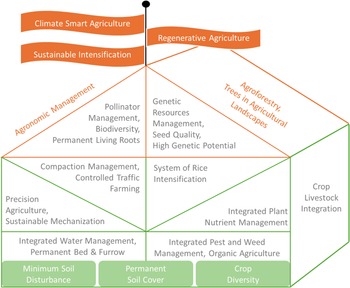
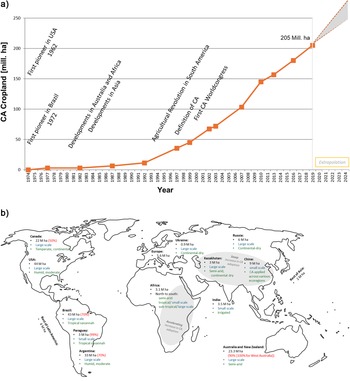
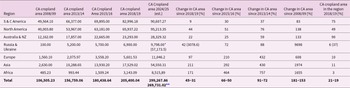

 Open access

