





Research into literacy impairment has often focused on difficulties in acquiring phoneme–grapheme correspondence. However, English is a morphophonemic language, and in order to learn to spell successfully, one must associate both phonemes and morphemes with graphemes. Morphemes are spelled consistently in different words even at the expense of letter–sound correspondence. For example, the spelling of the word-final phoneme /t/ in helped is determined by “suffix constancy”; the English past-tense inflection is typically spelled +<ed> despite variation in pronunciation (e.g., helped, cleared, wanted; Nunes & Bryant, Reference Nunes and Bryant2006). Similarly, roots are spelled consistently across words, and this “root constancy” provides an explanation for many unusual spelling–sound correspondences (e.g., the spelling of “health” is determined by the spelling of “heal,” despite variation in pronunciation; Bourassa & Treiman, Reference Bourassa and Treiman2008). Very little is known about the role of morphological knowledge in literacy impairment. The present study examines use of morphological constancy by children with literacy and phonological difficulties. The aim is to establish whether either skill constrains use of morphology.
Variation in morphological skill predicts literacy in typically developing children even after accounting for phonological awareness (Carlisle & Nomanbhoy, Reference Carlisle and Nomanbhoy1993; Mahony, Singson, & Mann, Reference Mahony, Singson and Mann2000). The contribution of morphological awareness increases with age (Singson, Mahony, & Mann, Reference Singson, Mahony and Mann2000). However, there is debate as to when morphological knowledge is used in literacy, with some researchers suggesting it can be used from the earliest stages (Deacon, Pacton, & Conrad, Reference Deacon, Pacton and Conrad2008; Pacton & Deacon, Reference Pacton and Deacon2008; Treiman & Bourassa, Reference Treiman and Bourassa2000; Treiman & Cassar, Reference Treiman and Cassar1996) and others arguing that it must come after a more basic phonemic decoding strategy (Ehri, Cardoso-Martins, & Carroll, Reference Ehri, Cardisi-Martins, Carroll, Stone, Silliman, Ehren and Wallach2013; Nunes, Bryant, & Bindman, Reference Nunes, Bryant and Bindman1997a, Reference Nunes, Bryant and Bindman1997b).
The educational implications from these competing theories are significant, particularly for children who show lifelong difficulties in phonological processing, such as those with dyslexia. The ability to segment speech and associate speech sounds (phonemes) with letters (graphemes) is probably the single most important skill in early word reading and spelling. Deficits in phonological awareness are linked with literacy delays and impairments (Carroll & Snowling, Reference Carroll and Snowling2004; Snowling, Reference Snowling2000). “Decoding first” accounts highlight the need to remediate phonology as an inevitable first step, whereas “all available skills” accounts imply that alternative skills could compensate for deficits in phonology. This is clearly a crucial issue in supporting dyslexic children.
Inflectional and derivational morphology are the focus of the present study. Inflection serves a primarily grammatical role, for example, transformations that mark for number and tense (e.g., cat–cats, walk–walked). Inflection tends to result in relatively minor phonological/orthographic changes, adding or changing one or two phonemes/graphemes. Derivation changes word class and has greater impact on semantics and phonology/orthography. Derivation also requires more word-specific knowledge, as some alternations are less transparent (e.g., absorb–absorption) and multiple affixes can have the same meaning. For example, equality and equalness are both legal morphological constructions with the same meaning, but only the former is a real word (Carlisle, Reference Carlisle1987). Hence, in derivation, word-specific knowledge must be used to select the correct target. English inflection has greater root and suffix constancy than derivation. Understanding and use of inflectional morphology appears easier and earlier than derivational morphology; Deacon and Bryant (Reference Deacon and Bryant2005) demonstrated that 6- to 8-year-olds spell more inflectional suffixes correctly than derivational suffixes.
It is unclear whether morphological spelling is impaired or spared in dyslexia and, in particular, whether both inflectional and derivational morphology are affected equally. Children with dyslexia have difficulty spelling, so one would anticipate that their morphological spelling will be impaired compared to chronological-age (CA) matched peers. A more relevant comparison is against literacy-ability matched peers (generally matched for reading ability), which reveals whether use of morphology in dyslexia is simply delayed or following a different trajectory (Bourassa & Treiman, Reference Bourassa and Treiman2008).
Some authors have argued that dyslexic individuals have impairments in morphological constancy compared to literacy-ability matched peers. Hauerwas and Walker (Reference Hauerwas and Walker2003) and Egan and Tainturier (Reference Egan and Tainturier2011) both found dyslexic children use inflectional root and suffix constancy less than both CA and reading ability matched peers. Carlisle (Reference Carlisle1987) showed that dyslexic adolescents (14-year-old) were less likely to spell both root and derived words correctly than younger (9-year-old) typically developing children of similar spelling ability, and were also less likely to show evidence of morphological structure.
Others have argued against impaired morphological constancy in dyslexia. Tsesmeli and Seymour (Reference Tsesmeli and Seymour2006) found that dyslexic adolescents (13–14 years old) demonstrated worse performance on derivations than did reading ability matched children and were less likely to spell root morphemes in the same way in base words and derivations. This would suggest a difficulty with derivational morphology. However, because the difference in accuracy when spelling base and derived words was of the same magnitude for dyslexic adolescents as other groups, Tsesmeli and Seymour (Reference Tsesmeli and Seymour2006) conclude that dyslexic children did not have a specific difficulty spelling morphological derivations. Two further studies suggest that dyslexic children make literacy-appropriate use of the principle of root consistency to guide spelling of both inflections (9 years, 2 months [9;2]–14;7; Bourassa, Treiman, & Kessler, Reference Bourassa, Treiman and Kessler2006) and derivations (10;0–18;8; Bourassa & Treiman, Reference Bourassa and Treiman2008). Moreover, Hauerwas and Walker (Reference Hauerwas and Walker2003) found that the extent of phonological impairment in the dyslexic group was linked to proficiency in inflectional suffix spelling. Hence, difficulties using inflectional morphology may be linked to phonological impairment rather than literacy ability per se.
Overall, significant gaps and uncertainties remain in the existing literature. All previous studies were performed with adolescent poor readers, who have probably received a great deal of remediation. All previous studies used real-word stimuli; as previously highlighted, word-specific knowledge is particularly important for derivational morphology but is also problematic when comparing younger and older children, because older children have had more exposure. Nonwords provide a particularly clear test of spelling strategies. Children cannot use word-specific knowledge and are forced to decompose, exposing use of letter–sound correspondence or other units such as morphemes. Nonword spelling is an established paradigm and has previously been used to illustrate typical development of inflectional morphology (Nunes et al., Reference Nunes, Bryant and Bindman1997a) and morphological constancy in profoundly deaf children's plural noun spellings (Breadmore, Olson, & Krott, Reference Breadmore, Olson and Krott2012), but has not been used more broadly with other groups of literacy-impaired individuals.
No previous research with literacy-impaired participants has examined both derivational and inflectional morphological constancy. The present study is also unique in comparing children with dyslexia to a group of children with phonological difficulties with a known cause but relatively good literacy skill (children with otitis media [OM]).
The present study addresses these methodological issues while asking two theoretical questions. Does literacy impairment reduce use of morphological constancy in spelling? Does the nature of phonological impairment influence use of morphological constancy?
EXPERIMENT 1: MORPHOLOGICAL SPELLING BY CHILDREN WITH READING DIFFICULTIES
Dyslexia affects around 10%–15% of the population and is defined as a specific impairment in learning to read beyond that expected based on other available skills, aptitudes, and opportunities (Vellutino, Fletcher, Snowling, & Scanlon, Reference Vellutino, Fletcher, Snowling and Scanlon2004). Classically, dyslexia was defined in terms of a discrepancy between reading and IQ, but there is now a consensus that dyslexia lies at the end of a continuum (Snowling, Gallagher, & Frith, Reference Snowling, Gallagher and Frith2003) and that a discrepancy definition is not the best way to define the disorder (American Psychiatric Association, 2013); hence, we did not limit our sample by IQ.
Until recently, poorly specified phonological representations were believed to be ubiqutous within dyslexia (Snowling, Reference Snowling2000; Vellutino et al., Reference Vellutino, Fletcher, Snowling and Scanlon2004). Although the causes of dyslexia have more recently been argued to be multiple and probablistic, severe phonological awareness impairments are highly prevalent and persistent (Pennington et al., Reference Pennington, Santerre-Lemmon, Rosenberg, MacDonald, Boada and Friend2012; Peterson, Pennington, Olson, & Wadsworth, Reference Peterson, Pennington, Olson and Wadsworth2014).
As described above, previous research on morphological spelling in dyslexia is inconsistent, making it difficult to predict performance, particularly in comparison to literacy-ability matched children. Hence, we present three possible hypotheses: age appropriate, literacy-level appropriate, or impaired use of morphological constancy. Morphological constancy subdivides into root and suffix constancy. In this study, root constancy is measured by the proportion of spellings that contain the root as provided earlier in the sentence. Suffix constancy is measured by an increased proportion of suffix spellings in morphologically complex nonwords compared to monomorphemic control nonwords with the same final phonemes.
Age-appropriate morphological constancy would be demonstrated by an equal proportion of dyslexic and CA matched children's spellings indicating root and suffix constancy. Such a finding would suggest that morphological skills are not dependent on phonological or literacy skill.
Literacy-level appropriate morphological constancy would be demonstrated by an equal proportion of dyslexic and reading ability matched children's spellings indicating root and suffix constancy. This would suggest that dyslexic children are delayed but following the typical pattern of spelling acquisition.
Impaired morphological constancy would be revealed by a smaller proportion of dyslexic children's spellings indicating root or suffix constancy than their reading ability matched peers. This would suggest an altered course of spelling development and that dyslexic children have a specific difficulty with morphology. There would be two possible explanations: morphological skills could be dependent on phonological or literacy skill. Experiment 2 explores these possibilities.
Finally, we examine whether different patterns are observed in use of inflectional and derivational suffixes. Inflection is more frequent and transparent, and has previously been shown to be easier and acquired earlier (Deacon & Bryant, Reference Deacon and Bryant2005). Therefore, dyslexics might have more difficulty in using derivational morphology.
Method
Participants
Participating children were recruited from 20 schools across the West Midlands, United Kingdom. None of the dyslexic or typically developing children reported a history of frequent ear infections. The dyslexic group consisted of 36 (16 male) children with a standard score below 90Footnote 1 on the British Ability Scale 3 (BAS3; Elliot & Smith, Reference Elliot and Smith2011) Word Reading Form A. These children had a mean reading age (RA) of 7;3 (range = 5;7–8;9) on this measure and a mean chronological age (CA) of 9;1 (range = 8;0–10;9).
Each child with dyslexia was pairwise matched to two typically developing children, one by RA and one by CA. These typically developing children were monolingual English speakers with no known literacy, language, or hearing impairments. They had standardized scores between 90 and 120 on BAS3 Word Reading A. Reading ages, BAS3 spelling raw scores, and Clinical Evaluation of Language Fundamentals—Fourth Edition (CELF-4) phonological awarenessFootnote 2 (Semel, Wiig, & Secord, Reference Semel, Wiig and Secord2006) raw scores for each group are shown in Table 1. The dyslexic children were significantly poorer on all three measures than were CA children (raw scores), F (1, 70) = 130.8, p < .001, ηp 2 = 0.65; F (1, 70) = 100.3, p < .001, ηp 2 = 0.59; and F (1, 70) = 23.1, p < .001, ηp 2 = 0.25, and did not differ significantly from RA children on any of the measures, F (1, 70) = 0.4, p = .5, ηp 2 = 0.01; F (1, 70) = 0.1, p = .8, ηp 2 = 0.00; and F (1, 70) = 1.7, p = .2, ηp 2 = 0.02.
Background measures for children with dyslexia and RA and CA matched controls
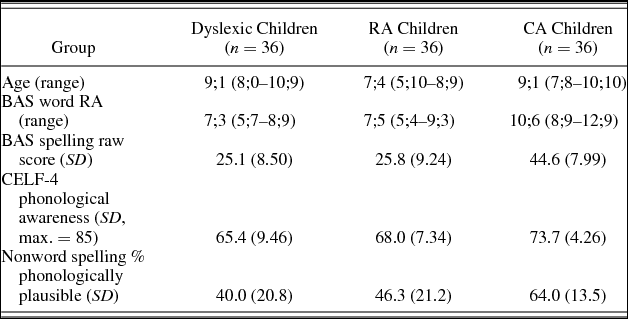
Note: Ages are in years;months. RA, Reading age; CA, chronological age; BAS, British Ability Scale; CELF-4, Clinical Evaluation of Language Fundamentals—Fourth Edition.
As a measure of use of phonology in written language, we compared phonological plausibility of control nonword spellings. Four judges (blind to participant and group) assessed the control nonword spellings as plausible or implausible renditions of audio recordings. The final rating was determined by majority agreement. In 74% of cases, all four judges agreed on plausibility. Where there was an even split (4% of cases), the spelling was scored as plausible. Consistent with the CELF-4 phonological awareness measures, dyslexic children produce significantly fewer phonologically plausible spellings than CA peers (see Table 1), F (1, 70) = 33.7, p < .001, ηp 2 = 0.33, but did not differ from RA, F (1, 70) = 1.6, p = .2, ηp 2 = 0.02.
Stimuli and design
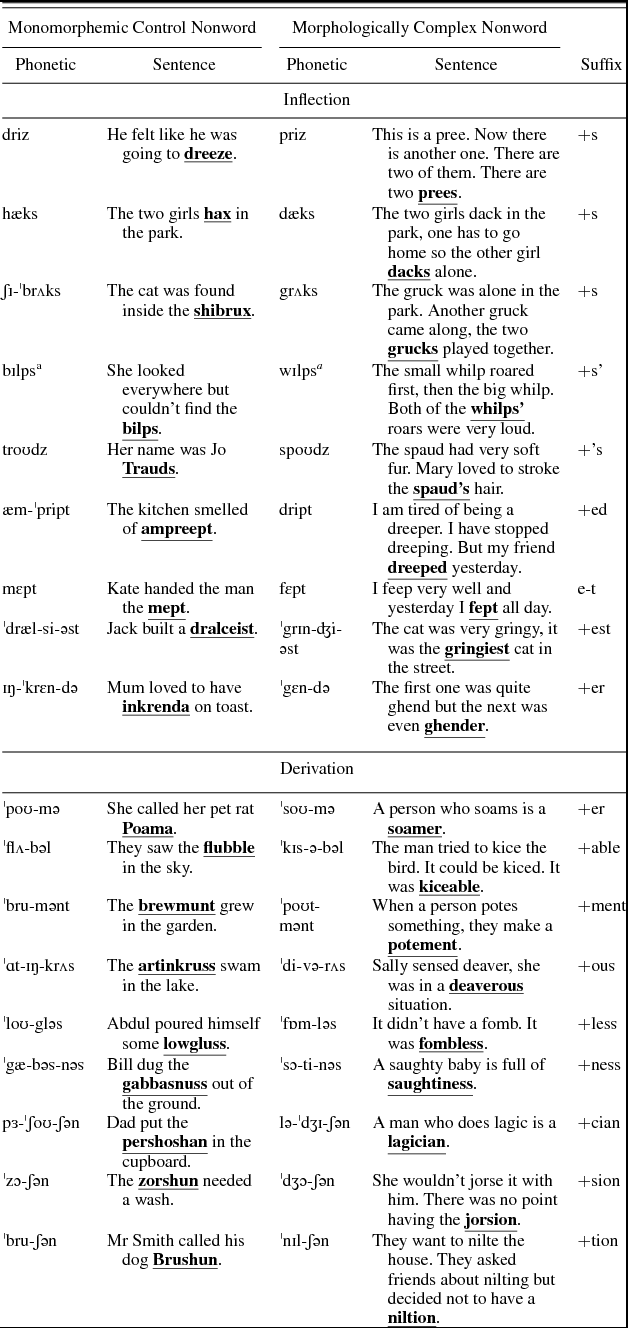
Stimuli consisted of 36 nonwords presented within a sentence context, which gave an indication of the morphological status of the nonword (e.g., monomorphemic “He called his pet rat Poama ” or morphologically complex “A person who soams is a soamer ”). A complete list of items is presented in Appendix A. Control and morphologically complex nonwords were pairwise matched to ensure that they had the same word-final phonemes. In the control condition, there are multiple possible spellings for these phonemes. In the morphologically complex condition, word-final phonemes represented a suffix, and therefore, spelling is determined by a morphological rule (suffix constancy).
In order to test for root constancy, in the morphological condition the root was presented elsewhere in the sentence, and therefore, should be used to inform spelling of the complex words. Roots contained ambiguous grapheme–phoneme correspondences such that the morphological spelling was a relatively unlikely phonological spelling (e.g., ghender).Footnote 3
Half of morphologically complex nonwords were inflections and half were derivations. One pair of items was removed from analyses because adult data revealed that only 13% of adults reliably produced the expected suffix spelling (the plural possessive s’). Paired-samples t tests confirmed that after removing this item, control and complex nonwords were still matched for number of phonemes and syllables among the inflections (p = .08, p = .09), derivations (p = .3, p = .6), and across the full stimulus set (control phoneme count range = 4–9, mean = 6.2; syllable count = 1–3, mean = 2.1; complex phoneme count range = 4–9, mean = 5.7; syllable count = 1–3, mean = 1.9). Because item variability was constrained by the stimulus design rather than randomly sampled, participant effects are more appropriate than item effects for drawing conclusions and are reported in the results (Raaijmakers, Schrijnemakers, & Grenmen, Reference Raaijmakers, Schrijnemakers and Grenmen1999).
The 18 pairs of stimuli were distributed over two spelling worksheets, such that only one item from each pair occurred on each list and each list contained an equal number of control versus complex nonwords. All participants completed both worksheets in randomized order. Sentences were presented in written form with a gap for the target nonword. One worksheet contained four inflections and five derivations and the other five inflections and four derivations.
Procedure
A single experimenter administered the nonword spelling task to all participants to ensure pronunciation consistency. Worksheet order was counterbalanced between participants and completed in small groups (three to six children). The experimenter dictated the sentence and repeated the target nonword. Children filled in the missing word. This task was part of a larger study into children's literacy development (Carroll & Breadmore, Reference Carroll and Breadmore2015).
Transcription and coding
Two independent judges transcribed each nonword spelling from the child's handwritten attempt. Any disagreements in the spelling input were reconciled by a third judge. Responses that were clearly an attempt to write a different word or an omission were excluded from the analyses, and proportions were calculated on valid responses, rather than possible responses. Only 9/3,888 responses were omitted.
Evidence for use of root and suffix constancy was examined independently. Use of the suffix was assumed if the word ended in the letter string for that suffix (e.g., “sommer” for soamer would be classed as containing the suffix +<er>). Root constancy was awarded if a word began with the same letter string as the root word presented in the sentence context (e.g., “soamu” for soamer would be classed as showing root constancy). Five morphologically complex nonwords may be expected to result in a small adjustment to the root. For these items, both adjusted and unadjusted roots were accepted as demonstrating the principle of root constancy. For example, root final <e> is usually omitted in morphologically complex words. Hence, we accepted both root adjusted Jorsion and unadjusted Jorseion as indicating root constancy for the root Jorse.
Results and discussion
We examine evidence for root and then suffix constancy. Group means (Table 2) indicated that dyslexic children demonstrated the least evidence for root constancy for both inflections and derivations, measured by percentage of complex nonword spellings that contained the root. A split-plot analysis of variance (ANOVA) with the repeated-measures factor morphology (inflection, derivation) and the between-subjects factor participant group (dyslexic, RA, CA) indicated that both main effects were significant but the interaction was not: morphology F (1, 105) = 45.8, p < .001, ηp 2 = 0.30; participant group F (2, 105) = 19.2, p < .001, ηp 2 = 0.27; and interaction F (2, 105) = 1.3, p = .3, ηp 2 = 0.02. Root morphemes were less likely to be represented in derivations than inflections. Planned comparisons combined performance on inflectional and derivational morphemes and indicated that a similar proportion of dyslexic and RA children's spellings contained the root, F (1, 70) = 0.6, p = .4, ηp 2 = 0.01, but significantly fewer dyslexic children's spellings than CAs, F (1, 70) = 42.80, p < .001, ηp 2 = 0.38. Dyslexic children's root constancy was ability appropriate.
Mean (standard deviation) percentage of nonword spellings by participant with root or suffix constancy
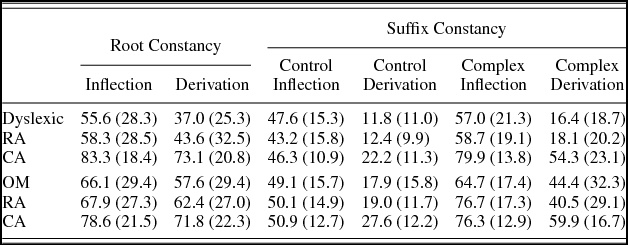
Note: RA, Reading age; CA, chronological age; OM, otitis media.
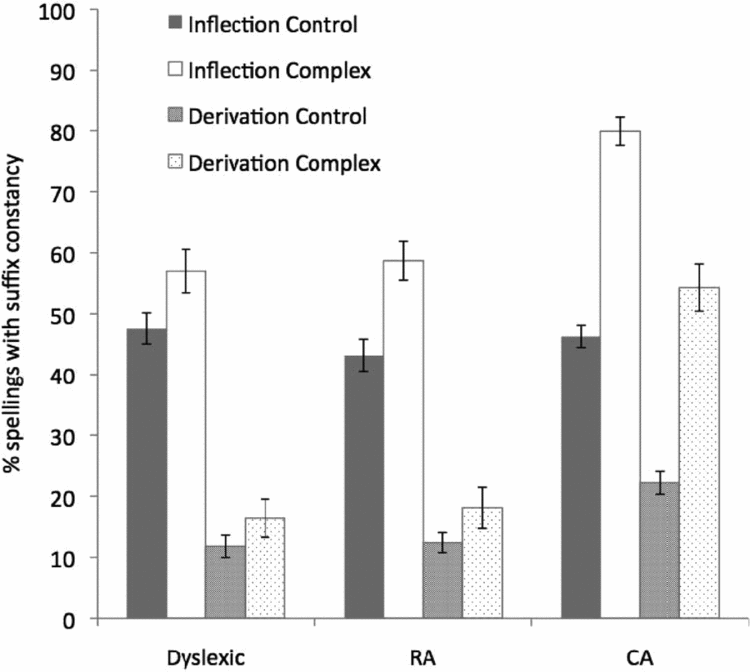
The difference between control and complex nonwords in rates of suffix spelling was examined in a split-plot ANOVA with the within-subjects factors complexity (control, complex) and morphology (inflection, derivation) and the between-subjects factor participant group (dyslexic, RA, CA). The dependent variable was proportion of spellings that contained the suffix. See Table 2 for descriptive statistics. The complexity effect is the measure of suffix constancy. Main effects of complexity, morphology, and participant group were all significant: F (1, 105) = 147.1, p < .001, ηp 2 = 0.58; F (1, 105) = 448.2, p < .001, ηp 2 = 0.81; and F (2, 105) = 28.8, p < .001, ηp 2 = 0.35. These main effects were mediated by significant two-way interactions between complexity and participant group, morphology and participant group, and complexity and morphology: F (2, 105) = 34.0, p < .001, ηp 2 = 0.39; F (2, 105) = 7.0, p = .001, ηp 2 = 0.12; and F (1, 105) = 7.6, p = .007, ηp 2 = 0.07. These interactions are illustrated in Figure 1. The three-way interaction among complexity, morphology, and participant group was not significant: F (2, 105) = 1.6, p = .2, ηp 2 = 0.03. Follow-up tests examined whether suffix constancy was of equal magnitude between participant groups, examining inflections and derivations separately.
Mean (standard error) percentage of dyslexic, reading-age and chronological-age matched controls’ nonword spellings with suffix constancy.
Inflectional suffix constancy
For inflections, a split-plot ANOVA with the within-subjects factor complexity (control, complex) and the between-subjects factor participant group (dyslexic, RA) revealed a significant main effect of complexity: F (1, 70) = 30.4, p < .001, ηp 2 = 0.30. However, neither the main effect of participant group nor the interaction between participant group and complexity were significant: F (1, 70) = 1.8, p = .2, ηp 2 = 0.03 and F (1, 70) = 0.1, p = .7, ηp 2 = 0.00. Repeating these analyses with dyslexic and CA children revealed that the main effects of complexity, participant group, and the interaction were significant: F (1, 70) = 89.0, p < .001, ηp 2 = 0.56; F (1, 70) = 13.4, p < .001, ηp 2 = 0.16; and F (1, 70) = 28.1, p < .001, ηp 2 = 0.29. Simple effects confirmed that dyslexic and CA children did not differ in use of inflectional suffixes for control nonwords, F (1, 70) = 0.2, p = .7, ηp 2 = 0.00, but differed on complex nonwords, with dyslexic children producing significantly fewer inflectional suffixes than CAs: F (1, 70) = 29.2, p < .001, ηp 2 = 0.29. Dyslexic children made ability-appropriate use of inflectional suffix constancy.
Derivational suffix constancy
Comparing dyslexic and RA matched children on derivational nonwords, the main effect of complexity was significant, F (1, 70) = 7.9, p = .006, ηp 2 = 0.10, but neither the main effect of participant group nor the interaction between participant group and complexity were, F (1, 70) = 0.12, p = .73, ηp 2 = 0.00 and F (1, 70) = 0.1, p = .8, ηp 2 = 0.00. Dyslexic children performed similarly to their RA matched children. When compared to CA children, however, the main effects of complexity, participant group, and the interaction were all significant: F (1, 70) = 74.6, p < .001, ηp 2 = 0.52; F (1, 70) = 52.0, p < .001, ηp 2 = 0.43; and F (1, 70) = 41.8, p < .001, ηp 2 = 0.37. Simple effects revealed that dyslexics and CA children differed in use of derivational suffixes in both control and complex nonwords but the effect size was bigger for complex nonwords: F (1, 70) = 15.7, p < .001, ηp 2 = 0.18 and F (1, 70) = 58.4, p < .001, ηp 2 = 0.46. Dyslexic children made ability-appropriate use of derivational suffix constancy.
A final set of analyses examined whether the interaction between morphology and complexity (control, complex) was significant in each participant group. For RAs, both main effects and the interaction were significant: complexity F (1, 35) = 24.0, p < .001, ηp 2 = 0.41; morphology F (1, 35) = 143.8, p < .001, ηp 2 = 0.80; and interaction F (1, 35) = 13.1, p = .001, ηp 2 = 0.27. This interaction reflects the larger magnitude of the complexity effect (i.e., more suffix constancy) for inflections than derivations; nonetheless, simple effects confirmed the effect was significant in both cases: F (1, 35) = 33.0, p < .001, ηp 2 = 0.49 and F (1, 35) = 5.5, p = .024, ηp 2 = 0.14. In contrast, for dyslexic children, the main effects of complexity and morphology were significant but the interaction was not: F (1, 35) = 7.3, p = .010, ηp 2 = 0.17; F (1, 35) = 265.3, p < .001, ηp 2 = 0.88; and F (1, 35) = 1.6, p = .22, ηp 2 = 0.04. Planned comparisons indicated that complexity was significant for inflections but not derivations: F (1, 35) = 6.8, p = .014, ηp 2 = 0.16 and F (1, 35) = 2.8, p = .10, ηp 2 = 0.08. Nonetheless, the lack of interaction indicates that the magnitude of complexity did not differ (the effect was equally small for inflections and derivations). For CAs, both main effects but not the interaction were significant: F (1, 35) = 183.1, p < .001, ηp 2 = 0.84; F (1, 35) = 83.5, p < .001, ηp 2 = 0.71; and F (1, 35) = 0.2, p = .7, ηp 2 = 0.01. Complexity was significant in both cases; the lack of interaction reflects an equally large complexity effect for inflections and derivations: F (1, 35) = 147.8, p < .001, ηp 2 = 0.81 and F (1, 35) = 97.8, p < .001, ηp 2 = 0.74.
For younger children (RAs) evidence of root and suffix constancy was larger for inflections than for derivations. For CAs suffix constancy was equally large in both morphology conditions. For dyslexic children suffix constancy was equally small in both conditions. This suggests that dyslexic children had not yet learned to use the standard written forms for some of the suffixes. Tsesmeli and Seymour (Reference Tsesmeli and Seymour2006) found a similar pattern of results with derivational root constancy.
Experiment 2 examines whether this pattern of performance is also observed in children with atypical phonology who do not necessarily have literacy delays (children with a history of OM).
EXPERIMENT 2: OTITIS MEDIA
Phonological deficits have various causes. For example, atypical phonology resulting from hearing, dyslexia, or speech impairments differs in the extent to which input, representations, or output phonology are compromised (Stackhouse & Wells, Reference Stackhouse and Wells1997). The consequences for literacy may depend on the quantity and/or quality of phonological impairment (Fowler, Reference Fowler, Brady and Schankweiler1991; Ramus & Ahissar, Reference Ramus and Ahissar2012). In Experiment 2 we examine whether phonological impairment impacts on use of morphology in spelling, or whether the difficulties with derivational morphology observed in the dyslexic group in Experiment 1 were linked to their literacy impairment rather than phonological difficulties.
OM is a very common childhood complaint, with around 83% of children experiencing an episode by 3 years old and 46% having multiple episodes (Teele, Klein, Rosner, & Greater Boston Otitis Media Study Group, Reference Teele, Klein and Rosner1989). Acute cases of OM cause mild to moderate hearing loss (Winskel, Reference Winskel2006), which although usually transient, can result in a permanent loss (Klein, Reference Klein2000). Incidence reduces rapidly with age (Klein, Reference Klein2000). However, this period when cases are most common coincides with when phonological representations are typically constructed and reconstructed (Studdert-Kennedy, Reference Studdert-Kennedy, MacKay, Allport, Prinz and Scheerer1987). Previous meta-analyses suggest that OM has minimal impact on language development (Casby, Reference Casby2001; Roberts, Rosenfeld, & Zeisel, Reference Roberts, Rosenfeld and Zeisel2004); however, they and others highlight that children with OM may have deficits in specific domains, including phonological awareness (McCormick, Baldwin, Klecan-Aker, Swank, & Johnson, Reference McCormick, Baldwin, Klecan-Aker, Swank and Johnson2001; Nittrouer & Burton, 2005; Winskel, Reference Winskel2006). There is also evidence that children with OM have mild reading delays (Kindig & Richards, 2000; Luotonen et al., Reference Luotonen, Uhari, Aitola, Lukkaroinen, Luotonen and Uhari1996; Teele et al., Reference Teele, Klein and Rosner1989; Winskel, Reference Winskel2006, although cf. Roberts, Burchinal, & Zeisel, Reference Roberts, Burchinal and Zeisel2002, who did not find any effect of OM on reading development). Although these delays are not generally as marked as observed in dyslexia, there is wide variation.
While the relationship between OM and phonological skills is foreseeable, an effect on oral morphological skills is less predictable. Luotonen et al. (Reference Luotonen, Uhari, Aitola, Lukkaroinen, Luotonen and Uhari1996) did not find deficits in the morphological processing skills of 9-year-olds with a history of OM. Children with a history of OM offer an opportunity to examine the effects of atypical phonology in the absence of other language difficulties. Breadmore and Carroll Reference Breadmore and Carroll(2016) did not find deficits in morphological processing during online reading, despite OM children having phonological awareness impairments (Carroll & Breadmore, Reference Carroll and Breadmore2016). Thus, the limited evidence available supports the view that children with OM have phonological awareness impairments but normal morphological awareness.
To our knowledge, no studies have examined OM children's use of morphological constancy in spelling. Hence, our hypotheses are the same as Experiment 1. OM children may show age, literacy level, or impaired use of morphological constancy. If OM children show a similar pattern to the dyslexic children in Experiment 1, then we can conclude dyslexic children's difficulties are likely to be related to their phonological difficulties. If OM children show a different pattern of performance to dyslexic children, then we can tease apart effects of phonological and literacy impairment.
Method
Stimuli and procedure were identical to Experiment 1, only participants differed. Participants for both experiments were recruited from the same schools. Transcription and coding was conducted simultaneously and showed the same distribution of interjudge agreement (74% of cases all four judges agreed, and 4% were evenly split between the four judges). Only 9 of 2,856 responses were omissions.
Participants
The OM group consisted of 28 (7 female) children whose parents reported more than seven ear infections before the age of 3, or a medical diagnosis of glue ear or otitis media. These children had a mean CA of 9;2 (range = 8;0–10;9) and a mean RA of 9;2 (range = 5;10–12;3). Each child with OM was pairwise matched to two typically developing children, one by RA and one by CA, in the same way as the dyslexic children in Experiment 1. Reading ages, BAS3 spelling raw scores, and CELF-4 phonological awareness raw scores for each group are shown in Table 3. Note that although OM children's reading ability appears to be in line with their age, as highlighted in Experiment 1, typically developing peers from the same schools generally performed above the level expected for their age.4 OM children were significantly poorer on all three measures than were CA children (raw scores), F (1, 54) = 10.4, p = .002, ηp 2 = 0.16; F (1, 54) = 9.9, p = .003, ηp 2 = 0.16; and F (1, 54) = 7.6, p = .008, ηp 2 = 0.12, and did not differ significantly from RA on reading or spelling: F (1, 54) = 0.0, p = .90, ηp 2 = 0.00 and F (1, 54) = 0.2, p = .64, ηp 2 = 0.00. However, OM children's phonological awareness score was significantly below that of RAs: F (1, 54) = 5.4, p = .024, ηp 2 = 0.09 (see Carroll & Breadmore, Reference Carroll and Breadmore2016, for more discussion of this issue).
Background measures for the children with OM and RA and CA matched children
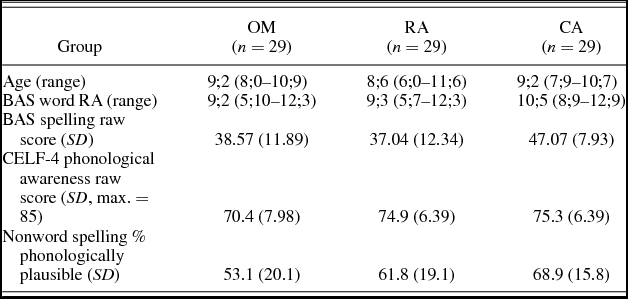
Note: Ages are in years;months. OM, Otitis media; RA, reading age; CA, chronological age; BAS, British Ability Scale; CELF-4, Clinical Evaluation of Language Fundamentals—Fourth Edition.
As a measure of use of phonology in written language, we compared phonological plausibility of control nonword spelling. Despite the differences observed in phonological awareness, the phonological plausibility of OM children's spellings did not differ from RA, F (1, 54) = 2.8, p = .10, ηp 2 = 0.05, but was significantly less than CA, F (1, 54) = 10.7, p = .002, ηp 2 = 0.17. See Table 3 for means. Hence, both phonological processing measures indicate that OM children have phonological difficulties compared to CA matched peers and possibly even weaker skills than RA matched peers.
Results and discussion
We examine root constancy then suffix constancy. Group means (Table 2) indicated little differences between groups in the percentage of complex nonword spellings that contained the root for inflections or derivations. A split-plot ANOVA with the repeated-measures factor morphology (inflection, derivation) and the between-subjects factor participant group (OM, RA, CA) indicated that only the main effect of morphology was significant: morphology F (1, 81) = 10.5, p = .002, ηp 2 = 0.11; participant group F (2, 81) = 2.3, p = .1, ηp 2 = 0.05; and interaction F (2, 81) = 0.2, p = .9, ηp 2 = 0.00. Therefore, all children produced fewer root morphemes for derivations than inflections and OM children's use of root constancy was at least literacy-ability appropriate.
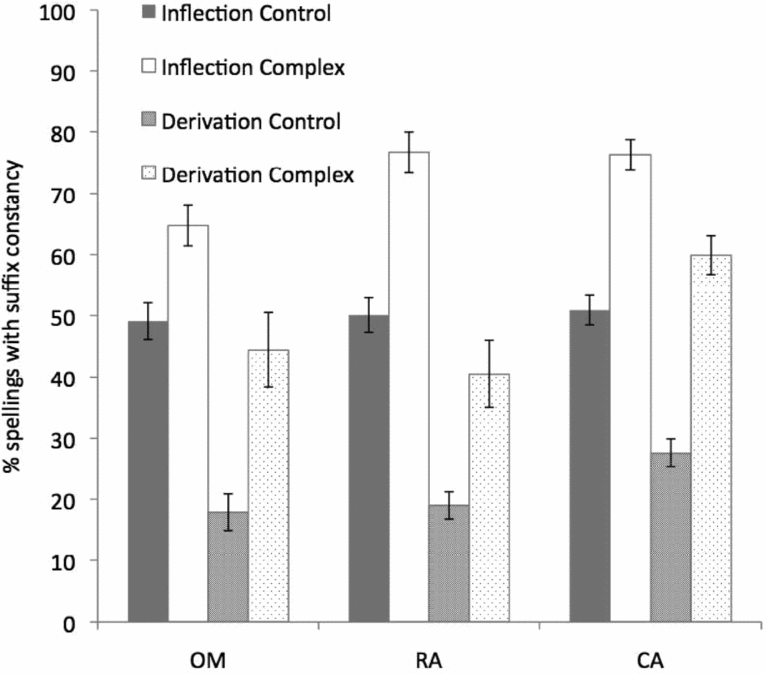
All participants produced a greater proportion of suffix spelling for complex nonwords than for controls (see Table 2 and Figure 2). The magnitude of suffix constancy was examined in a split-plot ANOVA with complexity (control, complex) and morphology (inflection, derivation) as within-subjects and participant group between-subjects (OM, RA, CA), with the dependent variable proportion of spellings containing the suffix. The complexity effect reflects suffix constancy. Main effects of complexity, morphology, and participant group were all significant: F (1, 81) = 187.8, p < .001, ηp 2 = 0.70; F (1, 81) = 238.6, p < .001, ηp 2 = 0.75; and F (2, 81) = 4.0, p = .022, ηp 2 = 0.09. These main effects were mediated by a significant two-way interaction between morphology and participant group, F (2, 81) = 5.4, p = .006, ηp 2 = 0.12, and a significant three-way interaction among complexity, morphology, and participant group, F (2, 81) = 3.2, p = .046, ηp 2 = 0.07. Interactions between complexity and participant group, and complexity and morphology were not significant: F (2, 81) = 1.6, p = .2, ηp 2 = 0.04 and F (2, 81) = 2.5, p = .12, ηp 2 = 0.03. Follow-up tests examined whether suffix constancy was of equal magnitude between participant groups for both inflections and derivations.
Mean (standard error) percentage of children with a history of otitis media and reading-age and chronological-age matched controls’ nonword spellings with suffix constancy.
Inflectional suffix constancy
In responses to inflections, a split-plot ANOVA with complexity (control, complex) as within-subjects factor and participant group (OM, RA) as between-subjects factor revealed a nonsignificant main effect of participant group: F (1, 54) = 3.0, p = .09, ηp 2 = 0.05. Both the main effect of complexity and interaction with participant were significant: F (1, 54) = 91.9, p < .001, ηp 2 = 0.63 and F (1, 54) = 6.2, p = .016, ηp 2 = 0.10. Simple effects confirmed that OM and RA children did not differ in use of inflectional suffixes on control nonwords, but RA children produced significantly more complex spellings with inflectional suffixes than OM: F (1, 54) = 0.1, p = .8, ηp 2 = 0.00 and F (1, 54) = 6.7, p = .013, ηp 2 = 0.11. Repeating these analyses with OM and CA revealed that the main effects of complexity, participant group, and the interaction were all significant: F (1, 54) = 91.8, p < .001, ηp 2 = 0.63; F (1, 54) = 4.1, p = .049, ηp 2 = 0.07; and F (1, 54) = 5.3, p = .026, ηp 2 = 0.09, respectively. Simple effects confirmed OM and CA children did not differ in use of inflectional suffixes for control nonwords, F (1, 54) = 0.2, p = .6, ηp 2 = 0.00, but OM children produced significantly fewer inflectional suffixes for complex nonwords, F (1, 54) = 8.1, p = .006, ηp 2 = 0.13. Hence, OM children showed impaired inflectional suffix constancy, producing fewer inflectional suffixes than both RA and CA matched children.
Derivational suffix constancy
For derivational nonwords, comparing OM and RA children indicated that only the main effect of complexity was significant: F (1, 54) = 47.8, p < .001, ηp 2 = 0.47. Neither the main effect of participant group nor the interaction were significant: F (1, 54) = 0.1, p = .8, ηp 2 = 0.00 and F (1, 54) = 0.5, p = .5, ηp 2 = 0.01. The magnitude of suffix constancy was equal for OM and RA children. Comparing OM and CA revealed significant main effects of complexity and participant group: F (1, 54) = 82.2, p < .001, ηp 2 = 0.60 and F (1, 54) = 7.9, p = .007, ηp 2 = 0.12. However, the interaction was not significant: F (1, 54) = 0.8, p = .4, ηp 2 = 0.01. CA children used derivational suffix spellings more often than OM for both control and complex nonwords, but the magnitude of the effect did not differ. OM children showed at least ability-appropriate use of derivational suffixes.
A final set of analyses examined whether the effect of complexity (control, complex) was significant in each participant group separately. For OM children, complexity was significant for both inflections and derivation: F (1, 27) = 25.7, p < .001, ηp 2 = 0.49 and F (1, 27) = 25.4, p < .001, ηp 2 = 0.48. The same was true for RA, F (1, 27) = 71.5, p < .001, ηp 2 = 0.73 and F (1, 27) = 22.6, p < .001, ηp 2 = 0.46, and CA children, F (1, 27) = 72.9, p < .001, ηp 2 = 0.73 and F (1, 27) = 72.8, p < .001, ηp 2 = 0.73. Despite atypical phonology, children with OM still made use of morphology to guide spelling.
BETWEEN EXPERIMENT COMPARISONS
To examine whether literacy or phonological impairment influences use of morphological constancy in spelling direct comparisons are made between dyslexic children (Experiment 1) and OM children (Experiment 2).
Dyslexic and OM children were selected from the same schools and were matched for age: F (1, 62) = 0.2, p = .6, ηp 2 = 0.00. However, dyslexic children's scores on the three background measures were significantly lower than OM children (see Tables 1 and 3): raw scores BAS3 word reading F (1, 62) = 24.9, p < .001, ηp 2 = 0.29; spelling F (1, 62) = 27.8, p < .001, ηp 2 = 0.31; and CELF-4 phonological awareness, F (1, 62) = 5.2, p = .026, ηp 2 = 0.08. Dyslexic children also produced significantly fewer phonologically plausible control nonword spellings than OM children: F (1, 62) = 6.4, p = .014, ηp 2 = 0.09.
Examining use of morphological constancy, dyslexic children produced significantly fewer roots in complex nonwords than did OM children: F (1, 62) = 6.1, p = .017, ηp 2 = 0.09.
The interaction between complexity and participant group examines whether the magnitude of the suffix constancy differs between participant groups. This interaction was not significant when comparing dyslexic and OM on inflections, F (1, 62) = 1.6, p = .2, ηp 2 = 0.03, but was significant for derivations, F (1, 62) = 15.4, p < .001, ηp 2 = 0.20. Dyslexic children used derivational suffixes less than OM children did.
To summarize, although both dyslexic and OM children had phonological impairments compared to their CA peers, OM children were less impaired in terms of both phonology and literacy. OM children were more likely to use the principles of root and suffix constancy. Dyslexic and OM children did not differ in inflectional suffix constancy (which OM children were impaired on). However, dyslexic children showed significantly less evidence of derivational suffix constancy than did OM children.
GENERAL DISCUSSION
Dyslexic, OM, and pairwise matched reading-ability and chronological-age matched children completed a sentence-completion nonword spelling to dictation task. Control nonwords could only be spelled using phoneme–grapheme correspondence. Morphologically complex nonwords should be spelled using the morphological principles of root and suffix constancy. For these items, a phonologically ambiguous root spelling was provided elsewhere in the sentence. Root constancy was observed if participants used this root in complex nonword spellings. The same word-final phonemes appeared in control and complex nonwords. Suffix constancy was observed when participants produced more suffix spellings for complex than for control nonwords, where alternate phoneme–grapheme correspondences are more plausible.
The background measures confirmed that both dyslexic and OM children had literacy and phonological impairments compared to age-matched peers. Hence, one would expect both groups to show impaired use of morphological constancy compared to age-matched peers, as was demonstrated in all cases. The comparisons that enable us to distinguish between a delayed or divergent course of development are between the dyslexic, OM, and reading-ability matched children. Note also that dyslexic children were more impaired in all of the background measures compared to OM children.
Both dyslexic and OM children used root constancy less than age-matched peers but were not impaired compared to reading-ability matched peers. As expected by the difference in background measures, dyslexic children used root constancy less than did OM children. We conclude that root constancy was dependent on literacy skill for all children. The crucial differences between dyslexic and OM children emerged in inflectional and derivational suffix constancy.
The findings from Experiment 1 provide evidence for typical as well as atypical development, supporting the trends observed in Deacon and Bryant (Reference Deacon and Bryant2005) with real-word stimuli but extending them to both root and suffix morphemes. Together these findings support a view that children initially use the simpler inflectional but not derivational morphemes to guide spelling, and begin to use both types of morphemes later in development. The present findings provide a thorough test of this hypothesis, indicating that derivational root and suffix morphemes were used less frequently than inflections. Moreover, the magnitude of the differences between simple and complex nonword spellings was smaller for derivations than inflections for the younger RA matched peers in Experiment 1 (mean RA = 7;5) but was equally large for CA matched peers (mean RA = 10;6).
Dyslexic children's use of suffix constancy was similar to reading-ability matched peers. However, while reading-ability matched peers showed larger complexity effects for inflections than derivations, dyslexic children's use of suffix constancy was equally limited in both cases. The complexity effect was not significant for derivations; dyslexic children were no more likely to use suffix spellings in morphologically complex nonwords than in monomorphemic control words. Studying the mean proportion of spellings that contained the suffix graphemes reveals that dyslexic children (and their reading-ability matches) simply very rarely used these spellings in any context. We conclude that dyslexic children had not yet learned or generalized these orthographic forms. As previously highlighted, derivation is generally considered to be harder than inflection because transformations are less transparent, less frequent, and involve larger units. Because dyslexic children use morpheme constancy for simpler, higher frequency rules (roots and inflectional suffixes), we argue that their difficulty with derivational suffixes is due to failure to identify and generalize morphemes across less frequent and more variable phonological, orthographic, and semantic input.
While dyslexic children seemed to have difficulties with morphological constancy that were roughly in line with their reading ability, for OM children the difficulty was specifically with inflection. Inflectional suffix constancy was weaker for OM children than for reading-ability matched peers. Despite having better literacy, OM children did not differ from dyslexic children in the magnitude of suffix constancy for inflections. In contrast, OM children's derivational suffix constancy was at least reading-ability appropriate; the magnitude didn't differ from age or reading-ability matched peers and was larger than for dyslexic children (who had weaker literacy skill). Derivational morphology is generally considered more difficult than inflectional morphology; thus, it is surprising to find a specific weakness in inflection. We argue that the difficulty with inflection may actually be related to the nature of phonological difficulties experienced by OM children (note that OM children's CELF-4 phonological awareness subtest score was significantly below reading-ability matches, and although they did not differ significantly on phonological plausibility of spellings, the means indicated a trend for OM children's spellings to be less plausible than their peers’). Elsewhere this group of children have shown specific weaknesses on phonological awareness tasks that rely on accurate perception of phonemes (Carroll & Breadmore, Reference Carroll and Breadmore2016). Inflections often add only a single phoneme, whereas derivations typically add several and are more often syllabic. Hence, from a phonological perspective, the transformation from root to inflection is not always obvious (e.g., adding word-final /s/ to mark number and possession), particularly in connected speech and for individuals with degraded auditory information.
As stated above, prior studies have offered conflicting evidence about whether or not morphological spelling strategies are impaired within the dyslexic population. Accordingly, our findings are consistent with some of these prior results (Bourassa & Treiman, Reference Bourassa and Treiman2008; Bourassa et al., Reference Bourassa, Treiman and Kessler2006) but inconsistent with others. Two previous studies found that dyslexic individuals have more difficulty with inflectional root and suffix constancy than reading-ability matched children (Egan & Tainturier, Reference Egan and Tainturier2011; Hauerwas & Walker, Reference Hauerwas and Walker2003), whereas we found literacy-level appropriate use of root and suffix constancy in inflection. These differences may be accounted for by differences in items or participants. Hauerwas and Walker's (Reference Hauerwas and Walker2003) study was a smaller sample of older dyslexic children (11–13 years), and their ability matching has been subject to criticism elsewhere (Bourassa & Treiman, Reference Bourassa and Treiman2008; Egan & Tainturier, Reference Egan and Tainturier2011). Egan and Tainturier's (Reference Egan and Tainturier2011) paper was concerned only with past-tense inflection in real-word stimuli, whereas the present study examines performance on a range of different inflections and derivations with nonword stimuli. Further research should examine whether specific transformations are more problematic for dyslexic children and poor readers than others, by varying orthographic transparency, and word and morpheme frequency. Such features influence the relative utility of morphological constancy and may also influence ease of acquisition.
In conflict with our finding that dyslexic children had difficulty with derivational suffixes, Tsesmeli and Seymour (Reference Tsesmeli and Seymour2006) argued that dyslexic children did not have such a difficulty. However, in their study although the magnitude of difference between performance on base and derived forms did not differ between participant groups, there were trends in the same direction as our finding: dyslexic children demonstrated worse performance on derivations and less evidence for root constancy than reading-ability matched typically developing children. We argue that our study is more sensitive to use of a productive morphological strategy rather than word-specific knowledge, and is thus more able to detect subtle weaknesses in those strategies. The present study was the first to consider dyslexic children's spelling of derivationally complex nonwords. Future research should further examine the extent to which word-specific knowledge mediates dyslexic children's performance on derivations by comparing word and nonword spelling.
OM children's literacy impairments are milder and more circumscribed than those of the children with dyslexia. However, our findings suggest not only quantitative but also qualitative differences in the phonological impairments in the two groups. The present findings highlight that not all phonological impairments are equal in terms of their source or impact, and therefore remediation needs to suit the particular profile of the child. The difficulties shown by OM children are likely to be linked to subtle perceptual weaknesses, while those shown by the dyslexia children may be on a broader linguistic level. Note that the dyslexic children in this study had phonological awareness skills equal to their reading-ability matched peers. Early studies showed that dyslexic children often have phonological awareness impairments beyond their reading-ability matched peers (Bradley & Bryant, Reference Bradley and Bryant1978). However, phonics is statutory in English primary education (Department for Education, 2013) and is the first response for treatment of delayed reading. Hence the dyslexic readers in this study will have received substantial phonics training. Further research should examine the impact of interventions combining phonics and morphological training from the beginning of literacy instruction. The contrast between children with OM and dyslexia suggests that this is a result of dyslexia rather than phonological impairment and supports the view that the causes of dyslexia are multiple and probabilistic (Pennington et al., Reference Pennington, Santerre-Lemmon, Rosenberg, MacDonald, Boada and Friend2012).
To conclude, this study was the first to examine morphologically complex nonword spelling in dyslexia and otitis media. It has wide-reaching implications for our theoretical understanding of the impact of literacy and phonological difficulties on spelling development. On the one hand, the findings illustrate that morphological processes develop despite phonological difficulties. On the other hand, both literacy and phonological difficulties have a specific impact on morphological processes. The key message is that the nature of phonological impairments alters the impact on literacy acquisition, and so remediation must match the profile of the child. Dyslexic children showed a generalized difficulty using morphological suffixes, and they had not yet recognized and generalized many of these orthographic units. This, we argue, is due to difficulty generalizing across variable phonological, orthographic and semantic contexts. In contrast, children with OM had a specific difficulty with inflectional suffixes. This, we argue, is due to phonological/perceptual difficulty rather than cognitive weaknesses.
APPENDIX A
List of stimuli
ACKNOWLEDGMENTS
We thank all of the children, parents, teachers, and research assistants involved in the research. This research was funded by a Nuffield Foundation Grant for Research and Innovation (EDU/40250). The views expressed in this article are those of the authors and do not necessarily reflect those of the Nuffield Foundation.


 Open access

