

Introduction
The organization and operational strategies of patrol police vary significantly across countries, offering Ukraine a broad spectrum of practices for potential adaptation. In the United States, patrol units are often integrated into municipal police departments and are supported by specialized divisions such as traffic enforcement, community outreach, and rapid response. A strong emphasis is placed on visibility, proactive patrolling, and the use of technology, including body-worn cameras and automated license plate readers.
In Germany, the patrol police (Schutzpolizei) operate as part of the state police forces (Landespolizei), focusing on preventive policing, road safety, and public order maintenance. A key characteristic is the integration of patrol work with administrative tasks, allowing officers to follow cases from detection to resolution. France employs a dual police system, with the Police Nationale responsible for urban areas and the Gendarmerie Nationale serving rural and suburban regions. Patrol functions in cities are strongly linked to traffic regulation and rapid intervention, often supported by specialized units such as the Compagnies Républicaines de Sécurité (CRS). These models highlight the importance of adaptability, adequate training, and efficient resource allocation in enhancing patrol police effectiveness.
In practice, these comparative examples underline that effective policing cannot be separated from its financial underpinnings. Without predictable and transparent resource streams, even well-trained patrol units may face operational inefficiencies. The financial dimension, particularly the management of confiscated assets must be viewed as an integral part of law enforcement reform rather than a secondary administrative concern. Despite the central focus on patrol police operations, the financial and legal context in which these units’ function cannot be ignored.
The mechanisms of asset seizure and redistribution represent an auxiliary but crucial aspect of the institutional framework that determines the availability of resources for effective policing. Therefore, this study examines the intersection between patrol police performance and asset management mechanisms, not as parallel issues but as interdependent elements of Ukraine’s broader public security system. By integrating these perspectives, this article aims to clarify how financial recovery tools may contribute to improving patrol police efficiency and public accountability.
The Odesa region was selected as the focal case study due to its strategic geopolitical and economic significance. As Ukraine’s largest seaport and a key transit hub for both legal and illicit trade, Odesa presents a complex operational environment where patrol policing interacts directly with cross-border trafficking, organized crime, and high-volume tourism. These factors create a dynamic testing ground for assessing how asset confiscation and redistribution mechanisms can enhance patrol police efficiency and transparency under real-world conditions. Moreover, Odesa’s diverse demographic composition and active civil society provide valuable insight into how community-oriented policing and financial accountability measures function in a heterogeneous urban setting. Thus, the study of this region allows researchers to assess whether the integration of financial recovery mechanisms into police operations can improve not only operational results but also public trust in law enforcement.
The study employs a mixed-method approach that integrates legal, comparative, and empirical methods to provide a comprehensive understanding of patrol police efficiency in the Odesa region. Legal analysis was conducted to identify and interpret the provisions of Ukrainian legislation regulating patrol police operations and asset confiscation, with particular reference to the Law of Ukraine ‘On the National Police’ (2015), the Criminal Code (2001), and the Criminal Procedure Code (2013).
The study compares international practices in the United States, Germany, France, Italy, and Canada to identify elements of patrol policing and asset redistribution applicable to Ukraine. Using 2019–2023 data from the Odesa region, it analyses administrative offences, response times, and workloads in relation to asset seizure and redistribution to assess links between efficiency and financial mechanisms.
Limitations include incomplete regional data and the lack of detailed performance metrics. Despite this, combining legal and empirical evidence enables meaningful conclusions on systemic challenges and reform opportunities. The central question is how asset confiscation and redistribution can strengthen the operational sustainability and accountability of Ukraine’s patrol police. The Odesa case serves as a lens for testing whether international financial-operational frameworks can be adapted to Ukraine’s context.
International Practices in the Reallocation of Confiscated Assets: Supporting Law Enforcement and Social Initiatives
Effective patrol policing depends not only on operational strategies but also on the broader institutional environment that sustains those strategies. Comparative experience demonstrates that models of patrol organization, funding, and accountability differ widely across jurisdictions, reflecting distinct legal traditions and governance systems. It is essential to understand these differences in order to contextualize the reforms of the Ukrainian patrol police and to identify institutional arrangements, including financial instruments such as asset redistribution, that can strengthen their long-term sustainability (Council of Europe 2008).
In the United States, patrol functions emphasize visibility and proactive engagement, supported by decentralized funding at municipal and state levels. Germany’s Schutzpolizei model highlights preventive patrols and administrative integration, ensuring continuity from detection to case resolution. France maintains a dual structure in which the Police Nationale and Gendarmerie Nationale share responsibilities, illustrating the balance between civil and military oversight. These models reveal that patrol efficiency improves when operational authority is paired with clear accountability mechanisms and stable resource flows.
Modern law enforcement systems increasingly depend on diversified sources of funding to maintain operational effectiveness. Confiscation and redistribution of assets is one such mechanism, which serves as a financial and ethical tool that links law enforcement effectiveness to the broader interests of society. Asset management is not an independent policy area, but complements patrolling functions by providing additional resources for community programmes, technical modernization, and training. The following comparative overview focuses on how selected countries integrate confiscation-based financing into their policing systems.
The next analysis is of the countries that are already effectively using confiscated property from drug crime for the financial support of states as well as for additional self-financing by authorities that are empowered to seize the proceeds of crime. The countries under examination have demonstrated a commendable approach to the confiscation of property (COP) obtained from controlled substances, as evidenced by the Organization of American States (OAS).
The transfer of assets confiscated during criminal proceedings for illicit trafficking in controlled substances is a positive practice in several developed countries across the world. These countries include the United States, Spain, France, and others. The assets are then sent or transferred to law enforcement agencies that are tasked with combating drug trafficking. Some countries (including Belgium, Greece, Italy, Montenegro, and Romania) specifically permit the transfer of monies and property that has been seized, such as automobiles, yachts, and other items for use by law enforcement or other public bodies.
The general rules for disposing of property confiscated in Criminal Procedure (CP) in the United States are provided in subparagraph ‘e’, in Section 18 ‘Crimes and Criminal Procedure’, of Title I ‘Crimes’, of Title 46 ‘Confiscation’ of the United States Code, pursuant to which the Attorney General, the Secretary of the Treasury, or the Postal Service, may transfer confiscated property to any state or local law enforcement agency that was directly involved in any of the actions that led to the seizure or COP in such a way as to reflect in general the contribution of any such agency directly involved in any of the actions that led to the seizure or confiscation of such property.
The mechanism in the United States operates through the federal Asset Forfeiture Fund, where confiscated funds derived from drug trafficking, corruption, and organized crime are collected. These funds are allocated for several purposes, including compensation to victims of crime and support for law enforcement agencies, such as providing equipment and funding investigations. Part of the funds is also allocated to government programmes. For example, the Drug-Free Communities Program supports initiatives aimed at preventing drug abuse among young people. In 2003, the OAS enacted the Model Provisions on Money Laundering Related to Drug Trafficking and related offences, which vest the authority to adjudicate and manage confiscated assets (CA) in a court or an otherwise duly constituted competent authority.
The assets may be retained for official utilization or, alternatively, transferred to any state entity that participated directly or indirectly in the freezing, seizure, or confiscation of the assets in question. Furthermore, the assets may be sold and the proceeds transferred to any public authority that was directly or indirectly involved in the aforementioned freezing, seizure, or confiscation. The funds from the sale may be contributed to a special fund for use by the relevant competent authorities. The objective is to combat illicit drug trafficking, prevent illicit drug use, treat, rehabilitate, or socially reintegrate those affected by their use (Council of Europe 2013).
In 2003, the Organization of American States adopted model rules on money laundering related to drug trafficking and associated offences. The model provisions, as outlined in Article E, concern the disposal of confiscated property in compliance with the law. They allow a court or other competent authority to retain such property for official purposes or assign it to a state agency involved in its freezing, arrest, or seizure. Alternatively, the property may be sold, and the proceeds given to a government agency responsible for its confiscation or deposited into a fund used to combat drug trafficking, prevent drug use, and provide assistance or treatment to drug-affected individuals.
The funds may also be allocated to organizations that help people overcome addiction, or shared with countries that assisted in the investigation and litigation leading to the confiscation, in proportion to their contribution. In addition, the proceeds may be directed to international organizations engaged in combating drug trafficking, preventing drug abuse, providing treatment and rehabilitation, or helping victims reintegrate into society. The provisions also encourage the establishment of a national forfeiture fund to manage and distribute forfeited assets in support of judicial, training, anti-narcotics, prevention, and law enforcement programmes, as well as social initiatives related to education, health, and other government-defined objectives.
The Inter-American Drug Abuse Control Commission (CICAD) has established a policy requiring the creation or strengthening of national authorities responsible for administering and disposing of confiscated assets in cases involving drug trafficking, money laundering, and related criminal offences. This initiative was identified as a key priority in the 2011–2015 Hemispheric Drug Action Plan. In line with Goal 12, the Plan outlined specific control measures aimed at developing and supporting competent national bodies for managing seized and forfeited assets, improving processes for asset administration and disposal, and enhancing technical expertise in handling property linked to drug trafficking and related crimes.
The BIDAL Project (Project on Asset Recovery in Latin America) has published a number of materials on the legal framework for the establishment and development of agencies responsible for managing seized and confiscated property, mechanisms for the distribution of confiscated assets between countries, practices for managing confiscated enterprises, and an analysis of data collection systems for seized and confiscated assets of illicit origin in OAS Member States (MS). In order to better understand the institutional framework for the administration of seized and CA in the area, the OAS studied the asset management system in Latin America. The report indicates that most MS are heading toward the creation of autonomous, specialized asset management companies. The funds for law enforcement agencies usually come from the general budget.
The money can be utilized for prosecution and investigation efforts in many jurisdictions. For instance, outside of the regular budgeting process, for the acquisition of specialized gear, training, or funding for cooperative law enforcement initiatives. The intention is to send a symbolic message that those who commit crimes will have the tables turned on them. In general, these allocations are not intended to cover the ongoing costs of law enforcement, such as salaries.
Canada has established a system for the redistribution of confiscated assets related to criminal activities, including those associated with drug-related offences, for social purposes. While it deviates to a certain extent from European and American models, it incorporates pivotal legal instruments that govern the confiscation and utilization of assets. These include the Criminal Code, which permits the confiscation of property obtained through criminal means, and the Organized Crime Control Law, which broadens the scope of applicable confiscation. A fundamental element of this framework is the Proceeds of Crime (POC) Sharing Program, which functions as the primary conduit for the distribution of confiscated funds.
The Canadian system divides funds between the federal government, provincial and territorial governments, and law enforcement agencies. Part of the funds may also be allocated to social initiatives. Up to 70% of the confiscated funds typically support law enforcement and judicial activities, such as policing, investigations, and court systems. Other allocations may go toward compensating victims of crime through dedicated funds, as well as financing social and prevention programmes.
A key lesson from these systems is that redistribution frameworks work best when tied to measurable law enforcement outcomes. In the context of patrol policing, this means channelling a portion of recovered assets into preventive initiatives such as road-safety campaigns, public-order training, and community outreach. Establishing this link ensures that financial recovery does not distort policing priorities but instead reinforces their social mission (Zakharov Reference Zakharov2025).
In the United Kingdom, the Proceeds of Crime Act (POCA) governs the distribution of confiscated assets. Funds are managed and distributed through the Home Office and the National Crime Agency. The confiscated funds may be transferred to law enforcement agencies by up to 50%. The Asset Recovery Incentivization Scheme (ARIS) further ensures that a portion of these funds supports local initiatives. These include drug rehabilitation and harm reduction programmes, as well as youth-oriented projects in high-crime areas.
The debate on asset confiscation extends beyond merely seizing criminal proceeds; it raises fundamental questions about how these assets should be allocated to ensure fairness and efficiency. Some jurisdictions reinvest confiscated assets into law enforcement, raising concerns about potential conflicts of interest and revenue-driven policing. Others prioritize the redistribution of these funds toward social initiatives, victim compensation, or public welfare programmes. This article examines these contrasting approaches and evaluates their applicability to Ukraine’s legal framework. Furthermore, recent legislative developments, such as EU Directive 2024/1260/EU, highlight the evolving European legal landscape on asset recovery, particularly concerning digital assets and broader public benefit allocation.
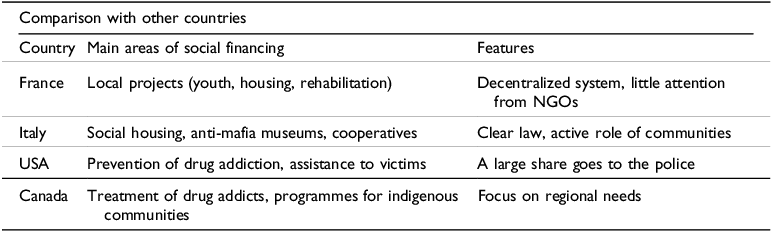
In France, the system of redistribution of confiscated assets for social purposes is less centralized than in the United States or Italy. It still includes notable mechanisms, particularly for addressing the consequences of organized crime and drug trafficking. The French Criminal Code, specifically Articles 131-21 and 131-22, provides for the confiscation of assets obtained through criminal means. The Agency for the Management of Confiscated Property (AGRASC) is tasked with distributing these assets. A significant portion of the confiscated funds, up to 80%, is allocated to the state budget and directed into the general fund. The remaining 20% may be used to compensate victims of crime through dedicated funds and to support law enforcement agencies, including the police and customs authorities.
Although France does not have a clearly defined national programme for the social use of confiscated assets, as seen in Italy, there are several local initiatives worth noting. Financial support has been directed toward rehabilitation centres that treat individuals with substance use disorders, forming an important part of public health efforts. Harm reduction associations also receive assistance, including support for programmes that distribute sterile syringes. In areas with high crime rates, such as Marseille, grants have been provided to support sports and cultural projects targeting at-risk youth. In some instances, confiscated homes, such as those previously owned by criminal organizations in Corsica have been repurposed as social housing for vulnerable populations.
There are practical examples that demonstrate how these initiatives have been implemented. In 2021, part of the funds confiscated from drug trafficking operations in Marseille was allocated to youth centres involved in crime prevention. In Paris, proceeds from the confiscation of corrupt officials’ property were invested in social reintegration programmes for the homeless (Table 1).
International approaches to social financing: key areas and features

In the context of Ukraine, the recovery and repatriation of illicitly obtained assets within the country have constituted a pivotal element in the ongoing efforts to combat organized crime and other criminal activities that are driven by the pursuit of profit (Verkhovna Rada of Ukraine 1991). It is evident that organized crime is a pervasive and deleterious social phenomenon in numerous countries, including Ukraine and the EU member states. In the contemporary era, it has evolved into a pernicious phenomenon that poses a grave threat to the public safety of nations, particularly given its potential to permeate all facets of social interactions (Council of Europe 2007).
AGRASC has three main sources of funding in France. First, under the Finance Act, it is allowed to retain up to €1.806 million annually from the revenues of confiscated assets (CA). Second, it earns interest on funds deposited in an account with the French public finance organization, Caisse des dépôts et consignations (CDC), which receives all money taken into custody by law enforcement as well as revenues from asset sales before confiscation. Third, France Domaine collects domain taxes on CAs that are sold.
AGRASC is entirely self-funded, with revenue increasing in line with the growth of its activities. This is made possible by a dual revenue stream: the first of these is interest earned on cash and the proceeds from the sale of property seized prior to confiscation, while the second is derived from sources within the Tax Domain to a lesser extent. The Seized Property Distribution Rules, which were issued in accordance with the Seized Property Management Act, regulate the Seized Property Management Office in Canada.
The laws include a methodology for allocating net profits to foreign and provincial governments conducting asset recovery investigations. The revenues from the sale of confiscated property in Canada are used to cover all operational expenditures for the confiscated Property Management Department (SPMD). The Confiscated Property Regulations provide that only the net revenues of the sale are distributed to the national and international authorities that are conducting the investigation; all other costs incurred by the SPMD, including overhead and operational costs, are not refunded.
To fund its activities, SPMD takes out an interest-free loan of US$50,000,000 at the start of each fiscal year, and all of its costs are covered by this account. After then, the loan is paid back over the course of the year by the sale of CA. At the end of the fiscal year, the net proceeds, which consist of sales proceeds less SPMD’s operating and overhead costs, are made available in accordance with the Confiscated Property Regulations. This makes a significant contribution to giving SPMD a stable financial platform on which to operate. The regulation states that after deducting all SPMD operating and overhead costs, the net revenues are made available for shared use. They might get 10%, 50%, or 90% of the net profits for taking part in the inquiry and trial, depending on the organization. At all times, the federal government receives at least 10%.
Building the ability to properly handle property that has been taken and confiscated and generally achieve the goals of a country’s asset recovery programme may be expensive. It may be exceedingly challenging to seize and confiscate assets on a scale big enough to significantly reduce crime if there are insufficient finances for infrastructure and personnel. By allowing chances for self-financing for asset recovery, countries with highly competitive resource allocation from other equally essential development goals can expedite the implementation of asset recovery programmes (Fazekas and Nanopoulos Reference Fazekas and Nanopoulos2016).
Every successful return of stolen property signals that those who profit from society’s detriment are not spared from consequences, and it also represents a win in the war against organized crime and corruption. Standards and rules are needed to ensure that society and, more specifically, the most affected segments of society, fully benefit from the repatriation of illicit assets. In the same way that the asset recovery procedure needs to be effective and transparent, a suitable legal structure needs to be established in order to repurpose CA for charitable purposes.
International experience shows that asset confiscation and redistribution mechanisms can complement rather than compete with patrol police objectives when implemented within a transparent and accountable framework. For Ukraine, adopting such an integrated model would require clear legislative coordination between the National Police, the Asset Recovery and Management Agency, and local authorities. This alignment would help ensure that financial flows from asset recovery enhance public safety outcomes instead of creating institutional conflicts of interest.
Ukraine’s Legal Framework for Asset Seizure and Confiscation in Combating Organized Crime
The legal foundation of patrol police operations in Ukraine is primarily defined by the Law of Ukraine ‘On the National Police’ (2015), which sets out the principles, powers, and organizational structure of police bodies. It authorizes patrol officers to ensure public safety, regulate traffic, prevent and respond to administrative and criminal offences, and protect the rights and freedoms of citizens. Complementary provisions in the Code of Ukraine on Administrative Offences regulate procedures for detecting and processing traffic violations, breaches of public order, and other infractions within patrol jurisdiction.
Since 2015, a series of legislative reforms has sought to enhance transparency, strengthen accountability, and modernize operational standards. Notable amendments have introduced the mandatory use of body-worn cameras, updated traffic-control procedures, and broadened the range of preventive measures available to patrol units. These steps represent an ongoing effort to align Ukrainian policing with European standards while responding to domestic challenges such as limited resources, high workload, and evolving public expectations.
Figures 1–3. and Table 2 show that peaks in asset confiscation coincide with periods of increased patrolling efficiency, including shorter response times and higher detection rates. This relationship is not automatic or linear. The evidence suggests that without a structured mechanism for reinvestment, confiscated funds do not directly translate into efficiency gains. This finding supports the institutional capacity theory presented earlier. Financial recovery becomes an efficiency multiplier only when it is legally linked to operational priorities such as training, community outreach or technology upgrades.
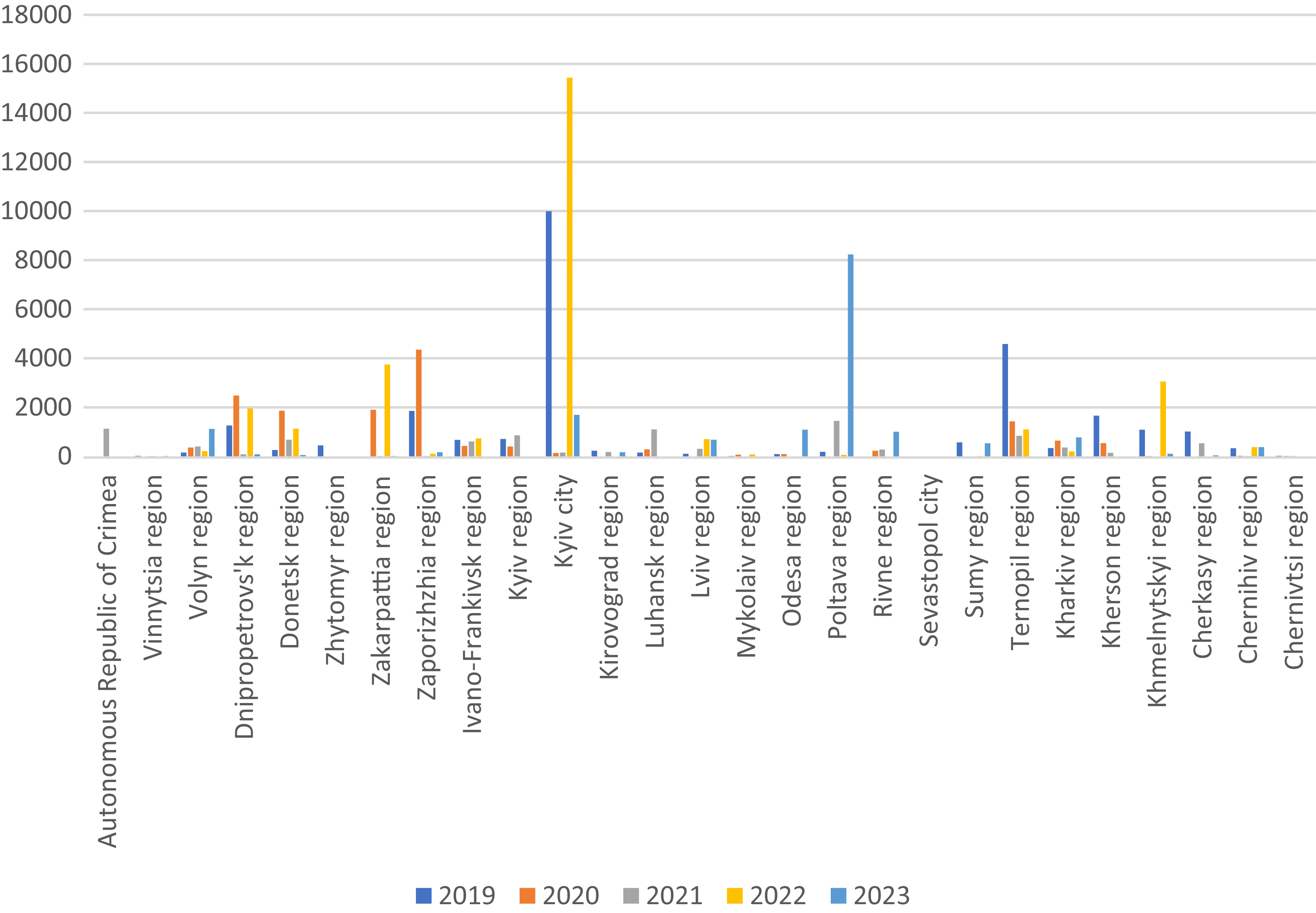
Statistics of seized property of suspects in committing crimes under Articles 305–324 of the Criminal Code of Ukraine, thousands UAH (USD).
Note: calculated in UAH. For USD, please, convert according to the following exchange rate:
2019 – UAH 1 = USD 25,85
2020 – UAH 1 = USD 26,96
2021 – UAH 1 = USD 27,29
2022 – UAH 1 = USD 32,25
2023 – UAH 1 = USD 36,57

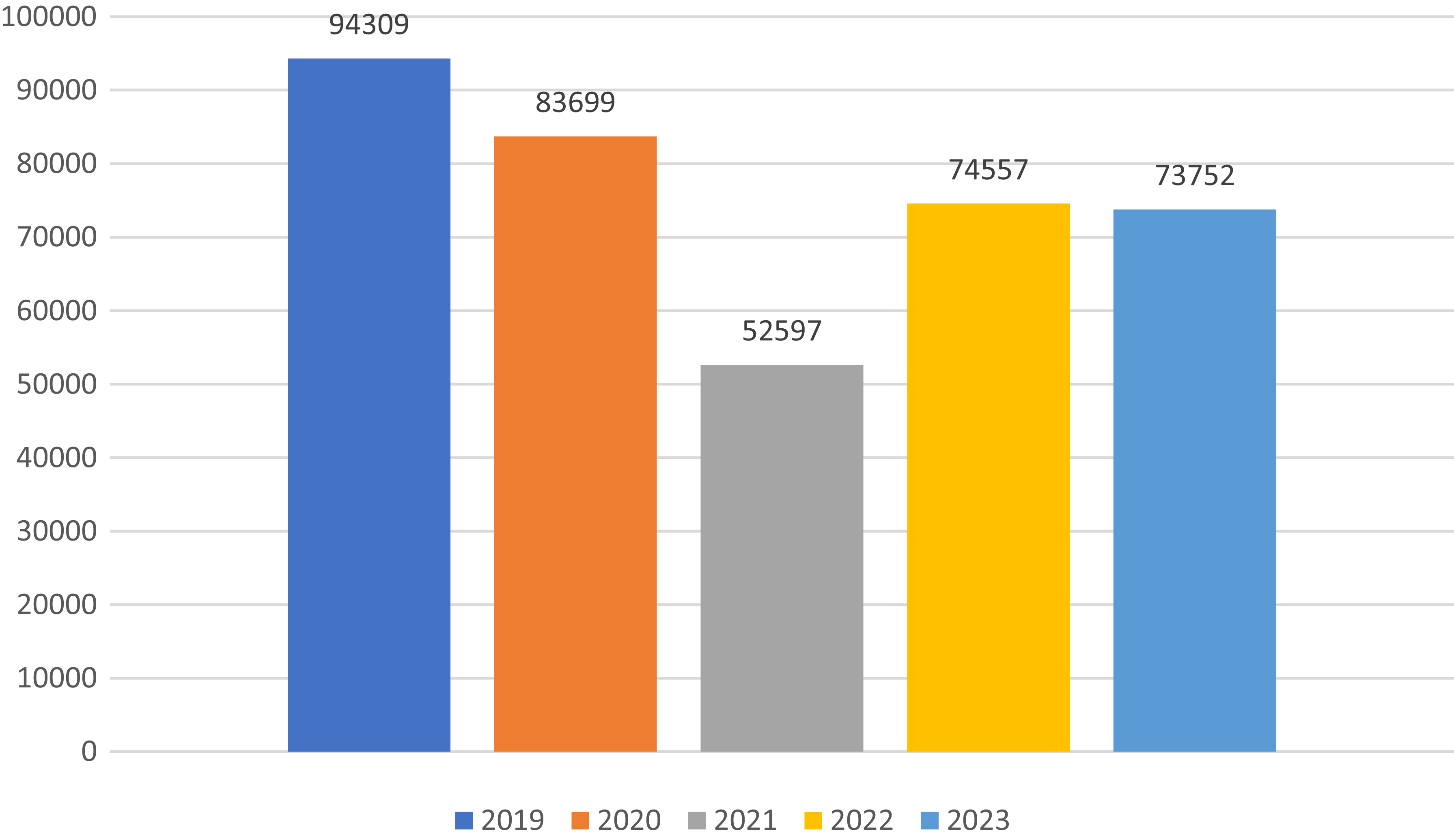
Seized property of suspects in the Odesa region, 2019–2023 (thousand UAH).

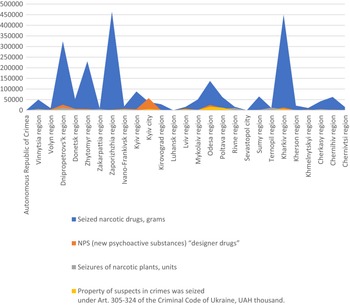
Information on the seizure of controlled substances, as well as on the SP and the SP of suspects (under completed criminal investigations) for 2023.

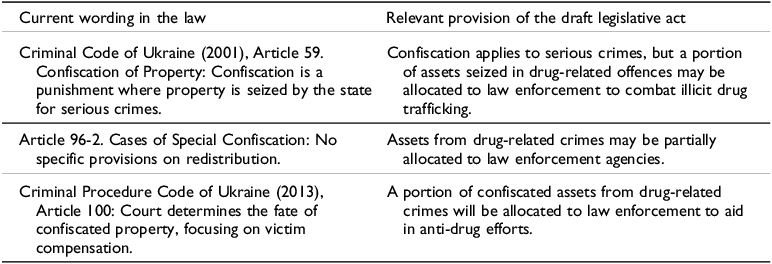
Comparison of current and proposed asset confiscation provisions

Source: Based on Criminal Code of Ukraine, 2001; The Criminal Procedure Code of Ukraine (2013).
Therefore, the Odesa case confirms that transparent fiscal integration, not the mere existence of confiscation, is what sustains patrol efficiency and public trust. This study is grounded in institutional capacity theory, which posits that the long-term performance of law enforcement agencies depends on their ability to sustain and reinvest resources within transparent and accountable structures. By applying this framework, this study explores how asset recovery can serve as a ‘capacity multiplier’ for patrol policing, enhancing both efficiency and legitimacy when managed under clear oversight mechanisms.
The study examines the link between patrol police effectiveness and asset recovery mechanisms using regional data from Odesa as an example of how financial, legal and operational factors intersect. Odesa is a strategic location, an international port city with high economic activity, complex trafficking routes, and diverse policing challenges. The study of this region provides an opportunity to observe how patrol police respond to both traditional street crimes and organized criminal activity, which often leads to asset confiscation.
The following data therefore serve not only as descriptive statistics but as evidence for evaluating whether resource flows from asset recovery can enhance operational efficiency and institutional integrity (Merdović et al. Reference Merdović, Stojković Numanović and Dragojlović2023). It is important to consider the indicators of Ukraine regarding seized and confiscated property over the past five years. The successor indicators relate specifically to seized property that is associated with illicit trafficking in controlled substances (Figure 1).
While statistical indicators clearly show improvements in patrol response and detection rates, their relationship to asset confiscation requires closer examination. A plausible explanation for the observed growth in confiscated assets during the period 2021–2023 is the gradual institutional learning of the Odesa police in applying financial investigation tools in parallel with operational work. Interviews with regional officers suggest that cooperation with the Asset Recovery and Management Agency became more systematic during this period, enabling patrol units to flag property and vehicles linked to drug-related offences more effectively. Another factor is the increased coordination between patrol and investigative units following the introduction of electronic evidence tracking in 2022.
These improvements should not be interpreted as evidence of direct causation. The rise in confiscation cases likely reflects both enhanced investigative capacity and broader criminal activity triggered by post-pandemic economic shifts. Thus, the data reveal correlation rather than strict causality. Future policy should therefore focus on establishing clear reinvestment channels, ensuring that a portion of recovered assets supports local patrol operations and community safety programmes in Odesa. This would transform asset confiscation from a reactive tool into a sustainable funding mechanism for preventive policing (Council of Europe 2003).
Statistical data from the Odesa region illustrate the operational workload and effectiveness of patrol police units between 2019 and 2023. Over this period, the total number of administrative offences detected by patrol units increased by more than 25%, with the largest rise recorded in traffic-related violations such as speeding, failure to yield, and driving under the influence. Seasonal peaks were observed during summer months, reflecting the region’s role as a major tourist destination with increased traffic intensity. Figure 2 illustrates that between 2019 and 2023, the total value of seized assets in Odesa nearly doubled. The correlation with patrol efficiency remained partial. This suggests that confiscation alone does not automatically translate into improved performance unless funds are reinvested directly into operational priorities such as staff training and equipment upgrades.
The data also indicate an improvement in average response times to public safety incidents, decreasing from 14 minutes in 2019 to under 10 minutes in 2023. This improvement coincided with the introduction of updated dispatch systems and expanded patrol coverage in high-incident areas. However, the sustained increase in offence detection has placed additional strain on personnel and resources, highlighting the need for targeted staffing strategies, enhanced training, and optimized route planning (Kaye Reference Kaye2006).
When interpreted in context, these figures reveal a complex relationship between patrol performance and financial recovery. Periods of increased asset confiscation correspond with moderate improvements in patrol efficiency, most notably in response time and clearance rates, suggesting that indirect financial reinforcement through recovered assets may positively influence operational outcomes (Boucht Reference Boucht2025).
The correlation is not linear. In 2022–2023, despite growth in asset seizures, the patrol workload continued to rise without proportional gains in performance, indicating that legal and institutional bottlenecks prevent confiscated funds from being effectively reinvested at the operational level. This underscores the importance of establishing clear legal pathways that link asset recovery revenues with patrol-level resourcing and community safety initiatives.
Regulation (EU) 2018/1805 of the EP and of the Council of 14 November 2018, on the mutual recognition of warrants of seizure and confiscation of assets (Council of Europe 2018) is one example of the changes made to the process of seizing and confiscating illegally obtained property. It replaced Framework Decisions (FD) 2003/577/JHA and 2006/783/JHA on 19 December 2020. The act’s primary goals are to streamline, expedite, and harmonize the processes for asset seizure and confiscation inside the EU (Council of Europe 1999).
Consequently, there are significant risks associated with the redistribution of confiscated assets to law enforcement agencies, such as police, prosecutors, and special services, without sufficient social oversight. This practice can lead to several serious issues. One major concern is corruption and abuse. Law enforcement officers may begin to prioritize cases involving the confiscation of high-value assets, neglecting less profitable crimes in what has been termed the ‘hunt for assets’ incentive.
There is the danger of illegal confiscation of property in cases involving falsified accusations or pressure on businesses, particularly when evidence is lacking. A further concern is the misuse of financial resources, especially when transparency is lacking. Funds have, in some cases, been used to purchase luxury vehicles rather than essential equipment. For example, in the United States, there have been reported instances where officers confiscated cash from drivers during traffic stops under dubious circumstances, allegedly to supplement local budgets (ACLU 2020).
Another area of concern involves potential human rights violations and conflicts of interest. Authorities receiving direct funding from confiscated assets may have an incentive to increase the number of such cases. This can lead to unreasonable searches, violating individuals’ right to privacy, and the over-criminalization of minor offences. Discriminatory practices may also arise, where enforcement disproportionately targets marginalized groups, including ethnic minorities and residents of economically disadvantaged areas. For instance, in Brazil, police have been known to confiscate property from poor communities under the pretence of anti-drug operations, while the funds collected often serve police interests rather than community development (Transparency International 2021).
Inefficiencies in combating crime can emerge from this system. Law enforcement efforts may shift toward demonstrative, high-profile confiscations rather than thorough, systematic investigations targeting organized crime networks. Furthermore, the failure to invest in proactive crime prevention, such as education or drug treatment programmes, represents a missed opportunity. In Mexico, for example, although a substantial amount of money seized from drug cartels was funnelled into military and police budgets, violence levels remained high, indicating that social development was underfunded.
Probably the most critical issue is that the improper use of confiscated funds can lead to a loss of public trust. When such resources are spent to enhance the comfort or prestige of law enforcement agencies rather than for public benefit, citizens may become less inclined to cooperate with police or provide witness testimony. In some cases, this dynamic has led to the emergence of the term ‘robber police’ to describe perceived abuses of power. In Ukraine, following the events of 2014, there were documented cases where confiscated assets were returned to original owners through corrupt schemes, sparking public outrage (NABU 2021).
To address these risks, several mitigation strategies can be proposed. First, transparency is crucial. Governments must be required to publish data on asset confiscation and expenditure, ideally via publicly accessible online platforms such as the Ukrainian Recovery Fund. Second, independent oversight is essential. Public councils and external audits, as practised in Georgia, can serve to monitor and guide the process. Third, clear legislative priorities should be established, including fixed allocations for social programmes. For instance, dedicating 30% of confiscated funds to drug treatment, as required by law in Portugal, could serve as a useful model. Lastly, a shift in focus toward long-term crime prevention, rather than reactive punishment, would create a more sustainable and just framework for the use of confiscated assets.
An analysis of the current legislation demonstrates that it does not provide for the decentralization of criminally obtained assets. Rather, it focuses exclusively on addressing the institutional needs of law enforcement agencies and fails to establish mechanisms for financing certain enforcement activities through the active recovery of assets derived from drug trafficking (Verkhovna Rada of Ukraine 2001).
Based on this analysis, it is clear that the adoption of the draft act will provide additional funding for the National Police units involved in combating narcotics crime by using funds and property from special confiscation. In Ukraine, assets confiscated due to involvement in drug-related criminal activity may be allocated toward social and community projects, as outlined in the Law of Ukraine ‘On Prevention and Counteraction to Legalization (Laundering) of Proceeds of Crime, Terrorist Financing and Financing of the Proliferation of Weapons of Mass Destruction’ (Article 12-1).
Among the eligible areas for funding is the counteraction to drug addiction and prevention. This includes the implementation of harm reduction programmes, such as needle exchange, counselling, and testing for HIV and hepatitis, which are recognized as vital elements of public health strategy. Additionally, the treatment and rehabilitation of individuals who use drugs involve comprehensive services, including care in specialized rehabilitation centres and the provision of psychological support. Efforts are also made to raise awareness about the dangers of substance abuse, particularly through educational campaigns targeting young people in schools.
Another area of focus is community development, particularly in regions that have been significantly impacted by the illicit drug trade. In such areas, support for social initiatives is essential. The establishment of youth centres, sports clubs, and cultural projects serves as an effective strategy to offer young people alternatives to drug use and avenues for meaningful engagement and development. Support is also provided to individuals and families who have been directly affected by drug trafficking. This includes assistance for families who have lost loved ones to overdoses, as well as support for the social reintegration of individuals recovering from substance dependence.
The mechanisms for funding these initiatives are diverse. State programmes allocate budgetary resources based on decisions made by the government or local councils. Non-governmental organizations may also obtain funding through competitive grant processes. In some cases, direct financial support may be provided to specific social institutions, such as rehabilitation centres. Consequently, the confiscation of assets can serve as a crucial source of funding in the fight against the negative consequences of drug trafficking and in the support of vital social initiatives. However, the effectiveness of this system depends on transparent procedures and strong public oversight to ensure accountability in the distribution of these resources.
Ukraine’s current system for asset seizure and redistribution remains fragmented and largely detached from operational policing outcomes. Although legislative provisions allow for the confiscation of criminal proceeds, there is no unified policy ensuring that recovered assets contribute to institutional development or community security. The Odesa case demonstrates that while patrol units are improving performance metrics, sustainable progress requires institutional integration where financial recovery mechanisms are transparently linked to preventive policing and social reinvestment. Addressing this structural gap should be a key focus of ongoing police reform.
Seizure and Confiscation of Property under EU Directive 2014/42/EU: Challenges in Addressing Modern Digital Assets
According to Directive 2014/42/EU, income is property of any kind, which also includes property rights, movable and immovable property, as well as documents that establish title and may confirm ownership or an interest in it. This concept is very narrow and, accordingly, it is incomplete and does not correspond to the modern technological industry. In the list of property in Article 2, the Directive does not mention ‘digital money’, or cryptocurrencies, which are now gaining popularity. In addition, the legal status of cryptocurrency is not defined in Ukraine and other European countries, but cryptocurrency is the subject of crimes such as Article 209 of the Criminal Code of Ukraine ‘Legalization (laundering) of proceeds from crime’, Article 212 of the Criminal Code of Ukraine ‘Evasion of taxes, fees (mandatory payments)’, Article 258-5 of the Criminal Code of Ukraine ‘Financing of Terrorism’, etc. Leskiv (Reference Leskiv2019) correctly observes that crimes involving cryptocurrency pose a public danger. In this regard, it is necessary to change the concept of property, as well as add to Article 2 of the Directive on the use of ‘digital money’, one of the subjects is the possible seizure and confiscation in CP (Verkhovna Rada of Ukraine 2013).
A temporary injunction to transfer, destroy, convert, dispose of, transfer property or temporary SP or control over it is known as a seizure. The ultimate taking of someone’s property in CP due to a court ruling is known as confiscation. The Directive is a specific legal instrument that applies only to a limited number of offences. These offences are not included in the list of legislative acts governing the response to these crimes by the EP or the EU Council under this Directive. Not all states support the Directive – for example, Germany, which preferred directive regulation of the procedure for issuing, recognizing and executing orders for the seizure and COP. The rules that regulate the mandatory nature and are directly applicable in the EU MS, do not require certain implementation actions (Wahl and Riehle Reference Wahl and Riehle2018).
Criminal offences covered by the relevant Council of Europe instruments include corruption in the public sector (Council of Europe 1997), corruption in the private sector (Council of Europe 2006), counterfeiting of currency (Council of Europe 2000), counterfeiting of non-cash means of payment (Council of Europe 2001a), laundering of proceeds from crime (Council of Europe 2001b), terrorism (Council of Europe 2001c), organized crime (Council of Europe 2011a), human trafficking (Council of Europe 2011a), sexual exploitation of children (Council of Europe 2011b), unauthorized interference with information systems, and offences in the field of drug trafficking (Council of Europe 2004).
The Directive’s provisions allow for several forms of confiscation, including both confiscation without a conviction, and seizure of property that has been transferred to third parties. MS needs to do something to protect the SP given that it is being confiscated more often. Article 4 of the Directive is a crucial step that mandates MS to take action to ensure the complete or partial confiscation of the means of committing crimes and the profit obtained from them, along with property whose value is equivalent to such means of committing crimes or the profit from them, in relation to individuals who have been found guilty of a crime, as well as in the absence of a suspect or accused (in absentia) (Krykun and Bratel Reference Krykun and Bratel2022).
Property transferred to third parties: if third parties knew or could have known that property subject to confiscation had been re-registered, EU MS would have to take the appropriate steps to ensure that the property was seized from illegal acts, or other property, the value of which would have to match the income transferred to suspected or accused third parties. In each case, all factors and circumstances that indicate that the property was transferred free of charge or for a fee that is significantly lower than the market value of the property are considered. This rule does not apply to honest third parties who did not know and could not have known that the property transferred to them was obtained illegally. Article 6 of the Directive, in which COP is a legal reflection that has been transferred to third parties, has no direct explanation of who exactly should be considered a third party in this aspect. Paragraph 24 of the preamble to the Directive indicates this type of confiscation and should apply to both individuals and legal entities.
The Directive also provides for procedural guarantees of the rights of persons with respect to income and assets seized by the COP. EU MS need to provide the person against whom the property is seized or confiscated, as well as the right to effective legal remedies or the right to a fair trial in order to be able to assert their rights. There is also a guarantee, which is enshrined in Part 4 of Article 8 of the Directive on the possibility of a person cancelling a court order for COP in cases provided for by the national legislation of member countries (Klymkevych Reference Klymkevych2021a).
This Decree was replaced four years later by Decree 2005/212/JHA of 24 February 2005 on the confiscation of instrumentalities of criminal offences, proceeds and property obtained through criminal activity (Council of Europe 2005). In accordance with paragraph 9 of the FD it was determined that the instrument proposed by the document (European Union Reference Union2001) failed to provide an opportunity to achieve effective international cooperation on the seizure and COP, because a large number of EU MS under domestic law could not seize property from all criminal offences punished by more than a year in jail.
This decision settled the issue of income seizure procedures. In addition, it defined the main concepts in this area. The disparate national legal systems, particularly with regard to the rules governing CP, the standards and the obligation to prove, as well as certain aspects of human rights in the context of the presumption of obtaining income by illegal means, have resulted in the absence of a unified procedure for the SP. Almost all attempts to unify legislation governing illegally obtained property aim to promote convergence in criminal justice cooperation among EU Member States through the introduction of a common confiscation standard into their national legal systems. In this context, the EU considers it necessary to establish specialized rules for international cooperation and to apply the principle of mutual recognition to decisions concerning such property (Klymkevych Reference Klymkevych2021a).
The directives will be forwarded to the appropriate executive authorities, who should have acknowledged the directive without the need for additional steps and taken the appropriate action to carry it out. For a list of crimes for which the issuing state stipulates a minimum three-year jail sentence, mutual recognition of orders was made automatic. The list of crimes to which COP in addition to drug trafficking can be applied include: rape, legalization (laundering) of proceeds from crime, terrorism, illegal arms trade, human trafficking, murder, causing serious physical harm, arson, counterfeiting money, illegal imprisonment or kidnapping, some criminal offences against the environment (Klymkevych Reference Klymkevych2021b).
Most EU MS had different competent authorities responsible for issuing and executing arrest orders and forfeiture orders. Some states of the country use local courts for this (Austria, Bulgaria, Hungary, Poland, Portugal, Spain), and others prosecutors’ offices (Belgium, France, Germany). Other countries have established authorities responsible for obtaining documents when face-to-face interaction is not feasible. In most cases, such a body is the Ministry of Justice, such as: Slovenia, Romania, Latvia, Poland. Some states have established separate competent authorities (Denmark, Cyprus, Malta, Netherlands, Finland) (Center for the Study of Democracy 2014).
Proceeds of crime are any economic privileges that directly or indirectly result from a crime. They derive from any form of property encompassing other subsequent reinvestments or transformations of direct proceeds or any other benefits (Klymkevych Reference Klymkevych2021b). The allocation of profits can be very simple, chaotic or one for which clarification is needed. It is preferable to define profit as derived from unlawful acts: ‘The profit from unlawful acts includes income from any kind of money and electronic money; rights from securities; corporate rights; property rights, as well as any other material income’.
A significant recent development in European asset recovery law is EU Directive 2024/1260/EU, which explicitly extends confiscation measures to digital assets, including cryptocurrencies (Recital 12). This directive acknowledges the increasing role of virtual currencies in illicit financial transactions and mandates that member states establish frameworks for their seizure and redistribution. Ukraine’s current legal framework lacks specific provisions for the confiscation of digital assets, creating a regulatory gap that criminals can exploit. By incorporating the provisions of Directive 2024/1260/EU, Ukraine can modernize its asset recovery mechanisms to address emerging financial crime trends. This directive emphasizes transparency and accountability in asset distribution, reinforcing the importance of independent oversight in the redistribution of confiscated assets.
Aligning Ukraine’s national legislation with the broader European framework is essential for both compliance and institutional modernization. The emerging EU standards under Directives 2014/42/EU and 2024/1260/EU promote not only effective seizure and management of criminal assets but also emphasize accountability, proportionality, and reinvestment for public benefit. Integrating these norms into Ukrainian law could strengthen the financial base of patrol policing without compromising transparency. In practical terms, this would entail the creation of a specialized Asset Reinvestment Fund for Public Safety, overseen by independent auditors, which channels a fixed portion of recovered assets into patrol training, technology modernization, and preventive programmes in high-risk regions such as Odesa.
The comparative analysis shows that while Ukraine’s patrol police have achieved notable improvements in operational efficiency, challenges remain in balancing enforcement duties with preventive and community-oriented work. Foreign models demonstrate that sustained success in patrol policing depends on three key factors: consistent training, integration of technology, and community engagement. For instance, Germany’s emphasis on preventive patrols reduces incident rates over time, while the US experience underscores the role of data-driven deployment in improving response efficiency.
Conclusion
This study aims to address the conceptual and empirical disconnect between patrol police performance and asset confiscation mechanisms by proposing an integrated institutional model. Using the Odesa region as a test case, the analysis demonstrates that financial recovery from crime can support, rather than distort, law enforcement objectives when managed transparently and reinvested strategically. International experience confirms that confiscated assets, when redistributed under accountable frameworks, can enhance police capabilities, fund social rehabilitation, and reinforce public trust.
For Ukraine, this implies moving beyond a purely punitive or revenue-driven understanding of confiscation toward a balanced system of reinvestment and accountability. Adopting clear legislative amendments that dedicate fixed percentages of recovered assets to patrol operations, officer training, and community programmes would strengthen both institutional sustainability and social legitimacy. These proposed reforms would also harmonize Ukraine’s approach with EU standards under Directive 2024/1260/EU, ensuring compatibility with European transparency and oversight norms.
France’s experience illustrates that it is possible to support social initiatives even in the absence of highly specific legislation, as seen in Italy’s more structured legal approach. In France, local solutions have played a central role, including the transfer of confiscated buildings for social purposes and the establishment of partnerships with non-governmental organizations engaged in drug rehabilitation. A crucial element in ensuring the legitimacy and effectiveness of such initiatives is transparency – defined here as the public disclosure of financial reports concerning the allocation and use of confiscated assets.
An optimal model for Ukraine could combine elements from several countries. Italy offers a clear legal framework for the social reuse of property, while Canada’s approach demonstrates flexibility in addressing regional needs and priorities. France’s local initiatives are notable for their ability to deliver swift, targeted impact in communities affected by crime.
A more detailed investigation into the most effective model for Ukraine would require a thorough analysis of AGRASC reports and relevant European directives governing the management and distribution of confiscated assets. Ultimately, the successful recovery and reinvestment of stolen assets symbolize a significant victory in the ongoing fight against corruption and organized crime. It sends a clear message that those who accumulate wealth through the exploitation of society will be held accountable under the law.
In view of the aforementioned points, it is deemed appropriate to integrate this foreign experience into Ukrainian legislation, with the objective of enhancing the efficacy of the ongoing efforts to combat drug crime, particularly with regard to the development and documentation of evidence related to drug trafficking. In the absence of appropriate oversight, the redistribution of assets to law enforcement can lead to corruption and arbitrariness. The primary objective for Ukraine is to establish mechanisms that ensure transparency in the utilization of financial resources. A portion of these resources must be allocated to crime prevention initiatives, encompassing rehabilitation and educational programmes.
Data Availability
Data available on request.
Author Contributions
-
• Ganna Sobko: Original draft, Methodology.
-
• Petro Kravchuk: Original draft, Software.
-
• Mykola Yasynok: Original draft, Visualization.
-
• Oleksii Kovalchuk: Review and editing, Data curation.
-
• Oleksandr Omelchenko: Original draft, Conceptualization.
Funding
The authors did not receive support from any organization for the submitted work. No funding was received to assist with the preparation of this manuscript. No funding was received for conducting this study. No funds, grants, or other support was received.
Competing Interests
The authors declare they have no financial and competing interests.
Ethical Approval
All procedures performed in studies involving human participants were in accordance with the ethical standards of the institutional and national research committee and with the 1964 Helsinki declaration and its later amendments or comparable ethical standards.
Informed Consent
Informed consent was obtained from all individual participants included in the study.
Consent for publication
All individual participants agreed to be included in the study.
Ganna Sobko is Professor of Criminal Law and Criminology at the Department of Criminal Law, Criminology and Penalty Law, Odesa State University of Internal Affairs. She holds a PhD in Law and specializes in criminal law, criminology, and penal policy.
Petro Kravchuk is Associate Professor at the Department of Law, Faculty of Law, European University (Private Institution of Higher Education ‘European University’), Kyiv, Ukraine. He holds a PhD in Law and conducts research in various fields of legal studies.
Mykola Yasynok is Doctor of Law and Professor, Chair of Justice and Philosophy, Law Faculty, Sumy National Agrarian University, Sumy, Ukraine. His academic interests include justice theory and legal philosophy.
Oleksii Kovalchuk is a Postgraduate Student at the Department of Justice and Philosophy, Law Faculty, Sumy National Agrarian University, Sumy, Ukraine. His research focuses on contemporary issues of justice and legal theory.
Oleksandr Omelchenko is Candidate of Law and Associate Professor of the Department of Law at the University of New Technologies. He is also an attorney at Defensores Law Agency.

 Open access

