


INTRODUCTION
The food service sector remains the most significant contributor of reported outbreaks of foodborne disease in England and Wales [Reference Gormley1]. Those individuals involved in food preparation and service play a vital role in prevention of foodborne disease, and their actions can be critical in preventing an outbreak of infection. Nevertheless, the food service sector, and in particular restaurant establishments, have been continually highlighted as an area of concern with regard to occurrence of foodborne outbreaks in England and Wales [Reference Gormley1–Reference Hughes3] as well as the cause of foodborne infections from studies of sporadic (non-outbreak associated) foodborne disease [Reference Friedman4–Reference Rodrigues6]. This is mirrored by UK surveys on consumer attitudes in that 51% of people are concerned about the safety of food sold in food service establishments, and specifically food hygiene when eating out (36%) and food poisoning (29%) [7], although it should be highlighted that the public are generally reticent about apportioning blame to the domestic catering environment. Furthermore, public perception of food risks tend to highlight Salmonella as being of greatest concern, owing to the greater media coverage associated with this pathogen [Reference Jordan and Stockley8].
The European Commission regulation on the hygiene of foodstuffs [9] requires businesses to implement a written food-safety management system based on hazard analysis and critical control point principles (HACCP), and to ensure food handlers are trained or instructed in good hygiene practices. To assist smaller businesses in complying with these legislative requirements, the UK Food Standards Agency (FSA) has provided guidance for implementing food-safety management systems and has also tailored these to businesses serving different cuisines [10–12]. Despite the legal requirements and associated guidance, foodborne outbreak contributory factors associated with food service establishments continue to include cross-contamination, inadequate cooking or reheating food, inappropriate storage, and infected food handlers [Reference Gormley1, Reference Hughes3]. Microbiological food studies have further identified that the microbiological safety of ready-to-eat food prepared and served at food service establishments are more likely to be of unsatisfactory quality compared to those from retail establishments [Reference Little13].
The food service sector is one of the largest industries in the UK, with about 263 000 outlets of different establishments, employing a workforce of 1·7 million people. Restaurants alone employ over 526 000 full-time and part-time staff throughout the UK, 82% of which are employed in England. The UK total weekly household expenditure on eating out at restaurants and cafes in 2008 was £796 million [14]. Cuisine derives from the Latin word ‘coquere’ and means ‘to cook’, and involves the combination of region-specific ingredients and cooking technique. Restaurants serving particular cuisine types will often utilize specific culinary practice or use foods particular to the cuisine. Whether partly as a result of cultural diversity or from more exotic travel by the UK population, the UK food market is extremely diverse in terms of the range of cuisines available.
Given the preponderance of foodborne outbreaks at restaurants (often serving select cuisine types) an insight on the role of cuisine type and how and why transmission of foodborne disease occurs in restaurants would contribute to developing better prevention measures. The purpose of this study was to identify factors (season, causative agent, vehicles of infection, contributory factors) that distinguish foodborne outbreaks at restaurants serving particular cuisine types in England and Wales reported to the Health Protection Agency (HPA) electronic foodborne and non-foodborne gastrointestinal outbreak surveillance system (eFOSS).
METHODS
Restaurant-linked outbreaks and cuisine
The HPA surveillance system for general foodborne outbreaks of infection in England and Wales has been described in detail previously [Reference Gormley1]. Foodborne outbreaks from 1992 to 2009 recorded in HPA eFOSS are classified by setting type. Restaurants were defined as ‘an establishment that serves prepared food and beverages to be consumed on the premises’. The definition covered a multiplicity of restaurant venues, including those also offering takeaway and food delivery services, and a diversity of cuisine styles. Restaurant cuisine type, e.g. Chinese, Indian, Italian, was assigned either by the lead outbreak investigator (through completion of the eFOSS standard questionnaire) or through interrogation of business directories by eFOSS curators, using the premise name and address provided on the questionnaire.
Data abstraction and analysis
Foodborne outbreaks were selected where food service establishments were identified as the outbreak setting. These were stratified by food service setting type. Comparisons within the restaurant group in relation to cuisine type, and between this group and other food service settings, were undertaken. Outbreak contributory factor/food vehicle proportion matrices were constructed to weight the associations between components for the major cuisine types. Implicated food vehicles in outbreaks are ready-to-eat foods, unless stated otherwise.
Descriptive analysis was undertaken using χ2 or Fisher's exact test (depending on population size) and trends were measured using the χ2 test for trend. In order to test for associations of exposures with the outcome of acquiring an infection caused by different pathogens, single risk variable analysis was performed and odds ratios calculated. Exposures yielding a P value of <0·1 upon univariate analysis were included in a multivariate logistic regression model to test for independent association (P<0·05). These analyses were restricted by cuisine type and limited to those types which had a sufficient number of records for analysis (n⩾10).
RESULTS
Restaurants: a major source of food poisoning
Of 1375 foodborne outbreaks associated with food service establishments, 677 (49%) were linked to restaurants (Table 1). From 11 795 people affected in these outbreaks, 491 (4·2%) were hospitalized and seven (0·1%) died. By comparison, in non-restaurant food service settings (Table 1) 18 650 people were affected, 329 (1·8%) hospitalized and six (0·03%) died. A greater proportion of restaurant-associated outbreaks were caused by Salmonella spp. compared to non-restaurant food service settings (46·7% vs. 35·2%, P<0·0001) (Table 1). Outbreaks caused by Salmonella Enteritidis phage types (PT) other than PT4 accounted for much of this (20·1% vs. 8·3%, P<0·0001) while S. Enteritidis PT4 were no more common in restaurants (19·2% vs. 19·1%, P=0·944) (Table 1). Similarly, Bacillus spp. outbreaks occurred more often in restaurants compared to other settings (7·4% vs. 1·9%, P<0·0001), while the opposite was observed for Clostridium perfringens (5·6% vs. 11·3%) and foodborne outbreaks of viral gastroenteritis (7·4% vs. 19·0%) (P<0·0001).
Foodborne outbreaks associated with restaurants, England and Wales, 1992–2009: cuisine types in relation to pathogen/toxins
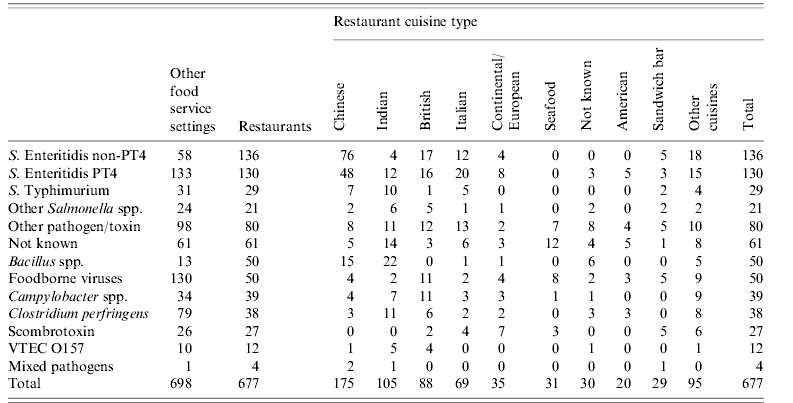
VTEC O157, verocytotoxin-producing Escherichia coli.
Other food service settings include hotels/guest houses (n=283), public houses (n=177), catered halls (n=119), community centres/clubs (n=98), private caterers (n=14) and mobile vendors (n=7).
Other pathogen/toxin, includes Giardia lamblia, Shigella spp., Staphylococcus aureus and shellfish toxins.
Other cuisines, cuisine types in smaller representative numbers (kebab, French, Greek, Spanish, Mexican, Thai, Japanese, Danish, vegetarian) and mixed cuisines (premises serving more than one type of cuisine).
As a proportion of all foodborne outbreaks linked to food service establishments, the number of restaurant outbreaks increased between 1992 and 2009 (43/96 to 47/72, P<0·001). This was driven by outbreaks linked to Chinese cuisine (4/43 to 13/47, P<0·00001), while Indian and Italian cuisine-linked outbreaks decreased significantly (10/43 to 6/47, P=0·009 and 9/43 to 3/47, P=0·00002, respectively). The proportion of British cuisine-associated outbreaks did not change (4/43 to 5/47, P=0·819). Most commonly foodborne outbreaks occurred in summer (253/677, 37·4%) with few occurring in spring (105/677, 15·5%).
Cuisine-specific factors
Chinese cuisine was the most common restaurant cuisine type implicated in foodborne outbreaks (175/677, 25·8%), followed by Indian (105, 15·5%), British (88, 13·0%) and Italian cuisine (69, 10·2%) (Table 1).
Chinese cuisine
Salmonella spp. accounted for most of the foodborne outbreaks linked to restaurants serving Chinese cuisine (133/175, 76·0%), followed by Bacillus spp. (15/175, 8·6%) (Table 1). Most commonly outbreaks occurred in summer (n=83) with fewest in winter (n=23).
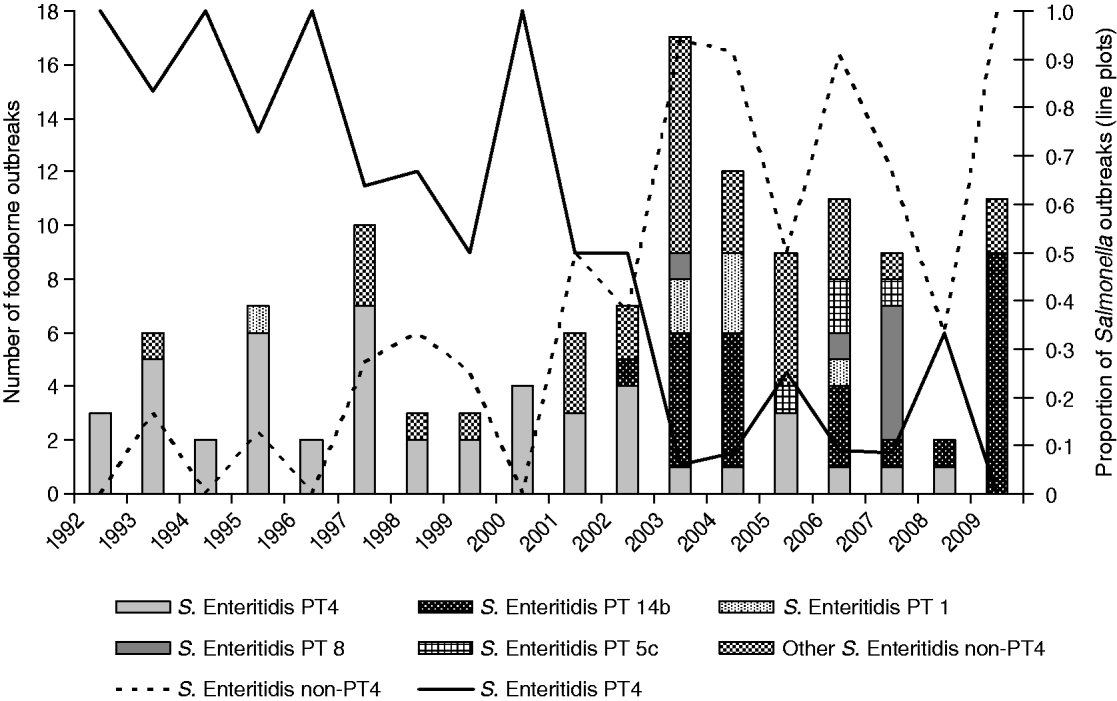
Between 1992 and 2009, the proportion of outbreaks linked to Chinese cuisine caused by S. Enteritidis PT4 decreased while those caused by S. Enteritidis non-PT4 increased (Fig. 1). The change in Enteritidis phage-type proportions occurred after 2001 with the number of S. Enteritidis PT4 outbreaks decreasing to zero by 2009, while concurrently, S. Enteritidis non-PT4 outbreaks increased. The most commonly implicated S. Enteritidis non-PT4 strains were S. Enteritidis PT14b (n=25), PT1 (n=7), PT8 (n=7) and PT5c (n=4).
Change in proportion of Salmonella Enteritidis PT4 and non-PT4 outbreaks linked to restaurants serving Chinese cuisine, showing the change in phage-type proportions (England and Wales 1992–2009).
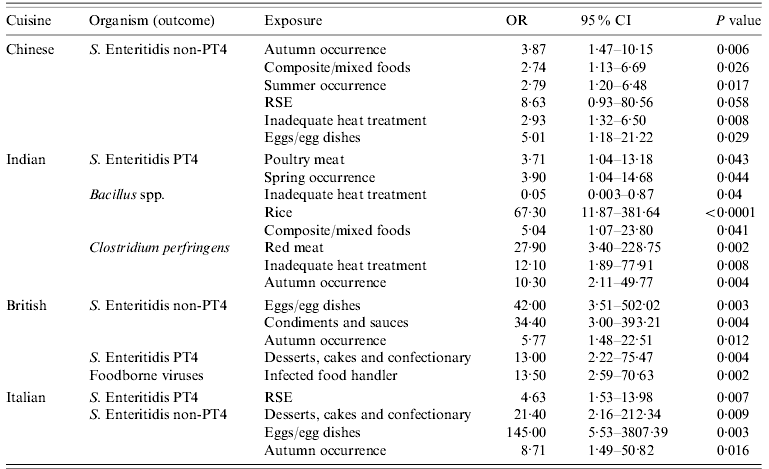
Rice (39/153, 25·5%), particularly egg fried (20/39, 51·3%), and poultry meat (37/153, 24·2%) were the most frequently implicated food vehicles in the outbreaks (Table 2), while cross-contamination (80/227, 35·2%) and inadequate heat treatment (50/227, 22·0%) were the most common contributory factors (Table 3). All contributory factors were significantly more frequently identified in S. Enteritidis outbreaks post-2001 (P<0·05), with the exception of inappropriate storage conditions (too warm or too long) (11 vs. 13, P=0·568). The proportion of outbreaks linked to consumption of rice or poultry meat did not change over the 18-year period although eggs and egg dishes were more frequently implicated as the outbreak food vehicle post-2001 (P<0·0001). Comparison of implicated food vehicles with outbreak contributory factors showed that cross-contamination events were most likely to be associated with poultry meat (25·0%), composite/mixed foods (18·8%), rice (17·5%) and eggs/egg dish (16·3%) outbreaks. Inadequate heat treatment was most commonly identified in rice-associated outbreaks (39·5%), while poor hand-washing by food handlers was most often associated with poultry meat (26·7%) and raw shell egg (RSE) used as an ingredient in lightly cooked/uncooked foods (26·7%). Composite/mixed foods were most likely to be associated with poor personal hygiene by food handlers (35·7%). Factors independently associated with S. Enteritidis non-PT4 outbreaks linked to Chinese restaurants are presented in Table 4.
Foodborne outbreaks associated with restaurants, England and Wales, 1992–2009: implicated food vehicles in relation to cuisine type
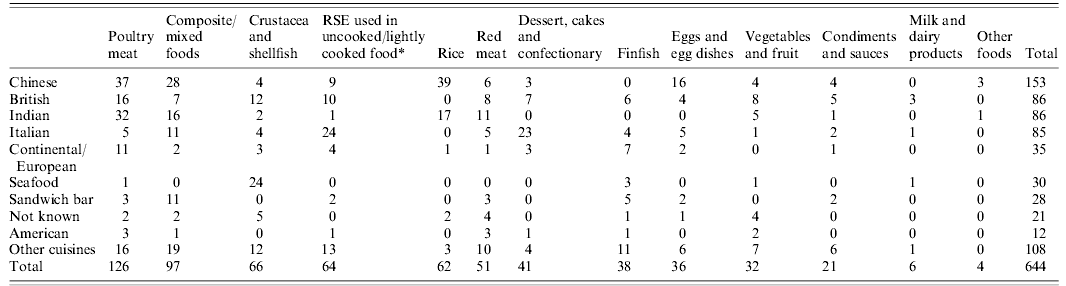
* RSE, raw shell egg as an ingredient.
Other cuisines, cuisine types in smaller representative numbers (kebab, French, Greek, Spanish, Mexican, Thai, Japanese, Danish, vegetarian) and mixed cuisines (premises serving more than one type of cuisine).
Foodborne outbreaks associated with restaurants, England and Wales, 1992–2009: contributory factors in relation to cuisine type
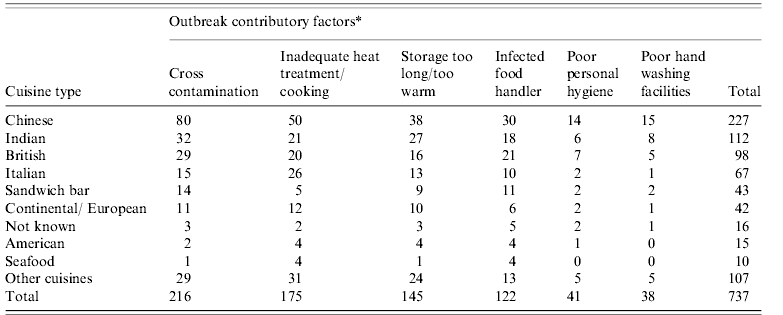
* More than one contributory factor can be recorded in an outbreak, therefore the total is more than the total number of restaurant associated outbreaks.
Other cuisines, cuisine types in smaller representative numbers (kebab, French, Greek, Spanish, Mexican, Thai, Japanese, Danish, vegetarian) and mixed cuisines (premises serving more than one type of cuisine).
Foodborne outbreak independent associations stratified by cuisine type logistic regression analysis
OR, Odds ratio; CI, Confidence interval; RSE, raw shell egg.
Indian cuisine
Most foodborne outbreaks in restaurants serving Indian cuisine were caused by Bacillus spp. (22/105, 21·0%), 59·1% of which were B. cereus (Table 1). Most Indian cuisine-associated outbreaks occurred in summer and similarly to Chinese cuisine outbreaks involved consumption of poultry meat (32/86, 37·2%) and/or rice (17/86, 19·8%) (Table 2). Contributory factors in these outbreaks were primarily cross-contamination (32/105, 30·5%), inappropriate storage (27/105, 25·7%) and inadequate heat treatment (21/105, 20·0%) (Table 3). Poultry meat was most frequently linked to inadequate heat treatment (61·9%), inappropriate storage (48·1%) and cross-contamination events (37·5%) and rice was commonly implicated in outbreaks where inappropriate storage was identified (29·6%). Factors independently associated with pathogens linked to outbreaks in restaurants serving Indian cuisine are presented in Table 4.
British cuisine
While S. Enteritidis non-PT4 and PT4 accounted for the plurality of foodborne outbreaks linked to restaurants serving British cuisine (17/88 and 16/88, respectively), Campylobacter spp. (11/88, 12·5%) and foodborne viruses (exclusively norovirus) (11/88, 12·5%) contributed the plurality of the remainder (Table 1). Again, most outbreaks occurred in summer and in addition to poultry meat (16/86, 18·6%), crustacea and shellfish (12/86, 14·0%), and RSE (10/86, 11·6%) were commonly identified food vehicles (Table 2). Cross-contamination was the most frequently identified outbreak contributory factor (29/88, 33·0%), followed by infected food handlers (21/88, 23·9%) (Table 3). Outbreaks associated with poultry meat consumption were frequently associated with poor personal hygiene by food handlers (42·9%), poor hand-washing facilities (40·0%), inadequate heat treatment (35·0%) and inappropriate storage (31·3%), while RSE were most frequently associated with inadequate heat treatment (35·0%). Crustacea and shellfish were most commonly associated with inadequate heat treatment (10·0%) and infected food handlers (9·5%). Factors independently associated with pathogens linked to outbreaks in restaurants serving British cuisine are presented in Table 4.
Italian cuisine
S. Enteritidis PT4 accounted for most outbreaks linked to Italian cuisine (20/69, 29·0%) (Table 1). Most outbreaks occurred in the summer and RSE (24/85, 28·3%) and desserts, cakes and confectionery (23/85, 27·1%), particularly tiramisu (19/23, 82·6%), were the most commonly identified food vehicles (Table 2). Inadequate heat treatment was the most commonly identified outbreak contributory factor (26/69, 37·7%) (Table 3). Cross-contamination was most frequently associated with RSE (26·7%) and desserts, cakes and confectionery (26·7%). Inadequate heat treatment was also associated with both of these food vehicles (69·2% and 65·4%, respectively). Composite/mixed foods and RSE were the most frequently implicated food vehicles in outbreaks where inappropriate storage was identified (46·1% and 30·8%, respectively). Factors independently associated with pathogens linked to outbreaks in restaurants serving Italian cuisine are presented in Table 4.
Other cuisines
Continental/European cuisine (i.e. restaurants serving a mixture of individual European countries' cuisine, e.g. French, Spanish, Italian, Turkish) was the fifth most common cuisine type identified (35/677, 5·2%) and most outbreaks were caused by S. Enteritidis PT4 (8/35, 22·9%) followed by Scombrotoxin (7/35, 20·0%) (Table 1). Outbreaks linked to restaurants serving Continental/European cuisine decreased between 1992 and 2009 (P=0·02). Poultry meat (11/35, 31·4%) and finfish (7/35, 20·0%) (Table 2) were the most frequently implicated food vehicles while inadequate heat treatment (12/42, 28·6%), cross-contamination (11/42, 26·2%) and inappropriate storage (10/42, 23·8%) were commonly identified as contributory factors.
Norovirus was reported in 25·8% (8/31) of seafood-associated outbreaks and viruses were suspected in 19·4% (6/31) of the seafood outbreaks of unknown aetiology. Combined therefore, viruses were the confirmed or suspected agent in 45·2% of seafood outbreaks. Most seafood outbreaks occurred in winter (19/31, 61·3%) and 80% (24/30) were associated with consumption of oysters (Table 2). Seafood outbreaks increased overall between 1992 and 2009 (P<0·0001).
Despite accounting for only 14 (2·1%) foodborne outbreaks reported between 1992 and 2009. S. Enteritidis non-PT4 was responsible for half of these (7/14, 50·0%) (Table 1) and while a variety of food vehicles were implicated (Table 2), cross-contamination was the most common contributory factor identified (10/27, 37·0%) (Table 3).
DISCUSSION
Despite the downward trend in the number of foodborne outbreaks reported in England and Wales over the last two decades [Reference Gormley1], the proportion of reported outbreaks linked specifically to restaurants has increased. In seeking to interpret the role of restaurants as an important source of foodborne infection in England and Wales it is important to bear in mind outbreak ascertainment and investigation and their potential to distort the role of certain settings. Foodborne outbreaks occurring in restaurants may be reported more often than those occurring in other settings as affected people may be more inclined to attribute illness to eating food outside the home than to other potential sources [Reference Jones and Angulo15, Reference Little and Gillespie16]. The scale of food preparation in restaurants also means that any breakdown in food safety may be amplified making contaminated food available to a large number of consumers, leading to more illnesses and a greater likelihood of recognition compared to food sold or served at other settings. They might also be more likely to be investigated by public or environmental health professionals and hence reported to national surveillance. Nevertheless, there is no denying that these outbreaks in England and Wales took place; and to our knowledge, the current study is the first to stratify analyses by cuisine type to describe and differentiate restaurant foodborne outbreaks thus providing evidence of specific food safety associations and trends in food safety.
Restaurants serving Chinese cuisine accounted for a quarter of restaurant-linked outbreaks and increased significantly over the surveillance period. Commercial UK market data indicates that Chinese restaurants ranked third as the most visited restaurant type, with an estimated 45% of the population dining here. Ranked top was the traditional British fish and chip shop (50%), followed by British pub restaurant fare (46%), while Indian cuisine ranked fifth (31%) [17]. Salmonella spp. accounted for three-quarters of outbreaks linked to Chinese cuisine and given the type of meals served in such restaurants, consumption of poultry meat and egg fried rice were unsurprisingly most commonly implicated with cross-contamination and inadequate heat treatment the most frequently identified outbreak contributory factors. Stratification by S. Enteritidis phage type revealed that a significant decline in outbreaks caused by S. Enteritidis PT4 was mirrored by an increase in those caused by S. Enteritidis non-PT4 (mainly PT1 and PT14b) post-2001. In line with this shift in epidemiology of Salmonella, egg-associated outbreaks also increased in Chinese restaurants giving strength to the independent association observed with the use of shell eggs. Furthermore, independent associations with inadequate cooking and summertime (where ambient temperatures are higher) demonstrate the risks associated with Chinese restaurants. There is long established national guidance on the safe handling and use of eggs, including the use of pasteurized egg in lightly cooked or uncooked food [18–21]. The findings from our study reaffirm that government advice has not been followed.
Once a problem in the UK, vaccination of UK layer flocks against S. Enteritidis PT4 has virtually eliminated these outbreaks and also driven down the number of UK reported sporadic cases of S. Enteritidis PT4 [22]. The emergence of egg-associated S. Enteritidis non-PT4 causing human infection is of particular importance. These outbreaks were associated with substantive changes in market supply and sourcing of eggs from egg producers in other EU countries, where there was a lack of vaccination of layer flocks against Salmonella or controlled assurance [Reference Little23]. Almost all non-UK eggs are destined for processing or for use in the food service sector [Reference Little23]. Therefore the potential for inherent contamination of these eggs coupled with poor preparation of eggs and egg dishes in restaurants (including the use of large numbers of eggs and the practice of breaking, pooling, and mixing eggs before use) increase the food-poisoning risks associated with restaurants carrying out such practices, such as those serving Chinese cuisine [Reference Gormley24]. A recent UK survey of food hygiene ratings given to restaurants by local authorities has further demonstrated that those serving Chinese cuisine were more likely to fail all legal requirements (55%) aimed at preventing food poisoning in consumers compared to other ethnic cuisines and fast-food restaurants [Reference Hickman25]. The investigators concluded that the increased risk was the result of culture and difficulties with language, through lack of understanding of food laws and environmental health practitioners' instructions.
The preponderance of Bacillus spp. outbreaks linked to Indian restaurants and the independent associations with rice concur with evidence from microbiological investigations of cooked rice served at UK restaurants that suggested rice from Indian restaurants to be of poorer microbiological quality than that of Chinese restaurants [Reference Little, Barnes and Mitchell26]. The degree of contamination of cooked rice with B. cereus and other Bacillus spp. was directly related to the temperature of storage and length of time the rice was kept before serving. Spores of B. cereus often present in uncooked rice will survive boiling, germinate and multiply to high numbers in rice and produce emetic toxins when left long enough at room temperature. Reheating the rice prior to serving will not inactivate the toxin and render the product safe. The association of poultry with Indian cuisine was most clearly demonstrated with S. Enteritidis PT4 outbreaks and suggests that a greater appreciation of the need to sufficiently cook and safely handle poultry meat is required. With regard to the safe cooking and handling of rice, poultry meat and other foodstuffs prepared in restaurants the UK FSA has produced the Safer Food Better Business (SFBB) guidance. Developed in line with the FSA foodborne disease reduction strategy, it is designed to protect public health through improved food safety and hygiene practices at these premises, implemented and maintained in line with HACCP principles [10–12].
The high number of outbreaks of campylobacteriosis in British restaurants were primarily the result of a recent upsurge in those specifically linked to consumption of poultry liver pâté dishes and indicated that inappropriate culinary practice (in this case deliberate undercooking of the liver) presents an unacceptable risk to the consumer [Reference Little27]. Although guidance by the UK FSA has been relayed to caterers describing how to thoroughly cook poultry livers [28], the continued preponderance of these outbreaks in 2010 suggest that more targeted guidance needs to be conveyed to chefs and caterers. It is generally accepted that poultry meat is the predominant source of human campylobacteriosis and control of this organism in poultry meat is a major public health strategy for the prevention of campylobacteriosis [29]. A UK Campylobacter risk management programme has been developed by the FSA to reduce levels of Campylobacter in UK-produced chicken and will be measured against reduction targets by 2015 [29, 30].
Norovirus outbreaks in restaurants serving British and seafood cuisine were in the main linked to shellfish consumption, notably oysters. In restaurants serving seafood cuisine, most outbreaks of unknown aetiology were suspected to be norovirus, and collectively, norovirus (and suspected norovirus) outbreaks were significantly more prominent in winter. This follows the same seasonal trend as the norovirus epidemiology in the general population [Reference Lowther, Henshilwood and Lees31, Reference Westrell32]. Eating raw or live oysters, considered a delicacy, carries a risk of norovirus infection by their nature of filter feeding and accumulating the virus within their flesh and gut [Reference Baert33, Reference Baker34]. As a result, norovirus is extremely difficult to remove from contaminated shellfish [Reference Westrell32]. Draft proposed Codex (2010) guidelines [35] state that there are no validated post-harvest risk management options and this therefore places the emphasis on effective control strategies for the prevention of contamination. In early 2011, the FSA issued consumer advice on oysters via their website [36]. However, to ensure that consumers can make an informed choice with regard to these products and are adequately informed about the associated risks, consideration should also be given to providing information on restaurants menus that consumption of raw or live bivalve molluscs is a risk factor for contracting acute gastroenteritis particularly caused by norovirus.
Food handlers may also contaminate food if they are working while they are still infectious, and we observed an independent association between norovirus outbreaks and infected food handlers in British cuisine restaurants. This finding suggests that food handlers may not fully appreciate the importance of remaining away from work while ill with gastrointestinal symptoms, that illness in food handlers is not being effectively monitored, or that commitment is lacking to enforce policies regarding ill food handlers. The problem may be exacerbated by the reluctance of employers to provide sickness pay to restaurant staff. A feature of norovirus infection is projectile vomiting, which enables aerosols with high infectivity to be carried over a wide area. Virus particles are difficult to eliminate from kitchens, and can easily be transferred onto foods from contaminated surfaces, utensils or hands. Application of good basic food hygiene would greatly reduce the risk of transmission via infected food handlers as well as reinforcing the importance of remaining away from work while ill with gastrointestinal symptoms [37].
Our analyses have shown that the risk for foodborne illness in restaurants depends both on the presence of a specific source of contamination and food-handling malpractices that allow its transmission. Clearly, Salmonella outbreaks have continued to play a major role in food poisoning linked with this sector, and although the relative proportions of infectious phage types have changed, food vehicles such as eggs and poultry, and factors such as cross-contamination and undercooking remain pertinent yet preventable issues. By using cuisine type as a surrogate for other inclusive factors, distinctions on the risk of foodborne illness were made between restaurants serving different cuisines. Despite the availability of food safety guidance tailored to restaurants and other food service businesses [10–12, 20, 21, 36–39], they continue to present a major risk of foodborne illness to consumers when lapses in food safety occur.
Studies have shown that restaurant managers are more likely to have a more thorough knowledge of food safety and prevention of foodborne illness than their staff [Reference DeBess40]; and that trained food handlers have a greater knowledge of food safety than non-trained staff [Reference Hislop and Shaw41]. The use of casual and part-time restaurant staff therefore requires strong management to ensure staff are trained adequately and adhere to food safety controls. Seaman & Eves [Reference Seaman and Eves42] have demonstrated that most UK food industry managers are aware of their responsibilities to train food handlers, but often do not provide adequate support to promote the enactment of safe food-handling practices, or evaluate its effectiveness. Any positive effects gained from food hygiene training programmes are therefore short-lived. This emphasizes the important role of local food authorities in ensuring that effective training and safe food-handling procedures are consistently followed to reduce the risk of foodborne illness. This, however, ultimately relies on centrally issued advice being adopted locally and factored into programmed food hygiene inspections and the continued surveillance to monitor changes.
ACKNOWLEDGEMENTS
The authors thank all reporting investigators in England and Wales including Health Protection Units (England), Public Health Wales, Microbiologists, Local Authorities and Environmental Health Officers for their continual work in reporting to the foodborne outbreak surveillance database. We are grateful to Dr Iain Gillespie for reviewing and providing helpful comments on this paper.
DELARATION OF INTEREST
None.



