


Previous international studies, including the best-designed World Health Organization (WHO) studies have reported that the outcome of schizophrenia is significantly more favourable in low- and middle-income countries than in high-income ones. Reference Harrison, Hopper, Craig, Laska, Siegel and Wanderling1–Reference Mueser and McGurk5 However, given the methodological limitations of these studies, for example, the long-term outcome for never-treated patients with schizophrenia have not been explored, it may be premature to come to this conclusion. Reference Ran, Chen, Conwell, Chan, Yip and Xiang6–Reference Cohen, Patel, Thara and Gureje8 Many patients with schizophrenia in low- and middle-income countries received no treatment, and the outcome of this group may be poorer than that of those treated with antipsychotic drugs. Reference Ran, Chen, Conwell, Chan, Yip and Xiang6–Reference Ran, Chan, Chen, Mao, Hu and Tang7,Reference Ran, Xiang, Huang and Shan9–Reference Alem, Kebede, Fekadu, Shibre, Fakadu and Beyero11 Knowledge of psychopathology in untreated individuals would be helpful to identify the natural state of schizophrenia and improve understanding of the pathology underlying the illness. Reference Tirupati, Padmavati, Thara and McCreadie12 It is crucial therefore to explore the differences between patients with schizophrenia who have never been treated with those that have been treated with antipsychotic medications. Reference Dohrenwend and Dohrenwend13,Reference Torrey14 Evidence shows that the longer psychotic symptoms proceed unchecked by medication the greater the likelihood of profound clinical deterioration. Reference Black, Peters, Rui, Milliken, Whitehorn and Kopala15 However, is there symptomatic remission in long-term outcome of never-treated schizophrenia? A significant number of patients with schizophrenia are never-treated in low- and middle-income countries, especially in rural areas. Reference Ran, Chan, Chen, Mao, Hu and Tang7,Reference Ran, Xiang, Huang and Shan9,Reference Padmavathi, Rajkumar and Srinivasan16,Reference Kurihara, Kato, Reverger, Tirta and Kashima17 It is only possible for studies of never-treated individuals with schizophrenia to be conducted in non-Western countries as in Western countries most patients will eventually be treated. Reference Ran, Xiang, Huang and Shan9 In low- and middle-income countries this may be related to poor development of psychiatric services and low accessibility of the services, especially in rural areas. However, the clinical outcome of never-treated patients with schizophrenia and the reasons related to never-treated status are not well understood. Reference Ran, Chan, Chen, Mao, Hu and Tang7,Reference Tirupati, Padmavati, Thara and McCreadie12,Reference Padmavathi, Rajkumar and Srinivasan16,Reference Kurihara, Kato, Reverger, Tirta and Kashima17 Most previous studies on never-treated patients with schizophrenia have been cross-sectional or short-term follow-up studies. Reference Ran, Xiang, Huang and Shan9,Reference Alem, Kebede, Fekadu, Shibre, Fakadu and Beyero11,Reference Tirupati, Padmavati, Thara and McCreadie12 However, longitudinal follow-up studies using large community samples are important to explore the different outcomes between never-treated and treated patients with schizophrenia. There are few with long-term (10 years) follow-up. Reference Ran, Chan, Chen, Mao, Hu and Tang7,Reference Ran, Xiang, Huang and Shan9 Since the 1980s China has experienced dramatic social and economic development, which is reflected in the steady rise of the gross domestic product per capita. 18 It is interesting to explore the impact of socioeconomic development on the treatment and outcome of patients with schizophrenia in the community. Our hypotheses were: the long-term outcome of those patients who were never treated is poorer than those treated with antipsychotic medication, and having no family caregiver will be the major reason for long-term never-treated status in patients with schizophrenia. The objectives of this 14-year prospective follow-up study were: (a) to compare the long-term outcomes of those individuals who were never treated with that of those who were treated; (b) to examine the differences between the groups who became treated and those who remained untreated over the 14-year follow-up; and (c) to define the predictors of long-term never-treated status in patients with schizophrenia.
Method
Study population
This is one of studies in the Chengdu Mental Health Project (CMHP) in Chengdu, China. All participants with schizophrenia (n = 510) were identified from an epidemiological investigation of 123 572 people aged 15 years and older in six townships of Xinjin County, Chengdu in March 1994. Xinjin can be regarded as a typical rural county, in Southwest China. The six townships were randomly selected from all 14 townships of Xinjin County in the south of Chengdu. There is a psychiatric hospital (about 100 psychiatric beds) in Xinjin County. There was no national health insurance supporting patients' antipsychotic treatment. Participants were identified through screening procedures for psychosis (face-to-face interviews with the head of each household together with the key informant method) and general psychiatric interview. The details of this investigation have been described in previous publications. Reference Ran, Chen, Conwell, Chan, Yip and Xiang6,Reference Ran, Xiang, Huang and Shan9,Reference Ran, Xiang, Li, Shan, Huang and Li19 All participants lived in rural communities and met ICD-10 criteria 20 for a diagnosis of schizophrenia based on standardised administration of the Present State Examination (PSE) Reference Wing, Cooper and Sartorius21 by trained research interviewers. Reference Ran, Xiang, Li, Shan, Huang and Li19 Diagnostic reliability has been established. Reference Ran, Xiang, Li, Shan, Huang and Li19 Of the 1994 sample, we followed up and interviewed 98.0% (n = 500 participants with schizophrenia and/or their key informants) 10 years later (May 2004) and 95.9% (n = 489) 14 years later (June 2008). The study was approved by the University Committee on Human Research Subjects (CHRS) and all respondents gave informed consent at each stage of the study.
Measurement
The principal assessment tools were the PSE and Social Disability Screening Schedule (SDSS) Reference Liu, Wang, Shen and Wang22 in the baseline investigation in 1994. Reference Ran, Xiang, Li, Shan, Huang and Li19 The Positive and Negative Syndrome Scale (PANSS) Reference Kay, Fiszbein and Opler23 and Global Assessment of Functioning (GAF) 24 were also used in 2008. Reference Ran, Chen, Liao, Chan, Chen and Tang25 After the training sessions, all the PANSS and GAF items between raters reached an acceptable level of reliability (kappa (κ)>0.70). For participants still alive in 2004 and 2008, at least one person familiar with each participants' life and circumstances and the participant themselves were interviewed. For participants who had died, the next of kin or at least one person familiar with the participant were interviewed. All the interviews were conducted by trained psychiatrists using the Patients Follow-up Schedule (PFS) in 2004 and 2008. Reference Ran, Chen, Conwell, Chan, Yip and Xiang6,Reference Ran, Chen, Liao, Chan, Chen and Tang25 The PFS was used to collect information concerning demographic characteristics, causes and time of death, clinical symptoms, treatment information, criminal behaviour, social functioning and social support. For all participants, medical and psychiatric treatment records were also obtained from hospitals, village doctors' clinics and traditional healers. For participants who had died, information from the death certification and suicide note, where applicable, was also obtained.
‘Never treated’ or ‘remaining untreated’ was defined as never or still not having received any antipsychotic medication before the investigation or follow-up. ‘Treated’ was defined as once having received antipsychotic medication before the investigation or follow-up. ‘Became treated’ was defined as not having received any antipsychotic medication before the investigation in 1994 and once having received antipsychotic medication during the follow-up from 1994 to 2004 or 2008. The classification of each death as being as a result of suicide, accident or natural causes represented the consensus opinion of interviewers and independent researchers after reviewing all information obtained during the interviews. Participants were defined as homeless and lost to follow-up if informants reported that they had wandered and slept in public places and that their whereabouts, at the time, were unknown. Participants were defined as being without a caregiver if they had no one (such as a family member, and others) to provide care (such as food, housing, financial support, treatment). Family economic status was defined according to the average family income. Criminal behaviour (for example theft, physical and sexual assault behaviours, and murder) was defined according to the reports of the participants and informants (such as relatives). Participants were defined as in complete remission or partial remission if they had had no disorder-specific symptoms for 2 months or had an improvement in disorder-specific symptoms based on symptoms listed in the ICD-10.
Statistical analysis
We explored the link between baseline assessment (1994) and later evaluations (2004 and 2008) for never-treated and other variables. The differences between the never-treated and treated groups during the follow-up period (1994, 2004 and 2008) were assessed by comparing their demographic, psychological and social environment characteristics. A χ2-test was used to assess the significance of the differences in categorical data, and t-tests (two groups) or ANOVA (three groups) were used to compare between-group continuous factors. A logistic regression model was used to analyse the factors associated with never-treated status in 2008. Never-treated/remaining untreated or treated with antipsychotic medication during the follow-up period (1994–2008) was considered the dependent variable, whereas all the other variables from the 1994 evaluation (baseline data) were the independent variables. Statistical analyses were performed using SPSS Windows software (version 20.0).
Results
Current status of the cohort
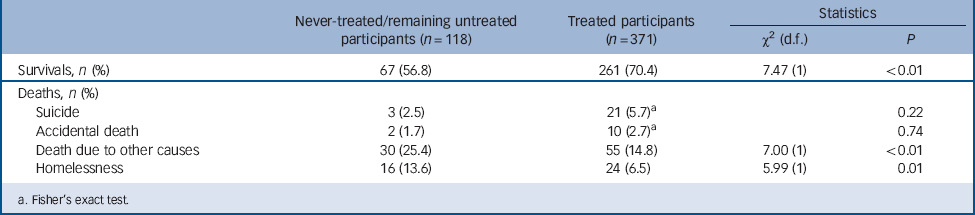
Of the 510 people identified as having schizophrenia in 1994, 10 participants were excluded in 2004 (n = 500, 98.0%) and 21 participants were excluded in 2008 (n = 489, 95.9%) because they were lost to follow-up. The characteristics of the never treated and treated patients in 2008 are described in Table 1. Of the 489 patients who were followed up, 328 (67.1%) were alive, 24 (4.9%) had taken their own lives, 12 (2.4%) died in accidental deaths, 85 (17.4.%) died from other causes and 40 (8.2%) were homeless. Among the 328 patients alive, 67 (20.4%) had still never received antipsychotic medication during the follow-up period. The never-treated patients had significantly higher rates of death from other causes and homelessness, and significantly lower rate of survival than those treated. Among the 261 treated patients, there were 29 patients (11.1%) who once took second-generation antipsychotics (such as clozapine or risperidone) in 2008.
Status of the cohort patients in 2008
| Never-treated/remaining
untreated participants (n = 118) |
Treated
participants (n = 371) |
Statistics | ||
|---|---|---|---|---|
| χ2 (d.f.) | P | |||
| Survivals, n (%) | 67 (56.8) | 261 (70.4) | 7.47 (1) | <0.01 |
| Deaths, n (%) | ||||
| Suicide | 3 (2.5) | 21 (5.7) a | 0.22 | |
| Accidental death | 2 (1.7) | 10 (2.7) a | 0.74 | |
| Death due to other causes | 30 (25.4) | 55 (14.8) | 7.00 (1) | <0.01 |
| Homelessness | 16 (13.6) | 24 (6.5) | 5.99 (1) | 0.01 |
a. Fisher's exact test.
Characteristics of patients with schizophrenia alive in 1994, 2004 and 2008
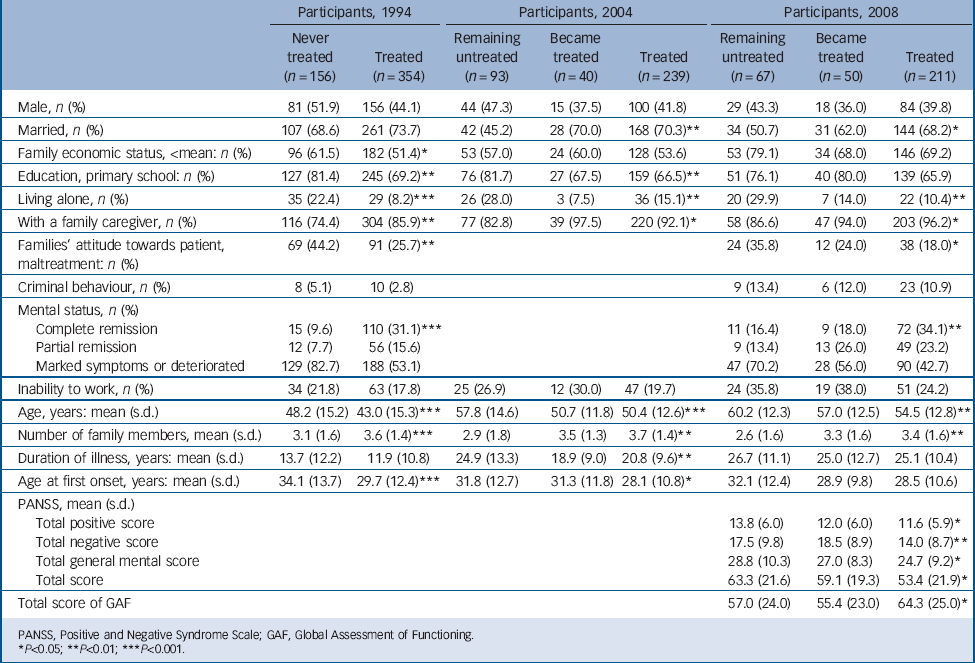
Table 2 shows the differences between never-treated/remaining untreated, became treated and treated patients in 1994, 2004 and 2008. Compared with treated patients, never-treated/remaining untreated patients were significantly older (1994, 2004, 2008), less likely to be married (2004, 2008), more likely to have no family caregiver and to live alone (1994, 2004, 2008), had a lower education level (1994, 2004) and fewer family members (1994, 2004, 2008). The treated patients had significantly higher rates of better family attitudes towards the patient (1994, 2008) than those never-treated and remaining untreated. Although the treated group had a significantly higher level of family economic status than the never-treated group in 1994, there were no differences in family economic status among the treated, became treated and remaining untreated groups in 2004 and 2008.
Characteristics of participants with schizophrenia alive in 1994, 2004 and 2008
| Participants, 1994 | Participants, 2004 | Participants, 2008 | ||||||
|---|---|---|---|---|---|---|---|---|
| Never treated (n = 156) |
Treated (n = 354) |
Remaining untreated (n = 93) |
Became treated (n = 40) |
Treated (n = 239) |
Remaining untreated (n = 67) |
Became treated (n = 50) |
Treated (n = 211) |
|
| Male, n (%) | 81 (51.9) | 156 (44.1) | 44 (47.3) | 15 (37.5) | 100 (41.8) | 29 (43.3) | 18 (36.0) | 84 (39.8) |
| Married, n (%) | 107 (68.6) | 261 (73.7) | 42 (45.2) | 28 (70.0) | 168 (70.3)** | 34 (50.7) | 31 (62.0) | 144 (68.2)* |
| Family economic status, <mean: n (%) | 96 (61.5) | 182 (51.4)* | 53 (57.0) | 24 (60.0) | 128 (53.6) | 53 (79.1) | 34 (68.0) | 146 (69.2) |
| Education, primary school: n (%) | 127 (81.4) | 245 (69.2)** | 76 (81.7) | 27 (67.5) | 159 (66.5)** | 51 (76.1) | 40 (80.0) | 139 (65.9) |
| Living alone, n (%) | 35 (22.4) | 29 (8.2)*** | 26 (28.0) | 3 (7.5) | 36 (15.1)** | 20 (29.9) | 7 (14.0) | 22 (10.4)** |
| With a family caregiver, n (%) | 116 (74.4) | 304 (85.9)** | 77 (82.8) | 39 (97.5) | 220 (92.1)* | 58 (86.6) | 47 (94.0) | 203 (96.2)* |
| Families' attitude towards
patient, maltreatment: n (%) |
69 (44.2) | 91 (25.7)** | 24 (35.8) | 12 (24.0) | 38 (18.0)* | |||
| Criminal behaviour, n (%) | 8 (5.1) | 10 (2.8) | 9 (13.4) | 6 (12.0) | 23 (10.9) | |||
| Mental status, n (%) | ||||||||
| Complete remission | 15 (9.6) | 110 (31.1)*** | 11 (16.4) | 9 (18.0) | 72 (34.1)** | |||
| Partial remission | 12 (7.7) | 56 (15.6) | 9 (13.4) | 13 (26.0) | 49 (23.2) | |||
| Marked symptoms or deteriorated | 129 (82.7) | 188 (53.1) | 47 (70.2) | 28 (56.0) | 90 (42.7) | |||
| Inability to work, n (%) | 34 (21.8) | 63 (17.8) | 25 (26.9) | 12 (30.0) | 47 (19.7) | 24 (35.8) | 19 (38.0) | 51 (24.2) |
| Age, years: mean (s.d.) | 48.2 (15.2) | 43.0 (15.3)*** | 57.8 (14.6) | 50.7 (11.8) | 50.4 (12.6)*** | 60.2 (12.3) | 57.0 (12.5) | 54.5 (12.8)** |
| Number of family members, mean (s.d.) | 3.1 (1.6) | 3.6 (1.4)*** | 2.9 (1.8) | 3.5 (1.3) | 3.7 (1.4)** | 2.6 (1.6) | 3.3 (1.6) | 3.4 (1.6)** |
| Duration of illness, years: mean (s.d.) | 13.7 (12.2) | 11.9 (10.8) | 24.9 (13.3) | 18.9 (9.0) | 20.8 (9.6)** | 26.7 (11.1) | 25.0 (12.7) | 25.1 (10.4) |
| Age at first onset, years: mean (s.d.) | 34.1 (13.7) | 29.7 (12.4)*** | 31.8 (12.7) | 31.3 (11.8) | 28.1 (10.8)* | 32.1 (12.4) | 28.9 (9.8) | 28.5 (10.6) |
| PANSS, mean (s.d.) | ||||||||
| Total positive score | 13.8 (6.0) | 12.0 (6.0) | 11.6 (5.9)* | |||||
| Total negative score | 17.5 (9.8) | 18.5 (8.9) | 14.0 (8.7)** | |||||
| Total general mental score | 28.8 (10.3) | 27.0 (8.3) | 24.7 (9.2)* | |||||
| Total score | 63.3 (21.6) | 59.1 (19.3) | 53.4 (21.9)* | |||||
| Total score of GAF | 57.0 (24.0) | 55.4 (23.0) | 64.3 (25.0)* | |||||
PANSS, Positive and Negative Syndrome Scale; GAF, Global Assessment of Functioning.
* P<0.05
** P<0.01
*** P<0.001.
The never-treated or remaining untreated groups were significantly older at age at first onset than the treated patients (1994, 2004), had longer duration of illness than those in the became treated and treated groups (2004), had higher mean scores on the PANSS positive subscale and total score than became treated and treated groups (2008), and had higher mean scores on the PANSS negative subscale and general mental scores than treated patients (2008). There were no significant differences of mean scores on the PANSS negative subscale and general mental scores between the remaining untreated and became treated groups (2008). The rates of remission and partial remission were significantly higher in the treated patients (46.7% in 1994 and 57.3% in 2008) than the never treated or remaining untreated patients (17.3% in 1994 and 29.8% in 2008) (P<0.01). The total mean scores on the GAF were significantly higher in the treated group than the remaining untreated and became treated groups in 2008. There were no significant differences in the rates unable to work among the never-treated or remaining untreated, became treated and treated groups.
Predictors of the never-treated/remaining untreated status of patients in 2008
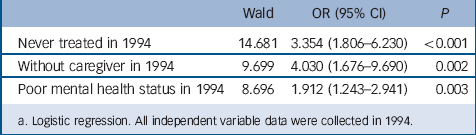
Table 3 shows the multivariate mode of predictors of the never-treated/remaining untreated status of patients in 2008 (logistic regression analyses). Three factors were identified as significantly independent predictors of the never-treated status of patients in 2008: never-treated status, without caregiver and poor mental health status in 1994.
Predictors of never-treated status of patients in 2008 a
| Wald | OR (95% CI) | P | |
|---|---|---|---|
| Never treated in 1994 | 14.681 | 3.354 (1.806–6.230) | <0.001 |
| Without caregiver in 1994 | 9.699 | 4.030 (1.676–9.690) | 0.002 |
| Poor mental health status in 1994 | 8.696 | 1.912 (1.243–2.941) | 0.003 |
a. Logistic regression. All independent variable data were collected in 1994.
Discussion
To our knowledge, this is the first 14-year prospective cohort study of outcome in people with schizophrenia who had never been treated with antipsychotic medication in a rural community. This study contributes to the existing knowledge on the long-term natural outcome of untreated patients with schizophrenia. The strengths of this study include the use of a large representative community sample in rural China, its longitudinal 14-year follow-up data and high rates of participant retention.
Status of never-treated patients
The results of this study showed that 30.6% of patients with schizophrenia had never been treated in 1994, which is consistent with a study in an Indian urban community. Reference Padmavathi, Rajkumar and Srinivasan16 There were still 25.0% and 20.4% of patients with schizophrenia who had not been treated with antipsychotic medication in 2004 and 2008 respectively. Although the results of Cox hazard regression analyses did not support differences in mortality between never-treated/remaining untreated and treated patients with schizophrenia in our previous 10-year follow-up study in 2004, Reference Ran, Chan, Chen, Mao, Hu and Tang7 the results of this 14-year follow-up still showed that never-treated/remaining untreated patients with schizophrenia had significantly higher rates of death from other causes and homelessness, and lower rate of survivals than treated patients. There were no significant differences in suicide and accidental death rate between never-treated/remaining untreated and treated patients. The results indicate that never-treated/remaining untreated patients may have a poor long-term outcome (for example higher rates of death and homelessness) than treated patients. Reference Harrison, Hopper, Craig, Laska, Siegel and Wanderling1,Reference Ran, Chan, Chen, Mao, Hu and Tang7
Differences between never-treated/remaining untreated, became treated and treated patients
There were no significant differences of gender among never-treated/remaining untreated, became treated and treated patients with schizophrenia, which is consistent with previous studies. Reference Padmavathi, Rajkumar and Srinivasan16 Compared with treated patients, the results of this study showed that never-treated/remaining untreated patients were more likely to be older in age and had a later age at onset of illness, which is also consistent with our previous study and a study in India. Reference Ran, Chan, Chen, Mao, Hu and Tang7,Reference Padmavathi, Rajkumar and Srinivasan16 Although the level of education was related to the never-treated/remaining untreated status in 1994 and 2004, which is consistent with a study in India, Reference Padmavathi, Rajkumar and Srinivasan16 there was no significant relationship between the level of education and remaining untreated status in 2008.
The results of this study show that never-treated/remaining untreated patients were more likely to be single, live alone and have no family caregiver and fewer family members than the became treated and treated groups (2004 or 2008). The rate of being married in never-treated/remaining untreated patients reduced gradually from 68.6% in 1994 to 50.7% in 2008. The results of this study show that that marriage and a family caregiver are crucial for better antipsychotic treatment status in patients with schizophrenia, which is consistent with previous studies. Reference Ran, Xiang, Huang and Shan9,Reference Sartorius, Jablensky and Shapiro26,Reference Thara and Srinivasan27 Marriage and a family caregivermay berelated topositive help-seeking behaviour; family members can provide a very effective umbrella of care and protection for patients with severe mental illness with resulting better outcomes. Reference Alem, Kebede, Fekadu, Shibre, Fakadu and Beyero11,Reference Thara and Srinivasan27,Reference Leff, Wig, Bedi, Menon, Kuipers and Korten28 The results of a study in rural Ethiopia even showed that living in a household with three or more adults predicted complete remission. Reference Alem, Kebede, Fekadu, Shibre, Fakadu and Beyero11 However, the results of an Indian study indicated that never-treated patients with schizophrenia were more often living with larger extended/joint families. Reference Padmavathi, Rajkumar and Srinivasan16 This may indicate cultural differences in various countries.
The results of this study showed that never-treated/remaining untreated patients had significantly lower rates of symptomatic complete remission (9.6% in 1994 and 16.4% in 2008) than those treated with antipsychotic medication (31.1% in 1994 and 34.1% in 2008), which is consistent with previous studies. Reference Craig, Siegel, Hopper, Lin and Sartorius4,Reference Ran, Chan, Chen, Mao, Hu and Tang7 The results of this study support the suggestion that the long-term course of schizophrenia is more heterogeneous, with a significant portion of patients exhibiting remission. Reference Bellack29,Reference Jobe and Harrow30 The results of this study also indicate that never-treated/remaining untreated patients with schizophrenia have poorer long-term mental status and more psychotic symptoms (for example in terms of PANSS scores), especially positive and negative symptoms, than treated patients, consistent with previous studies in India, Bali and our studies. Reference Ran, Chan, Chen, Mao, Hu and Tang7,Reference Ran, Xiang, Huang and Shan9,Reference Padmavathi, Rajkumar and Srinivasan16,Reference Kurihara, Kato, Reverger, Tirta and Kashima17,Reference Murthy, Kishore, Chisholm, Thomas, Sekar and Chandrashekari31 Moreover the became treated patients have relatively less psychotic symptoms (for example in terms of PANSS positive subscale and total scores) than never-treated/remaining untreated patients. The results of this study support the suggestion that the natural course of schizophrenia, in terms of clinical outcome, death and homelessness, is poor in Chinese rural areas. Reference Ran, Chan, Chen, Mao, Hu and Tang7,Reference Ran, Xiang, Huang and Shan9 Given the poor outcome of never-treated/remaining untreated patients, the results of this study also support the suggestion that the outcome of schizophrenia in low- and middle-income countries is heterogeneous and may not be better than that in high-income countries. Reference Harrison, Hopper, Craig, Laska, Siegel and Wanderling1,Reference Ran, Chen, Conwell, Chan, Yip and Xiang6,Reference Cohen, Patel, Thara and Gureje8,Reference Alem, Kebede, Fekadu, Shibre, Fakadu and Beyero11
Evidence suggests that early intervention with antipsychotic medication may be a significant predictor of and play a substantial role in improving long-term remission and outcomes. Reference Bellack29,Reference Wyatt32–Reference Kurihara, Kato, Reverger and Tirta34 The longer psychotic symptoms continue unchecked by medication, the greater the likelihood of profound clinical deterioration. Reference Black, Peters, Rui, Milliken, Whitehorn and Kopala15 A critical ‘window of opportunity’ during early treatment should be targeted with high-quality integrated care. Reference Emsley, Rabinowttz and Medori35,Reference Lambert, Naber, Schacht, Wagner, Hundemer and Karow36 The results of Harrow and colleagues' 20-year study of patients admitted once to hospital indicate that, longitudinally, after the first few years, antipsychotic medications do not eliminate or reduce the frequency of psychosis in schizophrenia. Reference Harrow, Jobe and Faull37 The results of our study among patients in a rural community signified that antipsychotic medication and medication adherence should be crucial for controlling psychotic symptoms, Reference Harrison, Hopper, Craig, Laska, Siegel and Wanderling1,Reference Ran, Chan, Chen, Mao, Hu and Tang7,Reference Alem, Kebede, Fekadu, Shibre, Fakadu and Beyero11,Reference Fenton, Blyler and Heinssen38–Reference Tirupati, Rangaswamy and Raman41 especially positive and negative symptoms in long-term follow-up. The reason for the effectiveness in controlling psychotic symptoms in patients with schizophrenia may be related to the common use of antipsychotics, especially first-generation antipsychotics in rural China. Further studies need to be conducted on this issue.
The results of this study showed that there were no differences in the ability to work in the remaining untreated, became treated and treated groups, but the treated patients had significantly higher social functioning (for example in terms of GAF scores) than the remaining untreated and became treated patients with schizophrenia in the 14-year follow-up. In an Indian study, never-treated patients were also found to be more severely disabled than those who had been treated. Reference Padmavathi, Rajkumar and Srinivasan16 The results of our study also showed that even though 70.2% of never-treated patients still retained marked symptoms or deteriorated, 64.2% of these patients could still do full- or part-time work in the 14-year follow-up. This result supports the suggestion that any decrease in ability to work caused by the illness may not correspond to the severity of the symptoms of the illness, consistent with our previous 2-year follow-up study. Reference Ran, Xiang, Huang and Shan9 Patients with schizophrenia in rural China may have greater opportunities to use their capacities for work (such as general housework, farm work). Reference Ran, Chen, Chen, Ran, Tang and Lin42,Reference Yang, Phillips, Li, Yu, Zhang and Shi43 Evidence indicates that functional outcome is not only related to the disease itself, but also to common social and economic barriers. Reference Marwaha and Johnson44 The reasons may also include (a) antipsychotic medication can not improve social functioning in patients with schizophrenia, and (b) patients' social functioning may be poor in both treated and never-treated groups as the long-term (for example 14-year) course of illness. The results of our study support the need for specialised functional treatment and support programmes for the majority of patients with schizophrenia. 24,Reference Lambert, Naber, Schacht, Wagner, Hundemer and Karow36
Predictors of the never-treated/remaining untreated status of patients in the 14-year follow-up
Why have patients with schizophrenia remained untreated in the 14-year follow-up? The results of this study indicated that the main predictors of the never-treated/remaining untreated status of patients in 2008 included baseline never-treated status, being without a family caregiver and poor mental health status in 1994. Even though a poor family economic status was related to the never-treated status in 1994, there was no relationship between family economic status and never-treated/remaining untreated status in 2004 and 2008. Although having extended families in low- and middle-income countries may not necessarily enhance chances of accessing care, Reference Tirupati, Rangaswamy and Raman41,Reference Srinivasan and Thara45 the results of our study support the suggestion that the family plays a major role in patient's treatment and management in rural China, and the never-treated/remaining untreated status of patients is associated with fewer family caregivers in rural China. Reference Ran, Chan, Chen, Mao, Hu and Tang7,Reference Ran, Xiang, Chan, Leff, Simpson and Huang46 We suggest that the traditionally supportive family network may be broken down by prolonged illness and patients' poor clinical status. Reference Ran, Xiang, Li, Shan, Huang and Li19 Although the likelihood of receiving treatment may be higher if patients have more severe symptoms, Reference Wing, Bebbington, Hurry, Tennant, Wing, Bebbington and Robins47 the present study demonstrates that the long-term never-treated/remaining untreated status in patients with schizophrenia is also related to patients' poor clinical condition, consistent with a study in Bali and our previous study. Reference Ran, Chan, Chen, Mao, Hu and Tang7,Reference Kurihara, Kato, Reverger, Tirta and Kashima17
Implications for services
Our findings indicate that the full remission rates for never-treated/remaining untreated and treated patients with schizophrenia were 16.4% and 34.1%, respectively, in the 14-year follow-up. The results of this study support the suggestion that never-treated/remaining untreated patients have a poorer long-term outcome than those treated with antipsychotic medication. Reference Ran, Chan, Chen, Mao, Hu and Tang7,Reference Tirupati, Rangaswamy and Raman41 Treated patients also have a better outcome than those patients in the became treated with antipsychotic medication group. This may indicate the importance of early antipsychotic medication. The reasons for poorer long-term outcome in the never-treated/remaining untreated group in rural China may include (a) a lack of antipsychotic medications, (b) a lack of family caregivers, and (c) a high rate of poor attitudes and care from families. Lack of family caregivers and a high rate of poor attitudes and care from families may influence patients' access to antipsychotic medications and social functioning. Our findings emphasise the importance of antipsychotic medication, especially at an early stage of illness for good long-term outcomes. Reference Ran, Chan, Chen, Mao, Hu and Tang7,Reference Alem, Kebede, Fekadu, Shibre, Fakadu and Beyero11,Reference Wunderink, Nienhuis, Systema and Wiersma39 Given the importance of antipsychotic medication for individuals with schizophrenia, improving medication access and minimising duration of untreated psychosis are important strategies that should be addressed in China and other low- and middle-income countries. Early intervention for schizophrenia, including psychosocial intervention and medication, should be emphasised for patients with schizophrenia. Reference Ran, Xiang, Huang and Shan9,Reference Ran, Xiang, Chan, Leff, Simpson and Huang46
Our results have implications for improving the treatment of never-treated/remaining untreated patients in China and elsewhere. Long-term outcomes of schizophrenia may be worsened as the absence of mental health services delays treatment. Knowledge of different outcomes between never-treated/remaining untreated and treated people with schizophrenia may change the attitudes of people and their families towards medication and improve the rates of antipsychotic medication. Reference Ran, Chan, Chen, Mao, Hu and Tang7 Although there has been dramatic socioeconomic development in China in the past three decades, 18 many patients with schizophrenia still do not receive any medication in rural areas. Resources and services for mental illness are insufficient considering the burden caused by these disorders around the world. What is the best way to solve this important basic treatment issue for these patients in rural China? It is crucial to (a) provide social welfare, health insurance and mental healthcare for patients with schizophrenia, especially those without family caregivers, (b) promote public education to reduce stigma about mental illness and cultivate positive attitudes in family members towards patients with schizophrenia, and (c) strengthen community-based mental health services to provide earlier diagnosis, antipsychotic treatment, mental rehabilitation, and family and caregiver support. Reference Ran, Chan, Chen, Mao, Hu and Tang7,Reference Ran, Xiang, Chan, Leff, Simpson and Huang46
The results of our 10- and 14-year studies among people with schizophrenia challenge the axiom in international psychiatry that schizophrenia has a better course and outcome in low- and middle-income countries. Reference Mueser and McGurk5,Reference Ran, Chan, Chen, Mao, Hu and Tang7,Reference Ran, Xiang, Huang and Shan9 Given the high rates of mortality, homelessness and never-treated patients with schizophrenia in low- and middle-income countries, it is premature to come to this conclusion if withdrawals or attrition because of deaths and homelessness and the outcome of many never-treated individuals are not included in the follow-up analyses. Reference Ran, Chen, Conwell, Chan, Yip and Xiang6–Reference Cohen, Patel, Thara and Gureje8 Given the representative sample used in the 14-year follow-up study, we suggest that our findings are generalisable to the population with schizophrenia in rural areas, and even other low- and middle-income countries that have a similar social environment. Overall, mortality, homelessness and severe clinical symptoms are serious concerns in never-treated/remaining untreated and treated individuals with schizophrenia in rural China.
Limitations
The limitations of this study include possible recall bias in interviews with participants and informants at long-term follow-up intervals, but this bias may be minimised by the use of multiple follow-up data sources. The death and suicide rates may be underestimated because most homeless individuals were lost to follow-up. Given the diversity of sociocultural, economic and care provision characteristics, the results of this rural China study may not generalise to urban areas and high-income countries.
Funding
The 1994 Chengdu study was supported by a grant from the China Medical Board in New York (CMB, 92-557; M.-Z.X., principal investigator). This study was supported in part by Global Research Initiative Program from National Institutes of Health (NIH, 1R01 TW007260-01; M.-S.R., principal investigator) and American Foundation for Suicide Prevention (AFSP; M.-S.R., principal investigator).
Acknowledgements
The authors thank the Chengdu Mental Health Center and the Xinjin Mental Hospital for collaboration and data collection.




eLetters
No eLetters have been published for this article.