Introduction
Lymphoedema is a chronic, incurable and progressive condition (Browse et al., Reference Browse, Burnard and Mortimer2003; Lymphoedema Framework, 2006:2). It is characterised by a disfiguring swelling resulting from the accumulation of lymph fluid in the interstitial spaces of a limb or affected area (Fu and Rosedale, Reference Fu and Rosedale2009). Secondary lymphoedema (SL) may occur as a consequence of disruption to the lymphatics from cancer or its related therapy (Keeley, Reference Keeley2000). Approximately 20% of breast cancer patients develop swelling of the upper limb (Clark et al., Reference Clark, Sitzia and Harlow2005; Todd et al., Reference Todd, Scally, Dodwell, Horgan and Topping2008) and between 28% and 47% develop swelling of the lower limb after gynaecological surgery (Moffatt et al., Reference Moffatt, Franks, Doherty, Williams, Badger, Jeffs, Bosanquet and Mortimer2003; Ryan et al., Reference Ryan, Stainton, Jaconelli, Watts, Mackenzie and Mansberg2003). Although body image concerns in breast cancer patients have been well-researched (Fobair et al., Reference Fobair, Stewart, Chang, D'Onofrio, Banks and Bloom2006) focus on lymphoedema is often lacking or dismissed. This is despite it being an ‘all too common occurrence’ (Rockson, Reference Rockson2000: 2814) after breast cancer surgery. Overall this is an under-researched area in the UK. Insights into how women adjust to the diagnosis of this long-term condition, consideration of their psychosocial needs and qualitative research that gives them a voice is minimal.
The literature exploring people's adjustment to a diagnosis of lymphoedema and subsequent consequences for their mental health and well-being is scanty. In particular the psychosocial ramifications of the condition require specific attention in addition to a focus on physical function (Ridner et al., Reference Ridner, Bonner, Deng and Sinclair2012). Early studies emphasised this unmet need. Carter (Reference Carter1997), for example, researching women's experiences of lymphoedema in the USA, called for more research into the psychosocial impact on body image, self-esteem, and social support. In addition the women reported that physicians did not know enough about lymphoedema and patients felt they needed more advice. Three themes emerged: abandonment by medicine, concealing the imperfect body and living the interrupted life. Earlier, Woods (Reference Woods1993) described lymphoedema as a ‘complex’ experience for patients and also reported a lack of social support and support from health-care professionals. This provision remains missing despite research revealing that women with lymphoedema following breast cancer, who perceived less social support, experienced greater overall levels of distress (Passick et al., Reference Passick and McDonald1998).
Lymphoedema affects in excess of 80 000 patients in the UK, and is associated with greater anxiety and distress and poorer mental well-being and quality of life (Morgan et al., Reference Morgan, Franks and Moffatt2005). Passick and McDonald (Reference Passick and McDonald1998: 2818) demonstrate a further complication in women with cancer-related SL; they describe lymphoedema as a ‘secondary blow to their physical and emotional wellbeing’. Moreover, women with post-breast cancer lymphoedema report more psychological distress than matched controls (Tobin et al., Reference Tobin, Lacey, Meyer and Mortimer1993). Another study confirms cancer-related lymphoedema has a significant impact on quality of life (Beaulac et al., Reference Beaulac, McNair, Scott, Lamorte and Kavanah2002).
Aims
The rationale for this research arose from two main insights. The first was recognition among clinicians of insufficient evidence to facilitate effective psychosocial support of people with lymphoedema. Second, there is still a perceived need to develop appropriate resources and clinics to treat and support patients with this condition (Williams et al., Reference Williams, Moffatt and Franks2004).
The objective was to explore the journey of the service user through the pathway from diagnosis, to treatment, and to maintenance of the condition. We present qualitative data from interviews, focus group discussions alongside questionnaire data on the themes of health care workers’ knowledge of the condition, patients’ views of their treatment, management of the condition, social support and other issues related to health care. Insight into barriers and facilitators for improving the experience of the care pathway are presented.
Methodology
This study was approved by the University of Bradford Ethics committee.
Study design
This research is part of a larger scale mixed-methods study exploring appropriate screening tools for psychosocial difficulties resulting from SL and has been reported elsewhere (working papers, Dixey et al., Reference Dixey, Barlow, Todd, Taylor, Carney and Newell2012; Newell et al., Reference Newell, Barlow, Dixey, Todd, Taylor and Carney2012). The research presented here is from the qualitative component of the study, which included semi-structured interviews (phase 1), focus groups (phase 2) and free responses to postal questionnaires (phase 3). We utilised a participatory model (Cornwall and Jewkes, Reference Cornwall and Jewkes1995) with service users as key members of the study steering group committee and who were, therefore central to the design process. Two co-researchers who were also service-users were recruited to the team to facilitate the focus group discussions. User groups, comprising members of the national and local patient support groups, Lymphoedema Support Network (LSN) and the Leeds Lymphoedema Link (LLL) agreed to discuss their experiences of lymphoedema and help pilot the focus groups. This informed the content of recruitment letters, information sheets, interview questions and questionnaire development. For added expert user engagement, the proposal received feedback from the Bradford Institute for Health Research Patient Panel.
Sample selection
Purposive sampling was used in order to explore varied experiences from a breadth of age, gender, clinical histories and services accessed. The study drew a national sample. Inclusion criteria stated that the participant had to have lymphoedema secondary to cancer or its relevant treatment.
Participant recruitment
Initially, participants were recruited following an advertisement placed in the service-user newsletter of the LSN, lymph line. Word of mouth was also used, together with liaison with a local patient support group. A total of 172 responses were generated, and 142 took part in the study. Participants were selected to each phase of the study by using a screening question, ‘Have you experienced difficulty socialising since you developed lymphoedema?’ Those who answered ‘yes’ to the question were self-identified with psychosocial problems related to their SL and were invited to take part in a one-to-one interview, whereas those who did not were classified as ‘reasonably adjusted to the condition’ and were invited to attend focus group discussions. The remaining volunteers who answered either ‘yes’ or ‘no’ after the maximum numbers for the interviews and focus groups were obtained were invited to complete a postal questionnaire.
Data collection
Fourteen women from around the UK were interviewed and a further 15 took part in focus group discussions. A total of 104 responded to a postal questionnaire which involved completing validated questionnaires for psychosocial difficulties [Brief Fear of Negative Evaluation (BFNE) short form; Derriford Appearance Scale (DAS) 24; Hospital Anxiety & Depression Scale (HADS) and the Work and Social adjustment Scale (WSAS)] and two free response questions. At the beginning of the interviews and focus groups consent to participate and audiotape the sessions was sought. Any queries that arose were clarified at this stage. The interviews took ∼1 h each and were carried out in a private setting convenient to the respondent. Two focus groups were held (one in Leeds and one in London), facilitated by the research fellow and co-researcher/service user. Lunch was provided at both meetings and participants’ travel expenses were paid. The focus groups were carried out using the same interview schedule from the interviews. The focus groups yielded information from 14 women and one man, we only report on the female perspective in this paper. A questionnaire pack was sent out to participants contributing to the postal survey, including a cover letter outlining the study and a stamped addressed return envelope. Non-respondents were sent a follow-up letter two weeks after the initial mailing. As standard, completion and return of the questionnaire constituted consent to the study.
Data analysis
All interviews were transcribed verbatim using a contents analysis approach (Burnard, Reference Burnard1991) to generate themes. This is a particularly well-suited approach for exploring personal experiences where information is already known about elements of the phenomenon. Themes were extracted from the transcripts of the semi-structured interviews, focus group meetings and qualitative content of the free text responses of the postal survey. The interviewer generated codes and at least one other researcher carried out independent coding. Meetings were held to examine discrepancies and commonalities in coding and to organise low level codes into more general themes.
Results
Characteristics of participants
The characteristics of the participants are summarised in Table 1. The participants were between 43 and 82 years which reflects the secondary nature of the illness. Two thirds of the participants had upper limb lymphoedema indicating lymphoedema secondary to breast cancer. The time of onset varied, however, for all three phases the median was 12 months or less.
Participant characteristics

Study findings
Transcripts yielded six themes: impact of lymphoedema; psychological implications and self-perceptions; other people's perceptions; clothing restrictions; physical limitations and the management of treatment. The themes are not presented in their entirety; rather, emphasis is placed on the management of lymphoedema, and those that relate to potential barriers and facilitators to service provision. Some reference to the impact of lymphoedema on the lived world of the person with SL is provided to contextualise the management of treatment from the initial diagnosis.
Reaction to a diagnosis
Women varied in their reaction to the diagnosis of SL. There was, however, a general consensus that it had a devastating impact on their lives with references made to loss of control or feelings of helplessness. The impact was overarching and affected many psychosocial domains: relation to a cancer diagnosis, self-esteem, relationships, work and treatment. Responses reflected major biographical disruption, this theme has been explored elsewhere (working paper, Dixey et al., Reference Dixey, Barlow, Todd, Taylor, Carney and Newell2012).
It affects every part of your life ….
(TR: interview)
It's always something that I'm aware of ….
(FJ: interview)
the first realisation that it was going to be permanent, just emotionally I just didn't want to go anywhere, I didn't want to do anything and I felt as though the person that I was before the breast cancer was gone ….
(BF: interview)
These accounts highlight the profound impact that SL had on women and appeared universally presented even where a positive outlook was adopted. In addition to this, functional limitations that impacted on continuation of employment were highlighted.
… I gave up work… I retired early because of it…I was finding that because of the trouble with the computer and everything else and if I got a bout of cellulitis then I had to have my arm bandaged, I was spending more time away from work than with work…than at work…
(KL: interview)
Risk of acquiring lymphoedema
Overall, there was a strong sense of anger towards the failure of health-care professionals to explain the risk of SL. Alarmingly, some patients were completely unaware of the potential risk of SL while others refer to the inadequacy of information provided pre- and post-operatively. Consequently, women were often ill-prepared in identifying signs of developing lymphoedema and the diagnosis came as a shock.
I really think that if I'd been warned that it was a possibility… it was such a terrible shock.
(MS: interview)
Also I had not been warned of the possibility, I still feel great anger.
(Questionnaire)
Some individuals referred to underestimating the significance of the condition, either when lymphoedema was listed on the consent form, or when information was provided in leaflet format post-operatively. One woman who was well informed of the condition pre-operatively recounts how she was falsely reassured regarding her concerns of acquiring lymphoedema.
(…) I didn't know how it would affect me, so when I filled the form in consenting for my operation and they just go through the different things, lymphoedema, nobody actually explains to you what lymphoedema is…it's just lymphoedema…and sign here’.
(PT: interview)
I mentioned the day before my operation when I was told that they'd be removing my lymph nodes would I get lymphoedema? And the consultant said oh no, no, no that's very, very rare. You, you're I'm almost certain you won't get lymphoedema. Four days after my hysterectomy I was very poorly with an upset tummy and the nurse came to help me back into bed because I'd got drains and things attached. And she lifted the sheet and saw my legs and they're literally really swollen and said oh I think you've got lymphoedema...
(SK: interview)
Further, one woman with midline lymphoedema was warned about arm lymphoedema but not about the potential of lymphoedema elsewhere, ‘the breast cancer nurses genuinely didn't know’ (LM: interview). This inevitably led to a delay in diagnosis. Women were often left with the impression that the SL could have been avoided if health-care professionals were more aware of the risk, resulting in feelings of anger and distrust towards health-care professionals.
I mean the doctor did say the reason I got it was the fact that they took blood from my arm…from this arm after I had cancer…and it was through that trauma that caused the lymphoedema…so yeah going into hospital for a lumpectomy having an operation for something to…then coming out with something else that they've done wrong!
(FJ: interview)
Health-care professionals’ knowledge of lymphoedema
Participants reported the medical profession's lack of knowledge, often referring to GPs as ‘understanding nothing about lymphoedema’. The majority of those who had suffered difficulties adapting to their condition referred to the dismissal of their concerns and lack of information and support given by their GPs, suggesting that there is an inequity in support for people living with SL.
…what I have found odd is from doctor's points of view…They don't know what it is…they know if you've got something else wrong with you. They don't know what lymphoedema is…
(LP: interview)
(…) even your GP said ‘oh I don't know anything about lymphoedema you'd better ask your nurse’…
(MS: interview)
One respondent said that she was not told that the swelling was permanent, and had to probe for information in order to know the extent of her condition. The consensus was that there was a need for individuals to seek out their own information as the information provided by health-care professionals was often lacking. Service users stated that they have to become experts in their own right, but this had resulted in barriers in their therapeutic relationship.
nobody, not the surgeons or the cancer nurse said this is something that you're going to have for life it was only when I went for my check-up that I said to him am I going to have this always?, can you cure it? He said I'm afraid so.
(MS: interview)
It's like most people with lymphoedema become experts because you go on the internet, because GPs know nothing... Even now, so you make sure that you're an expert…
(SK: interview)
Perceived support
Emphasis was placed on the importance of support both from health-care professionals and socially. Many women referred to a lack of support among health-care professionals and were often left with a sense of isolation and distress. This could arise from the lack of sensitivity over timing and language used when communicating an SL diagnosis. Women often felt dismissed or a nuisance and that their concerns were trivialised.
I rang the doctor on the Saturday morning and I said ‘oh I think I've got lymphoedema’ and he said ‘well if you have then there's nothing you can do about it’ and that was it…
(NG: interview)
(…) and I think the way that I was told when I was following the nurse down the corridor and she just sort of said it over her shoulder…
(LP: interview)
because when I was first diagnosed I was given my stockings, were prescribed for me and I had twenty minutes with somebody who showed me how to put it on…and they gave me the two stockings and that was the support I had for eleven years.
(Questionnaire)
Several people mentioned the isolating nature of lymphoedema, and that they had not been informed of support groups. The acceptability of support groups was mixed; some found them helpful and held them in positive regard. Conversely, one woman replied that she would not find a support group beneficial, but emphasised the importance of her social network. Women who mentioned the national support groups such as LSN spoke of them favourably.
I do find it's a very lonely thing to have lymphoedema…ermm I haven't, I don't know anybody else in the whole of [place name] and I have quite a lot of connections in [place name], I don't know anybody else who's got it but there must be people..
(MS: interview)
(…) Very helpful…yes because they put me in touch with the lymphoedema nurse, yes I get the newsletters and a few times I've rung them for advice… But if they don't know they perhaps have the number of someone that you can contact… so they're really good
(SK: interview)
Where support was provided by health-care professionals, it was seen as pivotal, able to ‘change the outlook’ of a person after diagnosis, improve confidence and facilitate regaining of control.
(…) and they [lymphoedema practitioner] were amazing, absolutely amazing, they explained things to me, they told me what the treatment was going to be. They said they can't cure me but they will keep it under control and that is precisely what they did…I think I began to have some confidence when I could see that what they were doing was working and I became more confident again.
(FA: interview)
Access to treatment and follow-up care
Most participants referred to difficulties accessing initial treatment, or to follow-up treatment upon diagnosis, leading to ‘frustration from lack of care’ and anger.
But I felt very angry that I that I had to, that I had to sort of fight for treatment… And that shouldn't be…It should be, everybody should be entitled to the same treatment and education….
(NG: interview)
Further, available treatment focused on physical implications, ignoring psychological adjustment, which made women feel they were being troublesome or overly emotional:
Because all they're looking at is the measurement of the arm…fitting you with the right sleeve, the right treatment? It's all very well and good but if you say I really hate this and it makes you feel so and so… it tends to be put to one side, this is my experience I'm not saying everybody's like that… so that does make you feel like you're making a fuss about nothing…
(BF: interview)
The lack of funding for treatment, such as manual lymphatic drainage (MLD) and bandaging was continually raised. Many funded their own treatment and felt that they have to fight in order to be offered NHS treatment. One had self-funded after being told that her condition was only ‘mild’ whereas if it had been ‘moderate’ the NHS would have funded it, suggesting that preventative treatment is not a priority. However, many reported that active compression and massage treatment provided huge benefits, resulting in increased mobility and independence.
the MLD is really, really good…my arm was much more flexible…… it just makes you feel as though you can do things….. Instead of having somebody else to do them for you…and it just makes you feel more useful to yourself…
(KL: interview)
Most reported difficulties obtaining their compression garments, often with long delays from measurement to receiving the garment. This led to great frustration, with women chasing up their garment orders often to find that the order was incorrect or no longer appropriate.
Yeah but now you can't even get your sleeve at the hospital…you have to get it on prescription and it takes you two months to get it…he writes the prescription …I went, it actually took be six or seven weeks to get a sleeve this year… my local chemist wouldn't even order one…
(LP: interview)
Often lymphoedema treatment was provided at a local hospice, and this was reported negatively. References were made to the connotations of the venue and the imagery this conjured up after surviving a former cancer diagnosis.
…I go to the hospice and I think will I end up in here in a few years? When I'm seeing the consultant he was amazed I was still alive. I mean how long it will be before I'm in this hospice thank you very much…you know I'd rather go somewhere else…
(Focus group)
Use of compression garments
Many of those that had been issued with compression garments had to acclimatise to managing them, including the effect it had on clothes-wearing, self-esteem, confidence and visibility. Garments were often covered up for fear of attracting attention, suggesting disability and inviting questions from others.
…if I'm dressed up it looks horrific wearing a sleeve, right it's not really nice. You can imagine yourself in a nice evening dress and a sleeve like this, it's not lovely is it… and you know so you decide right…well I do, if I'm going somewhere really posh I won't wear my sleeve. But then my arm's massive! So I have to compensate one thing for another thing …
(FJ: interview)
Despite discomfort about the garments’ appearance, women were fully aware of their benefits; one woman said she ‘feels unsafe without it’. Interestingly, a woman with truncal lymphoedema said that the compression garment benefitted her body image:
so in a way… It's actually done my body image good… because I have these control vests on all the time…and now when I can so it does pull me in a bit… So it's a bit of a reverse body image….
(SN: interview)
Patient ideas for improved services
Better training for health-care workers on the condition itself, on more timely treatment and on the psychosocial needs of those affected was definitely a high priority:
I would like to think that both nurses and doctors and any staff dealing with people that are likely to have Lymphoedema are going to be educated, I feel extremely strongly about that.
(FA: interview)
Timeliness was deemed a crucial variable for supportive interventions, particularly around the time of diagnosis. This has been mentioned in tandem with other themes and the importance of communication of a formal diagnosis.
Yeah so I think if you go right back to the beginning and look at how people are told about lymphoedema and how they're treated when they do develop it I think you can help people a lot to come to terms with it.’
(BF: interview)
A strong theme emerging highlighted the importance of control in treatment and empowerment. Respondents referred to improvements in well-being and progression when accurate information was provided relating to their capacity to complete certain activities. Engagement with sporting activities was mentioned in the focus group attendees who were more accepting of the condition.
(…) getting control about it has helped me because some time ago I didn't know as much as I do now… and when it was out of control I found it difficult to cope with…because you do if something's happening out of your control whether it's the initial cancer or whatever…the more you get to know the more you're in control…I feel in control of it now and I exercise a lot specifically for my lymphoedema different exercises to what I might have done at one time but I know that all of this if it's cycling or Pilates classes or swimming every movement is doing my leg good and that makes me feel in control…and makes me feel you know good about things…and it has a spin off in doing my whole body good anyway but that helps me cope with it…
(Focus group)
This is contradictory to some of the responses where service users were apprehensive in engaging with certain activities and the fear of worsening symptomology. In some cases service users did attend to sporting activities, however this was overshadowed by worries around body image and wearing compression garments.
I decided to take up swimming try to get, I could sort of swim but not very well so I thought I'll go for swimming lessons because I'd heard it's very good for lymphoedema.. … foolishly thinking because I was in the water I wouldn't need to use the sleeve… (laughs) and of course after the first lesson my arm was aching and I looked at the consultant guy and he said use an old sleeve when swimming, so there again it's something that, god I've even got to use this sleeve when I'm swimming I can't get away with putting a cardigan over it. So that's another thing where you think oh I'm on display….
(BF: interview)
Reference to the benefit of supported self-care was mentioned and was derived as a positive element in mental well-being. Not surprisingly, a dedicated lymphoedema service was high on people's priorities and when it was available was often transformative to patient benefit.
(…..) You can ring them at any time and they will get back to you immediately and they ring you to check-up, has everything settled down is everything alright? And you know I've said to them that makes a huge difference if you know that if you have any worries you can just ring them up the lymphoedema nurses and they're there for you all the time. Whereas a few years ago they just weren't there…
(Focus group)
Discussion
Summary of the main findings
The study provides new insights into the experiences that women with SL have in accessing appropriate health care. It appears that there are a number of deficits: women are let down on their information needs, both about risk and management, staff involved through the cancer treatment pathway were often insensitive to the enormity of the diagnosis, professionals’ knowledge of lymphoedema was insufficient, and treatment was patchy. More positively, dedicated lymphoedema services provided essential support and empowered women in their own treatment that promoted well-being. However, the majority of respondents reported the negative impact of a diagnosis on their mental well-being, and that psychosocial support was lacking in all or some of the stages of their journey with lymphoedema. It is clear that there are inequities in access to treatment with dedicated services only available in certain parts of the country. Thus, we have to conclude that our sample was reflective of the American study (Carter, Reference Carter1997), ‘abandoned by medicine’.
Despite the emphasis on better care for people with long-term conditions, there are still some shortcomings. There is no explicit mention of psychosocial needs, for example in the Department of Health's list of goals in supporting people with long-term conditions (Department of Health (DoH), 2005: 7) Studies of other long-term conditions, such as chronic bronchitis (Nicolson and Anderson, Reference Nicolson and Anderson2003) show that patients face psychological distress, negative self-esteem and disruption to relationships. Lymphoedema is not only a long-term condition, but also a disfiguring one. Rumsey et al. (Reference Rumsey, Clarke, White, Wyn-Williams and Garlick2004) in their studies of people with disfiguring body changes conclude that psychosocial needs and body image concerns are inadequately met, while the severity of the visible change is not necessarily associated with the level of distress (Rumsey et al., Reference Rumsey, Clarke and Musa2002). Existing literature on long-term conditions and on disfiguring conditions affecting body image clearly shows that they impact negatively on mental well-being. It is therefore alarming that our data show such a failure to address women's potential distress. Not only was the diagnosis often communicated in an insensitive manner, but insufficiencies in knowledge of lymphoedema could lead to increased risk of it occurring.
Our data concur with McWayne and Heiney (Reference McWayne and Heiney2005) who found a continuing lack of understanding from hospital staff about lymphoedema. Our data show how devastating and life-changing lymphoedema is, something that health-care professions do not appear to appreciate fully despite acknowledgements in other studies (Posner and Momenzadeh, Reference Posner and Momenzadeh2004; Pyszel et al., Reference Pyszel, Malyszczak, Pyszel, Andrzejak and Szuba2006). Further, in the USA at least, Gordon and Mortimer (Reference Gordon and Mortimer2007: 741) assert, ‘Many patients currently receive inadequate care as lymphedema fails to receive appropriate recognition by the medical community’. Our data would indicate that this occurs in the UK too. A recent study highlights an unmet education need for health-care professions and provides insight into the extent of the perceived competency from the perspective of the health-care professionals. Alarmingly, only 13% of generalist health-care practitioners felt that their education needs were adequately met and 69% of GPs identified difficulties in assessment of lymphoedema (Davies, Reference Davies2011).
Rockson (Reference Rockson2000: 2816) argues that there is ‘a growing body of knowledge surrounding the important precipitating factors in the lymphedema that follows breast carcinoma therapy’. There is thus no excuse for not applying this knowledge in treatment regimes. Instead, women in our study felt that they had to become the experts, and that knowledge among GPs in particular was sadly deficient. Rockson (Reference Rockson2000: 2816) points to the failure to apply what is known: ‘Patients at risk and those with established disease await informed and sophisticated advice from their medical practitioners’. Evidence suggests that supported self-care empowers the service user to maintain their own well-being but relies heavily on expert guidance and support from health-care professionals (Williams, Reference Williams2011). An international consensus on best practice in lymphoedema management does exist (Framework, 2006) yet our work suggests that it is not applied uniformly.
There is no excuse for not knowing about lymphoedema, and also no excuse for poor communication skills. It was argued years ago that effective communication skills provide the key to good cancer care (Fallowfield and Jenkins, Reference Fallowfield and Jenkins1999; Moore et al., Reference Moore, Wilkinson and Rivera Mercado2004). Indeed, they are key to good practice in all aspects of health care. It was clear and unsurprising that patients felt much happier and in control when they were taught about lymphoedema, and had supportive staff, usually in specialist lymphoedema services, providing MLD and compression garments. Programmes developed in other areas such as to help patients with disfigurement, including social interaction skills training (eg, Robinson et al., Reference Robinson, Rumsey and Partridge1996; Newell and Clarke, Reference Newell and Clarke2000; Rumsey and Harcourt, Reference Rumsey and Harcourt2010) may also be effective for people with lymphoedema. Again, there is a need to apply what is already known.
Limitations of the study
The study has a number of limitations. First, these reports are provided by service users and often relate to retrospective accounts, some from many years’ experiences of health care which since then may have improved. Second, the data are reflective of a predominantly female sample and is not culturally diverse. The nature of the main study investigating social difficulties and appearance concerns may not be conducive to persuading men to volunteer. In addition, the majority of the participants had SL secondary to breast cancer, and it is natural that the sample is predominantly female. Caution is therefore required when interpreting how these data relate to present day service provisions and when generalising to the whole population. However, there is obvious merit in the information presented here and the inadequacies within provisions that are suggested require further investigation.
Implications for policy, practice and future research
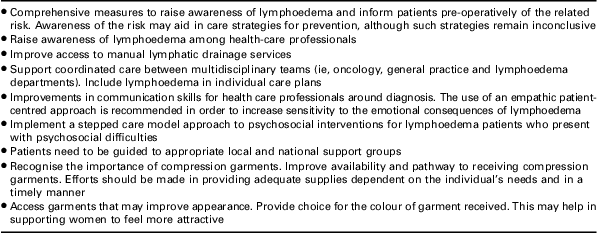
Our research leads to a number of recommendations, which are outlined in Table 2. They all relate to supported self-care in guiding the service user from a place of dependence to one of independence using a patient-centred approach.
Recommendations for improving service provision

Our research has revealed a failure to translate existing evidence into practice and has also added patients’ perspectives on how services could be improved. A subtheme arising predominantly in the focus groups detailed possible coping mechanisms which acted as facilitators for adjustment. These may be utilised to inform service improvement and relate to timeliness, communication and control through supported self-care. Recently, Todd et al (Reference Todd, Harding and Green2010) developed a matrix designed to facilitate lymphoedema service development. This may prove a useful model in tailoring service provision to the patient's specific needs.
Conclusion
Data from our sample of women with lymphoedema shows that their lives were dramatically changed by lymphoedema, but their information needs were not met and the risks of lymphoedema as a side effect of cancer treatment was not explained to them. They experienced health-care professionals who were unaware of the condition or who expressed lack of knowledge. Their experiences with trying to access treatment were frustrating except where they had managed to find appropriate dedicated and specialist services. From the reports provided it appears that these are not available countrywide. Despite existing knowledge about the mental health impact of diagnosis with such a condition, appropriate psychosocial support is not forthcoming. Urgent attention to our recommendations would result in improved outcomes for this important group of patients.
Acknowledgement
The authors would like to express gratitude to the people who responded to our advertisements and participated in the study, giving their time and insights with such care and detail. They also thank Dr Gabrielle Tracy McClelland for help with research training and Julie Cottam, Ros Lam, the Lymphoedema Support Network (LSN) and Leeds Lymphoedema Link (LLL) for help with recruitment.
Funding
This study was generously funded and supported by Macmillan Cancer Support.