




INTRODUCTION
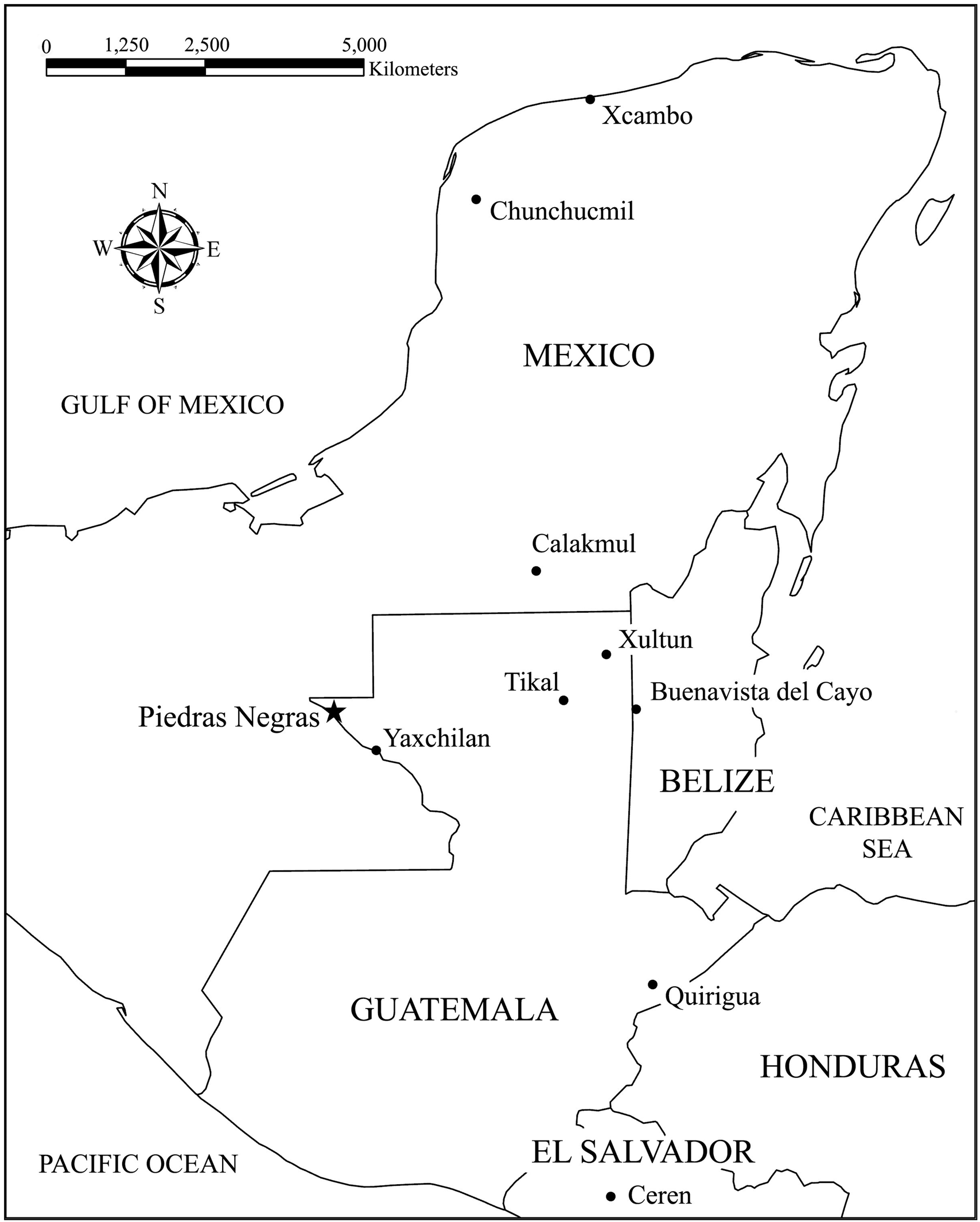
One of the major paradigm shifts in Maya archaeology over the past decade has been an acknowledgment of the existence of marketplaces and market systems across the Maya region (Cap Reference Cap2015a, Reference Cap, Masson, Freidel and Demarest2020; Chase and Chase Reference Chase and Chase2014, Reference Chase and Chase2017; Eppich and Freidel Reference Eppich, Freidel and King2015; Jones Reference Jones and King2015; King Reference King, Masson, Freidel and Demarest2020; Martin Reference Martin, Houston, Golden and Skidmore2012, Reference Martin2020:341–344; Masson and Freidel Reference Masson, Freidel, Pillsbury and Hirth2013; Shaw and King Reference Shaw, King and King2015; Tokovinine and Beliaev Reference Tokovinine, Beliaev, Pillsbury and Hirth2013). One of the first loci proposed as an ancient market was the East Plaza of Tikal (Jones Reference Jones1996), and since then much of the evidence for ancient Maya markets has focused on a combination of architectural layout and artifacts that suggest areas of intense craft production (Cap Reference Cap and King2015b; Dahlin et al. Reference Dahlin, Jensen, Terry, Wright and Beach2007; King Reference King and King2015; Shaw Reference Shaw2012). Ethnohistoric data suggest, however, that precolonial Mesoamerican markets may have provided other services beyond the production and exchange of crafted goods, such as healing and the provisioning of medicinal remedies (Hirth Reference Hirth2016; Orellana Reference Orellana1987; Sahagún Reference Sahagún, Dibble and Anderson2012). However, medical practice remains largely understudied in the archaeological record of the Maya area, especially in the identification of materia medica, the artefactual and biological residues of health care materials. Given the importance of health care to contemporary people—preventative and therapeutic; physical and spiritual—identifying the loci and components of such practices is critical for a more holistic understanding of the past (Morell-Hart Reference Morell-Hart2021). Here, we present archaeological evidence for medical practices in the central marketplace of Piedras Negras, a major Classic period (a.d. 350–900) Maya dynastic center in Guatemala (Figure 1; Coe Reference Coe1959; Proskouriakoff Reference Proskouriakoff1960; Weeks et al. Reference Weeks, Hill and Golden2005).
Location of Piedras Negras in the Maya Lowlands and other major archaeological sites mentioned in the text. Map by Schnell.
We center our research on an area of the site that has come to be known as the Southeast Marketplace, a focal point of market activity during the Late Classic period (a.d. 600–900). The manner by which Piedras Negras’ marketplace was identified is reported in recent publications by members of the Proyecto Paisaje Piedras Negras-Yaxchilan (Golden et al. Reference Golden, Scherer, Schroder, Vella, Recinos, Masson, Freidel and Demarest2020; Roche Recinos Reference Roche Recinos2021; Schnell and Scherer Reference Schnell and Scherer2021). Here, we highlight several lines of evidence for medical practice in the Southeast Marketplace, including a cluster of monumental sweatbaths, extracted pathological teeth, and plant remains with medicinal properties, the latter of which are reported here for the first time. We ask: does the presence of medicinal plant remains suggest that healing practices were conducted in association with the nearby sweatbaths and other activities, including therapeutic tooth extractions? Were these plants used in the marketplace (prepared by practitioners or consumed by patients on-site), or were they trade commodities, purchased in the market and consumed elsewhere? To what extent were these plants sought by visitors to the marketplace because they were widely known to have curative properties? To what extent were these plants prepared and prescribed by medical practitioners who might have possessed specialized knowledge and managed the physical and spiritual health of the community (Morell-Hart Reference Morell-Hart2021)?
Through these multiple lines of evidence for medical practice, we also address a primary question: does the Piedras Negras Southeast Marketplace deviate from what is expected of an ancient Maya marketplace, as based on current scholarship? If so, how? This is a particularly important question, given that most of the burgeoning literature on ancient Maya market systems makes little to no reference to health care. The evidence for medical practice in the Piedras Negras marketplace is unique in the known sample and encourages the question, why?
The evidence we present here highlights the importance of health care in ancient Maya market systems, revealing that medicinal plants and services were likely an integral component of the services and economic exchange conducted at such locales. By examining these strands of evidence alongside ethnohistoric research, we argue that general health care practices associated with plants were performed in the marketplace, as well as specific therapeutic practices associated with dental care. The high quantity of identifiable plant taxa with medicinal qualities, in addition to the specifics of the bioarchaeological data, have greatly changed our understanding of the marketplace at the site of Piedras Negras.
ILLNESS AND MEDICAL PRACTICE IN THE MAYA AREA
Our current knowledge of ancient Maya health practices is scant compared to other areas of the world and comes primarily from the limited evidence for such practices in the textual and iconographic corpus, often involving supernatural actors in mythical locales (Houston et al. Reference Houston, Stuart and Taube2006:117–119; Scherer Reference Scherer, Newman, Houston, Román and Garrison2015:44–45). This paucity of evidence for medical practice in images and texts may relate in part to a preoccupation by the Maya elite to present themselves as healthy and full of vitality (Houston et al. Reference Houston, Stuart and Taube2006:49). In contrast, healing practices have been a major focus of modern ethnography in the Maya region for more than a century (discussed further below) and were of great interest to the chroniclers of the early colonial period in the sixteenth and seventeenth centuries.
While we cannot draw a one-to-one correlation between the archaeological record and these later observations, they do provide an appropriate framework for analogy and comparison. For example, among the central protagonists of the Popol Vuh, an eighteenth-century creation narrative of the K'iche Maya (copied from an earlier sixteenth-century manuscript generally believed to be based on precolonial sources), are a pair of primordial grandparents with healing talents (Christenson Reference Christenson2003:99). In this text, the Grandmother and Grandfather state that they provide for their family by curing eye ailments, setting broken bones, and removing worms from teeth. The removal of tooth worms, here, serves as an analogy for tooth extraction, as belief in a tooth worm as the etiological cause for tooth decay is widespread in the Maya region and seems to exist independently of similar European beliefs (Augusto Avila Reference Augusto Avila1977; Casagrande Reference Casagrande2002; Lee Reference Lee, Adams and Hawkins2007).
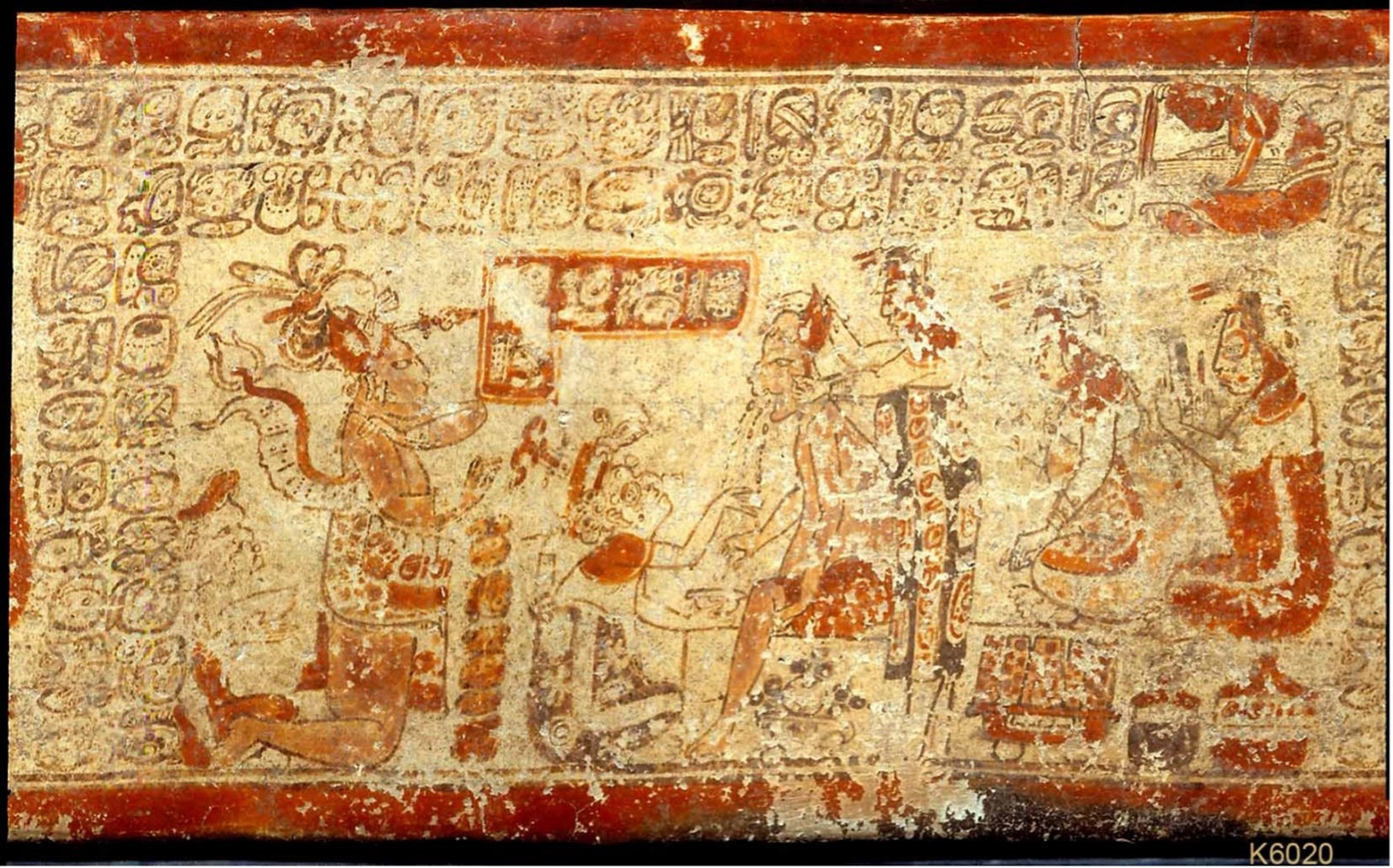
What little we do know of ancient Maya health care practices is derived from a small number of iconographic images that are believed to depict scenes of healing. For example, a complex of aged, grandmother deities commonly referred to as Chac Chel or Chac Ix Chel, or simply Goddess O (Schellhas Reference Schellhas1904:38; Taube Reference Taube1992:99–105; Zimmermann Reference Zimmermann1956), is usually associated with healing, midwifery, and weaving (Ardren Reference Ardren2006:28–32; Tozzer Reference Tozzer1941). In one Late Classic scene, this figure is depicted aiding an ailing supernatural who is vomiting into a bowl she holds aloft (Figure 2); and in another, the famous Birth Vase, several aspects of Goddess O are shown assisting a young goddess with jaguar attributes through the birthing process (Taube Reference Taube and Kerr1994:657). This deity is commonly depicted wearing a skirt adorned with a motif of crossed bones and disembodied eyeballs. At Piedras Negras, an elderly woman buried with a bowl decorated with that same crossed-bone and eyeball motif suggests that she may have performed similar duties as Goddess O in life (Scherer Reference Scherer, Newman, Houston, Román and Garrison2015:45).
Goddess O depicted aiding an ailing supernatural who is vomiting into a bowl she holds aloft. K6020 © Justin Kerr.
Goddess O's connections with childbirth also associate her with sweatbaths, due to the central therapeutic role that these structures play in childbirth, not only in the Maya region, but across much of Mesoamerica (Cosminsky Reference Cosminsky1972; Groark Reference Groark2005; Katz Reference Katz and Jordan1993; Moedano Reference Moedano1977; Orellana Reference Orellana1987; Virkki Reference Virkki1962). In Central Mexico, similar-aged goddesses of childbirth are associated with sweatbaths. For example, an image from the Codex Magliabechiano depicts an elderly woman stoking the fire and tending to a sweatbath adorned with the face of Tlazolteotl, a Nahua goddess associated with purification and childbirth (Houston Reference Houston1996:140).
Houston and colleagues (Reference Houston, Stuart and Taube2006:118–120), using archaeological, iconographic, and ethnographic evidence, argue that consumption and intoxication played a central role in Maya healing practices. Acts such as purging or vomiting, or cleansing via sweatbathing, brought the body to extremes and then restored balance to the body by bringing it back to an “unstable midpoint” (Houston et al. Reference Houston, Stuart and Taube2006:118). The act of sweatbathing, a healing process in and of itself, was likely augmented by the consumption or application of medical botanicals, as is the case in modern sweatbathing traditions (Groark Reference Groark1997:57). Sweatbathing increases blood flow and circulation in the body, which could, in theory, enhance the effects of therapeutic beverages and medicines. Thus, “for the Classic Maya, as with many other people, the distinction between ‘food’ or ‘ingestibles’ and ‘medicine’ was at best flexible” (Houston et al. Reference Houston, Stuart and Taube2006:119).
Though not fully understood, many Classic period drinking vessels are adorned with a diverse cast of grisly, grotesque, and macabre beings known as wahy. Several scholars have noted how many of these beings are suggestive of disease (Grube and Nahm Reference Grube, Nahm, Kerr and Kerr1994; Helmke and Nielsen Reference Helmke and Nielsen2009; Houston and Stuart Reference Houston and Stuart1989), with names such as Stinking Death, Death on the Path, and Red Bile Death. Stuart (Reference Stuart, Coltman and Pohl2021) suggests that these wahy beings may have been possessed or wielded by Maya elites to inflict harm or disease on their enemies. Helmke and Nielsen (Reference Helmke and Nielsen2009), note the similarities between the wahy beings of the Classic period as personified diseases and the disease-causing entities invoked in medical incantations of the colonial and contemporary periods. Similarly, in the Popol Vuh, several of the underworld lords bear names suggestive of disease, such as Flying Scab and Gathered Blood, who are said to “sicken people in their blood,” and Pus Demon and Jaundice Demon, who are said to “swell people up until pus oozes from the skin of their legs, and the skin of their faces becomes yellow with jaundice” (Christenson Reference Christenson2003:115–116).
Similar to the scarcity of visual evidence for medical practices or individuals who might be considered sick or injured in the corpus of Classic Maya art, there are no depictions of dentistry or dental practices in the corpus, despite widespread evidence for such practices in the archaeological record. This evidence comes primarily from a tradition of dental modification, including filing the margins of teeth and inlaying precious stones into the anterior surfaces of teeth (Borbolla Reference Borbolla1940; Fastlicht Reference Fastlicht1976; Fastlicht and Romero Reference Fastlicht and Romero1951; Romero Reference Romero1958, Reference Romero and Stewart1970; Stewart Reference Stewart1941; Tiesler Reference Tiesler2001; Tiesler et al. Reference Tiesler, Cucina, Ramírez-Solomón, Burnett and Irish2017). In order to set the inlays, the labial surfaces of the anterior teeth were drilled, a practice that carries significant risk for complication, chief among those being perforation of the pulp chamber which can lead to root resorption, hypercalcification, infection, or even death (Versiani et al. Reference Versiani, Sousa-Neto and Pécora2011). However, in a large study of more than 900 dentitions, Tiesler and colleagues found that less than 4 percent of observable inlay cavities breached the pulp chamber, a significant success ratio for a potentially dangerous procedure and evidence of the skill and practice possessed by those who conducted dental procedures (Tiesler et al. Reference Tiesler, Cucina, Ramírez-Solomón, Burnett and Irish2017:Table 17.1).
Beyond modified teeth, therapeutic and hygienic dental practices have been documented in the form of tooth extractions and toothpicking. Cucina and Tiesler (Reference Cucina, Tiesler, Cobos and Souza2011) described an extracted molar and a toothpick groove associated with large caries in two separate individuals at Xcambo, Yucatan. Relevant to our arguments here, Schnell and Scherer (Reference Schnell and Scherer2021) have documented dental extractions of pathological teeth on a large scale in the marketplace of Piedras Negras, Guatemala, as detailed further below.
In the ethnographic literature, indigenous tooth-drawers and informal dental practitioners have been reported in markets in both Central Mexico (Schendel Reference Schendel1968) and Guatemala (Lee Reference Lee, Adams and Hawkins2007). In Guatemala, itinerant tooth-drawers known as dientéros or sacamuelas provide care on an as-needed basis and to those who may be unable to travel for treatment (Hunter and Arbona Reference Hunter and Arbona1995).
The relationship between market systems and health care extends beyond dental practices, as documented in ethnographic (Logan Reference Logan1973; Napolitano and Mora Flores Reference Napolitano and Flores2003; Nicholson and Arzeni Reference Nicholson and Arzeni1993; Ticktin and Dalle Reference Ticktin and Dalle2005) and ethnohistoric (Megged Reference Megged1994:195) sources across Mesoamerica, though this association has not yet become a salient topic in studies of ancient Maya markets. For example, Sahagún (Reference Sahagún, Dibble and Anderson2012) lists physicians plying their trade alongside vendors selling their wares. Cortés (Reference Cortés1962:87–88), in a letter to King Charles V of Spain, describes vendors selling medicinal plants in the marketplace at Tlaltelolco, and the presence of large apothecaries. Examining records of the Tlaltelolco market, Hirth (Reference Hirth2016:Table 3.1) records 21 different herb sellers and 21 different pharmacists.
In the Maya region, the ethnohistoric literature concerning markets and trade is not quite as detailed as it is in Central Mexico (King Reference King and King2015). Maya markets are mentioned by Spanish chroniclers such as Diego de Landa (Tozzer Reference Tozzer1941), Gonzalo Fernández de Oviedo y Valdes (Reference Oviedo y Valdes1851 [1535]), and Francisco Ximénez (Blom Reference Blom1932:545). Fray Bartolomé de Las Casas, in his Apologética Historia (1958), describes the Maya highland markets of Verapaz during the colonial period. Here, the markets were located near temples, organized by the elites, presided over by a magistrate or “mayor,” and were a principal means by which individuals from all socio-economic backgrounds acquired their necessities (Las Casas Reference Las Casas1958:353). Importantly, Las Casas also notes that merchant craftspeople both made and sold their goods in the market (Las Casas Reference Las Casas1958:353). Feldman (Reference Feldman1985:20–21) notes that these were the most common type of merchant and calls them “retailers.” Long-distance traders, similar to the Aztec pochteca, sold what they acquired on their travels in the market. According to Tokovinine and Beliaev (Reference Tokovinine, Beliaev, Pillsbury and Hirth2013), travel was integral to the Maya market economy, in both ancient and colonial times. Such travel is reminiscent of the itinerant medical practitioners described in modern markets, and it is certainly possible that both local and traveling practitioners were present in ancient markets. However, it is highly likely that individuals also traveled to markets, especially those at major urban centers such as Piedras Negras, to seek medical care or to have specialist procedures performed.
In the absence of materia medica, scholars have long relied on iconographic and documentary evidence to fill gaps in knowledge about ancient medical practices. Prior to our research on the tooth extractions performed at the Piedras Negras marketplace (Schnell and Scherer Reference Schnell and Scherer2021), no scholarship has attended to medical care in Maya marketplaces and the specific forms such practices take. Here, however, we integrate evidence from paleoethnobotanical residues with the broader archaeological context to suggest that the marketplace was both the site of exchange of medicinal goods as well as the locus of curative activities.
PIEDRAS NEGRAS: A CLASSIC PERIOD DYNASTIC KINGDOM
Piedras Negras (Figure 3) is located on the eastern bank of the Usumacinta River and was first populated as early as 1000 b.c. (Houston et al. Reference Houston, Escobedo, Child, Golden, Terry and Webster2000a, Reference Houston, Escobedo, Child, Golden, Muñoz and Smith2003). During the Late Preclassic period (ca. 250 b.c.–a.d. 350) and the beginning of the Early Classic period (ca. a.d. 350–600), Piedras Negras was a small community of perhaps a few households, living proximate to a civic ceremonial center that lacked monumental architecture (Houston et al. Reference Houston, Escobedo, Child, Golden, Muñoz and Smith2003:220). Around a.d. 450–500, Piedras Negras’ population exploded, increasing dramatically over a short period of time. Settlement data suggest that around this time people moved from the surrounding countryside to Piedras Negras, perhaps drawn by the emergence of dynastic rule at the site (Golden and Scherer Reference Golden and Scherer2013; Golden et al. Reference Golden, Scherer and Muñoz2008b). During the Yaxche phase of the Late Classic period (a.d. 620–750) there was an estimated 2,000–3,000 people living within the core of the city (Nelson Reference Nelson2006). It was also at this time that populations began to return to the countryside. During the Chacalhaaz phase (a.d. 750–850) Piedras Negras was in a state of turmoil due to a series of rapid changes in kingship (Martin and Grube Reference Martin and Grube2008:151; Proskouriakoff Reference Proskouriakoff1960). Around a.d. 808 the kingdom of Yaxchilan defeated Piedras Negras, and the site was ultimately abandoned one to two generations later (Golden et al. Reference Golden, Scherer, Kingsley, Houston, Escobedo, Iannone, Houk and Schwake2016).
Map of Piedras Negras highlighting the locations of the eight monumental sweatbaths (black arrows), as well as the Southeast Marketplace (gray overlay) within the site. See Figure 4 for structure number information. Map by Tatiana Proskouriakoff, Fred Paris, and Zachary Nelson with modifications by Schnell.

The greater Piedras Negras region has a long history of archaeological investigations (Houston et al. Reference Houston, Escobedo, Child, René Muñoz and Urquizú1998a, Reference Houston, Escobedo, Forsyth, Hardin, Webster and Wright1998b, Reference Houston, Escobedo, Hardin, Terry, Webster, Child, Golden, Emery and Stuart1999, Reference Houston, Escobedo, Child, Golden, Terry and Webster2000a, Reference Houston, Escobedo, Terry, Webster, Veni and Emery2000b; Weeks et al. Reference Weeks, Hill and Golden2005, with more recent work focusing on the frontier and border zone between the kingdoms of Piedras Negras and its downriver rival, Yaxchilan (Arroyave et al. Reference Arroyave, Golden and Scherer2009; Golden Reference Golden2003; Golden and Scherer Reference Golden and Scherer2011; Golden et al. Reference Golden, Romero, Dardón and Rangel2004, Reference Golden, Scherer and Vásquez2006, Reference Golden, Scherer and Muñoz2008b; Kingsley et al. Reference Kingsley, Golden, Scherer and Marroquín Franco2010; Scherer Reference Rode, Adams and Hawkins2007; Scherer et al. Reference Scherer, Golden and Dobereiner2012, Reference Scherer, Golden and Dobereiner2013; Vásquez et al. Reference Vásquez, Scherer and Golden2005) and aspects of economy (Golden et al. Reference Golden, Scherer, Muñoz and Hruby2012, Reference Golden, Scherer, Schroder, Vella, Recinos, Masson, Freidel and Demarest2020; Roche Recinos Reference Roche Recinos2021). Other work has addressed time and the meaning of chronology (Golden Reference Golden2002), stone tool production and its ideological significance (Hruby Reference Hruby2006; Hruby and Ware Reference Hruby, Ware, Houston, Skidmore and Golden2009), ritual practice (Child Reference Child2006a; Fitzsimmons et al. Reference Fitzsimmons, Scherer, Houston and Escobedo2003), diet and subsistence (Emery Reference Emery2007; Fernández et al. Reference Fernández, Johnson, Terry, Nelson and Webster2005; Parnell et al. Reference Parnell, Terry and Golden2001, Reference Parnell, Terry and Nelson2002a, Reference Parnell, Terry and Sheets2002b; Scherer Reference Scherer2007), population history (Nelson Reference Nelson2005; Scherer Reference Scherer2007), collapse and abandonment (Child and Golden Reference Child, Golden, Stanton and Magnoni2008; Golden et al. Reference Golden, Scherer, Kingsley, Houston, Escobedo, Iannone, Houk and Schwake2016; Houston et al. Reference Houston, Escobedo, Child, Golden, Muñoz, Ciudad, Ponce de León and Carmen Martínez2001), and the very nature of Maya royal courts and the communities that surrounded them (Houston et al. Reference Houston, Escobedo, Child, René Muñoz and Urquizú1998a). In 2016 and 2017 the Proyecto Paisaje Piedras Negras-Yaxchilan (PPPNY), under the direction of Charles Golden, Griselda Pérez Robles, Andrew Scherer, and Mónica Urquizú, renewed investigations at the site of Piedras Negras (Pérez Robles et al. Reference Pérez Robles, Scherer and Golden2016; Urquizú et al. Reference Munir, Semmar, Farman and Ahmad2017) to better understand the dynamism and interconnectivity of war, politics, and economy in Piedras Negras and its surrounding environs (Pérez Robles et al. Reference Pérez Robles, Scherer and Golden2016; Urquizú et al. Reference Urquizú, Scherer and Golden2017).
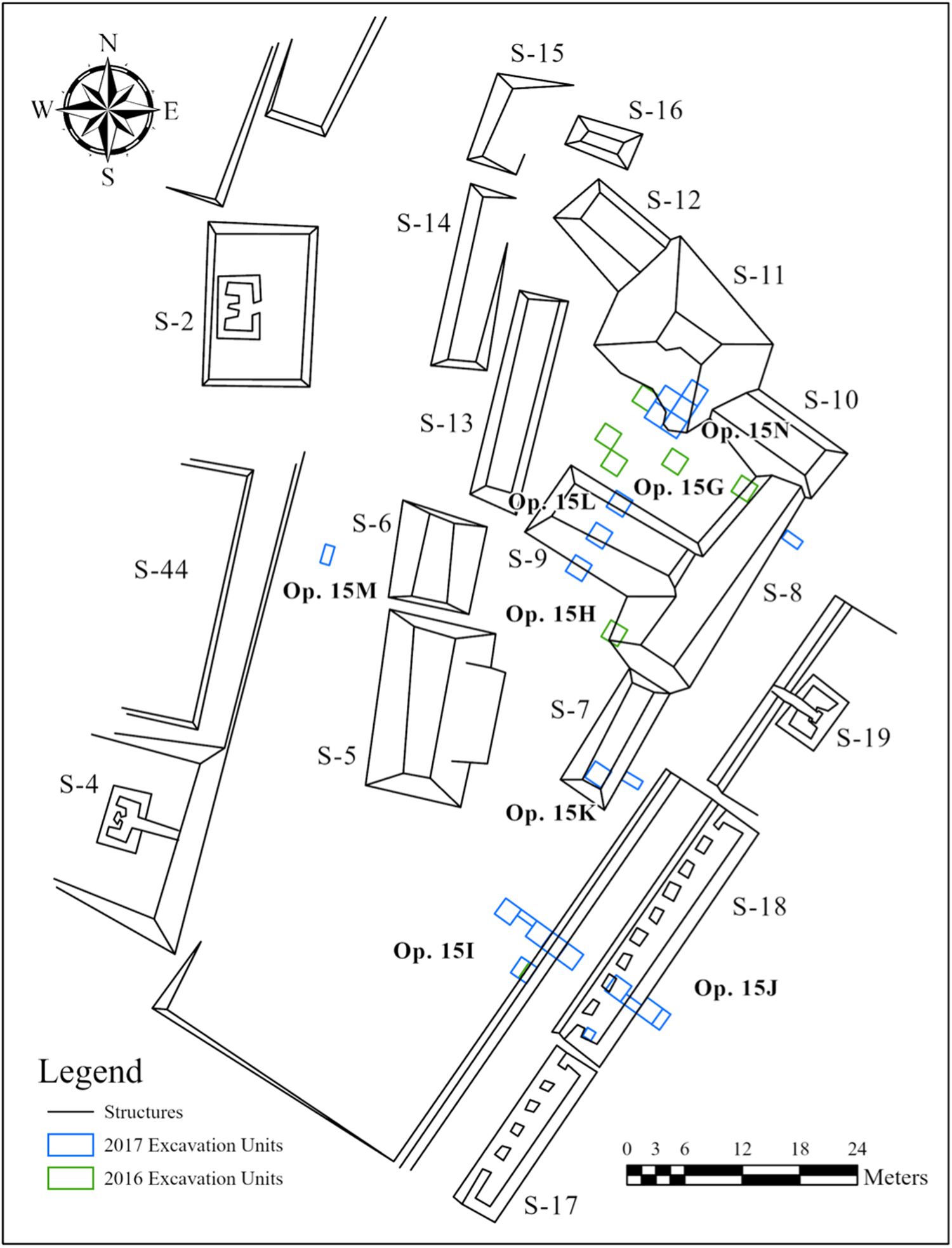
From 2016 to 2017, the PPPNY conducted excavations at various locations in and around the site core of Piedras Negras, targeting craft production areas, monumental architecture and plazas, defensive features, and smaller dwellings. Of particular interest was a series of three patios located in the southern portion of the site, an area that was also studied by prior projects (Figure 4). Based on excavations from 1997 to 2000, members of the Proyecto Arqueológico Piedras Negras (PAPN) hypothesized that this area might have served as a marketplace for the site. These excavations yielded a large and diverse artifact assemblage that was distinct from those recovered in other areas of the site, including significant quantities of production debris from lithic and bone objects, as well as prestige goods such as greenstone, shell, and quartz (Escobedo Reference Escobedo, Escobedo and Houston1997; Jackson and Hruby Reference Jackson, Hruby, Escobedo and Houston2001; Urquizú Reference Urquizú, Escobedo and Houston1998). Consisting of 18 structures arranged around three patios, the architectural layout of this area of the site, particularly the open plazas, long-range structures, and small pyramid, is consistent with other known marketplaces in the Maya area, such as those at Buenavista del Cayo (Cap Reference Cap and King2015b), Calakmul (Carrasco Vargas et al. Reference Carrasco Vargas, Vásquez López and Martin2009), and Chunchucmil (Dahlin et al. Reference Dahlin, Jensen, Terry, Wright and Beach2007).
Map of the Southeast Marketplace with the locations of the 2016 and 2017 excavations, as well as the three monumental sweatbaths (S-2, S-4, and S-19). Map by Tatiana Proskouriakoff, Fred Paris, and Zachary Nelson with modifications by Omar Alcover Firpi and Schnell.
The PPPNY specifically targeted this area of the site to test the earlier hypothesis that it served as a marketplace for the ancient urban center of Piedras Negras. Robust screening protocols were utilized, employing screens with ⅛-inch mesh to capture the full abundance of lithic debitage and other small remains (Roche Recinos and Matsumoto Reference Roche Recinos, Matsumoto, Scherer, Golden and Robles2016; Roche Recinos et al. Reference Roche Recinos, González Cόrdova, Morell-Hart, Scherer, Golden and Urquizú2017). The artifact assemblage recovered from the 29 different excavation units paralleled the diversity found during the PAPN excavations. The PPPNY excavations also revealed a distinctive stratigraphy, markedly different from the stuccoed floors of the civic-ceremonial complex as well as the known residential contexts at the site. The marketplace's stratigraphy is largely composed of a series of thin floors comprised of packed sediment and sand. The distribution and density of the artifacts recovered from these floors is suggestive of both debris captured during regular resurfacings and objects which ended up on the floor and were subsequently trampled during quotidian activities. Ceramic sequencing and radiocarbon dating (Arroyave et al. Reference Arroyave, Rodas, Urquizú, Scherer, Golden and Urquizú2017; Roche Recinos Reference Roche Recinos2021:Table 4.2; Urquizú and Menéndez Reference Urquizú, Menéndez, Scherer, Golden and Robles2016) suggest that this area of the site was used extensively over the entire Classic period (a.d. 350–900), with marketing activity peaking during the Late Classic period (a.d. 620–850).
Over the course of the PPPNY excavations, an assemblage of nearly 4,800 fragments of human and animal bone was recovered, including an unusually large quantity of human teeth which have been demonstrated to represent the remains of therapeutic dental extractions (Schnell and Scherer Reference Schnell and Scherer2021; Schnell et al. Reference Schnell, Newman, Scherer, Scherer, Golden and Urquizú2017). The large number of teeth was all the more noteworthy given that not a single burial has been discovered in the Southeast Marketplace, thus, none of the material discussed in this article could have eroded from nearby mortuary contexts.
This skeletal material was highly fragmentary and commingled amongst a distribution of artifacts which has come to characterize the marketplace (Roche Recinos Reference Roche Recinos2021). These materials include lithic tools and debitage, worked and unworked shell, large quantities of ceramic sherds, stones such as quartz, greenstone, and pyrite, charred plant remains, and other human and animal bone. Analyses of the osteological material indicate that the production of bone tools such as weaving implements and ornaments, including beads and rings, was an important activity in the Southeast Marketplace.
SWEATBATHS AND MEDICAL ACTIVITIES
Sweatbathing was widely practiced in the Americas, from the Bering Coast of Alaska in the north to El Salvador in the south (Groark Reference Groark1997:6). Sweatbaths are still utilized in Maya communities in Chiapas, the Guatemalan highlands, and central Mexico (Cosminsky Reference Cosminsky1972; Groark Reference Groark1997; Miller Reference Miller2013). Similar in function to a Swedish sauna, Mesoamerican sweatbaths are low, small, tightly sealed independent buildings that produce steam by pouring water over fire-heated rocks to invigorate the skin (Houston Reference Houston1996). Most sweatbaths in modern communities are private, often located near domestic structures and used by family groups (Fabrega and Silver Reference Fabrega and Silver1973:188; Gossen Reference Gossen1999:15–17; Wauchope Reference Wauchope1938:136). While these small, domestic sweatbaths almost certainly existed in the past, they were likely constructed from perishable materials such as wattle and daub and are thus difficult to detect archaeologically.
Monumental sweatbaths, on the other hand, have been identified at a number of ancient Maya sites, such as Cerén, Quirigua, Tikal, Xultun, and Piedras Negras (Clarke et al. Reference Clarke, Sharpe, Hannigan, Carden, Luna, Beltrán and Hurst2020; Houston Reference Houston1996:143). These more permanent structures are predominantly rectangular and usually made of plaster-covered limestone (Miller Reference Miller2013). There are typically drains that remove water which is splashed over stones heated in a “fire box” of cut limestone to produce the steam that would be retained by a low ceiling (Sheets and Mahoney Reference Sheets and Mahoney2021). Some sweatbaths featured flues, which allowed for the regulation of temperature inside the bath while people of all ages and genders were inside (Houston Reference Houston1996; Groark Reference Groark1997; Sheets and Mahoney Reference Sheets and Mahoney2021). Inside, users could rest on low benches while consuming medicinal or restorative solutions (Houston Reference Houston1996). More recently, Houston has called attention to the ancillary chambers of these monumental sweatbaths, replete with small, secluded rooms and sleeping benches, suggesting that these could have provided ideal auxiliary spaces for a number of uses, including child-birthing or healing practices (Stephen Houston, personal communication 2019).
Today, sweatbaths across Mesoamerica, particularly in the Maya region, are commonly used for personal hygiene, medicinal treatments, and obstetric care (Berlin and Berlin Reference Berlin and Berlin1996:395; Cosminsky Reference Cosminsky1972; Katz Reference Katz and Jordan1993; Maffi Reference Maffi1994; McCafferty and McCafferty Reference McCafferty, McCafferty, Steinbrenner, Cripps, Georgopoulos and Carr2008; Miller Reference Miller2013; Moedano Reference Moedano1977; Orellana Reference Orellana1987:58–59; Rode Reference Rode, Adams and Hawkins2007:78–79; Rodríguez Rouanet Reference Rodríguez Rouanet1969:57–58; Tax and Hinshaw Reference Tax, Hinshaw and Vogt1969:93; Virkki Reference Virkki1962:79; Wagley Reference Wagley1949; Wilson Reference Wilson, Adams and Hawkins2007). These functions have a significant degree of temporal depth, as early colonial documents emphasize the importance of the sweatbath in both medical and birthing practices (Coto Reference Coto and Acuña1983; Durán Reference Durán, Horcasitas and Heyden1971; Fuentes y Guzmán Reference Fuentes y Guzmán1972:91; Gage Reference Gage and Thompson1969:221; Sahagún Reference Sahagún, Dibble and Anderson2012:191; Vázquez de Espinosa Reference Vázquez de Espinosa and Clark1942:219–220). Ethnographically, sweatbaths are reported to be used to treat a wide variety of maladies, including broken bones, coughs, dermatological conditions, muscular aches, fever, stiffness, swelling, and venomous bites (Alcina Franch Reference Alcina Franch1994; Clavijero Reference Clavijero1945; Groark Reference Groark1997:4; Moedano Reference Moedano, Lozoya and Zolla1986; Orellana Reference Orellana1987:58–60). Sweatbath healing is usually explained with respect to the hot–cold etiology of illness common across much of Mesoamerica (Child Reference Child2006a:389; Orellana Reference Orellana1987:35–42). It restores “warmth” to a body in disequilibrium, treating pathogenic colds and other illnesses that can be “sweated out” (Fuentes y Guzmán Reference Fuentes y Guzmán1972:91; Groark Reference Groark1997:15–16; Houston Reference Houston1996:139; Katz Reference Katz and Jordan1993:2). The use of medicinal plants is common before, during, and after the sweatbath (Alcina Franch Reference Alcina Franch1994). Inside the bath, herbal branches with medicinal properties that have been soaked in water are slapped onto the skin to stimulate blood circulation and open pores (Groark Reference Groark1997:16; Miller Reference Miller2013; Rode Reference Rode, Adams and Hawkins2007:79). Additionally, herbal teas may be consumed or poultices may be rubbed onto the body. Groark (Reference Groark1997:57) suggests that these auxiliary herbal remedies are “directed primarily toward symptom relief, while steam bathing is thought to act at the level of ultimate etiology by expelling … the intrusive cold that is responsible for the illness.”
The site of Piedras Negras is renowned for having the largest number of monumental sweatbaths in the Maya area (Figure 3; Child Reference Child2006a, Reference Child, Seibert, Robertson, Fernandez and Zender2006b; Cresson Reference Cresson1938). Of the eight known monumental sweatbaths at Piedras Negras, three are located within the Southeast Marketplace (Structures S-2, S-4, and S-19), the highest concentration of any location at the site (Figure 4). These sweatbaths are among the smaller of the Piedras Negras monumental sweatbaths, while others are more directly associated with the royal precincts of the site and presumably had more restricted access.
Architecturally, the Piedras Negras sweatbaths follow traditional Mesoamerican templates, though they are also somewhat unique in that they have large antechambers removed from the main steam room (Satterthwaite Reference Satterthwaite1952:20). The concentration of three sweatbaths within the marketplace is evocative of other public bathhouses located in marketplaces and other heavily trafficked areas across Mesoamerica. For example, López de Gómara (Reference López de Gómara1966) noted a public bath in the marketplace of Ocotelulco, Mexico in the sixteenth century. Vázquez de Espinosa (Reference Vázquez de Espinosa and Clark1942:220), writing in the early seventeenth century, emphasized the hot baths of San Bartolomé Aguas Calientes and Totonicapán in Guatemala, replete with “rooms and compartments” and famous for the healing quality of their waters.
BIOARCHAEOLOGICAL EVIDENCE FOR THERAPEUTIC PRACTICES IN THE MARKETPLACE
In addition to the sweatbaths in the Piedras Negras marketplace, further evidence for medical practices has recently been reported in the form of therapeutic tooth extractions (Schnell and Scherer Reference Schnell and Scherer2021). The enormous assemblage of human and animal bone fragments recovered in the marketplace was analyzed by Schnell and Scherer (Schnell Reference Schnell2017; Schnell and Scherer Reference Schnell and Scherer2021; Schnell et al. Reference Schnell, Newman, Scherer, Scherer, Golden and Urquizú2017), who noted a large quantity of human teeth, many of which were fractured or otherwise fragmentary. These teeth also exhibited severe pathologies, usually in the form of very extensive caries. Though there was ample evidence of bone tool production, none of the human bone, other than the teeth, displayed any evidence for possible therapeutic interventions.
The findings of that study are summarized here, but for the full analytical details, please see the corresponding publication (Schnell and Scherer Reference Schnell and Scherer2021). When compared to the frequency of dental pathology in Piedras Negras’ general mortuary population, derived from the 127 burials which have been excavated at the site to date, it was found that the rate of caries was more than three times higher among the marketplace teeth than in the mortuary population (Schnell and Scherer Reference Schnell and Scherer2021). Further, there was an overrepresentation of premolars and molars, the posterior teeth that are most commonly affected by dental caries (Cucina et al. Reference Cucina, Cantillo, Sosa and Tiesler2011; Lanfranco and Eggers Reference Lanfranco, Eggers and Li2012; Whittington Reference Whittington and White1999), when compared with the distribution of teeth by type in the mortuary population of the site (Schnell and Scherer Reference Schnell and Scherer2021). Additionally, the degree of dental wear was found to be significantly less among molars in the marketplace sample than molars in the mortuary population. While dental attrition is multifactorial, Schnell and Scherer argued that, given the other lines of evidence, the most salient explanation of this pattern is that the marketplace teeth have a younger “age at death” profile than the mortuary population teeth. That is, the marketplace teeth were in use for shorter periods of time (because they were intentionally removed) than those teeth which entered the archaeological record following the death of their owners. Moreover, the fracture patterns in the marketplace teeth were found to be consistent with perimortem trauma indicative of exodontia and damage to teeth weakened by caries (Schnell and Scherer Reference Schnell and Scherer2021).
Taken together, Schnell and Scherer use these lines of evidence to conclude that the marketplace teeth likely were extracted, not for ritual or sacrificial purposes, as has been observed in other contexts in the Maya region (Chase and Chase Reference Chase, Chase, Robertson and Fields1994, Reference Chase, Chase and Houston1998; Pendergast et al. Reference Pendergast, Bartley and Armelagos1968; Saul and Hammond Reference Saul and Hammond1974; Scherer Reference Scherer, Newman, Houston, Román and Garrison2015; Shelton et al. Reference Shelton, Michael, Forton, Burbank, Morton, Wrobel and Andres2015; Song et al. Reference Song, Hohmann, Mardiros, Glassman and Awe1994), but for what we might consider medical or therapeutic motivations as a means to alleviate pain associated with dental maladies such as caries and abscesses. This is one of the first documented cases of oral care on a large scale in the Maya region and emphasizes the degree to which medical practices were as much a part of marketplace activities at Piedras Negras as production and exchange.
BOTANICAL ELEMENTS OF MEDICAL PRACTICE IN THE SOUTHEAST MARKETPLACE
To pursue questions related to foodways and ethnoecological relationships in the marketplace, the 2016 and 2017 PPPNY excavations also included sampling strategies to collect botanical remains, analyzed by Morell-Hart and Watson (Morell-Hart and González Córdova Reference Morell-Hart, González Córdova, Scherer, Golden and Urquizú2017; Morell-Hart et al. Reference Morell-Hart, Dine, Watson, Teesdale, Urquizú and Firpi2018). Project members across the site gathered 10 L pinch flotation samples (45 in total), pairing these samples with 45 small 200 g sediment samples from the same lots (Morell-Hart Reference Morell-Hart2019). These samples came from a variety of contexts, including households, locations adjacent to monumental architecture, in plazas and patios, and near defensive walls. Microscopic residue samples were also extracted from 34 artifacts and 14 human teeth, most of which came from the marketplace excavations. Targeted plant residues included seeds and wood charcoal recovered from macrobotanical samples using a modified SMAP (Shell Mound Archaeological Project) machine for flotation, and microbotanical remains such as phytoliths and starch grains recovered from artifacts and human teeth. This is the first publication of the botanical data from the Southeast Marketplace at Piedras Negras and thus is explored in greater detail than the architectural and bioarchaeological evidence previously described.
Microbotanical Analysis
To gather microbotanical residues, we extracted samples from a variety of human teeth and artifacts recovered in the Southeast Marketplace (Table 1). The artifacts and teeth were selected on-site during excavations, and immediately bagged when possible to avoid contamination. Analysis of residues collected from artifacts is still ongoing and here we present only the results of plant remains collected from teeth. We targeted human teeth with larger caries and cavities, as these would likely hold more plant material.
Microbotanical remains from the marketplace area, recovered from human teeth (n = 7 teeth).

Notes:
PN-15-I-10: Interior of the marketplace area, just to the south of Structure 7; series of surfaces, gravels, sand, and eroded stucco
PN-15-I-12: Interior of the marketplace area, just to the south of Structure 7; series of surfaces, gravels, sand, and eroded stucco
PN-15-I-13: Interior of the marketplace area; located on edge of Structure 18
PN-15-K-01: Interior of large Structure 07 in S-group plaza area; series of platform phases noted stretching from Late Classic in upper lots to Early Classic in middle lots and Late Formative in lowest lots.
During microbotanical residue extractions, three washes were collected from each targeted artifact or tooth, the third wash using a LaBelle 30kHz sonicating device (Morell-Hart and González Córdova Reference Morell-Hart, González Córdova, Scherer, Golden and Urquizú2017; Morell-Hart et al. Reference Morell-Hart, Dine, Watson, Teesdale, Urquizú and Firpi2018). The first dry wash (DW) was taken to identify material in the surrounding matrix and track potential contamination; the second wet wash (WW) to track movement of material between the tooth and surrounding sediments; and the third sonicated wash (SW) to recover residues most closely associated with tooth use. Ideally, the first and third washes identify material uniquely related to surrounding matrix and tooth use (respectively), while the second wash tracks the movement of material between the artifact and surrounding sediments.
To date, we have had high success with recovering and identifying botanical residues from all classes of human teeth (incisors, canines, premolars, and molars). For example, we recovered phytoliths from the sunflower family (Asteraceae) and maize starch grains from a left maxillary third molar (Figure 5). Plants in the Asteraceae family are commonly used for a wide array of maladies, including toothaches, though this will be explored in greater detail further on. We also recovered pine family pollen grains (Pinaceae) from two of the discarded marketplace teeth (Figure 6). Pine resin is not known to have been consumed by the Classic period Maya, but there is reason to suggest that pine family resins may have been used to treat tooth ailments, as we explore below. Importantly, this pollen was not recovered from the surrounding sediments nor anywhere else on site, suggesting it was not grown in the immediate environs of Piedras Negras. Since the pine family pollen was found only in the sonicated wash of the teeth, it thus appears to be residue specific to some type of consumption or some direct application to the teeth themselves.
Microbotanical residues. (a) Phytolith from the sunflower family (Asteraceae); (b) starch grains from flint or dent-type maize (Zea mays), recovered from (c) a left maxillary third molar (PN-15-I-10-04). Images by Morell-Hart.

Microbotanical residues. (a) Pollen grain from the pine family (Pinaceae) recovered from (b) a left first mandibular incisor (PN-15-I-13-05). This tooth also yielded adhering damaged starch grains from (c) cf. manioc (Manihot) and (d) cf. maize (Zea mays). (a, c--d) Images by Morell-Hart; (b) photograph by Scherer.

Finally, we were able to recover non-diagnostic arboreal phytoliths from a right maxillary tooth (Figure 7). These phytoliths are associated with woody species and are perhaps related to someone trying to dig out material from the cavities with a small wooden implement. Cucina and Tiesler (Reference Cucina, Tiesler, Cobos and Souza2011) describe clear evidence for toothpick use associated with a large caries in at least one individual from Xcambo, Yucatan. Alternatively, the phytoliths may be residues of chewing sticks used for general dental hygiene, or perhaps a bark mixture chewed for toothache or canker sores (Atran et al. Reference Atran, Lois and Ucan Ek'2004:109). For example, today in Belize, Balick and Arvigo (2015:436) report that the stem of Gouania lupoloides (Jamaican chew-stick) was “drawn between the teeth to cleanse them and give a pleasant persistent taste.” Nevertheless, nondiagnostic woody phytoliths also appear in almost every microbotanical residue sample, probably due to the ubiquity of wood ash on living surfaces, tools, in food, and even in the air.
Microbotanical residues. (a) Example of a non-diagnostic arboreal (woody species) phytolith (5 um in diameter) recovered from (b) a left maxillary canine (PN-15-I-12-09). (a) Image by Morell-Hart; (b) photograph by Scherer.

Carpological Analysis
The 10 L flotation samples were processed on-site at the PPPNY field laboratory to gather carbonized macrobotanical remains from the collected soil samples. Following Pearsall's (Reference Pearsall2015) guidelines, the soil samples were immersed in water and a deflocculant containing sodium hexametaphosphate, then agitated to release the botanical remains from the soil. Through this process, the flotation machine operators were able to collect the botanical remains that floated to the top of the SMAP machine. Upon completion of this process, the remaining heavier fraction was removed from the interior screen of the machine. The light fraction and heavy fraction of each sample were then sorted and analyzed on-site as well as at the McMaster Paleoethnobotanical Research Facility (MPERF). Wood charcoal from these fractions was sent to Lydie Dussol at the CEPAM laboratory (Nice, France) for identification using methods further detailed below.
In the Southeast Marketplace we identified macrobotanical remains of foodstuffs such as maize, bean, quinoa, amaranth, and possibly tomato. These findings align well with evidence from the Chiik Nahb murals from Calakmul, which indicate that the market there was both a place for the exchange of foodstuffs (including maize and beans) as well as the consumption of prepared foods such as atole (Martin Reference Martin, Houston, Golden and Skidmore2012). We also identified seed remains from a surprisingly high number of plants with recorded medical uses (Table 2). Evening primrose (Oenothera laciniata), tree seaside tansy (Borrichia arborescens), trumpet tree (Cecropia peltata), Jamaican pepper (Piper hispidum), nance (Byrsonima crassifolia), creeping false holly (Jaltomata procumbens), cactus family species (Cactaceae spp.), and sunflower family species (Asteraceae spp.) all emerged from the 10 L flotation samples (Figure 8). Some of these recovered species have multiple uses and can be utilized as a source of both food and medicine, as we detail further below. Nevertheless, in conjunction with the evidence for extracted teeth and the concentration of sweatbaths in the Southeast Marketplace, we suggest that these plants may have been exchanged, prepared, and or/consumed as part of broader curative measures in the market.
Archaeological seeds and pericarps: (a) Hylocereus sp. from PN-15-I-12-02; (b) Cecropia peltata from PN-15-I-12-03; (c) Jaltoma procumbens from PN-15-I-12-02; (d) Oenothera laciniata from PN-15-I-12-02; (e) Borrichia aborescens from PN-15-I-12-3; (f) Piper hispidium from PN-15-J-28-04; (g) Byrsonima crassifolia from PN-15-K-01-04; (h) Asteraceae sp. from PN-15-I-12-04. Each mark of scale = 1 mm. Photographs by Watson.

Carpological remains from the marketplace area (n = 9 flotation samples).

Notes:
PN-15-I-12: Interior of the marketplace area, just to the south of Structure 7; series of surfaces, gravels, sand, and eroded stucco
PN-15-J-28: Adjacent and back side of Structure 18 (unknown use) in S-group plaza area
PN-15-K-01: Interior of large Structure 07 in S-group plaza area; series of platform phases noted stretching from Late Classic in upper lots to Early Classic in middle lots and Late Formative in lowest lots.
Anthracological Analysis
Apart from seed remains, the flotation samples also yielded relatively high quantities of carbonized wood fragments, with a total of 1348 charcoal pieces over 4 mm in size from 51 samples, and an average of 2.5 pieces per liter of sediment in the flotation samples. This charcoal can originate from diverse activities related to fire that probably unfolded in the marketplace, such as cooking, boiling water, seed-roasting, toasting medicinal plants, heating stones, burning incense, or simply lighting with torches and fires. Wood charcoal may also have been part of the goods sold in the market for domestic fuel consumption (Dussol et al. Reference Dussol, Elliott, Michelet and Nondédéo2021).
The carbonized wood was identified at the CEPAM laboratory using a reference collection of modern Central American wood (Dussol et al. Reference Dussol, Elliott, Michelet and Nondédéo2017), literature on wood anatomy (e.g., Détienne and Jacquet Reference Détienne and Jacquet1983; Metcalfe and Chalk Reference Metcalfe and Chalk1957) and the online database InsideWood (InsideWood 2004; Wheeler Reference Wheeler2011). Of the rich set of wood taxa that were identified, many are valued firewood both in contemporary communities (e.g., Atran et al. Reference Atran, Lois and Ucan Ek'2004; Balick and Arvigo Reference Balick and Arvigo2015) and in precolonial Maya cities (e.g., Lentz et al. Reference Lentz, Woods, Hood, Murph and Robin2012; Thompson et al. Reference Thompson, Hood, Cavallaro, Lentz, Dunning, Lentz and Scarborough2015). The most frequent taxa recovered from the Piedras Negras marketplace, in terms of both ubiquity and overall quantity, are goncalo alves (Astronium sp.) and craboo (Byrsonima sp.), two highly popular fuel woods according to the ethnographic record. Other common fuel woods in the marketplace assemblage include sapote (Sapotaceae spp.), Lauraceae spp., guayabillo (Eugenia sp. and/or Psidium sp.), Sapindaceae (Cupania and/or Matayba), and legume trees (Fabaceae) (Lonchocarpus sp., Piscidia sp., Swartzia sp., and Diphysa sp.).
These taxa, as well as many others in the marketplace assemblage (Table 3), are species with curative properties, such as tzol (Cupania belizensis), guachipilin (Diphysa americana), palo gusano (Lonchocarpus hondurensis), cojon (Tabernaemontana spp.), elemuy (Mosannona depressa), hueso blanco (Drypetes brownie), guaracho (Semialarium mexicanum), matapalo (Clusia flava), breadnut (Brosimum alicastrum), sapodilla (Manilkara zapota), guayabillo (Myrcianthes fragrans), and palo de hormigas (Alvaradoa amorphoides). Of particular significance, concentrations of balsam (Myroxylon balsamum) charcoal have been identified in Late Classic occupation levels (PN 15I-15-8, 15I-12-9, and 15J-28-5) adjacent to Structure S-18. The fragrant resinous bark of balsam is a well-known curative ingredient that has been widely used both in medicinal decoctions and as incense to drive away evil spirits (Balick and Arvigo Reference Balick and Arvigo2015).
Anthracological remains from across the marketplace area. Bold counts are the total of all entries of the Family.

Another noteworthy finding is the identification of a few specimens of pine (Pinus sp.) charcoal in an Early Classic level associated with the earliest phases of the marketplace, a tree that does not grow in the closed canopy tropical forests of the lowlands. There exists plenty of archaeological evidence to suggest that pine wood and charcoal likely circulated widely throughout the Maya area (e.g., Dussol et al. Reference Dussol, Elliott, Pereira and Michelet2016, Reference Dussol, Elliott, Michelet and Nondédéo2021; Lentz et al. Reference Lentz, Yaeger, Robin and Ashmore2005, Reference Lentz, Lane, Thompson, Inomata and Triadan2014, Reference Lentz, Magee, Weaver, Jones, Tankersley, Hood, Islebe, Ramos Hernández, Dunning, Lentz, Dunning and Scarborough2015). However, we lack a clear understanding of their probable trade routes and the extent to which their exchange and consumption changed across different political and economic contexts. The presence of pine in this marketplace reinforces the view that pine was a trade good among the Maya as early as the Early Classic period. It also adds an argument to the care functions of the marketplace, as its resinous bark and wood are valued in a variety of healing processes and sacred ceremonies (Balick and Arvigo Reference Balick and Arvigo2015).
Fire was indeed likely a central component of the curative process, whether for the preparation of plant decoctions and powders, for the ritual burning of aromatic woods and plants, or simply to light the fires which heated the stones used to generate steam in the monumental sweatbaths.
MEDICINAL PLANTS AND TREATMENTS
In the ethnographic and ethnohistoric literature of contemporary Southeastern Mesoamerica, medicinal plants are prepared and used in a wide variety of ways (Lentz Reference Lentz1986, Reference Lentz1993; Lentz et al. Reference Lentz, Clark, Hufford, Meurer-Grimes, Passreiter, Cordero, Ibrahimi and Okunade1998; Nelson Sutherland Reference Nelson Sutherland1986; Standley and Steyermark Reference Standley and Steyermark1946). Whole plants or constituent parts may be applied directly or transformed into special concoctions by boiling, mashing, burning, grating, and grinding; teas or infusions may be prepared from flowers, leaves and bark; and resins and latex may be extracted from a variety of plants and trees.
Various economic tree and plant species are planted and tended in contemporary Maya communities, including many with medical uses recorded in ethnographic research (Abramiuk et al. Reference Abramiuk, Dunham, Cummings, Yost and Pesek2011; Anderson Reference Anderson, Fedick and Taube1995; Atran et al. Reference Atran, Lois and Ucan Ek'2004; Avilez-López et al. Reference Avilez-López, van der Wal, Aldasoro-Maya and Rodríguez-Robles2020; Balick and Arvigo Reference Balick and Arvigo2015; Barrera Marín et al. Reference Barrera Marín, Barrera-Vázquez and López-Franco1976; Berlin et al. Reference Berlin, Breedlove and Raven1974; Blanco and Thiagarajan Reference Blanco and Thiagarajan2017; Breedlove and Laughlin Reference Breedlove and Laughlin1993a, Reference Breedlove and Laughlin1993b; Casagrande Reference Casagrande2002; Castañeda Medinilla and Aceituno de García Reference Castañeda Medinilla and de García1978; Cook Reference Cook2016; Hanks Reference Hanks1990; Kashanipour and McGee Reference Kashanipour and McGee2004; Kufer et al. Reference Kufer, Heinrich, Förther and Pöll2005; Pérez-Nicolás et al. Reference Pérez-Nicolás, Vibrans, Romero-Manzanares, Saynes-Vásquez, Luna-Cavazos, Flores-Cruz and Lira-Saade2017; Redfield Reference Redfield1950; Thiel and Quinlan Reference Thiel and Quinlan2020; Walshe-Roussel et al. Reference Walshe-Roussel, Rojas, Vindas, Pesek, Cal and Arnason2019). In some cases, the Maya even set aside parts of the forest as reserves that included medicinal plants (Anderson Reference Anderson, Fedick and Taube1995:141).
Medicinal plants and food plants, of course, are not mutually exclusive categories. While some medicinal plants were consumed for their healing properties, others were incorporated into medicines as part of the preparation process (Ankli et al. Reference Ankli, Sticher and Heinrich1999:147). Moreover, in books of incantations, such as the Ritual of the Bacabs (Roys Reference Roys1965), some plants are merely cited—called upon for their spiritual properties, even in cases where the plant itself was not physically used in the ceremony or healing practice. Many medicinal plants also had diverse healing properties. Several of the identified plant species recovered from the Southeast Marketplace have been recorded with multiple medical uses based on ethnohistoric and ethnographic reports.
Fisherman's tobacco (Borrichia arborescens; Asteraceae), recovered in the form of several charred seeds from the interior of the market area and adjacent to Structure S-18 (Table 2), is a source of medicine and food currently found in Southern Florida, the Yucatan Peninsula, Belize, and the West Indies (Lentz and Dickau Reference Lentz and Dickau2005:244; Nash and Williams Reference Nash and Williams1976:215; Setzer et al. Reference Setzer, Newby, Moriarity and Setzer2015:11). The species may also correspond to the single sunflower family (Asteraceae) phytolith recovered from residues on a human maxillary molar (Table 1). The B. arborescens shrub grows on rocky beaches, dunes, or areas bordering mangrove swamps (Collantes-Chávez-Costa et al. Reference Collantes-Chávez-Costa, Alanís-Rodríguez, Yam-Uicab, López-Contreras, Sarmiento-Muñoz and Tapia-Muñoz2019:143; Flores-Olvera et al. Reference Flores-Olvera, Czaja, Estrada-Rodríguez, Méndez, Khan, Boër, Ȫzturk, Clüsener-Godt, Gul and Breckle2016:Table 17.1; Nash and Williams Reference Nash and Williams1976:215). Its leaves are made into a tea used to treat whooping cough, back pain, and colds in the Exumas; decoctions are used to relieve colds, coughs, and back pain in the Bahamas; and the plant is used as a treatment for influenza in Barbados (Cohall and Carrington Reference Cohall and Carrington2012:Table 2; Eldridge Reference Eldridge1975:325; Setzer et al. Reference Setzer, Newby, Moriarity and Setzer2015:11).
Nance (Byrsonima crassifolia; Malpighiaceae) also has a wide variety of different usages. This tree grows as far north as Florida and as far south as Brazil (Maldonado-Peralta et al. Reference Maldonado-Peralta, De Los Santos, García-Nava, Ramírez-Herrera, Hernández-Livera, Valdez-Carrazco, Corona-Torres and Cetina-Alcalá2016) and is found in the countries of Trinidad, St. Martin, and Puerto Rico (Rivero-Cruz et al. Reference Rivero-Cruz, Sánchez-Nieto, Benítez, Casimiro, Ibarra-Alvarado, Rojas-Molina and Rivero-Cruz2009:156). Its fruits are edible (Maldonado-Peralta et al. Reference Maldonado-Peralta, De Los Santos, García-Nava, Ramírez-Herrera, Hernández-Livera, Valdez-Carrazco, Corona-Torres and Cetina-Alcalá2016; Martínez-Vásquez et al. Reference Martínez-Vásquez, González-Esquinca, Cazares Luna, Moreno Gutiérrez and García-Argáez1999:79; Oliveira et al. Reference Oliveira, Scudeller and Barbosa2017:134) and even can be fermented to make chicha (Lentz and Dickau Reference Lentz and Dickau2005:128). Its wood is used for fuel, construction, and charcoal (Breedlove and Laughlin Reference Breedlove and Laughlin1993b:418; Laughlin Reference Laughlin1975:248). Extracts from this tree's wood and bark are used to create dyes and can also be used as treatment for diarrhea (Balick and Arvigo Reference Balick and Arvigo2015:112; Geck et al. Reference Geck, Cristians, Berger-González, Casu, Heinrich and Leonti2020:Table 3; Lentz and Dickau Reference Lentz and Dickau2005:128), coughs, skin infections, snake bites (Rastrelli et al. Reference Rastrelli, de Tommasi, Berger, Caceres, Saravia and de Simone1997:647; Rivero-Cruz et al. Reference Rivero-Cruz, Sánchez-Nieto, Benítez, Casimiro, Ibarra-Alvarado, Rojas-Molina and Rivero-Cruz2009:156), and dysentery (Breedlove and Laughlin Reference Breedlove and Laughlin1993b:436; Laughlin Reference Laughlin1975:248; Muñiz Ramirez et al. Reference Muñiz Ramirez, Cotera and Perez Gutierrez2013:27). Nance is also recorded as a treatment for loose teeth, toothaches, and a means to improve overall oral hygiene (Breedlove and Laughlin Reference Breedlove and Laughlin1993b:439; Lentz and Dickau Reference Lentz and Dickau2005:128; Muñiz Ramirez et al. Reference Muñiz Ramirez, Cotera and Perez Gutierrez2013:27; Rivero-Cruz et al. Reference Rivero-Cruz, Sánchez-Nieto, Benítez, Casimiro, Ibarra-Alvarado, Rojas-Molina and Rivero-Cruz2009:156). Tzotzil people treat loose teeth by brewing nance bark and holding it in their mouths, or they simply chew the bark raw (Laughlin Reference Laughlin1975:248). Byrsonima crassifolia was recovered in the form of several charred seeds from the interior of Structure S-7 in the market area (Table 2), as well as 125 wood fragments from across the marketplace area (Table 3).
Trumpet tree (Cecropia peltata; Cecropiaceae) currently grows as far north as Mexico and as far south as Brazil (Fleming and Williams Reference Fleming and Williams1990:163; Nayak Reference Nayak2006:20), and this medium-sized tree of the Lowlands can be found in open fields (Michel et al. Reference Michel, Duarte, Bolton, Huang, Caceres, Veliz, Soejarto and Mahady2007:Table 1). The taxon was recovered solely in the form of a single charred seed from the market area (Table 2). Trumpet tree can be used to treat a wide variety of skin ailments ranging from ringworm to infections (Balick and Arvigo Reference Balick and Arvigo2015:495–497). Furthermore, it has been recorded as a treatment for chills, fatigue (Kashanipour and McGee Reference Kashanipour and McGee2004:55), diarrhea, and arthritis, and it can be used as a mouthwash to manage bad breath (Balick and Arvigo Reference Balick and Arvigo2015:495–497). Lacandon Maya soak crushed Cecropia peltata leaves in cool water, then ingest the mixture in small doses to treat chills and fatigue (Kashanipour and McGee Reference Kashanipour and McGee2004:55). The Q'eqchi' use the leaves from the trumpet tree to help expel placentas, lower wombs, and to treat insomnia and nerves (Michel et al. Reference Michel, Duarte, Bolton, Huang, Caceres, Veliz, Soejarto and Mahady2007:Table 1).
Creeping false holly (Jaltomata procumbens; Solanaceae) is a herb found in thickets or forests in the Southwestern United States through Panama (Lentz and Dickau Reference Lentz and Dickau2005:217). The leaves can be ingested as a potherb and as a remedy for stomach aches and bowel pains, and its fruit is edible (Breedlove and Laughlin Reference Breedlove and Laughlin1993a:218; Cagnato Reference Cagnato2018:184; Lentz and Dickau Reference Lentz and Dickau2005:217). In Colombia, this species is used as a diuretic and as means to treat fevers (Gyllenhaal et al. Reference Gyllenhaal, Quinn and Soejarto1986:Table 1). This species was recorded by Martín de la Cruz in the Cruz-Badiano Codex, an indigenous-authored manuscript and the earliest surviving book of medicine written in the Americas (Chavarría and Espinosa Reference Chavarría and Espinosa2019:17). In the Cruz-Badiano Codex, it is recorded that a distillate of Jaltomata procumbens roots can be used to treat eyes that are being affected by an illness (Chavarría and Espinosa Reference Chavarría and Espinosa2019:17). Creeping false holly is currently used as a treatment for ulcers, bilis, diarrhea, and nerves in Mexico (Chavarría and Espinosa Reference Chavarría and Espinosa2019:17). This taxon was recovered in the form of several charred seeds, from only one location in the marketplace area (Table 2).
Jamaican pepper (Piper hispidum; Piperaceae), recovered solely from beside Structure S-18 in the form of seven charred seeds (Table 2), is a common shrub that grows in the American tropics in secondary growth and along streambanks of seasonal evergreen forests (Breedlove and Laughlin Reference Breedlove and Laughlin1993a:159). The flowers, leaves, roots, and stems are utilized in medical and healing practices (Choco et al. Reference Choco, Blanco and Thiagarajan2018:Table 1; Lentz and Dickau Reference Lentz and Dickau2005:51). The black pepper family (Piperaceae) is full of species that are used by Maya people to cure a variety of ailments. Piperaceae species are used to treat the disorders that affect the muscular-skeletal system, digestive system, infections, genitourinary system, and cellular tissue (Blanco and Thiagarajan Reference Blanco and Thiagarajan2017:Table 1; Geck et al. Reference Geck, Cristians, Berger-González, Casu, Heinrich and Leonti2020:Table 3; Lentz and Dickau Reference Lentz and Dickau2005:51). Tea made from the leaves of Piper hispidum can be consumed to treat constipation and urinary stoppage (Breedlove and Laughlin Reference Breedlove and Laughlin1993a:159), and the unprocessed leaves and flowers are used to treat insect and snake bites and it can be used as a skin cleanser (Lentz and Dickau Reference Lentz and Dickau2005:51; Lentz et al. Reference Lentz, Clark, Hufford, Meurer-Grimes, Passreiter, Cordero, Ibrahimi and Okunade1998:Table 1). Piper hispidum can also treat muscle pain, coughing, and general ailments and sicknesses (Balick and Arvigo Reference Balick and Arvigo2015:423). The Q'eqchi use the leaves of the plant to treat dysmenorrhea, amenorrhea, and body aches (Michel et al. Reference Michel, Duarte, Bolton, Huang, Caceres, Veliz, Soejarto and Mahady2007:Table 1).
Evening primrose (Oenothera laciniata; Onagraceae), recovered from the interior of the market area in the form of a single charred seed (Table 2), is used to treat inflammations, diabetes, and infections (Munir et al. Reference Munir, Semmar, Farman and Ahmad2017; Rodríguez-Chávez et al. Reference Rodríguez-Chávez, Egas, Linares, Bye, Hernández, Espinosa-García and Delgado2017). Oenothera laciniata is naturalized in South America and is also found in the eastern United States (Dietrich and Wagner Reference Dietrich and Wagner1988). This species occurs in a great diversity of habitats and in 1988 it was recorded as a “nearly cosmopolitan weed” (Dietrich and Wagner Reference Dietrich and Wagner1988:9). A 2017 study revealed that the roots and stems of this plant have good antioxidant activity (Munir et al. Reference Munir, Semmar, Farman and Ahmad2017). Species within the genus Oenothera have been noted for a range of incredible healing properties, but some of the larger categories include antioxidants, anti-inflammatories, and antimicrobials (Ko et al. Reference Ko, Chang, Kuo, Lin and Chen2021). In Korea, the root of Oenothera laciniata is classified as an anti-inflammatory drug that can treat skin ailments like burns and boils (Yoon et al. Reference Yoon, Ham, Yoo, Moon, Koh and Hyun2009:429). It has also been claimed to be effective in treating asthma, chronic cough, and tuberculosis in Korea (Yoon et al. Reference Yoon, Ham, Yoo, Moon, Koh and Hyun2009:429). However, in spite of its perceived efficacy elsewhere in the world, to date there are no recorded uses in the Maya area.
Plants in the sunflower family (Asteraceae) aid the healing of a wide range of ailments. Various species are used to treat ailments of the circulatory, digestive, integumentary, muscular, renal, reproductive, and respiratory systems (Rodríguez-Chávez et al. Reference Rodríguez-Chávez, Egas, Linares, Bye, Hernández, Espinosa-García and Delgado2017:Table 1). Specific examples of their many uses by modern communities include the treatment of snake bites, uterine infections, menstrual cramps, stomach aches, muscle soreness, toothaches, and mouth sores (Balick and Arvigo Reference Balick and Arvigo2015:202–222; Caamal-Fuentes et al. Reference Caamal-Fuentes, Torres-Tapia, Simá-Polanco, Peraza-Sánchez and Moo-Puc2011:Table 2; Kashanipour and McGee Reference Kashanipour and McGee2004:Appendix 1; Lentz and Dickau Reference Lentz and Dickau2005:243–252; Michel et al. Reference Michel, Duarte, Bolton, Huang, Caceres, Veliz, Soejarto and Mahady2007:Table 1; Paulraj et al. Reference Paulraj, Govindarajan and Palpu2013:3; Rodríguez-Chávez et al. Reference Rodríguez-Chávez, Egas, Linares, Bye, Hernández, Espinosa-García and Delgado2017:Table 1). We recovered residues from the sunflower family in two of our analyses, as charred seeds in the general marketplace area and inside Structure S-7 (Table 2), and as phytoliths on discarded human teeth (Table 1).
We recovered pine family (Pinaceae) residues as pollen adhering to two human teeth (Table 1) and as two charred wood fragments in marketplace deposits (Table 3). The resinous wood of pine trees has been used in several healing and sacred ceremonies (Balick and Arvigo Reference Balick and Arvigo2015; Morehart et al. Reference Morehart, Lentz and Prufer2005). We posit here that the resin itself—with pollen trapped inside—may have been used in dental health preparations. We have found no other types of pollen associated with human teeth, as might be expected with the consumption of honey, and we have found no other pine family pollen outside of these tooth residues. Pine family taxa are the only specimens we recovered that are nonlocal, given local habitat availability and the needs of pine species to survive. Thus, we argue, pine family products would have been specially acquired, as we discuss further on.
The concentrations of balsam (Myroxylon balsamum) charcoal identified in Late Classic occupation levels adjacent to Structure S-18 in the marketplace (42 specimens; Table 3) may indicate the use of the fragrant resinous bark as a curative ingredient. Similarly to pine, this taxon has been used both in medicinal decoctions and burned to drive away evil spirits (Balick and Arvigo Reference Balick and Arvigo2015). The bark, root, leaves, or resin of other wood taxa identified in the charcoal also have medicinal properties. For example, decoction of lancewood (Mosannona depressa; n = 2) root is used as diuretic; the ground bark of habin (Piscidia piscipula; n = 34) serves for toothache; bark of pukte (Bucida buceras; n = 1) helps cure skin eruptions; and the leaves of succoutz (Drypetes brownie; n = 19) are toasted and powdered to treat mycosis (Atran et al. Reference Atran, Lois and Ucan Ek'2004; Balick and Arvigo Reference Balick and Arvigo2015; see Table 3).
DISCUSSION
Despite the fact that most of the identified plants have multiple uses, including nonmedicinal applications, the presence of such an abundance and diversity of botanical remains with medicinal properties helps support the hypothesis that the Southeast Marketplace was a place of both healing and exchange. It is highly likely that a range of healing practices were conducted in this area alongside common marketplace activities such as the procurement and selling of durable goods and foodstuffs.
Paired with the bioarchaeological findings, our analyses suggest that some plants were used to treat tooth ailments. At least four of the eight identified taxa (Byrsonima crassifolia, Cecropia peltata, and Asteraceae family species) have recorded uses in oral health treatments which corroborates the previous discovery of therapeutic tooth extractions in the marketplace (Schnell and Scherer Reference Schnell and Scherer2021). Byrsonima crassifolia is used as a treatment for loose teeth and toothaches in Mexico (Breedlove and Laughlin Reference Breedlove and Laughlin1993b:439; Muñiz Ramirez et al. Reference Muñiz Ramirez, Cotera and Perez Gutierrez2013:27; Rivero-Cruz et al. Reference Rivero-Cruz, Sánchez-Nieto, Benítez, Casimiro, Ibarra-Alvarado, Rojas-Molina and Rivero-Cruz2009:156). The Tzotzil people brew nance bark and hold it in their mouths, or they simply chew the bark raw to treat loose teeth (Laughlin Reference Laughlin1975:248). In Belize, Cecropia peltata leaves are brewed into a tea to treat bad breath caused by liver ailments (Balick and Arvigo Reference Balick and Arvigo2015:496). Additionally, plants in the Asteraceae family have a plethora of different usages. Some species are specifically used to treat toothaches, gum pain, and bad breath in Mexico and Belize (Balick and Arvigo Reference Balick and Arvigo2015:206–222; Rodríguez-Chávez et al. Reference Rodríguez-Chávez, Egas, Linares, Bye, Hernández, Espinosa-García and Delgado2017:Table 1). These plants may have been sold or traded, but also could have been used on-site by dental practitioners or other specialists offering services to market patrons.
Moreover, there is evidence that Piedras Negras residents may have used pine family resins in some way for tooth ailments, given the pine family pollen recovered from two pathological teeth that had been pulled and discarded with other marketplace trash. Furthermore, there is evidence of pine resin used in dental health in the Maya area (the resinous wood is brewed as tea for loose teeth by the Tzotzil; Breedlove and Laughlin Reference Breedlove and Laughlin1993b:439) and elsewhere in the world (as “chewing gum”; Carrión-Prieto et al. Reference Carrión-Prieto, Martín-Gil, Fernández-Coppel, Ruíz-Potosme and Martín-Ramos2018). Recent organic compositional analyses of ancient, modified Maya teeth have also revealed the presence of pine family residues (Bolio et al. Reference Bolio, Owen, Tiesler, Ramírez, Vega, Morgan, Scherer and Schnell2021), supporting the general use of pine species with dental preparations. Resin-filled wood of pine is used by modern practitioners in the Maya area to treat coughs (boiled) or parasites (powdered and consumed), and the smoke from the burning wood can serve as insect repellent (Balick and Arvigo Reference Balick and Arvigo2015). Other, similar tree resins may point to additional uses of pine resin. For example, in Belize, copal resin (Protium copal) is used to extract teeth. Fresh resin is applied to the cavity of a decayed tooth which then swells up and breaks the tooth apart, leaving the pieces to be removed by hand (Balick and Arvigo Reference Balick and Arvigo2015:243).
In the case of the plant remains from the Southeast Marketplace, it is difficult to know which human agents were responsible for bringing these plant remains into the market or how many of these plants were used. We suspect some fragrant wood charcoals are associated with sweatbath activities, and the pine family pollen residues are associated with resin preparations for dental health. We know that contemporary stands of pine are at least 30 km distant from Piedras Negras, and would have required special acquisition and movement, similar to the transport of pine for ritualized purposes at Tikal, as documented by Lentz and colleagues (Reference Lentz, Magee, Weaver, Jones, Tankersley, Hood, Islebe, Ramos Hernández, Dunning, Lentz, Dunning and Scarborough2015). All the other plants are currently found nearby, though it is difficult to assess which were growing in the immediate vicinity of the site and which were traded in from more distant forest stands and wetlands.
Our macrobotanical findings provide insight into the types of activities other than healing that were likely taking place within the Southeast Marketplace. For example, an abundance of carbonized seeds and wood discovered in situ suggests that some plants were processed directly on the spot. These data support the hypothesis that preparation and production was as much a part of market activities as the exchange and sale of durable goods. Such findings are consistent with ethnohistoric accounts of Maya markets during the colonial period (Las Casas Reference Las Casas1958), as well as the lithic (Roche Recinos Reference Roche Recinos2021) and bone (Schnell Reference Schnell2017) evidence from the Southeast Marketplace.
Alongside the recovered plant remains with recorded medical uses, there were also several species that are consumed as a source of food. Residues from matrices in the marketplace included charred seeds from the goosefoot family and the common bean, as well as a carbonized food glob containing maize and an amaranth species, suggesting that food preparation and cooking occurred in ancient marketplaces just as they do across the world today. In the past 15 years, there has been an increase in ancient Maya marketplace studies (Bair Reference Bair2010; Cap Reference Cap2015a; Chase and Chase Reference Chase and Chase2014; Dahlin et al. Reference Dahlin, Jensen, Terry, Wright and Beach2007; Hirth Reference Hirth2009; Shaw Reference Shaw2012; Shaw and King Reference Shaw, King and King2015), suggesting that foodstuffs were almost certainly among the goods exchanged and thus should be expected in the archaeological record (Fedick Reference Fedick2017a, Reference Fedick, Mathews and Guderjan2017b). Indeed, specific plant species indicative of common Mesoamerican foodstuffs, such as chiles, beans, maize, and tomatoes, previously have been identified in marketplace excavations (Coronel et al. Reference Coronel, Hutson, Magnoni, Balzotti, Ulmer and Terry2015; Eppich and Freidel Reference Eppich, Freidel and King2015; Fedick Reference Fedick, Mathews and Guderjan2017b; King Reference King and King2015). If, however, we think beyond the traditional exchange of foodstuffs and durable trade goods and assume that other activities, such as the offering of medical services, was conducted in such places, we would expect a greater diversity of plant species.
We suggest that our findings from the Southeast Marketplace are consistent with data reported in the broader literature on marketplace activities, where medicinal practice forms a common part of market activities and may have specialized areas. To date, however, this is the first marketplace targeted for research on medicinal practice. We suspect that other marketplaces in the ancient Maya world also have evidence of such activities, but identifying them would require a targeted approach to the paleoethnobotanical remains and osteological remains, if available.
Given the remains of medicinal herbs, seeds, and fruits, alongside woods with fragrant and healing smoke, all found in proximity to a high concentration of sweatbaths and discarded human teeth with pathologies, the evidence is compelling that this area was a locus of medical practice, among other activities. Medicinal plants and services were likely sought out by visitors to the marketplace, in some cases looking for specific practitioners and in other cases seeking access to particular medicinal plants that didn't grow in their own home gardens and forest stands. Given the formalized sweatbaths and the expertise often implicated in successful health care, and specifically dental extractions, we argue for the presence of medical practitioners who might have possessed specialized knowledge and helped to manage the physical and spiritual health of the community.
CONCLUSIONS
Identifying specific medicines and healing practices in the archaeological record will never be a simple endeavor. But by incorporating multiple lines of evidence from a range of disciplines and paying special attention to the archaeological context, it may be possible to tease out circumstantial evidence of such activities. In this way, our study articulates with the burgeoning field of medical archaeology, which emphasizes the crucial role that material culture plays in the study of health care in the archaeological past (Arnott Reference Arnott2002; Baker Reference Baker2013; Baker and Carr Reference Baker and Carr2002). In this article we have shown how paleoethnobotanical materials, in conjunction with osteological analyses and the cluster of nearby sweatbaths, provide tantalizing evidence for ancient health practices at the Maya site of Piedras Negras. We are aided by rich ethnographic and ethnohistoric data on Maya healing practices that have helped shape our interpretations. Such data have drawn us a clearer picture of ancient pathologies and spiritual practices, alongside apothecary crafts.
It is quite easy to picture an individual making their way to the Piedras Negras market seeking help for their tooth ailments from a specialist. That same specialist may have had a range of healing botanicals, some of which were acquired through trade, others collected from nearby forests. These healing specialists would have worked in collaboration with the royal court that maintained Piedras Negras’ sweatbaths, structures which served not only as places to cleanse, but as sites of physical and spiritual healing. For researchers pursuing evidence of medical crafts, marketplaces—and especially those with sweatbaths—may be ideal places to look for materia medica, including botanical residues and extracted teeth. By pursuing similar lines of interdisciplinary research elsewhere in the Maya area, it may be possible to learn if Piedras Negras’ Southeast Marketplace with its center of healing was unique or, as we suspect, a feature of other Classic Maya kingdoms.
RESUMEN
Los residuos botánicos recuperados de las excavaciones en el Mercado Sureste de Piedras Negras iluminan las actividades curativas y médicas de los habitantes del sitio del período clásico (350–900 d.C.), y sugieren una intersección entre el comercio y la medicina para los antiguos mayas. Es probable que las plantas se intercambiaran en el mercado, pero también se usaran adentro del mercado con fines de curación. Los restos botánicos se complementan con evidencia arquitectónica y bioarqueológica de la curación en este lugar, incluida una alta concentración de baños de vapor y evidencia de extracción paliativa de dientes. Con la ayuda de la etnohistoria, identificamos las prácticas de salud potencialmente asociadas con los restos botánicos. Sin embargo, complicamos los conocimientos básicos de “curación” con una mirada crítica a cómo algunas plantas medicinales pueden haber sido invocadas ritualmente, incluso en situaciones en las que las plantas nunca se ingirieron directamente o se aplicaron tópicamente.
ACKNOWLEDGMENTS
Archaeological investigations at Piedras Negras were graciously permitted by the Instituto de Antropología e Historia de Guatemala. We are grateful for the permission and local knowledge of the people and communities who were involved in the research presented here. This includes La Cooperativa Técnica Agropecuaria, Santa Rita, and La Cooperativa Nuevo Horizonte. The Defensores de la Naturaleza provided key logistical support that made fieldwork in the Parque Nacional Sierra del Lacandón possible. We would also like to acknowledge the support of the project's co-directors, Mónica Urquizú and Griselda Pérez Robles, in making this research possible. Institutional and financial support was awarded through Brown University, Brandeis University (the Jane Fund of the Latin American and Latino Studies Program), McMaster University (Arts Research Board), the National Science Foundation (SBE-BCS 1505483/1505399), the Alphawood Foundation, and the Social Sciences and Humanities Research Council (Insight Grant 435-2019-0837). Infrastructure at the McMaster Paleoethnobotanical Research Facility (MPERF) was funded by the Canada Foundation for Innovation (Project #34522). We are grateful to Charles Golden, Stephen Houston, and four anonymous reviewers whose invaluable suggestions greatly improved the quality of the manuscript. All errors and omissions are our own. The authors have no competing interests to declare.


 Open access

