





Obstetric complications refer to adverse conditions during labour or delivery that could threaten maternal and fetal health. These complications can have lifelong sequelae for both mothers and their newborns. Reference Muglia, Benhalima, Tong and Ozanne1 People with severe mental illnesses are particularly vulnerable to adverse obstetric outcomes. Reference Frayne, Nguyen, Allen, Hauck, Liira and Vickery2 In addition to women with schizophrenia, depression and bipolar disorder, a considerable proportion of pregnant women require psychotropic medications, including antipsychotics, antidepressants, anticonvulsants and benzodiazepines, to manage psychiatric disorders or some common psychiatric symptoms such as anxiety and insomnia. Reference Creeley and Denton3–Reference Grigoriadis, Graves, Peer, Mamisashvili, Dennis and Vigod5 Substantial evidence from both animal and human studies, as summarised in Creeley and Denton’s review, Reference Creeley and Denton3 links psychotropic medications to elevated risks of adverse newborn outcomes. Additionally, with altered pharmacokinetic properties of the drugs used in pregnant women, Reference Schoretsanitis, Spigset, Stingl, Deligiannidis, Paulzen and Westin6 discontinuing psychotropic medications during pregnancy could increase the risk of relapse, posing further risks to the fetus or newborn. Reference Edinoff, Sathivadivel, McNeil, Ly, Kweon and Kelkar7 While current prescribing guidelines do not encourage discontinuation of psychotropic medications for pregnant women with psychiatric disorders, these guidelines pointed out that current information may not be sufficient to determine the safety of psychotropic use during pregnancy. Reference Galletly, Castle, Dark, Humberstone, Jablensky and Killackey8,Reference McAllister-Williams, Baldwin, Cantwell, Easter, Gilvarry and Glover9
Current knowledge of psychotropic effects on obstetric outcomes
Evidence from large-scale population-based studies has suggested that maternal psychiatric disorders are associated with adverse pregnancy events. For instance, schizophrenia in pregnant women is associated with increased risk of various maternal and neonatal complications, including gestational diabetes and genito-urinary infection; Reference Fabre, Pauly, Baumstarck, Etchecopar-Etchart, Orleans and Llorca10 major depression disorder and bipolar disorder are associated with higher risk of preterm birth and microcephalic infants; Reference Su, Chang, Yang, Lee, Chen and Lin11,Reference Bodén, Lundgren, Brandt, Reutfors, Andersen and Kieler12 and genetics, maternal physical health and psychotropic drug use in pregnancy may all contribute to such increased risk. Notably, Huybrechts et al showed that the use of second-generation antipsychotics during pregnancy could increase the risk of neonatal brain anomalies. Reference Huybrechts, Straub, Karlsson, Pazzagli, Furu and Gissler13 Conversely, a population-based study reported largely non-significant associations between antipsychotics and the associated risks of obstetric complications. Reference Vigod, Gomes, Wilton, Taylor and Ray14 In the Chinese setting, prenatal antipsychotic exposure was shown to carry significantly increased risk for preterm birth, Reference Wang, Chan, Coghill, Ip, Lau and Simonoff15 while both treated and non-treated bipolar disorder were associated with gestational diabetes. Reference Chan, Hung, Lee, Cheung, Seto and Wong16 Moreover, apart from carbamazepine, lithium and valproate, which are known to be associated with fetal abnormalities, Reference Macfarlane and Greenhalgh17 many anticonvulsants have been correlated with adverse pregnancy/fetal outcomes. Reference Pennell18 However, some of the aforementioned population-based studies have several shortcomings, including failure to account for polypharmacy and psychiatric diagnosis, and overlooking the effects of some lesser studied psychotropic drugs such as anticonvulsants and benzodiazepines. Reference Fabre, Pauly, Baumstarck, Etchecopar-Etchart, Orleans and Llorca10,Reference Bodén, Lundgren, Brandt, Reutfors, Andersen and Kieler12,Reference Wang, Chan, Coghill, Ip, Lau and Simonoff15
Study objectives
This territory-wide study in Hong Kong aimed to address previous limitations, and to clarify the causal link between psychotropic drug exposures and obstetric complications, with a negative control design. We hypothesised that: (a) psychotropic drugs could increase the risk of certain maternal and neonatal complications, even after accounting for maternal psychiatric diagnosis, comorbid medical illnesses and polypharmacy; and (b) different psychotropic subclasses could have different impacts on obstetric complications.
Method
Data collection
The Hong Kong Hospital Authority, the only public healthcare provider in the locality, has eight public maternity hospitals that cover over two-thirds of all birth episodes Reference Ge, Cheung, Man, Ip, Leung and Li19 and deliver the majority of mental healthcare services. Reference Cheung, Lam and Hung20 Our data were retrieved from the population-based, anonymous clinical records of the Clinical Data Analysis and Reporting System (CDARS) of the Hong Kong Hospital Authority; details of CDARS have been described elsewhere. Reference Tsoi, Chung, Cheung, Lau and Cheung21 From CDARS, we retrieved all birth episodes (including multiple pregnancies) between 1 January 2004 and 31 December 2022, and matched between the maternal medical record and respective newborn for each birth episode based on unique admission IDs. To ensure completeness of follow-up data, we excluded birth episodes from non-residents who had given birth in public hospitals in Hong Kong. Episodes with maternal age below 18 years old, and those in which maternal and neonatal information could not be matched, were excluded from the analysis. Mothers’ electronic health records up to 2 years before and 1 year after delivery were then retrieved and reviewed, including all medication prescriptions, psychiatric and medical diagnoses and out-patient, in-patient and death records.
Exposures and outcomes
Regarding exposure, we included four broad classes of psychotropic medications: antipsychotics, antidepressants, anticonvulsants and benzodiazepines. The full list of drugs we studied can be found in Supplementary Table 1 available at https://doi.org/10.1192/bjp.2025.10340. We included common obstetric/neonatal complications as outcomes. Based on the ICD-10 codes recorded, we first retrieved all obstetric complications in the cohort but retained only those complications having >0.5% of prevalence for analysis (see Supplementary Table 2 for the associated ICD-10 codes, and Supplementary Table 3 for prevalence of all complications). Moreover, we treated emergency Caesarean section (C-section) as a crude proxy for risk factors of serious maternal complications (e.g. meconium-stained liquor). We defined maternal death as death within 42 days post-delivery, consistent with the World Health Organization, Reference Say, Chou, Gemmill, Tunçalp, Moller and Daniels22 but those who died before labour were not included because they would not have had birth records. We defined neonatal complications as the following: preterm birth (<37 gestational week), low birth weight (<2500 g), low 5-min Apgar’s score (≤6), neonatal intensive care unit (NICU) admission for ≥24 h, congenital anomalies and neonatal major infection; neonatal death was defined as occurring within the first 4 weeks after birth. Reference Pasupathy, Wood, Pell, Fleming and Smith23 Supplementary Table 4 lists the definitions of these outcomes.
Covariates
Covariates adjusted in every model of this study included maternal age, nature of the pregnancy (singleton/multiple), year of delivery, hospital of delivery, maternal history of severe mental illness (including schizophrenia spectrum disorders, bipolar disorder and depressive spectrum disorder) and the mother’s physical comorbidity (defined as Charlson comorbidity index ≥1). The Charlson comorbidity index, a composite measure of various comorbid physical health conditions, was calculated based on ICD-10 codes during and in the year prior to pregnancy. Reference Sundararajan, Henderson, Perry, Muggivan, Quan and Ghali24 The diagnoses of severe mental illnesses (SMIs) and chronic diseases entered before the study periods could also be retrieved, because CDARS regards these as active diagnosis, providing the patients continue to receive any public healthcare services with the Hong Kong Hospital Authority. Although evidence suggested non-linear relationships between maternal age and risks of various obstetric complications, Reference Vandekerckhove, Guignard, Civadier, Benachi and Bouyer25 we modelled age as a linear covariate because our attempt to include a square term of maternal age yielded negligible effect sizes. We further included non-obstetric/non-gynecological hospitalisations during and in the year prior to pregnancy, as a proxy to reflect the mother’s physical health.
Data analysis
We used Welch’s t-test and Pearson’s chi-square test to compare demographics between birth episodes with and without exposures to psychotropic drugs during pregnancy. Multivariable logistic regressions were used to examine each obstetric complication. Various obstetric complications were entered as dependent variables. Maternal psychotropic exposures, diagnosis of severe mental illnesses and covariates were included as independent variables.
We estimated odds ratios and the respective confidence intervals (CIs) to compare the differences between episodes for which psychotropics had been prescribed during pregnancy and those in which there had been no exposure to any psychotropic drug during, and in the year prior to, pregnancy. Given that Wald estimates (i.e. the common maximum likelihood estimates of logistic regression) are unreliable in the case of small sample size and rare outcome event, Firth’s correction was employed in outcomes (except for NICUs with population prevalence >20%), which applied the penalised likelihood method that can avoid overestimation by shrinking the estimator towards zero. Reference Kessels, Jones and Goos26 Firth’s correction was modified by Puhr et al, which improved the accuracy of individual probabilities predictions in small samples by excluding the intercepts from penalisation. Reference Puhr, Heinze, Nold, Lusa and Geroldinger27 Given that NICU is the only outcome that includes differences within multiple pregnancy episodes (i.e. one newborn was admitted to the NICU while the others in the same delivery might not have been), clustered standard errors from ordinary logistic regression were computed instead. Because the occurrence of other complications was consistent for all newborns within the same birth episode in our sample, only one newborn in each multiple pregnancy episode was randomly retained in the analysis. Type I errors for multiple testing were controlled by false discovery rate (FDR) correction in all analysis. Reference Benjamini and Hochberg28
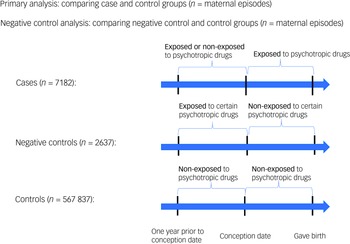
To validate the results, we employed negative control analysis. Specifically, separate Firth’s corrected penalised logistic regression for antipsychotics, antidepressants and anticonvulsants was performed to compare the risk of obstetric complications in episodes in which were prescribed psychotropic drugs within the year before pregnancy but discontinued prior to their conception dates, and remained unexposed during their whole pregnancy (i.e. negative control group), against episodes in which there was no exposure to psychotropic drugs in the year prior to and during pregnancy periods. We used the same control group and independent variables, to minimise any difference between negative control analysis and our primary analysis, apart from the specified psychotropic drug exposure of interest before or during pregnancy. Thus, the negative control analysis shared both measured and unmeasured confounders with the primary analysis, to allow inferences on ‘triangulation of causality’. Reference Sanderson, Macdonald-Wallis and Davey Smith29 Figure 1 illustrates the differences between primary analysis and negative control analysis.
Illustration of the differences between primary analysis and negative control analysis.

The results of negative control analysis should be compared with those of primary analysis for interpretation. Conceptually, when associations between exposure and outcome are both significant in the primary and negative control analyses, this implies that the absence of exposure could not nullify the observed significant associations. Conversely, a significant association in the primary analysis but a non-significant association in the negative control analysis would provide support to the causal link, because the outcomes disappear in the absence of exposure, assuming that both the primary and negative control analyses share the same adjusted and unadjusted confounders. Besides, it is useful to examine the difference in odds ratio when conducting negative control analysis from that in the primary analysis. A statistically significant reduction in odds ratio implies that the exposure contributes partially to the outcome of interest, along with other causal contributions from confounders, because the absence of exposure in the negative control group reduces the degrees of associations. Supplementary Table 5 summarises the interpretations of different scenarios.
We further utilised our large sample size for subclass analyses. We separated antipsychotics, antidepressants and anticonvulsants into eight subclasses: (a) typical/first-generation antipsychotics (FGAs), (b) atypical/second-generation antipsychotics (SGAs), (c) selective serotonin reuptake inhibitors (SSRIs), (d) selective noradrenaline reuptake inhibitors (SNRIs), (e) tricyclic antidepressants (TCAs), (f) other ‘unclassified’ antidepressants, (g) valproate and (h) other non-valproate anticonvulsants (including lithium). We repeated the same Firth’s penalised logistic regression analyses and negative control analyses for each subclass. In the subclass negative control analysis, because drugs belonging to the same broad class probably share similar pharmacological properties, subjects who switched to different drugs under the same broad class may carry residual effects that could confound the negative controls. We therefore compared the unexposed control group with subjects who discontinued the corresponding subclass before conception and were not exposed to other drugs of the same broad class. These negative control results were interpreted in the same way as for the broad drug class results.
Lastly, we conducted two sensitivity analyses. First, injectable antipsychotics in our data-set were mostly long-acting preparations with long half-lives, which may confer effects even after cessation. We conducted sensitivity investigation by analysing the oral antipsychotic in negative control analysis only. Second, we removed outliers of the drugs within each drug subclass, defined as mothers who received psychotropic prescriptions exceeding the British National Formulary (BNF)-recommended maximum dose. Sensitivity analyses were not performed in subclass negative control analysis, due to the limited sample sizes in each category. The BNF-recommended maximum dose for each drug is shown in Supplementary Table 1.
All analyses were performed using R version 4.3.1 in macOS; we used the ‘vcovCL’ function from the R package ‘sandwich’ (version 3.0-2; https://cran.r-project.org/web/packages/sandwich/index.html) and the ‘coeftest’ function from the R package ‘lmtest’ (version 0.9-40; https://cran.r-project.org/web/packages/lmtest/index.html) for clustered standard errors, and the ‘flic’ function from the R package ‘logistf’ (version 1.26.0; https://cran.r-project.org/web/packages/logistf/index.html), developed by Puhr et al, to perform Firth’s based penalised logistic regression. Reference Kessels, Jones and Goos26 We did not contact the mothers and newborns in our sample.
This study has been approved by the Institutional Review Board of the University of Hong Kong/Hospital Authority Hong Kong West Cluster (protocol no. UW 24-249). No written consent was needed because all information was anonymous.
Results
Between 2004 and 2022, we found 587 419 newborns from 577 656 maternal episodes given by 421 586 mothers who were Hong Kong residents and aged ≥18 years at delivery. Among these, 7182 maternal episodes involved psychotropic exposures during pregnancy and 2637 maternal episodes had discontinued psychotropics within 1 year prior to conception date. We excluded one episode that had dependence on sedatives (ICD-10: F13.2). A flowchart illustrating the selection of episodes is provided in Supplementary Fig. 1; Table 1 shows the sample characteristics of our case and control groups. Compared with the control group, our cases were significantly older, less likely to have multiple pregnancies, had more physical morbidities and more hospitalisations during the study period and delivered more male babies. Although a higher prevalence of psychiatric diagnoses was expected in the case group, nearly half of the episodes with known depression in our sample were not exposed to psychotropics during, and in the year prior to, pregnancy. Among the exposed group, 22.3% received polypharmacy treatments during pregnancy.
Demographic information

Multiple pregnancies were counted as single maternal episodes. Some mothers contributed to both categories in multiple distinct maternal episodes.
Eight obstetric complications with <0.5% of prevalence were excluded from further analysis (Supplementary Table 3). Low-to-moderate correlations were found across complications (Supplementary Fig. 2), except for the high correlation between preterm birth and threatened preterm labour (r = 0.71). Correlations between covariates were also low-to-moderate (Supplementary Fig. 3), as evidenced by the low (<5) generalised variance inflation factors (GVIFs) across covariates (Supplementary Table 6). Reference Akinwande, Dikko and Samson30
Psychotropic broad classes: primary analysis and negative control analysis
Following covariate and FDR adjustments, we observed significant risk of NICU admission in groups exposed to antipsychotics (odds ratio 1.30, 95% CI 1.12–1.51), antidepressants (odds ratio 1.47, 95% CI 1.36–1.59) and anticonvulsants (odds ratio 1.68, 95% CI 1.45–1.95) during pregnancy. Anticonvulsant exposure during pregnancy was further associated with higher risk for emergency C-section (odds ratio 1.31, 95% CI 1.11–1.53) and low birth weight (odds ratio 1.35, 95% CI 1.08–1.66).
As expected, schizophrenia and depressive spectrum disorders were associated with increased risk of gestational diabetes (odds ratioSCZ 1.25, 95% CI 1.06–1.47 and odds ratioDEP 1.11, 95% CI 1.02–1.21, respectively), emergency C-section (odds ratioSCZ 1.43, 95% CI 1.23–1.66 and odds ratioDEP 1.13, 95% CI 1.05–1.22, respectively), low birth weight (odds ratioSCZ 1.33, 95% CI 1.09–1.62 and odds ratioDEP 1.18, 95% CI 1.07–1.31, respectively), preterm birth (odds ratioSCZ 1.55, 95 %CI 1.27–1.88 and odds ratioDEP 1.21, 95% CI 1.09–1.34, respectively) and NICU admission (odds ratioSCZ 1.68, 95% CI 1.46–1.92 and odds ratioDEP 1.13, 95% CI 1.05–1.22, respectively). Schizophrenia spectrum disorder is additionally associated with threatened preterm labour (odds ratioSCZ 1.60, 95% CI 1.25–2.03). The detailed results are shown in Table 2.
Results of the primary analysis

NICU, neonatal intensive care unit; FDR-P, false discovery rate-adjusted P-value.
a Neonatal major infection data available since 2014.
*FDR-P < 0.1, **FDR-P < 0.05. Signicant results after FDR correction are bolded.
Among the negative control groups in our cohort, we identified 617 maternal episodes that had discontinued antipsychotics, 1874 that had discontinued antidepressants and 355 that had discontinued anticonvulsants. Because our naturalistic cohort did not have any mothers who had discontinued antipsychotics but remained exposed to benzodiazepines during pregnancy, we could not control for continuous exposure of benzodiazepines in the negative control analysis of antipsychotics.
Following covariate and FDR adjustments, negative control analysis replicated all the previous significant associations in the primary analysis, with FDR-adjusted P-values <0.05 (Table 3). Specifically, elevated risk of NICU admission remained significant in populations who had discontinued antipsychotics (odds ratio 1.62, 95% CI 1.29–2.03), antidepressants odds ratio 1.26, 95% CI 1.13–1.43) and anticonvulsants (odds ratio 1.51, 95% CI 1.12–2.09) prior to conception. Likewise, emergency C-section (odds ratio 1.55, 95% CI 1.13–2.10) and low birth weight (odds ratio 1.62, 95% CI 1.06–2.39) remained significant in the negative control analysis, suggesting that the absence of exposure during pregnancy could not nullify the elevated risk in obstetric complications. Taken together, the fact that the discontinued group still showed elevated risks compared with the non-exposed control group suggests that the increased risks of obstetric complications associated with psychotropic drugs during pregnancy are probably caused by uncontrolled/unmeasured factors correlated with the exposure rather than by the exposure itself. Contrary to the non-significant results in primary analysis (odds ratio 1.04, 95% CI 0.65–1.58, P unadjusted = 0.85), the negative controls who discontinued anticonvulsants had a higher risk of pre-eclampsia compared with controls (odds ratio 2.46, 95% CI 1.27–4.37, P FDR-adjusted = 0.05).
Results of negative control analysis in mothers who stopped exposures prior to pregnancy

NICU, neonatal intensive care unit; FDR-P, false discovery rate-adjusted P-value.
a Benzodiazapine exposures during pregnancy periods were not controlled for.
b Neonatal major infection data available since 2014.
*FDR-P < 0.1, **FDR-P < 0.05. Signicant results after FDR correction are bolded.
Psychotropic subclasses: subclass analysis and subclass negative control analysis
Consistent with the primary analysis of broad psychotropic classes, we observed significant associations of antidepressant subclasses (SSRIs, SNRIs and tricyclics), FGAs, valproate and ‘other anticonvulsants’ with increased risk of NICU admission. Likewise, we found significant associations of valproate with higher risk of low birth weight and emergency C-section. We observed significant associations between SGAs and genito-urinary infection, between SSRIs and premature rupture of membranes, between SNRIs and antepartum haemorrhage and pre-eclampsia and between ‘other antidepressants’ and low birth weight.
Among the subclass negative control groups in our cohort, we identified 322 and 327 episodes that had discontinued FGAs and SGAs, respectively, prior to conception; 1251, 89, 440 and 271 episodes that had discontinued SSRIs, SNRIs, tricyclics and ‘other antidepressants’, respectively; and 138 and 217 episodes that had discontinued valproate and ‘other non-valproate anticonvulsants’, respectively. Moreover, several subjects who switched drugs across subclasses within the same broad class during pregnancy were excluded. The results of subclass analysis are shown in Supplementary Table 7.
By comparing the subclass analysis (Supplementary Table 7) and subclass negative control analysis (Supplementary Table 8), the associations of SGAs with genito-urinary infection (odds ratio 2.01, 95% CI 0.62–5.08), and of tricyclic antidepressants with NICU admission (odds ratio 1.13, 95% CI 0.89–1.42), disappeared. The valproate-associated risk of emergency C-section (odds ratio 1.24, 95% CI 0.69–2.13), low birth weight (odds ratio 1.15, 95% CI 0.47–2.42) and NICU admission (odds ratio 1.14, 95% CI 0.64–1.97) also became non-significant, alongside the unstable estimates for the association of SNRIs with antepartum haemorrhage (odds ratio 3.58, 95% CI 0.95–9.92), pre-eclampsia (odds ratio 2.92, 95% CI 0.33–11.39) and NICU admission (odds ratio 1.47, 95% CI 0.57–3.41). Given the small sample of negative controls (particularly SNRIs), our subclass negative control analysis was prone to false negative findings. Therefore, we further estimated E-values (i.e. estimates as to what degree/strength of total uncontrolled confounders would be needed to nullify the observed associations), Reference VanderWeele and Ding31 and found that both the E-values of atypical antipsychotics and genito-urinary infection, and valproate and low birth weight, are significantly different from 1, suggesting that the associations are robust and unlikely due to unmeasured confounding. The other associations were non-significant, suggesting that we could not rule out the possibility of confounder bias (see Supplementary Table 9).
Conversely, some observed significant results in the subclass analysis were replicated in the subclass negative control analysis. The association with premature rupture of membranes (odds ratio 0.84, 95% CI 0.71–0.98) and NICU admission (odds raio 1.21, 95% CI 1.04–1.39) remained significant in episodes that had discontinued SSRIs (P unadjusted = 0.02). The associations between NICU admission and SGAs (odds ratio 1.70, 95% CI 1.25–2.29), FGAs (odds ratio 1.44, 95% CI 1.05–1.96) and non-valproate anticonvulsants (odds ratio 1.72, 95% CI 1.18–2.51), and between ‘other antidepressants’ and low birth weight (odds ratio 1.63, 95% CI 1.10–2.35), remained significant, suggesting that these associations were probably driven by confounders rather than by psychotropic exposures, because the negative control group should have no exposure during their pregnancy.
Surprisingly, several subclasses, such as between valproate and gestational hypertension, showed some FDR-adjusted significant associations in the negative control analysis but not in the primary analysis. Although such incidental findings are interesting, our study was not designed to investigate the effects of discontinuation of psychotropics on obstetric complications.
Sensitivity analyses
Our sensitivity analyses provided broadly consistent results. First, following removal of long-acting injectable antipsychotics, similar findings in the negative control analysis of antipsychotics were replicated, because only NICU admission remained significant among episodes that discontinued antipsychotics (Supplementary Table 10). Second, exclusion of episodes with high-dose psychotropics during pregnancy (i.e. above the BNF-recommended maximum dose, n = 138) did not nullify the significant results found in subclass analysis (Supplementary Table 11).
Discussion
Main findings
This population-based study aimed at exploring causal links between psychotropic exposure and risk of obstetric complications. We comprehensively gathered the records of common complications and controlled for relevant clinical covariates. Given that all the obstetric complications with significant associations in our primary analysis remained consistently significant in the negative control analysis (i.e. a group who were discontinued from psychotropics and not exposed during pregnancy), the effects were probably attributable to uncontrolled confounders rather than to psychotropic drugs specifically during pregnancy. In addition, the results of different psychotropic subclasses demonstrated distinct risks between psychotropic and obstetric complications, and some subclasses may, at least partially, have contributed to risks because subclass negative control analysis nullified the significant associations of the subclass analysis in several exposure–outcome pairs, with reduced odds ratio and non-significant results following removal of the exposure during pregnancy. Specifically, the association of SGAs with risk of genito-urinary infection, and that of valproate with low birth weight, revealed supportive evidence that was further verified with significant E-values. While no previous study has directly studied the relationship between SGAs and genito-urinary infection, a strong association between SGAs and urinary tract infection was observed. Reference van Strien, Souverein, Keijsers, Heerdink, Derijks and Van Marum32 It is noteworthy that our method for rare outcomes could be prone to the problem of insufficient statistical power. Some subclass negative control groups had small sample sizes and provided unstable estimates (odds ratio) and wide confidence intervals (e.g. the association of SNRIs with pre-eclampsia), which may have led to false negative results. These subclass negative control analysis results should be interpreted with caution. Nonetheless, our findings remained consistent with previous findings. Reference Palmsten, Huybrechts, Michels, Williams, Mogun and Setoguchi33,Reference Coste, Blotiere, Miranda, Mikaeloff, Peyre and Ramus34 Moreover, although subclass analysis showed that SSRIs might be protective against premature rupture of membranes, contrary to the extant literature, Reference Fabrizio, Lindsay, Wilcox, Hong, Lynn and Norwitz35 the subsequent significant results in subclass negative control analysis suggested the observed association in the primary analysis was likely attributed to uncontrolled confounders, such as body mass index. Reference Bouvier, Forest, Blanchon, Bujold, Pereira and Bernard36
Nevertheless, after accounting for psychotropic drug use, maternal schizophrenia remained significantly associated with gestational diabetes, threatened preterm labour, emergency C-section, preterm birth and low birth weight, consistent with a previous study that did not account for antipsychotics. Reference Fabre, Pauly, Baumstarck, Etchecopar-Etchart, Orleans and Llorca10 Additionally, maternal depression was associated with gestational diabetes, corroborating another US electronic health record study that did not adjust for drug effects. Reference Bowers, Laughon, Kim, Mumford, Brite and Kiely37 The significant associations between maternal depression and preterm birth and low birth rate are consistent with existing evidence. Reference Dadi, Miller, Bisetegn and Mwanri38 These results suggest that SMIs and obstetric complications could have an overlapped aetiology independent from psychotropic drug use.
Strengths
This population-based study is among the first in the Chinese setting to investigate the safety of psychotropic drug use, and to consider a comprehensive list of obstetric complications. Moreover, it is the first to examine the outcomes with all major psychotropic classes, which allowed realistic modelling for polypharmacy in a psychiatric population. The use of Firth’s penalised likelihood logistic regression model was preferred, because some included outcomes were rare in some drug subclasses, which could have introduced small sample biases and separations. Reference Mansournia, Geroldinger, Greenland and Heinze39 Episodes with multiple pregnancy (9612 episodes involving 19 375 newborns in our cohort), which are commonly omitted but should not be forgotten, were handled precisely by modelling different scenarios. Besides, conservative FDR-corrected P-values were reported. Moreover, the findings were further verified by negative control analysis that investigated episodes that had discontinued psychotropics prior to conception (i.e. psychotropic exposures were absent in their pregnancy periods). We explicitly chose the same control group to perform both primary and negative control analyses, to enhance both interpretability and comparability between different odds ratios in our results. The results from subclass negative control analysis suggested that psychotropic drug subclasses could alter the risk of certain obstetric/neonatal complications, even following controlling for psychiatric diagnoses and other clinical variables. The E-values for the associations between atypical antipsychotics and genito-urinary infection (E = 4.84, 95% CI 2.56–7.12), and between valproate and low birth weight (E = 2.75, 95% CI 1.16–4.34), were high, indicating that substantial unmeasured confounding would be required to negate these findings.
Nonetheless, when we considered psychotropic drug exposure in broad classes, no causal links to obstetric/neonatal complications were found at the population level. Interestingly, some obstetric complications showed higher odds ratio in negative controls analysis when certain drugs were discontinued before conception. Because this study was not designed to investigate the effects of discontinuation of psychotropics, future research is needed to examine the impacts of discontinuing psychotropics prior to pregnancy.
Limitations
This study has several shortcomings. First, the selected negative control groups were imperfect, because confounding by indication (e.g. pregnant women who had discontinued psychotropics during pregnancy having a more favourable prognosis/mental state than their counterparts who had continued psychotropics) beyond the controlled covariates is plausible. Even though episodes of the negative controls were not exposed to psychotropics during pregnancy, we also cannot rule out the potential long-term consequences of psychotropic exposures. Second, limited sample size in certain drug subclasses, such as SNRIs, led to unstable estimates and wide confidence intervals, and negative control analysis was susceptible to false negative findings (i.e. type II errors). Likewise, because some exposures and outcomes had relatively low prevalence in the cohort, the corresponding associations might have been non-significant and omitted. For instance, we observed non-significant associations of benzodiazepines and bipolar disorder with all obstetric complications, which might contain false negative findings, because only several hundred episodes in our cohort had such exposures. Third, our population-based data were naturalistic routine healthcare data, and thus standardisation of data quality was not feasible. For example, diagnoses were listed without detailed justification in CDARS, which may have resulted in measurement bias. In fact, multiple psychiatric diagnoses were observed in a small portion of birth episodes (i.e. 523 [7.2%] episodes with psychotropic exposure carried at least two of the schizophrenia/depression/bipolar diagnoses). Importantly, drug compliance was also not measured, and poor adherence to psychotropics might have undermined the validity of our findings. Fourth, potential confounders, such as paternal information and socioeconomic status, were unavailable. Importantly, older paternal age may increase the risk of preterm birth, low birth weight and NICU admissions. Reference Khandwala, Baker, Shaw, Stevenson, Lu and Eisenberg40 Moreover, self-prescription might be a confounder but was not captured in CDARS. Similarly, maternal lifestyle factors (such as physical activity, maternal smoking habit and substance misuse) are important confounding factors but were not captured in our data-set. These factors probably resulted in bias away from the null, and thus overstated the effects of exposure on the outcome. E-values were computed to further triangulate the strength of associations driven by spurious cofounders. Moreover, the prescribing patterns in our locality had changed over the study period. For instance, the use of FGAs and tricyclic antidepressants has been declining, and, in our data, carbamazepine has no longer been used in pregnant women since 2005. Lastly, ethnicity was not captured despite 92% of residents in Hong Kong being Chinese. Reference Vandan, Wong, Lee, Yip and Fong41 Taken together, these limitations affect the generalisability of our findings.
To conclude, our overall results did not identify causal links that psychotropic exposures in pregnancy will elevate the risk of obstetric complications at the population level. Our subclass analysis provides preliminary evidence for inference of causal triangulation, which apparently suggests that certain psychotropic subclasses could be of higher risk in regard to obstetric/neonatal complications. Future research should clarify the effects of individual psychotropic drugs, as well as possible dose-dependent effects, to better evaluate the safety of psychotropic drugs used in pregnancy.
Supplementary material
The supplementary material is available online at https://doi.org/10.1192/bjp.2025.10340
Data availablity
Data are available upon request providing that the Hong Kong Hospital Authority has granted agreement and access. Programming code, as well as other relevant research materials, is available upon reasonable request to P.B.M.L. and S.S.Y.L
Author contributions
P.B.M.L., H.-C.S., P.C.S. and S.S.Y.L. conceived the study. P.B.M.L. retrieved, cleaned and analysed the data. P.B.M.L. and S.S.Y.L. verified the data. M.d.F., R.M.M., H.-C.S., P.C.S. and S.S.Y.L. provided necessary supervision. P.B.M.L., E.V., K.C.Y.W., K.-W.C., N.Z., M.d.F., R.M.M., H.-C.S., P.C.S. and S.S.Y.L. interpreted the findings. P.B.M.L. and S.S.Y.L. wrote the first draft of the manuscript. All authors revised the manuscript for critically important content and approved the final version. The corresponding author attests that all listed authors meet authorship criteria and that no others meeting the criteria have been omitted.
Funding
This study was funded by the HKU Seed Fund for Basic Research for New Staff (no. 202009185071) and the HKU Enhanced Start-up Fund for New Staff, granted to S.S.Y.L.; and by the Suen Chi-Sun Endowed Professorship in Clinical Science at The University of Hong Kong, awarded to P.C.S. This study was also supported partially by a Health and Medical Research Fund (no. 07180376), a National Natural Science Foundation of China grant (no. 81971706), the KIZ-CUHK Joint Laboratory of Bioresources and Molecular Research of Common Diseases and the Lo Kwee Seong Biomedical Research Fund from The Chinese University of Hong Kong, granted to H.-C.S.
Declaration of interest
P.C.S. is a member of the British Journal of Psychiatry editorial board, but was not involved in the review or decision-making process of this work. M.d.F. has received a Recordati and Janssen fee for educational talks. R.M.M. has received honoraria for non-promotional talks for ‘Janssen, Sunovian, Otsuka, Lundbeck’. All authors declare they have no known competing financial interests or personal relationships that could have appeared to influence the work reported in this paper.
Previous presentation
Part of the results in this study were presented by the first author, P.B.M.L., at the 2024 Congress of the Schizophrenia International Research Society (Florence, 6 April 2024) and at the 9th Mediterranean Maudsley Forum (Palermo, 27 May 2024).


 Open access


eLetters
No eLetters have been published for this article.