


Introduction
Over the last decade, support for the return of individual research results (IRR) to research participants has expanded greatly. This view is embodied in the substantial literature on the return of results published during that period. The ethical arguments for the return of IRR to participants were summarized in a 2018 report by the National Academies of Science, Engineering, and Medicine [1]. Offering to return results, the report noted, was consistent with the key ethical principles of human subjects research [2]: respect for persons and their autonomy, by not treating participants merely as a means to an end; beneficence/non-maleficence, insofar as participants can benefit from the knowledge of their results and avoid medical harm; and justice, which calls for a fair distribution of the benefits and burdens of research. There may be reasons that would preclude the offer of results from a study, such as the use of experimental measures of uncertain validity, prohibition by some commercial sponsors, the burden of returning and interpreting results to participants, and lack of clinical expertise on the research team regarding the implications of particular findings [1, Reference Long, Purvis and Flood-Grady3]. In addition, special considerations may apply for vulnerable populations [Reference Kolarcik, Bledsoe and OLeary4]. Nonetheless, the ethical arguments have been recognized as constituting a strong basis for research studies to consider whether to offer results to study participants.
The ethical analysis reflects and is largely supported by literature soliciting the views of participants, the general public, researchers, and to a lesser extent IRB members on return of IRR. Most of the extant studies address the return of genetic/genomic results, perhaps because of their predictive value, preventive health implications, impact on reproductive decisions, and informational value for other family members and subsequent generations. A 2021 review of this literature reported “overwhelming evidence of high interest in return of IRR from potential and actual genomic research participants” [Reference Vears, Minion and Roberts5]. Moreover, “[w]hile all results are desired to some degree, those that have the potential to change clinical management are generally prioritized by all stakeholders.” A systematic review of studies on preferences for receipt of secondary genomic findings confirmed strong support for participants’ ability to elect receipt of those results as well [Reference Sheen, Willis, Fehlberg, Southey, Goranitis and Young6]. On the other hand, many participants who receive results fail to follow medical recommendations, and the results may not be available to or understood by their clinicians, reducing the likelihood that participants will actually obtain medical benefit [Reference Cocchella, Phung and Wood7,Reference Mitchell, Jivani, Young, Jacobs and Willis8].
A primary concern of the studies conducted to date on the actual return of results has been possible negative consequences. However, as summarized in a review of systematic reviews on the subject, “The studies typically found that negative psychological impacts of genetic testing were absent or modest and if adverse impacts were observed, participants returned to baseline within a few months” [Reference Wade9]. These findings are reassuring as projects, both planned and underway, include return of IRR to large groups of research participants [Reference Vassy, Brunette, Yi and Harrison10]. The weight of the empirical literature, by suggesting that IRR are generally well-received, reinforces the conclusions of the ethical literature supporting return of results. Even so, the possibility of adverse consequences, especially in highly impactful and sensitive life stages such as prenatal and newborn screening, cannot be ruled out [Reference Grob11]. Finally, a relatively small number of studies have explored participants’ views on how genomic research results should be returned, finding no consensus on how information should be conveyed to maximize understanding, utility, and appropriate responses to the findings by research participants [Reference Sabatello, Bakken and Chung12, Reference Vears, Minion and Roberts13].
Outside the genetic and genomic realm, although the literature on return of research results is much smaller, similar albeit more variable results have been found. Examples of potential health benefits from non-genetic results could include detection of microvascular changes in brain MRIs that might indicate a need for better control of hypertension; identification of toxins in blood tests that could be eliminated from the ambient environment; and characterization of treatable depression in standard screening instruments. Much of the literature on return of non-genetic results has focused on receipt of data on disease-associated biomarkers that are used for disease screening, diagnosis, and prognosis. For example, a review of studies on return of results of biomarkers for Alzheimer’s disease risk in healthy participants found a strong desire to receive this information and, when findings were returned, minimal negative psychological impact [Reference Erickson, Chin, Johnson, Gleason and Clark14]. In a more recent study, African American older adults said that return of Alzheimer’s biomarker results from a lumbar puncture would be a strong incentive to participate in a research project [Reference Passmore, Longhurst and Gerbitz15]. A study of people with disabilities found interest in receiving genetic results from precision medicine research and, to a lesser degree, other laboratory results and health information based on family history [Reference Sabatello, Zhang, Chen and Appelbaum16]. Mothers whose children were enrolled in a longitudinal study examining the relationship between early-life environmental exposures and long-term child health had considerable interest in receiving results of physiologic measures of sleep, a sleep health survey, and a urine measure of environmental exposure to plasticizers, especially when the results were normed, even though results were not actionable [Reference Angal, Brockevelt and Caraway17].
In general, return of IRR may facilitate recruitment and retention and increase trust [Reference Purvis, Abraham and Long18]. A survey of over 5000 research participants from a multi-institutional consortium, for example, found that 63% of respondents said that “receiving a summary of the study results would be very important to [their decision about] joining a future study” [Reference Kost, Andrews and Chatterjee19]. Although many recommendations have been made for how results should be returned [e.g., 1,20,21] input from participants has been limited and, to our knowledge, has not involved people with prior experience of having received results [Reference Vassy, Brunette, Yi and Harrison10, Reference Gafa, Boima and Rockson22–Reference Kent, Villegas-Downs and Rios25]. Moreover, there are indications that preferences may vary by age, income, race-ethnicity, and health literacy [Reference Ottman, Freyer and Mefford20, Reference Robillard, Masellis, Martin, Khachaturian and Dixon21, Reference Obeid, Shoaibi and Oates26, Reference Richmond, Cunningham-Erves and Givens27]. Not every participant desires every type of their research results [Reference Sayeed, Califf and Green28] and participants may vary somewhat in their psychological responses to the results. Nonetheless, the consistent nature of participants’ preferences to receive IRR and largely benign responses to those results have led to calls to focus future research on the major outstanding questions involved in return of research results: which results should be offered for return, when should results be returned, how should results be returned [Reference Wong, Hernandez and Califf29], and what participant characteristics may help to identify and satisfy preferences.
At the same time, we recognize that practical issues frequently constitute barriers to offering results to participants in a meaningful fashion and discourage researchers from doing so. Many researchers in the U.S. and elsewhere are supportive of the principle of returning results, especially for findings with implications for participants’ health [1,Reference Klitzman, Appelbaum and Fyer30–Reference Kostick, Brannan, Pereira and Lázaro-Muñoz32]. However, these same researchers worry about the burdens that such an obligation would impose on the research team and potentially on participants [Reference McElfish, Long and James33]. Thus, participants’ preferences, however important, cannot be the only factor taken into account as policies and procedures regarding return of results are formulated. But their preferences suggest that development of plans for return of IRR should be prioritized in research planning. To begin to address the question of how best to return IRR, we surveyed a sample of research participants who had experience with receiving multi-disease-focused genomic IRR at one site of a multi-site study that explored the consequences of returning genomic findings for health-related behaviors and medical care. We hypothesized that survey participants would want to receive their study results but that preferences for the mode of return and decisional support would vary.
Materials and methods
Participants
The participants for this study were recruited from the Columbia University Irving Medical Center (CUIMC) site of the Electronic Medical Records and Genomics (eMERGE-IV) study who had consented to be recontacted for additional research. eMERGE-IV is a multi-site consortium that recruited over 25,000 people who provided blood or saliva samples for the determination of their polygenic risk scores for (in the case of adults) eight common medical conditions for which preventive interventions exist [Reference McElfish, Long and James33]. For some conditions, highly penetrant, pathogenic/likely pathogenic, monogenic variants and family history were also included in the risk prediction. Participants at CUIMC whose results indicated an elevated risk for one or more of the conditions received a phone call from a genetic counselor who conveyed the finding(s) and answered questions. They were then referred to their medical provider for follow-up. A report of the findings was sent to each participant and a physician whom they designated and placed in their electronic health record. Participants with no high-risk results for any of the eight eMERGE conditions received notification of that finding via email, and the results similarly were placed in their electronic health record.
To be eligible for our online survey, adult CUIMC participants (n = 2638) had to have completed the eMERGE-IV post-return-of-results follow-up survey, which was sent to them six months after they received their results. Participants were eligible whether or not they had received findings indicating elevated risk. During the recruitment window for this study, which was truncated prematurely by the pause in NIH funding of research at Columbia University in March 2025, 257 eligible participants were identified on a rolling basis and contacted by email or text about participation. Of those, 149 (58%) consented and completed our online survey.
Survey
The survey, available in English or Spanish, was divided into five sections (see Supplemental Materials). Given the paucity of prior studies addressing our research questions, survey items were developed specifically for this study. It began with queries about respondents’ eMERGE experiences to evoke recollections that could inform subsequent responses. It then inquired about the importance of the availability of IRR for participants’ decisions about joining future studies and about the kinds of results (not limited to genetic results) they would want to have available, using Likert-scale response options from 1 to 5 to allow the strength of the preferences to be compared. Respondents were then asked about their perceptions of the effects of return of results, utilizing similar Likert scales. Next, the survey asked about preferences for receipt of results, including the professional role of the person who communicates them, the means of communication, and the supports they would need to understand and utilize the results effectively. Open textboxes were included for some sections to allow participants to add comments. The survey concluded with demographic questions (including a combined race/ethnicity category that included Hispanic) identical to the eMERGE-IV study to assess the representativeness of the participants relative to the parent study.
Procedures
Eligible eMERGE-IV participants from the CUIMC site received an email or text message in English or Spanish, depending on previously expressed preferences, inviting them to participate in this study. Interested participants were asked to click a link that took them to a Columbia REDCap webpage where they could select English or Spanish as their preferred language. An information sheet then introduced the study in their selected language. Participants indicated their consent by clicking a button. Once consent was obtained, they were directed to the survey. At its conclusion, another link took them to a separate webpage where they could enter their email address to receive a $25 electronic gift card for survey completion. The CUIMC IRB determined that this study was exempt from federal human subjects regulations.
Data analysis
All demographic variables were summarized as counts and percentages. Responses using the Likert scales to measure the perceived importance or likelihood of an option were also summarized as counts and percentages. In addition to the summary statistics for all categories of response, we also grouped the responses by combining Likert scores 4 and 5 to identify proportions of participants with responses above the midpoint. Demographic variables were reported descriptively. Due to the modest sample size for each Likert score, multivariate analyses were not performed.
Results
Demographics
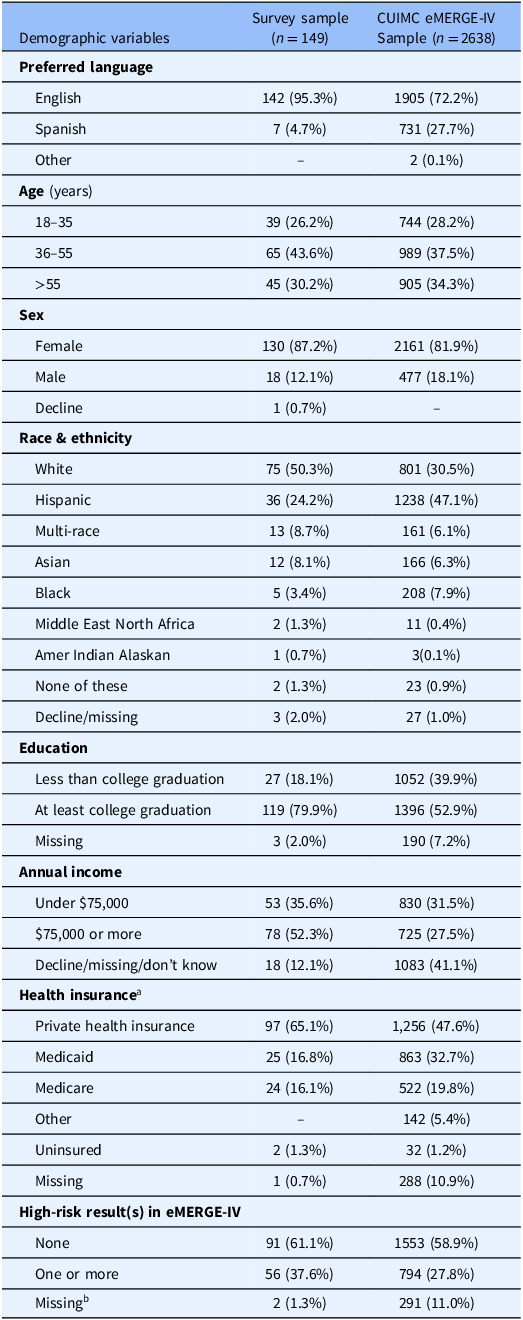
The demographics of survey respondents (n = 149) are seen in Table 1. Respondents were mostly White, female, highly educated, and English-speaking but evenly distributed across the adult age range (median age = 43 years, range 24–75 years). Compared to the CUIMC eMERGE-IV adult cohort as a whole (n = 2638) (Table 1), they were less likely to identify as Hispanic (24.2% for our sample vs. 47.1% for the eMERGE cohort), more likely to identify as White (50.3% vs. 30.5%), more likely to have at least a college education (79.9% vs. 52.9%), and more likely to have an income that exceeded the median household income in New York City (approximately $75,000/year; 52.3% vs. 27.5%). Seven respondents (4.7%) requested the Spanish version of the survey.
Demographics of survey sample and CUIMC eMERGE-IV sample

Table 1. Long description
The table compares demographic variables between a survey sample of 149 respondents and a CUIMC eMERGE-IV sample of 2638 respondents. The table has 11 rows and 3 columns. Column headers are Demographic variables, Survey sample (n = 149), and CUIMC eMERGE-IV Sample (n = 2638). Row labels include Preferred language, Age (years), Sex, Race & ethnicity, Education, Annual income, Health insurance, and High-risk result(s) in eMERGE-IV. Each row provides specific data points for both samples. For example, under Preferred language, 95.3 percent of the survey sample prefer English, while 72.2 percent of the CUIMC eMERGE-IV sample prefer English. The table also shows that 87.2 percent of the survey sample are female, compared to 81.9 percent in the CUIMC eMERGE-IV sample. The survey sample is more likely to identify as White (50.3 percent vs. 30.5 percent) and have at least a college education (79.9 percent vs. 52.9 percent). The table highlights notable trends such as the higher percentage of respondents with a college education and higher income in the survey sample compared to the CUIMC eMERGE-IV sample.
a Multiple responses possible for eMERGE-IV cohort.
b Missing data in eMERGE-IV cohort due to failure of DNA samples to sequence adequately (n = 286), death prior to return of results (n = 4), and withdrawal prior to return of results (n = 1).
Experience in eMERGE
In our survey, over a third of respondents (37.6%, n = 56) reported having received one or more results indicating that they were at high risk (as defined in the study) for one of the conditions being studied. Nearly all respondents (96%, n = 143) rated their satisfaction with participation in the eMERGE study at 4 or 5 on a 5-point Likert scale ranging from 1 = very dissatisfied to 5 = very satisfied. A substantial proportion (90%, n = 134) rated themselves similarly on satisfaction with the way their eMERGE results had been returned, including roughly two-thirds (65.8%, n = 98) who said they were very satisfied. Only small proportions reported problems connecting with the person who was returning results (8.1%, n = 12), understanding the meaning of the results (7.4%, n = 11), or having a physician who was uncertain how to follow up on the results (3.4%, n = 5). In contrast, a somewhat larger group reported being uncertain about next steps after receiving results (25.5%, n = 38). Few participants (2.7%, n = 4) expressed regret about their decision to participate in eMERGE.
Access to IRR and future study participation
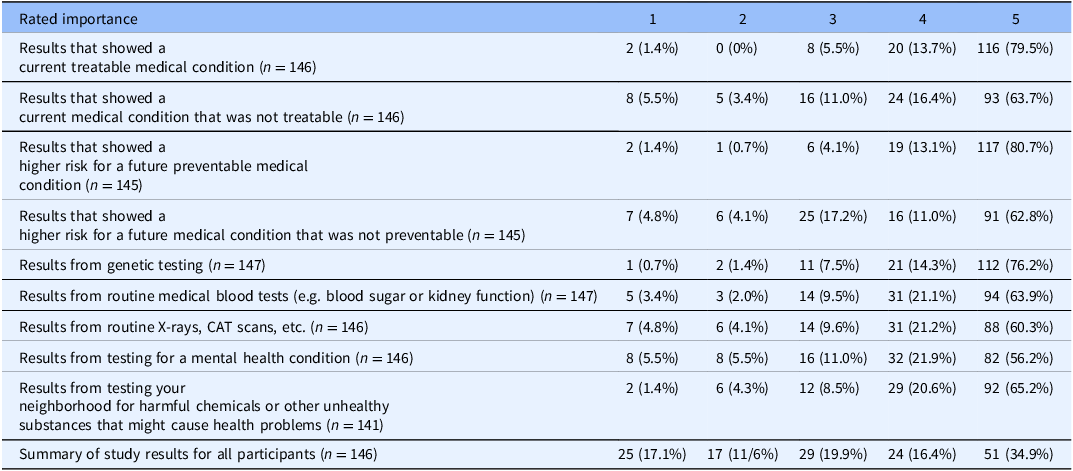
When asked how important being able to get their own study results would be for a decision about participating in unspecified future research, 86.5% (n = 128) of respondents rated it 4 or 5 on a 5-point Likert scale that ranged from 1 = not at all important to 5 = very important. Approximately two-thirds (64.9%, n = 96) gave it the highest importance rating. Results did not differ significantly for people with and without high-risk findings in eMERGE (p = 0.79). As shown in Table 2, a majority of participants indicated that the opportunity to receive IRR of each type would be important in encouraging them to enroll in future studies. This response was strongest for findings that might reveal a condition that was preventable or treatable. In contrast, the desire for access to aggregate results from the study was much more variable, with just over half (51.3%, n = 75) rating it as 4 or 5.
Importance of being offered different types of results for participants’ decisions about joining a future research study a

a Responses were rated on a 5-point Likert scale from 1 (not at all important) to 5 (very important).
Perceived benefits and risks of receiving IRR
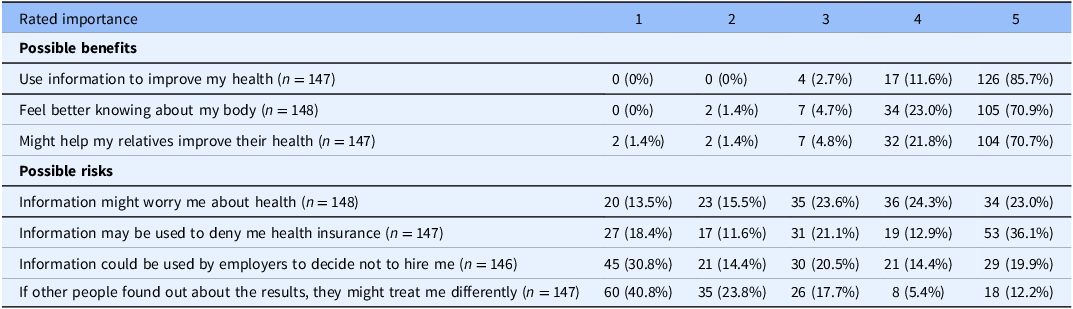
Respondents tended to concur about the importance of the potential benefits of access to their IRR but were in somewhat less agreement about potential risks. Most respondents thought that the receipt of their IRR would provide important benefits to their health and the health of their families, as well as valuing having as much knowledge as possible about their bodies (Table 3). Indeed, fewer than 10% of participants rated importance of each potential benefit as 3 or below. Given the opportunity to identify other benefits in an open textbox, participants’ entries included “I would want to know if there is a genetic condition I am a carrier of that would harm my child if I were to get pregnant;” “Give me more insight on preventative measures;” and “Life planning.”
Perceived benefits and risks of receiving IRRa

a Responses were rated on a 5-point Likert scale from 1 (not at all important) to 5 (very important).
With regard to risks, just under half of respondents rated any of the risks at 4 or 5 on a 5-point Likert scale, with the potential for worry about their health (47.3%, n = 70) and the possibility of being denied insurance coverage (49%, n = 72) the two most commonly selected concerns (Table 3). In contrast, concerns about discrimination by employers (34.3%, n = 50) and other people treating them differently in light of the results (17.6%, n = 26) were less commonly endorsed. Among the write-in responses, additional risks identified included: “The results may be hard to understand;” “If they are bad, not having someone there to immediately provide perspective;” and “Each [doctor] will take this result differently since this result shows future possibility.”
Process for receipt and interpretation of IRR
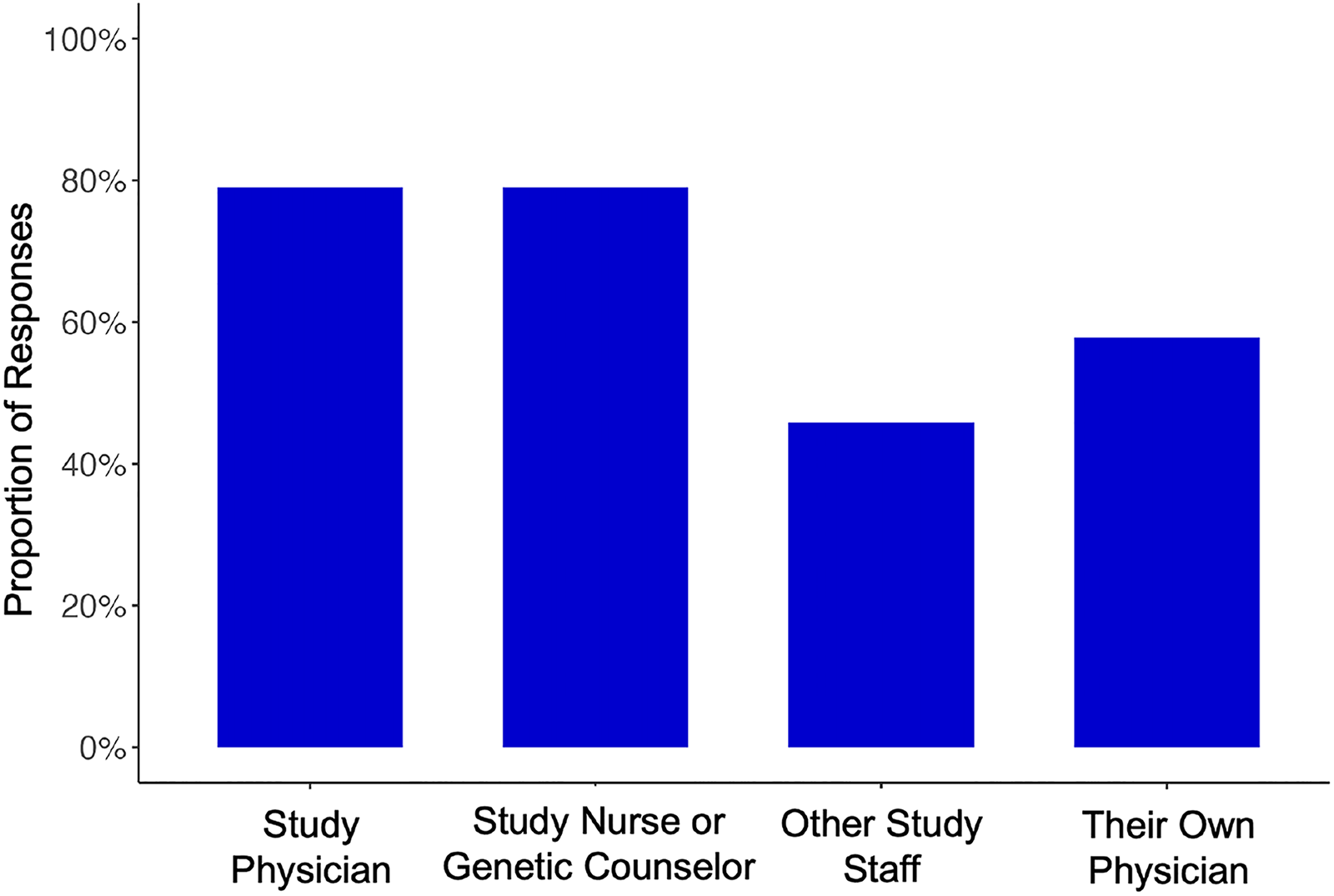
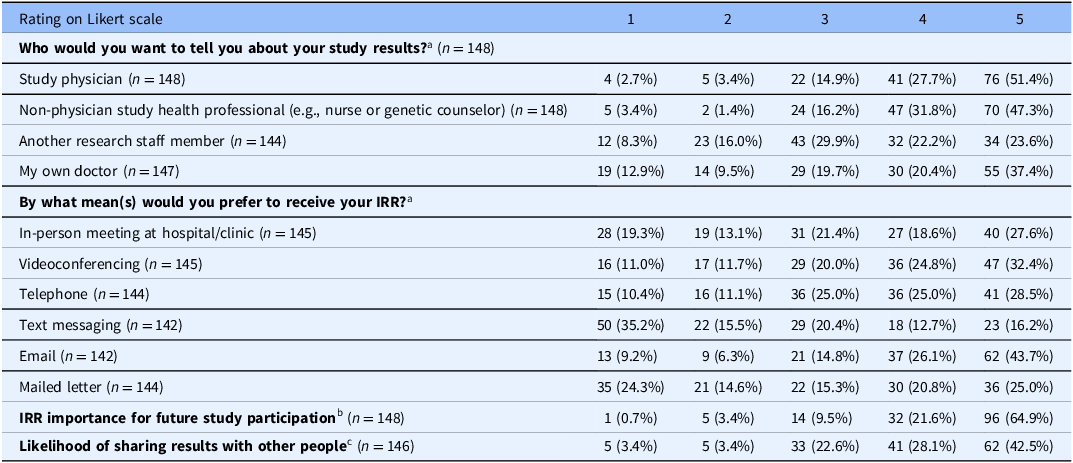
Respondents tended to prefer receiving results from health professionals associated with the study, as opposed to their own physicians (Table 4). On a 5-point Likert scale with 1 = would not at all prefer and 5 = would very much prefer, the proportions rating each choice 4 or 5 were study physician 79.1% (n = 117), study nurse or genetic counselor (79.1%) (n = 117), other study staff (45.8%, n = 66), and their own doctor 57.8% (n = 85) (Figure 1).
Who would you prefer to get your study results from? Shown is the proportion of respondents who rated each option as preferred (4 or 5 on a 5-point scale) (n = 144 to 148).

Preferred process and timing for receipt of IRR

a Responses were rated on a 5-point Likert scale from 1 (would not at all prefer) to 5 (would very much prefer).
b Responses were rated on a 5-point Likert scale from 1 (not at all important) to 5 (very important).
c Responses were rated on a 5-point Likert scale from 1 (not at all likely) to 5 (very likely).
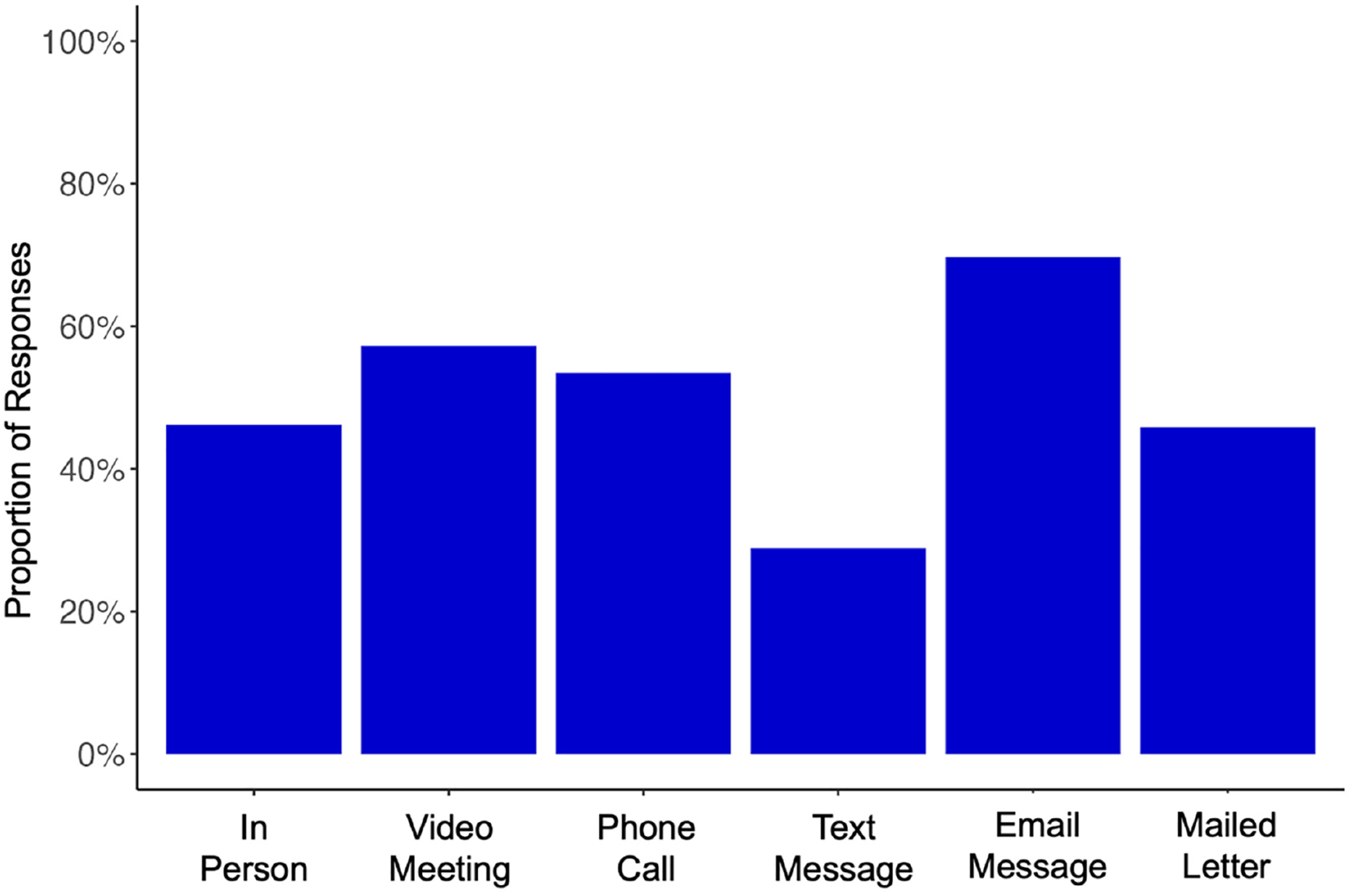
Regarding the mechanism for returning results of any type, there was a preference for email and videoconferencing, with text messaging receiving the least support (Table 4). On a similar 5-point Likert scale to that for the source of the information, proportions of respondents giving ratings of 4 or 5 were email 78.9% (n = 99), videoconferencing 57.2% (n = 83), phone 53.5% (n = 77), mail 45.8% (n = 66), and text message 28.9% (n = 41) (Figure 2). Preferences were split regarding when to receive results, with 52.3% (n = 78) of respondents desiring them as soon as each result was available, while 47.7% (n = 71) wanted to wait until all their results were available.
How would you want to receive your study results? Shown is the proportion of respondents who rated each option as desired (4 or 5 on a 5-point scale) (n = 142 to 148).

When asked their preferences for sources of information that would help them better understand their study results, the leading choices were links to websites 69.8% (n = 104), printed information 63.1% (n = 94), and a person who could provide additional information 60.4% (n = 90), followed by referral to a medical specialist 56.4% (n = 84), with lesser proportions selecting referral to a support group 29.5% (n = 44) or an online chat 21.5% (n = 32). Asked what else might help them understand their results, responses included: “If heavy with scientific language and terminology, a clear layman’s explanation interpreting the results, as well as resources for staying healthy, even if results do not indicate I am at risk;” “Referrals to medical specialists/follow up from a genetic counselor would be the most helpful;” “When I wanted to discuss the results of the study with my doctors, they were not interested. So, possibility to talk with someone would be awesome;” and “Maybe a nutritionist or coordinator to help gauge which services to help support the patient.”
Sharing results
Most respondents reported themselves likely to share the results with someone else (70.6%, n = 103 rating 4 or 5 on a 5-point Likert scale). Eighty-six percent (n = 126) indicated they would share results with their doctors, 64.4% (n = 94) with a spouse or partner, 41.1% (n = 60) with parents, 50% (n = 73) with siblings, 29.5% (n = 43) with other relatives, and 30.1% (n = 44) with friends. Several participants suggested in a narrative response that they were likely to share their results with their children.
Impact of demographic variables
Although this study is not powered to explore the differences among demographic categories across our study variables, we undertook an exploratory analysis of the effects of demographics on the importance of IRR for the decision to join future research studies. As demonstrated in the Supplementary Table, there were limited differences across demographic categories, with greater than 83% in every category rating availability of IRR as having an importance of 4 or 5 on a 5-point Likert scale. The largest difference between demographic categories was 8%. However, suggestions of some differences, which will need to be confirmed in larger studies, appeared in the proportion of participants who assigned the highest importance to the availability of IRR. In particular, respondents with less than a college education, non-White racial/ethnic identity, lower family incomes, and non-private health insurance were roughly 10–20% more likely to assign the highest importance rating to the availability of IRR for their future research participation decisions.
Discussion
This study sought the views on return of IRR from a group of participants in the eMERGE-IV study, who had already received their genetic test results. Our sample expressed very high levels of satisfaction with their experience in receiving eMERGE-IV results and extremely low levels of regret about participation. Given these perspectives, it is not surprising that our respondents assigned high importance in their projected decision making about future study participation to the opportunity to receive results. Exploratory analyses suggest that this desire is particularly strong among those who are less educated, less wealthy, non-White, and dependent on non-private health insurance. These groups may have less access to medical care, leading them to perceive the availability of research results as even more important to their future research decisions. Consistent with the existing literature, our respondents’ interest in receipt of IRR in the future extended to all types of medical results, even if they revealed a propensity for conditions that were not preventable or the existence of conditions that were not treatable. Aggregate study results, however, which are generally easier for investigators to share, were less desired by this group, in contrast to findings of other studies [Reference Sgro, Maurer, Nguyen and Siegel35–Reference Idnay, Zhang and Therese37].
Our respondents highly valued the potential for benefit from return of individual results to their health and their families’ health, as well as the satisfaction that they knew as much as they could about their own bodies. At the same time, they acknowledged the possible negative effects of results disclosure, including the possibility that their IRR would induce worry and that their access to insurance coverage might be reduced. However, it seems clear that, even taking these risks into account, the participants in this study very much wanted to be offered results from any future research involvement.
Given the strong support for researchers’ offering to return IRR to participants in this and other studies, we were particularly interested in our respondents’ thoughts about the best ways to do so. They wanted to receive research results from health professionals, preferably on the study team, as opposed to other research personnel, a finding echoing other studies [Reference Gafa, Boima and Rockson22]. Email was the favored mechanism for receiving results, perhaps because it offers a printable, storable, and shareable format. However, substantial numbers of respondents also endorsed videoconferencing, phone calls, and hard-copy letters as acceptable means of returning IRR, not dissimilar to the preferences expressed in a survey of a representative sample of the U.S. population [Reference Mangal, Niño de Rivera and Choi24]. A variety of supports that would help participants better understand the implications of their results were endorsed, including links to websites and printed information. Access to someone who could explain the results directly also was favored by a majority of respondents and was a frequent write-in response as well. Interestingly, none mentioned the possibility of using artificial intelligence (AI) systems to respond to questions and provide useful information, though we are aware that this possibility is beginning to be discussed within the research community.
The limitations of this study should be noted. We surveyed a group of people who had already agreed to participate in a genetic study that would return results to them, a process with which they were generally quite satisfied. Thus, in seeking a study group with experience with return of results, we may have selected respondents who placed a particularly high value on access to their IRR. Participants who were pleased with their eMERGE results may also have been more likely to join this related study. Moreover, to a greater extent even than in the eMERGE-IV sample, our participants were mostly female and White, with high average levels of education, and their responses may not generalize to other groups. Although the skewed nature of this sample calls for caution in generalizing our findings, we note that other studies have shown even greater desire for return of IRR in underrepresented and less-well-educated populations [Reference O’Byrne, Castenada and Collins38], a tendency echoed in our exploratory analyses. Because we modeled our demographic variables on those collected in eMERGE-IV, which idiosyncratically included Hispanic in a combined race-ethnicity question [Reference Linder, Allworth and Bland34], we were precluded from doing separate analyses by race and ethnicity. Finally, our modest sample size did not allow for statistical analyses of differences by demographic characteristics or across questions (e.g., by perceptions of potential benefits and potential risks).
As electronic portals increasingly have given patients access to their medical records, their expectations for access to research results may be higher as well. Taken as a whole, our results – along with the existing literature – suggest strongly that investigators planning studies that involve recruiting participants would be well-advised to build into their protocols the opportunity for each participant to receive their results from the tests used in the study. Participants’ preferences and clinicians’ likely lack of familiarity with the import of many research findings suggest that researchers cannot simply rely on treating physicians to convey the implications of results to participants. Investigators will need to budget staff time and other resources for this purpose, and funders will need to recognize IRR as essential for successful recruitment and long-term engagement of communities. In addition, our results provide some guidance as to the preferred means of return and the supports that participants desire to make best use of the information. Studies that move in this direction may facilitate their recruitment process and increase participant satisfaction and retention, as participants increasingly come to expect that they will receive information generated from their study participation.
Supplementary material
The supplementary material for this article can be found at https://doi.org/10.1017/cts.2026.10768.
Author contributions
Paul S. Appelbaum: Conceptualization, Formal analysis, Funding acquisition, Investigation, Methodology, Project administration, Supervision, Writing-original draft, Writing-review & editing, Sheila Marie O’Byrne: Project administration, Writing-review & editing, Zirui Zhang: Data curation, Formal analysis, Writing-review & editing, Wendy K. Chung: Resources, Writing-review & editing, George Hripcsak: Resources, Writing-review & editing, Krzysztof Kiryluk: Resources, Writing-review & editing, Chunhua Weng: Resources, Writing-review & editing, Shing Lee: Formal analysis, Writing-review & editing, Nancy S. Green: Conceptualization, Formal analysis, Funding acquisition, Methodology, Project administration, Resources, Supervision, Writing-review & editing.
Funding statement
This work was supported by an administrative supplement from the National Center for Advancing Translational Science, National Institutes of Health (grant number 3UL1TR001873-09S1).
Competing interests
The authors report no conflicts relevant to this study.


 Open access

