

The growing prevalence of single-parent and dual-income households has created unprecedented challenges for balancing work and parenting responsibilities (Bureau of Labor Statistics, U.S. Department of Labor, 2023; Delanoeije & Verbruggen, Reference Delanoeije and Verbruggen2019). Recent events – including the COVID-19 pandemic, the Great Resignation, and ongoing political instability – have further amplified the pressures faced by working parents, bringing renewed attention to the strain these dual roles can impose (Cody, Reference Cody2020; Sublett, Penney & Bok, Reference Sublett, Penney and Bok2021; Yu, Pichler, Russo & Hammer, Reference Yu, Pichler, Russo and Hammer2022). These challenges have significant implications for both employee and organizational well-being (Clark, Michel, Early & Baltes, Reference Clark, Michel, Early and Baltes2014; Davis et al., Reference Davis, Gere and Sliwinski2017; Mayer, Reference Mayer2022) – the ‘ultimate criterion’ in organizational science (Tay, Batz-Barbarich, Yang & Wiese, Reference Tay, Batz-Barbarich, Yang and Wiese2023). In response, organizations are increasingly called upon to ‘design new ways for people to be their best selves in each role’ (Dickerson, Reference Dickerson2022: 1). One effective approach is the provision of ‘family-friendly’ resources – parental support, in particular (e.g., Brough, O’Driscoll & Kalliath, Reference Brough, O’Driscoll and Kalliath2005; Hill et al., Reference Hill, Matthews and Walsh2016).
According to conservation of resources (COR) theory (Hobfoll, Reference Hobfoll1989), expectant working parents are likely to anticipate a loss of resources, and if not provided with the proper support from their organizations, they will seek to conserve their resources to protect their well-being (De Clercq, Haq & Azeem, Reference De Clercq, Haq and Azeem2017; Deng, Coyle-Shapiro & Yang, Reference Deng, Coyle-Shapiro and Yang2018; Hobfoll, Reference Hobfoll2001) by reducing work efforts which, in turn, may negatively impact their organizations (De Clercq, Azeem & Haq, Reference De Clercq, Azeem and Haq2021; McCarthy, Trougakos & Cheng, Reference McCarthy, Trougakos and Cheng2016). Yet, providing expectant working parents with resources at work, like formal (paid parental leave) and informal (family-supportive leadership) parental support, to help manage and meet work–family (WF) demands may increase their capacity to care for their organizations’ well-being (Lawrence, Reference Lawrence2006).
Research suggests paid parental leave (Doran, Bartel, Ruhm & Waldfogel, Reference Doran, Bartel, Ruhm and Waldfogel2020; Gault, Hartmann, Hegewisch, Milli & Reichlin, Reference Gault, Hartmann, Hegewisch, Milli and Reichlin2014; Heymann et al., Reference Heymann, Sprague, Nandi, Earle, Batra, Schickedanz and Raub2017) and family-supportive leadership (Hammer, Kossek, Bodner & Crain, Reference Hammer, Kossek, Bodner and Crain2013; Hammer, Kossek, Yragui, Bodner & Hanson, Reference Hammer, Kossek, Yragui, Bodner and Hanson2009; Kossek, Perrigino, Russo & Morandin, Reference Kossek, Perrigino, Russo and Morandin2023; Kossek et al., Reference Kossek, Porter, Rosokha, Wilson, Rupp and Law-Penrose2024) provide clear benefits for expectant working parents and employers (Bartel, Rossin-Slater, Ruhm, Slopen & Waldfogel, Reference Bartel, Rossin-Slater, Ruhm, Slopen and Waldfogel2023). However, we still lack a holistic understanding of why – and under what conditions – these forms of support translate into well-being outcomes. This fragmented understanding may contribute to the ongoing ‘trend in declining satisfaction with work-place family support’ along with its damaging ripple effects on organizational well-being (Sublett et al., Reference Sublett, Penney and Bok2021: 2). Adopting a resource-based lens, our study advances understanding of this issue by exploring the complex interplay between the effects of parental support on feelings of ‘felt obligation’ to care for an organization’s well-being. We contribute knowledge in the following three areas.
First, our study sheds light on why parental support gives rise to a sense of felt obligation. Parental support enables employees to invest resources back into their organizations in some way (Eisenberger, Rhoades Shanock & Wen, Reference Eisenberger, Rhoades Shanock and Wen2020). However, the specific mechanism through which this process occurs is unclear, but is important to understand, as it may offer organizations a pathway to further enhance well-being and work efforts (Lawrence, Reference Lawrence2006). Anchored in COR theory (Cropanzano & Mitchell, Reference Cropanzano and Mitchell2005; Hobfoll, Reference Hobfoll1989, Reference Hobfoll2001), we argue that parental support translates into felt obligation via reduced job-related anxiety. Expectant working parents who anticipate resource loss will feel stressed by their work demands and thus limited in their ability to give to their organizations (Lawrence, Reference Lawrence2006). However, parental support can provide the resources expectant working parents need to meet their work demands, helping them feel less anxious about their jobs and giving them the capacity to care for their organizations.
Second, our study investigates whether the impact of parental support is influenced by conditional factors – specifically, WF benefits fairness perceptions (Allen, Reference Allen2001) – thereby addressing calls in the COR and WF support literature to better understand individual differences in how the value of resources is determined (Halbesleben, Neveu, Paustian-Underdahl & Westman, Reference Halbesleben, Neveu, Paustian-Underdahl and Westman2014; Sublett et al., Reference Sublett, Penney and Bok2021). Building on research that highlights the connection between perceived fairness and WF support (Grandey, Reference Grandey and Cropanzano2001; Sublett et al., Reference Sublett, Penney and Bok2021), we demonstrate that the resources gained from parental support – and the resulting well-being – vary depending on how fair expectant working parents believe it is for organizations to offer such benefits. Accordingly, we propose a moderated-mediation model in which perceptions of WF benefits fairness (Allen, Reference Allen2001) influence the pathway from parental support to job anxiety and, ultimately, to felt obligation (see Fig. 1).
Conceptual model of hypothesized relationships.

Finally, our study systematically examines the relative effects of different combinations of paid leave and family-supportive leadership. The current body of literature provides a limited understanding of the differential well-being effects for expectant working parents because formal and informal parental support are interconnected, but typically studied in isolation (French & Shockley, Reference French and Shockley2020). Adopting an experimental vignette methodology (EVM; Aguinis & Bradley, Reference Aguinis and Bradley2014) and a comparative analytic approach (Hayes & Preacher, Reference Hayes and Preacher2014), we manipulated parental support in hypothetical scenarios and simultaneously tested their relative indirect (via job-related anxiety), moderated (via WF benefits fairness), and moderated-mediation effects on felt obligation. By examining the effects of parental support in this way, we offer a more nuanced understanding of its relationship with both employee and organizational well-being, thereby addressing key calls in the WF literature (Crain & Stevens, Reference Crain and Stevens2018; French & Shockley, Reference French and Shockley2020; Kossek et al., Reference Kossek, Perrigino, Russo and Morandin2023; Sublett et al., Reference Sublett, Penney and Bok2021). We also extend COR theory (Hobfoll, Reference Hobfoll1989) by highlighting the importance of aligning resource pools with individuals’ beliefs in order to fully understand – and harness – their positive impact on individual and organizational well-being.
Taken together, our study highlights the value of organizations offering expectant working parents both paid leave and family-supportive leadership, while also considering their WF benefits fairness beliefs, to reap the most gains of employee and organizational well-being.
Theoretical background and model development
Conservation of resources theory
COR theory (Hobfoll, Reference Hobfoll1989, Reference Hobfoll and Folkman2011) is one of the most influential theories explaining well-being outcomes. A central principle is that ‘people seek to obtain, retain, and protect that which they value’ (e.g., material, social, personal, or energetic resources; Hobfoll, Reference Hobfoll and Folkman2011: 128). COR theory also proposes that the threat of losing valued resources elicits stress in individuals, prompting them to obtain more resources. Individuals with a greater pool of resources are less susceptible to the adverse effects of resource loss, giving them the capacity to risk their resources for increased resource gains elsewhere.
Grounded in COR theory, we argue that expectant working parents anticipate resource loss through the demands of the working parent role, yet parental support from organizations is a highly valued work resource that can protect their well-being (i.e., reduce job-related anxiety). In turn, parental support may give expectant working parents the capacity to invest resources elsewhere in their organizations (i.e., felt obligation to care for the organization).
Furthermore, according to COR theory, resources that are more valued have a more pronounced effect (Hobfoll & Shirom, Reference Hobfoll, Shirom and Golembiewski2000; Priesemuth & Taylor, Reference Priesemuth and Taylor2016). The value placed on parental support is reflected in employees’ perceptions of WF benefits fairness (Allen, Reference Allen2001). Consequently, based on COR theory we argue that individuals may respond differently to parental support depending on the strength of their perceived fairness of WF benefits (Grandey, Reference Grandey and Cropanzano2001; Sublett et al., Reference Sublett, Penney and Bok2021).
Our conceptualization of parental support – along with our emphasis on well-being mechanisms and outcomes – called for a resource-based perspective. COR theory offers a comprehensive framework that supports our proposed moderated-mediation model, making it more appropriate than alternative theories such as social exchange theory (Deng et al., Reference Deng, Coyle-Shapiro and Yang2018), a transactional framework that does not address how resources translate into well-being.
COR theory and parental support
Caring for young children, especially newborns, is a demanding undertaking (Louie, Cromer & Berry, Reference Louie, Cromer and Berry2017) that is further exacerbated by the added stressors of maintaining job duties (Bass, Butler, Grzywacz & Linney, Reference Bass, Butler, Grzywacz and Linney2009). In fulfilling their parenting duties, working parents may deplete their resources (e.g., time, energy, and finances), provoking them to conserve resources at work to protect their well-being (De Clercq et al., Reference De Clercq, Haq and Azeem2017; Deng et al., Reference Deng, Coyle-Shapiro and Yang2018; McCarthy et al., Reference McCarthy, Trougakos and Cheng2016). Alternatively, expectant working parents may seek to obtain resources from their organizations, like parental support, to counteract this anticipated resource loss and help them meet their working parent demands. We focus on two forms of parental support: formal (paid leave) and informal (family-supportive leadership).
French and Shockley (Reference French and Shockley2020) classified formal support as policies that support employees in the form of time, services, or finance. For working parents, paid parental leave is a highly valued form of formal support (e.g., Gault et al., Reference Gault, Hartmann, Hegewisch, Milli and Reichlin2014). Yet, many US organizations provide the minimum support mandated by the Family and Medical Leave Act (FMLA) of 12 unpaid weeks (Xu, Yang, Wu, Ma & Wang, Reference Xu, Yang, Wu, Ma and Wang2021). For US organizations that do provide paid leave, women are substantially more likely than men to receive it (Ferragina, Reference Ferragina2019), contributing to a lack of evidence for the broad effects of parental leave. Research demonstrates positive and negative well-being effects (e.g., mental and physical health and development, life satisfaction, overall happiness, anxiety/stress, and burnout; Kotelchuck, Reference Kotelchuck2022; Nelson-Coffey, Killingsworth, Layous, Cole & Lyubomirsky, Reference Nelson-Coffey, Killingsworth, Layous, Cole and Lyubomirsky2019; Torche & Rauf, Reference Torche and Rauf2021) and organizational effects (e.g., workplace behaviors and career success/advancement; Alsarve & Glatz, Reference Alsarve and Glatz2025; DePasquale, Reference DePasquale2020) associated with motherhood and fatherhood. Consequently, it is important to understand how to adequately support both sexes in these roles, a void we address in our study by considering both men’s and women’s perceptions (Xu et al., Reference Xu, Yang, Wu, Ma and Wang2021; Yu et al., Reference Yu, Pichler, Russo and Hammer2022).
In addition to formal support, scholars emphasize the importance of informal support (i.e., psychological or material resources provided through social relationships) for improving WF outcomes (French & Shockley, Reference French and Shockley2020; Lawrence, Reference Lawrence2006; Xu et al., Reference Xu, Yang, Wu, Ma and Wang2021; Yu et al., Reference Yu, Pichler, Russo and Hammer2022). Research suggests that WF support, particularly from leaders, is a valuable resource that can help employees handle stress (e.g., job-related anxiety) associated with the working parent role (Lawrence, Reference Lawrence2006; Sublett et al., Reference Sublett, Penney and Bok2021). According to Lawrence (Reference Lawrence2006), supervisors are ideally positioned to provide WF support as they know their employees’ roles, workloads, and ‘therefore, know not only effective and efficient ways to fulfill work role expectations, but understand the strains associated with the job that spill over into employees’ home lives’ (Lawrence, Reference Lawrence2006: 170). Hence, in our study, we also examine the role of family-supportive leadership on the part of supervisors in supporting expectant working parents.
We capture family-supportive leadership through the construct of family-supportive supervisory behaviors (FSSB), which is a widely adopted measure in the WF literature (Crain & Stevens, Reference Crain and Stevens2018). FSSB is comprised of four behaviors: emotional support, instrumental support, role modeling behaviors, and creative WF management (Hammer et al., Reference Hammer, Kossek, Yragui, Bodner and Hanson2009; Hammer, Kossek, Zimmerman & Daniels, Reference Hammer, Kossek, Zimmerman and Daniels2007). We focus on proactive creative WF management, referred to herein as family-supportive leadership, which is described as ‘managerial-initiated actions to restructure work to facilitate employee effectiveness on and off the job’ (Hammer et al., Reference Hammer, Kossek, Yragui, Bodner and Hanson2009: 842). Creative WF management is proactive, strategic, innovative, and sensitive to both employee and company needs. Such behaviors support the dual-agenda notion that an employee’s work can be designed to jointly support their effectiveness at work and at home (Hammer et al., Reference Hammer, Kossek, Yragui, Bodner and Hanson2009) and thus are likely the most impactful FSSB for individual and organizational well-being. We consider the possibility that leaders can be supportive or unsupportive and thus examine the impact of both approaches.
There is ample theory and evidence to support the beneficial effects of parental leave and family-supportive leadership (e.g., Doran et al., Reference Doran, Bartel, Ruhm and Waldfogel2020; Hammer et al., Reference Hammer, Kossek, Yragui, Bodner and Hanson2009, Reference Hammer, Kossek, Bodner and Crain2013; Kossek et al., Reference Kossek, Perrigino, Russo and Morandin2023). Yet, there has been no systematic relative analysis of the different forms of parental support on expectant working parents. Parental leave and family-supportive leadership are interconnected (French & Shockley, Reference French and Shockley2020), and so should be studied holistically for a more nuanced understanding of how to support expectant working parents (Sublett et al., Reference Sublett, Penney and Bok2021). To address this gap, we test the relative effects on individual and organizational well-being for no parental support (family-unsupportive leadership and unpaid parental leave), two forms of partial parental support (family-unsupportive leadership with paid leave and family-supportive leadership with unpaid leave), and full parental support (family-supportive leadership and paid leave). Additionally, investigating the effect that parental support has on organizational outcomes (i.e., felt obligation) helps to make the business case for providing such support.
Model development
Parental support and felt obligation
Given our focus on well-being and resource-based lens, we propose that parental support will translate into employees’ felt obligation to care for their organizations’ well-being. Felt obligation is ‘a prescriptive belief regarding whether one should care about the organization’s well-being and should help the organization reach its goals’ (Eisenberger, Armeli, Rexwinkel, Lynch & Rhoades, Reference Eisenberger, Armeli, Rexwinkel, Lynch and Rhoades2001: 42). Drawing upon COR theory, when expectant working parents anticipate increased parental responsibilities, the capacity to complete work tasks and care for their organizations decreases. Employees anticipating resource losses are prompted to conserve any remaining resources by reducing productive work efforts, thereby escalating negative work outcomes (De Clercq et al., Reference De Clercq, Azeem and Haq2021; Deng et al., Reference Deng, Coyle-Shapiro and Yang2018; Hobfoll, Reference Hobfoll2001; Priesemuth & Taylor, Reference Priesemuth and Taylor2016). Employees anticipating resource gains have agency to expend resources, resulting in productive work efforts and thus positive work outcomes. Therefore, expectant working parents anticipating parental support may have greater capacity to care for their organizations. Prior research supports such an association between parental support and felt obligation. The availability and use of WF policies were positively associated with positive job attitudes and intentions to stay (Butts, Casper & Yang, Reference Butts, Casper and Yang2013), family-supportive practices (i.e., childcare) have been associated with reduced turnover (Heras et al., Reference Heras, Rofcanin, Escribano, Kim and Mayer2021; Piszczek, Reference Piszczek2020), FSSB has been positively associated with felt obligation (Cheng, Zhu & Lin, Reference Cheng, Zhu and Lin2021), and supervisor support has been linked to enhanced organizational functioning (Lawrence, Reference Lawrence2006).
Mediating effect of job-related anxiety
Grounded in COR (Hobfoll, Reference Hobfoll1989, Reference Hobfoll2001), we argue that job-related anxiety is the route by which parental support translates into felt obligation. Job-related anxiety is ‘the strain that employees experience during the execution of their work tasks, emerging as worries about their organizational functioning and ability to meet their employer’s job expectations’ (De Clercq et al., Reference De Clercq, Azeem and Haq2021: 4). Based on COR, if expectant working parents anticipate resource loss and do not anticipate or get the necessary support from their organizations, then this may impede their ability to meet their work demands, thereby producing job-related anxiety, and in turn hampering their beliefs about their ability to give to their organizations. Accordingly, De Clercq et al. (Reference De Clercq, Azeem and Haq2021) demonstrated that negative work environments led to diminished job performance through job-related anxiety, arguing that ‘emotionally drained employees tend to seek to save energy resources that they otherwise would allocate to performance-enhancing activities’ (p. 4).
However, parental support can give expectant working parents the resources needed to meet their work demands, despite an anticipated resource loss, helping them feel less anxious about their jobs and, by extension, giving them the capacity to care for their organizations (De Clercq et al., Reference De Clercq, Haq and Azeem2017; McCarthy et al., Reference McCarthy, Trougakos and Cheng2016). In support of this argument, organizational support has been negatively linked with job-related anxiety (Raza, St-Onge & Ali, Reference Raza, St-Onge and Ali2021). Moreover, other studies have demonstrated the mediating role that job-related anxiety plays between work demands/stressors and both individual and organizational outcomes (De Clercq et al., Reference De Clercq, Haq and Azeem2017; Nauman, Malik, Saleem & Ashraf Elahi, Reference Nauman, Malik, Saleem and Ashraf Elahi2024; Rana & Rana, Reference Rana and Rana2024). For example, Chen, Li, Xia and He (Reference Chen, Li, Xia and He2017) demonstrated that job-related anxiety mediated the relationship between job demands and counterproductive work behaviors. Haider, Fatima and de Pablos-Heredero (Reference Haider, Fatima and de Pablos-Heredero2020) found that job anxiety mediated the relationship between employee’s perceptions of organizational politics and turnover intentions.
Whereas previous studies have mostly examined the detrimental role that increased job anxiety plays on individual and organizational outcomes, this study examines the advantageous effect that reduced job anxiety can have on organizational well-being (i.e., felt obligation). Research demonstrates that individuals in dual working parent roles will experience feelings of job-related anxiety (Adhikari, Reference Adhikari2022), but that perceptions of available support may counteract these negative effects by aiding in the formulation of positive coping responses (DePasquale, Reference DePasquale2020; Lawrence, Reference Lawrence2006). This enhanced employee psychological well-being may, in turn, positively impact the organization. Indeed, Clark et al. (Reference Clark, Michel, Early and Baltes2014) argued, ‘both individuals and organizations benefit when workers can effectively cope with stressors in the work and family domains’ (p. 617). Based on this literature, parental support is expected to positively influence felt obligation via reduced job anxiety.
Hypothesis 1: Job-related anxiety will mediate the relationship between parental support and felt obligation.
We make specific predictions about this indirect effect for each form and combination of parental support. In other words, we hypothesize relative indirect effects. First, we compare the indirect effects of ‘no parental support’ to ‘partial parental support’. According to Lawrence (Reference Lawrence2006), individuals who perceive the availability of high levels of support before a stressful event will be able to manage the negative effects of stress. Hence, expectant working parents with access to at least one source of parental support will anticipate gaining resources, leading to less job-related anxiety and giving them the capacity to expend resources at work. Conversely, based on COR theory (Hobfoll, Reference Hobfoll and Folkman2011), expectant working parents with no parental support will anticipate losing resources, making them feel anxious about their jobs, and prompt them to conserve – rather than deplete – resources at work:
Hypotheses 1a and 1b: The indirect effects of ‘partial parental support’ (Hypothesis 1a: family-unsupportive leader with paid leave; Hypothesis 1b: family-supportive leader with unpaid leave) on felt obligation via job-related anxiety are stronger than that of ‘no parental support’ (family-unsupportive leader with unpaid leave).
Next, we compare the indirect effect of ‘partial parental support’ to ‘full parental support’. COR theory suggests that individuals with a greater pool of resources are less likely to experience resource loss and are more likely to expend resources elsewhere (Hobfoll, Reference Hobfoll and Folkman2011). Hence, we argue that full parental support will enhance expectant working parents’ felt obligation (via reduced job anxiety) more so than partial support, as these individuals will have access to a larger pool of valued resources to counteract job-related anxiety associated with their working parent roles. Prior research supports this premise, as offering paid parental leave alone may not result in employees utilizing the benefit (Andres, Baird, Bingenheimer & Markus, Reference Andres, Baird, Bingenheimer and Markus2016; Kossek et al., Reference Kossek, Porter, Rosokha, Wilson, Rupp and Law-Penrose2024; Nishii & Leroy, Reference Nishii and Leroy2022), thereby limiting its positive impact. Family-supportive leaders can help mitigate the stigma associated with taking advantage of such benefits (Kossek, Pichler, Bodner & Hammer, Reference Kossek, Pichler, Bodner and Hammer2011; Thébaud & Pedulla, Reference Thébaud and Pedulla2022; Rudman & Mescher, Reference Rudman and Mescher2013; White et al., Reference White, Lockett and Currie2020) and help employees manage their working-parent role demands (Lawrence, Reference Lawrence2006):
Hypotheses 1c and 1d: The indirect effect of ‘full parental support’ (family-supportive leader with paid leave) on felt obligation (via job anxiety) via job-related anxiety is stronger than the indirect effects of ‘partial parental support’ (Hypothesis 1c: family-unsupportive leader with paid leave; Hypothesis 1d: family-supportive leader with unpaid leave).
Lastly, we compare the indirect effects of each type of partial parental support. As there has been no systematic relative analysis of different combinations of formal and informal support in a controlled context, it is unclear which combination of partial support is most beneficial. As COR theory posits that more valued resources bear a greater impact on outcomes, we consider whether paid leave or family-supportive leadership is more valued by expectant working parents (Halbesleben et al., Reference Halbesleben, Neveu, Paustian-Underdahl and Westman2014). Resources are more highly valued when provided because of discretionary choice rather than externally derived, as the former signals genuine value and respect for resource recipients (Blau, Reference Blau1964; Leslie, Reference Leslie2019; Rhoades & Eisenberger, Reference Rhoades and Eisenberger2002). As such, family-supportive leadership would be more valued by expectant working parents than paid parental leave, as the former is a discretionary behavior exhibited by supervisors rather than a mandated resource provided by organizations (Xu et al., Reference Xu, Yang, Wu, Ma and Wang2021); thus, it may have stronger effects on well-being. Further, COR theory asserts that resource gain acquires its saliency in the context of resource loss (Hobfoll, London & Orr, Reference Hobfoll, London and Orr1988; Swindle, Heller & Lakey, Reference Swindle, Heller, Lakey and Cohen1988). While the financial strain caused by unpaid leave may lead to general anxiety, it is often temporary, as pay is eventually restored. In contrast, dealing with an unsupportive supervisor is an ongoing challenge that more directly depletes work-related resources – such as energy – and therefore may be more closely tied to job-specific anxiety (Van der Heijden, Mulder, König & Anselmann, Reference Van der Heijden, Mulder, König and Anselmann2017).
There is evidence that supervisor support for employees’ WF responsibilities has incremental value for work outcomes, above and beyond formal support (e.g., Allen, Reference Allen2001; Aryee, Chu, Kim & Ryu, Reference Aryee, Chu, Kim and Ryu2013; Hammer et al., Reference Hammer, Kossek, Bodner and Crain2013). Further, De Clercq et al. (Reference De Clercq, Azeem and Haq2021) found that the effect of reduced job-related anxiety on performance was stronger for relational support (which can be offered by family-supportive leaders) and weaker for transactional forms of support, such as parental leave. Also, research suggests that employees are willing to forgo pay in exchange for supportive supervisors (Deveau, Reference Deveau2017; Pfeffer, Reference Pfeffer2015). Hence, we hypothesize the following for the two different forms of partial parental support:
Hypothesis 1e: The indirect effect of family-supportive leader with unpaid leave on felt obligation via job-related anxiety will be stronger than the indirect effect of family-unsupportive leader with paid leave on felt obligation.
Moderating effect of WF benefits fairness
When studying the effects of potential resource gain, it is also critical to consider that the perceived value of offered resources varies across individuals (Halbesleben et al., Reference Halbesleben, Neveu, Paustian-Underdahl and Westman2014; Sublett et al., Reference Sublett, Penney and Bok2021). We examine WF benefits fairness perceptions to better understand how employees might respond to gaining parental support resources. WF benefits fairness refers to the extent to which individuals believe the offering and usage of company-provided WF benefits are fair (Allen, Reference Allen2001). Research suggests fairness perceptions alter the effects of family-supportive policies and practices on WF outcomes (Grandey, Reference Grandey and Cropanzano2001; Sublett et al., Reference Sublett, Penney and Bok2021). For example, while WF support such as onsite childcare may be welcomed by employees who prefer to blend their WF roles, for others (e.g., nonusers of integrative WF benefits), such support may elicit a negative response due to perceiving such offerings as unfair (Sublett et al., Reference Sublett, Penney and Bok2021). Other research suggests a backlash effect may occur among those who perceive WF provisions to be unfair (Grover, Reference Grover1991; Kossek et al., Reference Kossek, Vaziri, Perrigino, Lautsch, Pratt and King2025; Perrigino, Dunford & Wilson, Reference Perrigino, Dunford and Wilson2018). Hence, we incorporated WF benefits fairness as a conditional factor for explaining the relationship between parental support and job-related anxiety.
According to COR theory, the impact of resource-gaining employment situations depends on factors that inform the degree of experienced resource gain, with more valued resources producing greater effects (Hobfoll & Shirom, Reference Hobfoll, Shirom and Golembiewski2000; Priesemuth & Taylor, Reference Priesemuth and Taylor2016). Because employees place varying levels of value on parental support (Porter & Steers, Reference Porter and Steers1973; Wanous, Poland, Premack & Davis, Reference Wanous, Poland, Premack and Davis1992), their responses to such resources are likely to differ. As a result, the impact on well-being outcomes – such as job-related anxiety – may vary (Sublett et al., Reference Sublett, Penney and Bok2021). Furthermore, based on COR, the impact of gaining (vs. not gaining) parental support will depend on the extent to which expectant working parents believe it is fair for organizations to provide such resources and the degree to which such resources are provided to facilitate the replenishment of job resource reservoirs (Hobfoll & Shirom, Reference Hobfoll, Shirom and Golembiewski2000; Wanous et al., Reference Wanous, Poland, Premack and Davis1992). When alignment between these two aspects exists (e.g., strong WF benefits fairness perceptions paired with greater amounts of parental support), the most positive effects on employee well-being may be experienced (Sublett et al., Reference Sublett, Penney and Bok2021). Thus, we argue:
Hypothesis 2: WF benefits fairness moderates the negative relationship between parental support and job-related anxiety; the effect is stronger among those with strong fairness perceptions.
We offer specific predictions about the moderating effect of WF benefits fairness for different forms of parental support. Based on COR, we argue that the anxiety-reducing impact of parental support is stronger when there is a greater alignment between individuals’ WF fairness perceptions and the level of support offered (Hobfoll & Shirom, Reference Hobfoll, Shirom and Golembiewski2000; Sublett et al., Reference Sublett, Penney and Bok2021; Wanous et al., Reference Wanous, Poland, Premack and Davis1992). Specifically, for individuals who strongly believe in the fairness of WF benefits: (a) receiving partial support (of either form) will result in lower job-related anxiety compared to those receiving no support, and (b) receiving full support will result in lower job-related anxiety compared to those receiving partial support, as the first scenario in each case more closely matches their high expectations of fairness.
Other research supports these assertions. For example, studies show that when employees’ preferences are not met, employee attitudes toward their organizations will be more negative (Porter & Steers, Reference Porter and Steers1973; Wanous et al., Reference Wanous, Poland, Premack and Davis1992). De Clercq et al.’s (Reference De Clercq, Azeem and Haq2021) study on the relationship between perceived violations of organizational promises and job performance showed that employees experienced higher levels of job anxiety – and consequently lower job performance – when they experienced organizational betrayal. A mediating effect of job anxiety was stronger for employees who expected their employers to care for their personal needs, as employees holding such expectations experienced such betrayal as highly disheartening and felt drained by the associated disappointments (Quinn, Spreitzer & Lam, Reference Quinn, Spreitzer and Lam2012). Hence, we hypothesize:
Hypotheses 2a and 2b: WF benefits fairness moderates the relative effect of parental support on job-related anxiety; among those with strong fairness perceptions, the effect is stronger for ‘partial parental support’ (Hypothesis 2a: family-unsupportive leader with paid leave; Hypothesis 2b: family-supportive leader with unpaid leave) relative to ‘no parental support’ (family-unsupportive leader with unpaid leave).
Hypotheses 2c and 2d: WF benefits fairness moderates the relative effect of parental support on job-related anxiety; among those with strong fairness perceptions, the effect is stronger for ‘full parental support’ (family-supportive leader with paid leave) relative to ‘partial parental support’ (Hypothesis 2c: family-unsupportive leader with paid leave; Hypothesis 2d: family-supportive leader with unpaid leave).
As aforementioned, family-supportive leadership is likely valued more due to its discretionary nature (e.g., Blau, Reference Blau1964; Rhoades & Eisenberger, Reference Rhoades and Eisenberger2002) and enduring effects (Hobfoll et al., Reference Hobfoll, London and Orr1988; Swindle et al., Reference Swindle, Heller, Lakey and Cohen1988; Van der Heijden et al., Reference Van der Heijden, Mulder, König and Anselmann2017), and so will more effectively dampen job-related anxiety relative to paid parental leave. Such effects will be stronger for those with stronger WF fairness perceptions, as these resources are more valued by these individuals (Hobfoll & Shirom, Reference Hobfoll, Shirom and Golembiewski2000).
Hypothesis 2e: Work–family benefits fairness moderates the relative effect of parental support on job-related anxiety; the effect is stronger for family-supportive leadership with unpaid leave than for family-unsupportive leadership with paid leave.
Moderated-mediation model
An integration of the mediating and moderating mechanisms is required to more fully understand the role of perceived support on WF outcomes (Lawrence, Reference Lawrence2006). Grounded in COR (Hobfoll, Reference Hobfoll1989, Reference Hobfoll and Folkman2011) and drawing upon the arguments and literature discussed earlier, we thereby propose a moderated-mediation model (Hayes & Rockwood, Reference Hayes and Rockwood2020), whereby the relationship between parental support (predictor) and job-related anxiety (mediator) is moderated by WF benefits fairness, which, in turn, is associated with a felt obligation to care for the organization’s welfare. The moderated-mediation model demonstrates how parental support as a resource (Brough et al., Reference Brough, O’Driscoll and Kalliath2005; Hill et al., Reference Hill, Matthews and Walsh2016) shapes employees’ beliefs regarding whether they should care for their organization’s well-being by alleviating feelings of anxiousness regarding their jobs (De Clercq et al., Reference De Clercq, Haq and Azeem2017; Lawrence, Reference Lawrence2006; McCarthy et al., Reference McCarthy, Trougakos and Cheng2016), with these effects more pronounced for those holding strong WF fairness perceptions due to being more closely aligned with these individuals’ beliefs regarding parental support (Hobfoll & Shirom, Reference Hobfoll, Shirom and Golembiewski2000; Priesemuth & Taylor, Reference Priesemuth and Taylor2016; Sublett et al., Reference Sublett, Penney and Bok2021).
Hypothesis 3: WF benefits fairness moderates the indirect effect of parental support on felt obligation via job-related anxiety; the effect is stronger among those with strong fairness perceptions.
As before, we make specific predictions on these moderated-mediation effects with respect to the different levels of parental support. The extent to which the level of parental support (i.e., none, partial, and full) aligns with WF benefits fairness (Sublett et al., Reference Sublett, Penney and Bok2021) will shape its effect on job-related anxiety and, by extension, felt obligation (De Clercq et al., Reference De Clercq, Azeem and Haq2021). Greater support coupled with stronger WF benefits fairness beliefs (Blau, Reference Blau1964; Rhoades & Eisenberger, Reference Rhoades and Eisenberger2002) will have the strongest dampening effects on job-related anxiety, yielding the greatest enhancements to felt obligation. Hence:
Hypotheses 3a and 3b: WF benefits fairness moderates the relative indirect effect of parental support on felt obligation via job-related anxiety; among those with strong fairness perceptions, the effect is stronger for ‘partial parental support’ (Hypothesis 3a: family-unsupportive leader with paid leave; Hypothesis 3b: family-supportive leadership with unpaid leave) relative to ‘no parental support’ (family-unsupportive leadership with unpaid leave).
Hypotheses 3c and 3d: WF benefits fairness moderates the relative indirect effect of parental support on felt obligation via job-related anxiety; among those with strong fairness perceptions, the effect is stronger for ‘full parental support’ (family-supportive leadership with paid leave) relative to ‘partial parental support’ (Hypothesis 3c: family-unsupportive leadership with paid leave; Hypothesis 3d: family-supportive leadership with unpaid leave).
As argued earlier, among the two forms of partial parental support, family-supportive leadership is likely valued more due to its discretionary nature (e.g., Blau, Reference Blau1964; Rhoades & Eisenberger, Reference Rhoades and Eisenberger2002) and lasting impact (Hobfoll et al., Reference Hobfoll, London and Orr1988; Swindle et al., Reference Swindle, Heller, Lakey and Cohen1988; Van der Heijden et al., Reference Van der Heijden, Mulder, König and Anselmann2017). Therefore, relative to paid parental leave, family-supportive leadership will have a greater enhancing effect on felt obligation via a stronger dampening effect on job-related anxiety. Additionally, the effects will be stronger for those with higher WF fairness perceptions – as these resources will better align with their values (Hobfoll & Shirom, Reference Hobfoll, Shirom and Golembiewski2000).
Hypothesis 3e: WF benefit fairness moderates the relative indirect effect of parental support on felt obligation via job-related anxiety; among those with strong fairness perceptions, the effect is stronger for family-supportive leadership with unpaid leave than for family-unsupportive leadership with paid benefits leave.
Methods
Experimental vignette methodology
Our study utilized an EVM (Aguinis & Bradley, Reference Aguinis and Bradley2014). This involves systematically designed and contextually realistic scenarios to manipulate independent variables (in our case, parental leave and family-supportive leadership), thereby strengthening both the internal and external validity of research outcomes (Trzebiatowski, Jiang, Zhang, Eckardt & Kim, Reference Trzebiatowski, Jiang, Zhang, Eckardt and Kim2025). Following guidance from experimental vignette studies in the WF literature (e.g., Delanoeije & Verbruggen, Reference Delanoeije and Verbruggen2019; Paustian‐Underdahl, Little, Mandeville, Hinojosa & Keyes, Reference Paustian‐Underdahl, Little, Mandeville, Hinojosa and Keyes2023; Trzebiatowski et al., Reference Trzebiatowski, Jiang, Zhang, Eckardt and Kim2025; Yu et al., Reference Yu, Pichler, Russo and Hammer2022) and recommended best practices by Aguinis and Bradley (Reference Aguinis and Bradley2014), we used a between-subjects design with participants randomly assigned to read a single vignette representing one set of experimental manipulations. As discussed, parental leave and family-supportive leadership are critical resources for working parents. However, the current body of research provides a limited understanding of their relative effects on employee and organizational well-being (Yu et al., Reference Yu, Pichler, Russo and Hammer2022). Experimentally manipulating these constructs through vignettes allowed us to isolate the relative effects of different degrees of parental support, while also allowing us to make inferences about the causal chain of events and contingencies of these effects (e.g., mediation and moderation; Paustian‐Underdahl et al., Reference Paustian‐Underdahl, Little, Mandeville, Hinojosa and Keyes2023). Capturing family-supportive leadership through an experimental manipulation (rather than a perceptual survey measure) also helped circumvent many of the methodological issues (e.g., causality and common method variance [CMV]) inherent in WF support research (Crain & Stevens, Reference Crain and Stevens2018).
The language used in the vignettes (see the Supplementary material for examples) was crafted based on the conceptualization of our constructs in the WF literature (French & Shockley, Reference French and Shockley2020; Hammer et al., Reference Hammer, Kossek, Yragui, Bodner and Hanson2009). To add realism to the scenario, our vignettes were also informed by discussions with subject matter experts and individuals who had experience discussing parental leave arrangements with their employers. Additionally, the vignettes and accompanying survey questions were pilot tested by five members of the researchers’ network to enhance clarity and external validity.
Consistent with the guidelines proposed by Aguinis and Bradley (Reference Aguinis and Bradley2014), to ensure comparability across responses, participants were provided with identical baseline information, with the remaining elements tailored according to the specific experimental manipulations. All participants were asked to imagine they are employed full-time at Company ABC and are about to become a new parent. In working out their leave arrangements, they are provided with different information from their supervisor depending on the experimental condition they were assigned. The conditions varied by two levels of family-supportive leadership (Hammer et al., Reference Hammer, Kossek, Yragui, Bodner and Hanson2009; i.e., family-unsupportive or family-supportive). We also varied parental leave by the number of weeks paid – i.e., 0 (12 weeks of unpaid FMLA), 6, 12, or 26 weeks – to allow for a comparison of paid versus unpaid leave as well as an exploratory analysis of whether the number of paid weeks mattered. These durations of leave were chosen as they were the most common lengths of paid leave reported in the WF literature (Schulte, Durana, Stout & Moyer, Reference Schulte, Durana, Stout and Moyer2022; Strang & Brocks, Reference Strang and Brocks2017). A full-factorial design allowed for all possible combinations of factors. However, multivariate analyses of variance showed no significant differences between the four levels (i.e., weeks) of paid leave (see the Supplementary material). Therefore, we proceeded to test our hypotheses based on the proposed 2 × 2 experimental design. The four groups included: (1) no parental support (unpaid leave with family-supportive leadership), (2) partial parental support (paid leave with family-unsupportive leadership), (3) partial parental support (unpaid leave with family-supportive leadership), and (4) full parental support (paid leave with family-supportive leadership).
Participants and procedures
After receiving institutional review board approval, participants were recruited via Qualtrics XM®’s panel service. Qualtrics panels have been effectively employed across a range of social science research endeavors (Scheuer & Loughlin, Reference Scheuer and Loughlin2021; Walter, Seibert, Goering & O’Boyle, Reference Walter, Seibert, Goering and O’Boyle2019). Leveraging a demographically diverse global participant base exceeding 90 million individuals, Qualtrics facilitates the generation of externally valid samples, thereby enhancing the generalizability of research findings (Holt & Loraas, Reference Holt and Loraas2019). Individuals from Qualtrics’s database that met our study inclusion criteria (i.e., were located in the United States and who were of a reproductive/parenting age, i.e., 18–50 years old; Cairncross et al., Reference Cairncross, Couloigner, Ryan, McMorris, Muehlenbachs, Nikolaou and Metcalfe2022; Khandwala, Zhang, Lu & Eisenberg, Reference Khandwala, Zhang, Lu and Eisenberg2017) were invited to participate in the study. Upon providing informed consent, participants were given access to the study via the Qualtrics XM® survey platform. Through random assignment, participants were directed to a screen with one of the eight possible experimental conditions. Participants were asked to imagine experiencing the situation described in their vignette. Next, they were prompted to answer manipulation check questions (i.e., they had to correctly identify whether parental leave was paid versus unpaid and whether the leader was family-supportive versus -unsupportive of the expectant working parent). Finally, participants were asked to answer survey questions capturing our study measures and participant demographics. Participants were incentivized to participate in the study by Qualtrics with redeemable points for prizes.
Participants were excluded from the study for speeding, inattentiveness, and incorrect responses to manipulation checks. In the final sample of 538 participants, 50.3% identified as female, 46.9% identified as male, and 2.2% identified as non-binary/third gender (<1% preferred not to respond). Participants identified predominantly as White (76.3%), 11.7% identified as Black or African American, 5.8% identified as Hispanic or Latino, and 2.6% identified as Asian. Mean age was 39.03 (SD = 11.19), and 57.3% reported having at least one child. Most participants (93.7%) had full-time work experience, and most (98.5%) reported earning $150,000 or less per year. They worked in a variety of industries.
Measures
Job-related anxiety was measured with Jones, Latreille, and Sloane’s (Reference Jones, Latreille and Sloane2016) six-item measure of job-related anxiety (also see Warr, Reference Warr1990). Participants were asked to consider the scenario, imagine what their work experiences would be like after becoming a new parent, and then rate the extent to which their job would make them experience anxiety (e.g., ‘tense’ and ‘calm’) from 1 = never to 5 = always, α = .890.
To measure felt obligation, we used six items from Eisenberger et al.’s (Reference Eisenberger, Armeli, Rexwinkel, Lynch and Rhoades2001) validated scale, adopting the wording to better align with our study context, as has been done in other experimental vignette studies (e.g., Bradley et al., Reference Bradley, Moergen, Roumpi and Simon2024; Flynn & Leslie, Reference Flynn and Leslie2023; Trzebiatowski et al., Reference Trzebiatowski, Jiang, Zhang, Eckardt and Kim2025). Participants were asked to consider the scenario and then indicate their degree of agreement (1 = strongly disagree to 5 = strongly agree) with a series of statements. A sample item is, ‘I feel a personal obligation to do whatever I can to help Company ABC achieve its goals’ (α = .866).
To measure WF benefits fairness, we used nine items from Parker & Allen’s (Reference Parker and Allen2001) validated scale. Participants were asked to indicate their agreement (1 = strongly disagree to 5 = strongly agree) with a series of statements. A sample item is, ‘Companies should be willing to make special accommodations to help employees balance their work and family’ (α = .784).
Data analysis
To test Hypothesis 1 (mediation), Hypothesis 2 (moderation), and Hypothesis 3 (moderated mediation), we used Hayes’ (Reference Hayes2012, Reference Hayes2022) PROCESS approach. For all hypotheses testing relative effects, we used Hayes and Preacher’s (Reference Hayes and Preacher2014) PROCESS approach with a multicategorical variable, which allowed us to retain the multicategorical nature of parental support by representing each type as a separate variable and using group coding systems to compare two groups at a time (Hayes, Reference Hayes2022). We tested Hypotheses 1a–1e via regression equations that estimated the relative direct, indirect, and total effects of parental support by producing estimates of job-related anxiety and felt obligation corresponding to the means for the two groups being compared (Hayes, Reference Hayes2022). Hence, we present coefficients for each comparison. However, there is only one regression coefficient (b) for the anxiety-obligation path, which represents how much two individuals that differ by one unit on anxiety but are equal on support (i.e., are in the same group) are estimated to differ in obligation (Hayes, Reference Hayes2022). To test the rigor of our mediation models, when testing the indirect effects of parental support on felt obligation through job anxiety, the direct effects of parental support on felt obligation were included and controlled for in the models.
For Hypotheses 2a–2e, the estimated differences in job-related anxiety between one parental support group and another are a linear function of the moderator, i.e., WF benefits fairness (Hayes, Reference Hayes2022). For Hypotheses 3a–3e, the moderator operates on the first path (i.e., parental support-job-related anxiety), but anxiety’s effect on felt obligation is fixed to be independent of WF benefits fairness. Thus, we conducted first-stage conditional process analysis (Hayes & Rockwood, Reference Hayes and Rockwood2020) to examine the extent to which the proposed mediation effect varies by WF benefit fairness.
Results
Means, SDs, and correlations for all study variables are presented in Table 1 and provide preliminary support for our hypotheses. A confirmatory factor analysis (CFA) conducted with MPLUS 8.8 (Muthén & Muthén, Reference Muthén and Muthén2017) tested and supported our proposed three-factor measurement model, as compared to alternative measurement models (χ 2(184) = 759.04, Comparative Fit Index (CFI) = .900, root-mean-squared error (RMSEA) = .075 [.069, .081], SRMR = .065), with all factor loadings significant at p < .001 and ranging from .392 to .863 (see the Supplementary material for details).
Descriptive statistics and bivariate correlations for study variables

Notes: N = 538. Each parental support group variable was dummy coded, such that 1 represents the participants who were in the experimental group and 0 represents the participants who were not in that experimental group.
** p < .01.
Control variables are not necessary for experimental data analyses because participants are randomly assigned to the experimental manipulations, controlling for individual differences. Indeed, age, plans to have children, childcare access, employment status, years of work experience, and income were not significantly correlated with our key outcome, i.e., felt obligation. Therefore, in the interest of parsimony, we excluded control variables from our analyses. However, sex was significantly correlated with job-related anxiety (r = .165, p < .001). Yet, when we included sex as a control variable in our mediation, moderation, and moderated-mediation models, the effects of parental support remained significant and did not change. Thus, we excluded sex from our analyses.
Hypothesis testing
Table 2 provides a summary of hypotheses, models, results, and key takeaways. The indirect effect of parental support on felt obligation was mediated by job-related anxiety, as at least one of the relative indirect effects was significantly different from zero, based on 95% bootstrap confidence intervals (CIs), even with the direct effects included in the models (Hayes, Reference Hayes2022). Thus, Hypothesis 1 was supported. For Hypothesis 1a, the indirect effect of family-unsupportive leadership with paid leave was not stronger than that of family-unsupportive leadership with unpaid leave (relative indirect effect = .0265, 95% CI [−.0354, .0967]). For Hypothesis 1b, the indirect effect of family-supportive leadership with unpaid leave was stronger than that of family-unsupportive leadership with unpaid leave (relative indirect effect = .1045, 95% CI [.0181, .1924]). Thus, Hypothesis 1a was not supported and Hypothesis 1b was supported. The indirect effects of partial support relative to no support depended on the type of support, with family-supportive leadership having a significant difference on obligation via reduced anxiety (Table 3).
A summary of hypotheses, models, results, and key takeaways
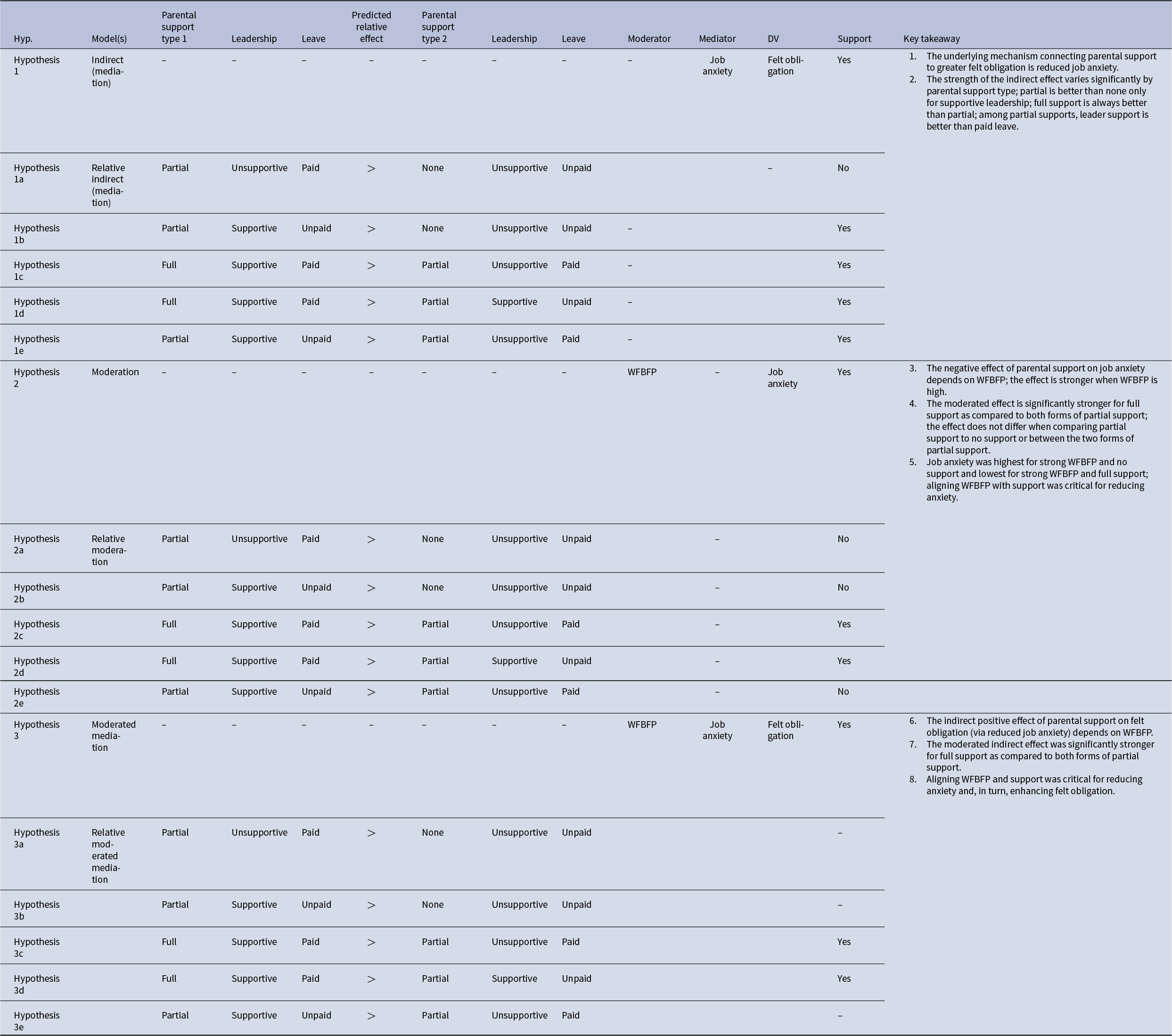
Notes: Hyp. = Hypothesis; WFBFP = work–family benefits fairness perceptions; > = the effect of parental support type 1 is predicted to be stronger than that of parental support type 2; the relative moderated mediation effects for Hypothesis 3a, 3b, or 3e are not reported, as the direct moderation effects were not significant.
Results for the relative direct effects of parental support type on job-related anxiety and relative indirect effects of parental support type on felt obligation via job-related anxiety (Hypotheses 1a–1e)

Notes: N = 538. 95% CIs are based on bias-corrected bootstrap intervals. Bootstrap sample size = 1,000.
Hypotheses 1c and 1d were supported. The indirect effect of family-supportive leadership with paid leave was stronger than that of paid leave (relative indirect effect = .2168, 95% CI [.1360, .3094]) and family-supportive leadership (relative indirect effect = .1388, 95% CI [.0707, .2220]). The indirect effect of full support was stronger than that of partial support, regardless of the form of partial support. Hypothesis 1e was also supported; when comparing forms of partial support, the indirect effect of family-supportive leadership was stronger than that of paid leave (relative indirect effect = .0780, 95% CI [.0078, .1530]). Taken together, these results demonstrated that the underlying mechanism connecting parental support to greater felt obligation is reduced job anxiety. A systematic comparison of the relative indirect effects demonstrated that the strength of the effect differs significantly for different types of parental support. More specifically, partial support had a stronger indirect effect compared to no support, but only for supportive-leadership (not paid leave); full support had a consistently stronger indirect effect than partial support; and among the two forms of partial support, supportive-leadership had the stronger indirect effect.
The test of the highest order unconditional interaction was significant, F(3, 530) = 11.275, p < .001, and at least one of the interaction terms was significant. Thus, when comparing parental support types, job anxiety differed depending on WF benefits fairness. Therefore, Hypothesis 2 was supported. For our relative moderation hypotheses (Hypotheses 2a–2e), the model effects quantify the difference in job anxiety when comparing one form of parental support to another, depending on WF benefits fairness. See Table 4 for model coefficients. Hypotheses 2a and 2b were not supported. When comparing types of partial support to no support, job-related anxiety levels did not significantly differ depending on the strength of WF benefits fairness. Hypotheses 2c and 2d were supported. For Hypothesis 2c, the relative conditional effect of full support significantly differed by −.7232 units between two individuals who differed by one unit in fairness, indicating that the dampening effect of full support (relative to paid leave only) on job anxiety depends on fairness. For Hypothesis 2d, the relative conditional effect of full support significantly differed by −.7447 units between two individuals who differed by one unit in strength of fairness, indicating that the dampening effect of full support (relative to family-supportive leadership only) on job anxiety depends on fairness.
Results for the relative conditional effects of parental support type on job-related anxiety at different levels of WF benefits fairness (Hypotheses 2a–2e)

Notes: N = 538. 95% CIs are based on bias-corrected bootstrap intervals. Bootstrap sample size = 1,000.
The plot depicted in Fig. 2 illustrates the significant interactions (Hypotheses 5a and 5b). We predicted that the effect of support on job anxiety would depend on fairness; thus, we were interested in the gap between the lines at a given level of fairness (Hayes & Montoya, Reference Hayes and Montoya2017), which reflects the differences in anxiety resulting from different degrees of support. Full support had a stronger (diminishing) effect on job anxiety among those with strong fairness perceptions (i.e., 1 SD above the mean), compared to no support and partial support. Among those with weaker fairness perceptions (i.e., 1 SD below the mean), the smaller gaps reflect a smaller effect of support type on job anxiety.
A visual depiction of the interaction between the level of parental support and WF benefits fairness perceptions.

Hypothesis 2e was not supported. The relative conditional effect of family-supportive leadership (as compared to paid leave) did not significantly change as WF benefits fairness strength changed. In summary, the moderation effect was significantly stronger for full parental support as compared to either form of partial parental support; the moderation effect did not differ when comparing partial support to no support or when comparing the two forms of partial support. The results suggest that alignment between WF benefits fairness beliefs and parental support is critical for reducing anxiety, as strong fairness beliefs coupled with full support was most beneficial for job anxiety, whereas strong fairness perceptions coupled with no support was most detrimental for job anxiety.
Hypothesis 3 tested our full moderated mediation model. The conditional indirect effect of parental support on felt obligation (via job-related anxiety) was moderated by WF benefits fairness, as at least one of the relative indexes of moderated mediation was significantly different from zero, based on 95% bootstrap CIs, even with direct effects included in the models (Hayes, Reference Hayes2022). Thus, Hypothesis 3 was supported. Hypotheses 3a–3e tested the relative moderated mediation effects. Based on the significant interactions for the aforementioned relative moderation test results, we report only on Hypotheses 3c and 3d, which compared full support to partial support. Hypotheses 3c and 3d were supported. The indirect effect of full support on felt obligation differed depending on the extent to which fairness influenced the direct effect of full support on job anxiety, relative to paid leave only (relative index of moderated mediation = .1924, 95% CI [.0985, .3136]) and relative to family-supportive leadership only (relative index of moderated mediation = .1981, 95% CI [.0643, .3449]). As the strength of fairness perceptions increased by one point, the indirect effect of full support increased by .1981 units relative to that of paid leave only, and by .1924 units relative to that of family-supportive leadership only. Thus, fairness perceptions strengthened the indirect effect of full parental support on felt obligation relative to the effects of partial support (Table 5). We probed the interaction using the Johnson–Neyman technique (Bauer & Curran, Reference Bauer and Curran2005; Johnson & Neyman, Reference Johnson and Neyman1936) to help determine for whom parental support exerts an effect on job-related anxiety and for whom it does not (Burden & Faires, Reference Burden and Faires1985; Hayes & Montoya, Reference Hayes and Montoya2017). When fairness reached a strength of 3.27, it was a transition point defining the region of significance. Among those with this strength of fairness perceptions and greater, there was a statistically significant effect of full parental support on job-related anxiety. In summary, aligning strong WF benefits fairness perceptions with full parental support was critical for reducing anxiety and, in turn, enhancing felt obligation.
Results for the relative conditional indirect effects of parental support type on felt obligation (through job-related anxiety) at different levels of WF benefits fairness (Hypotheses 3a–3e)

Notes: N = 538. 95% CIs are based on bias-corrected bootstrap intervals. Bootstrap sample size = 1,000.
Supplemental analyses
We tested the robustness of our proposed model and results using Hayes and Preacher’s (Reference Hayes and Preacher2014) PROCESS approach to mediation analysis with a multicategorical variable (see the Supplementary material for details). Overall, the results support our proposed causal order of variables, including the position of job anxiety as a mediator rather than a moderator. Together, these results confirmed our original proposed model. Also, as most of our study variables were measured via a survey, we tested for CMV and its potential biasing effects using CFAs. Taking the unmeasured latent method factor approach (Williams & McGonagle, Reference Williams and McGonagle2016), the findings indicated that CMV had little effect on our results (see the Supplementary material for details). Lastly, in addition to testing parental support as a multicategorical variable, an alternative approach is to test parental leave as a dichotomous independent variable (paid vs. unpaid) and leadership as a dichotomous moderator (family-supportive vs. -unsupportive). We tested and found support for this conditional moderated mediation using PROCESS Model 7 (Hayes, Reference Hayes2012), which was consistent with our hypothesized models. Yet, we highlight the relative effect models in the present study, as evidence of relative effects for varying degrees of parental support makes a substantial and novel contribution to the WF literature as compared to the conditional moderated mediation model.
Discussion
With more parents participating in the labor market than ever before, an unprecedented number of people are challenged with managing their work and parental demands (Bureau of Labor Statistics, U.S. Department of Labor, 2023; Delanoeije & Verbruggen, Reference Delanoeije and Verbruggen2019). Yet, many organizations fall short on supporting working parents through these challenges (Sublett et al., Reference Sublett, Penney and Bok2021), which has implications for employee and organizational well-being (Tay et al., Reference Tay, Batz-Barbarich, Yang and Wiese2023). Drawing upon COR (Hobfoll, Reference Hobfoll1989), our study offered a more comprehensive understanding of this issue by exploring why – and under what conditions – parental support engenders feelings of felt obligation to care for an organization’s well-being via our proposed moderated-mediation model. We also systemically examined the relative indirect (via job-related anxiety), moderated (via WF benefits fairness), and moderated-mediation effects of paid leave and family-supportive leadership on felt obligation.
Job-related anxiety mediated the relationship between parental support and felt obligation, thereby demonstrating that parental support results in mutual well-being gains for individuals (reduced job-related anxiety) and their organizations (enhanced felt obligation). The effects were stronger for partial support relative to no support, for full support relative to partial support, and – when comparing the two forms of partial support – for family-supportive leadership relative to paid leave. WF benefits fairness perceptions strengthened the dampening effect of parental support on job-related anxiety (and subsequently the enhancement effect on felt obligation) only when full parental support was provided. When no or partial parental support was provided, it had the opposite of the intended effect (i.e., job-related anxiety increased), especially in the case of no parental support.
Theoretical contributions
The findings make several contributions to the literature. First, we illuminated job-related anxiety as a key well-being mechanism that facilitates the translation of parental support into felt obligation. While the relationship between parental support and organizational outcomes is addressed in the literature (Kurtessis et al., Reference Kurtessis, Eisenberger, Ford, Buffardi, Stewart and Adis2017), what is less well understood is why such support translates into felt obligation, as this relationship has typically been examined as a simple exchange process (Deng et al., Reference Deng, Coyle-Shapiro and Yang2018). This omission is not inconsequential. As Lawrence (Reference Lawrence2006) argued, understanding the particular mechanisms involved in the role of perceived support is critical for helping employees cope with the stress of the working parent role. While previous studies demonstrated that increased job-related anxiety can adversely affect employee and organizational outcomes (Chen et al., Reference Chen, Li, Xia and He2017; Haider et al., Reference Haider, Fatima and de Pablos-Heredero2020), our findings demonstrate that organizations that work to reduce their employees’ job-related anxiety produce positive organizational outcomes (i.e., felt obligation). Specifically, we show that it is how parental support resources make employees feel about their job (less anxious) that may give them the capacity to care for their organization’s well-being. These findings are bolstered by others in the COR literature which have similarly demonstrated that, ‘employees feel less preoccupied and more in control of their work to the extent that they are not distracted by negative situations that prevent them from allocating adequate energy resources to the completion of their job tasks’ (De Clercq et al., Reference De Clercq, Azeem and Haq2021: 6).
Second, we showed how the effects of parental support were contingent on WF benefits fairness perceptions (Hobfoll & Shirom, Reference Hobfoll, Shirom and Golembiewski2000). These findings contribute to WF literature by advancing our understanding about what may determine the value (and subsequent effects) of parental support (Halbesleben et al., Reference Halbesleben, Neveu, Paustian-Underdahl and Westman2014), that is, WF benefits fairness beliefs. Consistent with Sublett et al. (Reference Sublett, Penney and Bok2021), the favorable effect of parental support on job anxiety was greater among individuals with stronger (vs. weaker) WF benefits fairness perceptions. Interestingly, while the reduction in job-related anxiety (and, in turn, the enhancement of felt-obligation) was not as pronounced for those with weaker WF fairness perceptions, there were still dampening effects on job-related anxiety for these individuals, suggesting that parental support may not elicit the same ‘backlash effect’ on employee and organizational well-being as has been detected in other contexts (Grover, Reference Grover1991; Kossek et al., Reference Kossek, Vaziri, Perrigino, Lautsch, Pratt and King2025; Perrigino et al., Reference Perrigino, Dunford and Wilson2018).
Third, through systemically examining the relative indirect effects of paid leave and family-supportive leadership (Aguinis & Bradley, Reference Aguinis and Bradley2014; Hayes & Preacher, Reference Hayes and Preacher2014), our study offered a more nuanced understanding of the impact of parental support as work resources for expectant working parents, as called for in the WF literature (Crain & Stevens, Reference Crain and Stevens2018; French & Shockley, Reference French and Shockley2020; Kossek et al., Reference Kossek, Perrigino, Russo and Morandin2023; Sublett et al., Reference Sublett, Penney and Bok2021). Consistent with COR theory (Hobfoll, Reference Hobfoll1989), we demonstrated that more favorable effects on employee well-being and, in turn, organizational well-being can be realized with greater pools of resources (i.e., full vs. partial vs. no support). This may seem intuitive, but we also unveiled the intricacies of this relationship by pinpointing which form of partial parental support was better for well-being. When only partial parental support was available, the indirect effects were stronger for those with family-supportive leadership, suggesting that family-supportive leadership has more resounding well-being effects and is thus a more valued resource than paid parental leave. We argue that this was due to its discretionary nature (Halbesleben et al., Reference Halbesleben, Neveu, Paustian-Underdahl and Westman2014; Hobfoll, Reference Hobfoll and Folkman2011) and enduring effects (Hobfoll et al., Reference Hobfoll, London and Orr1988; Swindle et al., Reference Swindle, Heller, Lakey and Cohen1988; Van der Heijden et al., Reference Van der Heijden, Mulder, König and Anselmann2017). Although financial resources are lost with unpaid leave, it is temporary, and an unsupportive supervisor may be even more draining and thus may make the situation even more difficult for employees to meet WF demands.
Our systematic analysis of the relative moderation and moderated-mediation effects further advances COR theory by demonstrating how the alignment between resource availability and individuals’ perceptions is crucial for fully understanding and maximizing positive outcomes for both individual and organizational well-being. Among those with strong WF benefits fairness perceptions, the provision of full parental support had the greatest dampening effect on job anxiety and, in turn, the greatest positive effects on employees’ obligations to care for the organization. For these individuals, the provision of full parental support more closely aligns with their needs and/or preferences (Grover, Reference Grover1991; Kossek et al., Reference Kossek, Vaziri, Perrigino, Lautsch, Pratt and King2025; Lawrence, Reference Lawrence2006; Perrigino et al., Reference Perrigino, Dunford and Wilson2018), reducing job anxiety and increasing obligations to care for the organization. In contrast, strong WF benefits fairness perceptions exacerbated anxiety when no support or only one form of support was provided, underscoring the unintended consequences of offering inadequate support to expectant working parents who believe it is fair for companies to provide a fuller range of WF benefits. Our findings are bolstered by research reporting detrimental effects on employee well-being (anxiety) and performance when employee needs were unfulfilled by their organizations in the form of violated psychological contracts (De Clercq et al., Reference De Clercq, Azeem and Haq2021; Hui, Lee & Rousseau, Reference Hui, Lee and Rousseau2004; Priesemuth & Taylor, Reference Priesemuth and Taylor2016). Importantly, this could have implications for other types of organizational resources or supports, such as aligning forms of work flexibility with individual beliefs regarding whether organizations should allow employees to work flexibly
Practical implications
The practical implications of our study are timely given the shift in workplace dynamics whereby supporting employee well-being is not only the right thing to do ethically, but is increasingly playing a role in the success and viability of organizations (Tay et al., Reference Tay, Batz-Barbarich, Yang and Wiese2023). First, our findings suggest that organizations seeking to positively impact the well-being of expectant working parents and, in turn the organization’s well-being, may benefit from offering paid (100%) parental leave (at least 6 weeks) to employees (women and men) who are planning to birth or adopt a child.
Second, our results suggest that organizations ensure their managers are skilled in family-supportive leadership. One way to achieve this is by recruiting and selecting managers who possess or have the potential to develop such qualities. For example, organizations should hire managers who demonstrate the ability to proactively devise creative ways to help employees manage their WF demands to help them be effective on and off the job while also being sensitive to the company’s needs (Hammer et al., Reference Hammer, Kossek, Yragui, Bodner and Hanson2009). This could be accomplished using behavioral interviewing techniques and/or assessments specifically targeting these skills.
Another way to build up family-supportive leadership in organizations is through supervisor training. Indeed, family-supportive leadership is a learnable skill with evidence that such training interventions are effective and beneficial to employees (e.g., Hammer, Kossek, Anger, Bodner & Zimmerman, Reference Hammer, Kossek, Anger, Bodner and Zimmerman2011; Kossek et al., Reference Kossek, Porter, Rosokha, Wilson, Rupp and Law-Penrose2024; Odle-Dusseau, Hammer, Crain & Bodner, Reference Odle-Dusseau, Hammer, Crain and Bodner2016). Such training could involve educating supervisors on the unique demands faced by working parents and discussing creative solutions that may be implemented to address such demands. Gaining this knowledge would allow these leaders to ‘empathize with employees’ attempts to balance work and nonwork, while also actively facilitating employees’ ability to manage work and nonwork demands’ (Crain & Stevens, Reference Crain and Stevens2018: 869). As Hammer et al. (Reference Hammer, Kossek, Anger, Bodner and Zimmerman2011) noted, ‘supervisory training to increase support for family is among the most frequently advocated interventions by work-life experts’ (p.134) due to their association with numerous positive WF outcomes (Hopkins, Reference Hopkins, Kossek and Lambert2005). Indeed, Kossek et al (Reference Kossek, Porter, Rosokha, Wilson, Rupp and Law-Penrose2024) found that providing work–life supportive training to supervisors reduced employees’ emotional exhaustion and increased family engagement.
Our study also helps pinpoint which employees and combination of resources will yield the greatest positive effects. When employees believe it is fair for employers to provide WF benefits and reality meets those perceptions (i.e., full parental support is provided), it translated into the most favorable responses, i.e., lowest levels of job anxiety, and the associated positive emotions and energy could, in turn, facilitate high levels of felt obligation to care about the organization’s welfare. Further, when only one form of parental support was available, family-supportive leadership had a more resounding effect on well-being. This finding is encouraging as organizations can acquire and develop talent for family-supportive behaviors. In contrast, the amount of paid time off that can be offered may be more limited due to legal and/or financial restrictions. The creative solutions a family-supportive leader might implement are still somewhat contingent on the resources available (e.g., funding to hire a temporary employee to cover the work of an employee on leave). Therefore, organizations should ensure that they allocate sufficient resources for parental support initiatives so that they can be implemented successfully. Otherwise, organizations may create a zero-sum situation where one group (e.g., those on parental leave) benefits at the expense of another (e.g., overloading co-workers or supervisors with their colleagues’ work while on leave). Adopting these provisions may enhance the likelihood that parental support does not impede colleagues’ workloads (without proper compensation) or hinder work relationships.
Finally, our findings underscore how important it is for organizations to understand the extent to which their employees perceive the provision of WF benefits as fair. Otherwise, organizations risk unintended consequences for not meeting employees’ preferences. Research has demonstrated that failing to deliver on employee well-being needs can have detrimental effects on employee well-being and their performance (De Clercq et al., Reference De Clercq, Azeem and Haq2021; Hui et al., Reference Hui, Lee and Rousseau2004; Priesemuth & Taylor, Reference Priesemuth and Taylor2016). Although providing paid parental leave and family-supportive leadership requires resources from the organization, our results suggest that it may be worthwhile. Parental support is a way to facilitate employee obligations while at the same time helping employees feel better, allowing both constituents to benefit from resource gains. In cases where employee needs cannot be fully met (e.g., due to budget constraints and/or legal restrictions), organizations can take steps to align employee WF benefits fairness perceptions with organizational resources. This may be accomplished by allocating parental support in a fair manner that considers employees’ views. As COR theory suggests, considering employees’ WF benefits fairness perceptions ‘might serve as buffers that prevent their anger about violated contracts from escalating into enhanced job-related anxiety’ (De Clercq et al., Reference De Clercq, Azeem and Haq2021: 7).
Limitations and future research
The current study had some limitations that may be addressed with future research. As EVM precisely targeted parental leave and family-supportive leadership, the reported effect sizes may be larger than what would be found in natural environments, thus limiting external validity and, consequently, generalizability (Aguinis & Bradley, Reference Aguinis and Bradley2014; Parkinson & Manstead, Reference Parkinson and Manstead1993). However, using non-experimental designs in naturalistic settings to maximize external validity often does not allow for determining the direction of causal relationships.
Consequently, EVM is frequently used in the organizational and social sciences to provide evidence for establishing causal relationships that may not be possible to otherwise manipulate in experiments (Aguinis & Bradley, Reference Aguinis and Bradley2014). Additionally, other areas of organizational science find that presenting individuals with well-constructed hypothetical scenarios (e.g., situational judgment tests used in interview questions that ask job candidates what they would do in future situations) demonstrates validity (Christian, Edwards & Bradley, Reference Christian, Edwards and Bradley2010; McDaniel, Morgeson, Finnegan, Campion & Braverman, Reference McDaniel, Morgeson, Finnegan, Campion and Braverman2001). Further, as noted earlier, our vignettes were developed in line with best practice recommendations by Aguinis and Bradley (Reference Aguinis and Bradley2014). Moreover, we increased the realism of the vignettes by incorporating contextual information gathered by discussions with subject matter experts and individuals who had experience discussing parental leave arrangements with their employers. That said, if this were to be tested in employment settings, we suggest examining whether feelings of obligation induced by parental support translate into positive employee behaviors (e.g., work engagement) that help improve organizational well-being.
It is also advisable to test the applicability of our model across different contexts and populations to enhance its generalizability. Given that most empirical research on family-supportive leadership originates from non-US samples (Kossek et al., Reference Kossek, Perrigino, Russo and Morandin2023), and US organizations lag behind in their parental support practices, we deemed it most appropriate to focus our efforts in this area. Moving forward, it would be helpful to explore whether our proposed model generalizes to non-US samples, particularly in countries where paid parental leave is government-mandated, and/or to compare the effects across demographic groups (e.g., male/female/non-binary, low/high SES) to better understand how expectant working parents with different identities perceive WF benefits fairness and thus are affected by parental support.
As our data were mostly self-report and cross-sectional, we cannot draw definitive conclusions regarding the flow of causal processes. However, a cross-sectional design is an effective and commonly used approach to initially exploring proposed relationships before pursuing more resource-intensive longitudinal studies (Bryman, Reference Bryman2016; Podsakoff, MacKenzie, Lee & Podsakoff, Reference Podsakoff, MacKenzie, Lee and Podsakoff2003). Indeed, one of our study objectives was to explore the relative effects of varying degrees of parental support. Further, our manipulation of parental support and control of extraneous factors addresses the limitations of a cross-sectional design and helps us infer causality with robust evidence of the benefits of parental support. Moreover, our proposed model was theoretically driven (Aguinis & Vandenberg, Reference Aguinis and Vandenberg2014), and the robustness checks demonstrated that reverse-causality and CMV were not threats to our findings. However, as longitudinal designs are essential for making causal inferences (Taris & Kompier, Reference Taris and Kompier2003), future studies could examine the relationships discussed in the current paper with longitudinal designs in actual employment settings (e.g., implementing paid parental leave and/or training in family-supportive leadership and subsequently measuring their effects on employee and organizational well-being).
Conclusion
As the number of working parents in the United States continues to rise (Bureau of Labor Statistics, U.S. Department of Labor, 2023; Delanoeije & Verbruggen, Reference Delanoeije and Verbruggen2019), and the dissatisfaction with workplace family support persists (Sublett et al., Reference Sublett, Penney and Bok2021), gaining a more nuanced understanding of how to adequately support expectant working parents is critical. Our research helps organizations recognize the value of providing employees with both paid leave and family-supportive leadership, while also considering their WF fairness perceptions surrounding such resources, to reap the most employee and organizational well-being gains.
Supplementary material
The supplementary material for this article can be found at https://doi.org/10.1017/jmo.2025.10048.
Data availability statement
The data that support the findings of this study are available from the corresponding author upon reasonable request.
Acknowledgements
We would like to thank the Wall College of Business at Coastal Carolina University for their financial support of our project.
Funding statement
This study was funded by the Wall College of Business at Coastal Carolina University.
Conflicts of interest
The authors declare that they have no conflict of interest.
Ethical standards
We confirm that the study was approved by the Coastal Carolina University Institutional Review Board (#2022.185) and certify that the study was performed in accordance with the ethical standards as laid down in the 1964 Declaration of Helsinki and its later amendments or comparable ethical standards.
Informed consent
Informed consent to participate in the study and for the study to be published was obtained from all individual participants included in the study.
Cara-Lynn Scheuer is an Associate Professor of Management at Coastal Carolina University. She holds a PhD in Business (Management) from Saint Mary’s University (Canada). She teaches, researches, and consults in the areas of workplace diversity, leadership, organizational behavior, team processes (e.g., knowledge transfer and trust), and well-being. Her research has been featured in journals such as the Journal of Business Ethics, Journal of Knowledge Management, Journal of Business & Psychology, Academy of Management Learning & Education, and Leadership & Organization Development Journal.
Angela R. Grotto is an Associate Professor of Human Resource Analytics in the Feliciano College of Business at Montclair State University. She earned her PhD in Industrial/Organizational Psychology from Baruch College and the CUNY Graduate Center. Angela’s research addresses how employees manage work–life boundaries, how organizations can support employee work–life management, and the role of gender in these two areas. Her research has been supported by the Sam and Bonnie Rechter Fellowship from the University of Louisville’s Center for Positive Leadership. Her ongoing research on boundary management can be found in a translation article in MIT Sloan Management Review. Angela has published in the Journal of Organizational Behavior, Journal of Vocational Behavior, Journal of Business and Psychology, and Annual Review of Organizational Psychology and Organizational Behavior.
Jessica L. Doll is an Assistant Professor of Management at Appalachian State University in Boone, North Carolina, USA. She earned her PhD in Industrial/Organizational Psychology from Clemson University. Her research interests include interpersonal relationships at work, the development of inclusive organizations, and innovative approaches to management education. Her research has been featured in journals such as the Journal of Business Research, Journal of Managerial Psychology, Journal of Management Education, and Management Teaching Review.
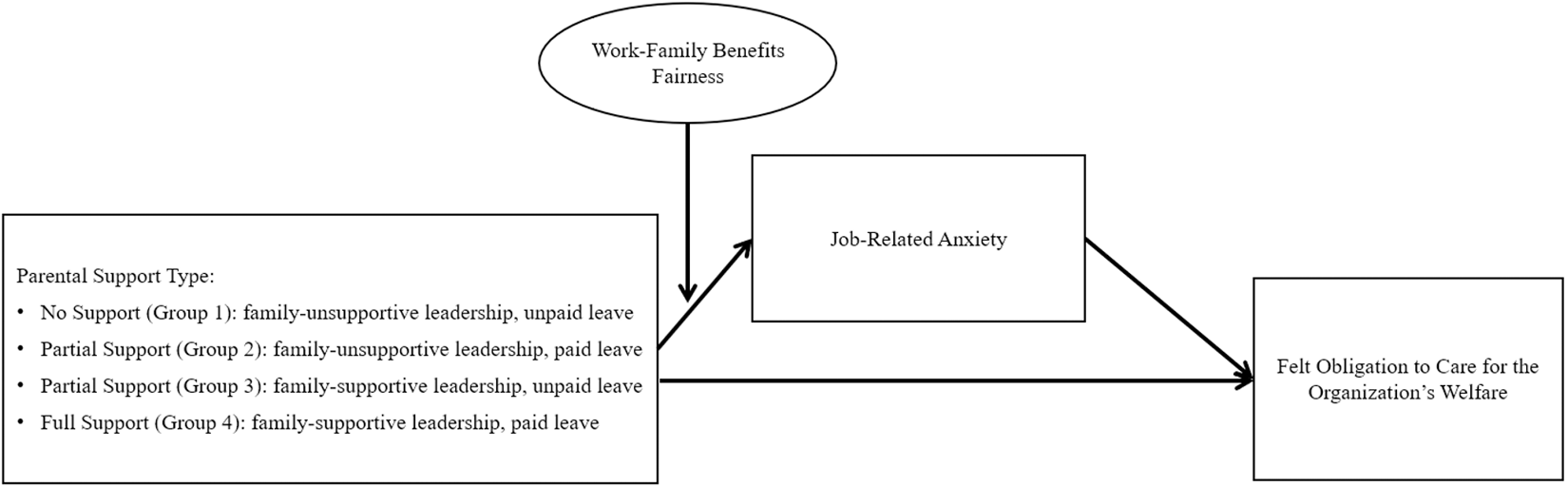


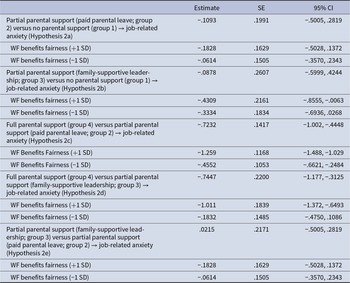
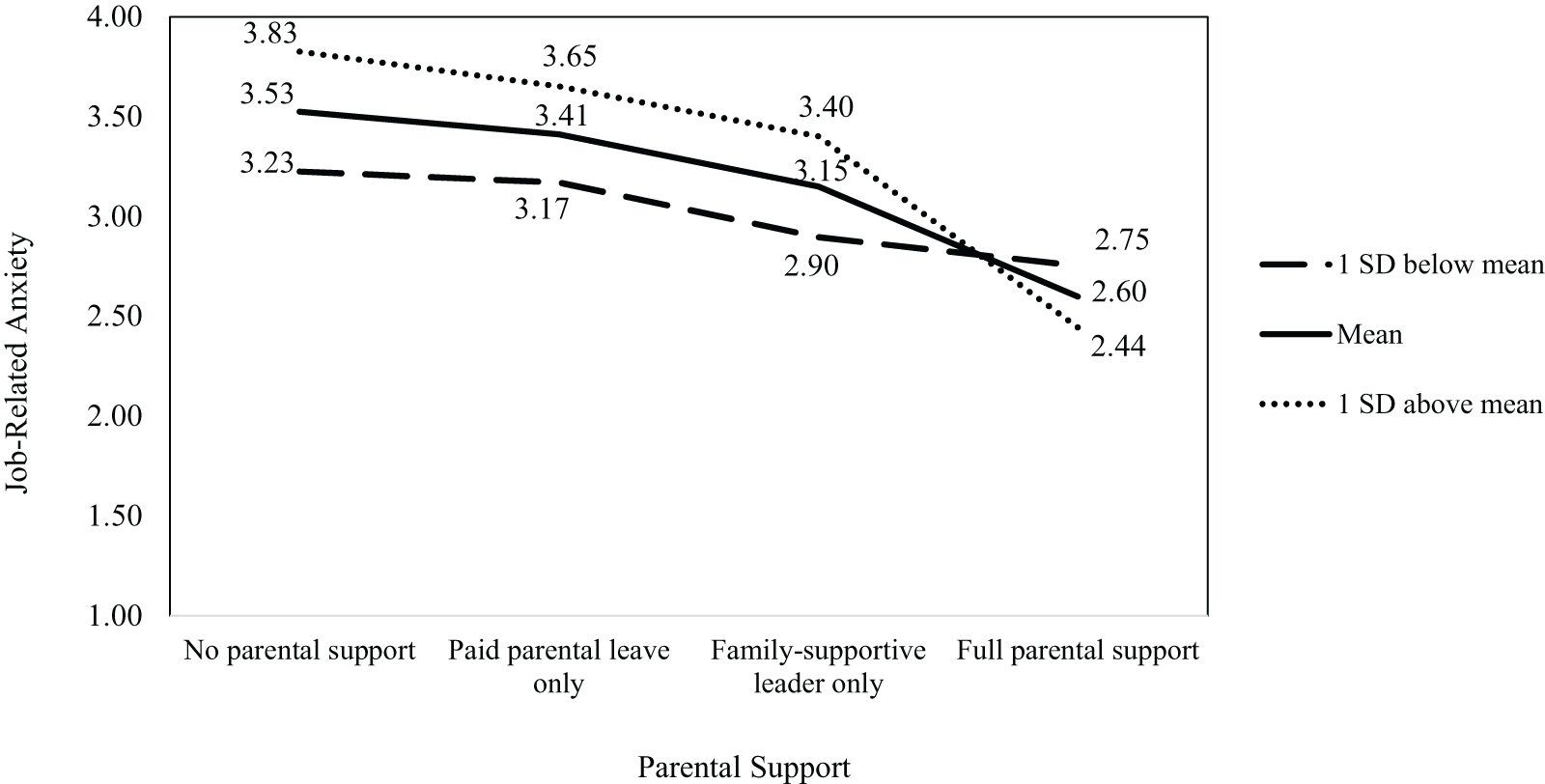
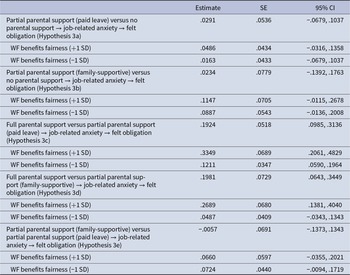


 Open access

